A complete issue · 36 pages · 1930
Judge — November 8, 1930
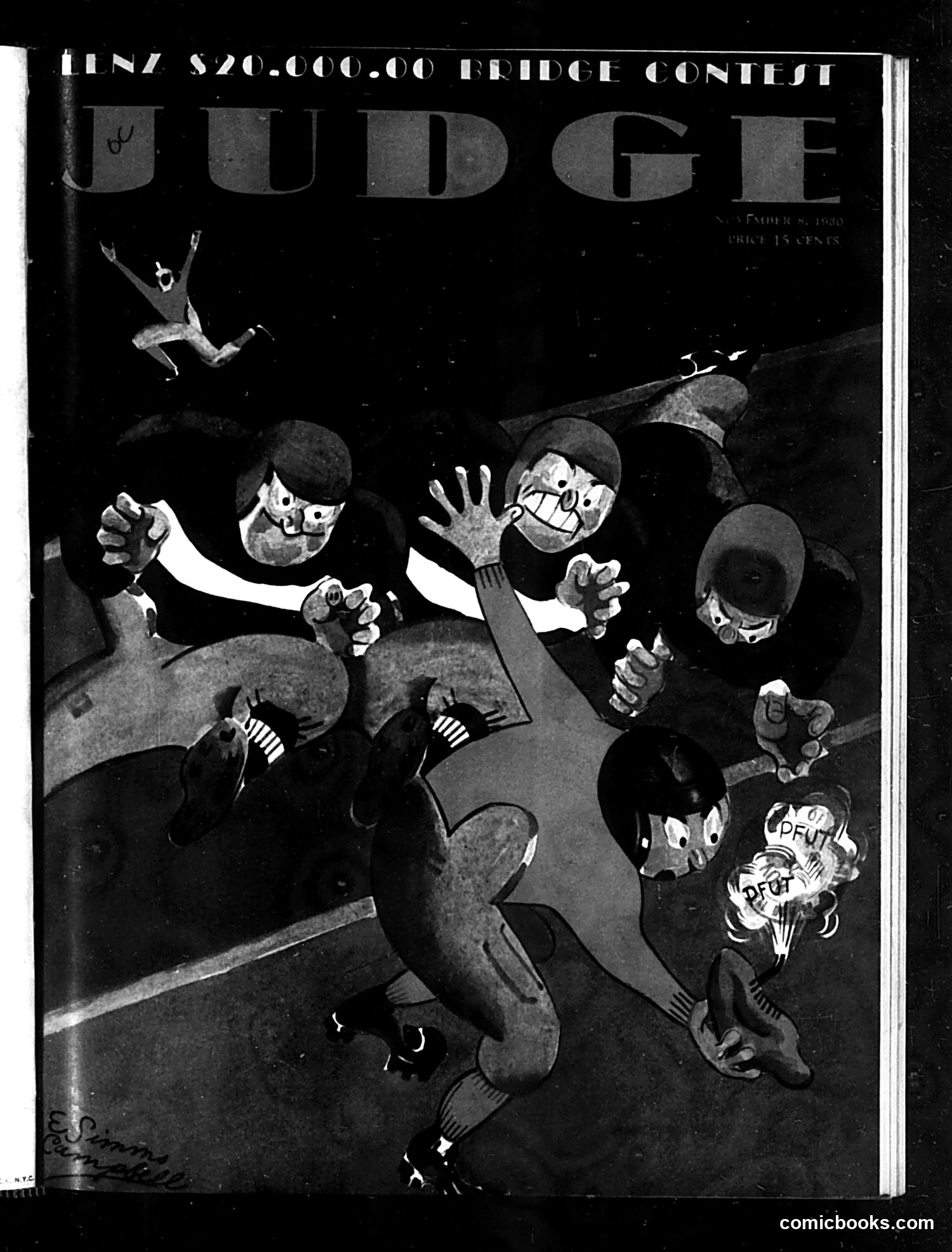
# Judge Magazine Cover Analysis This appears to be a Judge magazine cover from the early 1900s featuring a satirical bridge-building contest theme. The central figure is a large, rotund man (likely representing a political or industrial figure of the era) who has constructed an absurdly unstable bridge structure. The smaller caricatured figures around him—some appearing to fall or struggle—suggest the bridge is failing or dangerous. The "$20,000.00 Bridge Contest" text indicates this satirizes a real competition or public works project. The exaggerated physical characteristics and expressions are typical of period political cartooning, which often used ethnic or class-based caricature. Without clearer identification of the specific figures or dating, the exact political reference remains unclear, though it likely critiques corruption, incompetence, or fraud in public construction contracts.
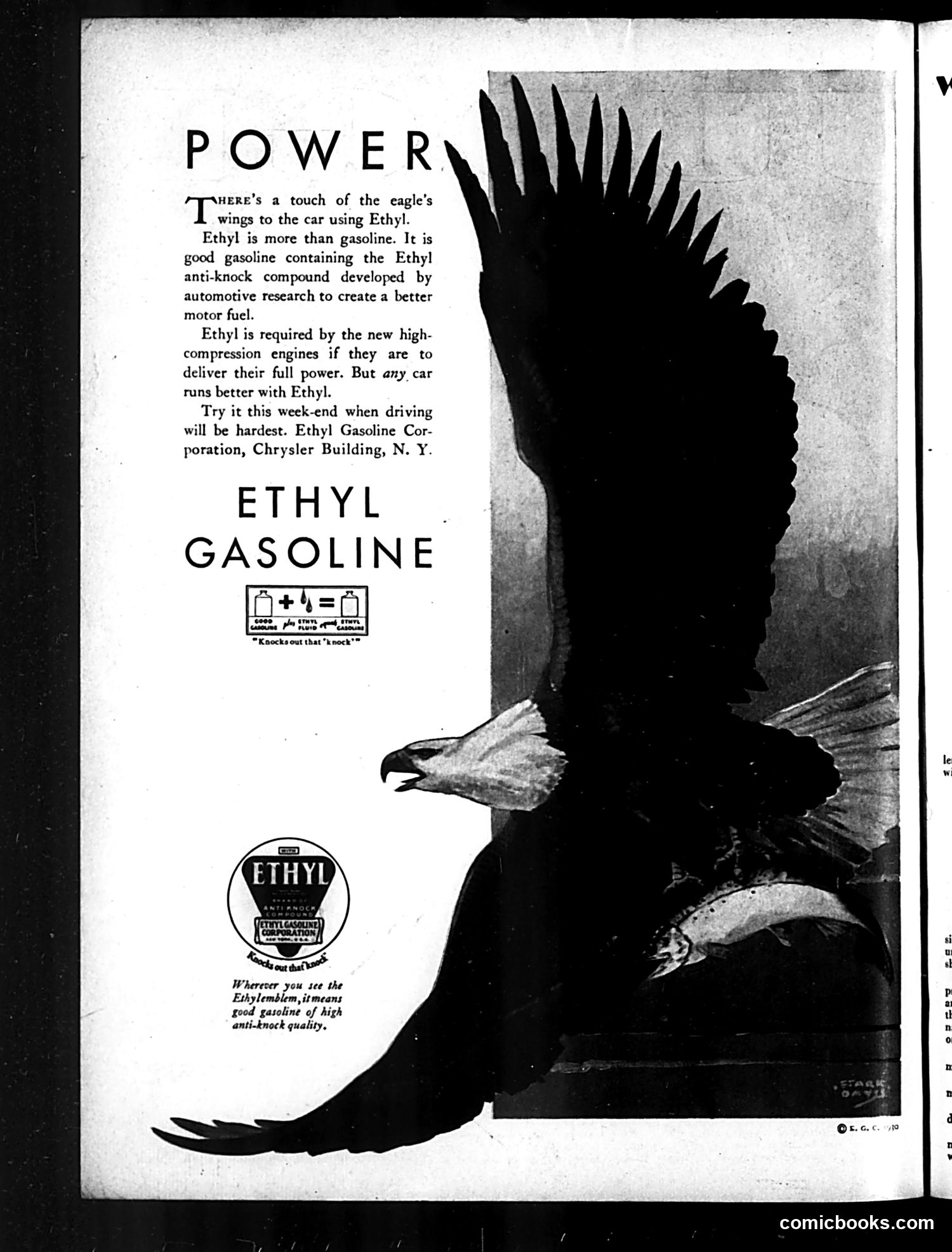
# Ethyl Gasoline Advertisement This is primarily a **commercial advertisement**, not political satire. The page promotes Ethyl Gasoline, a branded fuel containing an anti-knock compound developed for high-compression engines. The striking eagle illustration is a **marketing device**—using the eagle's power as a metaphor for engine performance. The tagline "There's a touch of the eagle's wings to the car using Ethyl" claims the fuel provides superior power and responsiveness. The ad targets car owners of any vehicle type, claiming all cars "run better with Ethyl." It encourages consumers to test the product during weekend driving. The Ethyl Gasoline Corporation was located in the Chrysler Building, New York. This reflects **1920s-30s automotive marketing**, when fuel additives were novel technological innovations.
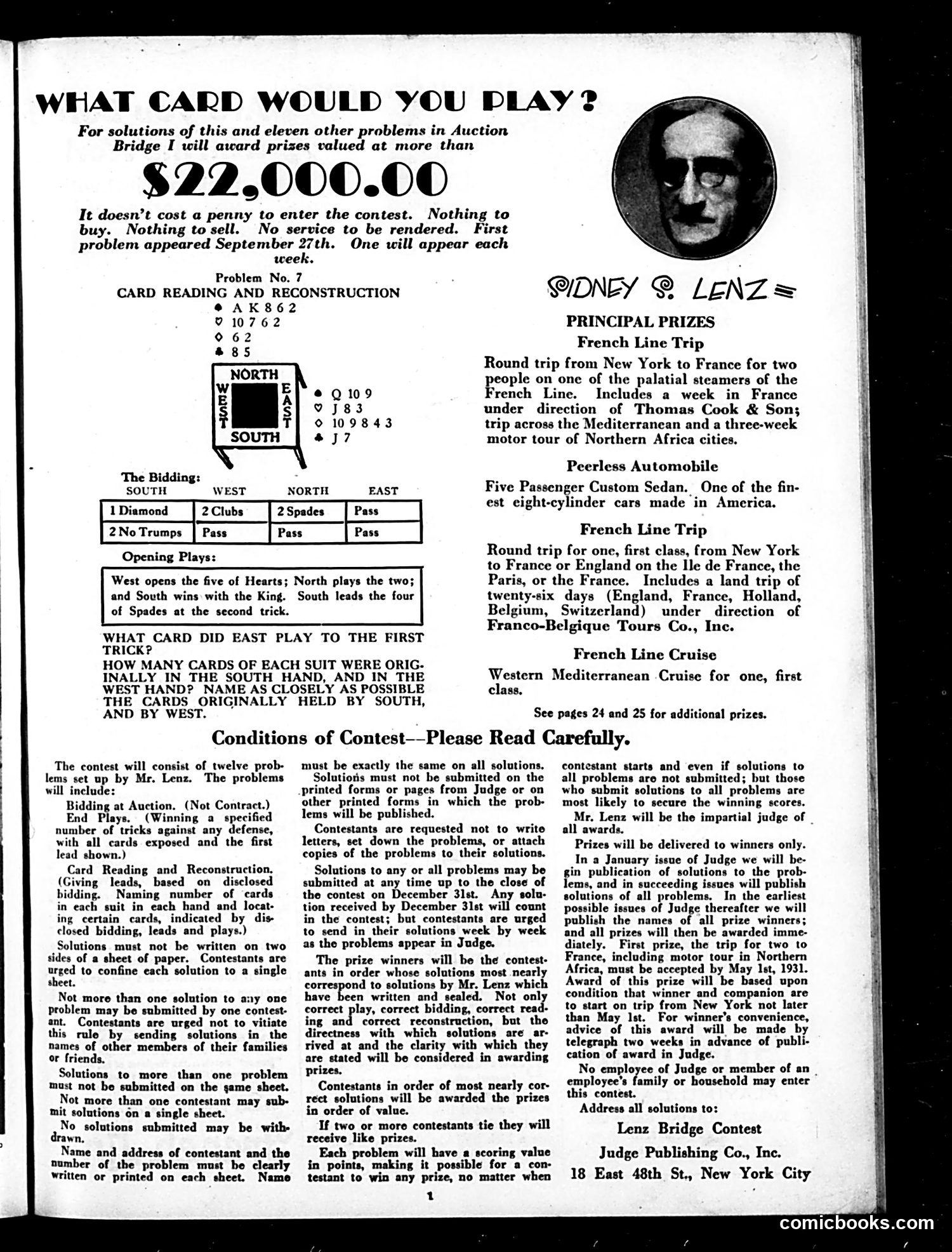
# Analysis This page is primarily **advertising for a bridge contest**, not a political cartoon. The prominent image shows a man labeled "SIDNEY LENZ," identifiable by the text as the contest's principal judge. Sidney Lenz was a famous bridge player of the early 20th century, and this contest offering $22,000 in prizes (substantial for the era) promoted bridge as a popular game. The page includes Problem No. 7, a bridge hand requiring players to determine optimal card play. The "satire" is minimal—this is straightforward **promotional content** for a Judge magazine contest. The reference to bridge reflects the game's significant popularity among American elites during this period. The contest invited readers to submit solutions for weekly publication.
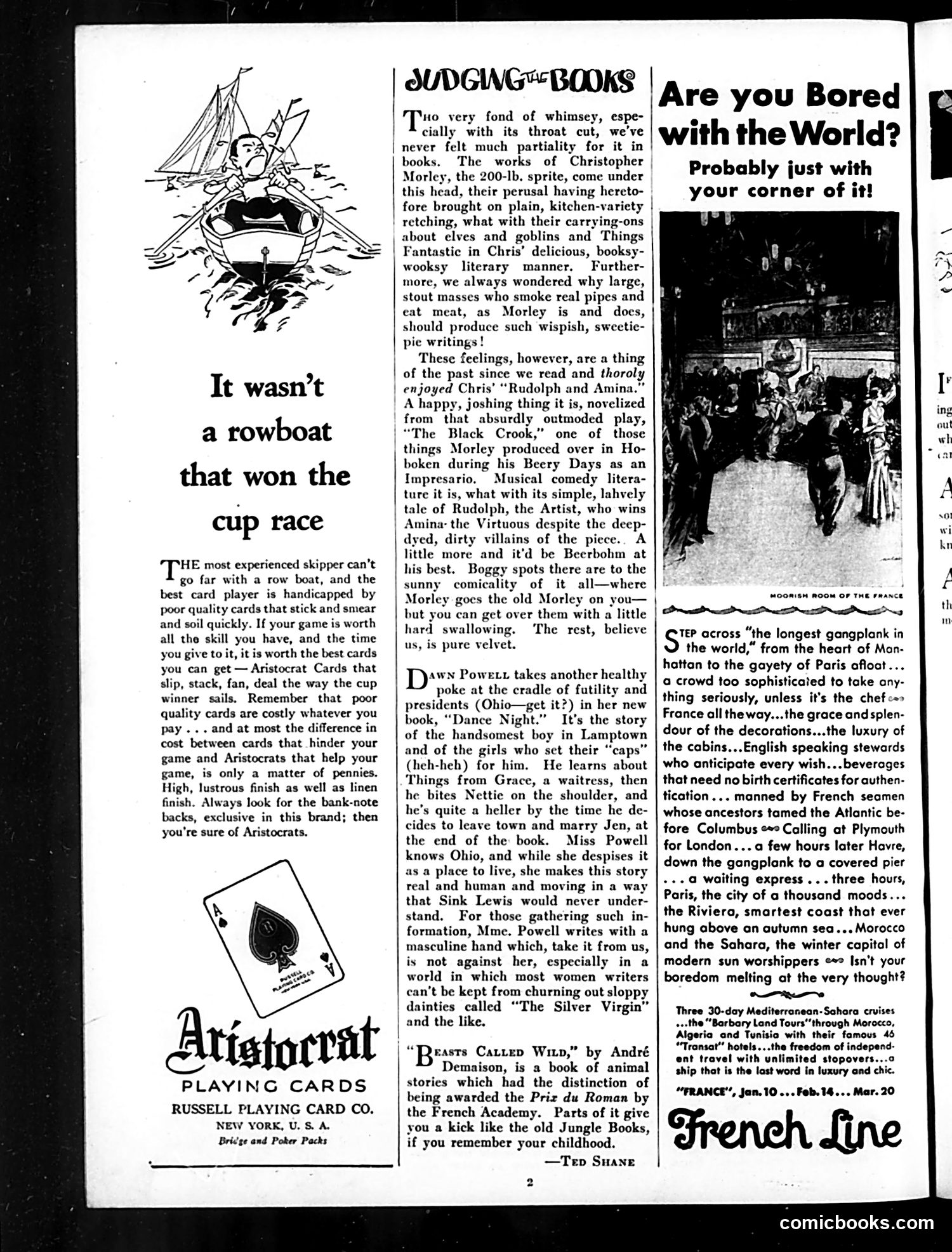
# Analysis This page contains two main elements: **Left side:** An advertisement for Aristocrat Playing Cards featuring two cartoons—one of a chaotic rowboat race and another of playing cards. The ad suggests that card games, unlike rowing, reward skill and strategy regardless of equipment quality. The humor lies in contrasting the unpredictability of physical competition with the mastery possible in card games. **Right side:** Book reviews by Ted Shane, discussing works by Christopher Morley and Dawn Powell, followed by a French Line cruise advertisement. The reviews are lighthearted literary criticism typical of Judge's cultural commentary. The page is primarily commercial content (advertisements and entertainment reviews) rather than political satire. It reflects 1920s-30s leisure culture and consumer advertising aimed at affluent readers.
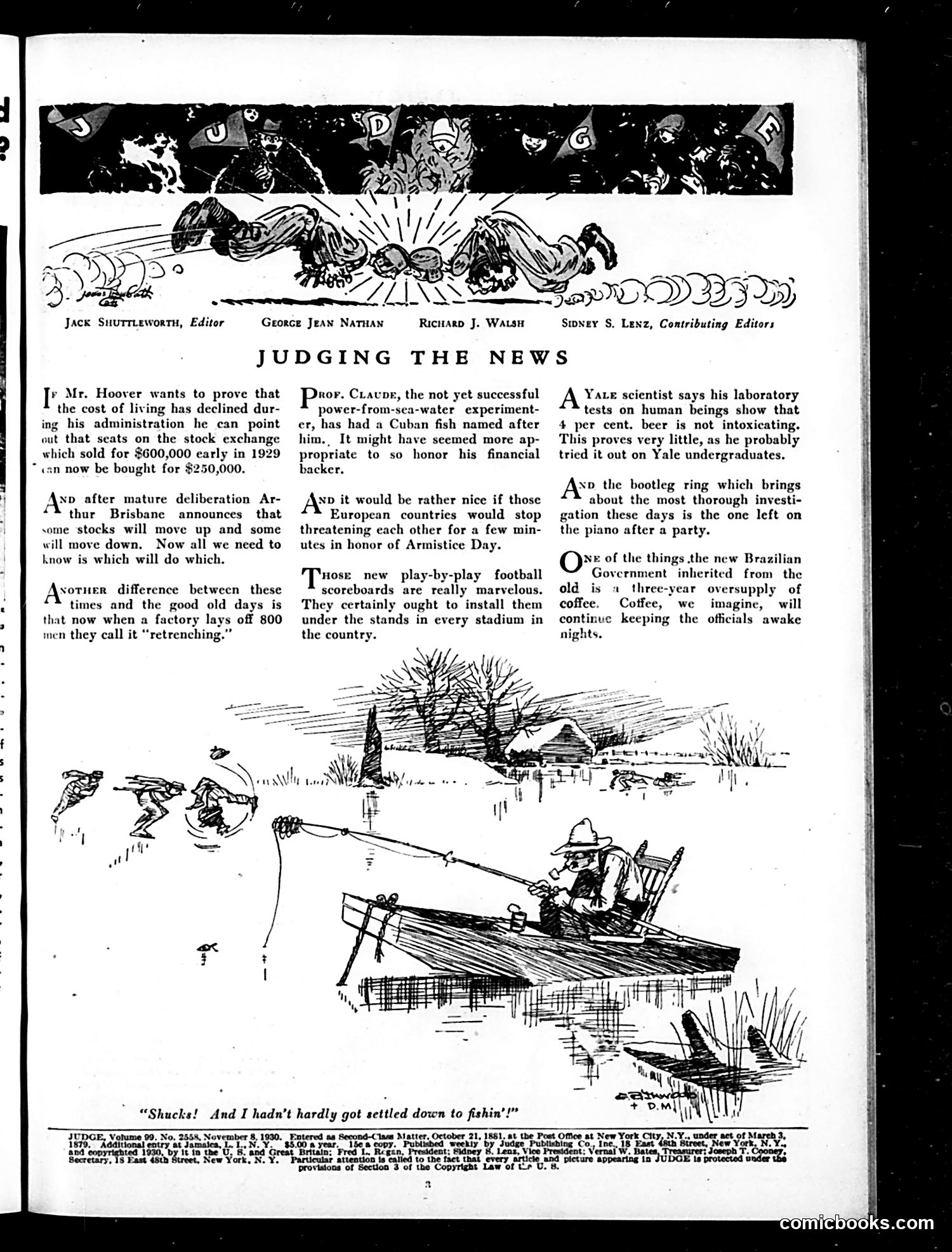
# Analysis of Judge Magazine Page (November 2, 1929) This page presents satirical commentary on contemporary news under the heading "JUDGING THE NEWS." The items mock various topics: 1. **Stock market/financial scandal**: References to Mr. Hoover and Arthur Brisbane discussing stock prices and market movements, likely satirizing the recent 1929 stock market crash and its political fallout. 2. **International relations**: A jab at European countries threatening each other over Armistice Day observance. 3. **Football modernization**: Humor about new play-by-play scoreboards in stadiums. 4. **Brazilian coffee politics**: Commentary on Brazil's three-year coffee oversupply affecting officials. The main illustration shows a fisherman being startled mid-cast—a visual gag unrelated to the text commentary. This was typical Judge format: mixing political/economic satire with humorous observations and standalone cartoons.
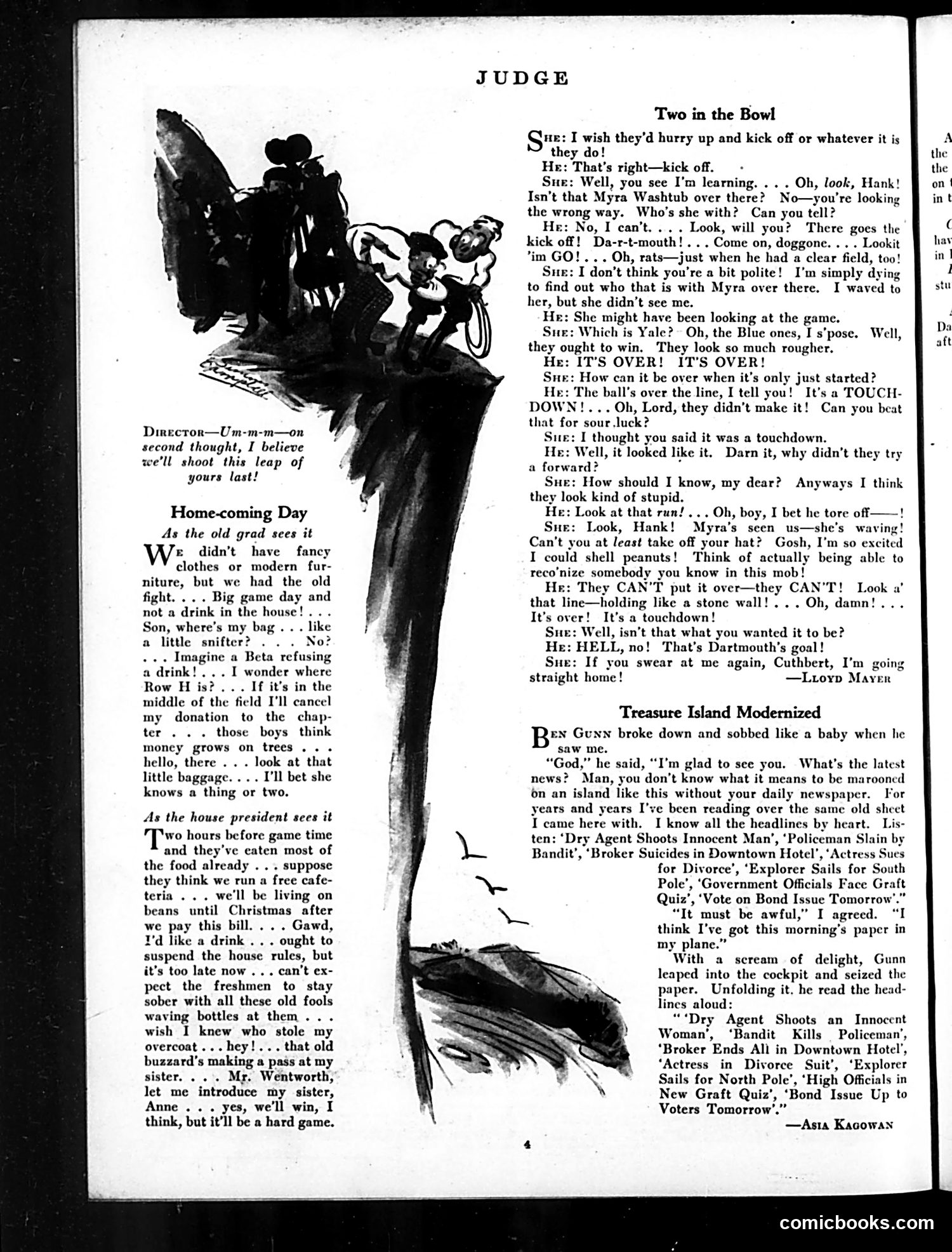
# "Two in the Bowl" Football Satire The main cartoon depicts an animated football game scene where spectators are intensely debating whether a play resulted in a touchdown. The dialogue captures the chaos of live sports commentary: one character insists "IT'S OVER! IT'S OVER!" while another argues the ball crossed the line for a touchdown, leading to confusion about whether it's a touchdown or the game ending. The satire targets the confusion and heated arguments that arose from ambiguous football plays and unclear referee decisions—a perennial source of fan frustration. The exaggerated theatrical reactions and contradictory interpretations of what actually happened on the field reflect how sports disputes could overshadow the game itself among spectators.
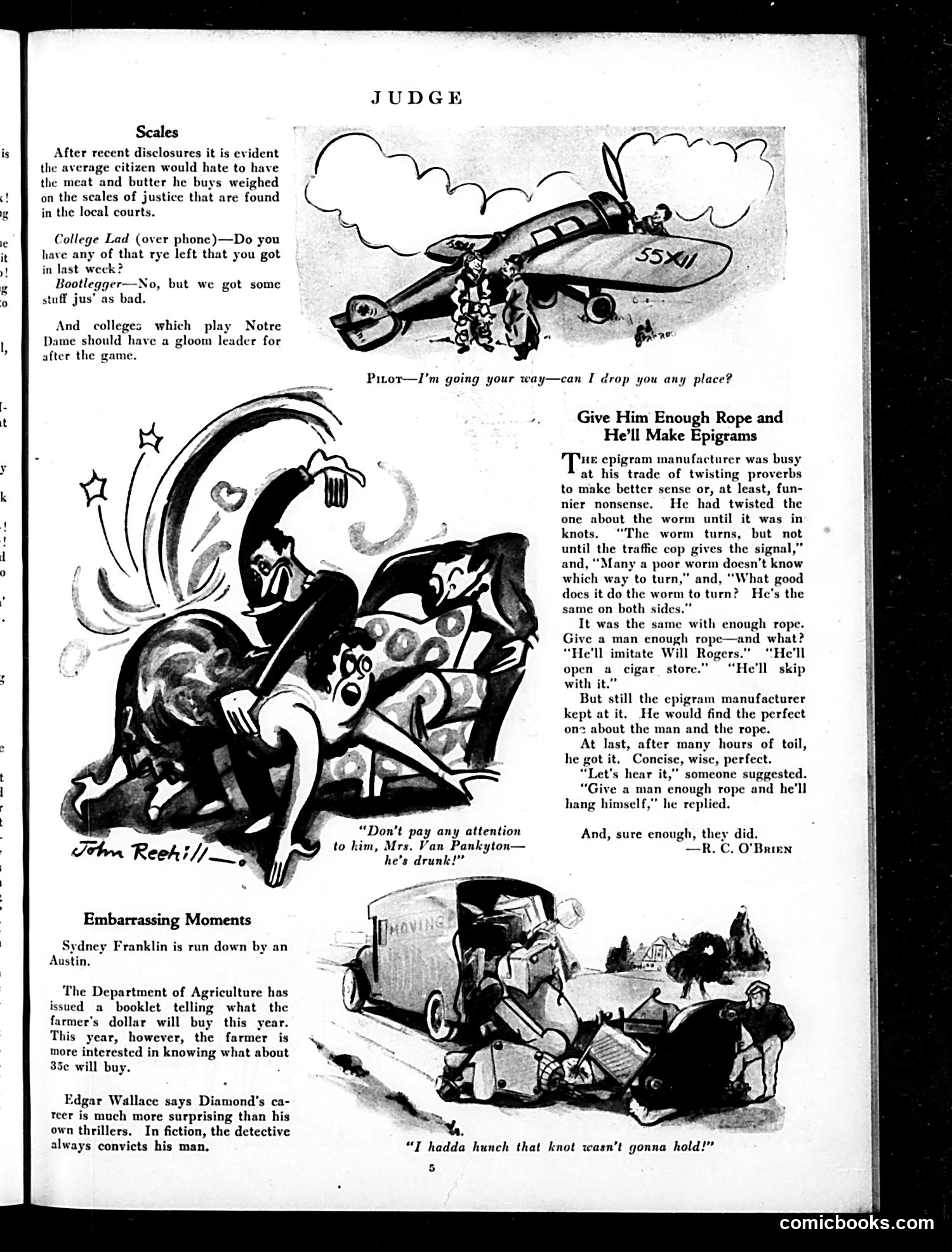
# Judge Magazine Page Analysis This page contains several satirical items from an American humor magazine: **"Scales"** section includes a phone conversation joke about college football, suggesting Notre Dame needs a "gloomy leader" after games—likely referencing the school's football program. **Top cartoon** shows an airplane pilot offering rides, captioned about dropping passengers. The satirical point appears to concern aviation safety or recklessness during early commercial aviation era. **"Give Him Enough Rope and He'll Make Epigrams"** is a longer humorous anecdote about an epigram manufacturer creating proverbs about rope—a play on the expression "give a man enough rope and he'll hang himself." **"Embarrassing Moments"** section includes brief jokes about Australian cars and detective fiction. **Bottom cartoon** depicts a vehicle accident, captioned about a knot not holding—relating to the rope theme above. The overall page emphasizes wordplay and situational humor typical of Judge's satirical style.
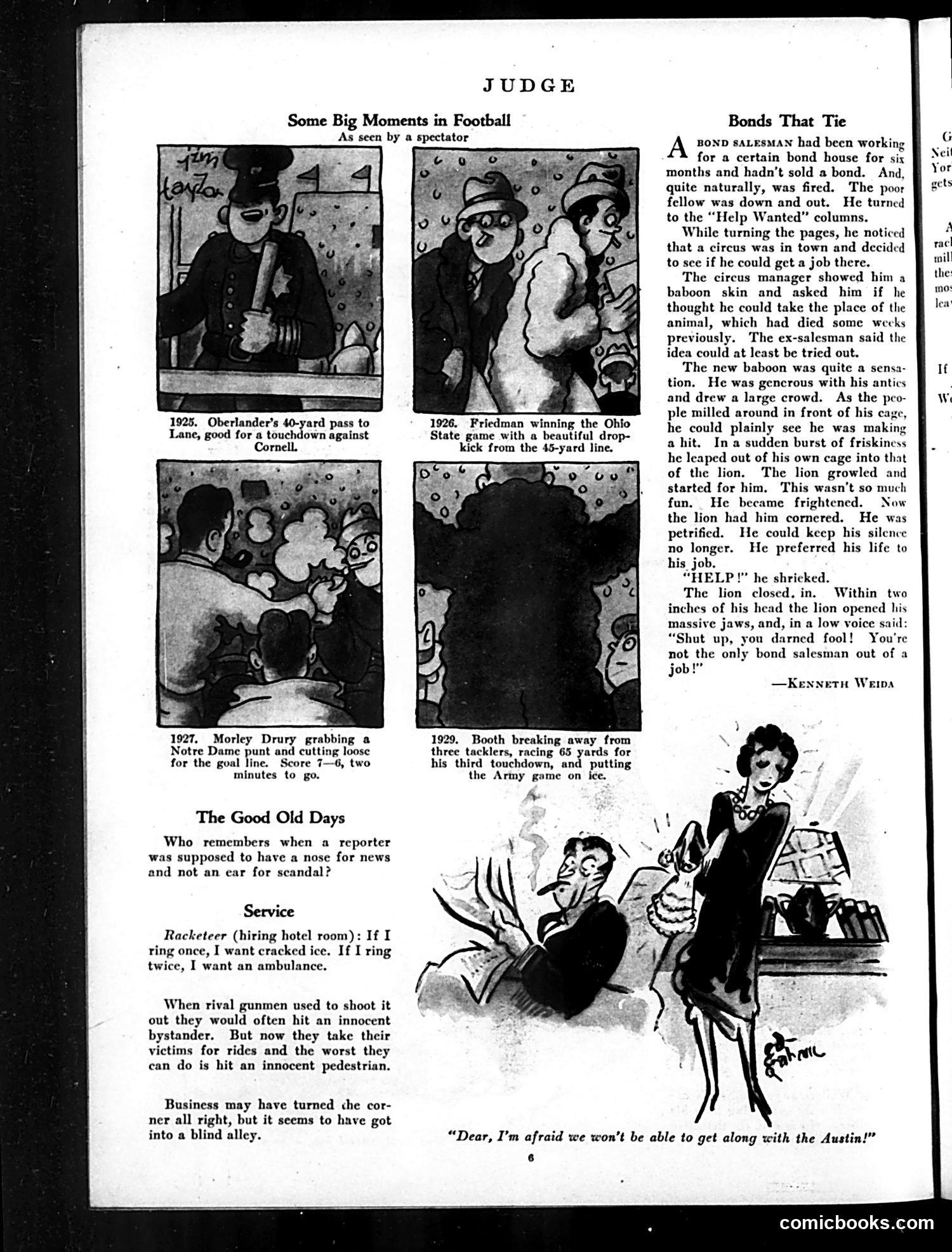
# Judge Magazine Page Analysis This page contains two distinct pieces: **"Some Big Moments in Football"** features four historical football photographs (1923-1929) showing notable plays by Oberlander, Friedman, Morley Drury, and Booth—documenting early professional football's development. **"Bonds That Tie"** is a humorous short story about an unemployed bond salesman who takes a circus job managing a baboon. The story satirizes economic desperation during what appears to be the 1920s-early 1930s period. When the lion escapes and corners him, the lion sarcastically tells him he's "not the only bond salesman out of a job"—a dark joke equating the salesman's failure with the animal's predicament. This reflects widespread job loss and financial anxiety of the era. The page's bottom cartoon about an Austin automobile references marital discord, likely satirizing automobile ownership tensions.
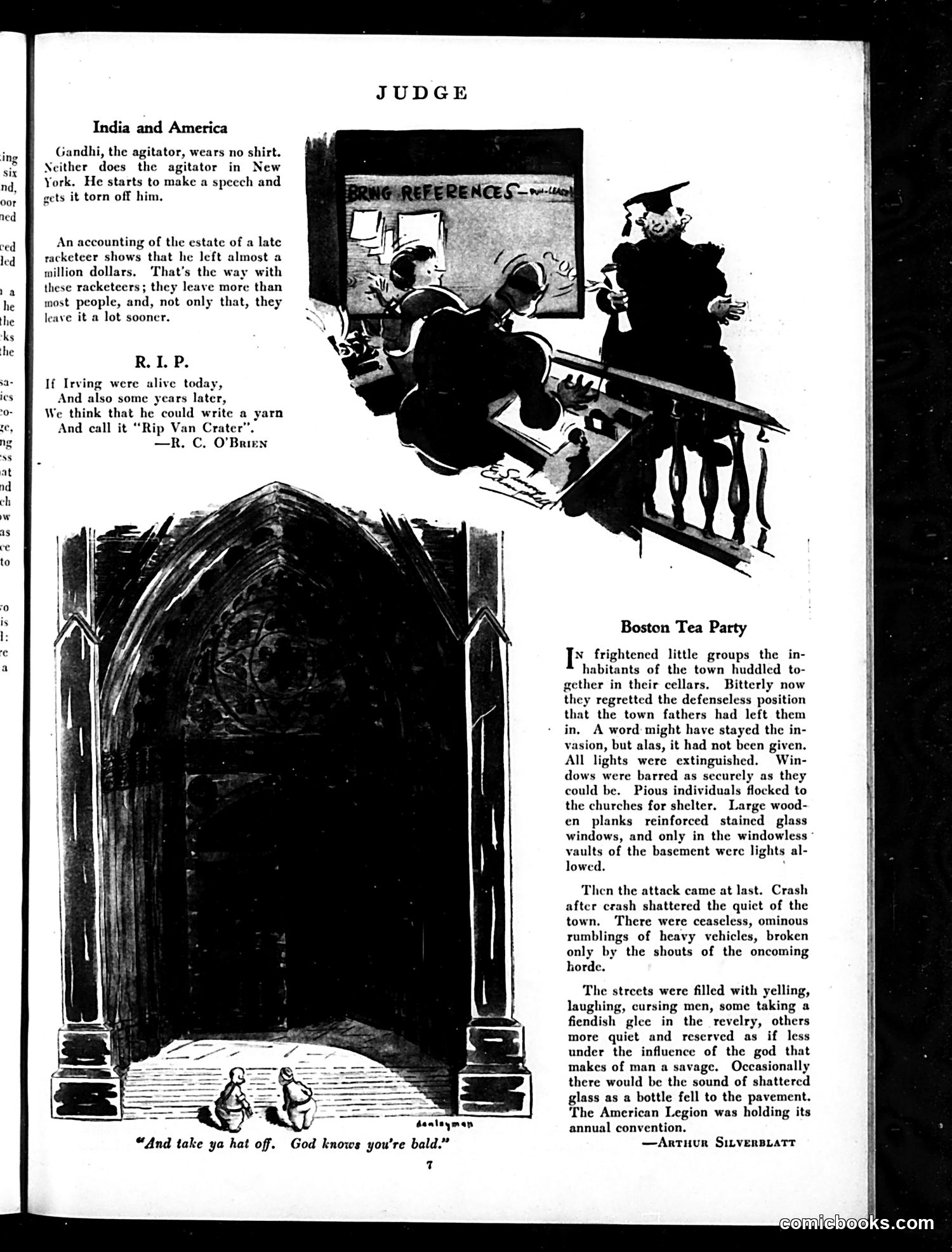
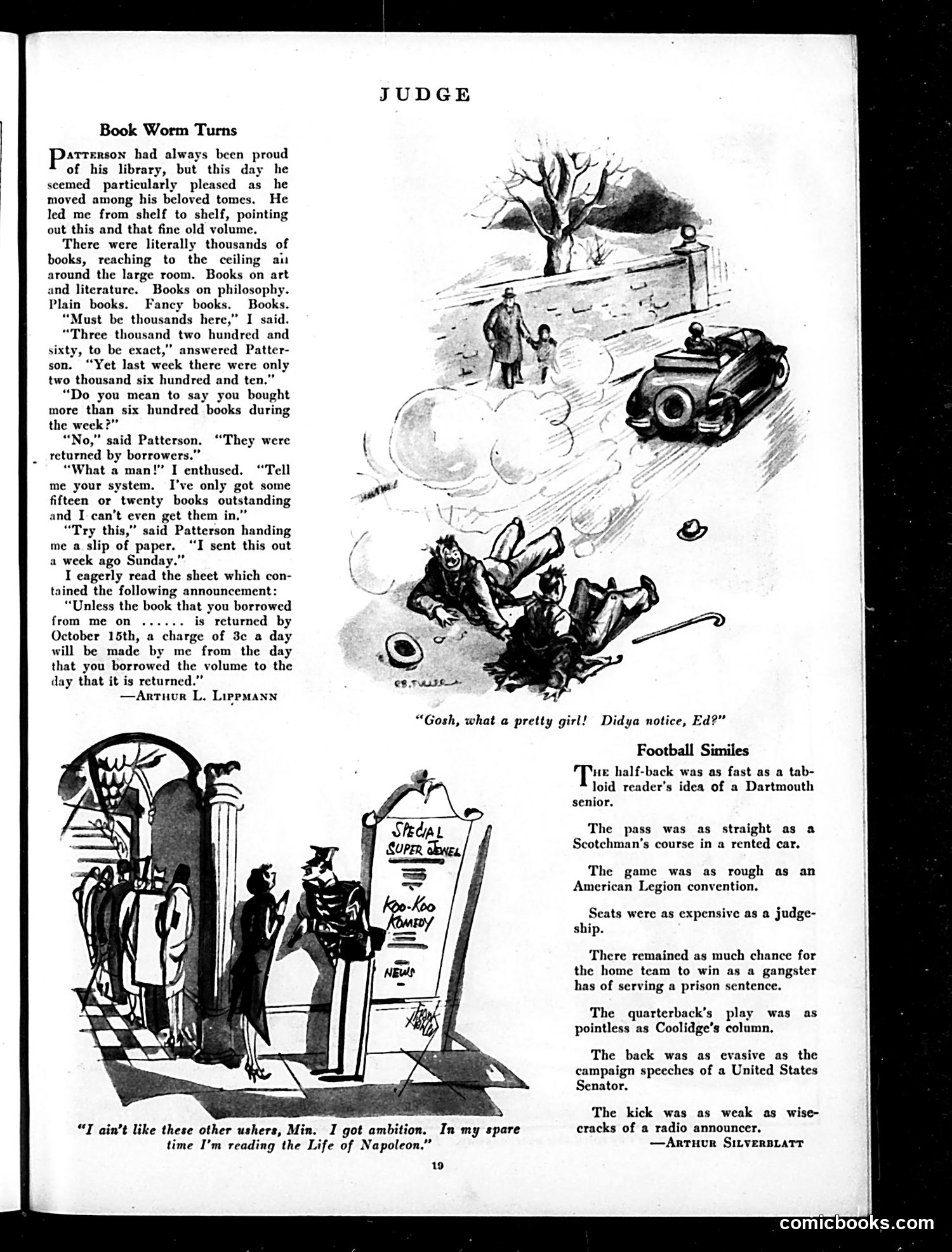
# Judge Magazine Page Analysis This page satirizes American social and political figures through several brief items: **"India and America"** compares Gandhi (the Indian independence leader known for wearing homespun cloth) to a shirtless agitator in New York whose shirt gets torn off during a speech—mocking both as disruptive rabble-rousers. **"R.I.P."** jokes darkly about racketeers (organized crime figures) leaving large estates—implying they die young and violently, unlike legitimate wealthy people. **"Boston Tea Party"** is the page's main satirical piece. Despite its historical title referencing the 1773 protest, the text describes townspeople barricading themselves in fear of an "invasion"—then reveals the "attack" is merely the **American Legion holding its annual convention**. The satire mocks the American Legion as rowdy, destructive vandals (breaking windows, yelling), suggesting the veterans' organization behaves like an invading horde rather than respectable citizens. The bottom cartoon caption appears unrelated social commentary on baldness.
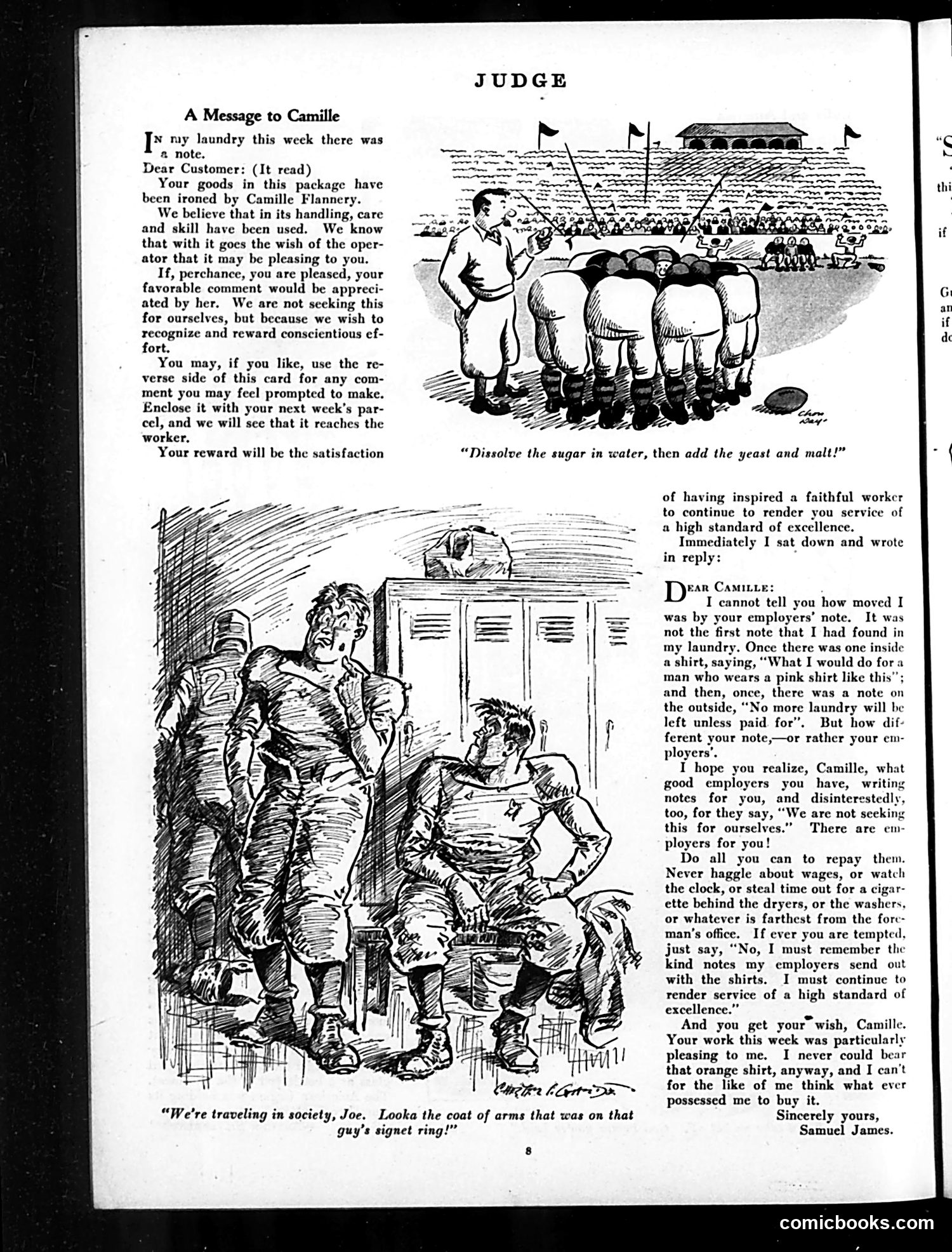
# Judge Magazine Page Analysis This page contains a satirical piece titled "A Message to Camille" critiquing workplace management practices and class relations. The main content is a fictional exchange: a laundry receives a note from their employer praising worker Camille Flannery by name, inviting customer feedback. The "Judge" (author Samuel James) responds with mock-earnest praise, but the satire lies in exposing the paternalism: the employer seeks to manipulate worker loyalty through flattery and public recognition rather than fair wages. James's reply ironically celebrates these "good employers" while listing all the exploitative behaviors workers must suppress—no wage complaints, no time-stealing, constant excellence—framed as gratitude for hollow praise. The two cartoons provide visual commentary: one shows a horse-racing scene (top), another depicts crowded tenement life (bottom). The bottom cartoon's caption mocks pretension ("traveling in society"), reinforcing the page's theme of class hypocrisy and performative virtue among the wealthy.
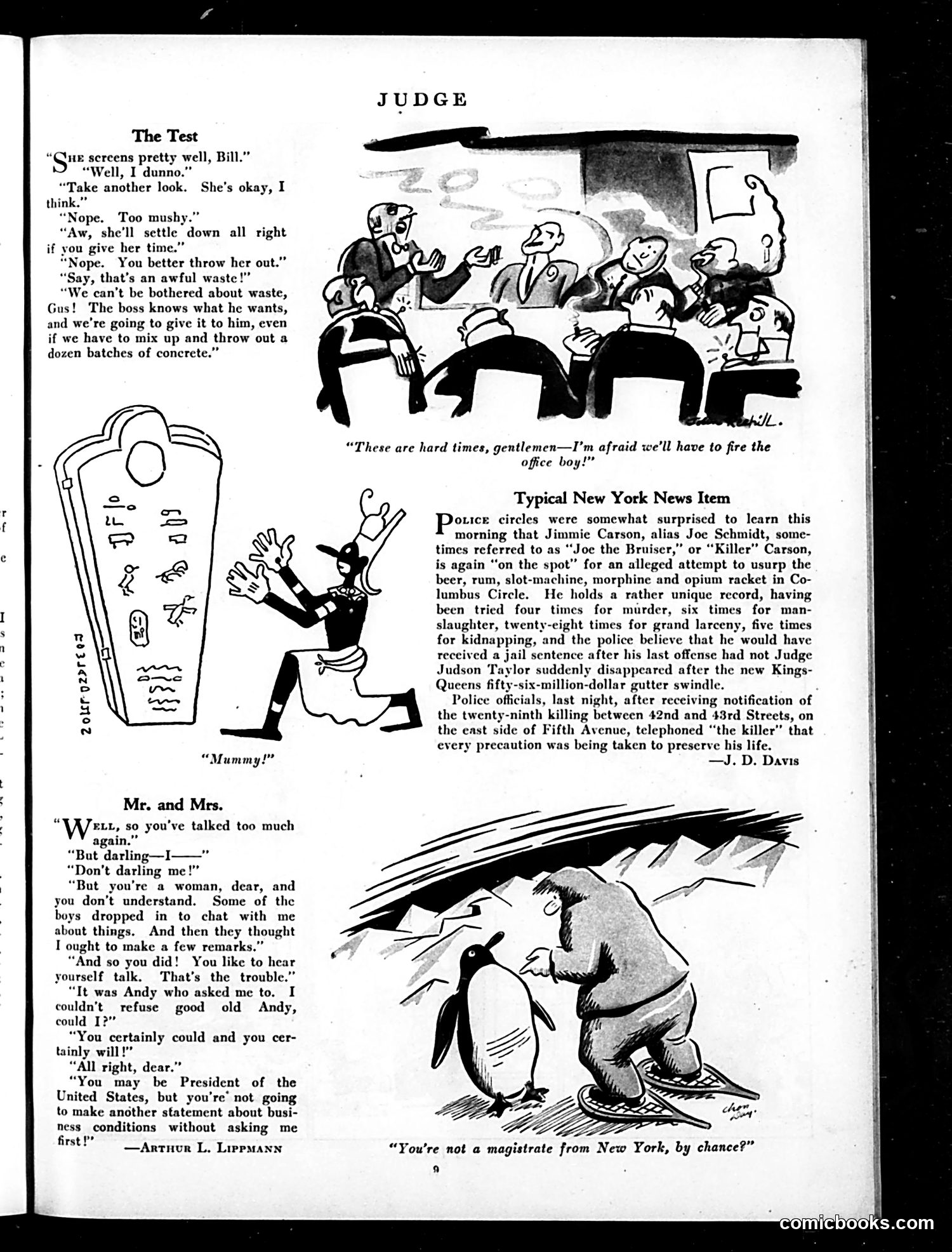
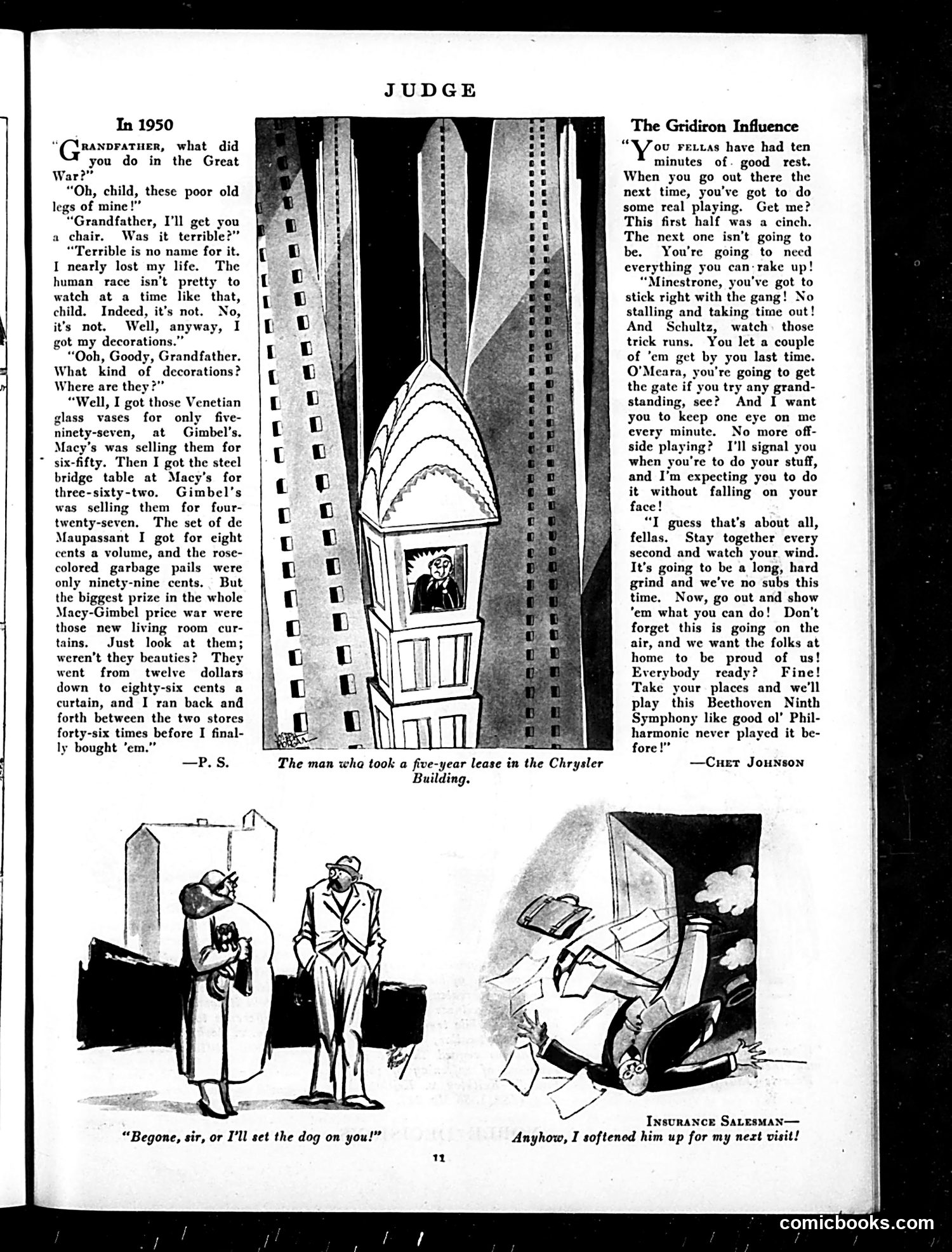
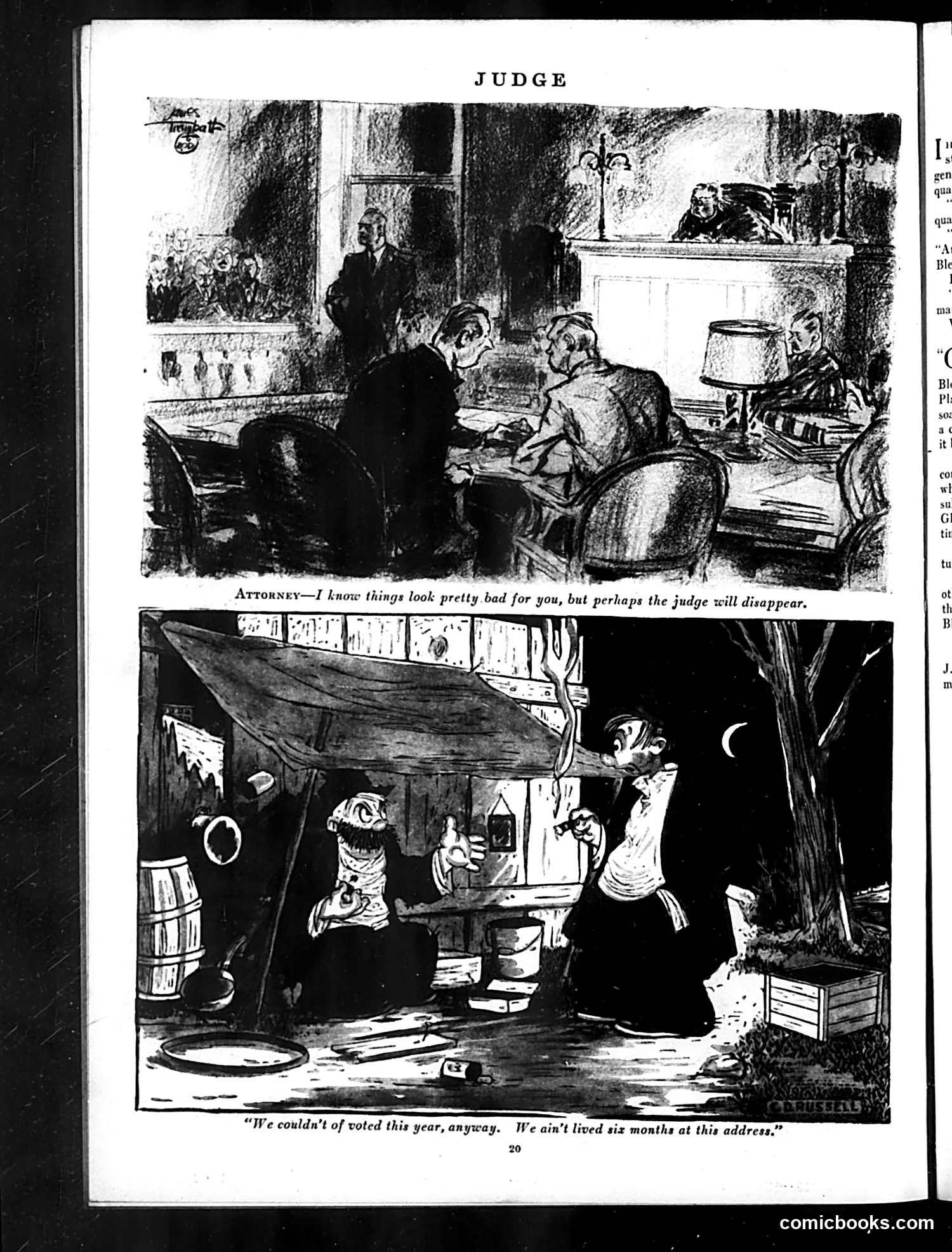
# Understanding This Judge Magazine Page This page contains three satirical pieces from Judge magazine (a humor/political publication): **"The Test"** mocks industrial quality control—bosses discussing discarding defective concrete batches, indifferent to waste as long as the product meets specifications. It's commentary on ruthless efficiency in manufacturing. **"Mr. and Mrs."** by Arthur L. Lippmann satirizes a spouse (likely a political figure—possibly a president, given the reference) who cannot make public statements about business without his wife's approval. It jokes about domestic control over political speech. **"Typical New York News Item"** parodies hardened crime reporting. "Joe the Bruiser" is a career criminal with an absurd rap sheet (tried for murder multiple times, countless arrests) who remains untouchable because Judge Judson Taylor mysteriously disappeared during a corruption scandal. The final line—police assuring "the killer" they're protecting his life—is dark satire on judicial/police corruption and the criminal's apparent immunity. The page reflects 1920s-30s concerns: industrial indifference, political wives' influence, and urban organized crime connected to judicial corruption.
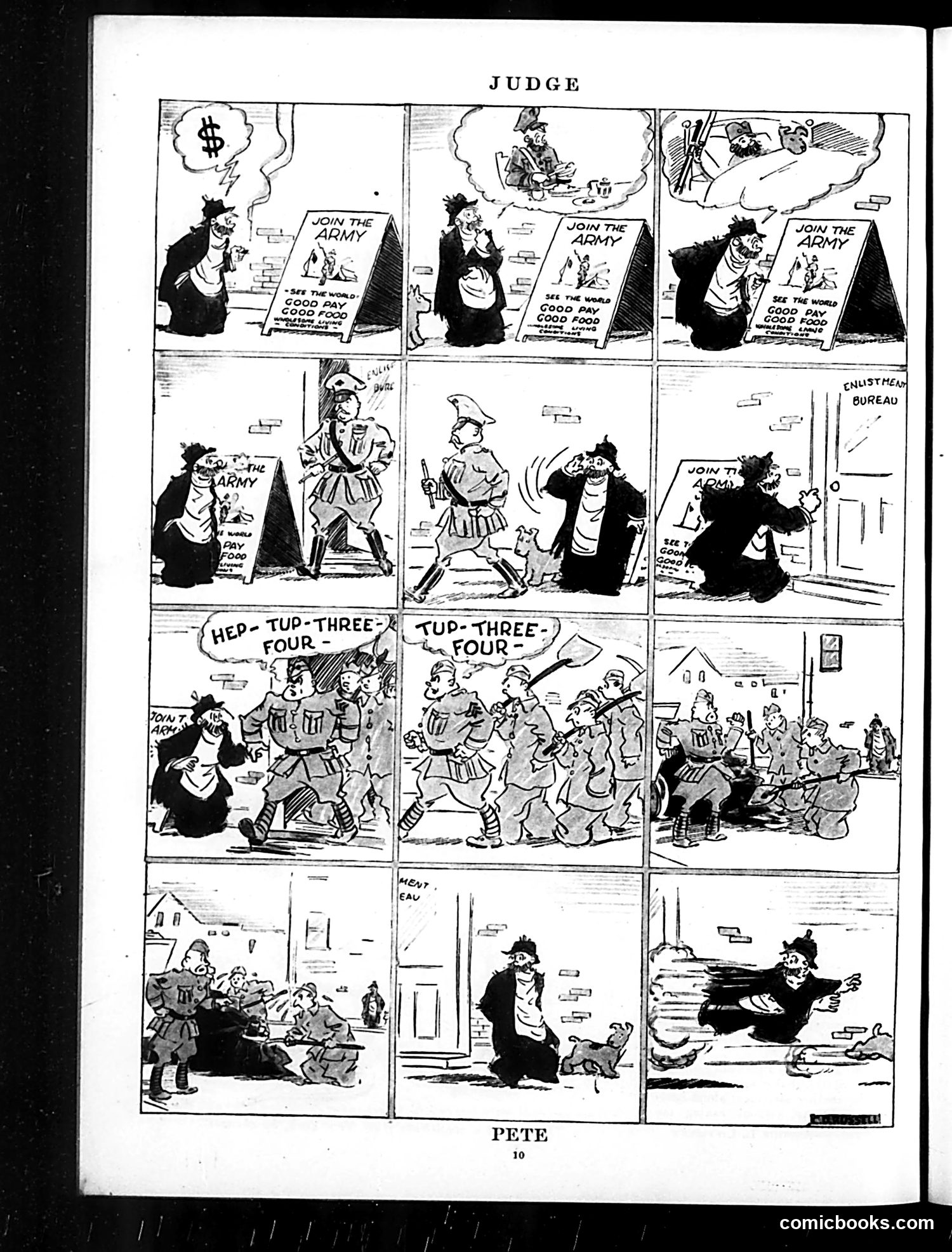
# "Judge" Page Analysis This satirical comic titled "Judge" and credited to "Pete" depicts a caricatured figure (appearing to represent a corrupt politician or official) attempting to recruit soldiers for the Army. The figure displays a "$" symbol and a "JOIN THE ARMY" sign promising "SEE THE WORLD, GOOD PAY, GOOD FOOD." The satire critiques military recruitment tactics, suggesting officials use financial incentives and false promises to attract enlistees. The narrative shows recruits being marched into military service (with "HEP-TUD-THREE-FOUR" drill commands), then depicts them in what appears to be disillusionment—ultimately shown in poverty or hardship. The cartoon satirizes the gap between Army recruitment propaganda and soldiers' actual experiences, likely referencing early 20th-century American military expansion or WWI-era recruitment practices.