A complete issue · 36 pages · 1930
Judge — October 25, 1930
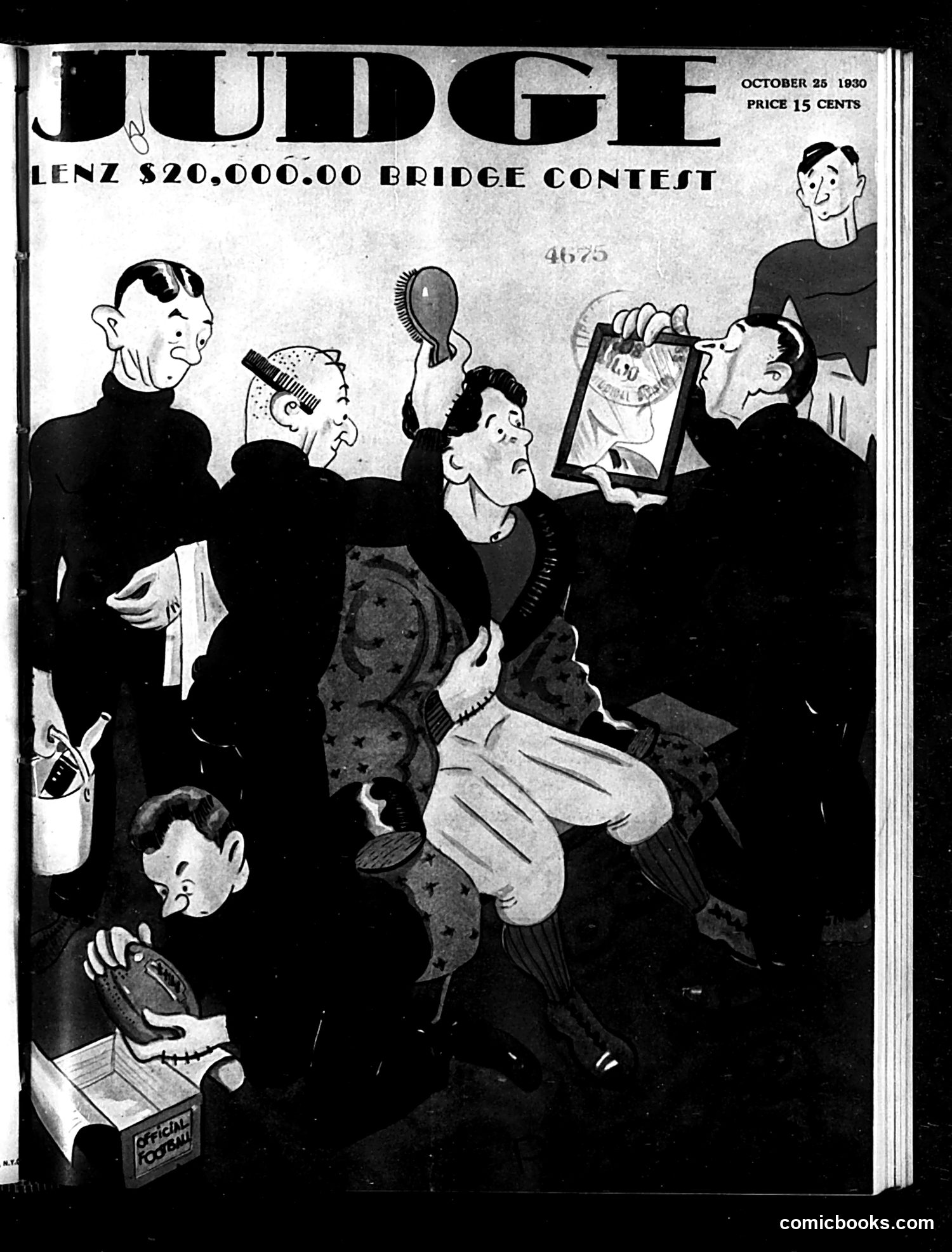
# Judge Magazine Cover Analysis - October 25, 1930 This satirical cover depicts a "Lenz $20,000.00 Bridge Contest," referencing what appears to be a contemporary contest or wager. The exaggerated caricatures show several men in suits examining and displaying documents or prizes, with excited, scheming expressions typical of Judge's style. The satire likely mocks either a dubious contest promotion, get-rich-quick schemes popular during the Great Depression era, or possibly a famous bridge-related competition. The men's animated gestures and the visible prize materials suggest commentary on gullibility or the promotion of unrealistic financial opportunities to the public during economically desperate times. Without identifying specific individuals, the cartoon critiques what appears to be exploitative marketing or unrealistic promises to ordinary citizens.
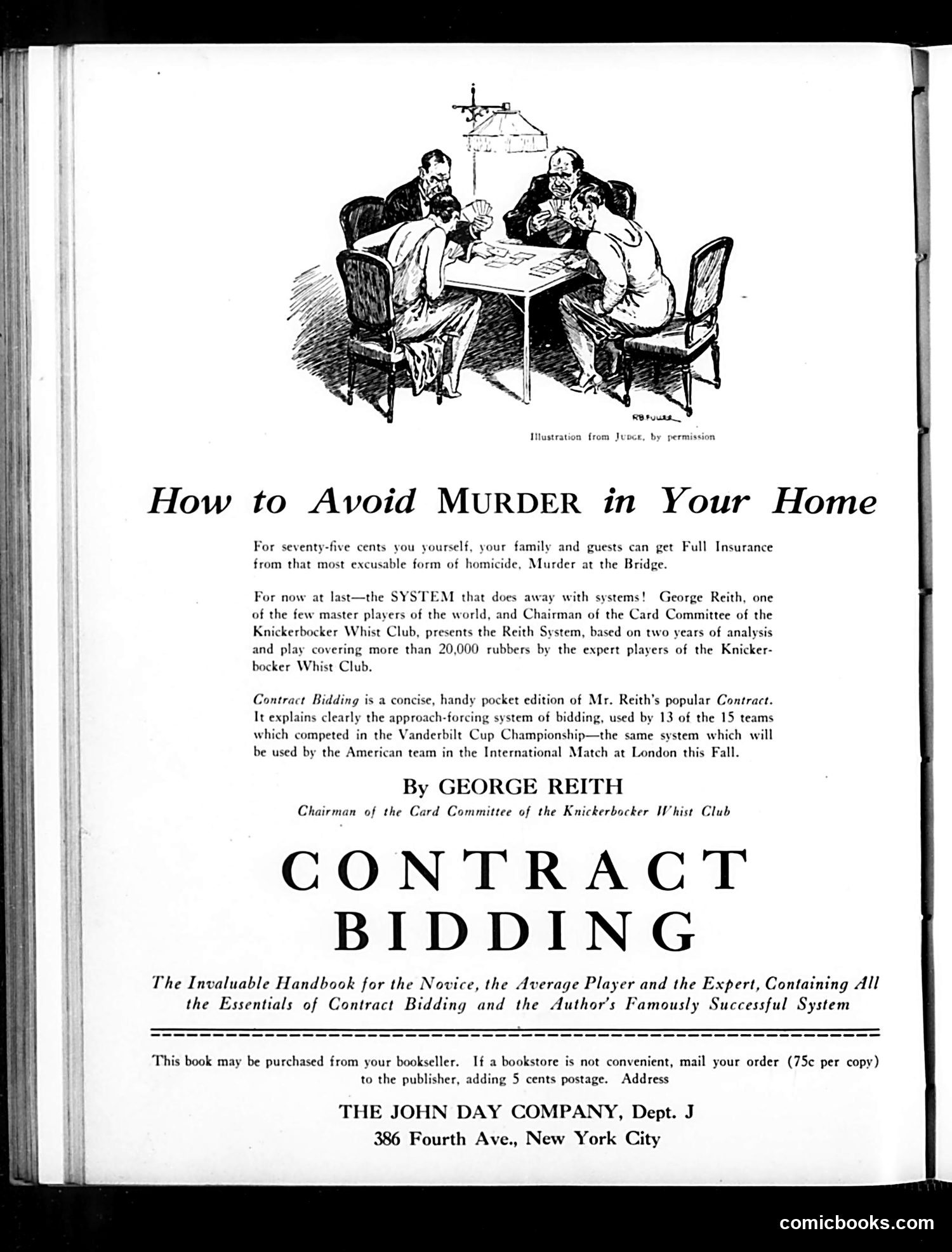
# Analysis This page is primarily an **advertisement** for George Reith's "Contract Bidding" book, published by The John Day Company. The satirical hook—"How to Avoid Murder in Your Home"—is a humorous metaphor: "murder at the bridge" means losing badly at contract bridge, the popular card game. The illustration shows four men playing bridge, likely depicting the anxiety and conflict the game can provoke among players. The ad claims Reith's system, based on analysis of 20,000 rubbers from the Knickerbocker Whist Club, will improve bidding strategy. It was used by 13 of 15 teams in the Vanderbilt Cup Championship and would be used by the American team in an International Match in London. The "murder" framing is pure marketing hyperbole—bridge was a serious competitive pastime for the educated classes in this era.
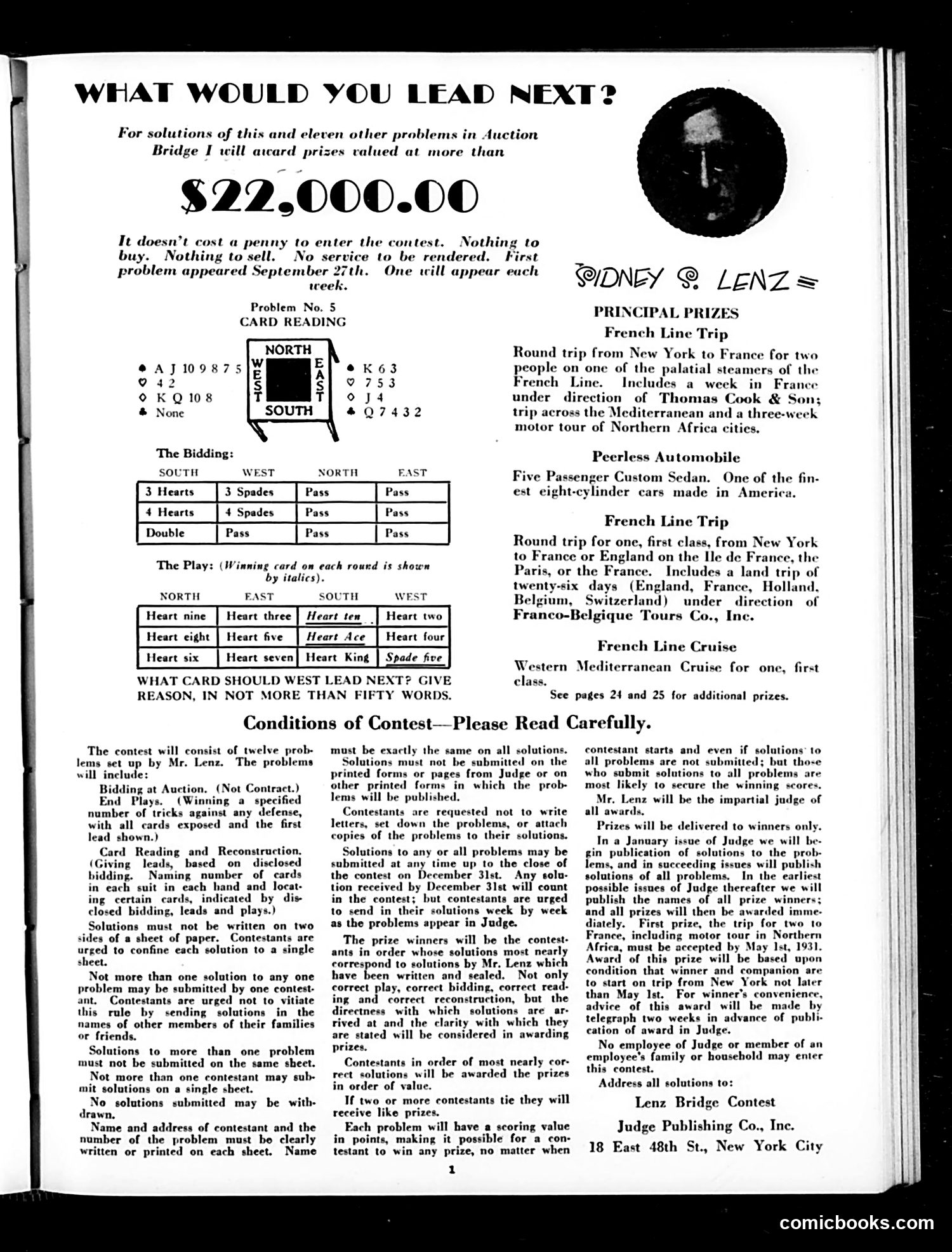
# Analysis This page is primarily a **bridge puzzle contest advertisement** rather than satire or editorial content. The main feature is "Problem No. 5: Card Reading"—a contract bridge problem for readers to solve. The only figurative element is a **portrait photograph** labeled "SIDNEY S. LENZ" at top right, identified as the contest's authority figure. Lenz was a famous bridge expert of the era. The page offers substantial prizes ($22,000 total value) for solving twelve bridge problems, including trips to France and a Peerless automobile. Contest rules and submission instructions occupy most of the space. This represents **Judge magazine's non-satirical content**—games and contests designed to engage readers and presumably drive subscriptions, rather than political or social commentary.
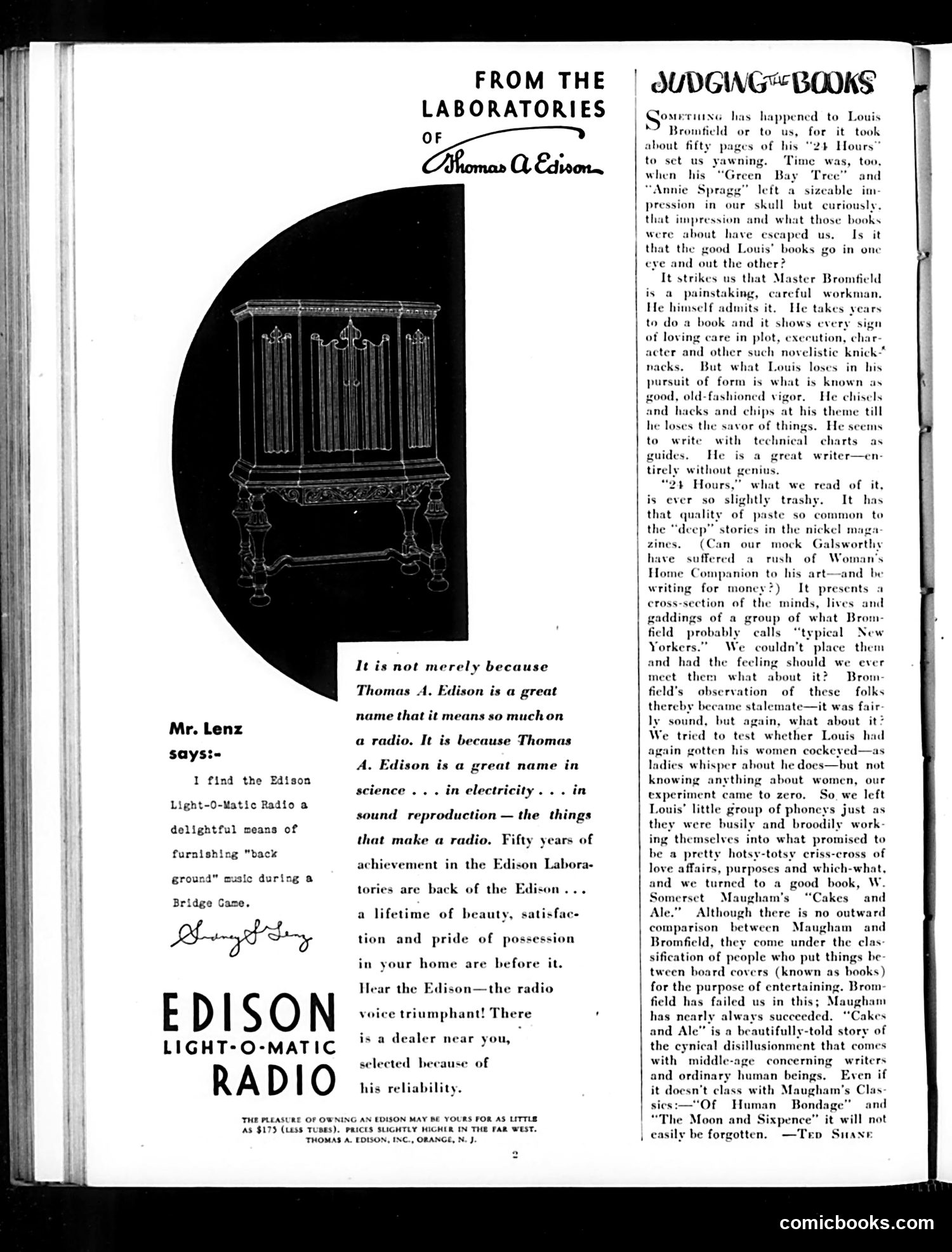
# Page Analysis: Judge Magazine This page is primarily **advertising and book review**, not political satire. The left side features an **Edison Light-O-Matic Radio advertisement** from Thomas A. Edison Inc. (Orange, N.J.), showing an ornate radio cabinet. The ad emphasizes Edison's reputation in science and electricity to sell radios to consumers. The right side contains a book review by "Judging the Books" columnist Ted Shank, critiquing Louis Bromfield's novel "24 Hours." The reviewer praises Bromfield's craftsmanship but dismisses the book as "slightly trashy"—typical nickel-magazine paste. The review compares Bromfield unfavorably to Somerset Maugham, noting Bromfield succeeds where Maugham's "Cakes and Ale" fails at serious literature. This is representative Judge content: advertising mixed with cultural commentary for educated middle-class readers.
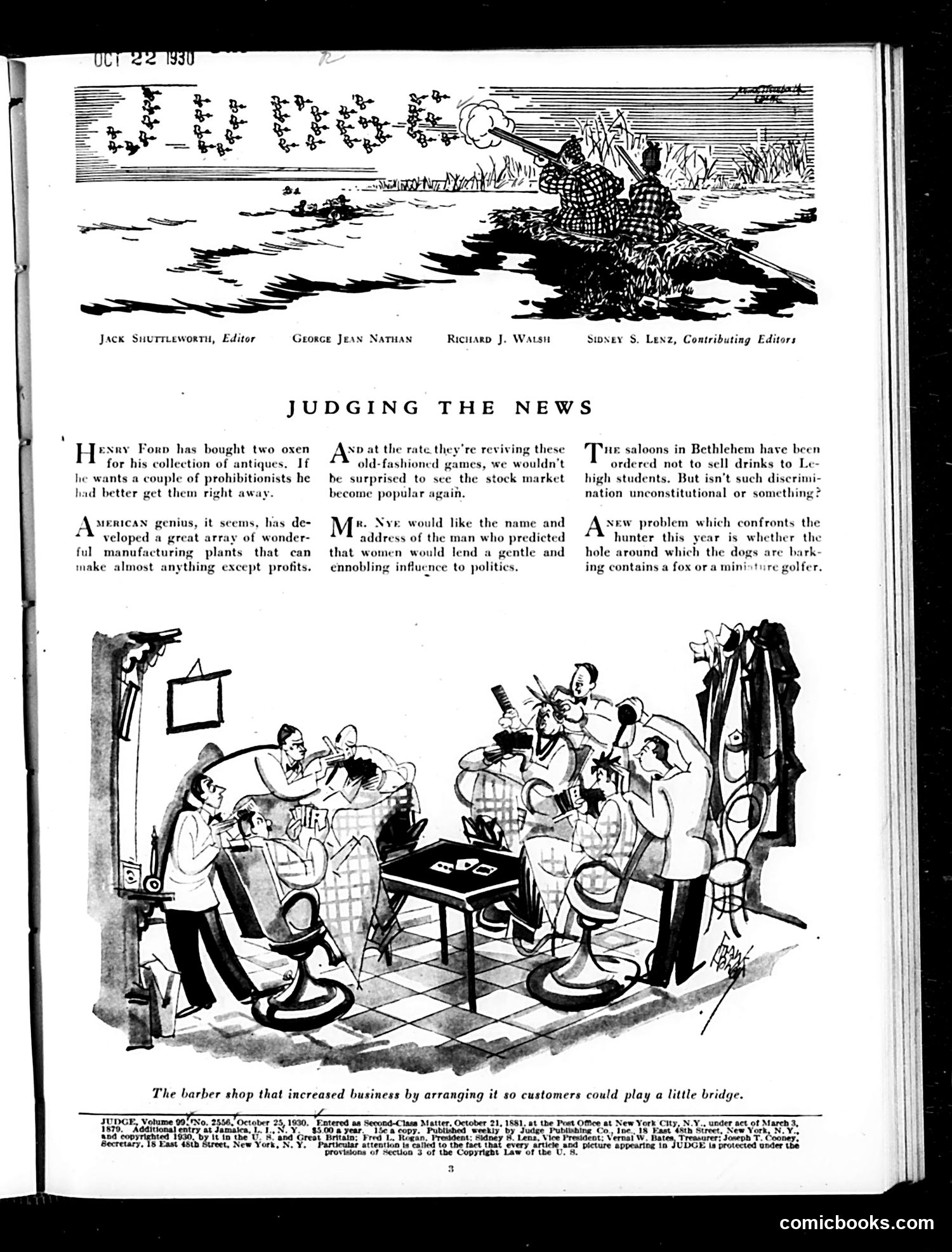
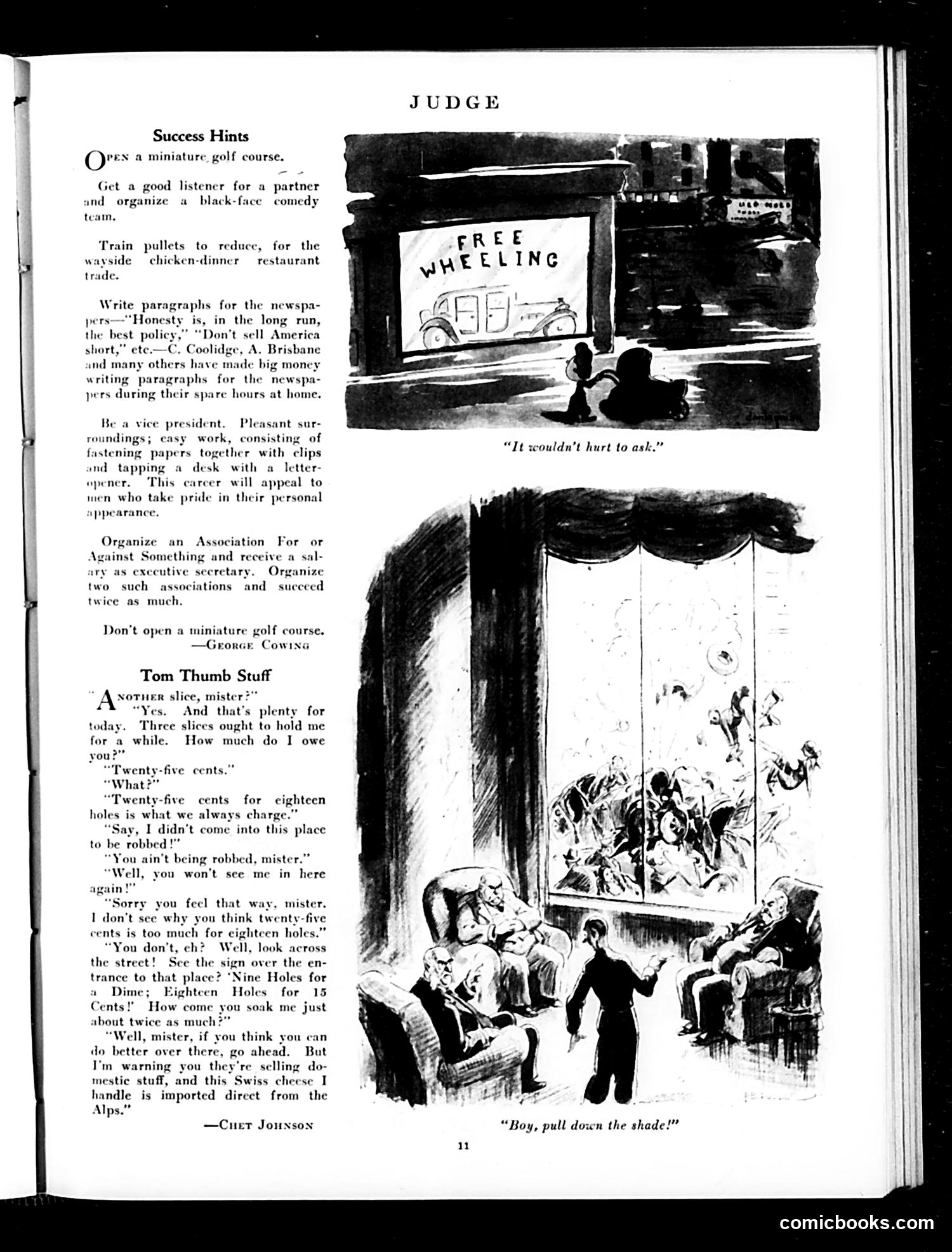
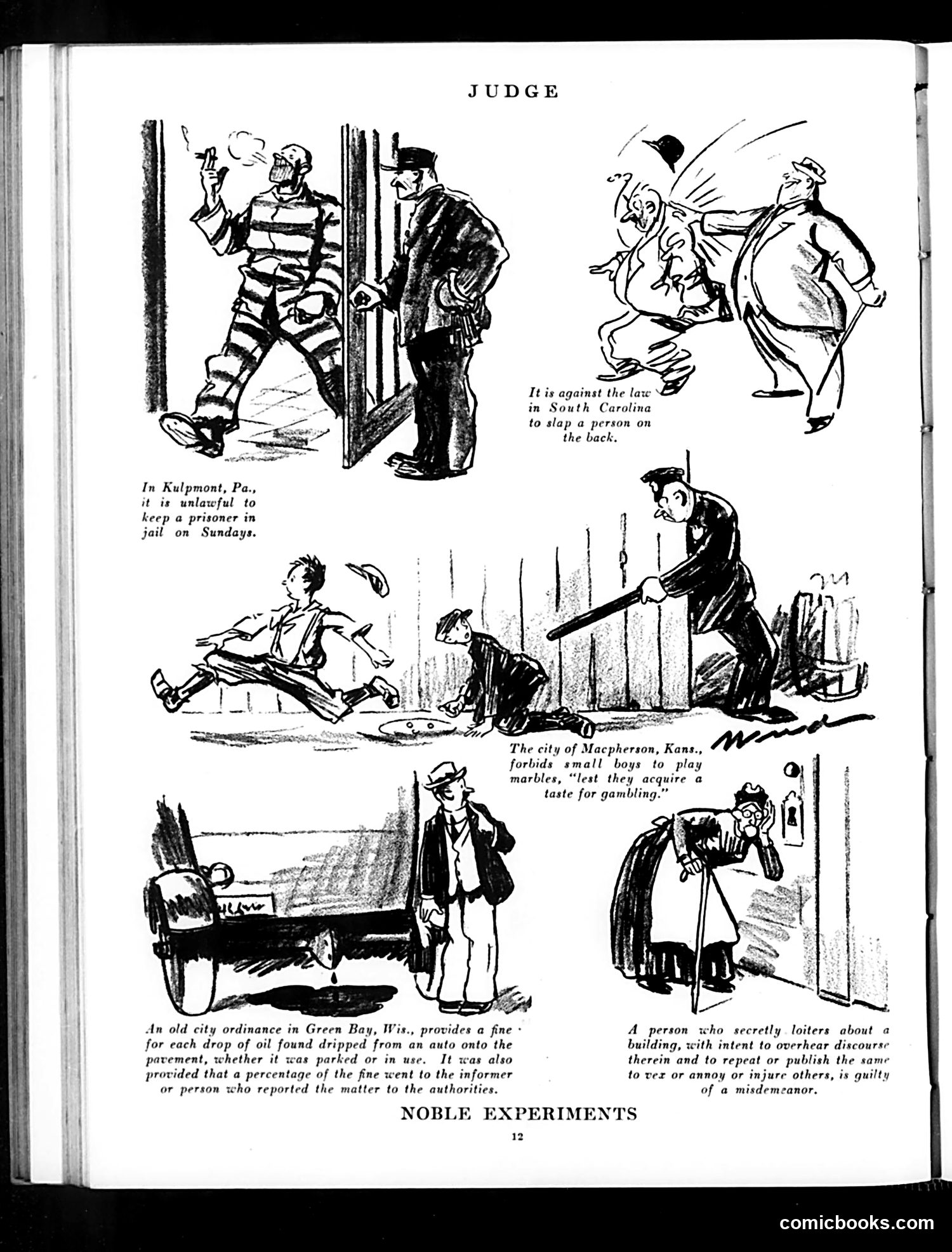
# Analysis of Judge Magazine Page (October 22, 1930) The main cartoon depicts a barber shop where the proprietor has increased business by installing a bridge table for customers to play while waiting. The humor relies on a simple commercial strategy: providing entertainment to make the wait more pleasant and encourage patrons to linger. The "Judging the News" section above contains brief satirical commentary on contemporary topics: Henry Ford's antique purchases, American manufacturing ingenuity, stock market recovery, women's political influence, and hunting season concerns about foxes in miniature golf holes. This appears to be typical light social satire from the Depression era, focusing on consumer culture, leisure activities, and everyday observations rather than heavyweight political commentary. The cartoons target middle-class concerns and commercial innovations of the period.
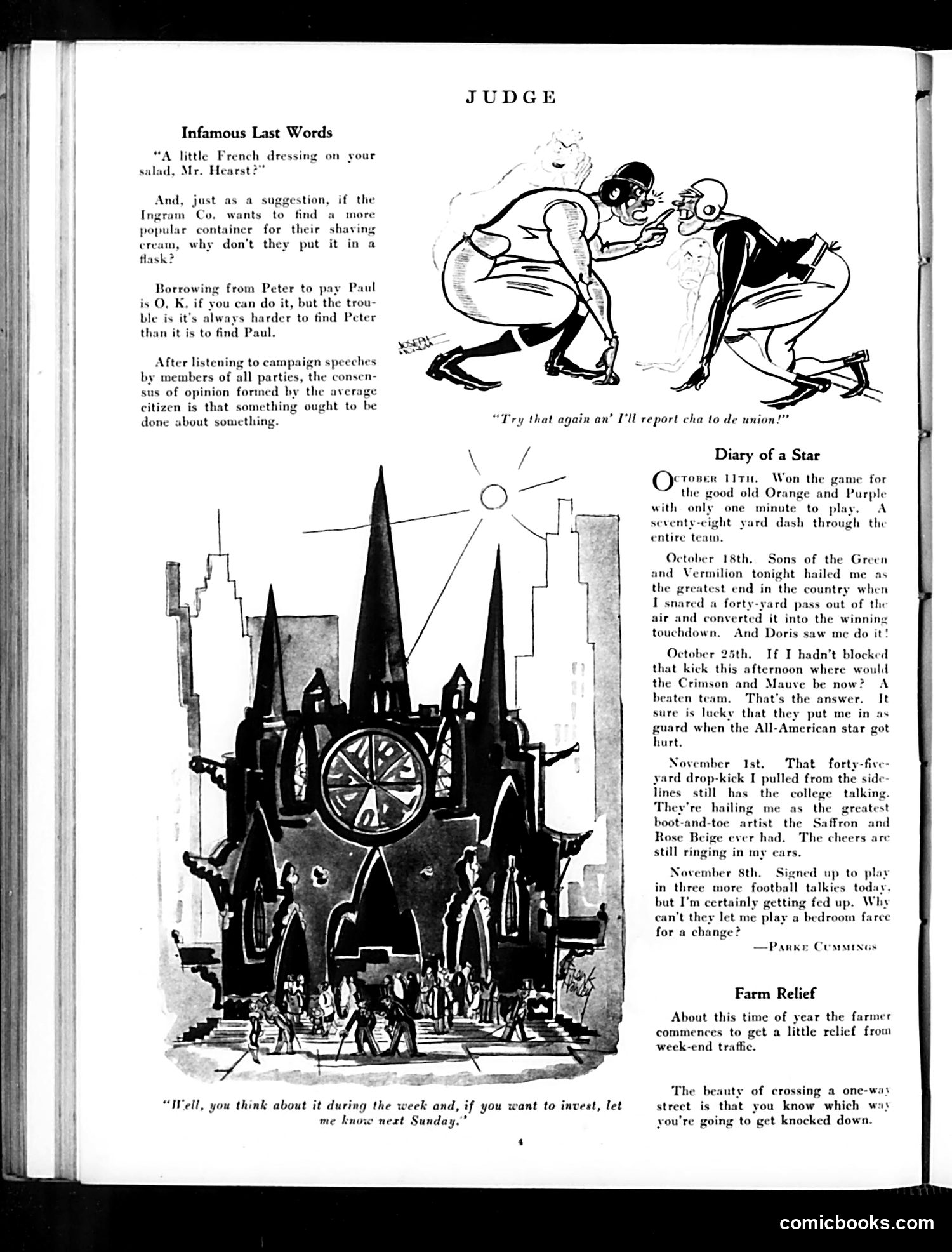
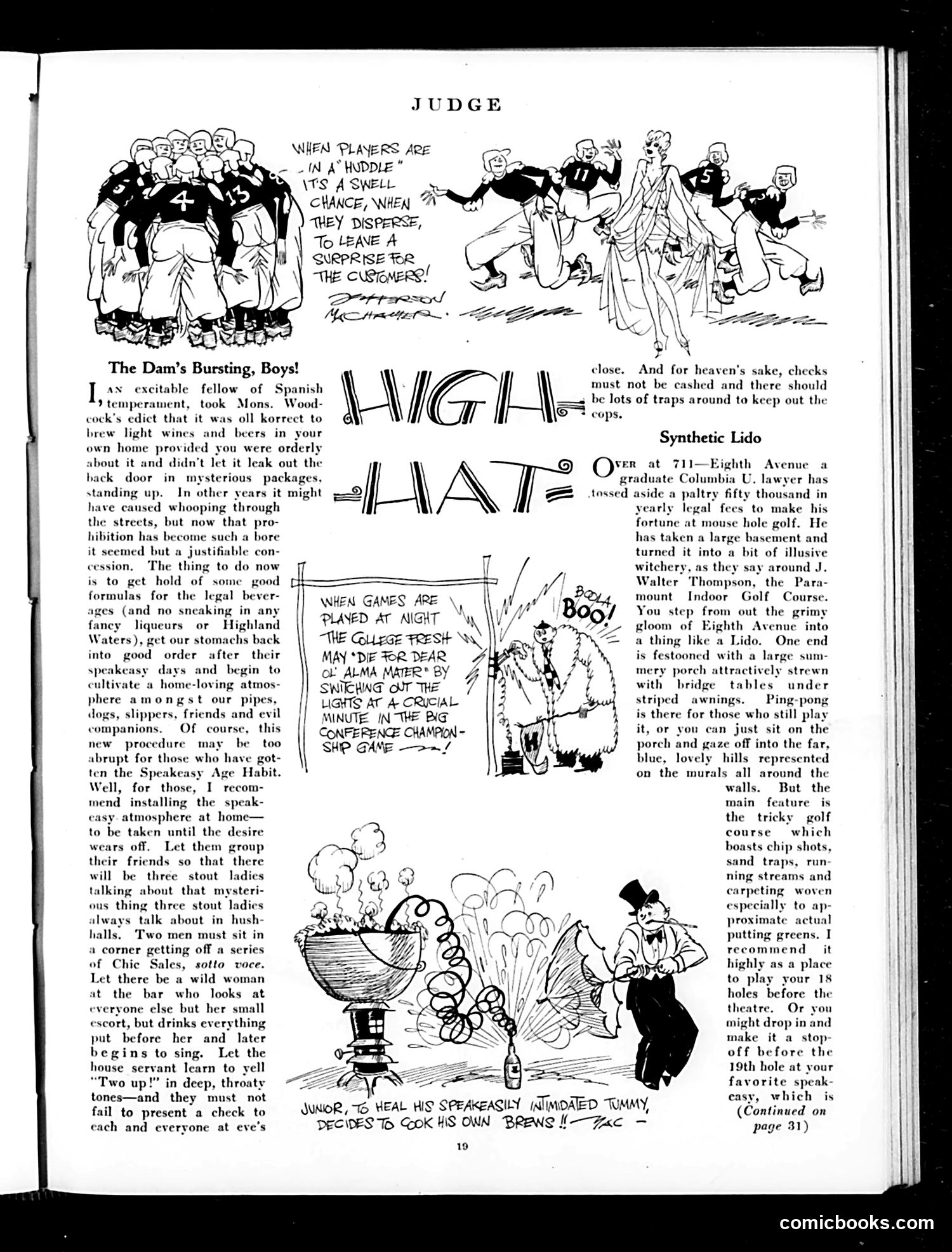
# Judge Magazine Page Analysis This page contains three separate humor pieces: **"Infamous Last Words"** offers brief satirical quips about everyday annoyances—French dressing containers, finding shaving cream, and the difficulty of borrowing money. **The large cathedral illustration** accompanies a caption about financial investment decisions, satirizing how people postpone important choices until the weekend. **"Diary of a Star"** by Parker Cummings chronicles a football player's experiences in October-November, including a notable 45-yard drop-kick and complaints about repeated football talks and "bedroom farce" assignments—likely mocking both athletic celebrity culture and theatrical entertainment schedules of the era. **"Farm Relief"** is a brief joke about rural traffic and the hazards of crossing one-way streets. The page demonstrates Judge's mix of social commentary, sports satire, and everyday humor typical of early-to-mid 20th century American magazines.
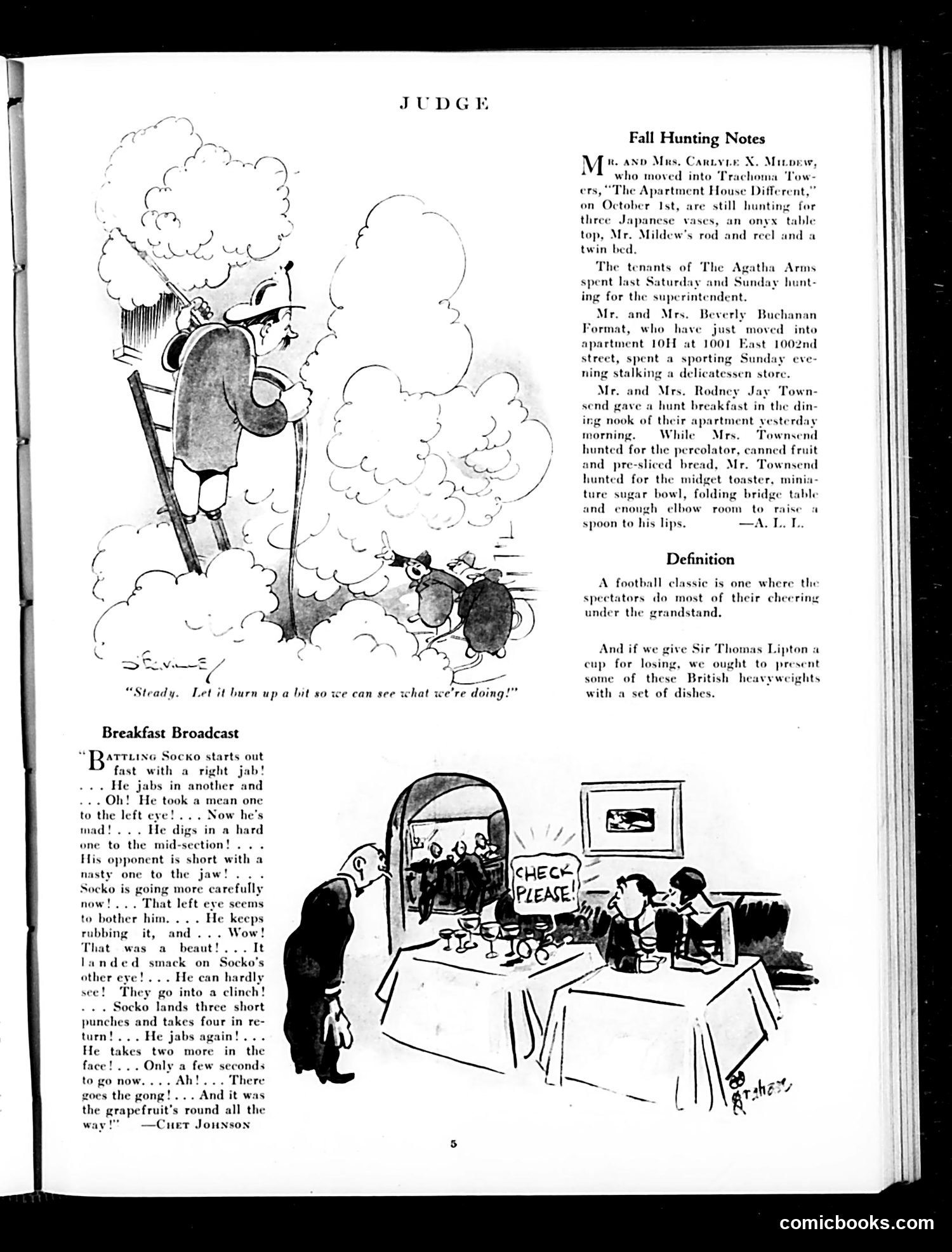
# Page Analysis: Judge Magazine This page contains three separate pieces: 1. **"Fall Hunting Notes"**: Social commentary on upper-middle-class apartment dwellers in what appears to be 1920s Manhattan, describing their weekend hunting excursions and domestic activities with gentle humor. 2. **Top cartoon**: A hunter in a tree shoot-out, captioned "Steady. Let it burn up a bit so we can see what we're doing!" — satirizing unsafe or comedic hunting practices. 3. **"Breakfast Broadcast"**: A detailed play-by-play of a boxing match (featuring "Battling Socko"), written in sportscaster style. The accompanying cartoon shows a restaurant scene where diners are being checked/examined, likely satirizing health inspections or regulations of the era. The overall tone targets middle-class leisure activities and emerging mass media (radio broadcasts of sporting events).
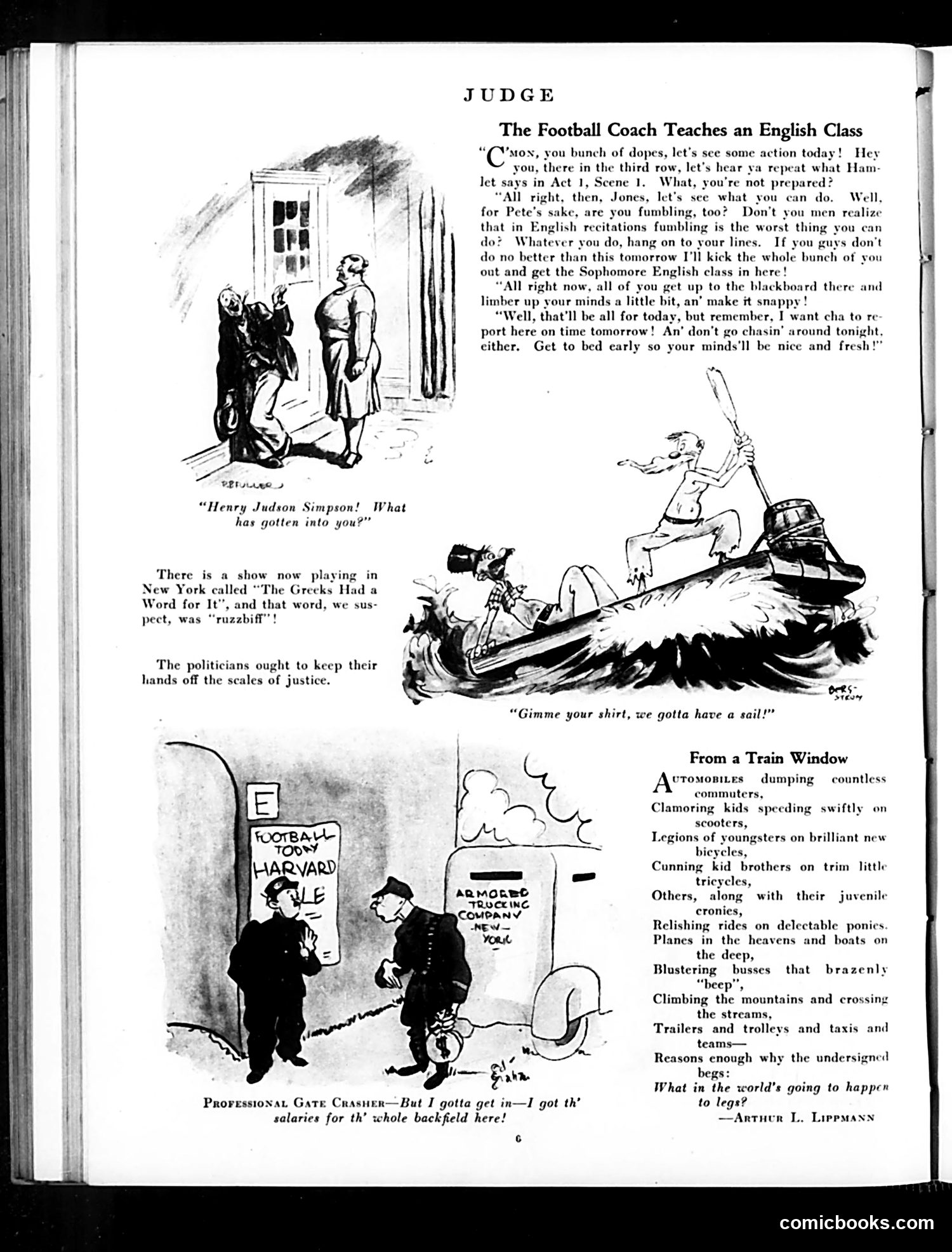
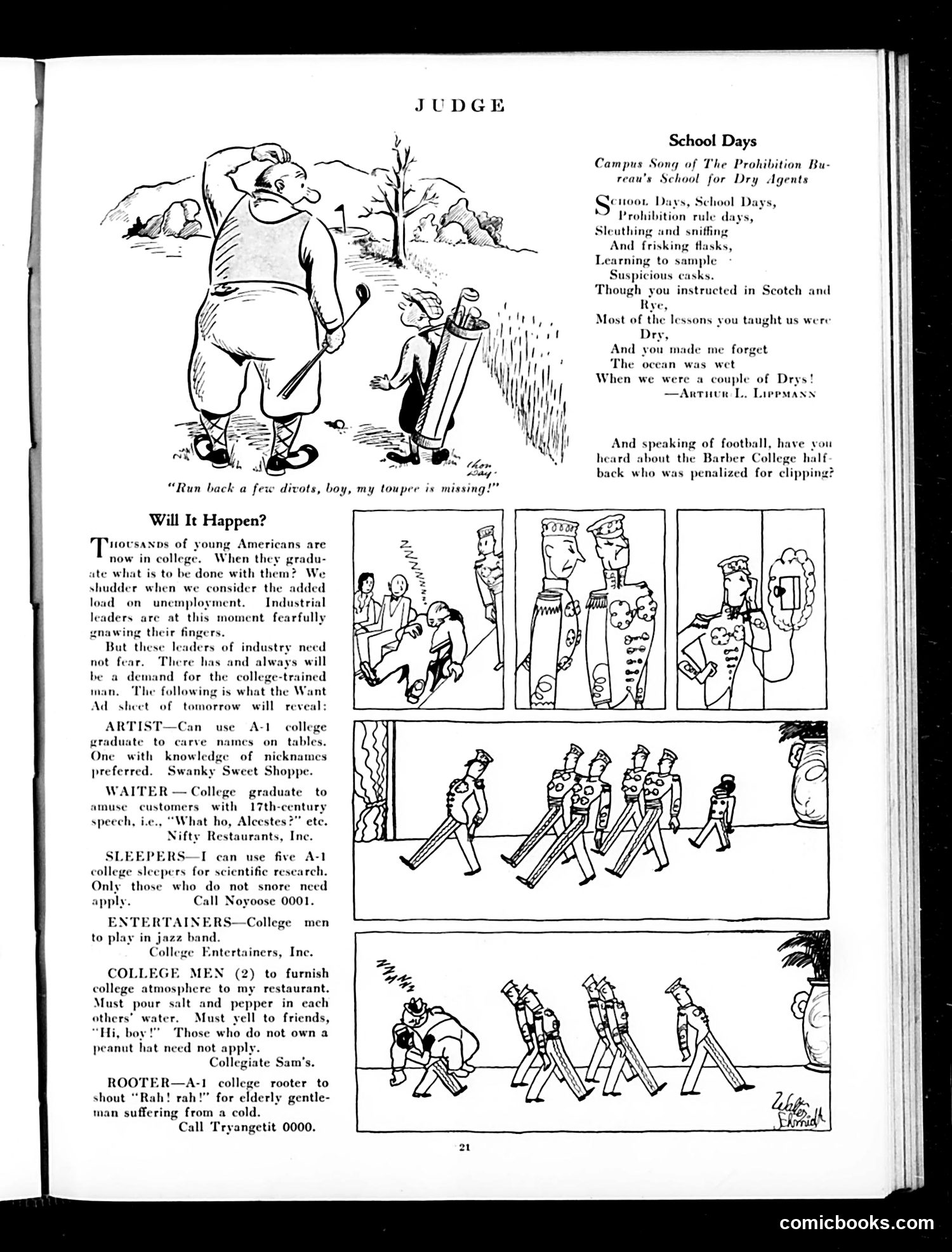
# "Judge" Magazine Page Analysis This page contains three satirical sketches: 1. **"The Football Coach Teaches an English Class"** mocks a tough football coach (likely a stereotype of the era) attempting to teach Shakespeare. His crude, aggressive coaching style clashes absurdly with literature instruction—he threatens to "kick the whole bunch of you out" if students don't pay attention. 2. **"Professional Gate Crasher"** depicts a man bragging about sneaking into Harvard's football stadium without paying, suggesting he'll do the same at other venues. The joke targets both gate-crashers and the vulnerability of event security. 3. **"From a Train Window"** is a poetic piece listing observations of American life—commuters, children, rural scenes—reflecting on society's ordinary details. The page satirizes American education, sports culture, and social behavior typical of early-20th-century concerns.
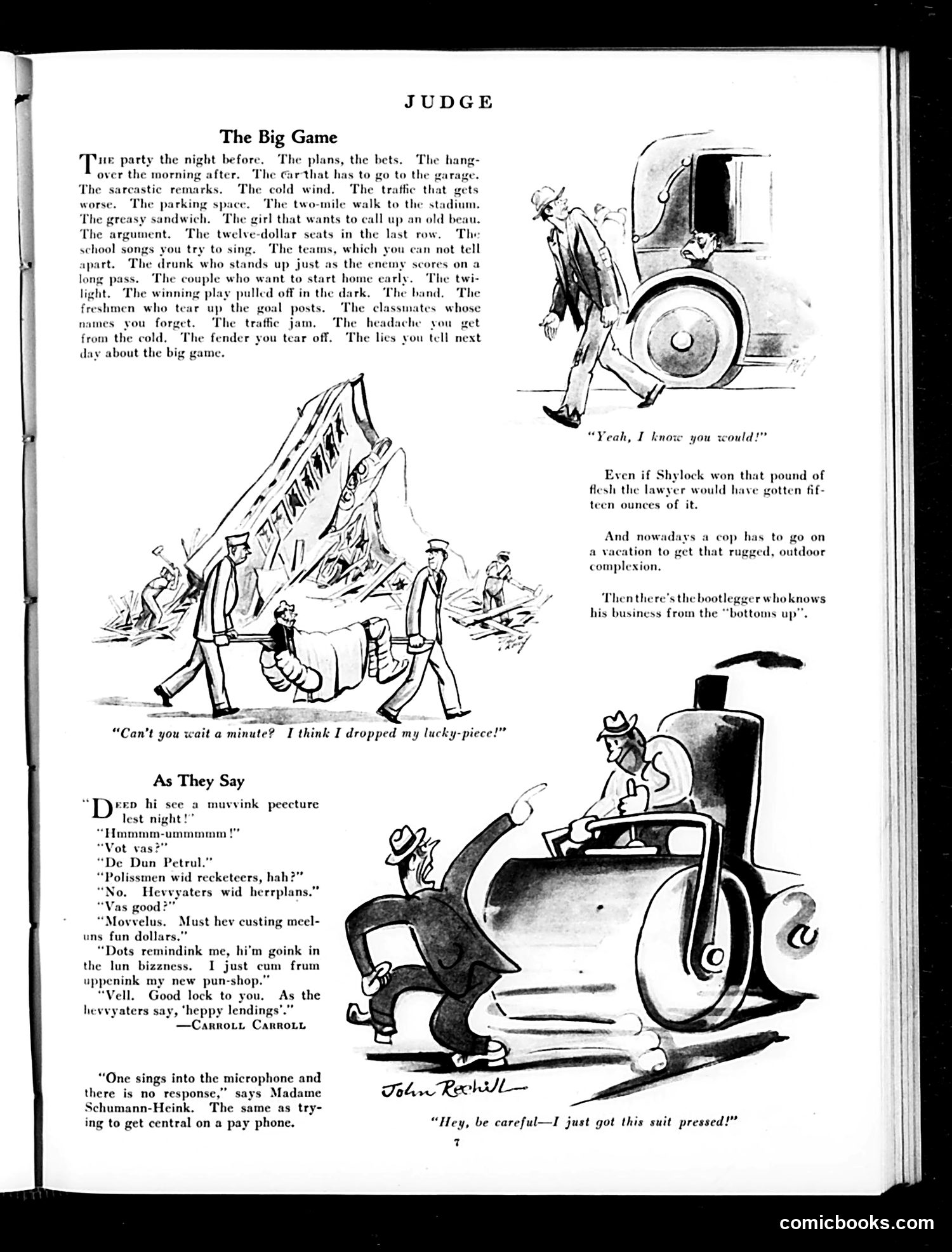
# Judge Magazine Page Analysis This page contains several satirical pieces about early 20th-century American life: **"The Big Game"** mockingly catalogs the miserable experience of attending a college football game—the hangover, cold weather, parking, expensive seats, drunk fans, and the lies told afterward about it being memorable. **Lower cartoons** depict everyday frustrations: a construction accident ("lucky-piece"), and a car accident where someone worries about a freshly-pressed suit. **"As They Say"** section presents ethnic dialect humor (common to the era), featuring what appears to be immigrant characters with heavy accents discussing urban life—bootleggers, police corruption, and business ventures. This reflects period stereotypes. **The Schumann-Heink reference** jokes about the famous opera singer's difficulty getting responses, comparing it to phone operator issues—poking fun at both celebrity pretension and contemporary telephone service frustrations. The overall tone is cynical about modern urban inconveniences, immigrant communities, and entertainment.
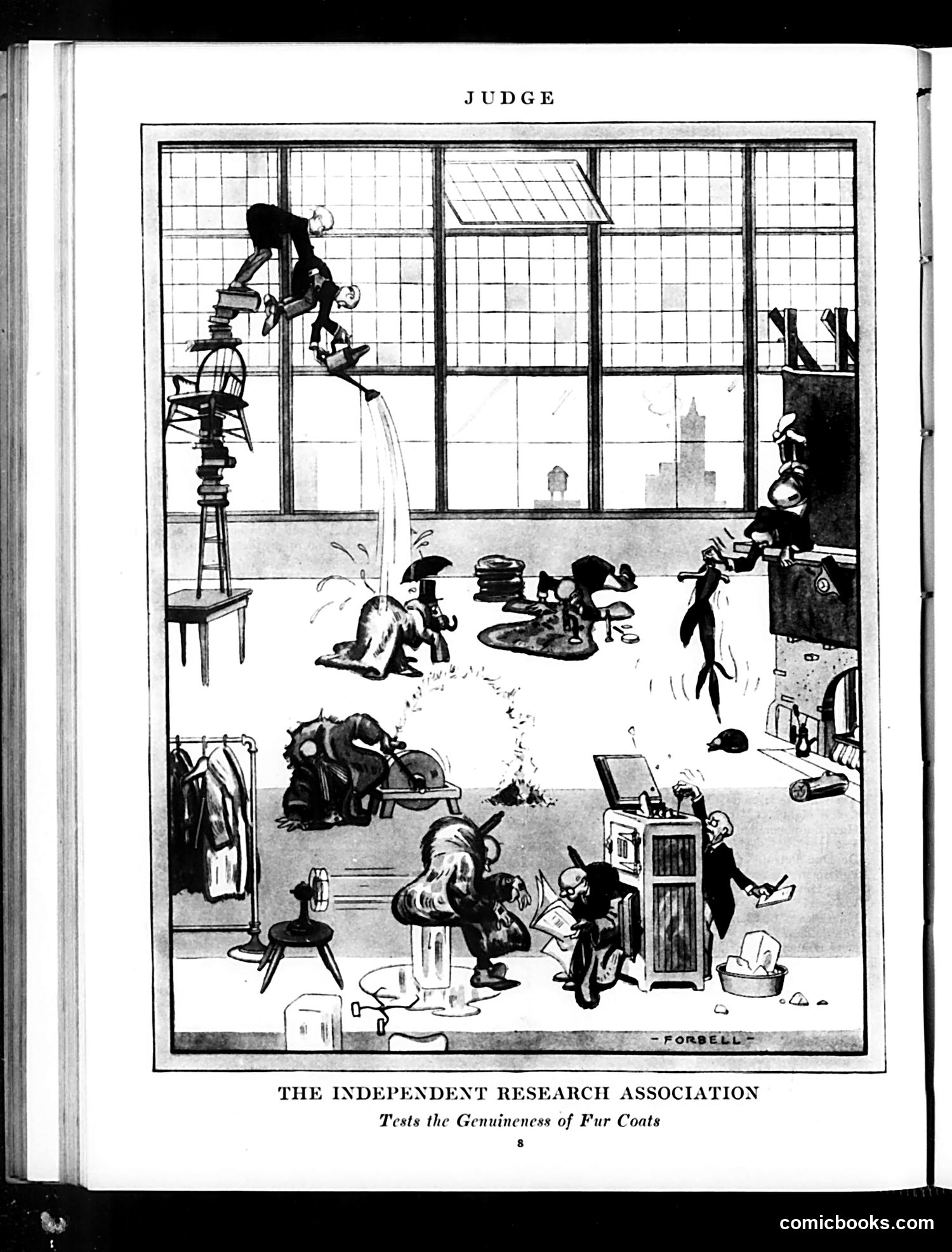
# "Judge" Cartoon Analysis This Forbell cartoon satirizes "The Independent Research Association" and its supposed testing of fur coat authenticity. The chaotic laboratory scene—with figures tumbling from shelves, knocked-over equipment, and general mayhem—mocks the association's credibility. The joke appears to be that this "independent research" is actually amateurish and unreliable, suggesting consumers shouldn't trust such organizations' endorsements of fur garments. The slapstick destruction implies the association's methods are absurd rather than scientifically rigorous. This likely references early 20th-century consumer protection concerns and skepticism toward self-appointed quality-testing organizations that may have been influenced by industry interests. The cartoon warns readers not to blindly accept such testimonials when purchasing luxury goods like fur coats.
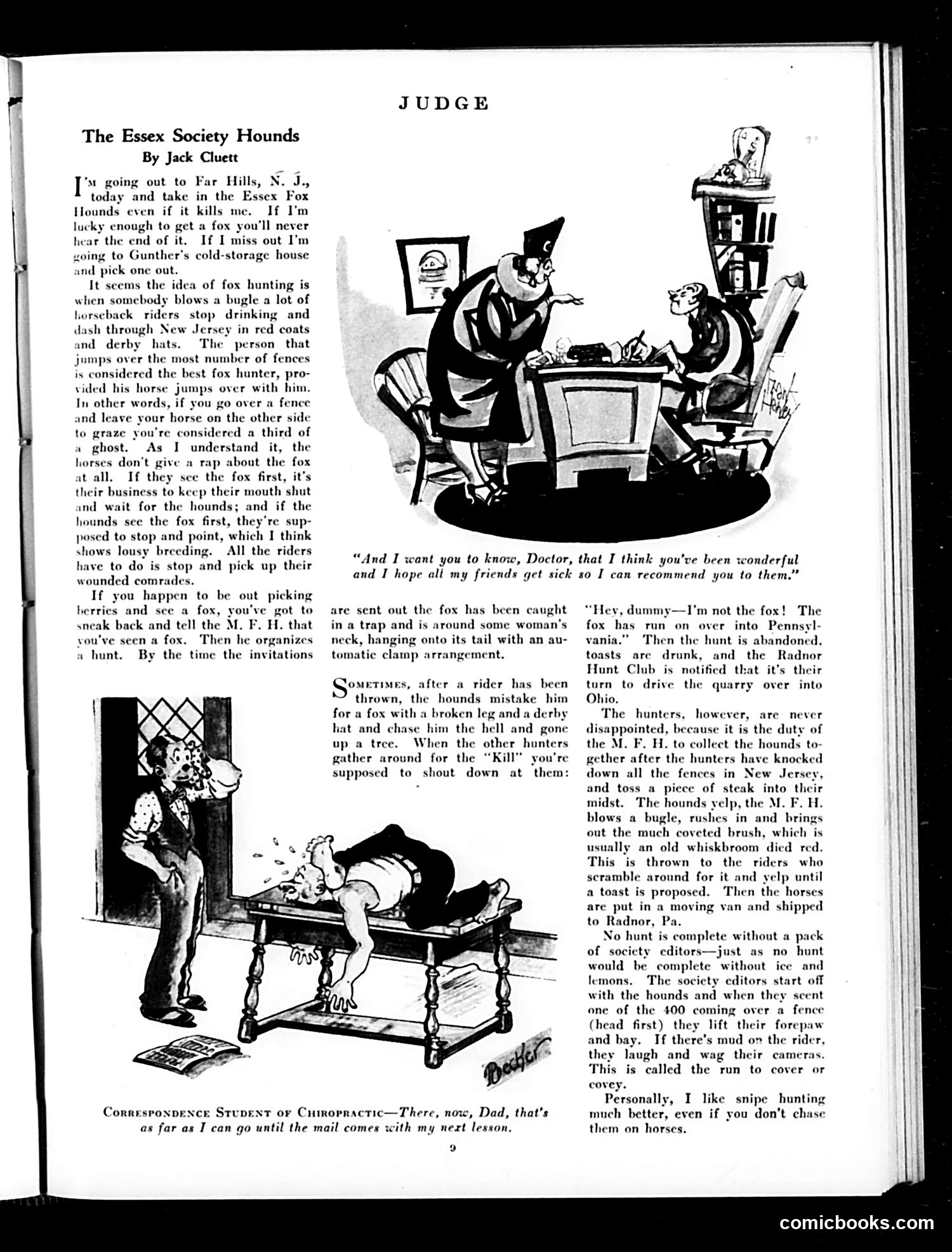
# "The Essex Society Hounds" Satire Explained This humorous article by Jack Cluett mocks upper-class fox hunting traditions among wealthy New Jersey elites. The author satirizes the pretension and absurdity of the sport: riders care more about social status than actual hunting; horses do the real work while riders often fall off; and the "fox" is frequently already dead, purchased from a butcher. The cartoons reinforce the jokes—one shows a judge at his desk while a doctor boasts about referrals (likely mocking professional self-promotion in high society), and another depicts a chiropractic student injured from a hunting accident, exemplifying the physical hazards these "society editors" endure. The satire targets how wealthy Americans used fox hunting as performance for social climbing, complete with staged rituals, elaborate dress codes, and press coverage—ultimately revealing the whole enterprise as pretentious theater rather than genuine sport.
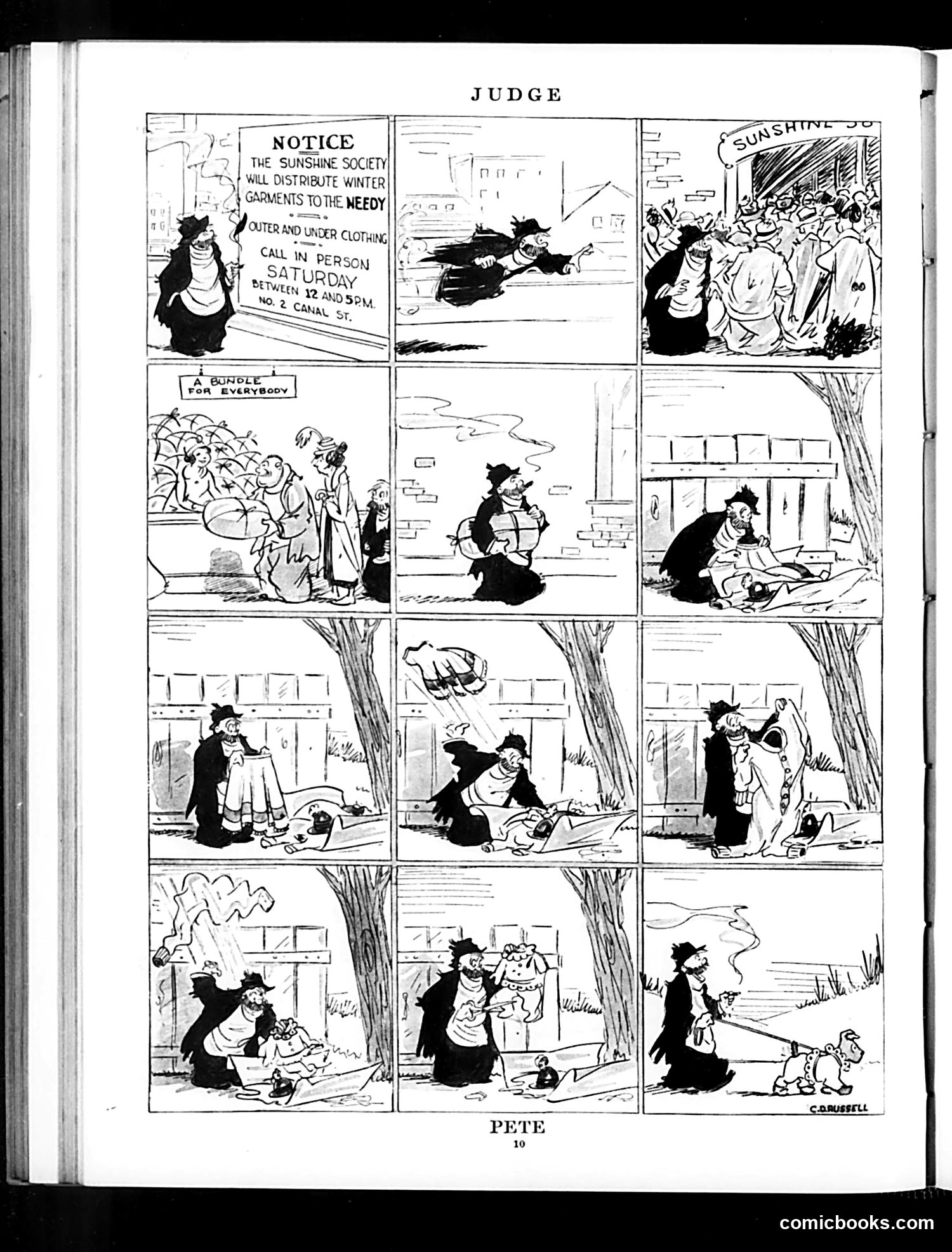
# "Pete" Comic Analysis This is a multi-panel comic strip following a character named Pete, illustrated by C. Russell. The narrative shows Pete responding to a notice from the Sunshine Society, which distributes winter clothing to the needy. The satire appears to mock Pete's opportunism: he sees the charitable notice, rushes to collect free garments, then spends the subsequent panels using the clothing for questionable purposes—apparently to impress crowds at what's labeled "Sunshine So" (likely a social gathering), rather than actually needing winter protection. The humor relies on the contrast between the Society's charitable intent and Pete's self-serving exploitation of their generosity. This reflects period-typical satirical commentary on people gaming charitable systems or using aid inappropriately rather than accepting it with genuine need or gratitude.