A complete issue · 36 pages · 1930
Judge — September 6, 1930
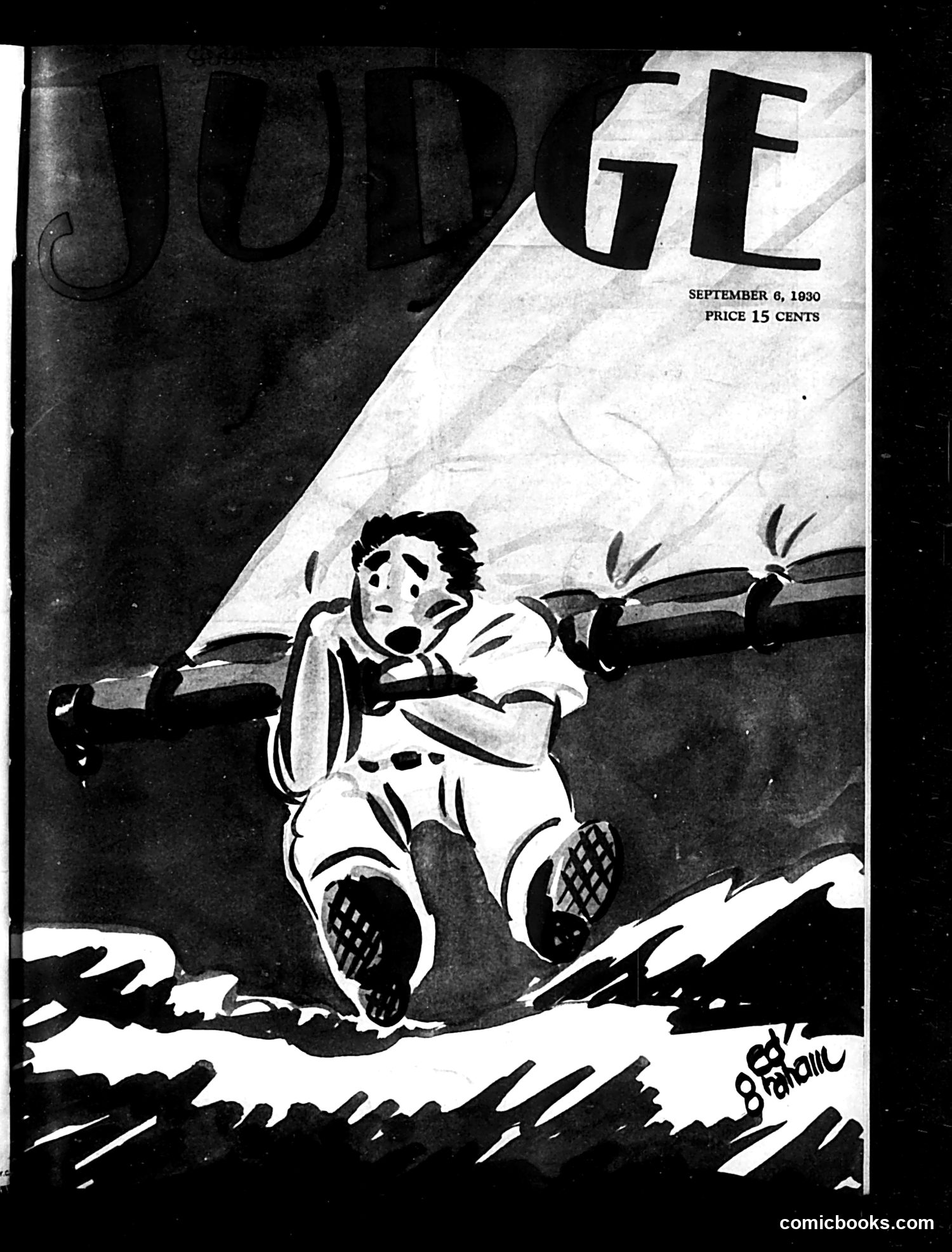
# Judge Magazine Cover - September 6, 1930 This cover depicts a distressed figure clinging to a log in turbulent water, appearing to struggle for survival. The imagery suggests economic catastrophe—likely referencing the Stock Market Crash of October 1929 and the onset of the Great Depression. The character's desperate posture and the rough seas symbolize the financial devastation Americans faced in 1930. The "Judge" title looms above, suggesting the magazine's satirical commentary on the crisis. At 15 cents, this represents a moment when many Americans were losing their savings and livelihoods. The cartoon critiques or comments on the economic turmoil through this drowning metaphor—a visual commentary on widespread financial ruin during the Depression's early, darkest months.
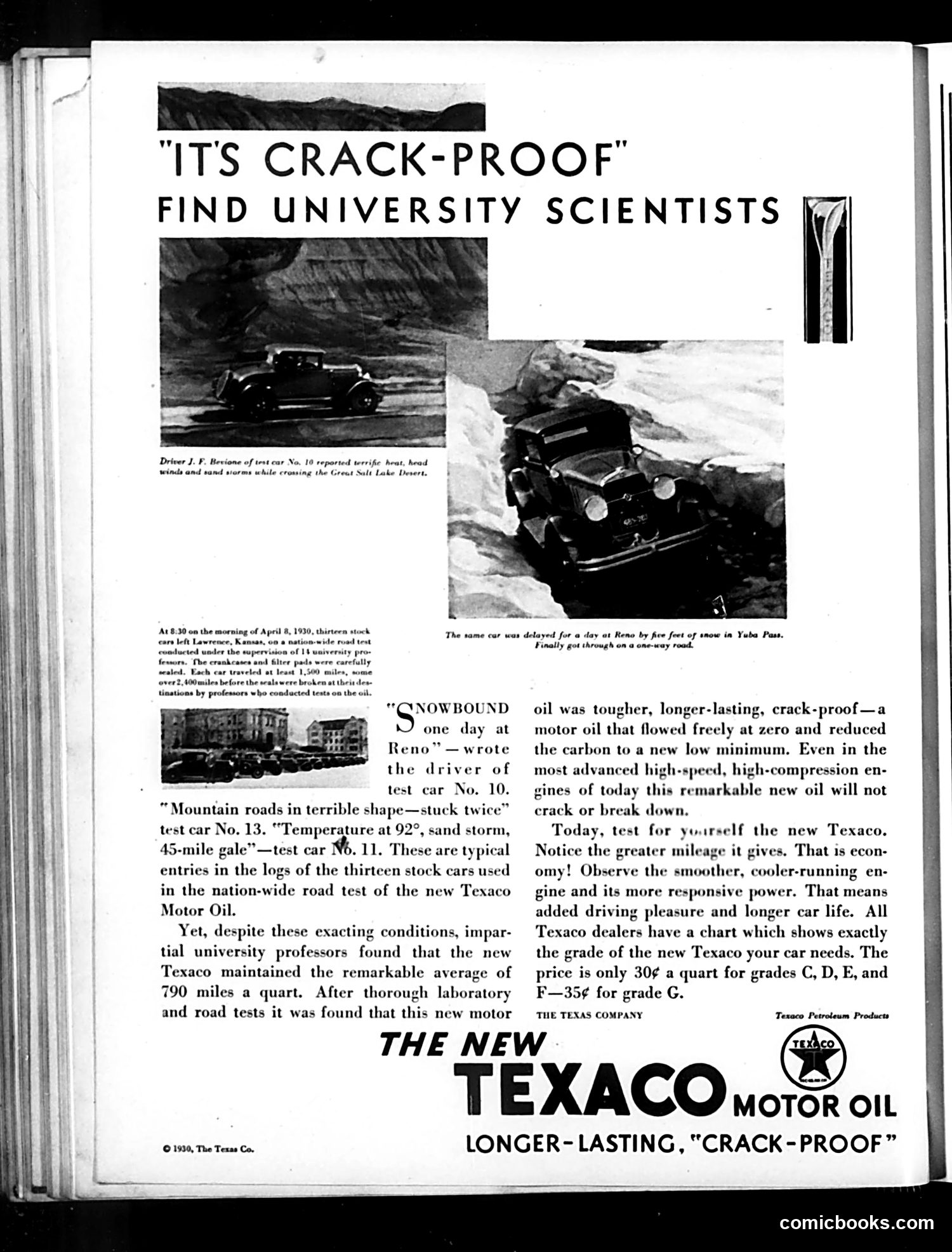
This page is **primarily an advertisement, not satire or political content**. It's a 1930s Texaco Motor Oil ad disguised as editorial content under the headline "IT'S CRACK-PROOF—FIND UNIVERSITY SCIENTISTS." The ad uses a familiar advertising technique: presenting product claims as objective scientific validation. It describes university-conducted road tests of Texaco's new motor oil, featuring photographs of test vehicles on challenging terrain (mountain roads, snow). The appeal combines appeals to authority (university scientists), performance metrics (790 miles per quart), and practical benefits (crack-proof oil at zero degrees, smoother engine operation). While framed journalistically, this is straightforward product marketing rather than political or social satire. Judge magazine likely accepted such advertisements to fund publication.
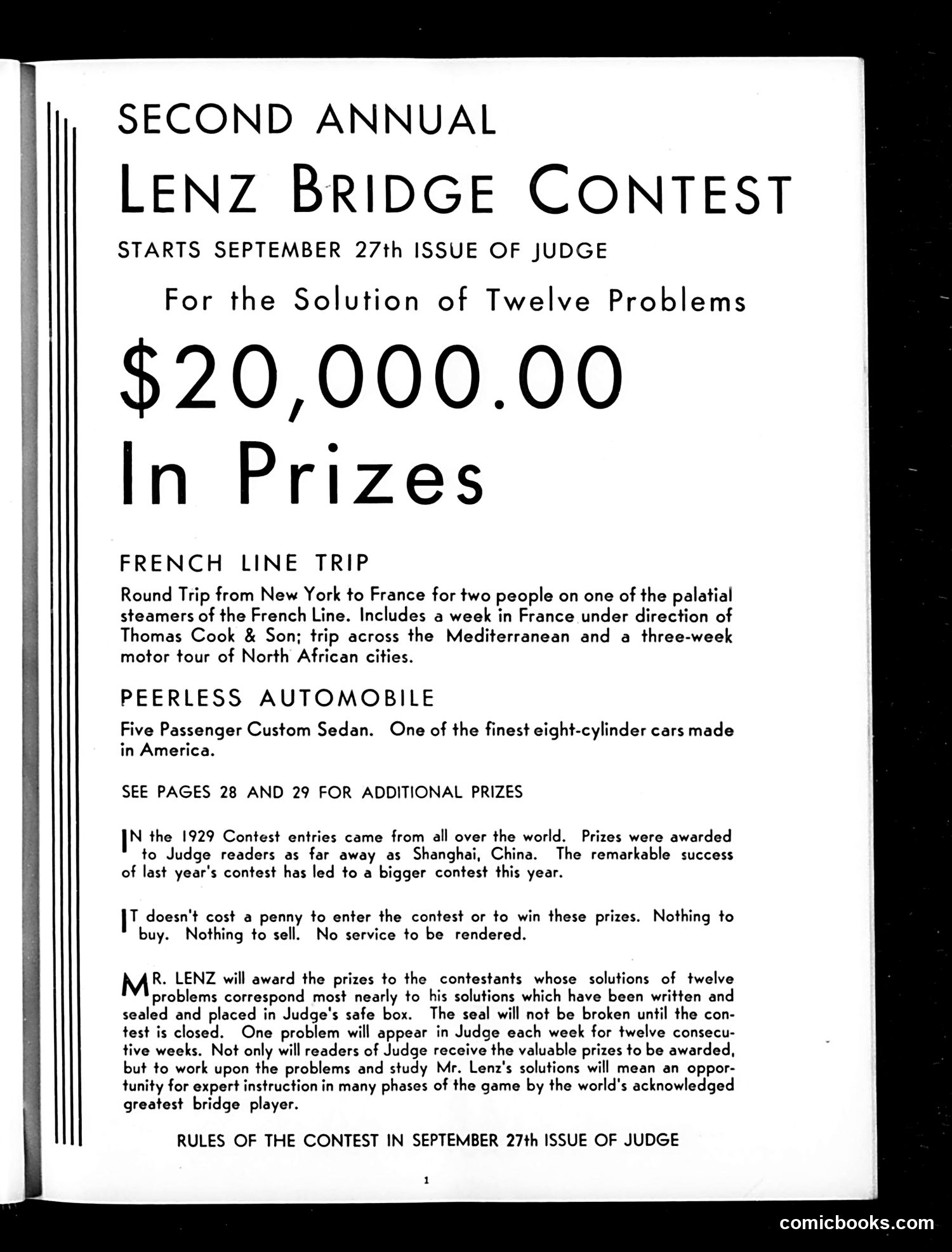
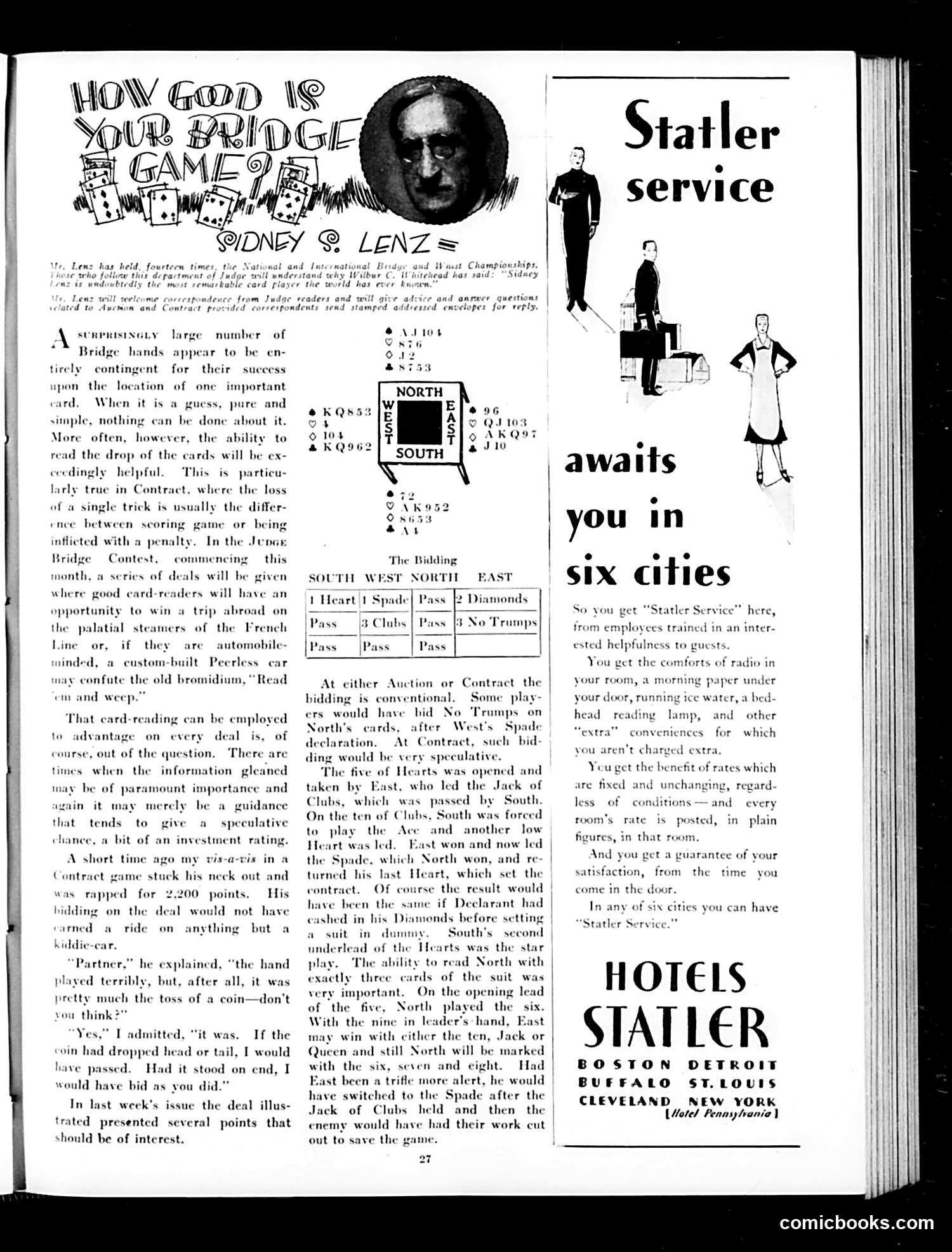
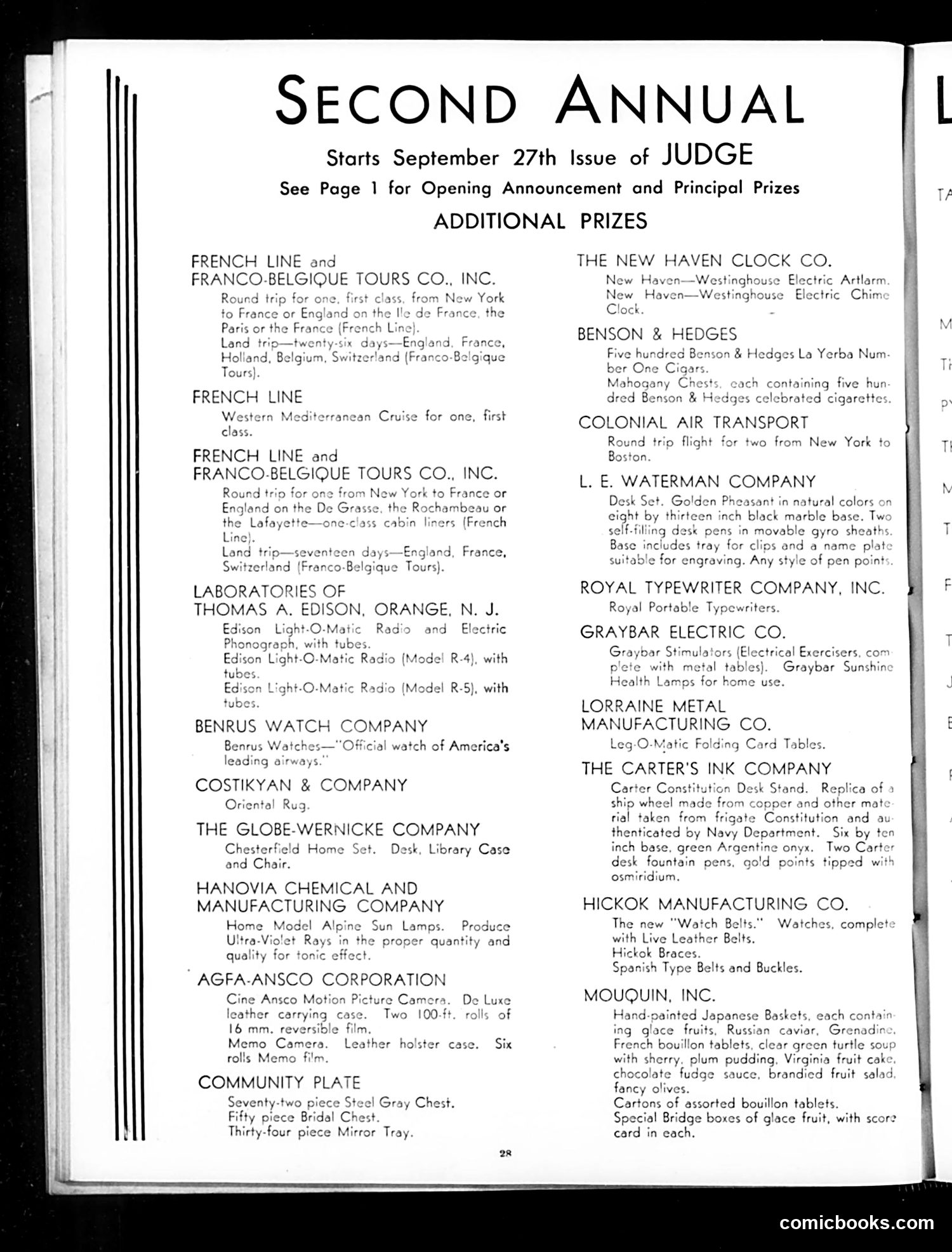
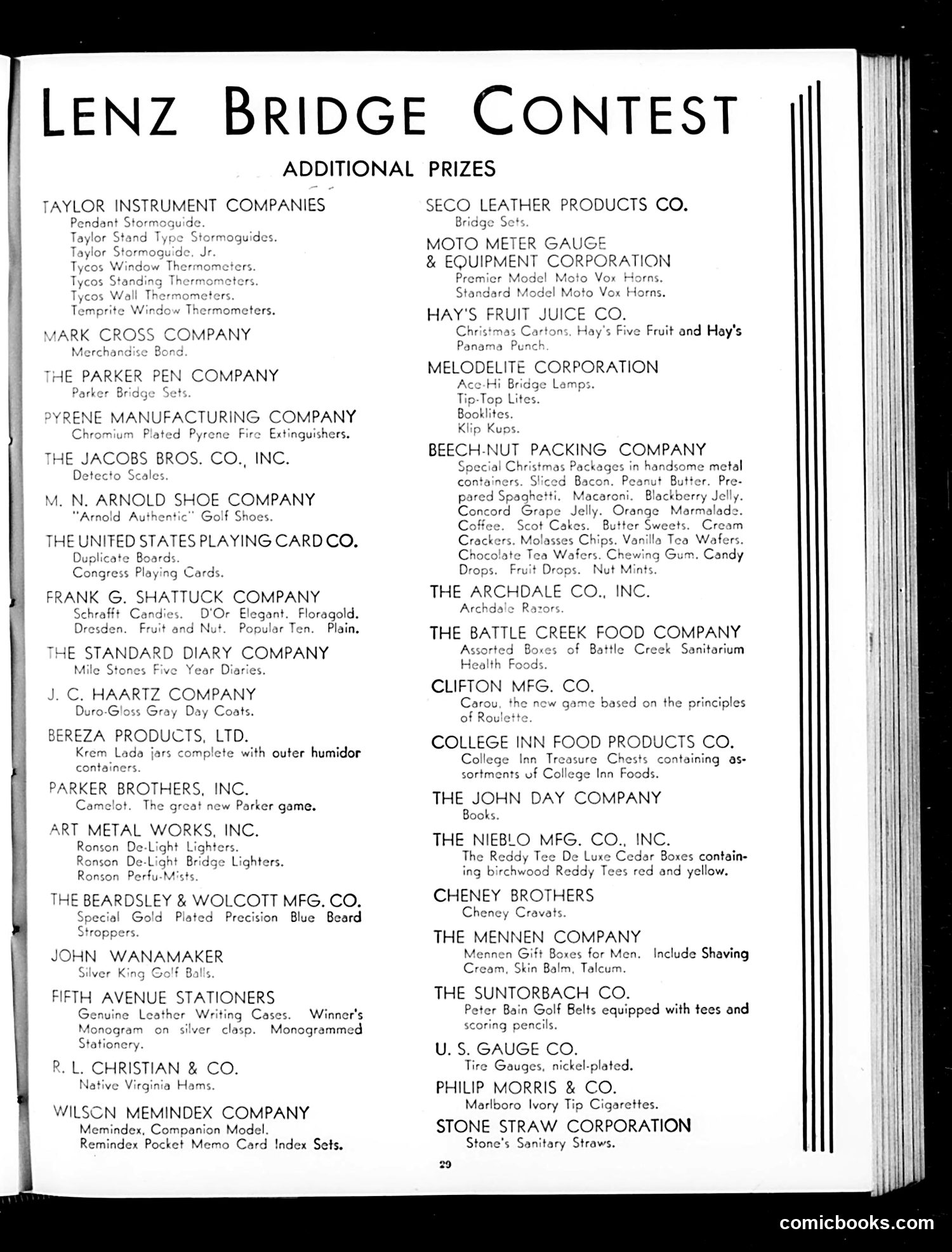
# Content Analysis This page is primarily **advertising for a contest**, not political satire. It announces Judge magazine's "Second Annual Lenz Bridge Contest" offering $20,000 in prizes for solving twelve bridge problems. The main prizes listed are: - A French Line steamship trip to France and North Africa - A Peerless automobile (luxury car) The text emphasizes the contest's accessibility—free to enter, no purchase necessary—and notes that the 1929 contest drew entries "from all over the world," with solutions judged against Mr. Lenz's sealed solutions. This appears aimed at bridge enthusiasts during the game's height of popularity in the late 1920s-early 1930s. The substantial prize values reflect the era's commercial investment in promoting bridge as an intellectual pastime.
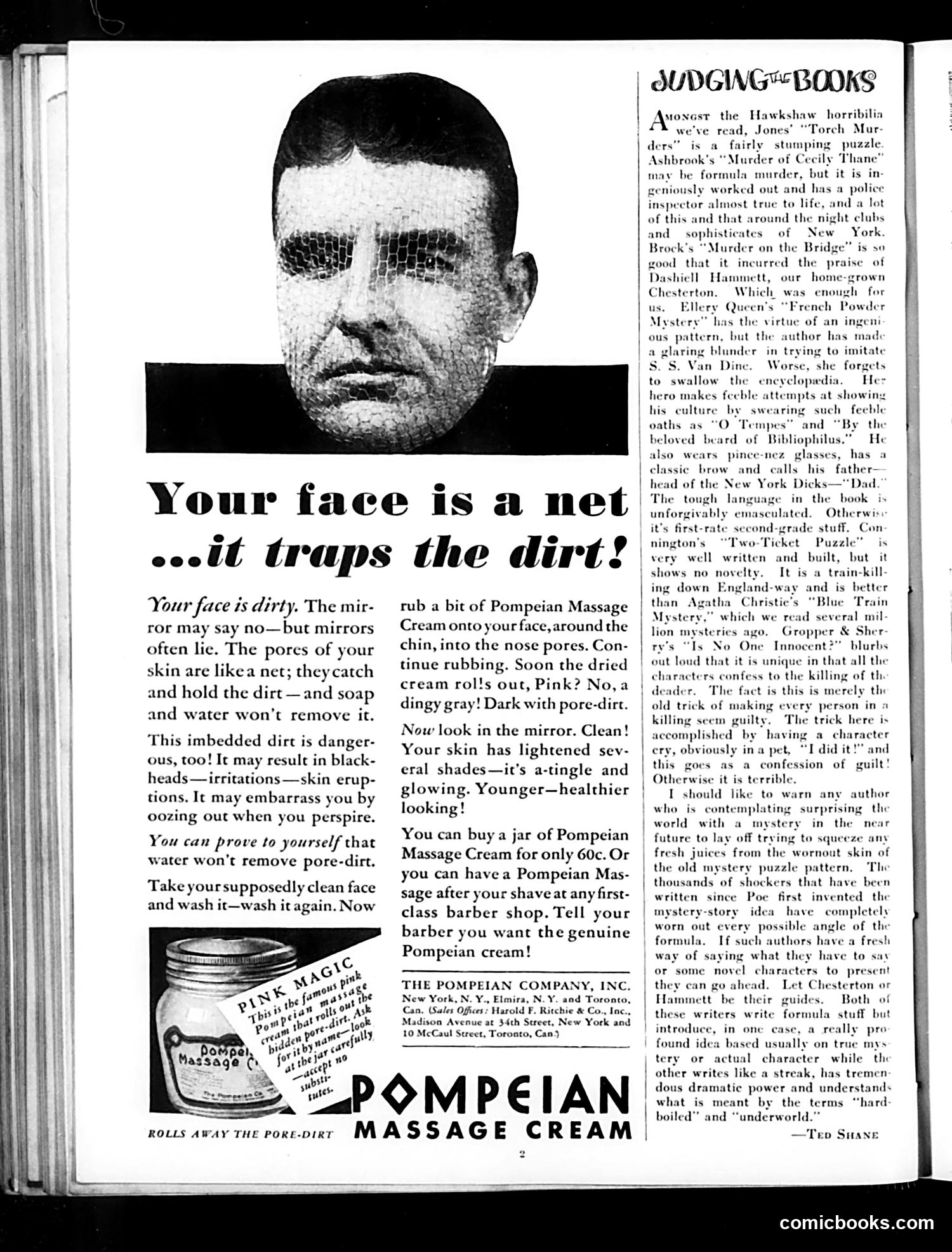
# Page Analysis This page is primarily **advertising**, not political satire. The dominant content is a Pompeian Massage Cream advertisement featuring a headshot photograph with the headline "Your face is a net...it traps the dirt!" The ad uses pseudo-scientific claims to sell the product, describing facial pores as traps for dirt and claiming the cream removes embedded impurities. It promises improved appearance and younger-looking skin for 60 cents. The right column contains "Judging the Books," a book review section by Ted Shane critiquing recent mystery novels—works by authors like Ellery Queen and S.S. Van Dine. Shane criticizes their attempts at sophistication and formula-driven plotting. There is **no political cartoon** on this page; it's a typical magazine layout mixing advertisements with editorial content.
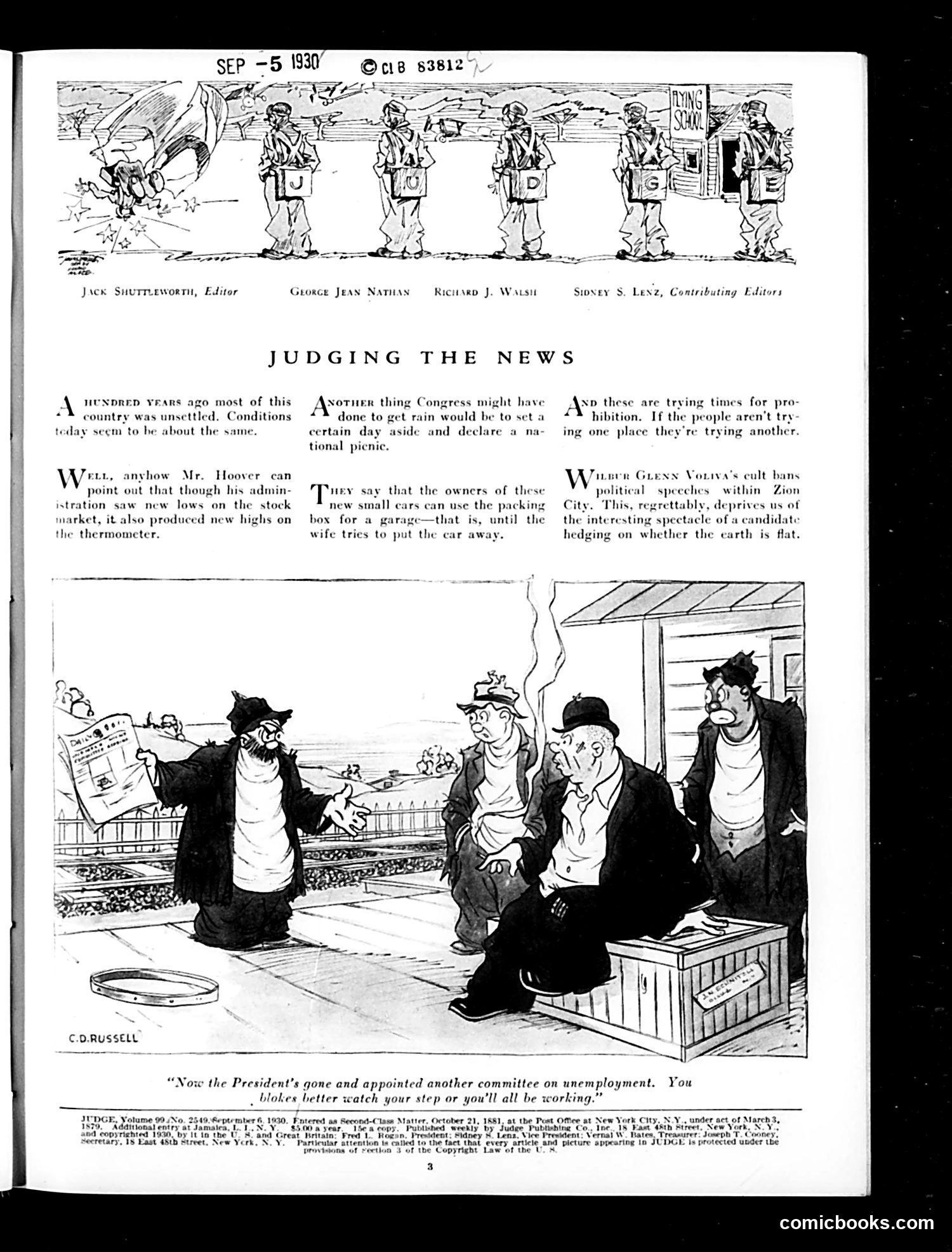
# "Judging the News" - September 5, 1930 This page satirizes early Depression-era politics and social commentary. The main cartoon depicts unemployed men confronting officials about a presidential committee on unemployment, with the caption: "Now the President's gone and appointed another committee on unemployment. You blokes better watch your step or you'll all be working." The satire mocks the ineffectiveness of government committees as a response to joblessness—suggesting committees generate only bureaucratic busywork rather than actual employment. The joke implies that the "threat" of being put to work on such committees is the only consequence these officials face. Other brief columns critique congressional gridlock, small car design, and Glenn Voliva's ban on political speeches in Zion City, Illinois. The overall tone reflects public skepticism about governmental responses to the economic crisis.
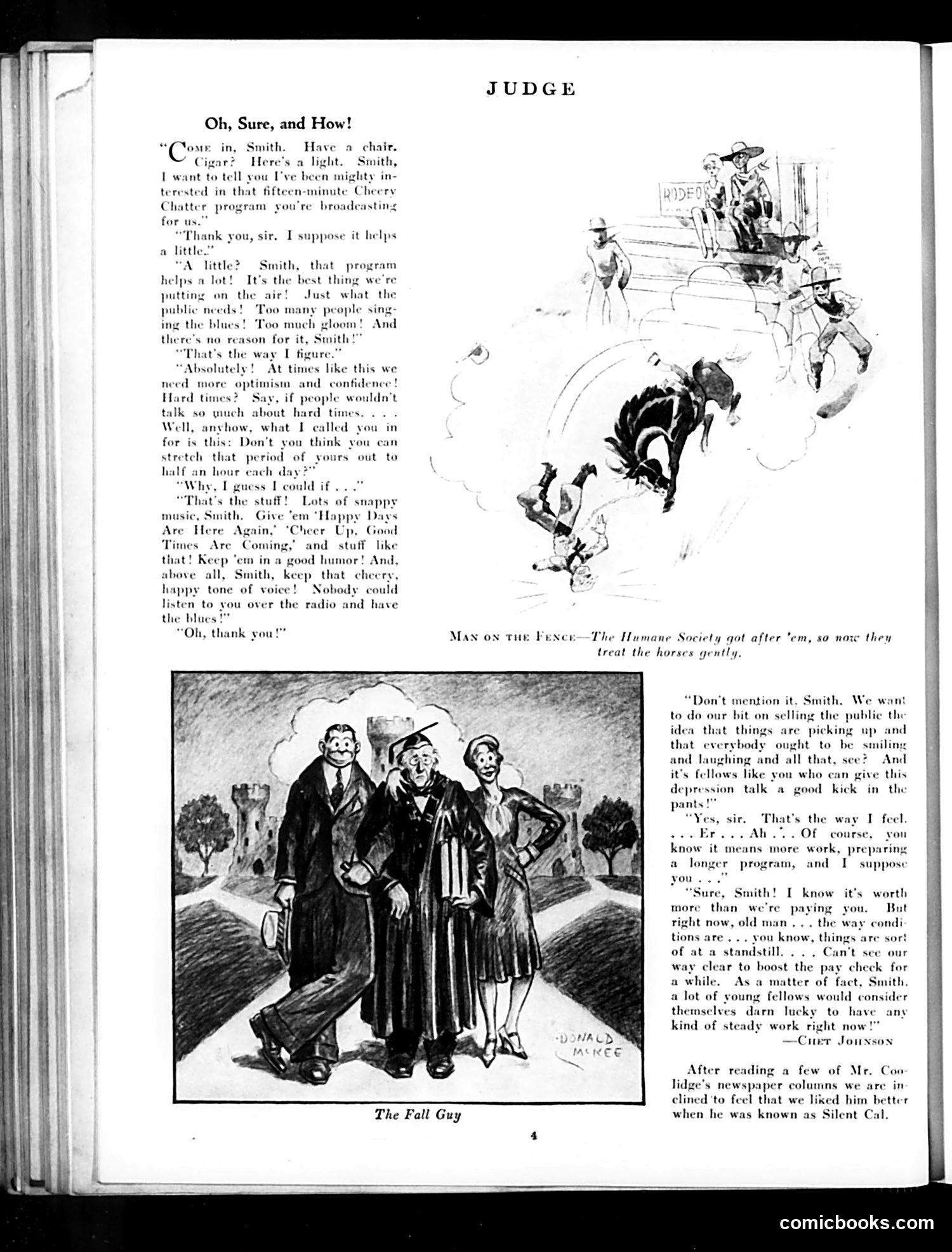
# Analysis of Judge Magazine Page This page contains a dialogue between two radio broadcasters discussing programming during hard economic times. One character advocates for upbeat content—"Happy Days Are Here Again," cheerful music, and humor—to counter public depression and "the blues." His colleague argues this is insufficient without addressing underlying economic conditions. The accompanying cartoon "The Fall Guy" depicts three figures in formal dress, likely representing political or business leaders responsible for the economic crisis, shown in a vulnerable or fallen position. The satire critiques the tension between entertainment as palliative during the Great Depression versus genuine economic reform. Radio broadcasts offered escapism, but the cartoon suggests those in power bear responsibility for actual hardship rather than merely lifting spirits through cheerful programming.
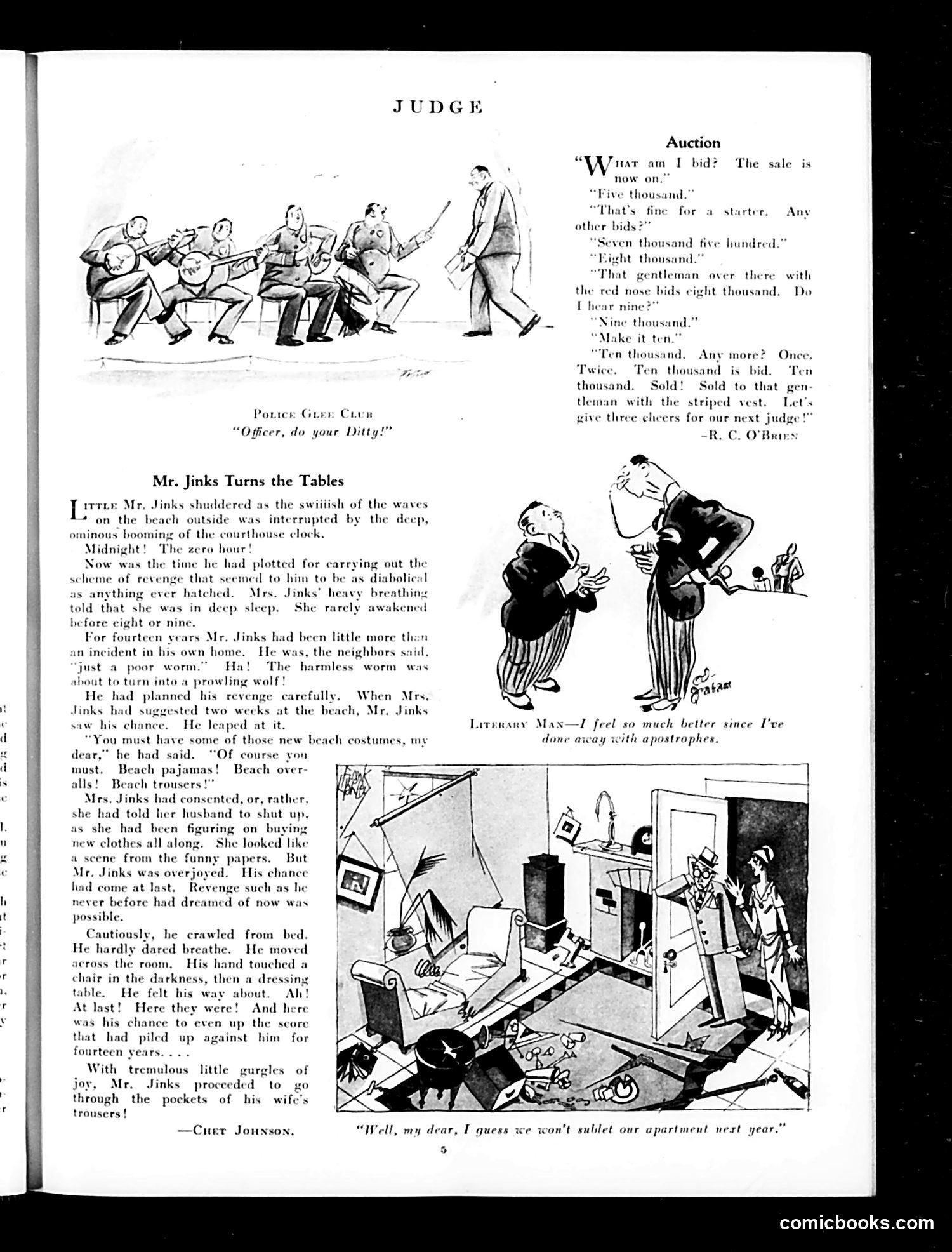
# Analysis of Judge Page This page contains two distinct pieces: **"Auction"** (top right): A humorous dialogue satirizing an auction, likely of artwork or property. The rapid bidding and escalating prices mock both auctioneers' theatrics and wealthy buyers' competitive impulses. The credited author R.C. O'Brien adds authenticity to this likely social commentary on Gilded Age auction culture. **"Mr. Jinks Turns the Tables"** (main story): A domestic comedy by Chet Johnson about a meek husband seeking revenge on his domineering wife. After years of mistreatment, he plans a scheme during a beach vacation. The accompanying illustrations show his plotting and the comedic chaos that results when Mrs. Jinks discovers their apartment ransacked. It's conventional early-20th-century humor about marital role reversal.
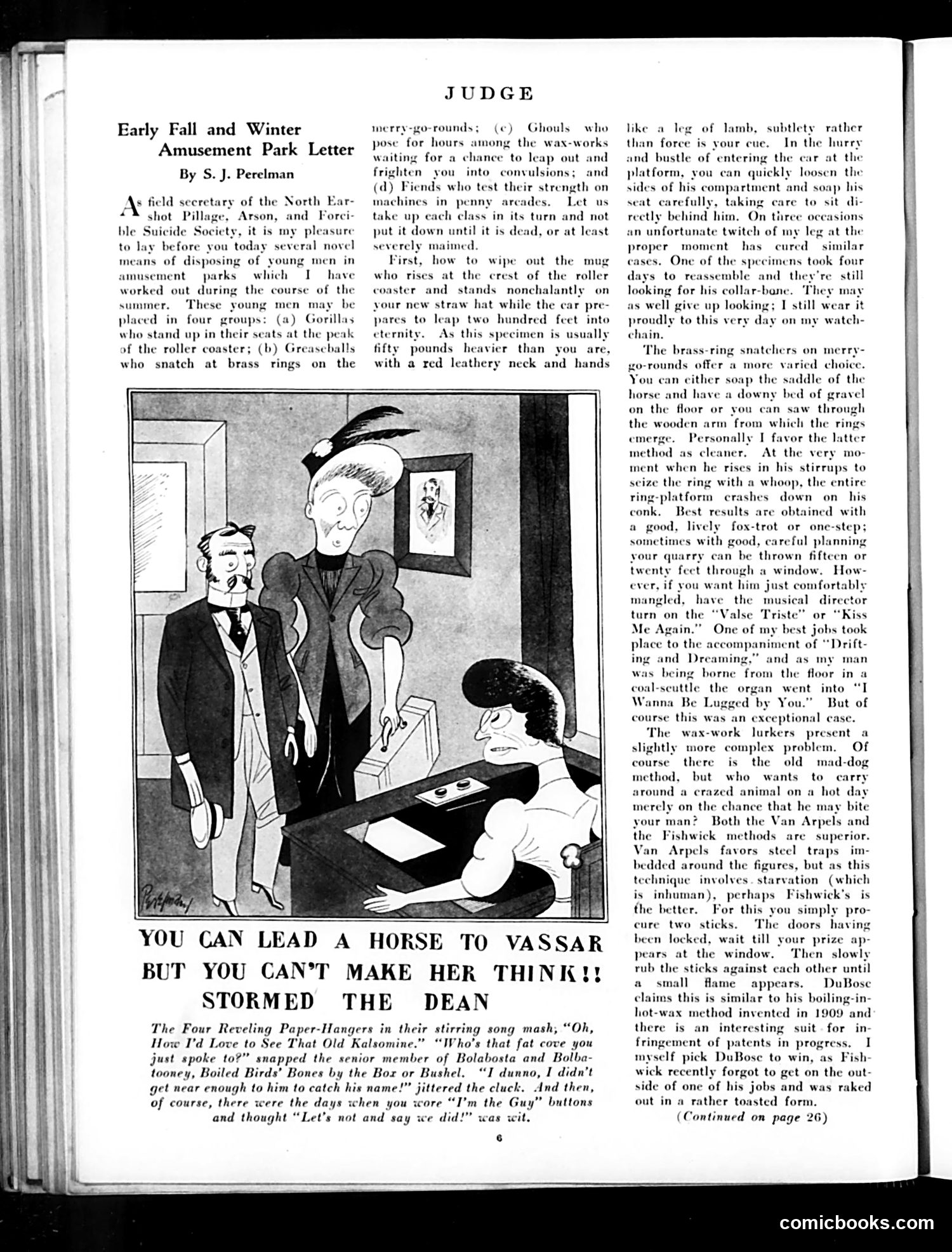
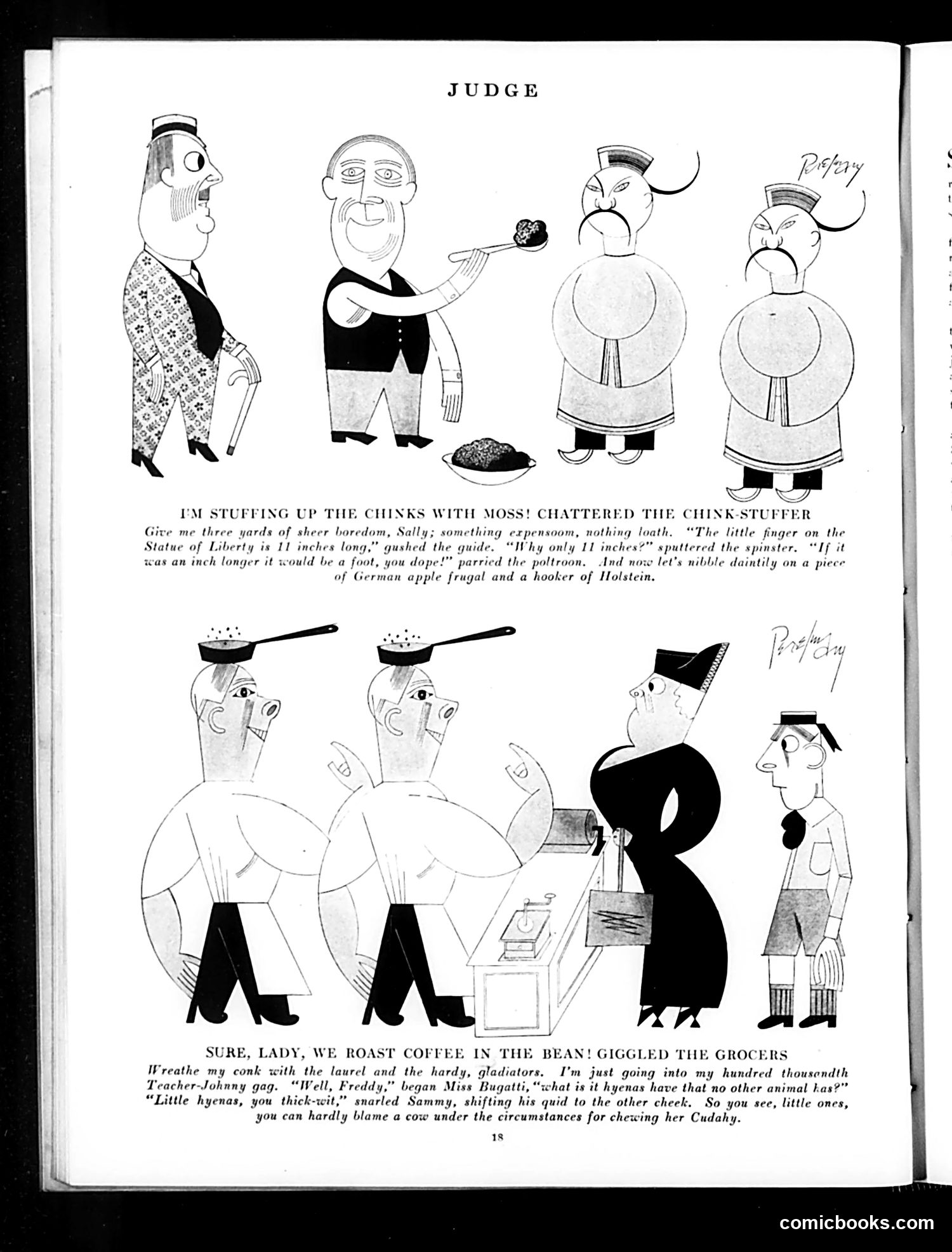
# Explanation for Modern Readers This is a humorous article by S.J. Perelman about disposing of young men at an amusement park. The accompanying cartoon illustrates the absurdist joke in the headline: "YOU CAN LEAD A HORSE TO VASSAR BUT YOU CAN'T MAKE HER THINK!! STORMED THE DEAN." The cartoon shows three men in suits—appearing to be authority figures (possibly a dean and visitors)—confronting a woman sitting at a desk, likely representing a Vassar College administrator. The satire targets early 20th-century attitudes about women's education, suggesting that even elite institutions like Vassar couldn't overcome perceived limitations in women's intellectual capacity. The humor relies on period sexism and the clash between institutional prestige and stereotypical views about gender and intellect.
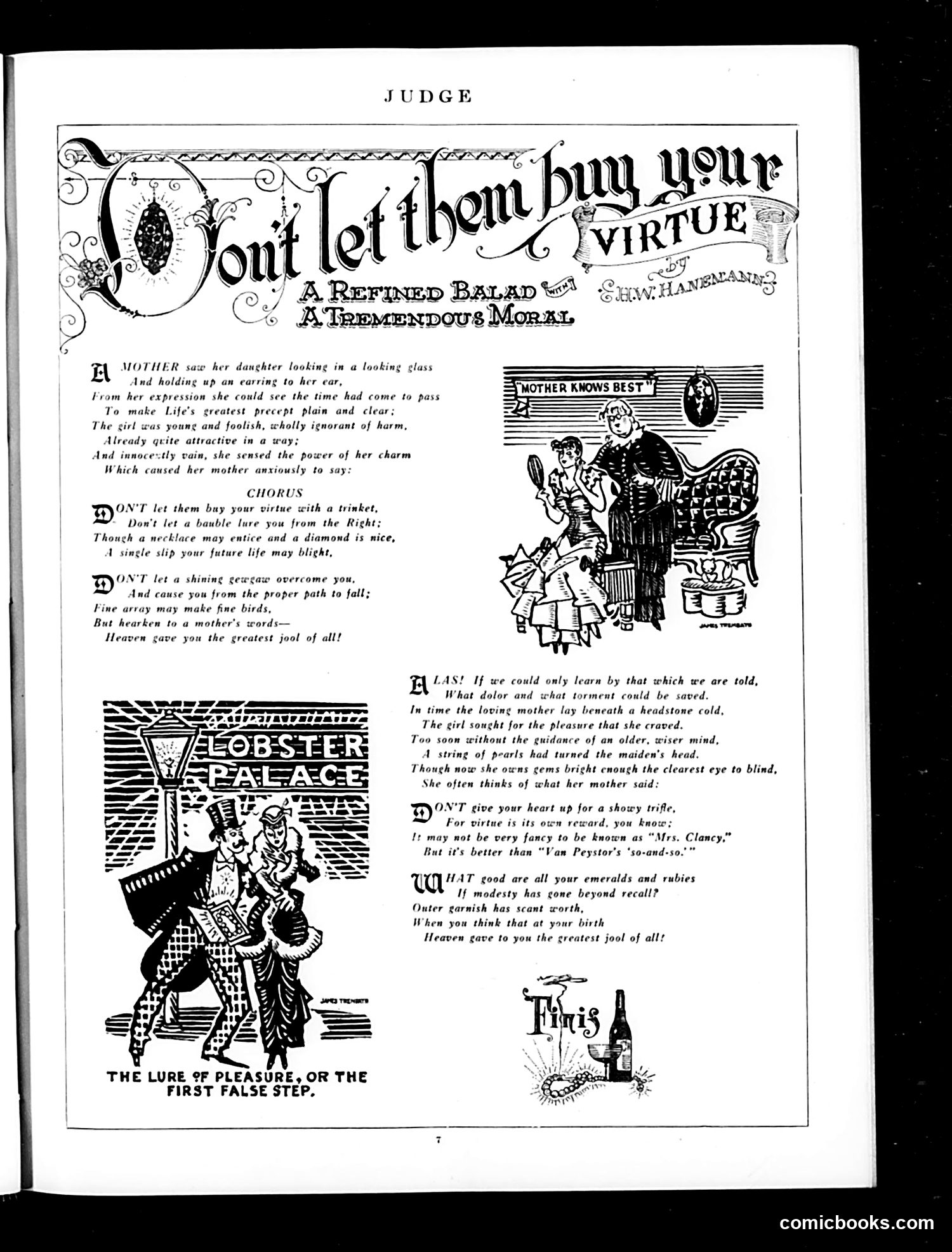
# "Don't Let Them Buy Your Virtue" - Judge Magazine This is a cautionary moral tale presented as a "refined balad" warning young women against trading sexual virtue for material goods. The narrative follows a mother advising her daughter against accepting jewelry and fine things from men in exchange for moral compromise. The imagery shows a mother with her daughter, and separately, an illustration titled "The Lure of Pleasure, or the First False Step" depicting what appears to be a woman at the Lobster Palace (a known venue associated with vice). The satire targets the hypocrisy of wealthy men ("Van Peystor's 'so-and-so'") who seduce working-class women with trinkets. The repeated refrain—that virtue is "the greatest jool of all"—contrasts inner worth against external material temptation. The cautionary tale suggests that accepting such gifts leads to ruin, social disgrace (being known as someone's mistress rather than a respectable wife), and loss of respectability. This reflects Progressive-era anxiety about urban vice and the moral vulnerability of young women.
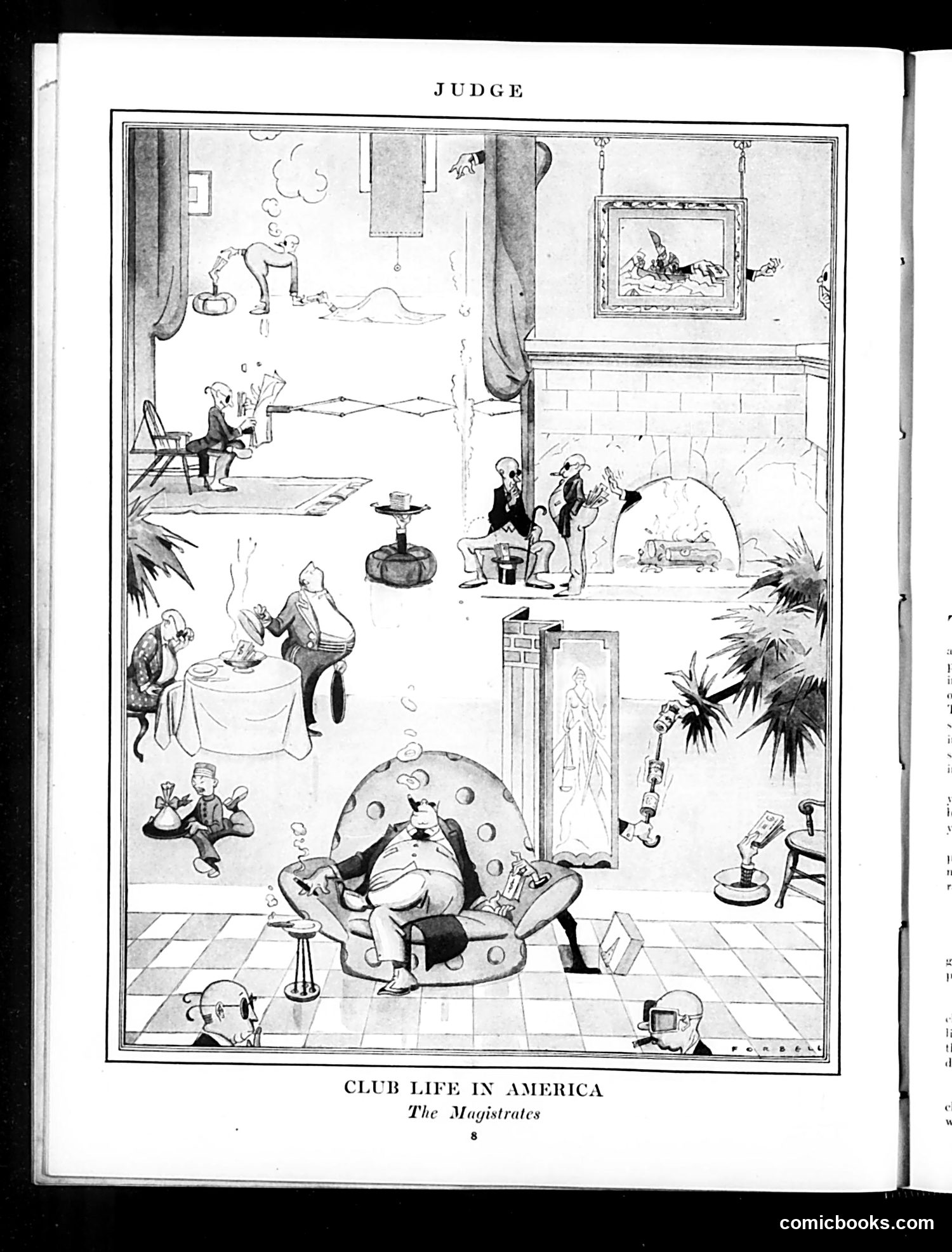
# "Club Life in America: The Magistrates" This satirical cartoon depicts an elaborate interior space filled with various figures engaged in leisure activities—dining, socializing, lounging, and recreation. The title "The Magistrates" suggests these are judicial officials or authority figures. The satire appears to mock the leisurely, indulgent lifestyle of magistrates and judges who should presumably be attending to official duties. Instead, they're shown lounging in comfortable club settings, dining, smoking, and entertaining themselves with various diversions. This critiques the perception that legal authorities prioritize personal comfort and social clubs over their judicial responsibilities. The crowded, chaotic composition emphasizes excess and self-indulgence among those meant to uphold law and order—a common Progressive-era critique of judicial privilege and corruption.
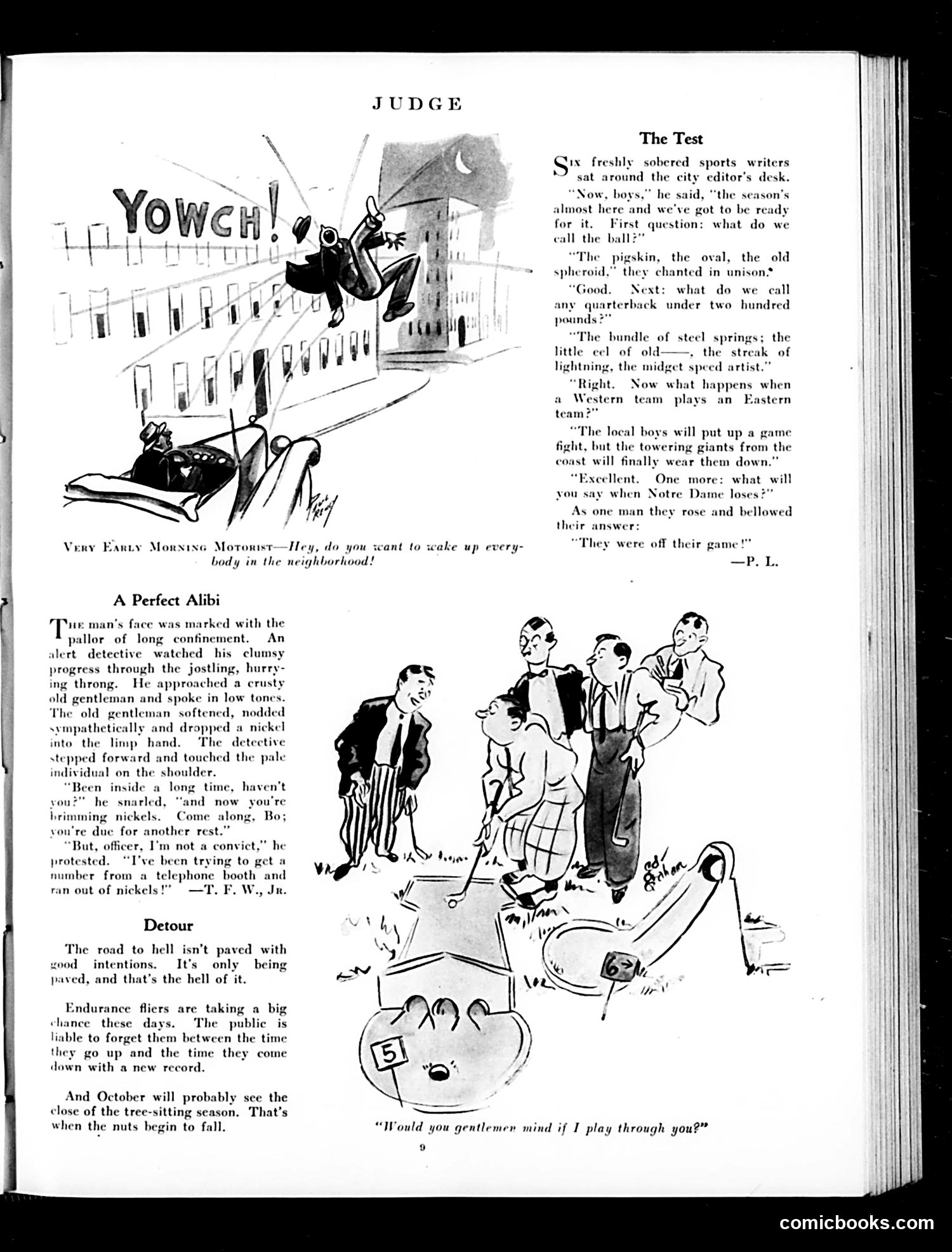
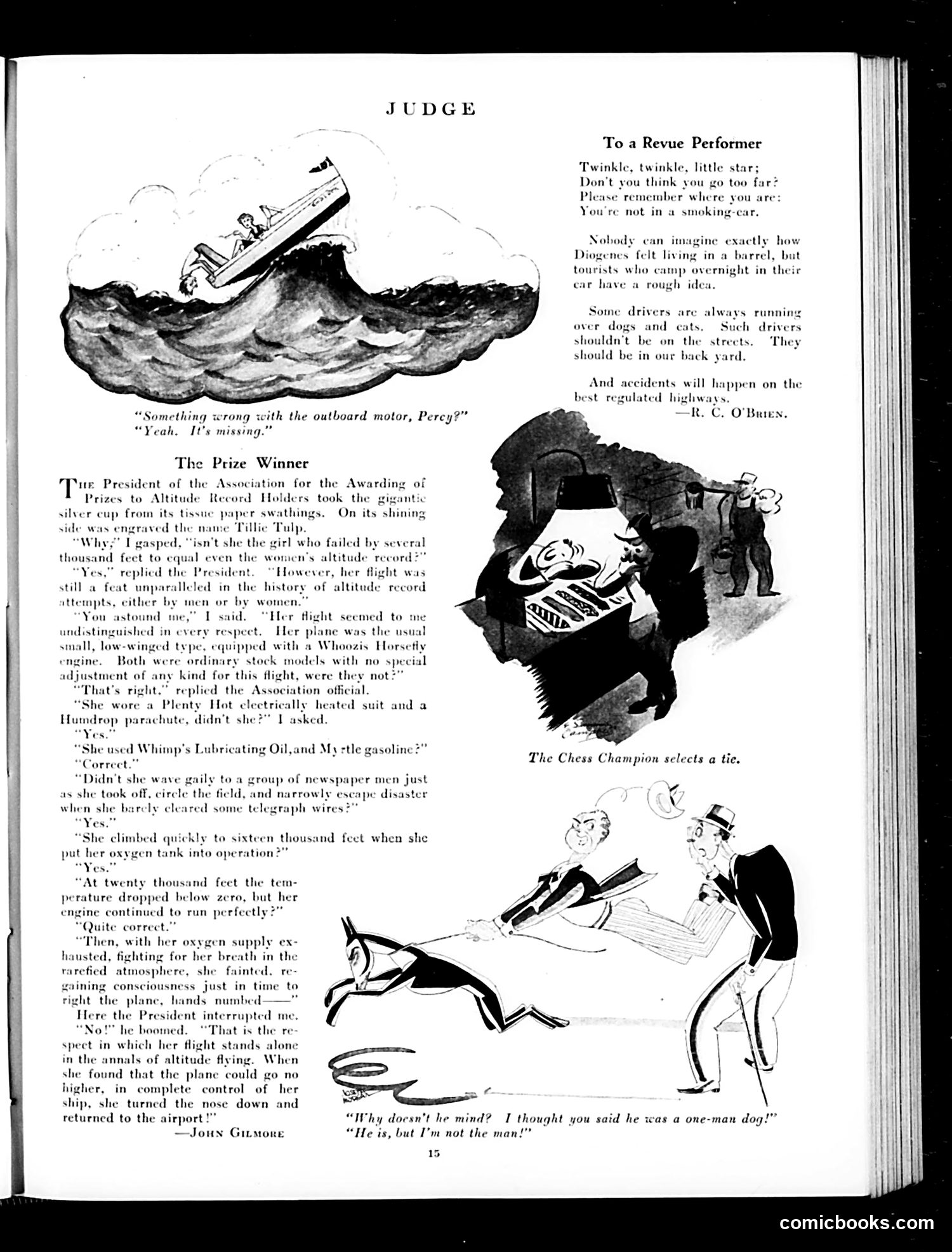
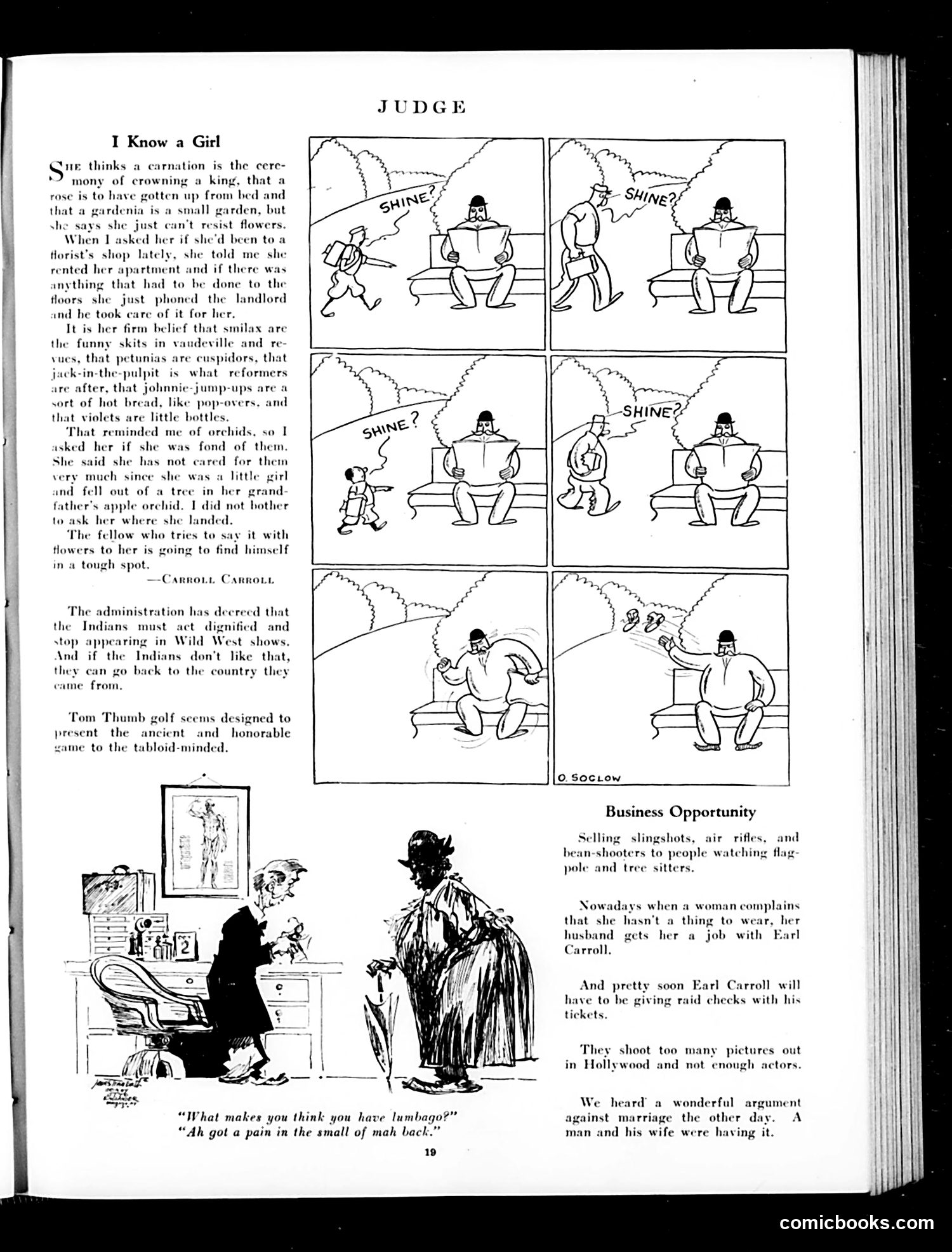
# Judge Magazine Page Analysis This page contains three satirical pieces typical of early 20th-century American humor: **"Very Early Morning Motorist"** mocks inconsiderate drivers who create noise disturbances in residential neighborhoods with their loud automobiles—a new social problem as cars became common. **"A Perfect Alibi"** satirizes both con artists and gullible charity-givers. A beggar's trick of appearing destitute to solicit nickels is exposed by a detective, but the beggar claims he was actually trying to collect a phone number—implying people are so easily fooled they'd believe any excuse. **"The Test"** ridicules sports journalists' clichéd vocabulary. The editors mock their writers for using identical, predictable phrases ("pigskin," "towering giants," "off their game") rather than original commentary—suggesting sports writing lacks substance and relies on tired formulas. The page also includes brief commentary on endurance fliers and tree-sitting fads, reflecting contemporary public obsessions with novelty stunts.
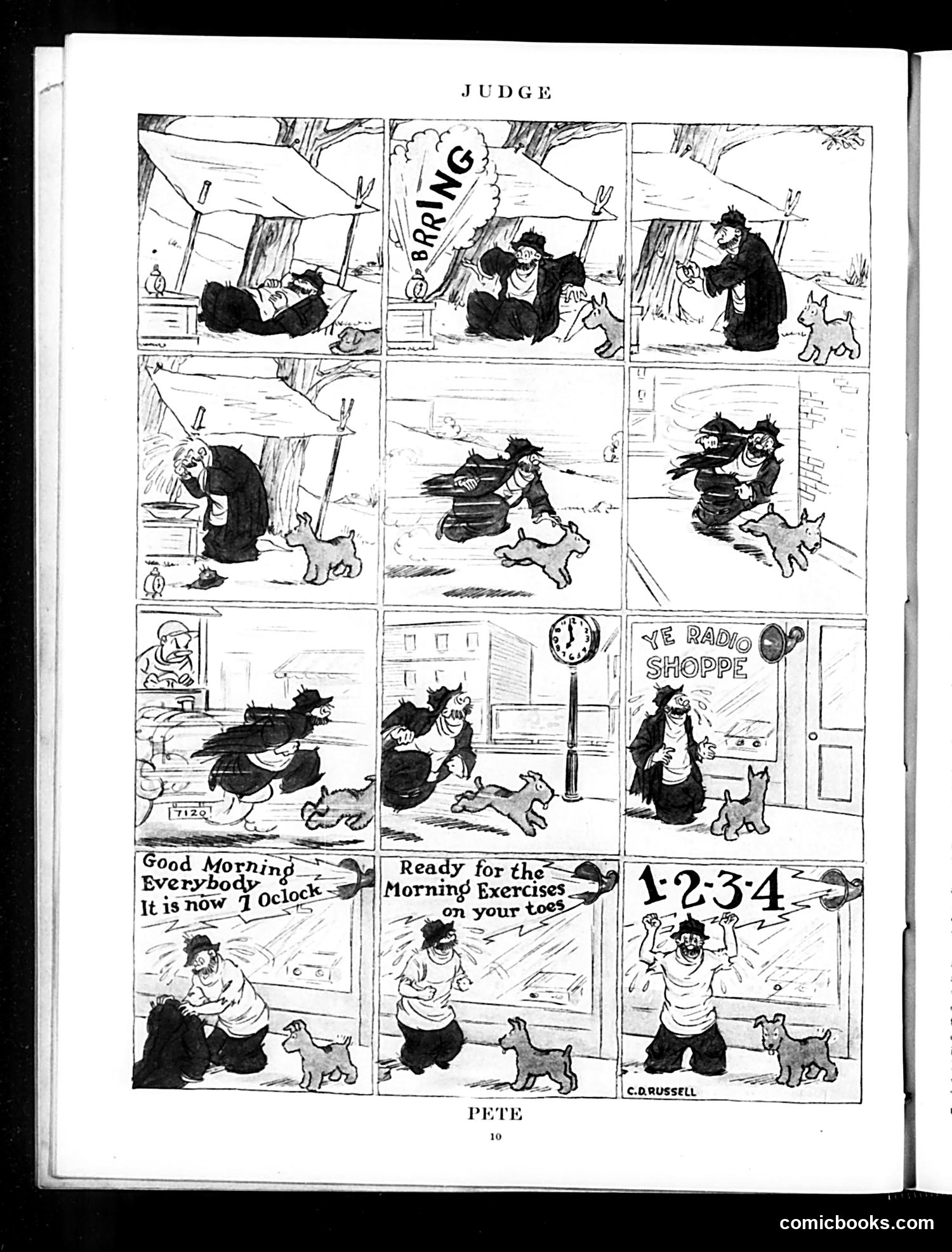
# "Judge" Comic Strip Analysis This appears to be a humorous comic strip titled "Pete" (credited to C.O. Russell) following a judge character and his small dog through a morning routine. The strip satirizes the contrast between civic authority and domestic reality. The judge, dressed formally in judicial robes, experiences an undignified series of mishaps involving his energetic dog—slipping, falling, and losing composure as he attempts morning exercises and prepares for the day. The joke plays on the gap between the judge's official dignity and his clumsy, chaotic home life. The "Radio Shoppe" reference and clock suggest contemporary (early-mid 20th century) settings. The humor relies on physical comedy and the visual irony of a respected authority figure repeatedly outsmarted by a small pet, a common comic device mocking pomposity through domesticity.