A complete issue · 36 pages · 1930
Judge — July 26, 1930
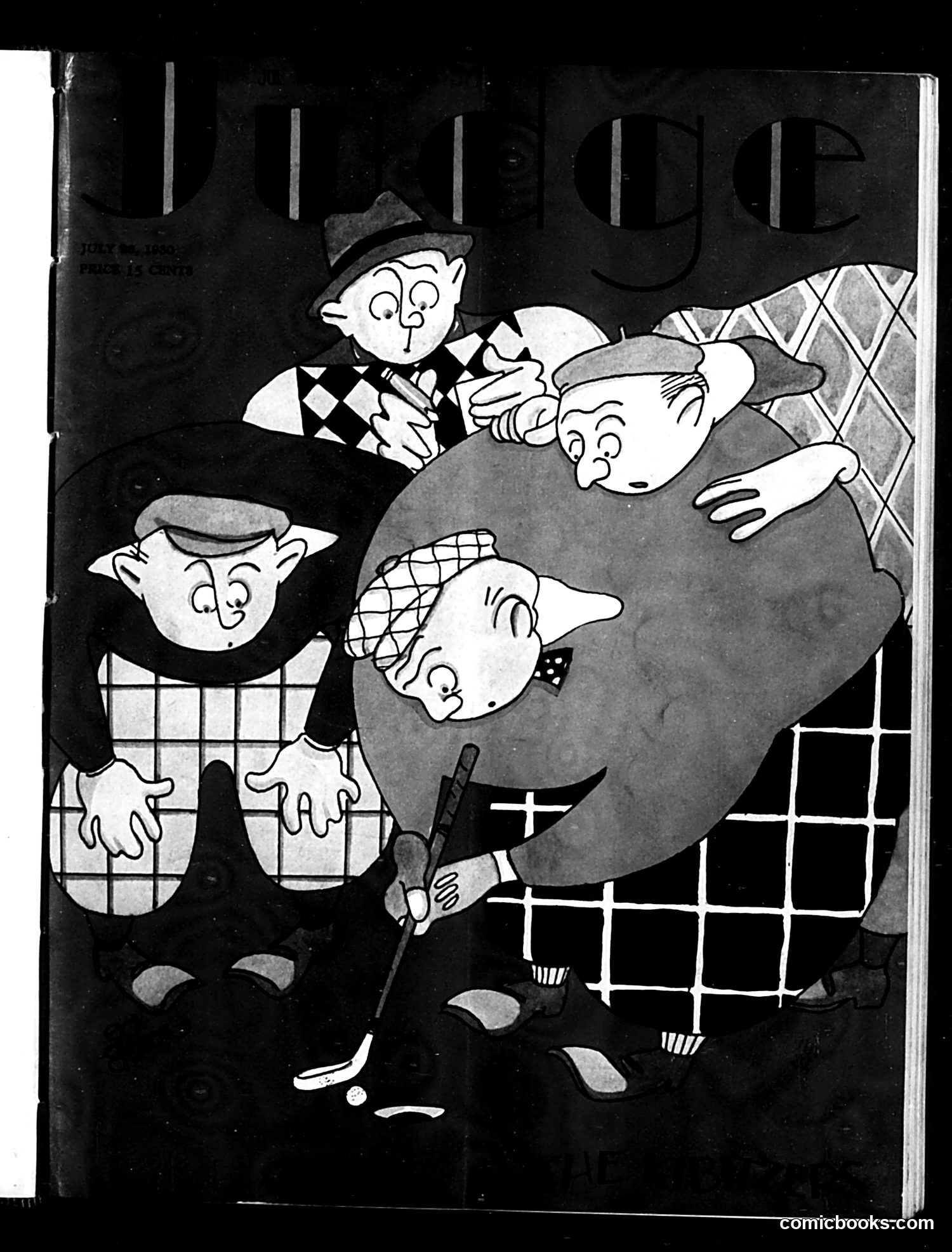
# Analysis This appears to be a vintage *Judge* magazine cartoon satirizing golf and wealthy leisure culture. The image shows four caricatured men in a golf scene—one large rotund figure dominates the composition, surrounded by three smaller men in various states of concern or assistance. The satire likely mocks: - **Wealthy indulgence**: The portly central figure represents excess and affluence - **Golf culture**: Depicted as an absurd pastime for the privileged class - **Physical comedy**: The contrast between the large man's girth and the sport's typical physicality creates humor The architectural background (grid pattern windows) suggests an urban country club setting. The exaggerated caricature styles and composition are typical of early-to-mid 20th century American satirical cartooning. Without visible text or date confirmation, the specific historical context remains unclear, but the critique of elite leisure culture is unmistakable.

# Analysis This page is **primarily an advertisement**, not satire or political cartoon content. It's a 1930 Texaco Motor Oil ad promoting their new "crack-proof" motor oil product. The ad uses no caricatures or political references. Instead, it employs straightforward marketing language, highlighting technical benefits: the oil's durability under high engine temperatures, resistance to breakdown, and availability in five grades matching Society of Automotive Engineers ratings. The visual elements—an oil derrick and various vehicles—are product-focused imagery, not satirical commentary. The ad's main appeal is practical: motorists will appreciate longer-lasting oil that won't degrade in modern high-compression engines. This represents typical Judge magazine content from this era: alongside satirical articles, advertisers paid for prominent product promotions targeting the magazine's middle-class readership.
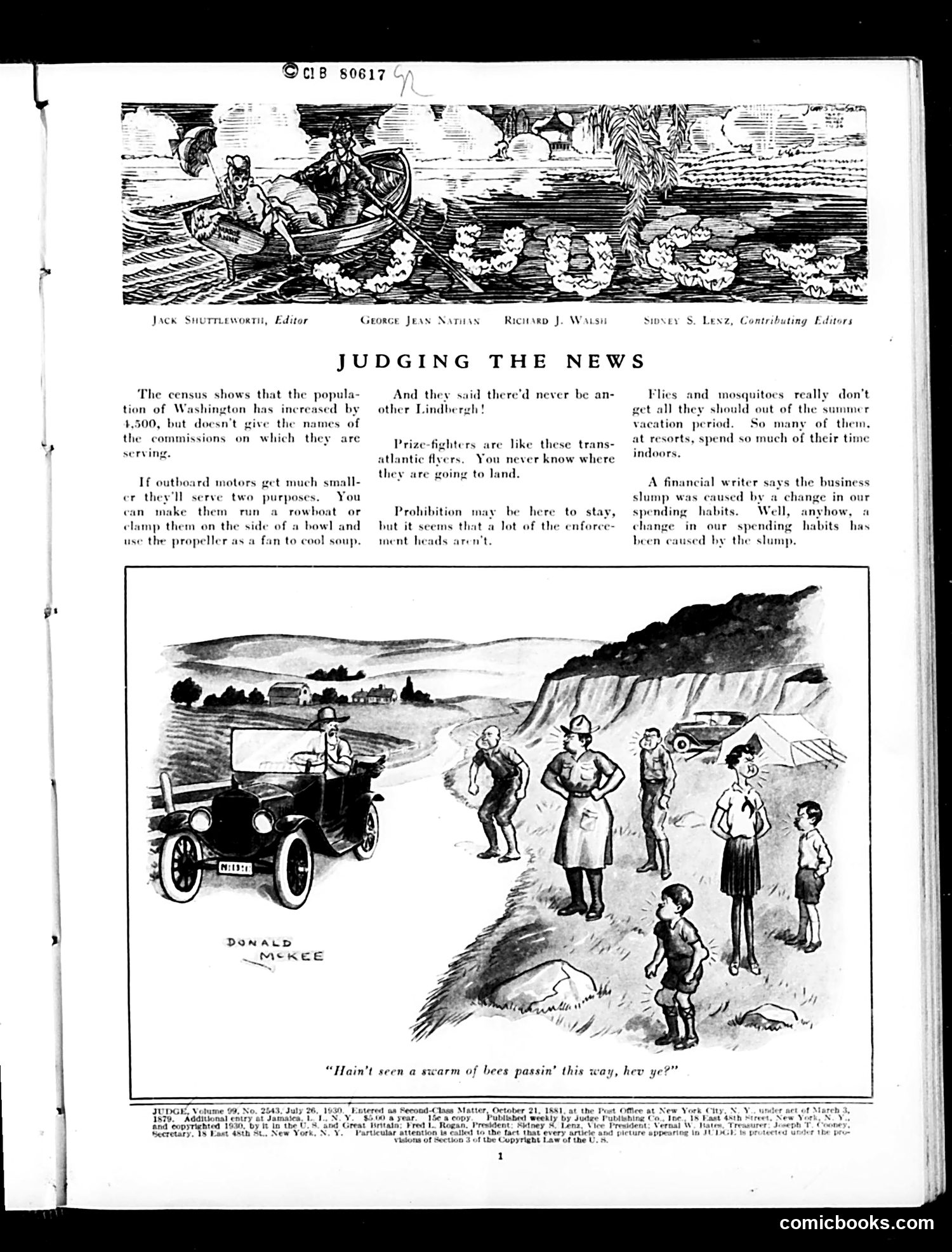
# "Judging the News" - July 26, 1920 This page satirizes contemporary social issues through several short commentary pieces and a cartoon by Donald McKee. The cartoon depicts a motorist asking pedestrians, "Hain't seen a swarm of bees passin' this way, her ye?" This appears to reference the widespread concern about escaped or wild bee swarms during the period—a genuine public hazard of the era. The accompanying text snippets mock various topics: the census's failure to track commissions, outboard motors' dual purpose, Prohibition enforcement challenges, transatlantic aviators' unpredictability, and changing spending habits causing business slumps. The overall tone treats these diverse issues—from bees to aviation to economics—with lighthearted skepticism, typical of Judge's satirical approach to contemporary life.
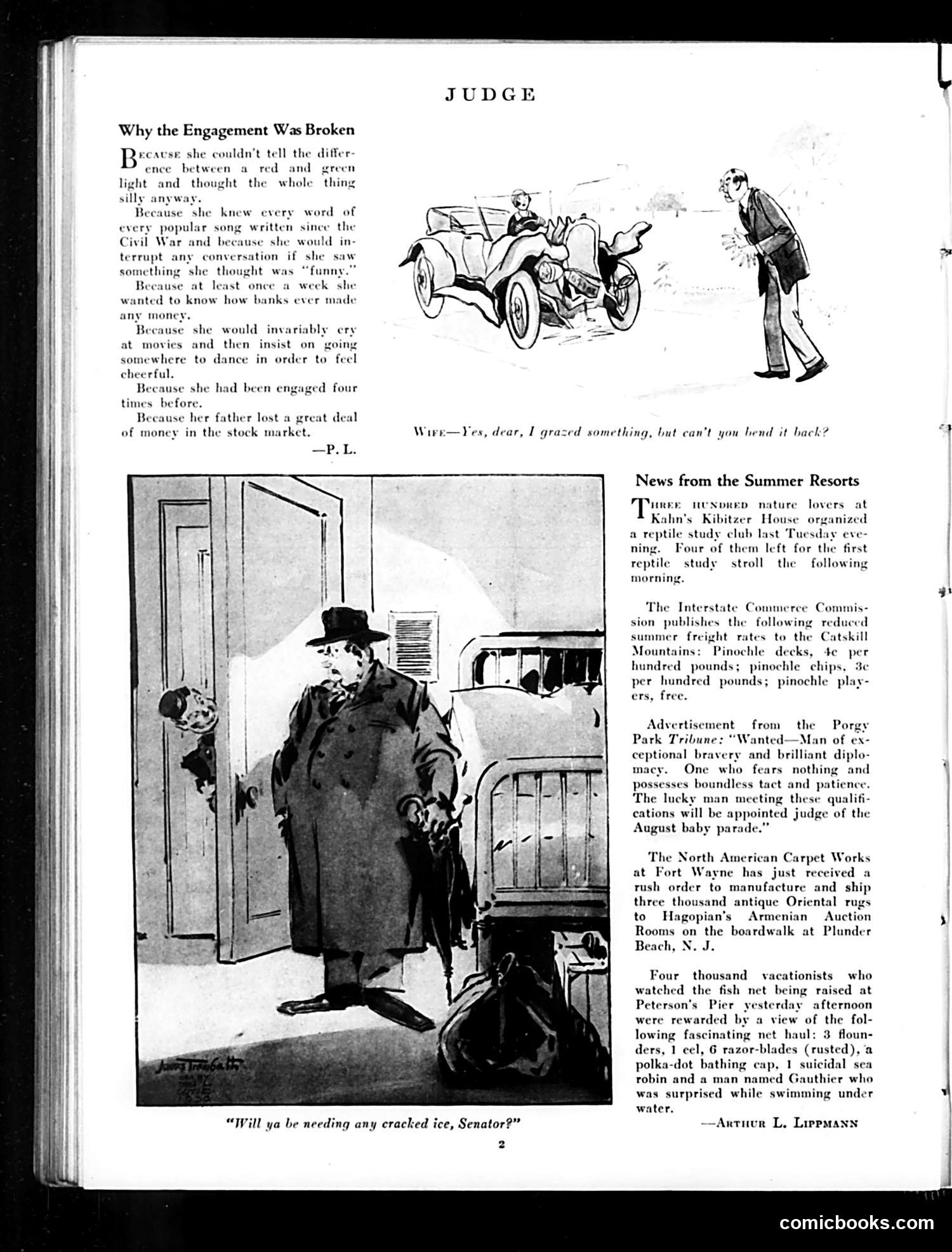
# Judge Magazine Page Analysis This page contains two separate humor pieces: **Top cartoon ("Why the Engagement Was Broken"):** A satirical list of reasons a woman ended her engagement, mocking her perceived frivolousness—she can't distinguish colors, knows every popular song, cries at movies, and had four previous engagements. The accompanying illustration shows a man in a car speaking to a woman, with the caption "Wife—Yes, dear, I grazed something, but can't you bend it back?" The joke suggests the woman is so shallow she'd rather discuss car damage than important matters. **Bottom cartoon ("Will ya be needing any cracked ice, Senator?"):** Shows a man (apparently a senator) at what appears to be an ice delivery or storage facility. The humor likely references Prohibition-era politics—senators or politicians obtaining "cracked ice" as a euphemism for illegal alcohol, satirizing hypocrisy among lawmakers who publicly supported Prohibition while privately accessing liquor.
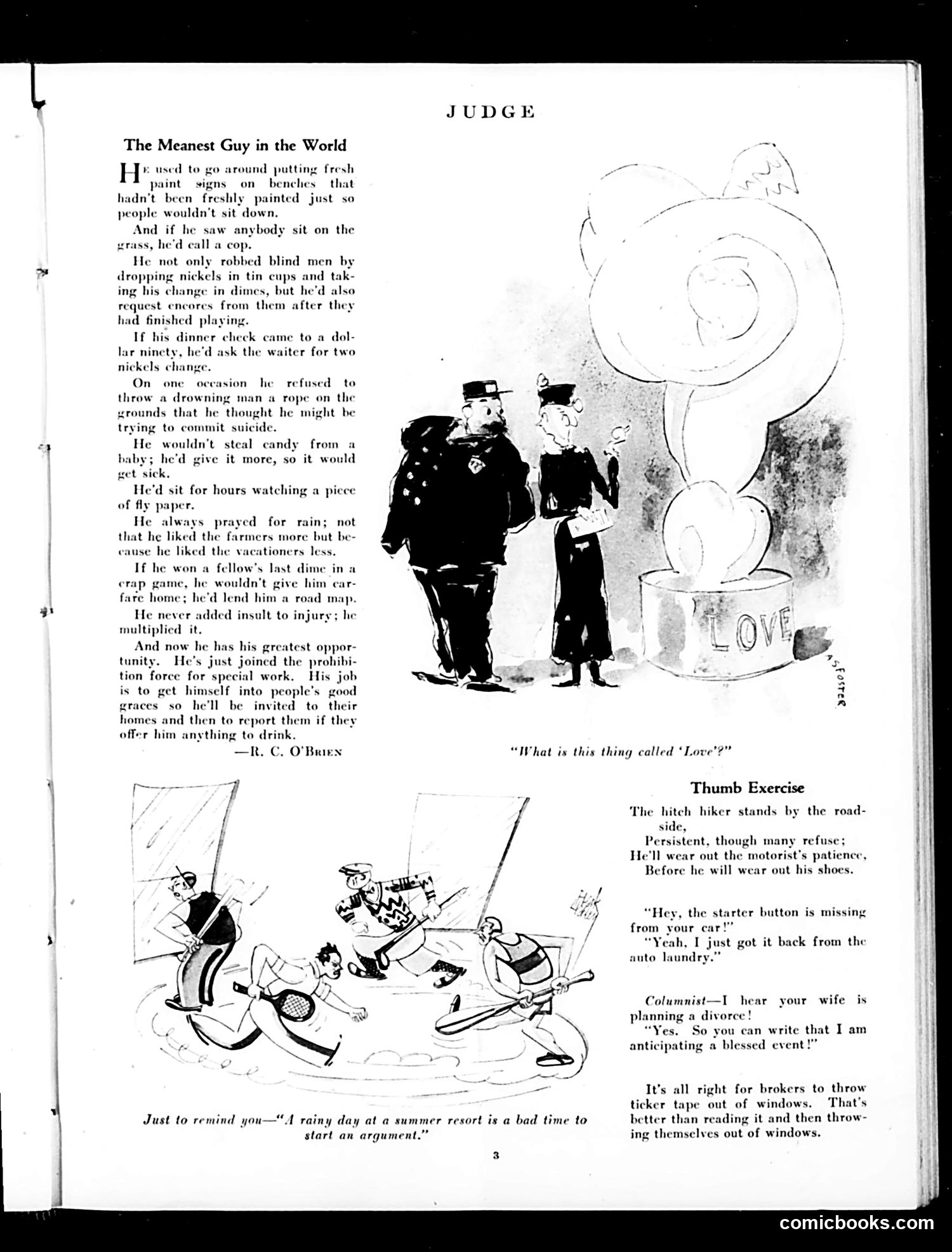
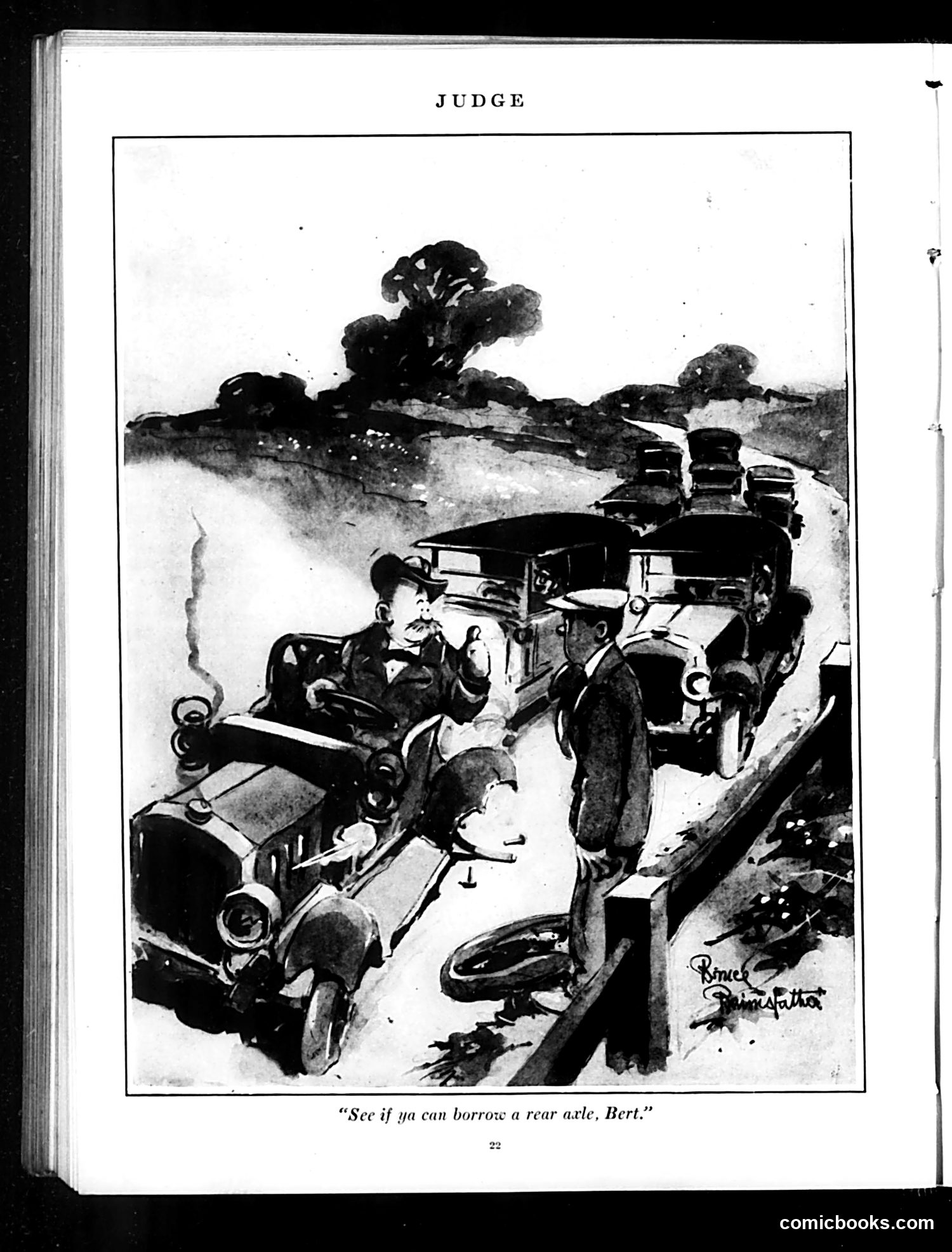
# Judge Magazine Page Analysis This page contains three distinct satirical pieces: **"The Meanest Guy in the World"** (top left) describes a deliberately cruel person who sabotages public benches, extorts blind beggars, steals candy from babies, and uses his position as a prohibition enforcement officer to harass citizens. The accompanying cartoon shows two men in hats examining a large question mark, captioning "What is this thing called 'Love'?"—likely satirizing the disconnect between such cruelty and human affection. **"Thumb Exercise"** (bottom) depicts hitchhikers and motorists, with quips about missing car parts and marital discord, reflecting 1920s-30s automobile culture and domestic tensions. The humor relies on observational satire about American social behaviors, petty grievances, and period-specific anxieties rather than targeting specific political figures.
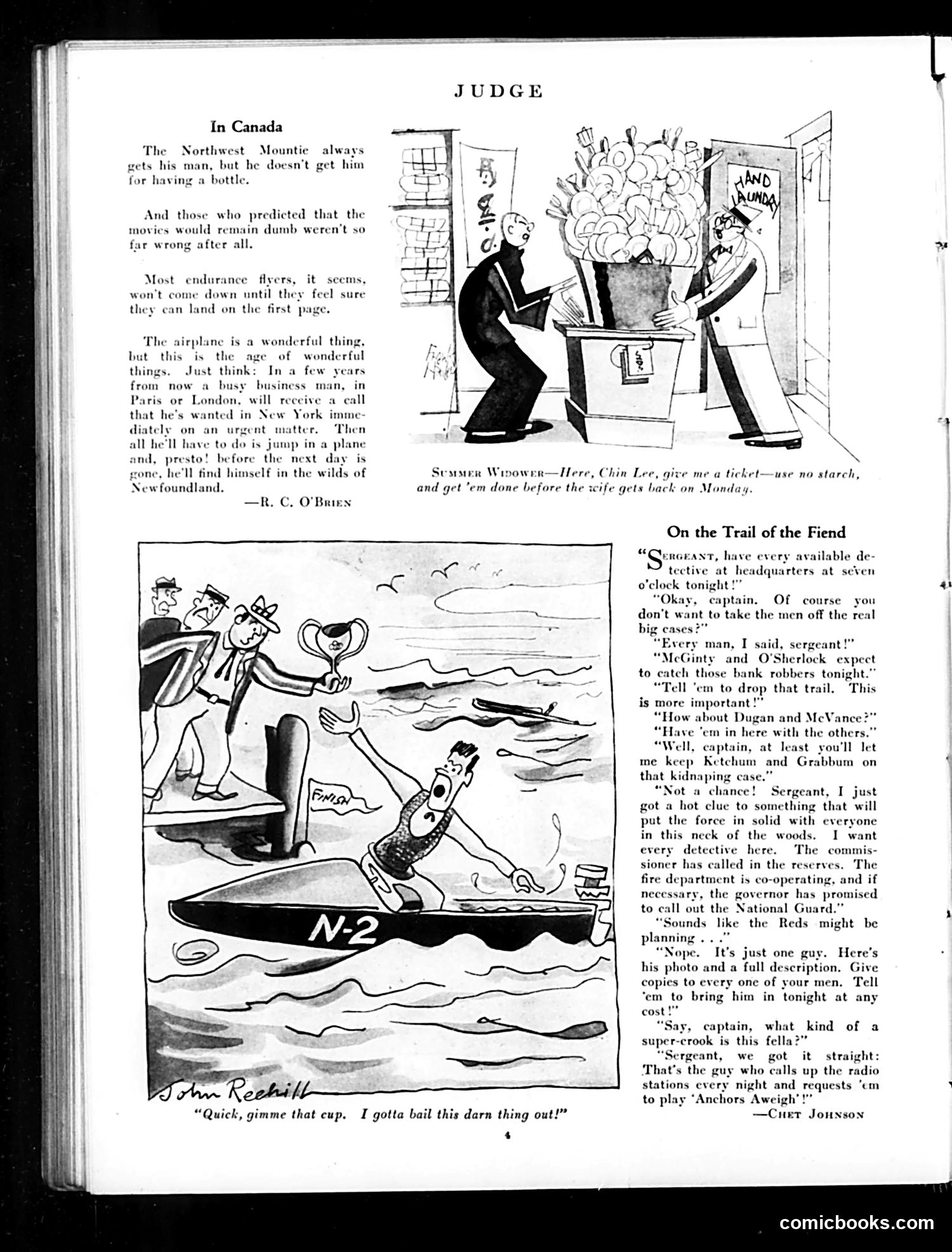
# Analysis of Judge Page This page contains two unrelated humor pieces: **Top cartoon** ("Judge"): Shows a laundry business overwhelmed with work. The satire likely mocks the inefficiency of wartime laundry services or commercial operations struggling with demand—a common subject during WWI era when Judge was active. **Bottom cartoon** ("On the Trail of the Fiend"): A police captain briefs detectives about catching bank robbers, joking that one suspect is identifiable because "he calls up the radio stations every night and requests 'em to play 'Anchors Aweigh.'" The humor plays on the absurdity of a criminal with such a distinctive, traceable habit. The boat illustration (marked "N-2") suggests a maritime or waterfront chase scenario. Both reflect early 20th-century concerns about crime and social disorder presented through exaggeration and wordplay.
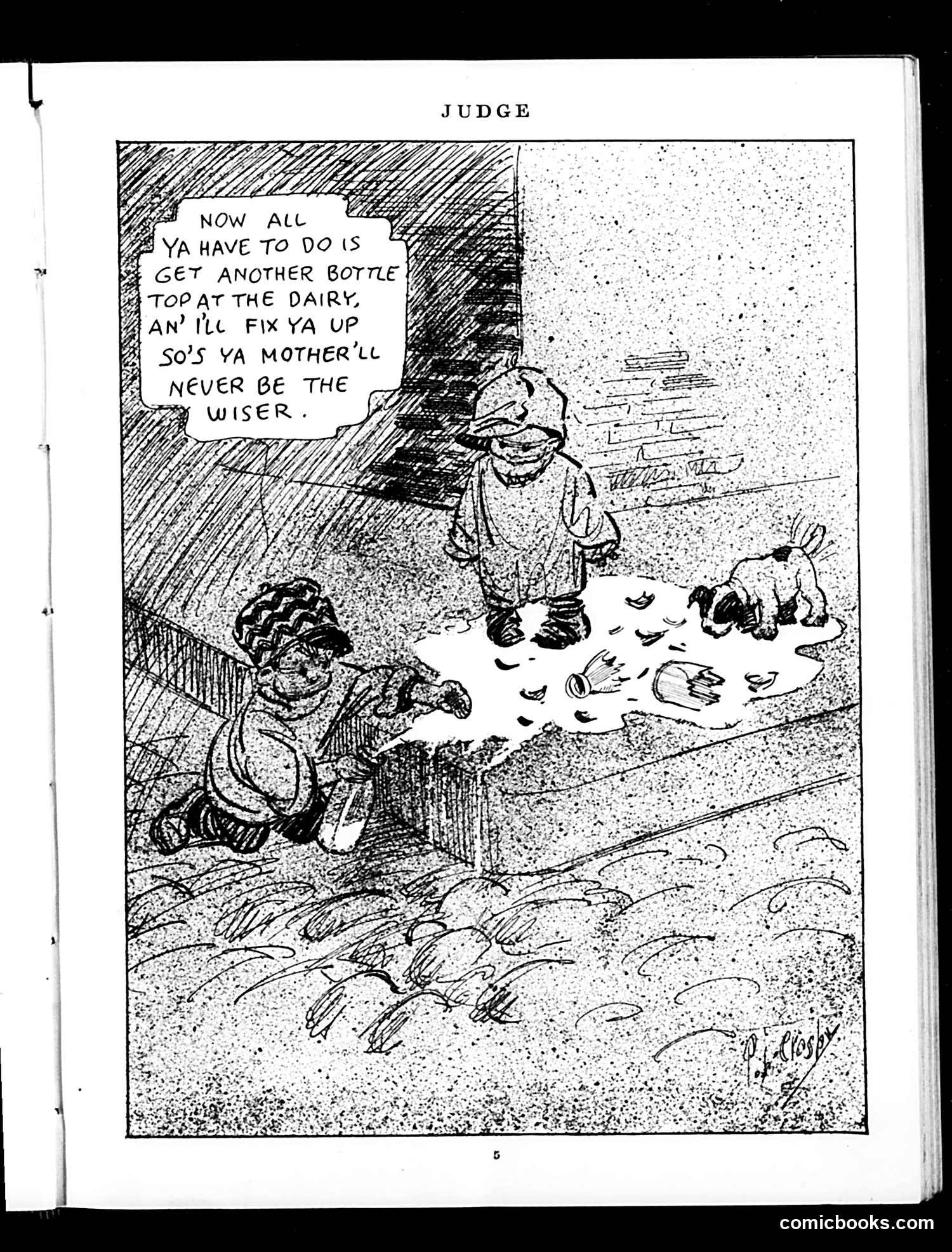
# Analysis of "Judge" Cartoon Page This cartoon depicts a domestic scene of poverty or hardship. An adult figure (appearing to be a parent or guardian) addresses two children, instructing them to "get another bottle top at the dairy" and promising to "fix ya up so's ya mother'll never be the wiser." The scattered bottle caps and broken items on the ground suggest material deprivation. The instruction implies the adult is using a bottle top as a makeshift toy or perhaps attempting to conceal evidence of damage or neglect from the children's mother. The satire appears to target poverty-level parenting during economic hardship—likely the Depression era—where adults improvised solutions and deceived family members out of desperation or shame. The title "JUDGE" suggests moral commentary on survival tactics among the poor.
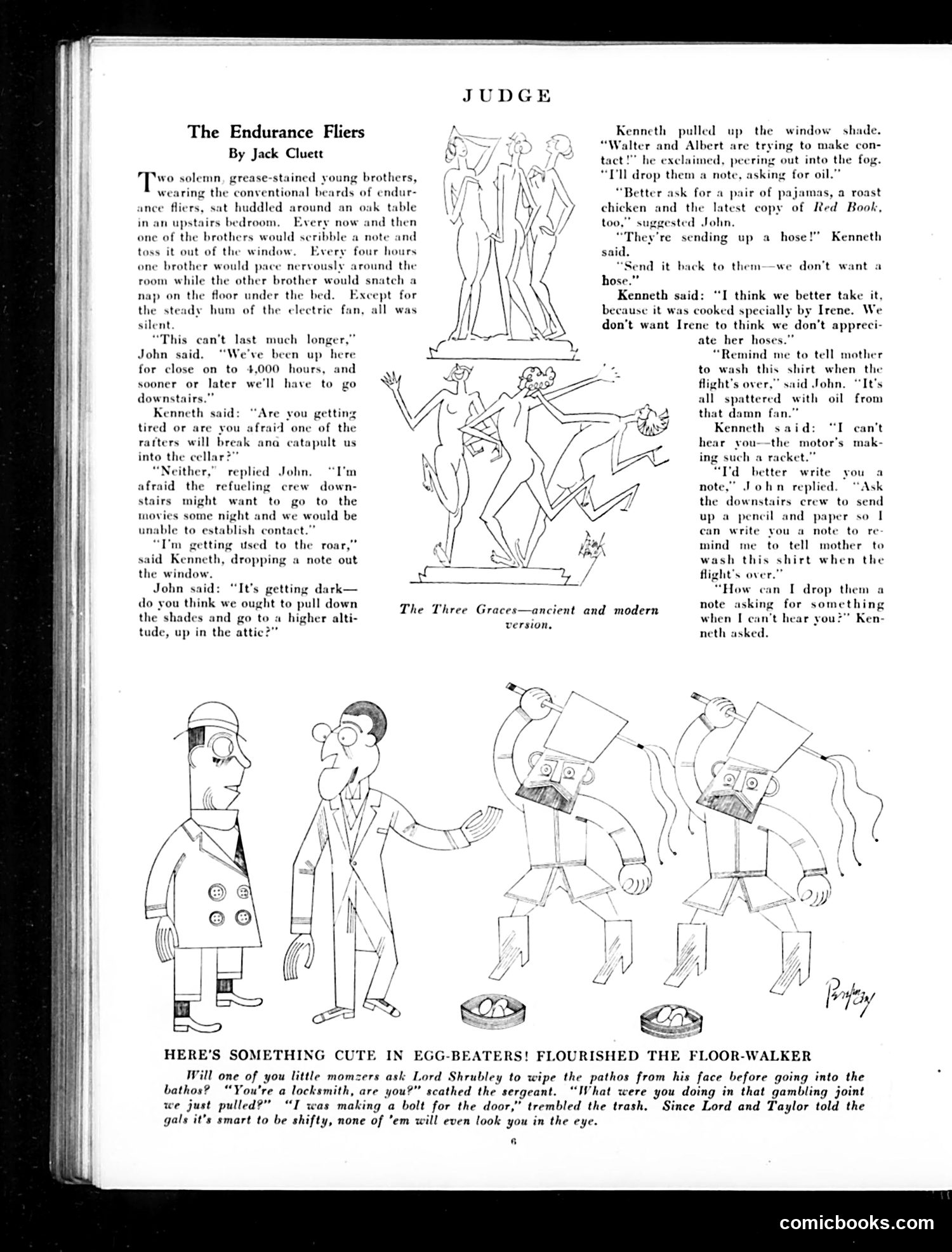
# "The Endurance Fliers" by Jack Cluett This page contains a humorous short story about two brothers attempting an endurance flying record by staying airborne for 4,000 hours. The narrative focuses on their increasingly desperate attempts to communicate with ground crews and handle mundane problems (like a soiled shirt needing washing) while unable to land. The accompanying cartoons satirize the absurdity: "The Three Graces—ancient and modern version" shows the contrast between classical elegance and modern mechanical chaos, while the bottom cartoon mocks egg-beaters as an absurd "floor-walker" invention. The satire targets early aviation's impracticality and the era's obsession with record-breaking feats, treating ambitious pilots' logistical nightmares for comic effect.
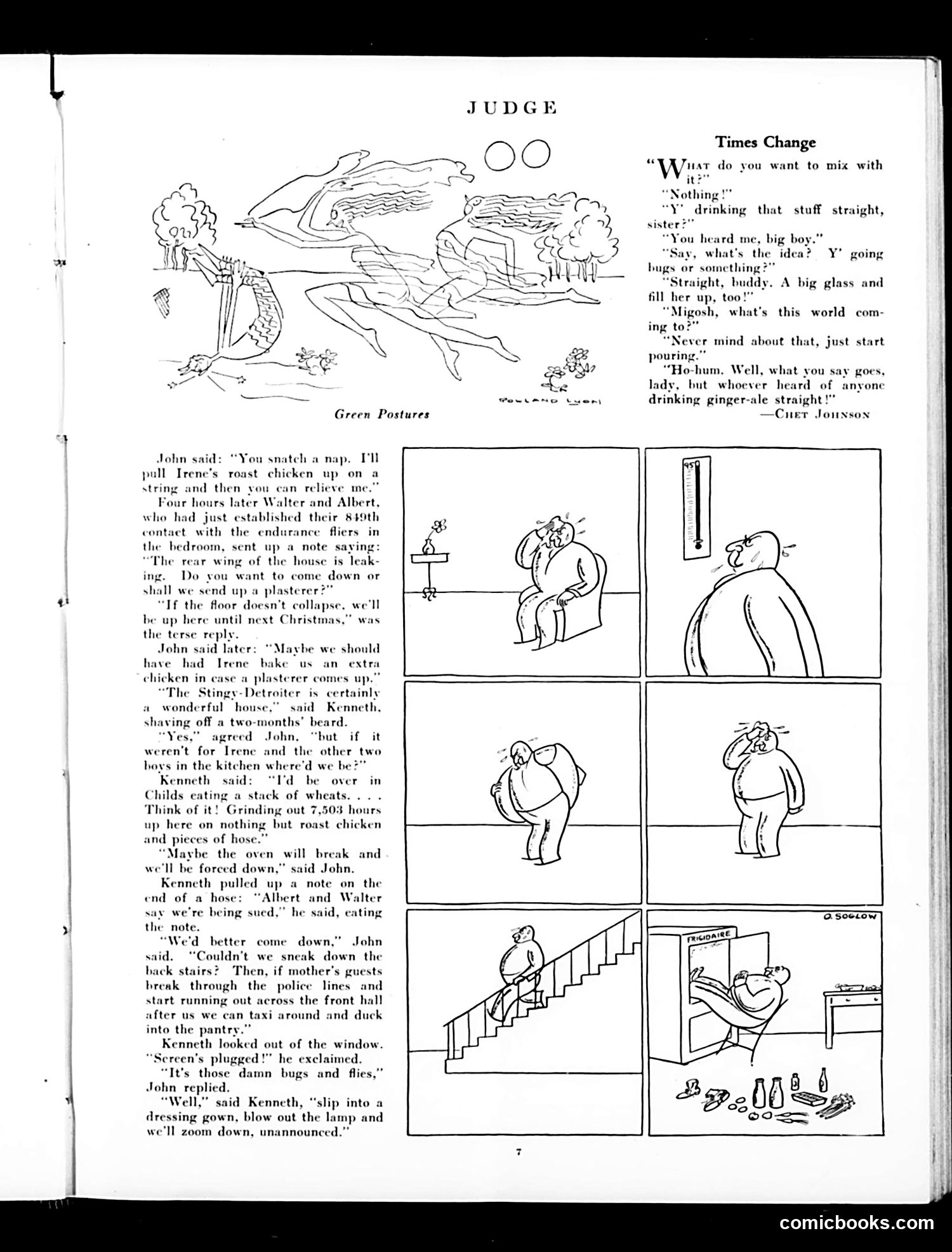
# "Green Postures" & "Times Change" **"Green Postures"** satirizes the 1920s endurance flying craze, when pilots competed for records by staying aloft for days. The joke depicts two men trapped in a bedroom, pretending to be endurance fliers while avoiding household problems (leaking roof, potential lawsuits). They survive on roast chicken delivered via string—a absurd parody of how real aviators relied on ground crews for supplies. **"Times Change"** contrasts old and new drinking customs. An older woman criticizes younger drinkers for consuming ginger ale straight (without alcohol), implying this represents undesirable social change—possibly a jab at Prohibition-era alternatives or generational decline. The humor lies in flipping traditional drinking etiquette: straight spirits were once standard; now abstinence seems shocking. Both cartoons use exaggeration to mock contemporary fads and social shifts of the Jazz Age.
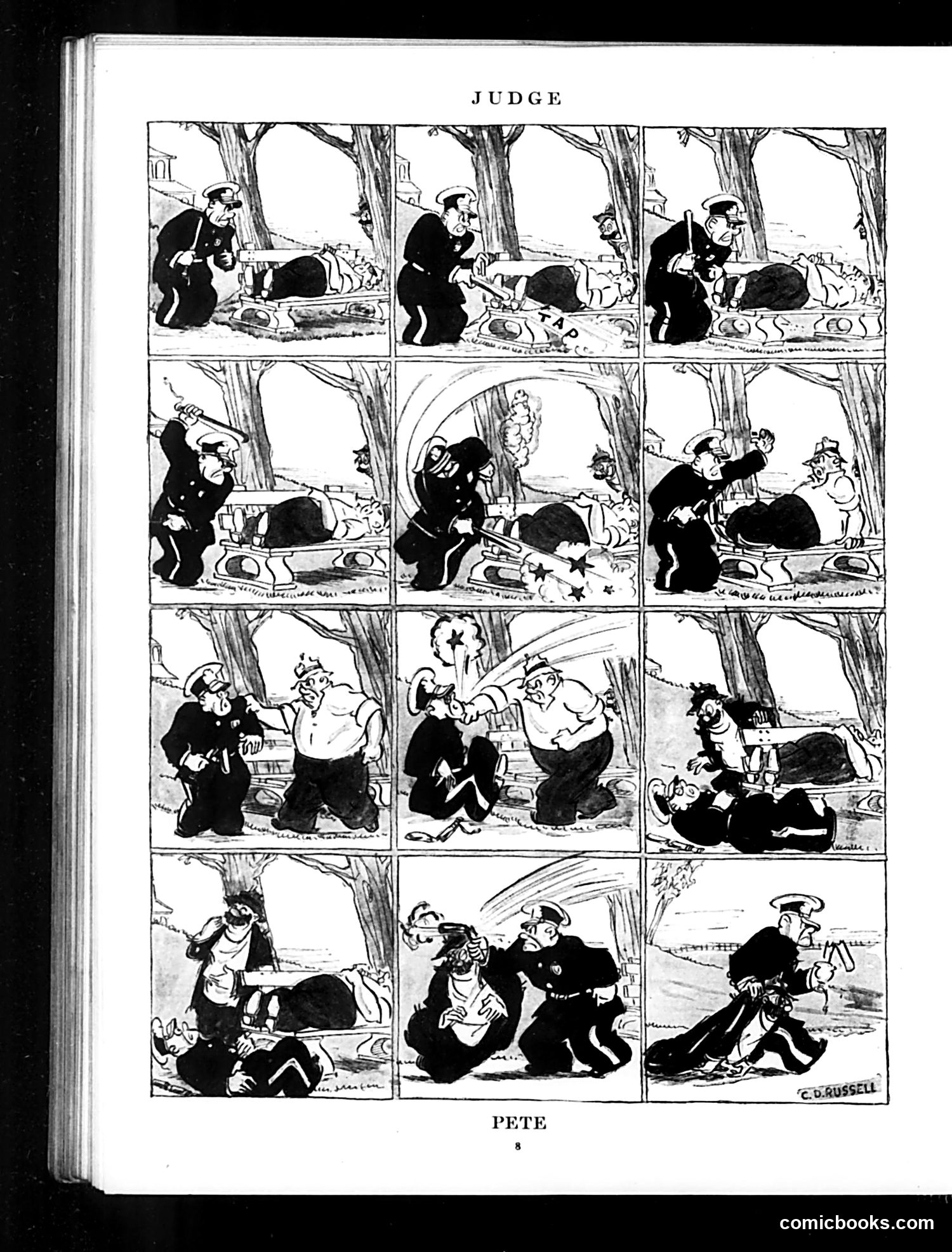
# "Judge Pete" - Political Cartoon Analysis This 12-panel comic strip titled "Judge Pete" depicts a judge in formal robes encountering a vagrant or homeless person sleeping beneath trees. The narrative appears to show the judge's changing response: initially dismissive or judgmental, the judge gradually becomes sympathetic after discovering the person's circumstances or identity. The satire likely critiques judicial or societal hypocrisy—perhaps suggesting that authority figures like judges make harsh decisions about poor people without understanding their actual situations. The progression from condemnation to compassion implies the judge learns something humbling. The specific identity of "Pete" and whether this references an actual court case or public figure remains unclear from the image alone. The strip's point seems to be about empathy breaking through initial prejudice.
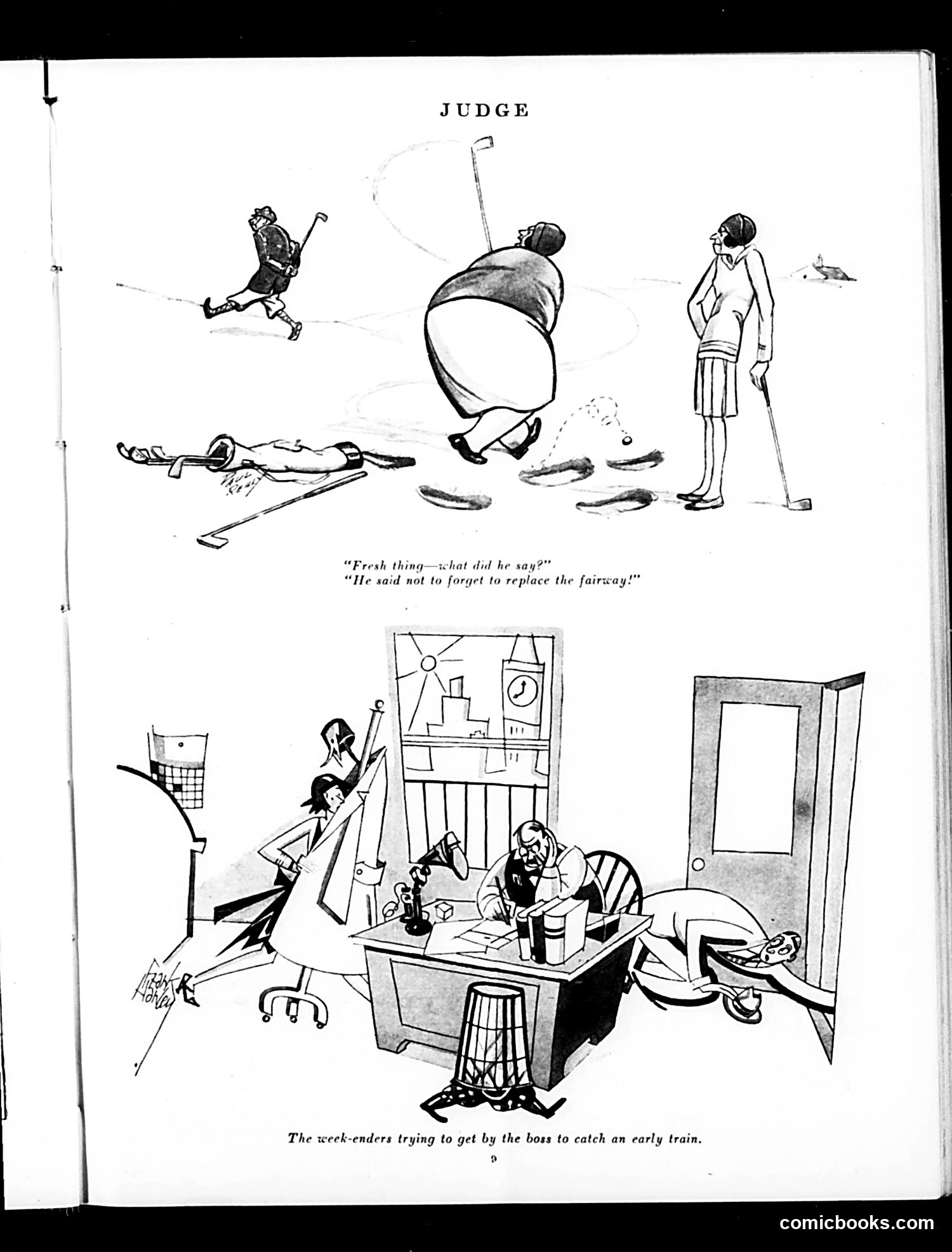
# Analysis This page contains two cartoons from Judge magazine, both satirizing workplace dynamics. The top cartoon titled "JUDGE" depicts a golf scene where someone has hit a ball onto a fairway. The dialogue "'Fresh thing—what did he say?' / 'He said not to forget to replace the fairway!'" suggests a young, impertinent employee making a cheeky remark to authority. The bottom cartoon shows office workers attempting to leave early on a Friday ("week-enders") to catch an early train, while their boss sits at a desk. The visual chaos—with figures moving frantically and items scattered—depicts the comic struggle between employees wanting to depart and management's authority to detain them. The satire targets the tension between working-class desires for leisure time and managerial control over employees' schedules.
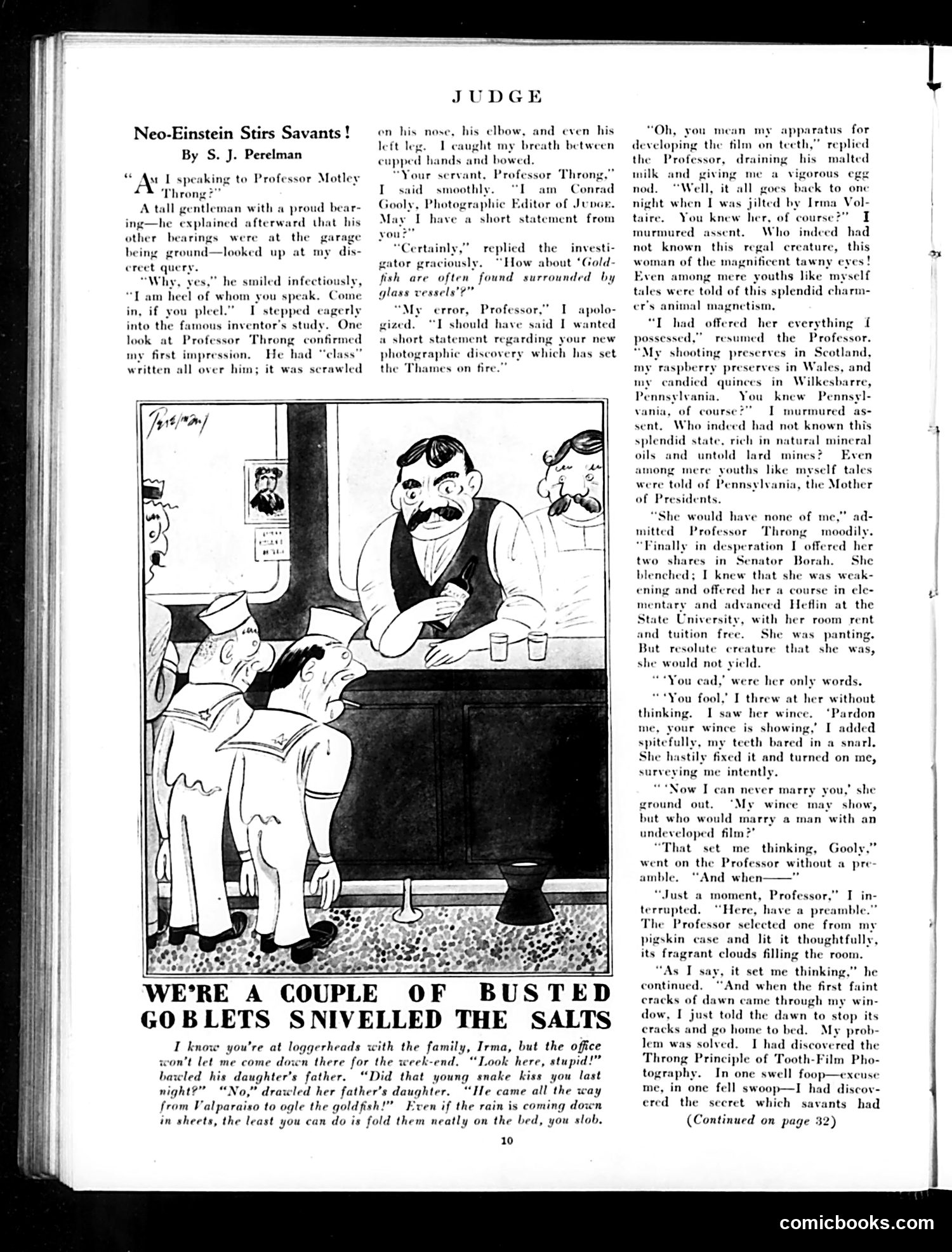
# Judge Magazine Satire Analysis This is a comedic short story by S.J. Perelman (a renowned humorist) satirizing pseudo-intellectual academic pretension and absurdist logic. "Professor Throng" appears to be a fictional charlatan inventor who speaks with affected superiority while saying nonsensical things—his "discovery" involves photographing goldfish surrounded by glass vessels and developing film on teeth. The humor mocks both the Professor's pompous manner and the narrator's obsequious acceptance of obvious gibberish. The satire targets early 20th-century "scientific" charlatans and the cultural reverence for inventors during America's technological boom. Perelman exaggerates the Professor's class-consciousness (literally written on his body) and his absurdly verbose romantic rejection narrative to expose intellectual fraud. The subplot about a woman rejecting him for having an "undeveloped film" continues the tooth-film photography running joke, maintaining the surreal logic throughout. This is quintessential Perelman—verbal slapstick mocking pretense through deadpan absurdism.