A complete issue · 36 pages · 1929
Judge — November 16, 1929
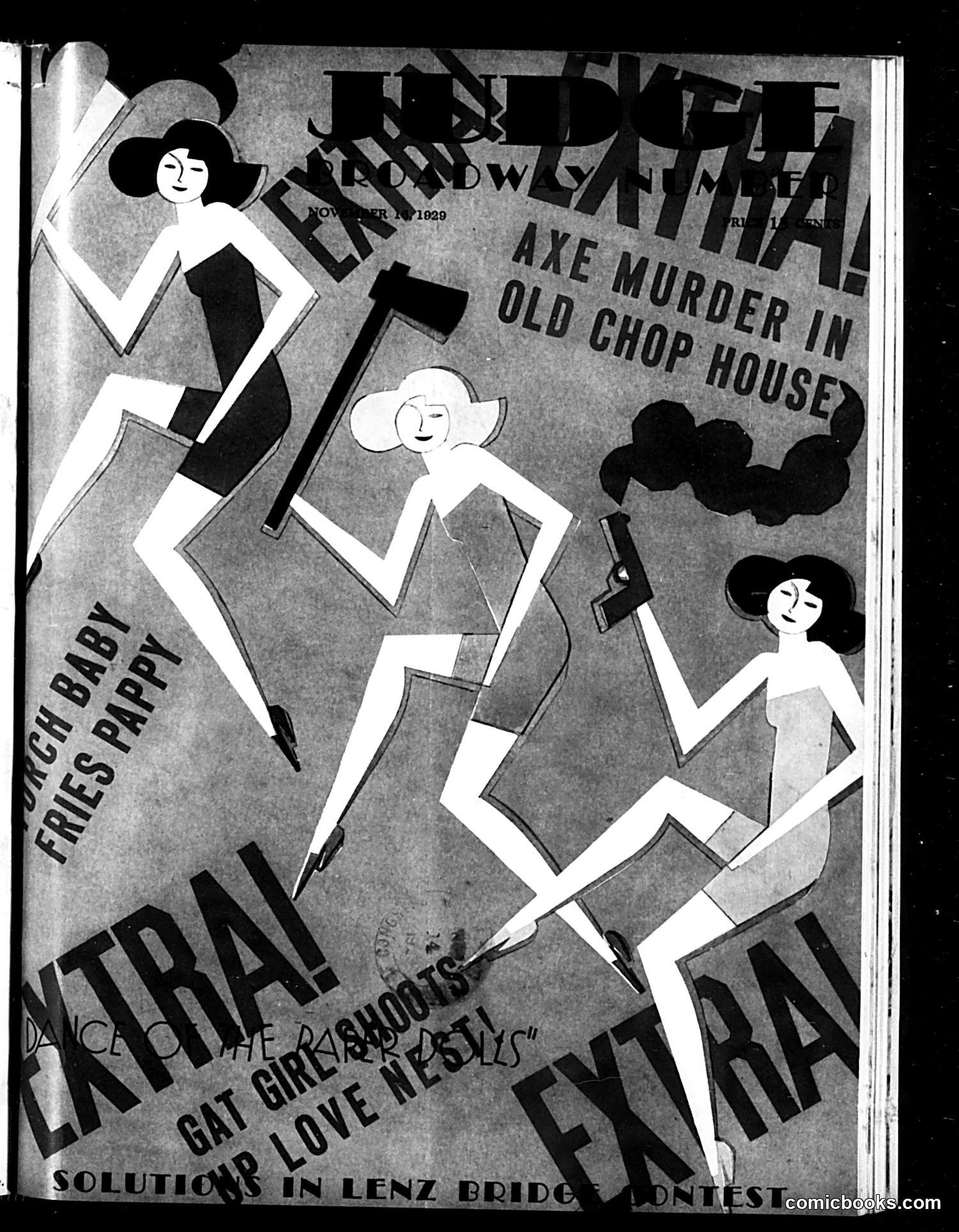
# Analysis of Judge Magazine Page This 1929 Judge magazine page features satirical advertisements parodying popular entertainment and crime-obsessed culture of the era. The central illustration depicts stylized female figures wielding axes, referencing the notorious "Axe Murder in Old Chop House" case mentioned in the text. The page satirizes several contemporary obsessions: pulp crime stories ("Fries's Proof"), sensationalist newspaper reporting, and risqué entertainment ("Gay Girl's Schooldays," "Love Nests"). The flapper-style figures and sexually suggestive poses mock both the modernized woman of the Jazz Age and the era's lurid popular entertainment. The satire critiques how American media sensationalized violent crime and sexual content during the 1920s, presenting these "advertisements" as absurd parodies of actual commercial exploitation of public fascination with scandal and violence.
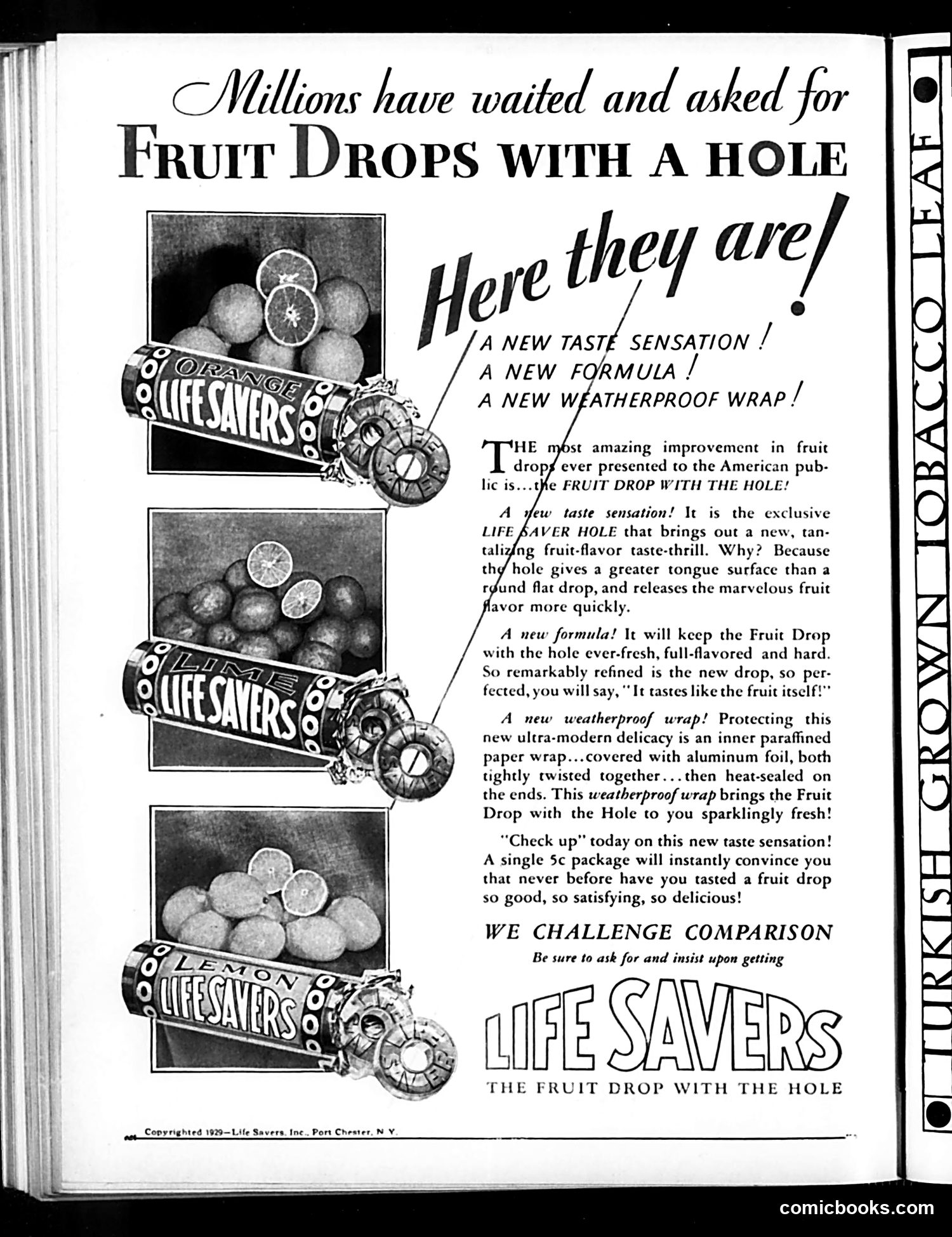
# Analysis This is **not a political cartoon or satire**—it's a straightforward product advertisement for Life Savers candy, specifically promoting a new "Fruit Drop with the Hole" variant. The ad announces three innovations: a novel taste sensation created by the hole (which supposedly increases tongue contact with the candy), a new formula to maintain freshness, and improved weatherproof packaging using paraffined paper and aluminum foil. The three images show different Life Savers flavors (Orange, Lime, and Lemon based on the visible labels). The copy uses hyperbolic marketing language typical of 1920s advertising—phrases like "most amazing improvement" and "new taste sensation"—to make a modest product modification sound revolutionary. This represents Judge's commercial content rather than editorial satire.
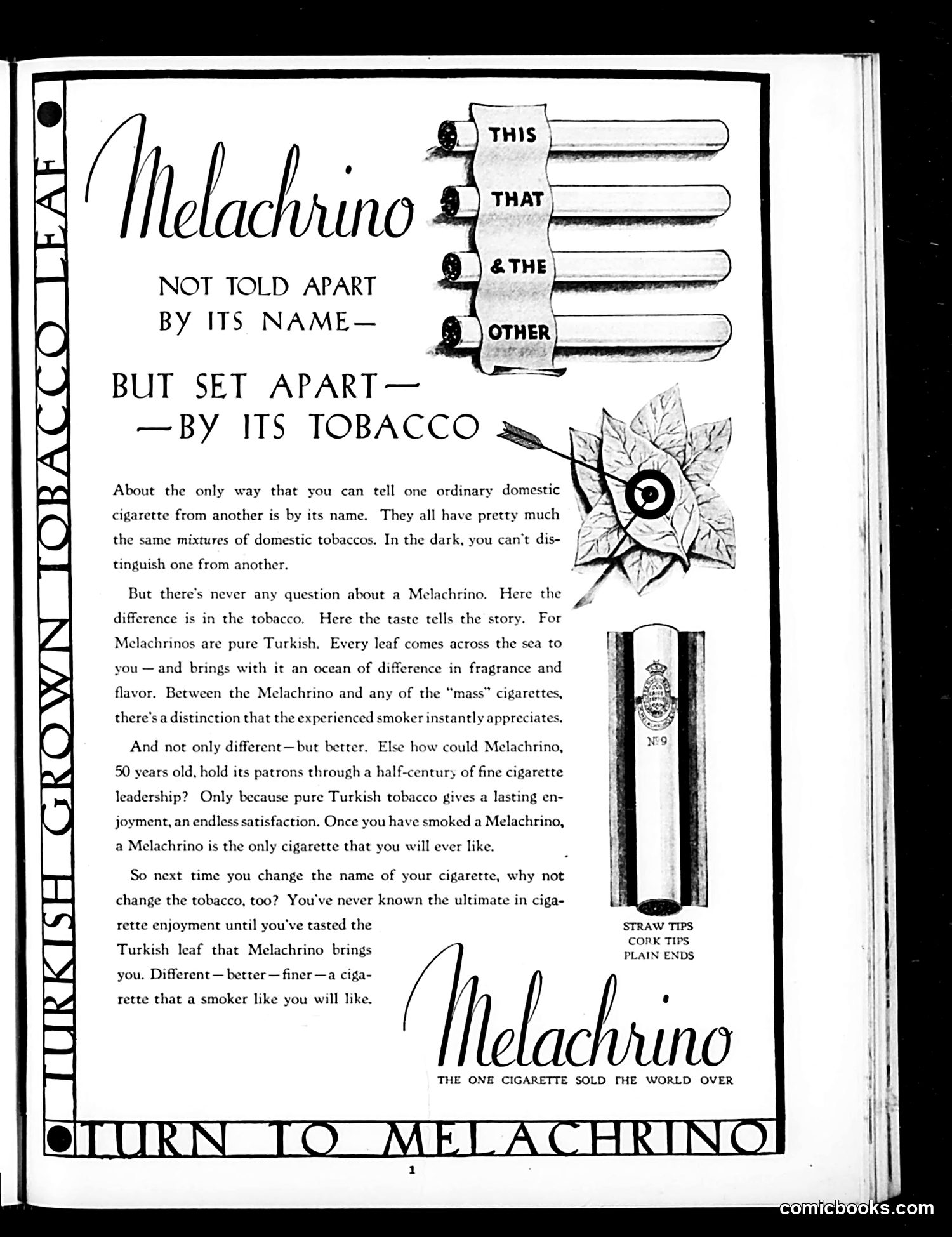
# Melachrino Cigarette Advertisement This page is primarily a **cigarette advertisement**, not political satire. It promotes Melachrino cigarettes, emphasizing their distinction from ordinary domestic brands through their use of pure Turkish tobacco. The visual humor is mild: four identical cigarette packages labeled "THIS," "THAT," "&THE," and "OTHER" illustrate that domestic cigarettes are indistinguishable from one another. The accompanying tobacco leaf illustration adds decorative appeal. The ad's main argument is that Melachrino's Turkish tobacco provides superior taste and fragrance that experienced smokers can immediately recognize—"the only cigarette sold the world over." This represents straightforward early 20th-century cigarette marketing, before health warnings. There's no significant political or social satire present; it's purely commercial content placed in Judge magazine.
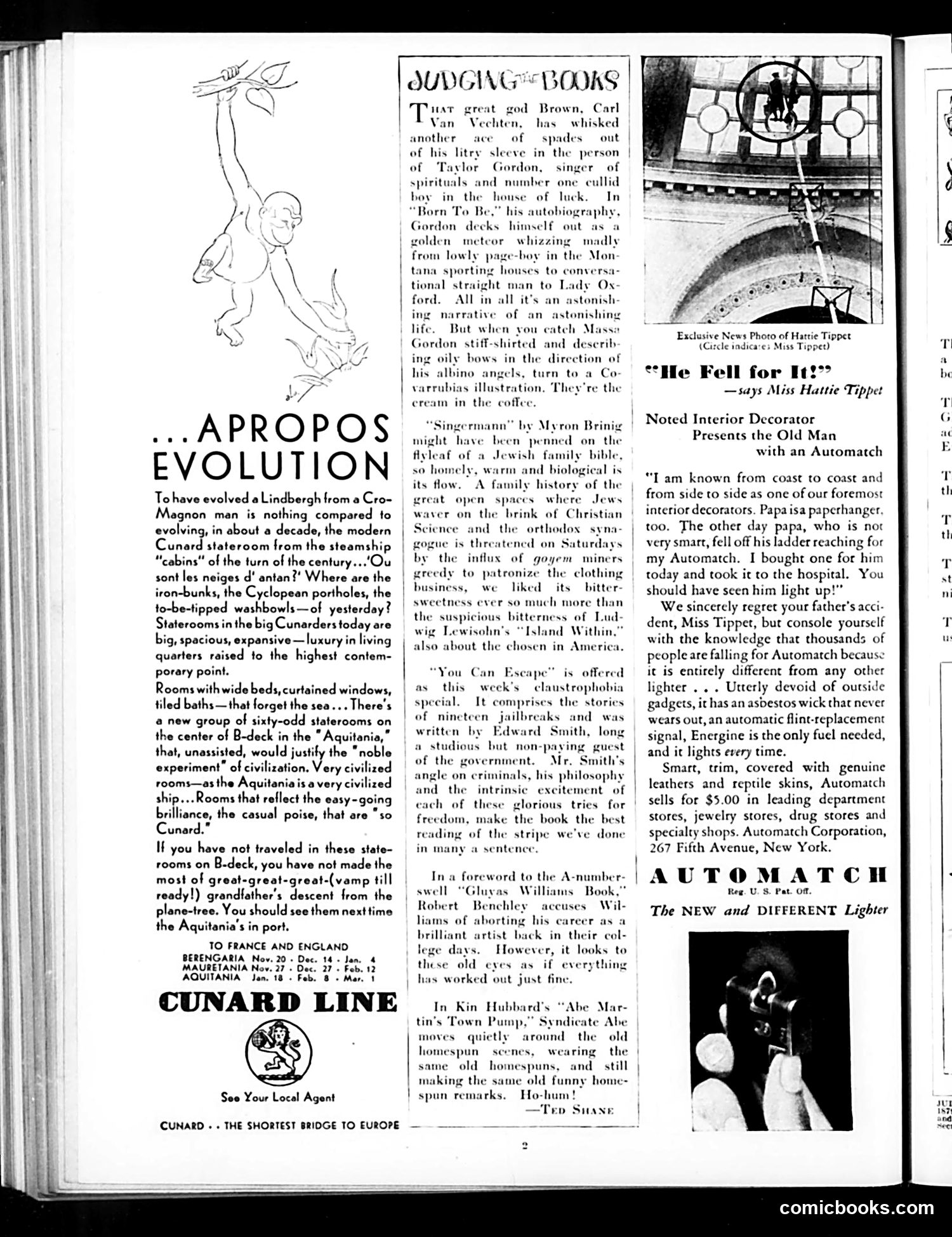
# "Apropos Evolution" Cartoon Analysis This page is primarily **advertising and book reviews** rather than political satire. The left side features a whimsical cartoon labeled "Apropos Evolution," depicting ape-like figures evolving upward—a visual pun on the Cunard Line's advertisement below it about traveling via ship. The cartoon plays on contemporary evolutionary theory (likely referencing ongoing Darwin debates) to humorously suggest that traveling on the luxurious Aquitania represents human "progress" or civilization's advancement. The right side contains book reviews and an advertisement for an **Automatch lighter**. These are straightforward commercial content rather than satirical commentary. The page reflects Judge magazine's mix of humor, advertisements, and cultural criticism typical of early 20th-century American magazines.
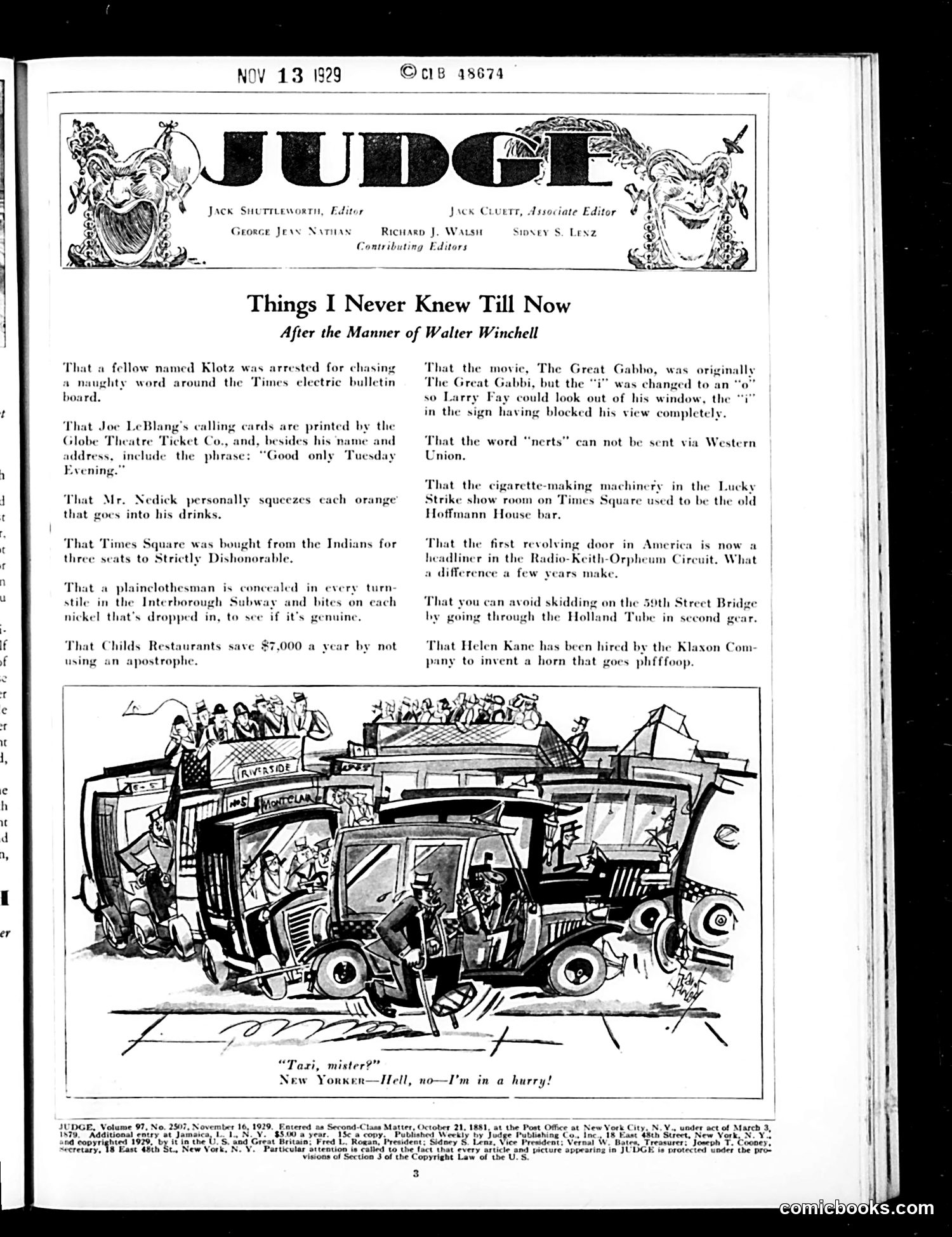
# "Things I Never Knew Till Now" - Judge Magazine, Nov. 13, 1929 This page features miscellaneous trivia presented "After the Manner of Walter Winchell," the famous gossip columnist of the era. The items are lighthearted facts about New York City, including details about Times Square's purchase from Native Americans, the first revolving door in America, and Helen Kane's hiring by the Klaxon Company to invent a horn sound effect. The cartoon below depicts a crowded, chaotic taxi scene with the caption "Taxi, mister?" / "New Yorker—Hell, no—I'm in a hurry!" It satirizes New York transportation culture and the impatient attitude of city residents who prefer walking to dealing with taxis, even in busy conditions. The overall page captures 1920s New York urban humor and gossip-column style journalism.
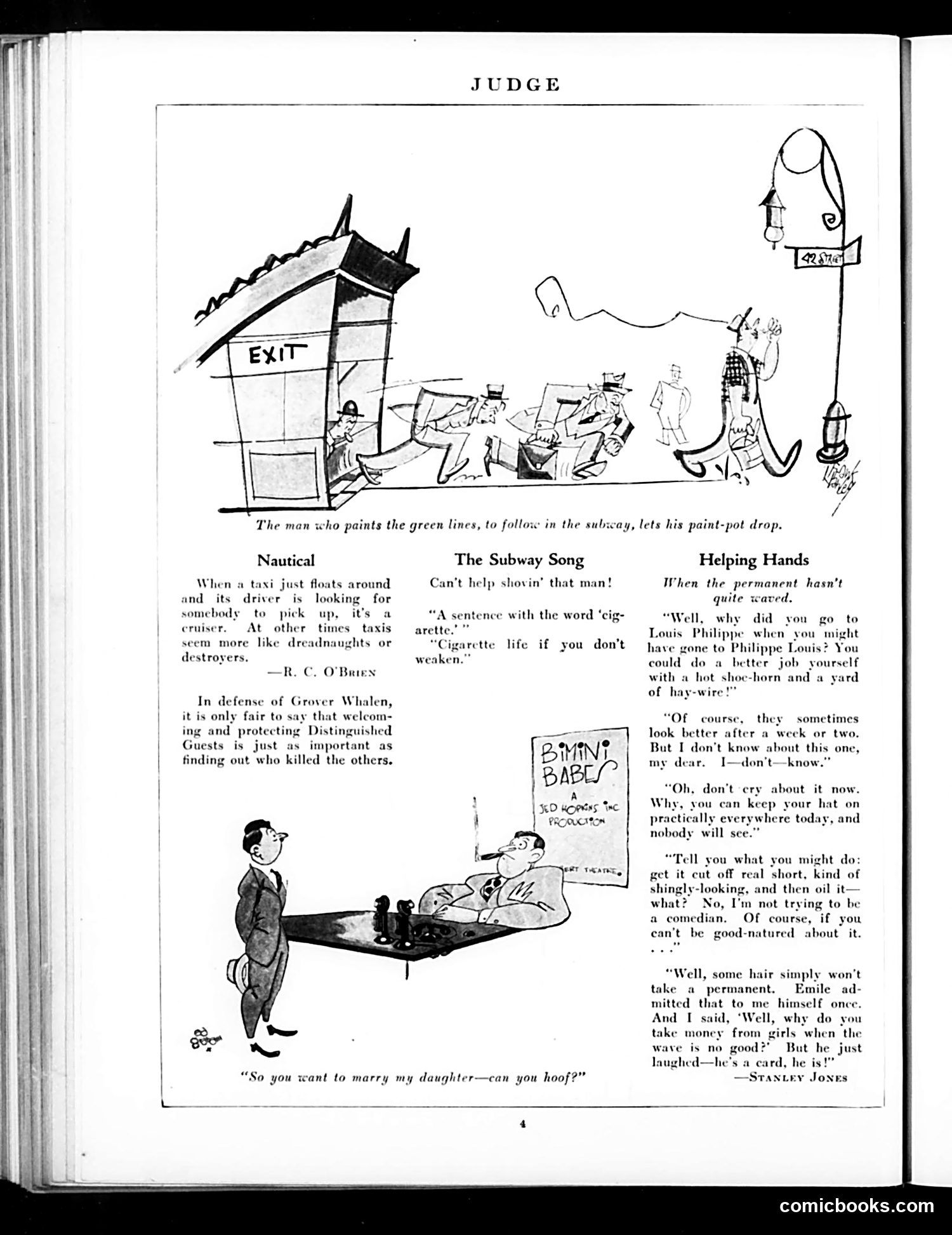
# Analysis of Judge Page This page contains three separate humor pieces satirizing early 20th-century urban life: **"Nautical"**: Mocks ocean liner safety, comparing ships to "dreadnoughts or destroyers"—likely referencing naval arms-race anxieties of the pre-WWI era. **"The Subway Song"**: Jokes about New York City subway culture and personal grooming habits, suggesting men's vanity and the challenges of maintaining appearance in urban conditions. **"Helping Hands"**: A dialogue about a woman's bad hair day and salon solutions. The humor centers on women's expectations versus reality regarding permanent waves—a newly popular 1920s-30s beauty treatment. **Bottom cartoon**: Shows a man proposing marriage but asking "can you hoof?"—suggesting the woman's dancing ability matters as much as commitment, satirizing shallow courtship values. The page reflects Jazz Age social commentary on modern manners and commercialism.
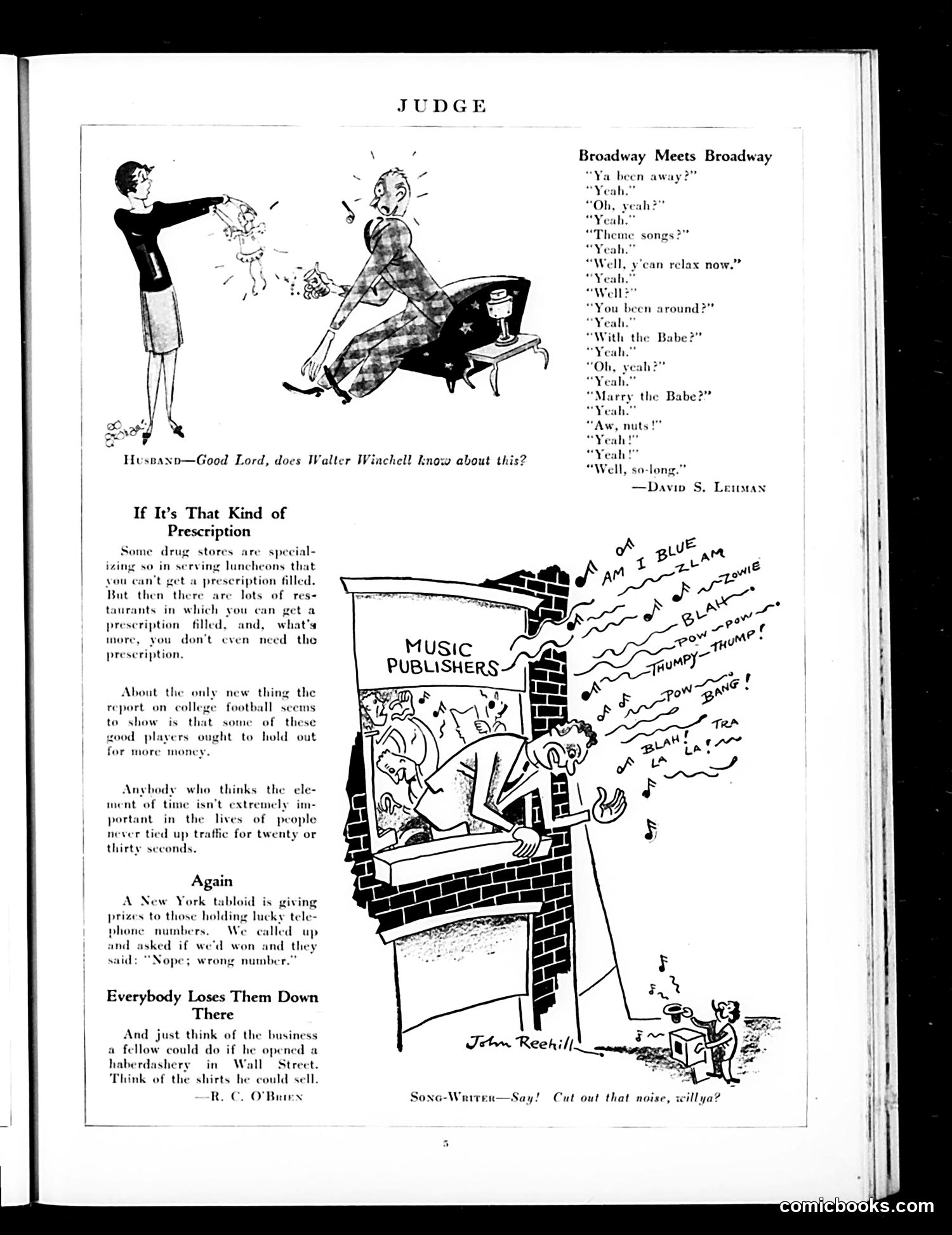
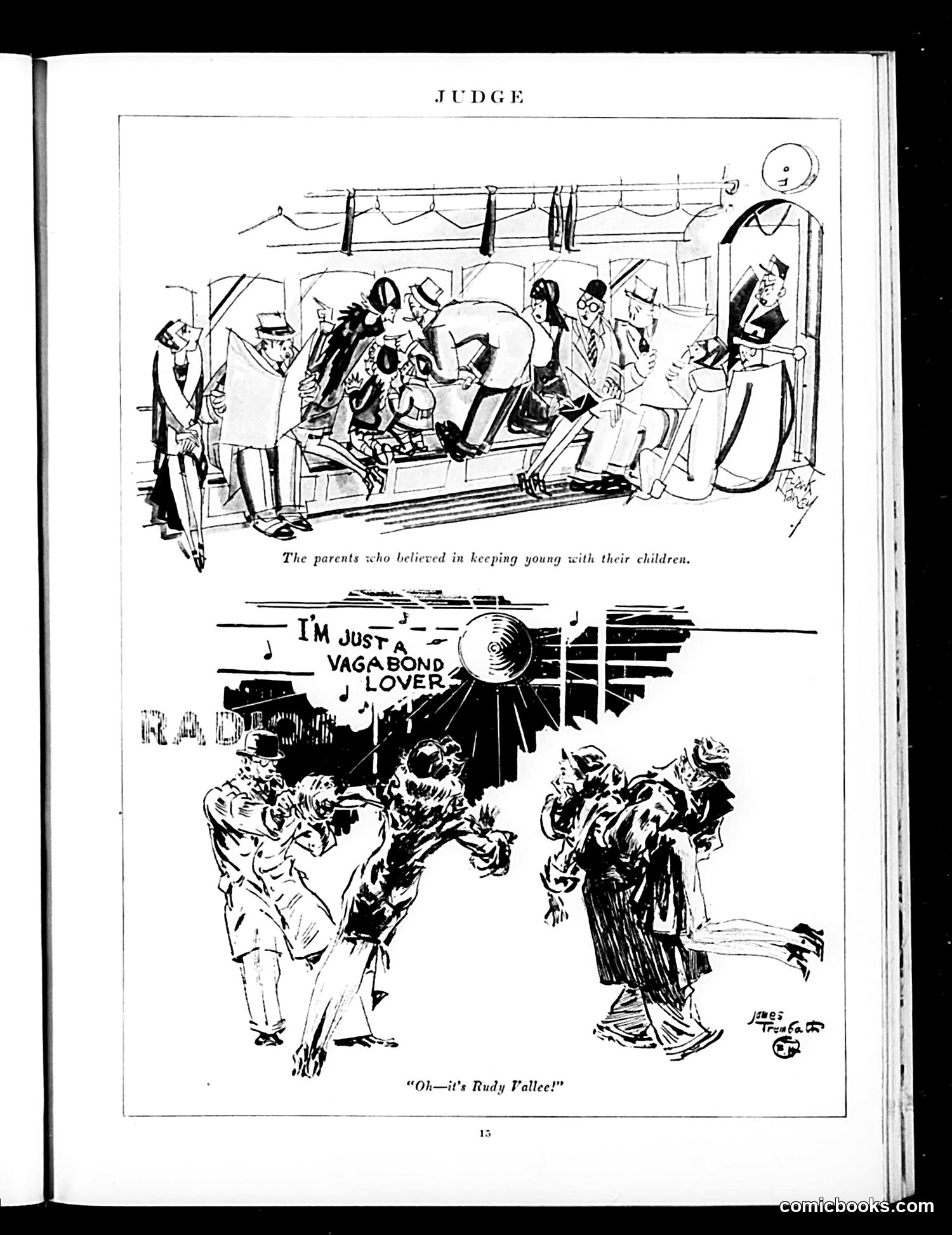
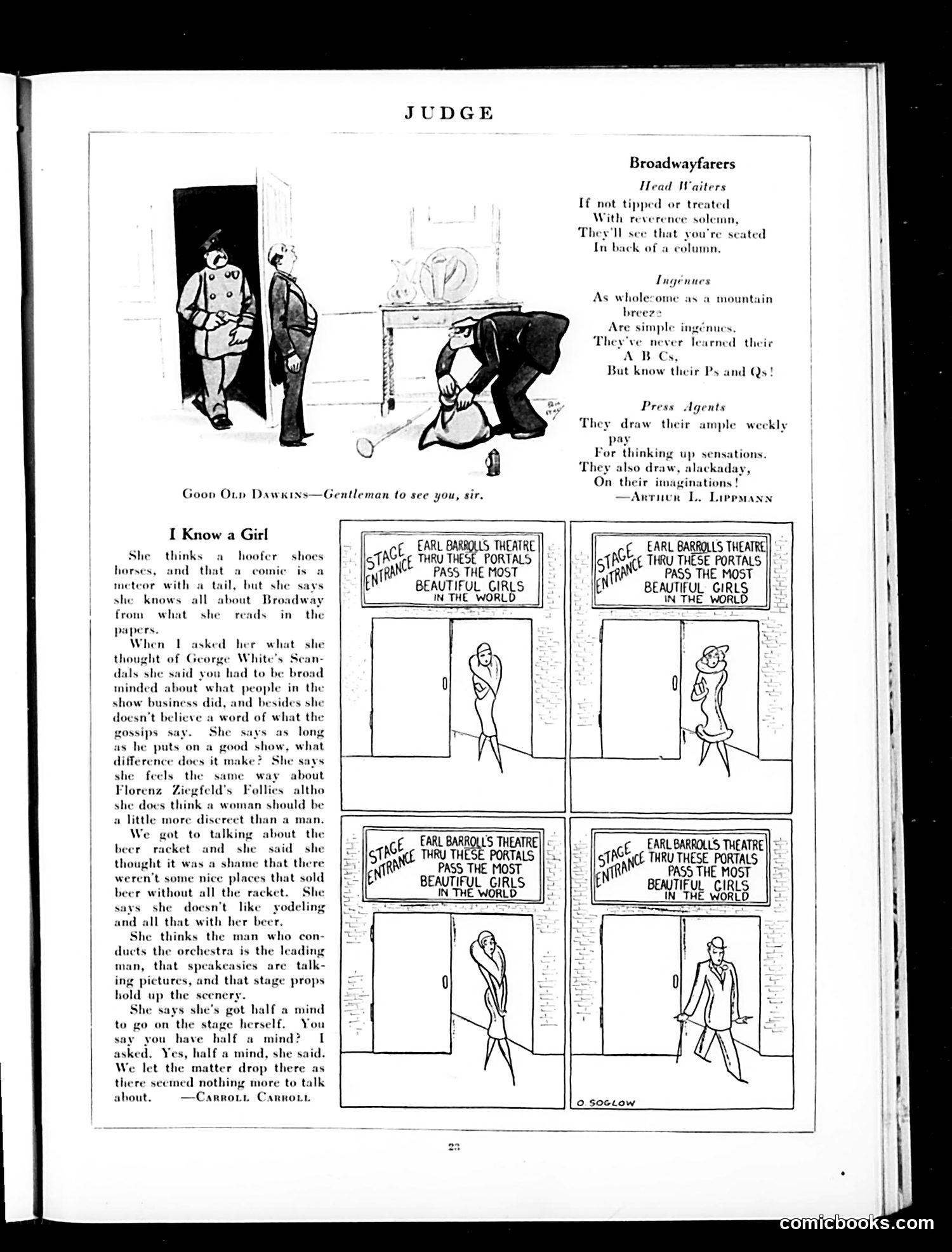
# Judge Magazine Page Analysis This page contains multiple satirical pieces and cartoons typical of Judge's humor: **Top Cartoon ("Broadway Meets Broadway"):** Shows a couple reuniting with dialogue capturing post-WWI slang and Broadway theater culture. The husband asks about "the Babe"—likely Babe Ruth, indicating the celebrity obsession of the 1920s era. **Middle Content:** Short humor pieces mock contemporary targets: drug stores serving lunches without prescriptions, college football players seeking higher pay, and the importance of elevator music in urban life. **Bottom Cartoon (by John Reckill):** Depicts a "Music Publishers" building being bombarded with noise complaints about jazz music—likely referring to the "Jazz Age" and the generational conflict over this new musical form that older Americans considered loud and objectionable. The overall tone satirizes 1920s American culture: commercialism, celebrity, sports economics, and the cultural anxiety surrounding jazz.
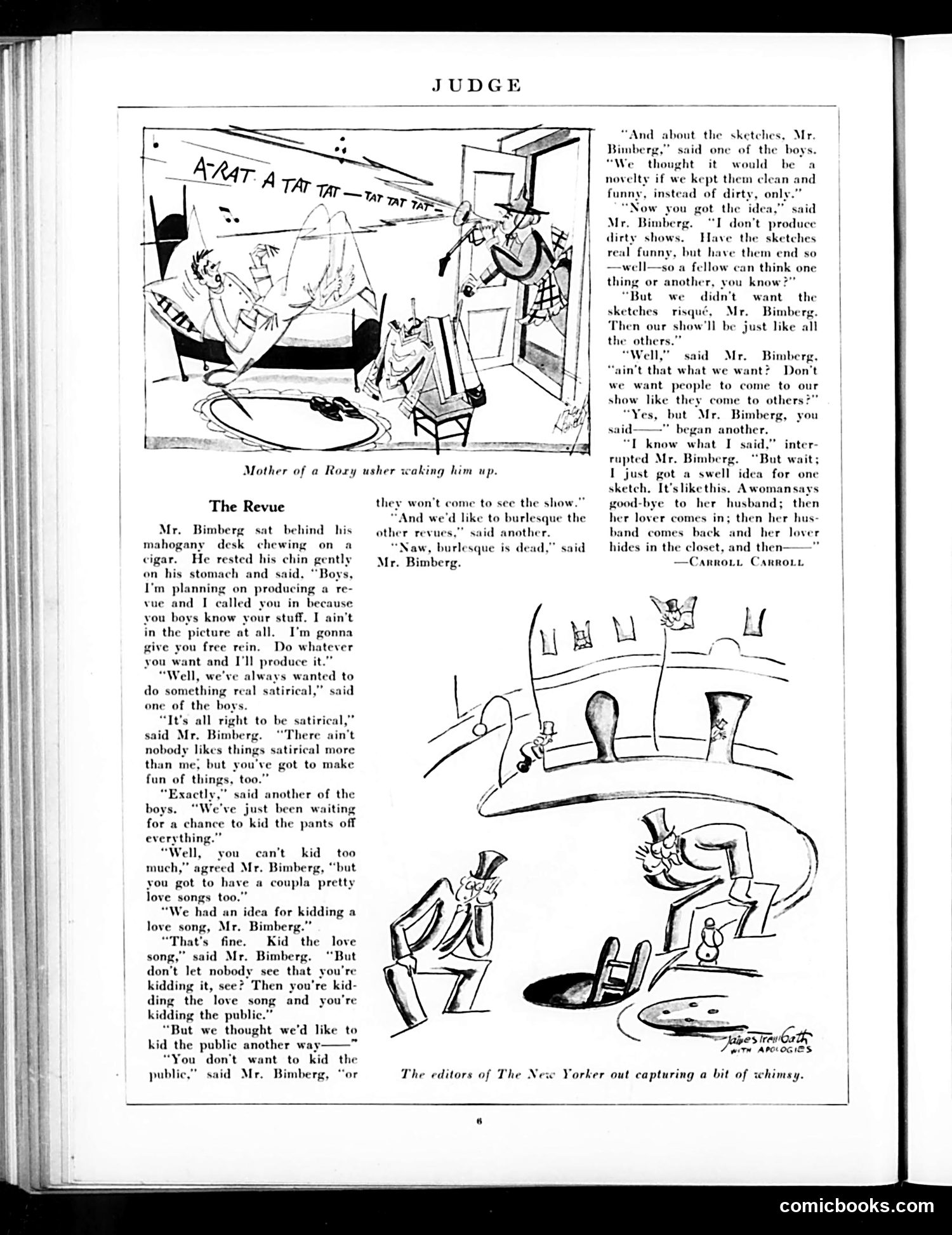
# "The Revue" - Judge Magazine This page satirizes theatrical production through a conversation between Mr. Bimberg (a producer) and boys pitching sketch ideas for a revue. The satire targets entertainment industry conventions: producers' reluctance to take risks, their demand that sketches be "clean" yet funny, and their insistence on including popular love songs regardless of relevance. The accompanying cartoon below depicts *New Yorker* magazine editors "capturing a bit of schmaltz"—showing them fishing for sentimental material, satirizing their editorial approach. The humor lies in exposing the contradictions between wanting novelty and demanding safety, and between artistic integrity and commercial appeal. This reflects early 20th-century tensions between highbrow and lowbrow entertainment standards.
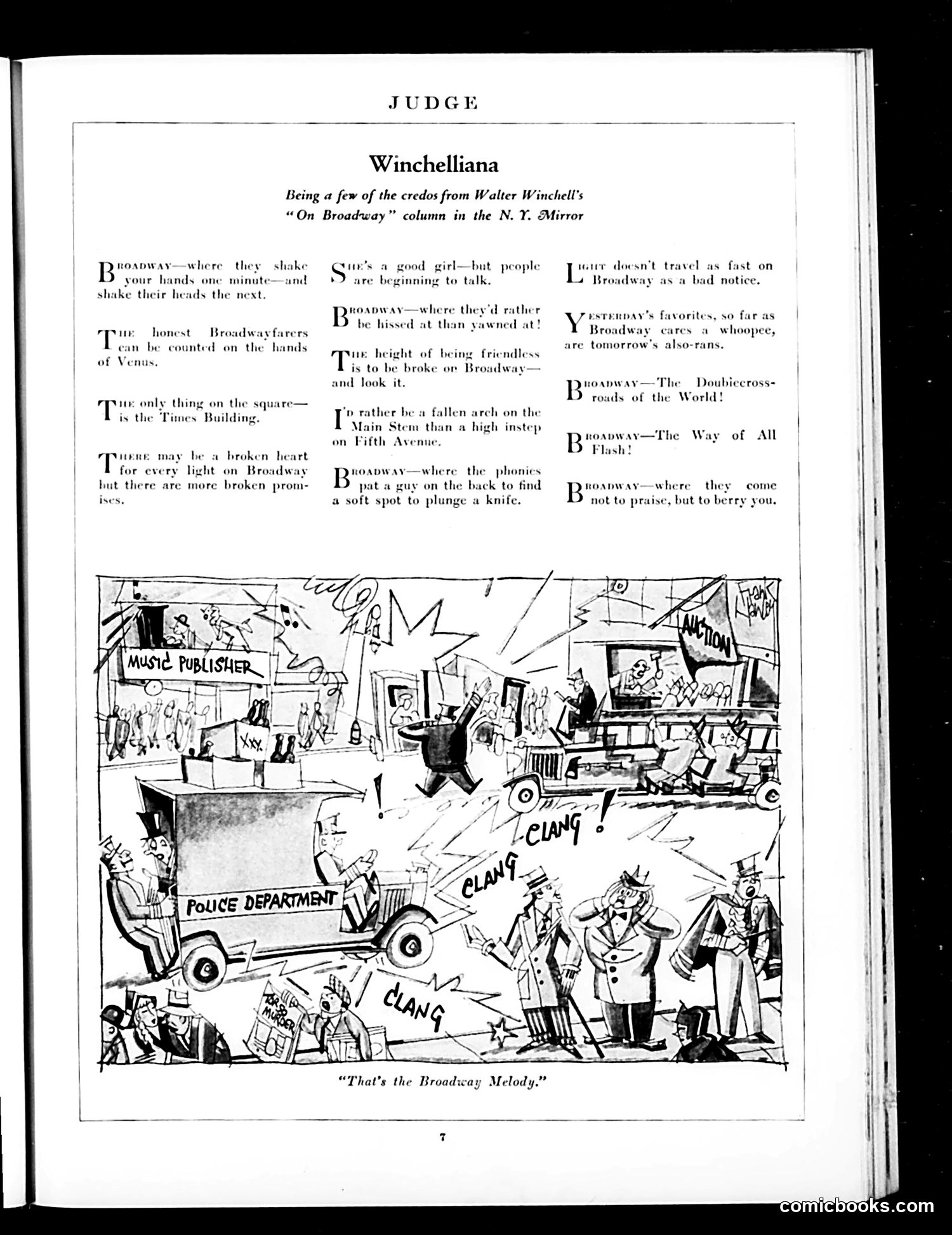
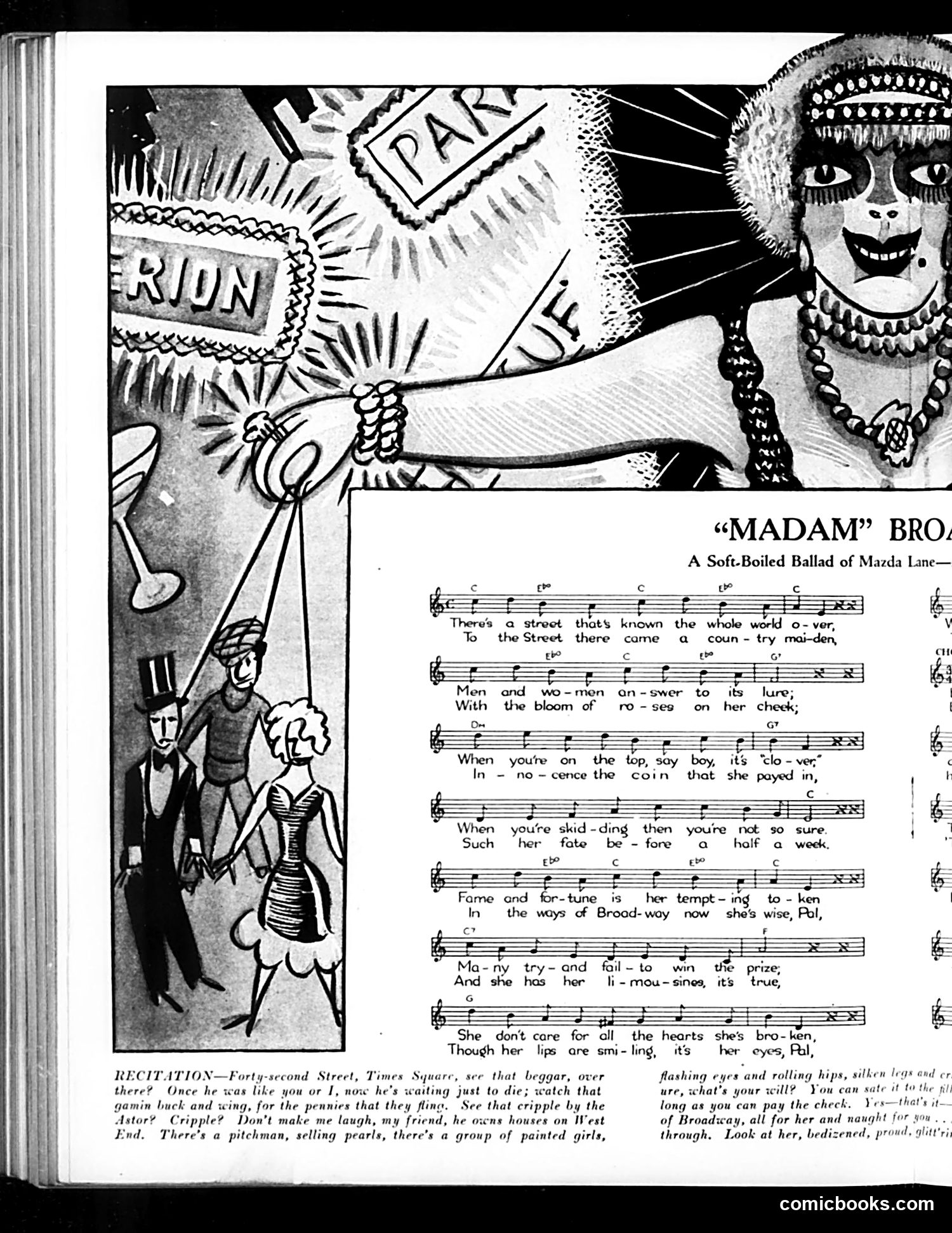
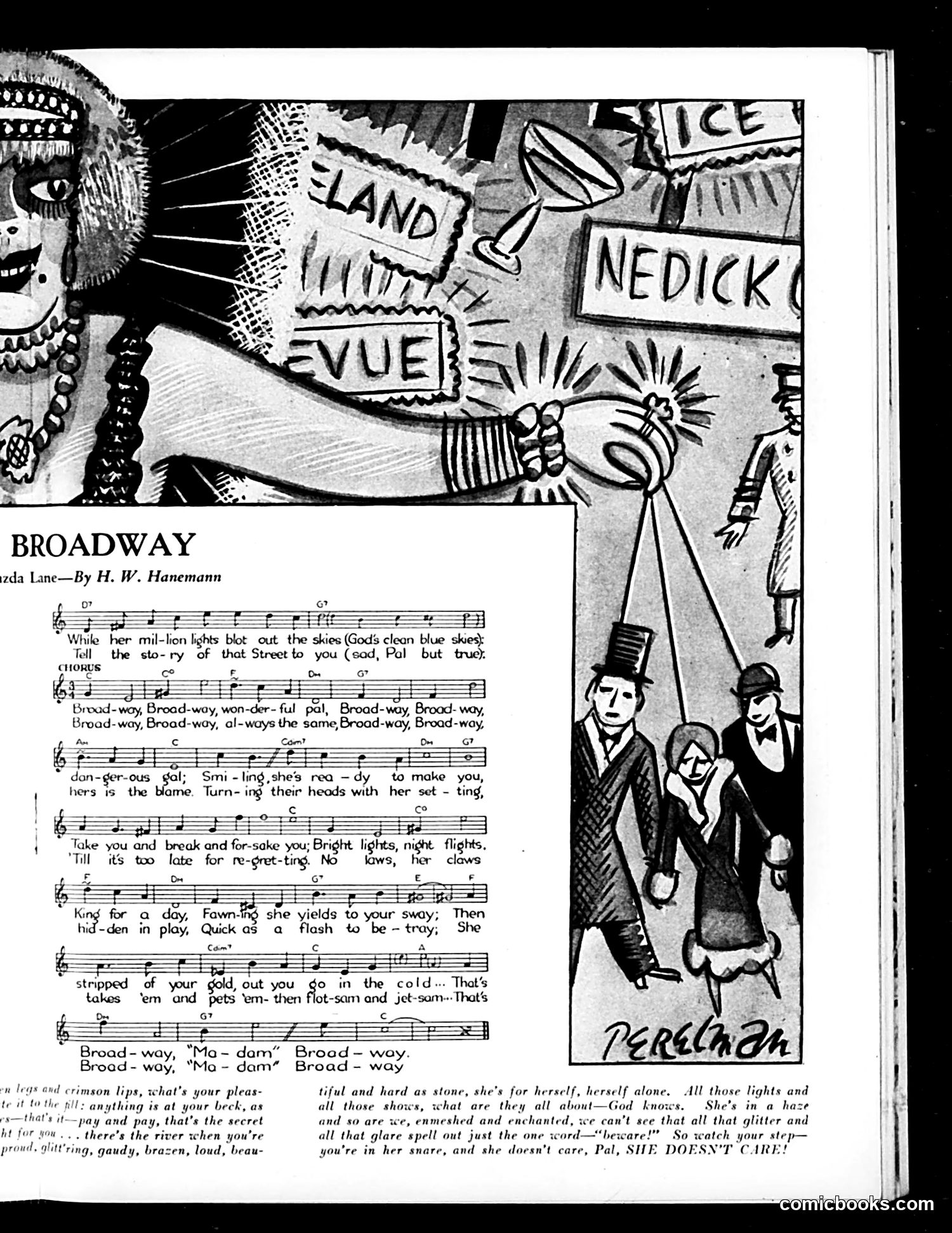
# Winchelliana: Judge Magazine's Satire on Walter Winchell This page satirizes **Walter Winchell**, the famous Broadway gossip columnist for the New York Mirror. The text presents pithy, cynical one-liners attributed to Winchell's "On Broadway" column—quips about theatrical life, broken hearts, phonies, and Broadway's cutthroat culture. The cartoon depicts chaotic Broadway street life: a police vehicle, a music publisher's storefront, crowds, and collisions marked "CLANG!" The caption reads "That's the Broadway Melody"—a reference to the popular 1929 film, suggesting Broadway is noisy, frantic chaos. The satire mocks Winchell's aphoristic style and cynical worldview: witty but harsh observations about show business. By presenting these "credos" alongside an illustration of Broadway pandemonium, Judge ridicules both Winchell's persona and the theatrical world he covered—portraying his column as cynical commentary on an already chaotic, superficial scene.
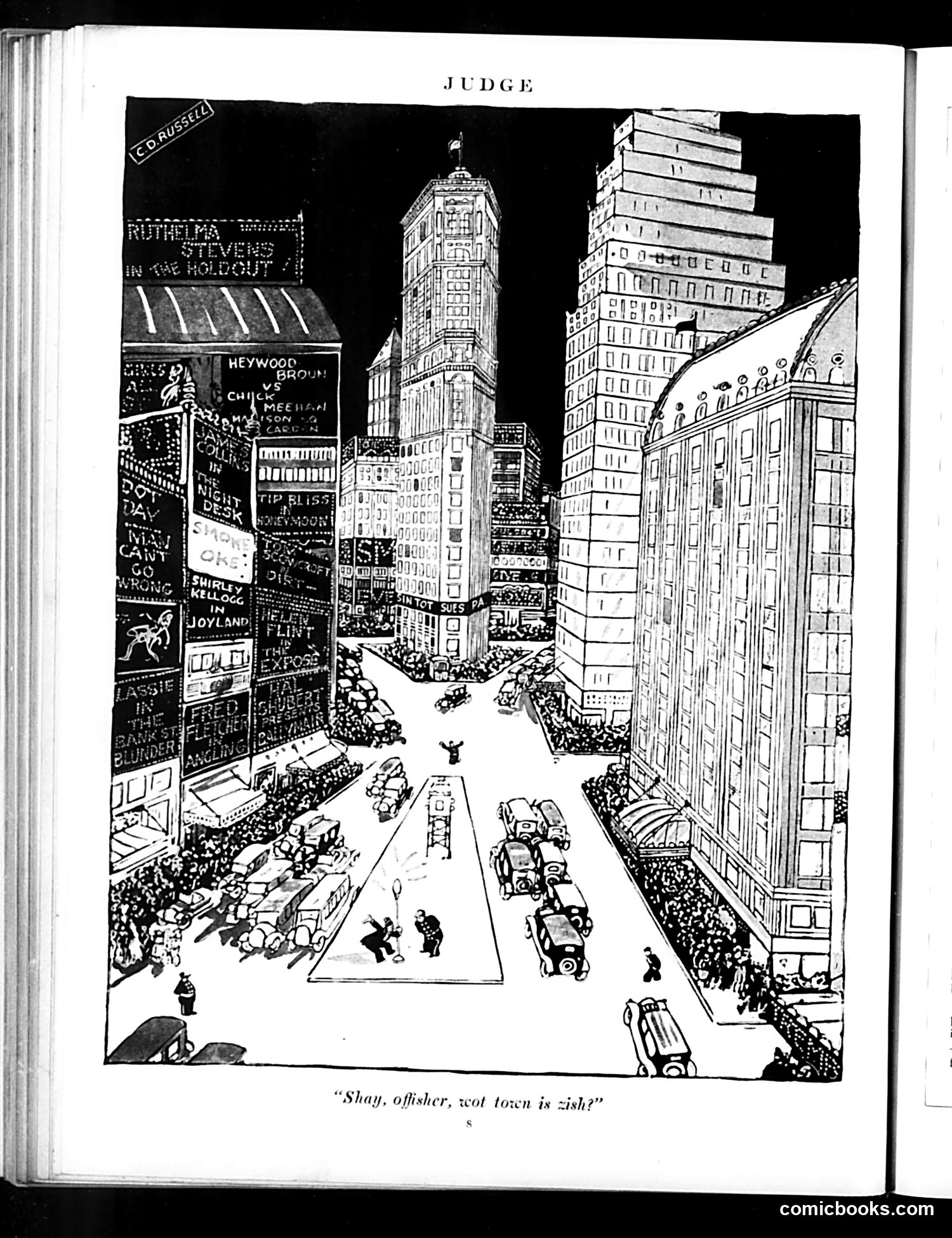
# Analysis This is a single-panel cartoon satirizing urban traffic and pedestrian chaos in a major American city, likely New York. The scene depicts a crowded downtown intersection with tall buildings, street-level crowds, and vehicles (trucks and cars) creating congestion. A disheveled drunk figure asks a police officer "Say, officer, what town is this?"—the joke being that the scene is so chaotic and indistinguishable that even a drunk person cannot identify which city they're in. The satire targets early 20th-century urban congestion and the anonymity of modern city life. The cartoon mocks both rapid industrialization and the standardization of American downtown districts, where traffic gridlock and crowding had become universal problems rather than unique to any particular place.
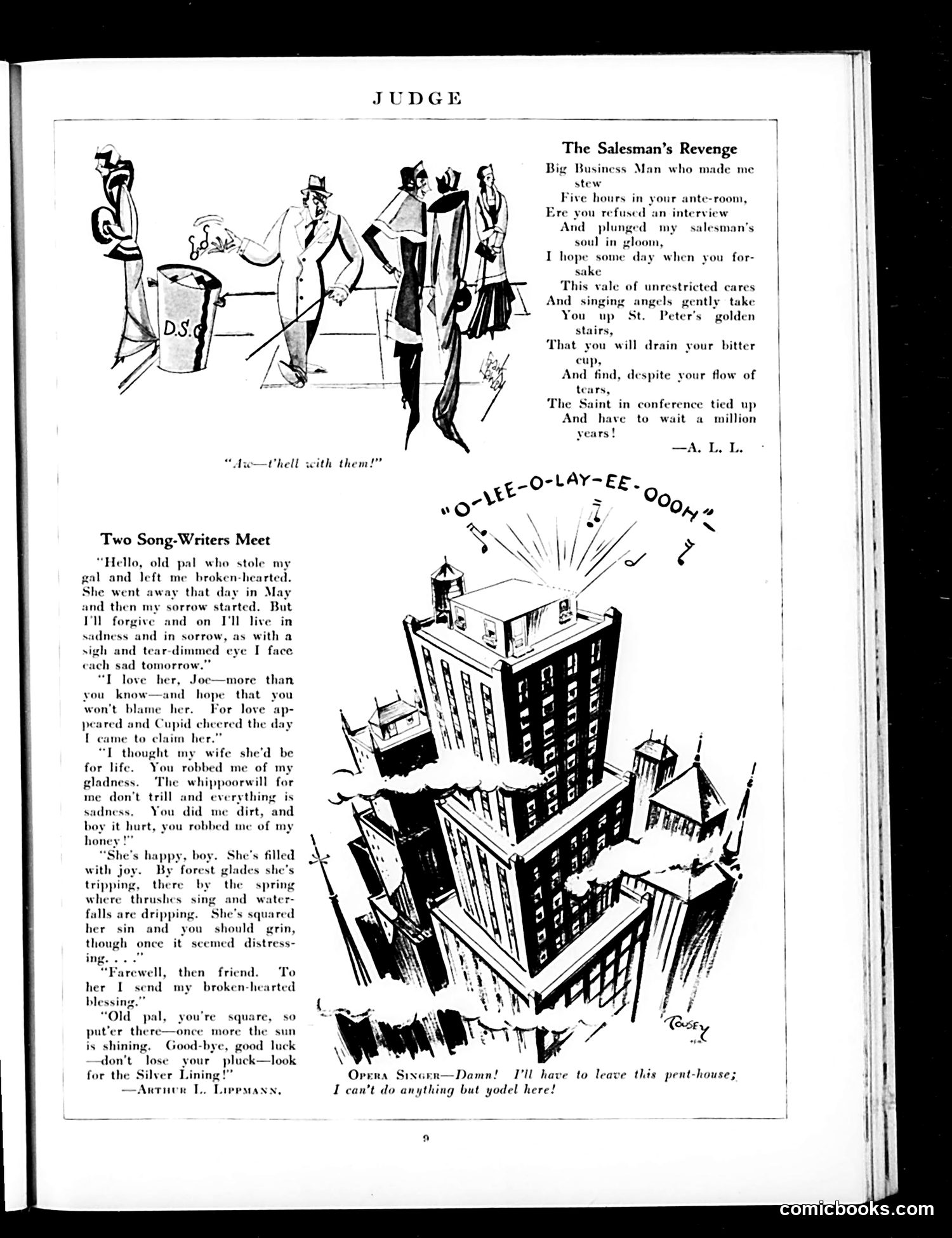
# Judge Magazine Page Analysis This page contains three satirical pieces targeting early 20th-century American business culture and social pretense: **"The Salesman's Revenge"** mocks arrogant executives who mistreat salesmen. The poem imagines divine comeuppance—the businessman facing Saint Peter with a long wait, draining his "bitter cup" in ironic reversal of earthly power dynamics. **"Two Song-Writers Meet"** satirizes sentimental popular songs. Two men who were romantic rivals absurdly reconcile through overwrought lyrics about love, nature, and forgiveness ("look for the Silver Lining"). The joke is the artificial, melodramatic sentimentality of commercial songwriting. **The opera singer cartoon** (bottom right) shows someone in a pentthouse unable to perform because constant yodeling ("O-lee-o-lay-ee-oooh") drowns her out. This mocks both noisy urban apartment living and the pretension of high-culture residents in luxury buildings. All three pieces ridicule American business excess, artificial emotions, and social climbing—typical Judge magazine targets.
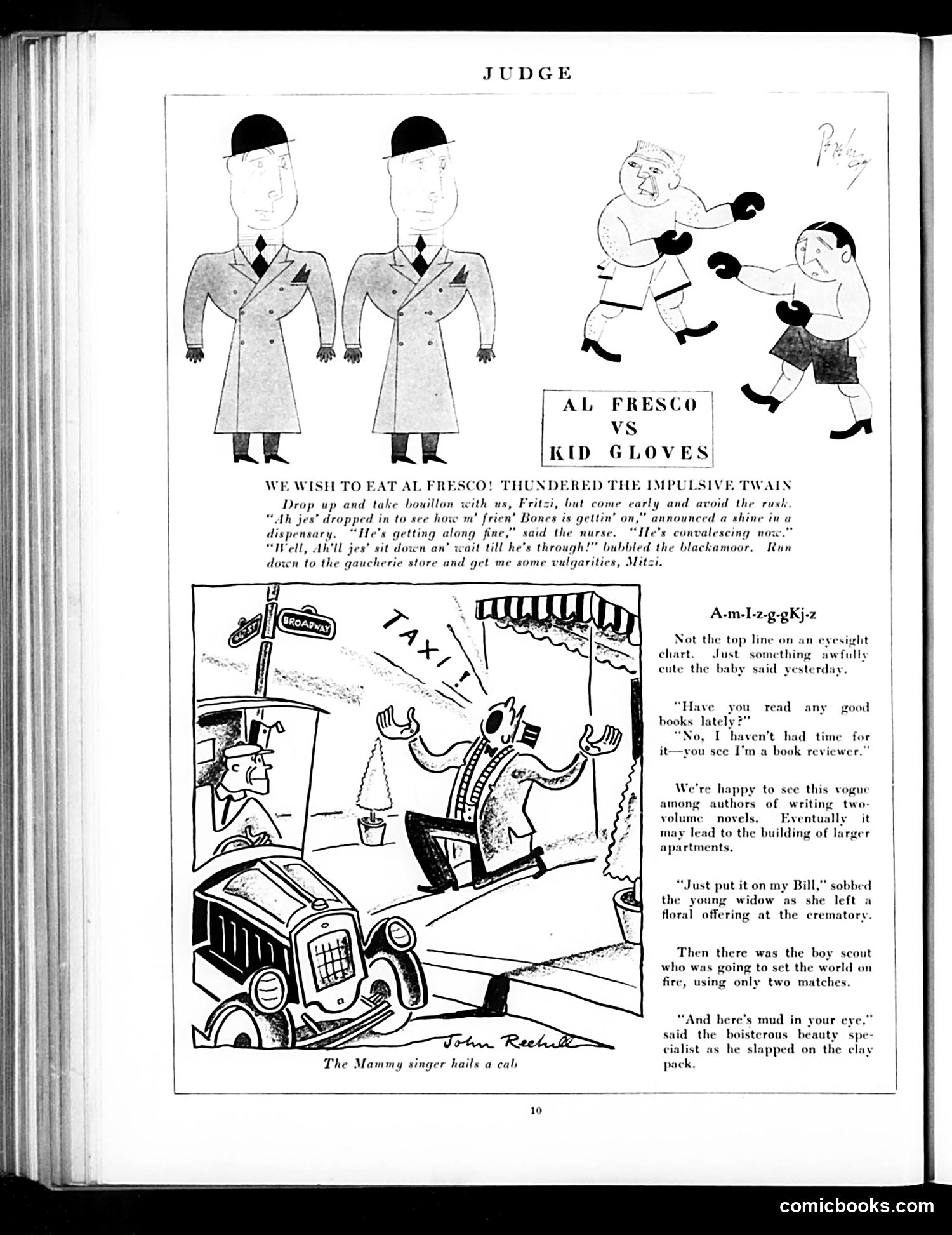
# Judge Magazine Page Analysis This page contains several brief satirical jokes typical of Judge magazine's humor style: **Top section ("Al Fresco vs Kid Gloves"):** Two identical stern-faced judges are shown alongside a boxing match illustration. The satire appears to contrast formal judicial authority with casual street fighting—"al fresco" (outdoor dining/informality) versus "kid gloves" (gentle treatment). The accompanying text humorously depicts characters using stereotypical dialect, including a racial caricature ("the blackamoor"). **Lower section:** Multiple short comic vignettes mock contemporary society: - Book reviewers who don't read - The trend of two-volume novels leading to larger apartments - A widow's darkly comedic crematory quip - Scouting naiveté - A beauty specialist's crude behavior The cartoons employ exaggeration and wordplay typical of 1920s-era satirical magazines. The page reflects period attitudes, including casual racist language and imagery now considered offensive.