
Judge, 1929-11-16 · page 8 of 36
Judge — November 16, 1929 — page 8: what you’re looking at
What you’re looking at
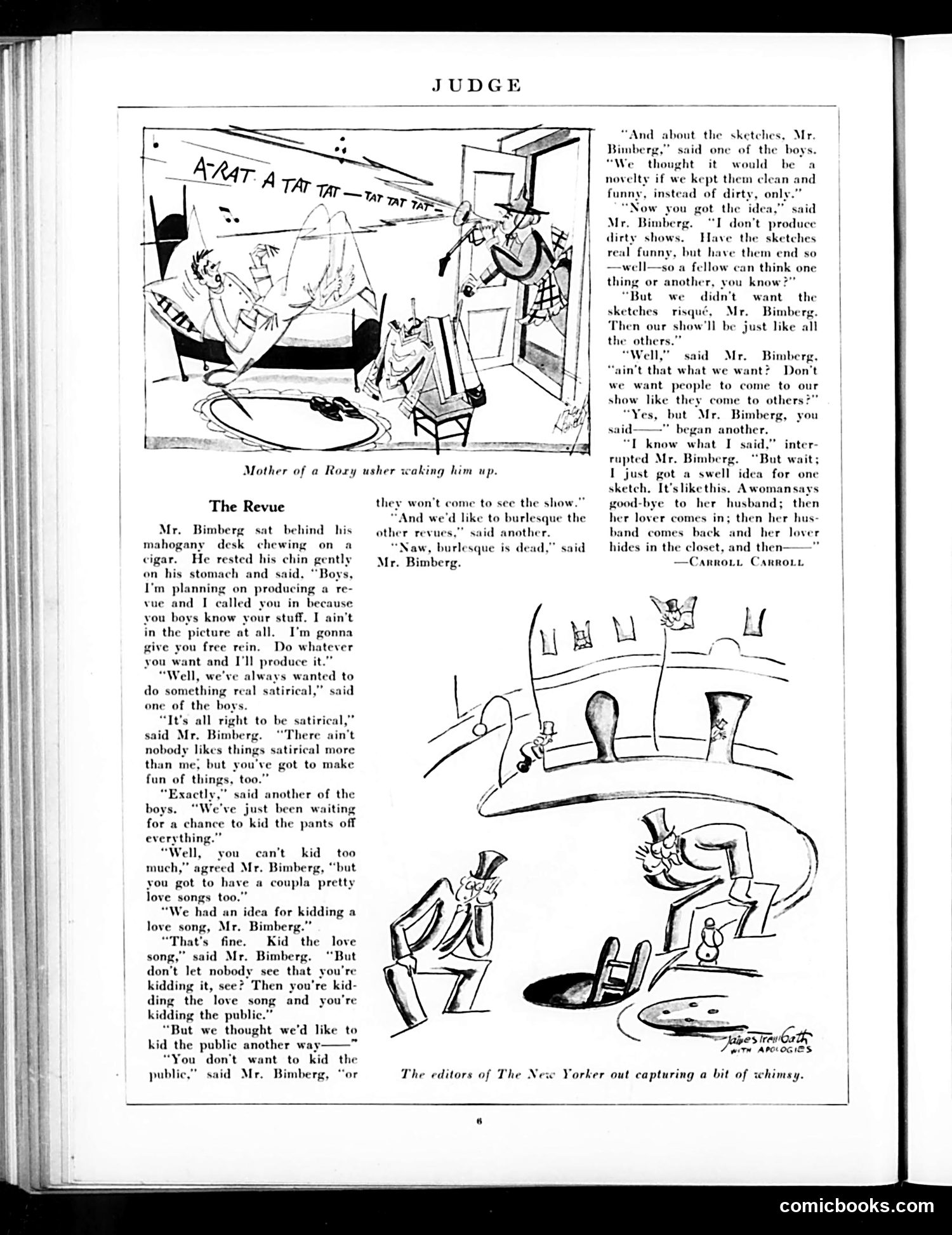
# "The Revue" - Judge Magazine This page satirizes theatrical production through a conversation between Mr. Bimberg (a producer) and boys pitching sketch ideas for a revue. The satire targets entertainment industry conventions: producers' reluctance to take risks, their demand that sketches be "clean" yet funny, and their insistence on including popular love songs regardless of relevance. The accompanying cartoon below depicts *New Yorker* magazine editors "capturing a bit of schmaltz"—showing them fishing for sentimental material, satirizing their editorial approach. The humor lies in exposing the contradictions between wanting novelty and demanding safety, and between artistic integrity and commercial appeal. This reflects early 20th-century tensions between highbrow and lowbrow entertainment standards.
📄 Transcribed text from this page (OCR, searchable)
Machine-transcribed from the original scan — historical spelling and the odd misread are preserved.
Mother of a Rory usher waking him up. The Revue Mr. Bimberg sat behind his mahogany desk chewing on a cigar. He rested his chin gently on his stomach and said, “Boys, I'm planning on producing a re- vue and I called you in because you boys know your stuff. I ain't in the picture at all. I'm gonna giv 1 free rein. Do whatever you want and I'll produce it. Well, we've always wanted to do something real satirical,” said one of the boys. “It's all right to said Mr. Bimberg. There ain't likes things satirical more r, but you've got to make . too.” said another of the ve just been waiting re to kid the pants off “Well, you can’t kid too much,” agreed Mr. Bimberg, “but you got to have a coupla pretty love songs too. “We had an idea for ki love song, Mr. Bimberg.” “That's fine. Kid the love song,” said Mr. Bimberg. “But don’t let nobody see that you're kidding it, see? Then you're kid- ding the love song and you're kidding the public.” “But we thought we'd like to kid the public another way. ‘i “You don't want to kid the public.” said Mr. Bimberg, “or ding a they won't come to see the show.” “And we'd like to burlesque the other revues,” said another. “Naw, burlesque is dead, Mr. Bimberg. “And about the sketches, Mr. aid one of the boys. “We thought it would be) a novelty if we kept them clea funny, instead of dirty, only.” “Now you got the Mr. Bimberg. “I don't produce dirty shows. Have the sketches real funny, but have them end so —well—so a fellow can think one thing or another, you know?” “But we didn't want the tches risqué, Mr. Bimberg. our show'll be just like all others.” “Well,” said) Mr. Bimbe “ain't that what we want? Don't we want people to come to our show like they come to others?” “Yes, but Mr. Bimberg, you But wait; I just got a swell idea for one sketch, It’sliket A womansay good-bye to her husband; then her lover comes in; then her hus- band comes back and her lover hides in the closet, and then— —Carroie Carrorr os Teena The WITH APOLOGIES The editors of The New Yorker out capturing a bit of whimsy. comicbooks.com