A complete issue · 36 pages · 1929
Judge — November 2, 1929
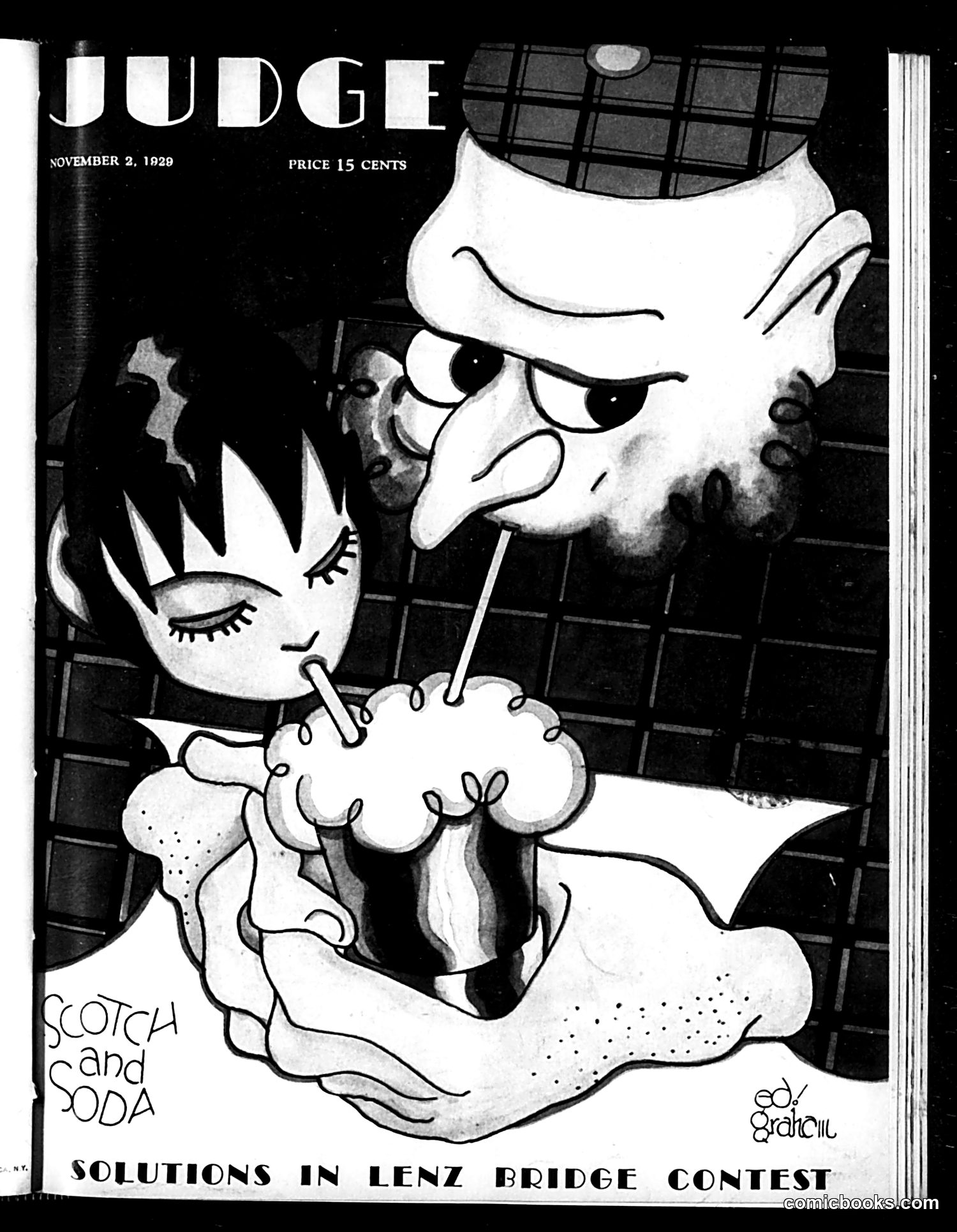
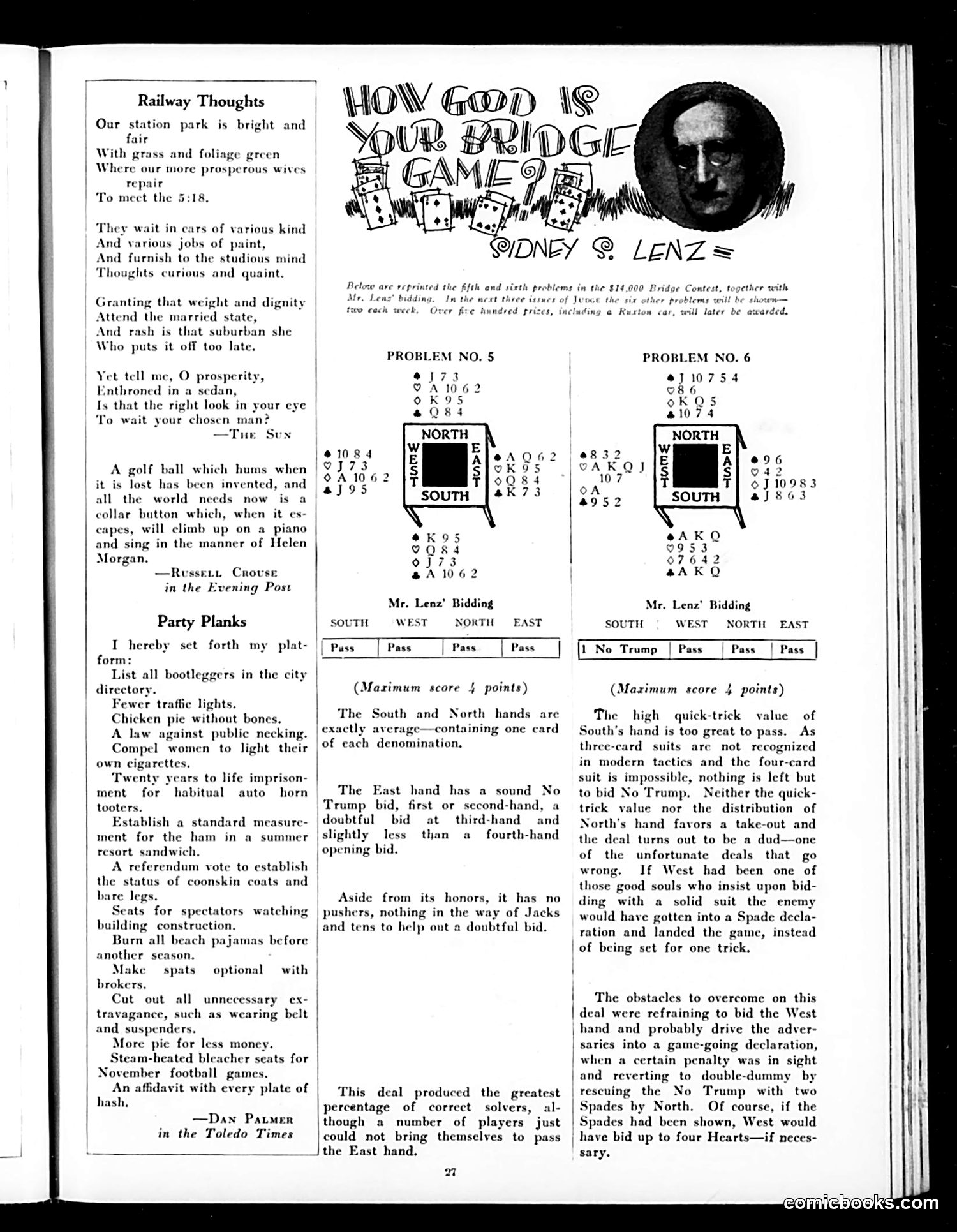
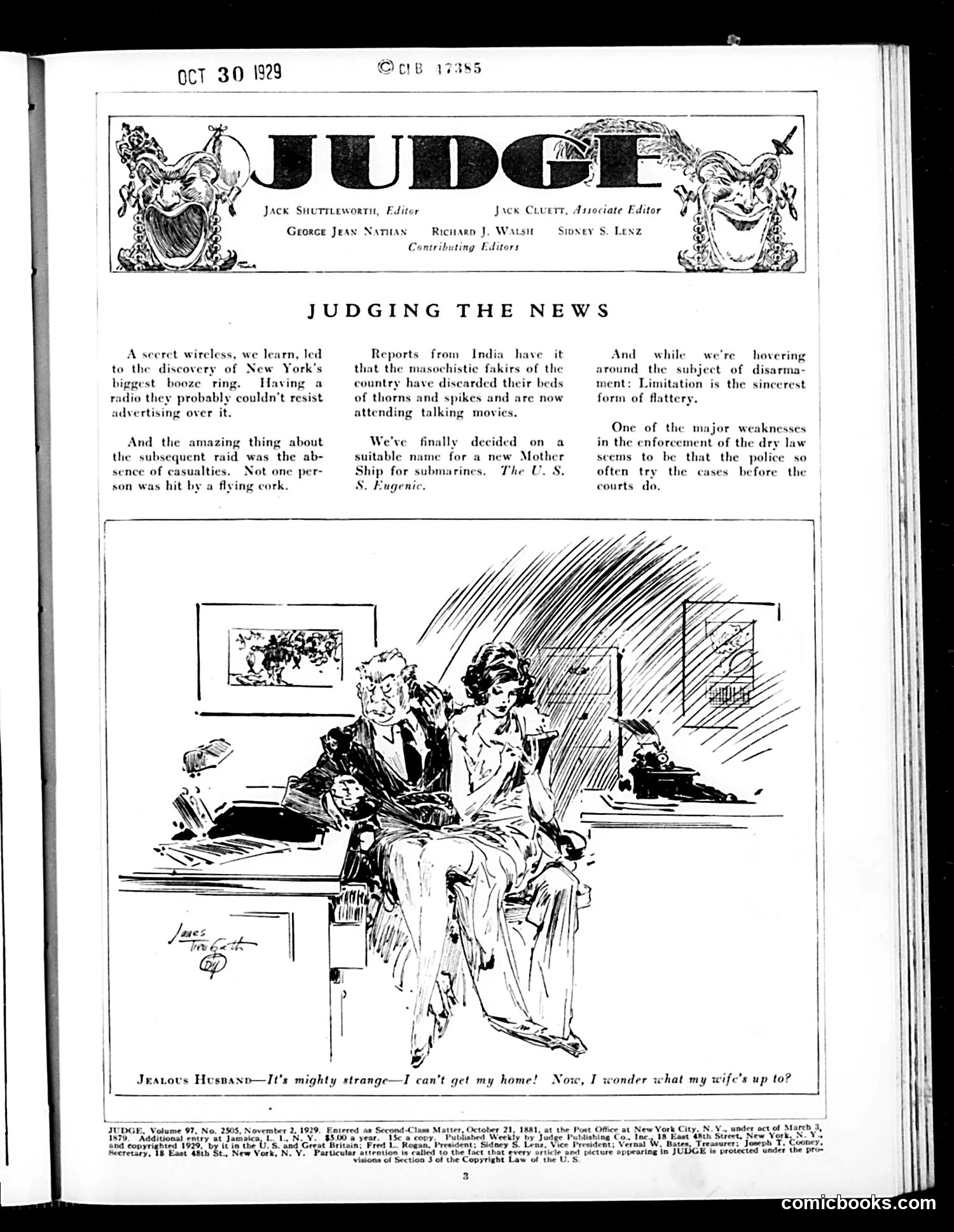
# Judge Magazine, November 2, 1929 This cartoon addresses the **Lenz Bridge Contest**, a contemporary engineering competition. The crude caricatures—with exaggerated features typical of 1920s satire—appear to represent competing bridge design proposals being presented as solutions. The title "**Scotch and Soda**" suggests the designs are insubstantial or mixed-quality remedies, using a period slang reference to diluted drinks. The imagery of the figures "blowing smoke" (literally depicted) implies the proposals are hot air rather than serious engineering solutions. Published just days after the **1929 stock market crash**, this likely comments on inadequate responses to broader crises. The contest itself appears to have generated public debate about infrastructure solutions during economically turbulent times.
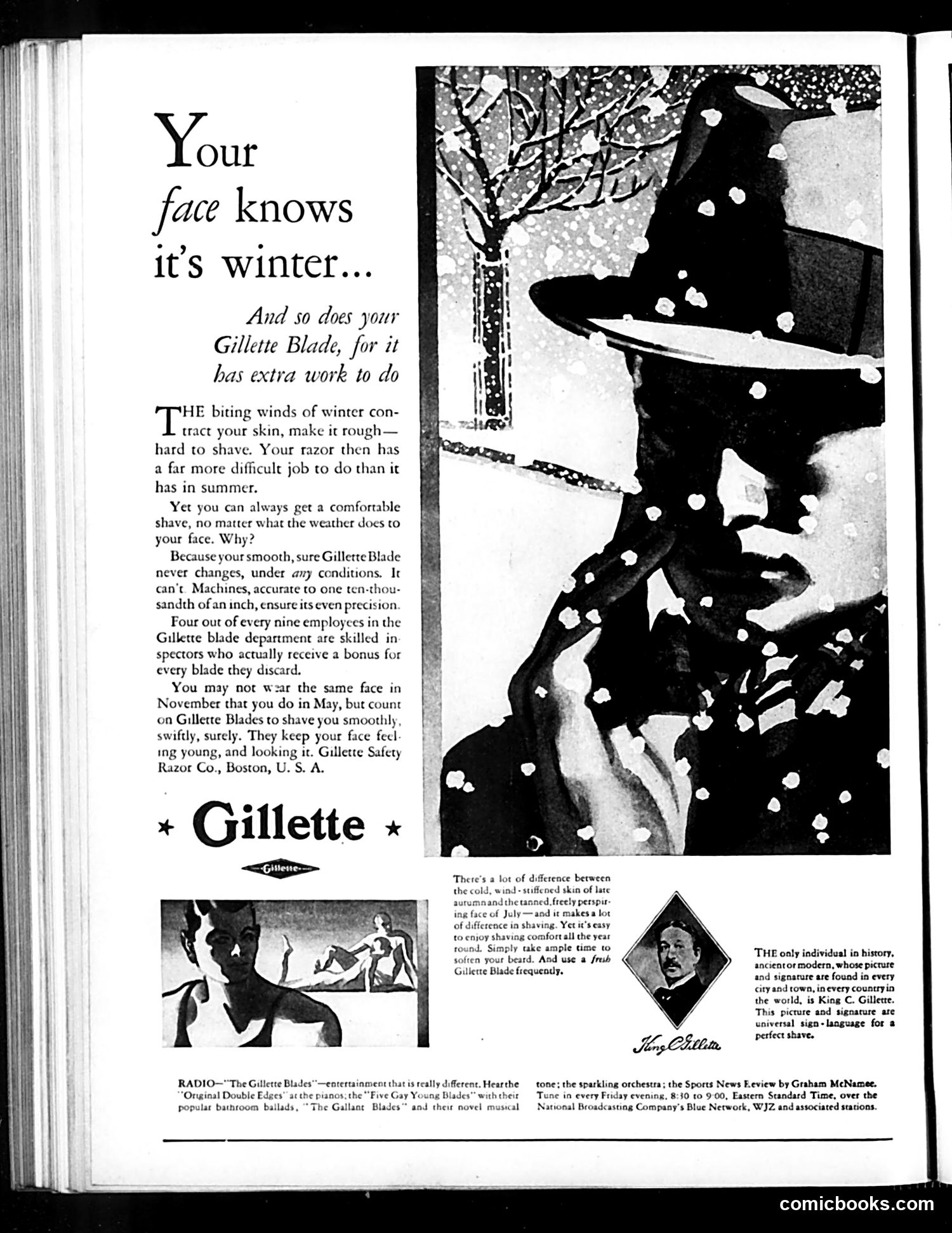
# Analysis This page is primarily a **Gillette razor advertisement**, not political satire. The large illustration shows a winter figure (Santa Claus or a snow-covered person) demonstrating that shaving remains necessary even in harsh winter conditions when facial skin becomes rough and difficult to shave. The ad's humor relies on a practical joke: winter weather makes shaving harder, yet Gillette blades supposedly maintain consistent quality "under any conditions." The copy emphasizes that Gillette employees are "skilled inspectors" who bonus-check every blade for precision. The small illustrations at bottom appear to be unrelated entertainment advertisements (radio programming and what may be theatrical content). This is a commercial product page with mild comedic appeal, not political commentary.
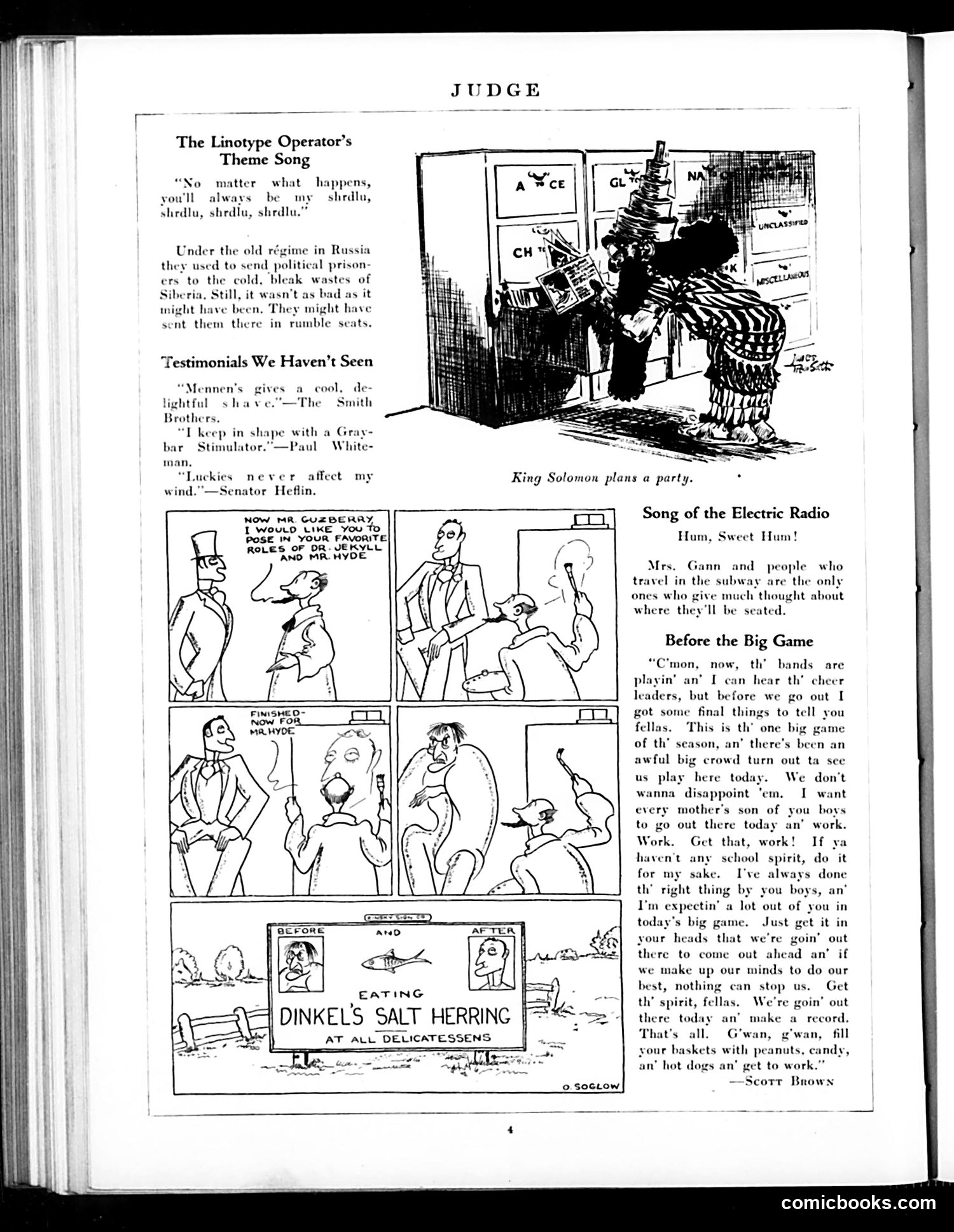
# Analysis of Judge Page This page contains several distinct pieces of satire: **Top cartoon ("King Solomon plans a party")**: Depicts what appears to be a figure labeled with chemistry/scientific references (ACE, GLUE, CH) attempting to organize supplies—likely satirizing attempts at chemical or scientific management during the early 20th century. **Comic strip ("Mr. Guzberry")**: Shows a man being asked to pose in "favorite roles of eminent actors." The humor comes from his transformations—he adopts increasingly exaggerated poses, ending as a fish, mocking pretension and theatrical vanity. **Advertisement**: Dinkel's Salt Herring ad uses before-and-after imagery (showing a man's transformation after eating the product) to humorously promote the food product. The overall tone reflects Judge's satirical approach to contemporary social pretensions and commercial culture.
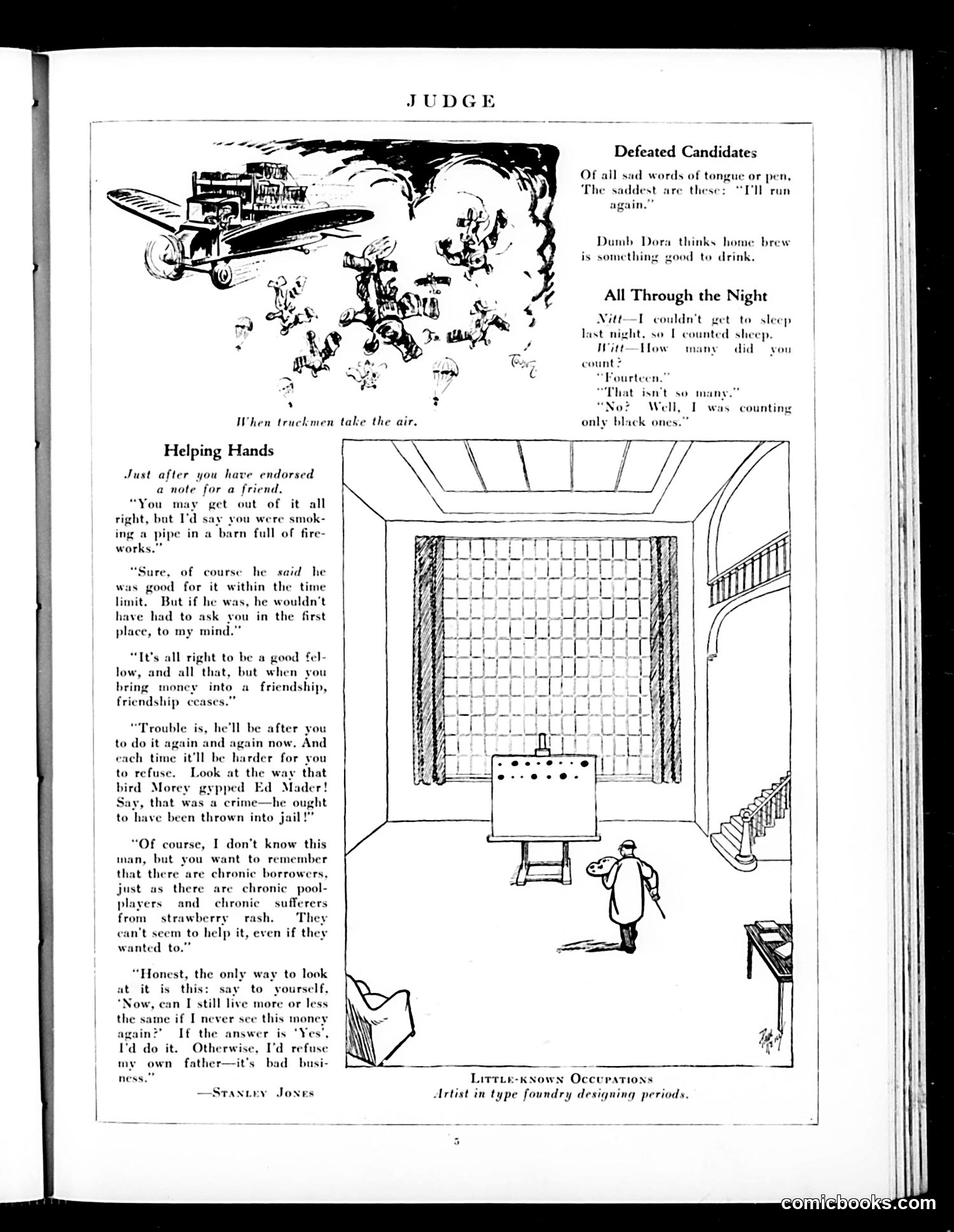
# Analysis of Judge Magazine Page This page contains three separate humorous pieces rather than unified political cartoons: 1. **"When Truckmen Take the Air"**: A cartoon showing an airplane dropping cargo/packages, satirizing early aviation and commercial transport logistics—likely referencing the novelty of air freight. 2. **"Helping Hands"**: A satirical dialogue by Stanley Jones about endorsing a friend's loan application. The humor concerns chronic borrowers and the social obligation/danger of financial entanglement with friends. The conclusion—"say to yourself, 'Now, can I still live more or less the same if I never see this money again?'"—mocks the risk of lending to unreliable people. 3. **"Little-Known Occupations"**: A small illustration of an artist in a type foundry designing letterforms, depicting an obscure profession. The page emphasizes social satire over politics, targeting everyday behavioral follies.
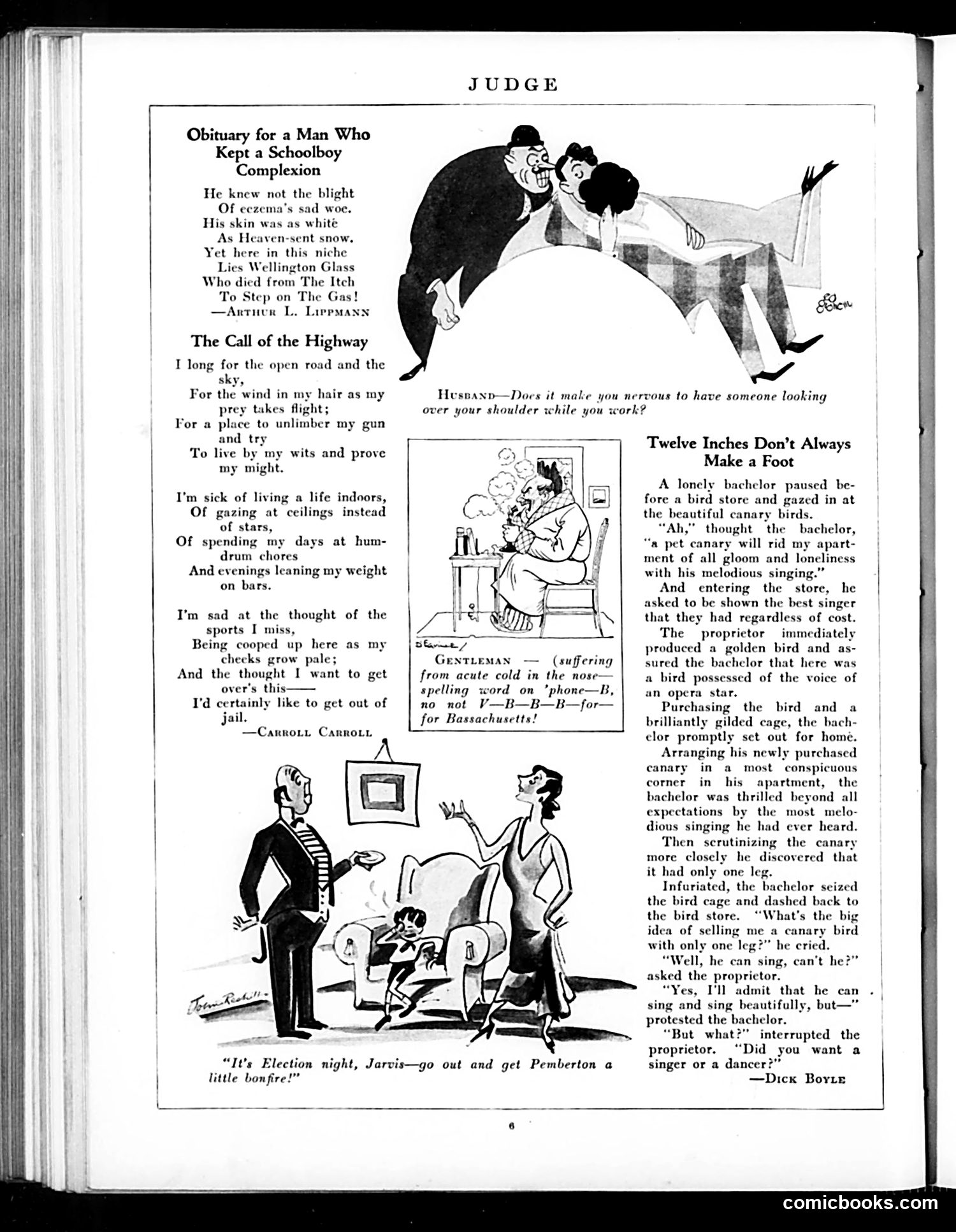
# Analysis of Judge Magazine Page This page contains three distinct pieces of humor: 1. **"Obituary for a Man Who Kept a Schoolboy Complexion"** — A satirical poem mocking men obsessed with youthful appearance, suggesting vanity about skin care is ridiculous. 2. **"The Call of the Highway"** — A poem by Carroll Carroll expressing wanderlust and desire to escape domestic indoor life, humorously listing complaints about staying home (gazing at ceilings, spending on humble clothes, leaning weight on bars). 3. **"Twelve Inches Don't Always Make a Foot"** — A humorous story by Dick Boyle about a bachelor purchasing a canary bird marketed as a great singer, only to discover it's missing a leg. The proprietor's response—asking if he wanted a "singer or a dancer"—is the punchline, playing on the word "foot" (measuring unit versus body part). All pieces use wordplay and absurdist humor typical of early 20th-century satirical magazines.
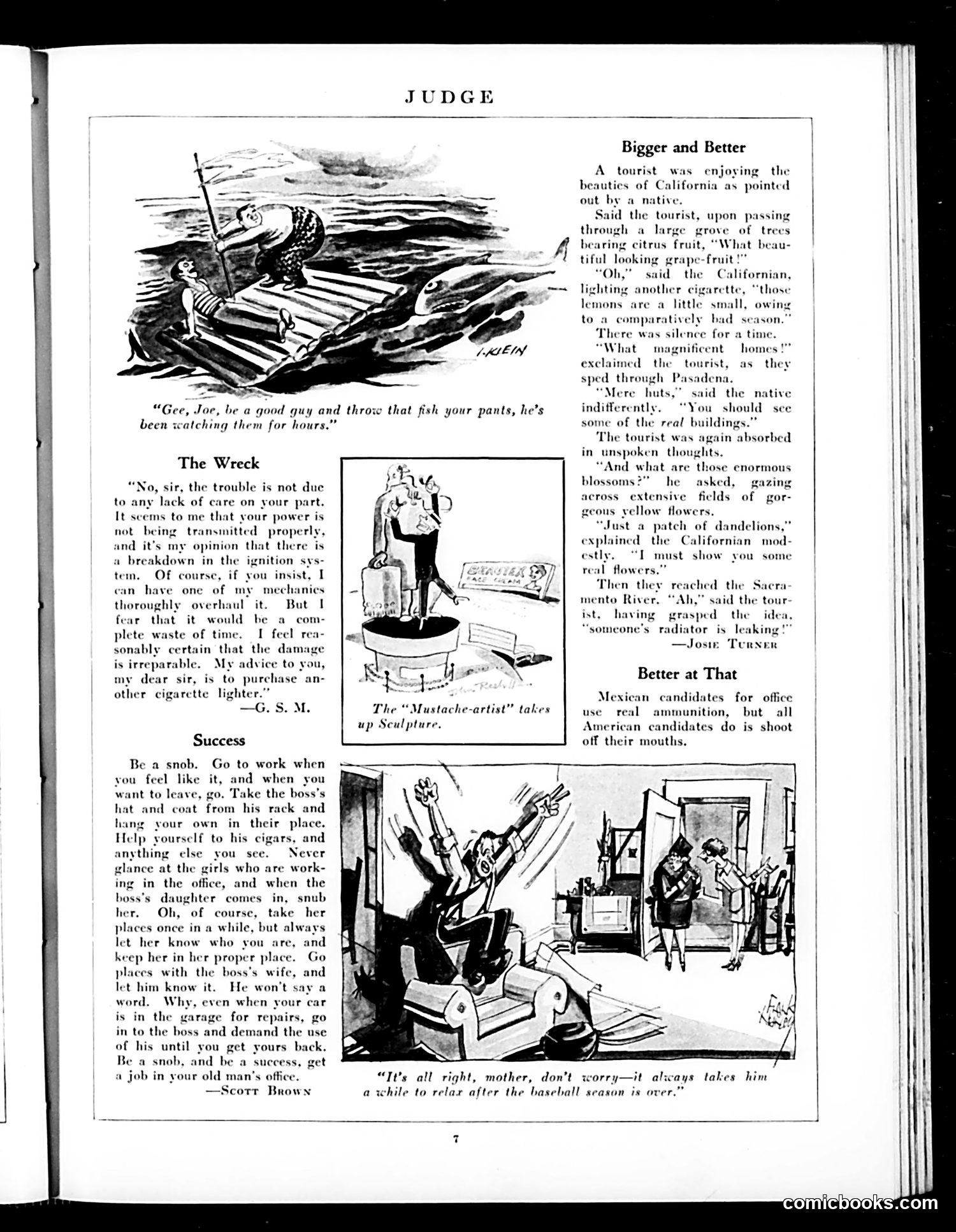
# Judge Magazine Page Analysis This page contains several short humorous pieces typical of Judge's satirical style: **"The Wreck"** mocks overly technical auto mechanics who diagnose problems in jargon-filled language, then recommend an expensive solution (a new cigarette lighter) when the actual issue is simple. **"Success"** satirizes social climbing through nepotism—advice to be deliberately rude and presumptuous to everyone at work, including the boss, his wife, and daughter, while exploiting company resources. The joke is that such arrogance supposedly leads to success only if your father owns the business. **"Bigger and Better"** ridicules California boosters who exaggerate or misrepresent ordinary sights as magnificent. A native guide dismisses impressive scenery (citrus groves, Pasadena homes, wildflowers, the Sacramento River) as mediocre, implying California promoters constantly oversell their state. **"Better at That"** compares Mexican and American political candidates—Mexican candidates use "real ammunition" (actual violence), while Americans merely engage in rhetorical excess ("shoot off their mouths"). The cartoons are light social commentary on American business culture, regional boosterism, and politics.
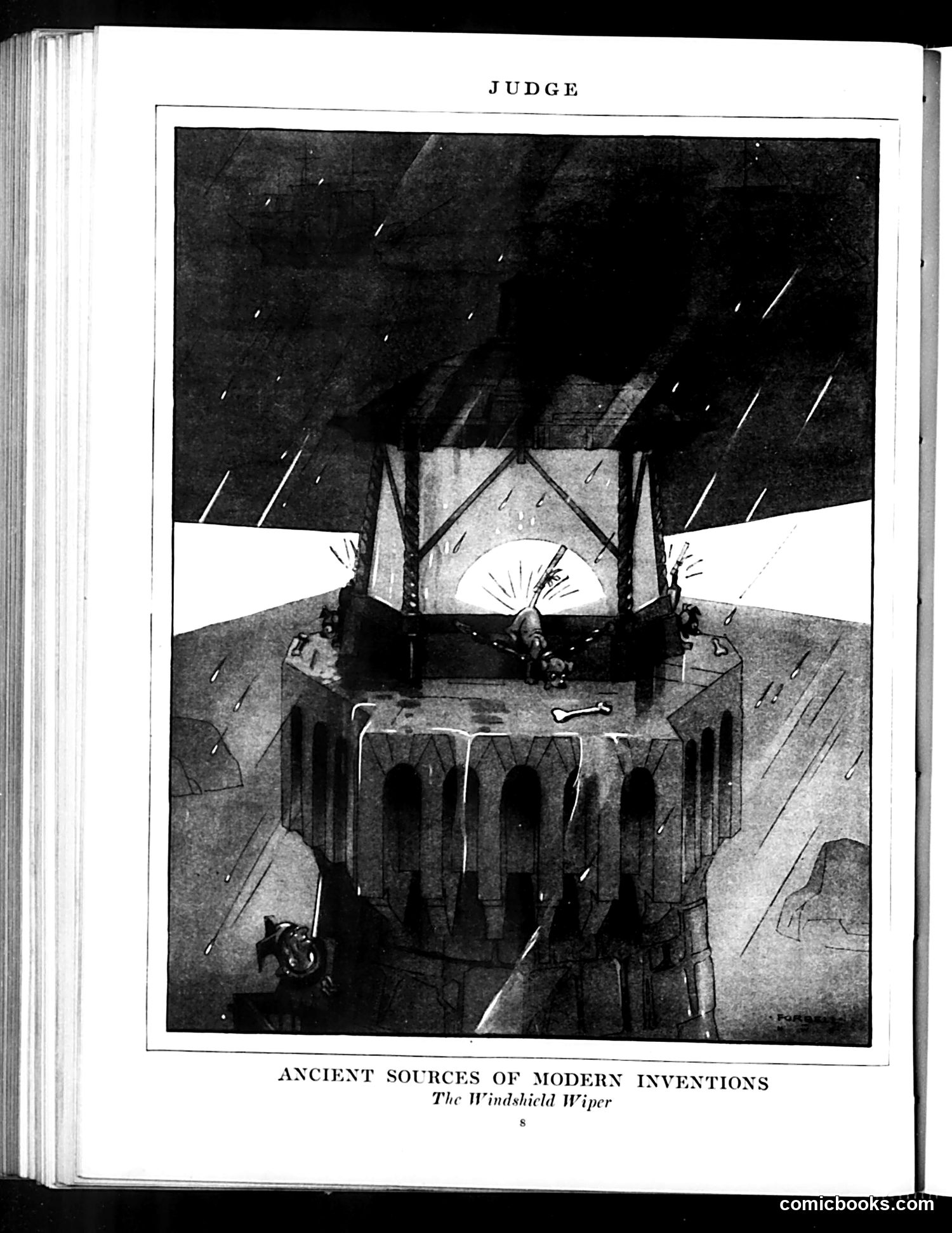
# Analysis This page from *Judge* magazine presents "Ancient Sources of Modern Inventions: The Windshield Wiper." The illustration shows a Gothic cathedral or church interior during a rainstorm, with figures using what appear to be primitive wiping implements (possibly branches or cloths on poles) to clear water from a large window or opening. The cartoon humorously suggests that the modern windshield wiper—a relatively recent automobile innovation—has ancient precedent in medieval religious architecture, where clergy or caretakers would have needed to clear rain from large windows. The satire likely mocks either: (1) the tendency to claim "new" inventions have ancient origins, or (2) the idea that modern technology simply rediscovers forgotten old methods. The joke plays on the incongruity between sacred medieval spaces and mundane automotive needs.
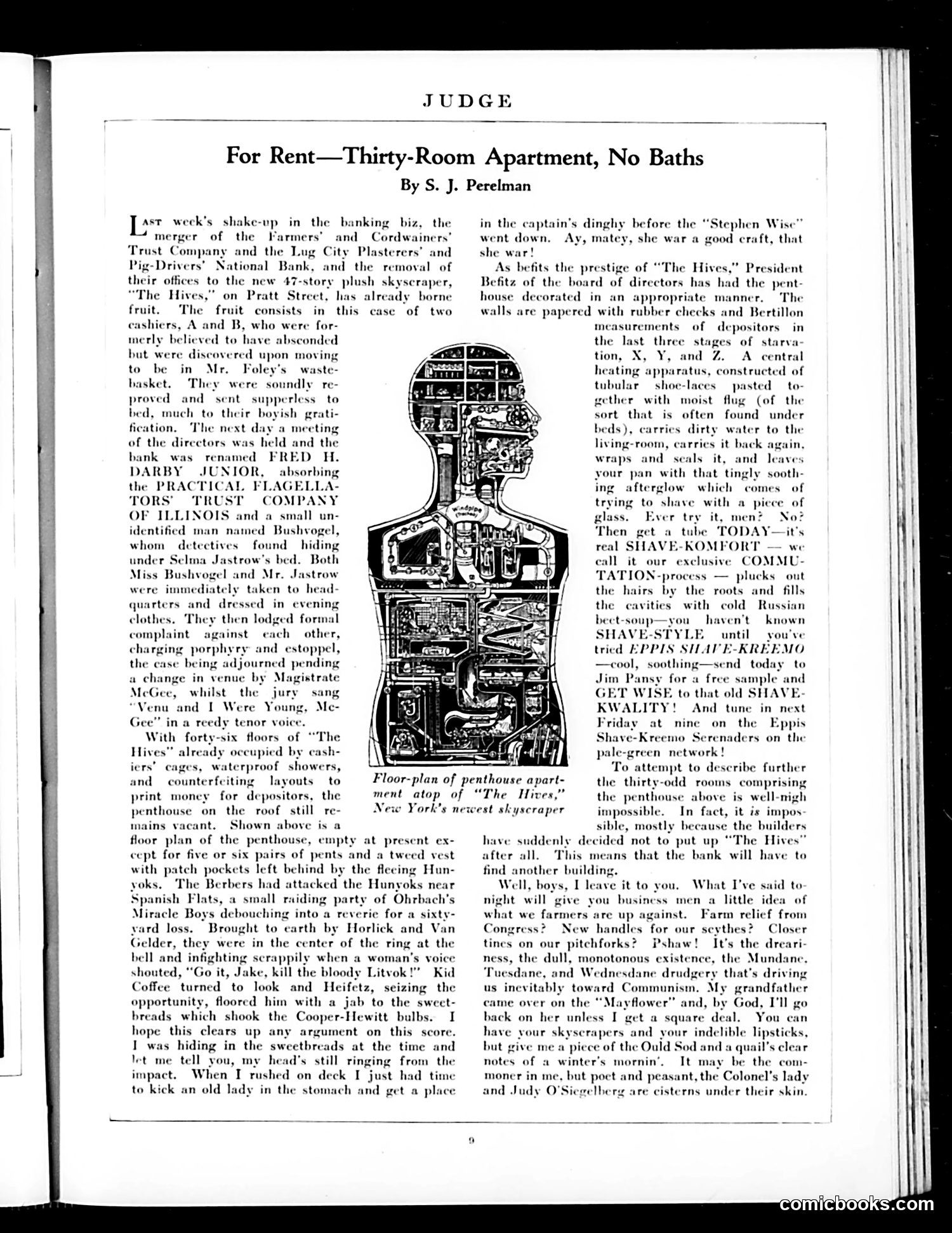
# Explaining "For Rent—Thirty-Room Apartment, No Baths" This is a satirical short story by S. J. Perelman (a famous humorist) rather than a political cartoon. The piece mocks the banking industry through absurdist humor and nonsense. The story describes a chaotic bank merger involving "The Hives," a new skyscraper, where incompetent management creates farcical situations. The "floor-plan" diagram of a human head is a visual joke—showing the building's penthouse layout superimposed on anatomy, likely satirizing how bankers are "empty-headed." The narrative deliberately becomes increasingly incoherent, mixing unrelated incidents (Spanish Flats, Berbers, obscure characters) to parody overwrought financial reporting and bureaucratic absurdity. Embedded throughout are fake advertisements for products like "Shave-Komfort," a running gag mocking contemporary radio advertising's intrusion into editorial content. The overall target: the era's banking establishment, their pretension, incompetence, and the chaotic consolidation trends reshaping American finance in the early 20th century.
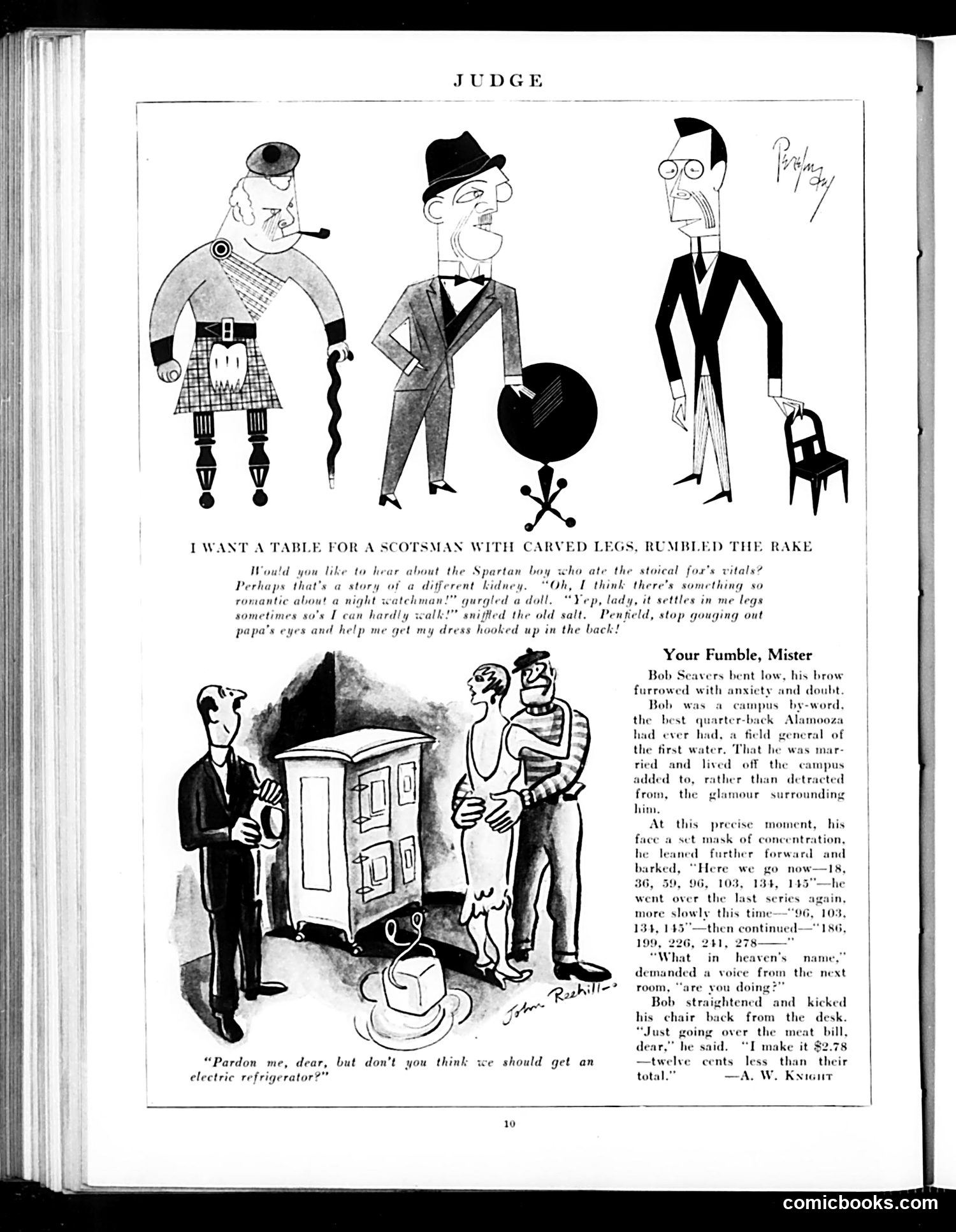
# Judge Magazine Page Analysis This page contains two separate pieces of satirical humor typical of early 20th-century American magazines. **Top Section:** Three caricatured male figures illustrate exaggerated Scottish and working-class stereotypes. The caption mocks affected romantic speech—a waiter or customer requesting furniture "for a Scotsman with carved legs" (playing on the phrase "carved legs"). The dialogue snippets parody sentimental romanticization of working-class life: sailors, night watchmen, and soldiers described in overly flowery terms by society women, contrasting absurdly with the men's crude reality ("settles in me legs"). **Bottom Section ("Your Fumble, Mister"):** Bob Seavers, a campus "by-word" and football player living off-campus with his wife, frantically recalculates household accounts. His wife asks about purchasing an electric refrigerator; Bob deflects by claiming he can cut the meat bill by twelve cents instead. The joke satirizes the tension between wives wanting modern conveniences and husbands' resistance to spending, reflecting 1920s consumer culture anxieties.