A complete issue · 36 pages · 1929
Judge — October 26, 1929
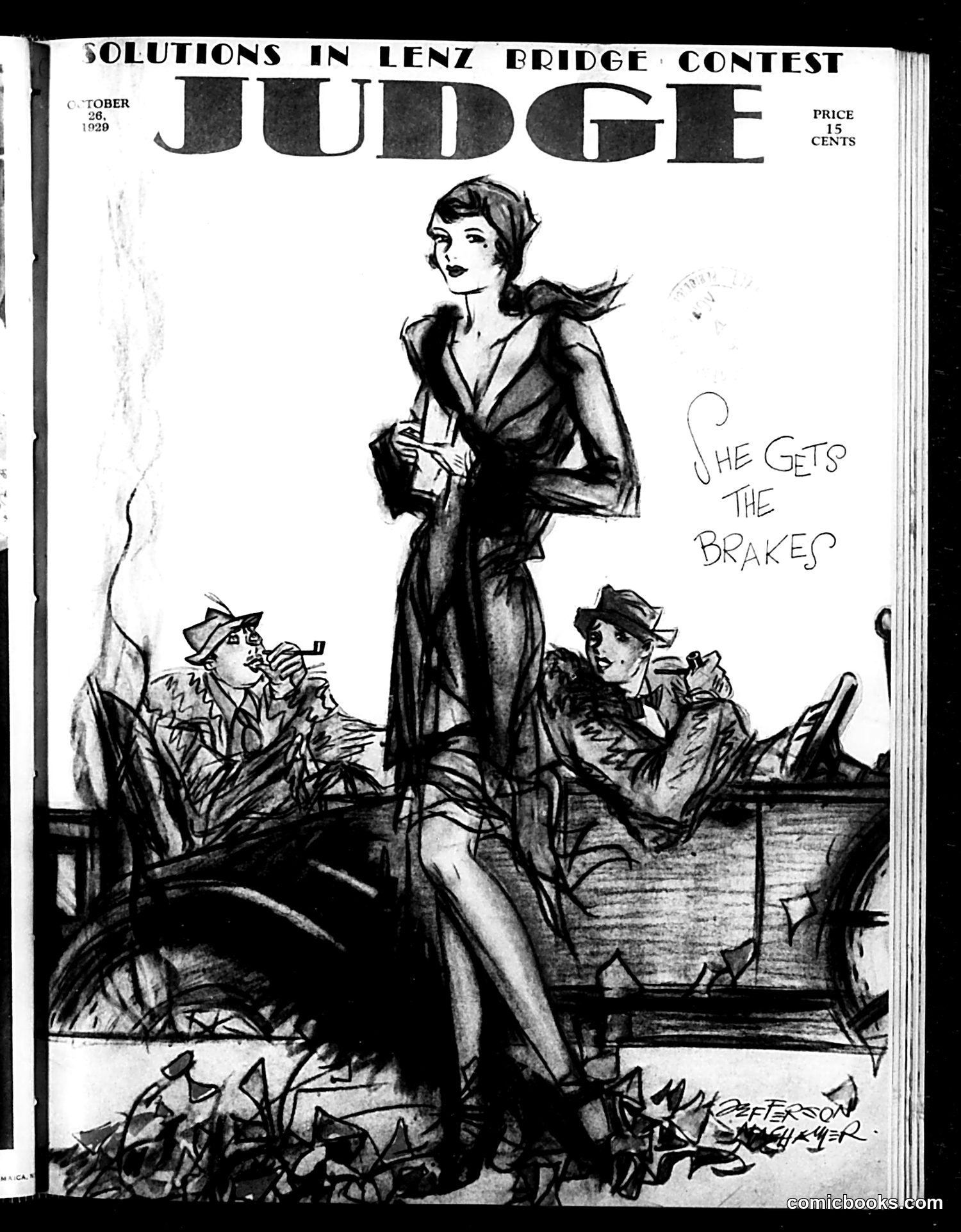
# "She Gets the Brakes" — Judge Magazine, October 28, 1929 This cartoon references the **Lenz Bridge Contest**, a 1920s engineering competition. The title "She Gets the Brakes" is a pun: a woman stands triumphantly while two men (appear to be rival bridge designers or engineers) sit dejected below, their work literally "braked" or stopped. The cartoon satirizes the surprise or scandal of a woman winning a major engineering competition—suggesting that men expected to monopolize such prestigious technical achievements. The men's defeated postures and the woman's confident stance emphasize the upset. Published just days after the 1929 stock market crash, this appears unrelated to that crisis, focusing instead on gender competition in engineering during an era when such fields were almost exclusively male-dominated.
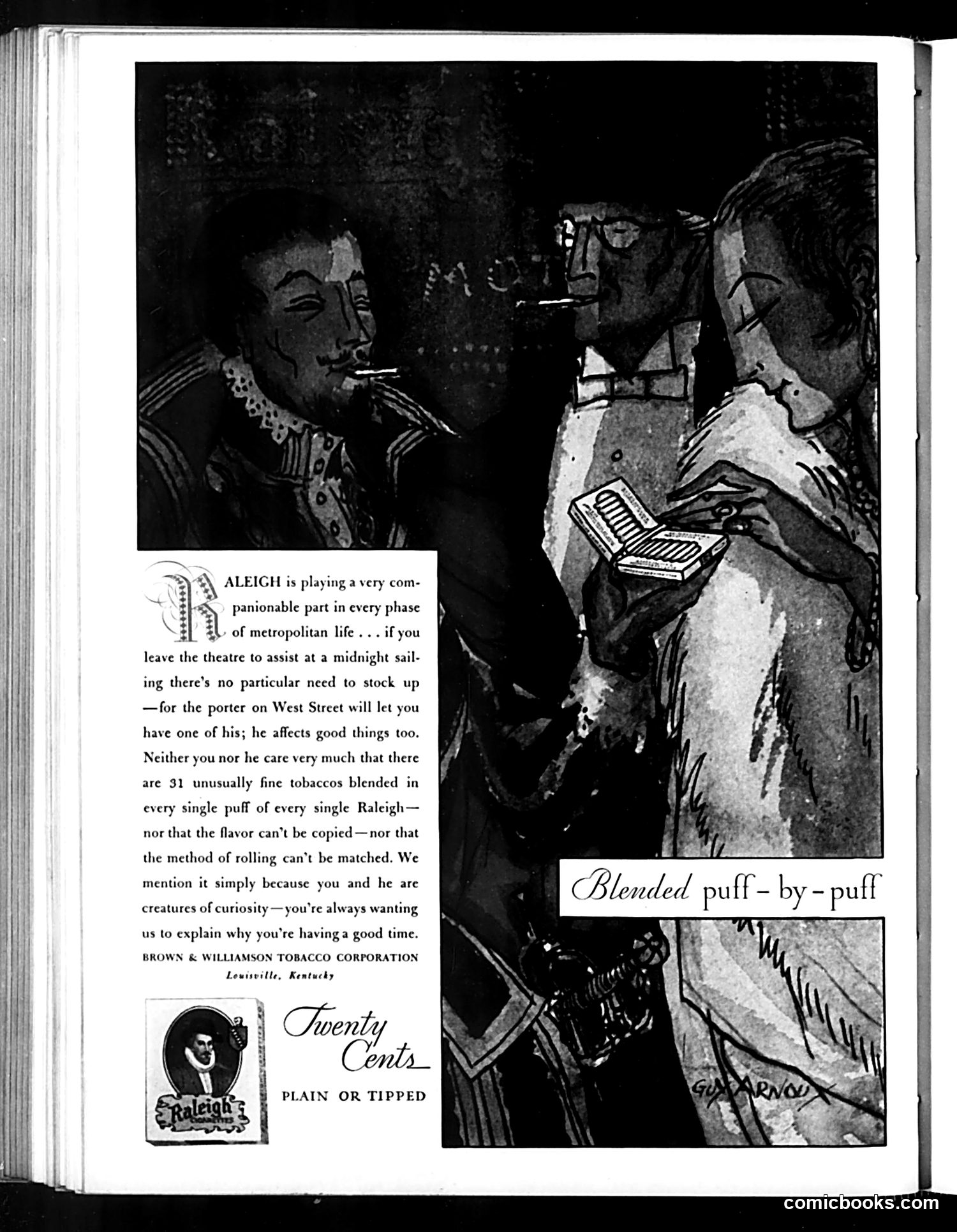
# Advertisement for Raleigh Cigarettes This page is primarily a **cigarette advertisement** rather than political satire. It depicts two figures in elaborate period costume (appearing to be from a theatrical production) in what looks like a backstage or intimate social scene. One figure holds what appears to be a cigarette case or compact. The ad copy emphasizes that Raleigh cigarettes are used by people in "every phase of metropolitan life" and highlights the product's "31 unusually fine tobaccos blended" with a distinctive rolling method. The phrase "Blended puff-by-puff" is the marketing tagline. The theatrical costuming and sophisticated setting appeal to aspirational, cosmopolitan consumers. This reflects early 20th-century advertising strategies targeting urban sophistication and social status through cigarette marketing—before health warnings existed.
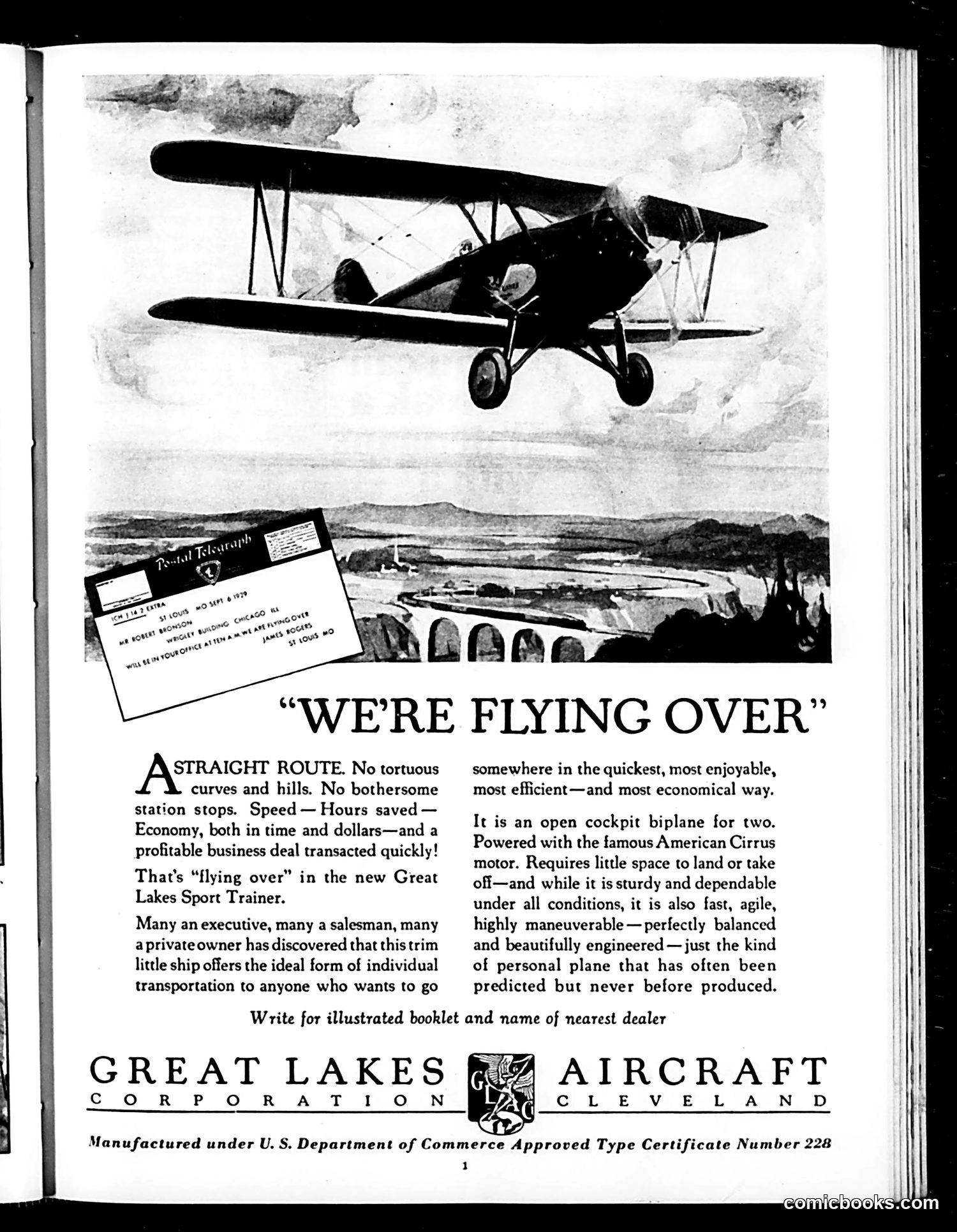
# Analysis This page is **primarily an advertisement**, not satire. It promotes the Great Lakes Sport Trainer, a biplane manufactured by Great Lakes Aircraft Corporation in Cleveland. The ad's headline "We're Flying Over" uses aviation as a metaphor for efficient business travel. The copy emphasizes practical benefits: straight routes, no stops, time and money savings—appealing to 1920s executives and salesmen seeking modern transportation alternatives to rail or automobiles. The aircraft itself is depicted realistically in flight. The postal telegraph card visible in the image suggests mail delivery capability, a selling point during early aviation's commercial phase. This represents the optimistic promotion of private aviation as a revolutionary business tool in the interwar period, before commercial aviation became established.
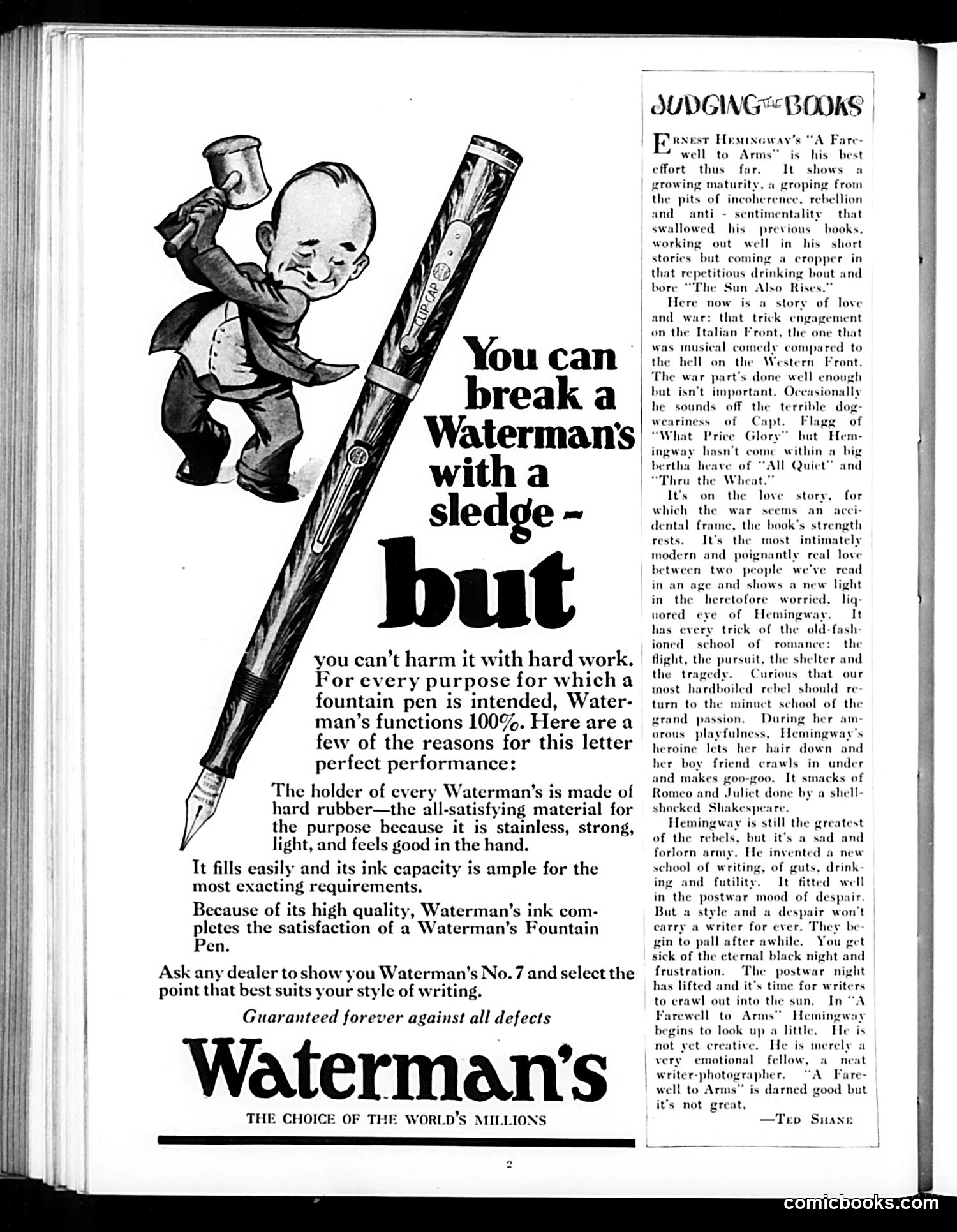
# Analysis This page is primarily a **Waterman's fountain pen advertisement** rather than political satire. The left side features a large illustration of a baby or cherub figure wielding a sledgehammer against a Waterman's pen, with the headline "You can't break a Waterman's with a sledge—but you can't harm it with hard work." The ad emphasizes the pen's durability through rubber holders, stainless steel components, and reliable ink capacity—practical selling points for a working writing instrument. The right column contains a book review titled "JUDGING THE BOOKS" by Ted Shane, critiquing Ernest Hemingway's "A Farewell to Arms." The review is the actual editorial content; the advertisement is the page's primary commercial purpose, typical of magazines that blended advertising with editorial material.
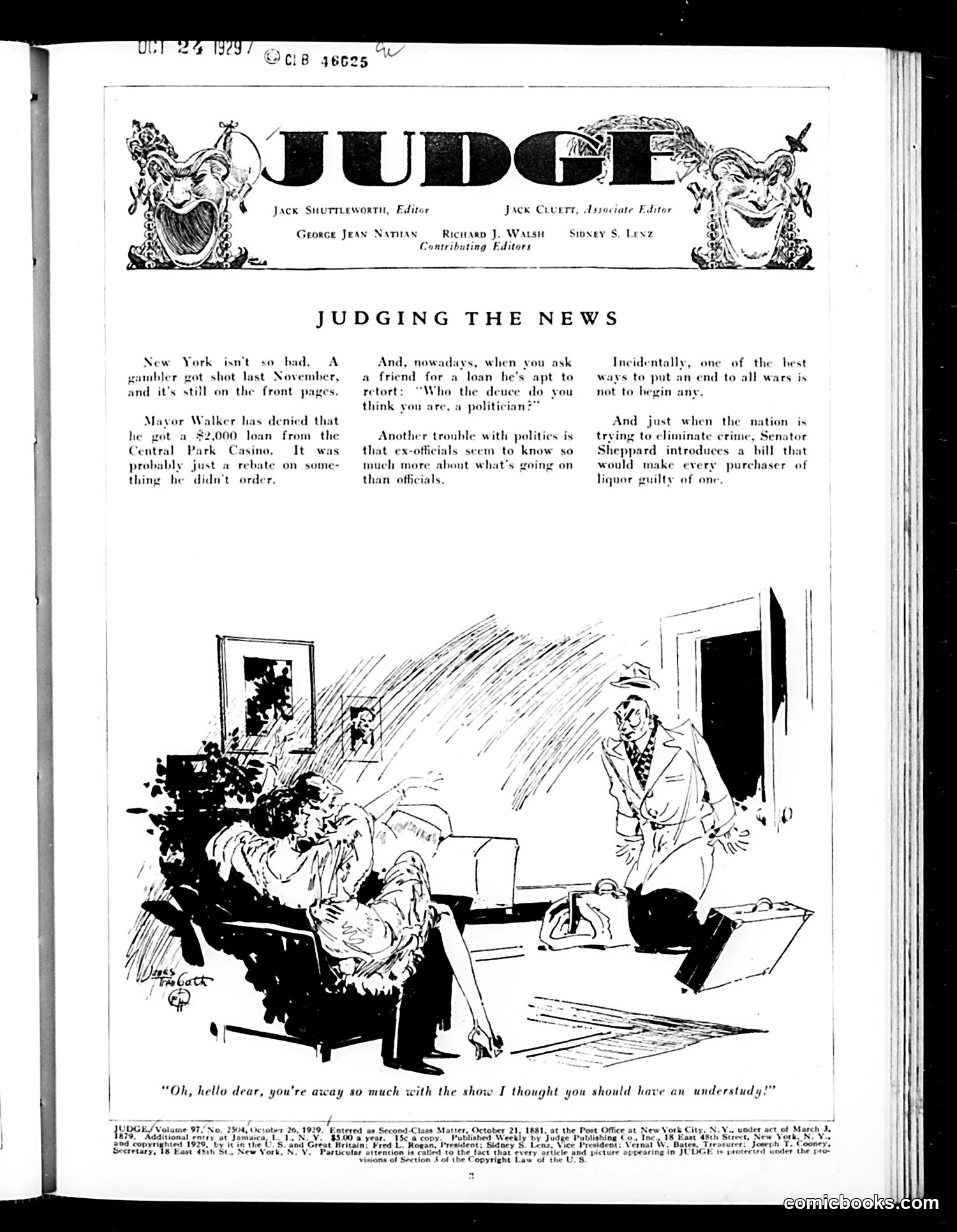
# Judge Magazine Analysis - October 28, 1929 This page from *Judge* satirizes contemporary political and social issues. The editorial column "Judging the News" criticizes Mayor Walker's denial of a $2,000 loan from Central Park Casino, and attacks both politics generally and Senator Shepard's proposed bill to make liquor purchase guilty of crime. The cartoon below depicts what appears to be a domestic scene where a woman, surrounded by household chaos and clutter, confronts a man leaving. Her caption—"Oh, hello dear, you're away so much with the show; I thought you should have an understudy!"—suggests marital discord over his frequent absences, likely satirizing infidelity or work-life imbalance among the entertainment or political classes. The cartoon employs visual exaggeration typical of 1920s satirical art to mock middle-to-upper-class domestic problems.
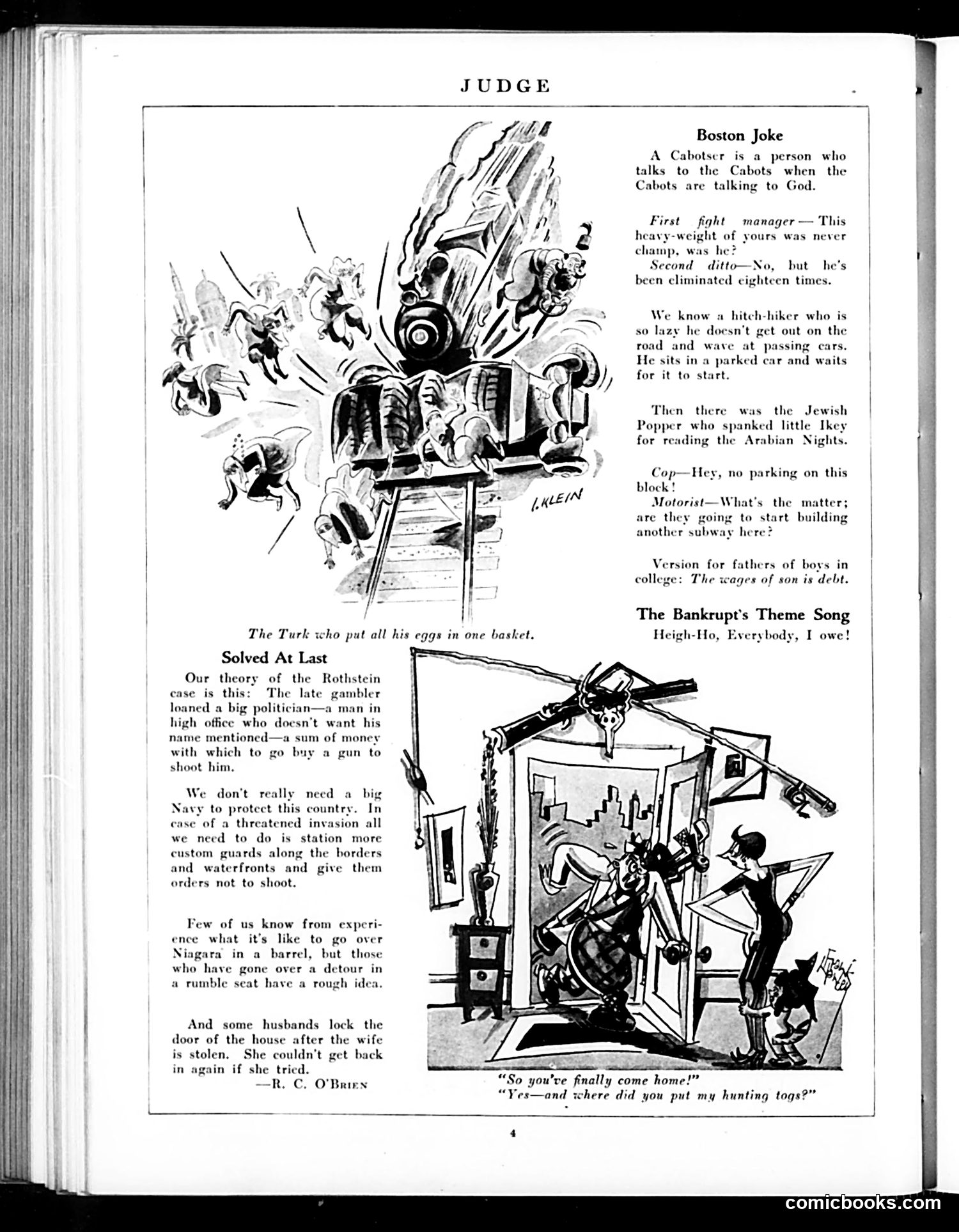
# Judge Magazine Page Analysis This page contains multiple satirical pieces from Judge magazine: **Top cartoon ("Boston Joke"):** Depicts stereotypical Jewish and ethnic caricatures in various scenarios—a "Cabotser" (person intermediating between Cabots and God), commentary on a failed heavyweight boxer, a lazy hitchhiker, and a "Jewish Popper" reading Arabian Nights. These represent crude ethnic humor typical of early 20th-century American magazines. **"Solved At Last":** A piece speculating that a late gambler borrowed money from a politician to buy a gun (implying suicide). It discusses national defense in vague terms and ends with marital humor about locked doors. **Bottom cartoon:** Shows someone returning home to an apartment, apparently after an extended absence, with a humorous caption about "hunting togs," suggesting infidelity or deception about whereabouts. The page exemplifies period satire mixing ethnic stereotypes, political innuendo, and domestic humor.
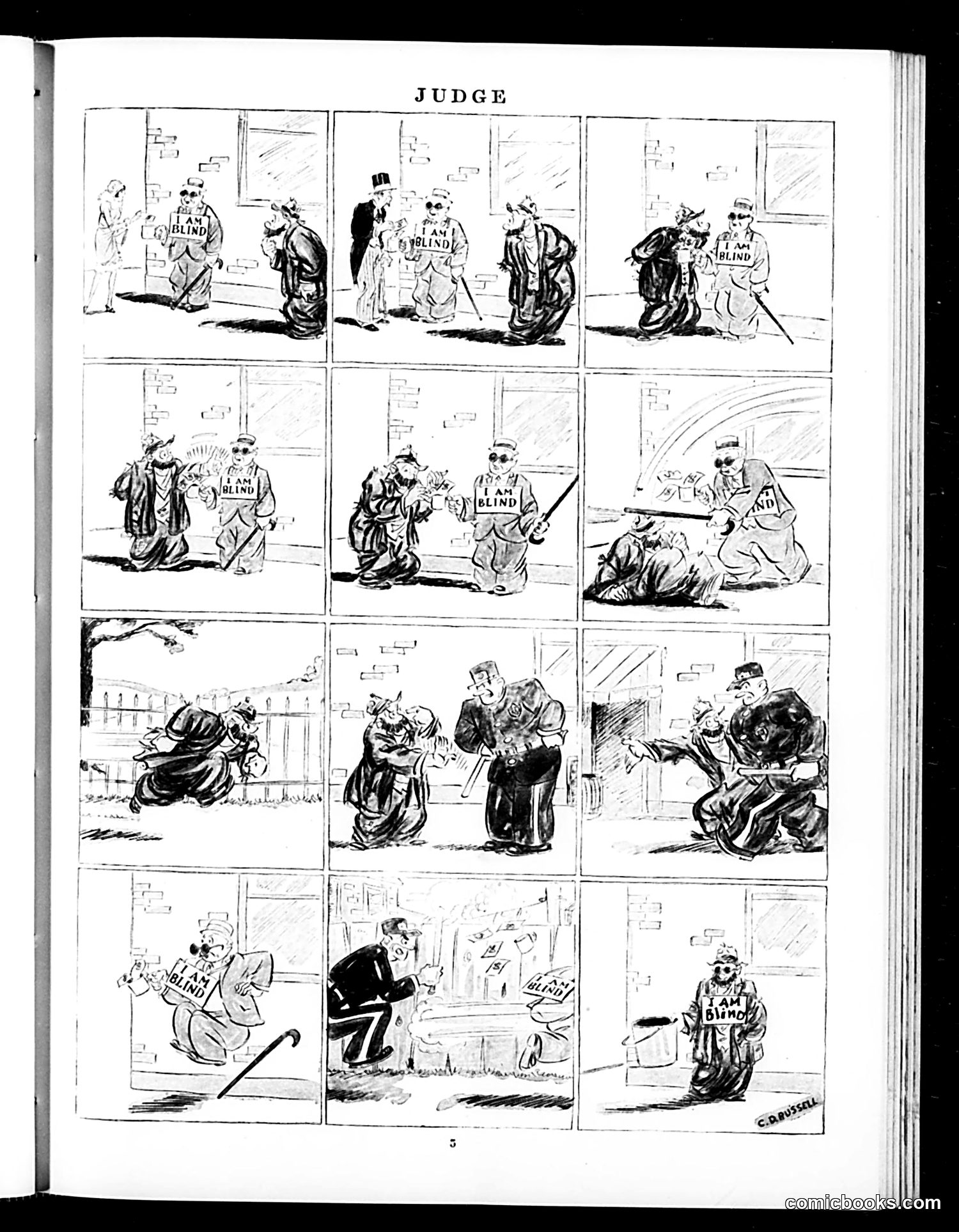
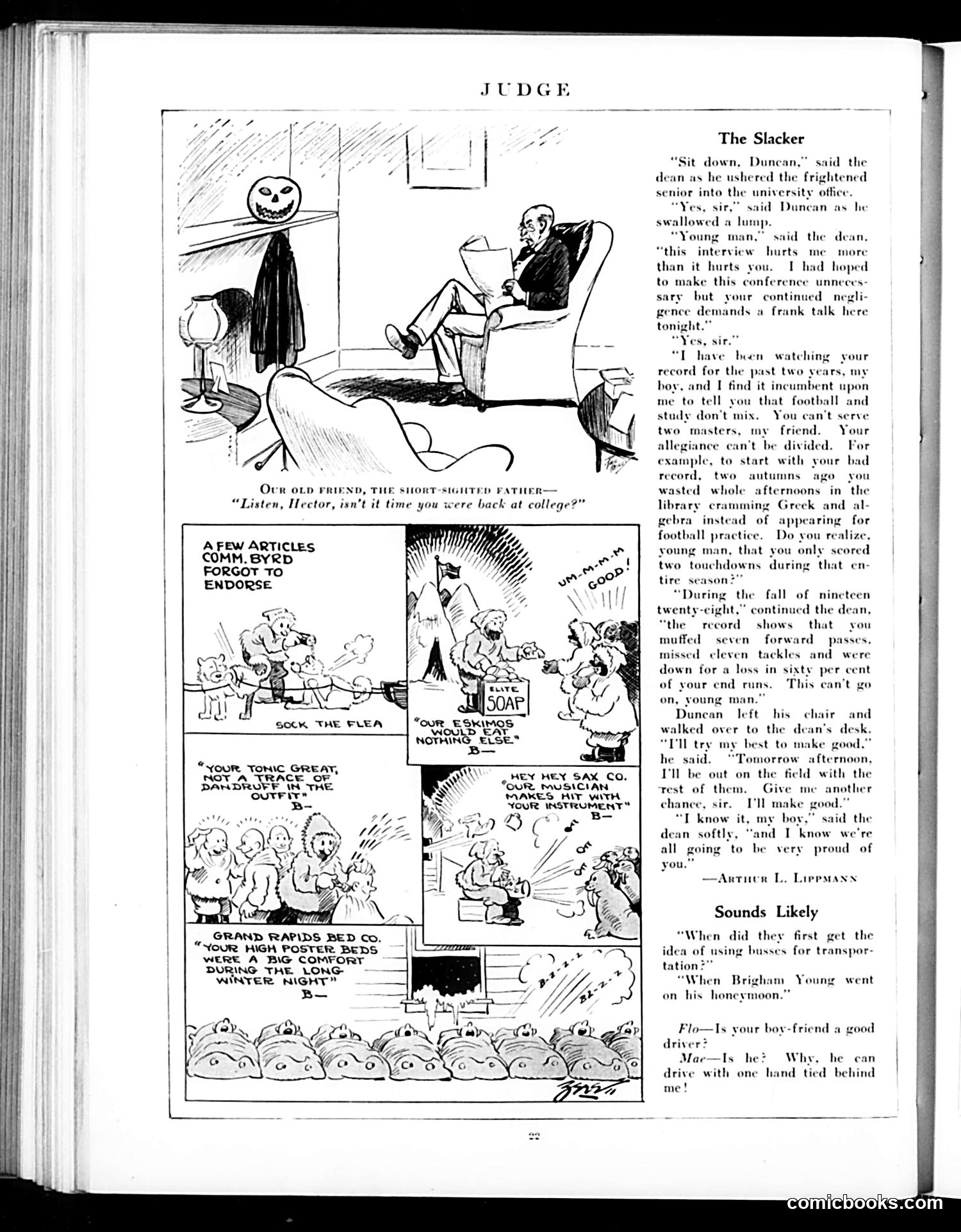
# "Judge" Cartoon Analysis: "Judge" This political cartoon satirizes judicial blindness—literally and figuratively. The repeated character labeled "I AM BLIND" appears throughout the twelve-panel sequence, depicting a blindfolded figure in judicial robes being manipulated, misled, or ineffectual in various scenarios. The satire critiques judges who either willfully ignore injustice or are deliberately kept ignorant of wrongdoing. Each panel shows the blind judge character encountering different situations—some appear to show political or legal corruption—yet remaining sightless and therefore powerless to act justly. The cartoon's message suggests that justice fails when judges are blind to evidence, corruption, or public interest. This reflects Progressive Era concerns about judicial integrity and the legal system's ability to address societal problems.
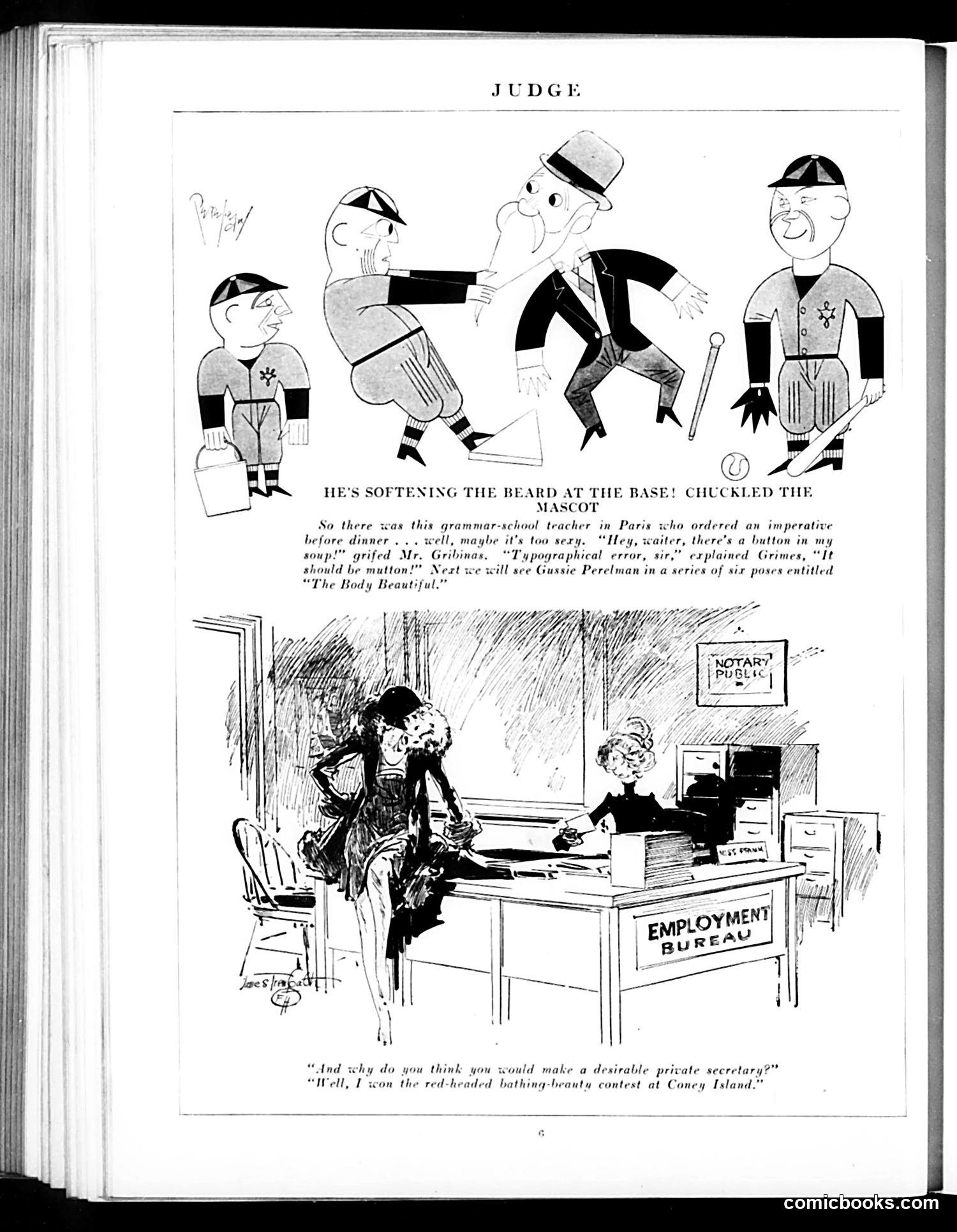
# Analysis This page from *Judge* contains two separate satirical pieces: **Top cartoon**: Four caricatured baseball umpires wearing distinctive uniforms and caps. The caption "HE'S SOFTENING THE BEARD AT THE BASE! CHUCKLED THE MASCOT" suggests satire about umpires' authority and appearance, though the specific reference is unclear without additional context. **Bottom cartoon**: An Employment Bureau scene where a woman in shabby clothes meets with a clerk. The dialogue reveals social satire: she claims she'd "make a desirable private secretary" and brags about winning a "red-headed bathing-beauty contest at Coney Island." The joke satirizes women's employment prospects—her only qualification is physical attractiveness rather than actual secretarial skills, mocking both unrealistic job applicants and employment practices of the era.
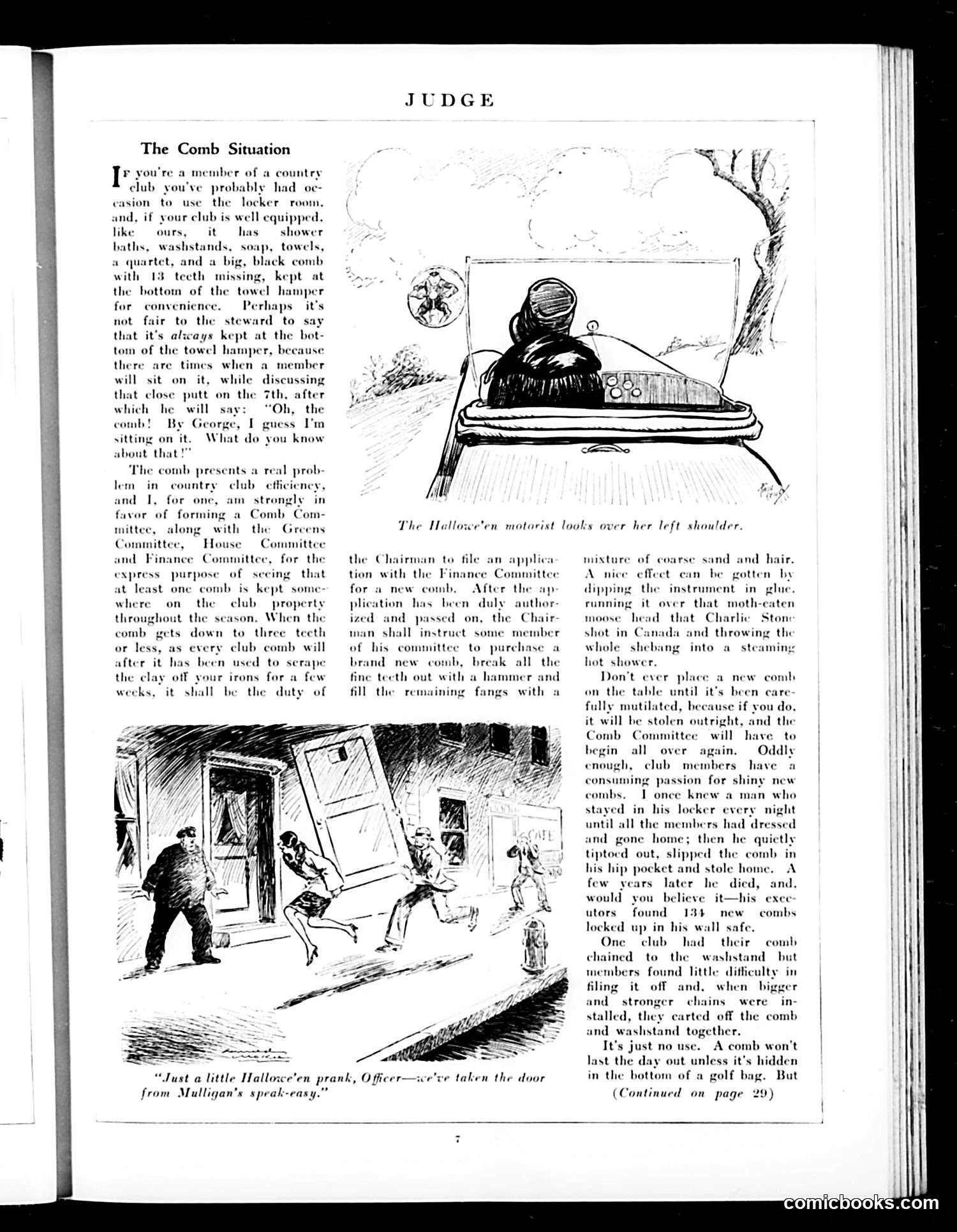
# "The Comb Situation" - Judge Magazine Satire This article satirizes the petty inefficiencies and absurd bureaucracy of country clubs during the Jazz Age. The author humorously proposes that clubs establish a formal "Comb Committee" (alongside existing committees for grounds, houses, and finances) to manage the perpetual problem of destroyed combs in locker rooms. The satire works on multiple levels: members absent-mindedly sit on combs, use them to scrape golf clubs, and chronically steal them. The proposed "solution"—filing formal applications through committees before replacing worn combs—mocks how country clubs handle minor issues through excessive administrative procedure. The accompanying cartoons illustrate specific comedic scenarios: a woman driver (labeled a "Hallowe'en motorist") looking over her shoulder, and a Prohibition-era joke about removing a speakeasy door as a prank. The piece pokes fun at both country club pretension and the absurdity of over-organizing trivial matters.
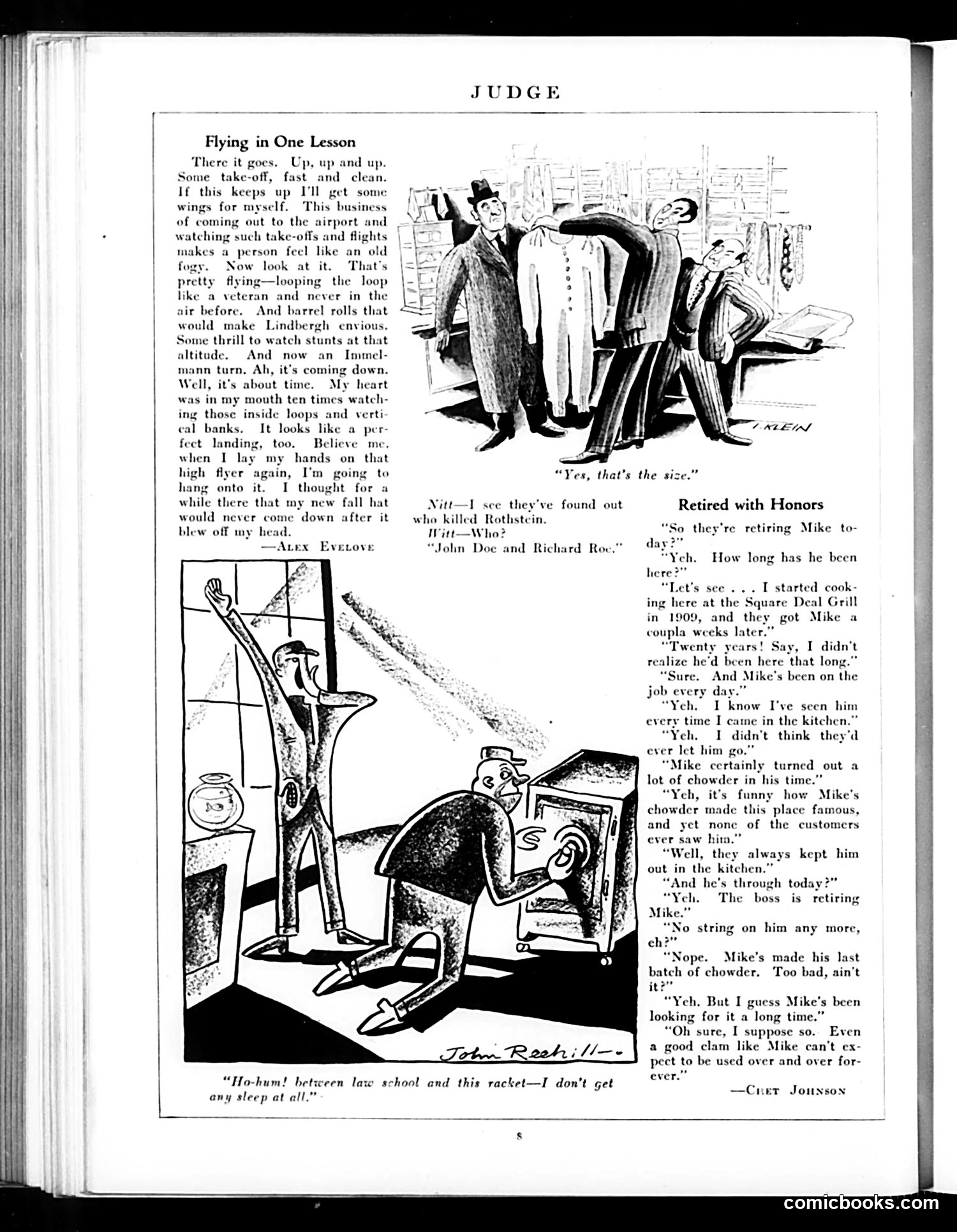
# Judge Magazine Page Analysis This page contains two distinct pieces of satirical humor: **"Flying in One Lesson"** (top): A first-person account of witnessing aviation stunts at an airport, likely referencing the 1920s aviation craze. The narrator describes watching skilled aerial maneuvers (loops, barrel rolls, Immelmann turns) that make him feel inadequate—his new hat even blows off his head during the spectacle. The humor targets the anxiety ordinary people felt witnessing the daring new aviation technology becoming fashionable entertainment. **"Retired with Honors"** (bottom): A dialogue between two kitchen workers discussing their coworker Mike's retirement after 20+ years. The satire is subtle: Mike famously made the restaurant's signature chowder but was always kept hidden "out in the kitchen," invisible to customers who praised his work. His retirement represents the forgotten laborer—valued for his work but never publicly acknowledged. The final line resignedly suggests even good workers are ultimately disposable. Both pieces mock different American anxieties: modern progress and worker expendability.
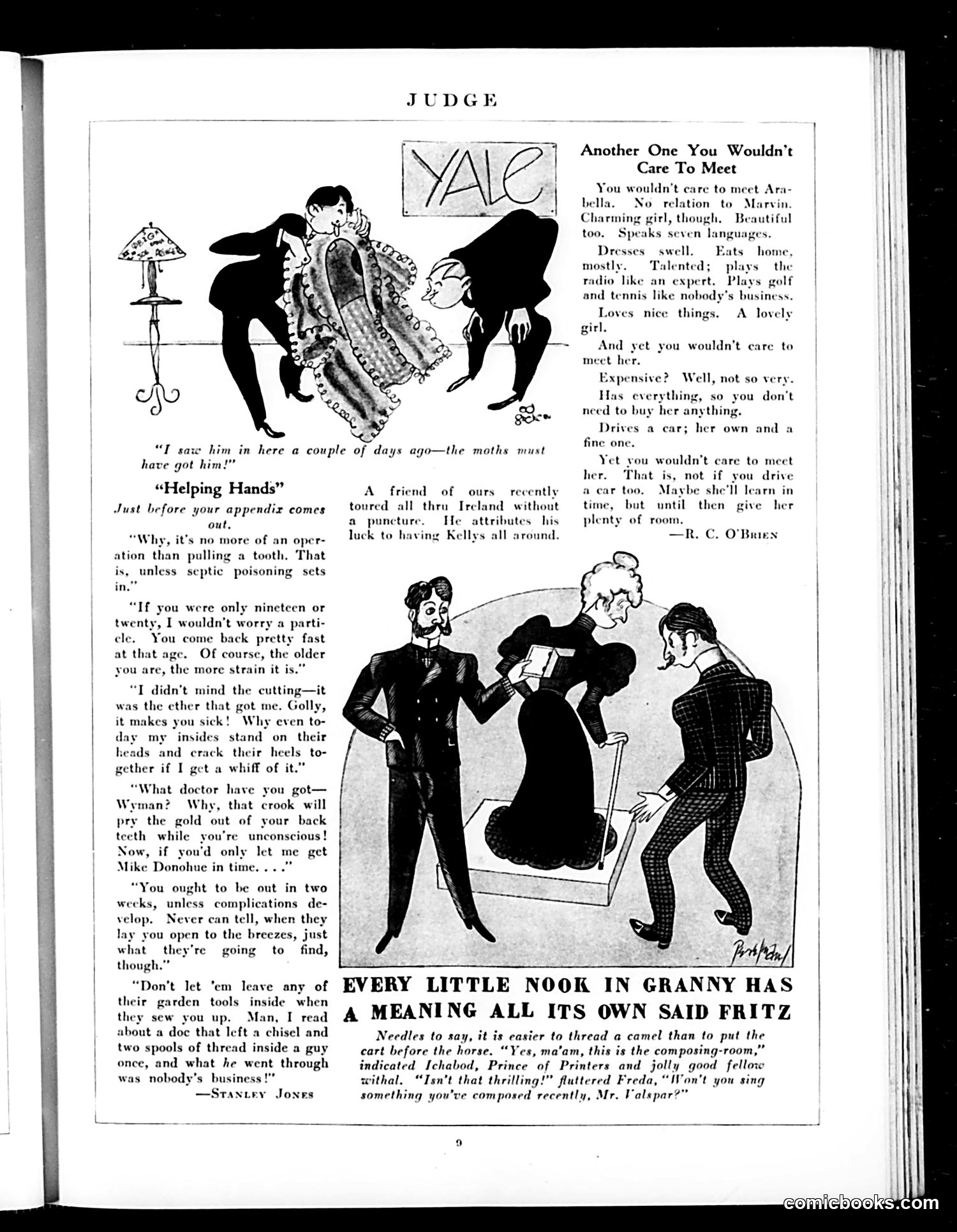
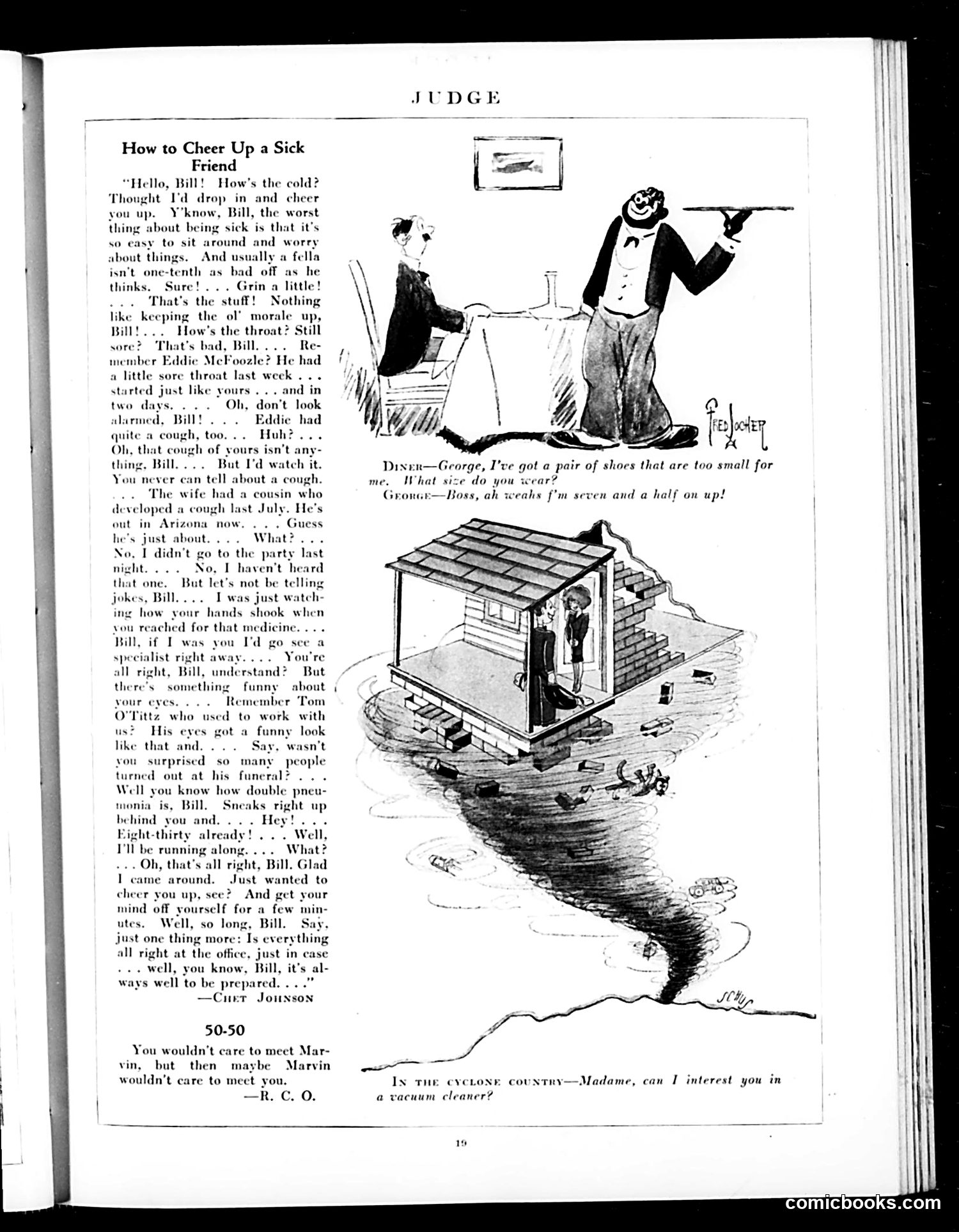
# Explanation for Modern Readers This Judge magazine page contains three distinct humorous pieces: **"Helping Hands"** (left) satirizes pre-surgical anxiety. A patient about to have an appendectomy receives contradictory, alarming advice from well-meaning friends who recount horror stories about anesthesia complications, incompetent doctors, and surgical mishaps. The joke is how such "helpful" reassurance actually terrifies the patient more. **"Another One You Wouldn't Care To Meet"** (right) describes an idealized woman—beautiful, accomplished, multilingual—yet concludes you'd avoid meeting her because she's a reckless driver. The satire critiques how even "perfect" women can have fatal flaws, and specifically mocks dangerous female drivers, a common stereotype of the era. **"Every Little Nook in Granny"** (bottom) appears to be a caption for an illustration involving a printing press ("composing-room") and characters named Ichabod and Freda. The exact satirical point is unclear from the fragmented text, but seems related to printing or publishing work.
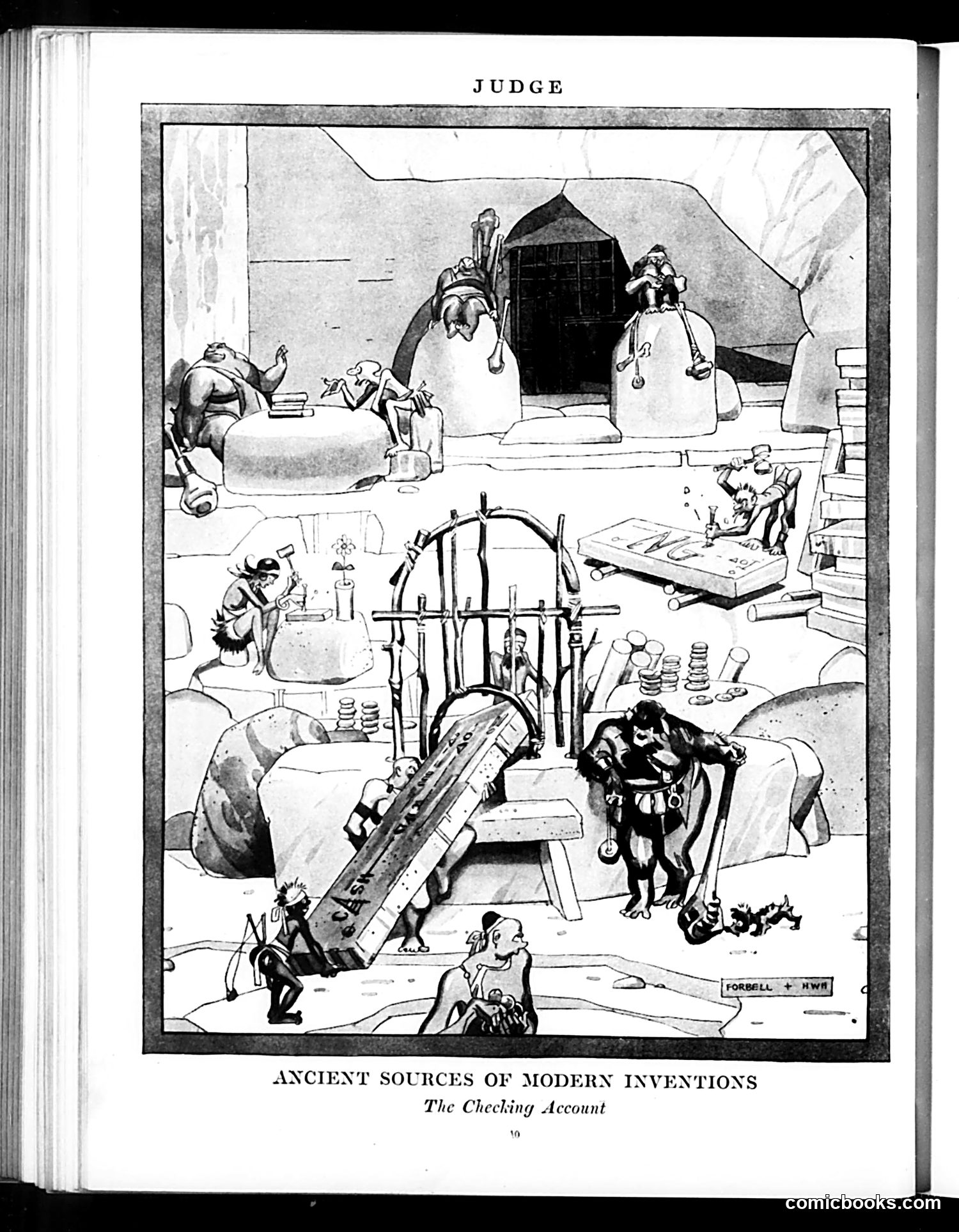
# Ancient Sources of Modern Inventions: The Checking Account This cartoon satirizes the idea that modern financial innovations have ancient origins. The scene depicts what appears to be a primitive settlement or camp with various figures engaged in activities that parallel modern banking practices—specifically checking accounts. The satire works by suggesting that concepts we consider modern (like checking accounts) are merely refinements of practices that existed in antiquity. Various figures are shown conducting transactions or record-keeping using primitive methods and tools. The humor lies in the contrast between the crude, ancient setting and the sophisticated financial mechanism being attributed to it, implying either that: 1) banking practices are as old as civilization itself, or 2) that modern banking practices haven't advanced much beyond primitive bartering systems. The specific social commentary about checking accounts—whether praising their utility or critiquing their complexity—remains unclear from the image alone.