
A complete issue · 16 pages · 1910
Judge — January 22, 1910
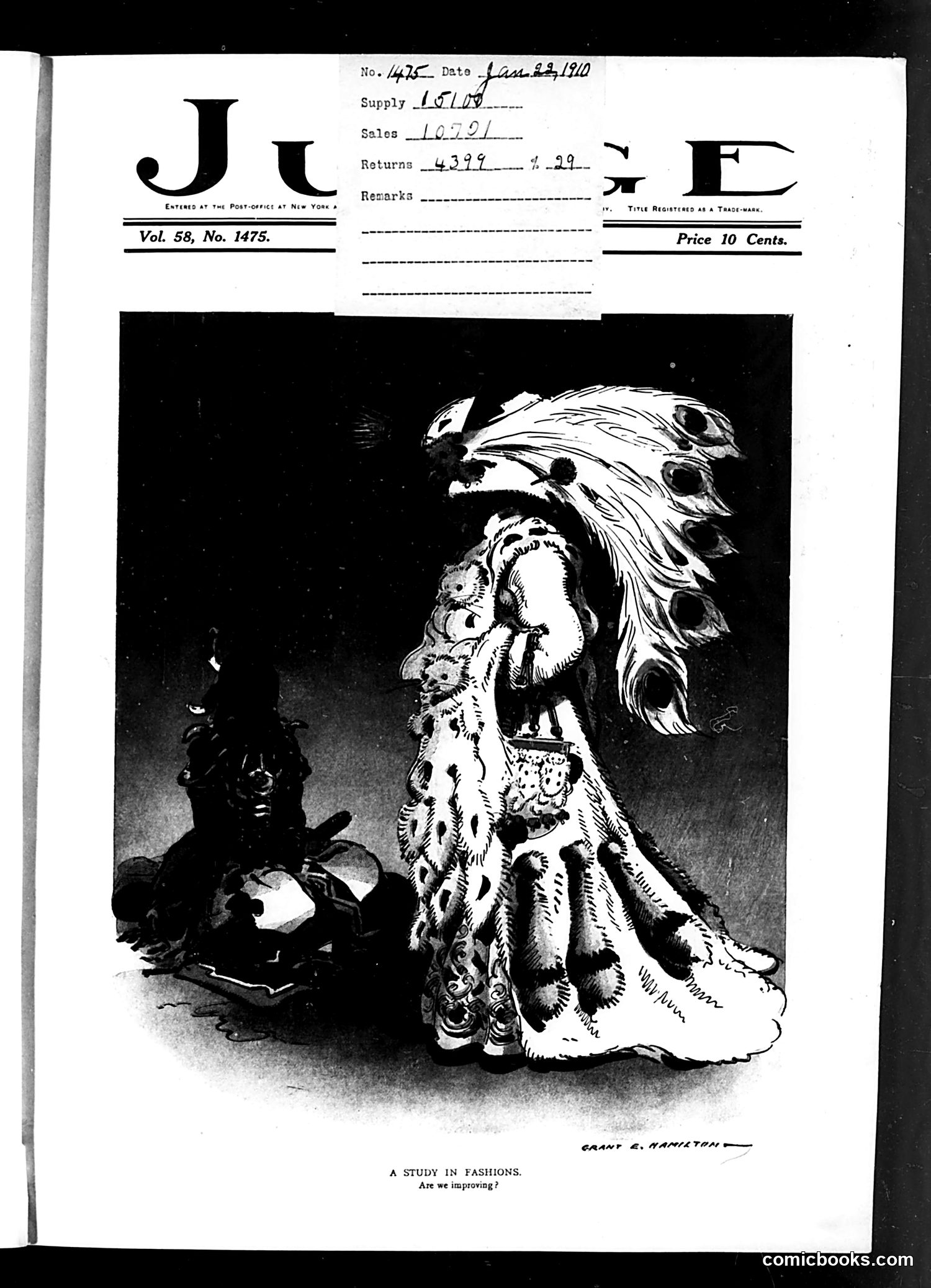
This 1910 Judge magazine cartoon satirizes women's fashion trends through exaggerated comparison. The right figure displays extreme fashionable excess—an elaborate feathered headdress, ornate clothing with decorative patterns, and an impossibly voluminous silhouette typical of Edwardian-era high fashion. The left figure appears to be a historical reference point, likely meant to represent past fashion absurdities or theatrical costume. The caption's question "Are we improving?" delivers the satire: by juxtaposing contemporary fashion with another extreme, Judge suggests that modern women's fashion hasn't actually progressed—it's merely traded one form of ridiculousness for another. The cartoon mocks the cyclical, irrational nature of fashion trends and women's apparent compliance with them.
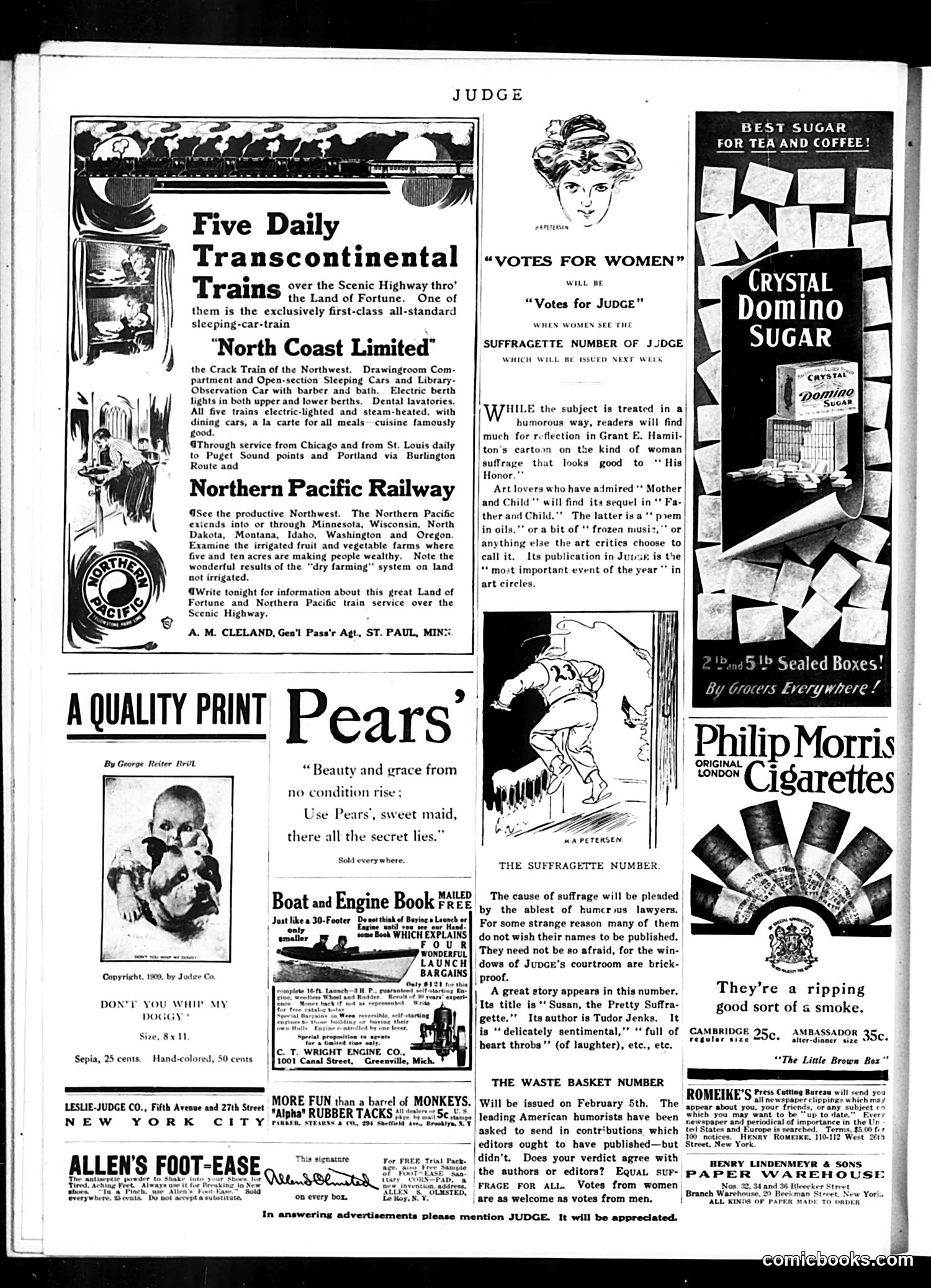
This page is primarily **advertising with minimal editorial content**. The main satirical element is the small cartoon titled "The Suffragette Number" featuring a woman caricature labeled as addressing "votes for women" when women will be the "suffragette number of Judge." Below this is "The Waste Basket Number," a cartoon showing a figure (appears to be a lawyer) being thrown into a waste basket, captioning a story titled "Susan, the Pretty Suffragette" by Tudor Jenks. The satire mocks **women's suffrage activism** through ridicule—treating female voters as a punchline and suggesting their concerns belong in the trash. This reflects Judge magazine's anti-suffrage editorial stance common among early 20th-century satirical publications, though the page is dominated by commercial advertisements for trains, sugar, cigarettes, and other products.
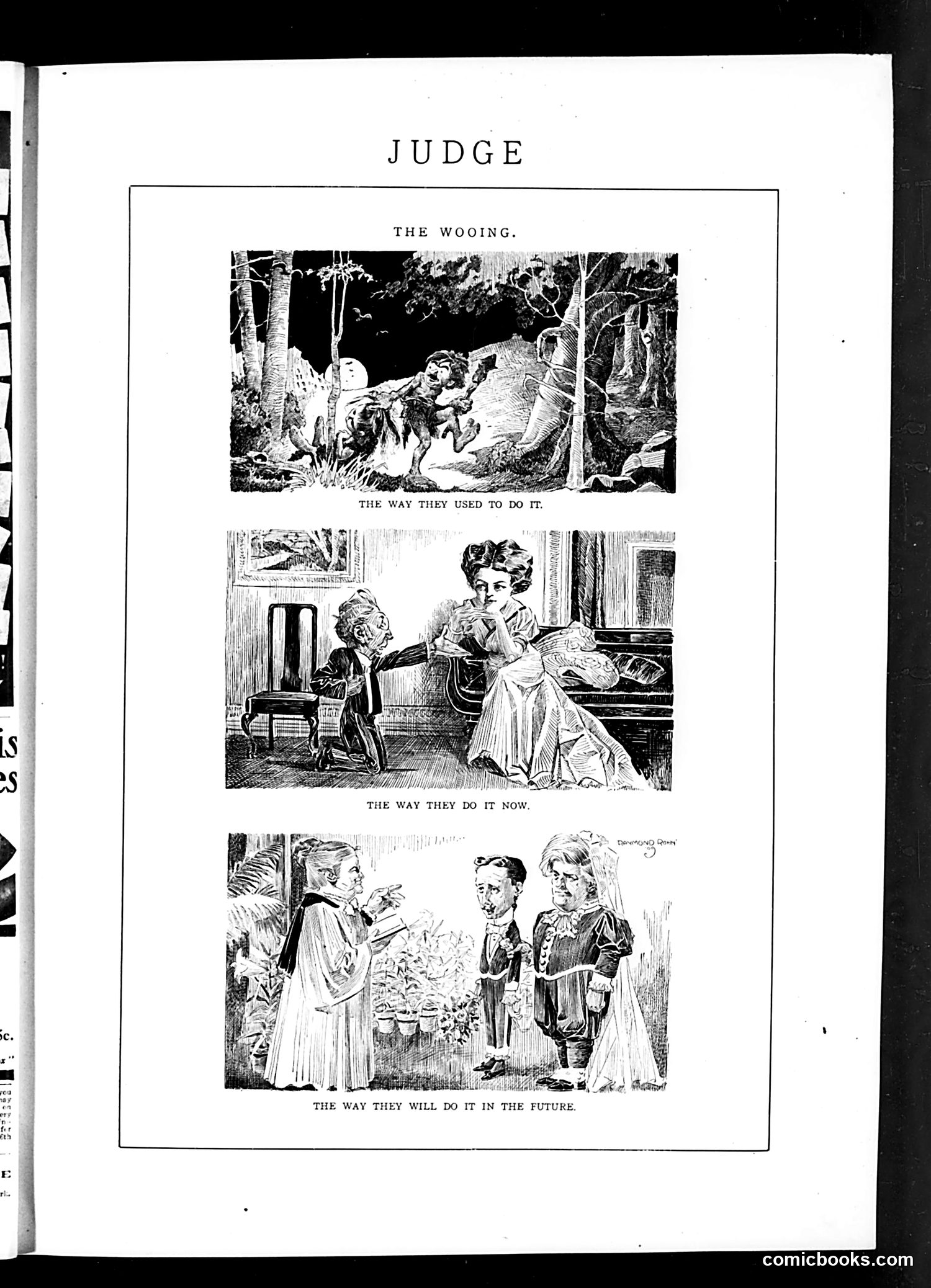
This satirical cartoon compares courtship customs across three time periods. The top panel shows "the way they used to do it"—a romantic woodland moonlit scene with traditional courtship. The middle panel depicts "the way they do it now"—a modern indoor setting where a woman appears to be smoking while a man sits passively, suggesting role reversals or changing gender dynamics in early 20th-century courtship. The bottom panel projects "the way they will do it in the future," showing what appears to be even more dramatic role reversals or unexpected developments. The satire likely critiques changing social roles, particularly women's increasing independence and smoking (considered scandalous), suggesting anxiety about modernizing gender relations and courtship practices among Judge's conservative readership.
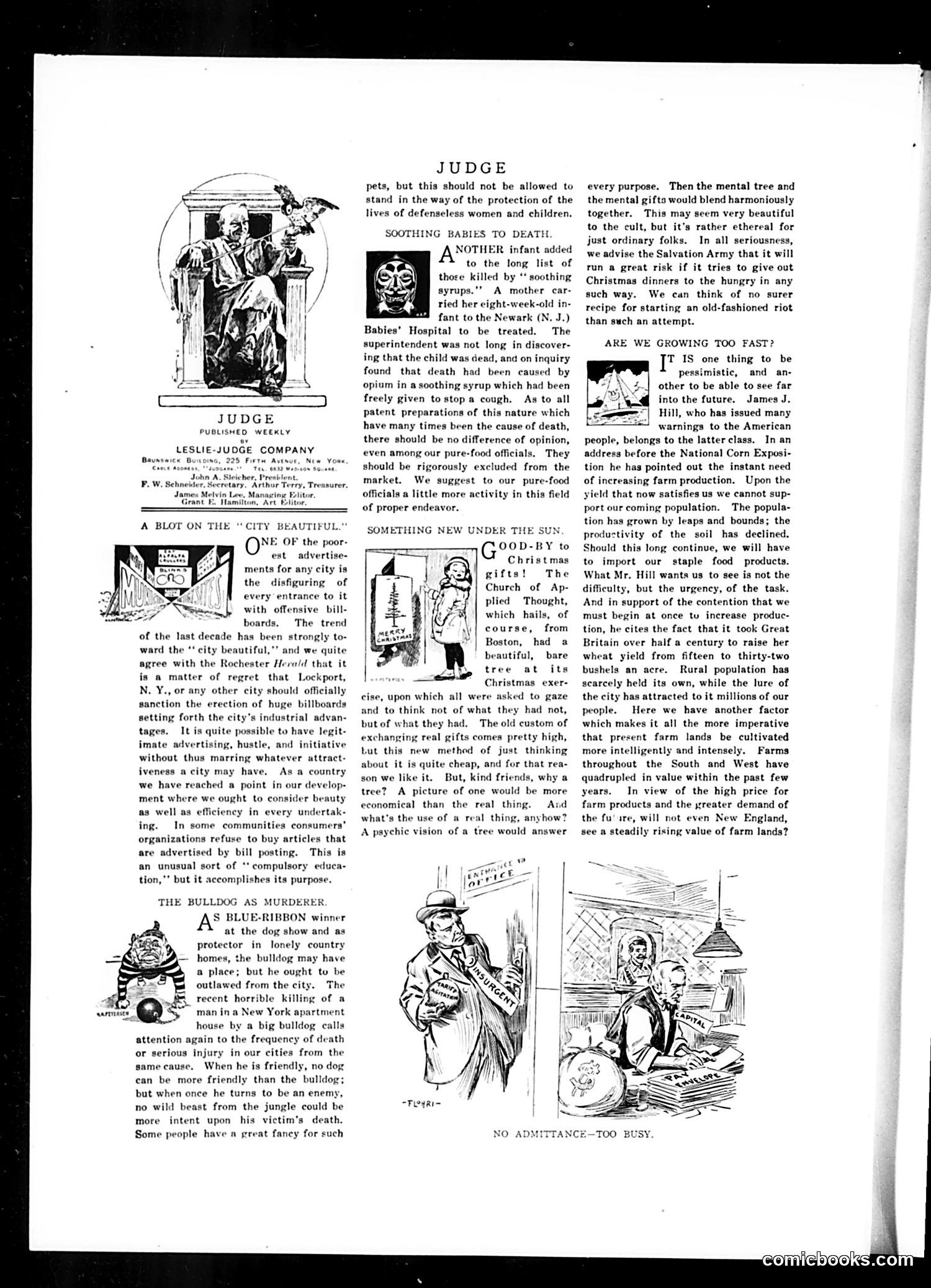
This page contains several satirical pieces addressing early 20th-century American social issues: **"Soothing Babies to Death"** criticizes patent medicines and syrups given to infants, particularly opioid-based products. A Newark hospital discovered a child died from opium in a cough syrup—a common but deadly practice. The satire targets "pure-food officials" for insufficient enforcement. **"Are We Growing Too Fast?"** discusses agricultural productivity and food imports, referencing James J. Hill's warnings about population growth outpacing domestic farm production. **"Good-by to Christmas Gifts"** satirizes the trend of giving mental images or "psychic visions" instead of physical gifts—mocking both consumerism and spiritualism fads. **"The Bulldog as Murderer"** addresses urban dog attacks in New York apartments, advocating for stricter regulation of dangerous breeds in cities.
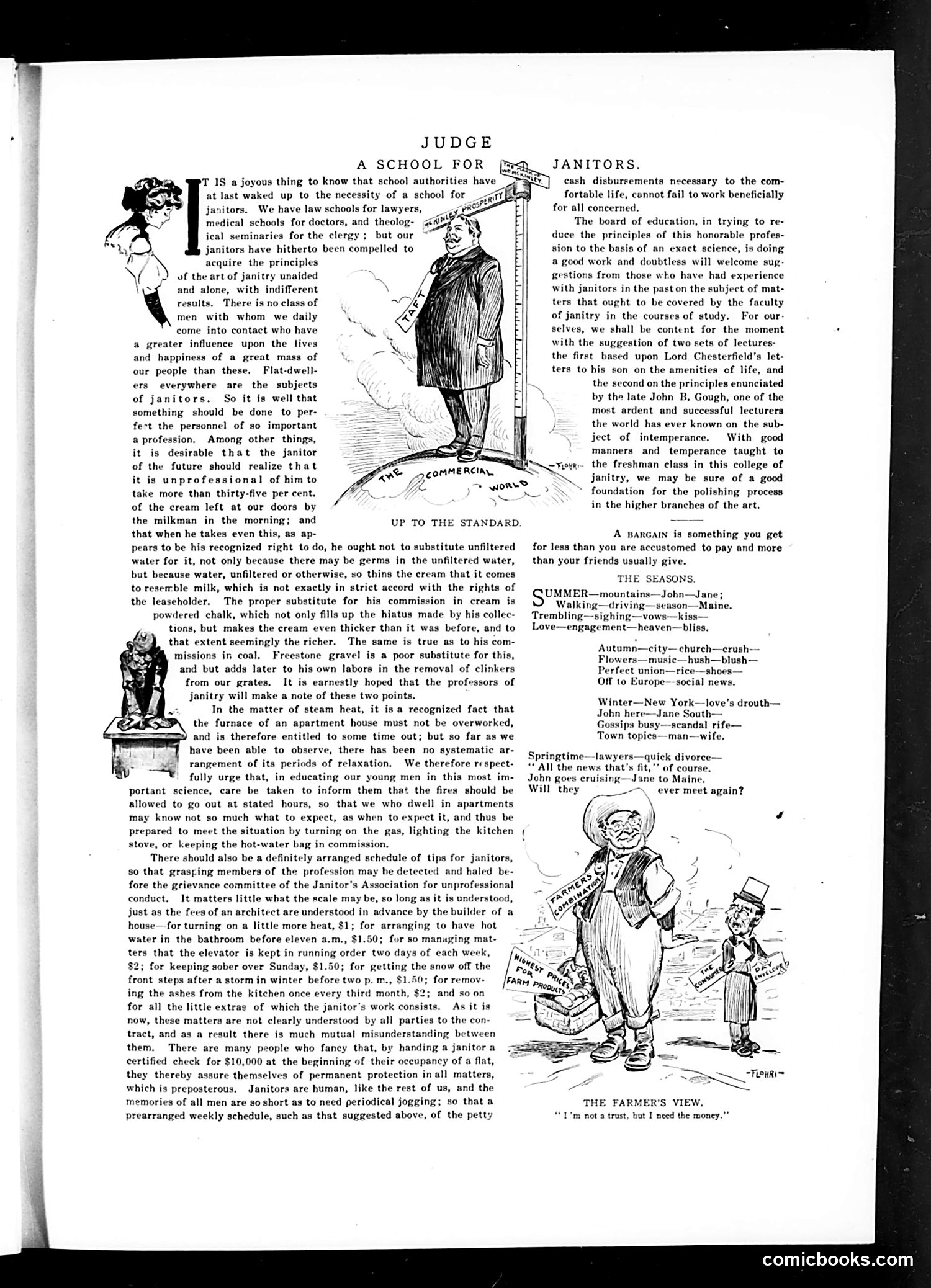
This page advocates for professional training schools for janitors—a novel concept at the time. The main article argues janitors deserve respect and systematic education, not just ad-hoc learning. It criticizes the common practice of substituting cheap materials (unfilttered water for cream, freestone gravel for proper supplies) and proposes scheduled training to prevent unprofessional conduct. The cartoons support this theme: one shows a judge-like figure measuring standards; another depicts "The Farmer's View," where a farmer confronts someone (likely a janitor or tradesman) about payment, saying "I'm not a trust, but I need the money." The satire suggests janitors are undervalued workers deserving professionalization, while also poking fun at economic anxieties of the era regarding fair compensation and standards.
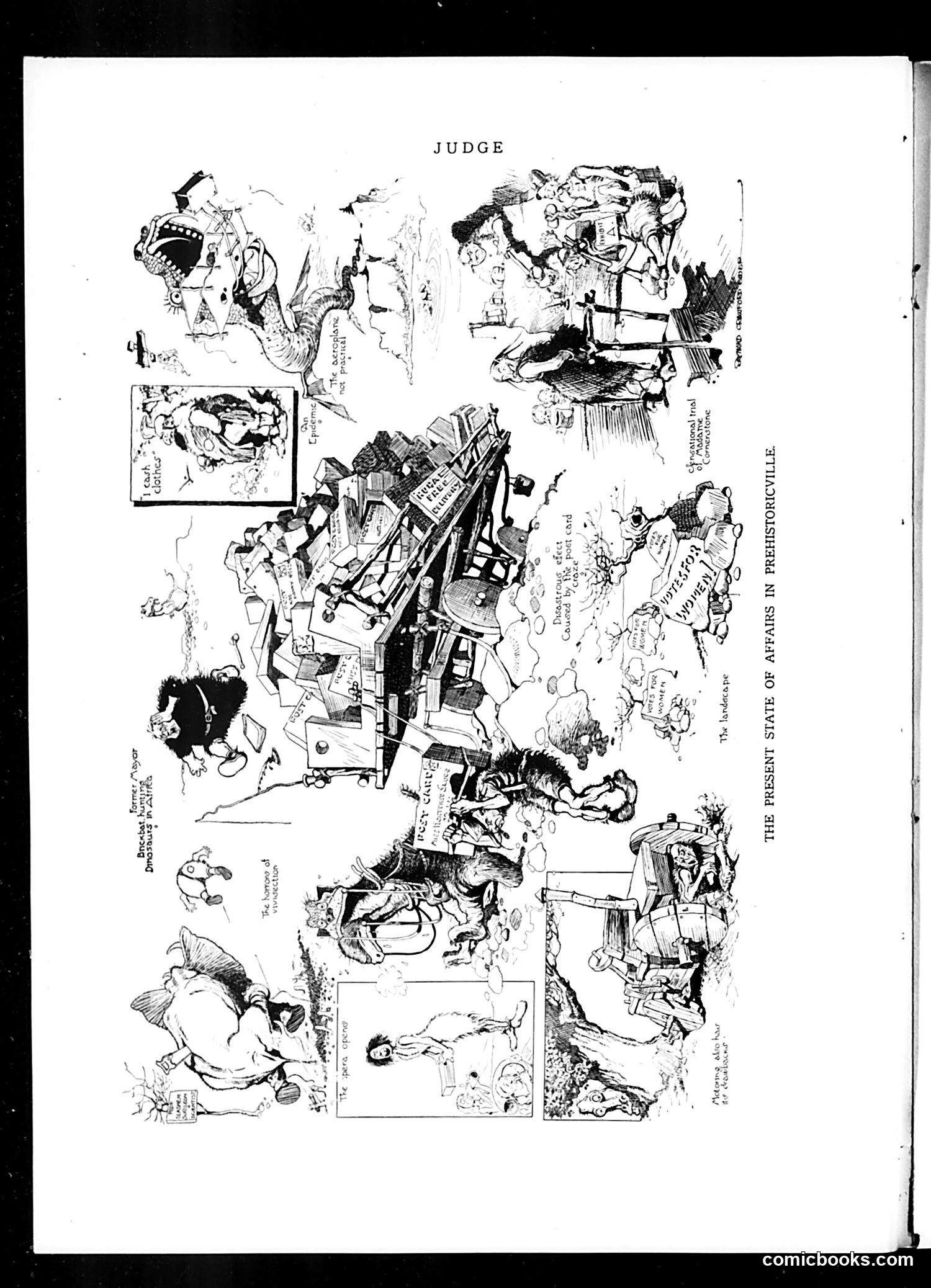
I can see this is a satirical page titled "JUDGE" depicting "The Present State of Affairs in Presbyteriville," but the OCR text is largely unreadable and appears corrupted (reversed or garbled). From the image alone, I can observe multiple cartoon panels showing various figures in chaotic scenes with buildings and satirical situations. However, without legible captions or text, I cannot reliably identify the specific political figures, the actual events being referenced, or the precise satirical point being made. To accurately explain what these cartoons meant to contemporary readers, I would need either clearer OCR text or additional context about the publication date and Presbyterian church politics or Presbyterian-related news of that era. I cannot responsibly guess at identities or meanings without supporting textual evidence.
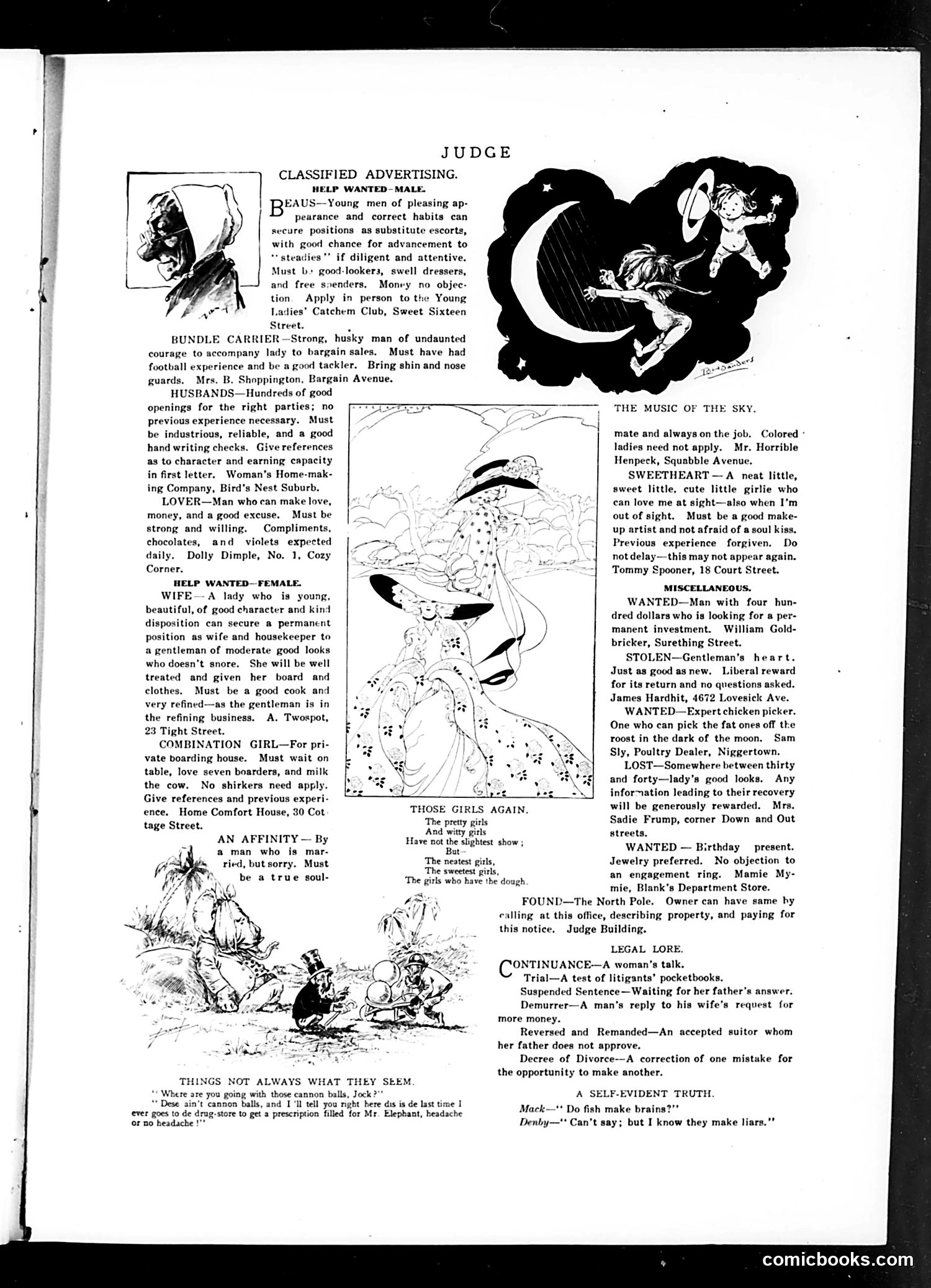
This page is primarily **classified advertising satire**, mocking contemporary social conventions and gender relations of the era (appears to be early 20th century). The humor targets: **"Help Wanted" sections** satirize courtship and marriage as transactional employment. Men advertise for "wives" requiring cooking/housekeeping skills; women seek "lovers" who provide compliments and chocolates. The "Husbands" listing treats marriage as a job opening. **The cartoons** (top right: "The Music of the Sky"; center: "Those Girls Again") use whimsical illustrations alongside these ads, reinforcing the absurdist tone. **"Legal Lore" section** pokes fun at courtroom terminology—defining "continuance" as "a woman's talk" and "trial" as testing litigants' wallets. **The lower cartoon** ("Things Not Always What They Seem") appears unrelated racist humor about a Black character. Overall, the page satirizes the commodification of relationships and the gender-based social hierarchies of the period, presenting marriage and courtship as economic arrangements worthy of ridicule.
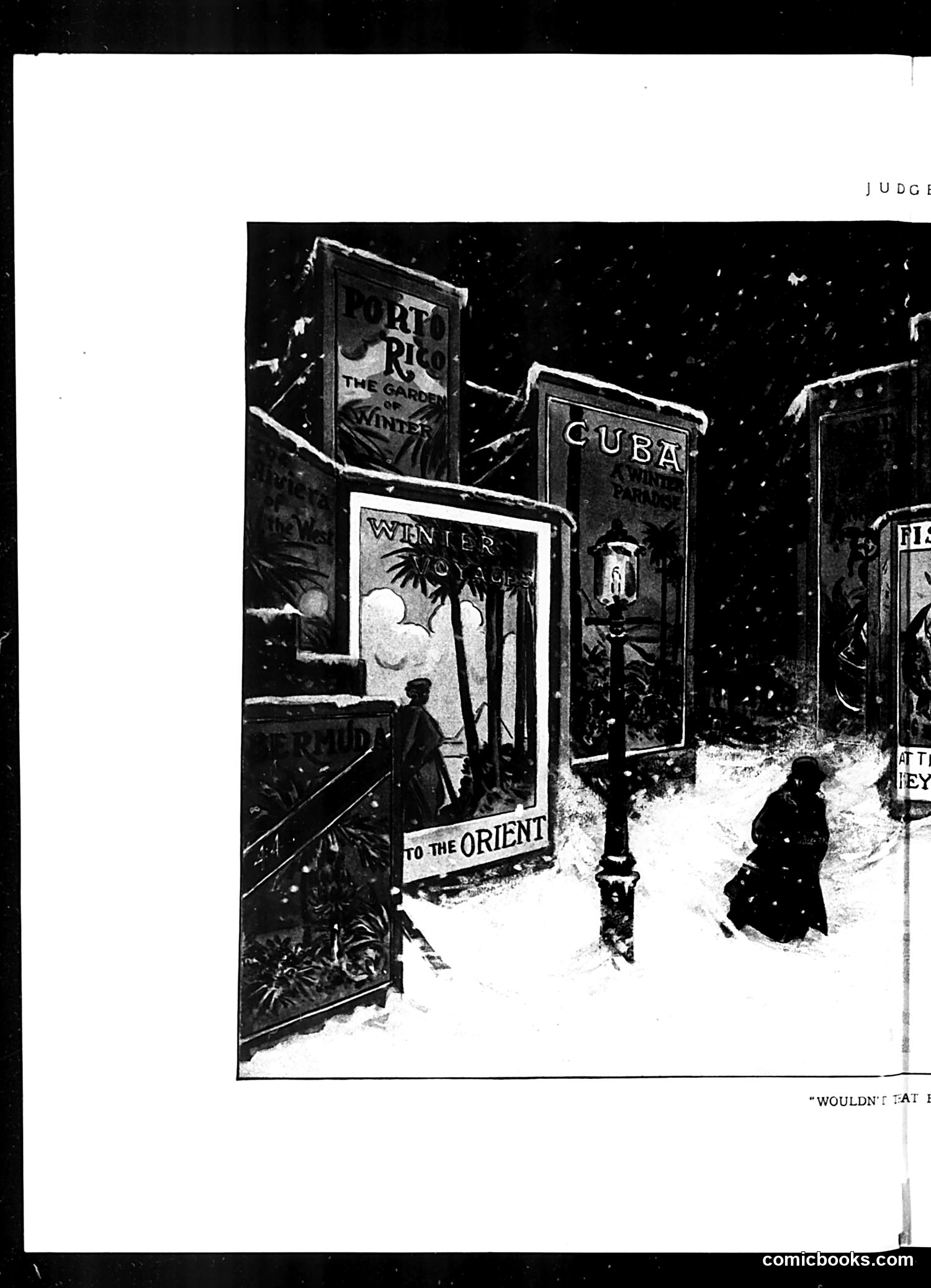
This is a black and white illustration showing a snowy winter street scene with storefront windows displaying travel advertisements. Visible signs include "PORTO RICO," "WINTER," "TO THE ORIENT," and "CUBA" — promoting warm-weather vacation destinations. Two figures in dark winter clothing trudge through heavy snow past these inviting displays, creating an ironic contrast: they're freezing in winter weather while surrounded by advertisements for tropical escapes. The cartoon satirizes the gap between desire and reality — poking fun at people who dream of exotic warm vacations but remain stuck in harsh winters, unable to afford or access these destinations. The partial text "WOULDN'T THAT I" (likely "Wouldn't that [be nice]") suggests wistful longing. This reflects early 20th-century American consumer culture and class anxieties.
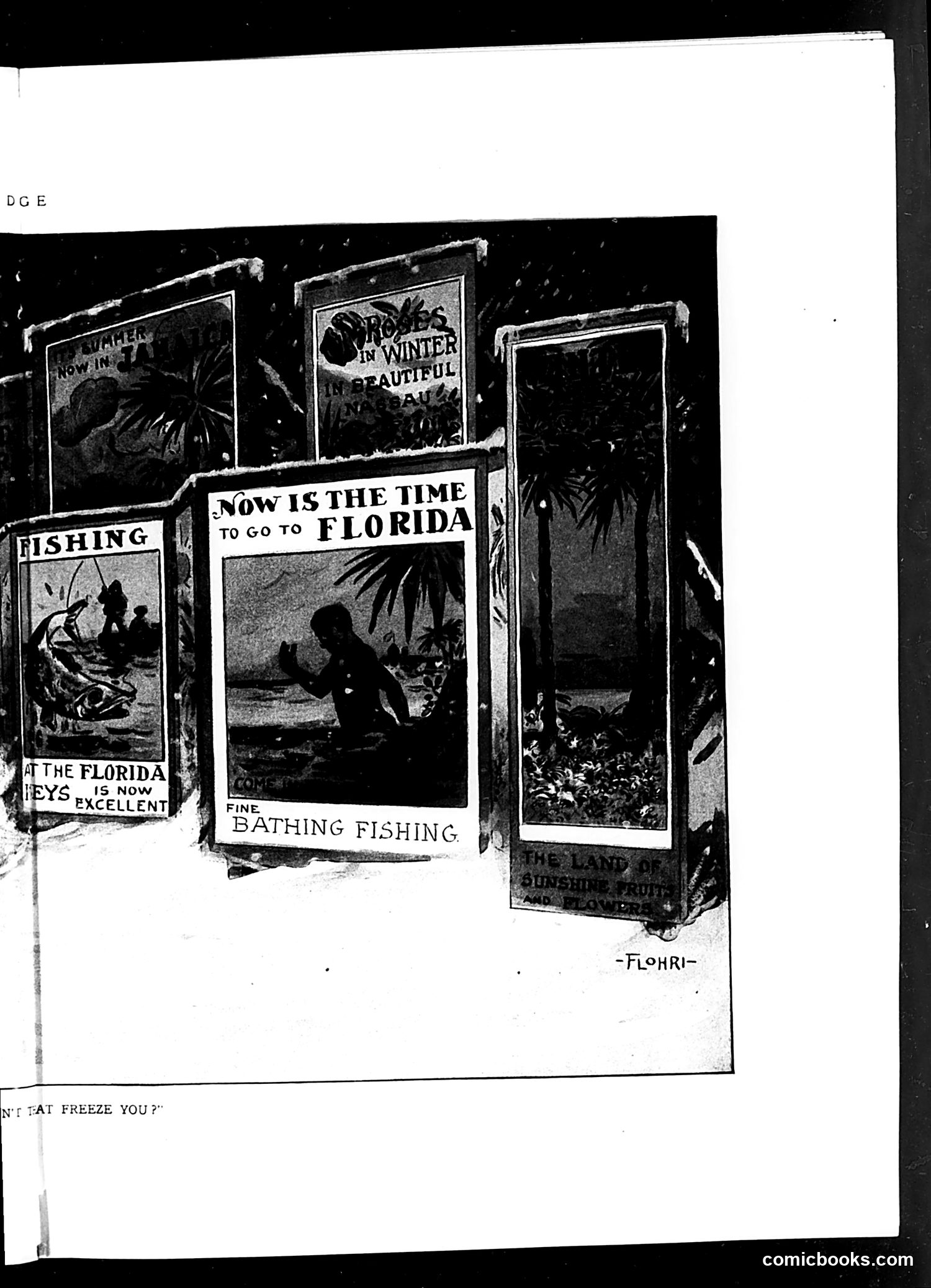
This page displays **travel advertisement posters** rather than political cartoons. The visible signs promote Florida as a winter destination, featuring slogans like "NOW IS THE TIME TO GO TO FLORIDA" and "FINE BATHING FISHING." The posters show silhouetted figures enjoying tropical activities—bathing, fishing, and relaxing under palm trees—to entice Northern visitors escaping cold weather. One poster references "FISHING AT THE FLORIDA KEYS IS NOW EXCELLENT," marketing specific regional attractions. The caption "'ISN'T AT FREEZE YOU?'" (likely "Isn't that freeze you?" with OCR errors) appears to be rhetorical—humorously suggesting that viewing these idyllic Florida scenes should make viewers want to escape winter's cold. This reflects early-20th-century Florida's development as a tourist destination, particularly marketing winter getaways to wealthy Northern audiences during harsh seasons.
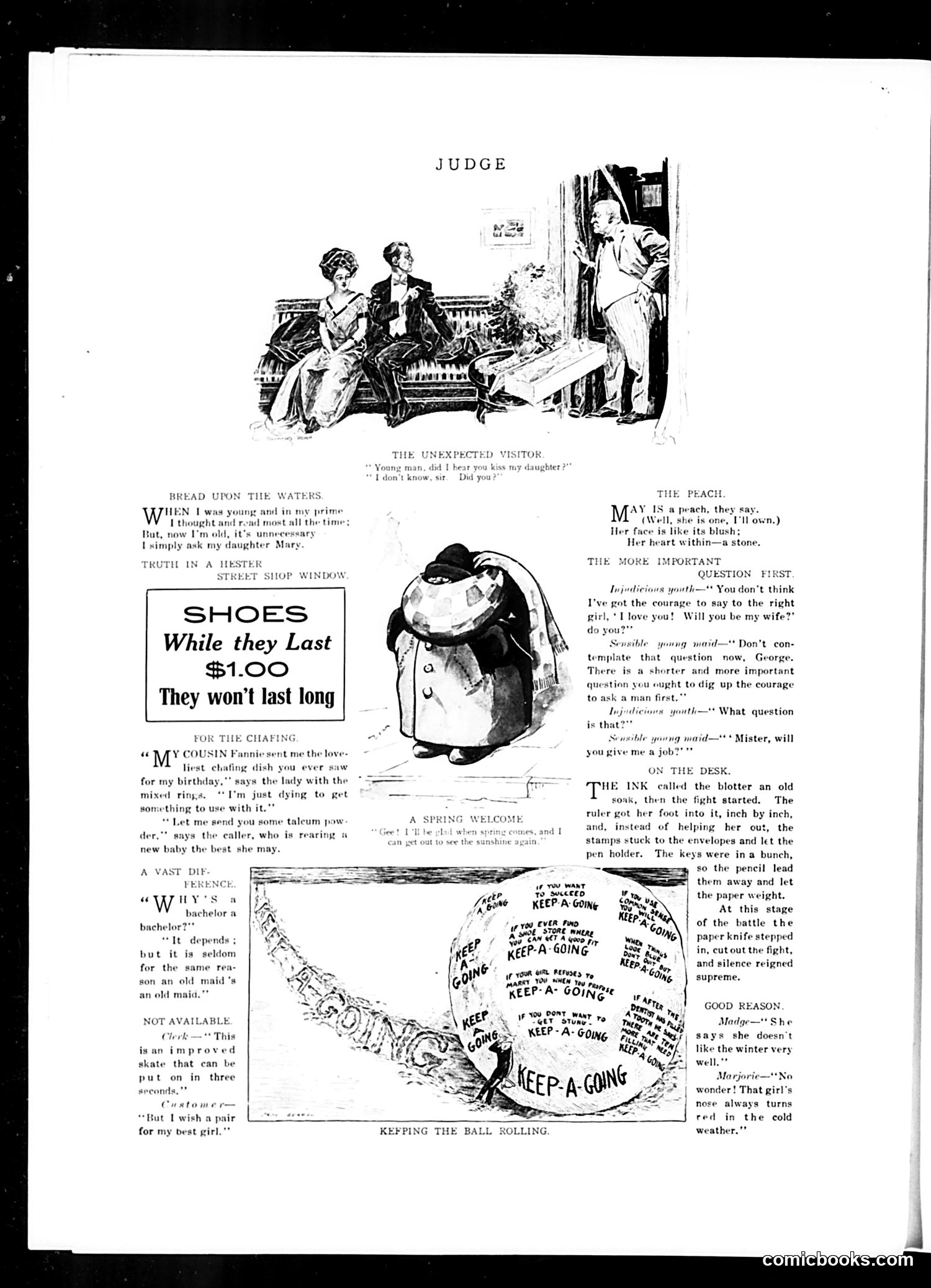
This page from *Judge* magazine contains multiple short humorous pieces typical of early 20th-century American satire, mixing social commentary with domestic humor and advertisements. **Key pieces:** - **"The Unexpected Visitor"** (top): A comedic scene where a young man nervously asks a woman's father for her hand in marriage, illustrating period courtship anxieties. - **"The More Important Question First"**: A joke about marriage proposals where a sensible young woman redirects her suitor's romantic declaration to a more practical question—asking him for employment/financial security first, satirizing women's economic dependence on marriage. - **"On the Desk"** and **"Keeping the Ball Rolling"**: Workplace humor about office incompetence and bureaucratic frustration, with the ball-rolling image suggesting the need to maintain momentum through problems. - **Various short jokes** about bachelor life, aging, and romance reflect period gender dynamics and class attitudes. The **$1.00 shoe advertisement** reflects actual pricing from the era. Overall, the page satirizes courtship rituals, gender relations, and workplace absurdities without sharp political content—typical *Judge* material for general entertainment.
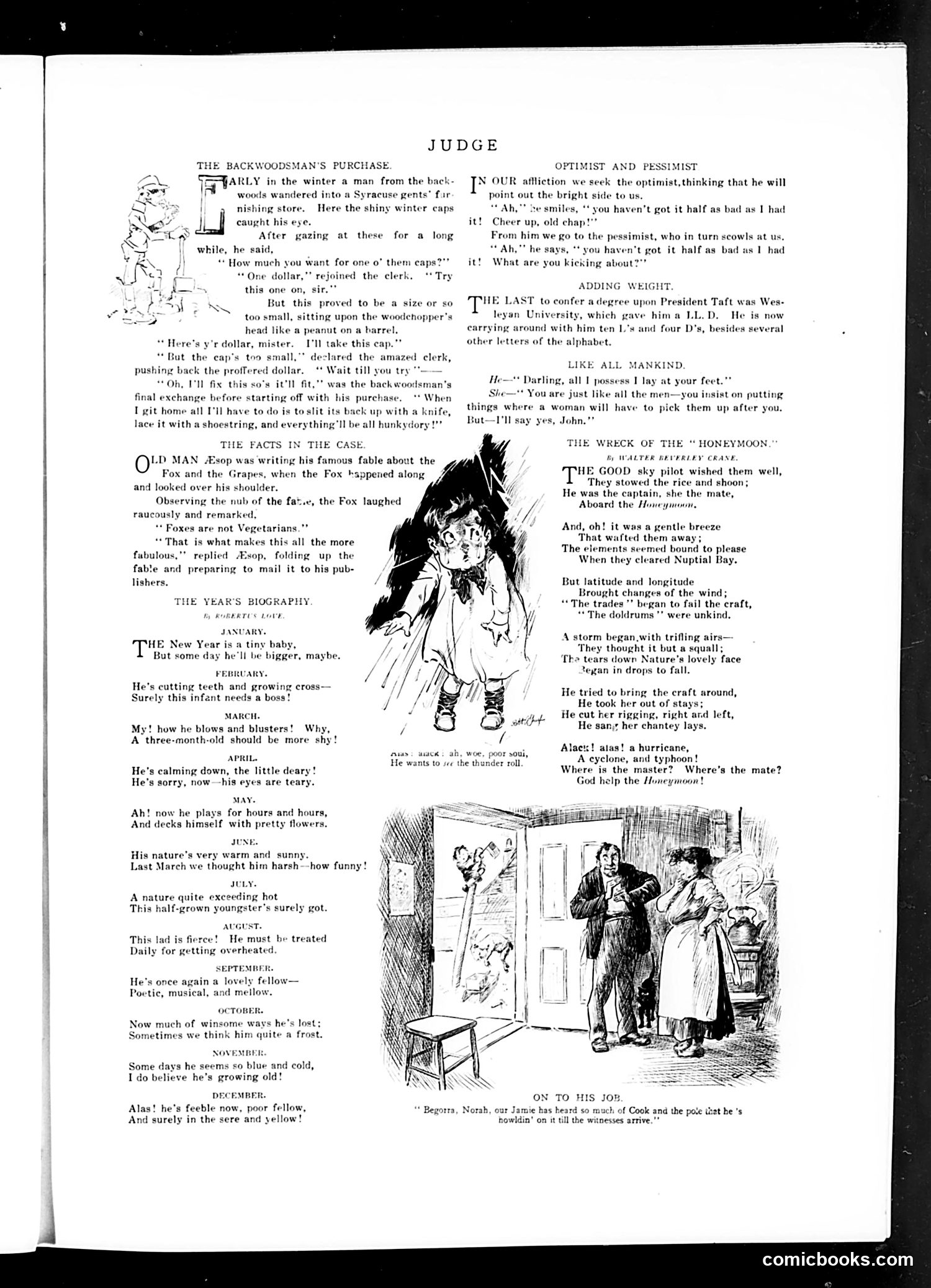
This page contains three distinct pieces of satirical content: **"The Backwoodsman's Purchase"** mocks rural ignorance. A backwoods man enters a Syracuse store, purchases a winter cap that's too small, then believes he can stretch it by slitting it and lacing it with a shoestring—a foolish solution to an obvious problem. **"Optimist and Pessimist"** presents a brief dialogue contrasting two personality types who both dismiss the speaker's complaints, though with opposite attitudes. It's light social satire about human nature. **"The Wreck of the Honeymoon"** (by Walter Beverley Crane) is a narrative poem with accompanying illustrations about newlyweds aboard a ship that encounters increasingly severe weather. The satirical point appears to target the romantic idealization of honeymoons versus harsh reality. **"The Year's Biography"** personifies January through December as months in a child's development—representing seasonal characteristics (January as tiny infant, summer months as hot and fierce, etc.). The page reflects *Judge*'s typical mix of rural stereotypes, domestic humor, and whimsical personification common to late 19th/early 20th-century American humor magazines.
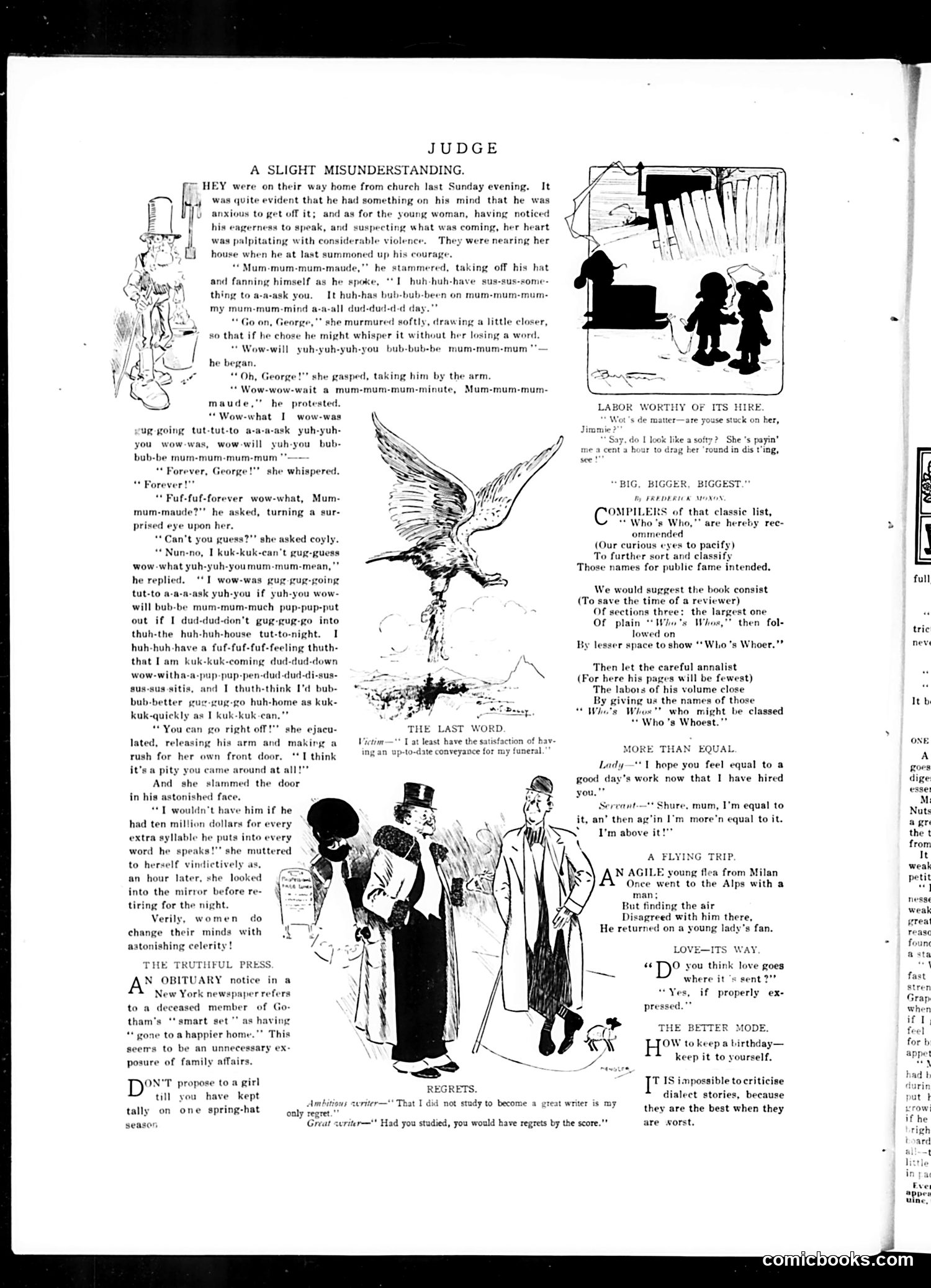
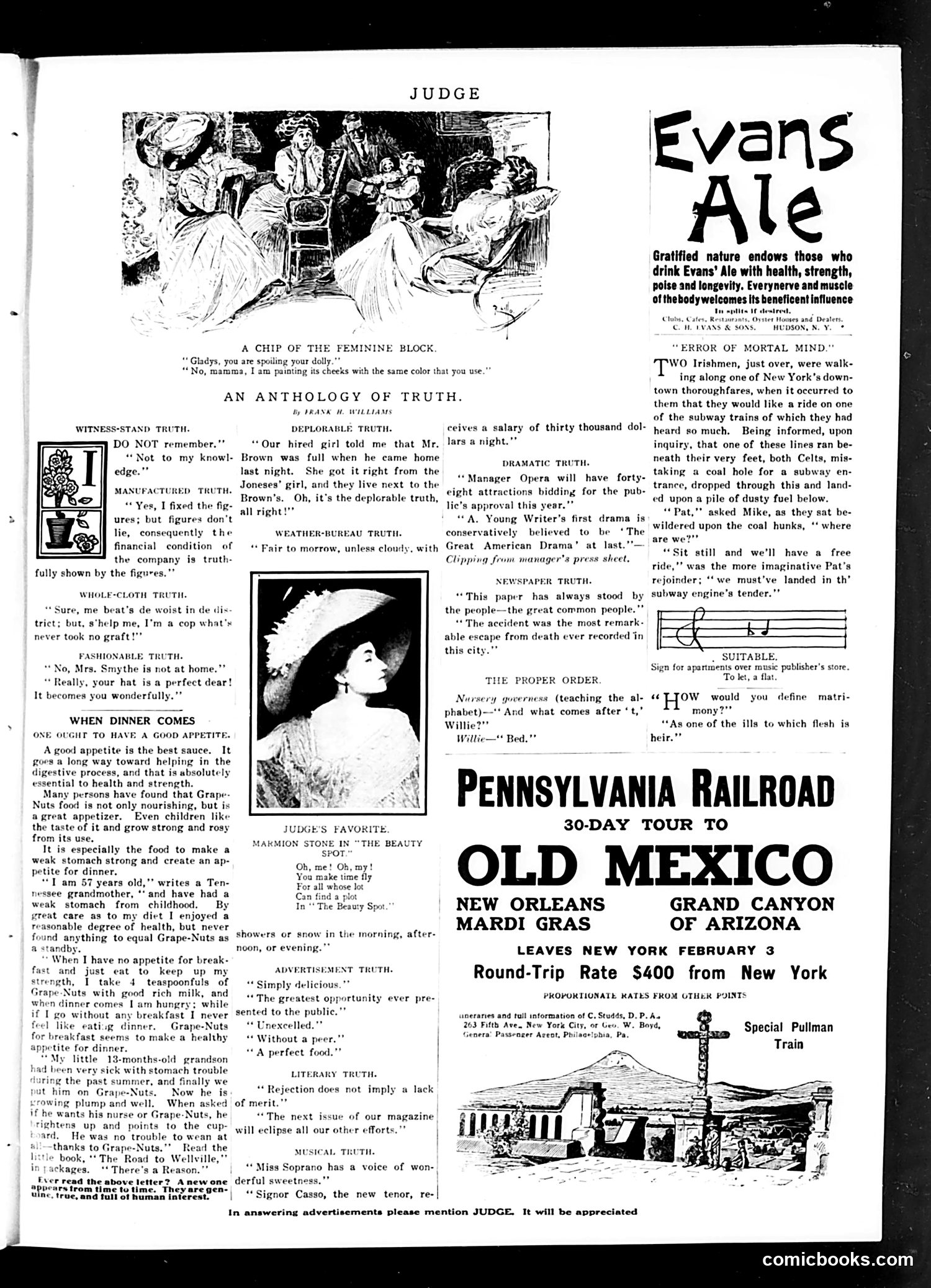
This page is primarily **advertising and filler content** rather than political satire. The main feature is "An Anthology of Truth" by Frank H. Williams—a humor piece satirizing dishonesty across professions through fake testimonials. The cartoon at top left shows a child applying rouge to a doll, mimicking her mother's cosmetics use—gentle social commentary on vanity and children imitating adults. The piece mocks various speakers claiming "truth" while clearly lying: a cop denying graft, a hired girl spreading gossip, weather forecasters hedging bets, and advertisement writers making exaggerated claims. It's gentle satire on institutional hypocrisy and everyday deception. The page also includes ads for **Grape-Nuts cereal** (with testimonials about digestive health) and a **Pennsylvania Railroad tour to Old Mexico**, both typical of early 1900s Judge advertising. No specific political figures or events are referenced—this is social humor rather than political commentary.
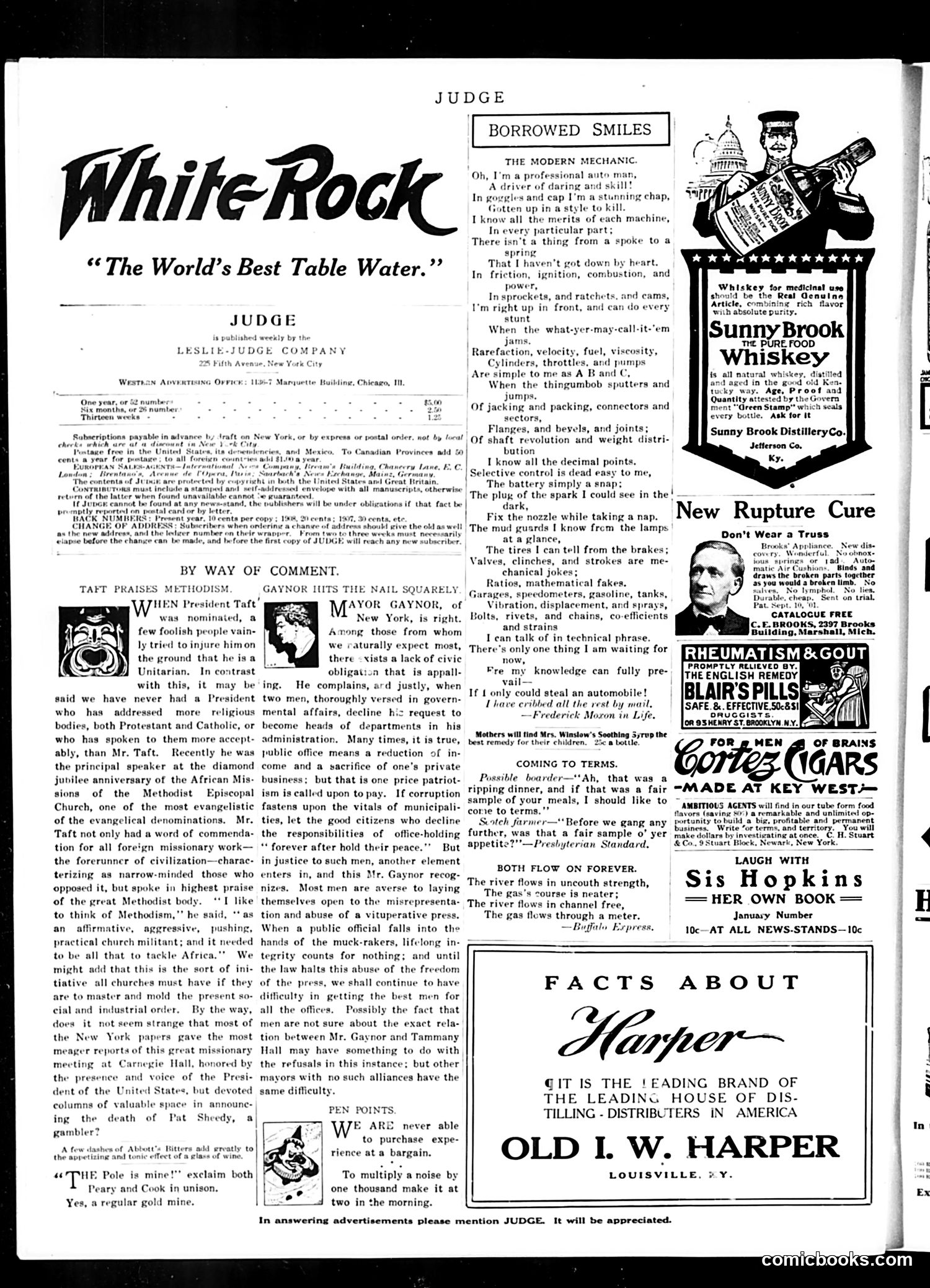
This page from *Judge* magazine (early 20th century) contains primarily **opinion essays and advertising** rather than political cartoons. ## Main Editorial Content: **"Taft Praises Methodism"** defends President William Howard Taft against criticism that he's a Unitarian (seen as insufficiently religious). The piece praises Taft for speaking at a Methodist church anniversary, arguing he's demonstrated strong support for religious institutions and missionary work—positioning him as genuinely committed to faith. **"Gaynor Hits the Nail Squarely"** commends New York Mayor William Jay Gaynor for criticizing citizens who refuse government appointments. The author argues that while public service requires sacrifice, refusal to serve is unpatriotic—though he acknowledges the "muck-raking press" makes officials vulnerable to unfair attacks. ## Key Context: Both pieces reflect early Progressive Era concerns: executive leadership, institutional reform, and the power of sensationalist journalism. The page is primarily argumentative rather than satirical. The advertisements (White Rock water, whiskey, cigars) and "Borrowed Smiles" humor section fill remaining space.
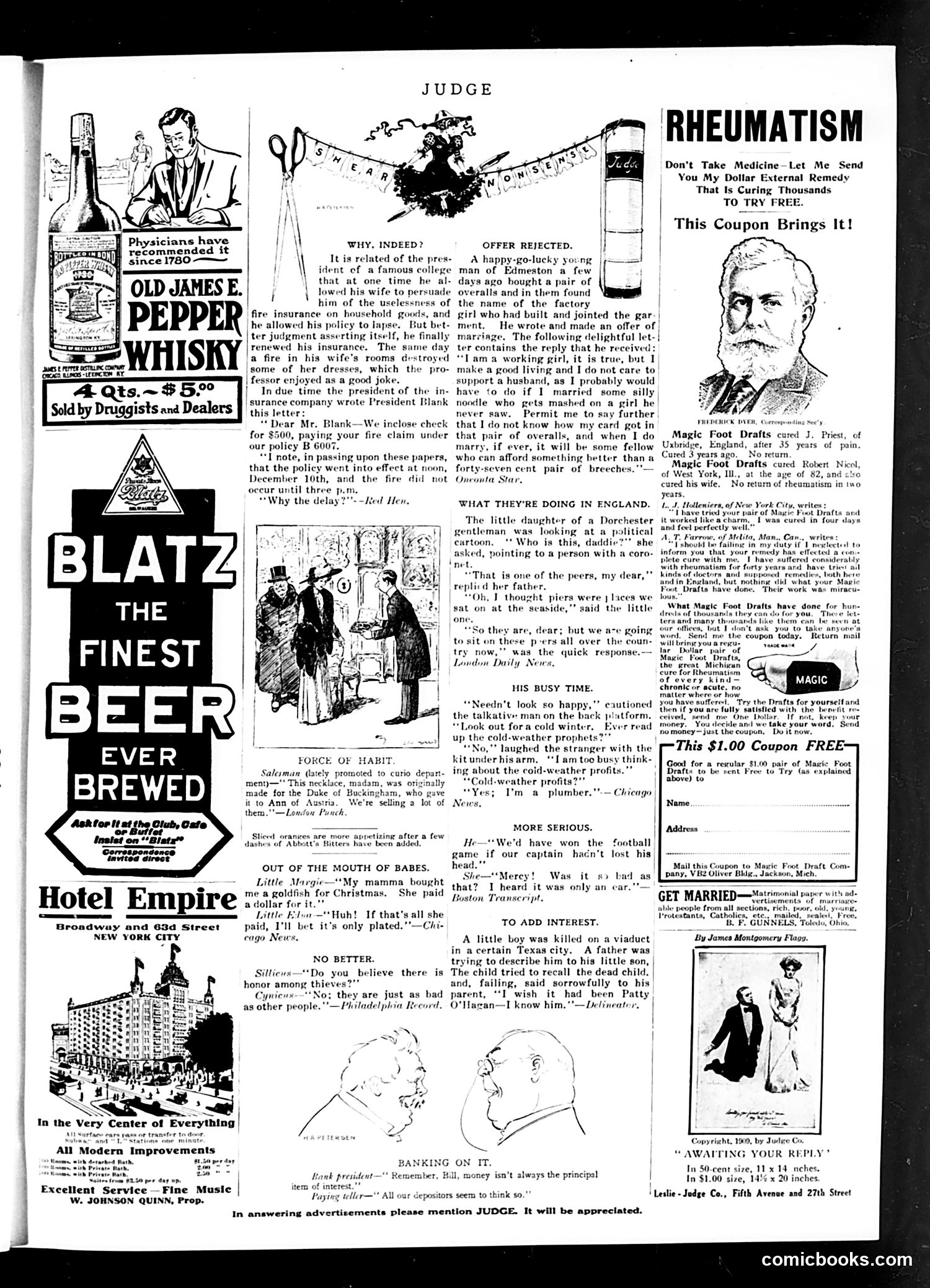
This page from *Judge* (a satirical American magazine) combines humor, advertisements, and social commentary typical of early 20th-century publishing. **Main Content:** The central cartoon titled "OFFER REJECTED" satirizes changing gender roles. A college president's wife finds her name in factory-made overalls and sends a witty rejection letter to the unnamed factory worker who placed them there. She declares independence—refusing to marry "some silly noodle" and insisting on earning her own living. The satire targets both presumptuous male courtship and challenges contemporary expectations that women should seek marriage for financial security. **Supporting Cartoons:** "WHAT THEY'RE DOING IN ENGLAND" jokes about aristocratic privilege: a child asks about a "peer" in a political cartoon; her father explains peers "sat on" in Parliament, leading her to believe they literally sit on peers nationwide—absurdist humor mocking the British class system. **Advertisements:** The page is heavily laden with period ads: Old James E. Pepper Whiskey, Blatz Beer, Hotel Empire, and notably "Magic Foot Drafts" (a quack rheumatism cure with testimonials)—reflecting common patent medicine marketing of the era.
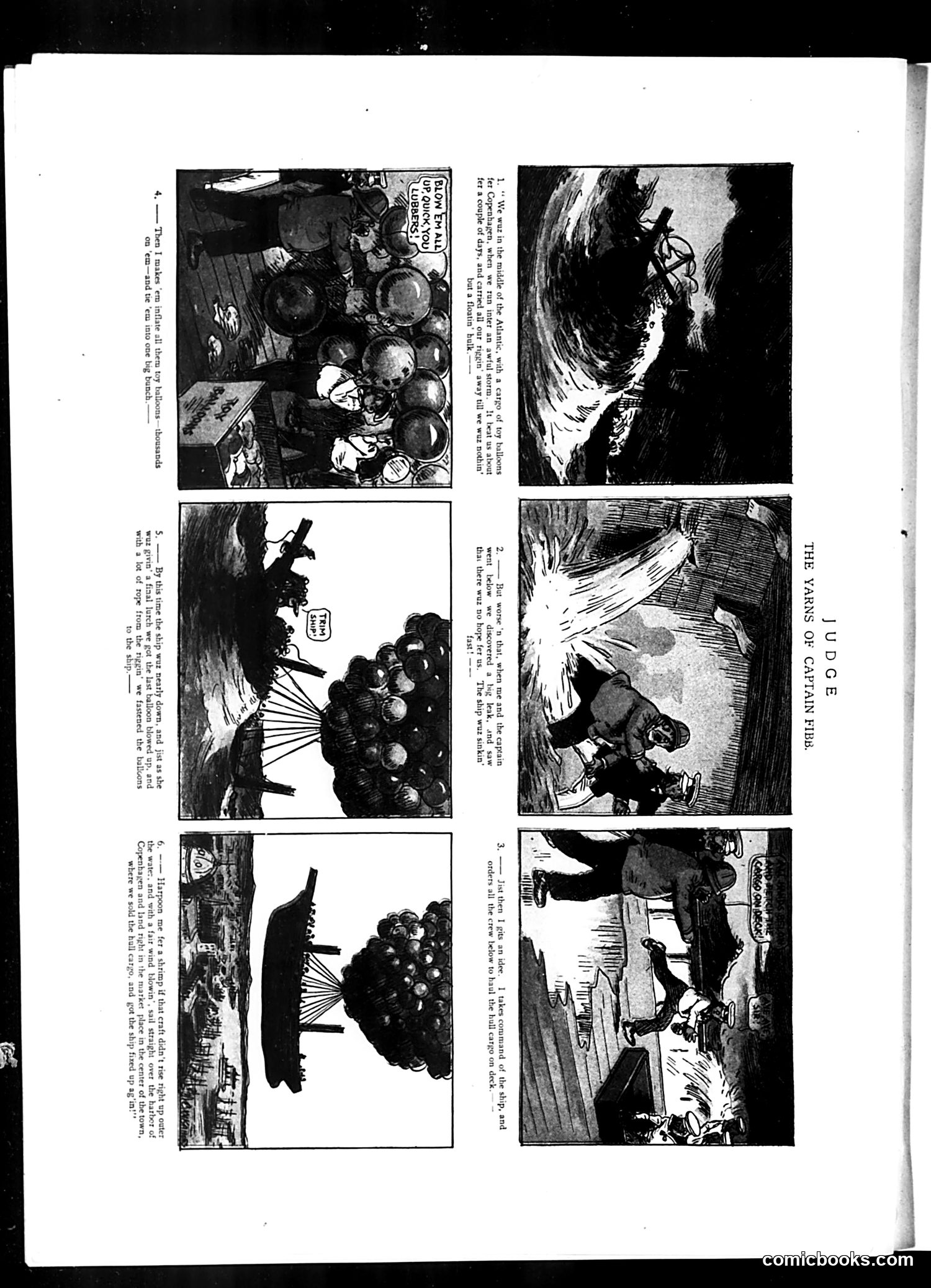
This is a comic strip featuring a character called Captain Fibb, depicted as a sailor telling tall tales. The sequential panels show the captain describing increasingly exaggerated stories—what appears to be fishing exploits or maritime adventures—with his animated gestures and expressions conveying the theatrical, unbelievable nature of his accounts. The satire targets the stereotypical "old salt" who entertains with obviously fabricated stories. The humor lies in the visual contrast between the captain's dramatic storytelling and the absurdity of his claims. The title "Yarns" puns on both nautical rope and the meaning of "tales." This reflects a common Judge magazine tradition of mocking tall-tale traditions and exaggeration, particularly among working-class characters like sailors.