
A complete issue · 16 pages · 1909
Judge — April 3, 1909
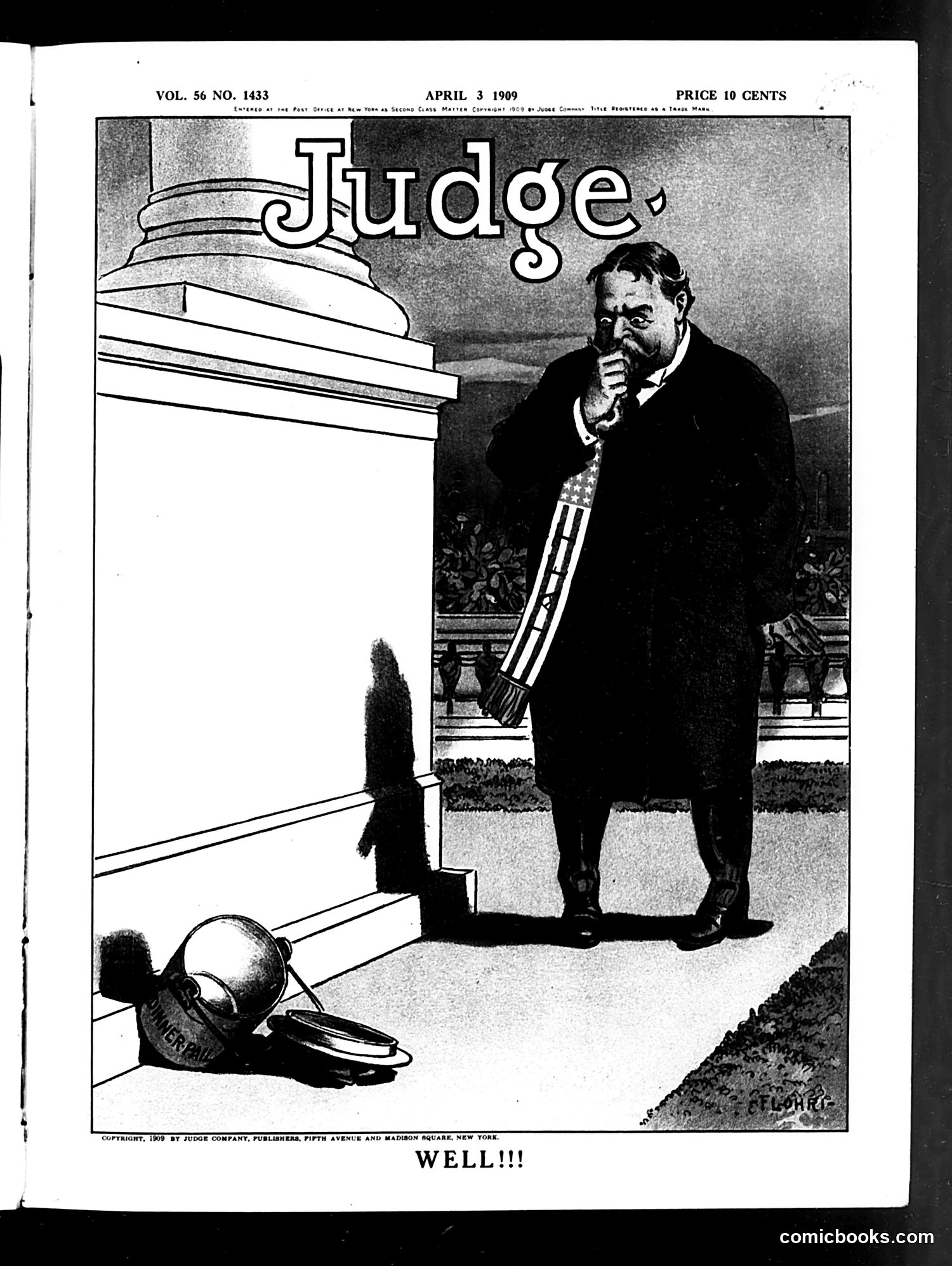
This satirical cover depicts a portly man in formal attire standing beside the base of what appears to be a judicial bench or courthouse structure. At his feet lies an overturned gavel and judicial implements scattered on the ground, marked "GUILTY." The caption "WELL!!!" suggests ironic commentary on a legal verdict or judicial decision. The man's thoughtful, somewhat troubled posture—hand to his face—implies uncertainty or dismay about the judgment rendered. Without additional context identifying the specific figure or the case referenced, the satire appears to critique either a particular court decision from early 1909 or broader concerns about judicial competence and the justice system. The artwork is credited to what appears to be "Cesare" or similar signature.
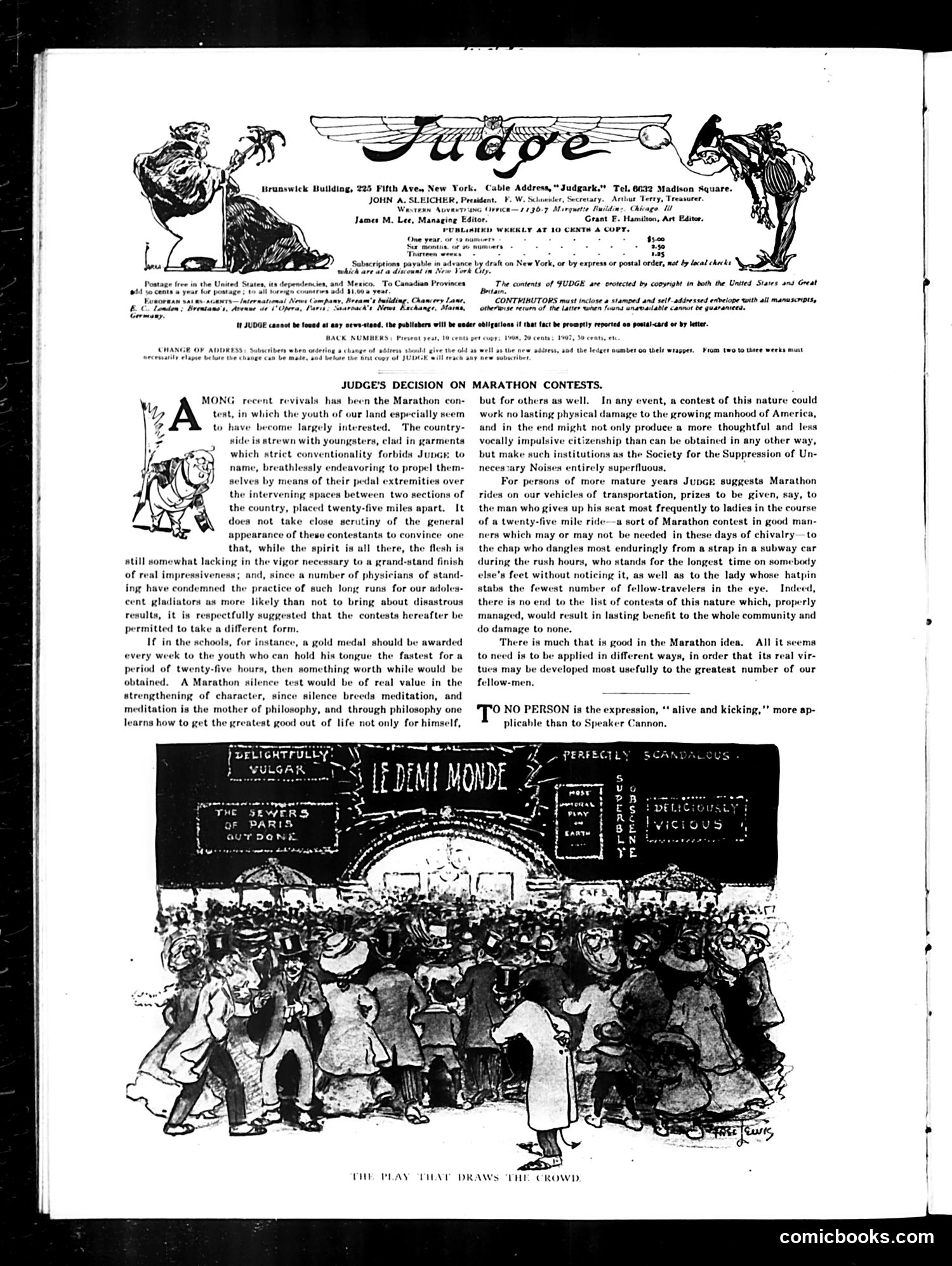
This page contains editorial content about marathon running contests. The main article, "Judge's Decision on Marathon Contests," critiques the marathon craze sweeping America, arguing that while the races test endurance, they risk physical damage to participants and produce questionable value for communities. The author suggests marathons should be regulated or modified to prevent injury. Below the article is an illustration labeled "The Play That Draws the Crowd," depicting a theater audience viewing what appears to be a French play ("Le Demi Monde"). The cartoon satirizes American audiences' fascination with European theatrical productions, suggesting they draw crowds more through novelty and scandal than genuine artistic merit—a common Judge magazine critique of contemporary tastes and fashions.
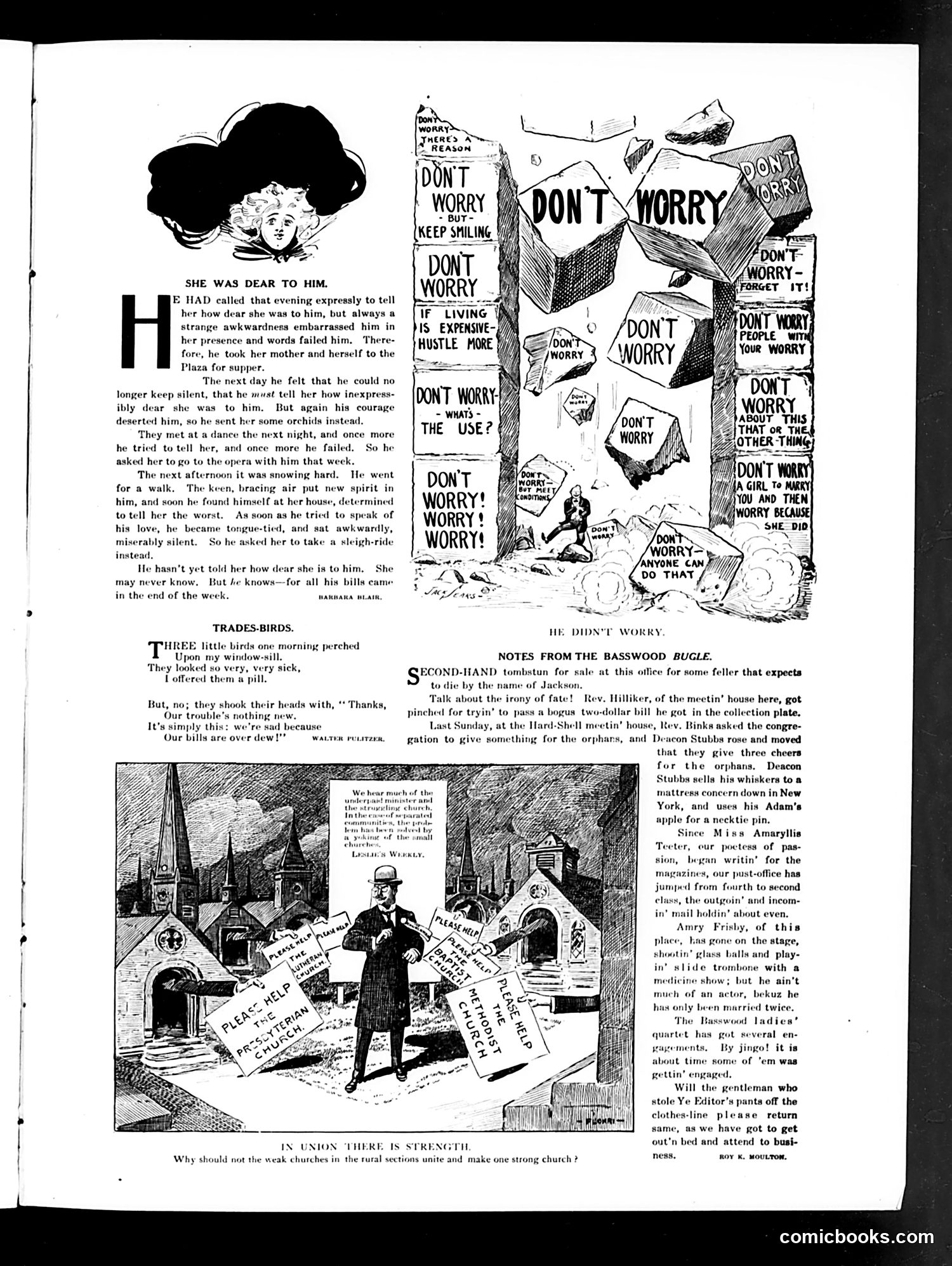
This page contains three distinct pieces: **"He Didn't Worry"** (top right): A satirical cartoon mocking someone's persistent reassurance despite mounting problems. "Don't worry" messages accumulate as debris around a small figure, suggesting the platitude becomes absurd when faced with real difficulties—a commentary on hollow optimism during hardship (likely Depression-era, given the context). **"Trades-Birds"** (middle left): A humorous poem about birds rejecting thanks, preferring action over gratitude. It's lighthearted social commentary on reciprocal obligations. **"In Union There is Strength"** (bottom): An illustration showing a man surrounded by church-related signs and charitable requests. The caption questions why weak churches don't unite for stronger rural communities—advocating religious institutional cooperation. The page emphasizes practical solutions over empty sentiment and institutional cooperation.
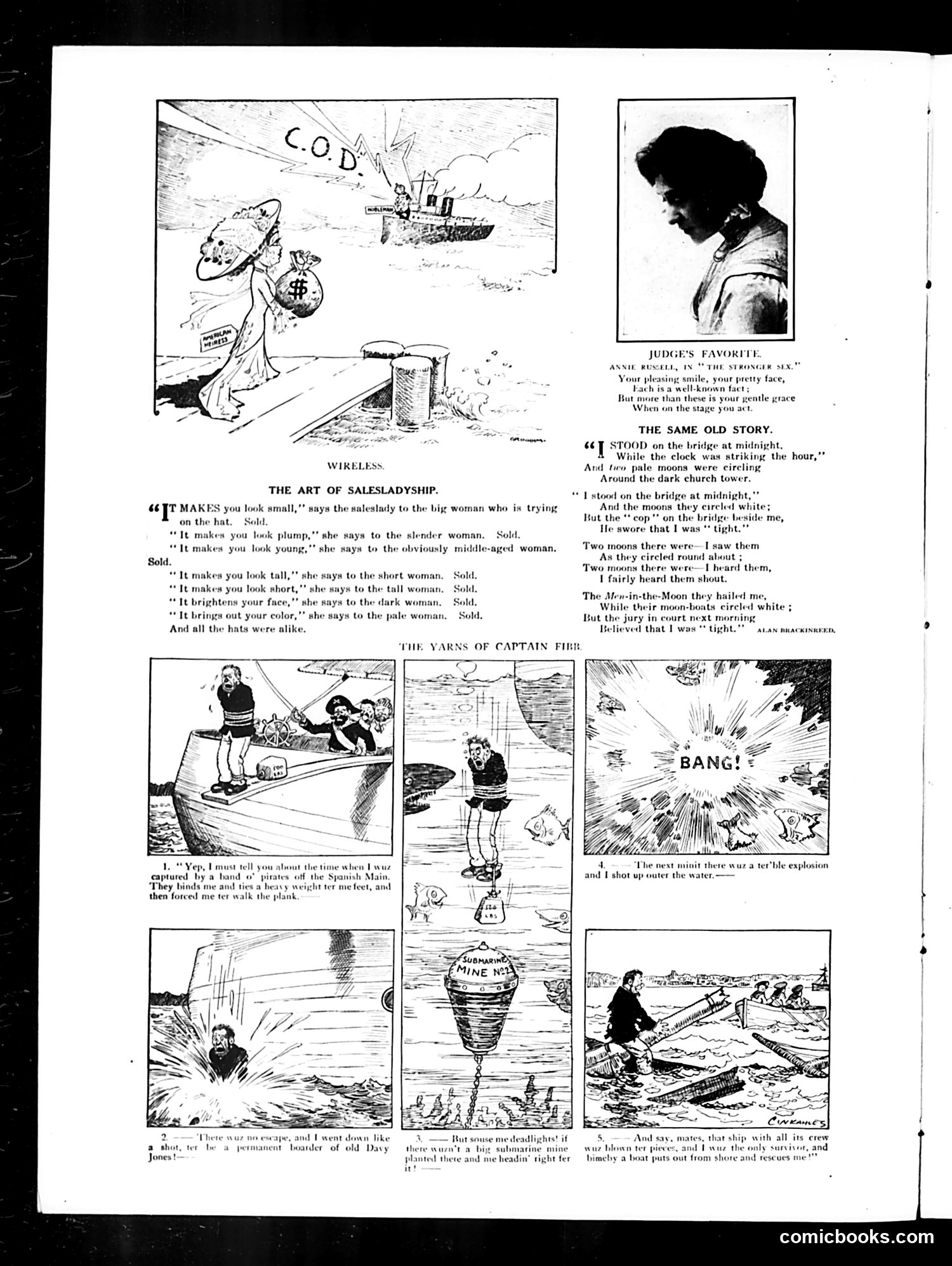
This page contains three separate pieces of humor: **"The Art of Salesladyship"** mocks retail sales tactics through a saleslady's manipulative compliments to different body types—calling women "small," "plump," "tall," "short," etc.—all ending with "Sold." The satire targets deceptive retail practices and women's susceptibility to flattery. **"Judge's Favorite"** features Annie Russell in "The Stronger Sex," a theatrical quote about grace and gentleness. **"The Yarns of Captain Fiber"** is a comic strip adventure story about a sea captain captured by Spanish pirates who escapes and survives at sea. The narrative relies on seafaring adventure tropes popular in early 20th-century entertainment, depicting dramatic survival and rescue. The page reflects era-appropriate humor about gender stereotypes, commerce, and adventure narratives.
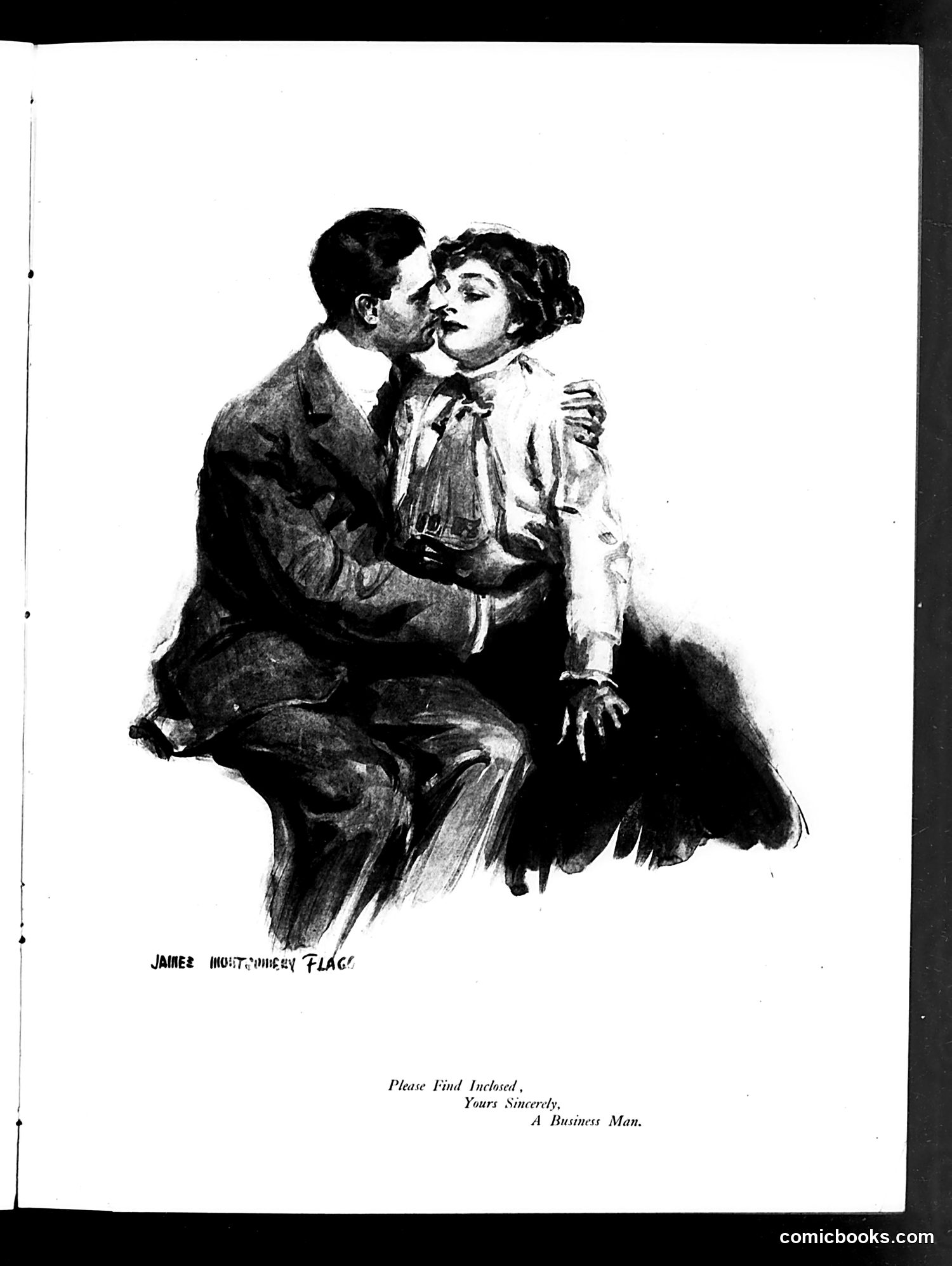
This appears to be an illustration by James Montgomery Flagg, a prominent American cartoonist and illustrator of the early 20th century. The image depicts a romantic or intimate scene between a man and woman, with the man kissing or about to kiss the woman's cheek. She appears to be turning away slightly, her expression somewhat coy or resistant. The caption reads "Please Find Inclosed, Yours Sincerely, A Business Man," suggesting satirical commentary on professional courtship or romantic overtures in business contexts. The humor likely mocks the formality and awkwardness of romantic advances by businessmen, or possibly critiques workplace romantic behavior as inappropriately "business-like" or presumptuous. The illustration's style and Flagg's prominence suggest this was social commentary rather than mere entertainment.
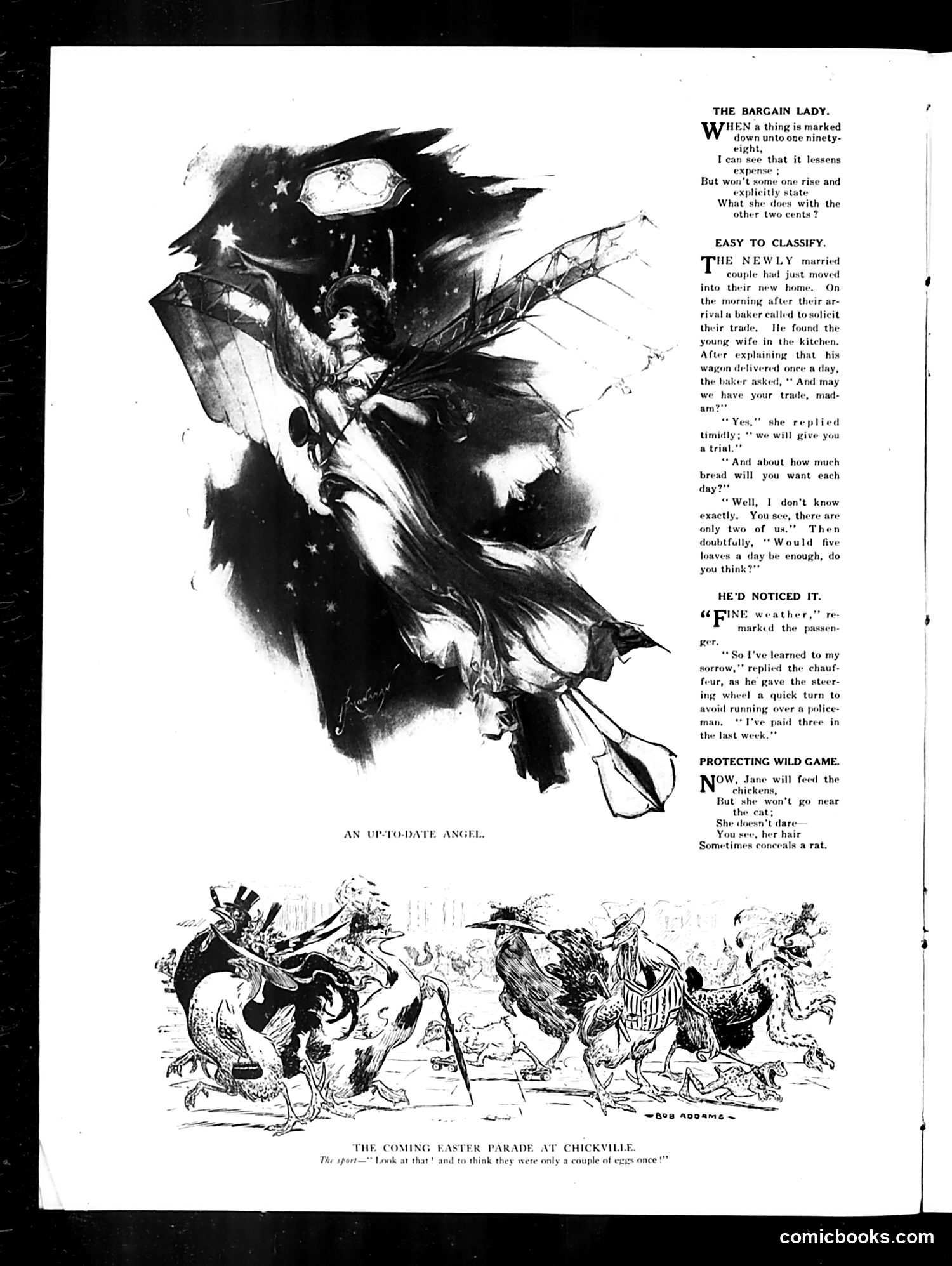
This page contains four separate humorous pieces typical of early-20th-century Judge magazine: **"An Up-to-Date Angel"** (top illustration): An allegorical figure, likely representing modern commerce or greed, dominates the image—a commentary on contemporary materialism. **"The Coming Easter Parade at Chickville"** (bottom cartoon): A satirical take on Easter fashions, showing anthropomorphized chickens in a parade. The joke appears to reference the extravagance of Easter bonnets and clothing among fashionable society—contrasting humble chickens with human vanity around holiday dress. **"Easy to Classify"** (right text): A newlywed wife naively asks if five loaves of bread daily suffices for two people—satirizing either rural inexperience or domestic incompetence among urban newcomers. **"He'd Noticed It"** (right text): A chauffeur has narrowly avoided hitting three policemen in one week, suggesting both reckless driving and incompetent law enforcement—social commentary on urban traffic dangers. **"Protecting Wild Game"** (right text): A brief joke about Jane protecting chickens from predators, likely playing on hunting season references.
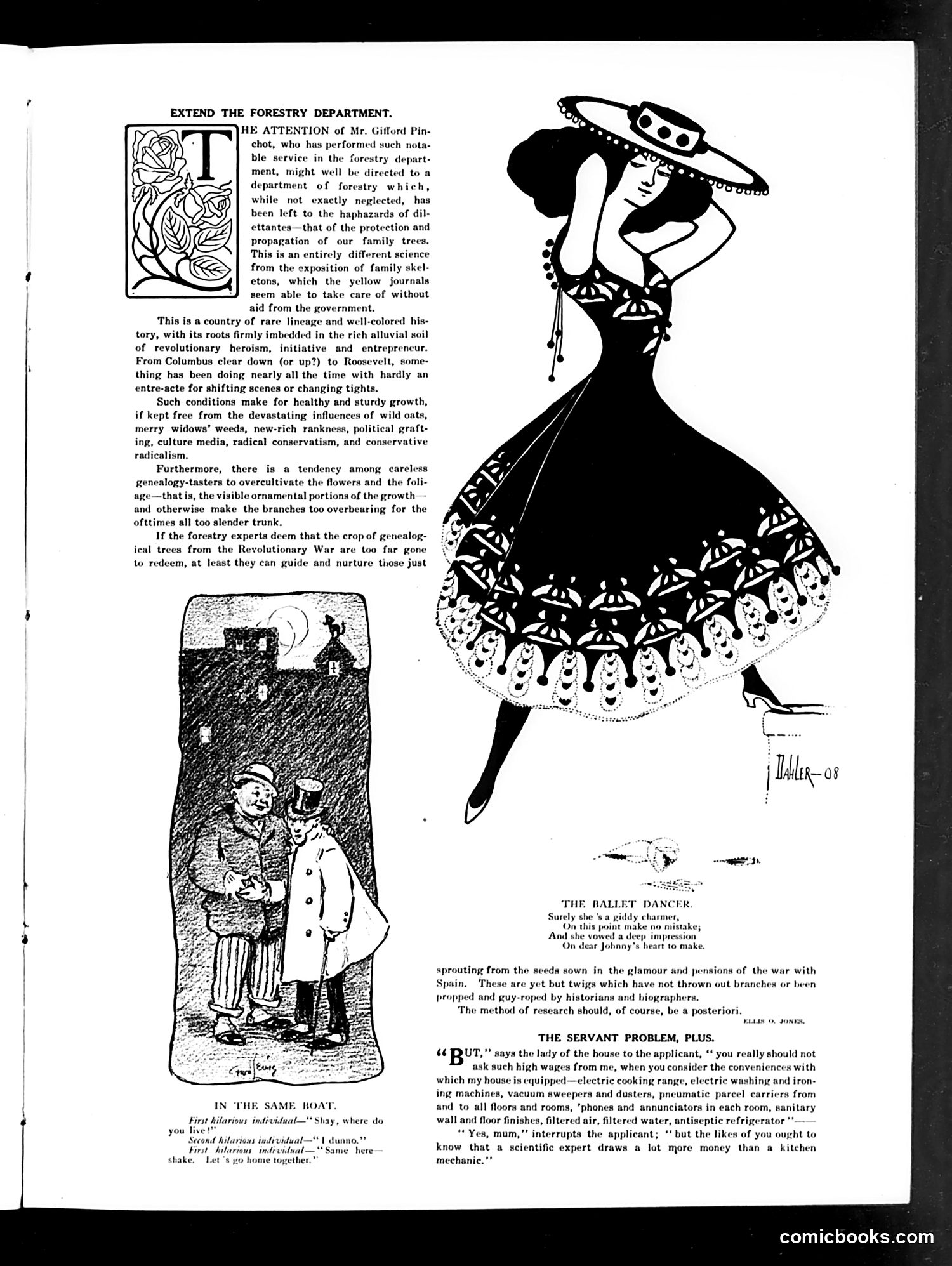
**Main Cartoon - "Extend the Forestry Department":** This satirizes the American obsession with genealogy and family lineage during the early 20th century. The text addresses Gifford Pinchot (actual head of the U.S. Forest Service) with tongue-in-cheek irony: just as he manages forests, someone should manage America's "family trees"—protecting inherited aristocratic bloodlines from corruption. The satire targets the pretentious genealogy-tasters who overcultivate "visible ornamental portions" (social status) while the trunk (actual character) becomes weak. References to "wild oats," "merry widows' weeds," and corruption suggest the nouveaux riche and morally questionable newly wealthy are contaminating old-money pedigrees. The "genealogical trees from the Revolutionary War" are portrayed as damaged beyond repair—mocking Americans' reverence for colonial ancestry. **Secondary Content:** "The Servant Problem, Plus" jokes about domestic servants demanding higher wages because modern appliances (electric cooking, vacuum cleaners, intercoms) supposedly require "scientific expert" knowledge, not mere "kitchen mechanic" work—satirizing both inflated servant expectations and employers' reluctance to pay for skilled labor.
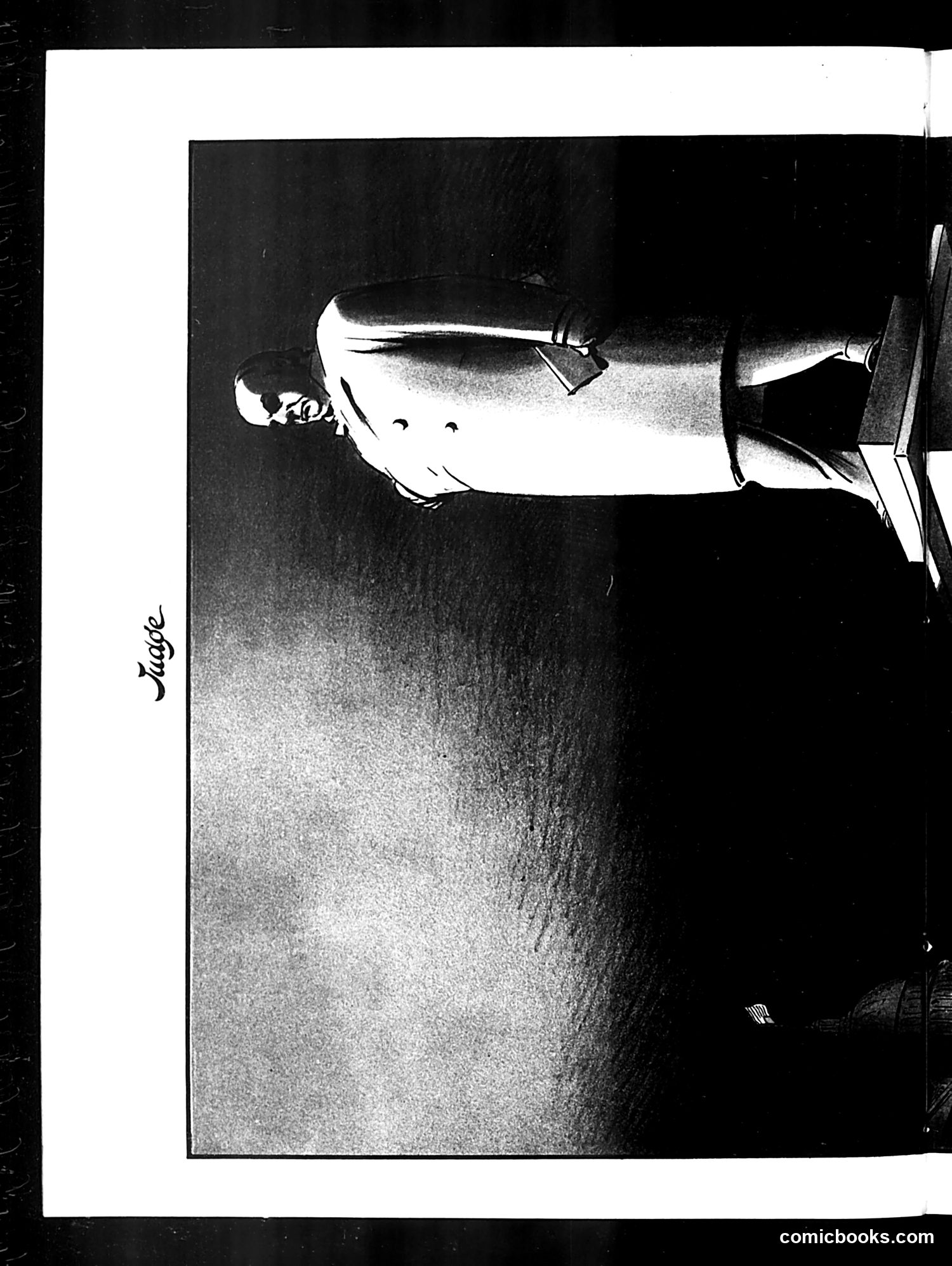
This appears to be a title page or section header from *Judge* magazine, showing a single figure in formal attire (white shirt, dark jacket) photographed or illustrated in a portrait style against a dark background. The word "Judge" appears on the left margin. Without additional OCR text or context beyond what's visible, I cannot identify the specific figure depicted or determine what political or social commentary this image conveys. The formal presentation suggests this may be a portrait of a notable public figure from the era, but the image quality and lack of accompanying explanatory text prevent me from confidently identifying who is shown or what satirical point was intended. More context or legible text would be needed for accurate interpretation.
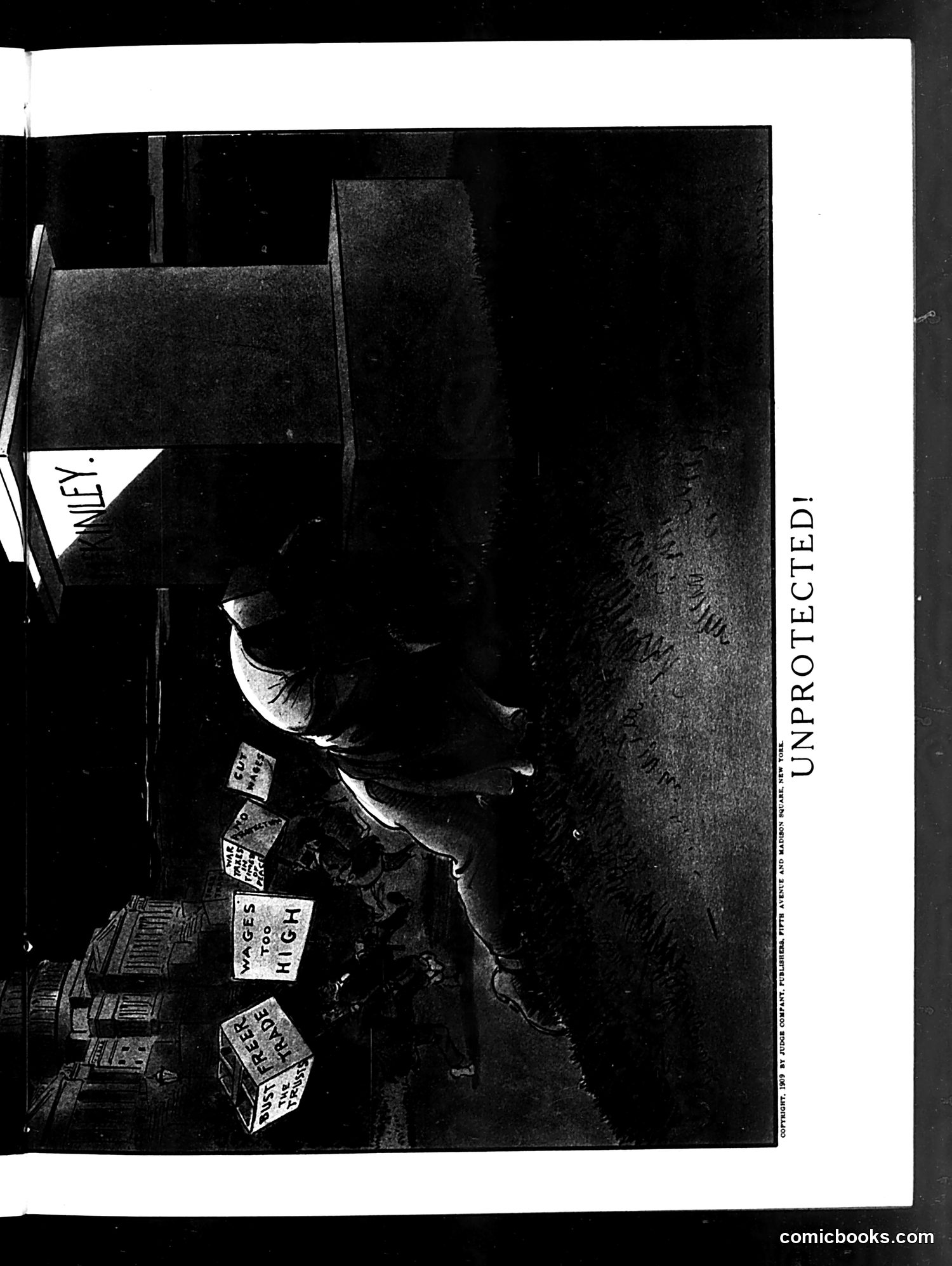
This black and white photograph appears to be labeled "UNPROTECTED" on the right margin. The image shows what seems to be a figure surrounded by various labeled boxes or packages, though the specific text on these labels is difficult to read clearly in this reproduction. Without being able to definitively read the box labels or identify the specific figure depicted, I cannot confidently explain the satire's intended meaning. The title "UNPROTECTED" suggests commentary on lack of safeguards or security, possibly related to labor conditions, consumer safety, or another regulatory issue typical of Judge magazine's satirical focus. To provide an accurate explanation of the political/social reference and the cartoon's specific point, I would need clearer visibility of the labels and context that this OCR'd text does not provide.
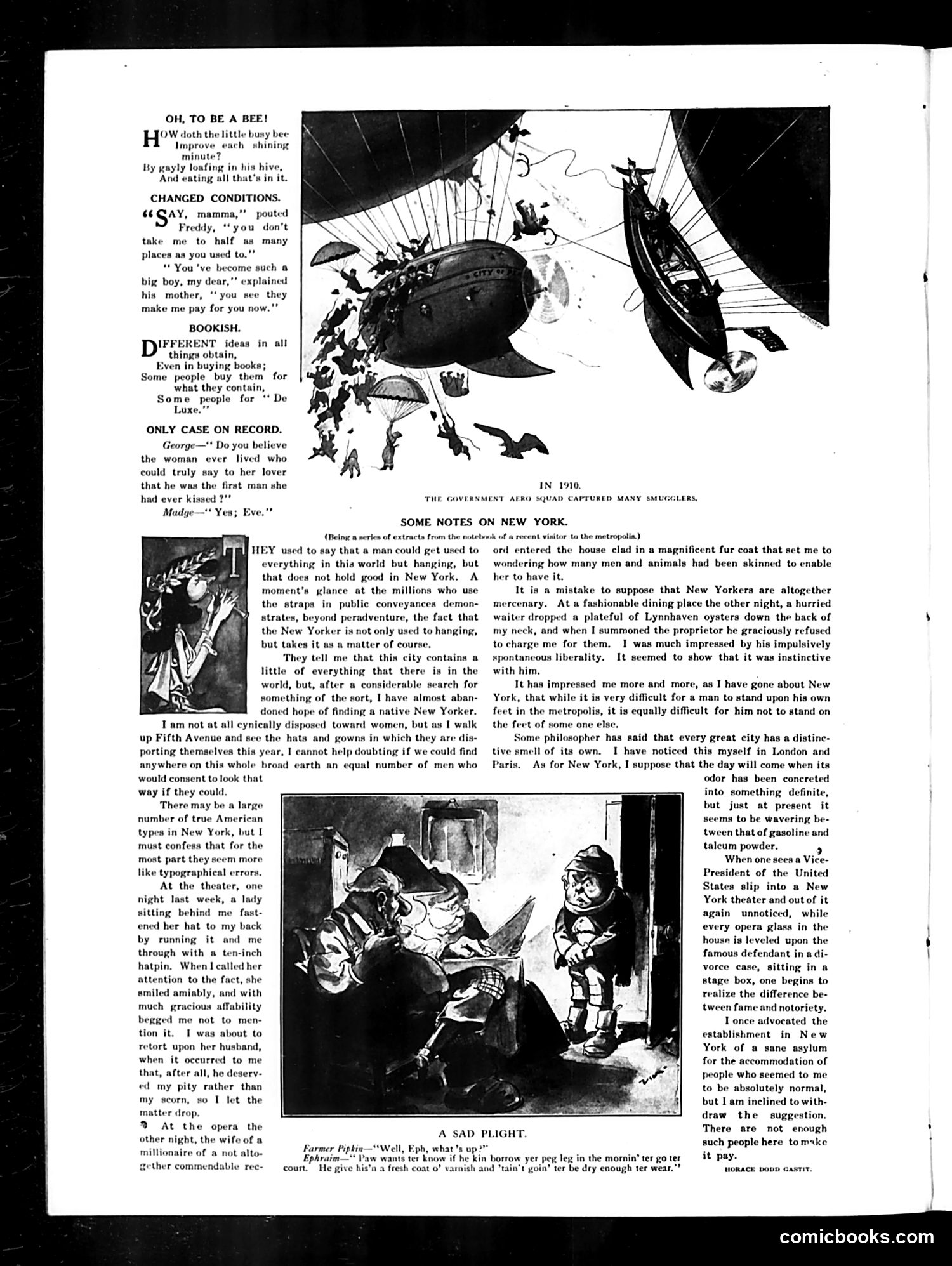
This page from Judge magazine (circa 1910) contains several brief satirical pieces mocking social conventions and New York City life: **Top cartoon**: "In 1910, The Government Aero Squad Captured Many Smugglers" depicts an early airplane laden with contraband, satirizing both nascent aviation technology and organized smuggling rings of the era. **Humorous vignettes** include: - A mother explaining she now charges admission to take her grown son places - A joke about whether any woman could honestly claim her lover was her first kiss - Observations on New York society: fashionable diners' indifference to status (even vice presidents go unnoticed), women's elaborate hats as fashion excess, and the city's distinctive unpleasant smell **"A Sad Plight"** illustration shows a woman whose extravagant fur coat cost her suitor's entire fortune. The satire targets American materialism, conspicuous consumption, social pretension, and New York's chaotic modernization—all recurring themes in early 20th-century satirical magazines.
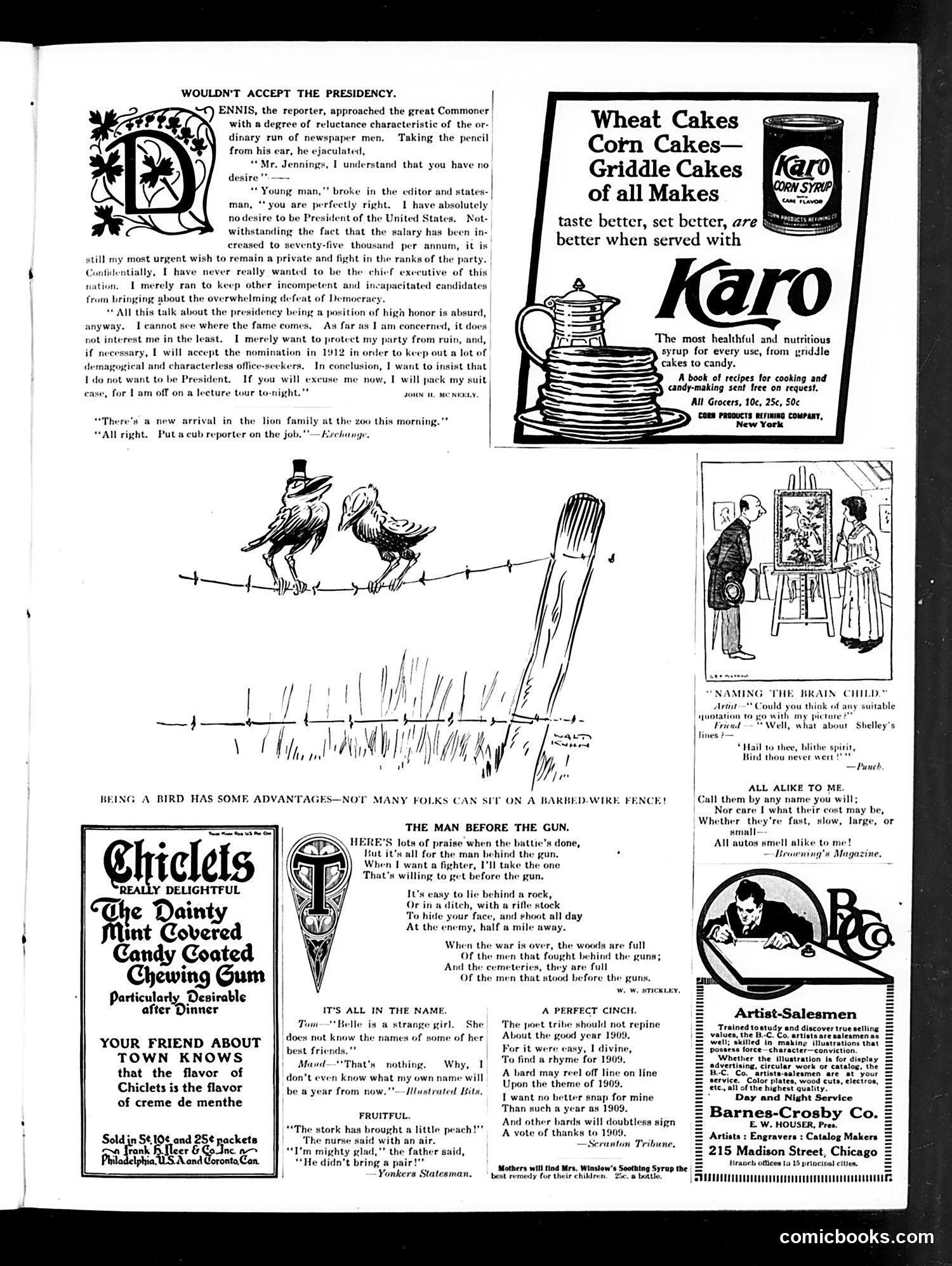
This page satirizes **William Jennings Bryan**, the three-time Democratic presidential candidate, through a fictional interview. The "great Commoner" tells reporter Ennis he refuses to seek the presidency despite a salary increase, claiming he wants to "remain a private fight in the ranks of the party" and keep out "incompetent" candidates. The satire targets Bryan's repeated political maneuvering: he repeatedly denied presidential ambitions while positioning himself as indispensable to the Democratic Party. By 1912 (when this likely appeared), Bryan was still a major party figure despite never winning the presidency. The joke is that his lengthy denial about not wanting office—coupled with his willingness to "accept the nomination in 1912"—reveals transparent political posturing rather than genuine reluctance. The page also includes unrelated satirical poems and vintage advertisements.
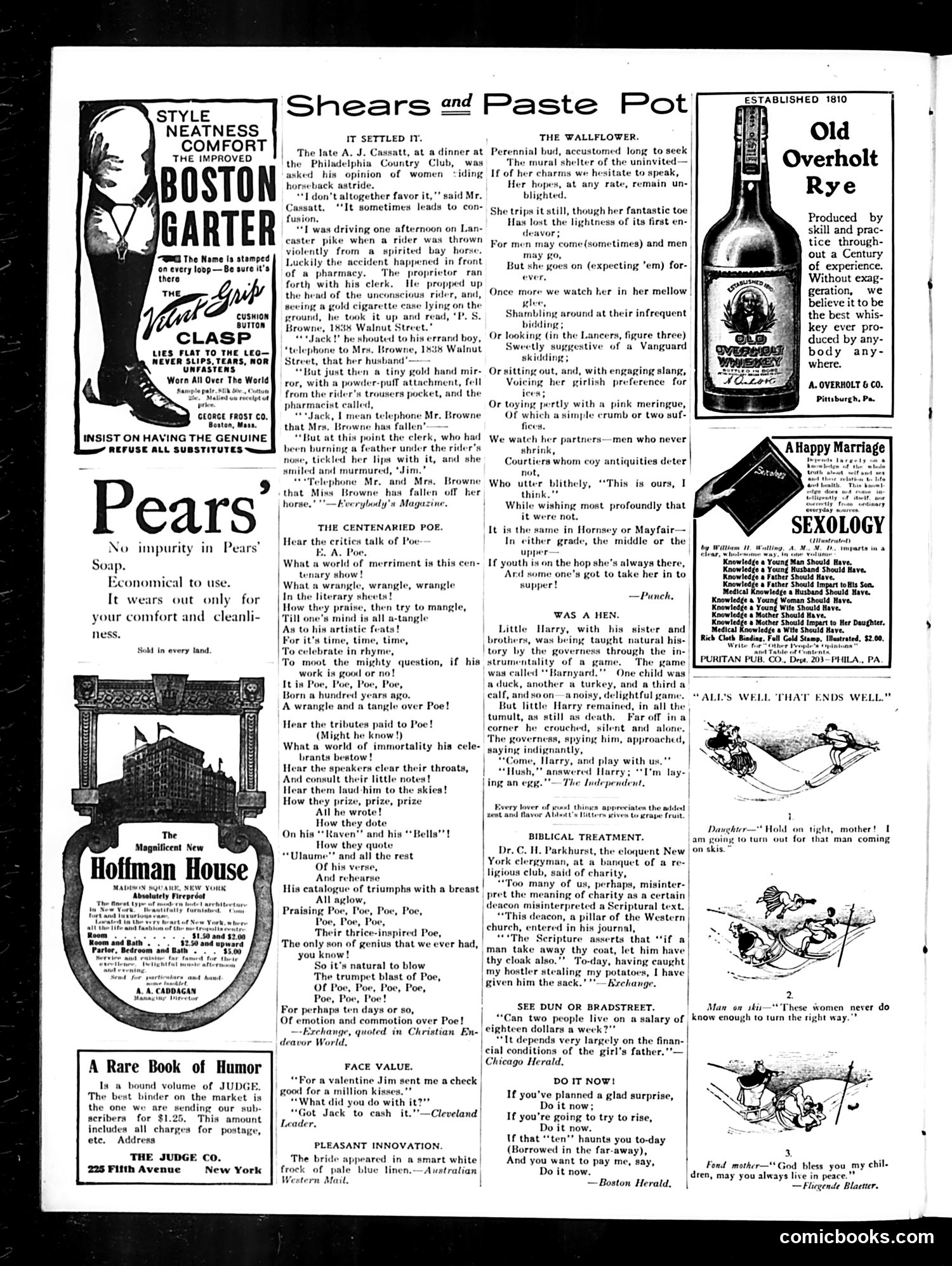
This page contains multiple unrelated satirical pieces typical of Judge magazine's format. **"The Wallflower"** (center): A narrative poem mocking an unmarried woman at social events. The satire targets the predictable plight of single women in the era—she attends parties hoping to be noticed but remains overlooked, watching other couples while "going on (expecting 'em) for ever." The joke critiques both her persistent, hopeless optimism and society's narrow marriage-focused expectations for women. **"The Centenaried Poe"** (lower left): A humorous poem celebrating Edgar Allan Poe's literary legacy while mocking the overwrought critical attention surrounding centenary celebrations. It playfully reduces highbrow literary discourse to repetitive "wrangle" about whether his work is "good or no." The remainder consists of advertisements (Pears' Soap, Boston Garter, Hoffmann House) interspersed with miscellaneous humorous short pieces and illustrations.
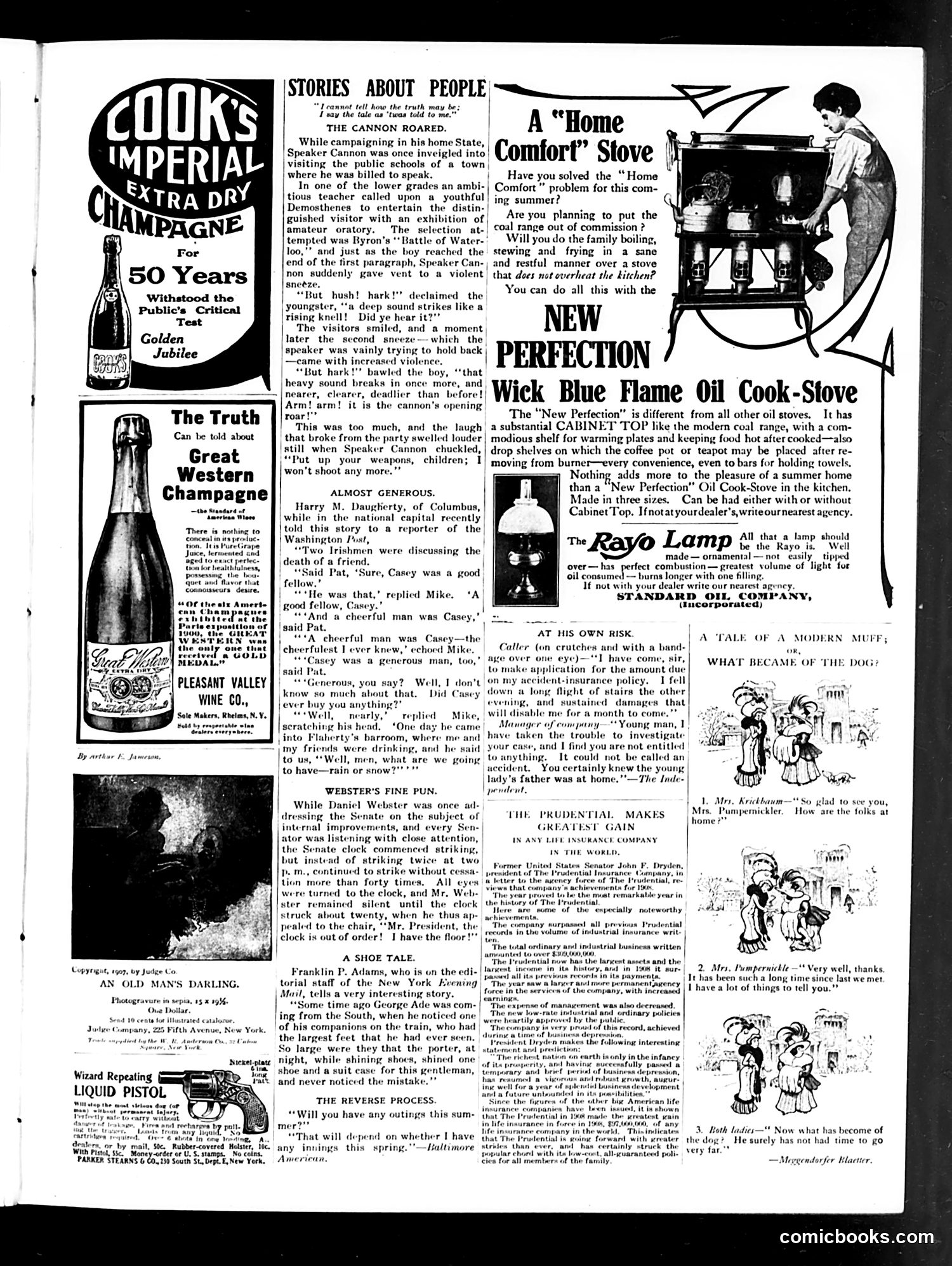
This page is primarily **advertising with satirical stories**, not political cartoons. The main satirical content is "The Cannon Roared," a humorous anecdote about **Speaker Joseph Cannon** (a prominent Republican politician of the era). During a school visit, a boy reciting Byron's "Battle of Waterloo" repeatedly interrupts his dramatic declaration with the line "But hark! the cannon roars!"—which becomes ironically synchronized with Cannon's own violent sneezes. The joke plays on Cannon's prominence and his literal interruption of the boy's performance, creating an unintended comedic effect. The page also contains short anecdotes about Irish characters and Daniel Webster, representing typical Judge humor: light social satire and wordplay rather than sharp political critique. The bulk consists of period advertisements for champagne, oil stoves, and lamps—standard commercial content mixed with editorial material, characteristic of Judge's format.
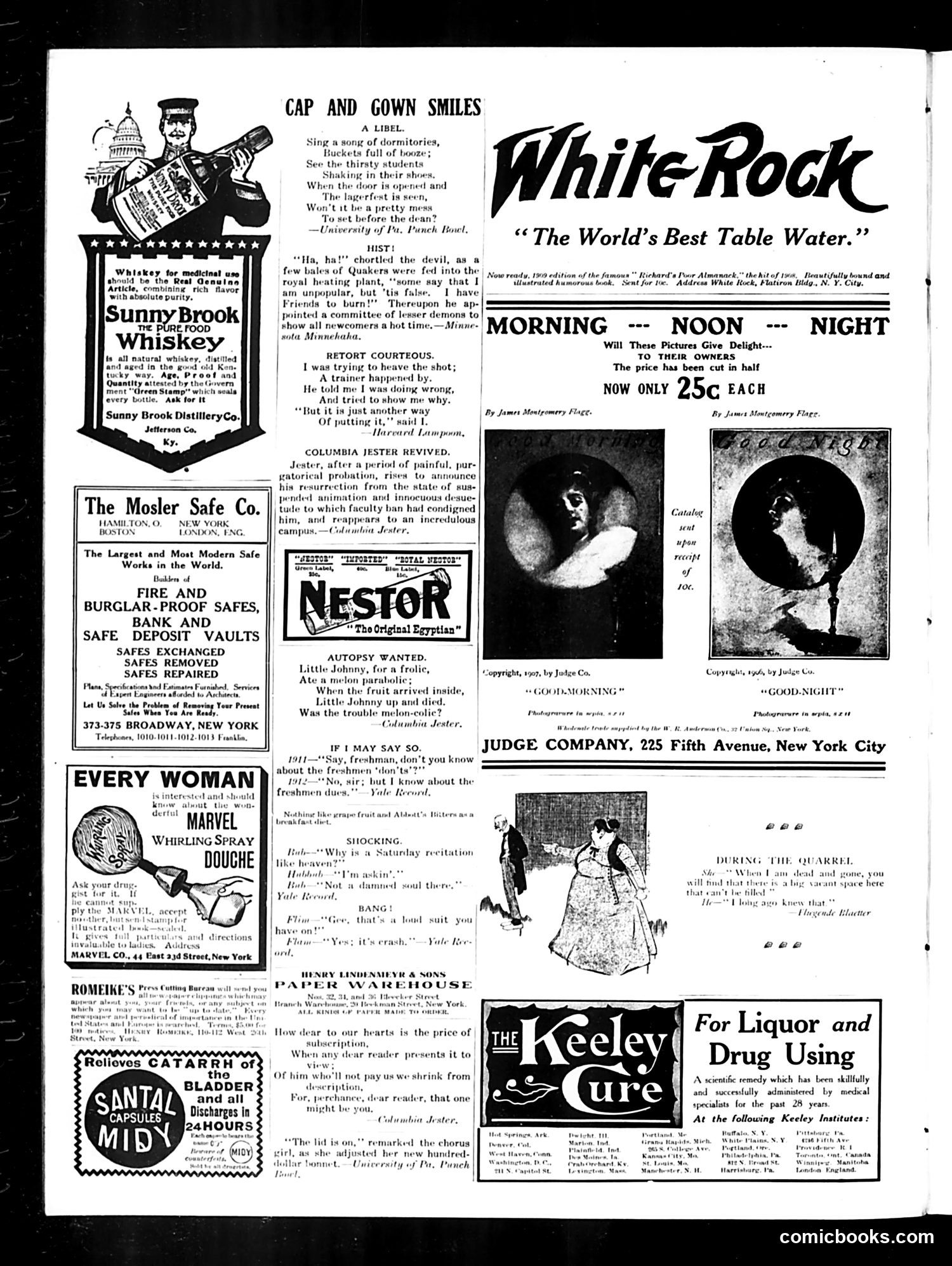
This page is primarily **advertising with embedded college humor**. The main content includes: **"Cap and Gown Smiles"** — a section collecting jokes from college publications (University of Pennsylvania, Columbia, Yale). These jokes mock student life: dormitory drinking ("buckets full of booze"), trainers correcting athletes, and various undergraduate pranks. The humor is gentle campus satire typical of early 1900s college culture. **Key context for modern readers:** The repeated references to alcohol and drinking ("booz," whiskey ads) reflect the pre-Prohibition era (this appears to be ~1907-1909). Drinking was openly joked about in college settings before 1920. **The page is dominated by period advertisements** — whiskey marketed as "medicinal," safes, douche sprays, and "The Keeley Cure" (a real treatment for "liquor and drug using"). These ads reveal contemporary attitudes: patent medicines, casual alcohol consumption, and unregulated health treatments. The cartoons by James Montgomery Flagg are simple romantic/domestic vignettes with punchlines, typical of Judge's lighter fare.
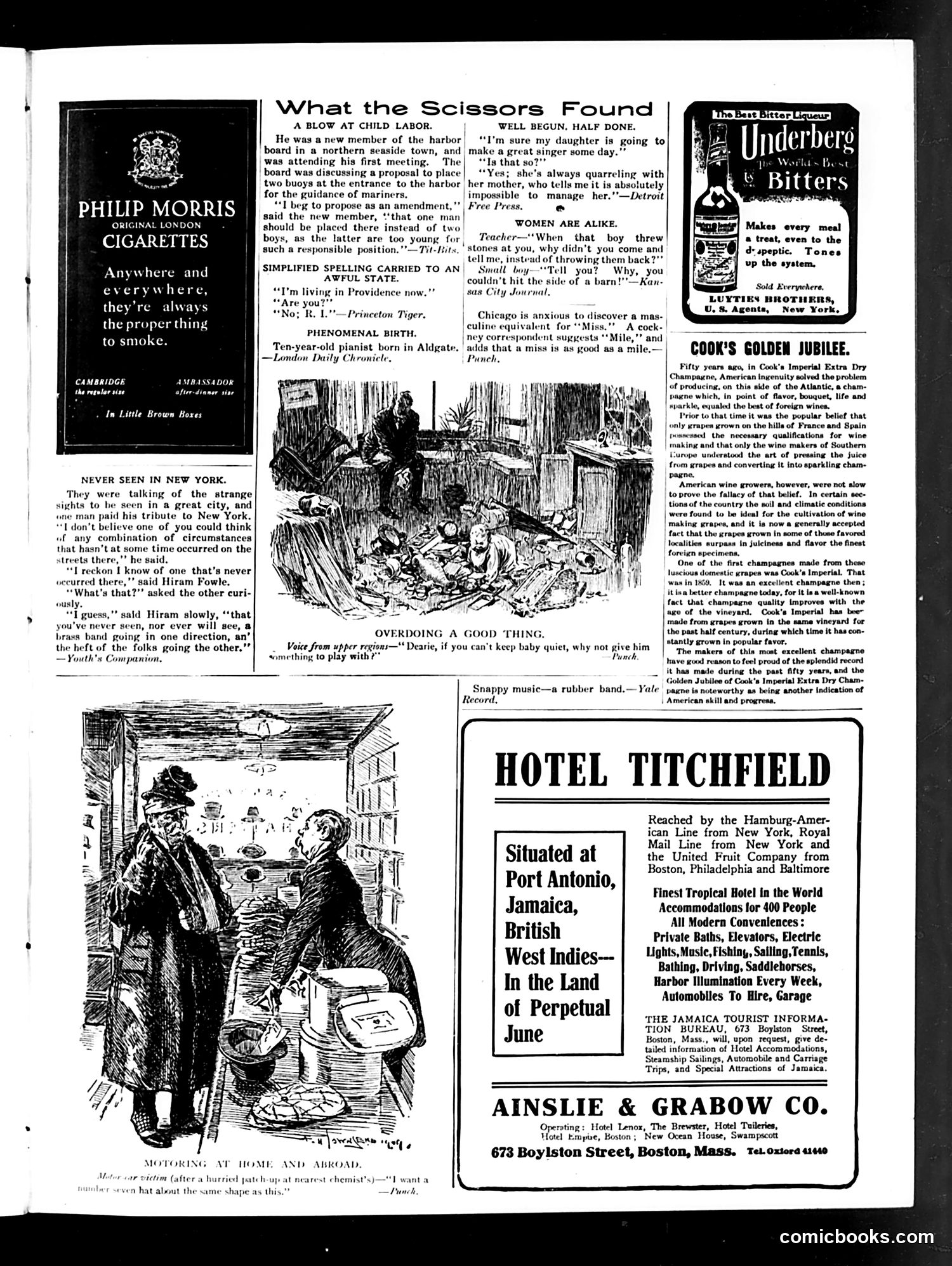
This page consists primarily of **short humor pieces and advertisements** rather than political cartoons. The title "What the Scissors Found" indicates these are clipped anecdotes—likely from newspapers—that Judge republished for satirical comment. The humor pieces mock various social absurdities: - **Child labor joke**: A harbor board member naively proposes replacing two buoys with one boy, missing the irony that this *is* child labor. - **Simplified spelling**: A jab at the Progressive-era simplified spelling movement (note "Providence" without the final 'e'). - **Gender humor**: Women and girls are portrayed as quarrelsome and poor shots (can't throw stones accurately). - **Chicago dialect**: A joke about Chicago's struggle to find a masculine equivalent for "Miss." The page also features **substantial advertisements** for Philip Morris cigarettes, Underberg Bitters, Cook's Golden Jubilee Champagne, and Hotel Titchfield in Jamaica—indicating this is a commercial publication balancing editorial content with revenue. No specific political figures are caricatured; the satire targets generic social pretensions and contemporary fads.
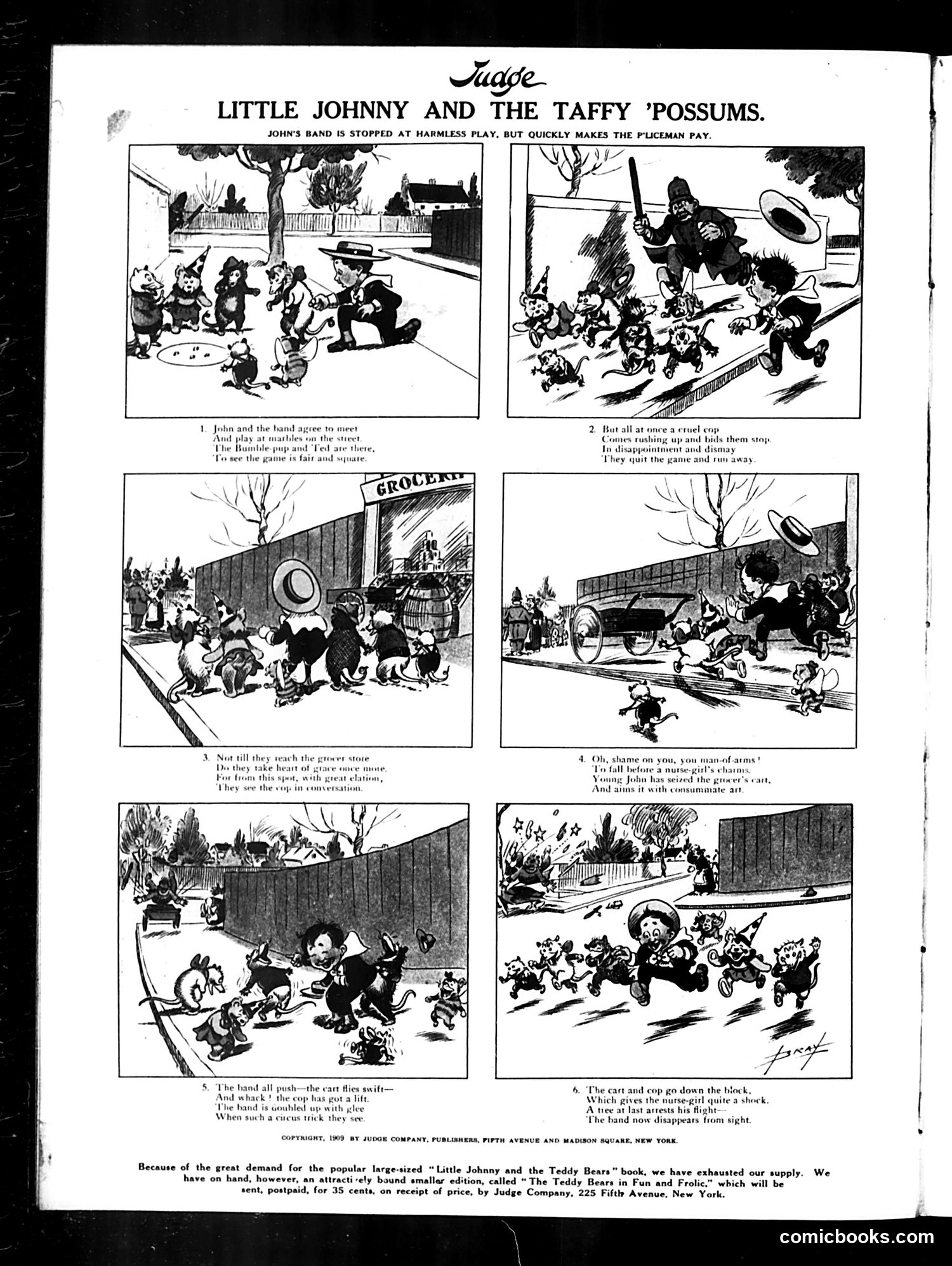
This is a six-panel comic strip from *Judge* magazine featuring "Little Johnny," a mischievous child character popular in early 1900s American comics. The story shows Johnny's band of animal friends (anthropomorphic possums) playing harmlessly in the street, until a policeman attempts to stop them. The children then collectively push a cart that strikes the cop, sending him flying down the block past a shocked nursemaid. The joke reflects early 20th-century attitudes: it presents children outwitting and physically humiliating authority figures (police) as comedic entertainment. The strip exploits the period's "naughty child" character archetype popularized in comics. The accompanying advertisement promotes Judge Company's "Little Johnny and the Teddy Bears" book, indicating this character held genuine commercial appeal for the magazine's audience.