
A complete issue · 12 pages · 1906
Judge — March 10, 1906
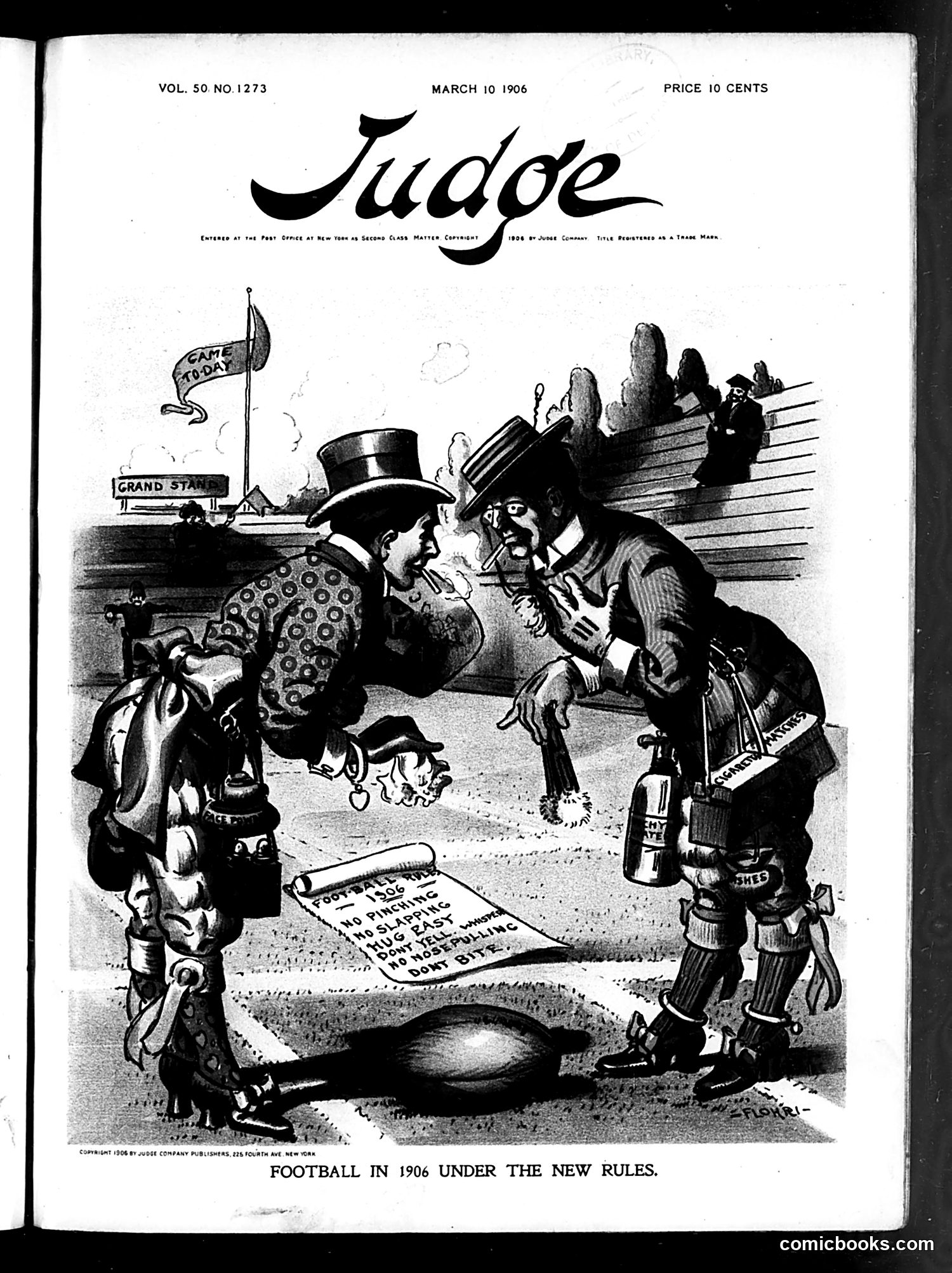
This cartoon satirizes the 1906 college football rules reforms. The image shows two figures in formal attire examining a rulebook at what appears to be a football stadium. The visible text on the rulebook mentions "FOOTBALL IN 1906 UNDER THE NEW RULES" and references regulations about "pushing," "pulling," and "rough handling." The satire likely comments on the newly implemented forward pass and other safety reforms introduced that year in response to football's brutal reputation and player deaths. The cartoon's tone suggests skepticism about whether these rule changes would actually make the sport less dangerous or more civilized—the elaborate formal dress and bureaucratic tone of the rulebook contrasts with the violent sport being regulated.
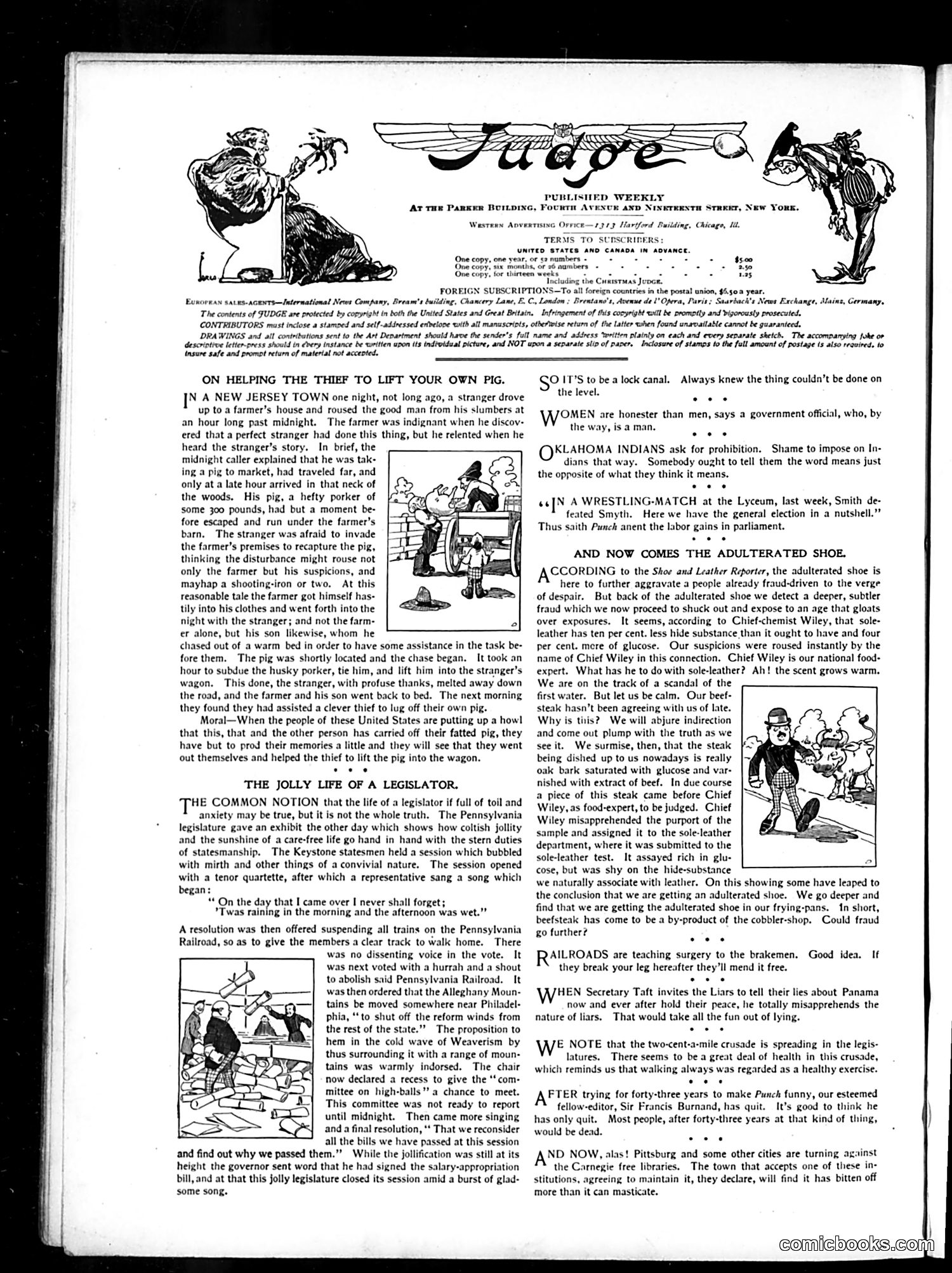
This page contains multiple short satirical pieces typical of Judge magazine's format. The main cartoon titled "ON HIMPLING THE THIEF TO LIFT YOUR OWN PIG" depicts a New Jersey farmer who hired a stranger to help retrieve his stolen pig, only to discover the "helper" was actually the original thief. The joke mocks rural gullibility and criminal deception. Other brief commentary pieces address contemporary issues: Oklahoma Indian prohibition policies, labor disputes, adulterated shoe leather (a consumer fraud scandal), and legislative incompetence in Pennsylvania. A final item satirizes Secretary Taft's Panama Canal involvement and credibility issues. The satire targets fraud, political corruption, and administrative incompetence—standard Judge fare mocking American institutions and social problems of the early 1900s.
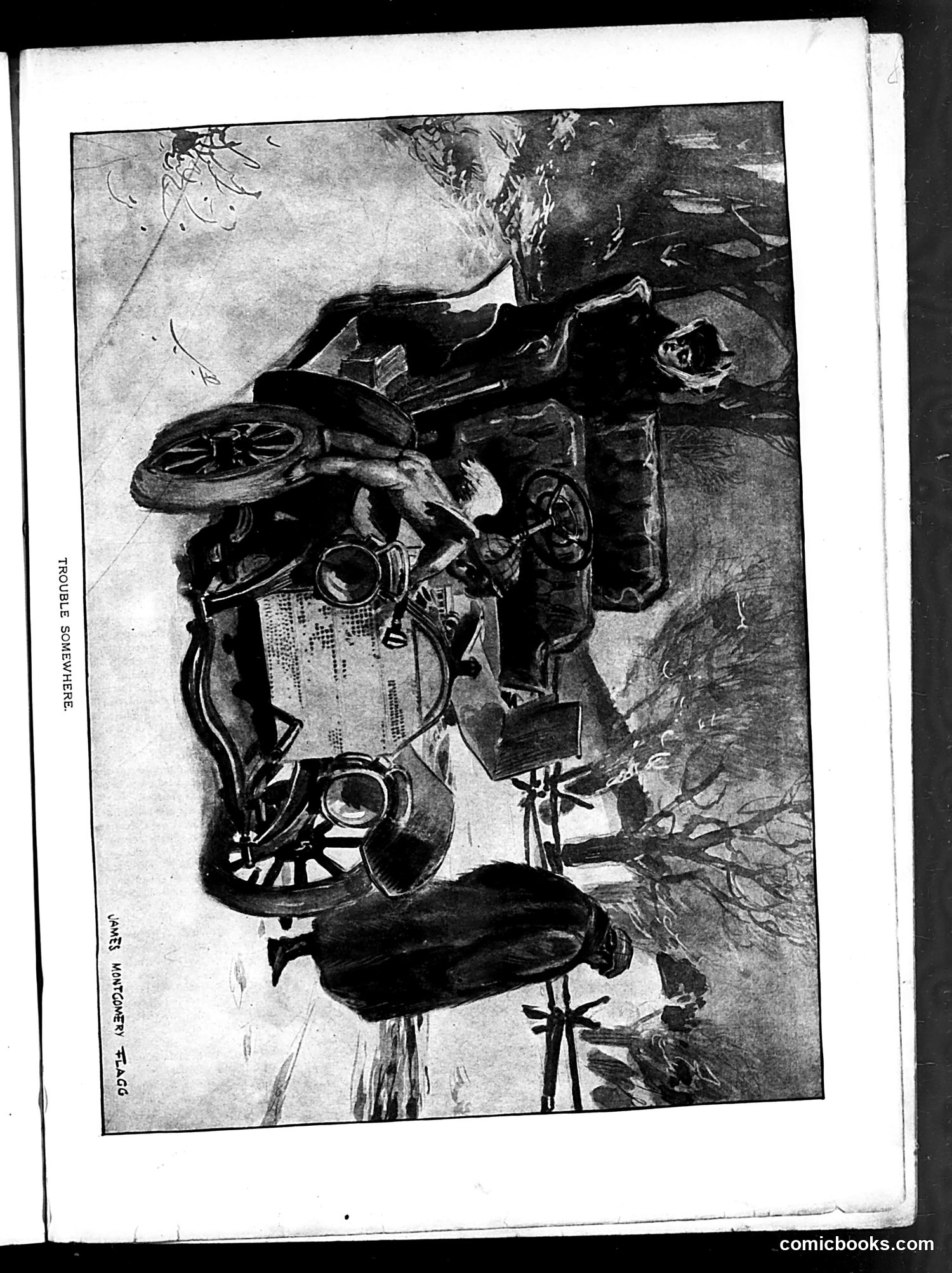
I can see this is a page from *Judge* magazine, but the image quality and rotation make it difficult to read the OCR text clearly or identify specific figures with confidence. The illustration appears to show a person with a bicycle and what looks like industrial or mechanical elements in a satirical style typical of *Judge*. Without being able to reliably read the accompanying text or identify the specific individuals depicted, I cannot accurately explain the political or social references intended by this cartoon. To provide accurate analysis rather than speculation, I would need either a clearer image, legible text, or additional context about the publication date and issue.
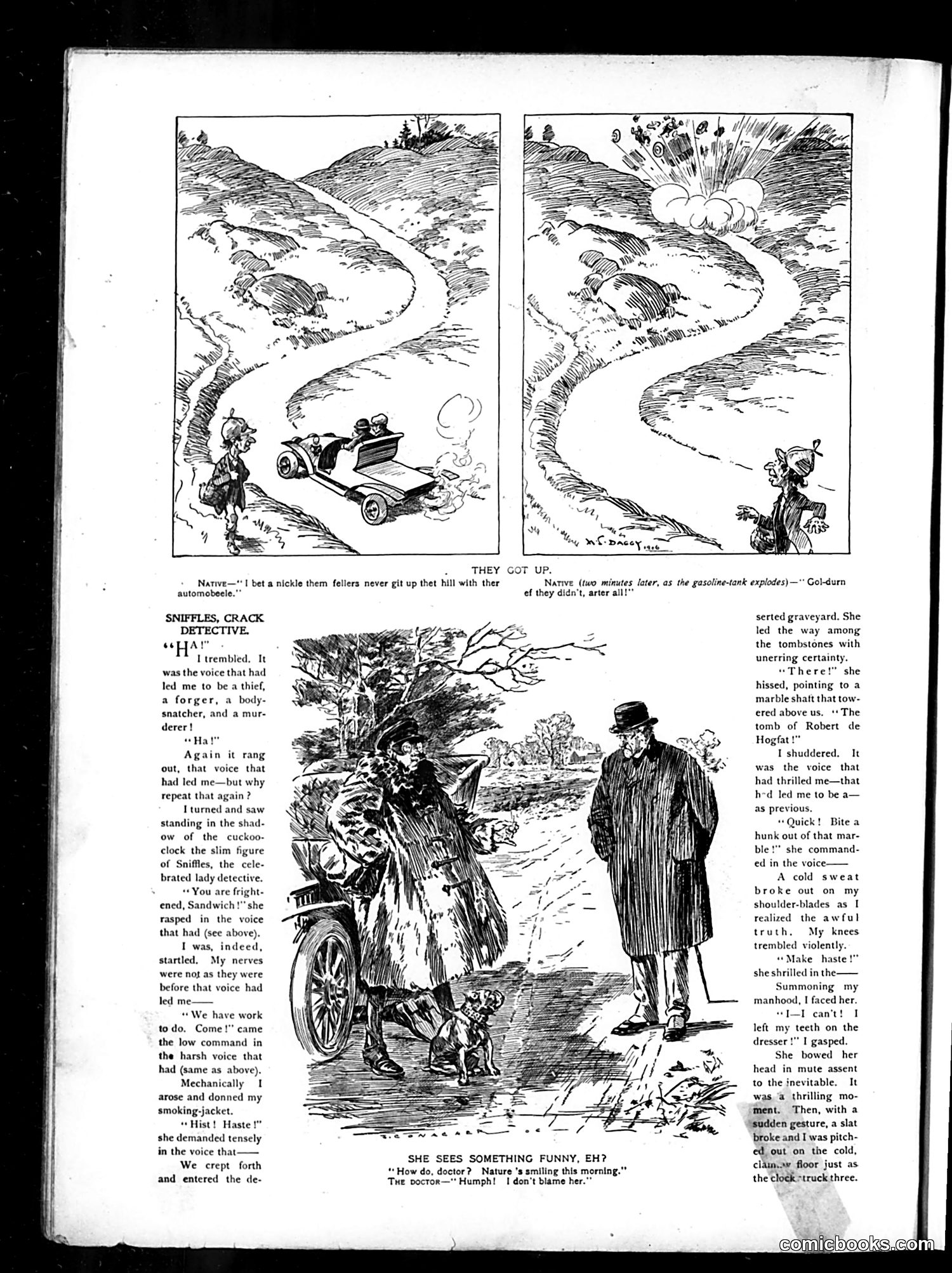
This page contains two distinct sections: **Top panels**: A humorous automobile cartoon showing a car going uphill, then exploding. The caption mocks early automobiles' unreliability, with a Native American character predicting "fellas never git up the hill" and later observing the gasoline-tank explosion. This satirizes the newfangled motorcar technology's tendency to fail spectacularly. **Bottom section**: "Sniffles, Crack Detective" — a serialized detective story featuring a woman character who appears to be a parody detective. The narrative describes mysterious voices and reveals she's investigating a graveyard. The humor derives from her nervous, exaggerated reactions and the melodramatic mystery-story tropes being mocked. Both segments reflect Judge's satirical approach to contemporary technology and popular fiction genres of the era.
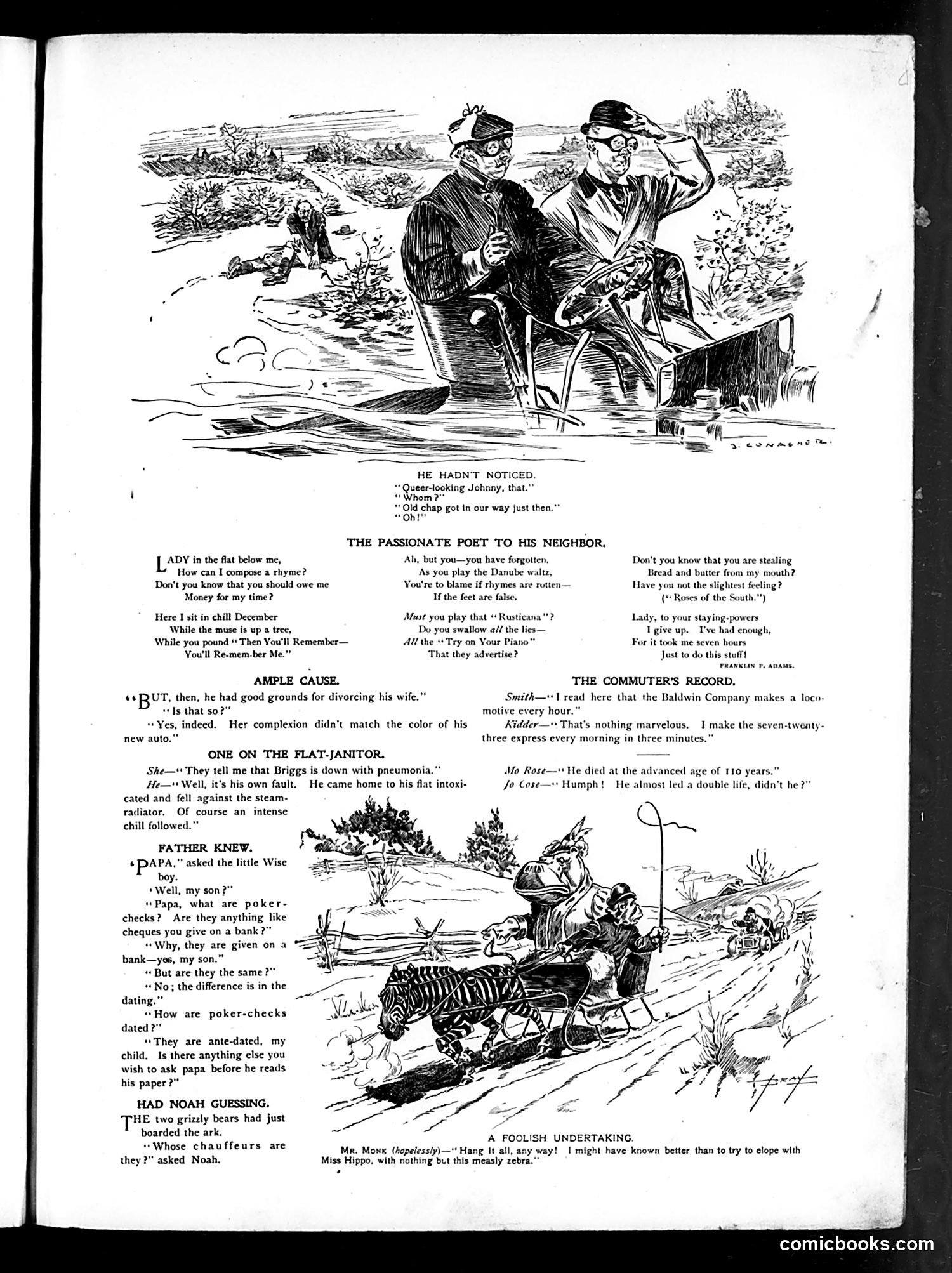
This page contains several short humorous pieces typical of Judge's satirical format: **Top cartoon** shows two men by a river; the caption indicates they've spotted someone ("Queen-looking Johnny") they hadn't noticed before. **"The Passionate Poet to His Neighbor"** is a poem mocking romantic verse, with the neighbor sarcastically praising clichéd poetry about love and nature. **"Ample Cause"** jokes about divorce grounds—a wife's complexion not matching her new auto's color. **"One on the Flat-Janitor"** presents a brief dialogue where someone claims a neighbor died of pneumonia, but the janitor suspects the man's radiator was the real culprit. **"Father Knew"** features wordplay about poker-checks and bank checks, with a child confusing financial terminology. The illustrations depict everyday scenarios with gentle social humor rather than sharp political satire.
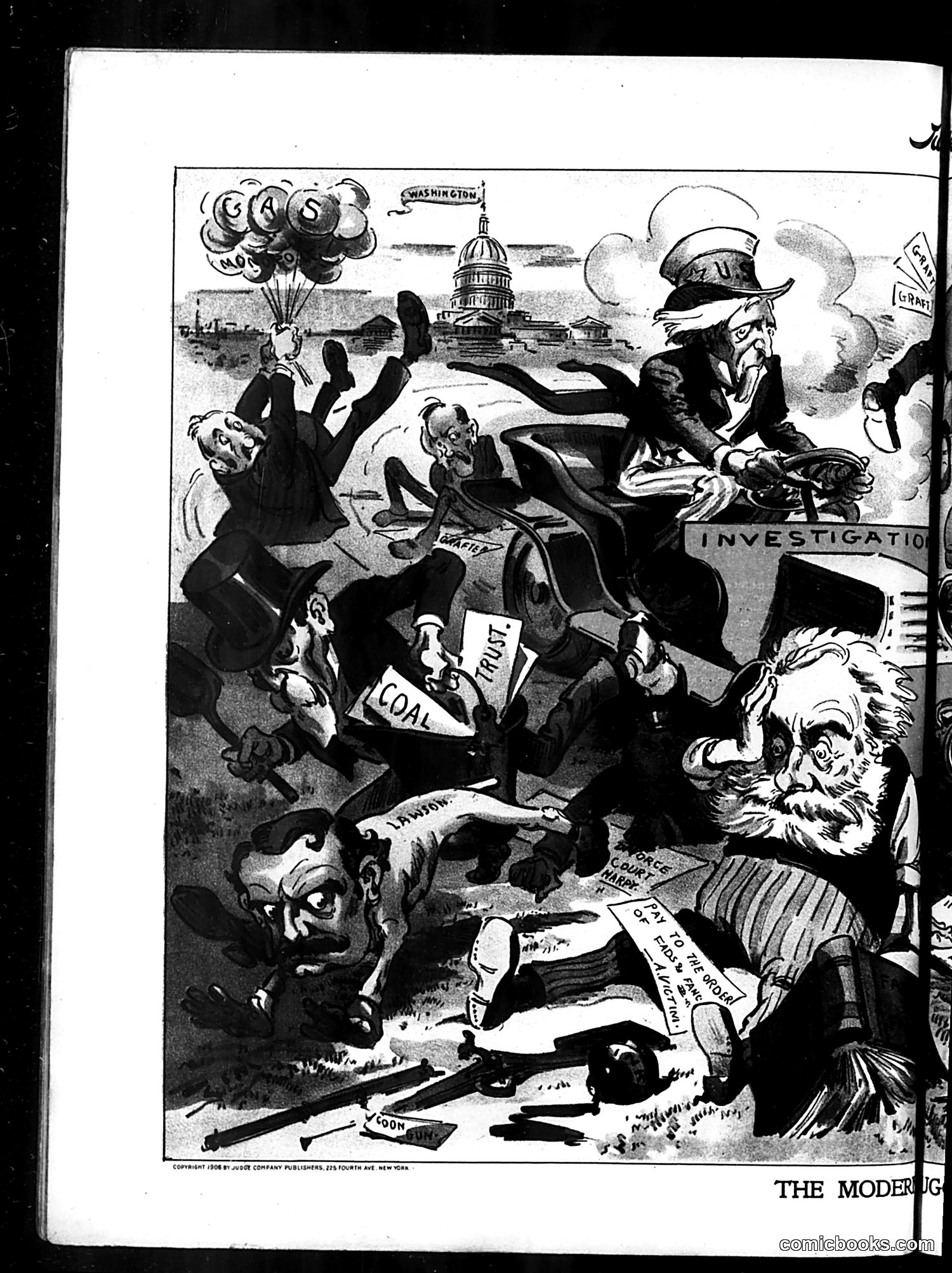
This 1906 Judge cartoon satirizes corruption and scandal investigations in Washington, D.C. (visible in background). Caricatured political figures appear panicked, with papers labeled "COAL," "FRUIT," and "INVESTIGATION" scattered about—likely referencing contemporary corporate scandals and antitrust probes of the Progressive Era. The figures' exaggerated expressions and tumbling poses suggest disarray among politicians caught in wrongdoing. One character holding a "COON" sign appears to reference racial stereotyping common in era satire. The "GAS" balloons overhead may symbolize inflated political rhetoric or corruption being exposed. The overall message critiques Washington's scramble to respond to emerging investigations into corporate monopolies and government corruption—key issues during Theodore Roosevelt's presidency (1901-1909) and the Progressive movement's push for reform.
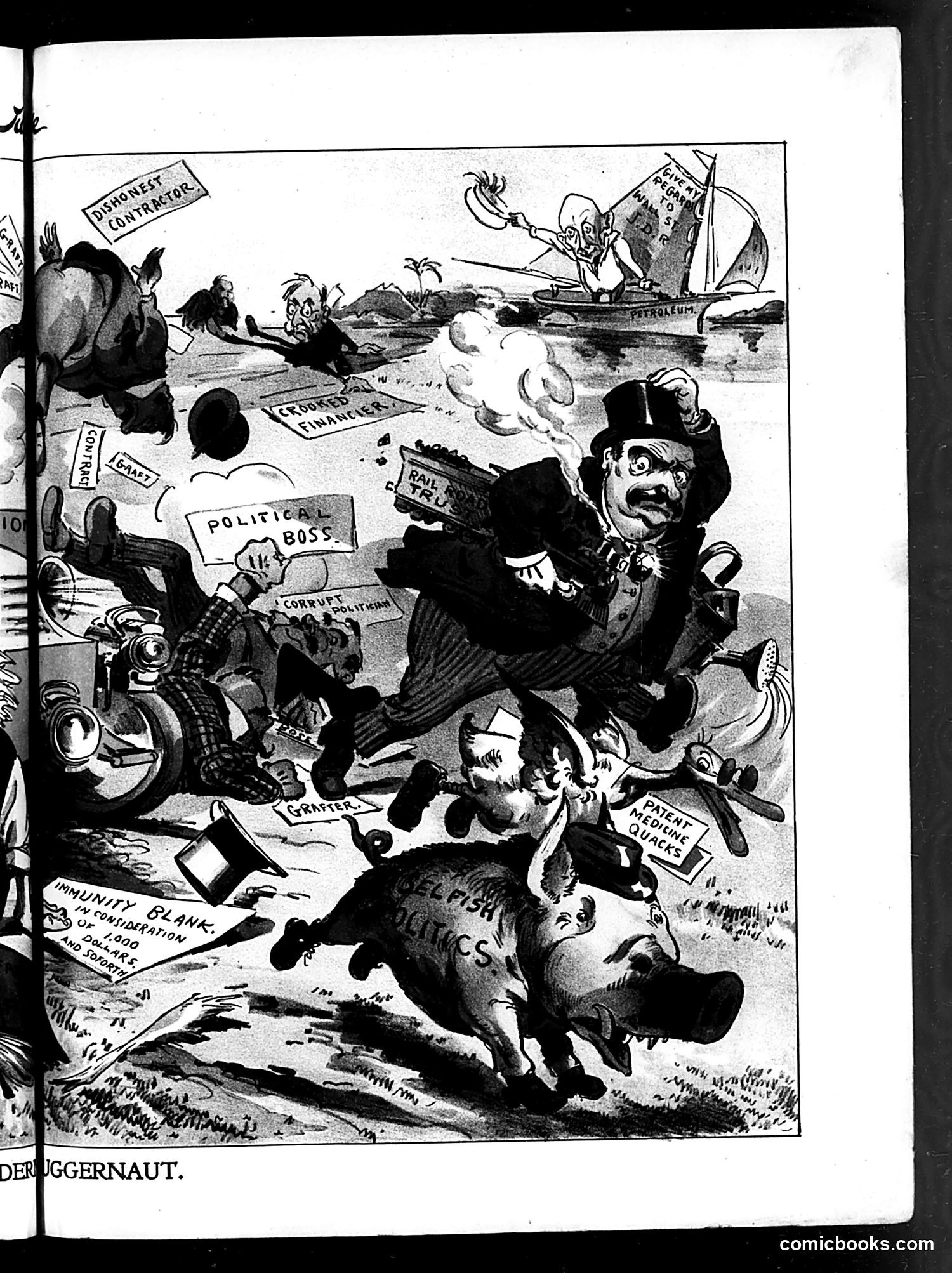
This **Judge** magazine cartoon satirizes corruption and misconduct in American politics and business during the Gilded Age or Progressive Era. The central caricatured figure (wearing a top hat) appears to be a political boss or corrupt businessman, depicted as a criminal juggling or managing various scandals and illicit activities. The labeled signs reference specific corruptions: "Political Boss," "Crooked Financier," "Petroleum" (likely oil industry monopolies), "Rail Roads," and "Immunity Blank" (suggesting bribery or legal exemptions). Additional labels reference "Grafters," "Cement Monopoly Frauds," and related criminal enterprises. The cartoon mocks how powerful figures successfully managed—and escaped accountability for—multiple simultaneous scandals through political connections and financial manipulation, a central Progressive-era concern.
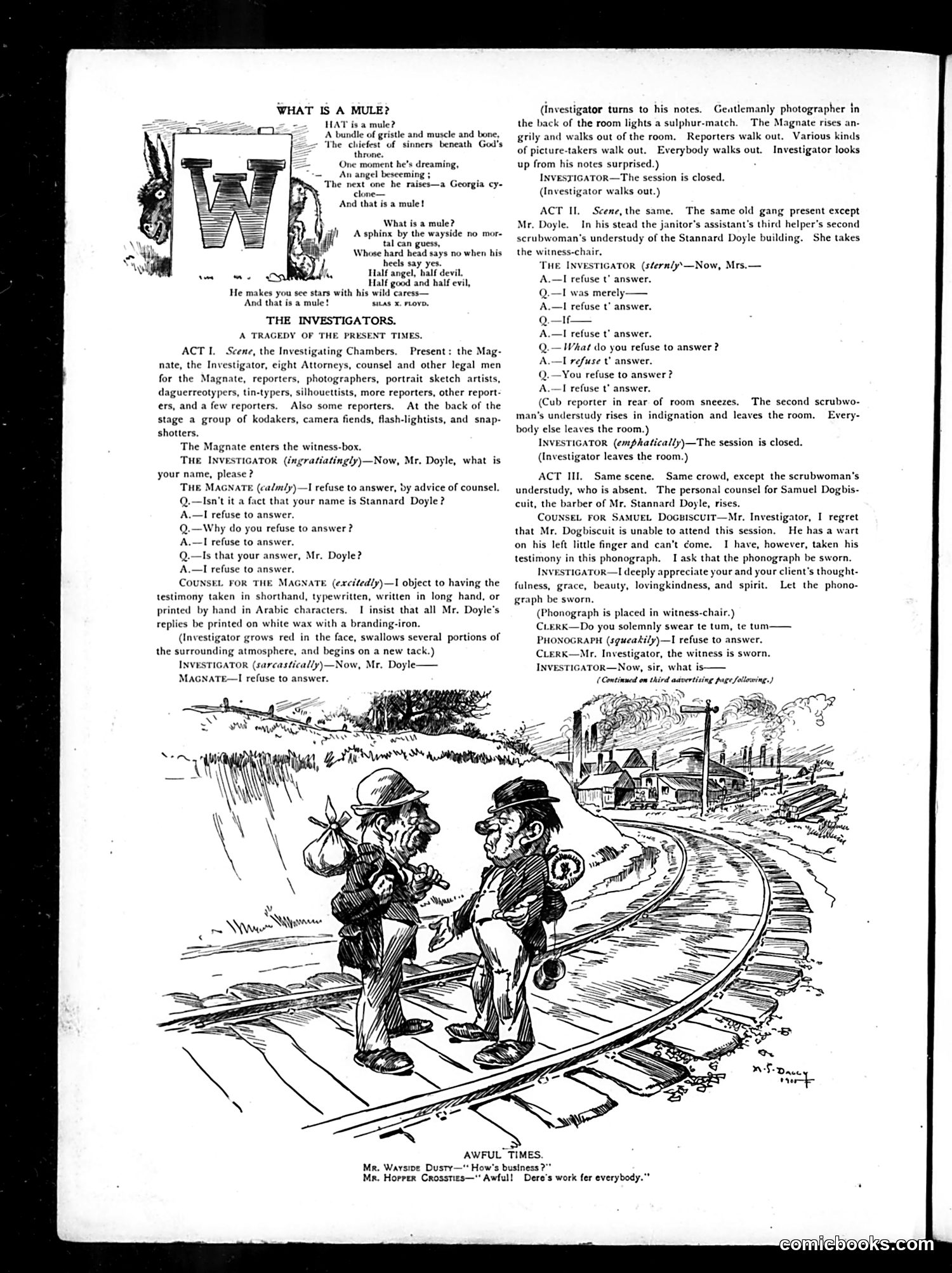
This play-within-a-magazine mocks the early 20th-century congressional investigation process, likely referencing contemporary scandal hearings. "The Magnate" appears to be a wealthy, powerful figure (possibly based on a real industrialist or robber baron) who trivializes formal inquiry by invoking the right to silence—responding to every question with "I refuse to answer." The satire escalates absurdly: when the magnate leaves, investigators simply question his building's janitor's assistant instead. By Act III, they're swearing in a *phonograph* as a witness. The joke: corporate elites could evade accountability through legal obstruction, while investigators grew comically desperate, treating any scrap of "evidence" as legitimate. The cartoon below (showing two workers) with the caption about "business" versus "work for everybody" reinforces the class commentary—the wealthy escape scrutiny; working people don't.
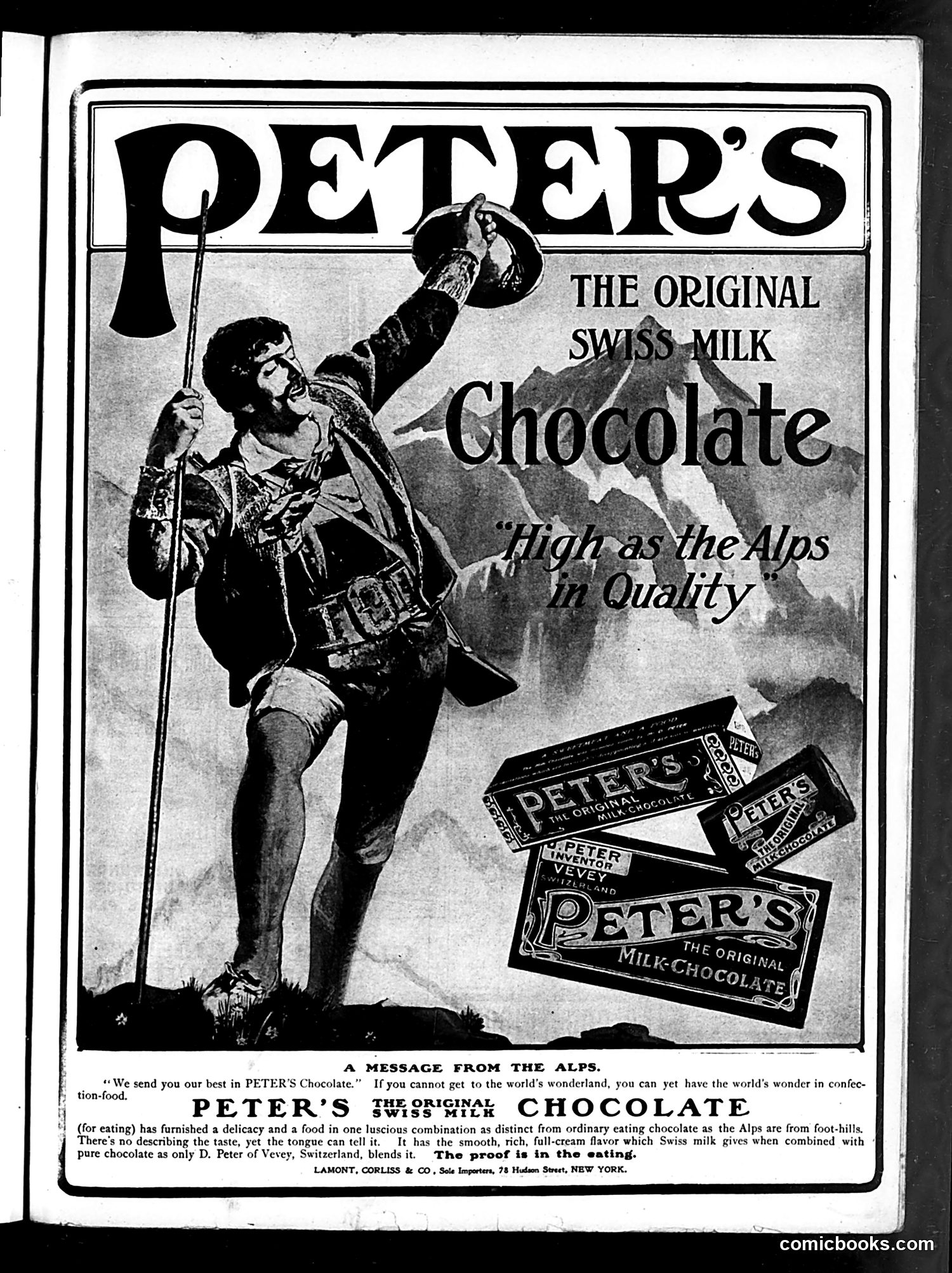
This is a **full-page advertisement**, not satire or political commentary. It promotes Peter's chocolate, a Swiss brand imported to America. The image shows an Alpine mountaineer triumphantly planting a flag at a peak, visually linking the chocolate to Swiss mountain excellence. The marketing strategy equates consuming the product with accessing "the world's wonderland"—if you can't travel to the Alps, the chocolate brings that experience to you. The text emphasizes Swiss authenticity: the product comes from D. Peter of Vevey, Switzerland, and uses Swiss milk. This appeals to early 20th-century American consumers' association of Switzerland with quality and natural purity. The phrase "high as the Alps in Quality" reinforces this branding. The sole importer (Lamont, Corliss & Co., New York) controlled distribution, suggesting this was premium, imported luxury goods marketed to affluent consumers.
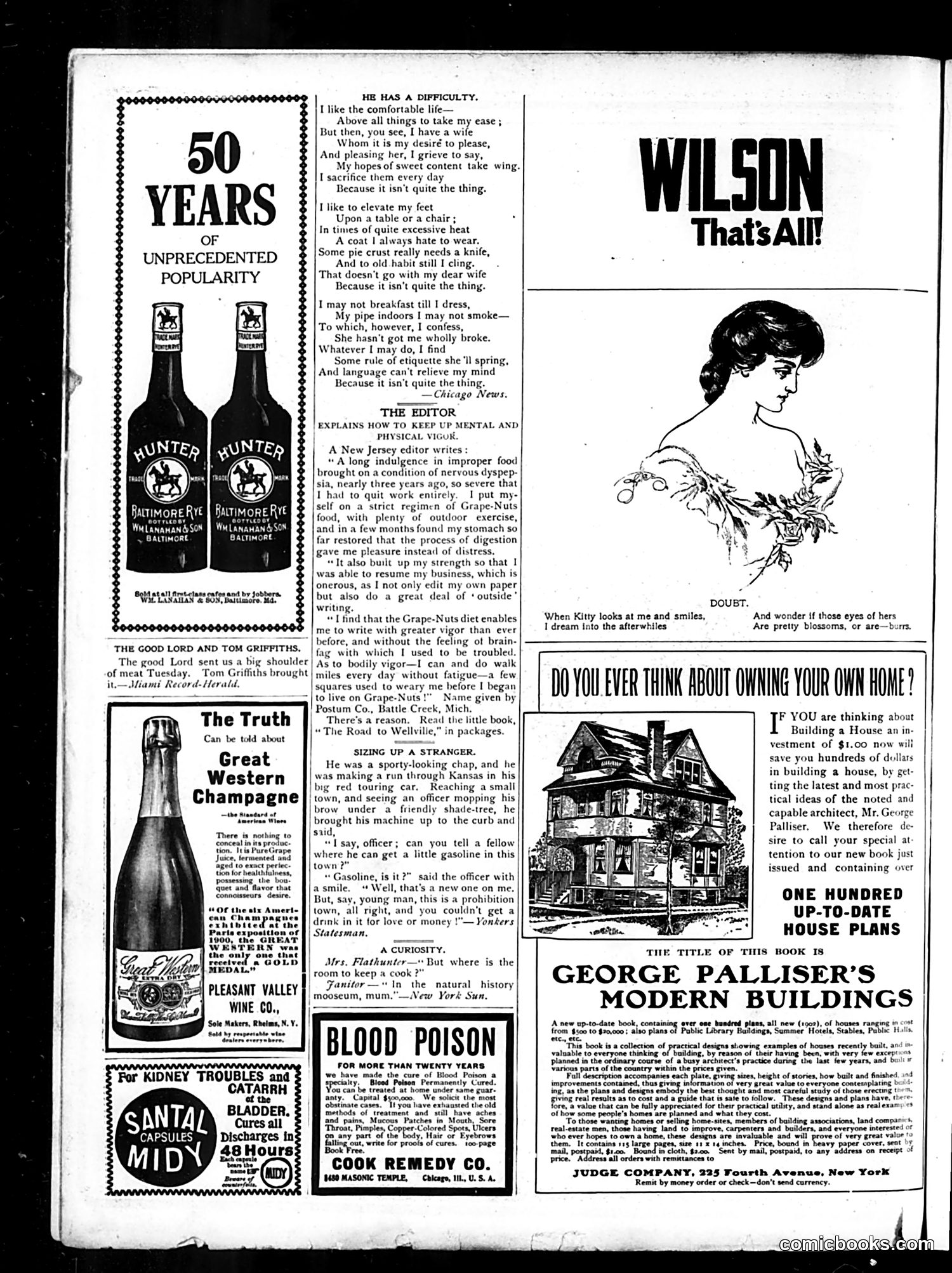
This page is primarily **advertising** with minimal political or satirical content. The main advertisements feature: - **Hunter Baltimore Rye whiskey** (50 years popularity claim) - **Great Western Champagne** and **Pleasant Valley Wine** - **Grape-Nuts cereal** (testimonial from editor about health benefits) - **Santal Capsules** (medical treatment) - **Cook Remedy Co.** (blood poison cure) The small literary pieces include: - A humorous poem "He Has a Difficulty" about marital compromise—a husband must abandon comfortable habits (smoking indoors, elevating feet) to please his wife - Brief anecdotes about a stranger asking for gasoline in a prohibition town, and a joke about museum storage **The satire is minimal**: The main joke critiques social etiquette's constraints on male freedom, but this reflects period domestic humor rather than political commentary. The page primarily serves commercial purposes, selling patent medicines and beverages typical of early 1900s magazines.
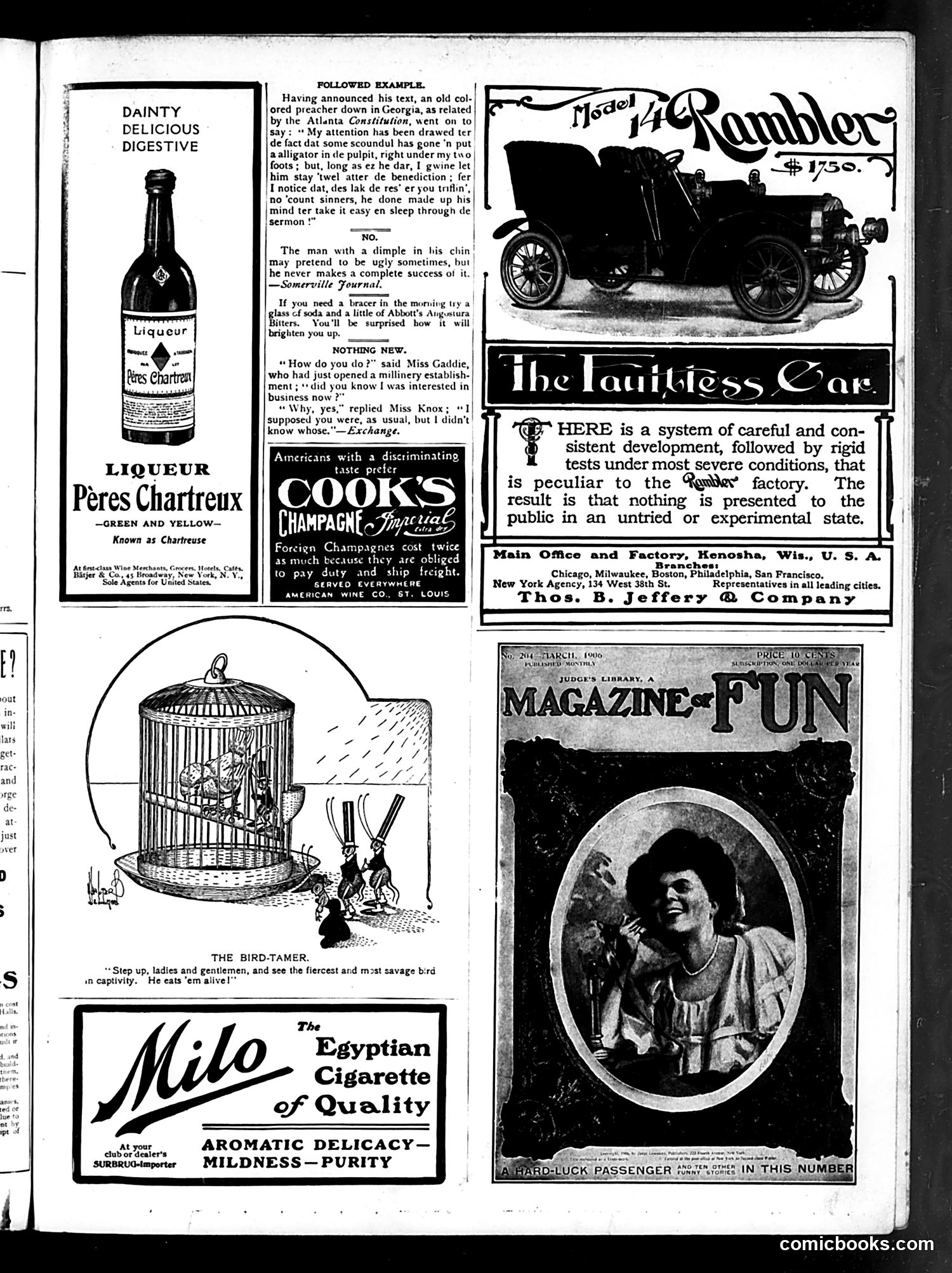
This page is primarily **advertising**, typical of Judge magazine's revenue model. Key content: **"Followed Example"** (top): A brief satirical anecdote mocking a Black preacher in Georgia who compares sinners to a sleeping alligator in the pulpit. This reflects the magazine's era of casual racial stereotyping through dialect humor—common in early 1900s publications but offensive by modern standards. **"Nothing New"**: A mild joke about a woman opening a millinery shop, playing on assumptions about women's business interests. **"The Bird-Tamer"** (cartoon): Shows a carnival barker displaying a caged bird to audiences, with the caption joking that it "eats 'em alive." This appears to be straightforward absurdist humor without political content. The rest of the page features period advertisements for liqueurs, cigarettes, and automobiles—the Rambler ($750) being notably prominent. These ads reflect early 1900s consumer culture and product marketing strategies. No significant political satire or commentary appears on this particular page.
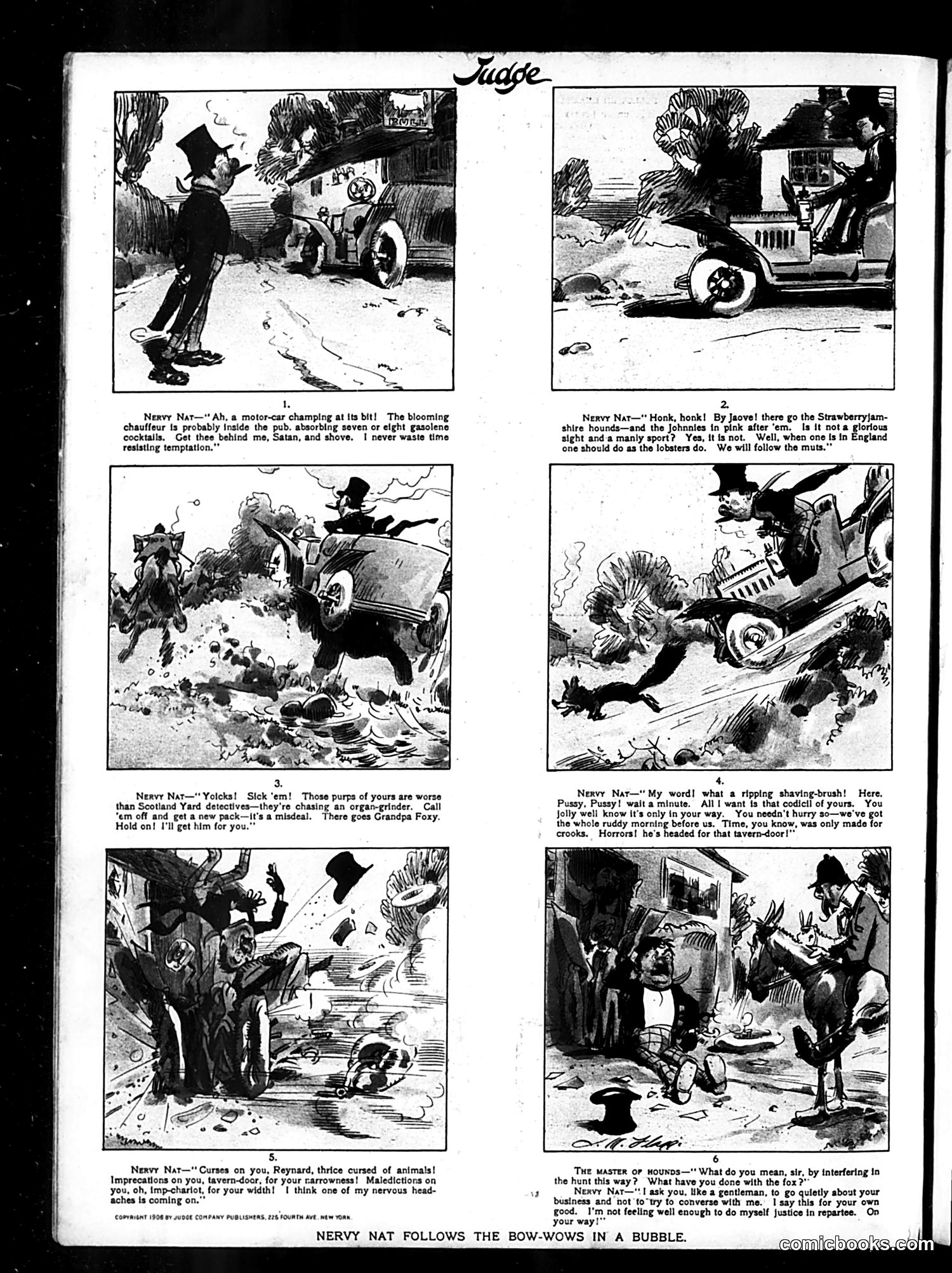
This 1908 comic strip follows "Nervy Nat," a mischievous character who repeatedly disrupts English country life. The narrative depicts his escalating interference: he steals a motorcar, chases foxhounds during a hunt, attempts to steal a cat's "codicil" (legal document), and generally causes chaos while claiming he's merely "following the muts" and local customs. The satire targets a specific type of character—likely a con artist or rogue posing as a gentleman—who uses flippant excuses and theatrical language ("By Jaove!") to justify selfish, criminal behavior. His invocation of "doing as the lobsters do" (conforming to English norms) while committing theft and trespass exposes the hypocrisy of using social conventions as cover for malfeasance. The character represents the "nervy" outsider exploiting genteel society's blind spots.