
A complete issue · 16 pages · 1895
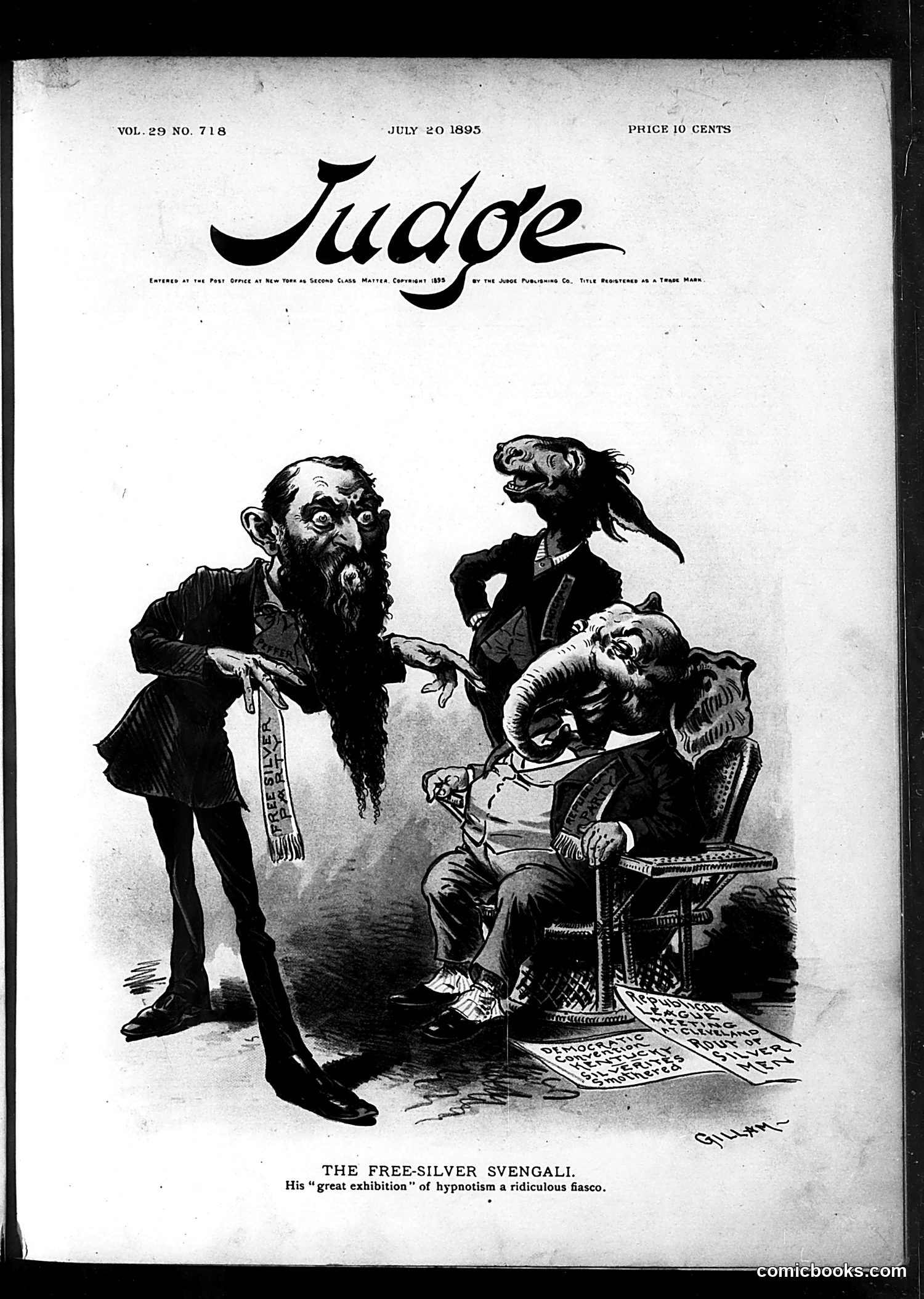
Judge — July 20, 1895
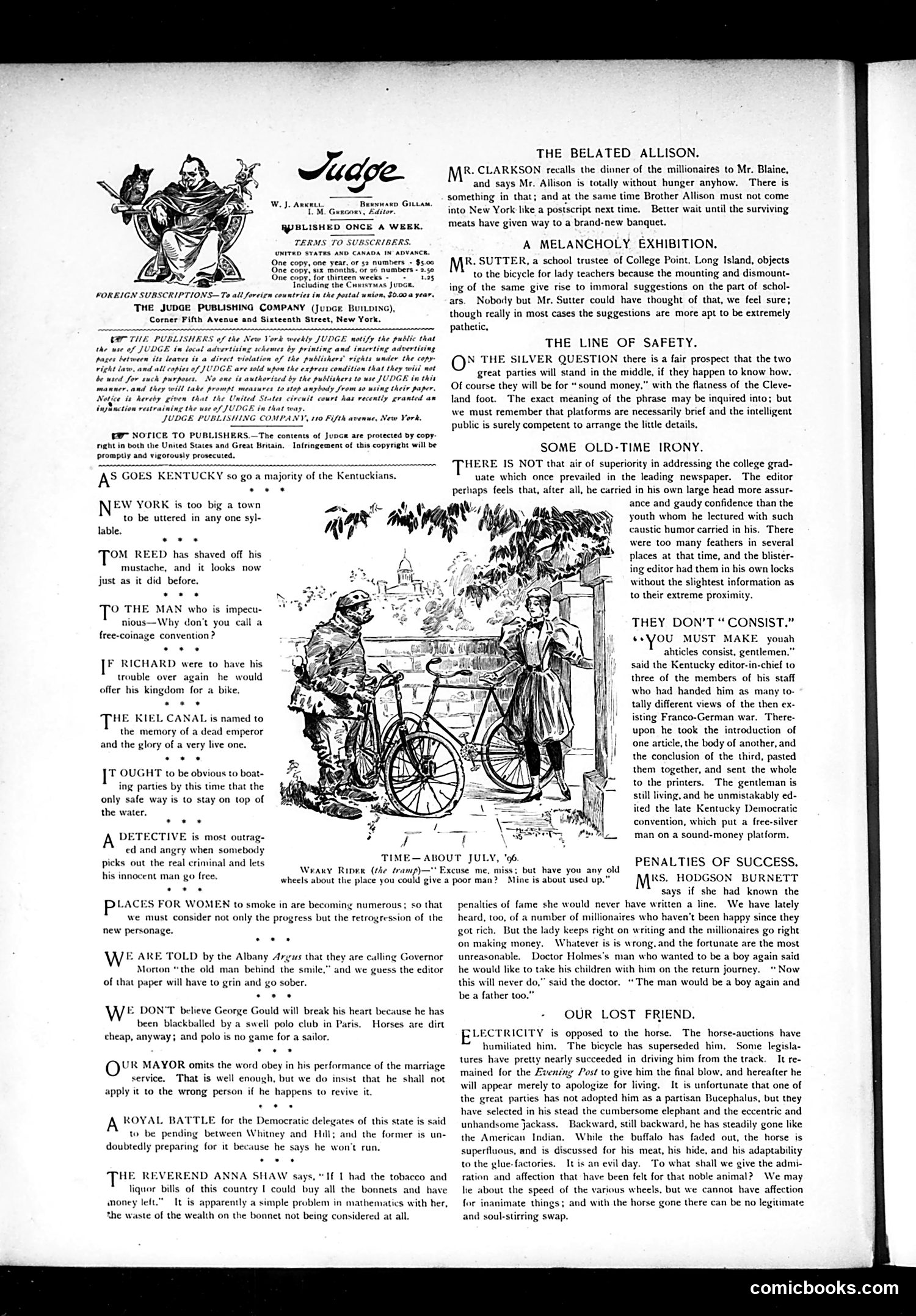
The central cartoon, "TIME—ABOUT JULY, '96," depicts a man and woman with a bicycle, likely satirizing social anxieties about the "New Woman" and bicycle culture of the 1890s. The accompanying text references "Weary Rider" complaining about being poor while asking for money. The editorial snippets above address contemporary concerns: college trustee objections to bicycles for female students; political commentary on Kentucky and New York governance; and references to Governor Morton and other figures. The overall theme critiques emerging social changes—women's independence via bicycles, evolving gender roles, and modern conveniences—through light satire typical of Judge's late-19th-century social commentary. The specific political figures referenced are difficult to identify without additional context.
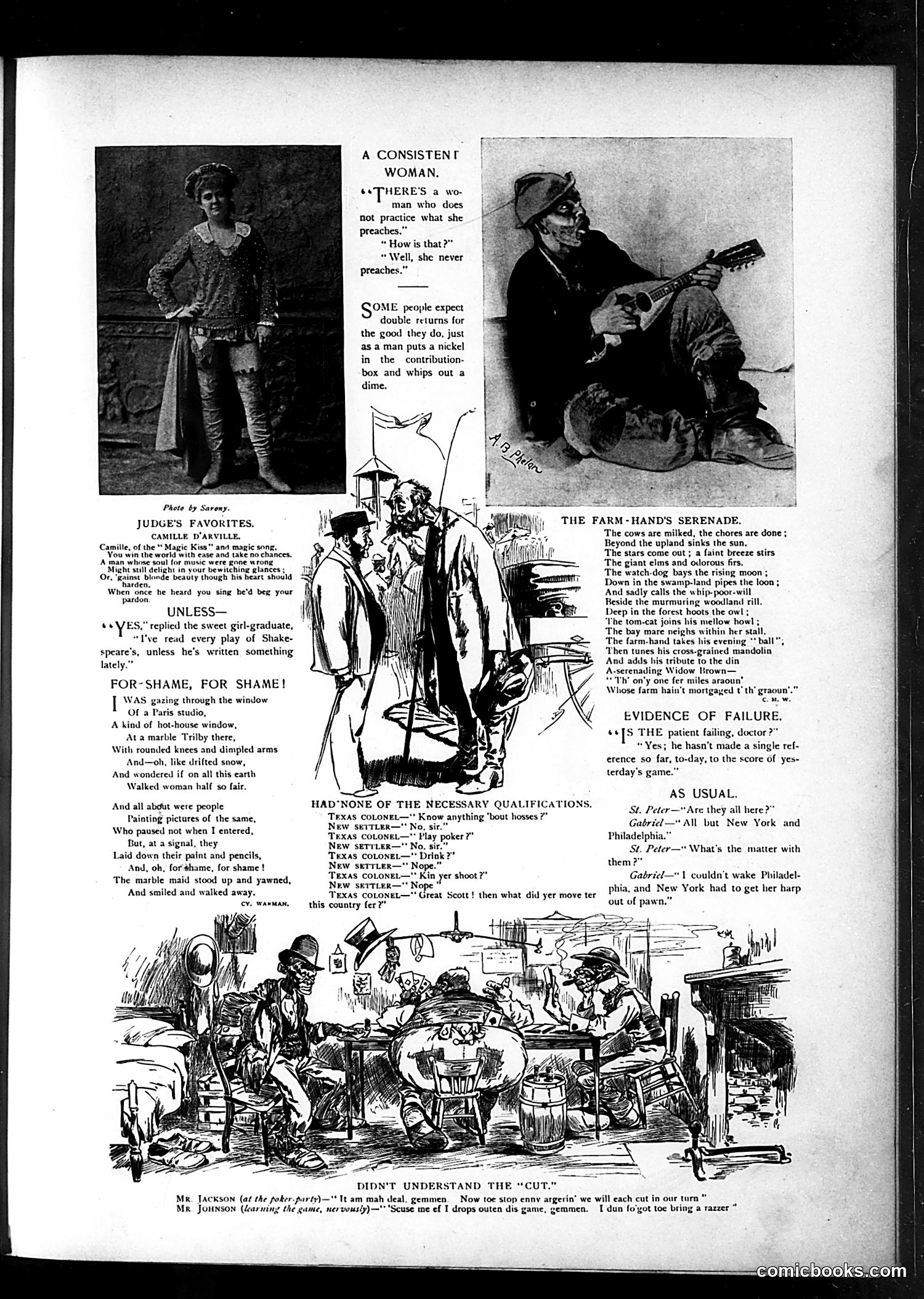
This page contains several satirical pieces from an early 20th-century issue: **"A Consistent Woman"** mocks hypocrisy—a woman who preaches morality but never practices it. **"Judge's Favorites" (top left)** appears to reference a theatrical performer named Camille d'Arville. **"The Farm-Hand's Serenade"** is a humorous poem about rural life and courtship, with accompanying illustration of a musician. **"Had None of the Necessary Qualifications"** satirizes a Texas colonel's ignorance—he can't answer basic questions about horses, shooting, or drinking, mocking stereotypical "Western" incompetence. **"Didn't Understand the 'Cut'"** (bottom) depicts working-class men discussing card game rules, suggesting confusion among lower classes about genteel customs. The page mixes social satire targeting both affectation and working-class ignorance.
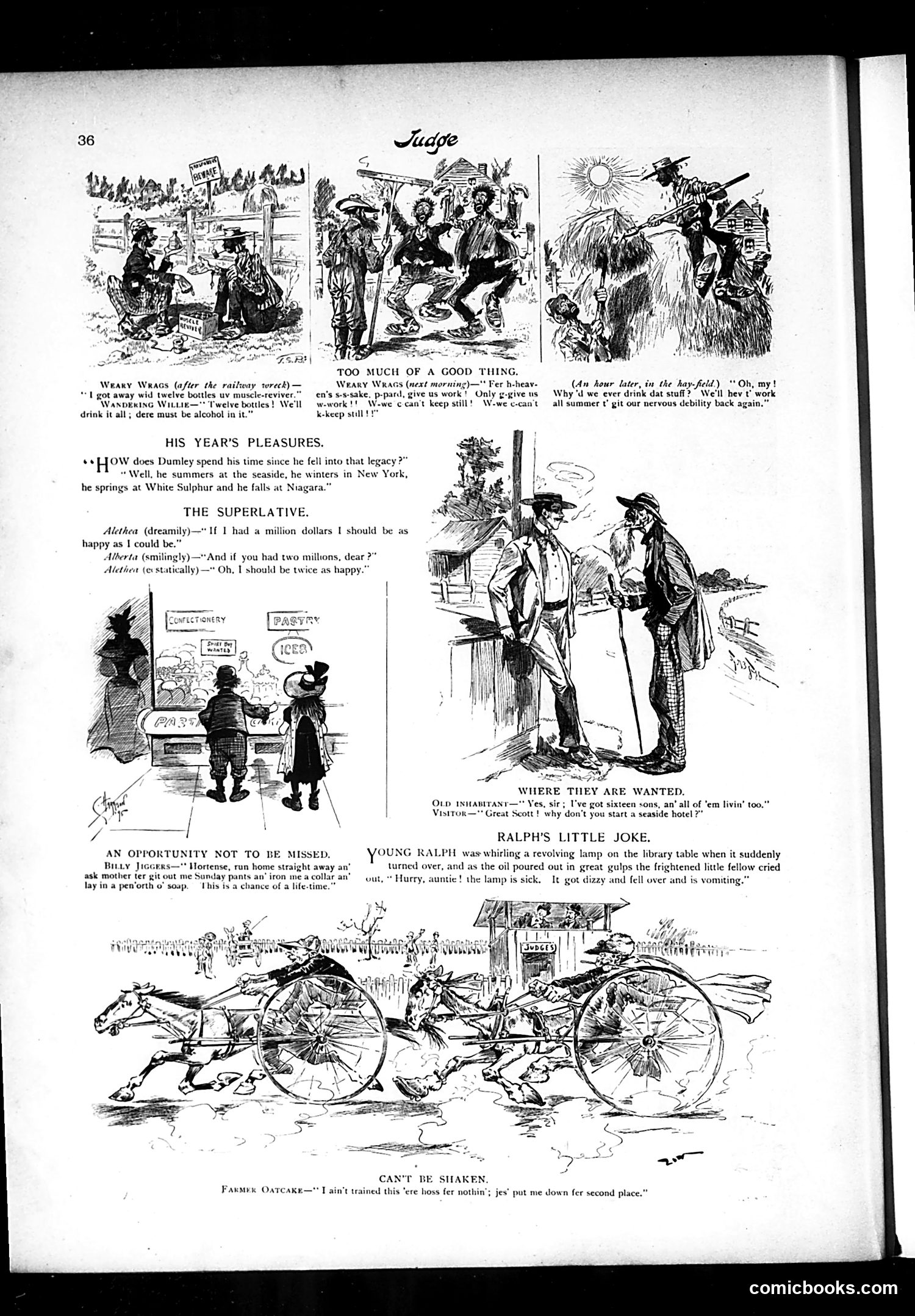
This page contains several unrelated humorous sketches typical of Judge's satirical format: **"Weary Wraas" sketches**: Depict hobos/tramps discussing muscle-reviver bottles after a railway wreck, then the next day regretting their hangover and needing work to recover—satirizing working-class drinking culture and its consequences. **"His Year's Pleasures"**: Mocks wealthy leisure—a man named Dumley cycles through fashionable resort destinations (seaside, New York, White Sulphur Springs, Niagara Falls), poking fun at the idle rich's repetitive pursuit of status symbols. **"The Superlative"**: A brief joke about compounding happiness with doubled wealth, likely satirizing materialism. **"Where They Are Wanted"**: An old innkeeper with sixteen sons is urged to open a seaside hotel—implying large families are burdensome and should be exploited commercially. **"Ralph's Little Joke" and "Can't Be Shaken"**: Lighthearted domestic humor unrelated to social commentary. The page reflects Judge's typical blend of class-based satire, drinking culture commentary, and domestic humor targeting late 19th/early 20th-century American audiences.
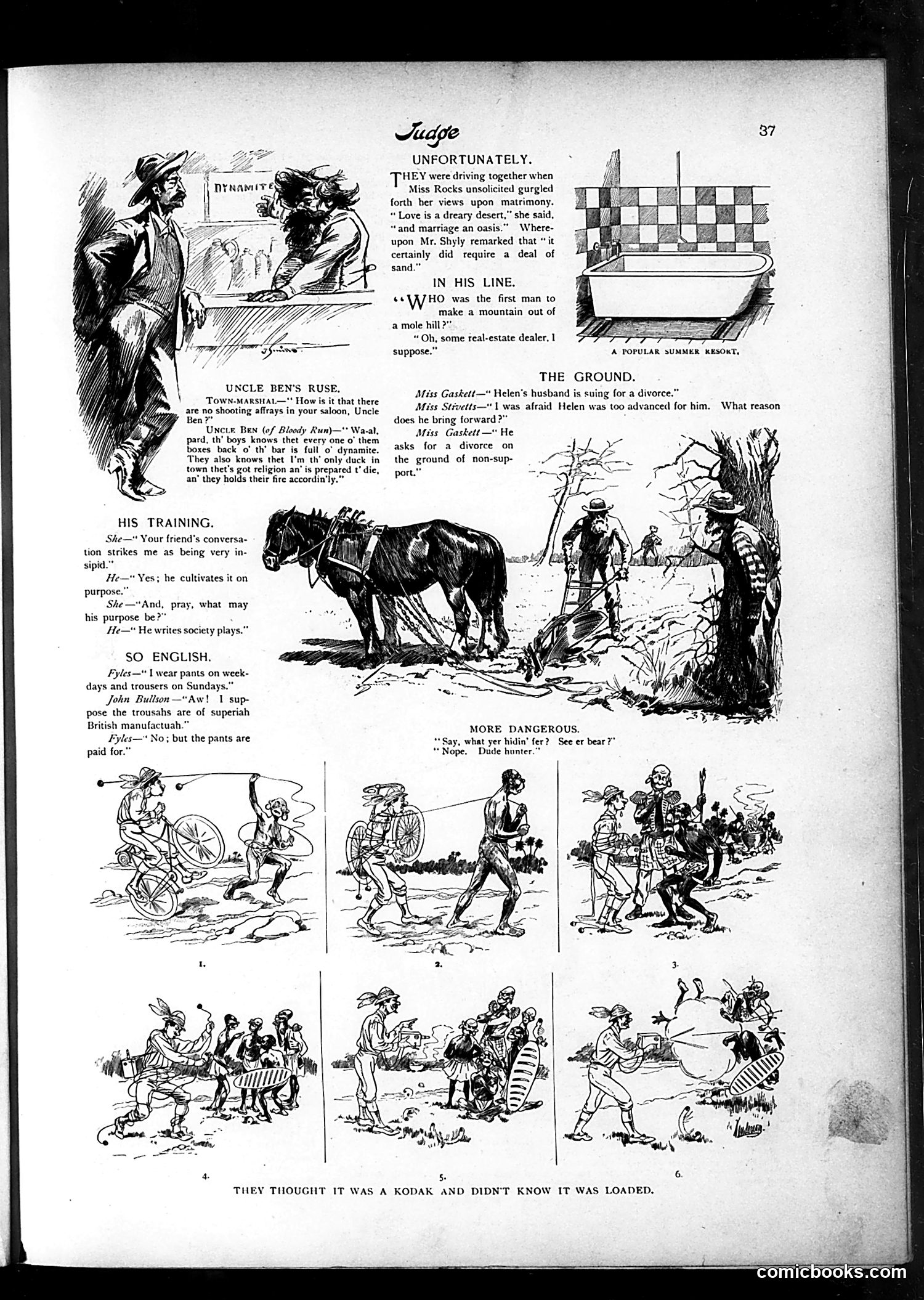
This page collects six brief satirical jokes typical of Judge's humor circa early 1900s: **"Uncle Ben's Ruse"** mocks frontier lawmen, suggesting violence is deterred only by the threat of dynamite and religious fatalism—satirizing the Wild West stereotype. **"His Training"** jokes that a friend writes bland "society plays" intentionally, mocking contemporary theater as tedious. **"So English"** ridicules British affectation: an Englishman assumes British "trousers" are superior, unaware the American wears cheaper "pants" he's actually paid for—satirizing British snobbery. **"Unfortunately"** plays on wordplay: a woman romanticizes marriage as an "oasis," but "oasis" requires "sand"—a pun on perseverance. **"In His Line"** jokes that real-estate dealers literally make mountains (inflate value) from molehills, satirizing dishonest salesmen. **"The Ground"** and the comic strip below mock marital discord and hunting mishaps—the final strip's caption suggests someone mistook a loaded gun for a camera, a visual pun on danger. The overall tone is light social satire targeting pretension, fraud, and folly.
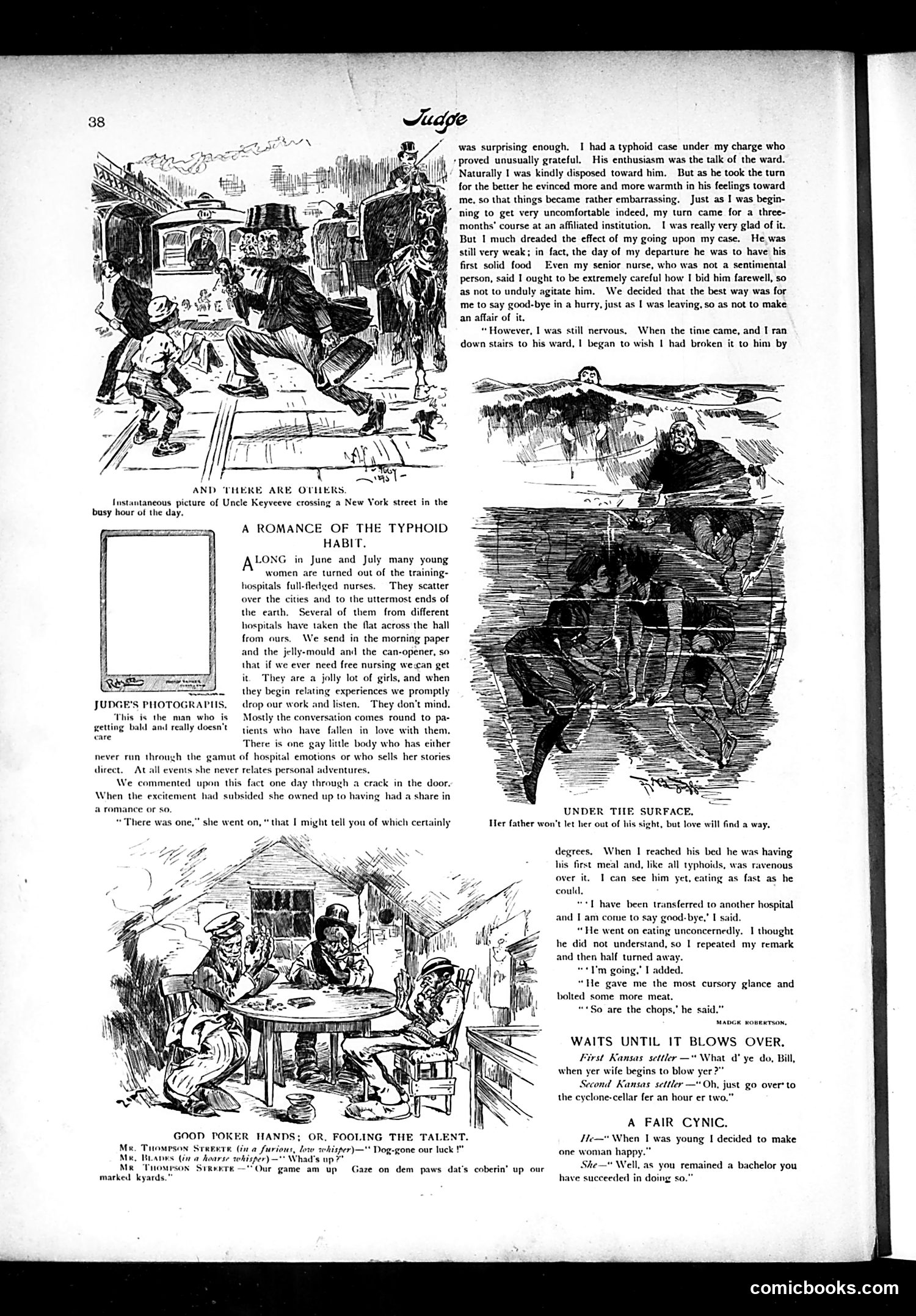
This page contains multiple satirical pieces typical of early-20th-century Judge magazine: **"Uncle Keyveeve" cartoon** (top): Depicts a man crossing a busy New York street during rush hour—likely satirizing either a specific public figure or the general chaos of urban life, though the specific reference is unclear without additional context. **"A Romance of the Typhoid Habit"** (main story): Mocks the sentimental behavior of young trained nurses who develop romantic attachments to grateful male patients. The humor culminates in the punchline where an ill patient, upon learning his nurse is leaving, replies "So are the chops"—prioritizing food over sentiment, deflating the nurse's dramatic farewell. **"Good Poker Hands"** (bottom left): Depicts cheaters caught using marked cards. **Additional vignettes**: Include jokes about suburban life ("Waits Until It Blows Over") and cynical observations about romance ("A Fair Cynic"). The page reflects period anxieties about modern professions, romantic sentimentality, and urban behavior, presented through light satirical humor.
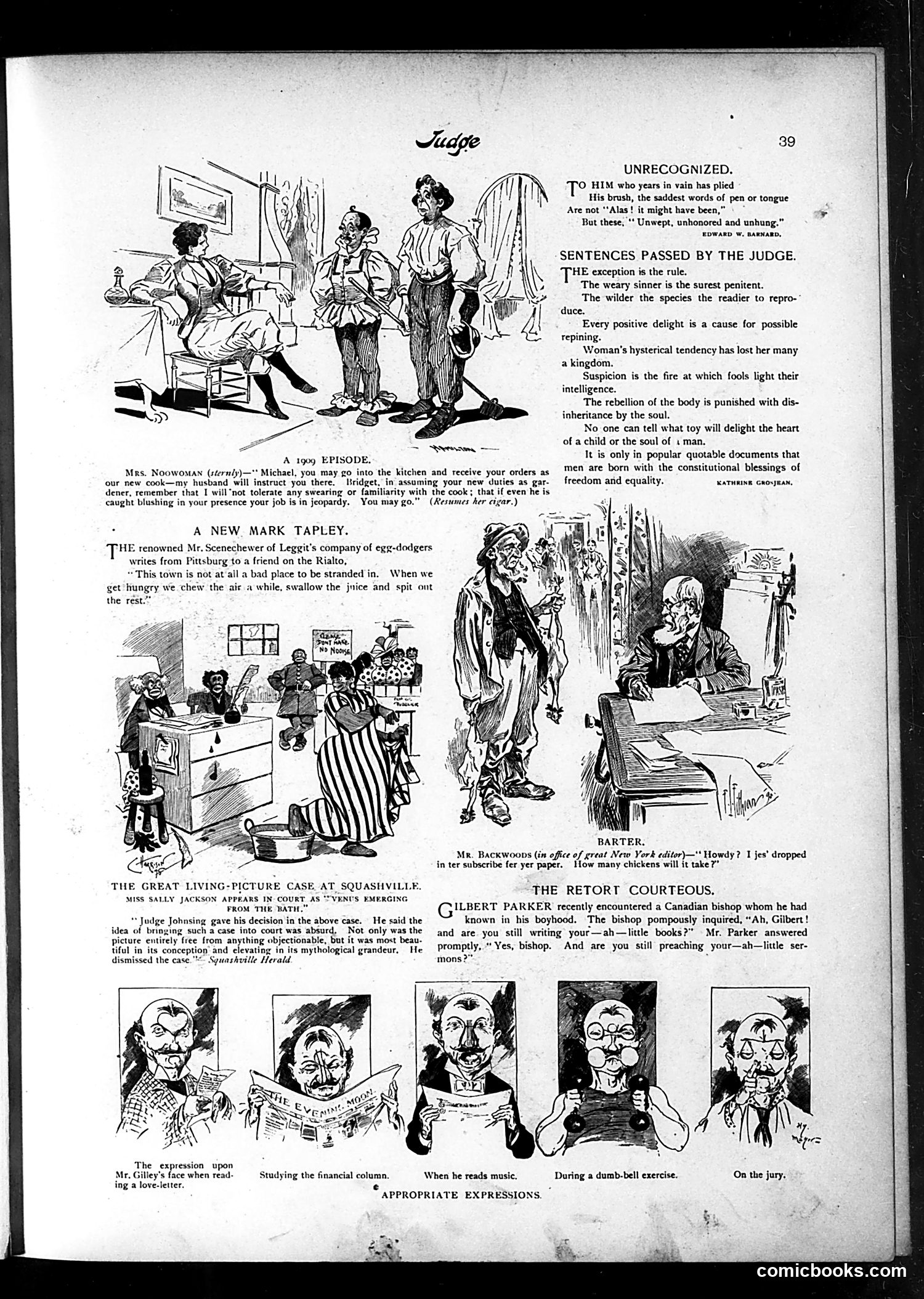
This page from Judge presents several satirical vignettes typical of late 19th-century American humor: **"Unrecognized"** mocks struggling artists whose work goes unhung in galleries—the ultimate insult to ambition. **"Mrs. Noowoman"** satirizes rigid Victorian domesticity, with a snobbish mistress lecturing servants about propriety while she herself smokes cigars—highlighting class hypocrisy. **"A New Mark Tapley"** jokes about struggling theater actors so poor they literally chew air for sustenance during hard times. **"Bartering for a Newspaper"** depicts rural backwardness through a farmer offering chickens as payment, mocking rustic commercialism. **"The Retort Courteous"** presents witty exchanges between Gilbert Parker (a real Canadian author) and a pompous bishop, and between a woman and a judge—celebrating clever comebacks. **"Appropriate Expressions"** are caricature studies showing exaggerated facial reactions to various situations, a common Judge feature. Throughout, the satire targets pretension, social rigidity, rural ignorance, and gender dynamics of the era.
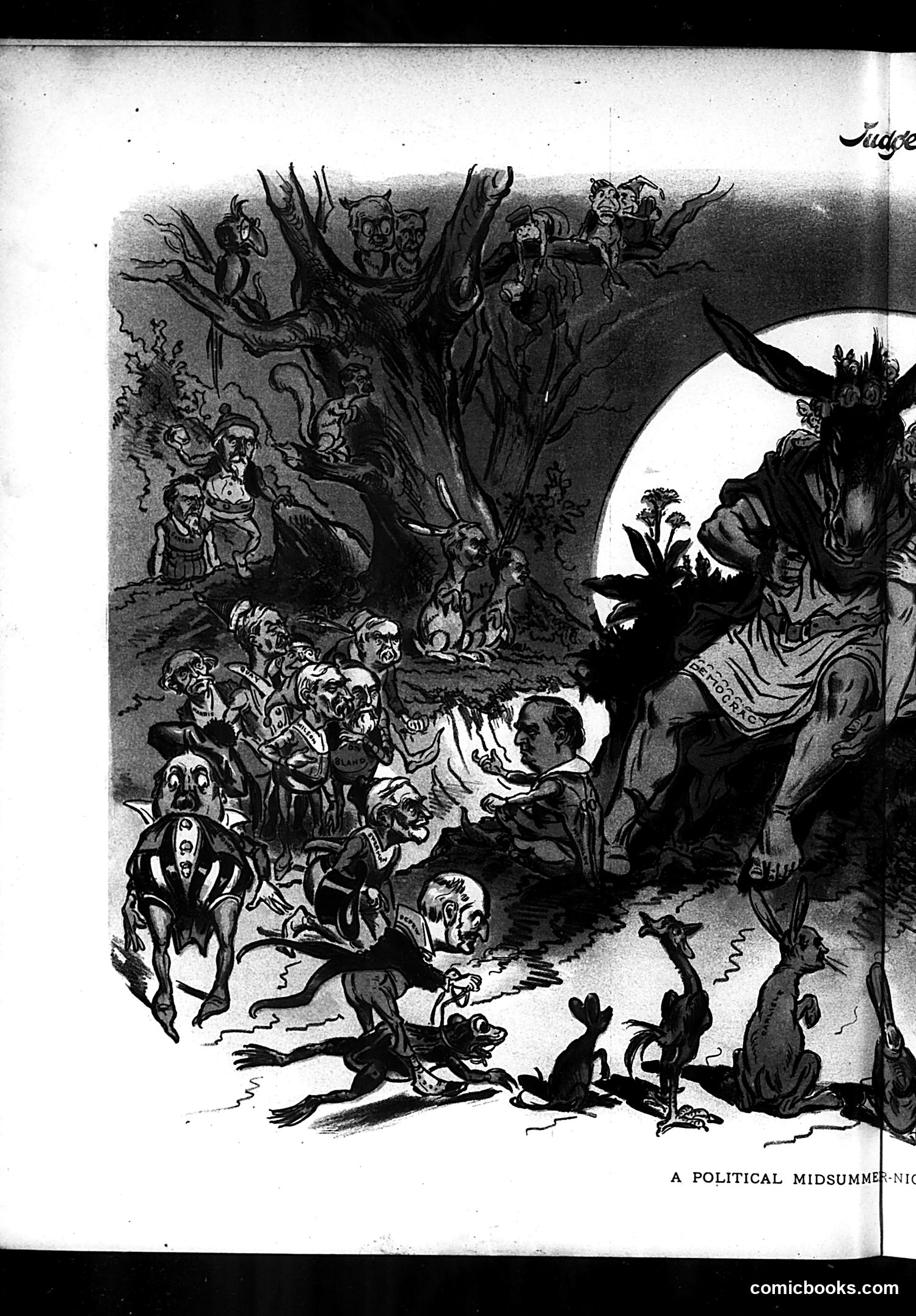
This satirical cartoon presents a chaotic scene titled "A Political Midsummer-Nic" (playing on Shakespeare's "A Midsummer Night's Dream"). The composition depicts a fantastical political landscape where various caricatured figures—appearing to be politicians or public figures—gather in a surreal, theatrical setting with a gnarled tree, an archway, and supernatural elements. The satire appears to mock political chaos and the absurdity of contemporary political dealings, presenting them as a kind of fever dream or madness. While the specific identities of individual figures are unclear from this reproduction, the cartoon's structure suggests Judge magazine was critiquing the irrational or theatrical nature of American politics during its publication period. The Shakespearean reference implies the political scene is as fantastical and rule-breaking as the magical confusion in Shakespeare's comedy.
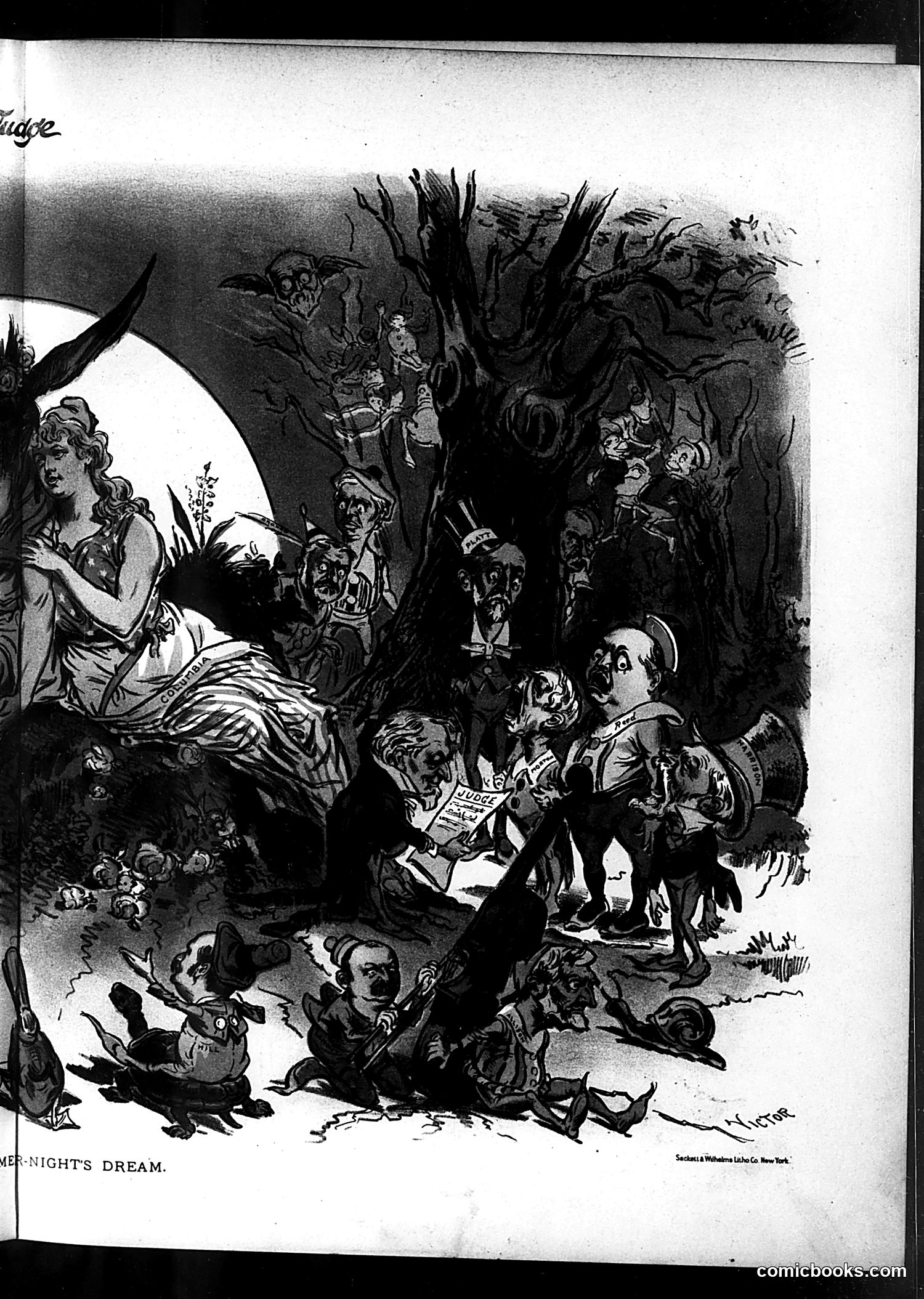
This illustration references Shakespeare's *A Midsummer Night's Dream*, as indicated by the title at bottom. The cartoon depicts a chaotic theatrical scene with numerous figures—likely representing both the play's characters and contemporary political/social figures merged together in satirical fashion. The composition shows a woman (possibly Puck or another character) on the left observing a fantastical gathering. The central mass features caricatured figures in period costume alongside what appear to be recognizable contemporary personalities, all rendered in the exaggerated style typical of *Judge* magazine's political satire. The specific identities of most figures remain unclear without additional context, but the satire likely comments on how theatrical absurdity mirrors contemporary political chaos—a common *Judge* theme.
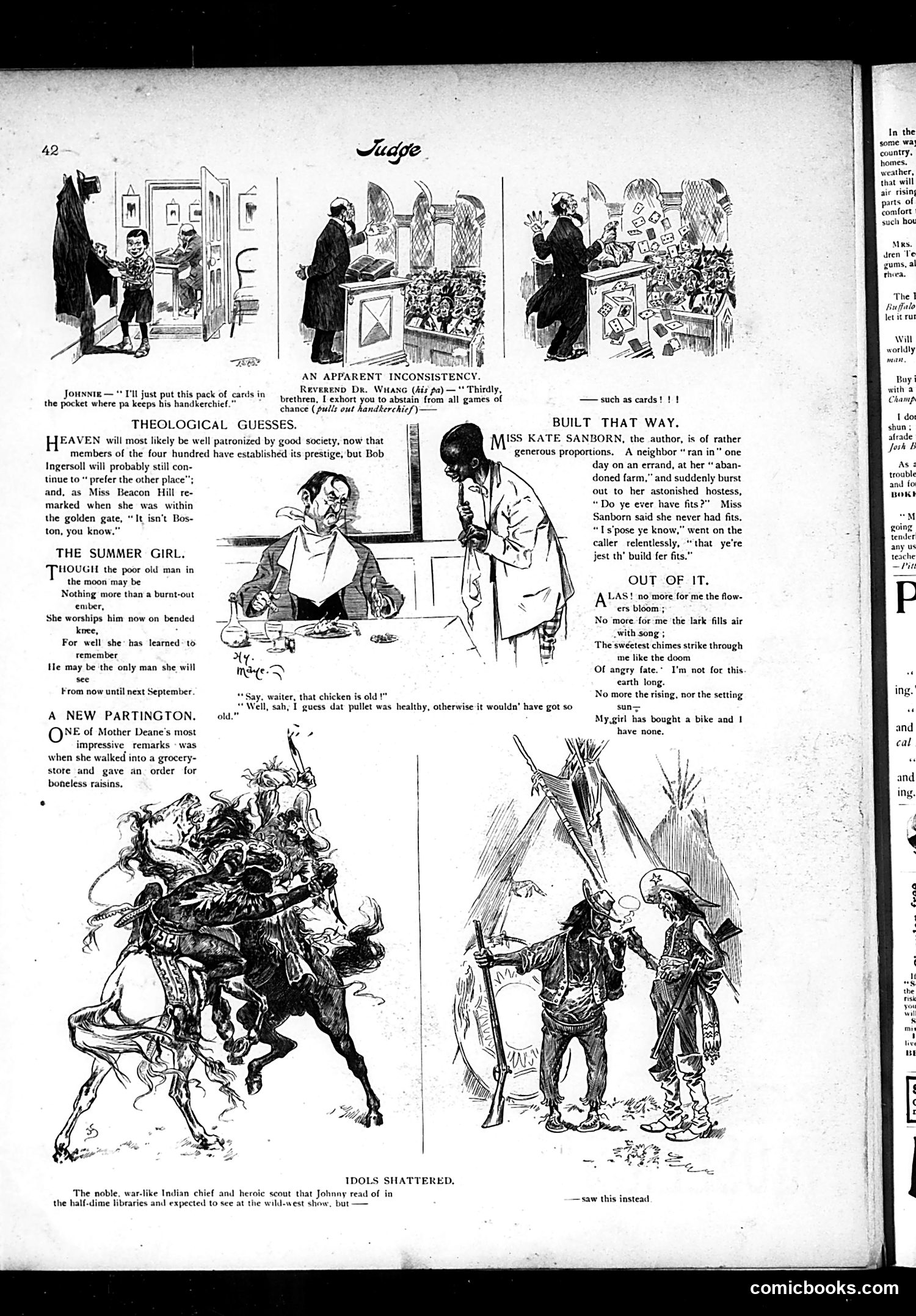
This page from *Judge* contains multiple short humorous pieces mocking social hypocrisy and absurdity: **"An Apparent Inconsistency"**: A reverend preaches against card games while his son secretly pockets playing cards—satirizing clerical hypocrisy. **"Theological Guesses"**: Mocks wealthy society's assumptions about heaven's exclusivity, referencing Robert Ingersoll (a famous 19th-century agnostic) and Boston's elite pretensions. **"The Summer Girl"**: Jokes about young women's romantic desperation, worshipping the moon as their only available male companion during summer. **"Idols Shattered"**: Contrasts dime-novel depictions of noble Native American warriors with the actual "wild-west show" performers—deflating romantic frontier mythology. **"Built That Way"**: A crude joke about a woman's physique and susceptibility to seizures. **"Out of It"**: A man's melodramatic lament that his girlfriend buying a bicycle has ended their relationship—mocking both romantic overwroughtness and women's newfound independence via bicycles.
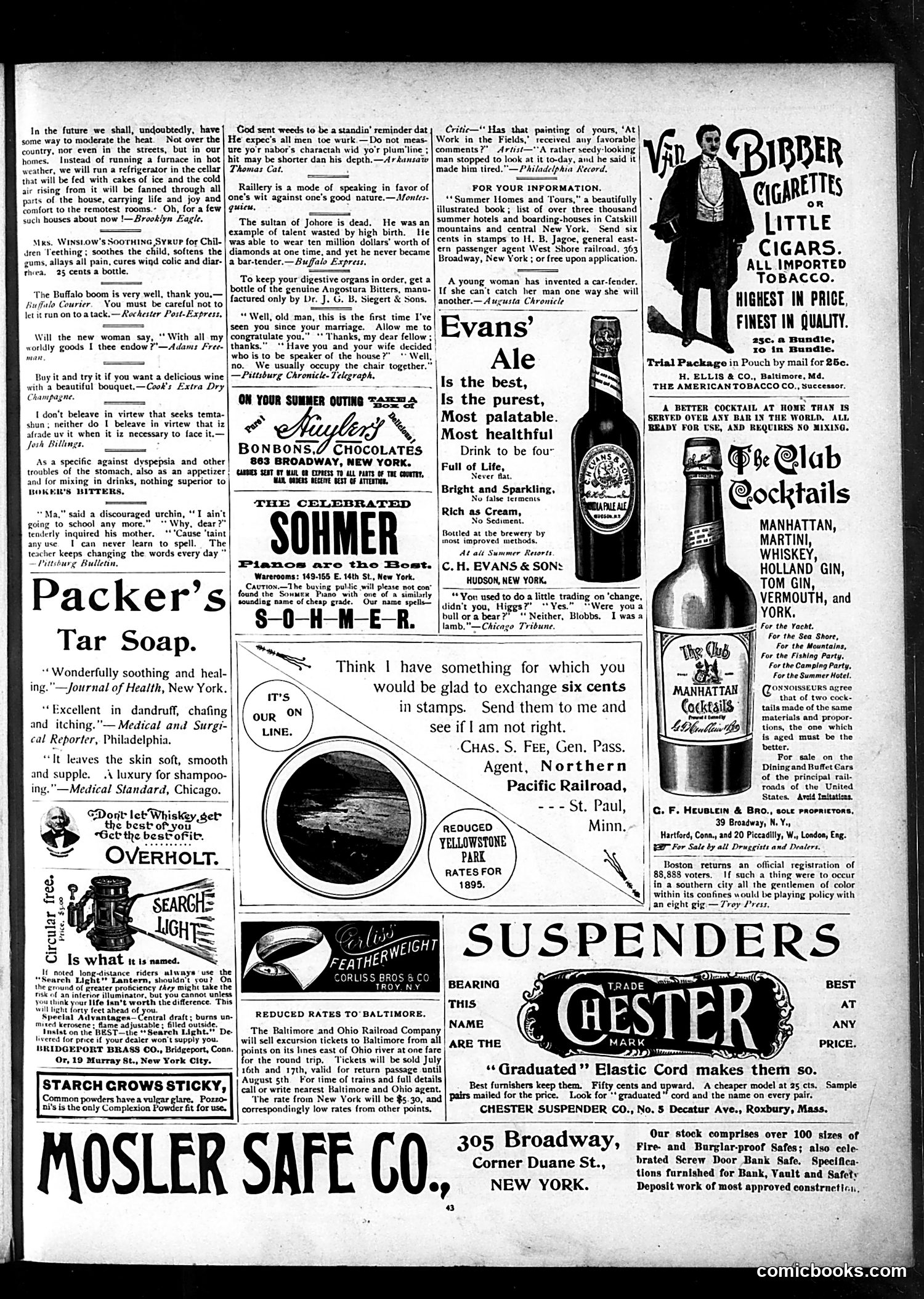
This is primarily an advertising page from Judge magazine, with scattered editorial jokes and quips rather than a unified cartoon narrative. The page contains numerous brief satirical observations on contemporary life: complaints about household refrigeration lacking in hot weather; commentary on wealthy sultans wasting talent; jokes about the "New Woman" and marriage equality ("who is to be speaker of the house?"); and humor about spelling instruction's inconsistency. A notable quip mocks a woman inventor: a young woman has invented a car-fender, the joke being if she "can't catch her man one way she will another"—contemporary satire about women's expanding roles in society and innovation, treated condescendingly. The dominant content, however, is advertising: Packer's Tar Soap, Sohmer Pianos, Evans' Ale, Chester Suspenders, and various patent medicines. The page reflects Judge's business model of combining light social commentary with paid advertisements, rather than presenting coherent political satire.
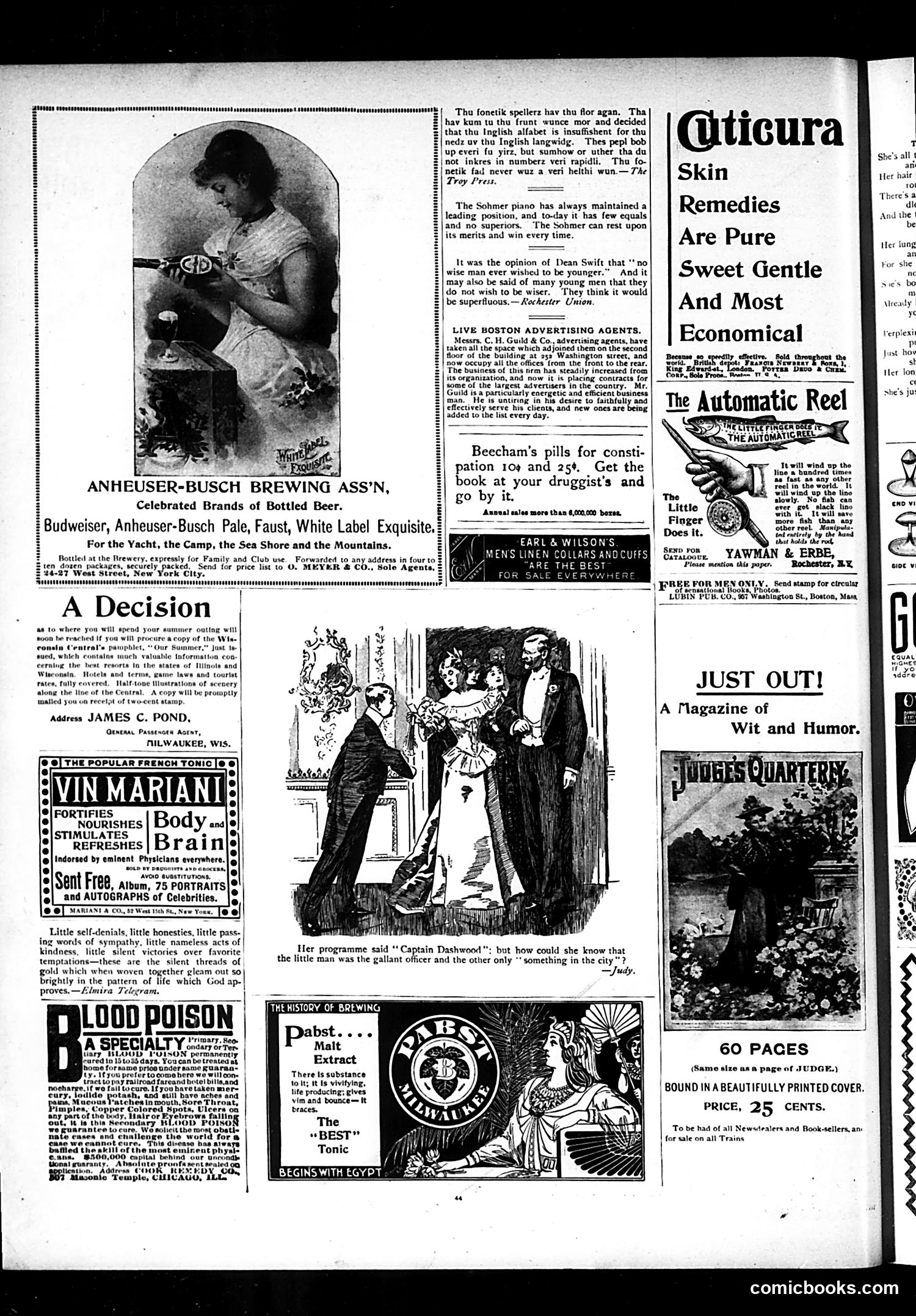
This is primarily an **advertising page** from Judge magazine, with one cartoon and extensive product advertisements typical of early 1900s publications. ## The Cartoon The single cartoon shows a woman in formal dress confronting a man, with text explaining she was deceived: her program identified "Captain Dashwood" as her escort, but the actual officer was someone else—the small man present was merely "something in the city" (a clerk or minor businessman). The humor depends on **class anxiety**: she was embarrassed to be seen with someone of lower social status, having expected a military officer. This reflects Edwardian anxieties about social pretense and mistaken identity. ## Other Content The page includes brief social commentary—notably a mocking paragraph about "fonetik spellerz" (phonetic spellers) advocating alphabet reform, dismissed as a recurring fad that never gains traction. This satirizes 19th-century spelling reform movements. The remainder consists of period advertisements for beer, pianos, tonics, and patent medicines—standard commercial content for magazines of this era.
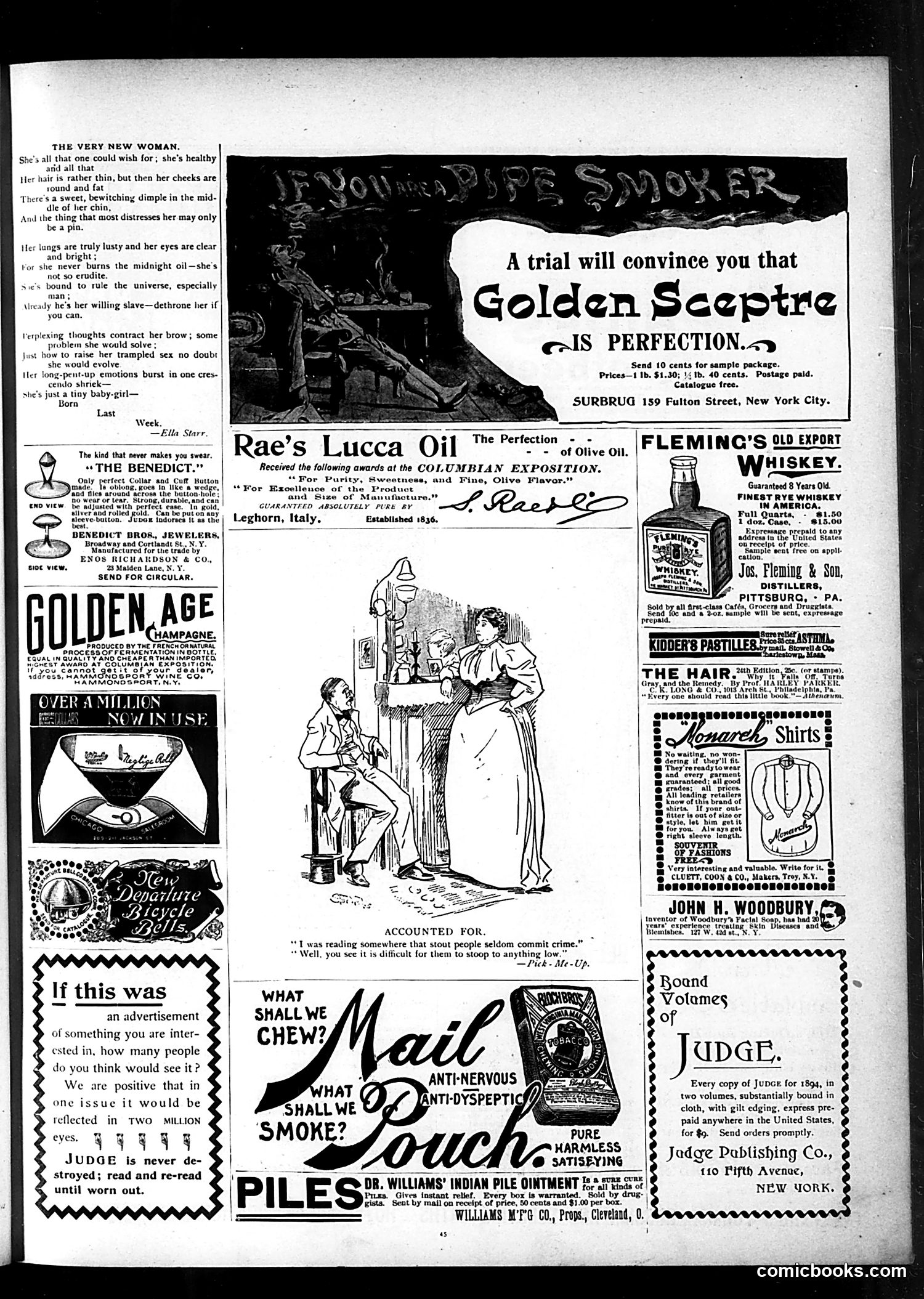
This page is primarily **advertising**, with one notable satirical poem at the top. ## The Satirical Content "The Very New Woman" by Ella Starr mocks the emerging "New Woman" movement of the 1890s—women seeking independence, education, and rights. The satire is backhanded: it describes an idealized woman who is healthy, attractive, and carefree, yet concludes she's "just a tiny baby-girl—Born Last Week." The joke suggests that despite feminist aspirations, these women remain intellectually immature and incapable of solving real problems ("how to raise her trampled sex"). Her ambitions allegedly culminate only in emotional outbursts. The humor depends on Victorian assumptions that women's suffrage and educational pursuits were inherently absurd—presenting the "New Woman" as simultaneously infantile and dangerously ambitious. ## The Advertisements The remaining page features period product ads (olive oil, whiskey, hair treatments, pile ointment) typical of 1890s magazines, with no apparent political content beyond reflecting contemporary consumer culture.
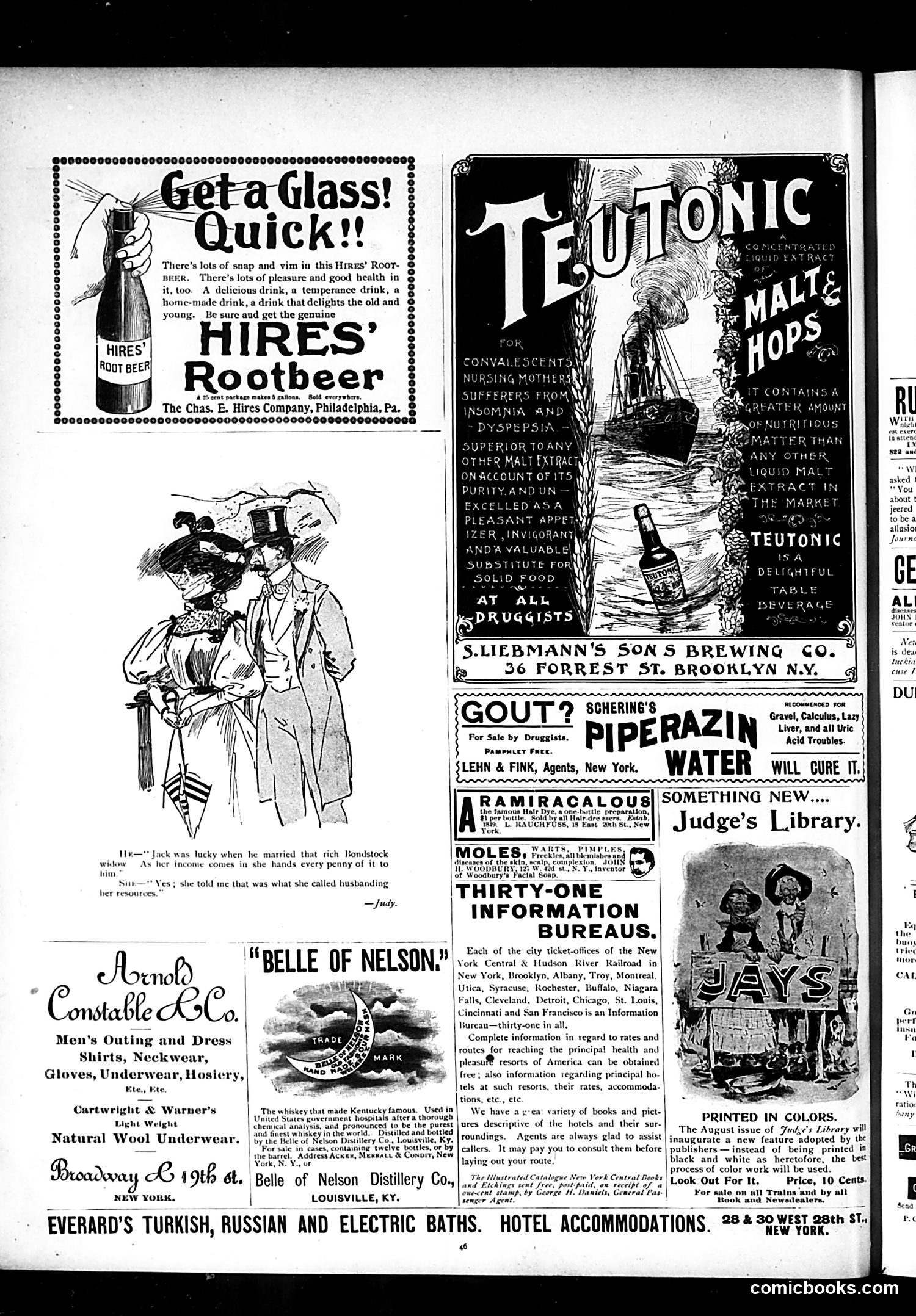
This page is primarily **advertising**, not political satire. The dominant content comprises patent medicine and commercial product advertisements typical of early 20th-century magazines. The single cartoon (upper left) depicts a couple with the caption about a man marrying a wealthy woman who gives him her income—a mild joke about marital economics and "husbanding" resources, playing on the double meaning of the word. The advertisements include: - **Hires' Root Beer** (temperance drink) - **Teutonic Malt & Hops** (medicinal extract) - **Piperazin Water** (claimed cure for gout and uric acid troubles) - **Belle of Nelson whiskey** (despite temperance claims elsewhere) - Various patent remedies and travel information These ads reflect the era's unregulated medicine market, where dubious health claims were standard. The juxtaposition of "temperance" root beer with whiskey advertisements reveals the period's contradictory attitudes toward intoxication and health products.
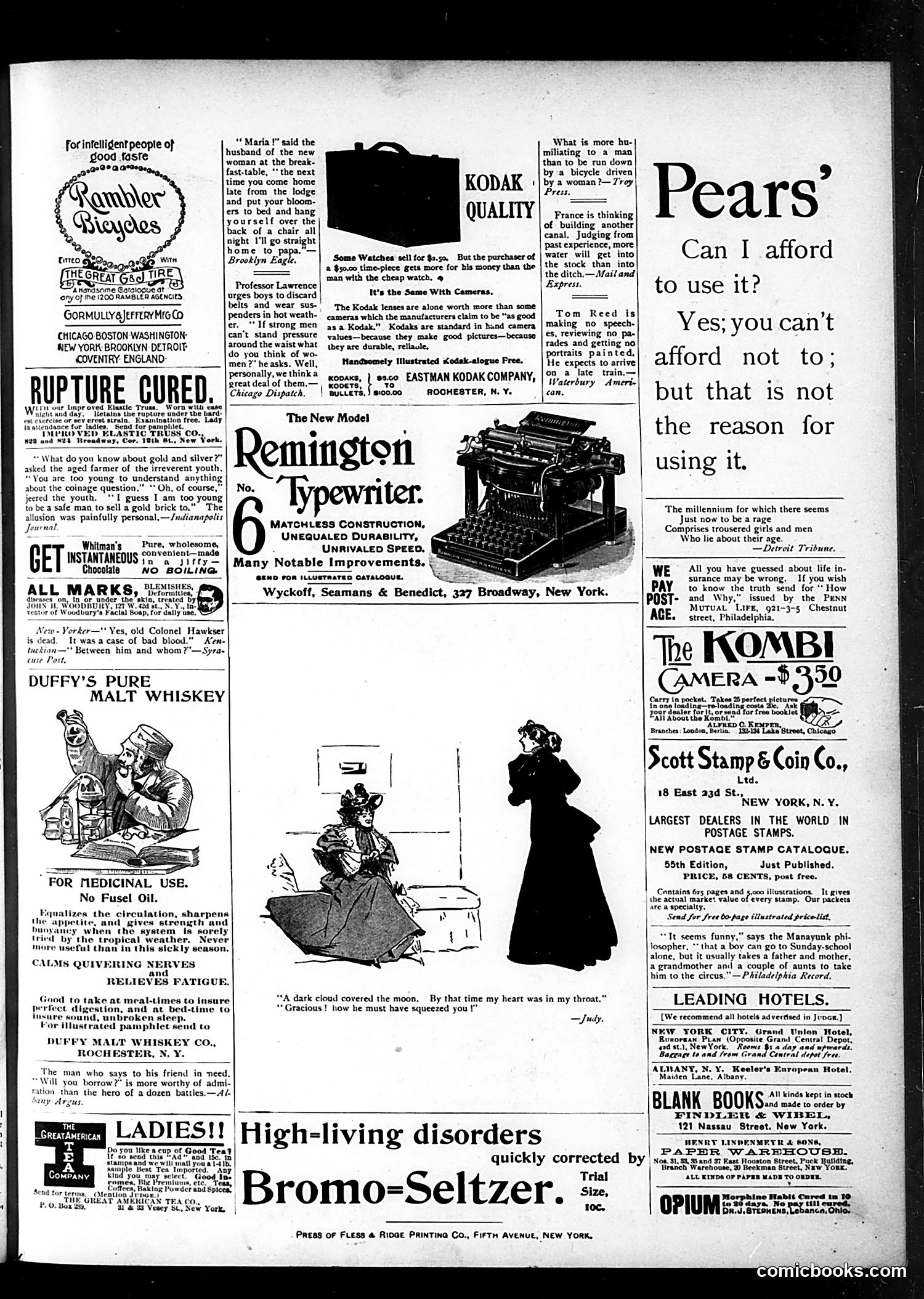
This page from *Judge* contains primarily **advertisements and humorous anecdotes** rather than political cartoons. The small illustrations scattered throughout are mostly product endorsements with brief jokes. The main satirical content includes short quips mocking contemporary figures and trends: a joke about a "new woman" returning late from lodge meetings; a dismissal of Professor Lawrence's advice about removing belts in hot weather; and commentary on French canal-building and public figures like Tom Reed. One cartoon depicts a silhouetted woman being propositioned, accompanying a romantic anecdote ("A dark cloud covered the moon...") in the style of *Judge*'s humorous romance satire. The page is dominated by full-page advertisements for products like Kodak cameras, Remington typewriters, Duffy's Malt Whiskey (marketed as medicinal), and Bromo-Seltzer—reflecting early 1900s consumer culture and the patent medicine era. The "Pears' Soap" advertisement includes philosophical copy about affordability and value.
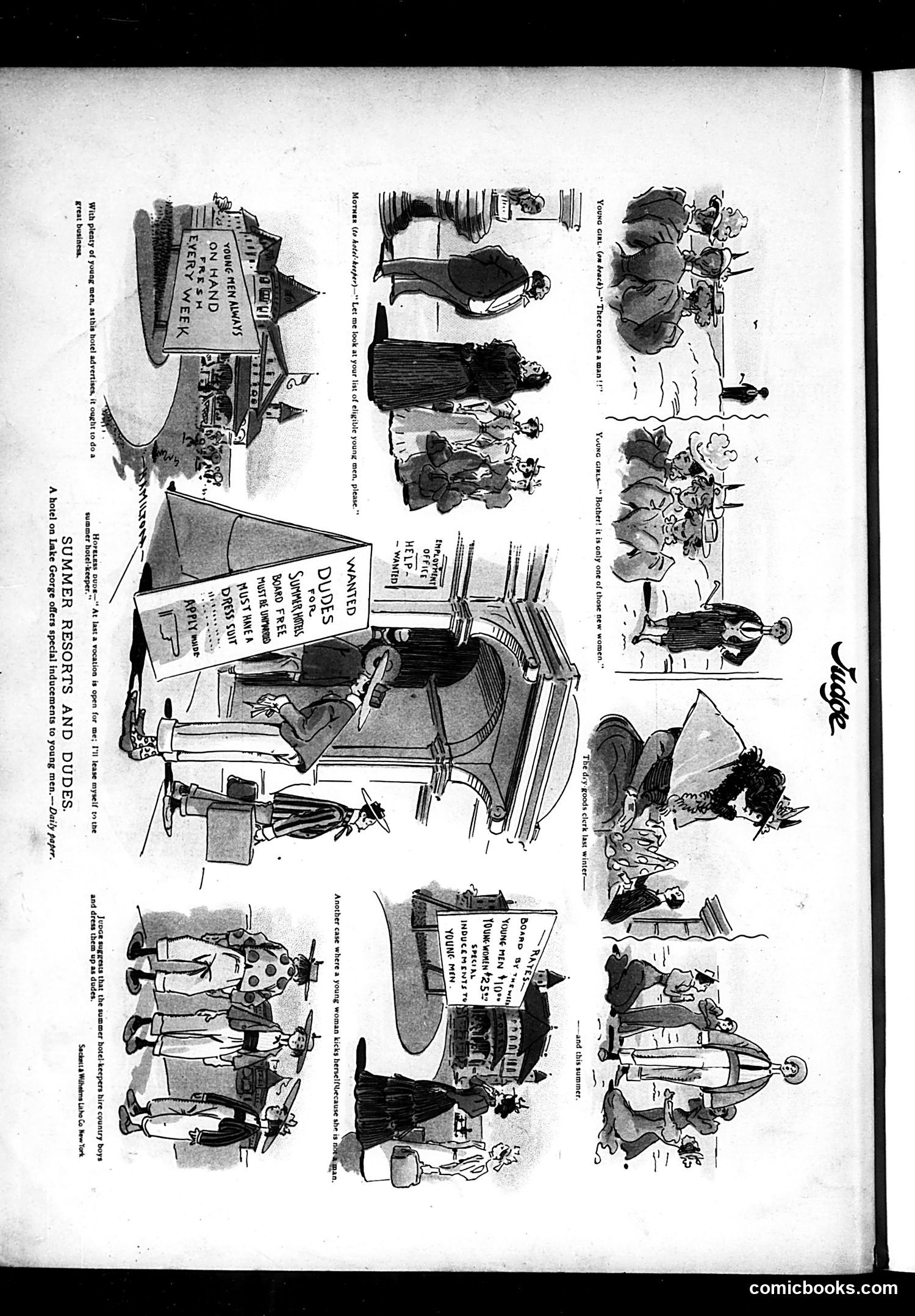
This Judge magazine page satirizes summer resort hotels and their marketing practices. The central joke concerns a hotel on Lake George advertising "special inducements to young men" to attract guests. The cartoon suggests that hotels are desperate to populate their establishments with young men as attractions (presumably for female guests). Judge's satirical proposal: hire homely country boys and dress them as fashionable "dudes" (well-dressed urban men) to deceive visitors about the quality of male clientele available. The humor relies on the era's class distinctions between rural and urban sophistication, and the assumption that summer resorts' primary appeal to women guests was the availability of eligible young men. The satire mocks both the hotels' deceptive advertising and the vanity of guests who could be fooled by mere clothing.