
A complete issue · 16 pages · 1887
Judge — July 9, 1887
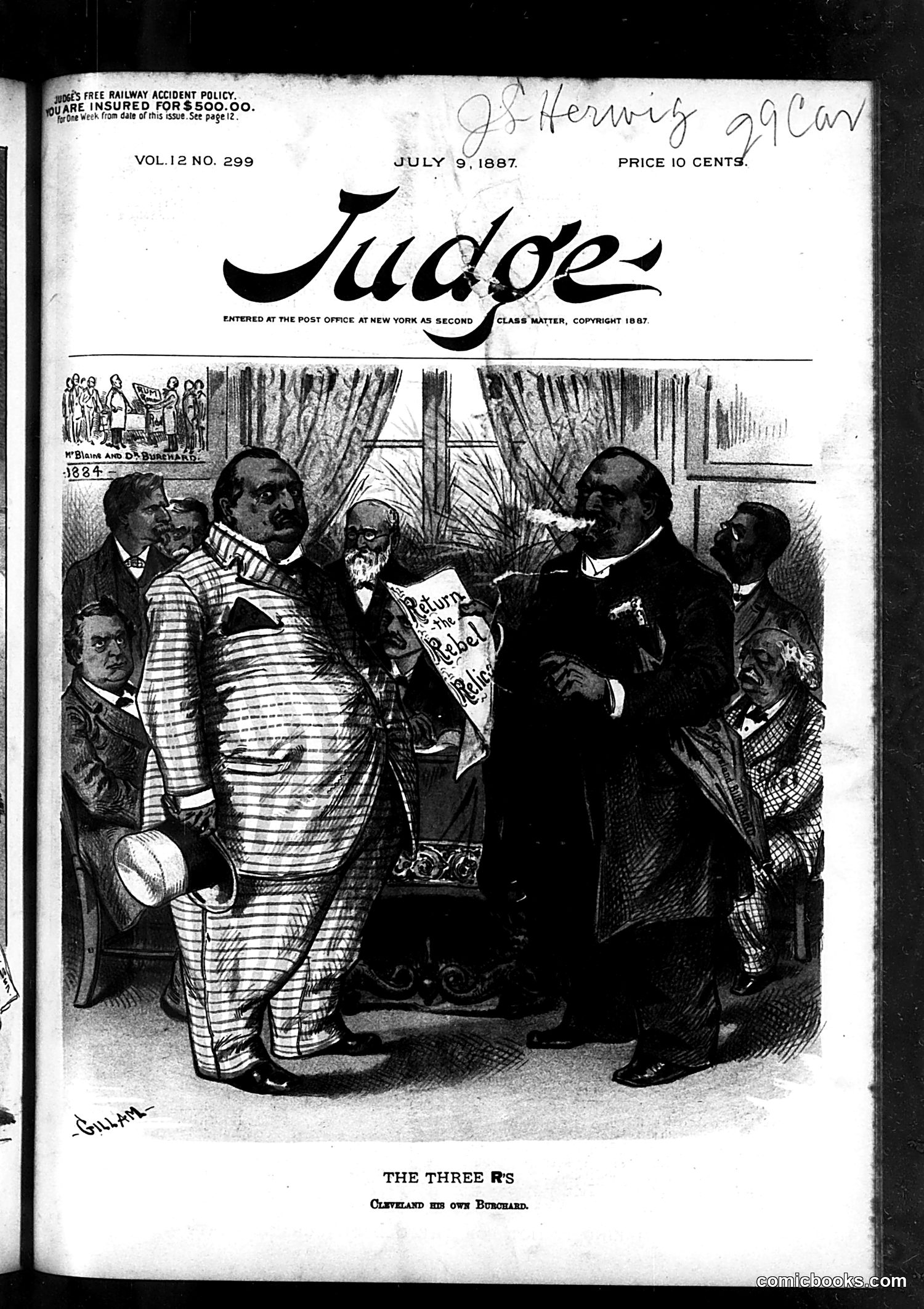
This July 1887 *Judge* cartoon satirizes President Grover Cleveland. The title's wordplay on "three Rs" (traditionally: Reading, wRiting, aRithmetic) likely mocks Cleveland's administrative competence or policy record. The central figure in striped wrapping (suggesting either mummy-like incompetence or restraint) appears to be Cleveland being examined or manipulated by suited political figures around him. The "scoreboard" reference suggests he's keeping track of his own performance or failures—implying self-delusion about his political standing. The cartoon likely critiques Cleveland's handling of a specific contemporary issue, though without additional context the exact scandal or policy dispute isn't clear from the image alone. The overall tone is dismissive of Cleveland's presidency.
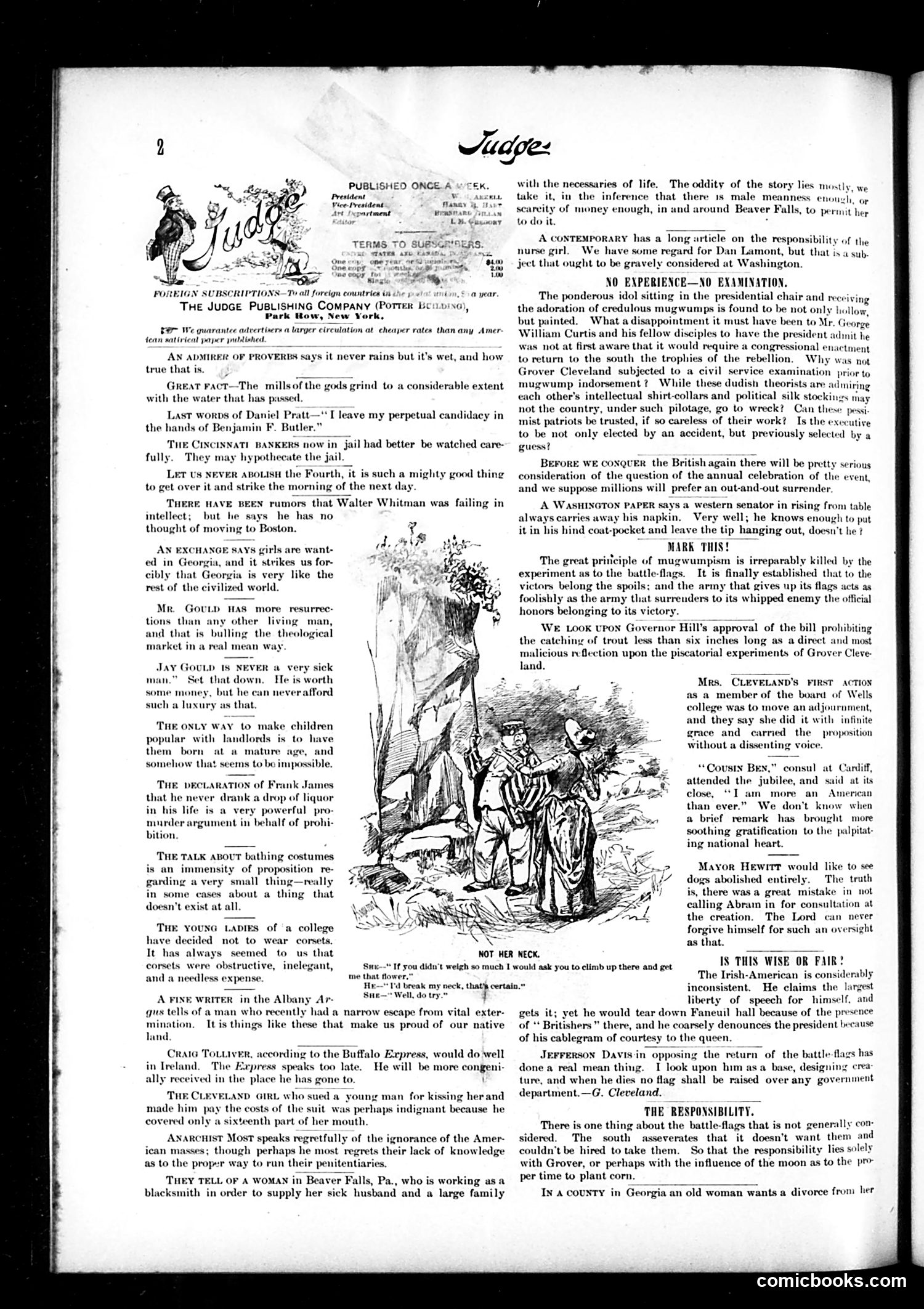
This page contains political commentary and satirical notes rather than a single cartoon. The main illustration depicts a religious scene with figures in robes, labeled "NOT HER HECK," apparently satirizing religious authority or hypocrisy. The text includes multiple brief political jabs: criticism of President Cleveland's civil service examination for mugwump endorsement; mockery of a Western senator who carries a napkin in his coat pocket; and commentary on Governor Hill's approval of a bill regarding "piscatorial experiments" (fishing). There's also social satire about college women's swimming costumes and references to various public figures including Frank James. The overall tone is acerbic commentary on contemporary politicians, social customs, and public figures, typical of Judge's satirical mission during this era (appears to be 1880s-90s based on references).
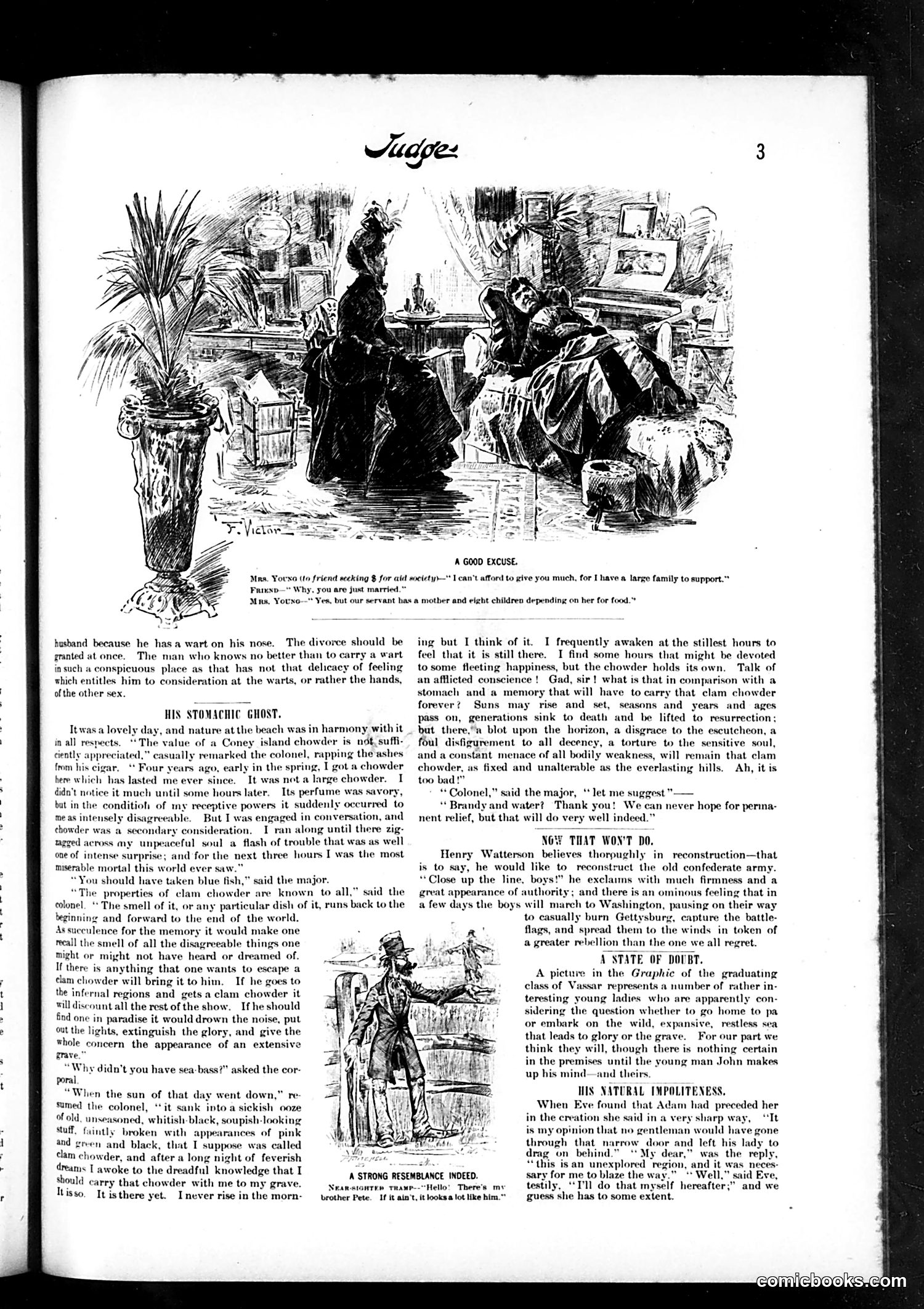
This page contains three distinct satirical pieces: **"A Good Excuse"** (top): A cartoon mocking wealthy married women's charitable excuses. A newlywed claims she cannot donate to charity because her servant's mother and eight children depend on the servant's wages—an absurdly indirect excuse that satirizes the self-serving logic of the privileged class avoiding philanthropic obligations. **"His Stomachic Ghost"** (center/bottom): A lengthy humorous monologue by a colonel describing how Coney Island clam chowder from years past haunts him permanently, causing perpetual digestive distress. It's comedic hyperbole about indigestion's lasting psychological effects—the "ghost" being an unforgettable bad meal. **"A Strong Resemblance Indeed"** (bottom right): A brief joke about mistaken identity between brothers. The page satirizes middle and upper-class foibles: charitable pretense, the perils of seaside dining, and social embarrassments. The humor relies on exaggeration and class-conscious observation typical of Judge magazine's satirical voice.
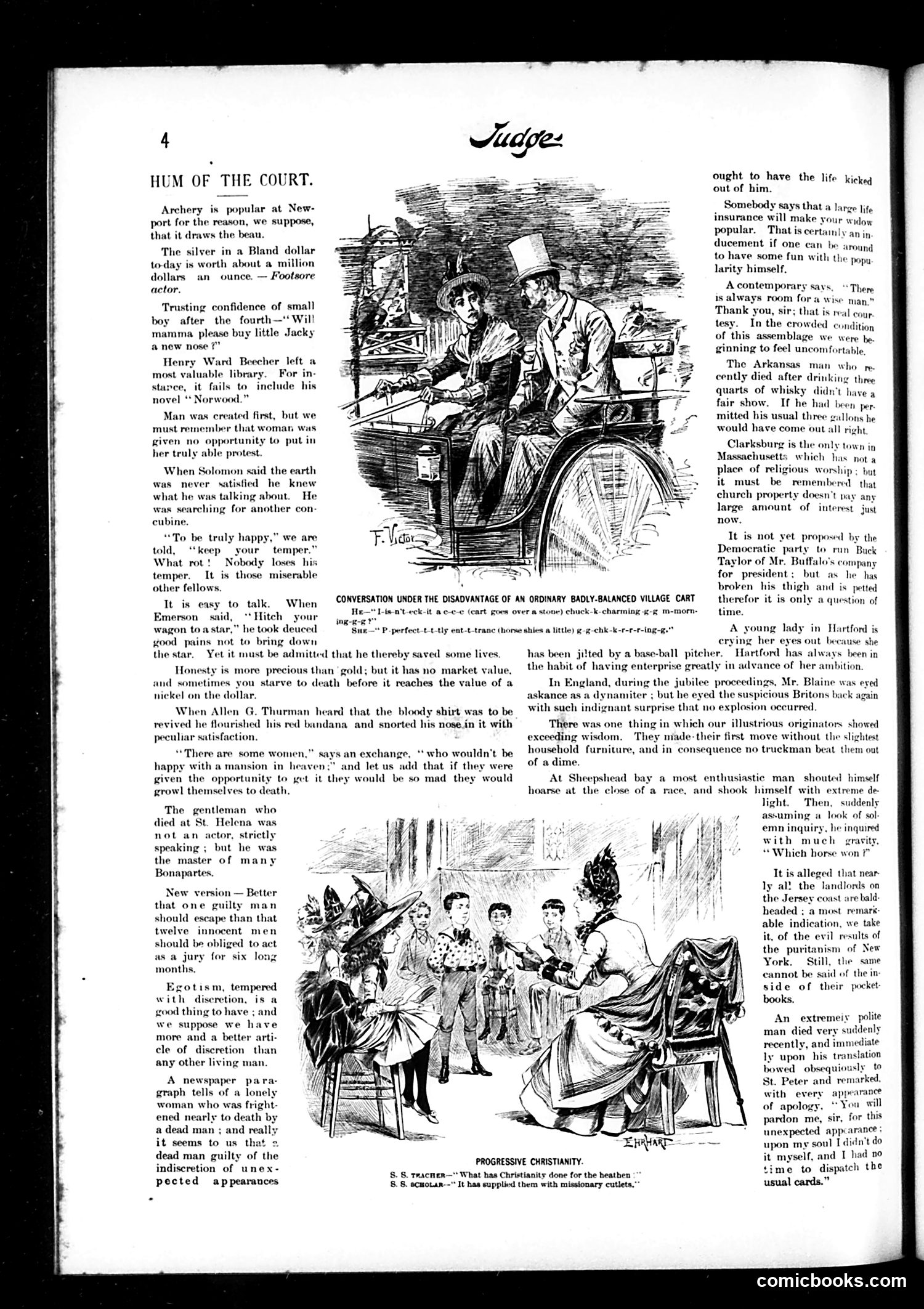
This page from *Judge* contains several short satirical items and two illustrated cartoons mocking contemporary figures and social issues. **Top cartoon** depicts a village cart conversation where the bumpy ride makes coherent speech impossible—satirizing rural life's discomforts. **Bottom cartoon**, titled "Progressive Christianity," shows a teacher instructing students that "Christ has Christianity done for the heathen" while a student responds "It has supplied them with missionary cutlets"—dark satire suggesting Christian missionaries harm rather than help indigenous peoples. The text items mock various targets: Henry Ward Beecher (prominent preacher, likely for his novel *Norwood*); women's lack of agency; politicians like Allen G. Thurman (referenced by his "bloody shirt" political tactic); and contemporary absurdities like life insurance and base-ball romance. References to "Bland dollar" and "Clarksburg" suggest 1880s-era monetary and regional humor now obscure to modern readers.
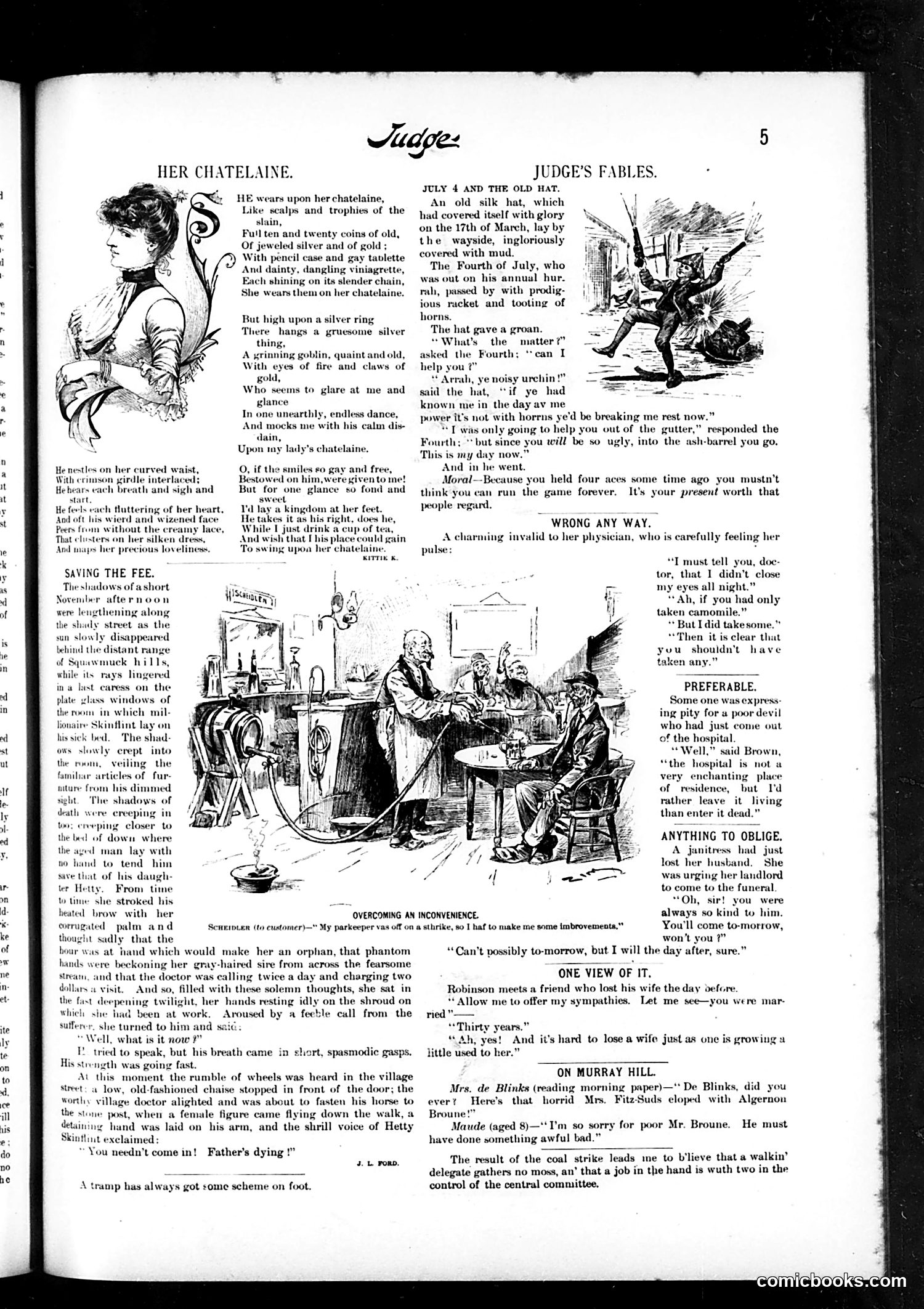
This page contains several humorous pieces typical of Judge's satirical approach: **"Her Chatelaine"** (left): A poem mocking the fashion of women wearing decorative charms and trinkets on chains attached to their waists. The satirical tone suggests this accessory trend was considered excessive or pretentious. **"Saving the Fee"** (center-left): A melodramatic story about an elderly man on his deathbed and his daughter Hetty. The satire appears to target either sentimental Victorian literature or—given the detail about a doctor "calling twice a day and charging two dollars a visit"—medical profiteering. **"July 4 and the Old Hat"** (right): A Aesop-style fable where a silk hat that was glorious on St. Patrick's Day (March 17) is now mud-covered and discarded on July 4th. The moral warns against resting on past accomplishments—a timeless satirical point about complacency. The remaining pieces are brief, humorous anecdotes about everyday situations.
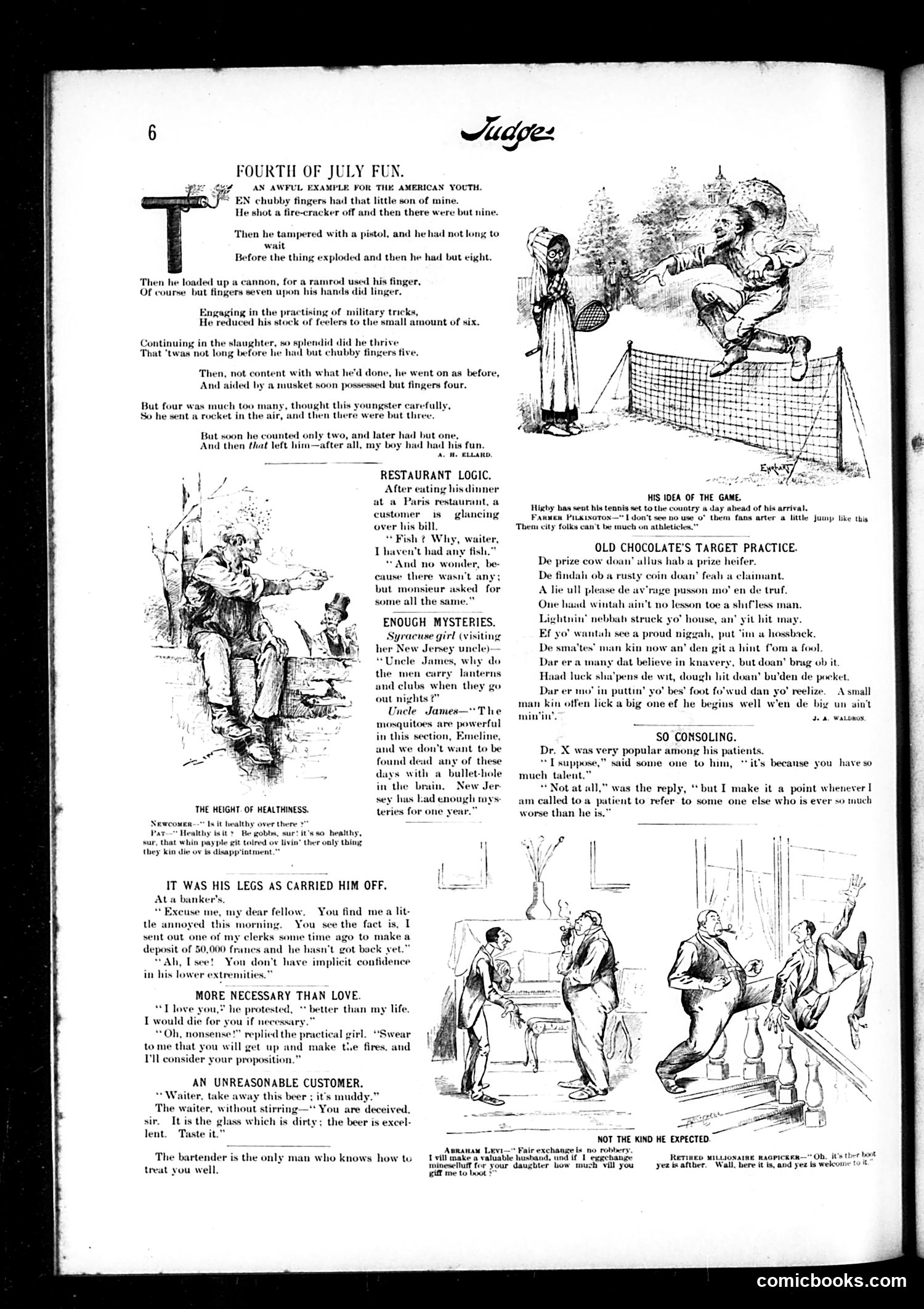
This page from Judge contains several short humorous pieces typical of late-19th/early-20th-century American satire: **"Fourth of July Fun"** uses dark humor to mock fireworks safety practices. A cautionary tale describes a child progressively losing fingers (nine down to one) through increasingly reckless handling of firecrackers, cannons, and rockets—satirizing the actual dangers of Independence Day celebrations and suggesting parents allowed children dangerously unsupervised access to explosives. **Other brief comedic pieces** include ethnic humor ("Old Chocolate's Target Practice," featuring dialect stereotypes), workplace absurdities, and domestic situations. These reflect period attitudes. **The cartoons** illustrate these pieces with period-appropriate drawings showing the scenarios described. The content demonstrates Judge's formula: combining visual humor with short joke formats, often relying on contemporary social observations, workplace frustrations, and problematic ethnic caricatures now considered offensive. The overall tone is light satire aimed at middle-class American readers.
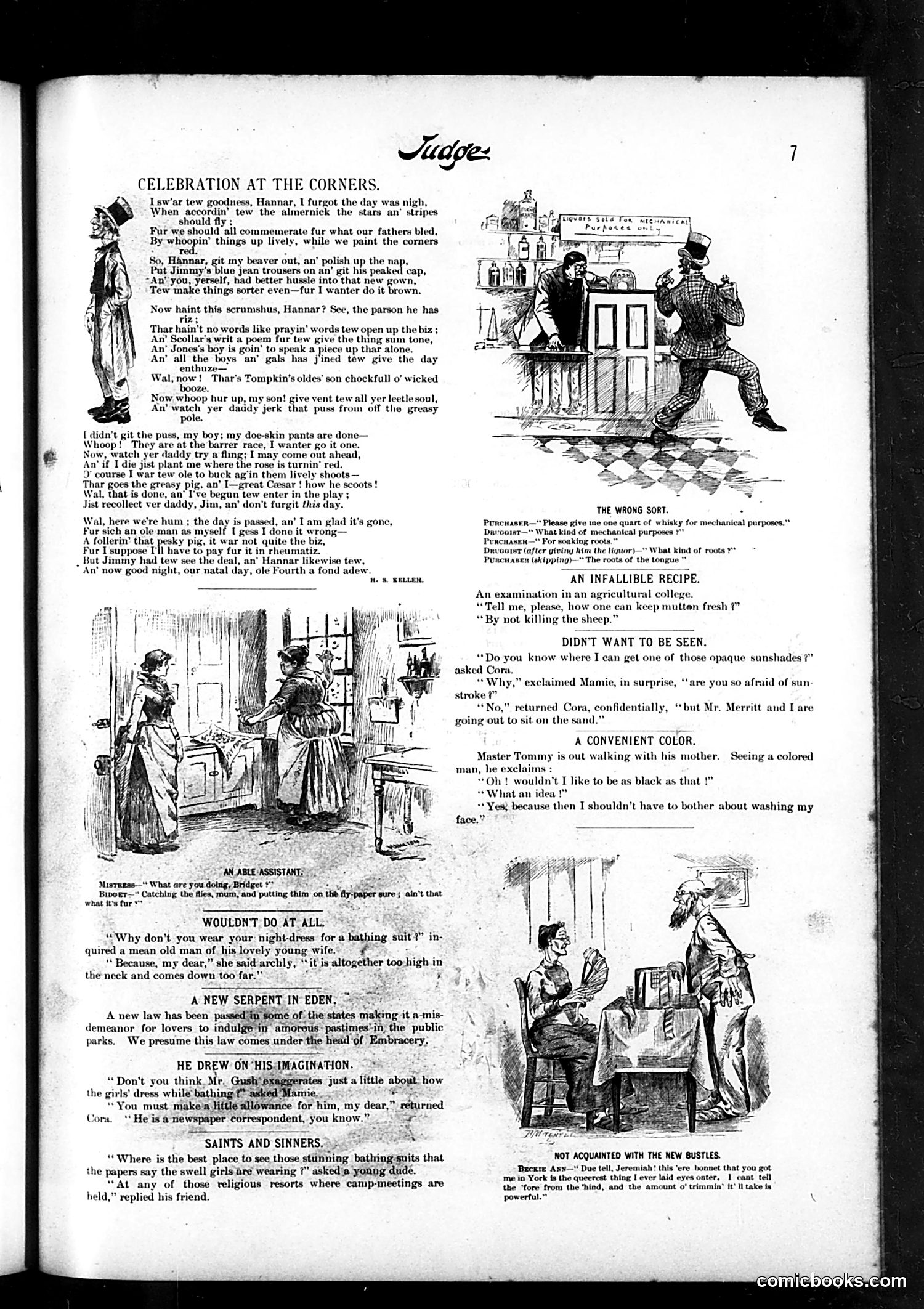
This page contains rural American humor and domestic satire typical of late 19th-century Judge magazine. **Main Cartoon ("Celebration at the Corners"):** A rustic farmer and his family celebrate Independence Day with exuberant, undignified activities—greasy-pole competitions, pig-chasing, and general mayhem. The satire targets rural Americans' enthusiastic but crude patriotism, contrasting their boisterous, physical celebrations with the solemnity supposedly befitting national commemoration. The dialect and characterizations (Hannar, Jimmy) employ period-typical rural stereotyping. **Supporting Jokes:** Brief comedic vignettes mock: - Marital dynamics (bathing suit disagreements) - Urban prohibition of public romance ("Embracery" pun) - Newspaper exaggeration - Social pretense around religious gatherings - Pharmacist encounters The humor relies on class-based mockery and domestic/gender dynamics typical of Judge's satirical approach, with the rural "Corners" celebration serving as the page's centerpiece targeting working-class Americans' patriotic expression.
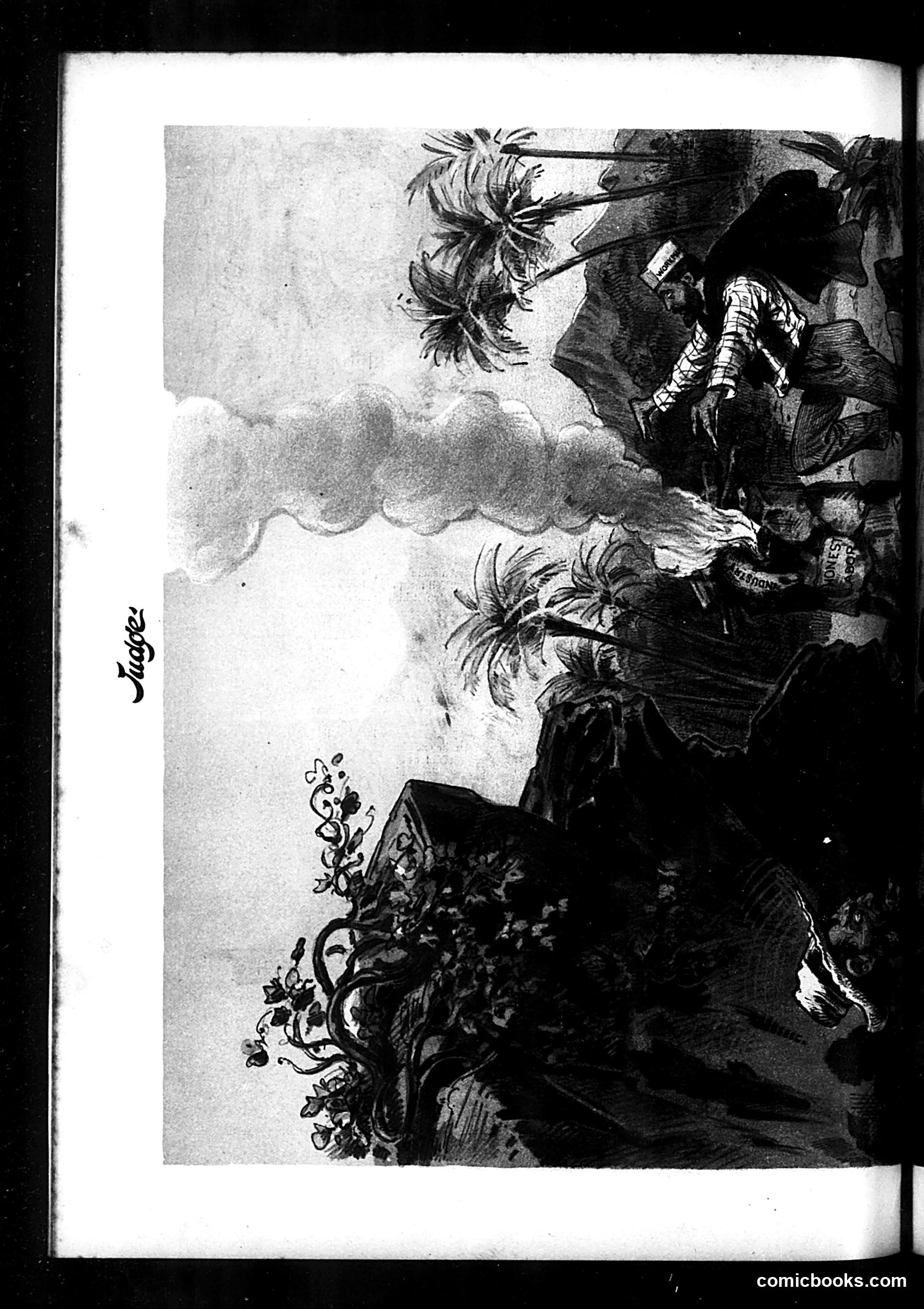
This appears to be a title page or section header from *Judge* magazine, showing the word "Judge" on the left side. The image depicts a dramatic scene with figures in period costume (appearing to be 18th or 19th century dress) positioned near palm trees and clouds. One figure points toward the sky while others gather below. However, without clearer text visible on the page or additional context about the specific issue date, I cannot confidently identify which political event, public figure, or social issue this cartoon satirizes. The OCR text provided only shows "comicbooks.com," which doesn't help establish the cartoon's meaning or historical reference. To properly explain this satire's point, I would need the actual article title or caption accompanying the image.
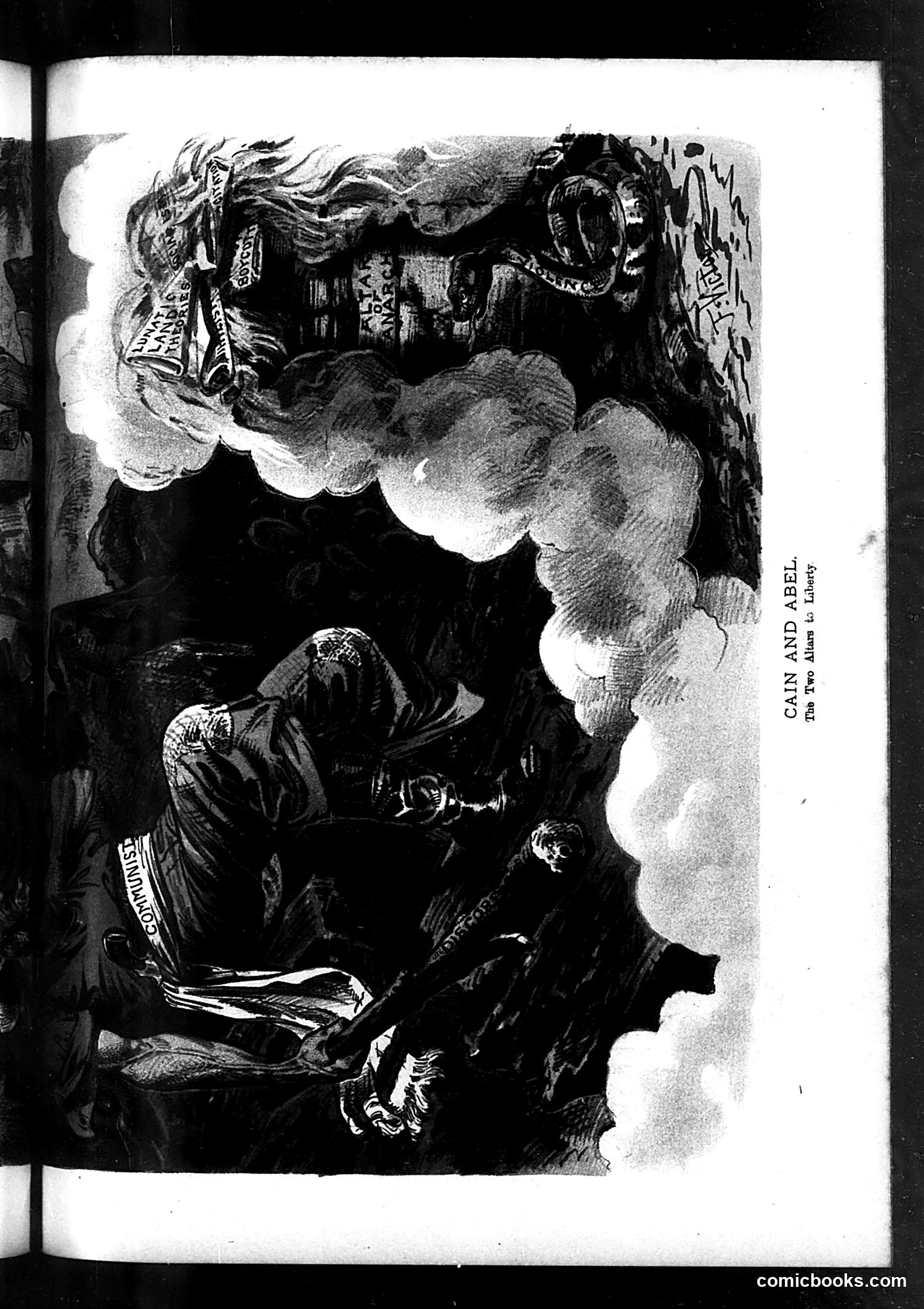
The OCR text is largely illegible, but the caption reads "CAIN AND ABEL" with "In Two Men's Library" as a subtitle. This appears to be a dramatic illustration rather than political satire. The image shows two figures in what seems to be a library or study setting, with elaborate decorative elements and dramatic shading. The biblical reference to Cain and Abel—history's first murder, where jealous Cain kills his brother—suggests the cartoon likely comments on rivalry, betrayal, or fraternal conflict within some contemporary context. Without clearer text or additional context about the publication date, I cannot identify the specific figures or historical situation being referenced. The artistic style and presentation suggest serious dramatic intent rather than comedic satire.
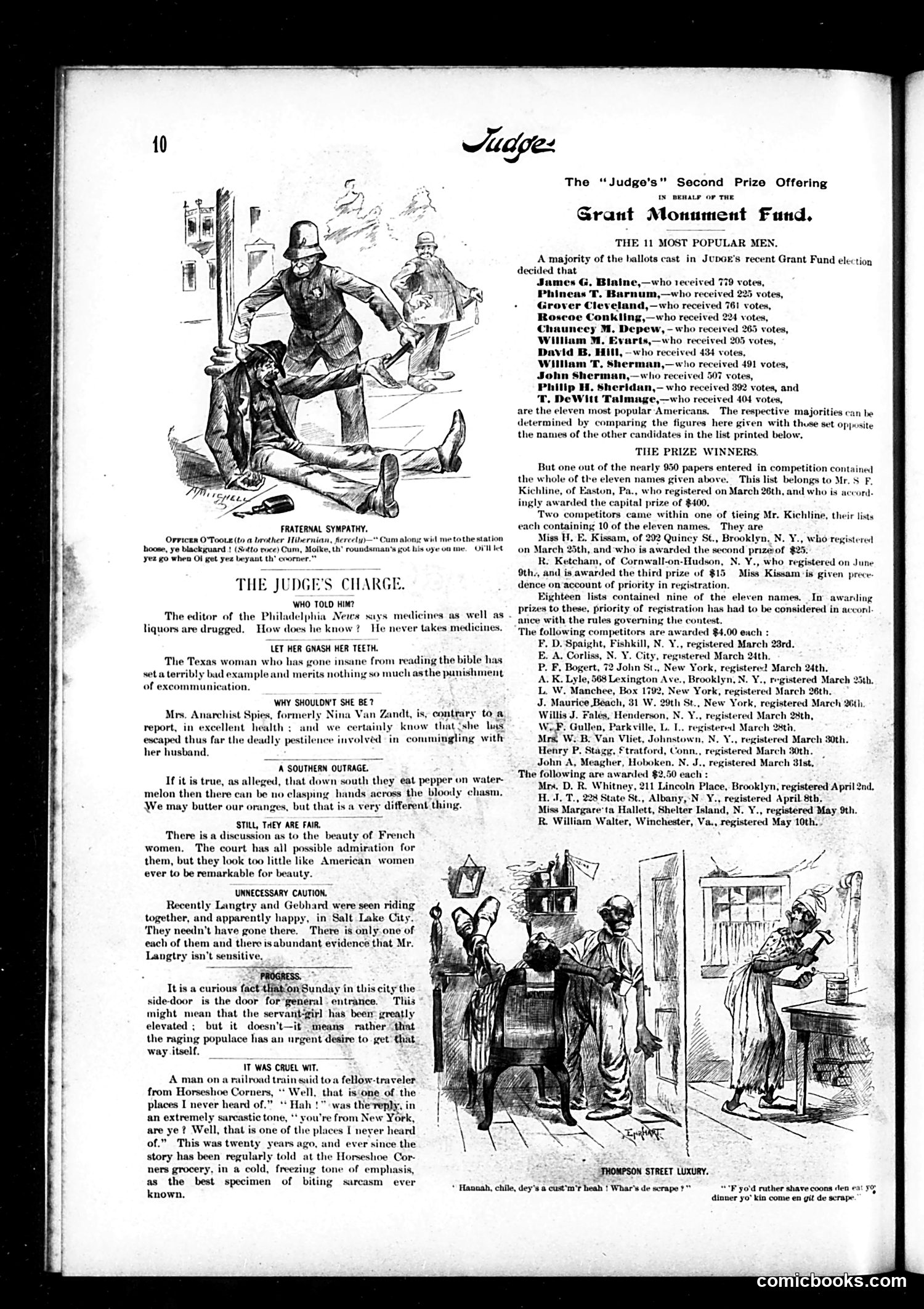
This page contains multiple short satirical items and humorous commentary typical of Judge magazine's style. **The main cartoon** ("Fraternal Sympathy") depicts two Irish men—identified by accent and stereotypical features—threatening each other with violence. Officer O'Toole confronts another Irishman, with both using exaggerated Irish dialect. This plays on contemporary ethnic stereotypes about Irish-Americans and their supposed propensity for brawling. **The textual items** mock various social and political figures: a Philadelphia editor's unsupported health claims; a Texas woman driven insane by Bible-reading; a female anarchist (Mrs. Spies/Van Zandt); and American dining habits versus French sophistication. References to "Langtry and Gebhard" appear to involve a romantic scandal. **The secondary cartoon** ("Thompson Street Luxury") shows a domestic scene, likely satirizing working-class or immigrant housing conditions through dialogue. **Below** is a legitimate announcement about Judge's Grant Monument Fund contest, listing the eleven most popular American men according to reader votes—including Blaine, Cleveland, and Conkling. The page reflects Judge's blend of crude ethnic humor, political commentary, and social satire typical of 1880s American publications.
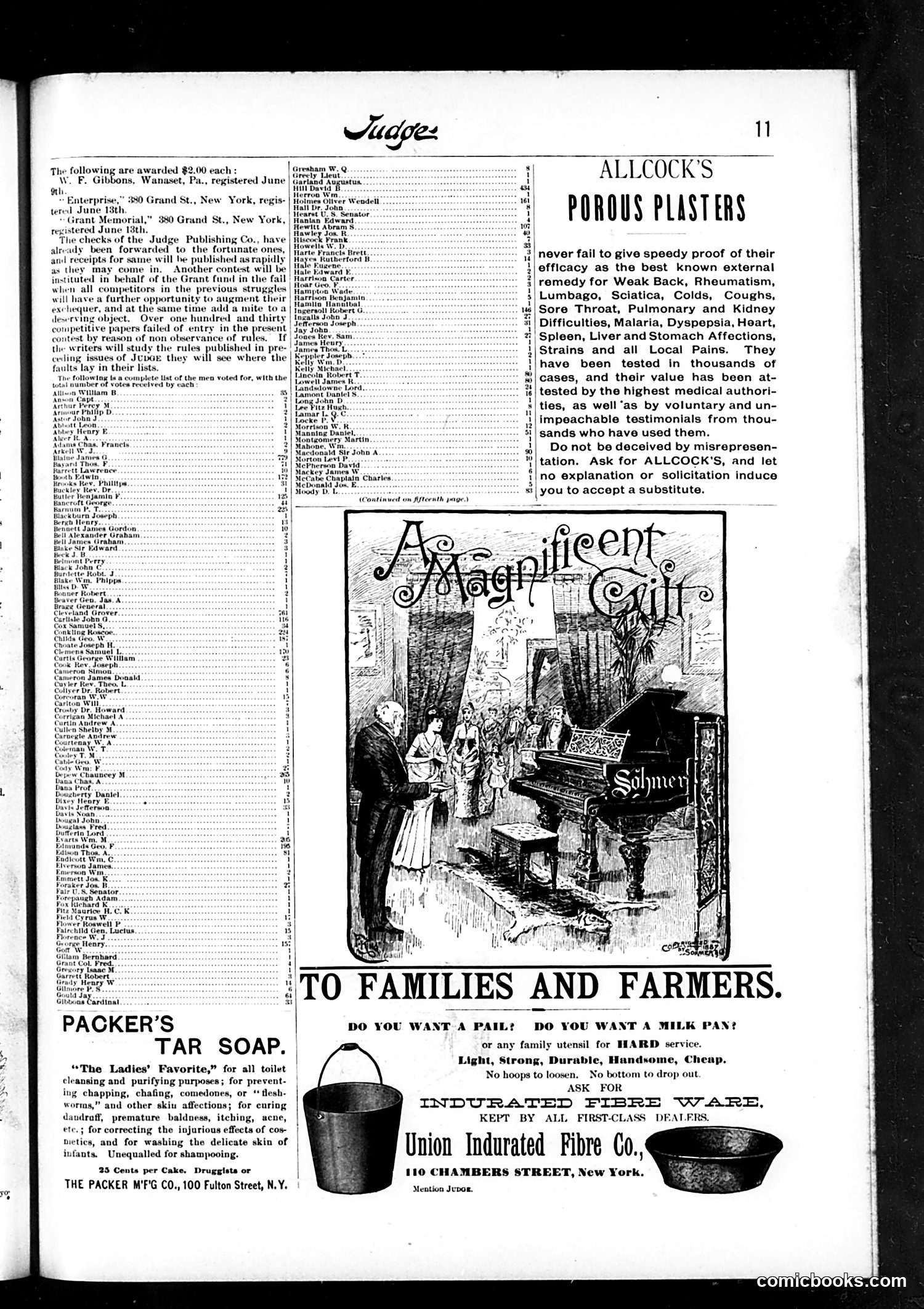
This page is primarily **advertisements and contest announcements** rather than political satire. The main content includes: **Contest Details**: Judge Publishing Company announces prize money ($2 each) for readers who submit correct answers to a previous contest, with a new "Grant Fund" contest promised. **Central Illustration**: An engraving titled "Magnificent Gift" depicts what appears to be a **piano recital or musical performance** in an elegant parlor, likely meant to evoke cultural refinement and prosperity—a lifestyle the magazine's readers might aspire to. **Advertisements**: The page features period product ads (Allcock's Porous Plasters for rheumatism, Packer's Tar Soap, Union Indurated Fibre Company's kitchenware). These reflect typical late-19th century concerns: health remedies, hygiene products, and durable household goods marketed to middle-class families and farmers. The illustration and ads together suggest Judge's target audience: aspirational middle and working-class Americans interested in both cultural sophistication and practical domesticity.
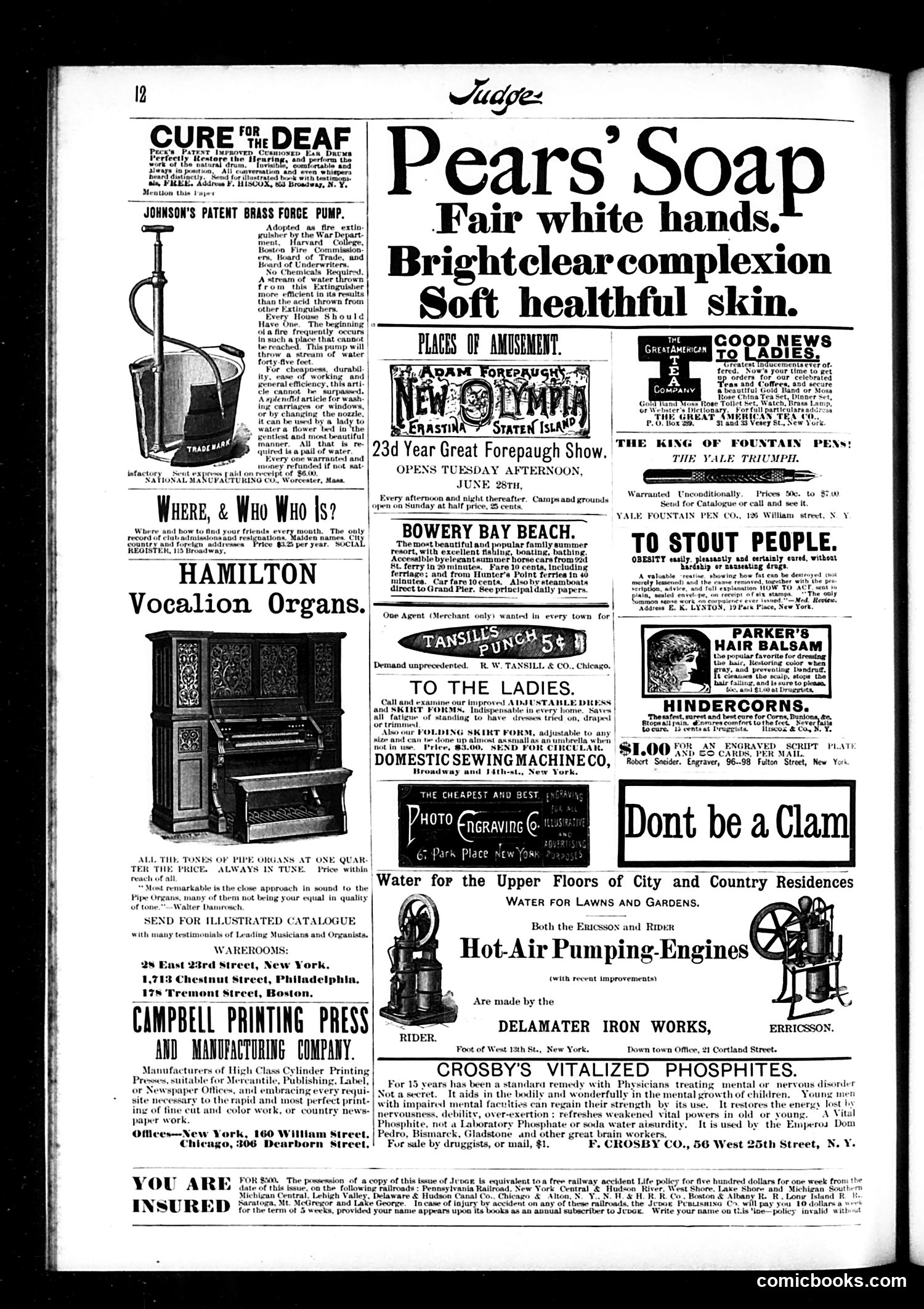
This page is primarily **advertising**, not editorial content or satire. It's from a 19th-century issue of Judge magazine and consists almost entirely of commercial advertisements. Notable ads include: - **Pears' Soap** (prominent): Promises "fair white hands" and "bright clear complexion"—reflecting period beauty standards emphasizing pale skin - **Hamilton Vocalion Organs**: Musical instruments - **To Stout People**: Weight-loss treatment, suggesting obesity was marketed as a medical condition requiring remedy - **Parker's Hair Balsam** and **Hindercorns**: Patent medicines typical of the era - **Crosby's Vitalized Phosphites**: Another patent medicine claiming to treat mental illness and weakness The ads reveal late-19th-century anxieties: racial preferences in complexion, body image concerns, and faith in unregulated patent medicines. There's also a subscription offer promising accident insurance. **No clear satire or political cartoons are visible** on this particular page—it functions primarily as a revenue source through advertising rather than as editorial commentary.
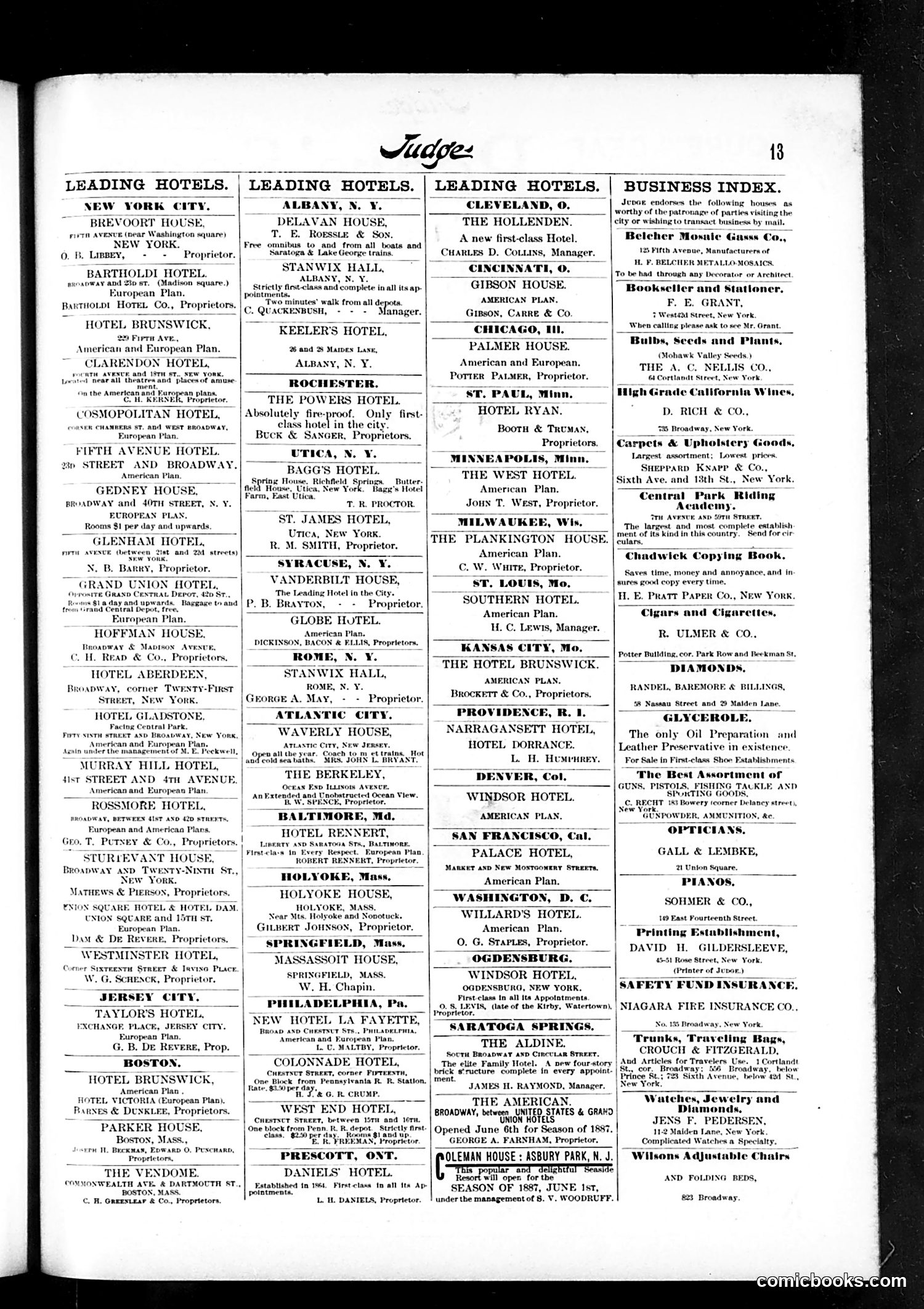
This page is primarily a **business directory of leading hotels** across major American cities (New York, Boston, Albany, Chicago, etc.). It contains no visible cartoon or satirical content—it is essentially an advertisement section. The page lists hotel names, proprietors, locations, and amenities (European Plan, American Plan, etc.) organized by city. This type of advertising was common in *Judge* magazine, which mixed political satire with commercial content to fund publication. The only text-based humor appears minimal or absent from this particular page. It represents the practical, commercial side of the magazine rather than its satirical editorial content. For a modern reader, this serves as a historical document showing late-19th-century American hospitality infrastructure and how hotels marketed themselves.
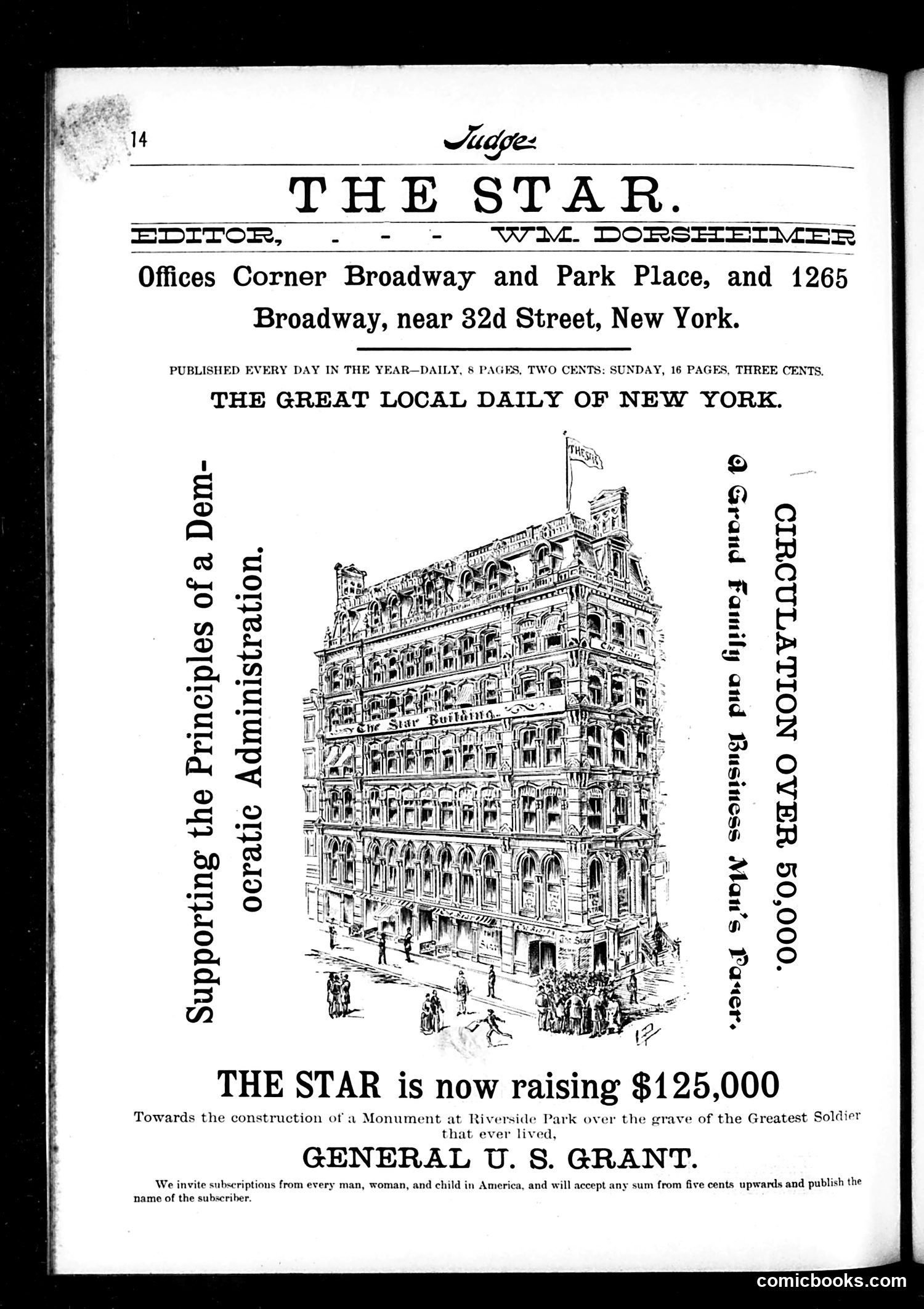
This is primarily a **title page and advertisement**, not a political cartoon. It announces *The Star* newspaper's fundraising campaign for a monument to General Ulysses S. Grant at Riverside Park in New York. The page promotes *Judge* magazine itself—edited by Wm. Dorsheimer—as "the great local daily of New York," listing office locations and subscription prices (2 cents daily, 3 cents Sunday). The central image shows an ornate building (likely the newspaper's offices or a notable NYC structure). Text boxes emphasize the paper's support for democratic administration and circulation over 60,000. The Grant monument appeal invites public donations from five cents upward. This reflects the late 19th-century American practice of public fundraising for commemorative monuments to Civil War figures, positioning *The Star* as a patriotic institution supporting the veneration of the Union's military leadership.
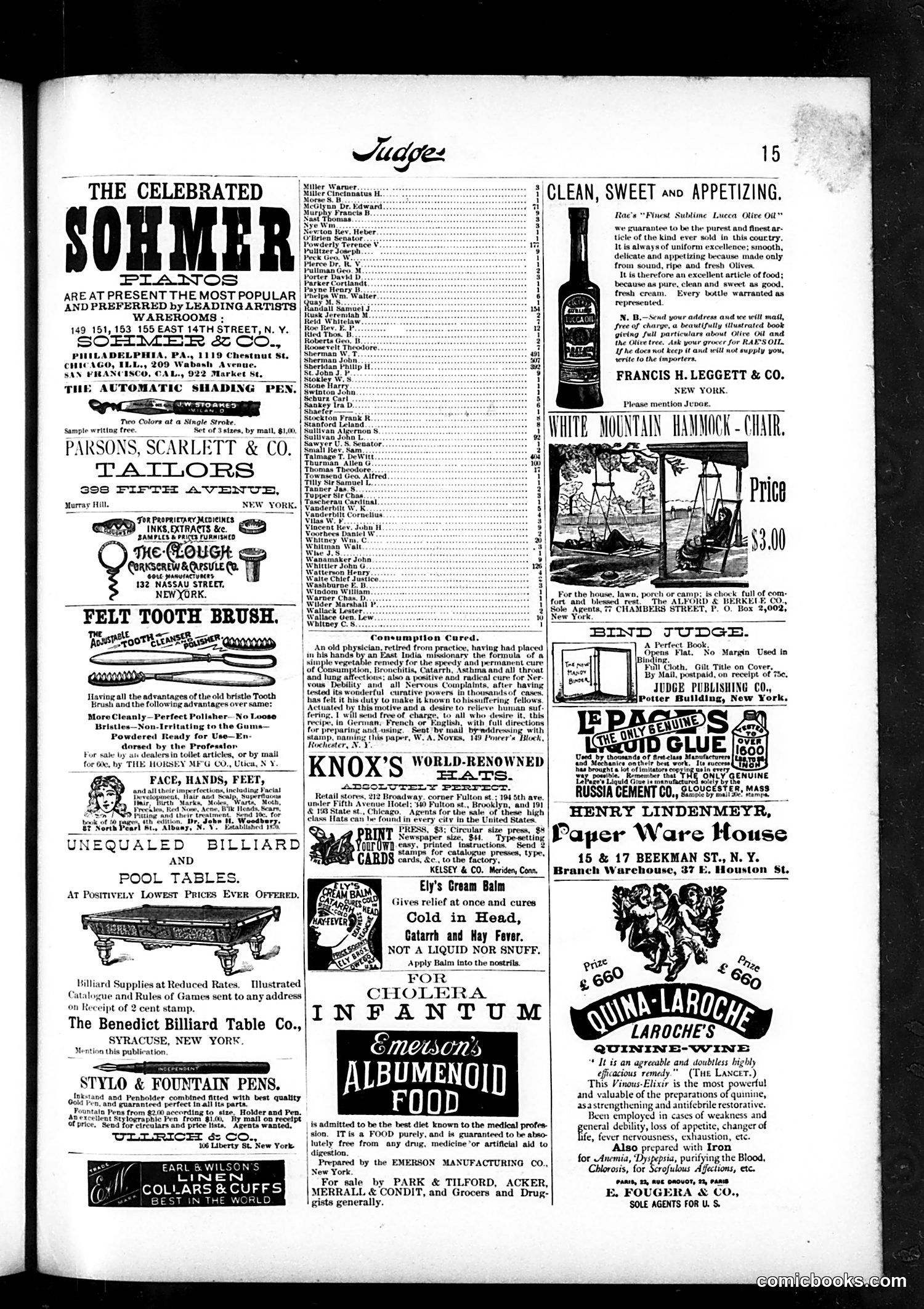
This is primarily an **advertising page** from Judge magazine, not a satirical cartoon page. The layout consists almost entirely of commercial advertisements for late 19th-century products and services. Notable ads include: - **Sohmer Pianos** (top left) - **Felt Tooth Brush**, **Billiard Tables**, and **Fountain Pens** (left column) - **Knox's World-Renowned Hats** (center) - **Emerson's Albumenoid Food** and **Ely's Cream Balm** (center-right) - **Quina-Laroche** patent medicine (right) - **Rae's Olive Oil** (top right) There is one small image—a **White Mountain Hammock-Chair** priced at $3.00 with a photograph showing the product in use on a porch. The page also includes what appears to be a **table of contributors or staff names** in fine print (top center). **No political or social satire is evident** on this page—it functions as a revenue-generating advertising section typical of periodicals from this era.
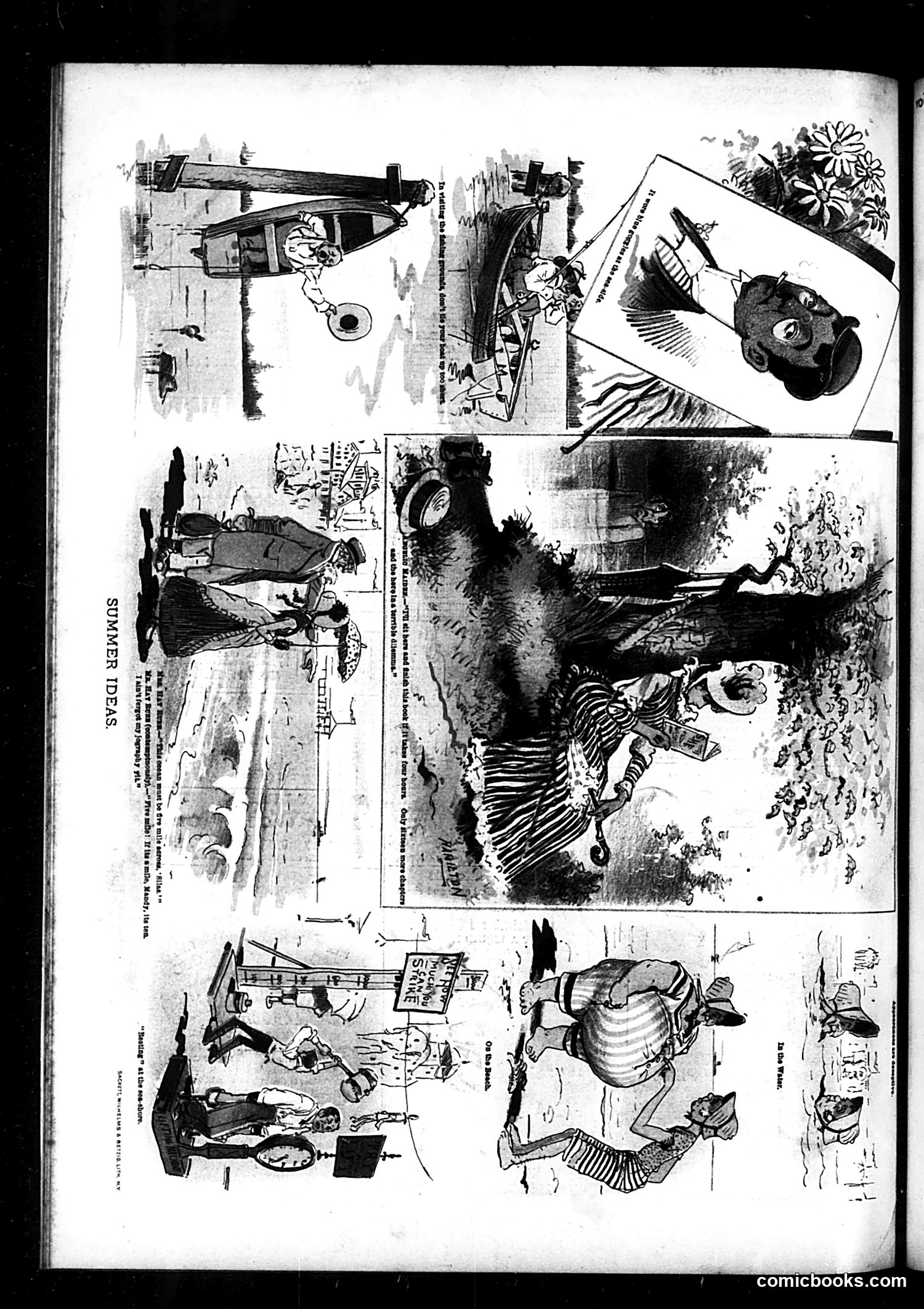
This page from *Judge* magazine presents "Summer Ideas" — a collection of comic vignettes satirizing leisure activities and summer pastimes of the era. The visible cartoons depict humorous domestic scenarios: one shows a man demanding his wife read an entire book aloud during summer, emphasizing the tedium of enforced leisure; another depicts someone who forgot their geography, creating confusion during travel. The cartoons mock the pretensions and actual boredom of middle-class summer recreation — the gap between the idealized "summer vacation" and its reality of restless family time, trivial pursuits, and minor mishaps. The humor relies on recognizing these common domestic frustrations among *Judge*'s affluent readership. Without clearer text or visible bylines, specific satirical targets remain unclear, but the overall tone critiques genteel leisure culture.