
A complete issue · 16 pages · 1886
Judge — October 2, 1886
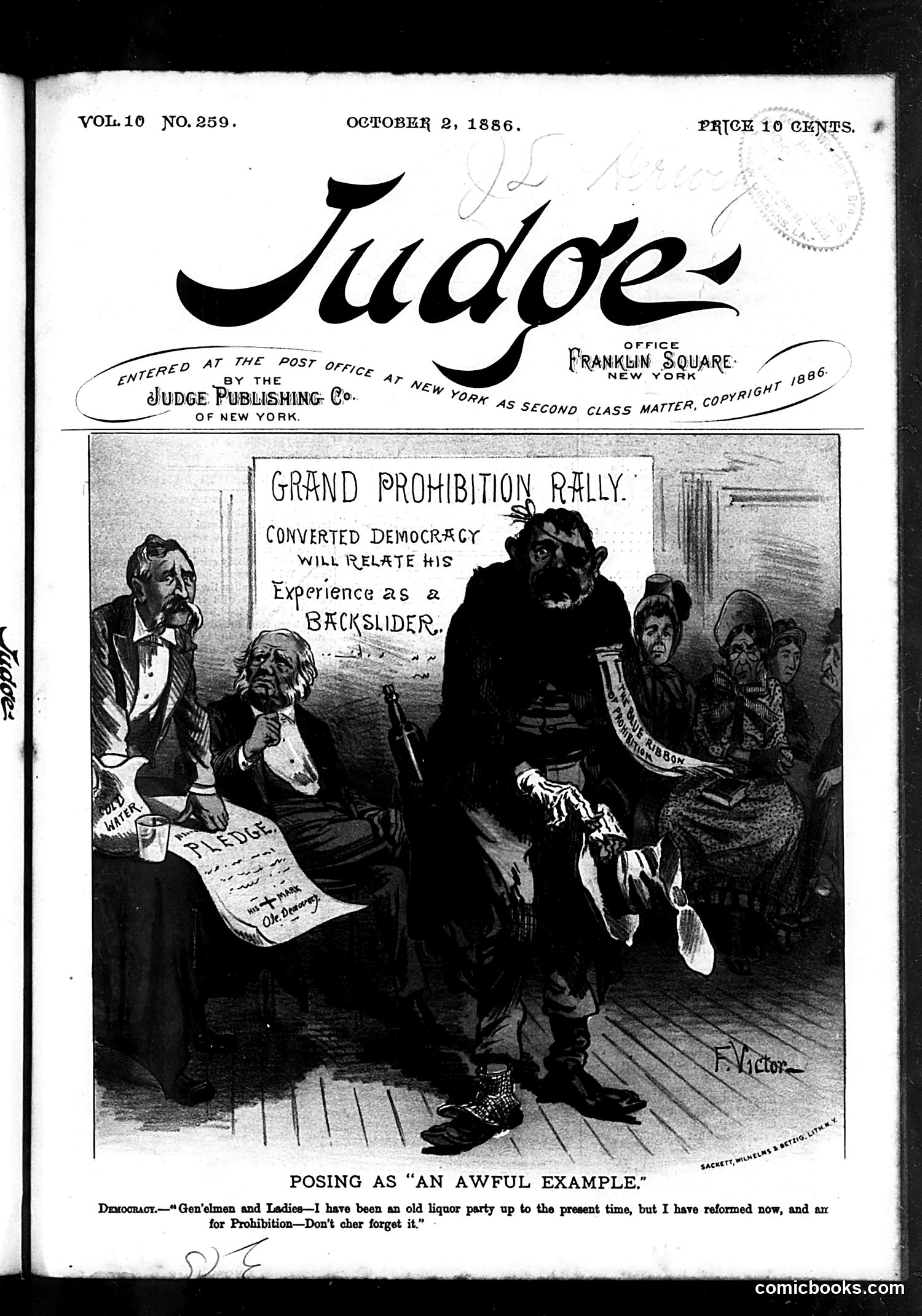
This satirical cartoon mocks a converted Democrat who now advocates for Prohibition. The central figure, labeled "Democrat," stands at a podium advertising a "Grand Prohibition Rally," claiming he'll share his experience "as a Backslider." The satire targets the political inconsistency: the Democrat appears to be a former heavy drinker ("old liquor party up to the present time") who suddenly reformed and now champions Prohibition—positioning himself as a moral authority despite his compromised past. The caricatured audience members represent skepticism toward this conversion. The cartoon suggests the Democrat is posing as "an awful example" to justify Prohibition support, implying his sudden moral stance is insincere opportunism rather than genuine conviction.
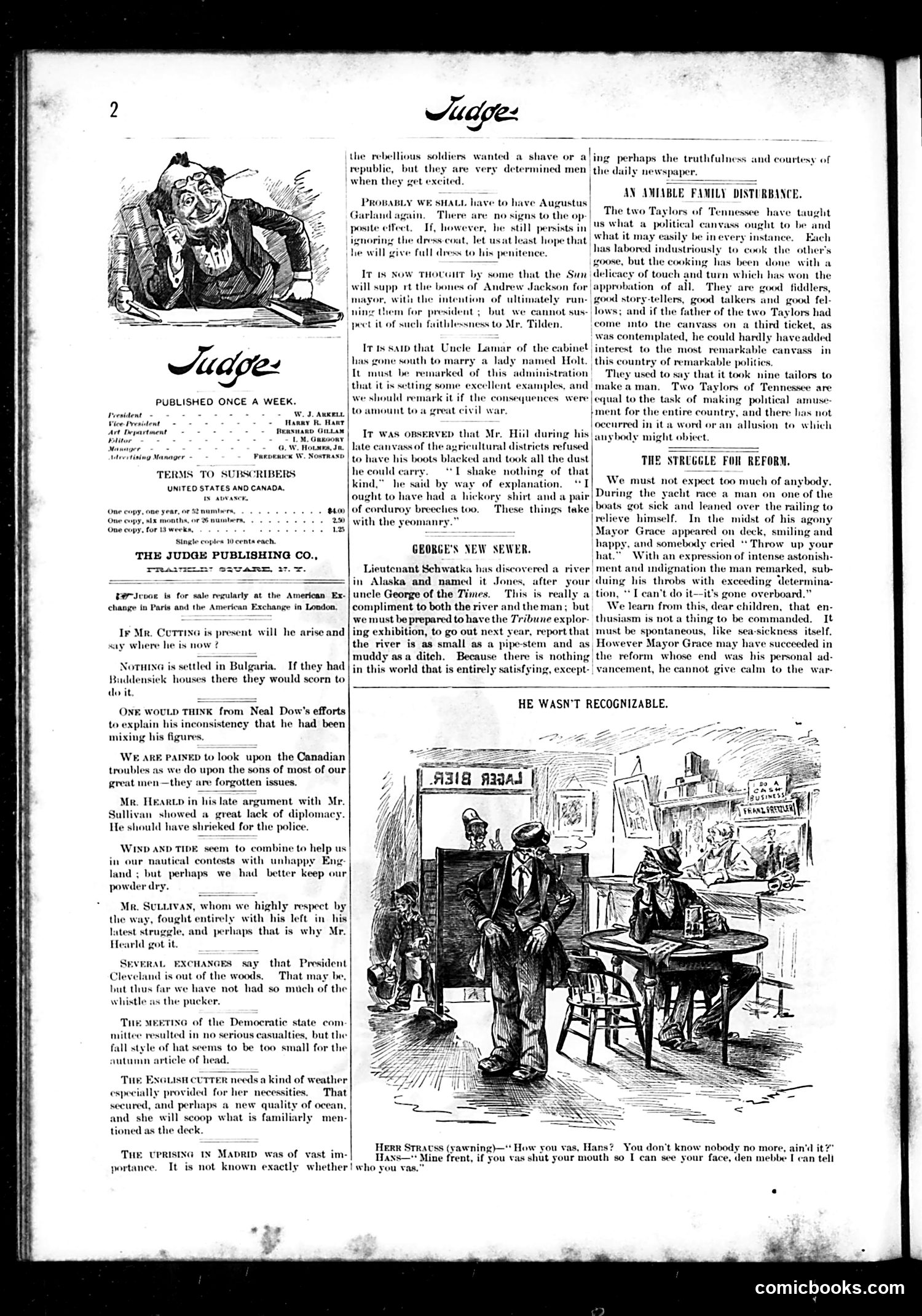
The main cartoon titled "HE WASN'T RECOGNIZABLE" depicts a street scene with rough-looking men at what appears to be a bar or tavern. The caption includes dialogue about someone's appearance being unrecognizable—one figure says "How you vas, Hans? You don't know nobody no more, ain it?" suggesting a character has been transformed by hardship or circumstance. The surrounding text contains brief political commentary items typical of Judge's satirical format, touching on topics like Andrew Jackson, political canvas-making efforts, and administrative appointments. Without clearer context identifying specific individuals or dated events in the visible text, the precise political targets remain unclear, though the overall tone reflects late 19th-century American political satire.
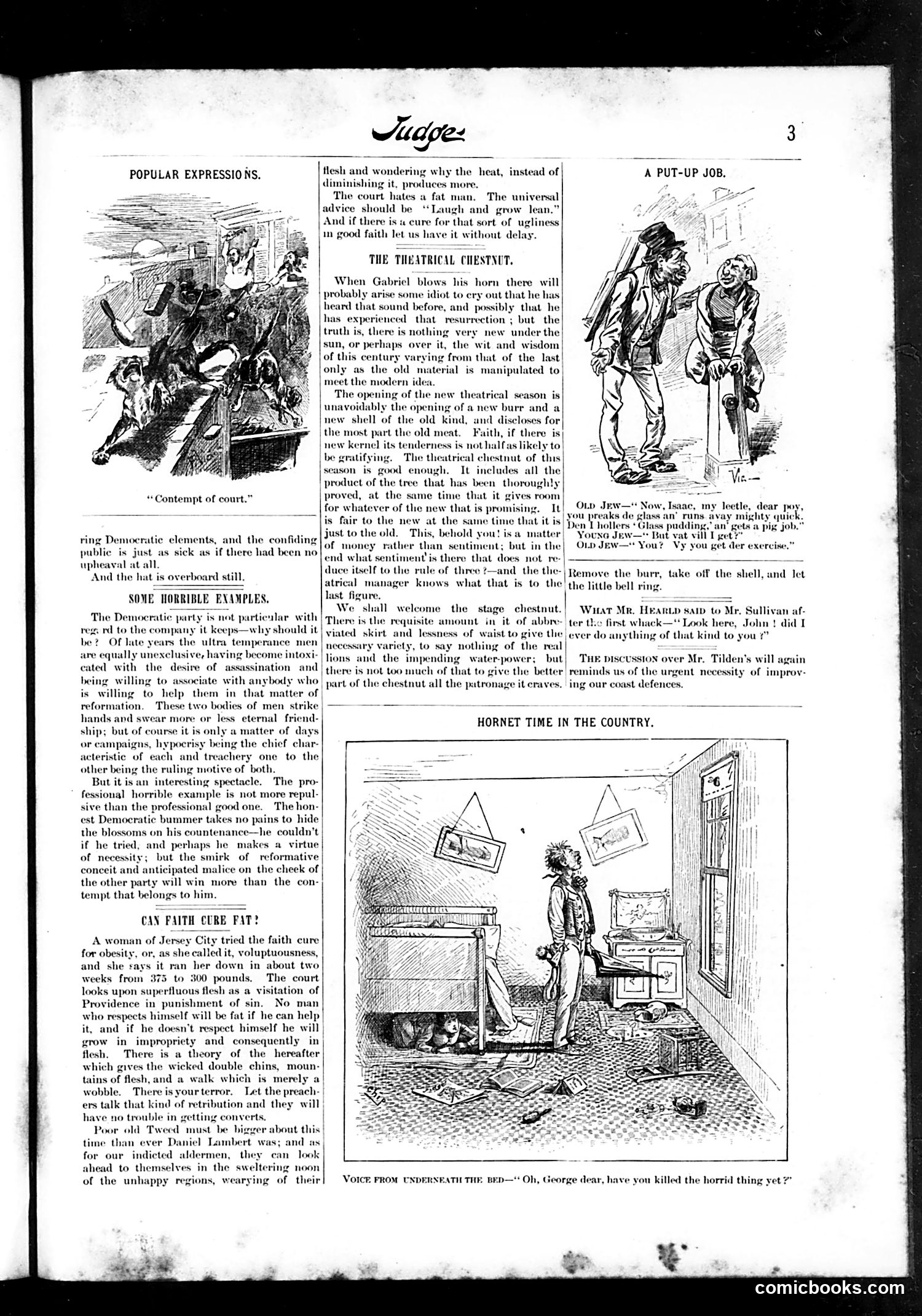
This page contains several satirical pieces targeting Democratic politics and social issues of the era. **"Popular Expressions"** cartoon ridicules Democratic Party hypocrisy, depicting party members as morally compromised—associating with "ultra temperance men" who advocate violence despite claiming reform principles. The satire suggests Democrats are unprincipled opportunists. **"Some Horrible Examples"** extends this critique, mocking Democratic politicians (likely including Boss Tweed, referenced later) for corruption and moral decay, with obesity serving as a metaphor for their moral excess. **"Can Faith Cure Fat?"** discusses a Jersey City woman's failed faith-healing attempt for obesity, using this to satirize both religious charlatans and corrupt politicians like Tweed, implying their moral corruption manifests physically. **"The Theatrical Chestnut"** shifts tone, offering lighter commentary on theater's reliance on recycled plots and tired conventions—"chestnuts"—while acknowledging some merit in proven material mixed with novelty. The page combines partisan political attack with broader social criticism typical of Judge's satirical mission.
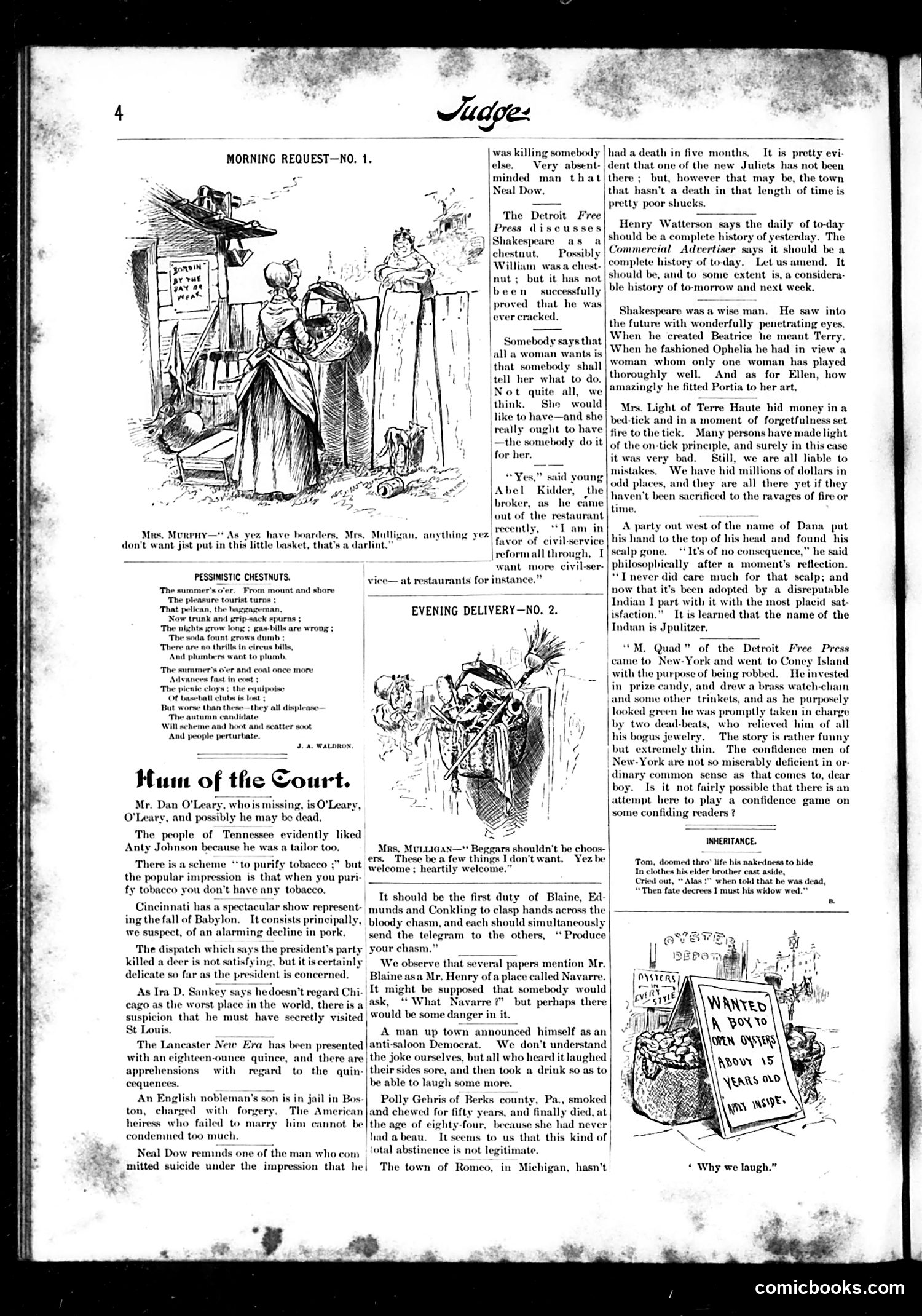
This page from Judge presents several satirical commentaries on contemporary issues. The two illustrated sections—"Morning Request" and "Evening Delivery"—appear to depict domestic or social scenarios rendered as gentle humor. The text includes brief topical jokes and observations typical of 1870s-80s satirical journalism: - References to **Shakespeare** as cultural shorthand - Commentary on **political figures** (Blaine, Conkling, mentioned regarding "the bloody chasm"—likely Reconstruction-era sectional tensions) - **Quips about social trends**: tobacco purification, anti-saloon Democrats, civil service reform - A joke about a Pennsylvania woman named **Polly Gehris** who smoked and chewed for fifty years - References to missing persons and criminal matters The "Pessimistic Chestnuts" section collects tired observations about summer tourists, declining pork prices (Cincinnati), and similar period complaints. The humor depends heavily on contemporary references now opaque to modern readers—political scandals, local news items, and social preoccupations of that era. The overall tone is gently mocking of daily life absurdities rather than sharply partisan.
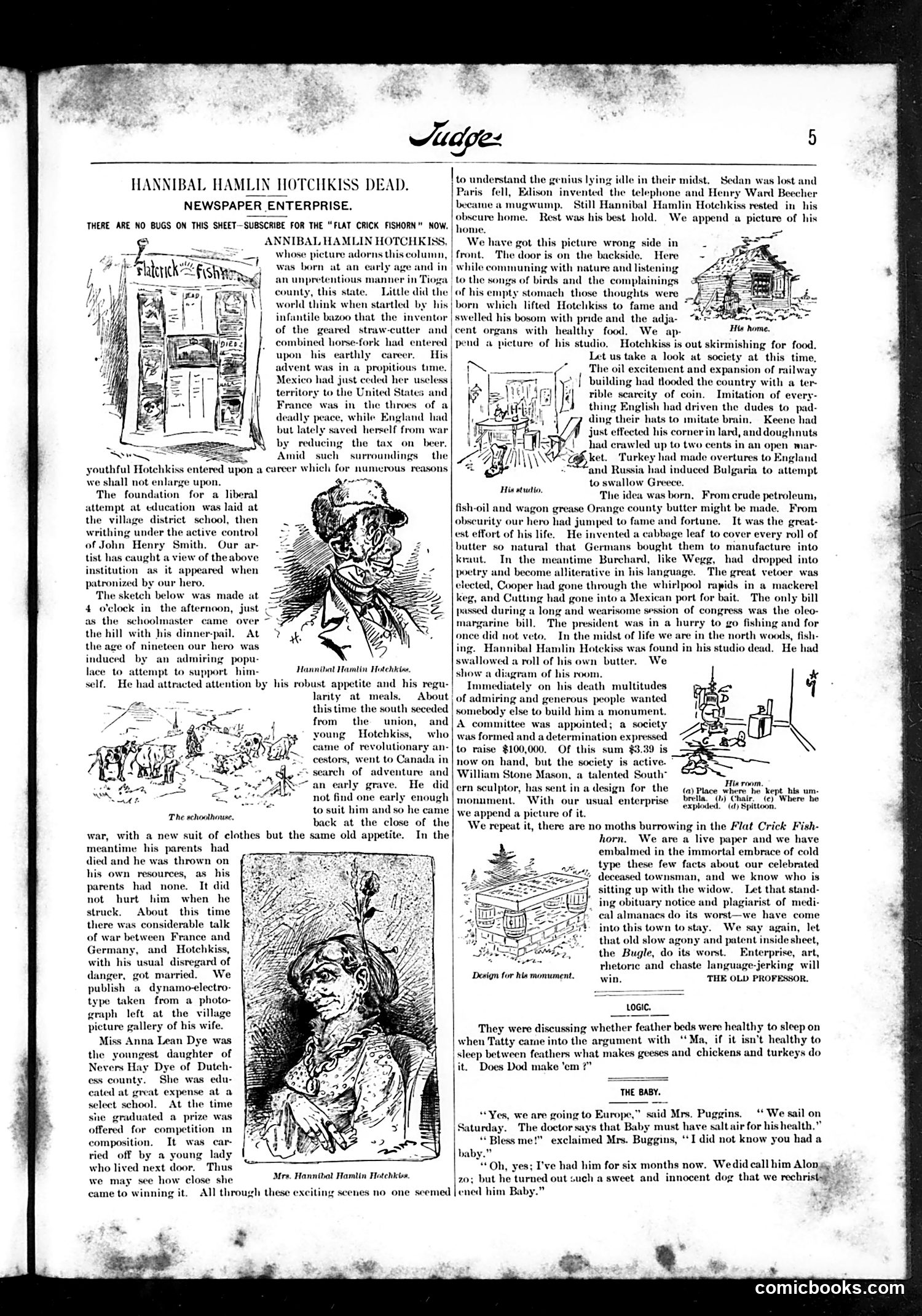
This is a satirical biographical sketch of a fictional character, Hannibal Hamlin Hotchkiss, presented as a mock-serious "newspaper enterprise" article. The humor derives from contrast: Hotchkiss is portrayed as an utterly unremarkable man (notable mainly for his appetite) living during genuinely significant historical moments—the Civil War, Edison's telephone invention, stock market speculation crises. The satire targets American journalism's tendency toward grandiose treatment of ordinary subjects. References like "Sedan was lost" (Franco-Prussian War), Turkey's diplomatic moves, and financial manias anchor the piece in real events, making Hotchkiss's complete obscurity despite living through these periods the joke. The numerous crude illustrations and deliberately awkward writing style enhance the mockery. This appears to be Judge magazine's playful jab at contemporary newspaper sensationalism and the glorification of unremarkable people.
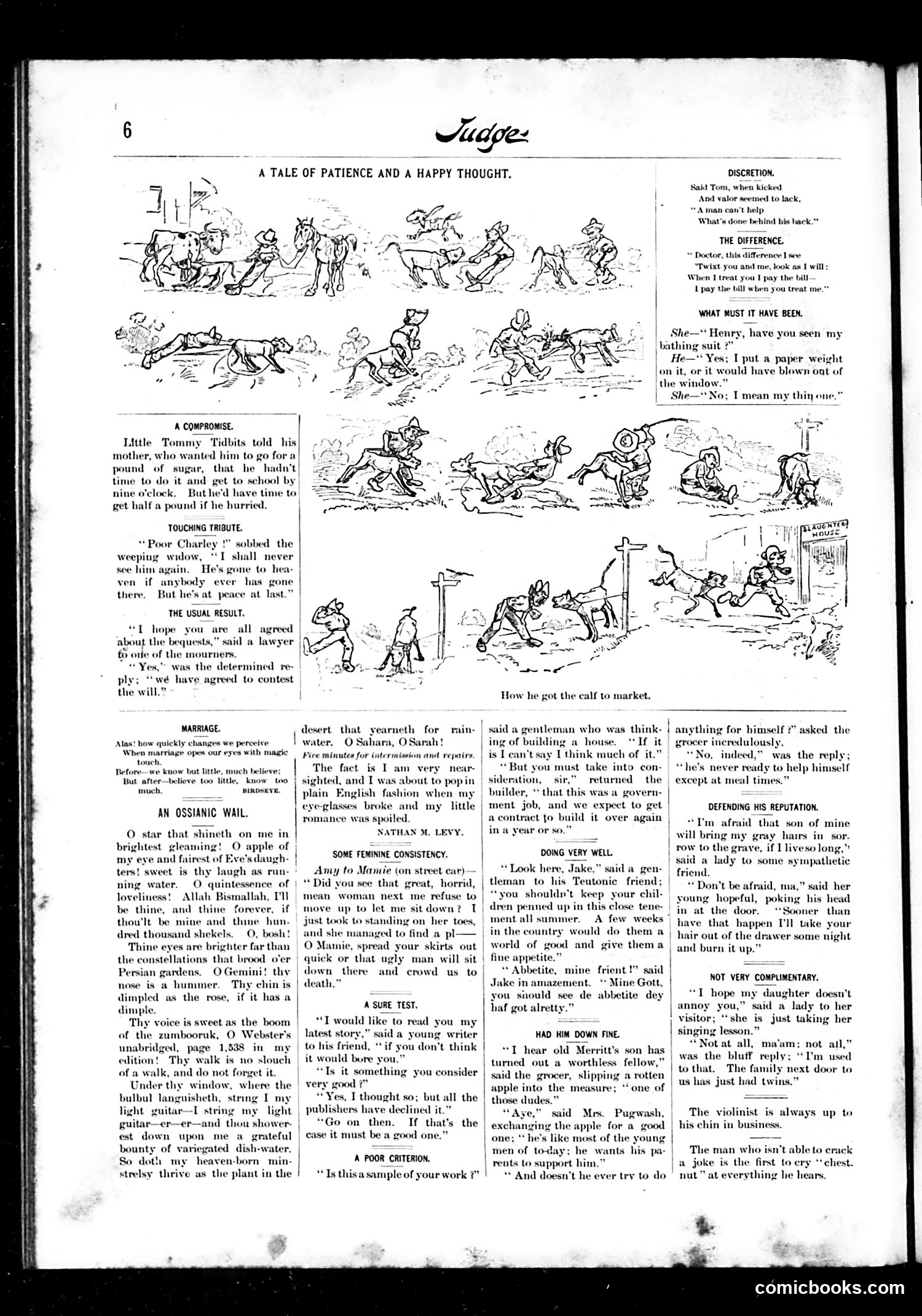
This page from *Judge* magazine contains various satirical vignettes about everyday social situations rather than specific political figures or events. **Key items:** - **"A Compromise"**: A boy negotiates getting half a pound of sugar if he hurries to school—satirizing childhood bargaining. - **"Touching Tribute"**: A widow grieves her deceased "Poor Charley," offering hollow consolations—mocking insincere funeral sentiment. - **"The Usual Result"**: Mourners agree on bequests, then immediately contest the will—typical satire on family greed after death. - **"An Ossianic Wail"**: Parodies overwrought romantic poetry through absurd metaphors ("nose is a hummer," comparing lover to dictionary pages)—mocking purple prose conventions. - Various other shorts mock marriage disillusionment, publishers rejecting mediocre work, and social pretensions. The humor relies on recognizing universal human foibles—greed, hypocrisy, romantic excess, family dysfunction—rather than topical references modern readers would need explained.
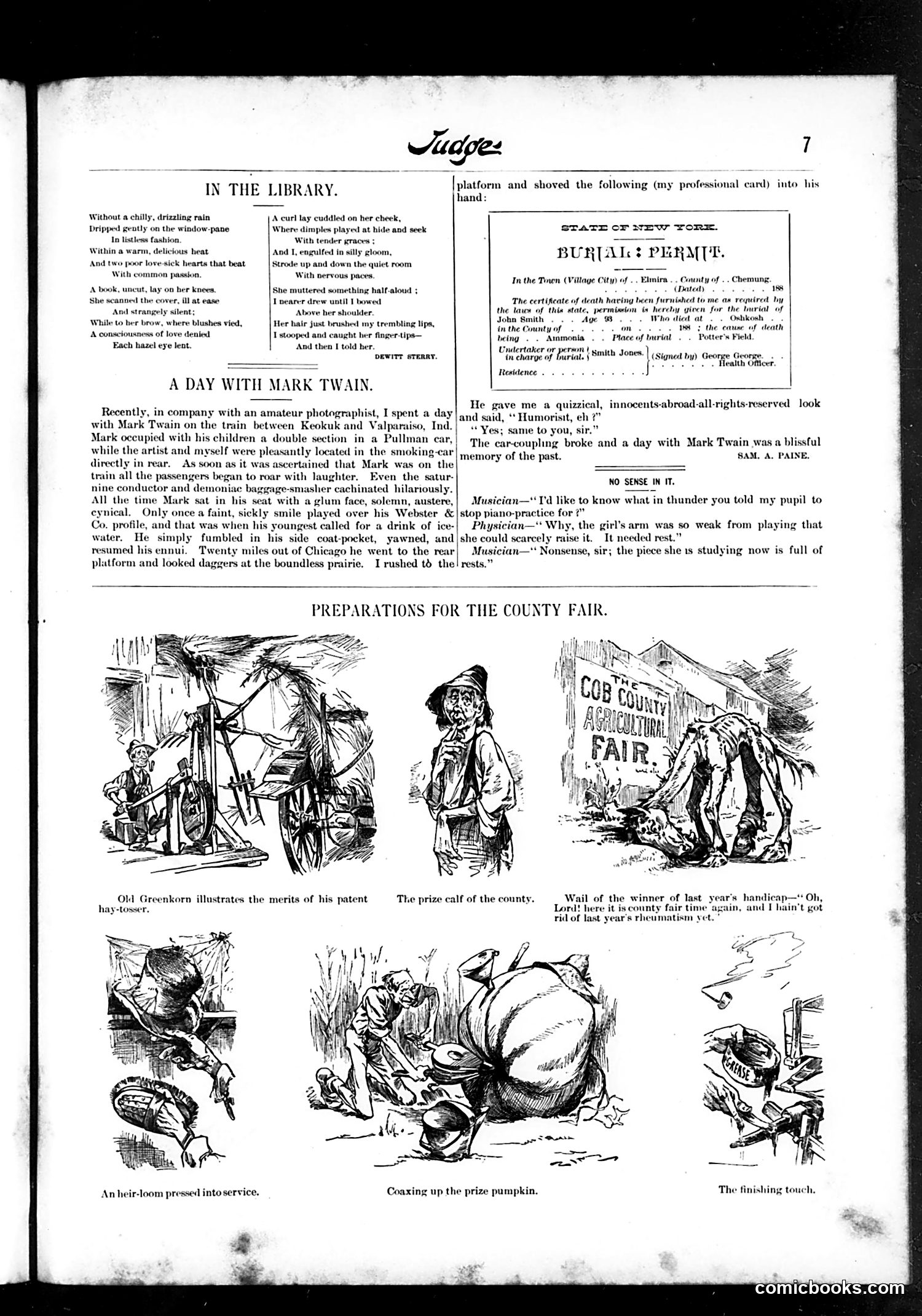
This page contains three distinct pieces of content: **"In the Library"** and **"A Day with Mark Twain"**: These are literary/humorous prose pieces rather than political cartoons. The Mark Twain piece describes a train encounter with the famous author, noting his famously dour demeanor—he sat glum-faced while other passengers laughed, though he rarely smiled himself. **"Preparations for the County Fair"**: This is a series of illustrated vignettes satirizing rural/agricultural life. The captions mock country folk preparing for a county fair: someone with a dubious patent hay-tosser, a farmer boasting about his prize pumpkin, and various scenes of folksy competition. The humor relies on gentle mockery of rural earnestness and agricultural pride typical of late-19th-century American satire. The page contains no obvious political commentary—it's primarily social satire targeting rural American culture and literary humor pieces.
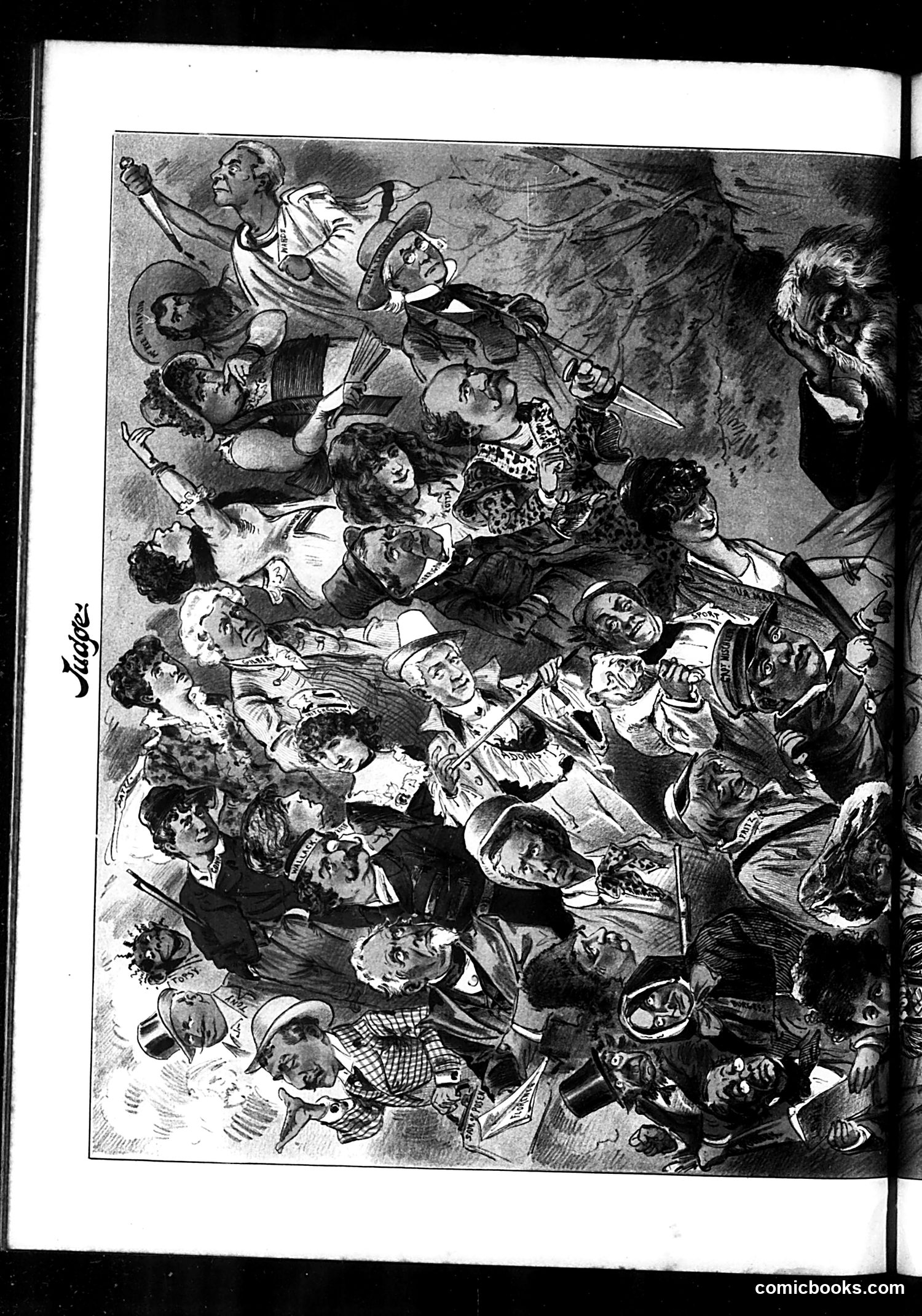
This appears to be a satirical engraving signed by what looks like "Horace" or similar. The image depicts a chaotic scene with multiple figures in 19th-century dress engaged in what appears to be a violent or tumultuous confrontation. The composition shows figures in various states of struggle or distress, with some wearing military or formal attire. Without clearer context from the OCR text (which appears corrupted), I cannot definitively identify the specific political figures or events being satirized. The style is consistent with Judge magazine's political commentary tradition, likely critiquing a contemporary political scandal, conflict, or social upheaval. The dense, crowded composition suggests commentary on political chaos or disorder, but **specific identification of the figures and the precise historical event requires clearer source material or additional context**.
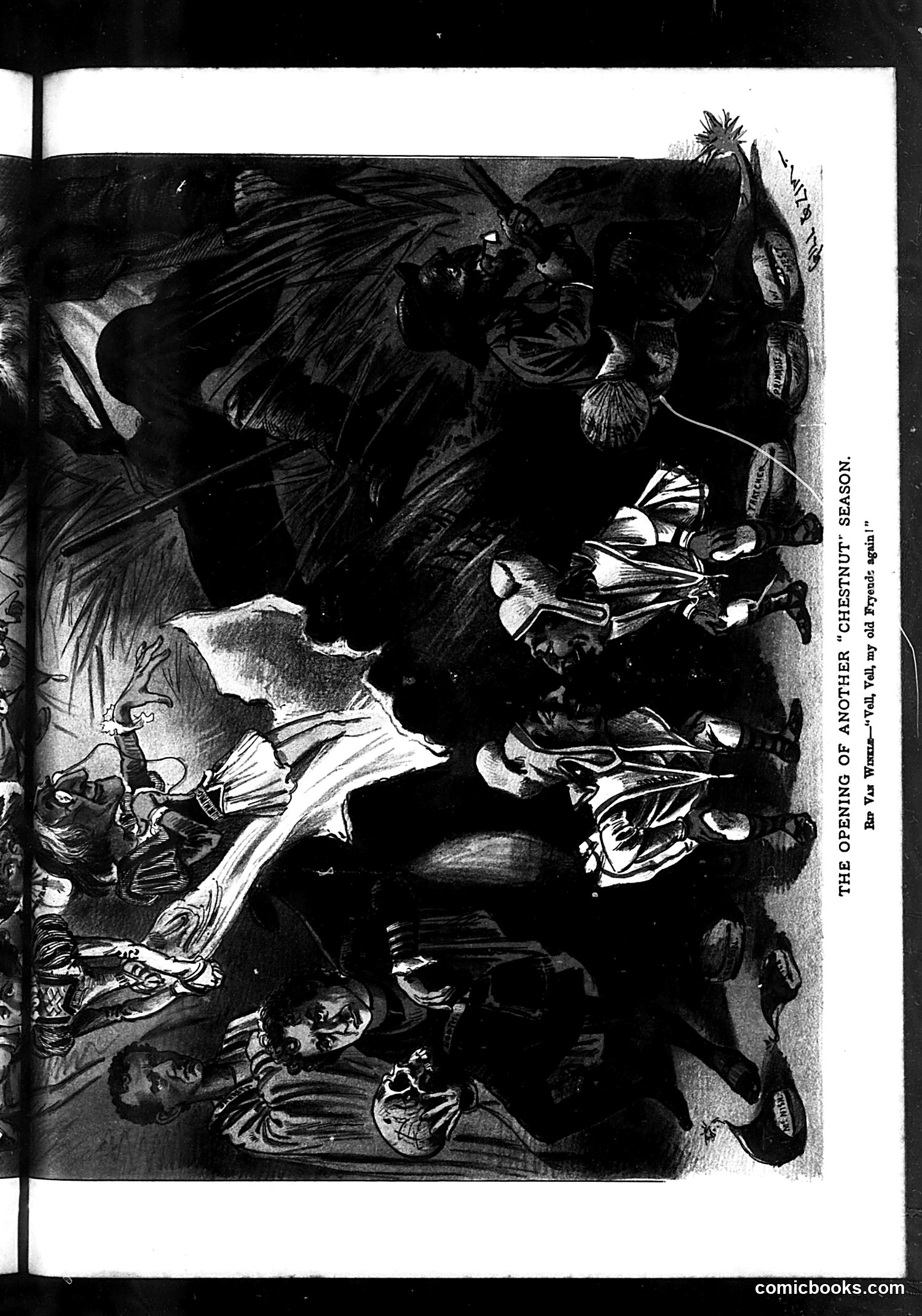
I can see this is a dramatic black and white illustration titled "THE OPENING OF ANOTHER CHESTNUT SEASON" (text visible on the right margin). The image depicts multiple figures in elaborate period dress engaged in what appears to be a chaotic, theatrical scene with exaggerated gestures and expressions typical of Judge magazine's satirical style. However, the OCR text is severely corrupted and illegible, making it impossible to identify the specific political or social references, named figures, or the precise point of satire. The artistic style and composition suggest this is political commentary from the late 19th or early 20th century, but without readable text or clear contextual clues, I cannot reliably explain which contemporary figures or events this cartoon satirizes. To properly interpret this cartoon, a clearer version of the accompanying text would be necessary.
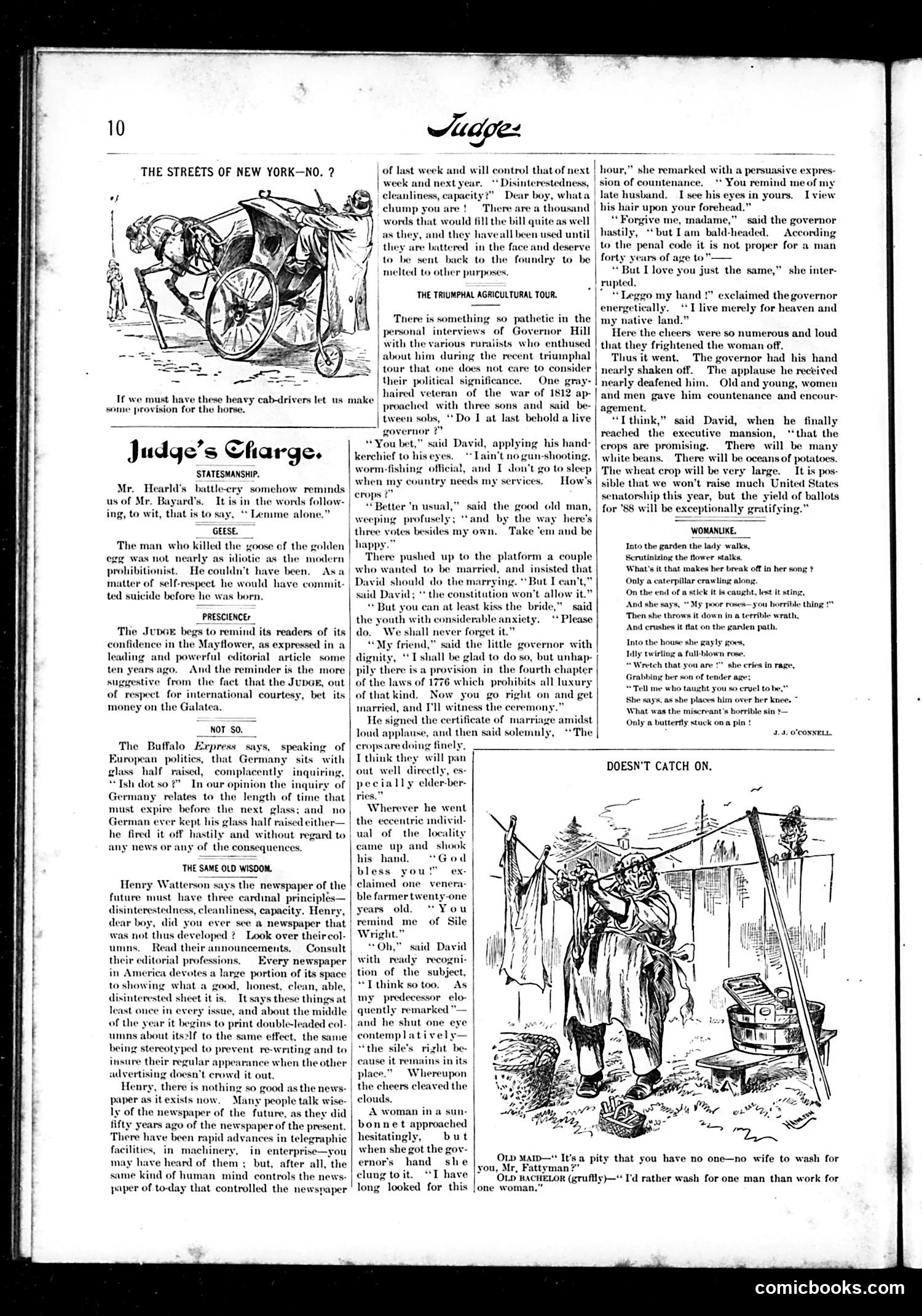
This page from *Judge* magazine contains political satire and social commentary targeting late 19th-century American figures and institutions. **"The Triumphant Agricultural Tour"** depicts Governor David B. Hill's rural campaign travels. The satire mocks the manufactured sentimentality of political pageantry—an elderly Civil War veteran emotionally encounters Hill, presenting three votes. The joke highlights how politicians exploit nostalgia and rural voters' patriotism for electoral gain. **"Judge's Charge"** section offers editorial commentary, including mockery of prohibitionists and Henry Watterson's idealistic newspaper principles. Judge sarcastically notes that newspapers already claim disinterestedness and cleanliness while being self-promotional—nothing new exists. The top illustration shows a heavy cab-driver, relating to an article about harsh treatment of horses in New York streets. The page reflects *Judge's* skepticism toward political pretense, reformist rhetoric, and sentimental campaign theatrics of the Gilded Age era.
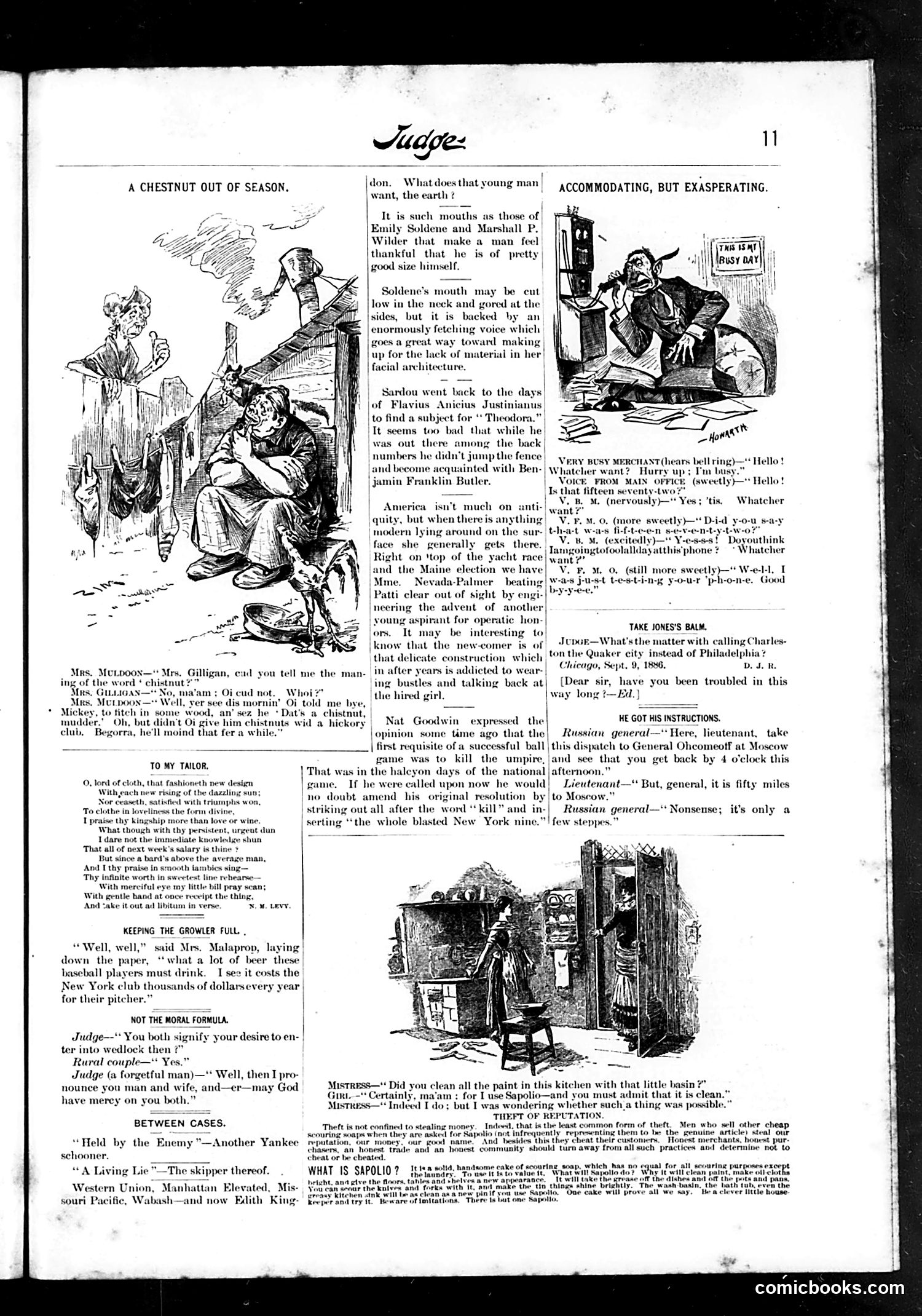
This Judge magazine page (appears to be from 1886) contains several satirical pieces: **"A Chestnut Out of Season"** (left): Mocks Emily Soldene and Marshall P. Wilder, contemporary entertainers known for their large mouths. The satire suggests their prominent features are compensated by talent—Soldene by her "fetching voice," implying performers' physical oddities were acceptable if they could sing or perform well. **"Accommodating But Exasperating"** (right): A cartoon showing a busy merchant repeatedly interrupted by phone calls from his own office staff, satirizing the inefficiency and annoyance of newly-installed telephone systems in business. **Various short humor pieces** include wordplay about a judge's forgetfulness at weddings, a malapropism joke about "growlers" (beer pails), and advertisements for Sapolio soap disguised as editorial content—common in period magazines. The page reflects 1880s urban life: entertainment celebrities, telephone technology frustration, and aggressive advertising practices.
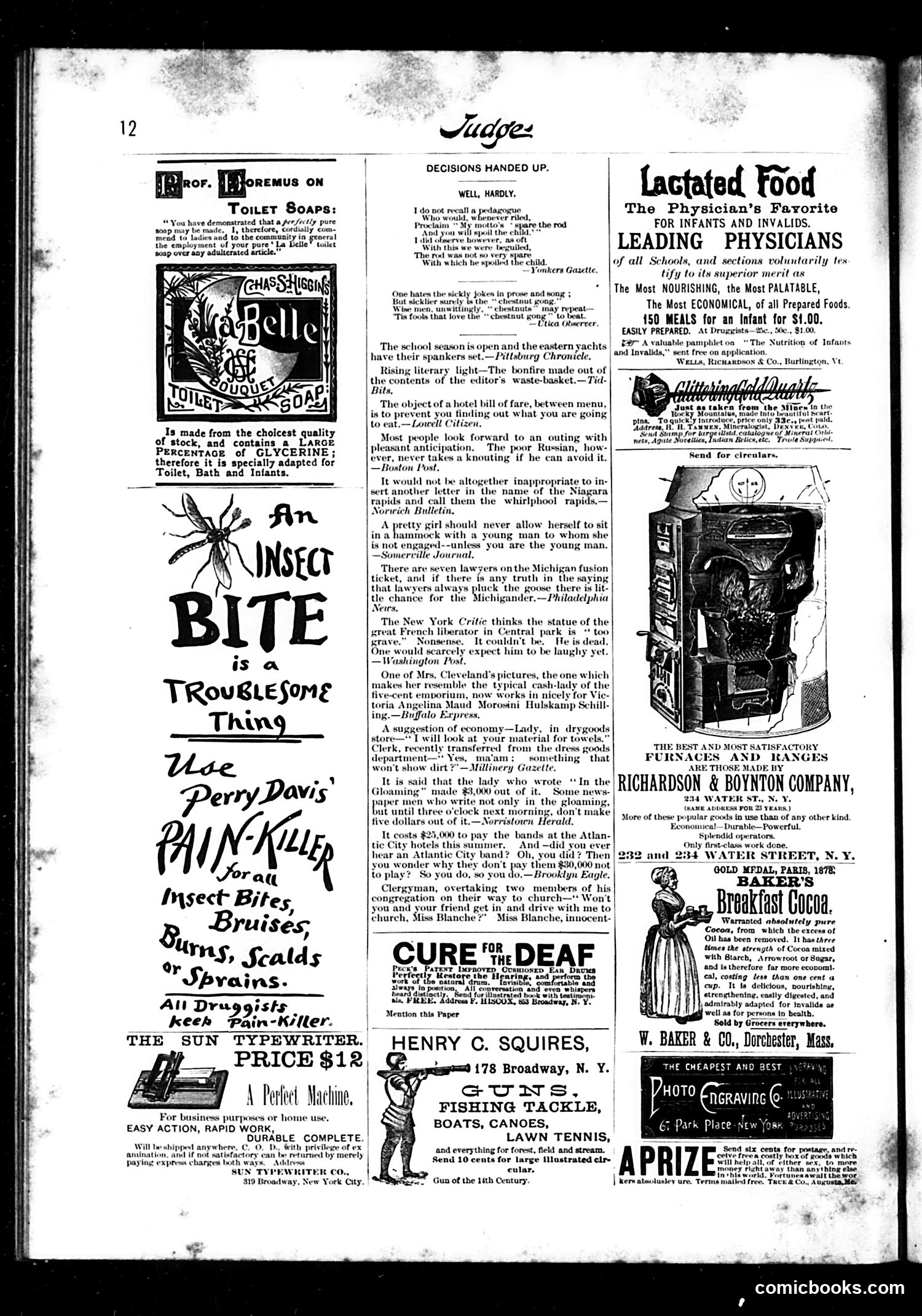
This page is primarily **advertising and filler material**, not political satire. It consists of: **Top section**: A small "Decisions Handed Up" humor column—brief, disconnected jokes about seasonal activities, hotel menus, and social customs. These are gentle observations rather than political commentary. **Advertisements dominate**: La Belle toilet soap, Perry Davis' Pain-Killer (for insect bites and bruises), The Sun Typewriter ($12), Lactated Food (infant formula endorsed by physicians), Richardson & Boynton Company (furnaces), W. Baker & Co. (cocoa), Henry C. Squires (guns and sporting equipment), and Photo Engraving Co. **No discernible political cartoons appear**—the page contains only product illustrations and decorative line drawings. The humor is domestic and mundane, typical of *Judge*'s lighter filler content between political satire pieces that appear elsewhere in the magazine. This is essentially a late-19th-century advertising page with minimal editorial content.
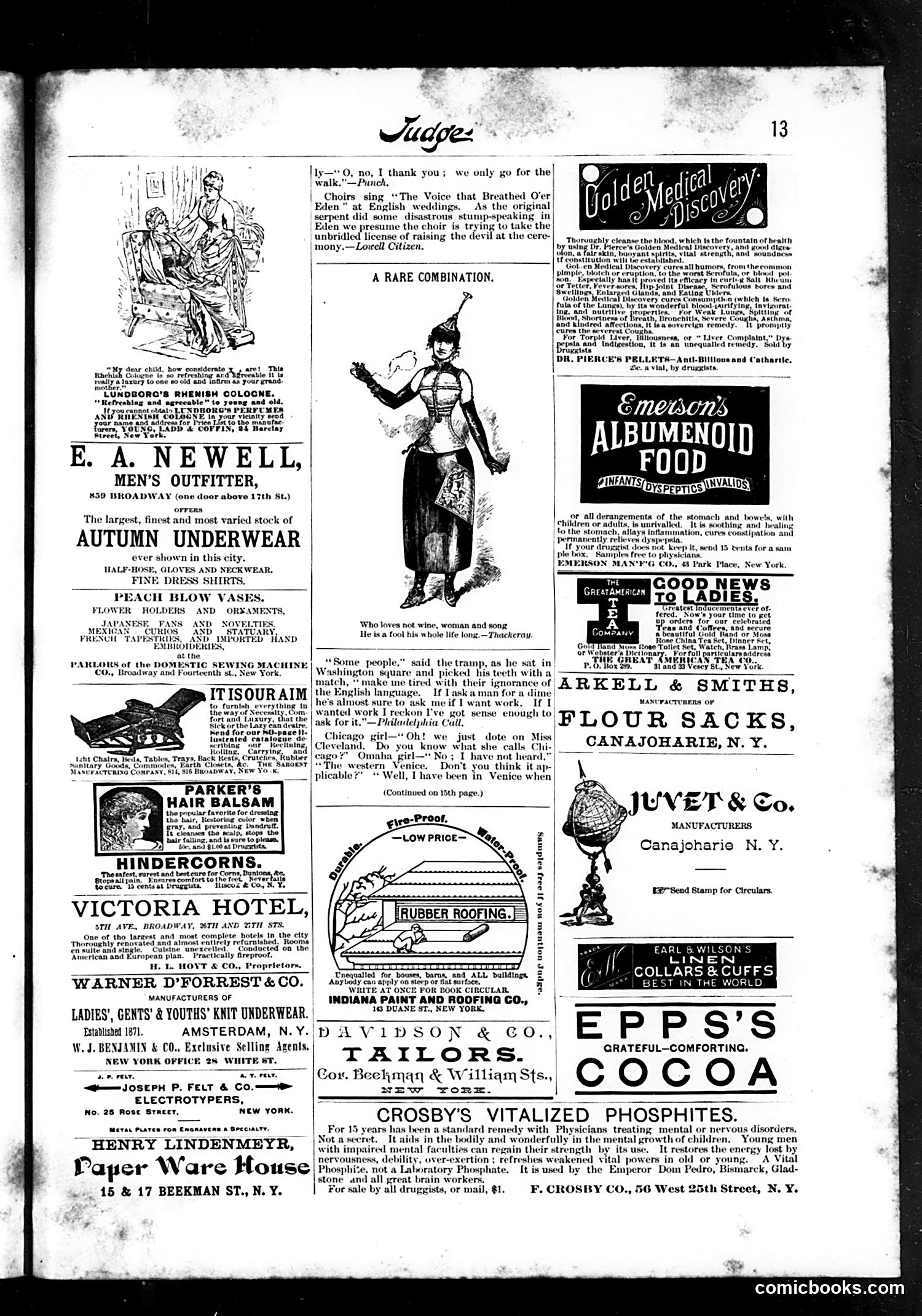
This page is primarily **advertisements and filler content** rather than political satire. The main illustrated cartoon shows a woman in theatrical costume (appears to be a performer or dancer) juggling items while balancing on one leg — captioned "A Rare Combination," though the joke's specific reference is unclear from visible text. Below this, dialogue snippets mock pretentious or ignorant behavior: a tramp complains about immigrants not understanding English, a Chicago girl is teased about her accent or slang, and someone boasts about visiting Venice. These represent typical "humor" of the era—mocking foreigners, regional dialects, and affected sophistication. The bulk of the page consists of period advertisements for men's clothing, hotels, pharmaceuticals (including dubious remedies like "vitalized phosphites"), and household products. This was standard Judge content: satirical humor mixed with commercial advertising to generate revenue. The overall tone reflects late-19th-century American attitudes toward immigrants and class differences, presented as lighthearted comedy.
This page is **entirely advertising**, not satire or political commentary. It promotes "Golden Medical Discovery," a patent medicine sold by the World's Dispensary Medical Association in Buffalo, New York. The page uses testimonial advertising—a common 19th-century marketing tactic—featuring alleged case studies from satisfied customers claiming cures for liver disease, consumption (tuberculosis), dyspepsia, fever, and other ailments. Names and locations are provided to suggest authenticity. The phrase "The Blood is the Life" serves as the product's central marketing claim, suggesting the medicine purifies blood and restores health. **Modern context**: This represents the largely unregulated patent medicine industry that predated modern FDA oversight. Such products typically contained alcohol, narcotics, or heavy metals and made extravagant medical claims without evidence. Judge ran such advertisements to generate revenue, despite being a satirical publication that presumably mocked fraudulent enterprises elsewhere.
This is primarily an **advertising page** from Judge magazine, circa 1916, featuring patent medicines and commercial products typical of the era. The main content consists of advertisements for: - **Hyatt's Life Balsam** and **Glenn's Sulphur Soap** — promoted as cure-alls for blood impurities, rheumatism, and skin conditions - **Dr. Graves' Heart Regulator** — for heart disease - **Hair Revivum** and **Hill's Whisker Dye** — hair restoration products - **Various other remedies** (corn remover, toothache drops) The page also includes brief humorous anecdotes in the margins about fashionable crazes and social mishaps. **Historical context**: This reflects the **pre-FDA regulation era** when patent medicines made extravagant, unproven medical claims. The ads promise near-miraculous cures without scientific backing—common marketing tactics of the 1910s that would later be heavily regulated. The page demonstrates how Judge mixed editorial humor with paid advertising to sustain itself financially.
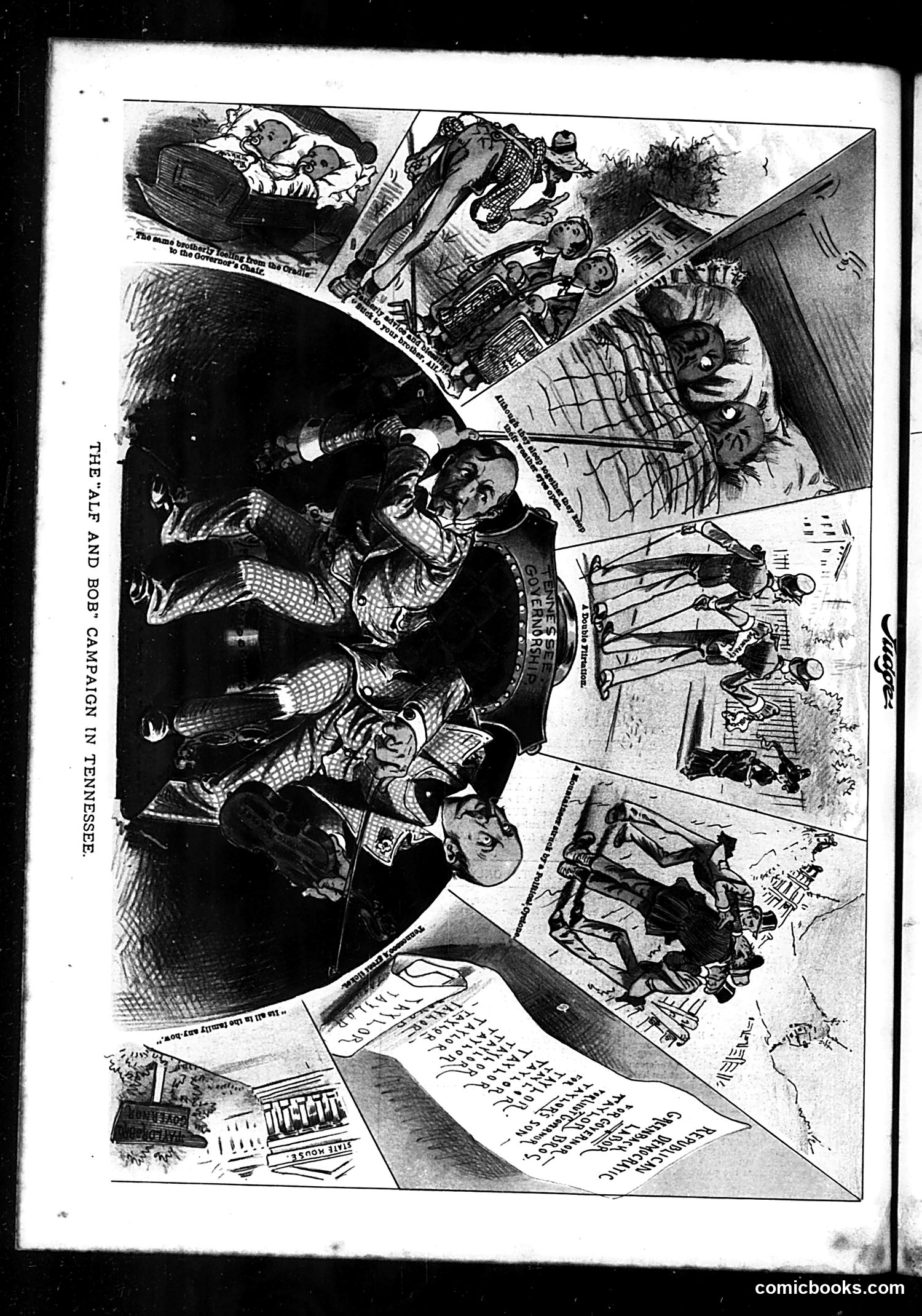
This Judge magazine cartoon satirizes a Tennessee political campaign involving two figures nicknamed "Alf" and "Bob" engaged in what's labeled a "Double Flirtation." The image depicts competing candidates courting voters—likely showing two politicians making contradictory promises or appeals to win support in Tennessee. The "double flirtation" concept suggests both candidates are simultaneously wooing the same constituency with insincere or opportunistic gestures. The caricatured figures and their exaggerated interactions mock the performative nature of political campaigning, where candidates adjust their messages to appeal to different groups. Without identifying specific historical figures, the cartoon criticizes campaign dishonesty and the theatrical competition between candidates more interested in winning than consistent principles.