
A complete issue · 16 pages · 1884
Judge — August 2, 1884
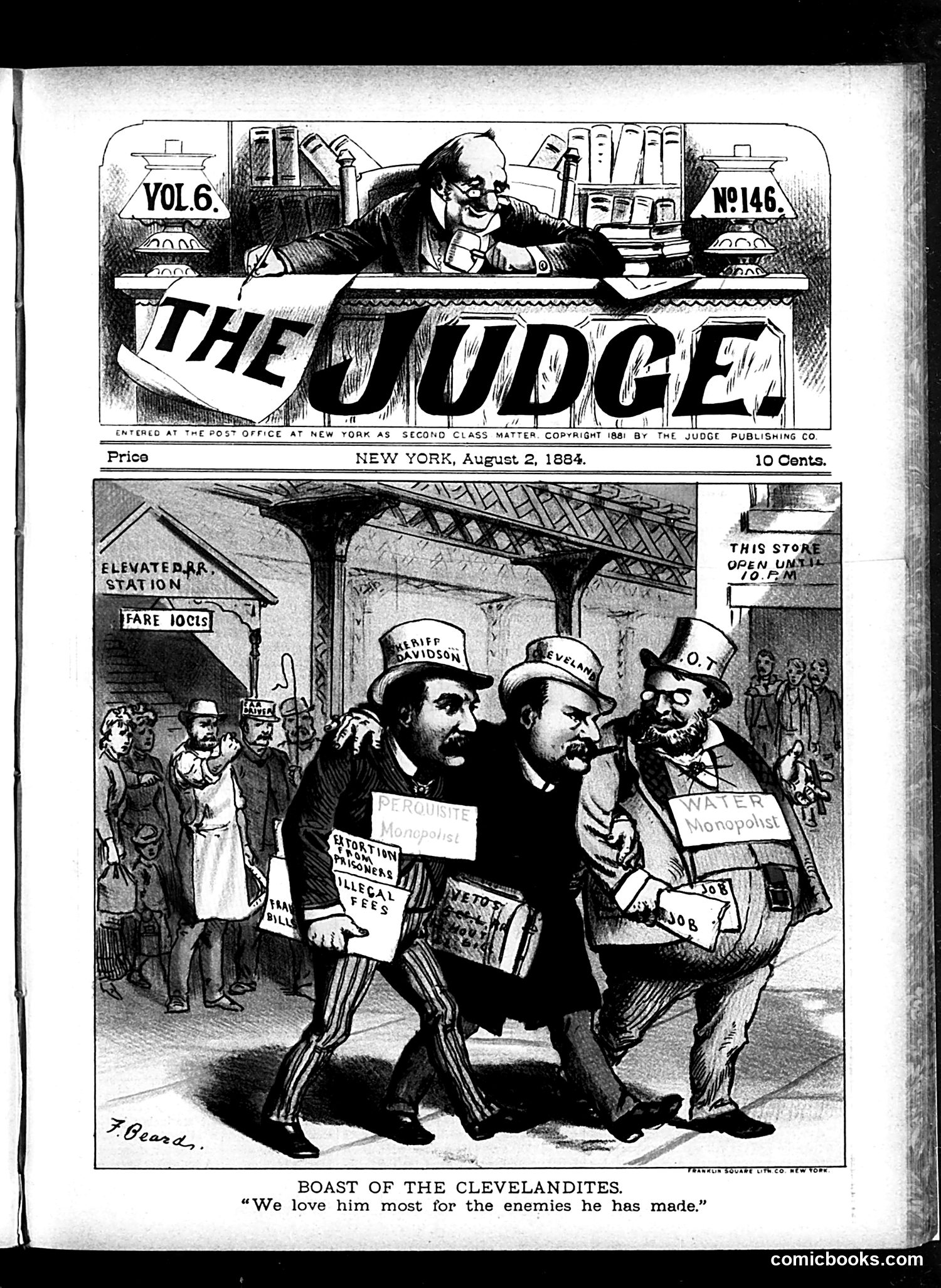
This August 2, 1884 *Judge* cartoon satirizes supporters of Grover Cleveland, the Democratic presidential nominee. Three caricatured men wearing hats labeled "Cleveland" and "Monopolist" carry signs reading "Scottish Whiskey Sellers Feel" and other commercial references, suggesting Cleveland's backers are primarily motivated by business interests and monopolies rather than principle. The caption—"We love him most for the enemies he has made"—ironically quotes Cleveland's supporters' own rhetoric while the visual contradicts it, showing them as self-interested merchants. The cartoon mocks Clevelandites for celebrating Cleveland based on commercial advantage rather than genuine political virtue, suggesting their support is hypocritical and economically rather than ideologically driven.
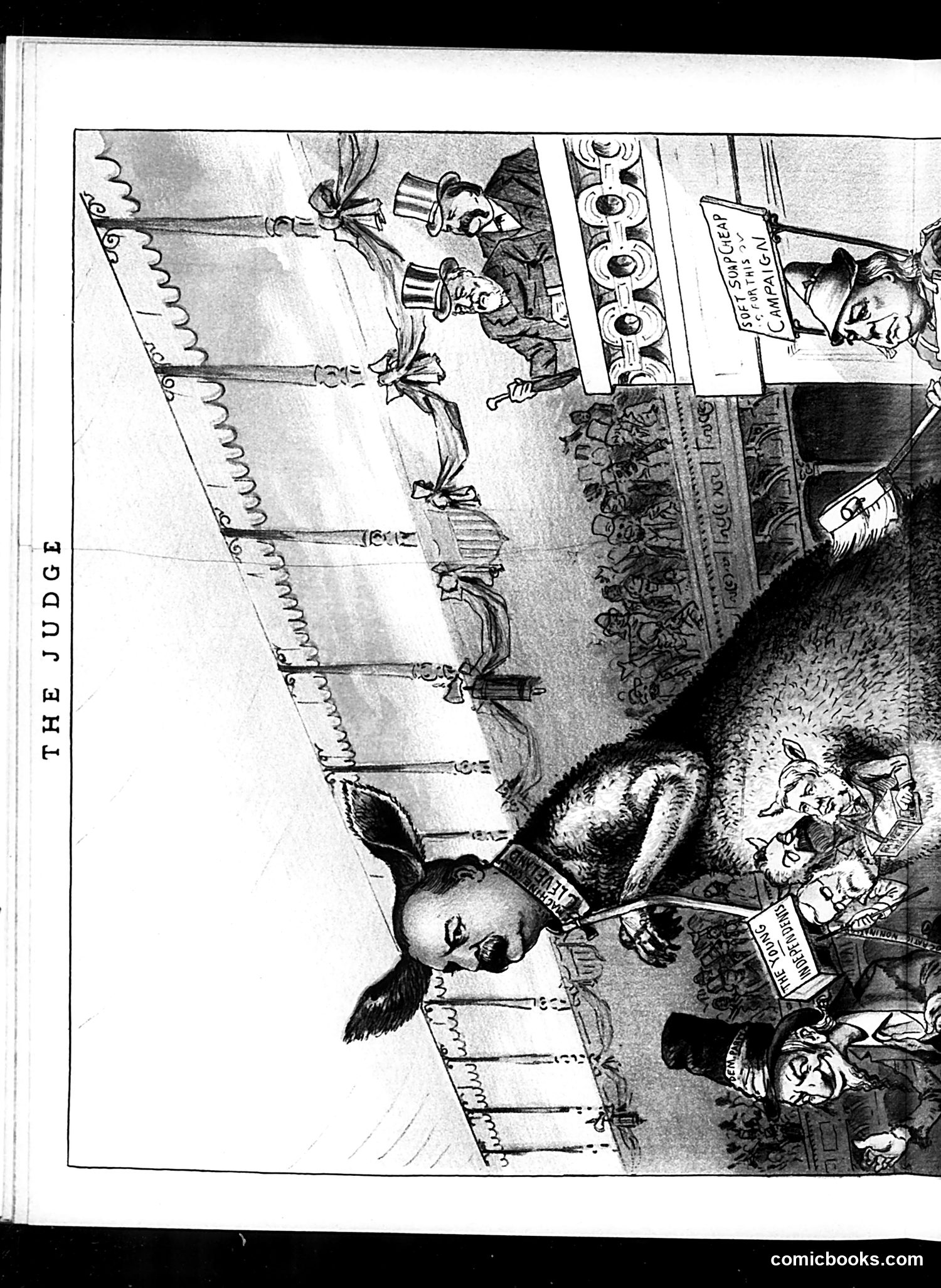
This is a pro-Republican campaign publication from the 1884 election. The page praises James G. Blaine's acceptance letter as the Republican presidential nominee, calling it a masterful campaign document that elevates public discourse. The magazine viciously attacks the Democratic ticket through extended animal metaphors—comparing it to a tadpole (mostly tail) and a kangaroo. The satire suggests the Democratic candidates are undignified and depend entirely on their vice-presidential nominee (the "tail") to have any political viability. The clear implication is that without the running mate, the Democratic ticket would be contemptible and pathetic. The page also includes brief congratulations to William Dorsheimer on becoming Cleveland's biographer, and mentions General Logan's acceptance as the Republican vice-presidential nominee. The overall tone is partisan cheerleading for the Republican cause while mocking Democratic opponents through dehumanizing animal comparisons.
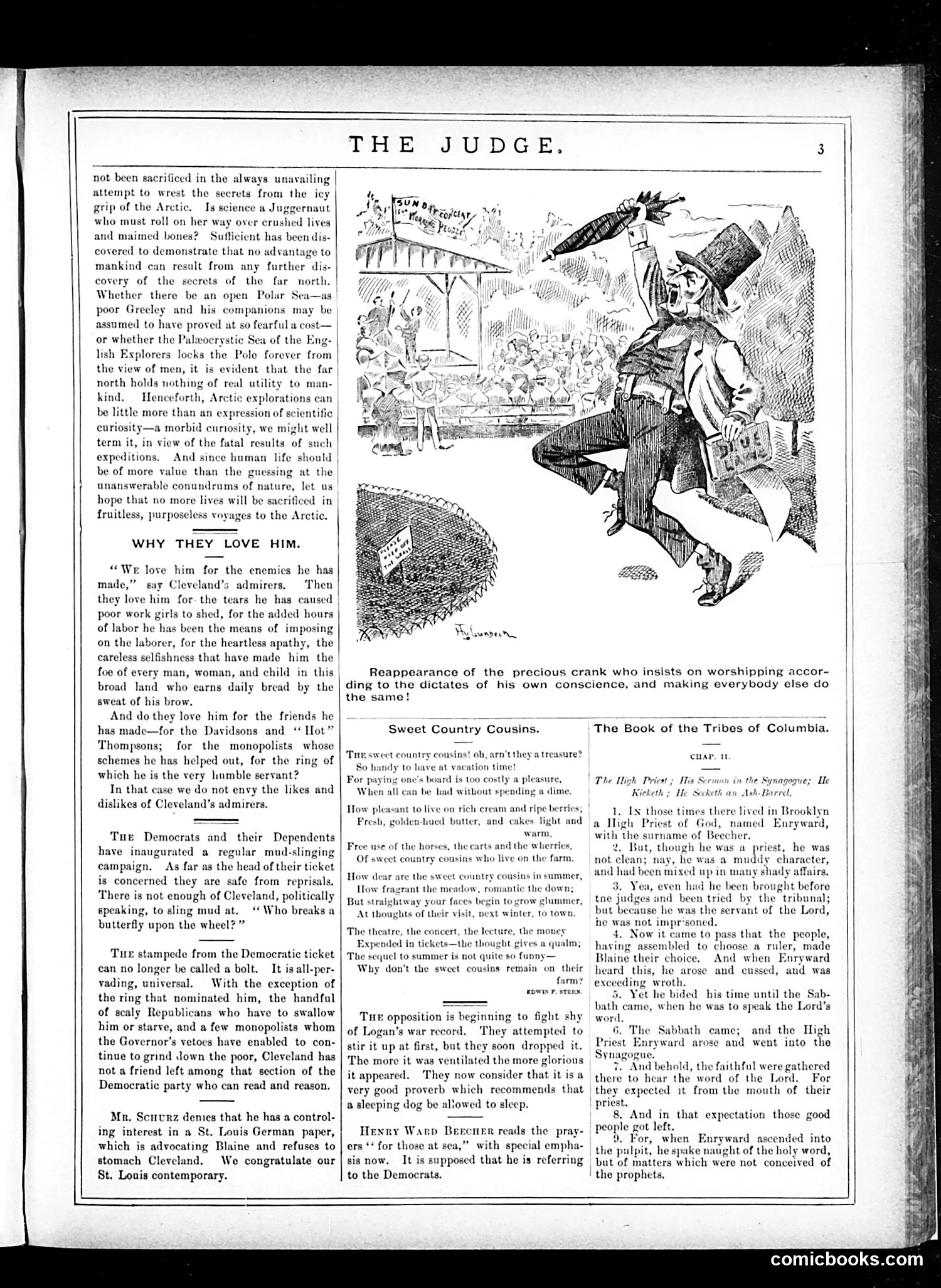
This page contains multiple political attacks on President Grover Cleveland during the 1884 election campaign. **Main Cartoon**: The large illustration depicts a figure (likely Cleveland) as a charlatan or huckster displaying Arctic exploration schemes to crowds, satirizing wasteful government spending and broken campaign promises. **"Why They Love Him"** section sarcastically lists reasons Democrats supposedly admire Cleveland: his enemies, tears shed by working girls, labor exploitation he enabled, and corrupt monopolists he aided. The satire argues Cleveland has lost Democratic support except among corrupt rings and Republicans forced to accept him. **Other Content**: Brief articles attack Cleveland's lack of political substance ("not enough of Cleveland...to sling mud at") and reference the Democratic "stampede" away from his nomination. The page mocks Cleveland's vetoes affecting monopolists and portrays his support as limited to corrupt interests. The "Sweet Country Cousins" poem appears unrelated—a humorous piece about unwelcome visiting relatives. Overall, this represents harsh satirical opposition to Cleveland's candidacy.
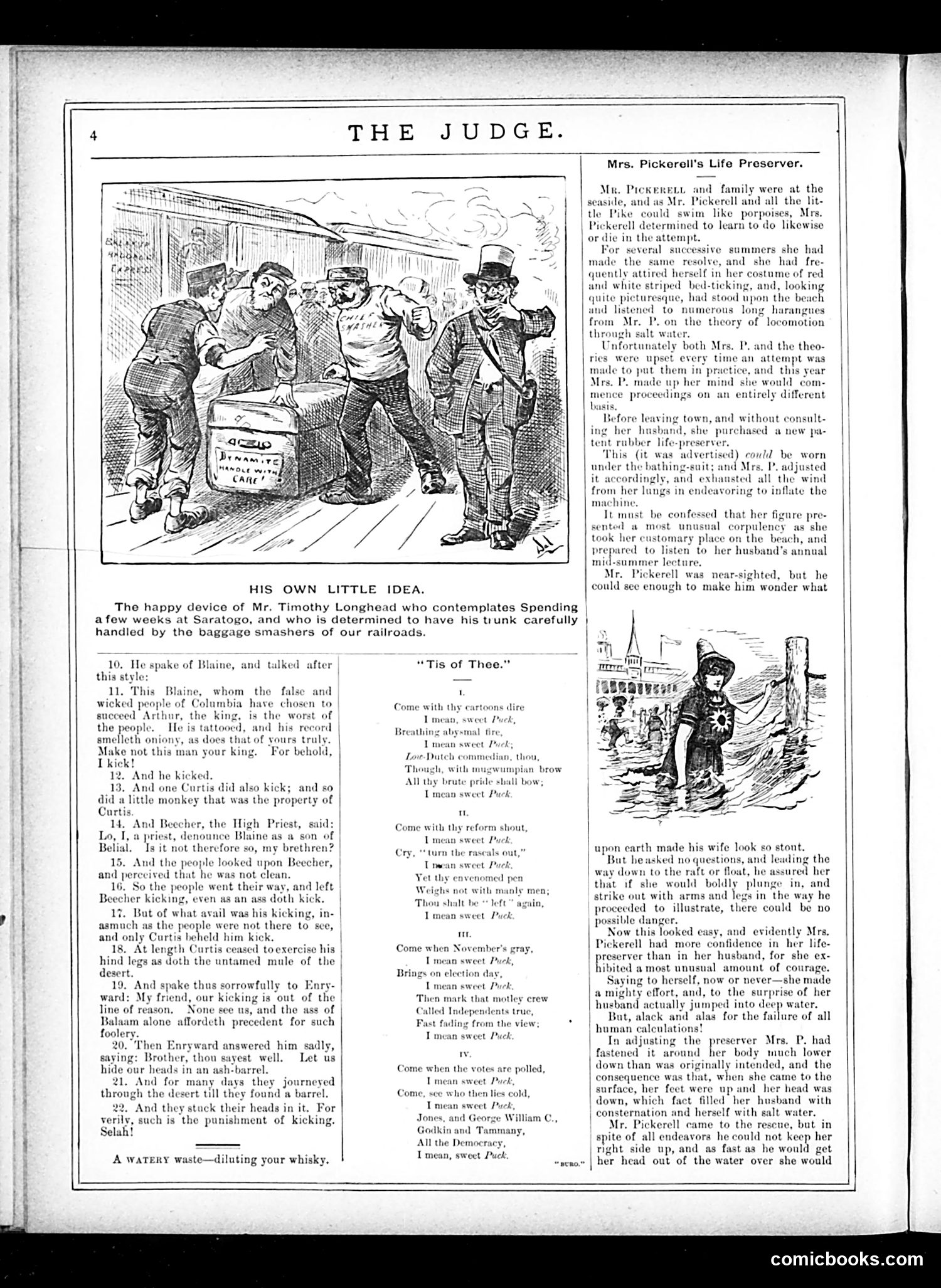
This *Judge* page contains two separate pieces of satire: **"His Own Little Idea"** (top): A visual joke about a man named Timothy Longhead attempting to protect his trunk from railroad baggage handlers by carefully supervising it—satirizing both the notorious roughness of railroad workers and travelers' anxiety about their belongings. **"Tis of Thee"** (right side): A poem mocking *Puck* magazine (a rival satirical publication) and its reform crusades. It sarcastically references Puck's inflammatory political cartoons ("cartoons dire") and election coverage, suggesting the publication's moralizing is performative and inconsistent—particularly regarding Democratic Party figures like Tammany Hall politicians. The repeated refrain "I mean, sweet Puck" is dismissive irony. **"Mrs. Pickerell's Life Preserver"**: A humorous domestic story about a woman secretly purchasing a rubber life-preserver to learn swimming, creating an awkwardly bulky appearance her nearsighted husband notices but doesn't question—playing on Victorian-era anxieties about women's athletic aspirations and marital communication.
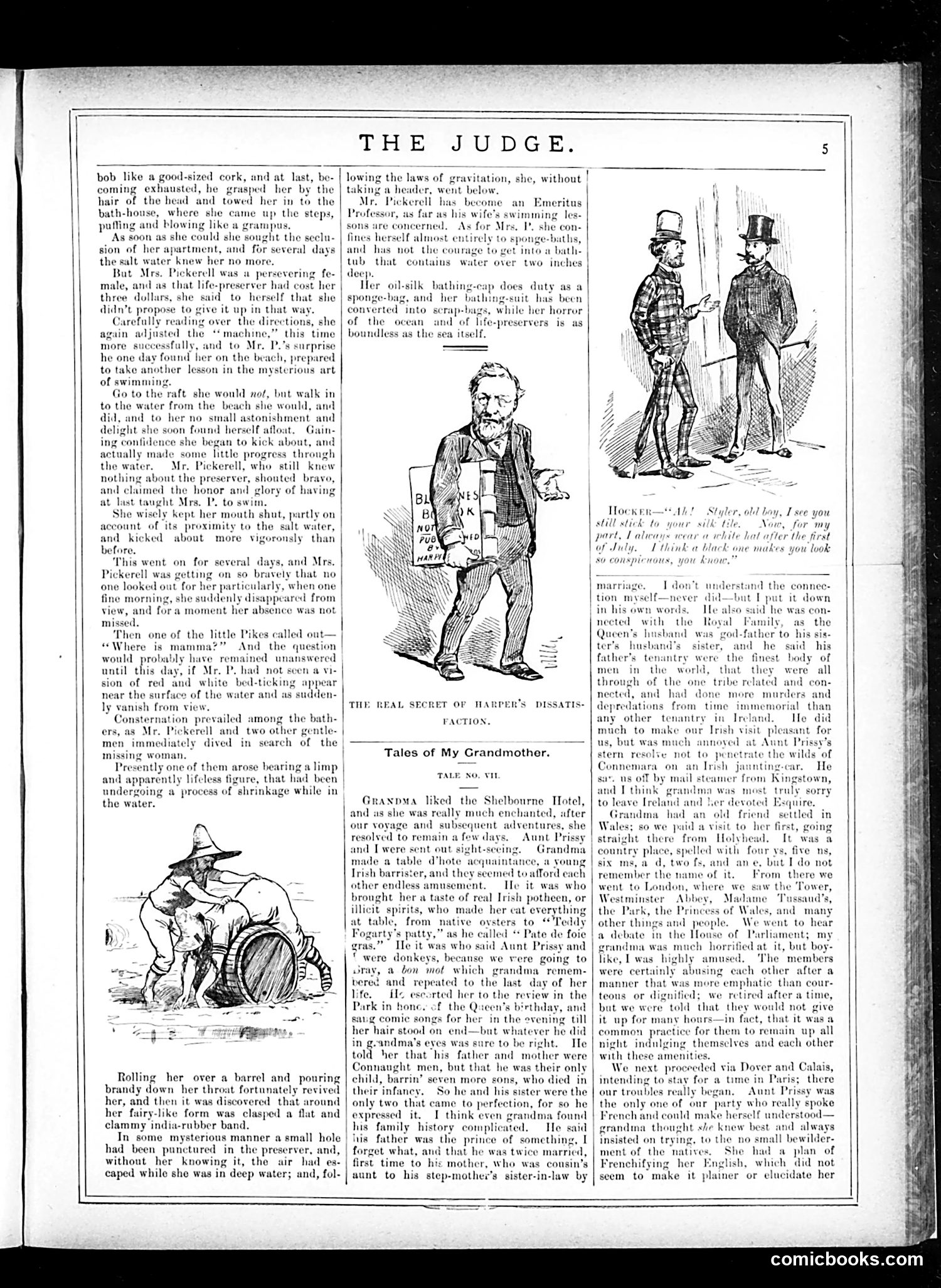
This page from *Judge* magazine contains two separate pieces of satirical content: **Top Section:** A humorous narrative about Mrs. Pickerell learning to swim. The joke is that she secretly uses a life-preserver (cork) to stay afloat, leading her husband Mr. Pickerell to believe he's successfully taught her to swim—when in fact the device is doing the work. The satire mocks both her deception and his obliviousness. **Bottom Section:** A cartoon showing two well-dressed gentlemen debating hat fashion. One (labeled "Hocker") advocates wearing white hats after July 1st, while the other prefers black year-round, joking that black makes one "look so conspicuous." The satire appears to mock genteel fashion conventions and snobbish social rules about seasonal dress codes among the upper class. **"Tales of My Grandmother"** begins a separate serialized story about the author's Irish travels and family connections—likely satirizing pretentious travel narratives popular in the era.
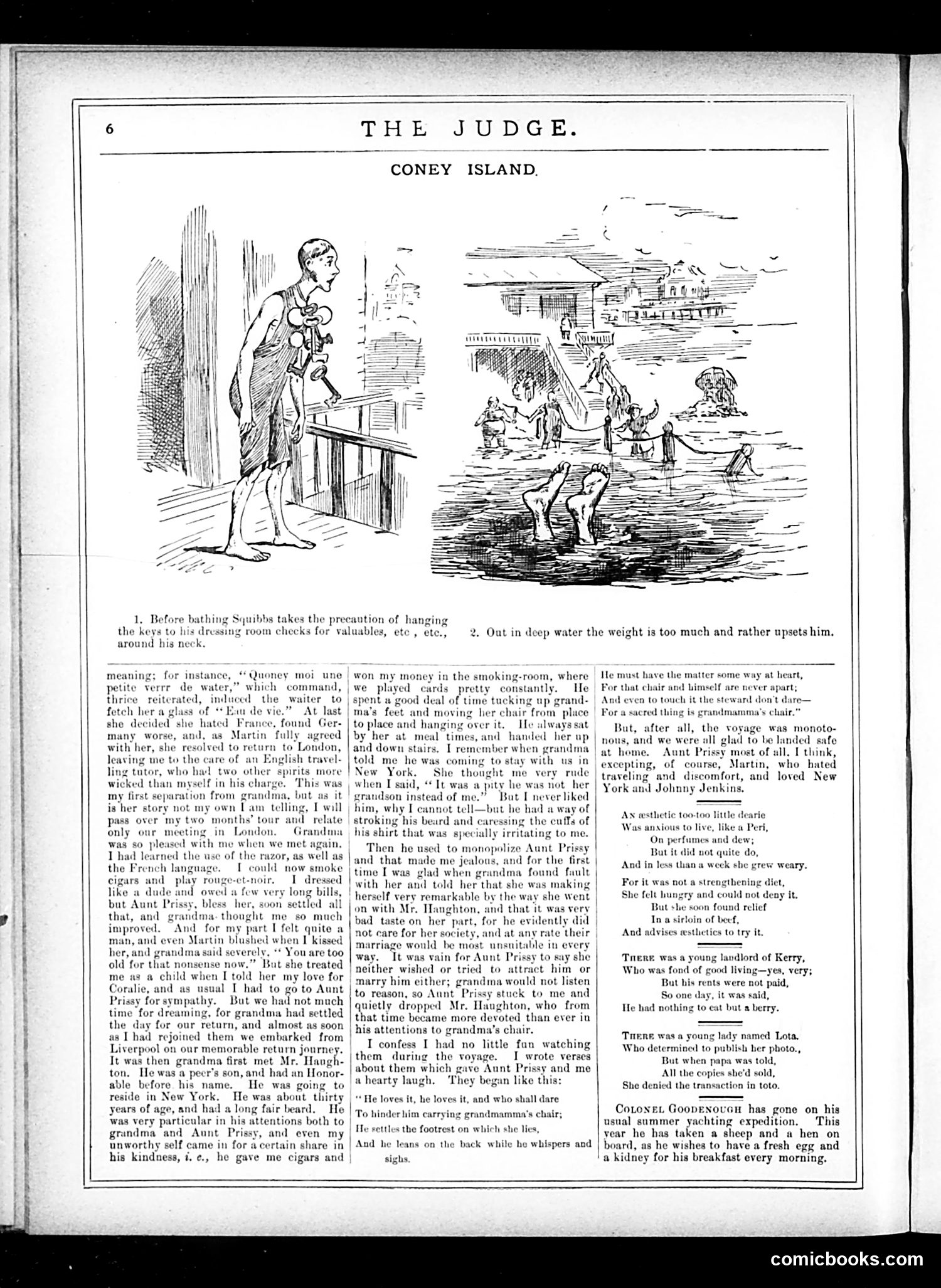
This page contains two distinct illustrations satirizing summer leisure activities. **Left panel**: Shows a man named Squibbs taking elaborate precautions before bathing—hanging his clothes and valuables around his neck with keys. The satire mocks the anxiety and paranoia of beachgoers worried about theft at public bathing areas. **Right panel**: Depicts Coney Island beach crowded with bathers and leisure-seekers. The accompanying text (partially visible) appears to be a serialized humorous story about social interactions during seaside vacations. The page also contains text about "Colonel Goodenough's" summer yacht expedition, suggesting the magazine satirizes both working-class beach culture (Coney Island crowds) and wealthy leisure pursuits (yachting). The overall thrust critiques American summer vacation habits and social pretensions across class lines—from petty theft worries to aristocratic posturing.
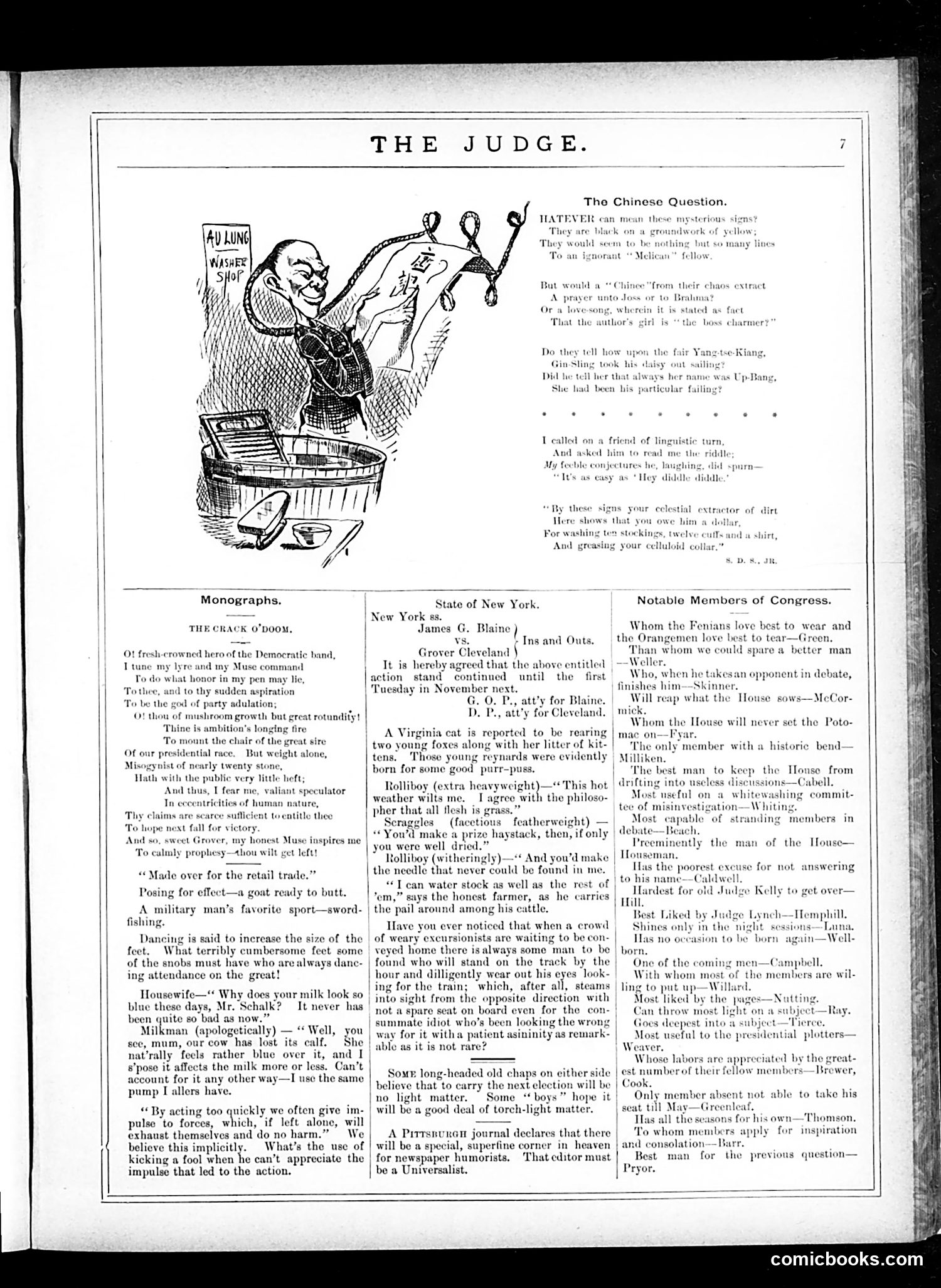
The main cartoon depicts a Chinese laundry worker ("AD LUNG") washing clothes—a common ethnic caricature of the era. "The Chinese Question" poem satirizes anti-Chinese sentiment by mockingly asking whether Chinese immigrants could appreciate American literature and culture, using stereotypical names like "Yatz-tse-Kiang" and "Up-Bang." The satire appears to target both xenophobic attitudes AND the absurdity of questions about Chinese assimilation. The "Monographs" section contains a poem titled "The Crack O'Doom" attacking a Democratic political figure—likely referring to Grover Cleveland—mocking his weight and political ambitions. References to "James G. Blaine" and Cleveland as competing candidates suggest this is from the 1884 election period. The "Notable Members of Congress" section lists congressmen with disparaging nicknames, typical political mockery of the era. Overall, the page combines ethnic caricature, electoral satire, and congressional ridicule—representative of Judge magazine's irreverent 19th-century humor.
This page is oriented sideways and titled "THE JUDGE" on the left margin. The OCR text is largely unreadable, appearing to be scanning artifacts. The illustration shows what appears to be a courtroom or judicial scene rendered upside-down relative to normal viewing. There are multiple caricatured figures, including what looks like judges or legal officials at desks/benches arranged in a line, and various other characters. The style is typical of late 19th or early 20th-century American political satire. Without legible text, I cannot definitively identify the specific political figures, events, or satirical targets. The composition suggests commentary on the legal system or judicial proceedings, but the exact subject matter remains unclear from this reproduction.
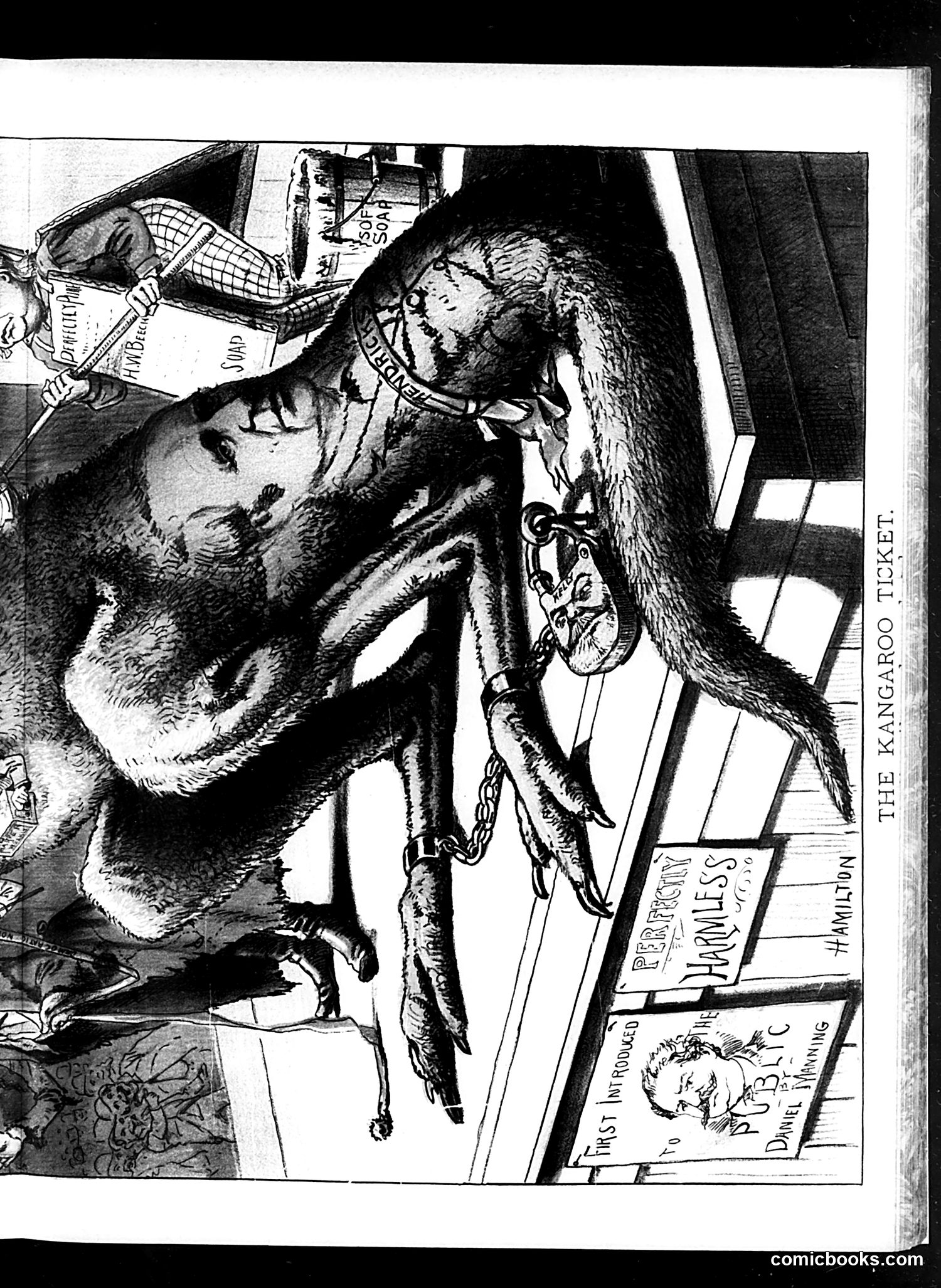
This appears to be a satirical cartoon from *Judge* magazine depicting kangaroos wearing tickets or identification tags. The visible text references "THE KANGAROO TICKET" and mentions "HARRISON" and what appears to be political campaign imagery. The cartoon likely satirizes a late 19th-century American political campaign, possibly referencing the Republican or Democratic "ticket" (slate of candidates). The kangaroo caricature suggests mockery of opponents' political platform or candidates—kangaroos being used as absurdist symbols for something seen as ridiculous or foreign. Without clearer text or date visibility, I cannot definitively identify which specific election or political figures are targeted, but the structure indicates commentary on campaign politics and candidate selection of the era.
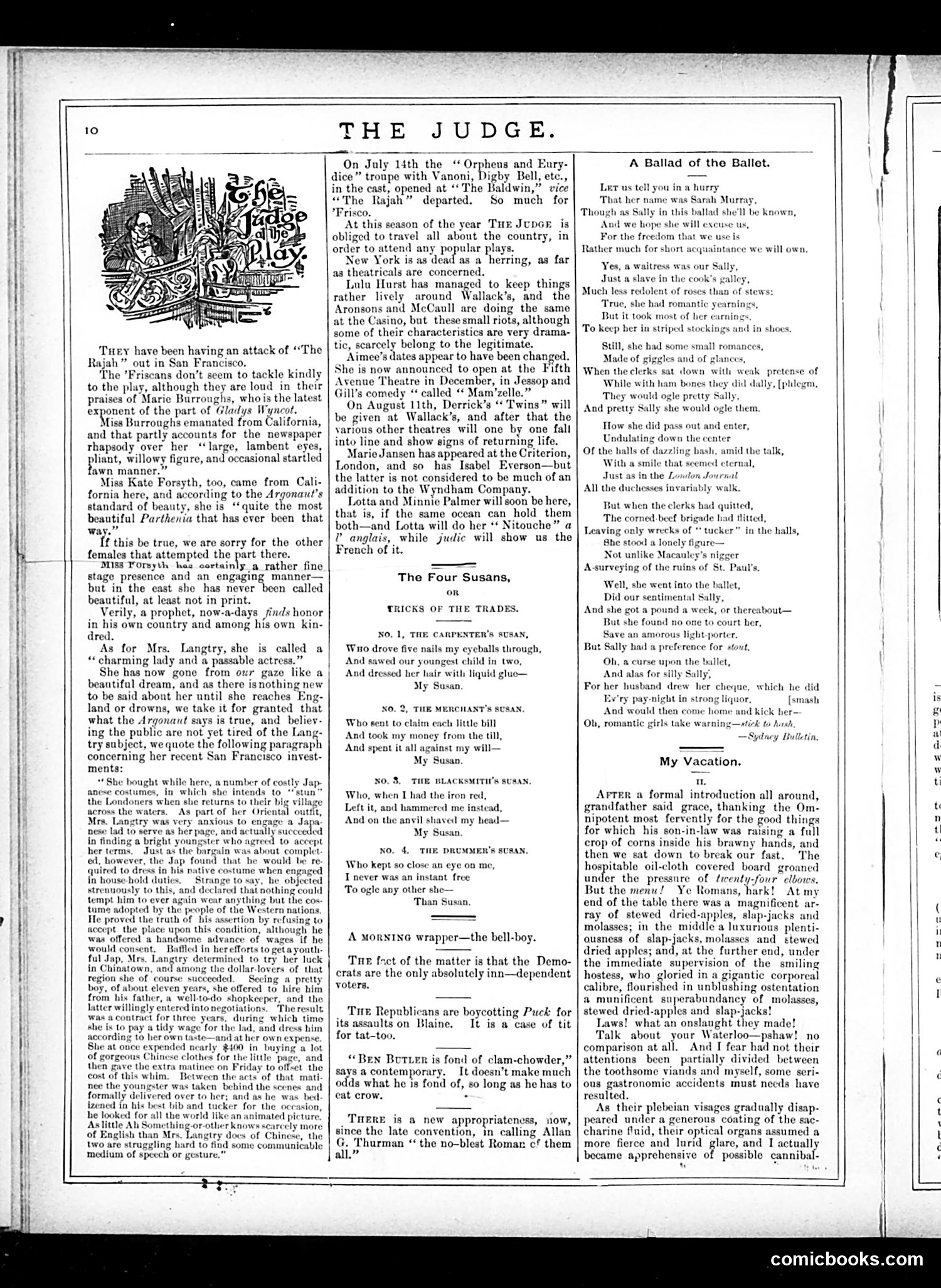
This page from the satirical magazine **Judge** contains theatrical gossip and commentary rather than political cartoons. The content mocks California's theatrical scene and tastes. The main satirical targets are: 1. **San Francisco audiences** — criticized for praising mediocre actresses like Marie Burroughs and Kate Forsyth simply because they're from California, while dismissing them elsewhere as unremarkable. 2. **Mrs. Langtry** (the famous actress) — ridiculed for her pretentious spending on Japanese costumes and her absurd attempt to hire a young Japanese servant boy, ultimately settling for a Chinese boy she couldn't communicate with. The satire mocks **regional parochialism** — the bias that makes people overvalue homegrown talent — and **affected cosmopolitanism**, where wealthy figures like Langtry collect exotic servants and costumes as status symbols without understanding the cultures involved. The theatrical news items mock the emptiness of New York's summer theater season while California maintains "small riots" of drama.
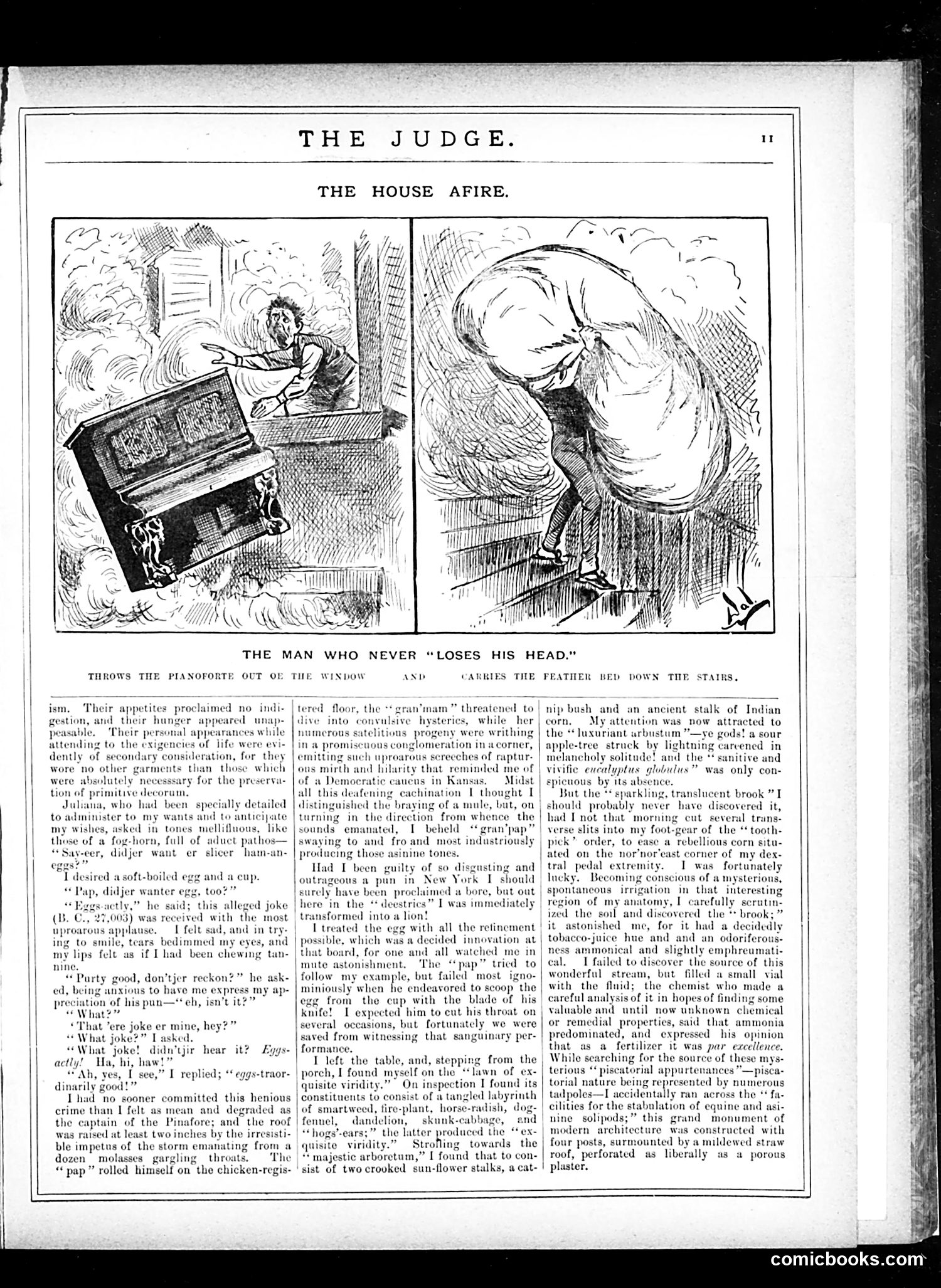
This page from **Judge** magazine contains two connected satirical comic panels illustrating the humorous misadventures of an eccentric character during a house fire. **The Satire:** The title character is a man who remains absurdly composed during domestic crisis. In the left panel, he throws a pianoforte out a window while the house burns. In the right panel, he carries a feather bed down the stairs—prioritizing a trivial possession over urgent evacuation. **The Point:** The joke mocks impractical priorities and misplaced calm. Rather than saving valuables or people, this ridiculous figure preserves a mattress and discards a piano, demonstrating warped judgment masked by apparent composure. The accompanying text (a lengthy, digressive narrative about rural life and peculiar characters) reinforces the absurdist humor through verbose, flowery language describing mundane observations—typical of Judge's satirical style parodying overwrought Victorian prose. The cartoon lampoons both human folly during emergencies and pretentious literary affectation.
This page from *Judge* magazine contains two distinct pieces of satirical humor: 1. **"Old Parker's too Previous Boy"**: A rural comedy dialogue between a father ("O.P.") and son ("Hopeful") about poker terminology. The joke hinges on the boy's innocent misunderstanding of "straddling the blind" (a poker betting position) as literally straddling a blind horse or window blind. The satire targets rural ignorance and the generation gap—the father's exasperation at his son's naive literalism is played for laughs. 2. **"School Day Reminiscenses"**: A nostalgic anecdote about a teacher using a drum to wake boarding school boys on a holiday morning, which devolves into chaos when students start playing with it. The humor is gentle, reflecting on youthful mischief and authority's attempts to maintain order. Both pieces reflect *Judge*'s typical late-19th-century appeal: rural/class humor and school-boy pranks—safe, sentimental subjects for a general readership.
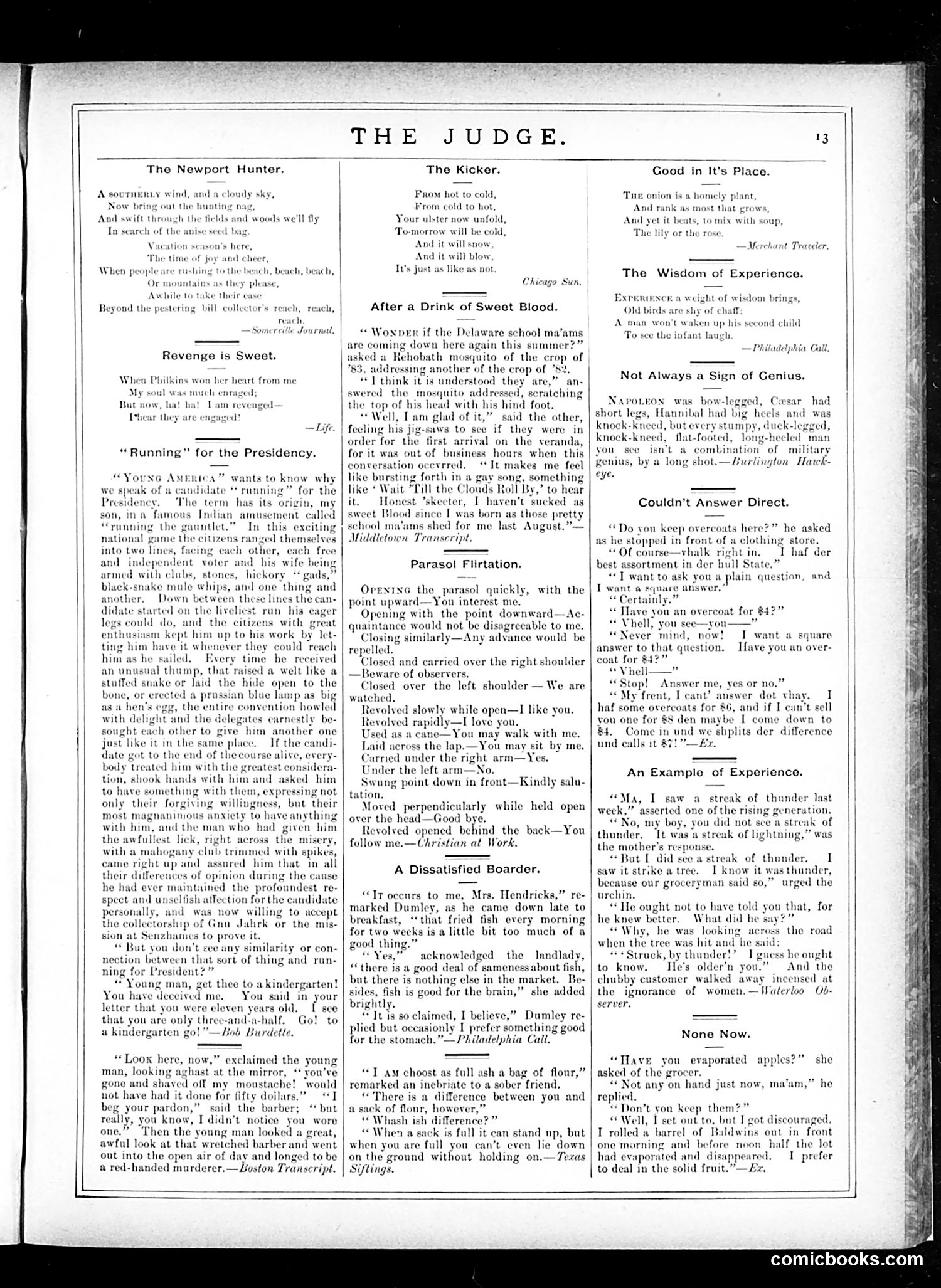
This page from the satirical magazine **Judge** contains primarily **humorous text pieces and social commentary** rather than political cartoons. The content reflects late 19th-century American concerns: **Key Content:** - **"Running for the Presidency"** satirizes the democratic campaign process by comparing it to a brutal "gauntlet" ordeal, suggesting candidates survive public punishment for votes and patronage promises—cynical commentary on political ambition and corruption. - **"The Kicker"** mocks unpredictable weather and people's complaints about seasonal changes. - **"After a Drink of Sweet Blood"** features anthropomorphized Delaware mosquitoes discussing the return of summer tourists (schoolteachers), using crude humor about parasitic feeding. - Various short pieces joke about romance, social situations, and domestic life. **Overall Tone:** The page exemplifies Judge's satirical approach—using exaggeration and absurdist humor to critique American social institutions (politics, manners, courtship) rather than specific current events or individuals. The humor relies on Victorian-era sensibilities about gender, class, and propriety.
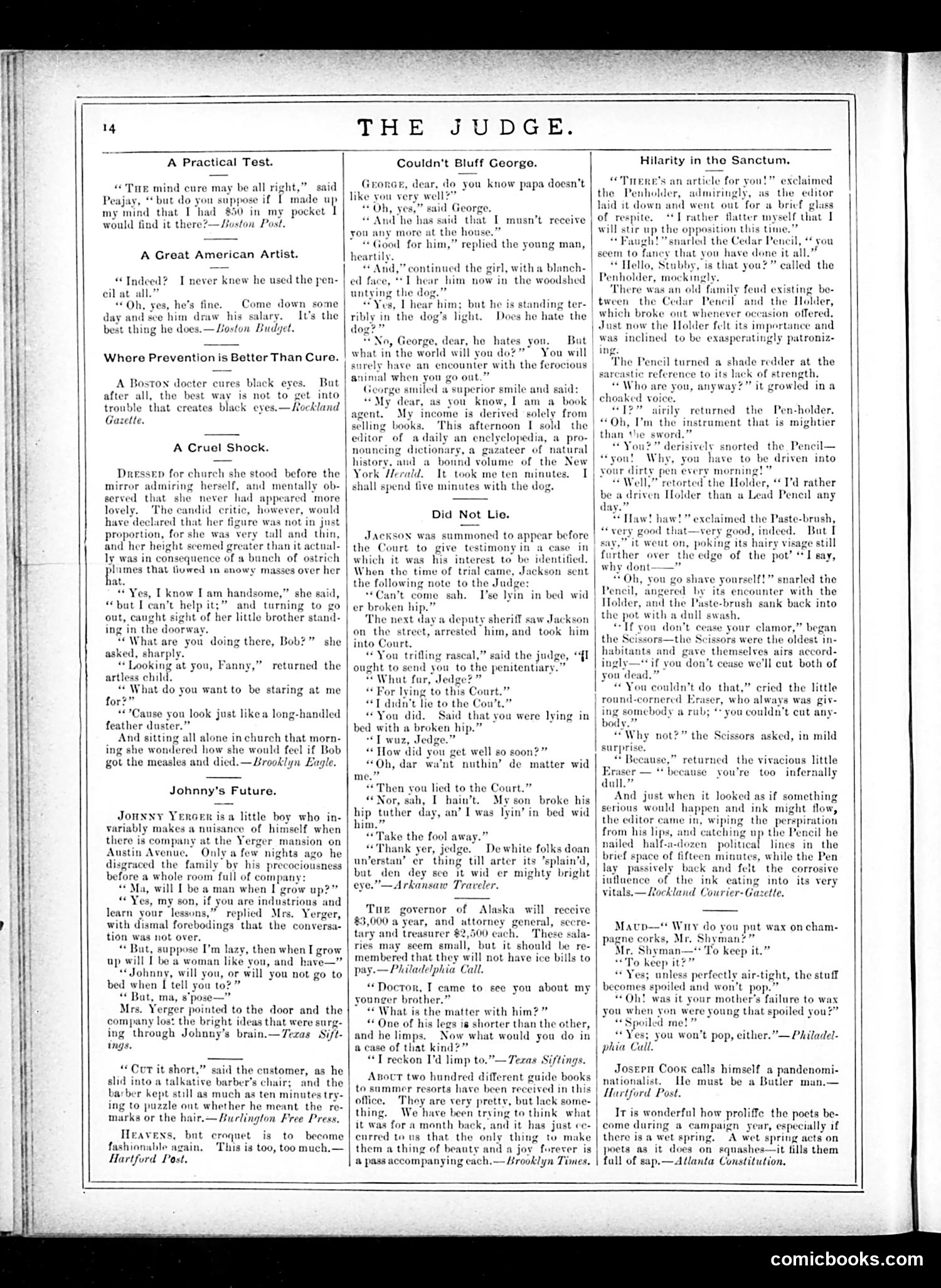
This page from *Judge* is primarily a humor and satire column collection rather than illustrated political cartoons. The pieces satirize American social types and behaviors: **"A Practical Test"** mocks "mind cure" philosophy popular in the era—suggesting positive thinking alone won't create money. **"A Great American Artist"** likely references contemporary debates about commercial versus fine art, with an artist apparently famous only for drawing salary rather than actual work. **"Johnny's Future"** satirizes a precocious child making an inappropriate gender-based insult to his mother ("will I be a woman like you?"), reflecting period attitudes about gender and childhood behavior. **"Did Not Lie"** depicts a man named Jackson who lies to court about his health (claiming a broken hip) to avoid testifying, then is caught out. The satire targets dishonesty and legal evasion. The remaining items are brief quips mocking various social conventions—vanity, barber talk, fashion cycles. No prominent political figures appear to be caricatured on this particular page.
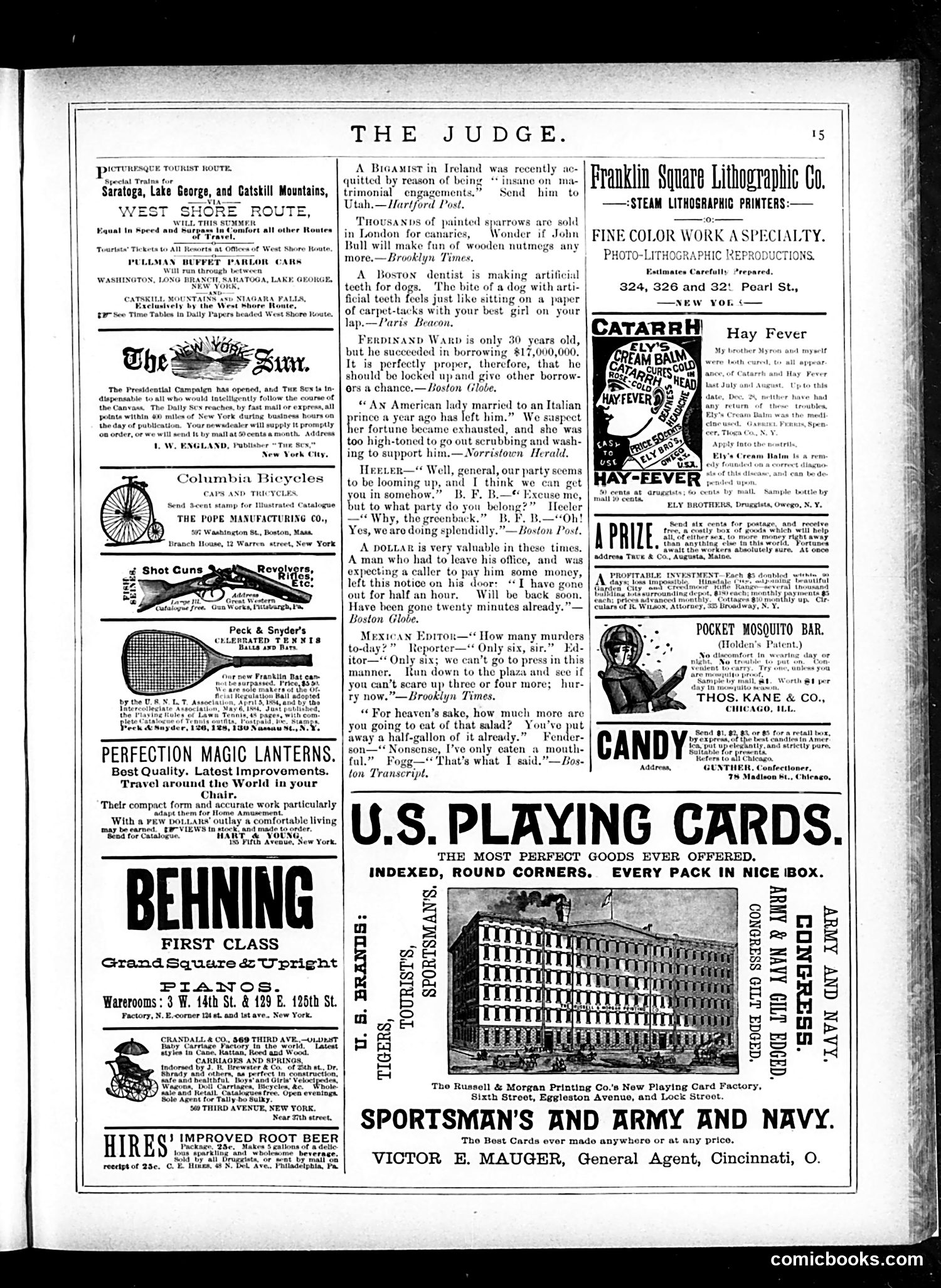
This page is primarily composed of **period advertisements** rather than political cartoons, with a few short humorous anecdotes in the upper portion. The brief satirical items mock contemporary figures and situations: Ferdinand Ward (a financier involved in a banking scandal), an Italian prince abandoned by his American wife, and various absurdist observations about dogs with false teeth and journalists pressuring sources for more dramatic news. The page's dominant feature is a large advertisement for **U.S. Playing Cards** manufactured by the Russell & Morgan Printing Company, showcasing their factory building. Additional ads promote travel routes, bicycles, pianos, lanterns, and patent medicines—typical of the era's Judge magazine business model. The "cartoons" here are minimal; the humor relies on brief written jokes rather than visual satire. Without dated context for specific figures like Ferdinand Ward, their full satirical impact is lost to modern readers, though the absurdist tone remains evident.
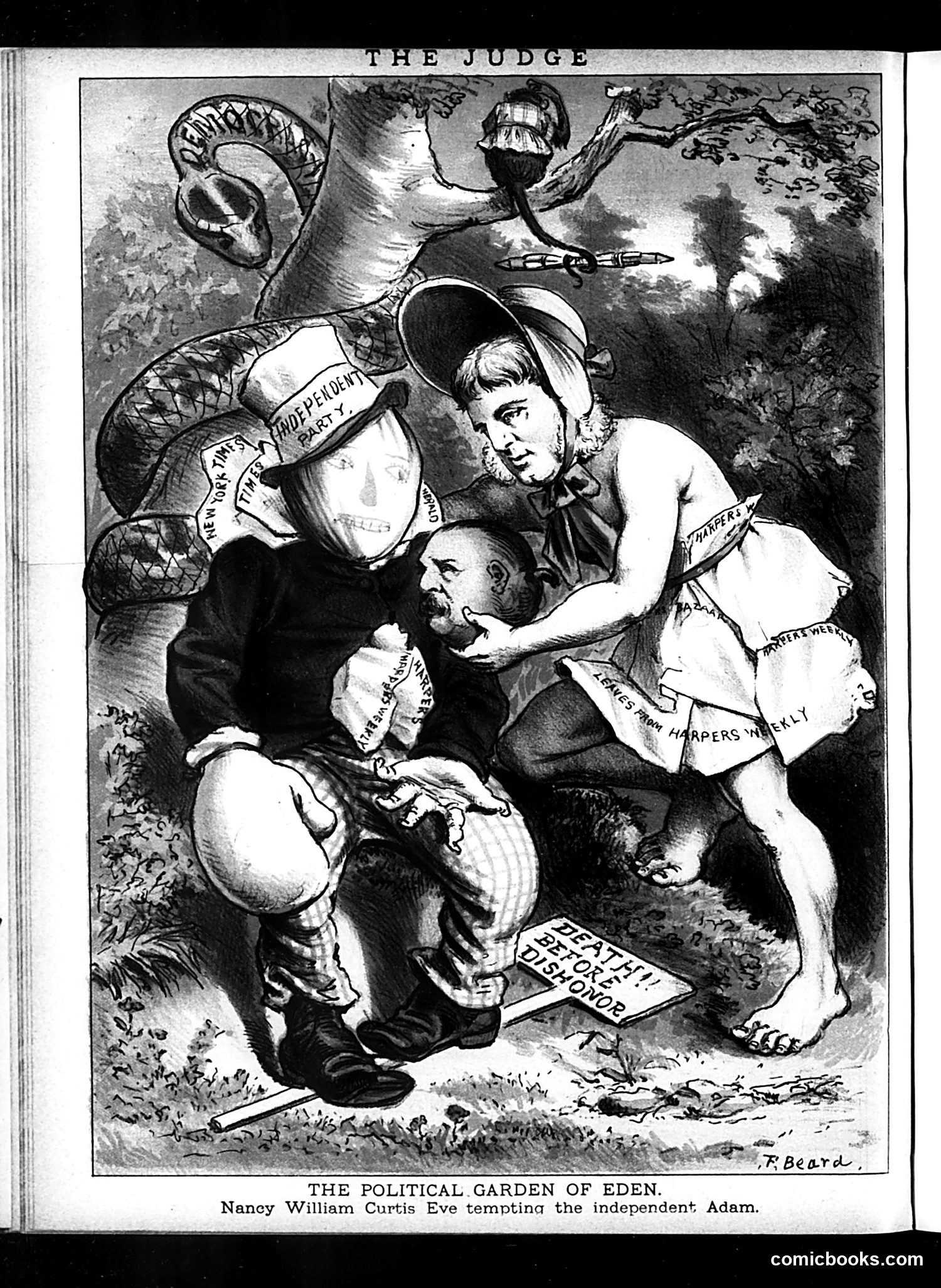
This cartoon presents a biblical allegory critiquing political independence. The caption identifies the figures as "Nancy William Curtis Eve" tempting "the independent Adam." The satire uses the Garden of Eden story to suggest that Curtis (likely a female political figure or activist) is attempting to corrupt or seduce "independent" political actors—presumably independent voters or politicians—away from their principles, much as Eve tempted Adam in scripture. The allegorical framing implies that accepting Curtis's influence constitutes a "fall" from virtue. The cherubs overhead and serpent elements reinforce the biblical reference. This appears to be anti-suffrage or anti-reform propaganda, using gendered religious imagery to portray female political involvement as inherently corrupting to male independence. Without clearer dating, the specific Curtis referenced remains unclear.