
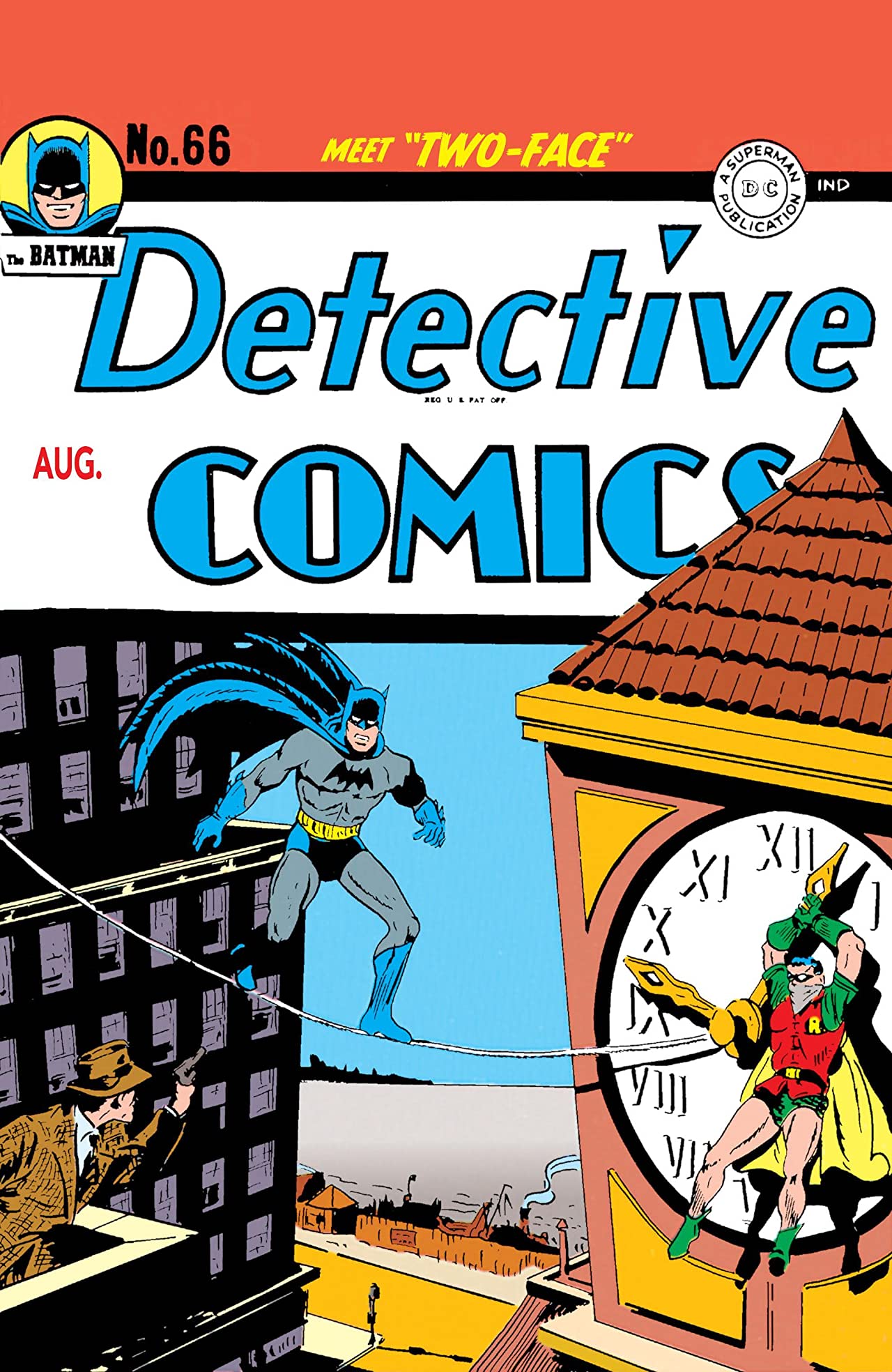
Detective Comics #66
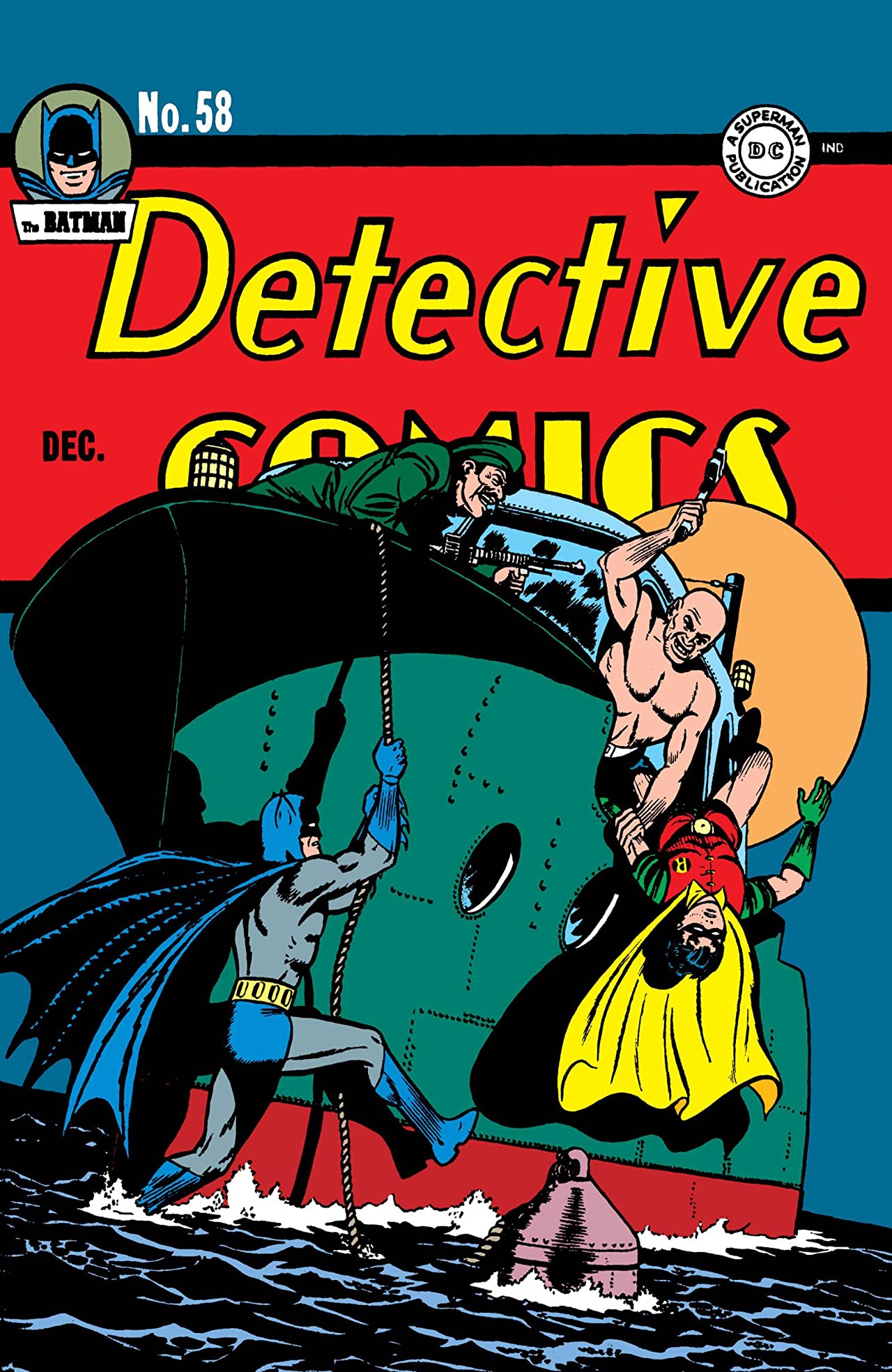
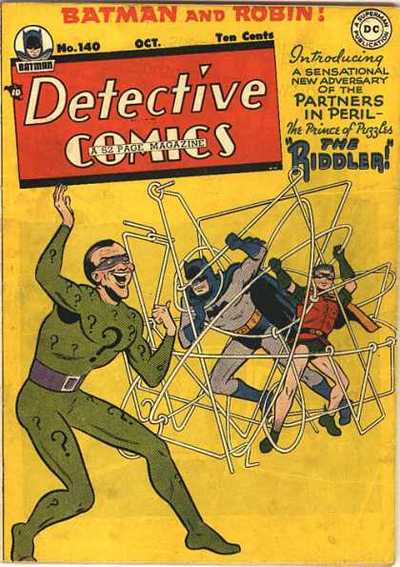
☆ Be the first to review + Add to your collection — Join freeDetective Comics #66 (cover-dated August 1942, on sale June 20, 1942) introduced Two-Face — originally Harvey "Apollo" Kent — in Bill Finger's story "The Crimes of Two-Face," giving Batman one of the most psychologically resonant villains in comics history: a former ally of justice whose destruction is framed as a personal failure for Batman himself. Unlike the Joker or the Penguin, Two-Face was built from the ground up as a tragic figure — a good man warped by circumstance rather than innate evil — a storytelling template that would shape the entire "fallen hero" archetype in superhero comics for decades to follow. The character's core machinery (the scarred coin, the duality-themed crimes, the push-pull between redemption and catastrophe) arrived fully formed in this single issue and has remained essentially unchanged across eighty years of adaptations. As the debut of one of Batman's most enduring rogues, the issue holds a fixed place in the historical record of the Detective Comics anthology run, sitting alongside the introductions of the Penguin (#58) and the Riddler (#140) as the series' defining villain origins.
In "The Crimes of Two-Face!", a shocking courtroom attack leaves District Attorney Harvey Kent scarred and twisted by acid, transforming him into a villain obsessed with duality and the number two. With a two-headed silver dollar as his twisted oracle, he now chooses his crimes—and their outcomes—based on chance, turning justice into a gamble. Written by Bill Finger and Bob Kane, with art by Bob Kane and inks by Jerry Robinson and George Roussos, this 1942 classic features a chilling origin and a haunting cover by Jerry Robinson.
In "The Crimes of Two-Face!" from Detective Comics #66 (1942), the trial of a notorious criminal takes a shocking turn when District Attorney Harvey Kent is disfigured by acid, plunging him into a twisted new identity. Now known as Two-Face, he becomes a criminal mastermind whose every move is dictated by the flip of a two-headed silver dollar—deciding whether to keep his ill-gotten gains or abandon them to fate.
ComicBooks.com Value
Show all 19 grades ▾
This exact issue on ebay
CGC 1.8 ▾ $5,750–$9,500 3 listings
Read it digitally
Sell my copy
Have this issue — or a whole collection? Get a fair offer from us, skip the marketplace fees and the hassle.
We Buy Collections ▸History
The lead story was scripted by Bill Finger from a concept developed by Bob Kane, with Kane on pencils and Jerry Robinson and George Roussos providing inks; Robinson also drew the cover. In his autobiography, Kane acknowledged drawing direct inspiration from the 1931 Spencer Tracy film adaptation of Dr. Jekyll and Mr. Hyde — specifically its visual image of a man split between virtue and monstrousness — while the coin-flipping mechanic drew on George Raft's gangster mannerism in the 1932 film Scarface. Finger, who had already written the Joker's first appearance in Batman #1 (1940), took Kane's concept and gave it the court-drama structure and the emotional weight of Harvey's friendship with Batman that cemented the character's lasting significance. The issue was edited by Whitney Ellsworth, with Murray Boltinoff and Mort Weisinger serving as uncredited assistant editors, and it was published as an anthology — standard format for Detective Comics at the time — with five additional backup stories alongside the Batman lead.
Trivia · 8 facts
- First appearance and complete origin of Two-Face (Harvey Kent, later renamed Harvey Dent), Gotham City's district attorney, who is disfigured by acid thrown by mob boss Boss Moroni during a trial and becomes a criminal governed by the flip of a scarred two-headed coin.
- The character debuted under the name Harvey 'Apollo' Kent; the surname was later changed to Dent — officially in Batman #50 (1948) — to avoid confusion with Superman's alter ego Clark Kent.
- Also introduces Gilda Kent, Harvey's fiancée and a sculptress, who became a recurring character in Two-Face stories across multiple decades.
- The lead story, 'The Crimes of Two-Face,' was written by Bill Finger (from a concept by Bob Kane), pencilled by Bob Kane, and inked by Jerry Robinson and George Roussos; the cover is by Jerry Robinson — making this both Two-Face's first appearance and his first cover.
- The issue functions as Part 1 of an unusually structured multi-part arc — a rarity in 1942 Golden Age comics, where standalone stories were the norm; the story concludes across Detective Comics #68 and Detective Comics #80.
- Backup features include a Boy Commandos story ('The Sphinx Speaks') scripted and pencilled by Jack Kirby with Joe Simon inks — their third published Boy Commandos story — a Crimson Avenger (Lee Travis) story by Jack Lehti, an Air Wave story, and a Slam Bradley story by Howard Sherman.
- 'The Crimes of Two-Face' has been reprinted in 100-Page Super Spectacular DC-20, Batman Archives Vol. 2, Batman Chronicles Vol. 7, Batman: The Golden Age Omnibus Vol. 2, and Batman: Featuring Two-Face and the Riddler; a full facsimile edition was published by DC in February 2026.
- Bob Kane drew creative inspiration for Two-Face's visual concept from the 1931 Jekyll and Hyde film adaptation and from the pulp character the Black Bat, whose origin also involved acid disfigurement.
Cast · 17 characters
Full credits
Reprints
Reprinted in Superman #245 (1971), 100-Page Super Spectacular #DC-20 (1973), Boy Commandos #1 (1973), Giant Batman Album #28 (1974), Mighty Comic #103 (1974), DC-serier #1/1989 (1989), DC presenterer #2/1989 (1989), Batman Archives #2 (1991), Batman: Featuring Two-Face and the Riddler #[nn] (1995), Batman vs. Two-Face #[nn] (2008), The Batman Chronicles #7 (2009), The Boy Commandos by Joe Simon & Jack Kirby #1 (2011), DC Comics Graphic Novel Collection #20 (2015), Batman Arkham: Two-Face #[nn] (2016), Batman: The Golden Age Omnibus #2 (2016), Two-Face: A Celebration of 75 Years #[nn] (2018), Batman: The Golden Age #4 (2018), Detective Comics: 80 Years of Batman #[nn] (2019), Batman Arkham #[1] (2021), Detective Comics 66 (Facsimile Edition) #[nn] (2026), O Lobinho (2ª Série) #53
Key issues in Detective Comics
Reviews
Reader reviews
No reader reviews yet.