
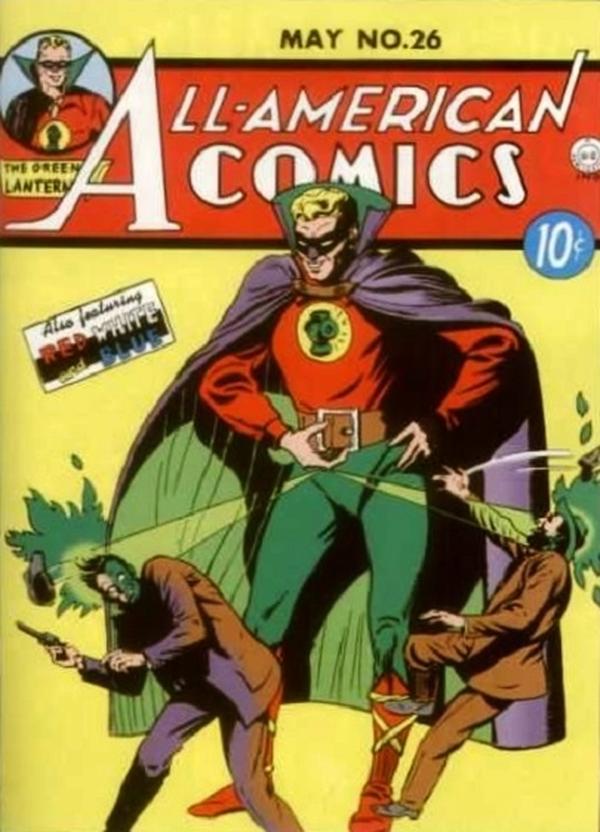
All-American Comics #26
☆ Be the first to review + Add to your collection — Join freeAll-American Comics #26 marks the debut of Sargon the Sorcerer, one of the Golden Age's most distinctive magic-using heroes and a character whose influence quietly shaped DC's mystical corner for decades. By framing John Sargent as a stage magician who conceals genuine supernatural powers behind the illusion of a vaudeville act, writers John B. Wentworth and artist Howard Purcell introduced a secret-identity structure rooted not in a costume but in performance itself — a genuinely novel twist on the dual-identity formula then dominating superhero comics. Sargon went on to join the All-Star Squadron, earn honorary Justice League membership, and die heroically in Alan Moore's Swamp Thing run, cementing him as a foundational thread in DC's tapestry of mystical characters. The issue is also notable for running concurrent features starring the Golden Age Green Lantern, the Atom, and Dr. Mid-Nite, making it a densely packed anthology snapshot of the early JSA era at full creative steam.
In "The Case of the Loan Shark," Green Lantern Alan Scott takes on a corrupt loan shark named Richard Turpin, using his wits and the power of his ring to turn Turpin’s own criminal operation against him. Written by Bill Finger and illustrated by Irwin Hasen, this 1941 tale from All-American Comics #26 blends early superhero sleuthing with the gritty realism of the era, all capped by a striking cover by Howard Purcell.
In "The Case of the Loan Shark," Alan Scott, as Green Lantern, takes on the corrupt loan shark Richard Turpin after learning how Turpin manipulated documents to trap borrowers like Carl Kessor in endless debt. With a clever plan that turns Turpin’s own men against him, Green Lantern sets a trap that forces Turpin to confess his crimes—just as the authorities arrive.
In "The Secret of Mr. Connelly," the Atom steps in to protect college student Jimmy Baker when a gambling ring targets him and falsely implicates Jimmy’s father in an arson attack. With sharp instincts and a no-nonsense approach, the hero unravels a web of deception that puts the real criminals in the spotlight.
In "The Waterfront Mystery," Dr. Mid-Nite uncovers a web of corruption linking a dishonest politician to a gang of river pirates, using sabotage to manipulate the political landscape—just as the race for governor heats up. With his keen mind and masked vigilance, he races to expose the truth before the city's fate is sealed.
In "The Ruby of Life," young John Sargent discovers his extraordinary gift: the ability to command any object he touches, a power tied to a mysterious ruby he first saw around his mother's neck at birth. Disguising himself as a stage magician, he uses his talents to entertain while keeping his true abilities hidden from the world.
ComicBooks.com Value
Show all 16 grades ▾
This exact issue on ebay
Read it digitally
Sell my copy
Have this issue — or a whole collection? Get a fair offer from us, skip the marketplace fees and the hassle.
We Buy Collections ▸History
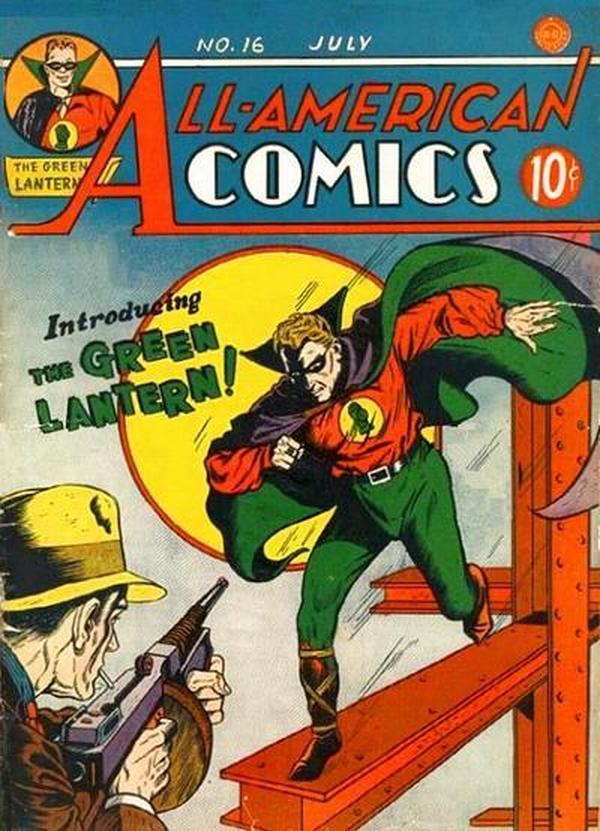
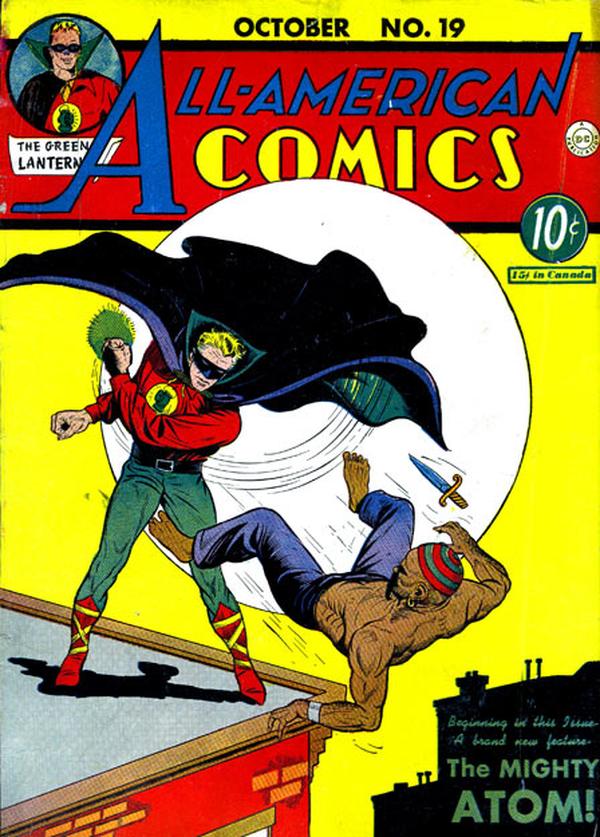
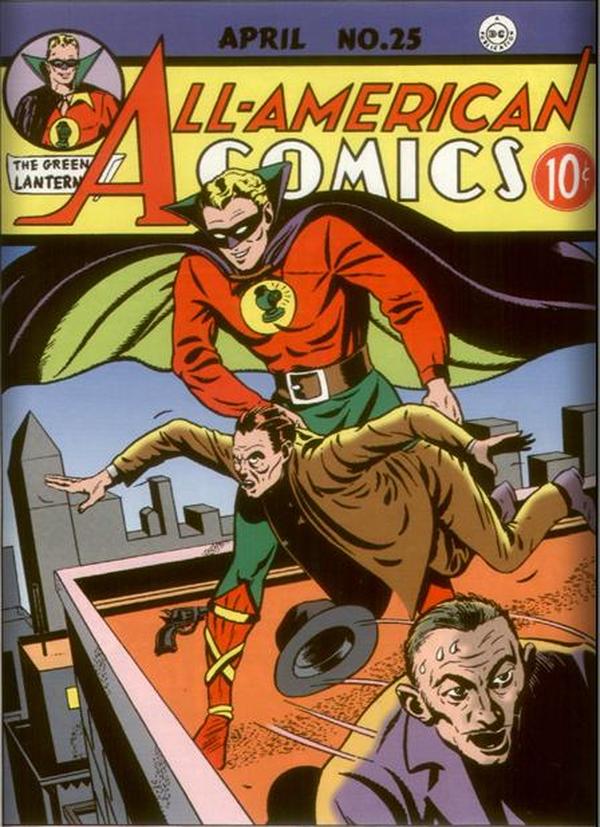
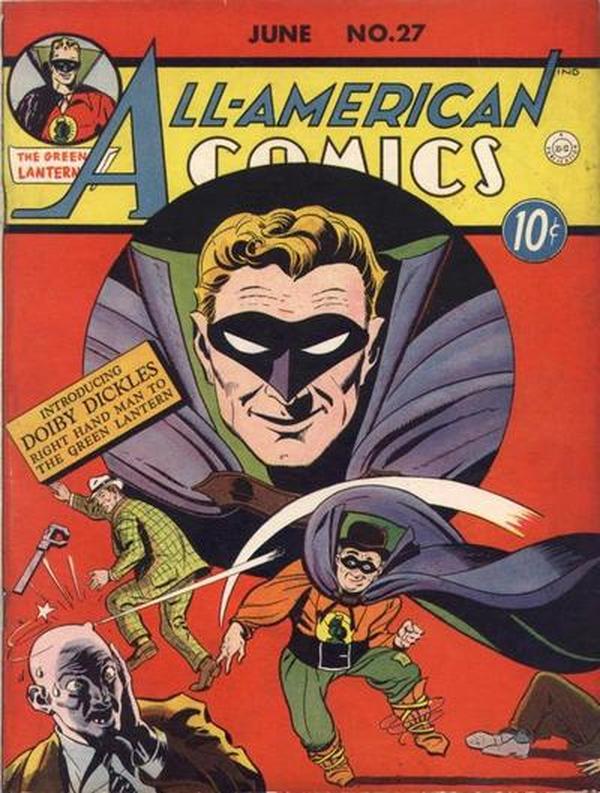
All-American Comics was the flagship anthology of All-American Publications — one of the constituent companies that would eventually unify into DC Comics — edited by M.C. Gaines as managing editor and Sheldon Mayer as assistant editor. By early 1941 the title had already launched Green Lantern (issue #16), the Atom (issue #19), and Dr. Mid-Nite (issue #25), establishing a rapid-fire cadence of Golden Age hero introductions; a text preview of Sargon had even appeared in issue #24 to prime readers for his formal debut here. Writer John B. Wentworth and artist Howard Purcell — who also provided the cover — created the character and shepherded his run through issue #50, after which Sargon migrated to Comic Cavalcade and Sensation Comics.
Trivia · 8 facts
- First appearance and complete origin of Sargon the Sorcerer (John Sargent), created by writer John B. Wentworth and artist Howard Purcell.
- The Sargon debut story is titled 'The Ruby of Life,' in which John Sargent discovers that the mystic Ruby of Life — embedded in his turban — grants him control over any inanimate object he touches.
- Sargent's cover identity is a swami-costumed stage magician who passes his genuine supernatural feats off as illusions, giving the character a dual-identity twist rooted in performance rather than a conventional alter ego.
- The cover date is May 1941; the issue went on sale in mid-March 1941 (on-sale date recorded in copyright registration as March 19, with an advertisement in Flash Comics #16 listing March 18).
- The issue also contains a Green Lantern story ('The Case of the Loan Shark'), an Atom story, a Dr. Mid-Nite story, a Hop Harrigan installment, and reprinted Mutt and Jeff newspaper strips — a full Golden Age anthology lineup.
- The Green Lantern story from this issue was later reprinted in The Golden Age Green Lantern Archives Vol. 1; the Dr. Mid-Nite story was reprinted in The JSA All Stars Archives Volume 1.
- A text preview foreshadowing Sargon's arrival had appeared in All-American Comics #24, making issue #26 the payoff of a two-issue lead-up.
- Sargon went on to become a member of the All-Star Squadron, received honorary Justice League membership (Justice League of America #99), and was killed heroically in Swamp Thing #50 — demonstrating the character's long-term relevance across DC's mystical mythology.
Full credits
Reprints
Reprinted in Golden Age Green Lantern Archives #1 (1999), The JSA All Stars Archives #1 (2007)
Key issues in All-American Comics
Reviews
Reader reviews
No reader reviews yet.