
All-American Comics #16
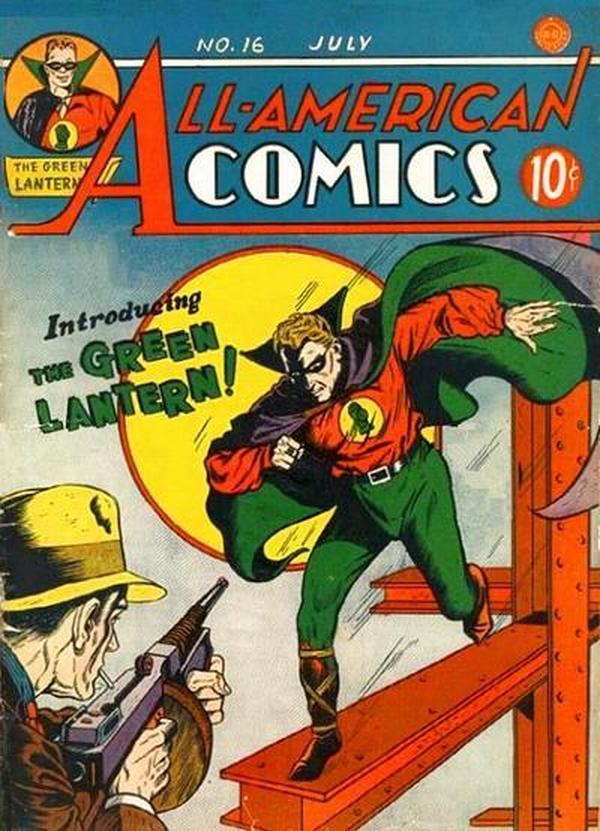
☆ Be the first to review + Add to your collection — Join freeAll-American Comics #16 (July 1940) marks the debut of Alan Scott — the original Green Lantern — making it one of the foundational superhero origin issues of the Golden Age. The issue introduced a concept entirely distinct from the costumed crime-fighters of the day: a hero whose extraordinary abilities flowed from a mystical object, a green-flamed lantern forged from an alien meteorite, establishing the template of a power-ring wielder that DC Comics would reinvent and expand for decades. Alan Scott went on to become a charter member of the Justice Society of America, the medium's first superhero team, cementing this issue's place at the headwaters of the shared-universe concept. The character's enduring presence — from Golden Age anthologies through Silver Age parallel-Earth stories to 21st-century continuity reboots — traces every thread back to this single eight-page origin story.
In this classic 1940 origin tale from All-American Comics #16, construction engineer Alan Scott survives a catastrophic bridge explosion, only to discover the green lantern he carried is the source of his survival—and newfound powers. Guided by the lantern’s ancient history, he learns of its journey from a Chinese lampmaker’s hands to an asylum inmate’s redemption, now awakening in him the ability to harness its energy. With the ring forged from its remnants, Scott uses his powers to confront the sabotage behind the disaster, forcing a confession from his rival, Dekker.
ComicBooks.com Value
Show all 20 grades ▾
This exact issue on ebay
Raw / ungraded ▾ $12.95–$5,000 2 listings
More listings for this title
Read it digitally
Sell my copy
Have this issue — or a whole collection? Get a fair offer from us, skip the marketplace fees and the hassle.
We Buy Collections ▸History
The concept originated in early 1940 when a young freelance artist named Martin Nodell, seeking steady work, was turned away from the All-American Publications office and told to return with a superhero pitch. On the subway ride home, the sight of a trainman waving a green lantern fused in Nodell's mind with his love of Richard Wagner's Ring Cycle operas, Greek mythology, and Chinese folklore — a combination he sketched out almost immediately and brought back to editor Sheldon Mayer within days. Publisher Max Gaines approved the pitch, and Nodell completed the first five pages of the origin story himself before Batman co-creator Bill Finger was brought in to script the remainder; the two would collaborate on the feature for seven years. Nodell, anxious about the stigma attached to comics work, published his art throughout the early run under the pseudonym 'Mart Dellon,' a pen name he used at least through All-Star Comics #2.
Trivia · 10 facts
- First appearance and complete origin of Alan Scott, the Golden Age Green Lantern, in an eight-page story titled 'The Origin of Green Lantern' (cover date: July 1940; published by All-American Publications, a forerunner of DC Comics).
- Created by artist Martin Nodell (credited as 'Mart Dellon') and writer Bill Finger — the same Bill Finger who co-created Batman — making this issue a product of two of the Golden Age's most significant creative voices.
- The story establishes all core rules of the Golden Age Green Lantern: the ring is cut from a green meteorite that fell in ancient China, must be recharged by touching the lantern once every 24 hours, and is powerless against wood.
- Alan Scott's character was originally to be named 'Alan Ladd' — a play on 'Aladdin' — but was changed to avoid confusion with the real-life actor Alan Ladd; the final name was chosen by Nodell flipping through a New York telephone directory.
- Nodell drew inspiration for the ring-and-lantern concept from Richard Wagner's operatic Ring Cycle (for the magical ring motif) and from the sight of a trainman waving a green railway lantern at a Manhattan subway station in January 1940.
- The cover was penciled by Sheldon Moldoff, who drew numerous Green Lantern covers across the run of All-American Comics but never illustrated an interior Green Lantern story.
- Alan Scott went on to appear in All-Star Comics #3 (Winter 1940) as a founding member of the Justice Society of America — the first superhero team in comics history — with his debut issue serving as the direct springboard for that landmark.
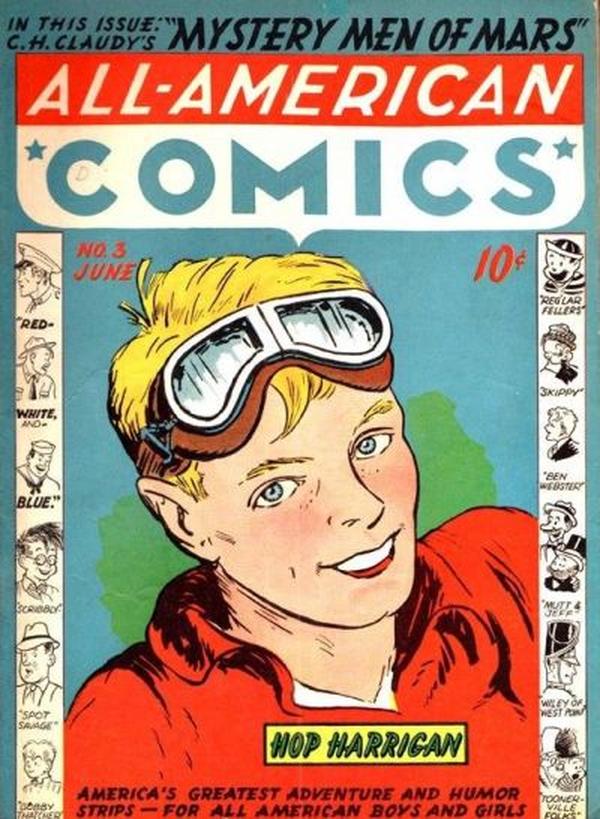
- DC Comics published an official facsimile edition of the issue in October 2023, reprinting the complete original contents including backup features such as Mutt & Jeff, Hop Harrigan, and Popsicle Pete.
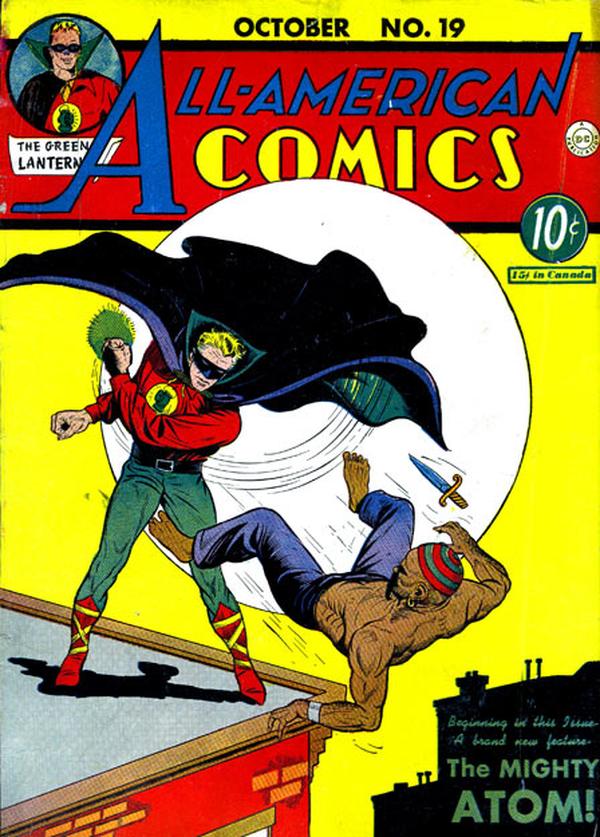
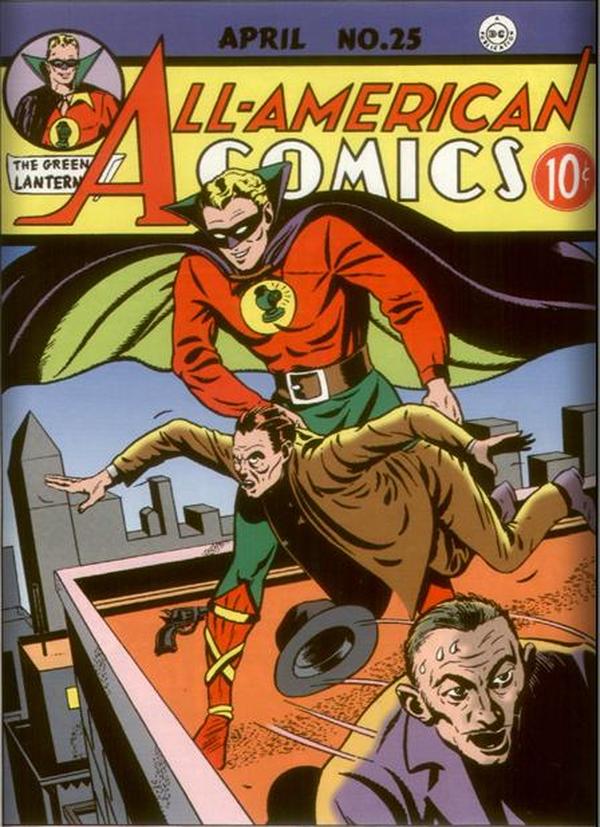
- The issue's debut triggered a wave of superhero introductions in All-American Comics: the Atom followed in #19, Red Tornado in #20, and Dr. Mid-Nite in #25, transforming the anthology title into one of the Golden Age's primary superhero showcases.
- The Golden Age Green Lantern Archives Vol. 1 (1999) reprints All-American Comics #16–30 and Green Lantern #1, preserving this debut in a hardcover collected edition with a preface written by Nodell himself.
Full credits
Reprints
Reprinted in The Great Comic Book Heroes #[nn] (1965), Secret Origins of the Super DC Heroes #[nn] (1976), Secret Origins of the Super DC Heroes #[nn] (1976), Golden Age Green Lantern Archives #1 (1999), The Comics Journal #214 (1999), Green Lantern: A Celebration of 75 Years #[nn] (2015), DC Comics Graphic Novel Collection #60 (2016), L'histoire des super-héros #[nn] (2016), Green Lantern: 80 Years of the Emerald Knight The Deluxe Edition #[nn] (2020), All-American Comics 16 (Facsimile Edition) #[nn] (2023)
Key issues in All-American Comics
Reviews
Reader reviews
No reader reviews yet.