
A complete issue · 16 pages · 1884
Life — November 6, 1884
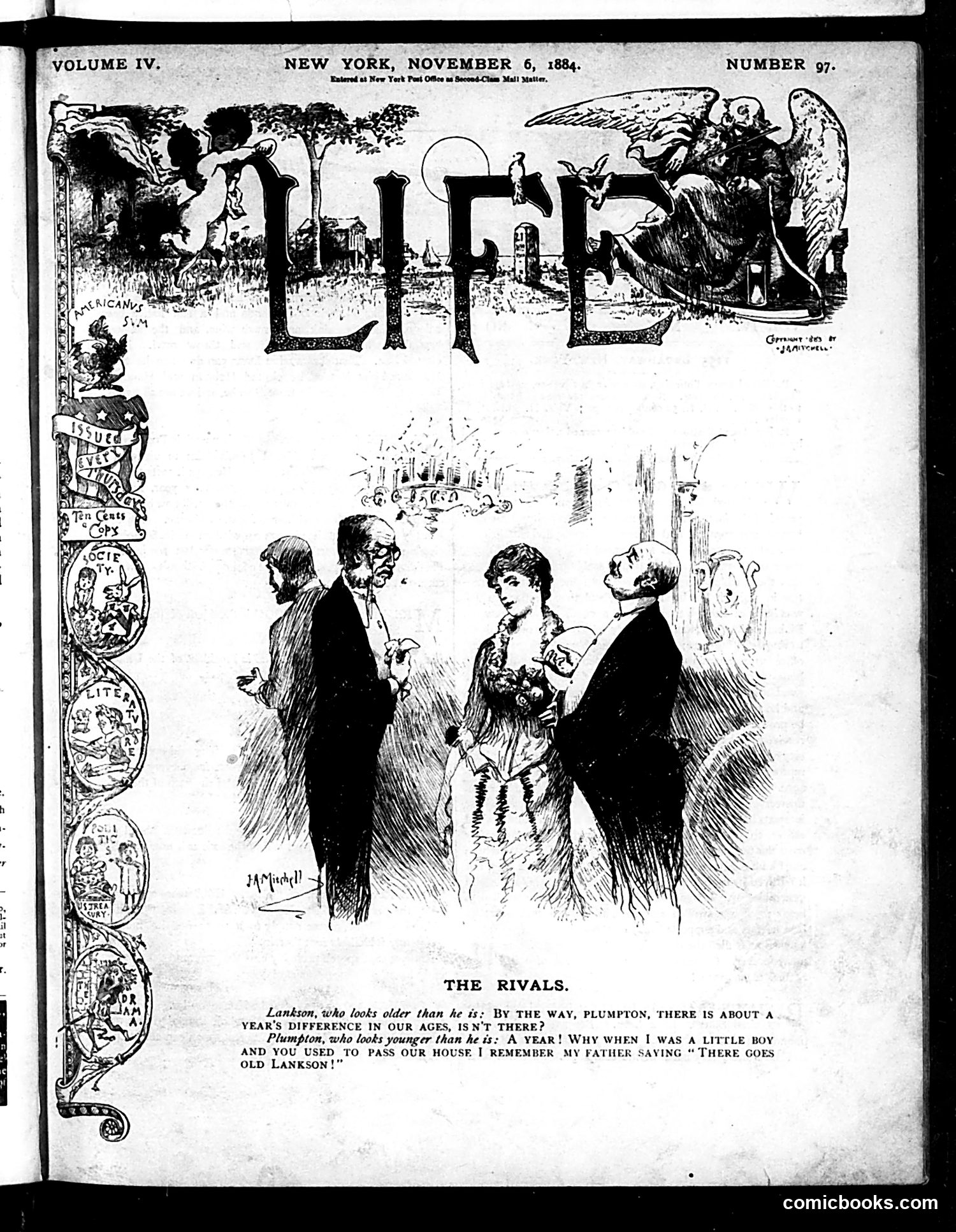
This cartoon satirizes the age difference between two rival suitors competing for a woman's attention. The humor hinges on Lankson appearing much older than Plumpton, though they claim similar ages. Plumpton boasts he looks younger, while Lankson counters that the year's difference between them is negligible. Plumpton then references his own father saying "There goes old Lankson" when Plumpton was a boy—implying Lankson looked elderly even then, making him far older in reality than he claims. The joke mocks both men's vanity about aging and their transparent dishonesty about their true ages in courtship. The cartoon captures late Victorian humor about male rivalry and the social importance of appearing youthful to potential partners.
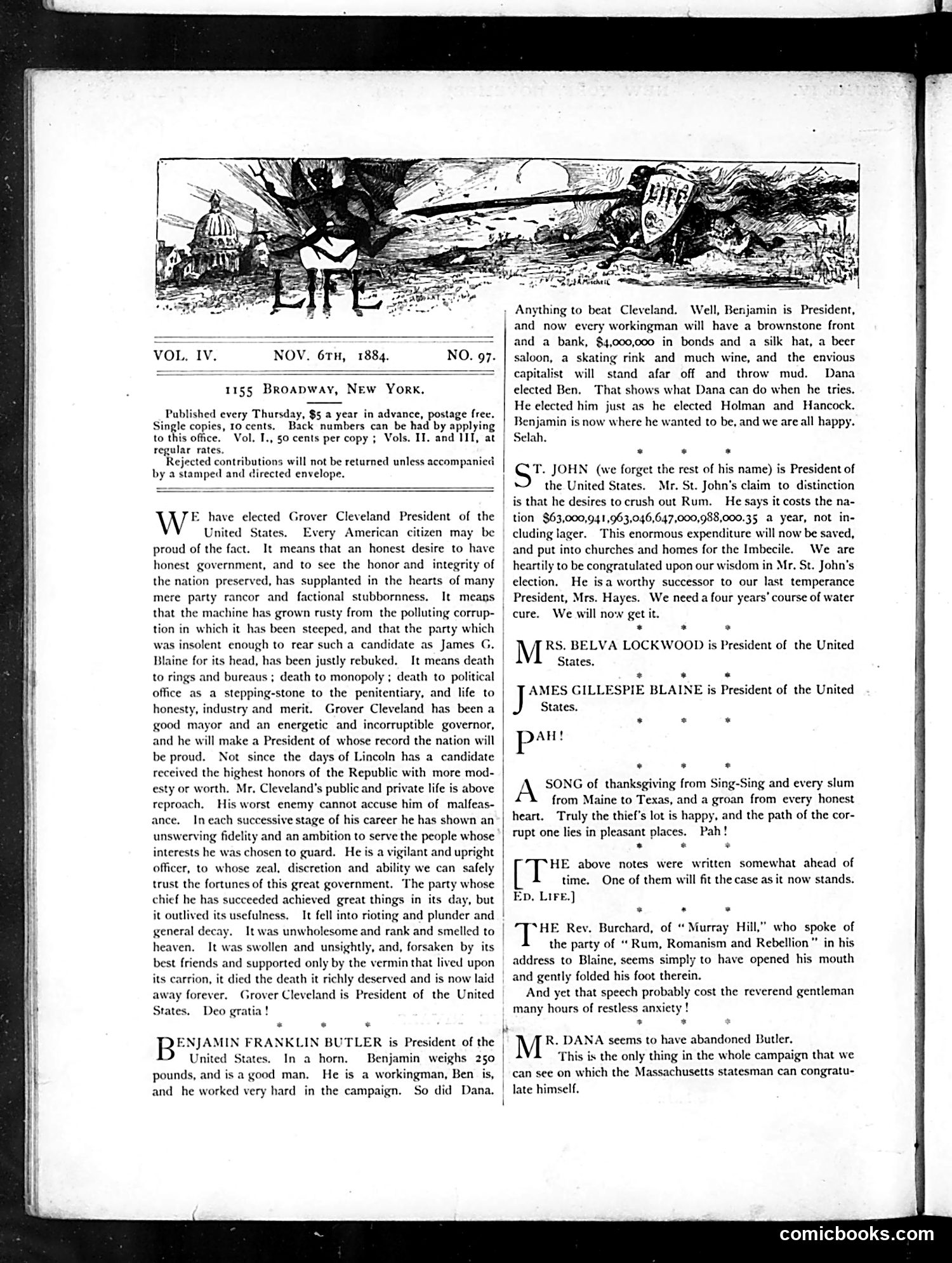
This November 1884 *Life* magazine page satirizes the recent presidential election of Grover Cleveland. The text celebrates Cleveland's victory while mocking rival candidates through absurdist humor: it jokingly proclaims various other figures—Benjamin Franklin Butler, St. John, Mrs. Belva Lockwood, James Gillespie Blaine—as "President of the United States," each with fictional accomplishments or scandals. The satire targets the campaign's intensity and the political machine's corruption. Cleveland is praised as honest and reform-minded, contrasting with his opponents' perceived flaws. The invented presidencies lampoon the candidates' actual positions or controversies. The decorative header illustration appears to be generic satirical artwork rather than depicting specific people.
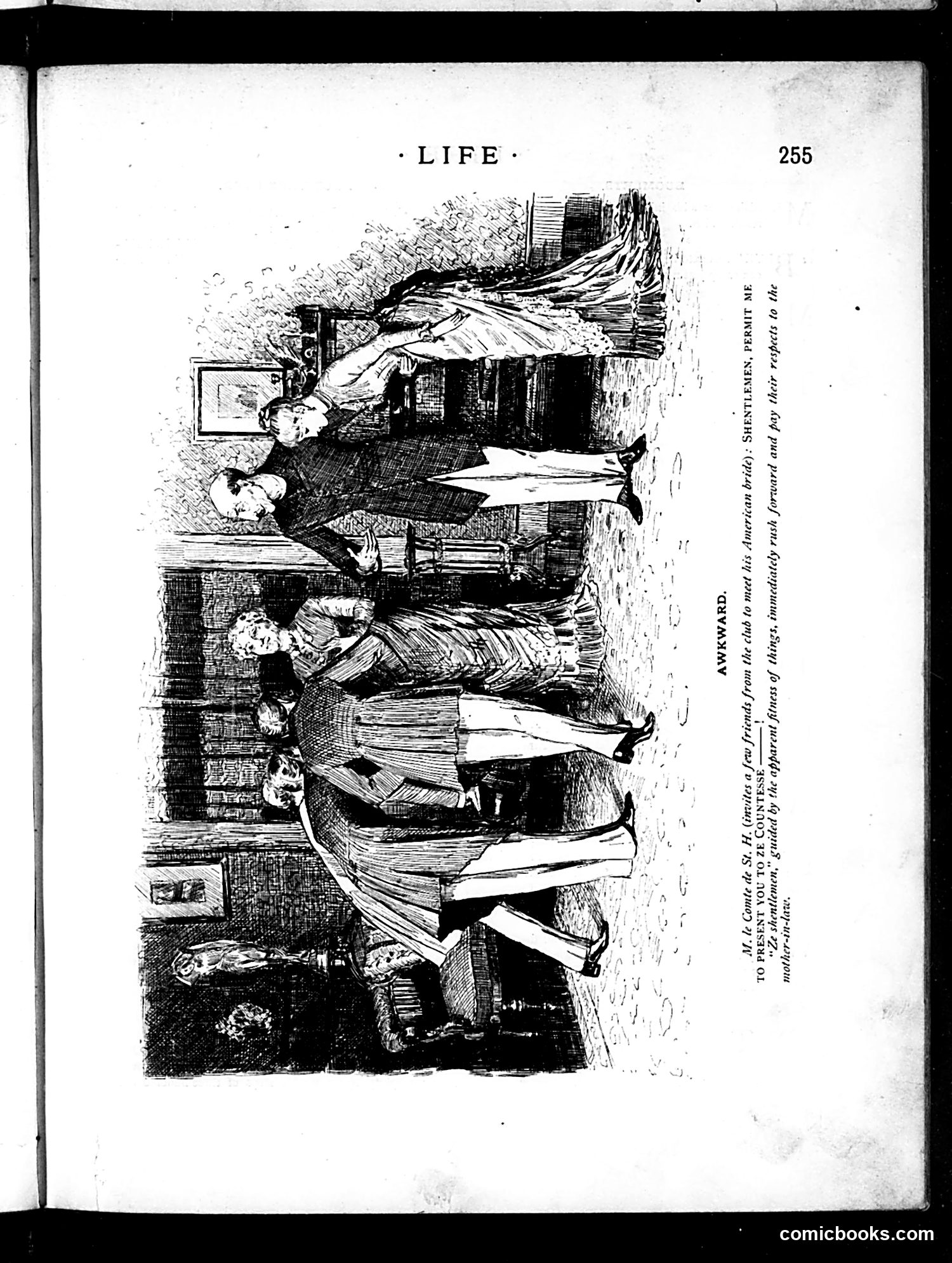
This page from *Life* magazine (page 255) shows a satirical illustration titled "AWKWARD," though the image is rotated 90 degrees, making it difficult to read the caption fully. The sketch appears to depict several figures in what seems to be a social or formal setting, rendered in the magazine's characteristic cross-hatched engraving style. The caption references "American broch" and mentions something being "granted" and "adjusted," but the OCR text is too fragmentary to determine the specific political or social commentary being made. Without clearer text or additional context about the publication date, I cannot reliably identify which figures are depicted or what event prompted this satire. The artistic style and layout are consistent with *Life*'s satirical approach to contemporary affairs.
This page contains brief satirical items typical of Life magazine's humor section. The left column ("Boomlets") includes political jabs: - A dig at Mr. Blaine wearing a "Presidential B" initial, mocking his political ambitions - A comment on "Blue" being the Republican camp's favorite color - References to prize-fighters and the Republican ticket - A jab at Mr. Beecher's shifting positions on soap and the *Burlington Free Press* - Mockery of General Butler's jaw The right column ("Deceivers Ever") features a longer satirical narrative about Mr. G. de Forest Braune, a European-American gentleman who returns home with grandiose theories about winning over a woman named Theodosia through pseudo-intellectual analysis. The satire mocks his pretentious self-delusion and social pretense. The "Valedictory" verse at bottom laments politics replacing boom times.
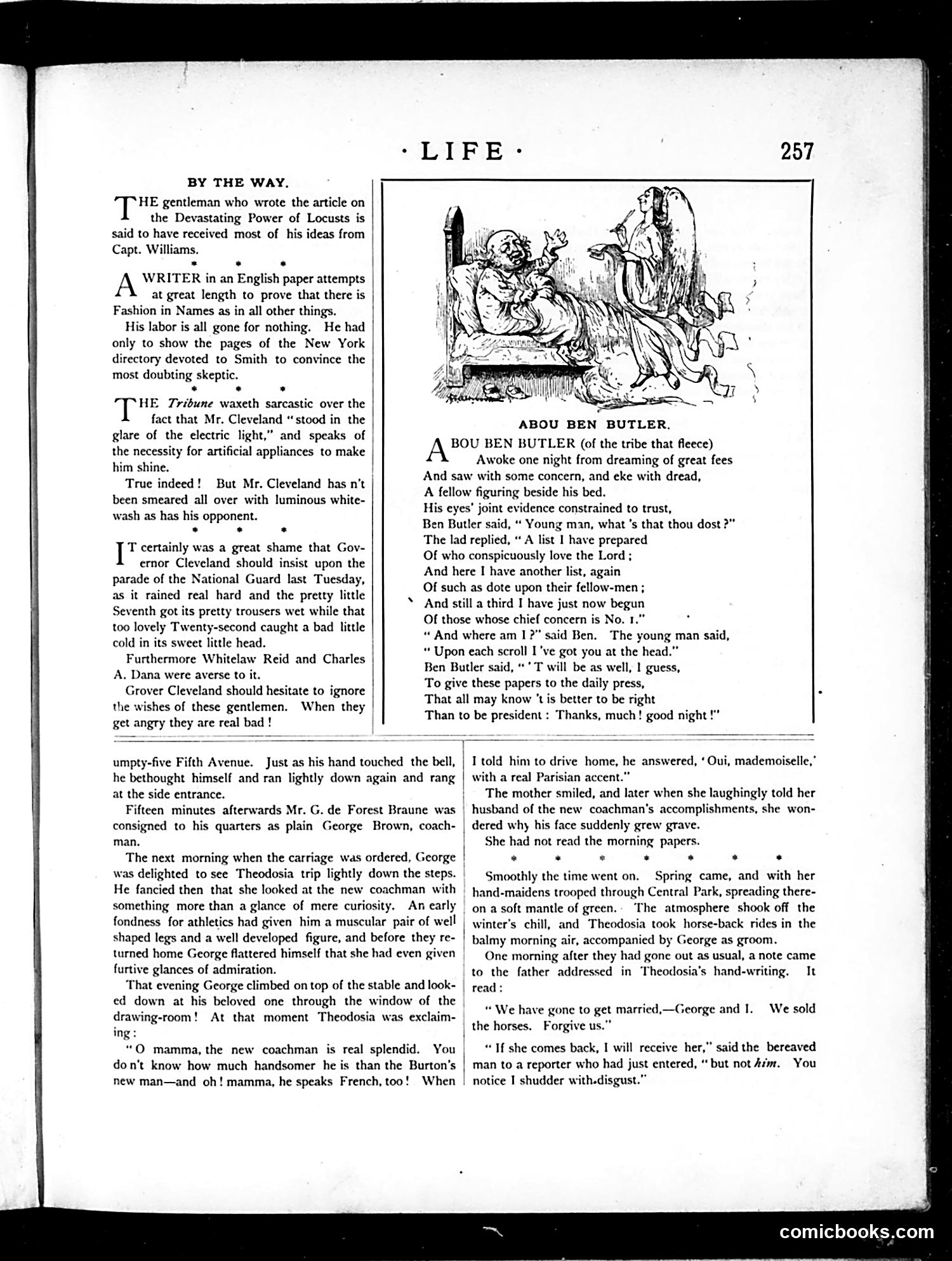
The page contains three distinct satirical sections: 1. **"By the Way"** - Short commentary pieces mocking contemporary figures and events, including jabs at Cleveland (likely President Grover Cleveland) for standing "in the glare of the electric light" and criticism of Governor Cleveland's National Guard parade in rain. 2. **The main illustration** - A sketch depicting a chaotic domestic scene, though the specific satire is unclear without additional context. 3. **"About Ben Butler"** - A poem/story about a character named Ben Butler who presents lists of names to someone in bed. The satire appears to mock either a political figure or social type, though the exact target isn't entirely clear from this page alone. The overall tone is characteristic of *Life*'s irreverent, gossipy style targeting public figures and social pretension.
This page contains literary content rather than political cartoons. The main section titled "THE PROHIBITIONISTS' PUZZLED" features a brief satirical piece about Mr. St. John, apparently a Prohibitionist leader, who received a paradoxical riddle from an asylum inmate: "A man without a head on him is not fit to be President and a man with a head on him is not fit to be the leader of Prohibitionists." The satire mocks Prohibitionist leadership as intellectually deficient—suggesting they're unfit regardless of their mental capacity. This reflects early 20th-century cultural debates over Prohibition, positioning the reform movement's leaders as absurdly contradictory or foolish. The page also contains book reviews and a poem titled "Kismet" by Idle Idyller.
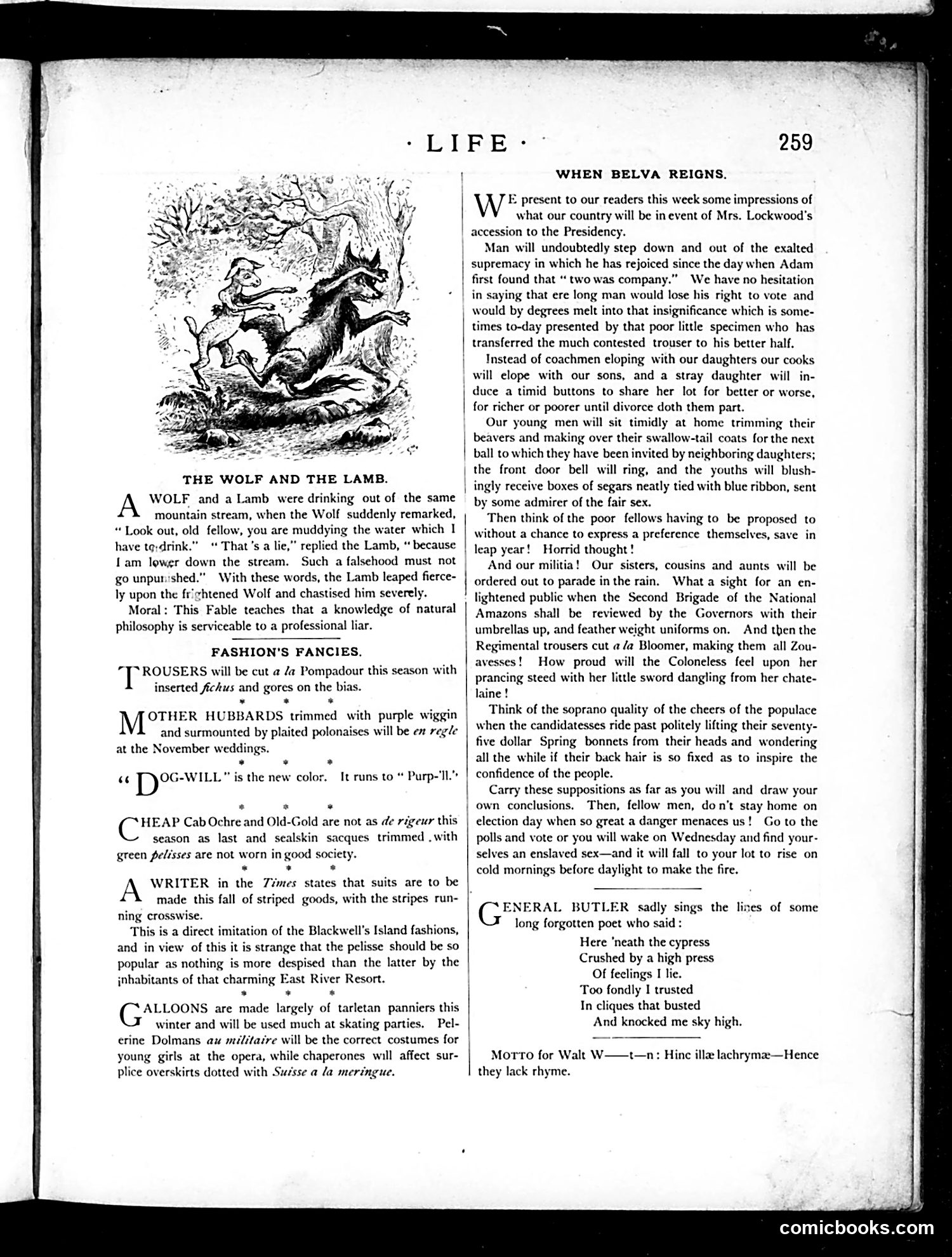
This Aesop's fable illustration satirizes political power dynamics. The Wolf represents the strong exploiting the weak (the Lamb), echoing the classical moral that "might makes right." The accompanying article "When Belva Reigns" appears to mock women's suffrage and expanding female political participation. It sarcastically predicts chaos if women gain voting rights—describing absurd scenarios like militia women parading in "Zouaves" (military uniforms) and dismissing female voters as unable to make rational political decisions. The "Fashion's Fancies" section provides lighter social commentary on seasonal clothing trends, typical of Life's satirical format mixing political commentary with society-page humor and literary references.
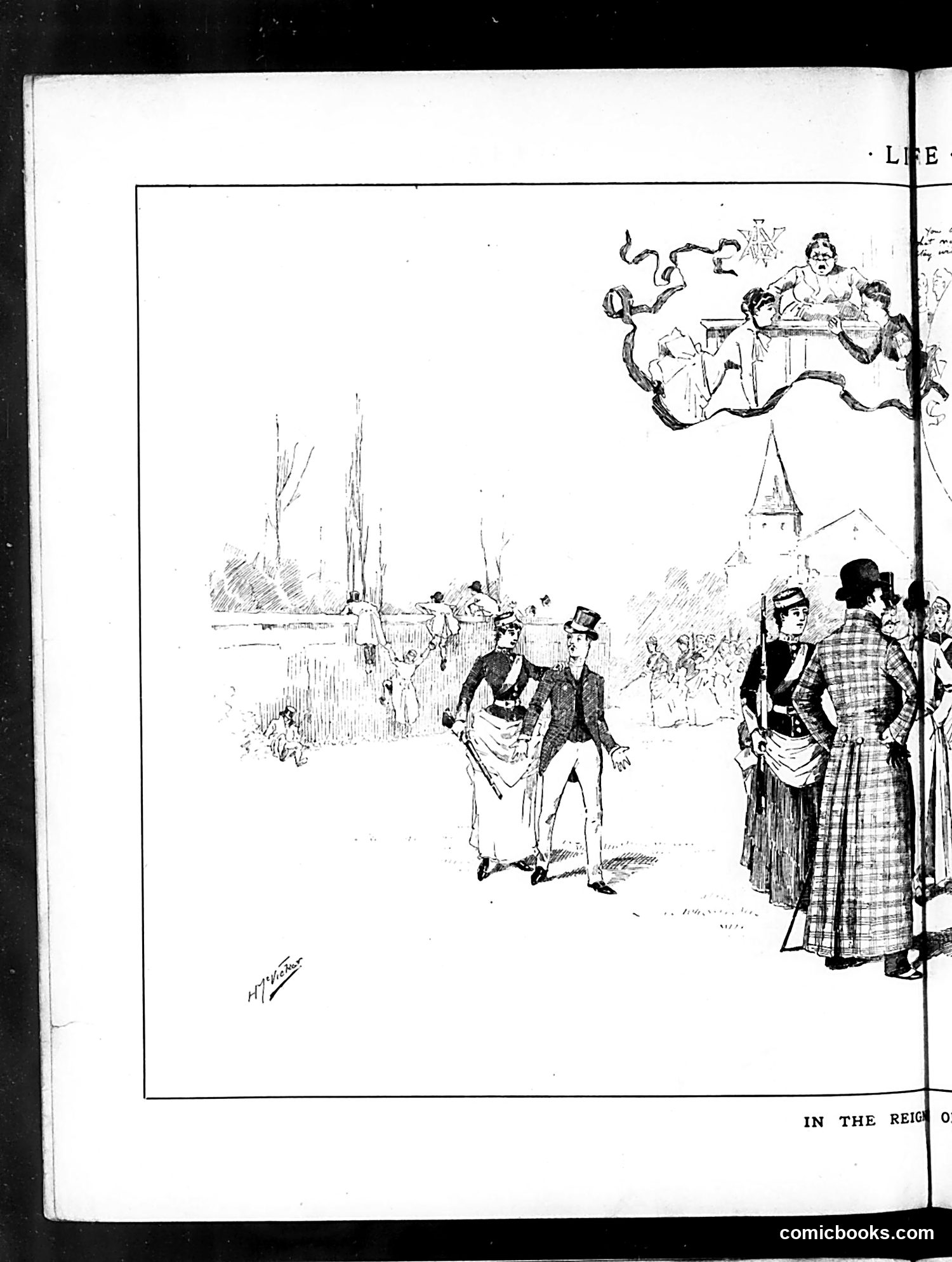
This page from *Life* magazine shows a satirical sketch depicting a romantic or social scene. The visible text fragment "IN THE REIGN O[F]" (likely "IN THE REIGN OF") suggests commentary on someone's period of authority or influence. The illustration shows elegantly dressed figures in what appears to be a Victorian or Edwardian-era setting, with women in formal dress on the right and men in military or formal attire on the left. A cherub or cupid figure floats above, suggesting themes of romance or courtship. Without the complete caption or date, the specific political or social target remains unclear. The style and composition suggest satire about upper-class social conventions, romantic entanglements, or possibly military-civilian relations during a particular historical period. The artist's signature appears at bottom left.
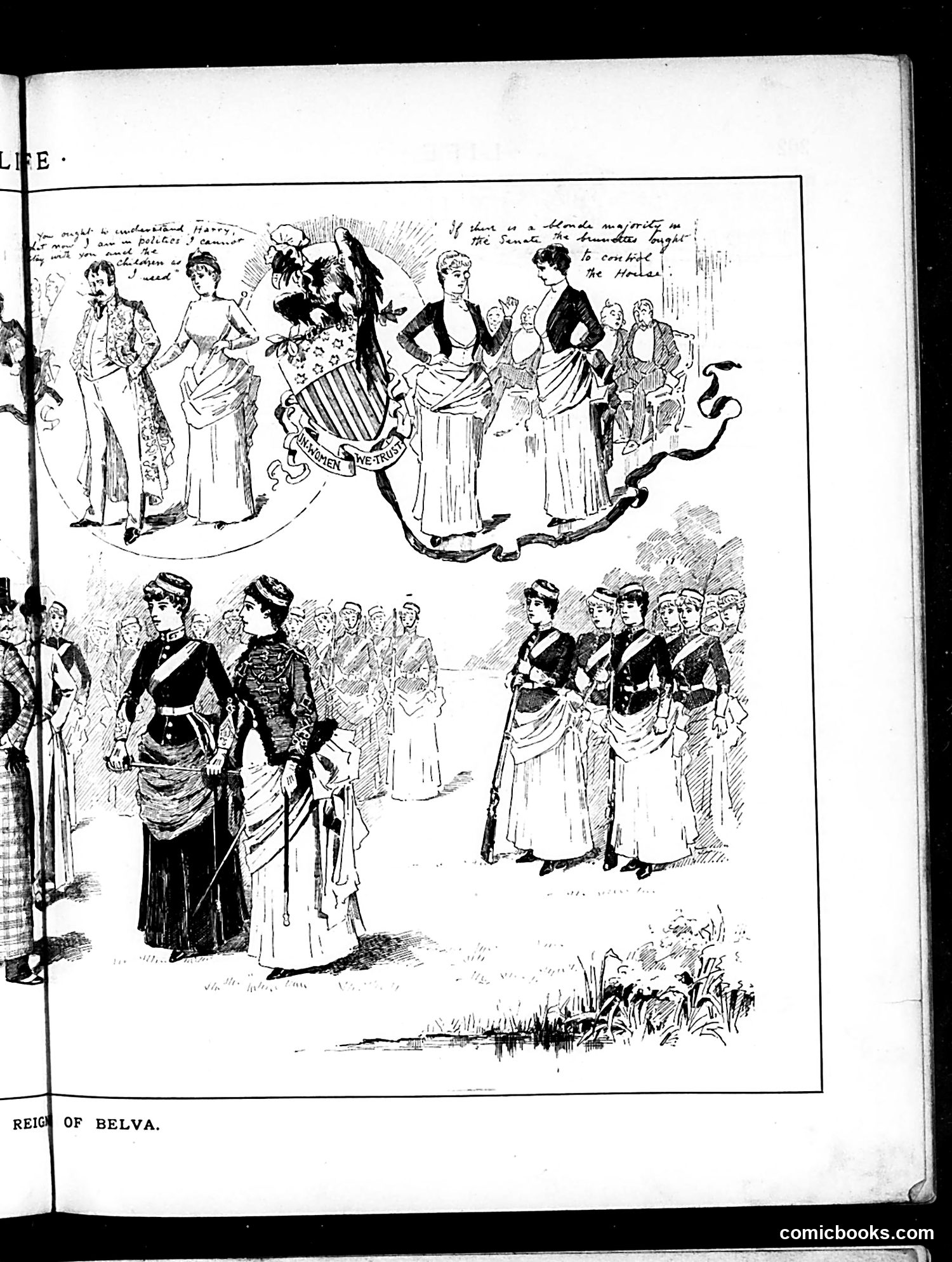
This satirical illustration depicts women in military uniforms and formal dress, apparently mocking women's suffrage or expanded female political participation. The title "Reign of Belva" likely references **Belva Lockwood**, a prominent 19th-century women's rights advocate and presidential candidate (1884, 1888). The cartoon's satire suggests anxiety about female political power—showing women in military garb and positions of authority as absurd or threatening. The multiple panels depict various scenarios of women in traditionally male-dominated roles. The handwritten text appears commentary on this "female majority" scenario. This reflects common anti-suffrage propaganda of the era, which portrayed women's political equality as a comic inversion of the "natural order" rather than legitimate reform.
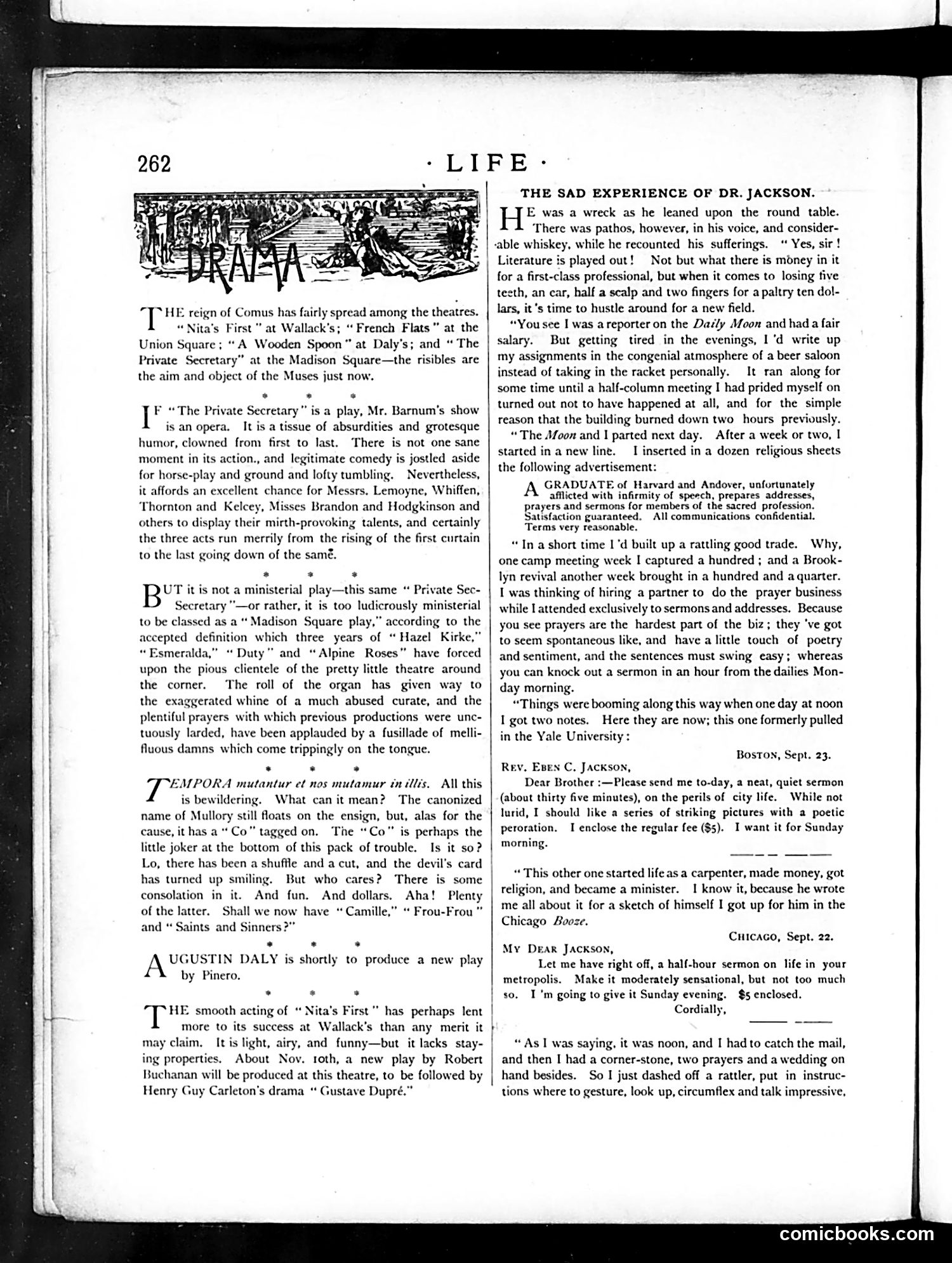
This page contains theatre reviews and a humorous anecdote. The upper section critiques contemporary Broadway plays like "The Private Secretary," praising the cast but mocking the production as absurd "horse-play and ground and lofty tumbling" rather than legitimate comedy. The critic notes its incongruous religious elements—organs replaced by "exaggerated whine of a much abused curate"—jarring against the theatre's established pious audience expectations. The lower section, "The Sad Experience of Dr. Jackson," presents satirical social commentary through a cautionary tale: a former newspaper reporter loses employment after fabricating a story about a building that burned *before* his article, then unsuccessfully attempts reinvention as a religious speechwriter. The anecdote mocks both journalistic ethics and clergy-for-hire culture of the era, suggesting the precarity of professional life and the absurdity of claiming credentials one doesn't possess.
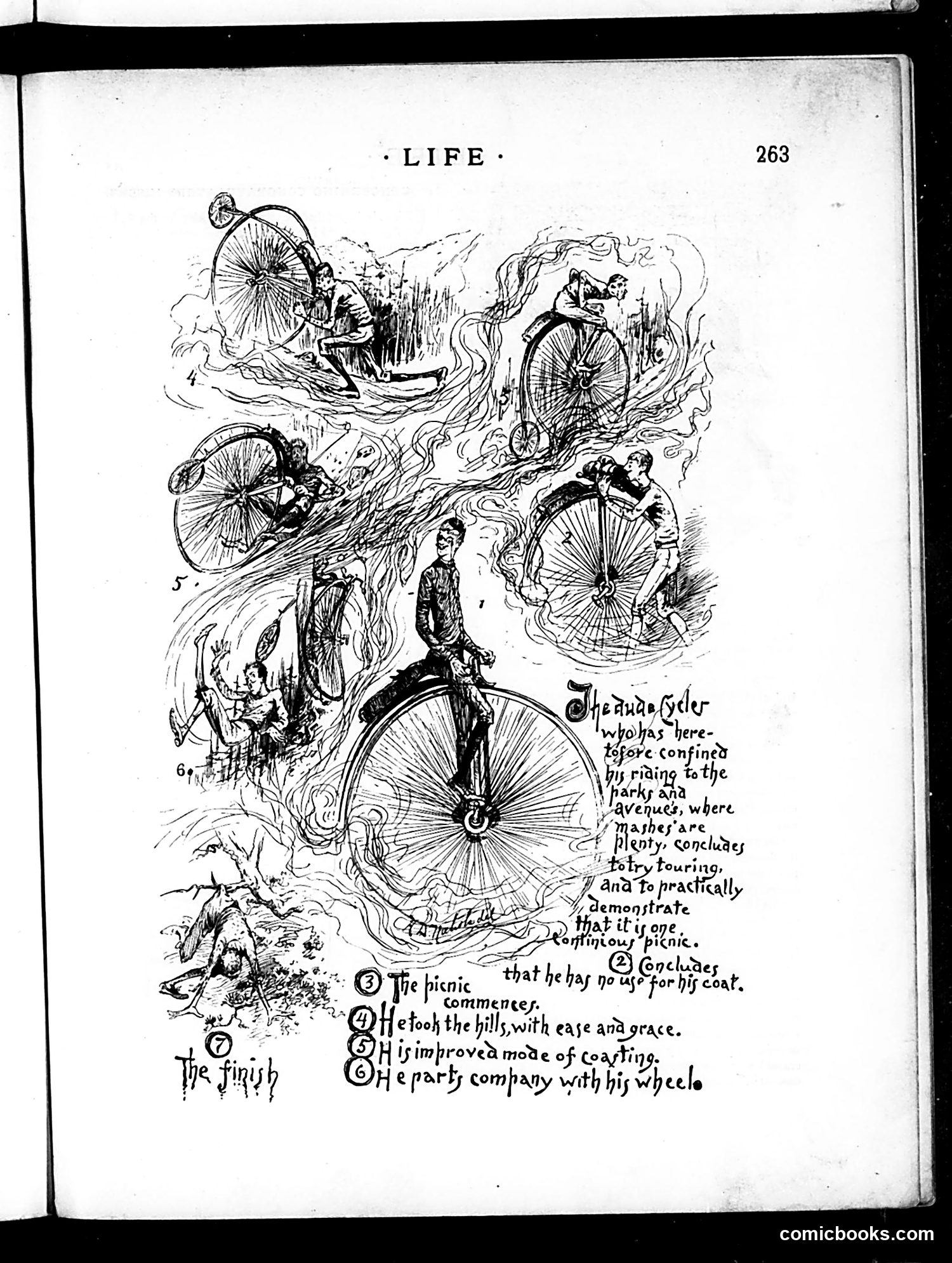
This is a humorous sequence about a cyclist who has previously confined his riding to parks and avenues but now ventures onto hills and rougher terrain. The numbered panels (1-7, with "The Finish" marking the conclusion) satirize the bicycle craze and the social pretensions surrounding it. The joke centers on a well-dressed rider attempting to demonstrate that cycling is "one gentleman's picnic"—suggesting bikes were a fashionable, genteel activity. However, the visual chaos of the sequential panels implies his actual experience is far messier and more undignified than his claims. The final panels mock his supposed "improved mode of coasting" and suggest his companion with the wheel has abandoned him. This reflects late-19th-century satire of bicycling as both a status symbol and source of comedy—particularly regarding how riders' pretensions about the sport clashed with actual, often ridiculous, reality.
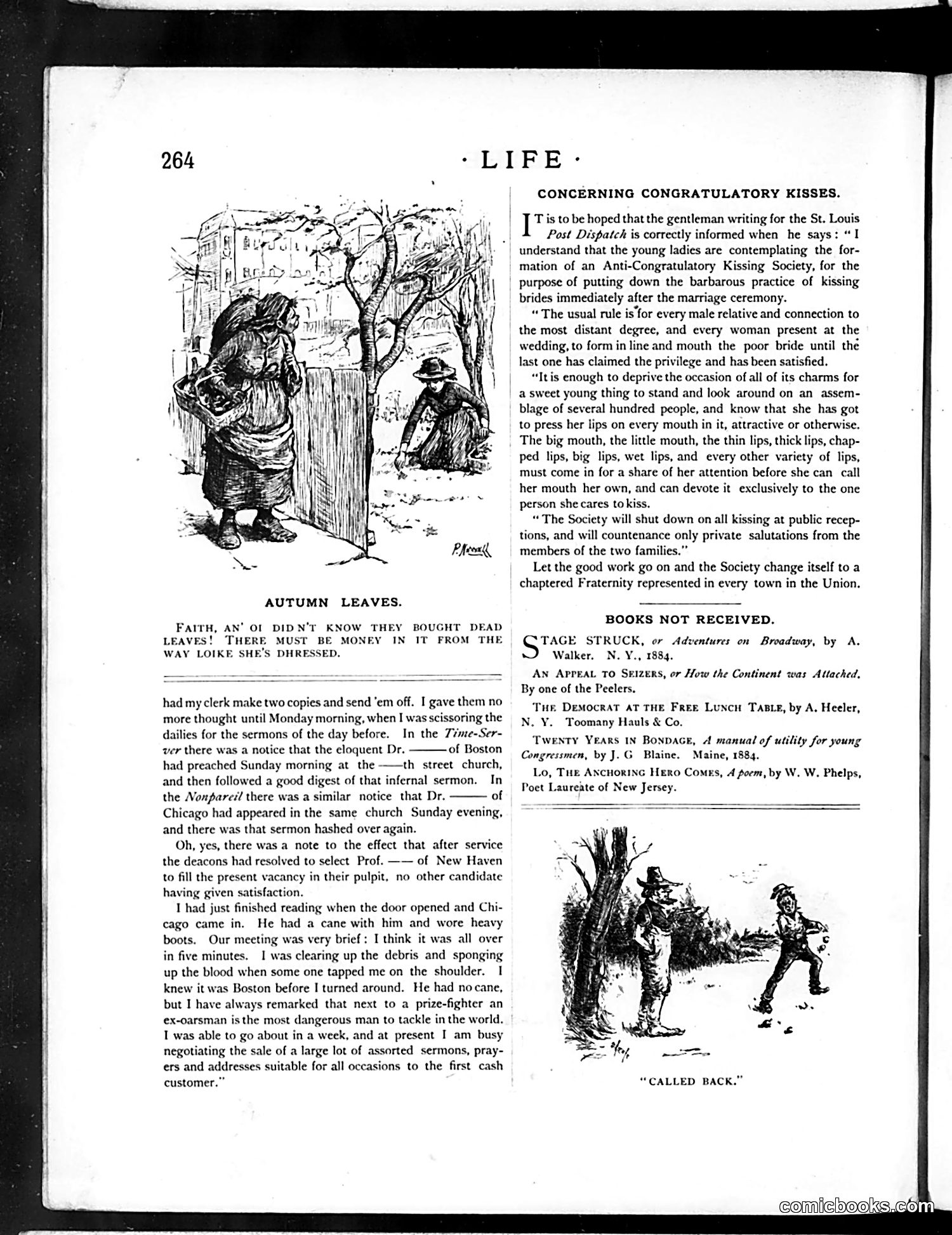
**"Autumn Leaves" Cartoon:** Shows an Irish immigrant woman (indicated by dialect: "an' ol didn't know") selling dead leaves, apparently deceiving a man into thinking they're valuable. The satire targets both immigrant stereotypes and gullibility of the wealthy. **Main Text Story:** A humorous anecdote about a clergyman who unknowingly triggers a violent confrontation. After his sermon circulates in newspapers, two competing preachers (identified as "Chicago" and "Boston") physically assault him—the Chicago minister arriving with a cane, the Boston man (described as a former oarsman) arriving unarmed but equally dangerous. The joke satirizes clergy rivalries and scholarly vanity. **"Concerning Congratulatory Kisses":** Editorial commentary supporting a proposed "Anti-Congratulatory Kissing Society" to spare brides from having to kiss numerous wedding guests. The satire mocks this excessive Victorian social custom as exhausting and undignified. **"Books Not Received":** A satirical bibliography section with punning fake titles—political jabs at public figures like James G. Blaine (congressman reference) and congressional corruption.
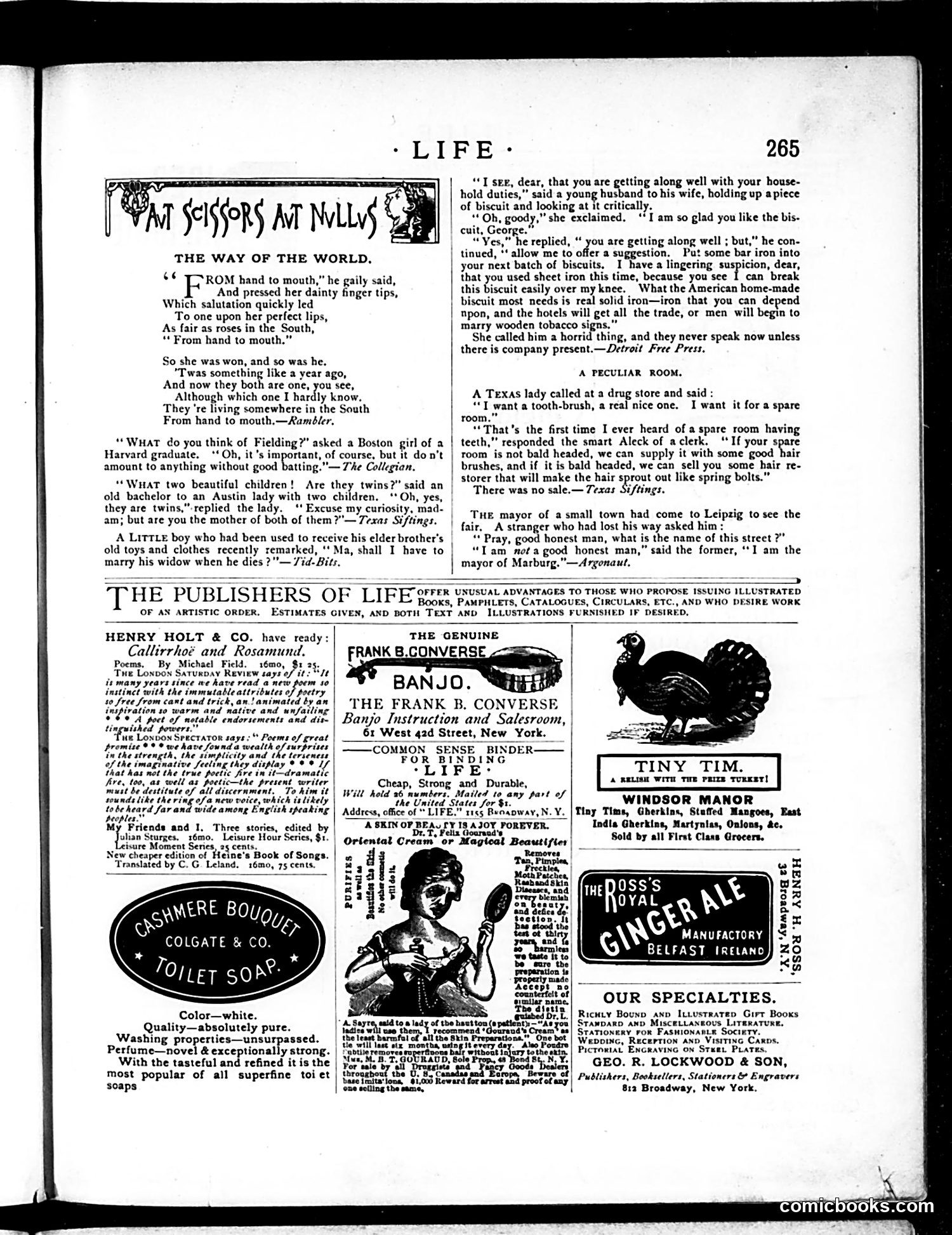
This page contains humorous anecdotes and advertising typical of the era. The main satirical content mocks domestic life and gender relations: **"The Way of the World"** presents a poem about courtship ("from hand to mouth") that turns cynical—a couple marries and now lives in poverty, "from hand to mouth." **Domestic humor** includes jokes about poor housewifery (a wife's biscuits are so hard the husband compares them to sheet iron), and absurdist Texas humor (a woman asks for a toothbrush for her "spare room"). The advertisements promote period products: Cashmere Bouquet soap, Frank B. Converse banjos, and Doss's Royal Ginger Ale. The overall tone is lighthearted mockery of marriage, particularly wives' domestic competence, and small-town life—typical of *Life*'s satirical approach to American social customs in this era (late 19th/early 20th century).
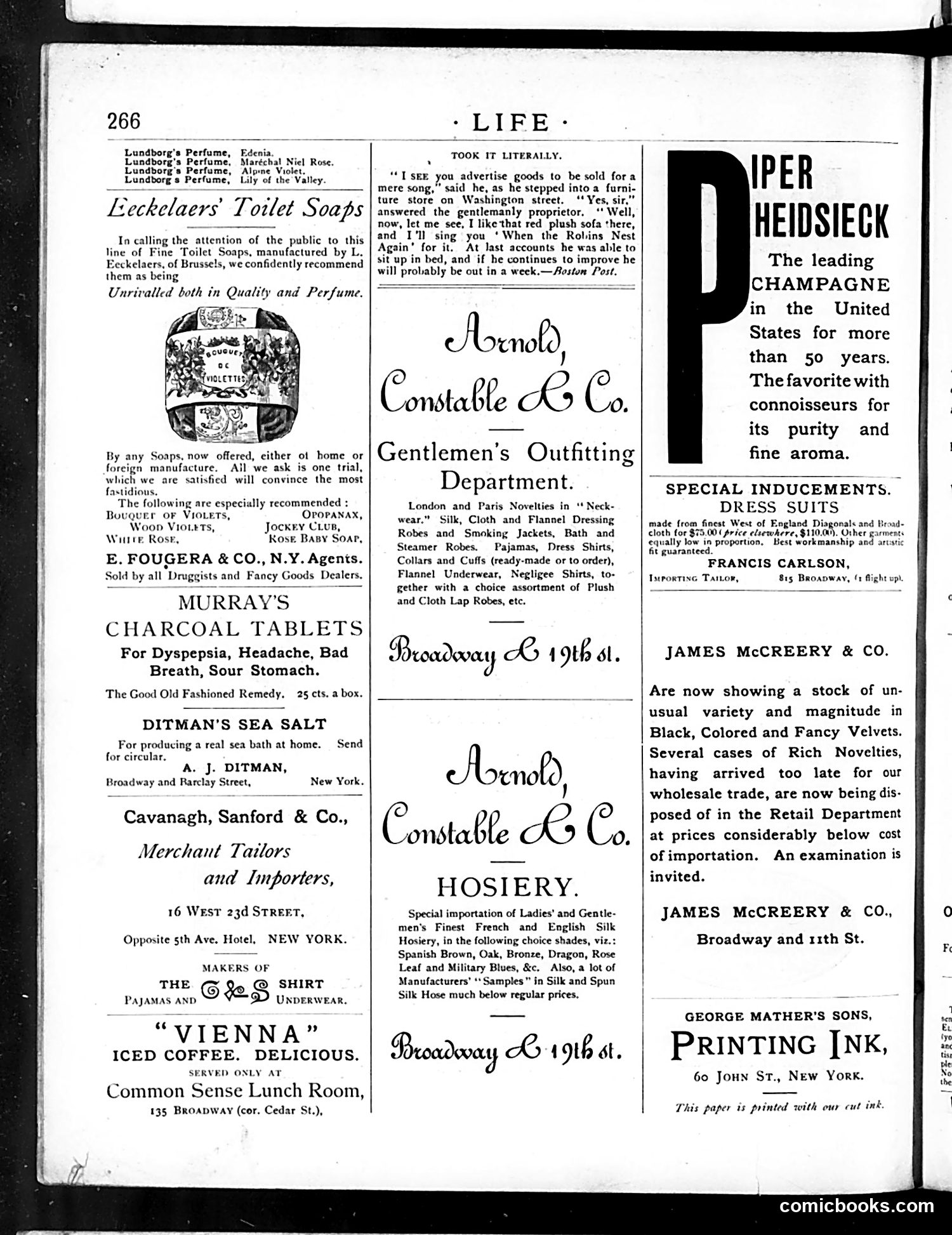
This page is primarily **advertising**, typical of late 19th-century magazines. However, it contains one short humor piece titled "TOOK IT LITERALLY." ## The Cartoon/Joke The brief story describes a man who visits a furniture store advertising goods "to be sold for a mere song." Taking the phrase literally, he attempts to purchase a red plush sofa by singing "When the Robins Nest Again" instead of paying money. The proprietor apparently responds violently—the man ends up injured enough to be bedridden, though improving. ## The Satire This is a straightforward pun-based joke exploiting the common advertising phrase "for a song" (meaning very cheaply). The humor comes from the absurdity of a customer interpreting commercial language literally, then suffering consequences for his misunderstanding. It's gentle, family-friendly humor typical of Life's satirical approach—poking fun at both misleading advertising language and the customer's naïveté, rather than making sharp social commentary. The remainder of the page consists of period advertisements for perfumes, soaps, clothing, and other merchandise.
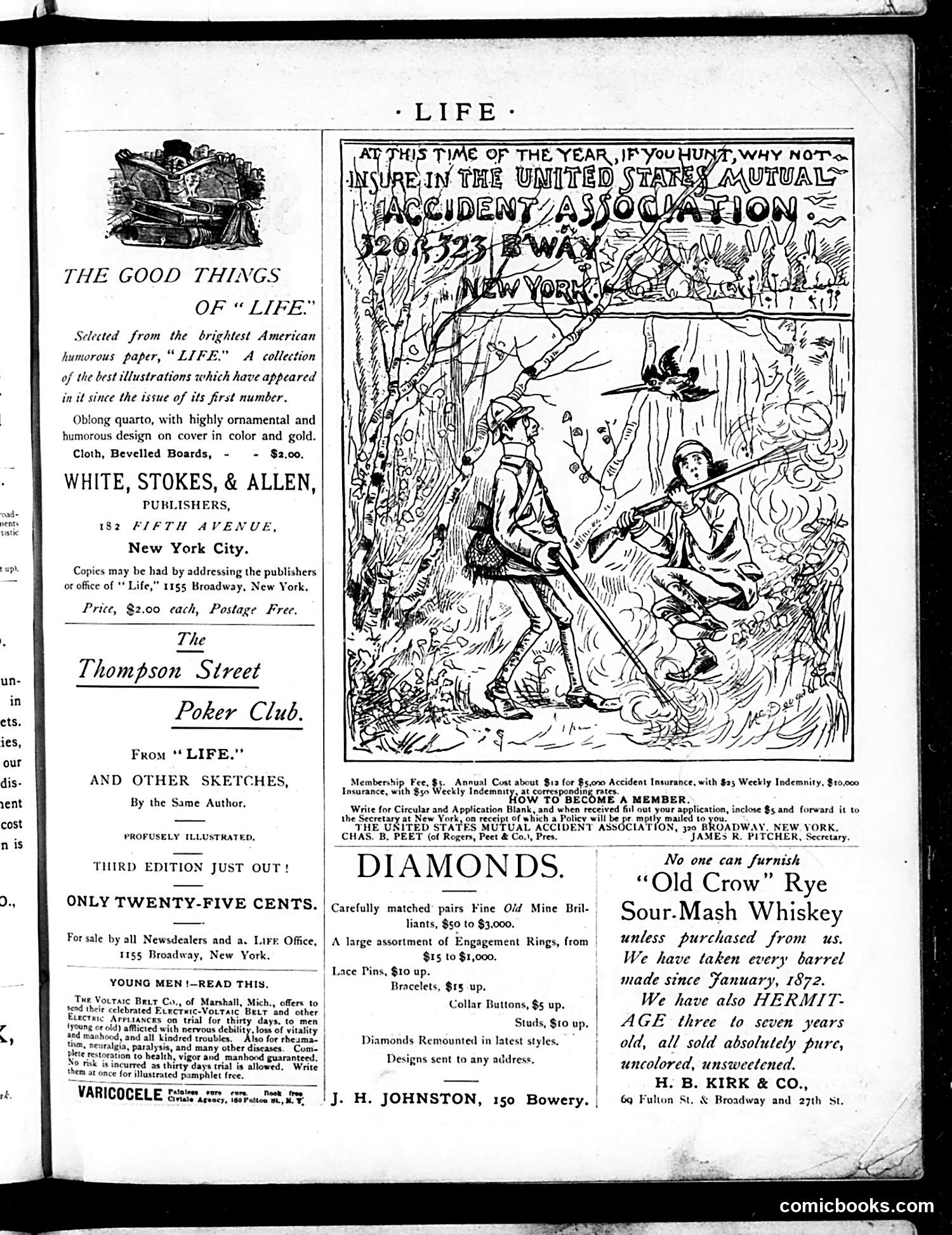
This page is primarily **advertisements and promotional material** for Life magazine itself, rather than containing satirical content requiring historical explanation. The main cartoon depicts a hunting scene with figures in a natural setting, accompanying an advertisement for the **United States Mutual Accident Association**—a insurance company. The visual promotes accident insurance to hunters, playing on the seasonal hunting activity referenced in the advertisement text. The page also advertises: - A collection book of Life's best illustrations ($2.00) - "The Thompson Street Poker Club" sketches (25 cents) - Various commercial products: diamonds, whiskey ("Old Crow" and "Hermitage"), a medical device (the "Voltaic Belt" for treating nervous conditions), and treatment for varicocele The hunting cartoon serves primarily as eye-catching illustration to market accident insurance to the magazine's male readership, capitalizing on contemporary hunting season. No specific political figures or events are referenced—this is commercial rather than satirical content.
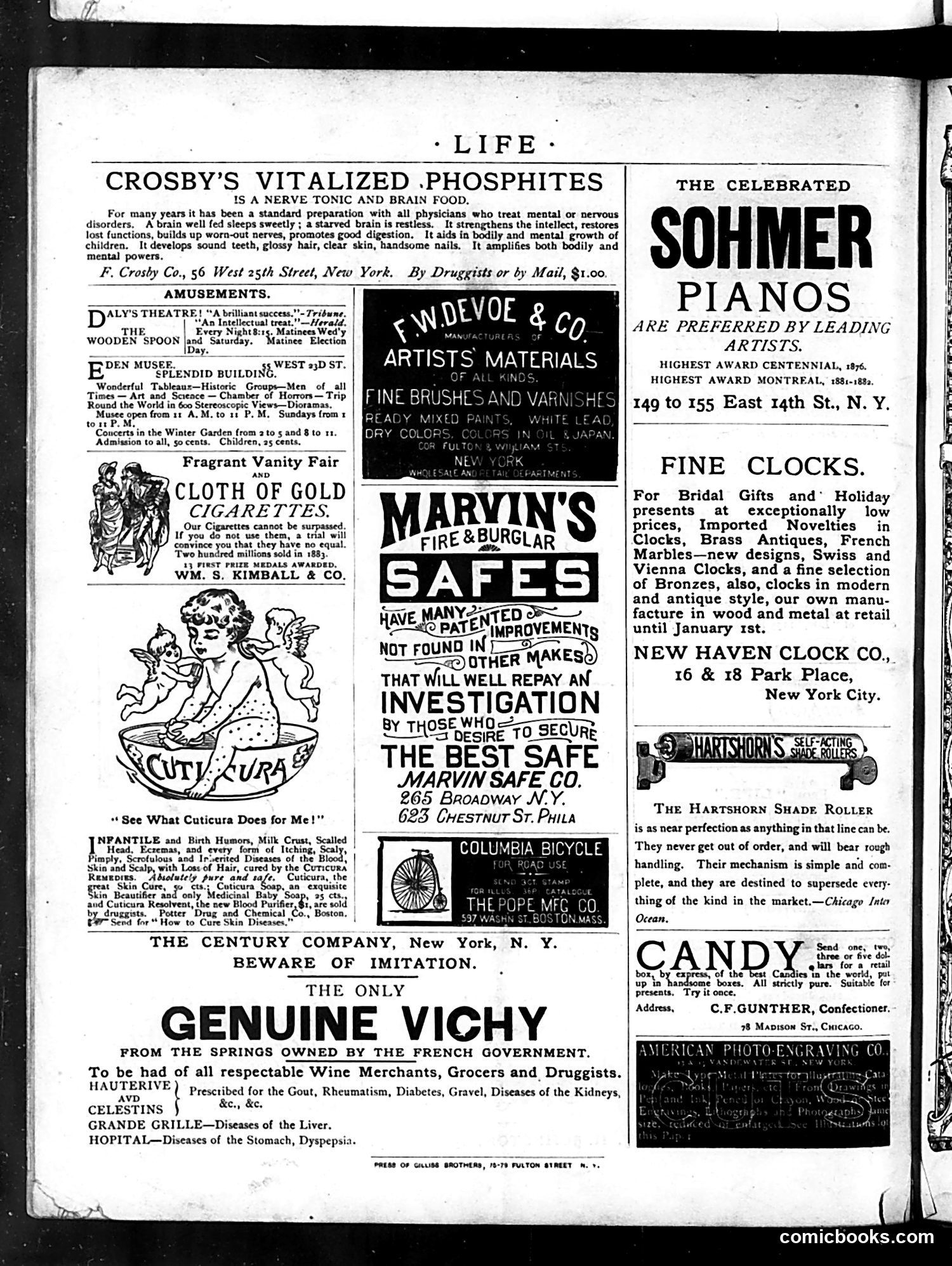
This is primarily an **advertisement page** with no political cartoons or satirical content requiring historical context. The one illustration present—a cherub in a bowl for "Cloth of Gold Cigarettes"—is purely decorative advertising, not satirical commentary. The page reflects **late 19th-century patent medicine culture**. Products like "Crosby's Vitalized Phosphites" (a "nerve tonic and brain food"), Vichy water, and Cuticura treatments exemplify the era's widespread marketing of dubious health remedies to treat everything from mental disorders to skin conditions. These advertisements reveal period anxieties about nerve exhaustion and physical ailment, while modern readers would recognize most of these products as ineffective or potentially harmful. The remaining ads promote legitimate goods (pianos, safes, clocks, bicycles, candy) typical of the era's commercial landscape.