
A complete issue · 14 pages · 1884
Life — January 24, 1884
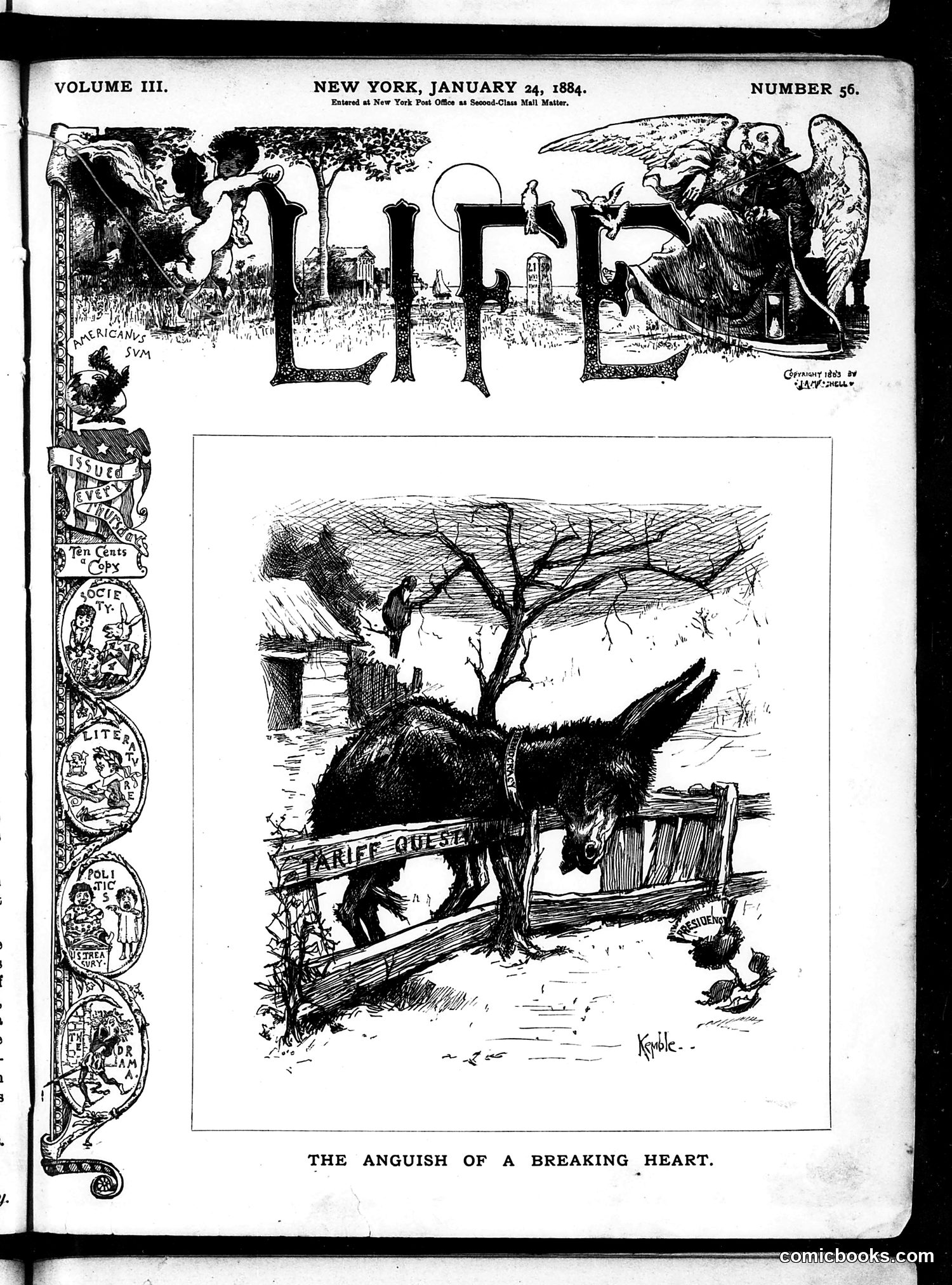
The main cartoon depicts a donkey labeled "Tariff Question" standing at a fence, appearing distressed or exhausted. The caption reads "The Anguish of a Breaking Heart." This is political satire about the tariff debate that dominated American politics in the 1880s. The donkey represents the Republican Party, which was deeply divided over tariff policy—whether to maintain protective tariffs or reduce them. The "breaking heart" metaphor suggests the party was being torn apart by internal conflict over this issue. The elaborate decorative border on the left contains classical medallions, typical of Life's ornate design aesthetic from this era. This page appears primarily devoted to this single political cartoon rather than multiple features.
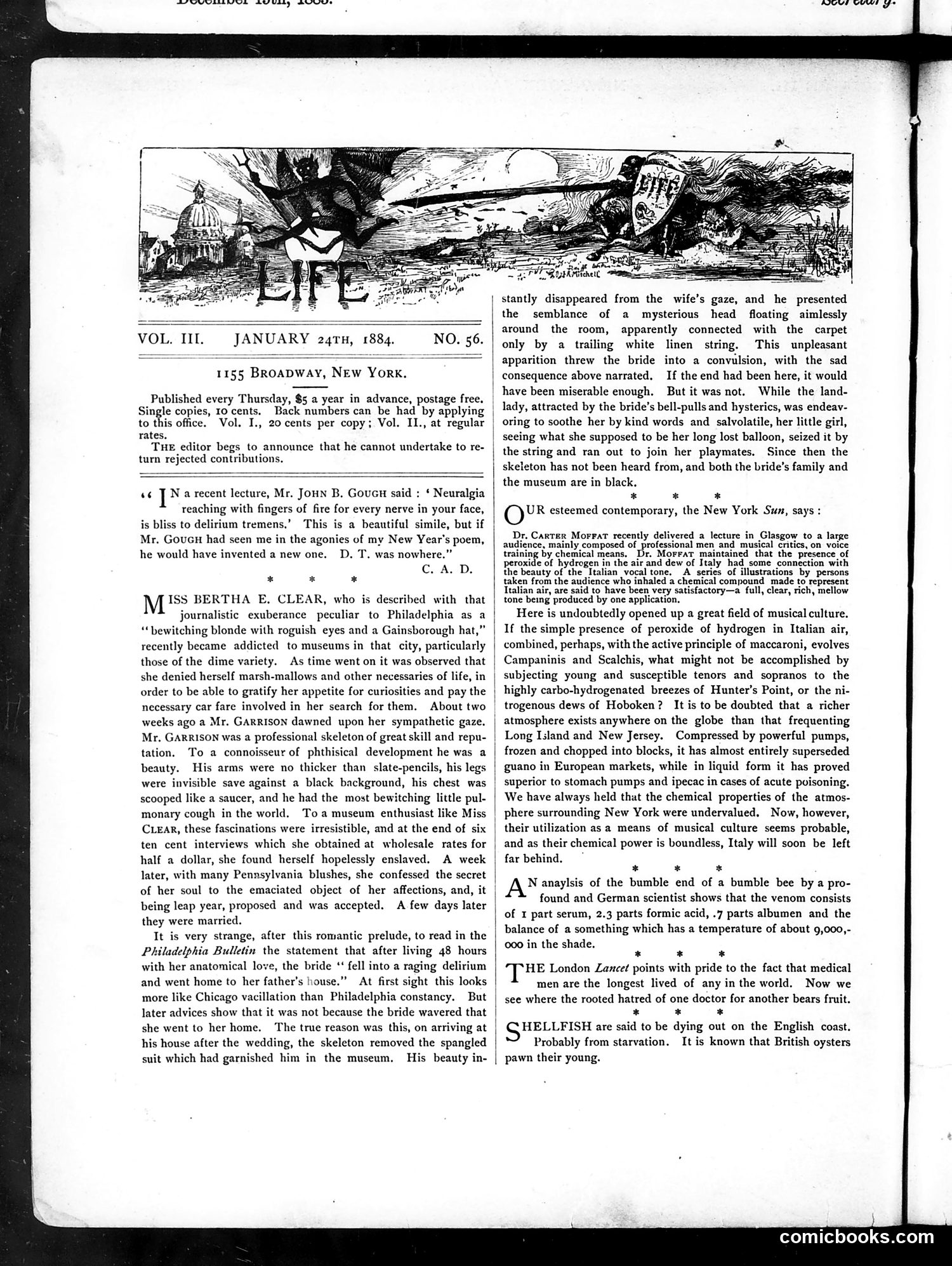
The masthead illustration depicts a skeletal "LIFE" figure beneath a gnarled tree—a memento mori design emphasizing Life magazine's satirical focus on mortality and human folly. The page contains anecdotal humor rather than political cartoons. Notable items include: 1. **John B. Gough reference**: A quip about Gough's lecture on neuralgia, suggesting he would have "invented a new one" had he attended the speaker's New Year's poem. 2. **Bertha E. Clear story**: A lengthy anecdote about a Philadelphia woman obsessed with museums who married a professional skeleton lecturer. The tale mocks Victorian eccentricity and museum culture through absurdist humor—her husband eventually removes his skeleton suit, disappointing her. The content reflects 1880s American satirical interests: intellectual pretension, museum culture, and romantic peculiarities.
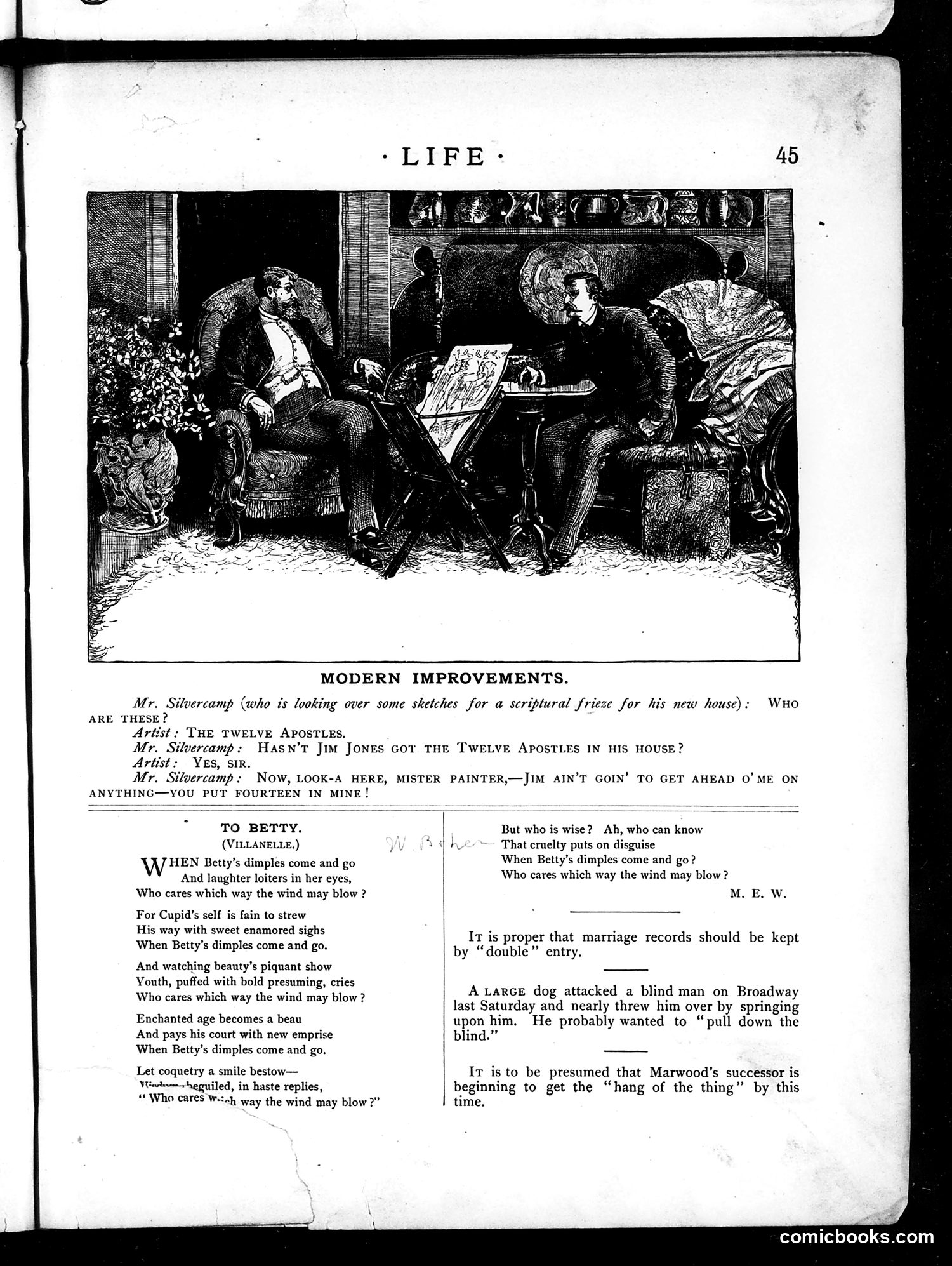
The cartoon depicts two gentlemen discussing decorative choices for a house. Mr. Silvercamp seeks sketches for a "scriptural frieze," and asks an artist about obtaining "The Twelve Apostles" for his home. The humor lies in a misunderstanding: the artist assumes Silvercamp is asking about acquiring a painting or artwork titled "The Twelve Apostles," but Silvercamp clarifies he means Jim Jones already has twelve apostles in *his* house—and he doesn't want to be outdone by Jones having more decorative elements than he does. This appears to satirize wealthy Victorian-era competitive social pretension: the joke is that acquiring fashionable religious artwork became a status symbol among the well-to-do, with people trying to outdo their neighbors in conspicuous domestic display.
This page contains two distinct pieces: **"A Philistine in America"** (top): A lengthy satirical letter critiquing American attitudes toward English culture and institutions. The author defends England's traditions while mocking Americans who simultaneously admire and resent British superiority. References include criticism of R. White Grant's work and commentary on American "Class Distinctions." **"A Mirror for Millionaires"** (bottom): A book review announcing Louis J. Jennings' new novel *"The Millionaire,"* published by Blackwood's. The satire suggests wealthy Americans might recognize themselves in this work. It humorously describes how Jennings supposedly solved Washington legislative problems through strategic bribery of congressmen—implying American political corruption as satirical commentary. Both pieces employ ironic critique of American and Anglo-American social pretensions.
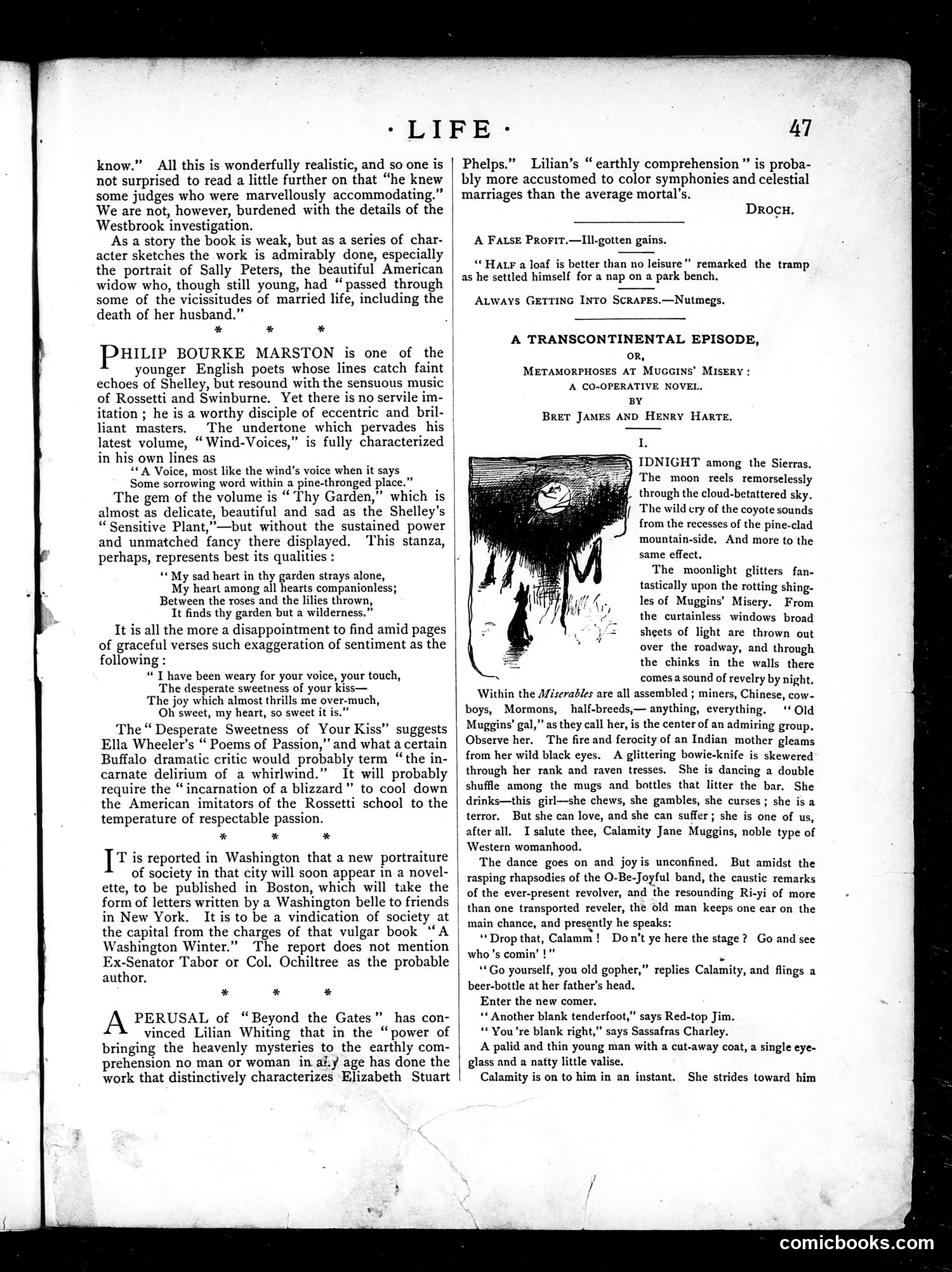
This page is **not primarily satirical or cartoon-based**. It's a literary review section discussing contemporary poetry and novels, circa early 20th century. The content includes: - Critical commentary on poet Philip Burke Marston's work, comparing him to Rossetti and Swinburne - A notice about a new "Washington society" novel told through letters - Discussion of Lilian Whiting's "Beyond the Gates" - The beginning of a serialized story titled "A Transcontinental Episode" by Bret James Henry Harte The single illustration shows a woman's face at night amid Sierra mountains—accompanying the Harte story excerpt about "Old Muggins' gal" in a mining camp setting. This is a **literary/cultural page**, not political satire.
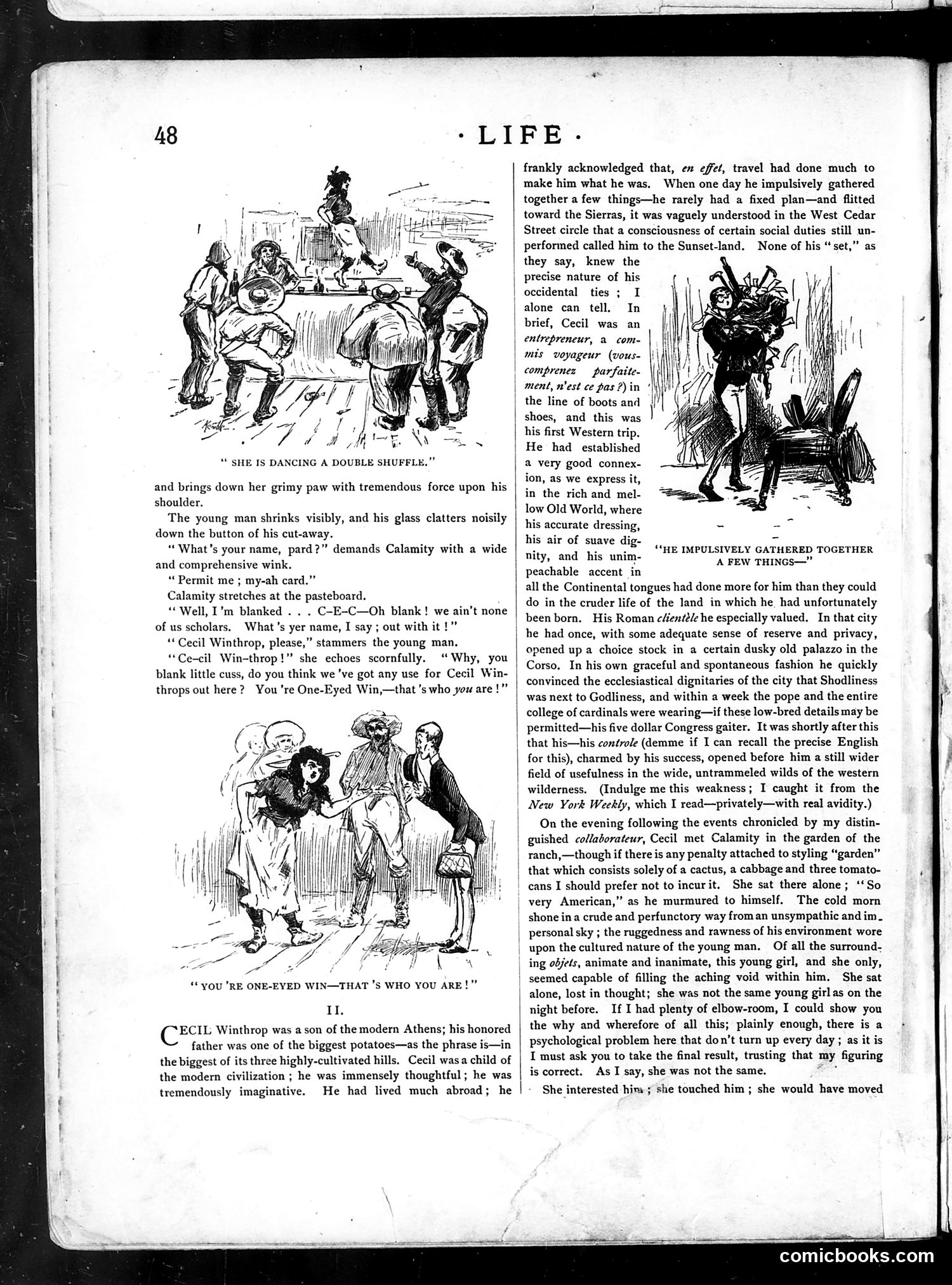
This page contains three sketch illustrations accompanying a narrative about Cecil Winthrop, described as "a son of the modern Athens" (likely New York). The sketches depict social scenes: one shows a woman dancing a "double shuffle," another shows a confrontation between men, and a third shows figures on a street. The text describes Cecil as a wealthy, well-traveled entrepreneur who established himself in fashionable circles and later opened a stock business in the Gorge (likely a geographical reference). The satirical point concerns his pretensions to sophistication and cultural refinement despite humble origins—a common Life magazine theme mocking nouveau riche social climbers of the era. The illustrations humorously capture his attempts at respectability and social elevation.
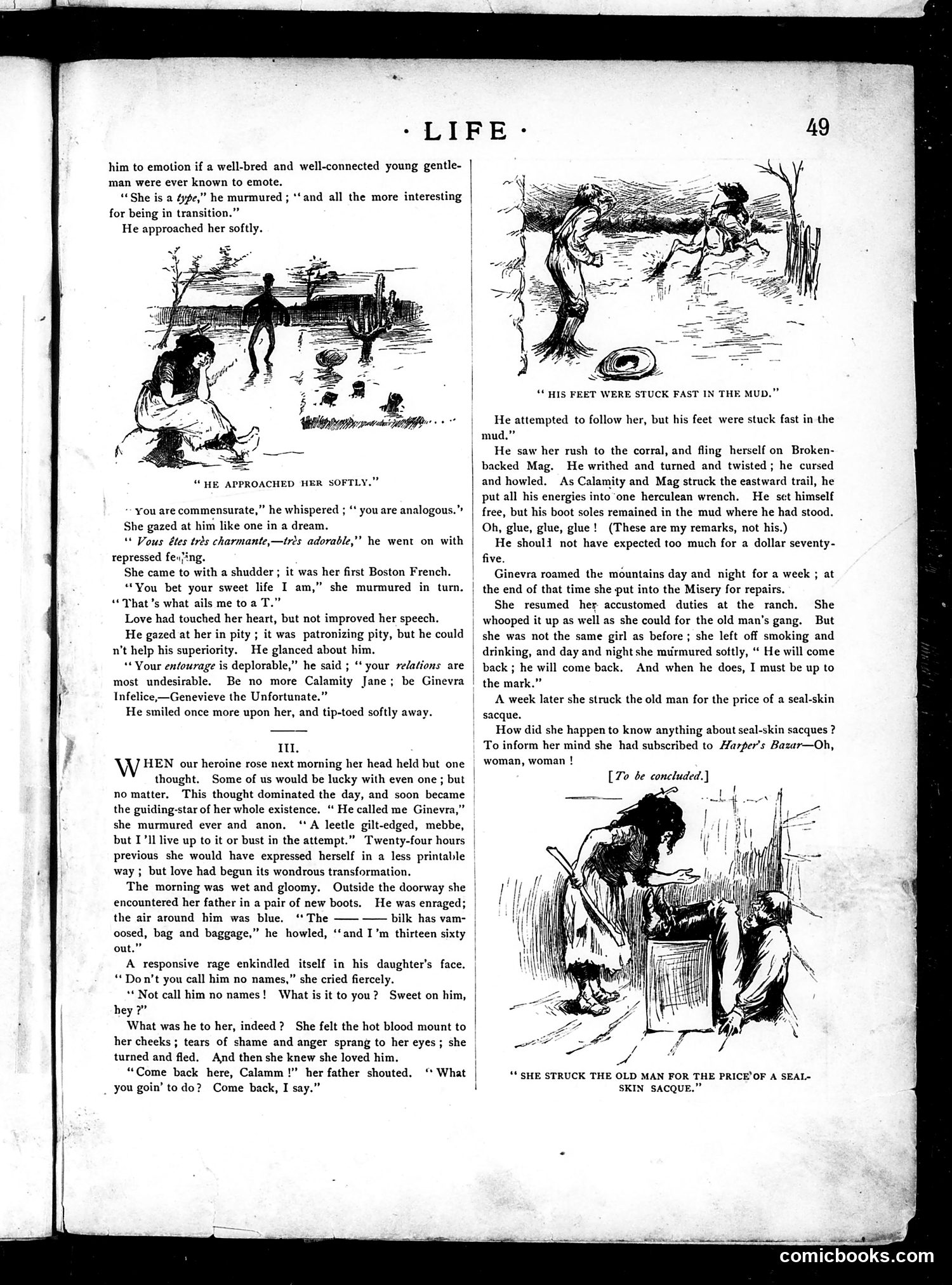
This page contains **narrative fiction with illustrations** rather than political satire or cartoons. The story titled "His Feet Were Stuck Fast in the Mud" depicts a romantic drama: a young gentleman pursues a woman named Ginevra through muddy terrain. The illustrations show him attempting to follow her while his boots become mired. The narrative includes dialogue about their relationship—he calls her a "type" and addresses her emotional growth. After she leaves him stuck in the mud and flees to a corral on horseback, she later strikes an old man for a seal-skin sacque (a type of fur coat). This appears to be serialized **romantic fiction with accompanying artwork**, typical of Life magazine's entertainment content from the early 20th century—not political commentary.
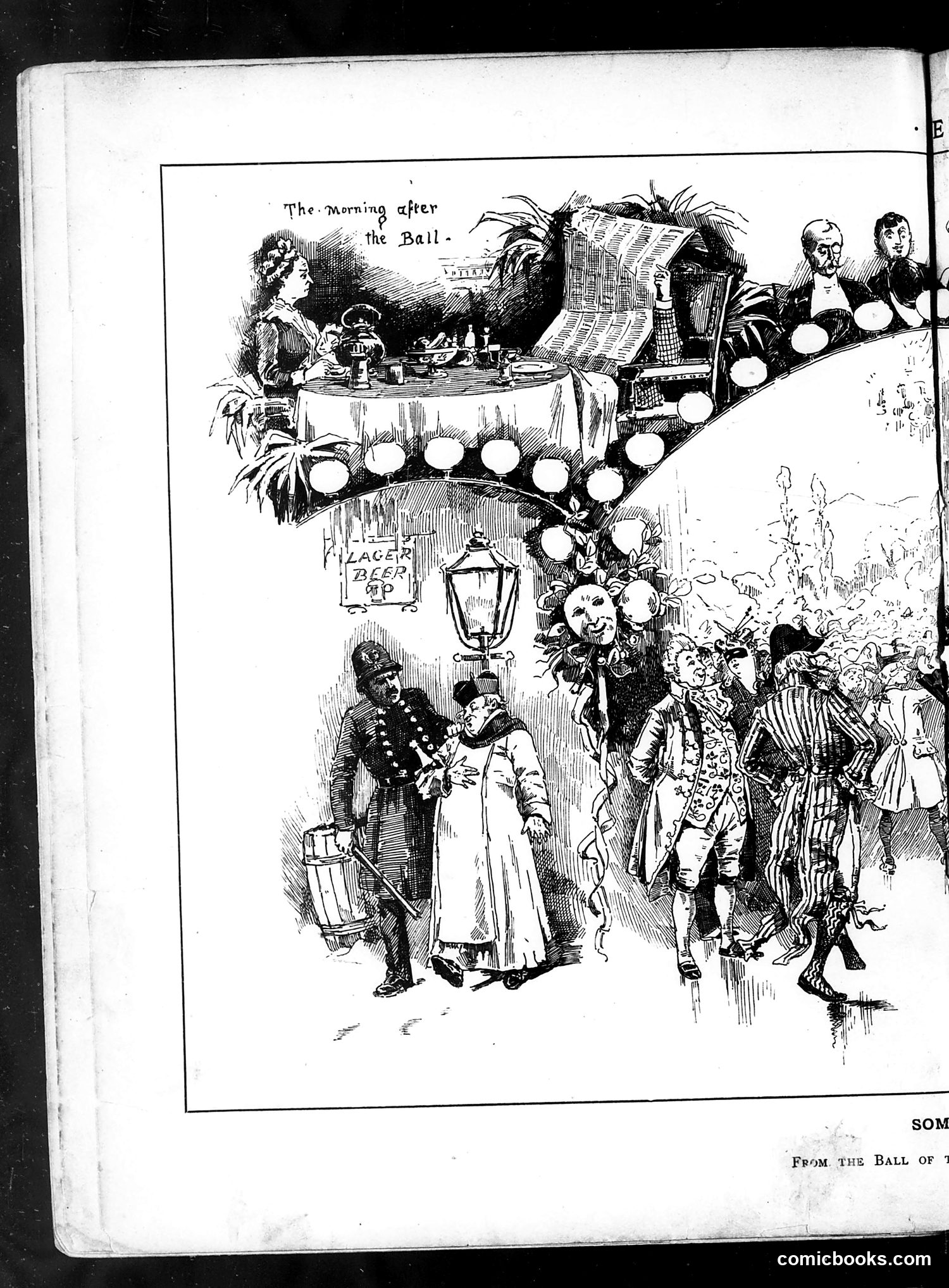
This satirical illustration depicts the aftermath of a formal ball or society event. The upper panel shows an elegantly dressed woman at breakfast amid the remnants of the previous night's festivities—decorative lanterns, elaborate table settings, and floral arrangements. The lower panel contrasts sharply: street-level revelers, appearing to be working-class or immigrant figures, celebrate beneath a street lamp. A sign reading "BEER 5¢" is visible, suggesting a tavern or street vendor. The satire appears to mock class divisions in Gilded Age society—wealthy elites enjoying refined morning-after breakfasts while simultaneously poking fun at working-class celebrations. The juxtaposition critiques how different social strata experience leisure and celebration in fundamentally different ways.
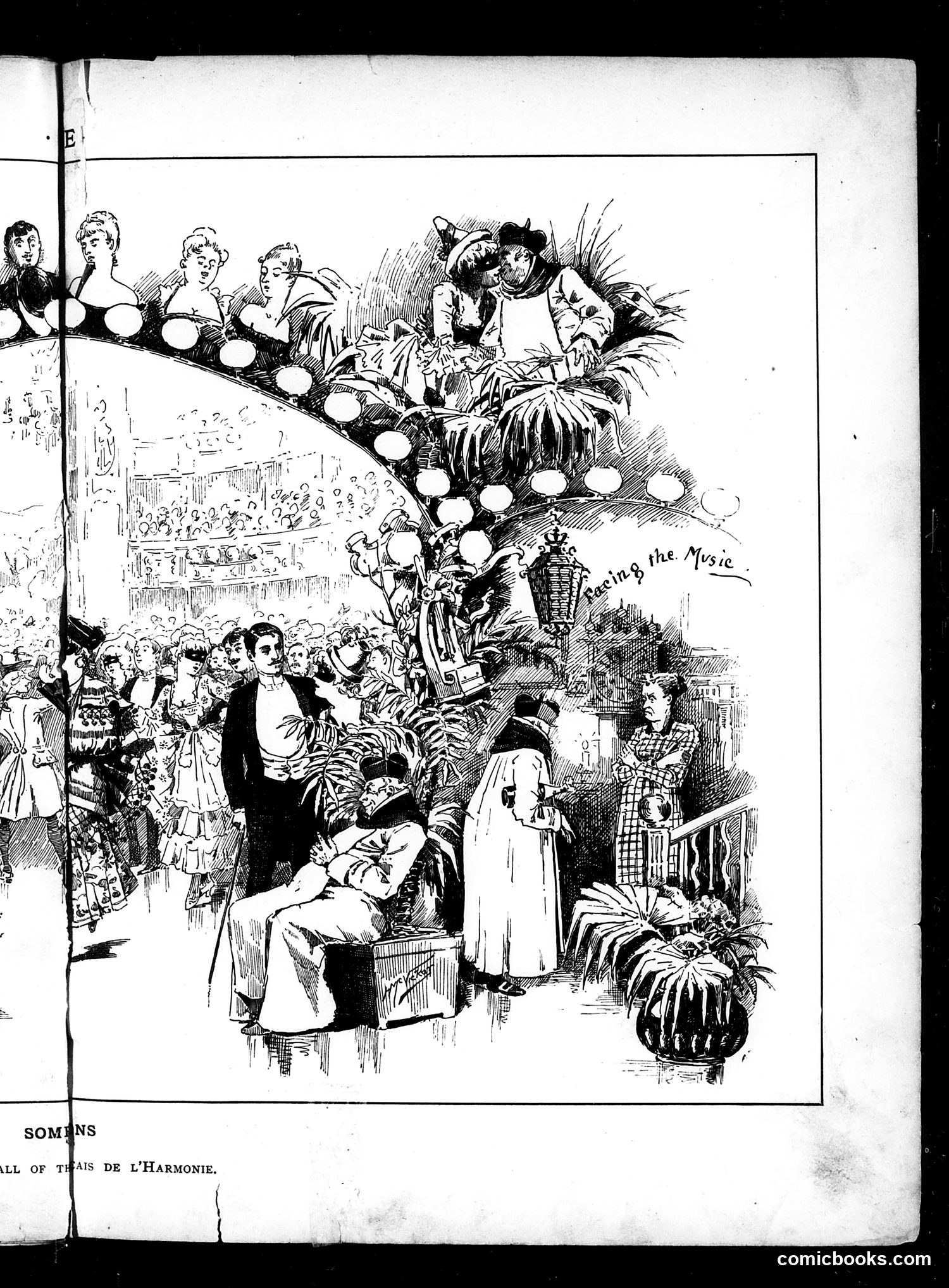
This is a satirical illustration titled "Facing the Music" depicting a theatrical or operatic scene. The cartoon shows well-dressed spectators in an elevated box or balcony watching a performance below, where musicians and performers gather around what appears to be a stage or orchestra pit. The satire likely comments on high society's attendance at cultural events—specifically opera or classical music performances (suggested by "Harmonie" in the French text at bottom). The phrase "Facing the Music" suggests these affluent patrons must endure or confront the actual performance, possibly mocking their pretensions to cultural sophistication or critiquing the opera itself. Without clearer identification of specific figures, the exact targets remain unclear, though it appears to ridicule wealthy society's relationship with classical arts.
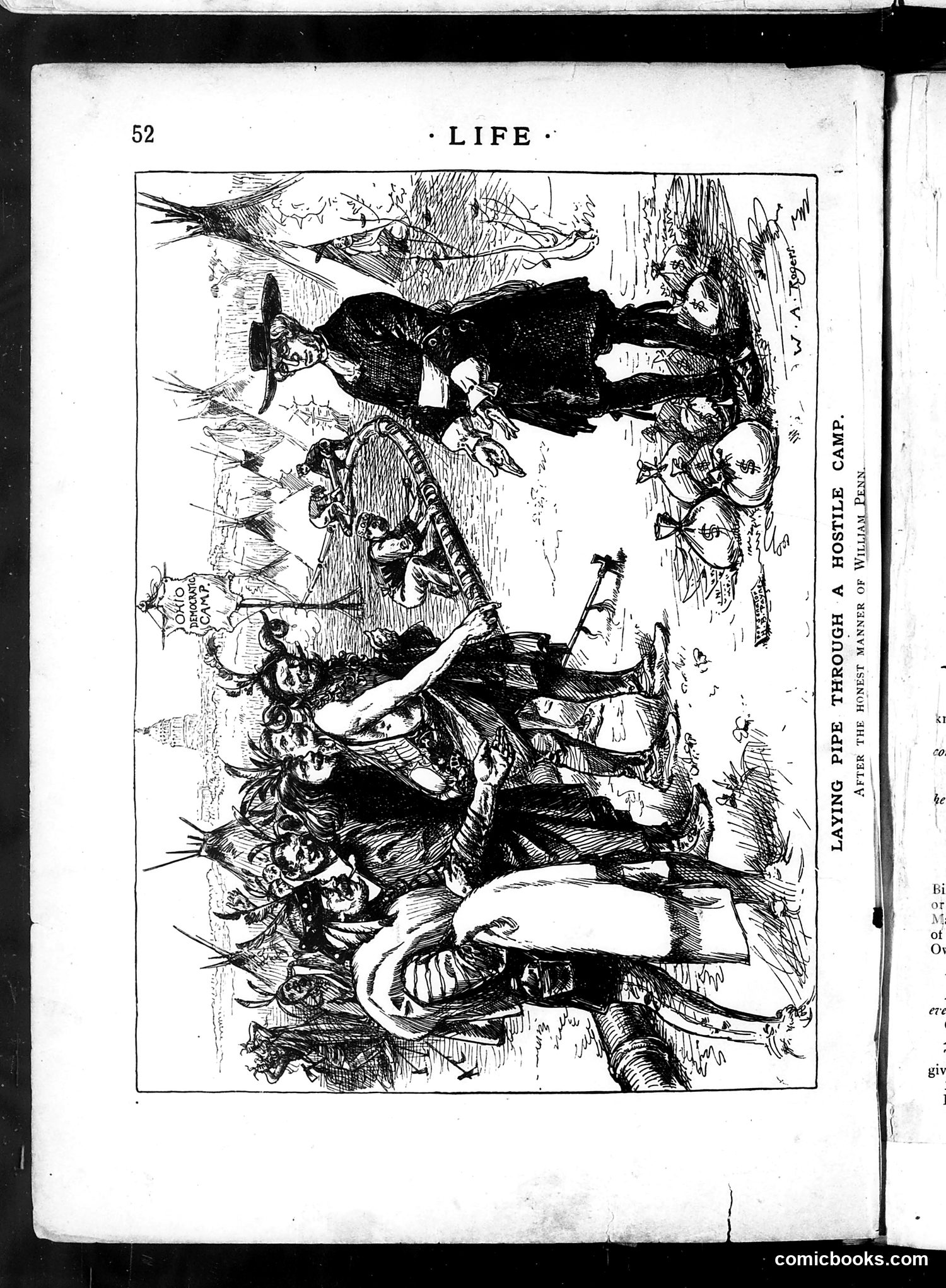
This page from *Life* magazine contains a satirical illustration titled "Laying Pipe Through a Hostile Camp: After the Boers' Murder of Wildman's Camp." The cartoon depicts a military scene with soldiers navigating through hostile territory. The reference to "Boers" and "Wildman's Camp" suggests this relates to the Boer Wars (late 1800s) or a similar colonial conflict. The satire appears to mock the logistical challenges and dangers of military operations in enemy territory—specifically the difficulty of maintaining supply lines ("laying pipe") while under threat. The densely detailed ink work shows soldiers, mounted troops, and what appears to be conflict or tension, criticizing either military leadership decisions or the inherent brutality of the campaign depicted. Without clearer OCR text or additional context, the specific political point remains somewhat unclear, though it likely critiques a particular military strategy or colonial adventure.
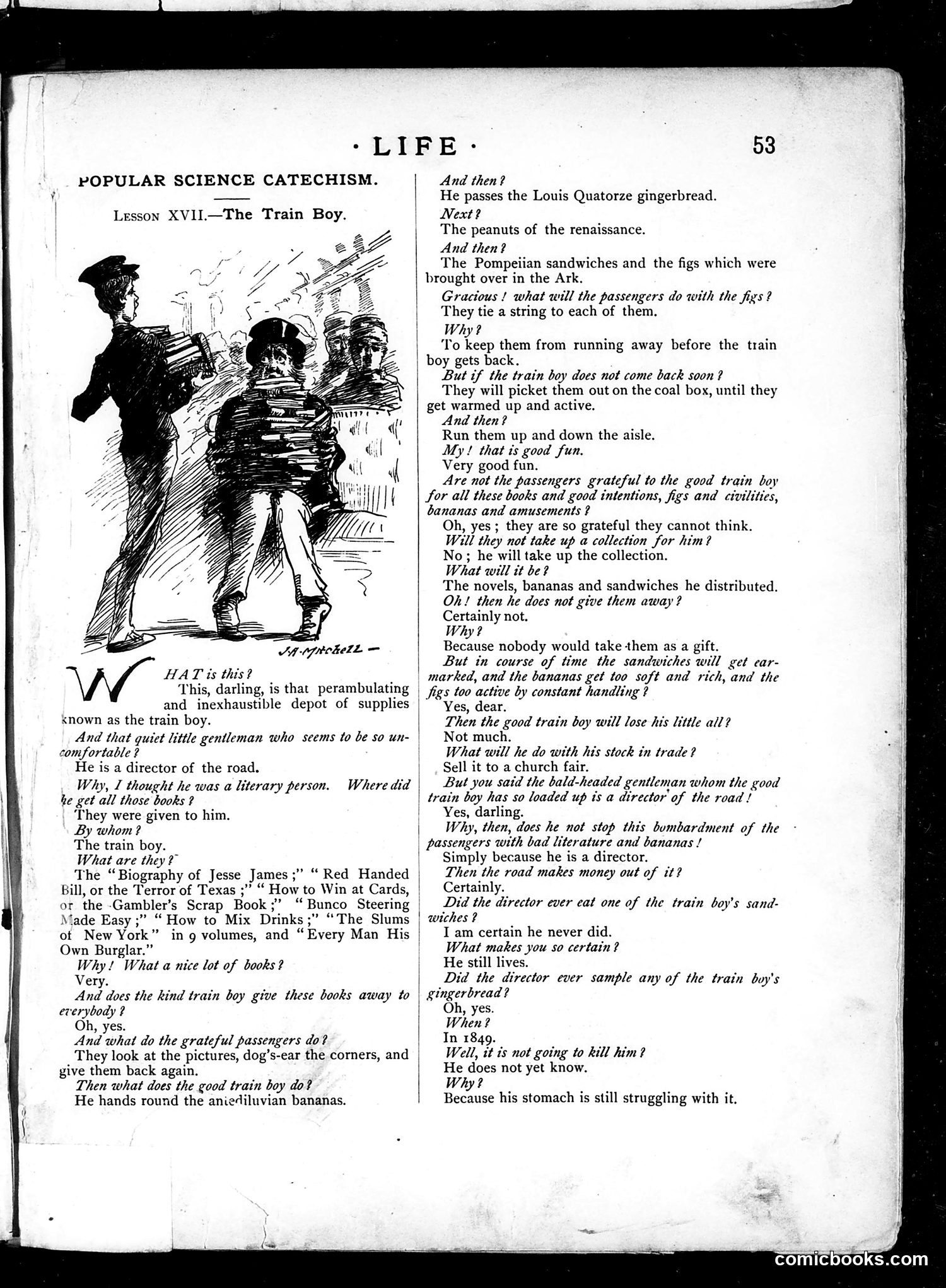
This is a satirical catechism (mock educational dialogue) mocking the "train boy"—a real figure on 19th-century American railways who sold refreshments to passengers. The cartoon shows a train boy hawking goods to a discomfited railroad director. The satire works on multiple levels: 1. **The goods are terrible**: described with mock-grandiose names ("Louis Quatorze gingerbread," "Pompeian sandwiches") to ridicule their actual poor quality and age. 2. **The business model is cynical**: the boy distributes cheap literature and food to passengers, who return the items worn-out, which he then resells at church fairs—profiting twice from worthless goods. 3. **Corruption runs deep**: the railroad director accepts this scheme because the road profits from it, demonstrating institutional complicity in fleecing customers. 4. **Dark humor about safety**: jokes about the food being actively dangerous ("figs too active," food from 1849 still potentially lethal) suggest railways prioritized profit over passenger welfare.
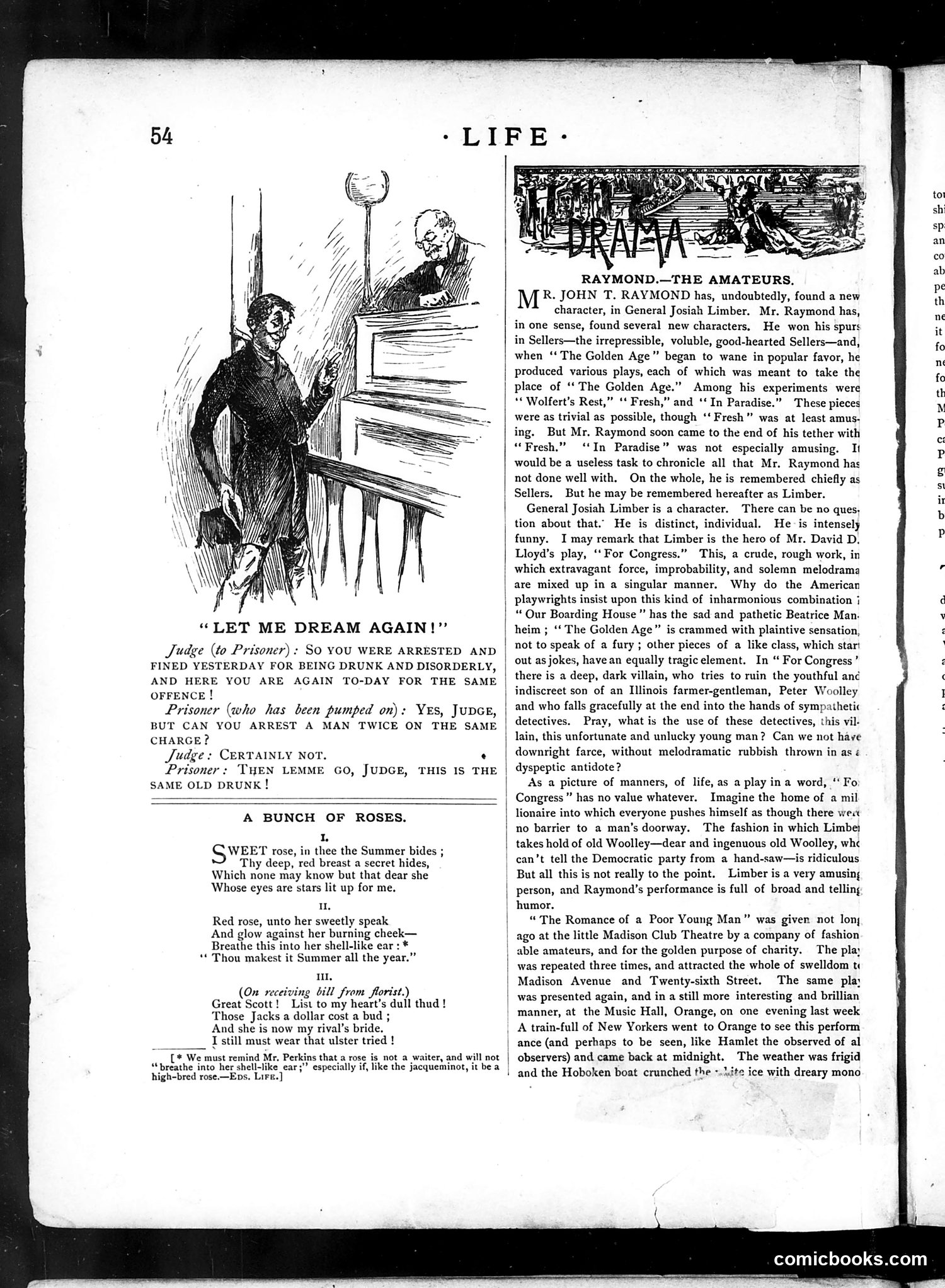
The cartoon depicts a drunk prisoner attempting to exploit a legal technicality. Having been arrested and fined yesterday for drunk and disorderly conduct, he appears again today for the same offense. He argues that a judge cannot arrest a man twice on the same charge—therefore, the judge must release him. The joke satirizes both the prisoner's criminal recidivism and the absurdity of trying to evade justice through legal semantics. The prisoner's nickname ("the same old drunk") suggests his habitual offending. The humor lies in his desperate, flawed reasoning: he assumes a loophole exists when obviously the law addresses *separate incidents*, not repeated offenses of the same type. The cartoon mocks the criminal's cunning while exposing the foolishness of his strategy.
This page is primarily **text-based content** rather than political cartoons. The small illustration at the top—"Render unto Scissors Those Things Which are Scissors"—appears to be a mild religious joke referencing the biblical phrase "render unto Caesar," applied here to scissors (likely a pun on their function). The bulk of the page contains **theater reviews** discussing amateur productions of "The Romance of a Poor Young Man" and "The Love Chase," praising various actors' performances. Below these reviews are **short satirical items** typical of Life magazine's humor section: witticisms about a plumber marrying a milliner (commentary on business consolidation), French wine adulteration, and domestic anecdotes. These represent the magazine's gentle social satire—poking fun at contemporary life, monopolies, and human foibles rather than direct political critique. The page is rounded out with **advertisements** for book series and merchant services, which dominated late 19th-century magazines.
This page is primarily **advertisements and satirical commentary**, not a cartoon-based publication. The text consists of brief humorous observations on contemporary figures and events: John L. Sullivan's drinking habits, a man reanimating frozen sparrows, criticism of the New York Tribune's vocabulary, a Mississippi woman with triplets, and Matthew Arnold's poor lecture attendance. These reflect late-19th century American preoccupations with celebrity, science, journalism standards, and culture. There are no visible political cartoons on this page—it's dominated by advertisements for whiskey, picture frames, printing ink, pens, and hotels. The "satire" exists only in the short gossipy paragraphs, which mock public figures and human foibles through ironic understatement rather than visual representation.