A complete issue · 36 pages · 1935
Judge — April 1935
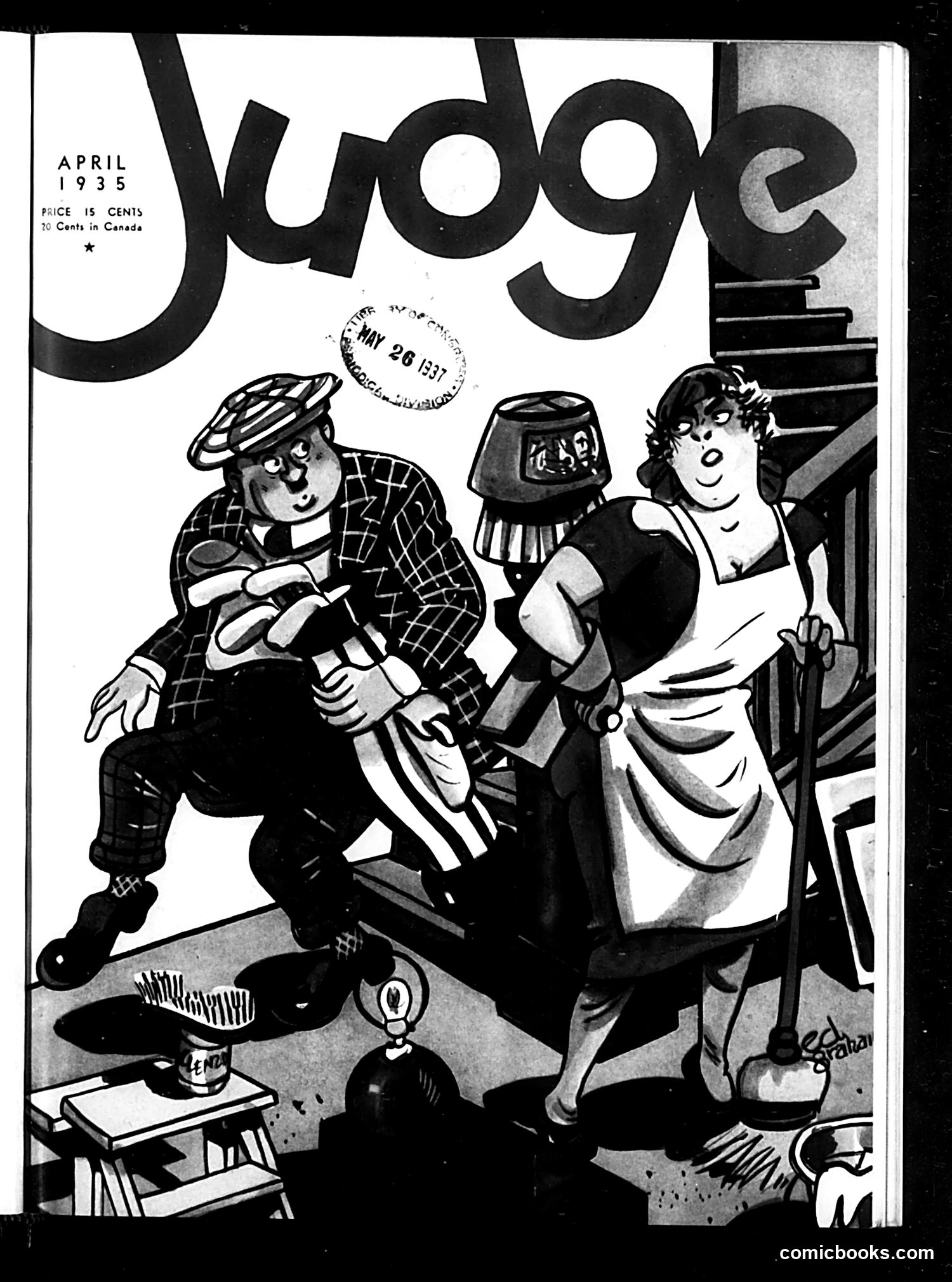
# Judge Magazine, April 1935 This cover illustration depicts a domestic comedy scene typical of 1930s humor. A man in plaid clothing and a flat cap carries a baby while a woman in an apron gestures animatedly beside him. A figure in the middle wears what appears to be formal attire with a distinctive hat. The scene suggests domestic chaos or confusion around childcare—a common satirical subject. The humor likely plays on gender roles and domestic responsibilities during the Depression era, when such "role reversal" scenarios (men handling childcare) were considered comedic. The exaggerated expressions and physical comedy typical of Judge's style indicate lighthearted family-oriented humor rather than pointed political satire. Without clearer text identifying specific figures or events, the exact satirical target remains unclear, though it reflects period attitudes toward domestic life.
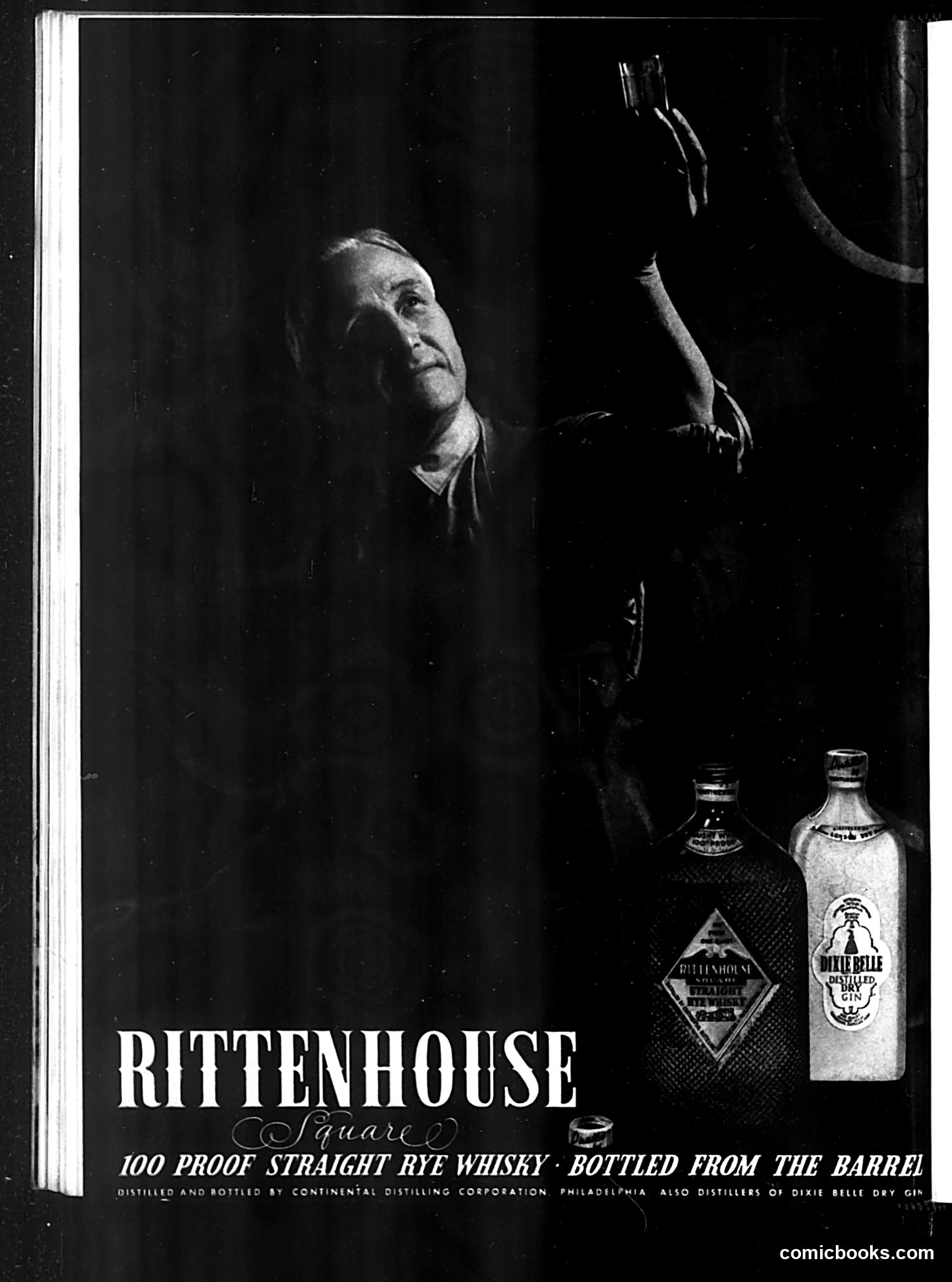
# Analysis This page is primarily a **liquor advertisement** for Rittenhouse Square rye whiskey, not political satire. The image shows a man in formal attire examining bottles of the product against a dark background. The text emphasizes "100 PROOF STRAIGHT RYE WHISKEY · BOTTLED FROM THE BARREL," with production credited to Continental Distilling Corporation in Philadelphia. The advertisement appears designed to convey sophistication and quality through the formal presentation and careful product display. There is no discernible political cartoon or social satire on this page—it's a straightforward commercial promotion, likely from the pre-Prohibition or early post-Prohibition era based on the styling and the prominent display of whiskey bottles.
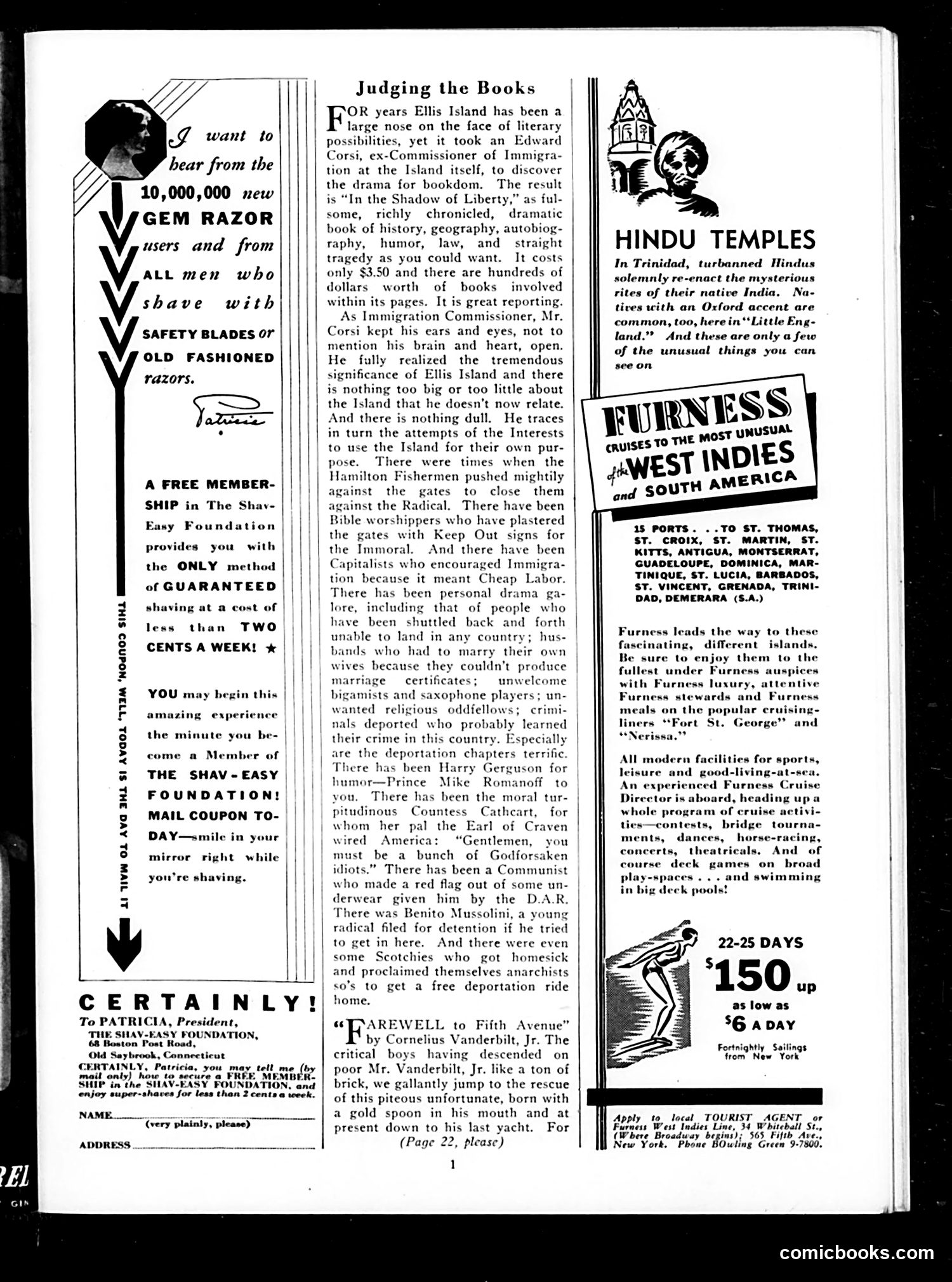
# Analysis of Judge Magazine Page This page is primarily **advertising and travel content** rather than political satire. The left side features a **Gem Razor advertisement** targeting men, emphasizing safety blades and cost savings, plus a Shaw-Easy Foundation membership offer promising cheap shaving at under two cents weekly. The center contains a book review titled "Judging the Books" discussing Edward Corsi's work *In the Shadow of Liberty*, which examines Ellis Island's immigration history. The review mentions dramatic deportation cases and various notable figures involved with immigration policy. The right side advertises **Furness cruise lines** to the West Indies and Caribbean, and **Hindu Temples in Trinidad**—essentially tourism promotions. There is **no evident political cartoon or satire** on this page. It represents typical 1920s-30s magazine content mixing editorial commentary with commercial advertising.
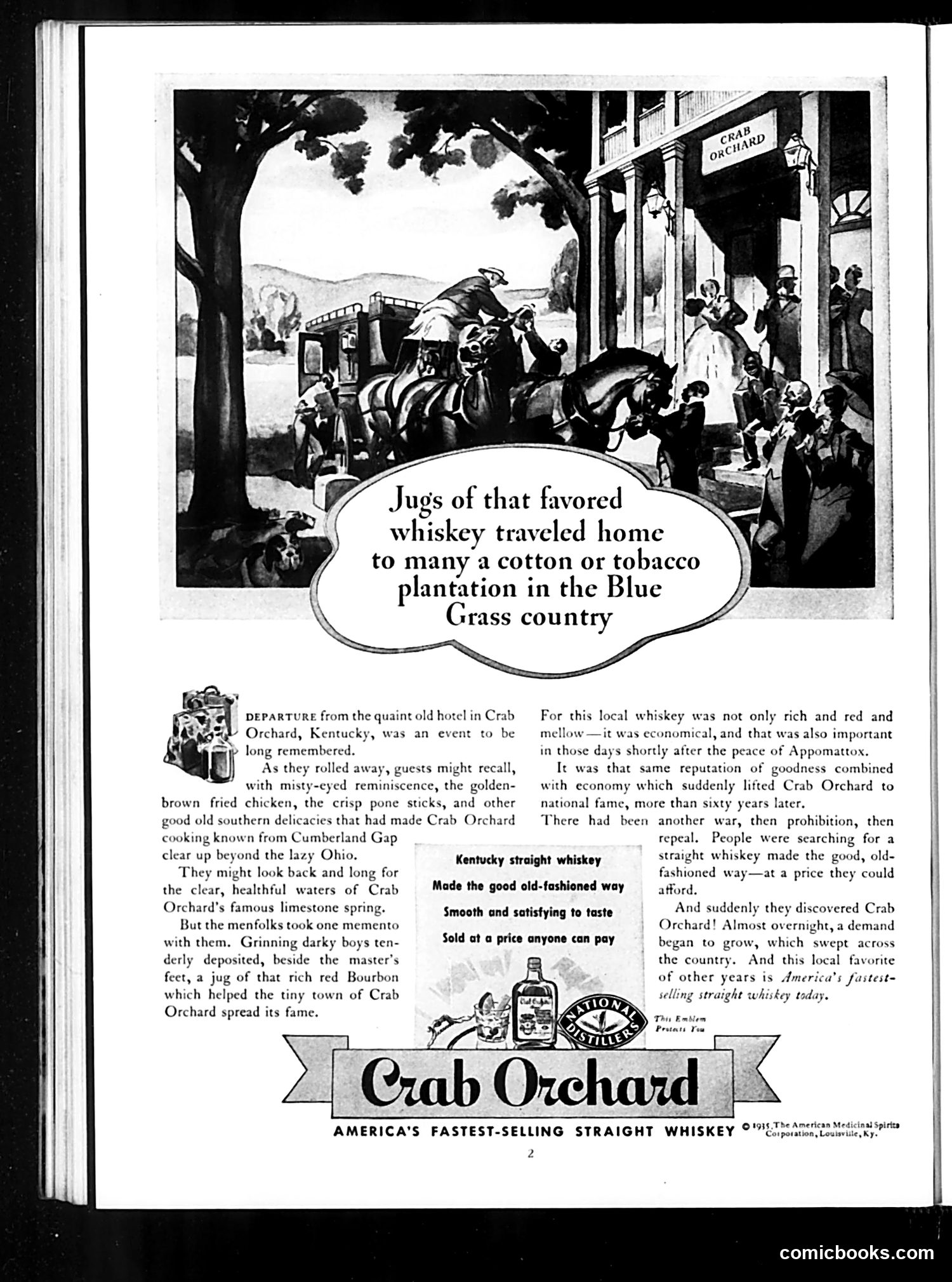
# Analysis of Crab Orchard Whiskey Advertisement This page is **primarily a whiskey advertisement** rather than political satire. It depicts a stagecoach departure from "Crab Orchard" hotel in Kentucky, showing the whiskey's historical distribution to plantations in the Blue Grass region. The advertisement plays on nostalgia and regional pride, emphasizing that Crab Orchard whiskey was economical yet high-quality—important during Prohibition's repeal (the text references "prohibition, then repeal"). The ad claims it became "America's fastest-selling straight whiskey" after this sudden rediscovery. There is **no apparent political cartoon or satire here**—this is straightforward vintage advertising using historical imagery and storytelling to market the product to post-Prohibition consumers seeking affordable, authentically American whiskey.
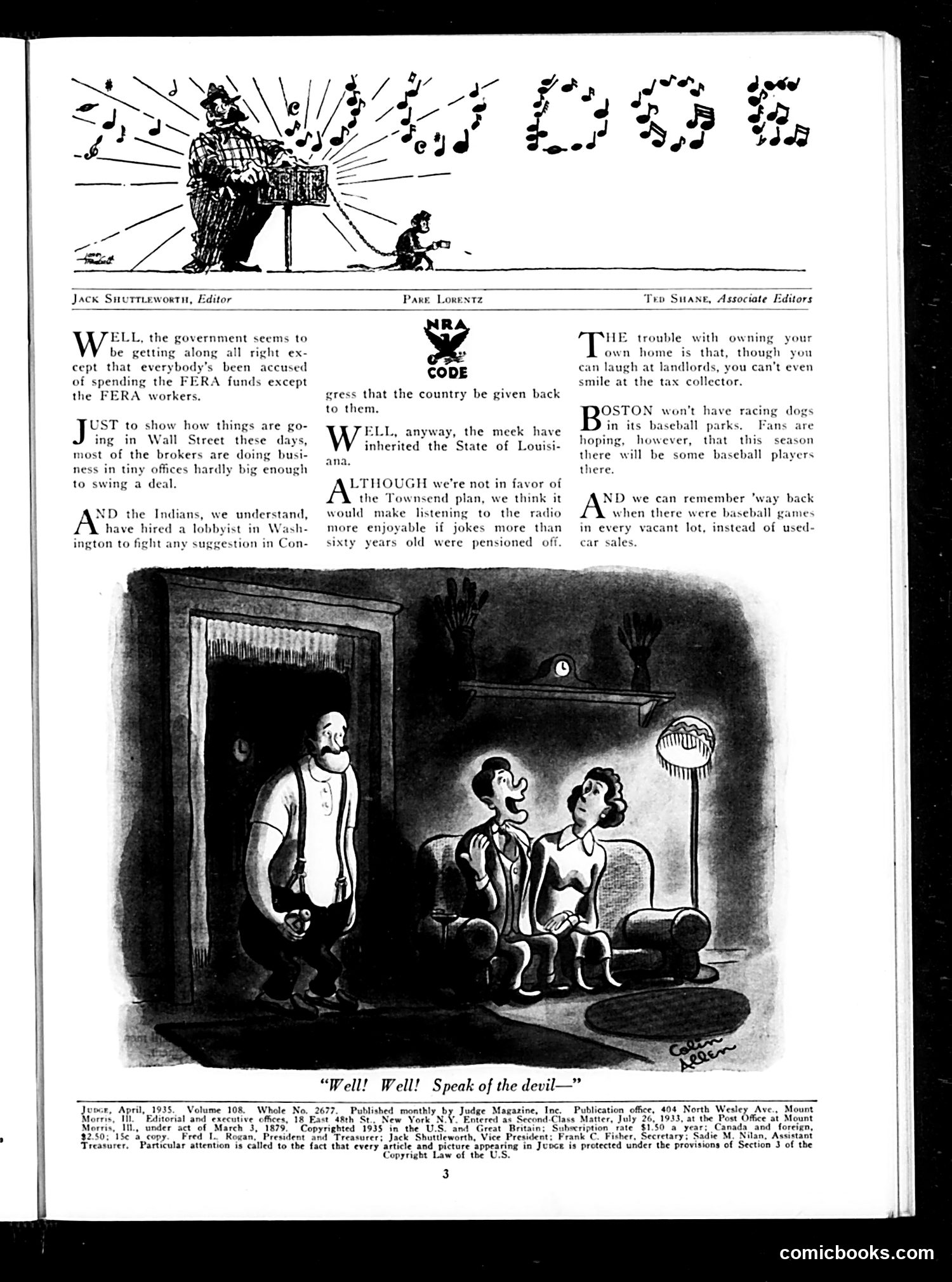
# Analysis of Judge Magazine Page (April 1935) The main cartoon depicts a couple sitting on a couch while a man enters through a doorway, with the caption "Well! Well! Speak of the devil—" The editorial commentary addresses New Deal politics, specifically: - Government spending on FERA (Federal Emergency Relief Administration) workers - Wall Street brokers conducting business in small offices - The Indians' lobbying in Congress - The Louisiana State inheritance situation (likely referencing Huey Long's political machine) - Proposed radio tax legislation - Boston's restrictions on racing dogs in baseball parks - The replacement of used-car lots with baseball games The satirical tone criticizes New Deal spending and government expansion during the Depression era. The cartoon itself appears to be a domestic humor piece unrelated to the editorial commentary, suggesting this is a typical Judge magazine layout mixing political commentary with general jokes.
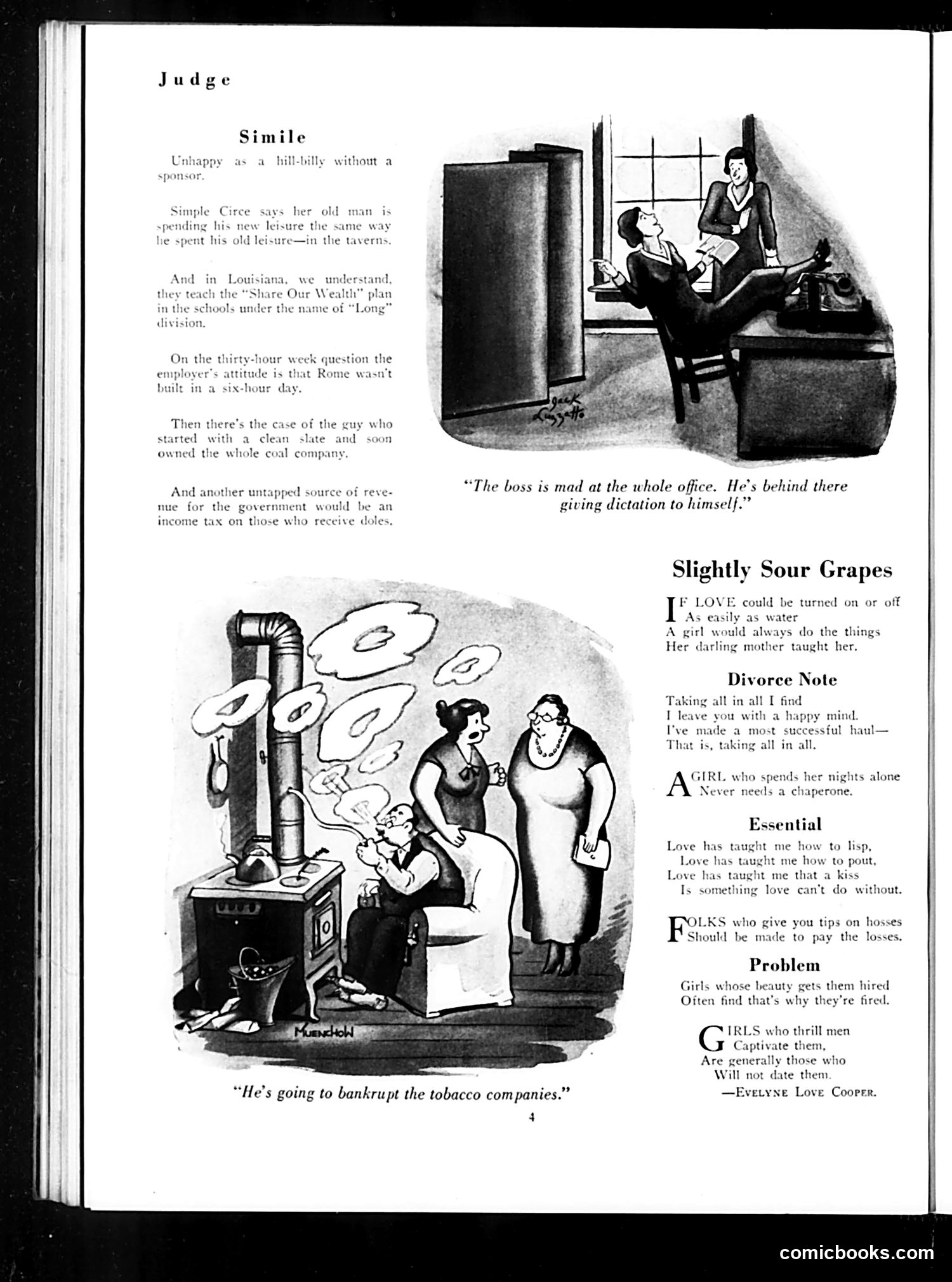
# Analysis of Judge Magazine Page This page contains social commentary and humor typical of early-20th-century American magazines. The top cartoon depicts an office scene where a boss gives dictation while appearing to hide behind furniture—satirizing workplace hierarchy and managerial pretense. The lower cartoon shows a woman near a stove with the caption "He's going to bankrupt the tobacco companies," likely referencing anxieties about women's economic power or changing consumer habits. The right column contains short satirical poems and observations on relationships, divorce, and gender dynamics—common Judge magazine fare mocking contemporary social attitudes. References to "doles," "income tax," and "thirty-hour weeks" suggest labor and economic debates of the era, though specific political events remain unclear without additional historical context.
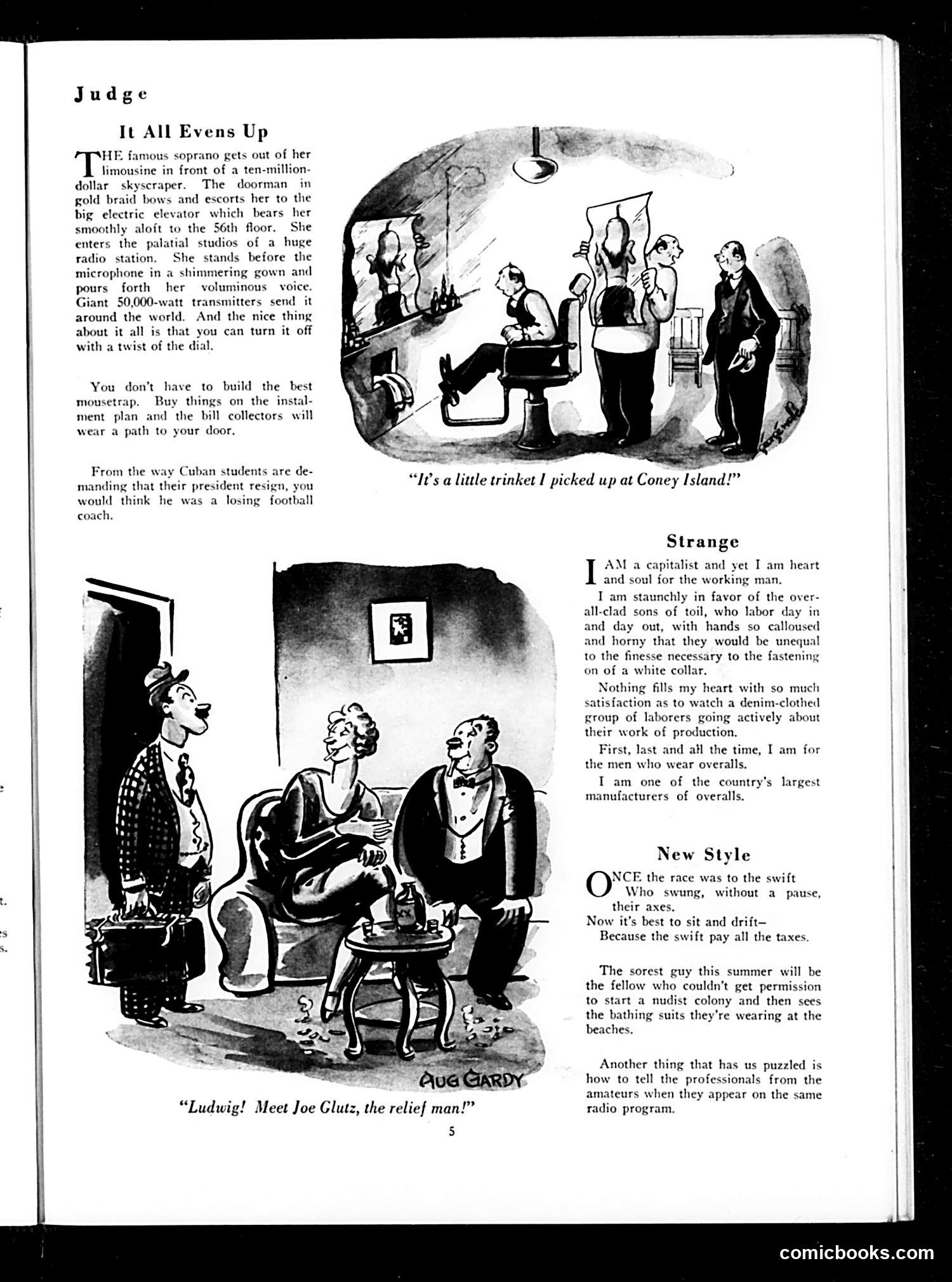
# Analysis of Judge Magazine Page **Top Cartoon ("It's a little trinket I picked up at Coney Island!"):** A soprano performs in a radio station studio while men operate equipment. The joke mocks the trivial nature of radio entertainment—the singer implies her vocal performance is no more significant than a cheap souvenir trinket from Coney Island amusement park. It satirizes the gap between highbrow opera and lowbrow mass media broadcasting. **Bottom Cartoon ("Ludwig! Meet Joe Glutz, the relief man!"):** Two formally-dressed men meet a working-class figure. The satire likely references New Deal relief programs, mocking the social awkwardness of introducing unemployed workers ("relief men") into formal settings, or critiquing class divisions during Depression-era employment initiatives. **Right Column Essays:** Brief satirical pieces on capitalism, labor, and summer fashion trends.
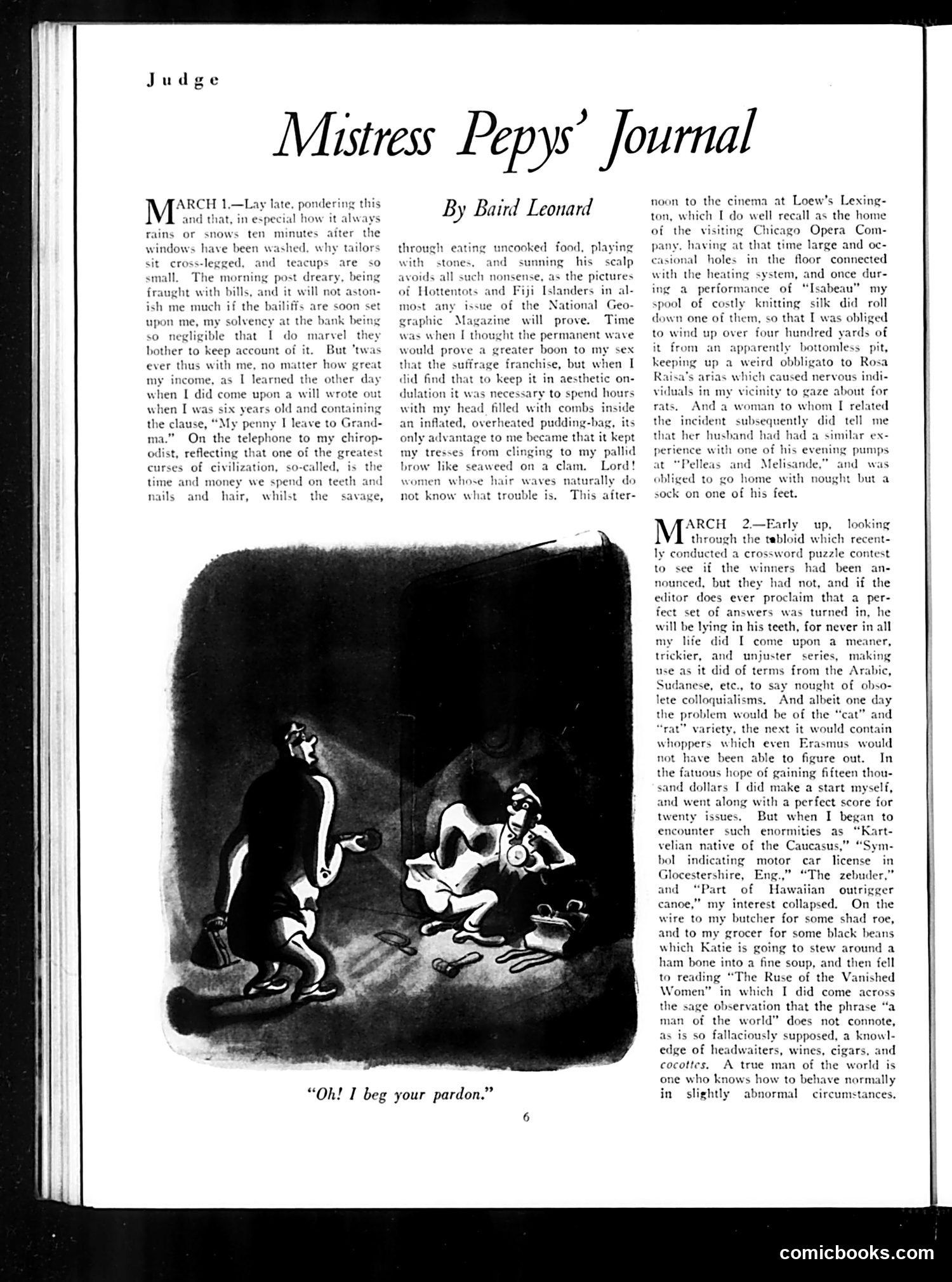
# "Mistress Pepys' Journal" by Baird Leonard This is a humorous column mimicking Samuel Pepys' famous 17th-century diary, but written from a woman's perspective. The illustration shows a woman encountering what appears to be a snake or serpent in a dark interior space, with the caption "Oh! I beg your pardon." The column's entries describe mundane domestic frustrations: poorly timed rain, maintaining appearance through beauty treatments, and the absurdity of crossword puzzle contests with no announced winners. The author humorously catalogs life's petty annoyances and social obligations—visiting the opera, entertaining guests, dealing with beauty salon incompetence. The satire targets the tedium of upper-class women's lives, social pretension, and the gap between expected genteel behavior and actual experience. The snake encounter likely represents an unexpected disruption to polite society.
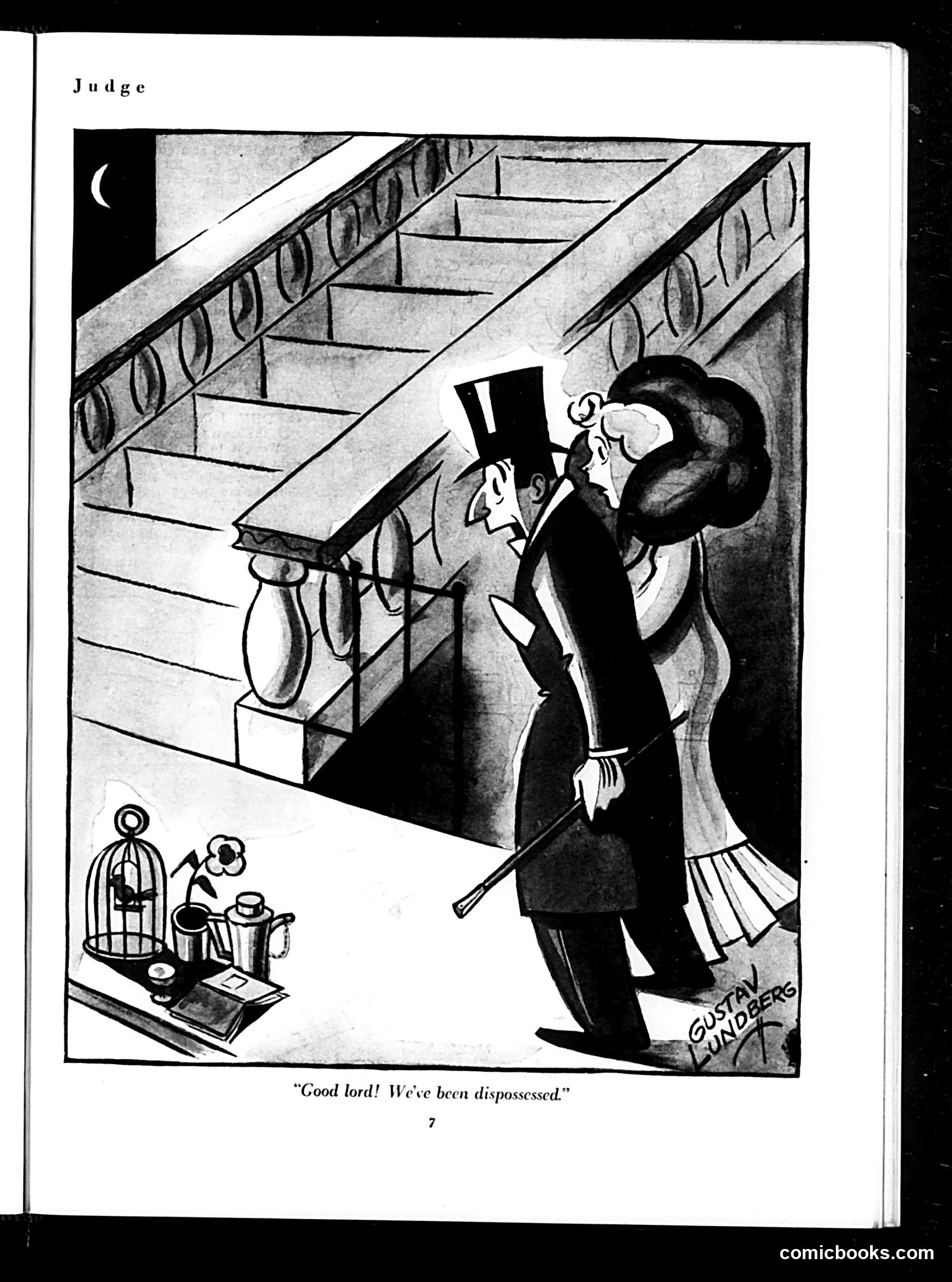
# Analysis of "Judge" Cartoon: "Good lord! We've been dispossessed." This single-panel cartoon depicts a well-dressed gentleman in a top hat and a woman being evicted from an elegant staircase. The couple stands before grand interior architecture while a birdcage, teapot, and other modest household items sit abandoned below—suggesting they've lost their home and possessions. The caption's exclamation indicates shock at their sudden dispossession. This likely satirizes the economic hardships of the early 20th century, possibly referencing tenant evictions during economic downturns or housing crises affecting middle and upper-class families. The contrast between their formal attire and their predicament underscores the indignity of falling from prosperity—a common Judge magazine theme critiquing economic instability and social upheaval during this period.
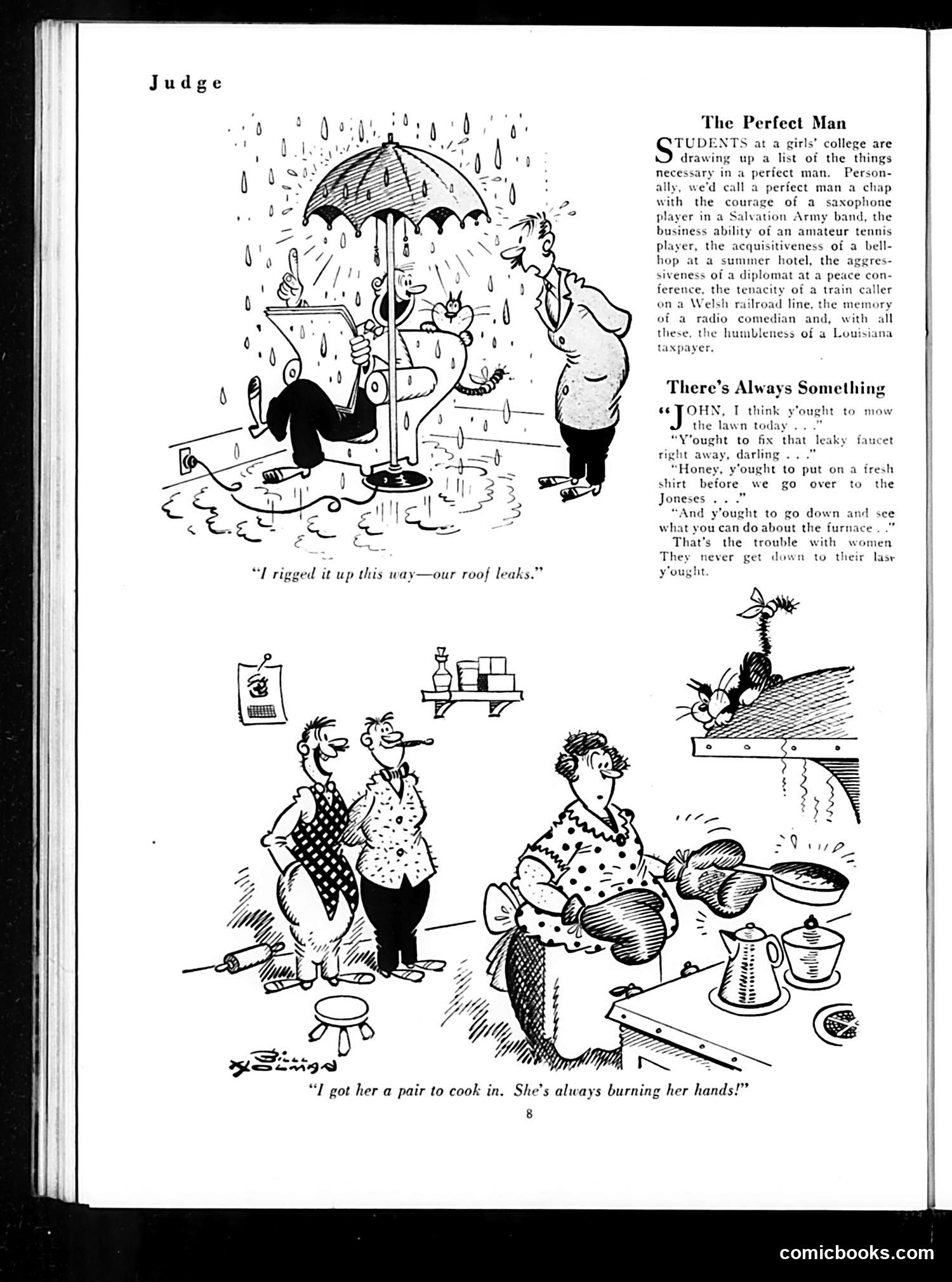
# Analysis for Modern Readers This page contains two distinct satirical pieces from *Judge* magazine: **"The Perfect Man"** (top): A humorous essay mocking the impossibility of the "perfect man." It sarcastically lists contradictory qualities—combining the courage of a saxophonist in a Salvation Army band with the business sense of an amateur tennis player—suggesting no such man exists. This satirizes both idealistic women and unrealistic standards. **"There's Always Something"** (bottom): Two cartoons illustrating nagging spouses. One shows a man incompetently fixing a roof while his wife criticizes; another shows a woman constantly giving her husband tasks ("mow the lawn," "fix the faucet," "wear a clean shirt," "check the furnace"). The caption "That's the trouble with women—they never get down to their last y'ought" jokes that women are perpetually demanding. Both pieces reflect early-to-mid 20th-century gender stereotypes: the impossibility of pleasing wives and the endless nature of domestic complaints. The humor relies on portraying women as perpetually dissatisfied and men as perpetually inadequate—domestically and otherwise.
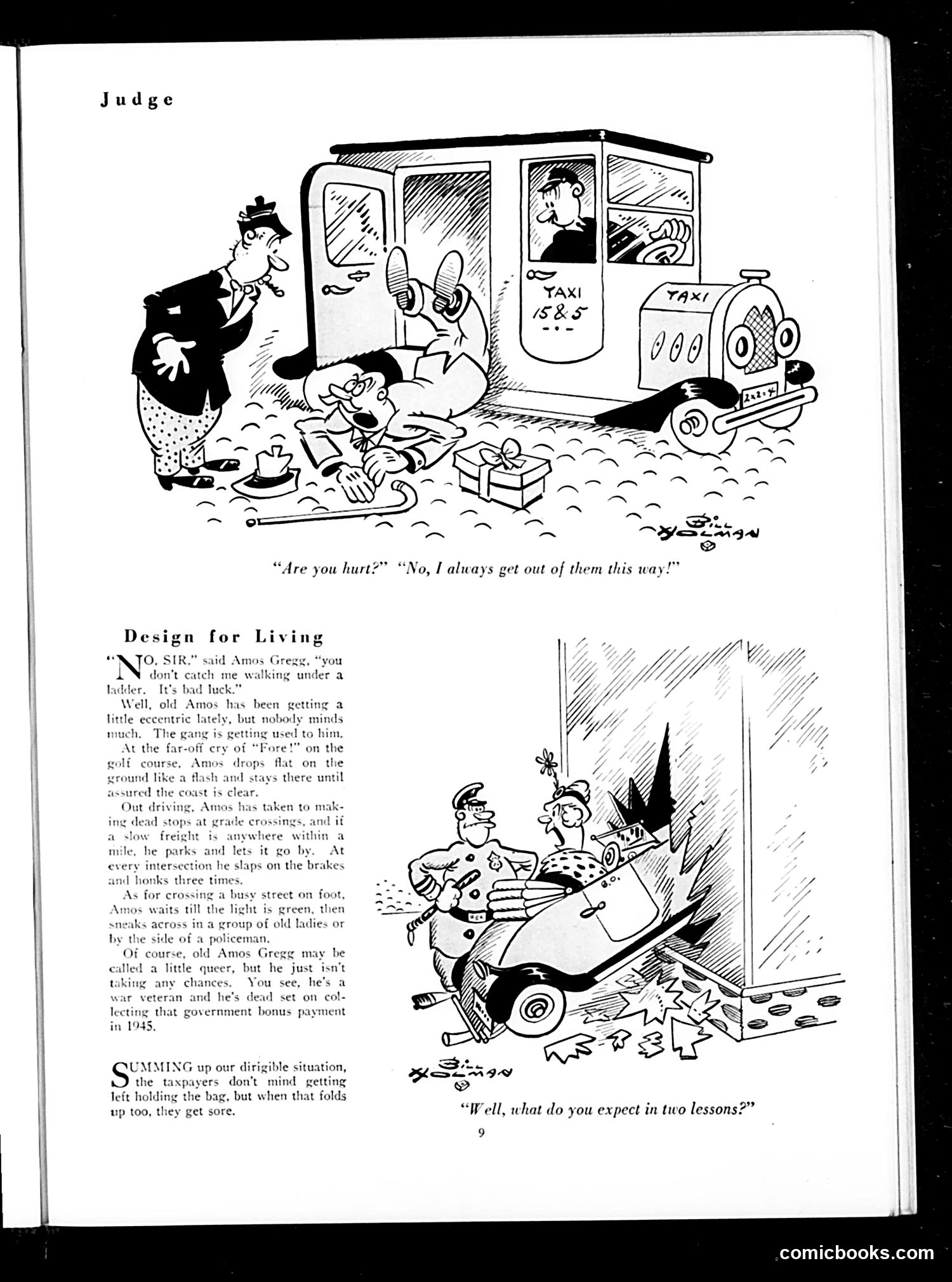
# Political Satire Analysis: Judge Magazine Page This page contains two cartoons satirizing 1920s American social issues: **Top cartoon ("Judge"):** A judge observes a taxi driver emerging unscathed from a collision with debris scattered everywhere. The driver boasts he "always gets out of them this way"—satirizing reckless driving and the judicial system's apparent inability to enforce traffic safety or hold dangerous drivers accountable. **Bottom cartoon ("Design for Living"):** An elderly war veteran named Amos Gregg, awaiting a promised government bonus payment (referenced as due in 1945), has adopted increasingly eccentric safety habits—making dead stops at intersections, waiting for traffic lights, sneaking past groups of elderly women. The caption "What do you expect in two lessons?" suggests he's learning driving safety too late. The satire targets post-WWI veterans' delayed compensation and Americans' generally poor driving habits during the automobile era. It reflects contemporary frustration with both government promises to veterans and the new dangers automobiles posed to public safety.
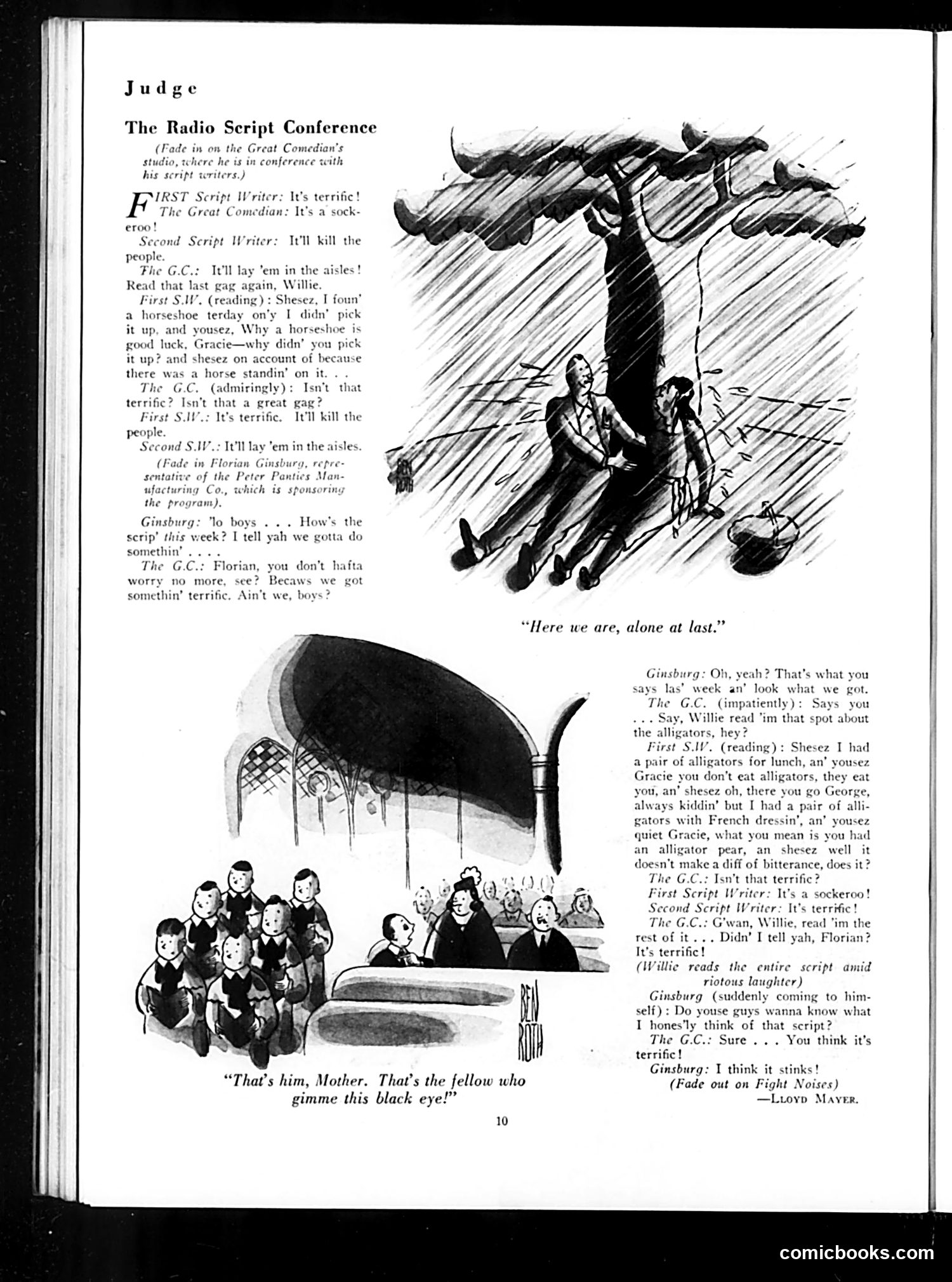
# "The Radio Script Conference" This Judge satire mocks radio comedy writers' creative process. The scene depicts a "Great Comedian" (likely a caricature of a famous radio star like George Burns) conferencing with script writers and producer Florian Ginsburg about joke material. The humor targets the absurdity of radio comedy: writers recycle tired gags (a horseshoe joke, an alligator/alligator pear pun) that they excitedly call "terrific" and claim will "kill the people" and "lay 'em in the aisles." Everyone praises mediocre material with exaggerated enthusiasm until Ginsburg finally admits: "I think it stinks!" The satire critiques the radio industry's self-deception—how showbiz people convince themselves that obvious dreck is genius through groupthink and yes-men behavior. The final caption by "Lloyd Mayer" (a jab at Louis B. Mayer, Hollywood executive) adds that such terrible scripts deserve a "black eye."