A complete issue · 36 pages · 1932
Judge — April 16, 1932
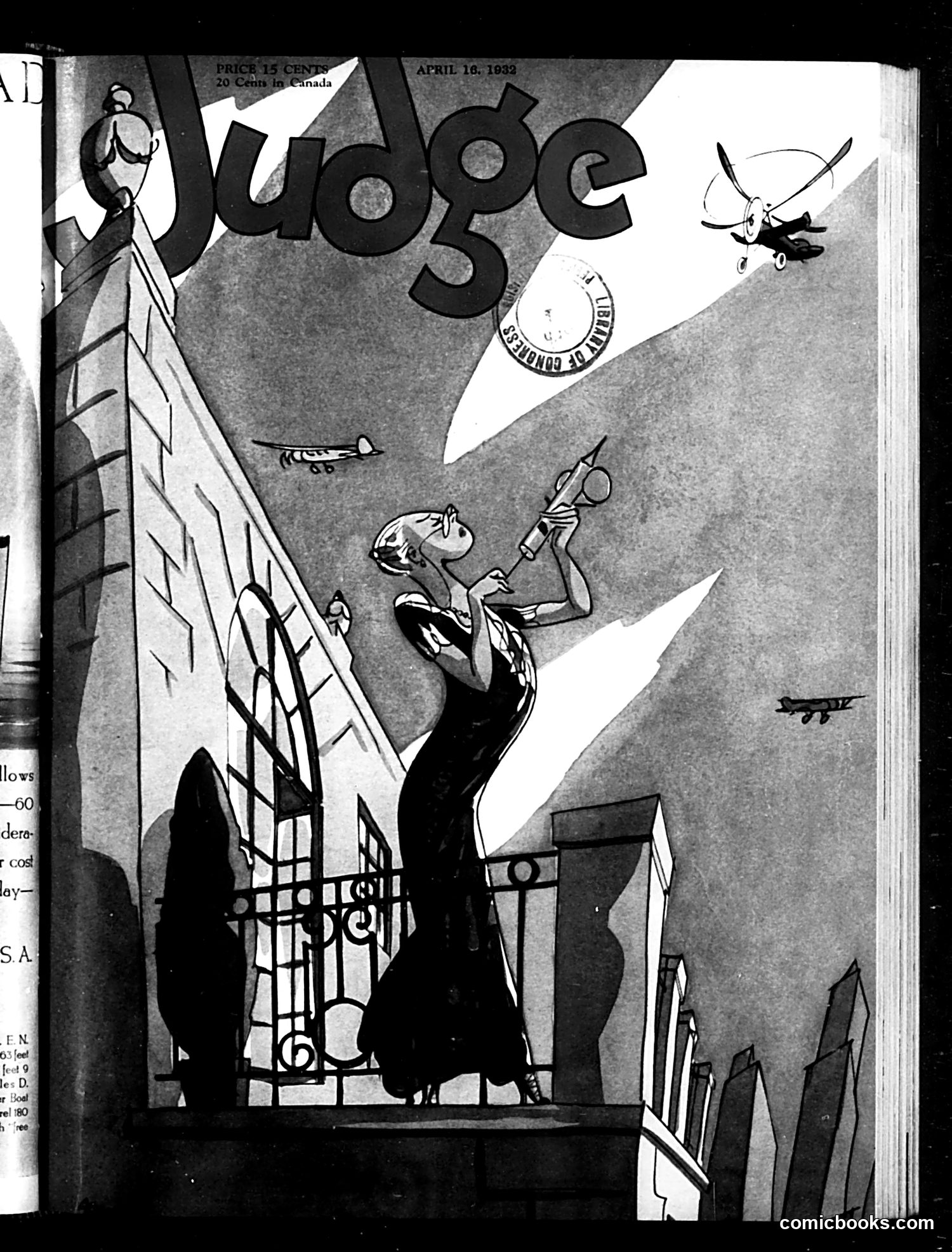
# Judge Magazine Cover - April 16, 1939 This cover depicts a caricatured figure in formal dress on a rooftop or high building, wielding what appears to be a torch or flaming weapon toward aircraft in the sky. The dramatic silhouette and warlike imagery suggest military or political aggression. Given the April 1939 date—months before WWII's official start—this likely satirizes rising tensions in Europe, possibly referencing Fascist military buildups or dictatorial threats. The figure's exaggerated posture and the multiple aircraft suggest imminent conflict. The "Judge" masthead and price (15 cents) confirm this is the magazine's cover. Without clearer identifying details in the image, the specific political figure or nation targeted remains unclear, though the aggressive military imagery was timely commentary on 1939's dangerous geopolitical situation.
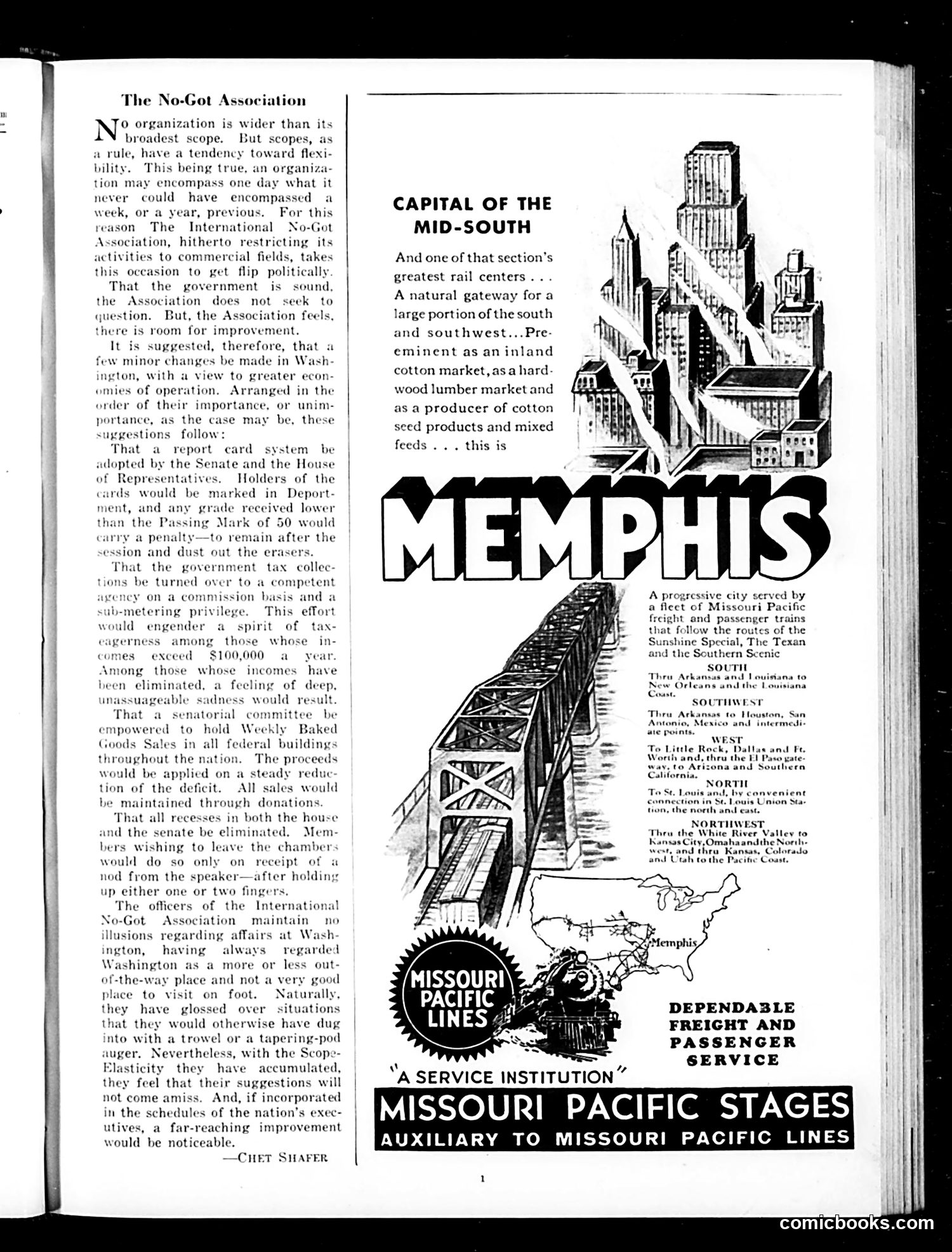
# Analysis of Judge Magazine Page This page is **primarily advertising**, not satire. The left column contains "The No-Got Association," a brief opinion piece by Chet Shafer criticizing government inefficiency and proposing minor reforms (report cards for Representatives, tax collection improvements, etc.). The tone is mildly satirical but straightforward political commentary. The dominant content is a full-page advertisement for **Missouri Pacific Lines**, a major railroad company. The ad features stylized Art Deco imagery of Memphis's skyline and a freight train, promoting the railroad as a "progressive city" transportation hub connecting multiple American regions (South, Southwest, West, Northwest). The page reflects early-20th-century American business culture: substantial magazine revenue came from corporate advertising, and trains were symbols of modernity and economic progress.
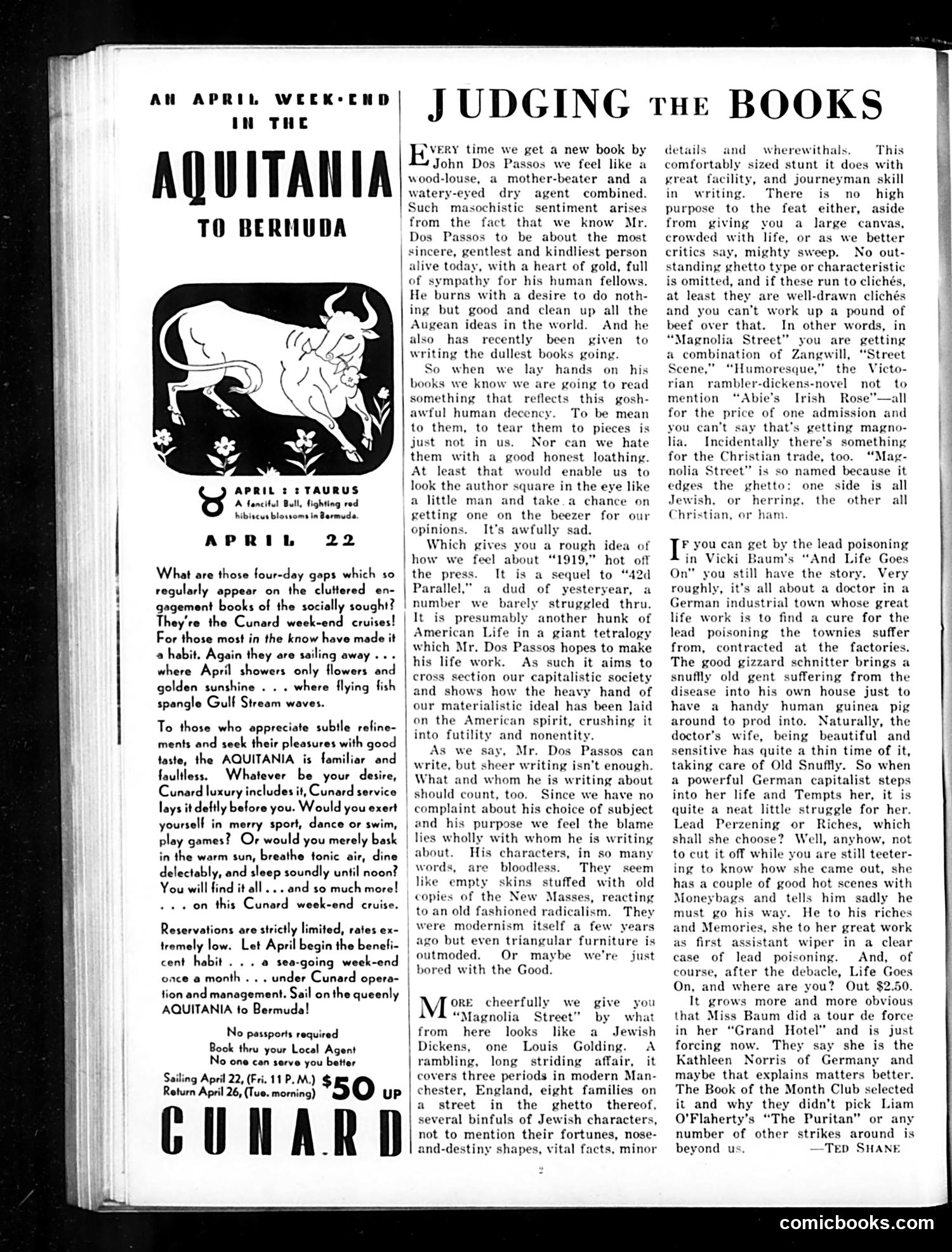
# Explanation for Modern Readers This page is primarily a **Cunard cruise ship advertisement** promoting April week-end trips from Aquitania to Bermuda, positioned alongside a book review column titled "Judging the Books." The cartoon features a **stylized bull with flowers**, labeled "APRIL: TAURUS" with the dates "APRIL 22." This is a seasonal zodiac illustration—Taurus, not satirical commentary. The bull serves as decorative branding for the spring travel advertisement. The book reviews critique works by João dos Passos, including "1919" and "Parallel," praising his detailed, journalistic writing style while noting his characters lack warmth. The review also discusses Louis Golding's "Magnolia Street," a novel about Jewish families in Manchester. This is essentially **advertising and cultural criticism**, not political satire.
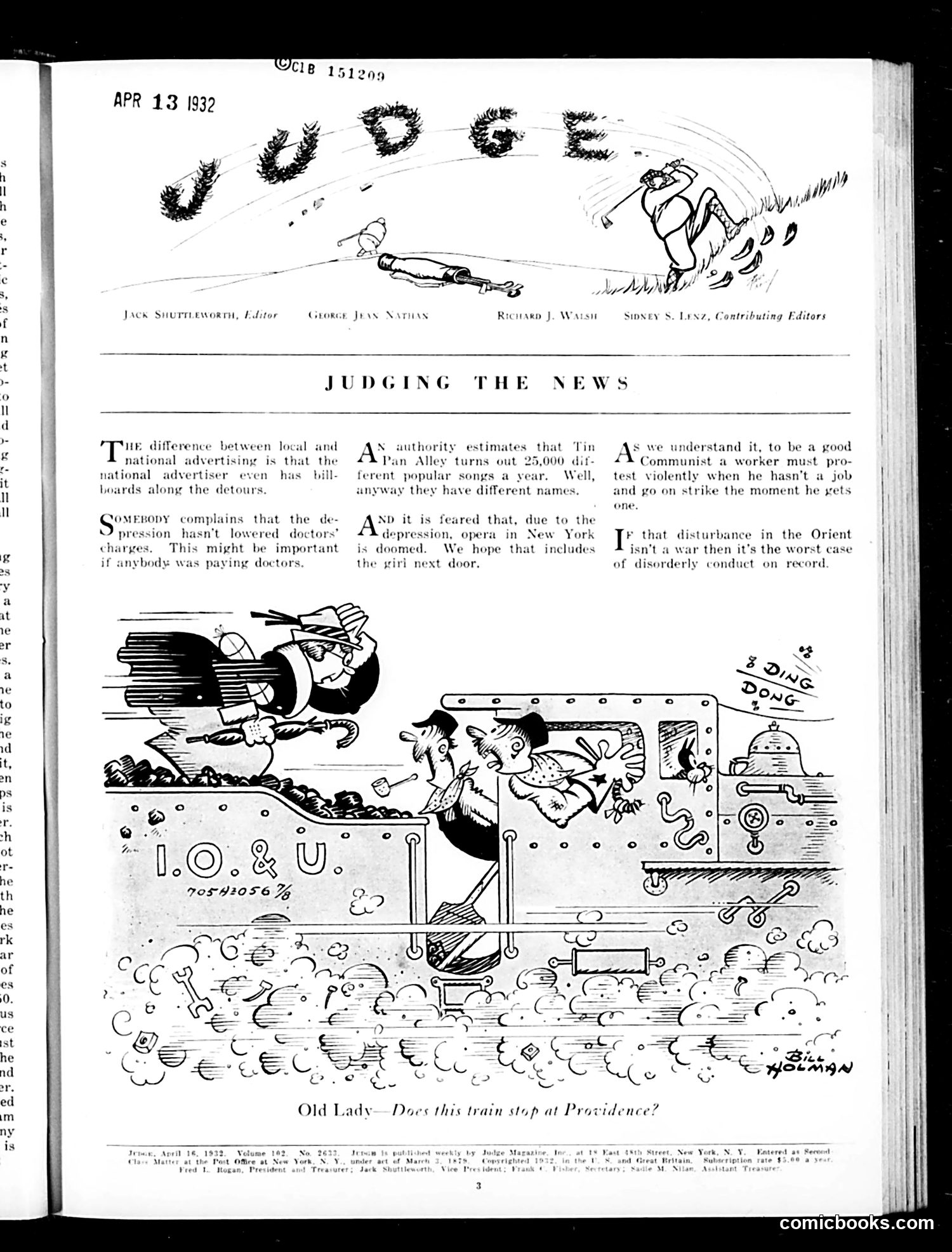
# Judge Magazine, April 13, 1932 - "Judging the News" This page contains editorial commentary and cartoons satirizing 1932 current events during the Great Depression. **Top cartoon**: Shows a figure diving/falling toward "UDGE" text, illustrating economic collapse. **Main cartoon** ("Does this train stop at Providence?"): Depicts an overcrowded, chaotic train car labeled "I.O.U." with passengers in disarray. The "Old Lady" asks if it stops at Providence—likely satirizing the financial crisis and failed economic promises. The train appears to represent failed economic systems or unreliable government programs. **Text commentary** discusses: - Depression's impact on doctors' fees - Hopes that opera (specifically New York's) won't close - Concerns about labor unrest in the Orient The overall theme reflects Depression-era anxieties about economic collapse, institutional failures, and social disorder.
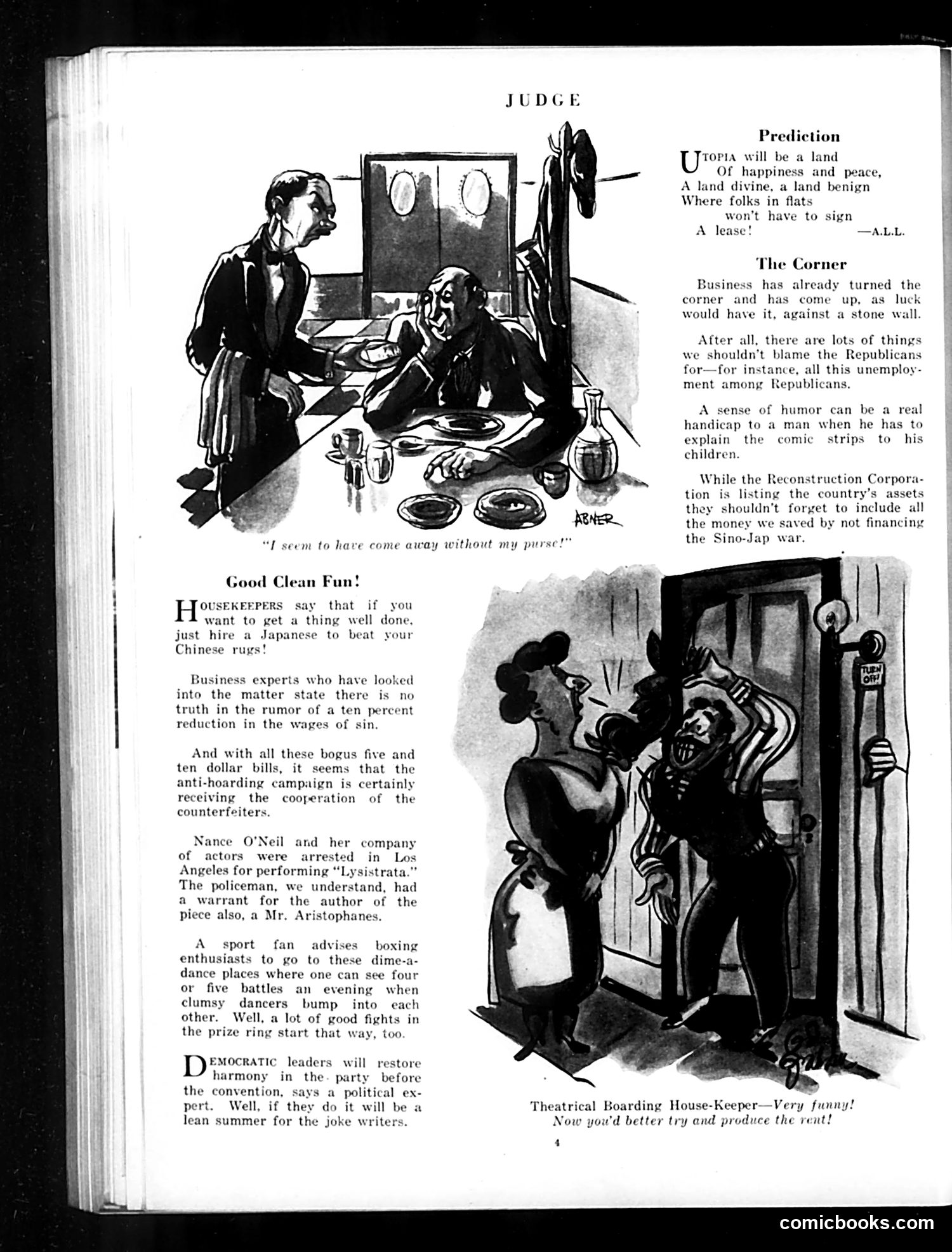
# Analysis of Judge Magazine Page The page contains several satirical pieces targeting post-WWI American politics and social issues: **Top cartoon ("Judge"):** A man discovers his empty purse after dining out, likely satirizing economic hardship or inflation following the war. **"Good Clean Fun!":** Mocks Republican economic policies, referencing wage reductions and linking them ironically to "counerfeiters"—suggesting Republicans are economically dishonest. References the arrest of actress Nance O'Neil for performing "Lysistrata" (an anti-war play), and jokes about boxing matches at disreputable venues. **"The Corner":** Satirizes business failures and Republican unemployment, with dark humor about explaining economic problems to children. **Bottom cartoon:** Shows theatrical boarding house chaos, likely mocking theatrical industry struggles during economic downturn. Overall, the page reflects post-war economic anxiety and Democratic criticism of Republican governance.
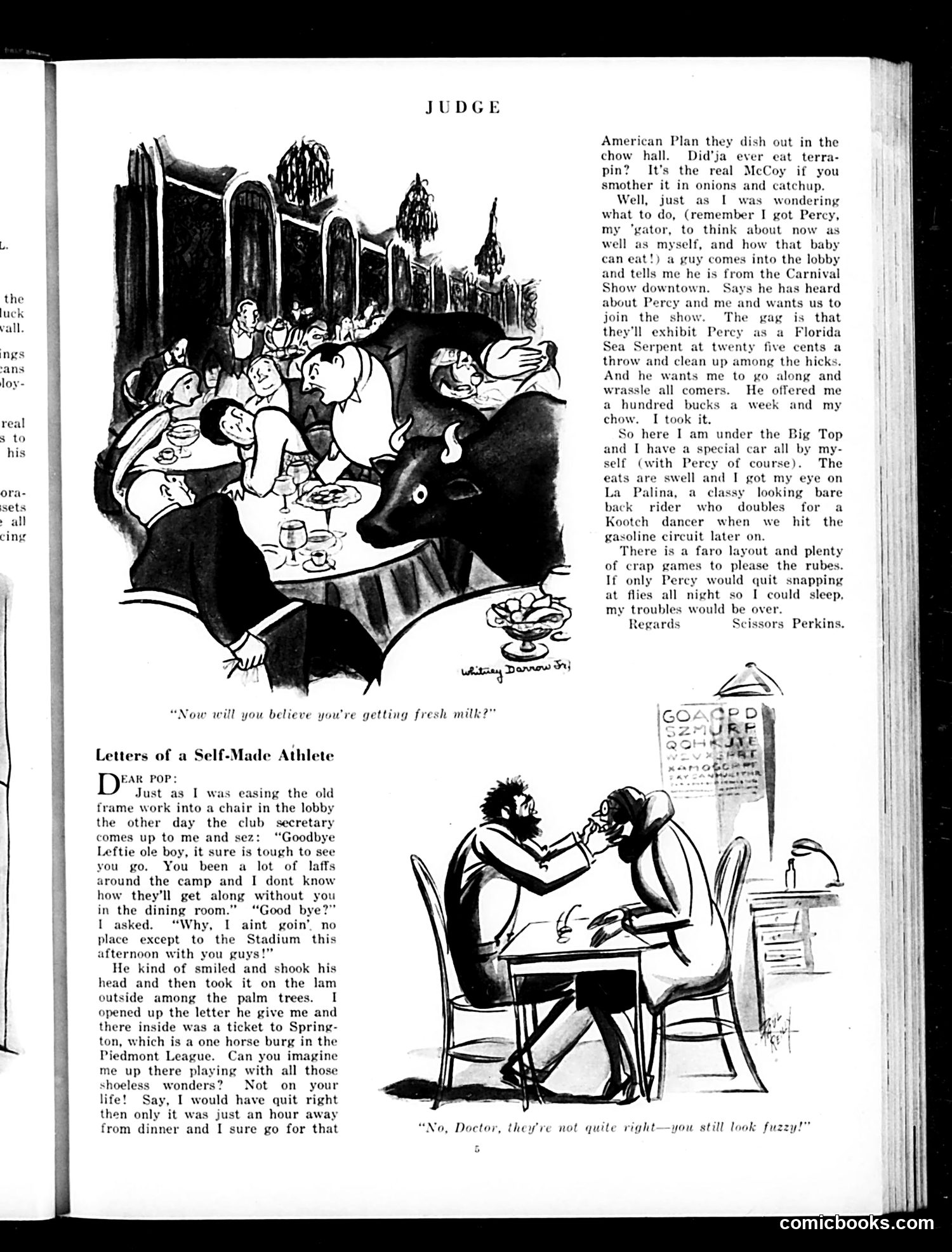
# Analysis of Judge Magazine Page This page contains two separate pieces of satirical commentary on early 20th-century American life: **Top cartoon ("Now will you believe you're getting fresh milk?"):** Depicts a cow at a fancy dinner table with wealthy diners. The satire likely mocks either food adulteration scandals or false advertising claims about "fresh" dairy products—a genuine public concern during the Progressive Era when food safety was unregulated and companies made dubious purity claims. **Bottom section ("Letters of a Self-Made Athlete"):** A humorous letter describing an athlete's social climbing at country clubs and sporting events. The accompanying cartoon shows a doctor examining a patient, with the caption questioning the patient's health ("not quite right—you still look fuzzy"). This satirizes the pretensions and physical toll of amateur athletic pursuits among the leisure class. Both pieces mock consumer deception and upper-class vanity.
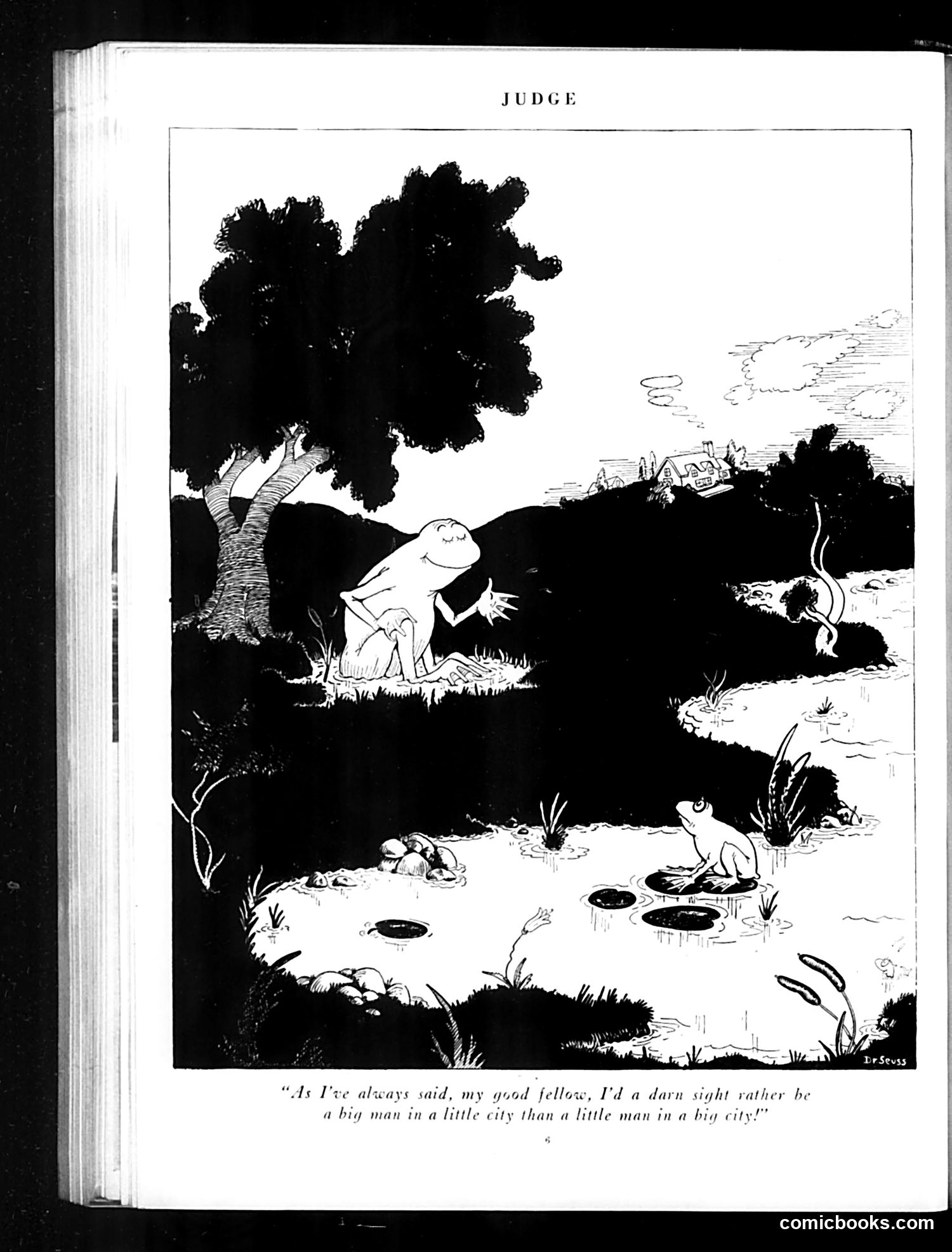
# Analysis This cartoon depicts a pastoral scene with anthropomorphic frogs discussing life philosophy by a pond. The caption reads: "As I've always said, my good fellow, I'd a darn sight rather be a big man in a little city than a little man in a big city!" The satire targets social ambition and the human desire for status and prominence. Rather than pursuing meaningful achievement in larger, more competitive environments, the character prefers being a "big fish in a small pond"—enjoying local importance even if it means limited scope. This reflects early 20th-century American anxieties about urbanization and whether ambition in crowded cities was worth sacrificing local standing. The use of frogs—creatures naturally confined to small spaces—reinforces the joke's irony about accepting limitation as virtue.
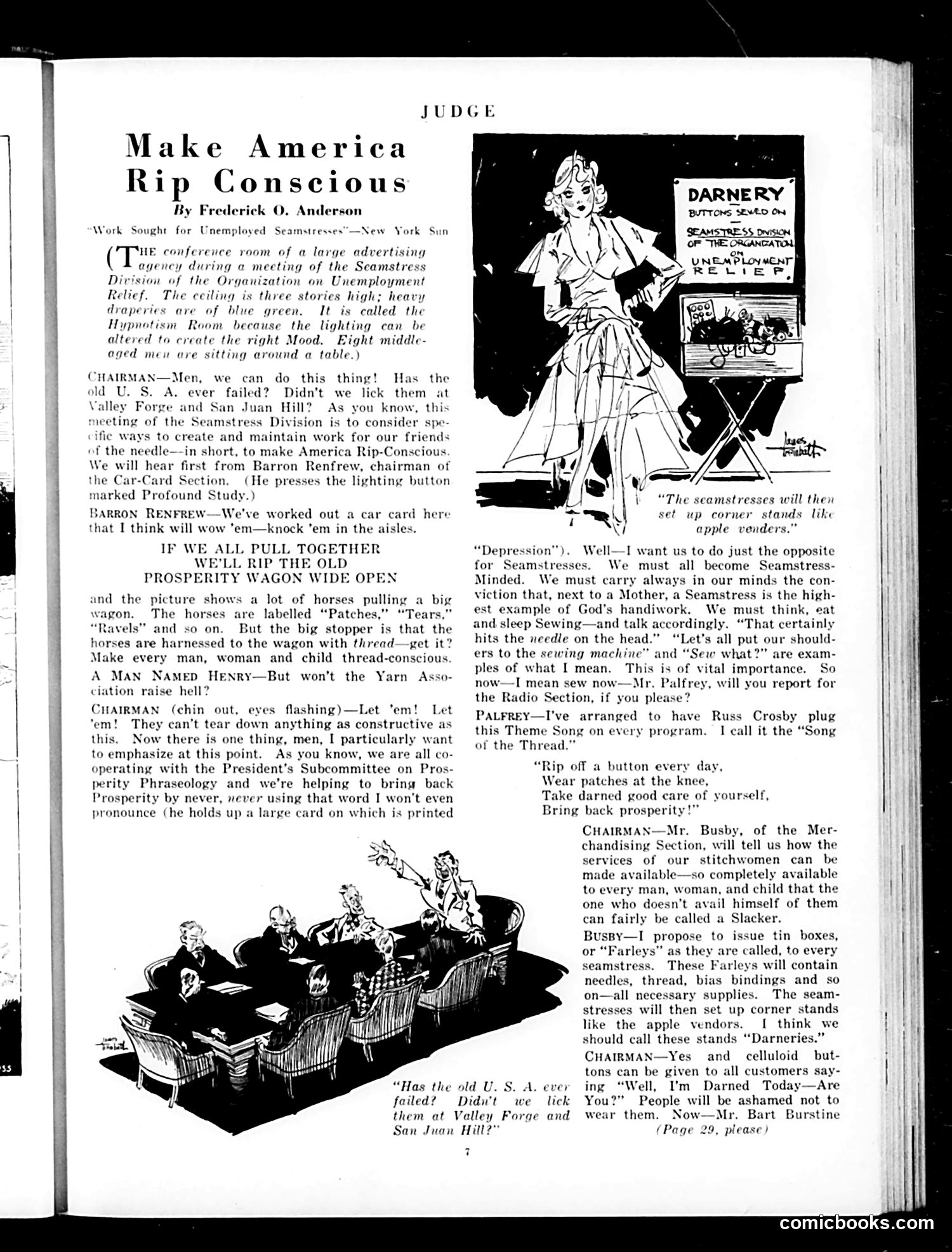
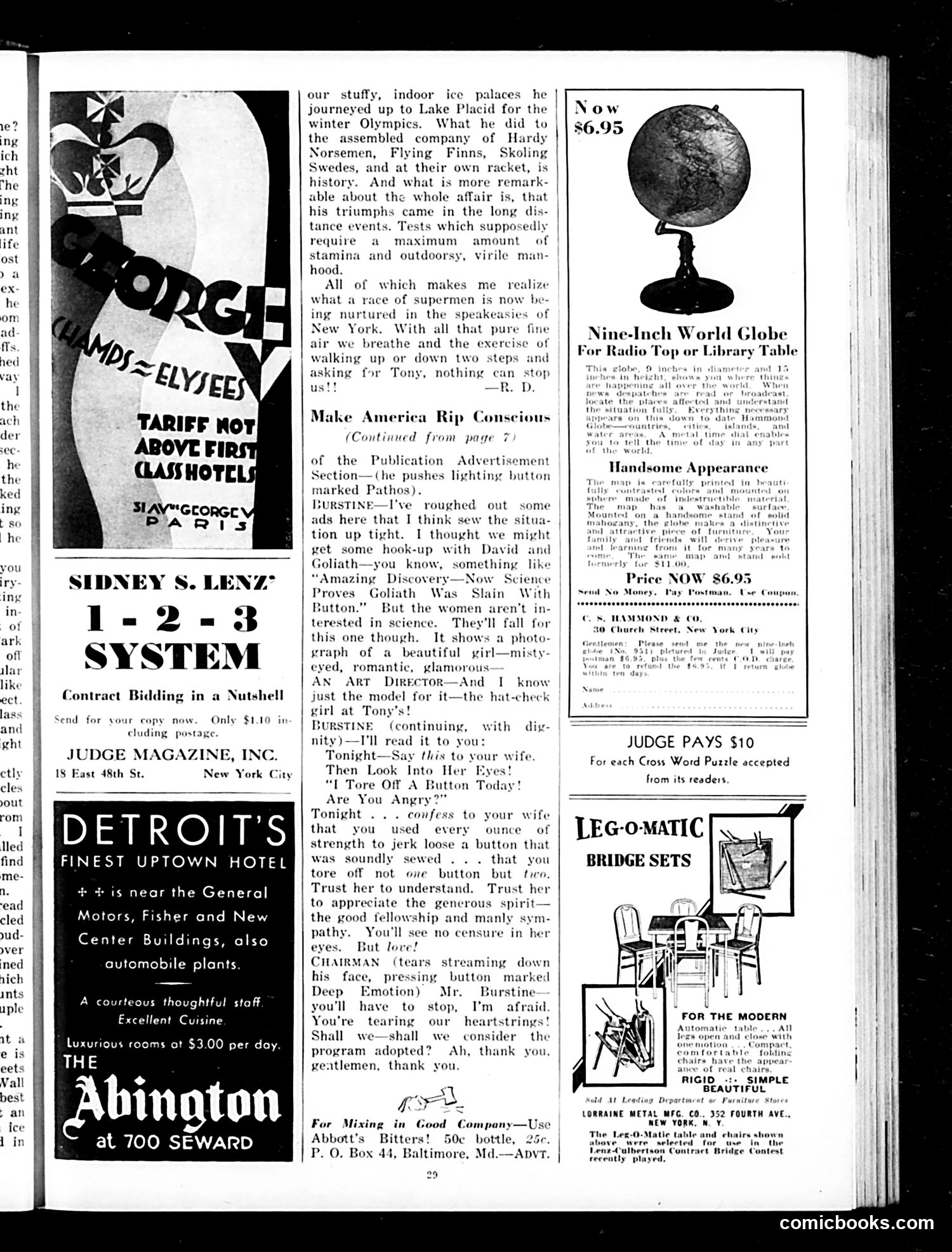
# "Make America Rip Conscious" This satirical piece mocks Depression-era government propaganda campaigns promoting consumer spending and optimism. An advertising agency's "Seamstress Division" develops marketing schemes to make Americans "rip-conscious"—deliberately damaging clothing to stimulate demand for seamstress services. The joke targets the absurdity of the "Prosperity Phraseology" subcommittee (a real government effort): executives propose slogans like "Sew what?" and "Let's put our shoulders to the sewing machine," while distributing "Darneries" (button/thread boxes) and shame-inducing buttons saying "I'm Darned Today—Are You?" The satire critiques both the government's euphemistic language avoidance (never saying "Depression") and the manufactured, artificial nature of recovery campaigns that expect propaganda alone to restore prosperity. The advertising industry itself appears foolish for participating in transparent manipulation.
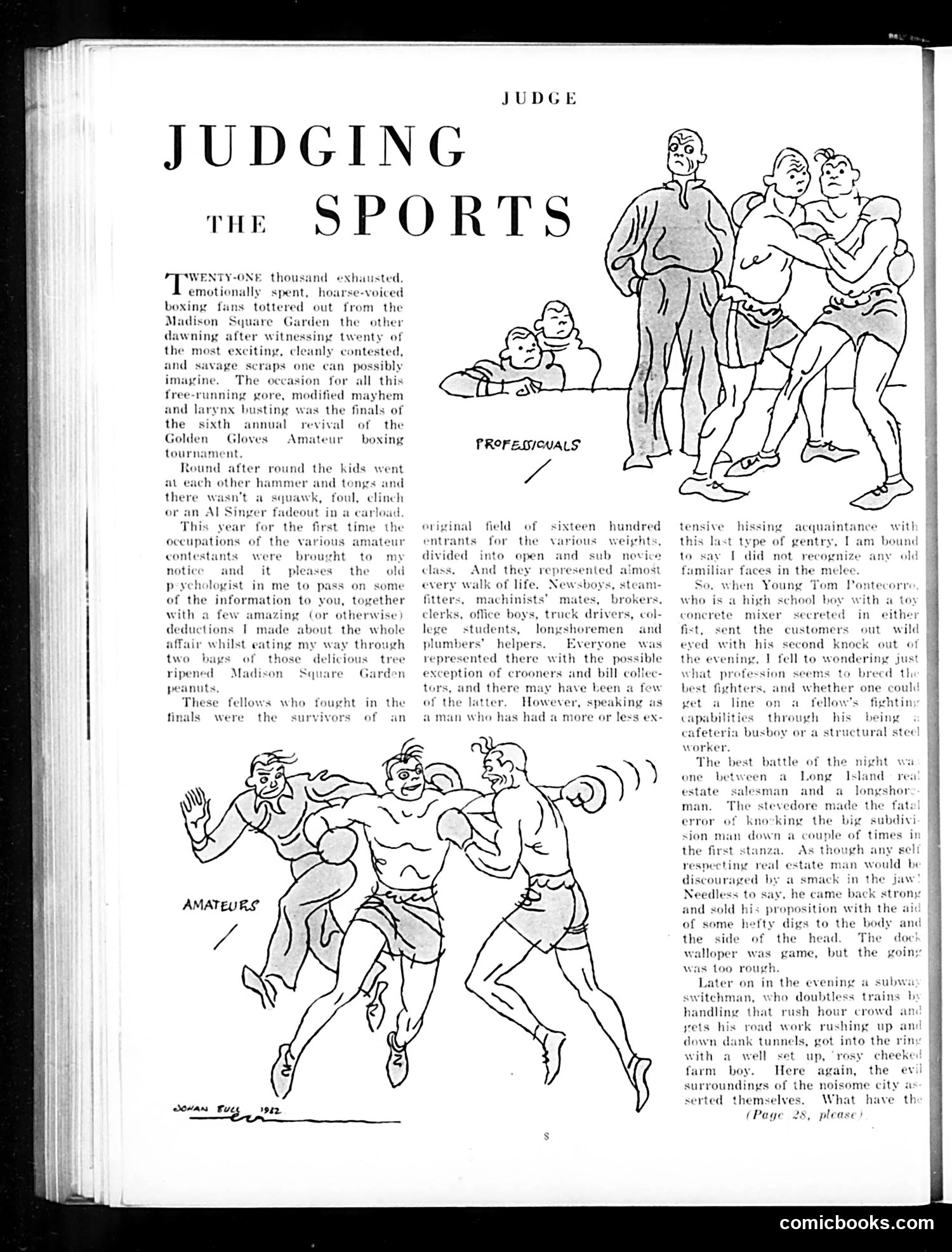
# Judging the Sports This article reviews the Golden Gloves Amateur Boxing Tournament finals at Madison Square Garden—the sixth annual revival. The author humorously analyzes amateur boxers by their day jobs, attempting to correlate their occupations with fighting ability. The accompanying cartoons illustrate two categories of fighters: "Professionals" (depicted as refined gentlemen) and "Amateurs" (shown as rough street fighters in active combat). The text describes specific matches, including one between a real estate salesman and a longshoreman, and another involving a subway switchman versus a farm boy. The satire's point: the author observes that working-class urban occupations—longshoremen, switchmen, concrete workers—produce tougher fighters than middle-class "professionals." City life apparently breeds superior combat capability. The piece mixes genuine sports reporting with tongue-in-cheek social commentary on class and urban toughness.
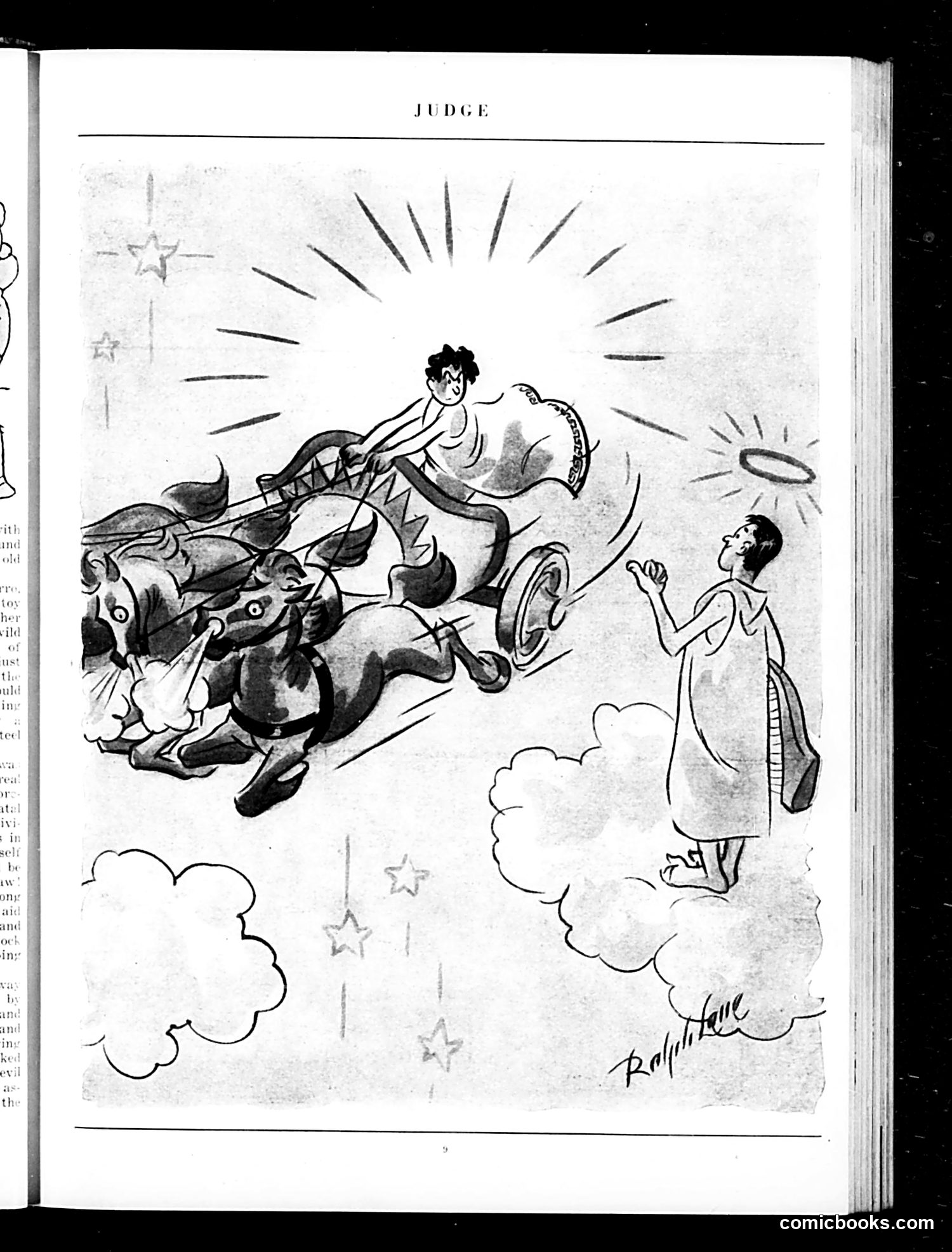
# Analysis of Judge Magazine Cartoon This appears to be a single cartoon titled "JUDGE" depicting a celestial scene. A figure rides a chariot pulled by winged horses across clouds and stars, with radiating light lines suggesting divine or heavenly authority. The rider appears to be a stern authority figure—possibly representing Justice or a judge themselves, given the page title. On the right, a smaller figure in classical robes stands on a cloud, gesturing upward in supplication or alarm toward the charging chariot. The cartoon likely satirizes the overwhelming power of judicial authority or critiques a specific court decision or judge's conduct. The cartoonist uses classical/mythological imagery to mock pomposity or suggest divine judgment is being abused. The signature reads "Rollyhine" or similar.
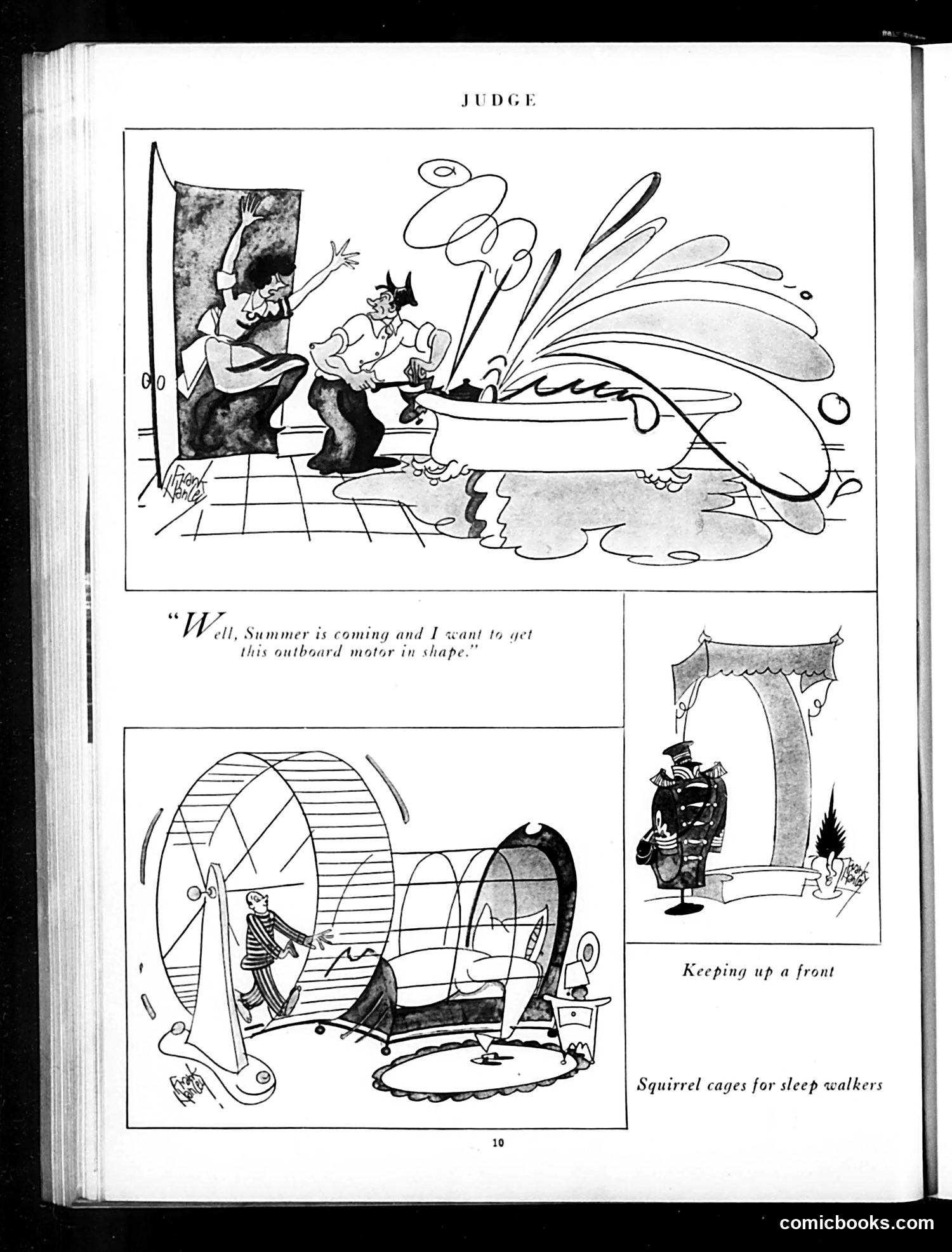
# Analysis This page from *Judge* magazine contains three separate comic panels satirizing domestic life and inventions. The top cartoon depicts a judge confronting someone about an outboard motor, with the caption "Well, Summer is coming and I want to get this outboard motor in shape." The humor likely derives from the absurdity of the situation—possibly the motor's poor condition or inappropriate use. The bottom two panels showcase humorous inventions: a "squirrel cage" contraption for sleepwalkers (a treadmill-like device to contain nocturnal wanderers) and "Keeping up a front" (depicting someone being hoisted up, perhaps satirizing maintaining appearances or social pretense). These are general-audience gag cartoons typical of *Judge's* satirical humor, poking fun at everyday situations, inventions, and human behavior rather than specific political figures.