A complete issue · 36 pages · 1932
Judge — January 16, 1932
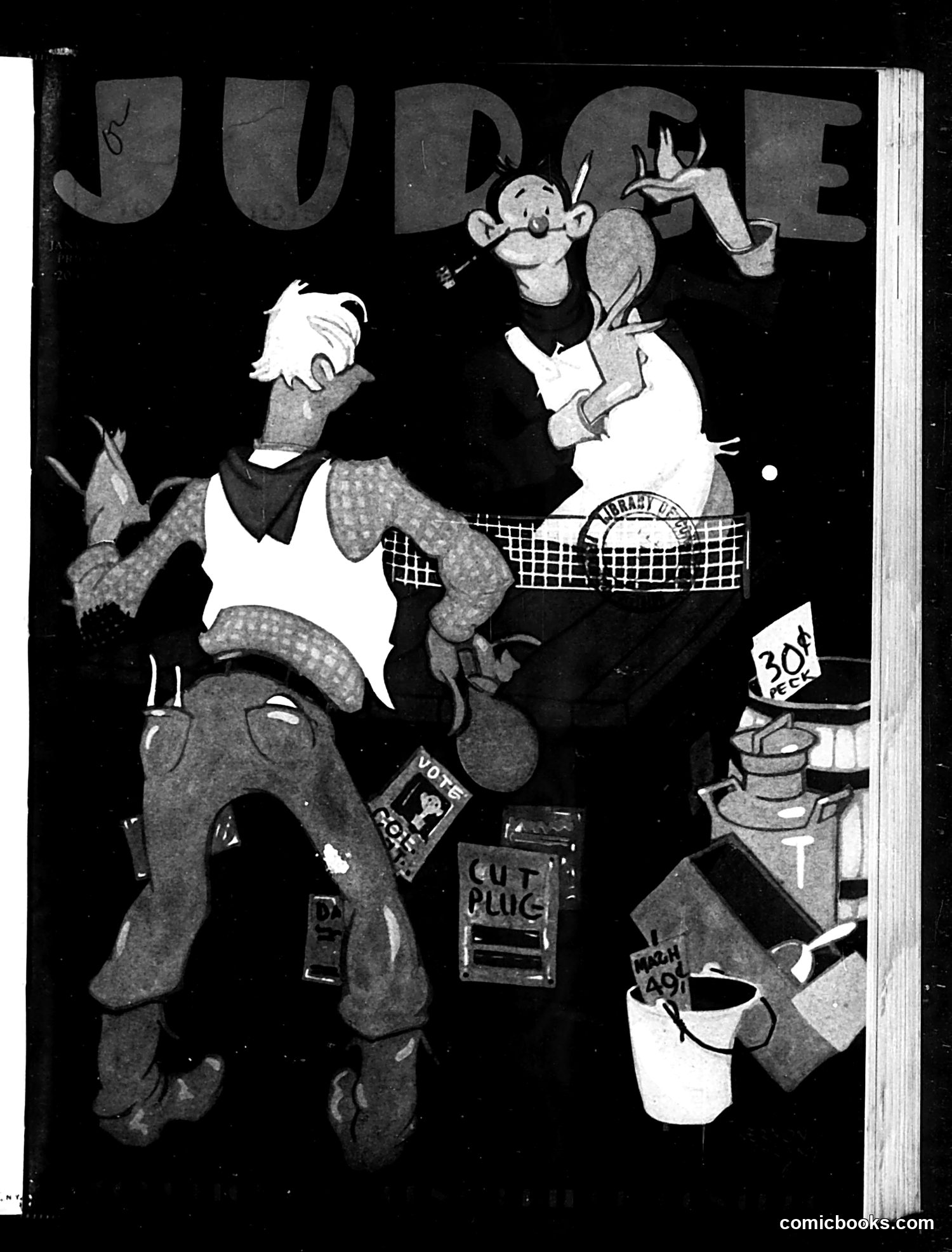
# Analysis of Judge Magazine Page This appears to be a June-dated cover featuring two cartoon characters playing tennis. The left figure wears a white sleeveless shirt; the right wears darker clothing and a hat labeled "BOB PECK." Various product boxes are scattered around them, including visible text reading "CUT PLUG" and "30¢ PECK." The satire likely references commercial products or brands of the era being personified as tennis players. The specific identities of the characters remain unclear without additional context, though the style suggests early-to-mid 20th century American comic art. The scattered commercial packaging suggests commentary on consumerism or advertising culture. The "BOB PECK" label and product placement indicate this may parody actual commercial figures or spokespeople known to contemporary Judge readers.
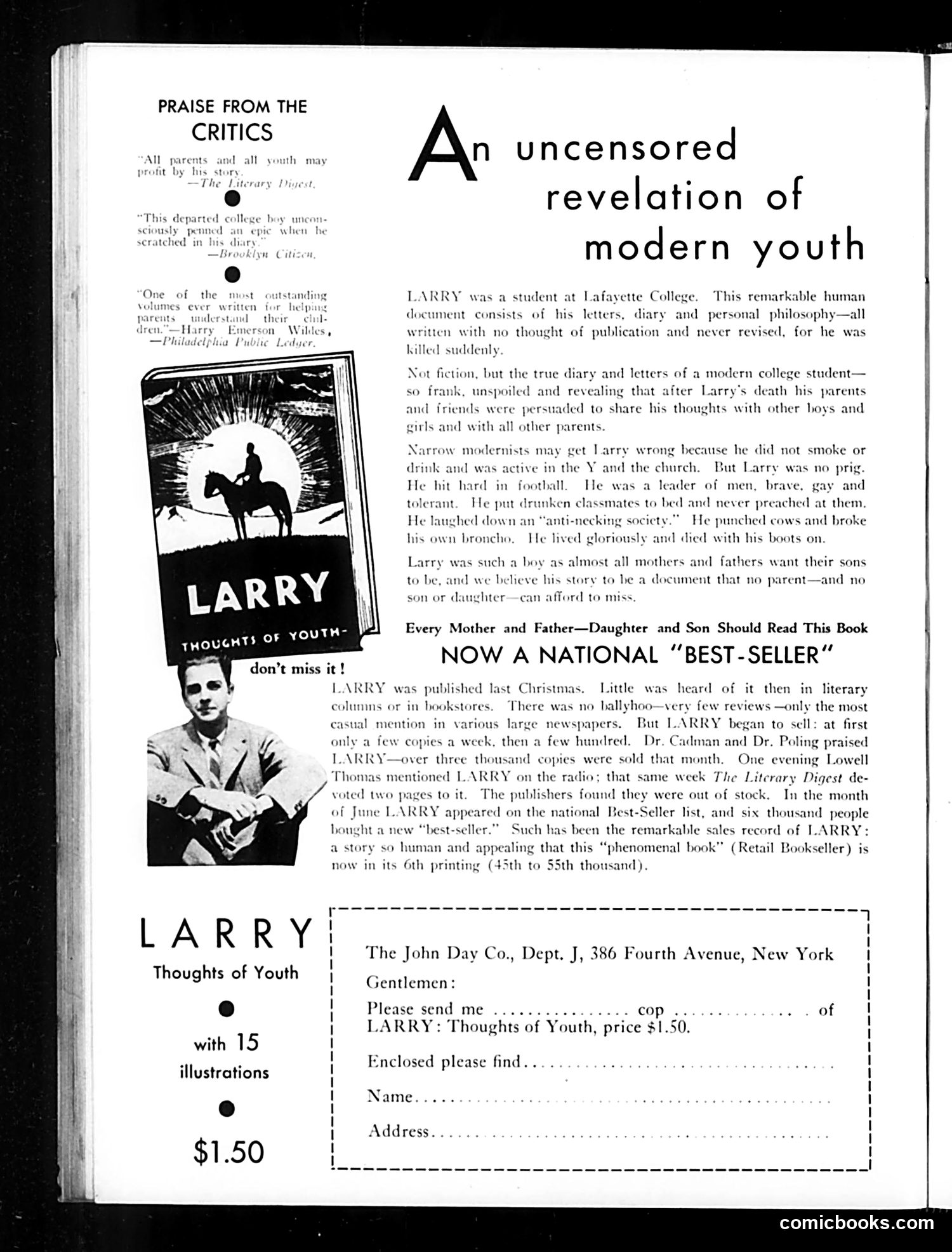
# Analysis: "LARRY: Thoughts of Youth" This page is primarily a **book advertisement** rather than editorial satire. It promotes "Larry: Thoughts of Youth," presented as an authentic diary of a deceased Lafayette College student—"not fiction, but the true diary and letters of a modern college student." The marketing copy emphasizes the book's frank, unfiltered content about college life, claiming it reveals truths parents need to understand about their sons. The appeal is moralistic: parents should read it to connect with youth culture. The silhouette illustration shows a young man on horseback against a sunrise—a romanticized image of idealistic youth. The $1.50 price and mail-order form suggest this was a commercially successful publication marketed to concerned parents seeking insight into collegiate behavior and values.
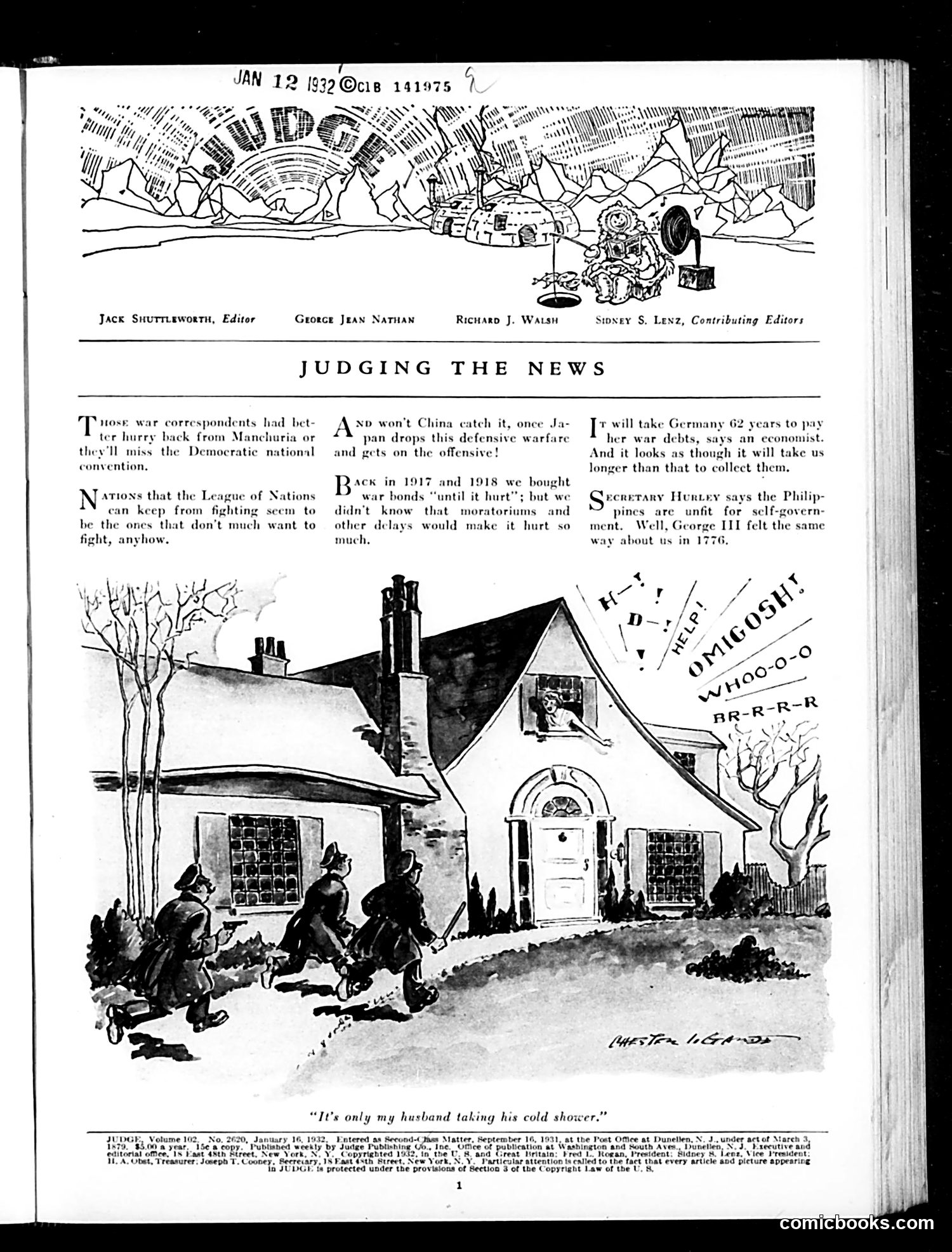
# Analysis of Judge Magazine Page (January 12, 1932) The main cartoon depicts a house with children playing outside while making noise ("WHOO-OO-OSH! BR-R-R-R"). The caption reads: "It's only my husband taking his cold shower." This satirizes the popular health fad of cold-water bathing, likely promoted during the Depression era as an inexpensive wellness practice. The joke contrasts the husband's vigorous shower sounds with the commotion outside, suggesting his bathing routine is as disruptive as children playing. The "Judging the News" section above offers brief editorial commentary on contemporary issues: war correspondents missing Democratic conventions, China's military situation, Germany's war debts, and Philippine self-governance—typical concerns of early 1932.
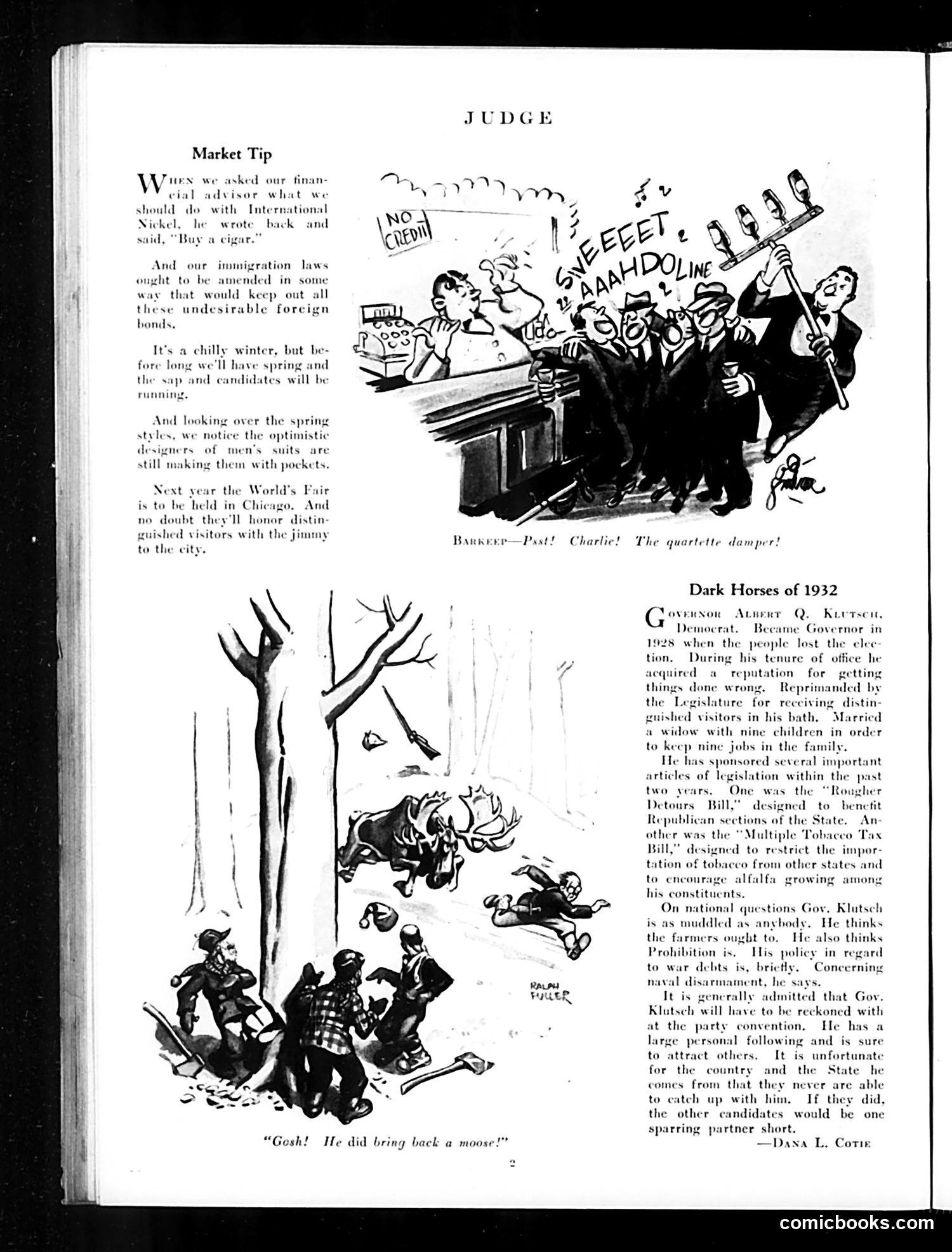
# Judge Magazine Page Analysis **Top Cartoon**: Depicts a chaotic barbershop scene where a quartet performs while a barber works. The "Market Tip" column references buying International Nickel stock and cigars—satirizing financial advice columns. The cartoon mocks how such tips circulate in everyday spaces like barbershops, where ordinary people gather investment gossip. **Bottom Cartoon & Article**: "Dark Horses of 1932" profiles Governor Albert Q. Klutsch (Democrat), discussing his controversial 1928 election loss and subsequent political positions on Prohibition, farm subsidies, and war debts. The accompanying illustration shows people huddled beneath dead trees—likely representing economic hardship of the Great Depression era. The satire questions whether Klutsch represents viable presidential material for 1932.
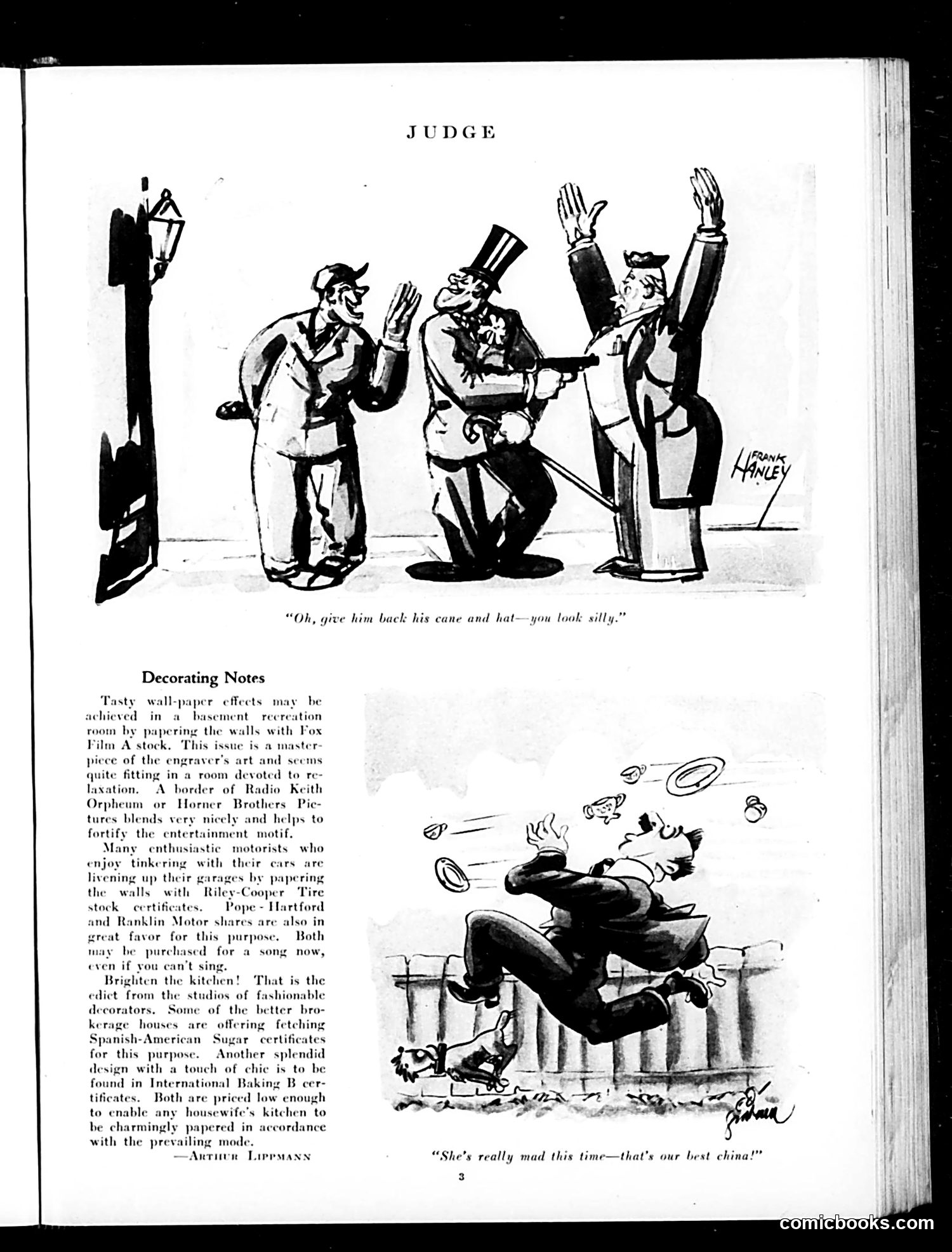
# Analysis: Judge Magazine Page **Top Cartoon ("Judge"):** This political cartoon depicts four men in formal dress around a judicial figure (center, wearing a top hat). The caption reads: "Oh, give him back his cane and hat—you look silly." The satire appears to mock the judicial system or a specific court proceeding, suggesting that authority figures are behaving absurdly or losing dignity. Without clearer context about the specific case or date, the exact targets remain unclear, but the joke centers on how the "judge" and his associates appear ridiculous through their actions. **Bottom Illustration:** An unrelated domestic humor cartoon showing a woman lying on furniture with dishes flying, captioned "She's really mad this time—that's our best china!" This is standard period domestic comedy material. **Lower Section:** "Decorating Notes" by Arthur Lippmann discusses wallpaper and home decoration trends, largely advertising content.
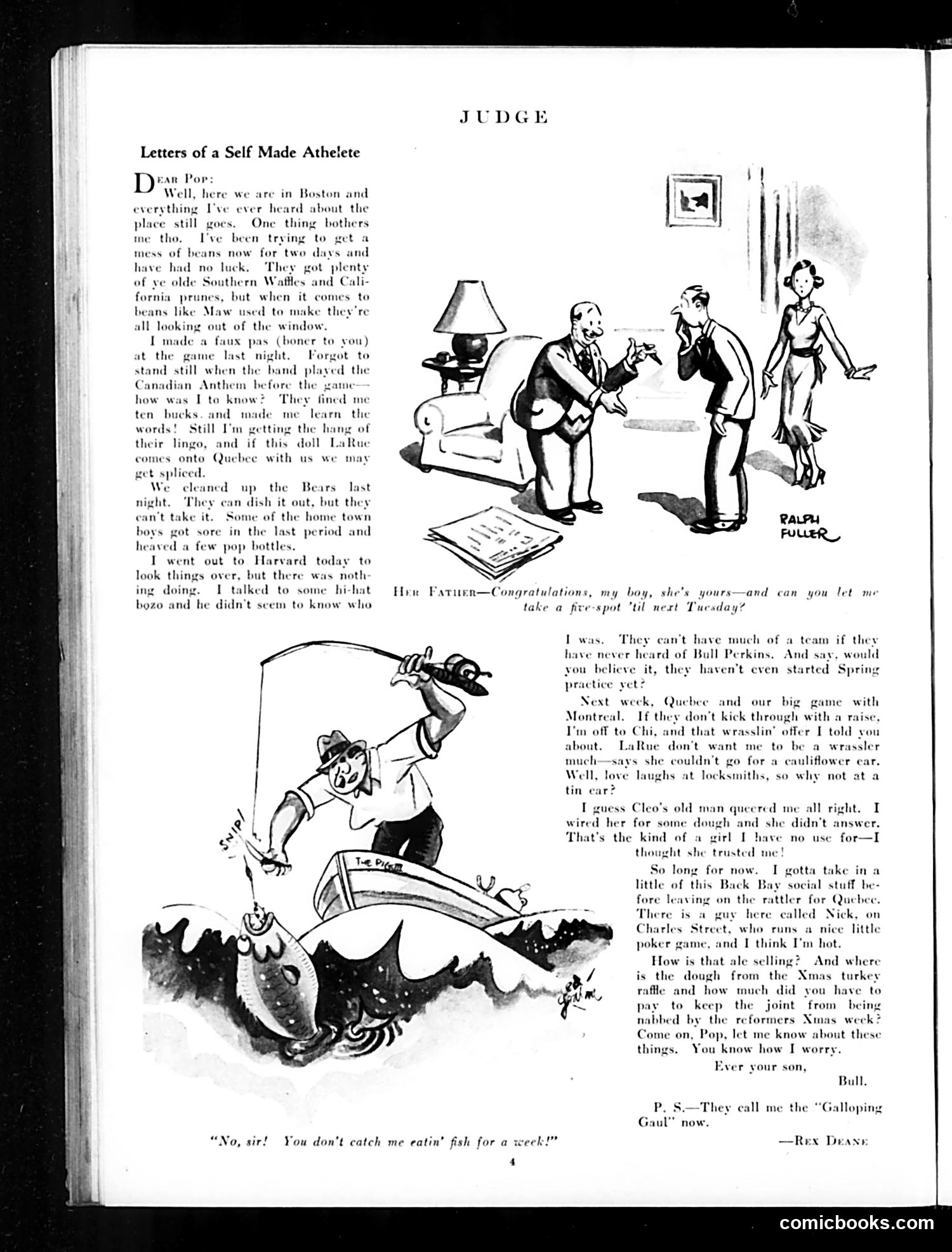
# Analysis of Judge Magazine Page This page contains "Letters of a Self Made Athlete," a humorous column by "Bull" to his father "Dan Pop" about Boston sports and social life. The cartoons illustrate athletic mishaps: the upper drawing shows a man being congratulated by his father while others observe awkwardly—likely depicting social discomfort around dating or romance. The lower cartoon shows a figure dramatically falling from what appears to be a boat, with the caption "No, sir! You don't catch me eatin' fish for a week!"—a joke about seasickness or avoiding fish after a boating incident. The letters reference contemporary Boston sports (Bears, Harvard athletics, Quebec games), social venues, and dating culture. The tone is lighthearted mockery of a young man's athletic ambitions and romantic fumbles. Without specific dating, the exact sporting events referenced remain unclear.
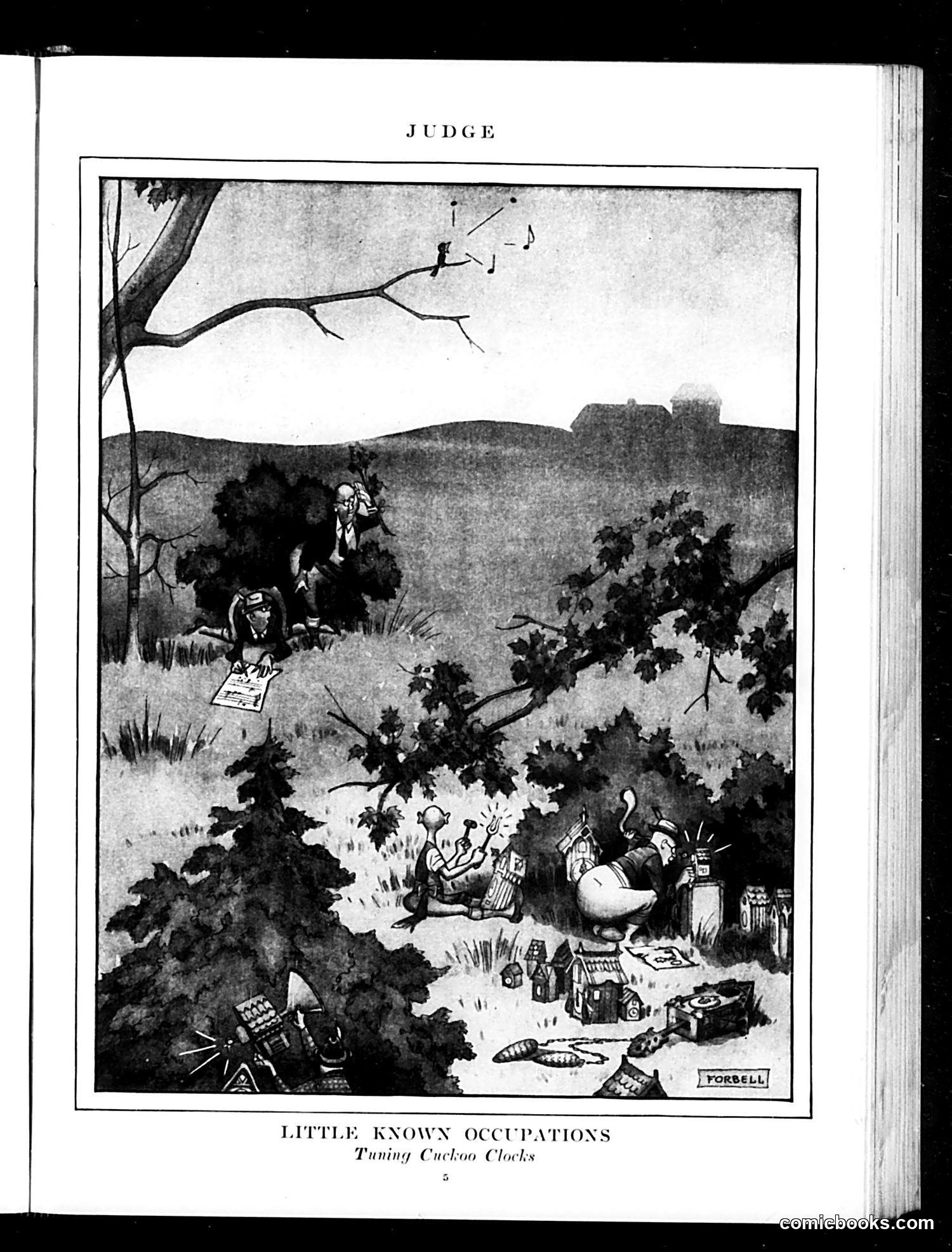
# Analysis of "Little Known Occupations: Tuning Cuckoo Clocks" This cartoon satirizes an absurdly obscure profession. The title suggests "tuning cuckoo clocks" as a legitimate occupation, when it's actually ridiculous—cuckoo clocks don't require tuning like musical instruments. The scene depicts whimsical characters in a pastoral setting apparently engaged in this nonsensical task. One figure appears to be a uniformed official or judge (given the page header "JUDGE"), observing or supervising the activity. The humor lies in the contrast between presenting this as a serious "little known occupation" while the image's fantastical quality reveals the absurdity. It's satirizing pretentious or invented professions, or possibly mocking bureaucratic oversight of trivial matters. The artist is Forbell (signature visible).
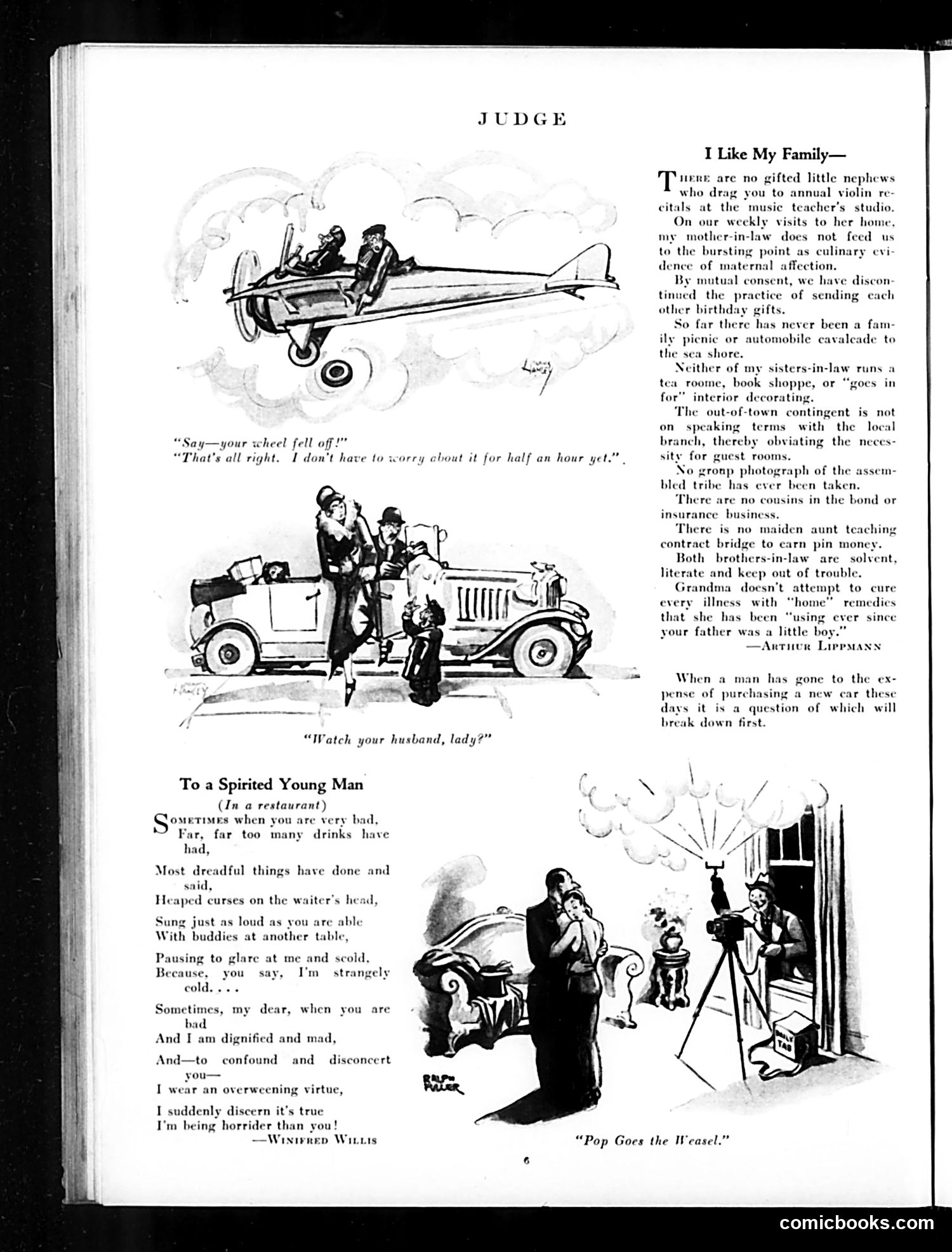
# Analysis This page from Judge magazine contains two main editorial cartoons with accompanying humorous commentary: **"I Like My Family"** (top): A prose piece by Arthur Lippmann satirizing upper-middle-class family life by listing what the narrator *doesn't* do—no lavish entertaining, group photos, or conspicuous consumption. The accompanying car illustrations mock marital tensions and domestic mishaps, suggesting the humor lies in recognizing these everyday family frustrations. **"To a Spirited Young Man"** (bottom): A poem by Winfred Willis addressing a drunk man in a restaurant, depicting the social embarrassment and moral disapproval accompanying public intoxication. The illustration shows a photographer documenting the scene, suggesting scandal. Both pieces target genteel society's pretensions and behavioral anxieties during the Jazz Age, using relatable domestic and social situations for satire.
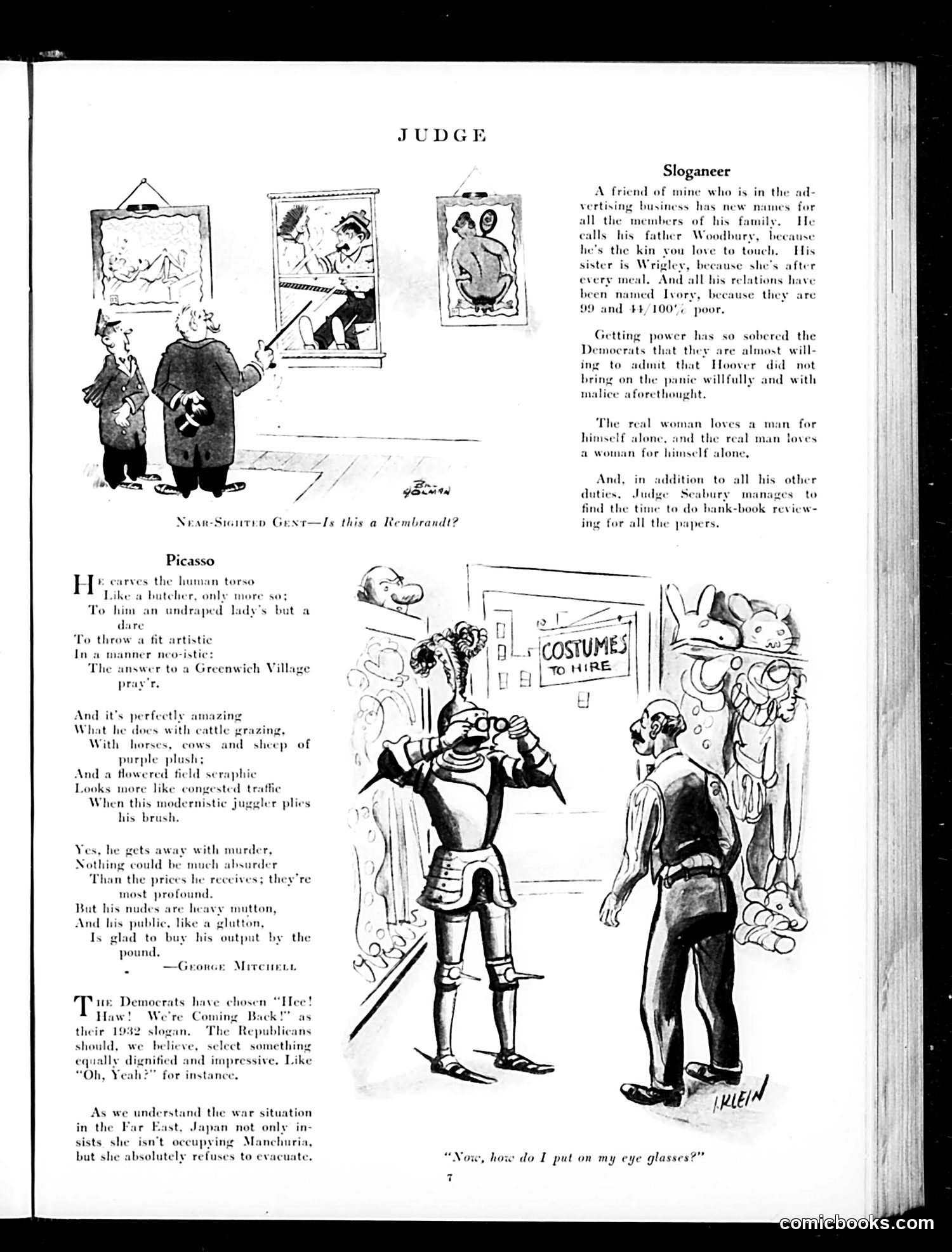
# Analysis This page from *Judge* contains three satirical pieces: 1. **"Near-Sighted Gent—Is this a Rembrandt?"** A cartoon mocking two figures examining abstract art, likely critiquing modern art appreciation among wealthy collectors. 2. **"Picasso"** A poem by George Mitchell attacking Pablo Picasso's cubist style as incomprehensible and overpriced. The satire claims Picasso "carves the human torso / Like a butcher" and that his work sells by the pound despite being "absurd." This reflects 1930s American skepticism toward modernist art movements. 3. **Political/social commentary snippets** including jokes about Democrats' "Hee Haw, We're Coming Back" campaign slogan, references to Japan's refusal to evacuate Manchuria (the 1931-1932 invasion), advertising-based humor about brand names, and a dig at Judge Seabury (likely the corruption investigator). The overall tone is conservative, mocking both avant-garde art and Democratic politics during the Depression era.
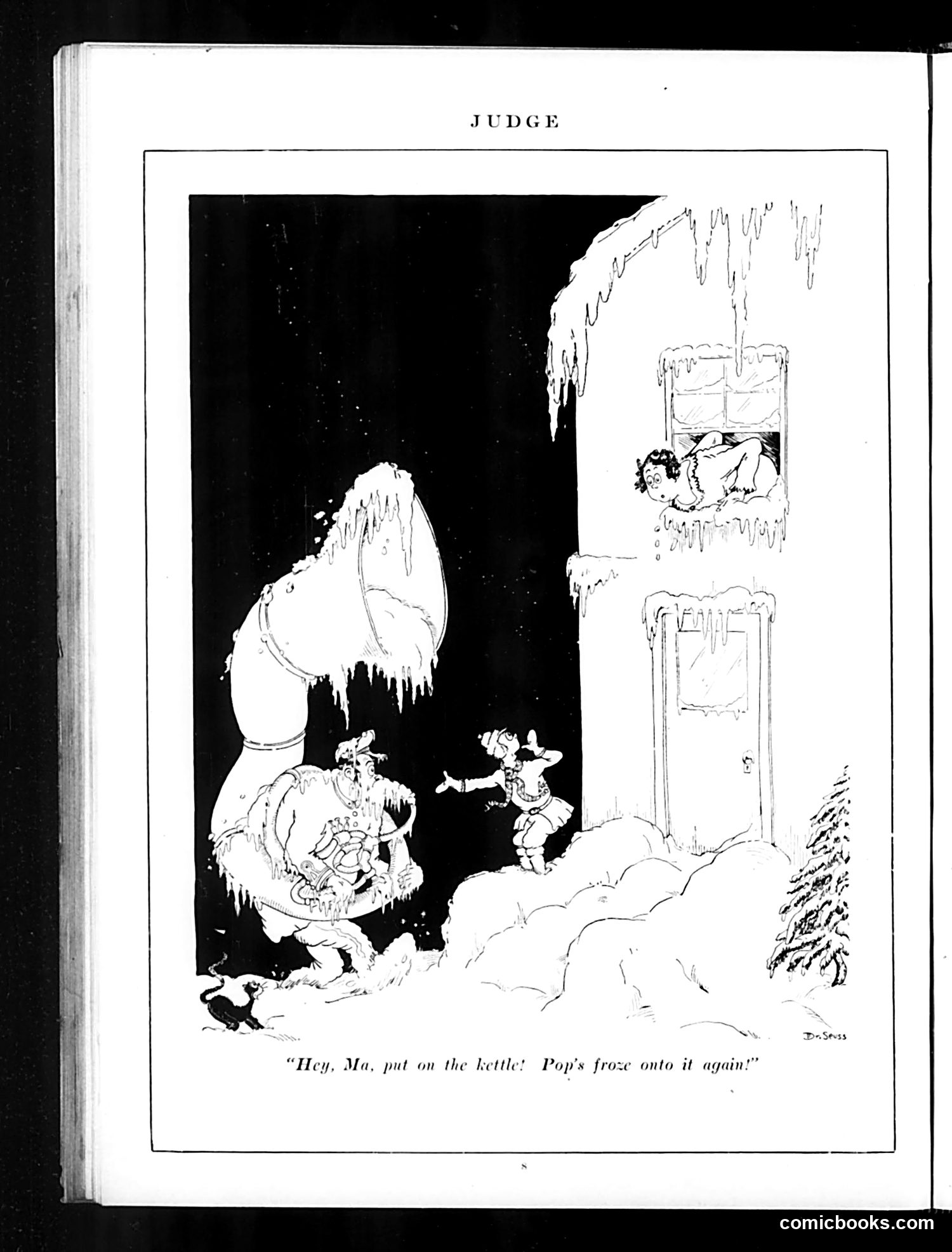
# Cartoon Analysis This cartoon depicts a winter domestic scene with satirical humor about male alcoholism and freezing temperatures. A large figure (appearing to be the father/"Pop") has frozen solid to an outdoor kettle or water container, while a child calls to their mother inside the house. The exaggerated icicles covering the man suggest prolonged exposure to cold. The joke appears to target the father's drinking habits—the implication being that he's so intoxicated he's unaware of freezing solid to the kettle. The phrase "froze onto it again" suggests this is a recurring problem, satirizing both male drunkenness and parental neglect during winter. The child's casual tone about the disaster adds dark comedic effect typical of Judge magazine's biting social commentary on family life and vice.
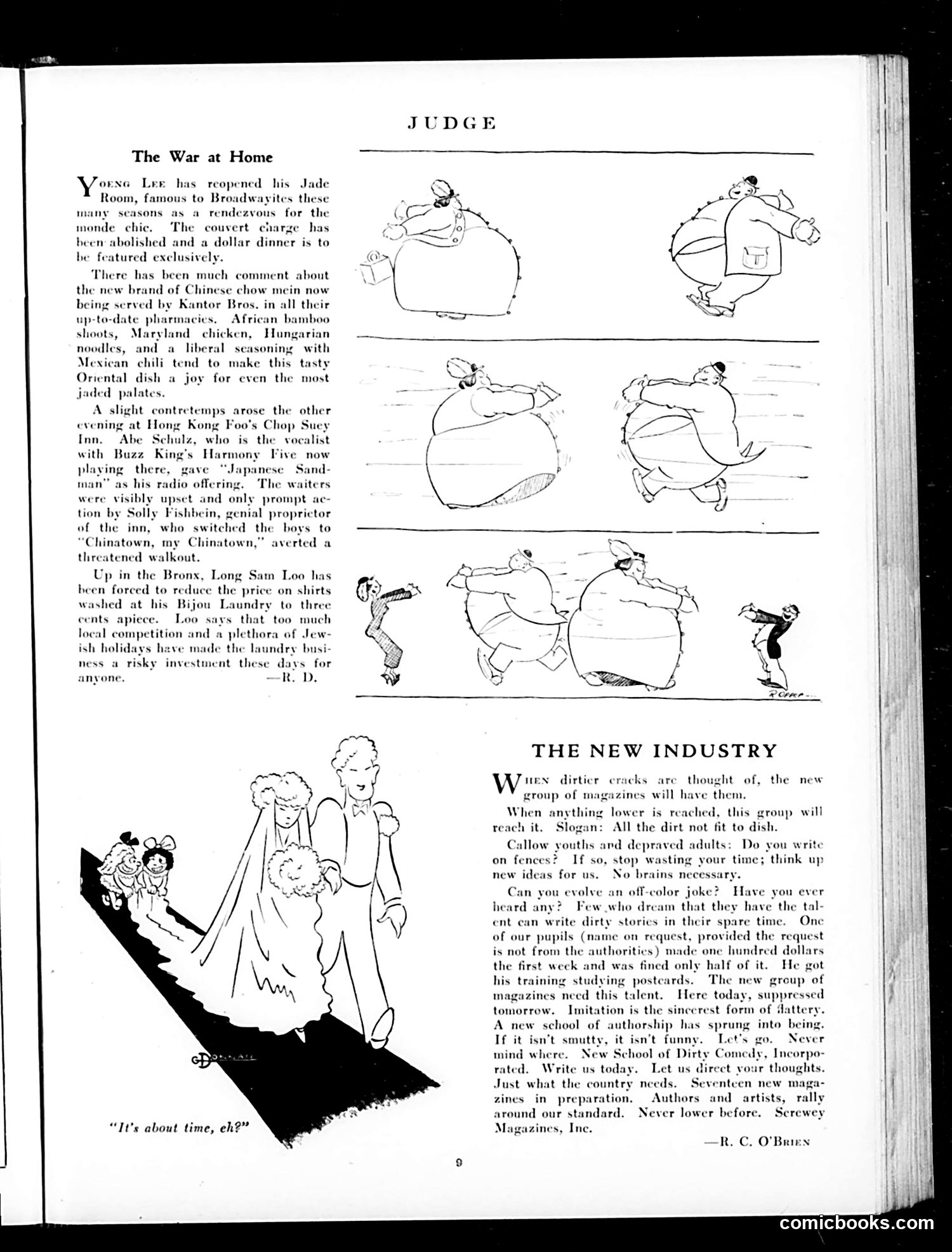
# "The War at Home" and "The New Industry" **"The War at Home"** consists of humorous vignettes about New York's Chinese restaurant and laundry businesses. The sketches satirize ethnic businesses during what appears to be the 1920s: Young Lee's upscale Jade Room, exotic chow mein fusion at pharmacies, a confrontation at Hong Kong Foo's Chop Suey Inn (where a vocalist upset waiters), and Long Sam Loo's struggling laundry facing price competition and losses from Jewish holidays. **"The New Industry"** is a satirical advertisement for a fictional "School of Dirty Comedy, Incorporated." It mocks the proliferation of low-brow magazines by recruiting writers of crude, obscene material—explicitly soliciting "off-color jokes" and "dirty stories." The satire's point: this new magazine group promises to publish increasingly smutty content with a cynical slogan ("All the dirt not fit to dish"). The illustration shows a woman saying "It's about time, eh?"—suggesting public complaint about moral standards. Together, the page critiques both immigrant businesses and declining journalistic standards.
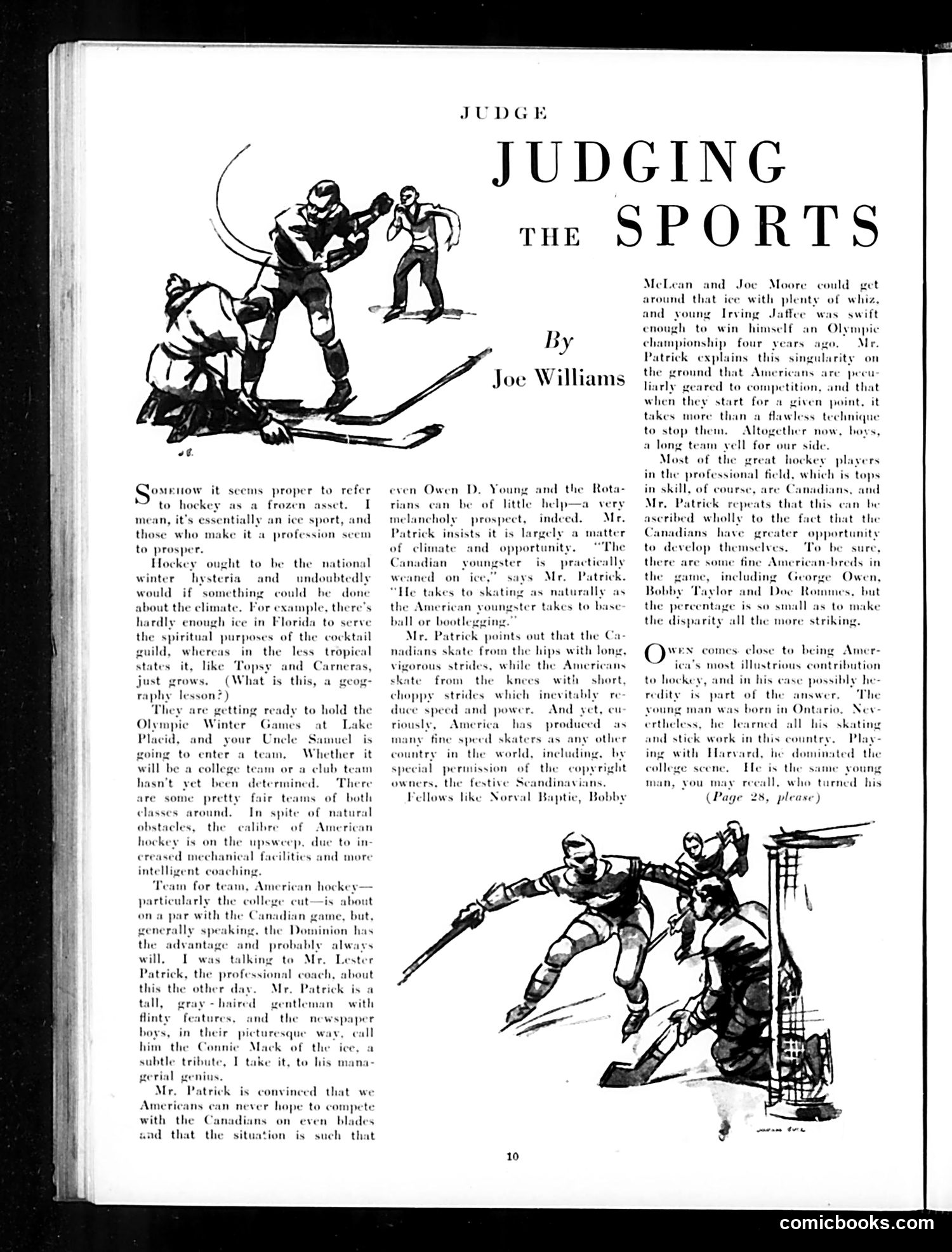
# "Judging the Sports" by Joe Williams This article discusses American versus Canadian hockey superiority ahead of the 1932 Winter Olympics at Lake Placid. The author interviews Lester Patrick, a prominent professional hockey coach (called "the Connie Mack of the ice"), who argues Americans can never match Canadians because Canadian children are "practically weaned on ice" and skate from the hips with superior technique, while Americans skate from the knees with less natural power. The satire targets American sporting pride: despite producing Olympic speed skaters and competitive athletes, America's hockey remains inferior due to climate and culture—Canadians simply have better conditions for developing the sport. The piece gently mocks this disparity while praising figures like Irving Jaffee and Oren (likely Frank Orem), exceptional American skaters who succeeded despite systemic disadvantages. The overall tone is wry acceptance that geography, not talent, determines hockey dominance.