
Judge, 1932-01-16 · page 22 of 36
Judge — January 16, 1932 — page 22: what you’re looking at
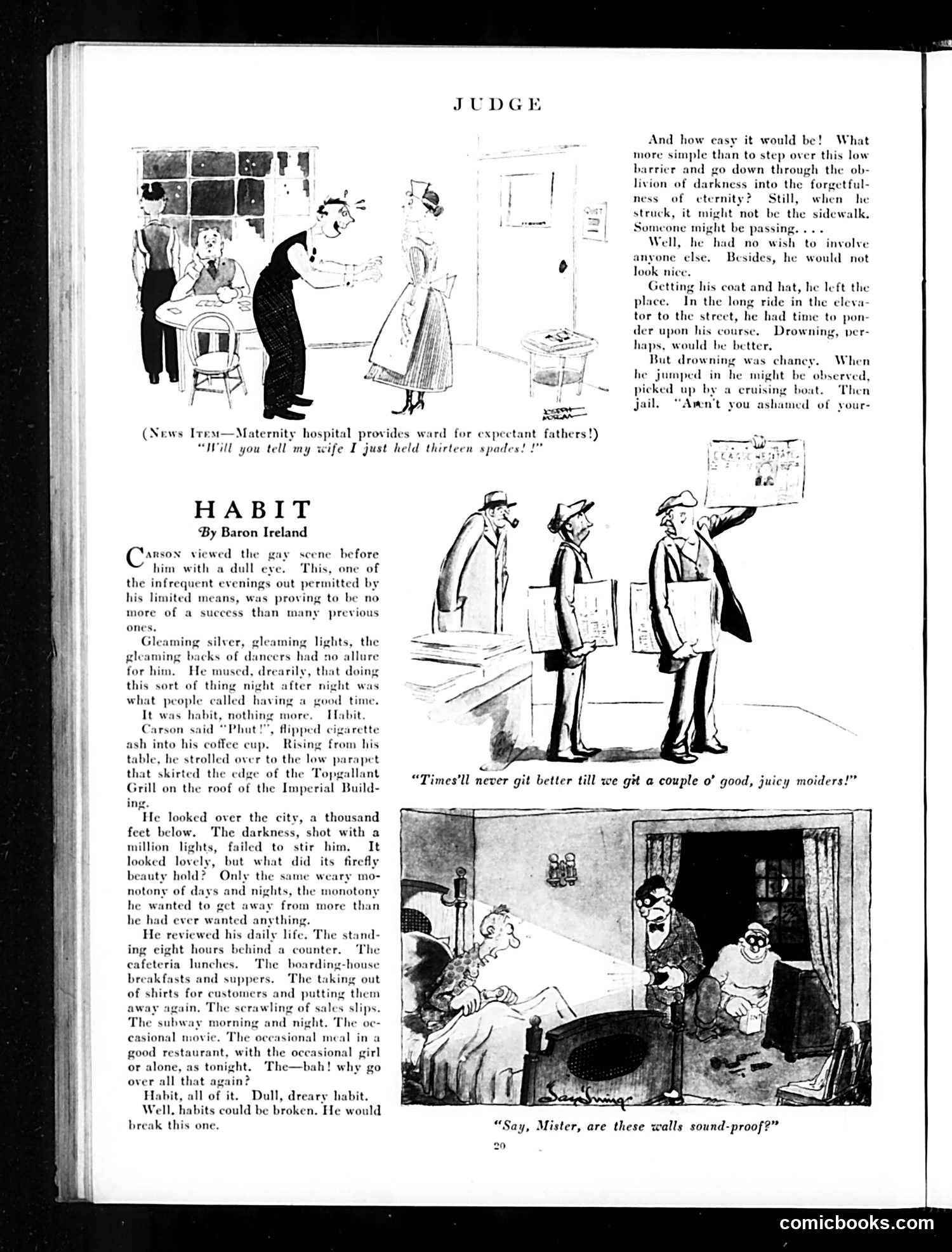
A restored page from Judge, 1932-01-16. Page through the whole issue in the reader above.
📄 Transcribed text from this page (OCR, searchable)
Machine-transcribed from the original scan — historical spelling and the odd misread are preserved.
JUDGE And how easy it would be! What more simple than to step over this low barrier and go down through the ob- livion darkness into the forgetful- ness of eternity? Still, when he struck, it might not be the sidewalk. Someone might be passing. ... Well, he had no wish to involve anyone else, Besides, he would not look nic Getti tis coat and hat, he left the place. In the long ride in the eleva tor to the street, he had time to pon- der upon his course. Drowning, per- haps, would be better. But drowning was char When he jumped in he might be observed, picked up by a cruising boat. Then jail. “Aven't you ashamed of your- (News Irem—Maternity hospital provides ward for expectant fathers!) “Will you tell my wife I just held thirteen spades! !" HABIT ‘By Baron Ireland Cars viewed the gay’ scene before him with a dull eye. ‘This, one of the infrequent evenings out permitted by his limited means, was proving to be no more of a success than many previous ones. Gleaming silver, gleaming lights, the gleaming backs of dancers had no allure for him. He mused, drearily, that doing this sort of thing night after night was what people called having a good time. It was habit, nothing more. Habit. Carson said “Phat!", flipped cigarette ash into his coffee cup. Rising from his table, he strolled over to the low parapet that skirted the edge of the Topgallant Grill on the roof of the Imperial Build- ing. He looked over the city, a thousand feet below. The darkness, shot with a million lights, failed to stir him. It looked lovely, but what did its firefly beauty hold? Only the same weary mo- notony of days and nights, the monot he wanted to get away from more than he had ever wanted anything. He reviewed his daily life. The stand- ing eight hours behind a counter. The cafeteria lunches. The boarding-house breakfasts and suppers. The taking out of shirts for customers and putting them away again. The scrawling of sales slips. The subway morning and night. The oc- casional movie. The oceasional meal in a good restaurant, with the occasional girl or alone, as tonight. The—bah! why go over all that agai Habit, all of it. Dull, dreary habit. Well. habits could be broken. He would break this one. “Say, Mister, are these walls sound-proof?” comicbooks.com