
Judge, 1932-01-16 · page 8 of 36
Judge — January 16, 1932 — page 8: what you’re looking at
What you’re looking at
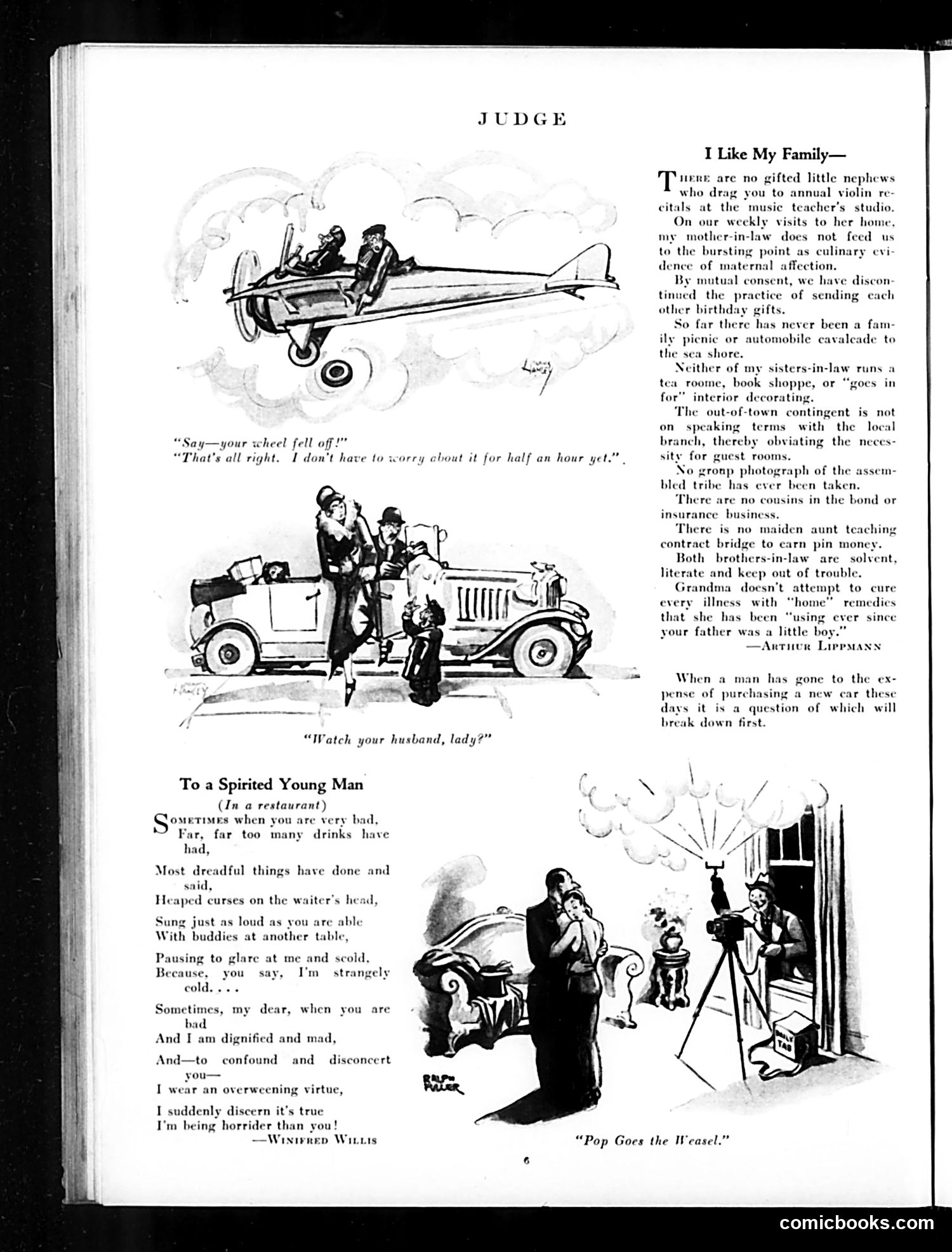
# Analysis This page from Judge magazine contains two main editorial cartoons with accompanying humorous commentary: **"I Like My Family"** (top): A prose piece by Arthur Lippmann satirizing upper-middle-class family life by listing what the narrator *doesn't* do—no lavish entertaining, group photos, or conspicuous consumption. The accompanying car illustrations mock marital tensions and domestic mishaps, suggesting the humor lies in recognizing these everyday family frustrations. **"To a Spirited Young Man"** (bottom): A poem by Winfred Willis addressing a drunk man in a restaurant, depicting the social embarrassment and moral disapproval accompanying public intoxication. The illustration shows a photographer documenting the scene, suggesting scandal. Both pieces target genteel society's pretensions and behavioral anxieties during the Jazz Age, using relatable domestic and social situations for satire.
📄 Transcribed text from this page (OCR, searchable)
Machine-transcribed from the original scan — historical spelling and the odd misread are preserved.
“Say—your wheel fell off!” hat’s all right. 1 don't have to x JUDGE orry about it for half an hour yet.” , “Watch your husband, lady?” To a Spirited Young Man (In a restaurant) Goerntes when you are very bad, Far, far too many drinks have had, Most dreadful things have done and said, Heaped curses on the waiter’s head, Sung just as loud as you are able With buddies at another table, Pausing to glare at me and scold Because, you say, I'm strang cold... Sometimes, my dear, when you are bad And I am dignified and mad, And—to you— I wear a confound and disconcert overweening virtue, I suddenly discern it's true I'm being horrider than you! —Winirrep Wittis I Like My Family— iene are no gifted little nephews who drag you to annual violin re- citals at the music teacher's studio. On our weekly visits to her home, my mother-in-law does not feed us to the bursting point as culinary evi dence of maternal affection. By mutual consent, we have discon- tinued the practice of sending each other birthday gifts. So far there has never been a fam- ily picnic or automobile cavalcade to the sea shore, Neither of my sisters-in-l tea roome, book shoppe, or for” interior decorating. The out-of-town contingent is not on spea' terms with the local branch, thereby obviating the neces- sity for guest rooms. No gronp photograph of the assem- bled tribe has ever been taken. There are no cousins in the bond or insurance business. y runs a es in There is no maiden aunt teaching contract bridge to earn pin moni Both brothers-in-law are solvent, d keep out of trouble. ndma doesn’t attempt to cure illness with “home’ remedies that’ she has been “using ever since your father was a little boy —Antuvr Lireaann every When a man has gone to the ex- pense of purchasing a new car these days it is a question of which will break down first. “Pop Goes the Weasel.” comicbooks.com