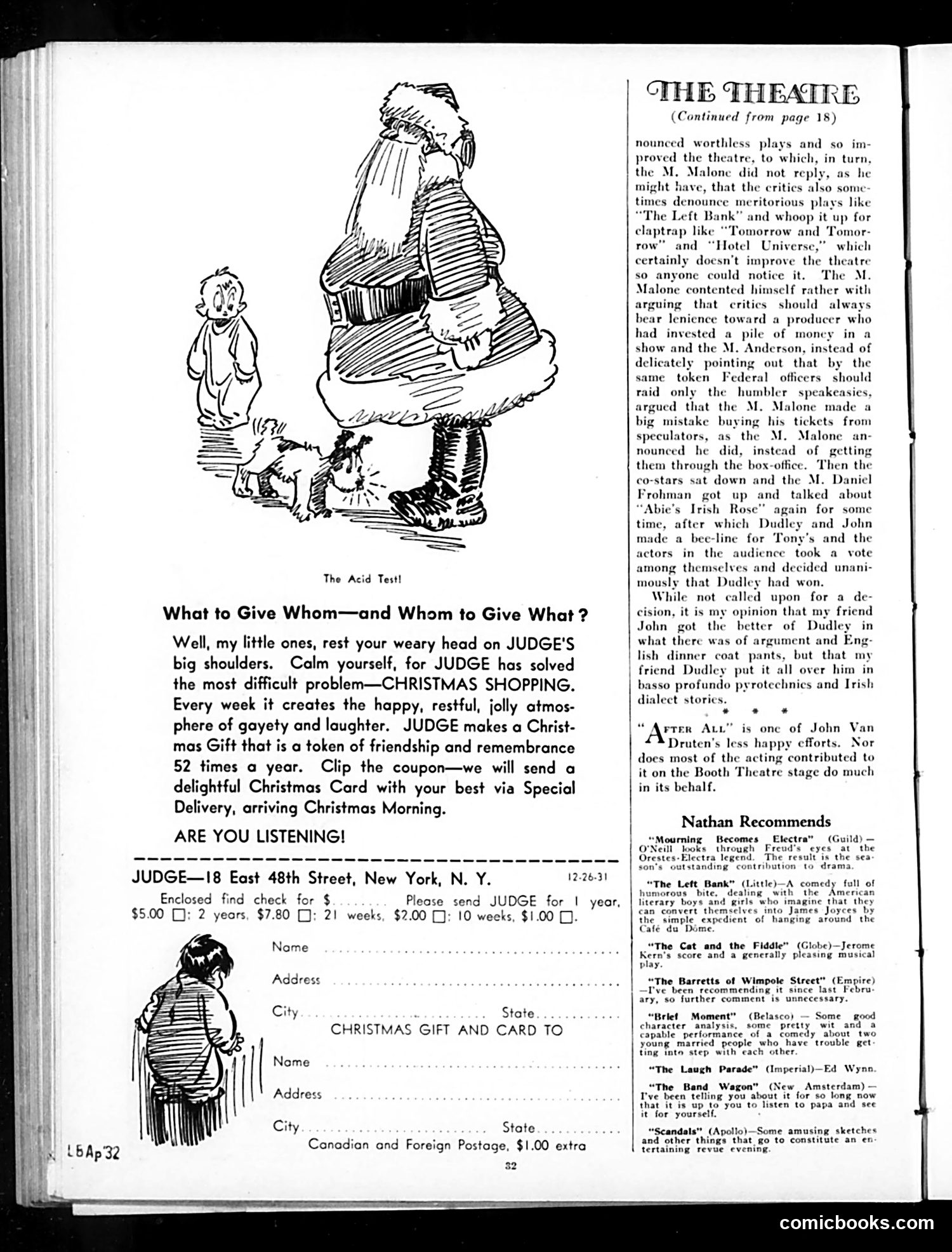
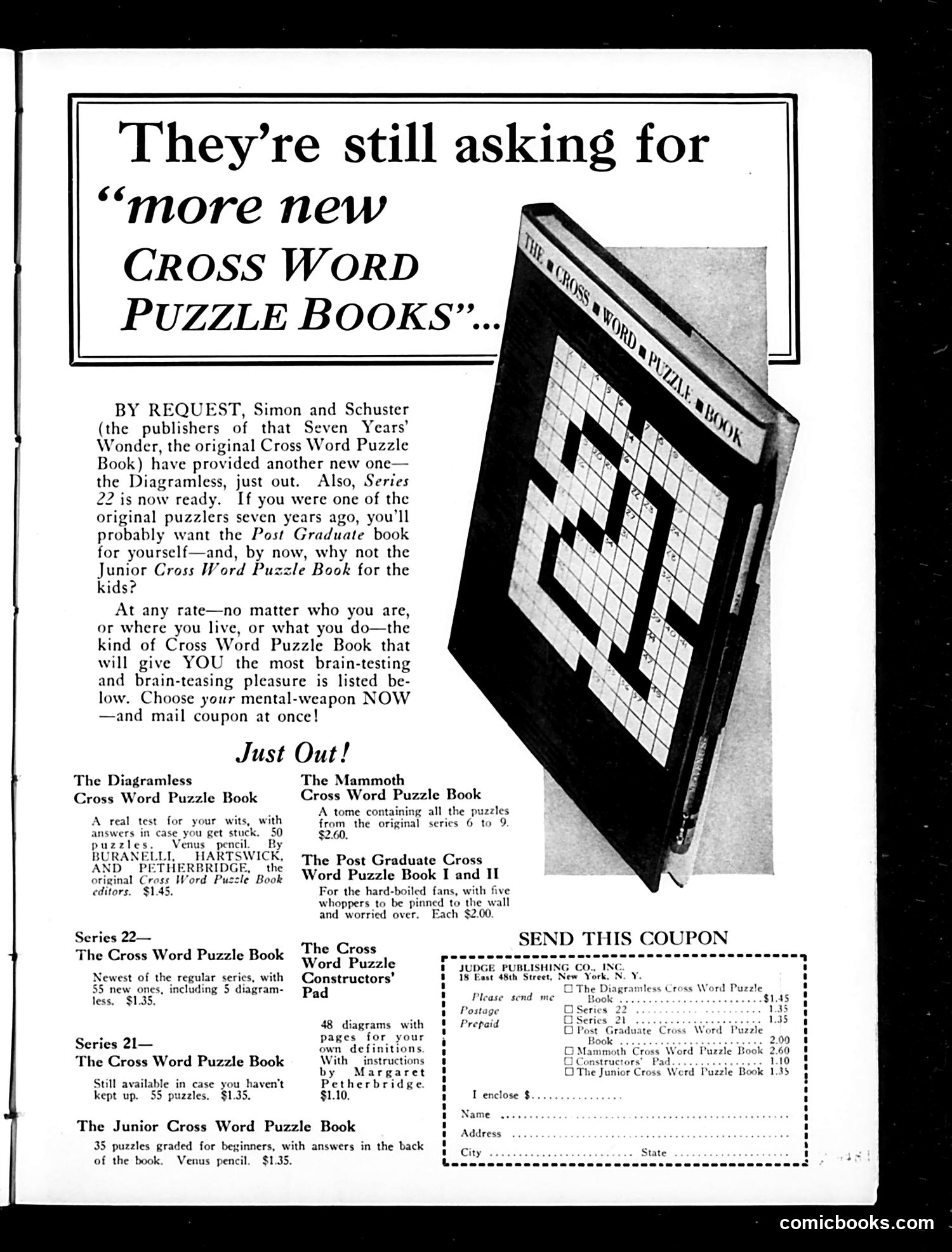
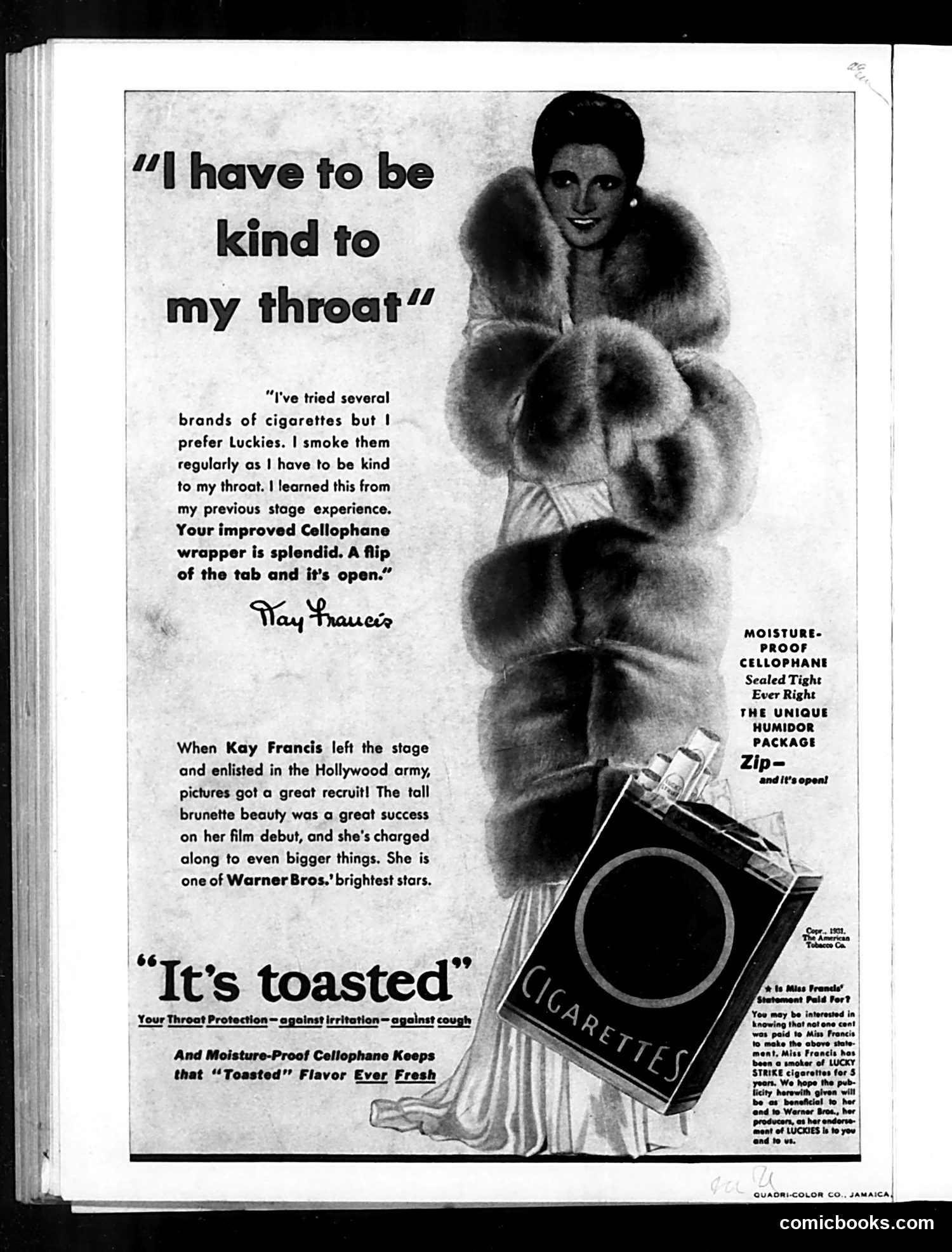
A complete issue · 37 pages · 1931
Judge — December 26, 1931
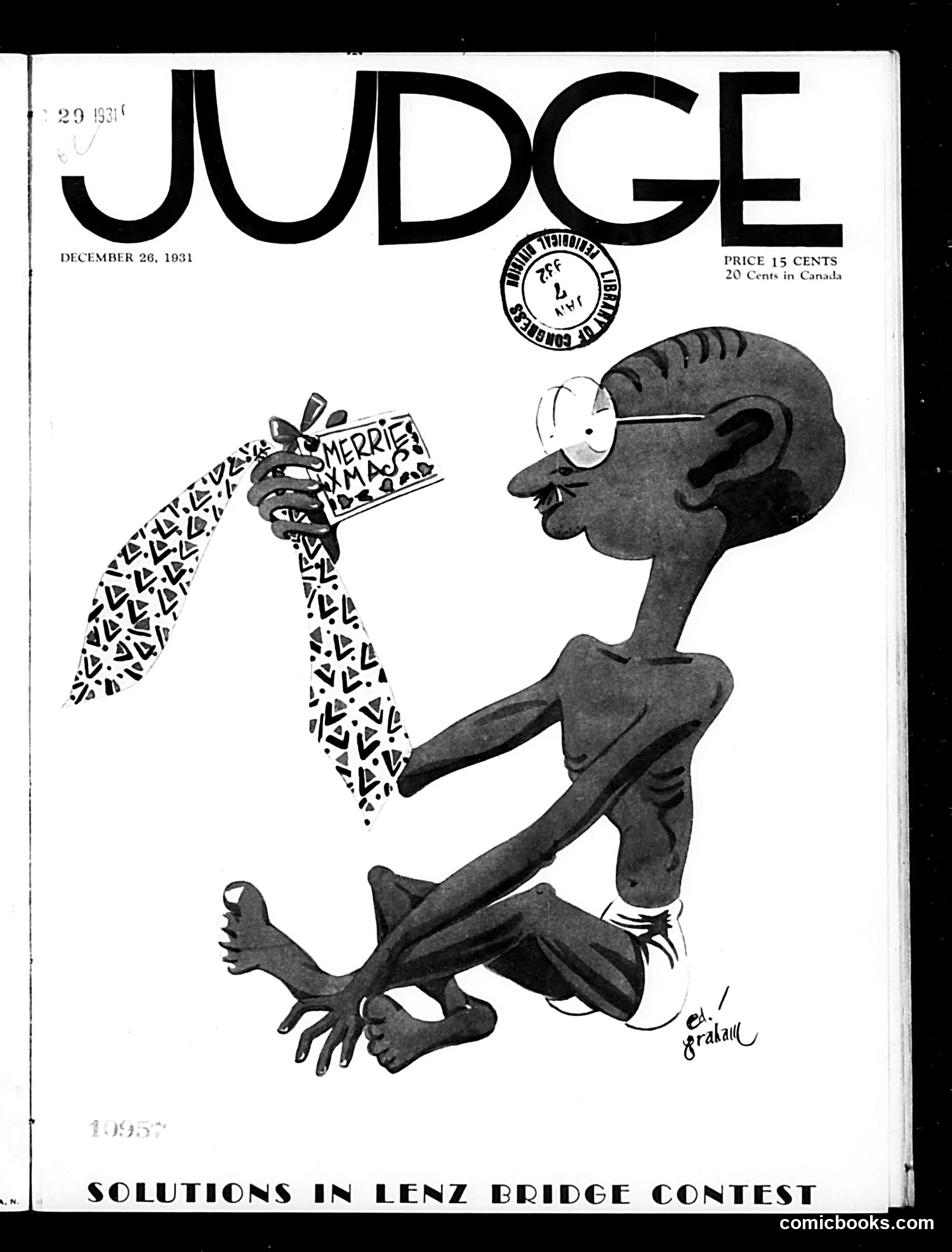
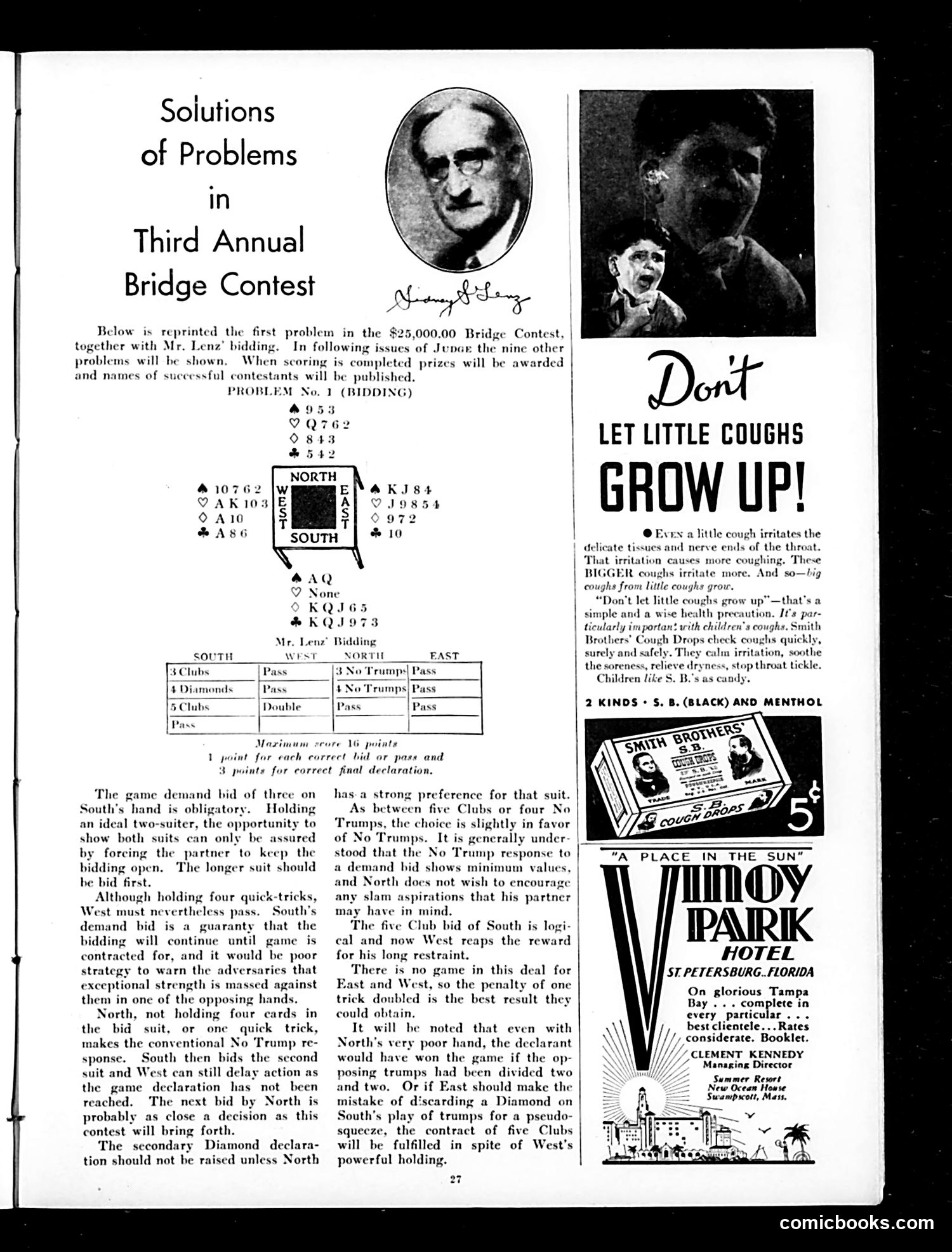
# Analysis of Judge Magazine Cover, December 26, 1931 This satirical cover depicts a caricatured figure (the art style suggests a racial caricature typical of 1931) holding a "Merry Xmas" banner with a decorative pattern. The figure appears jubilant despite the Great Depression context—this was December 1931, during severe economic hardship. The satire likely mocks either forced holiday cheer during economic crisis, or possibly comments on specific public figures' attempts to maintain optimistic messaging amid the Depression. The exaggerated style and cheerful demeanor contrast sharply with the historical moment's grim reality. The page references "Solutions in Lenz Bridge Contest," suggesting Judge's readers were invited to submit competitive ideas about bridge engineering—a practical economic concern of the era. The $0.15 price reflects 1931 economics.
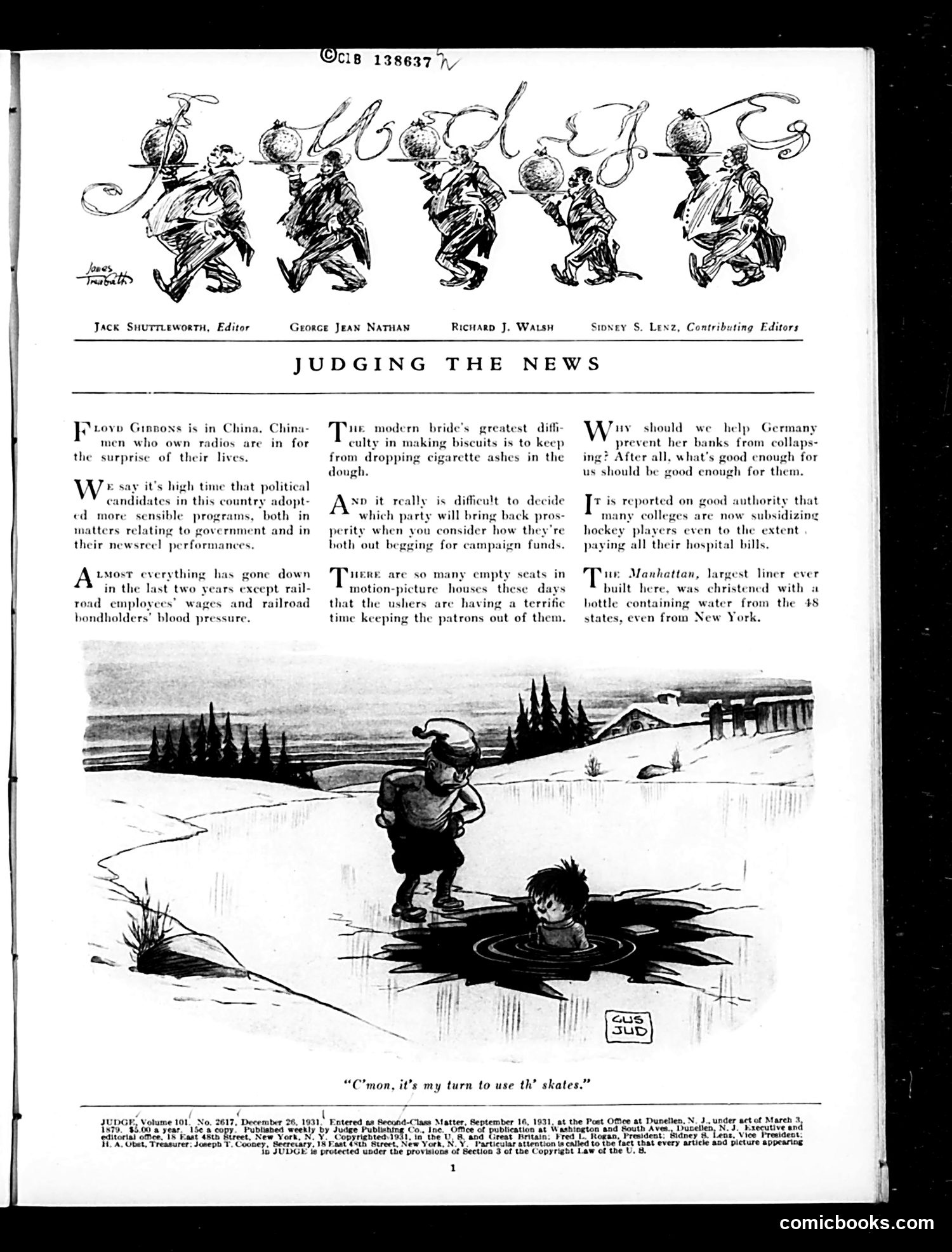
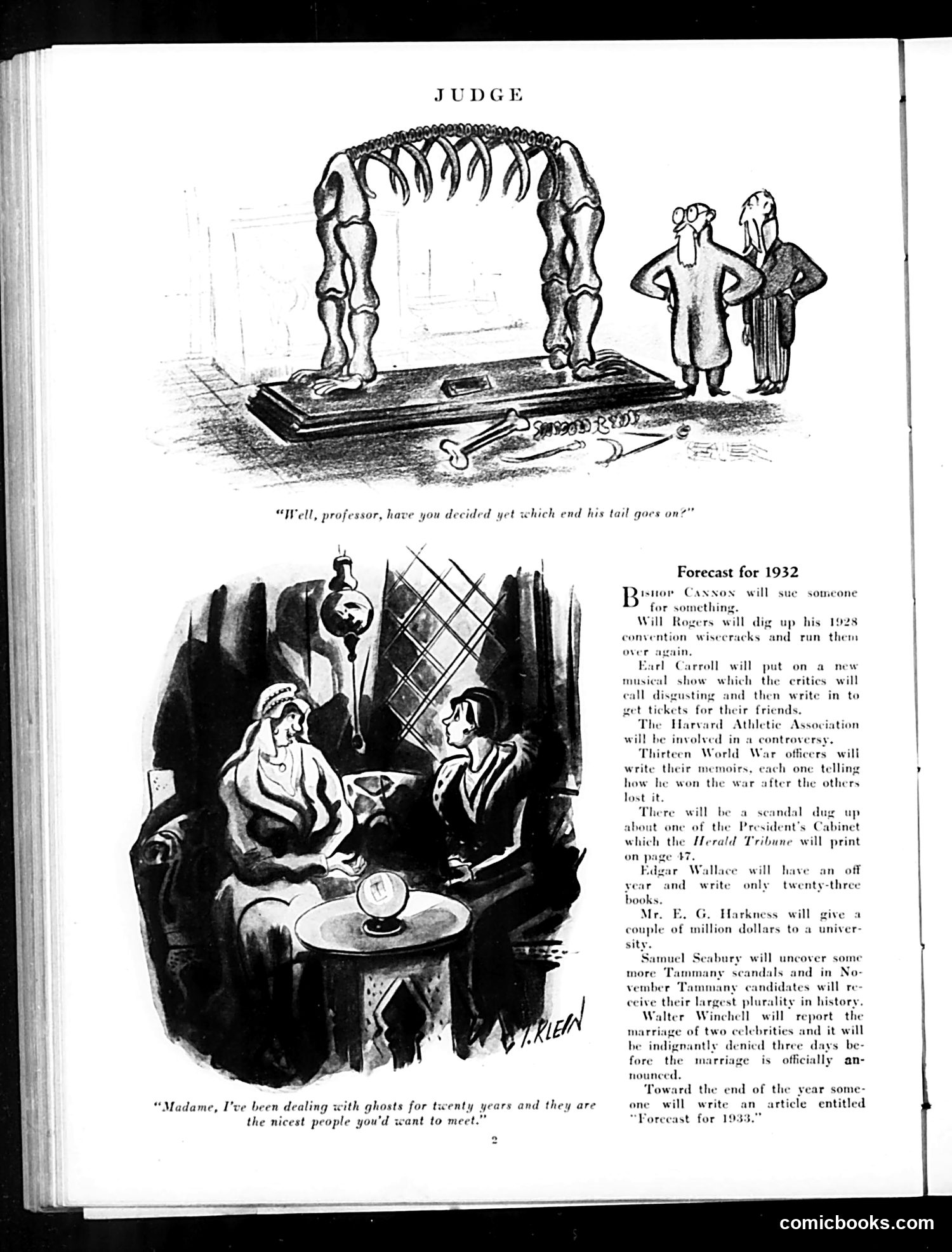
# Judge Magazine Page Analysis **Top Cartoon ("Judge"):** Depicts a skeleton arch with two observers. The caption asks a professor which end the skeleton's tail goes on—a visual pun playing on anatomical confusion and perhaps satirizing academic pretension or scientific debate. **Bottom Cartoon:** Shows a fortune teller with crystal ball speaking to a client. The caption jokes that ghosts are "the nicest people you'd want to meet," suggesting spiritualism's popularity or mocking it as naive entertainment. **"Forecast for 1932":** The accompanying text contains satirical predictions about 1932 public figures and scandals—mentioning Bishop Cannon, Will Rogers, Lord Carroll, and others—typical of Judge's annual tongue-in-cheek prognostications about celebrities, politicians, and potential controversies. The page exemplifies Judge's blend of visual satire and celebrity gossip humor.
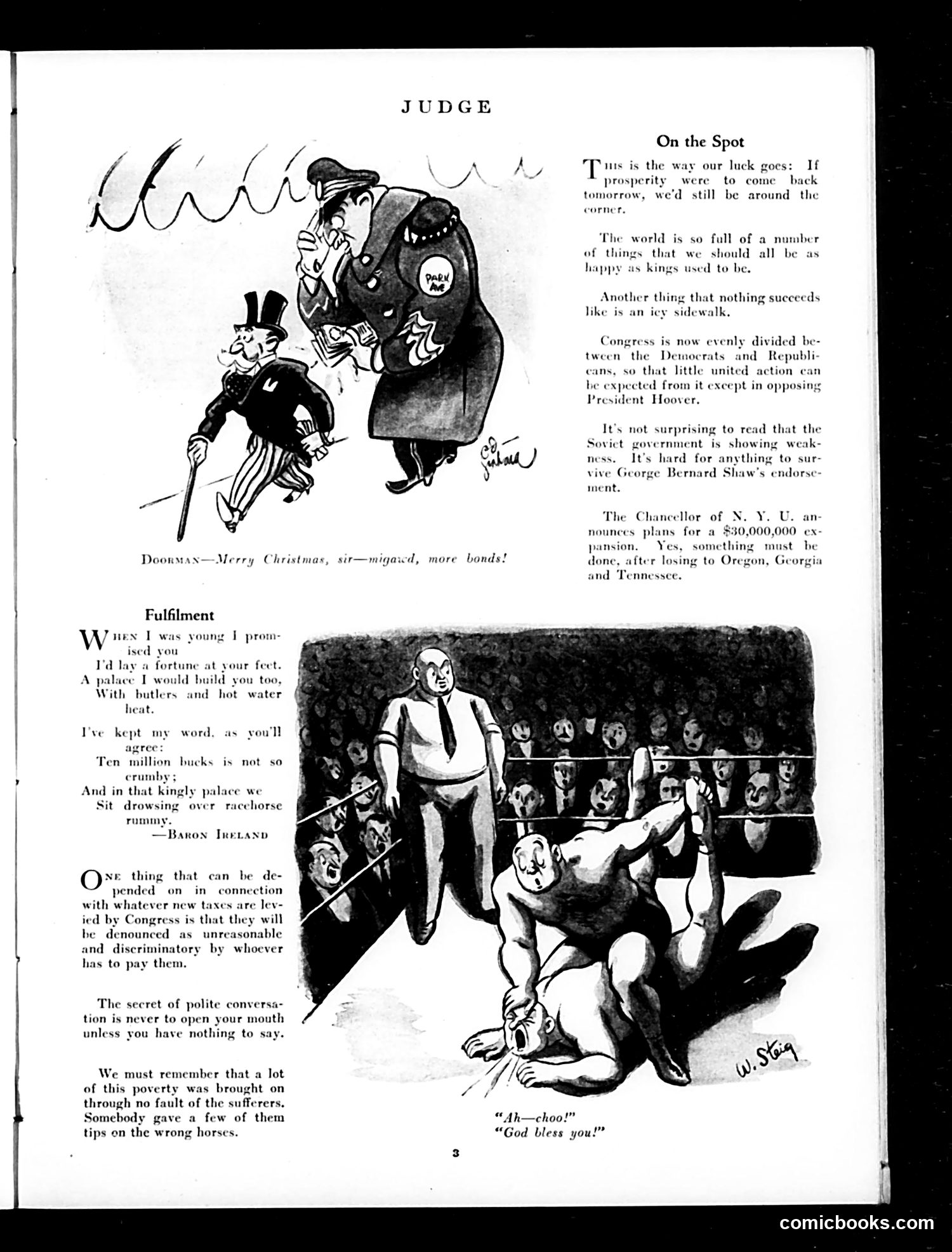
# Political Cartoon Analysis: Judge Magazine Page **Top Cartoon ("Doorman—Merry Christmas, sir—migaied, more bonds!"):** Uncle Sam (tall figure in striped pants) appears to be a doorman greeting a rotund, wealthy-looking visitor labeled "Dada Dad." The caption suggests sarcastic commentary on post-WWI bond-selling or financial obligations. The "more bonds" reference likely critiques continued government borrowing or public financial demands during the 1920s. **Bottom Cartoon ("Ah—choo! God bless you!"):** Shows a wrestling or boxing match with spectators. The caption's "God bless you" appears to be darkly ironic commentary, possibly about economic hardship or social suffering during this period—suggesting consolation is all the vulnerable receive while others profit from their misfortune. Both pieces reflect Judge's satirical approach to post-war American economics and class disparity.
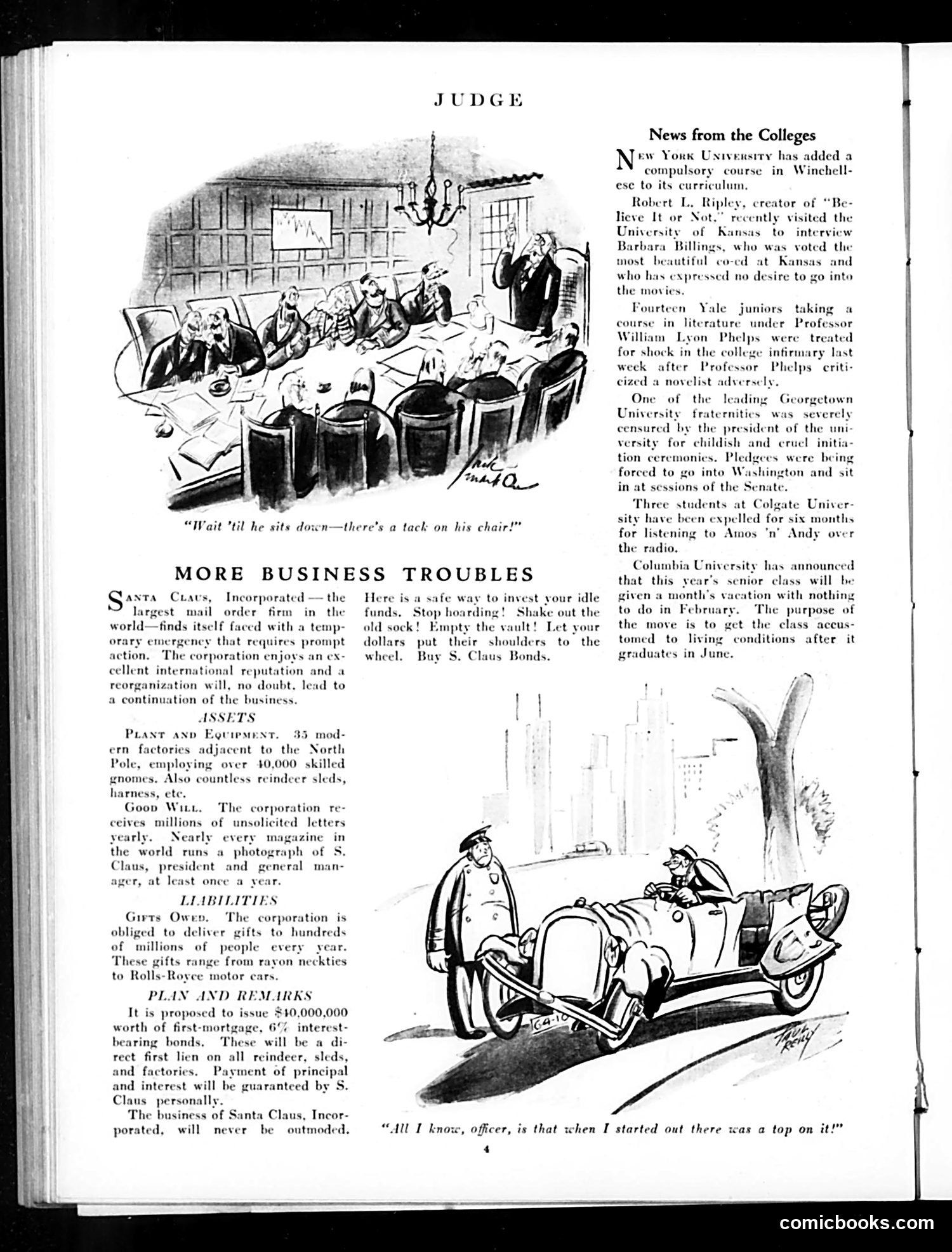
# Page Analysis This page contains two distinct elements: **Top cartoon** ("Wait 'til he sits down—there's a tack on his chair!"): A courtroom scene satirizing judicial proceedings. The joke targets how judges are treated with deference—someone plans a prank (tack on chair) that would be unthinkable to execute because the judge commands such respect and authority. **Bottom cartoon** ("All I know, officer, is that when I started out there was a top on it!"): A driver explains to a police officer that his car's convertible top has disappeared during a drive through an urban setting. The humor lies in the absurdity of losing an entire car component without noticing until confronted by law enforcement. The "More Business Troubles" section discusses corporate issues facing Santa Claus, Inc. and other businesses, presenting them humorously as actual entities with real financial problems.
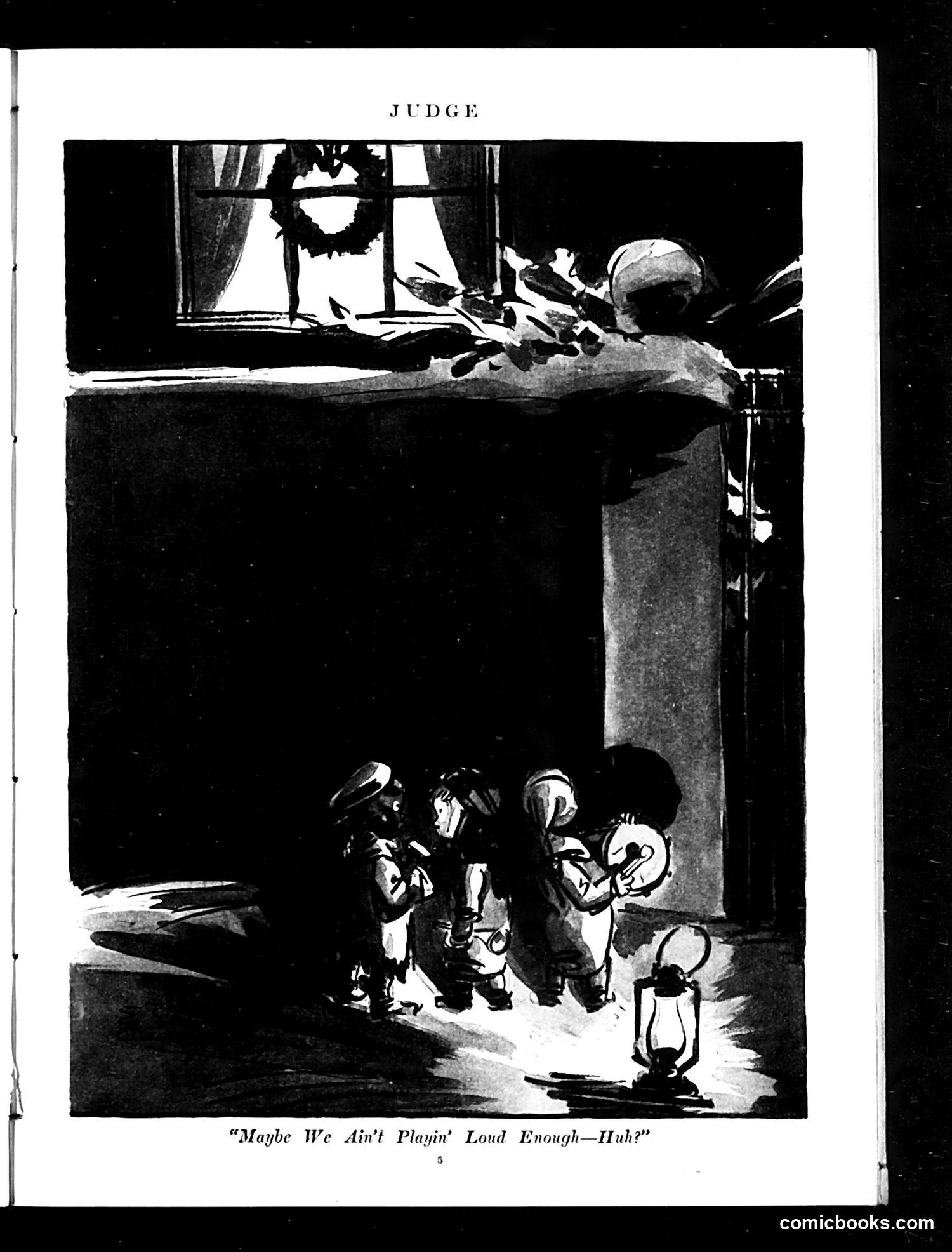
# "Maybe We Ain't Playin' Loud Enough—Huh?" This cartoon depicts a judge or authority figure (visible through a window above) overlooking a scene below where several carolers or street musicians are performing. The caption suggests the performers are playing music, but the authority figure questions whether they're playing loudly enough. The satire likely critiques judicial oversight or legal authority intruding into everyday activities—specifically street performance or caroling. The absurdity of demanding musicians play *louder* rather than complaining about noise pollution inverts typical complaints. This appears to mock either overzealous law enforcement, arbitrary legal standards, or judicial micromanagement of citizens' ordinary activities. The specific context—whether this references a real ordinance or general regulatory excess—remains unclear without additional historical documentation.
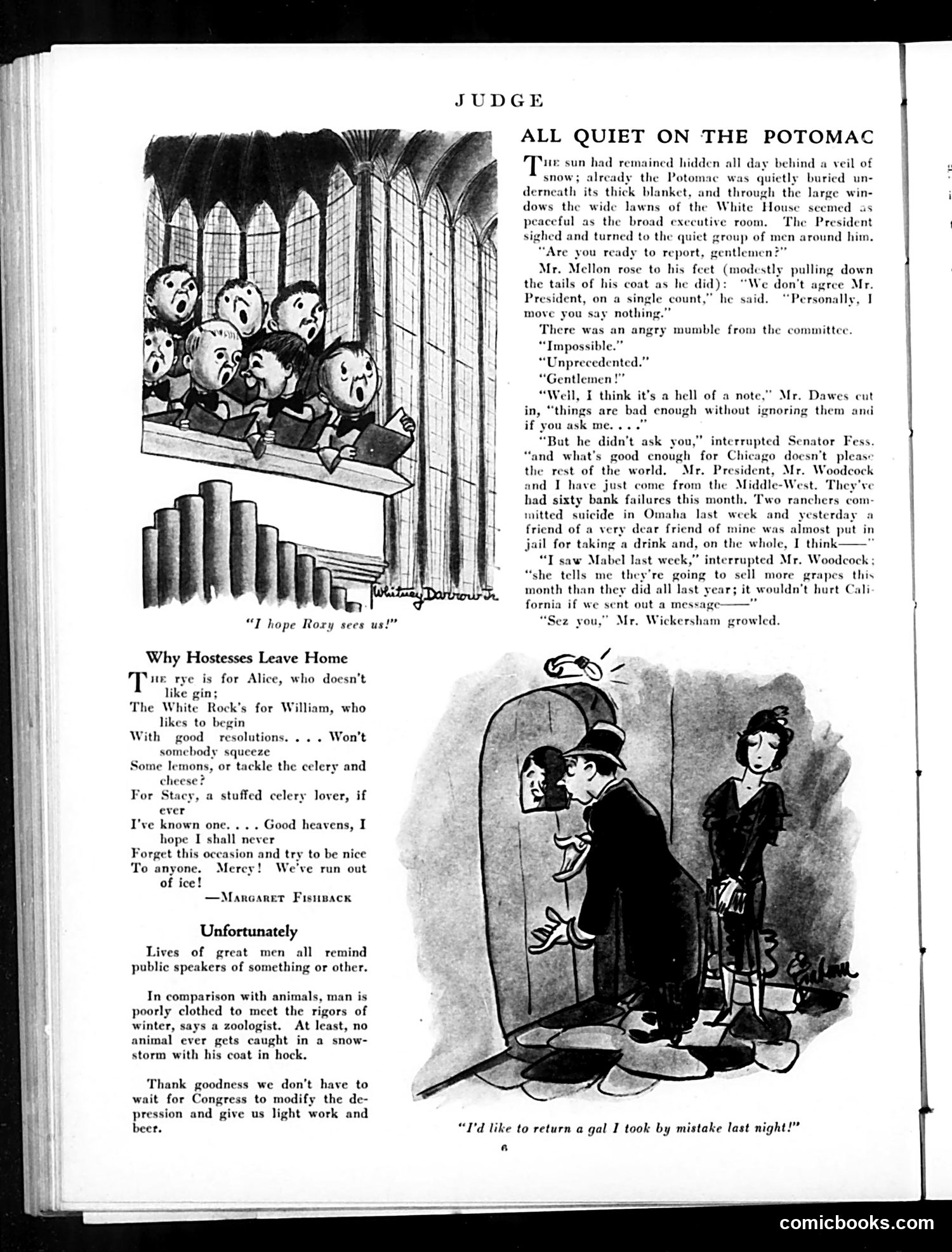
# "All Quiet on the Potomac" This cartoon satirizes congressional disagreement over economic relief during a financial crisis. A group of angry congressmen peer from a Capitol window while the President (likely Woodrow Wilson, given the era) tries to get them to agree on a report. They refuse unanimously—one calls it "a hell of a note." The debate concerns bank failures in the Midwest and suicides among ruined farmers. Mr. Woodcock argues that Chicago's crisis shouldn't concern the rest of the country, while others cite the broader national impact. The satire mocks Congress's inability to cooperate on addressing the economic disaster, despite urgent need. The title "All Quiet on the Potomac" ironically invokes Civil War language to suggest governmental paralysis.
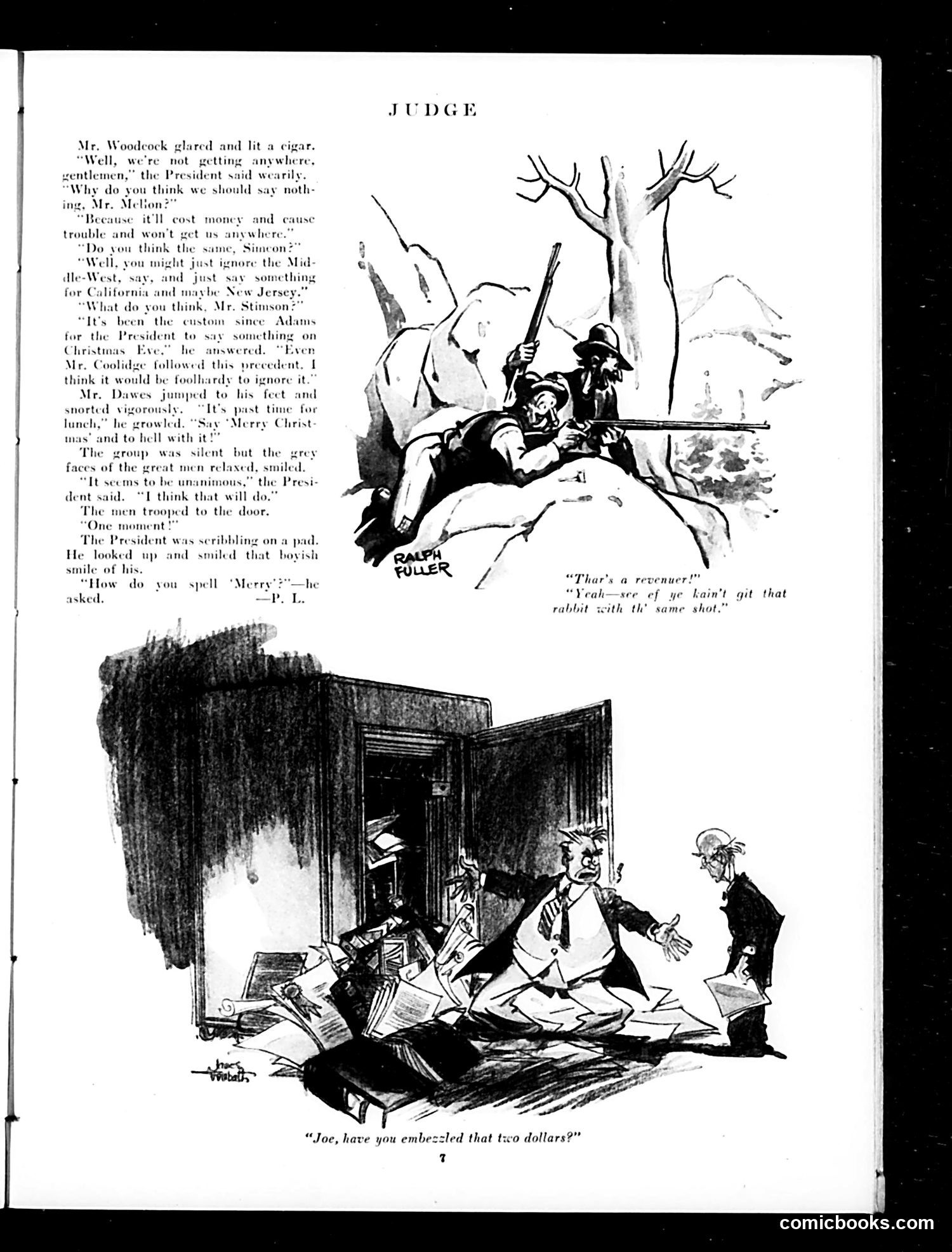
# Judge Magazine Political Cartoon Analysis This page contains two satirical cartoons mocking early 1920s American politics and rural culture. **Top cartoon**: Depicts President Calvin Coolidge and his cabinet (including Treasury Secretary Mellon, Commerce Secretary Hoover, and Secretary of State Stimson) debating whether to make a Christmas statement. The humor lies in their paralysis—Mellon argues it costs money, others worry about offending regions, and Coolidge ends up asking how to spell "Merry," suggesting presidential incompetence. This satirizes the Coolidge administration's passivity and the cabinet's prioritization of money over governance. **Bottom cartoon**: A rural/hillbilly scene where men mistake a revenue agent ("revenuer") for game to shoot, joking about hitting him "with th' same shot" as a rabbit. This mocks Prohibition enforcement—rural Americans resisting federal tax agents trying to stop illegal whiskey production. The final caption "Joe, have you embezzled that two dollars?" suggests petty corruption among government clerks.
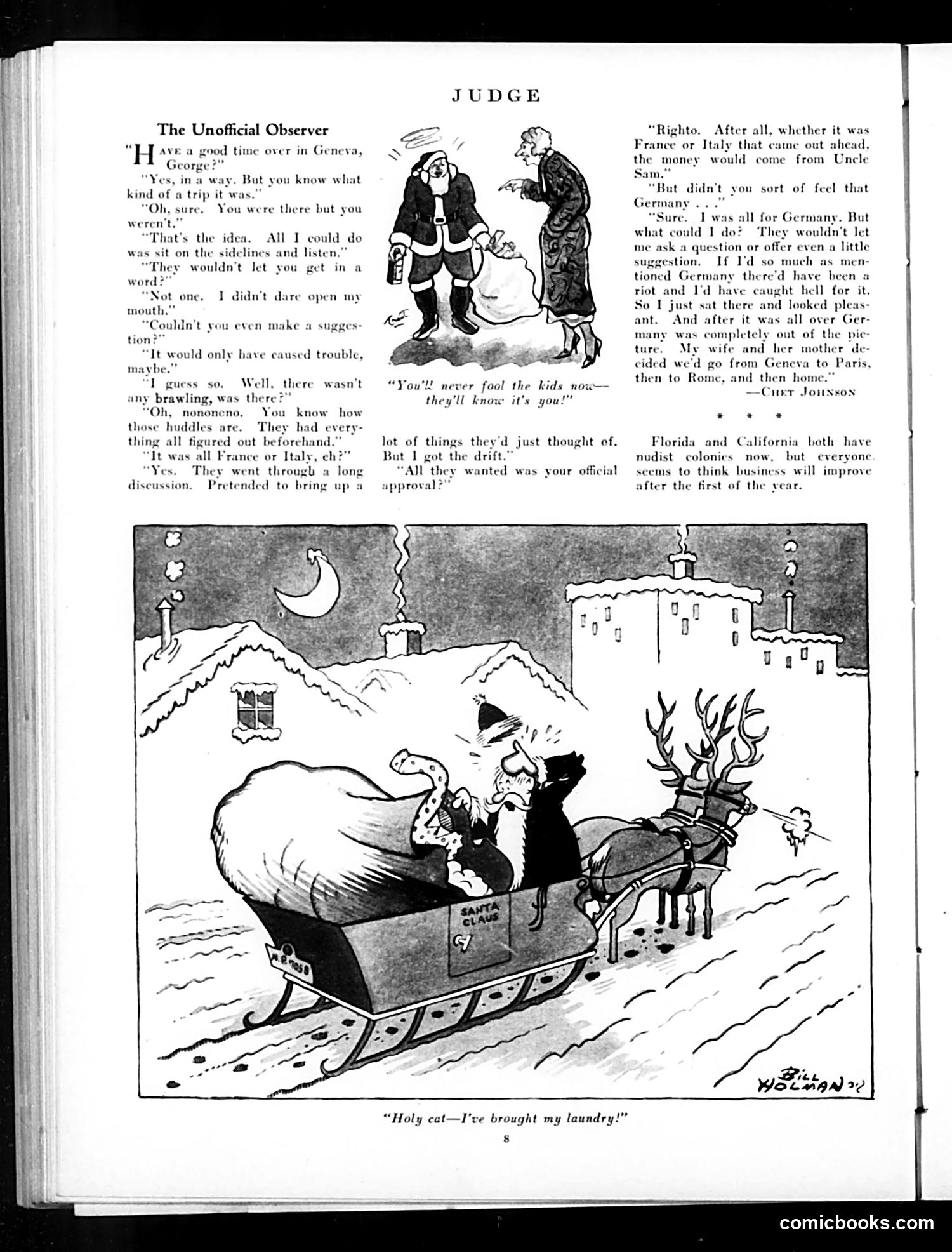
# "The Unofficial Observer" - Judge Magazine Satire This page satirizes American diplomatic impotence at the League of Nations (the "Geneva" huddle referenced). An American observer describes being allowed only to sit silently on the sidelines during international negotiations—unable to ask questions, make suggestions, or advocate for any nation's interests without causing "trouble." The satire's point: The U.S. maintains official detachment from League proceedings while unofficially favoring certain powers (Germany is mentioned), yet has no real voice or influence. American diplomacy is reduced to passive attendance and compliance with others' decisions. The Santa cartoon below (captioned "Holy cat—I've brought my laundry!") appears unrelated—a Christmas gag about Santa confused by modern life. The page criticizes American foreign policy's weakness during the interwar period, when the U.S. remained outside the League while trying to influence global affairs.
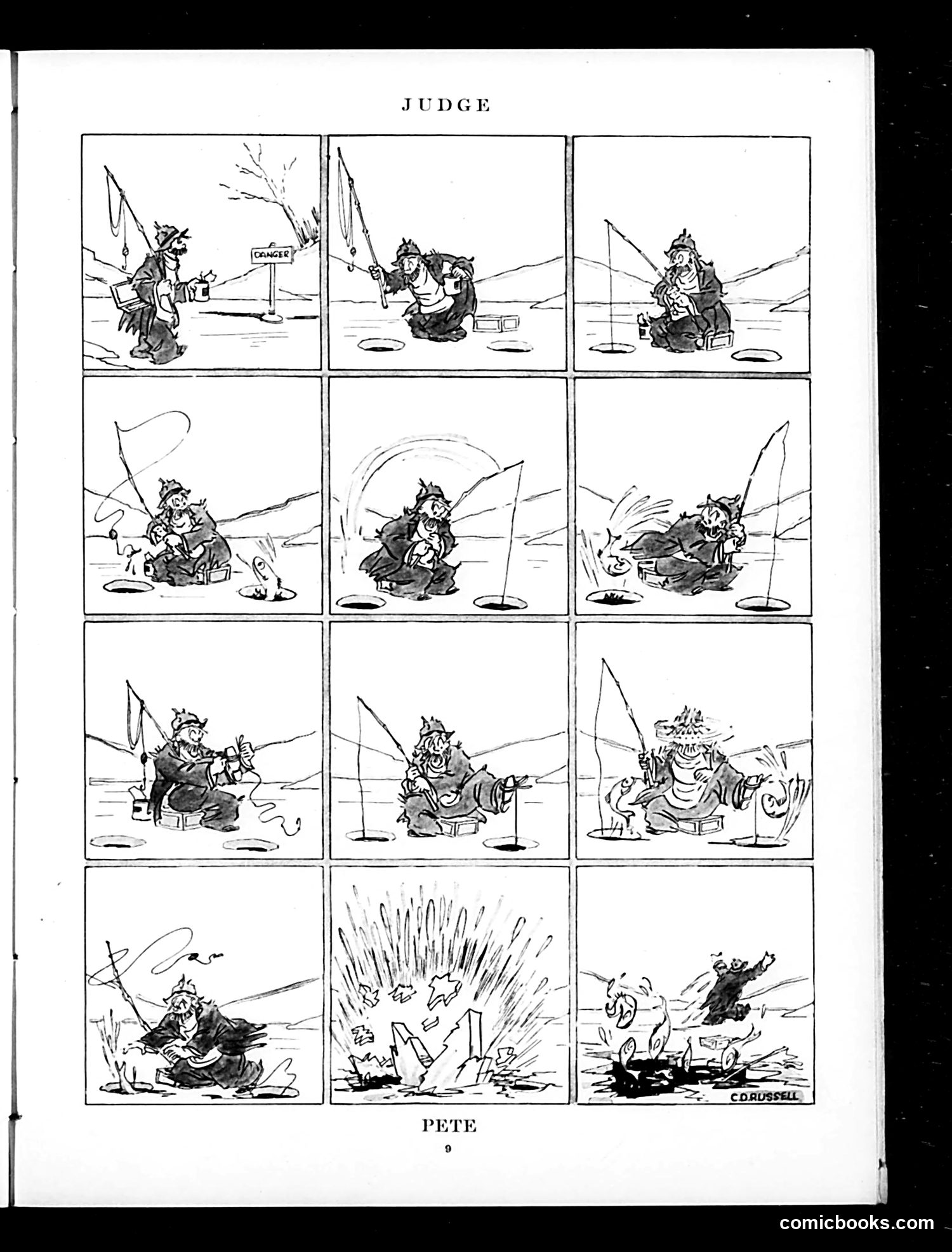
# "Judge" - Pete Comic Strip This is a twelve-panel comic strip titled "Judge" (with the artist signature "Corussell" visible) depicting a character identified as "Pete" engaged in ice fishing. The narrative shows Pete attempting to fish through a hole in ice, progressing through various comedic mishaps: he struggles with his fishing rod, gets tangled in his line, battles with what appears to be a large fish or creature, and ultimately experiences an explosive finale in the final panels where everything—Pete, his equipment, and debris—are sent flying. The humor derives from slapstick physical comedy typical of early 20th-century satirical magazines, with escalating chaos and exaggerated reactions. Without additional historical context about the character "Pete" or contemporary references, the specific political or social satire remains unclear.
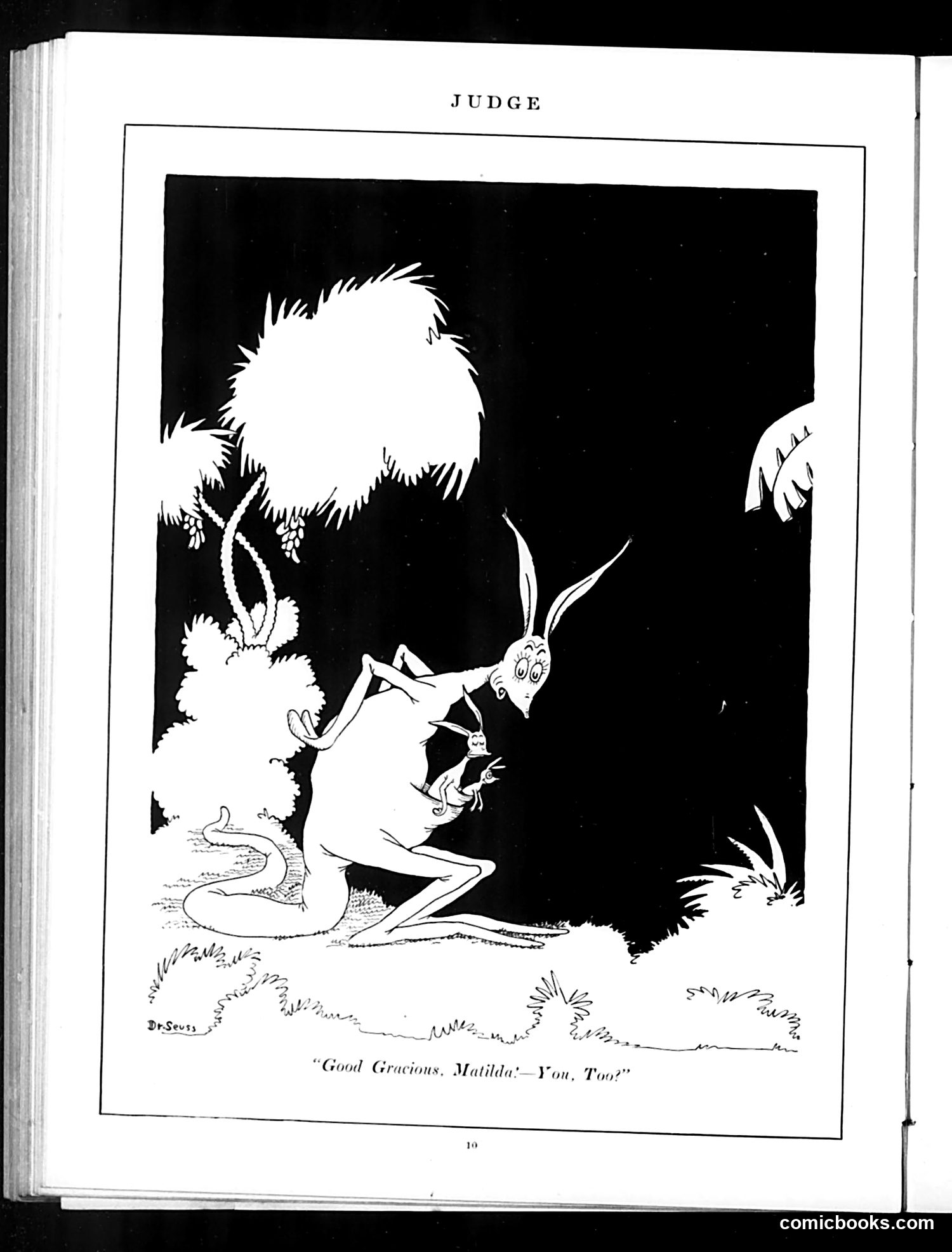
# Political Cartoon Analysis This Dr. Seuss cartoon from *Judge* magazine depicts a horned, goat-like creature addressing a woman named Matilda with apparent surprise or alarm. The caption—"Good Gracious, Matilda! You, Too?"—suggests she has joined or become something previously unexpected. The goat-creature likely represents a satirical figure or allegory, though without additional context it's unclear what specific political or social movement is referenced. The "Too?" implies others have already undergone this transformation. This appears to be social satire about contemporary trends or conversions to some ideology or group—the exact target remains ambiguous from the image alone. The exaggerated, fantastical imagery is characteristic of Seuss's satirical style during this period.
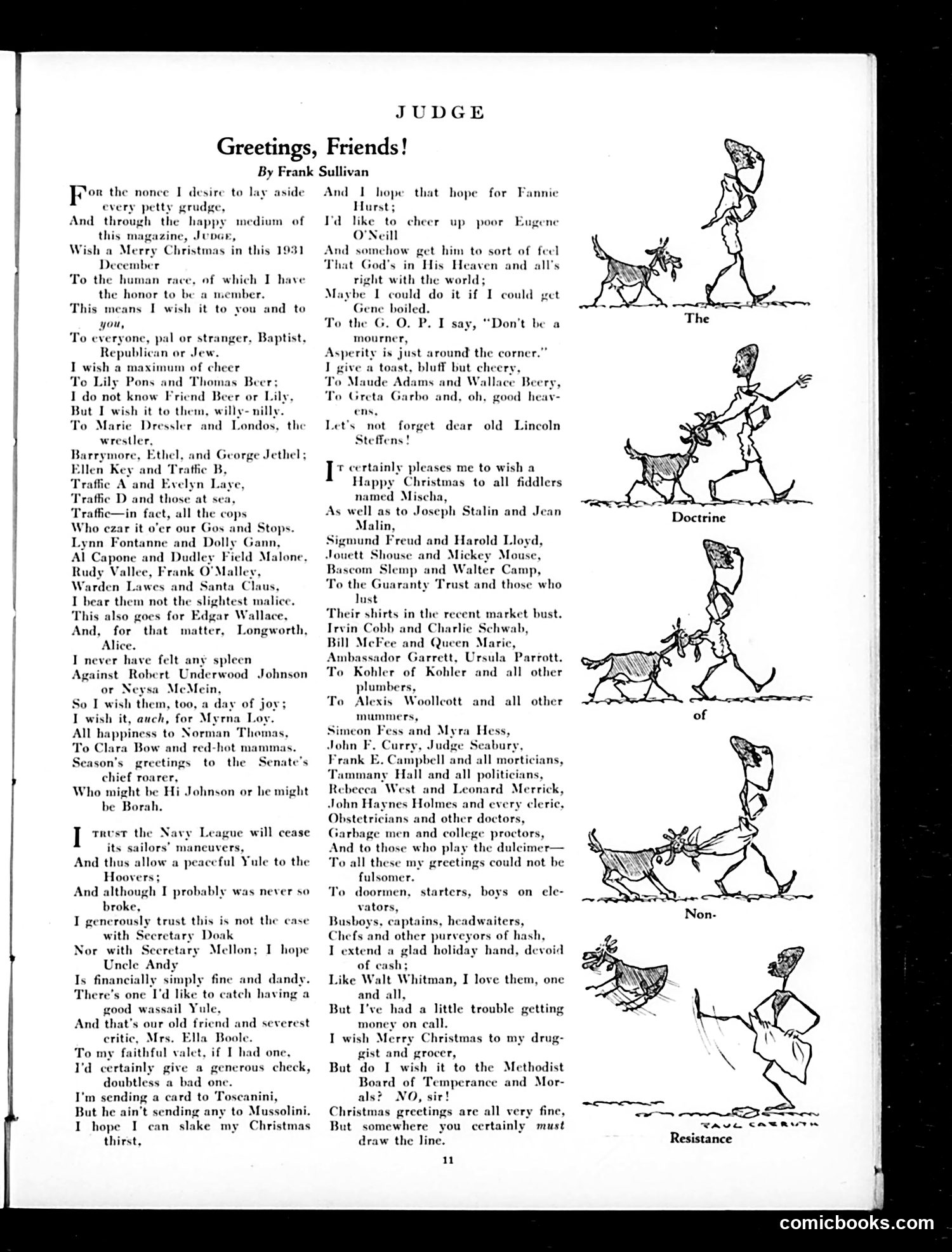
# "Greetings, Friends!" by Frank Sullivan — Judge Magazine, 1931 This is a satirical Christmas greeting poem that humorously extends holiday wishes to a sprawling cast of real 1931 figures—celebrities (Clara Bow, Greta Garbo), politicians (Al Capone, Secretary of Labor Doak), and public figures (Eugene O'Neill, Norman Thomas). The satire works through absurd juxtaposition: Sullivan indiscriminately wishes cheer to the famous and obscure, the virtuous and criminal, the living and possibly fictional. The joke sharpens when he explicitly *refuses* to wish goodwill to the Methodist Board of Temperance and Morals—a dig at Prohibition-era moralists—while generously extending it to gangsters and bootleggers during the Depression. The cartoons (labeled "The Doctrine," "Resistance," etc.) appear to be unrelated decorative illustrations. Sullivan's point: true democratic spirit means Christmas cheer for everyone, *except* the self-righteous censors.