A complete issue · 36 pages · 1931
Judge — December 19, 1931
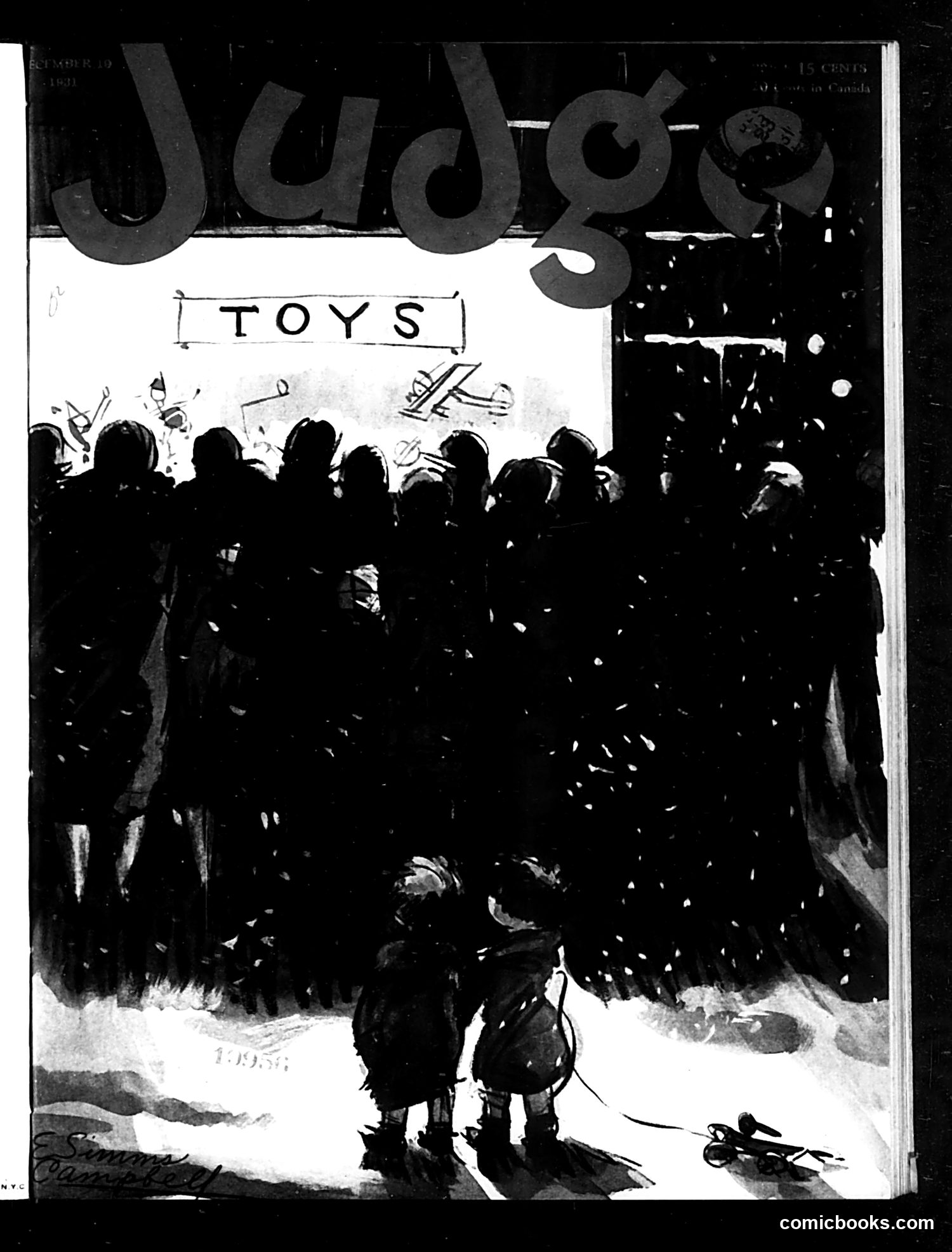
# Judge Magazine Page Analysis This appears to be a cover or advertisement page from *Judge* magazine featuring a "TOYS" section. The illustration shows a large crowd of silhouetted figures (appearing to be children or people) gathered around a storefront or display window marked "TOYS." The stylized "Judge" masthead at the top suggests this is a satirical magazine cover. Without clearer visibility of specific details or additional context text, the precise satirical point is difficult to determine. The image may be commentary on consumer behavior, holiday shopping crowds, or childhood desires—common *Judge* magazine topics. The silhouettes and composition suggest social observation or gentle mockery of popular culture, though the exact historical reference remains unclear from this image alone.
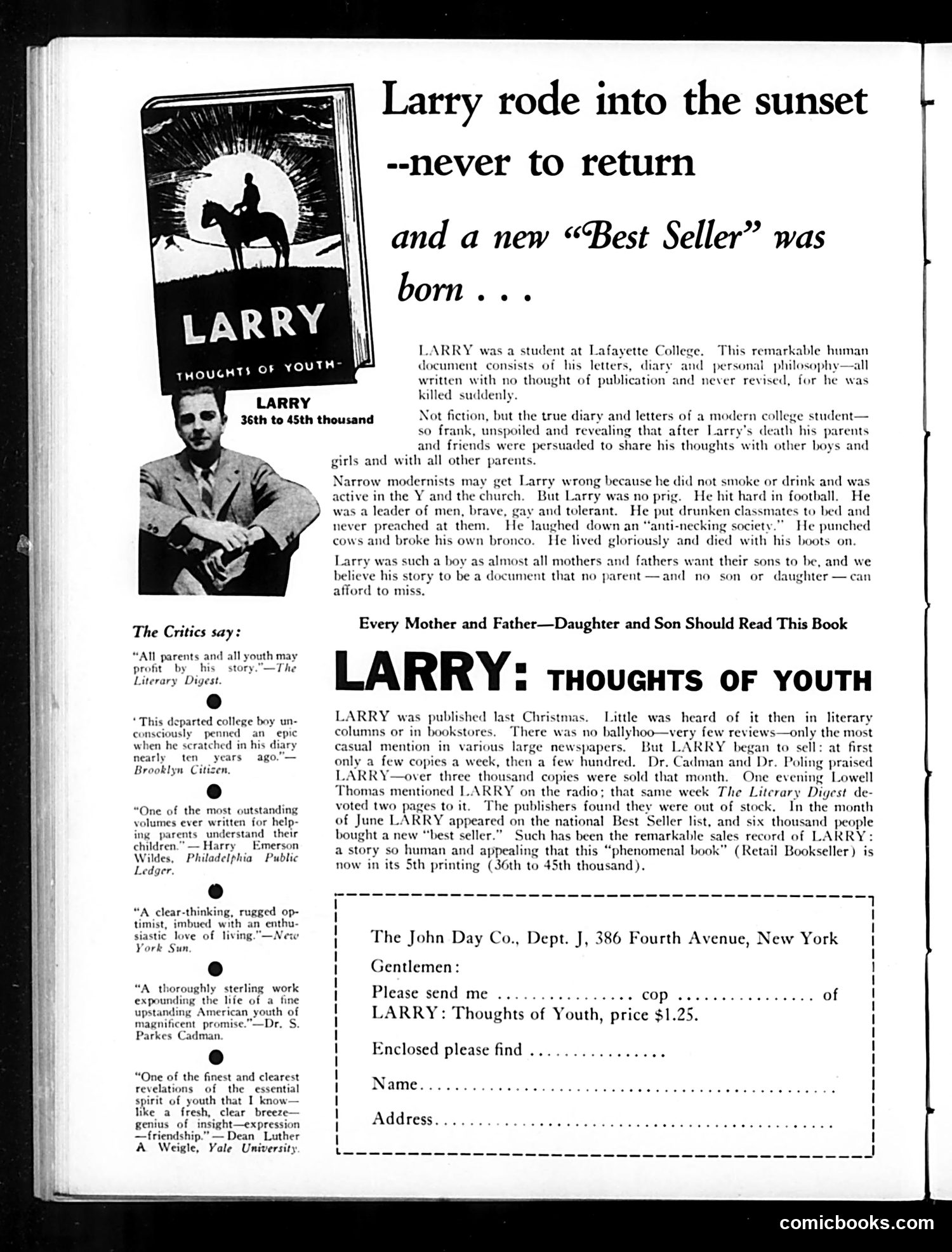
# Analysis of "Larry: Thoughts of Youth" Advertisement This page is primarily a **book advertisement**, not political satire. It promotes "Larry: Thoughts of Youth," reportedly a bestselling collection of letters and diary entries from a Lafayette College student who died suddenly. The marketing copy emphasizes Larry's appeal to parents and youth: he was "brave, gay and tolerant," didn't smoke or drink excessively, and represented an idealized model son. The book became unexpectedly popular, reaching bestseller status. The silhouette illustration shows a young man on horseback riding into sunset—a romantic image of American youth and adventure. The advertisement targets parents specifically, marketing the book as wholesome reading material that celebrates youthful idealism while avoiding moral controversy.
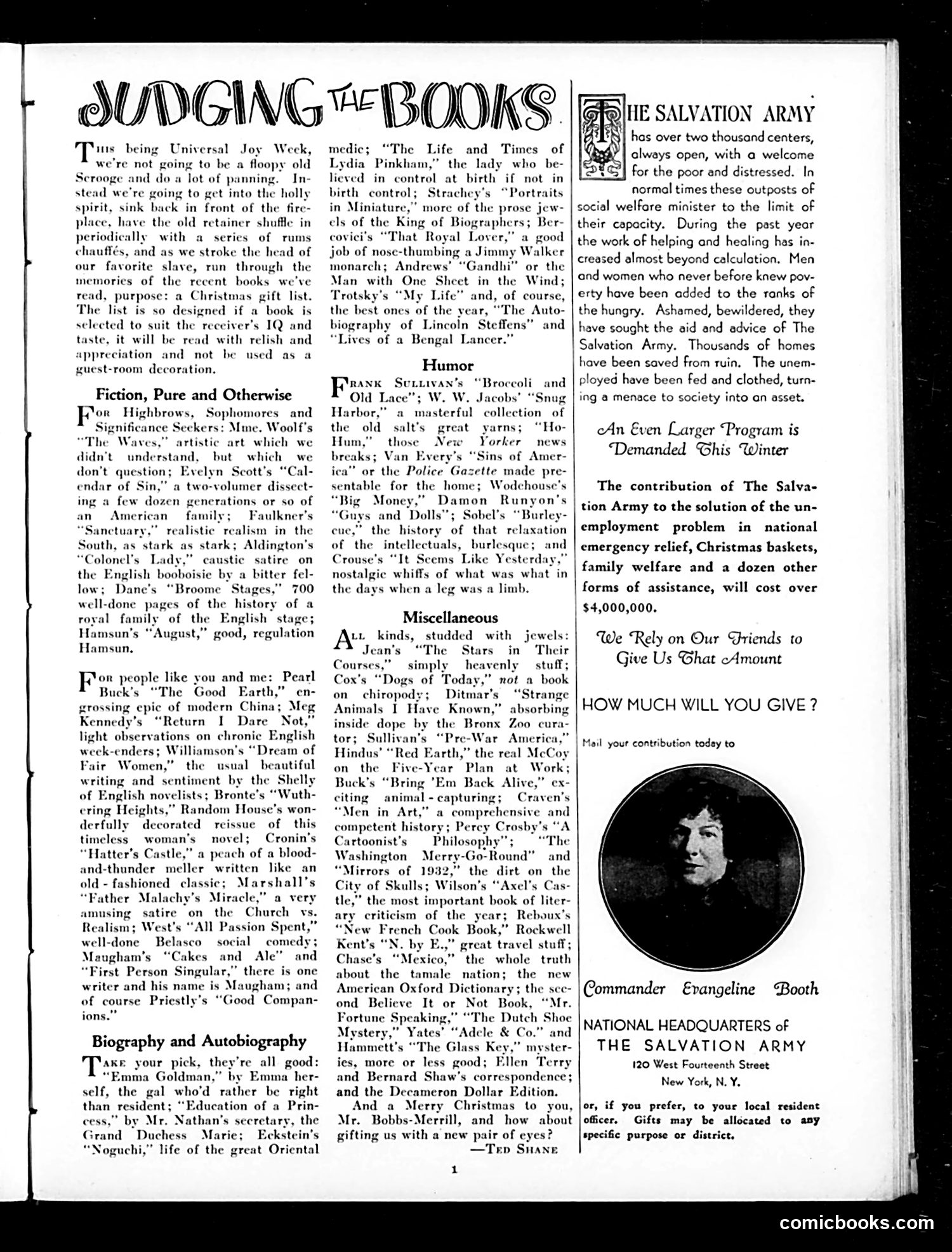
# Page Analysis This page is primarily **book reviews and advertising**, not political satire. The left columns contain literary criticism discussing recent books across fiction, humor, biography, and miscellaneous categories—works by authors like Wodehouse, Brontë, and Maugham. The right side features a **Salvation Army fundraising appeal** with Commander Evangeline Booth's photograph. The text describes the organization's welfare work during economic hardship, listing costs ($4,000,000) for Christmas baskets, unemployment relief, and family assistance. A tear sheet at bottom provides the National Headquarters address for donations. **No political cartoon appears on this page.** The content reflects Judge magazine's mix of literary coverage and period advertising/advocacy materials, circa 1930s based on the economic references and book titles mentioned.
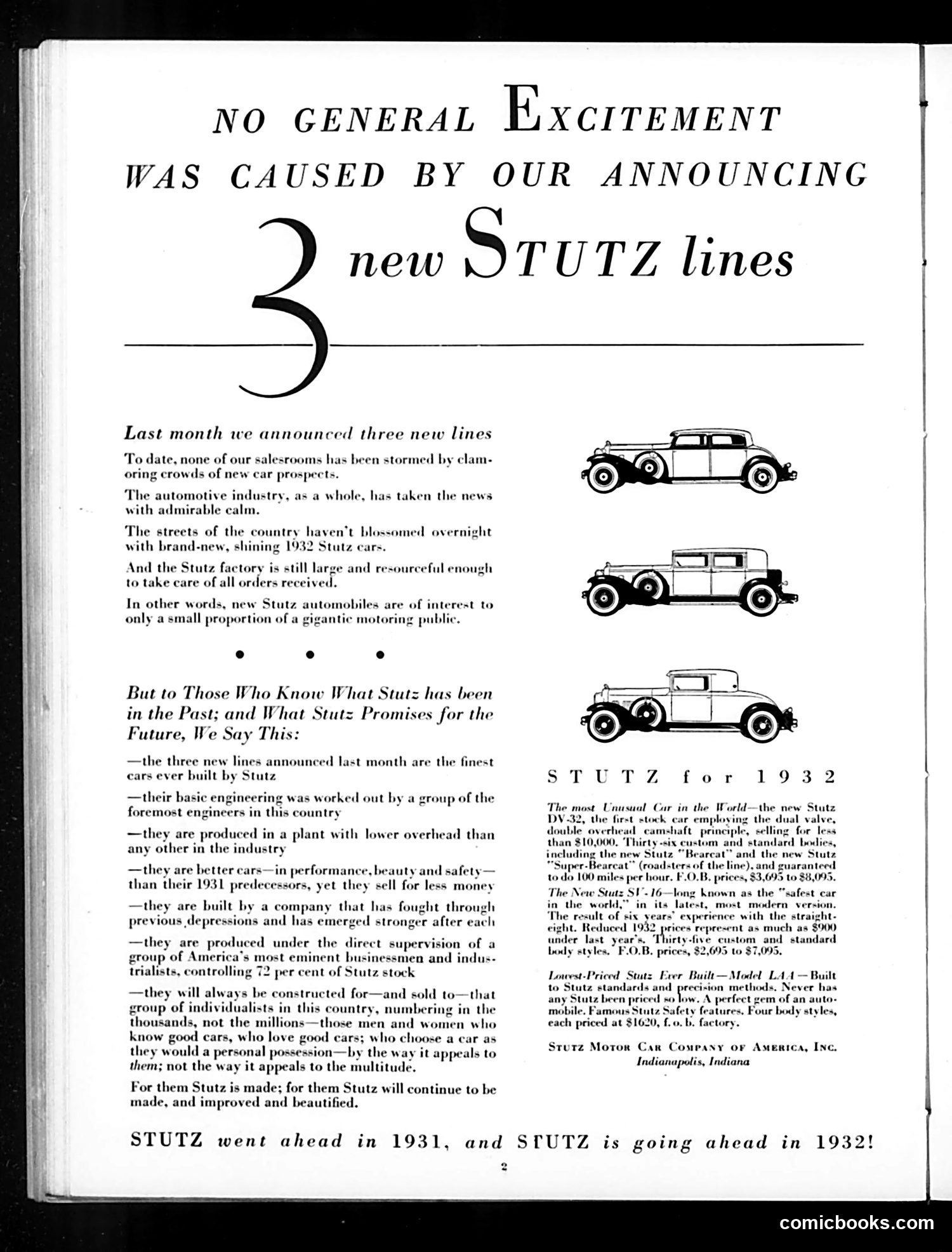
# Analysis This is **not a cartoon or satire page** — it's a **full-page automobile advertisement** for Stutz Motor Cars, appearing in Judge magazine (circa 1932). The ad addresses skepticism about Stutz's announcement of three new car lines. It defensively argues that while the automotive industry showed "admirable calm" to this news, Stutz cars deserve recognition from knowledgeable enthusiasts who understand the brand's engineering heritage and financial resilience through the Depression. The three car illustrations on the right showcase the new 1932 models. The text emphasizes Stutz's survival through "previous depressions" and superior engineering, attempting to position the brand as prestigious despite limited market excitement. This reflects Depression-era marketing: reassuring both consumers and investors of company stability while claiming quality and exclusivity.
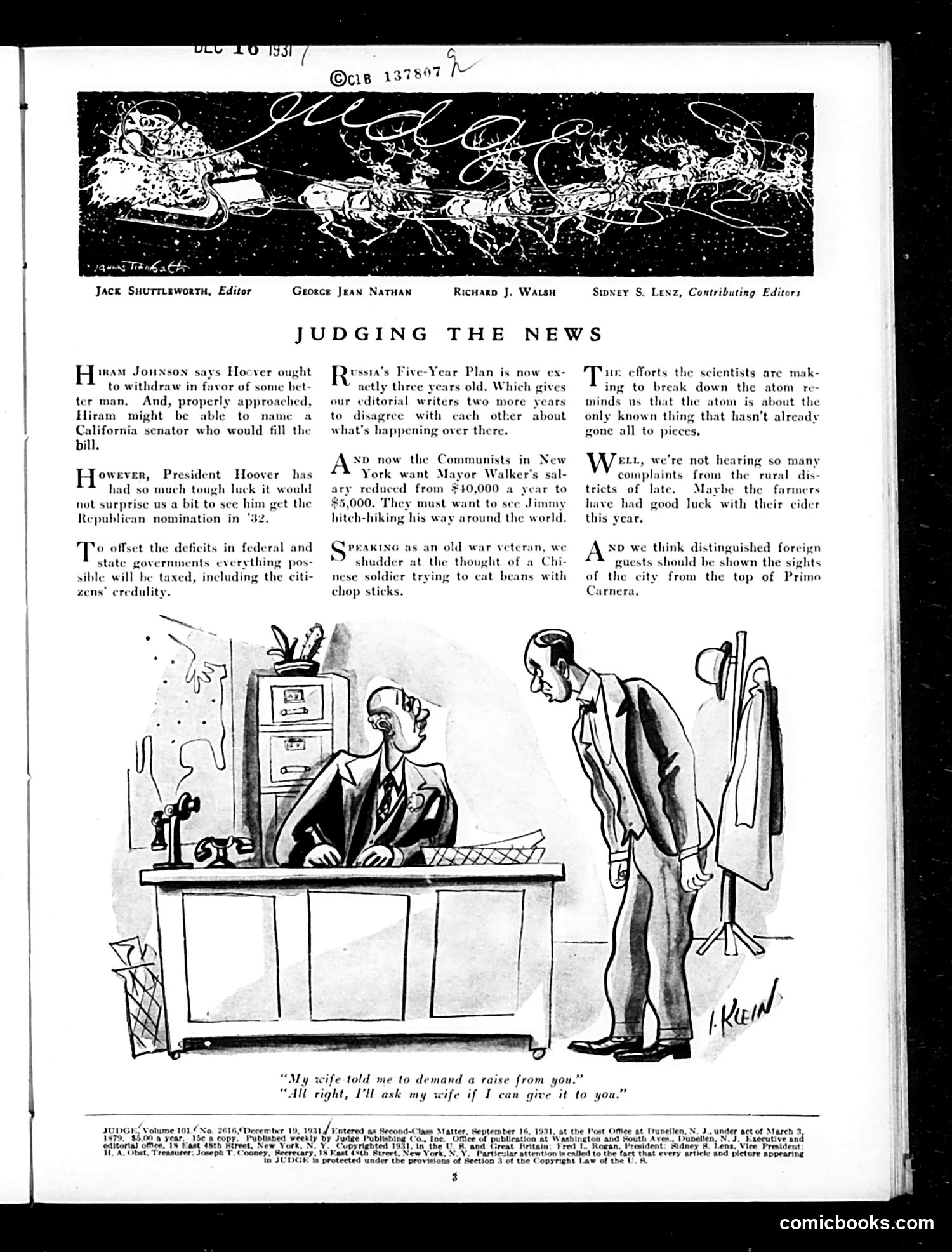
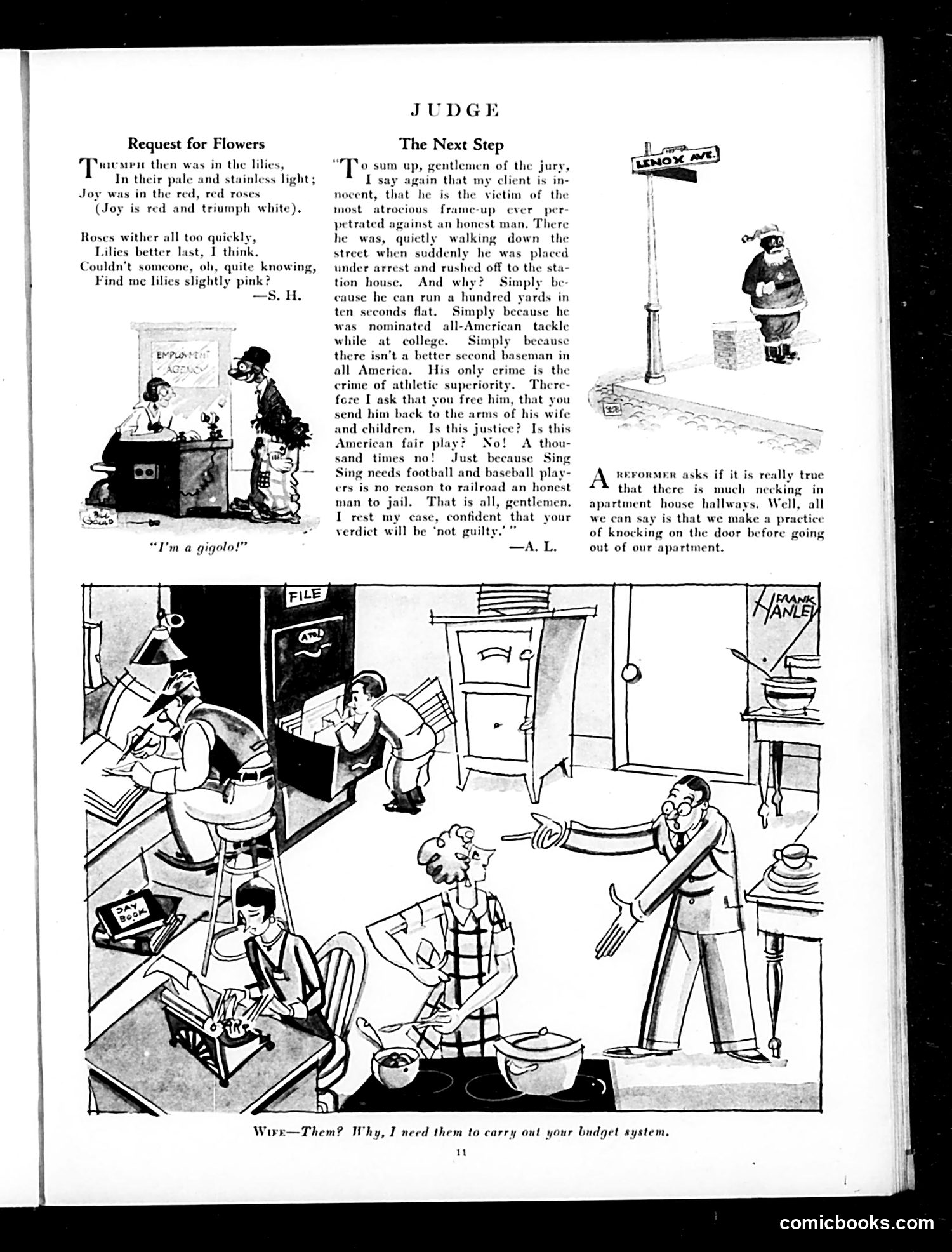
# "Judging the News" - December 19, 1931 The main cartoon depicts a workplace negotiation: a man at a desk (appears to be an employer or manager) tells an employee requesting a raise, "My wife told me to demand a raise from you" / "All right, I'll ask my wife if I can give it to you." The satire mocks the economic helplessness during the Great Depression. Rather than direct negotiation between employer and employee, both men defer to their wives—suggesting that household financial decisions have become so constrained by economic hardship that even workplace salary discussions require spousal permission. The joke reflects 1931's severe financial crisis, where economic power has shifted unpredictably and neither party (employer nor employee) controls resources independently.
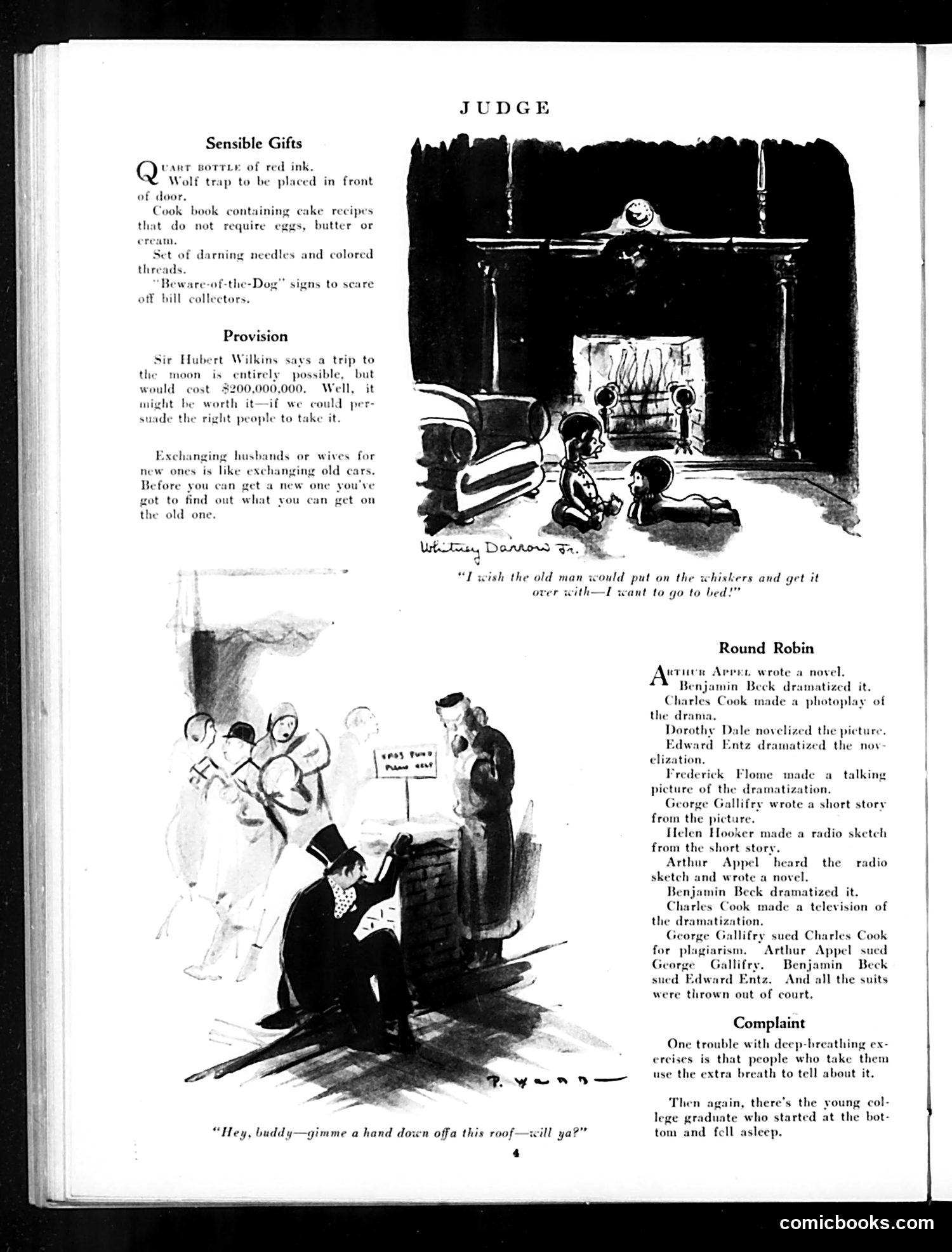
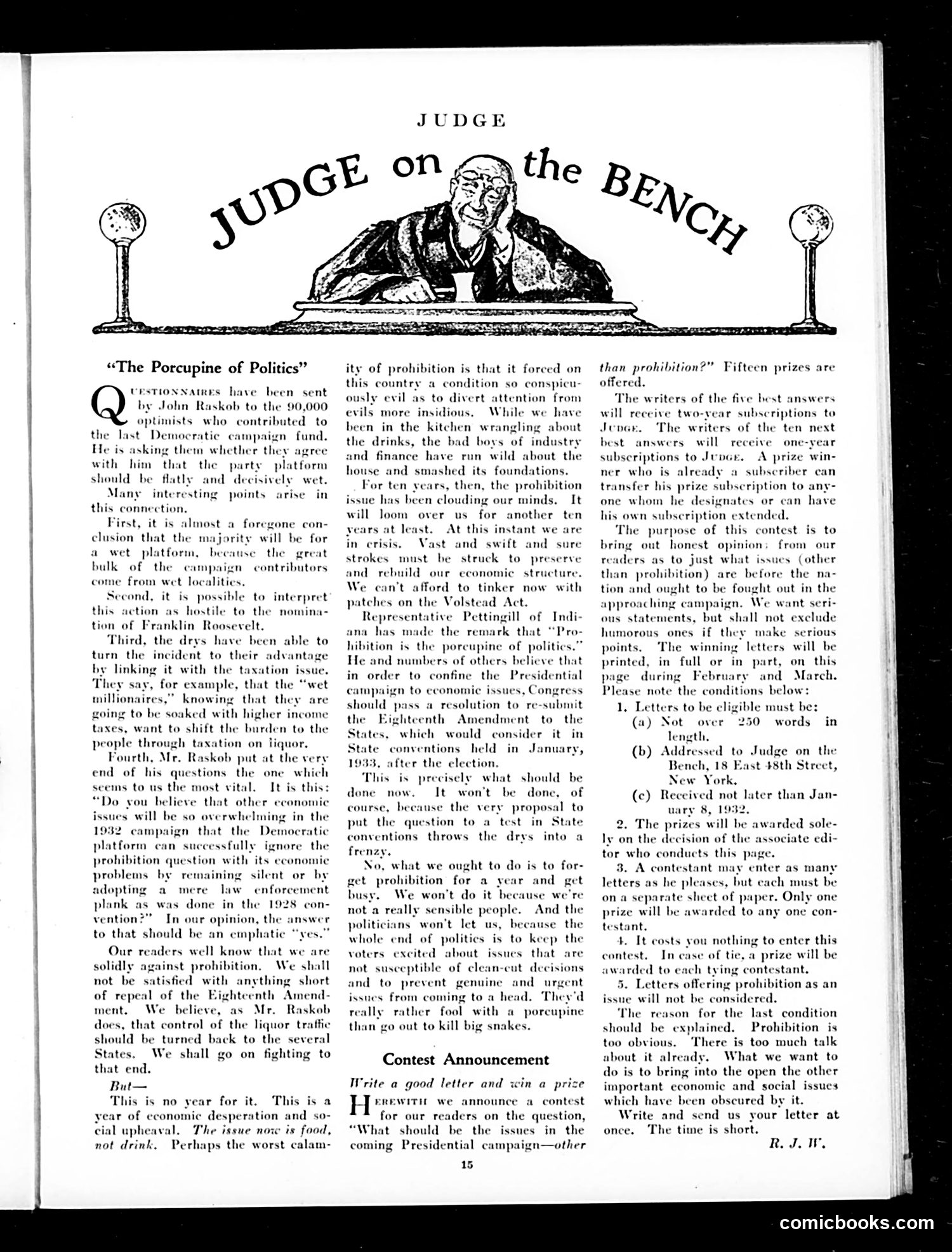
# Analysis of Judge Magazine Page This page contains three satirical sections: **"Judge"** (top): A courtroom scene where a child asks an elderly judge to "put on the whiskers and get it over with—I want to go to bed!" The joke mocks judicial formality and tedious legal proceedings, suggesting even children find court rituals absurdly time-consuming. **"Round Robin"** (right): A satirical summary of literary adaptation chaos, where multiple authors and creators sued each other over plagiarism rights to the same work—a critique of 1920s-30s intellectual property disputes and the cutthroat entertainment industry. **"Complaint"** (bottom): Critiques self-important people who boast about deep breathing exercises, and college graduates who fall asleep—poking fun at pretension and lazy youth. The cartoons target legal pomposity, creative theft, and social affectation.
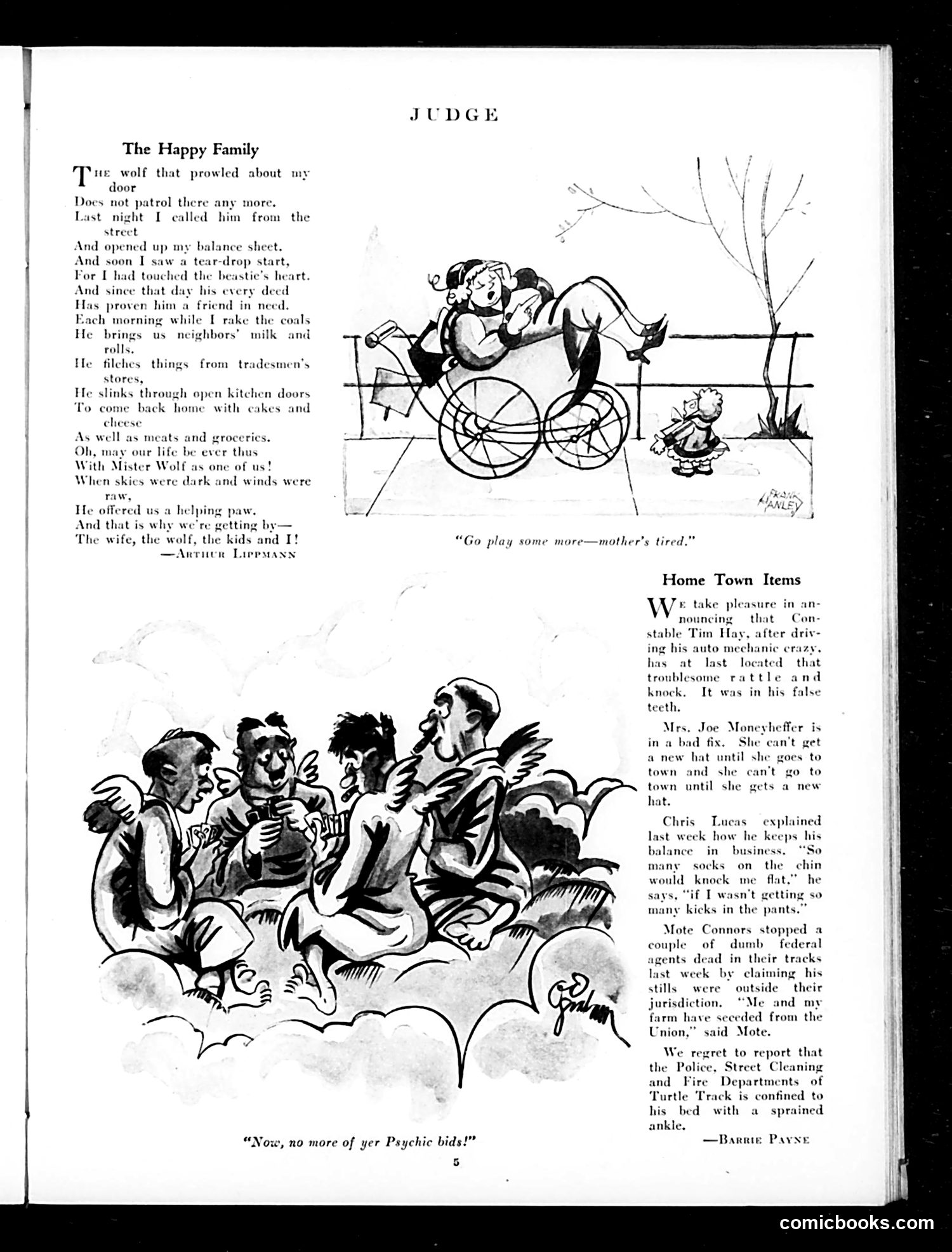
# Analysis of Judge Magazine Page **Top Cartoon: "The Happy Family"** This poem celebrates a reformed wolf that now helps a poor family—bringing milk, stealing from traders' stores, and delivering food. The accompanying illustration shows the wolf pulling a baby carriage while a child plays nearby, depicting the "wolf" as a helpful neighbor rather than a predator. The satire appears to mock romanticized notions of redemption or reformed criminals becoming model citizens—a contemporary social debate about whether "bad elements" could genuinely improve. **Bottom Illustration: "Nay, no more of yer Psychic bids!"** This shows what appears to be angelic or spiritual figures rejecting "psychic bids," likely satirizing the early 20th-century spiritualism craze and séance culture that were popular among wealthy Americans seeking to contact the dead.
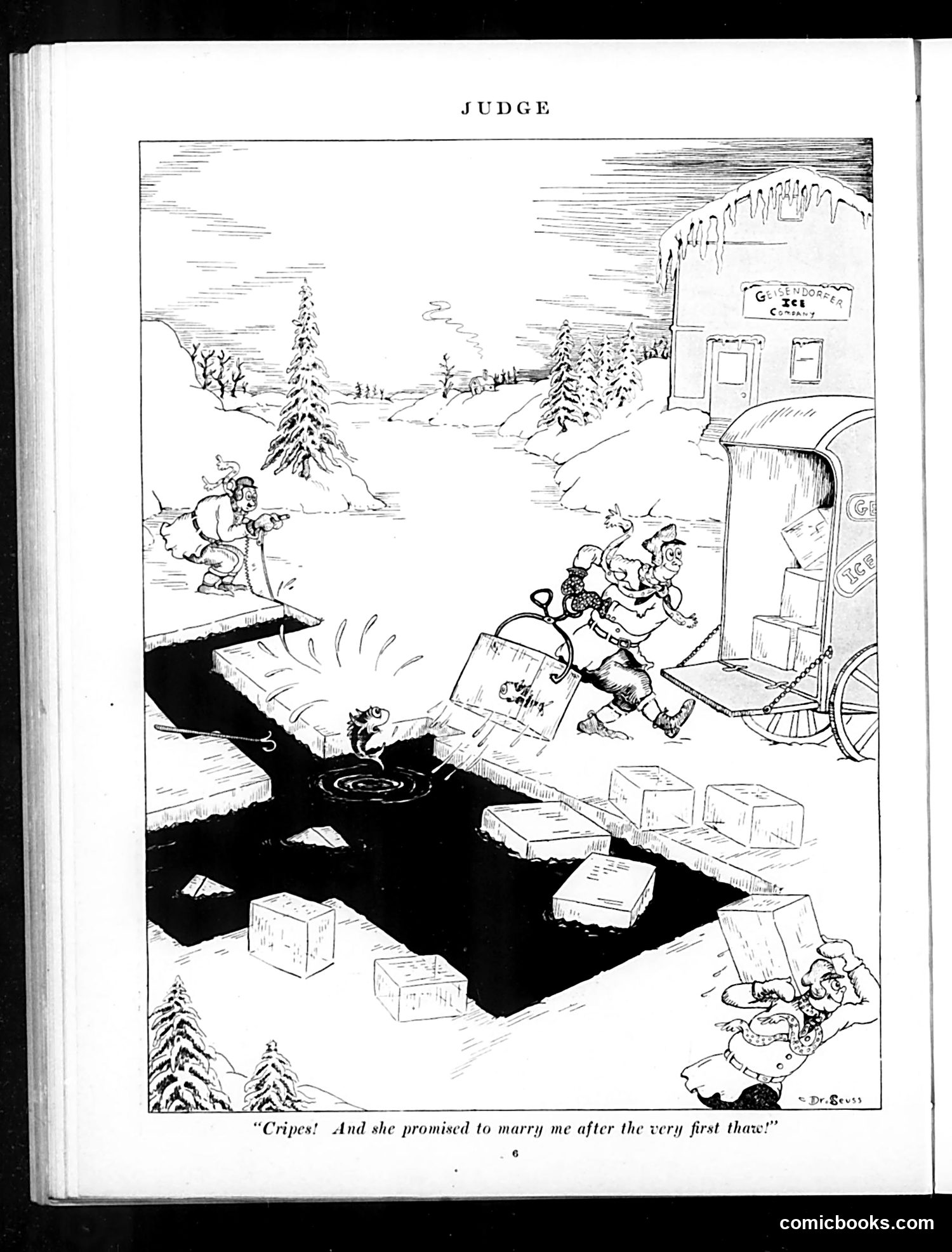
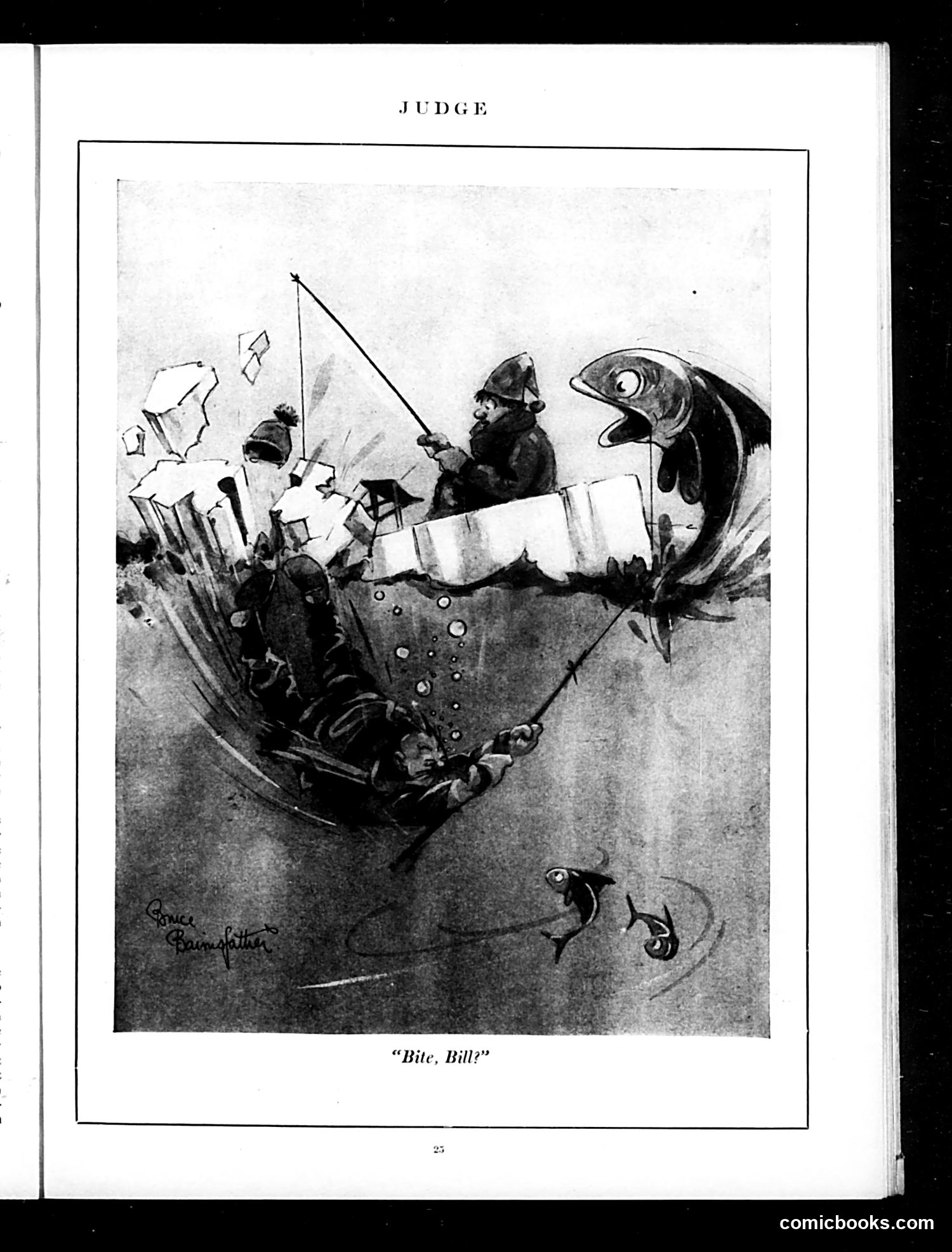
# Analysis of Judge Cartoon This cartoon depicts a winter scene where multiple figures have fallen through ice into dark water. The caption reads: "Cripes! And she promised to marry me after the very first thaw!" The humor appears to be slapstick physical comedy rather than political satire. A man on the right expresses dismay about a broken romantic promise, while his companions struggle in the icy water behind him. The "Glendenning Ice Company" building visible in the background suggests this may be set at or near an ice business. The joke plays on the literal meaning of "thaw"—the man expected to marry after the ice melted, but instead everyone has fallen through it, creating dark comedic irony. This is primarily visual humor about mishaps and misunderstandings rather than social commentary.
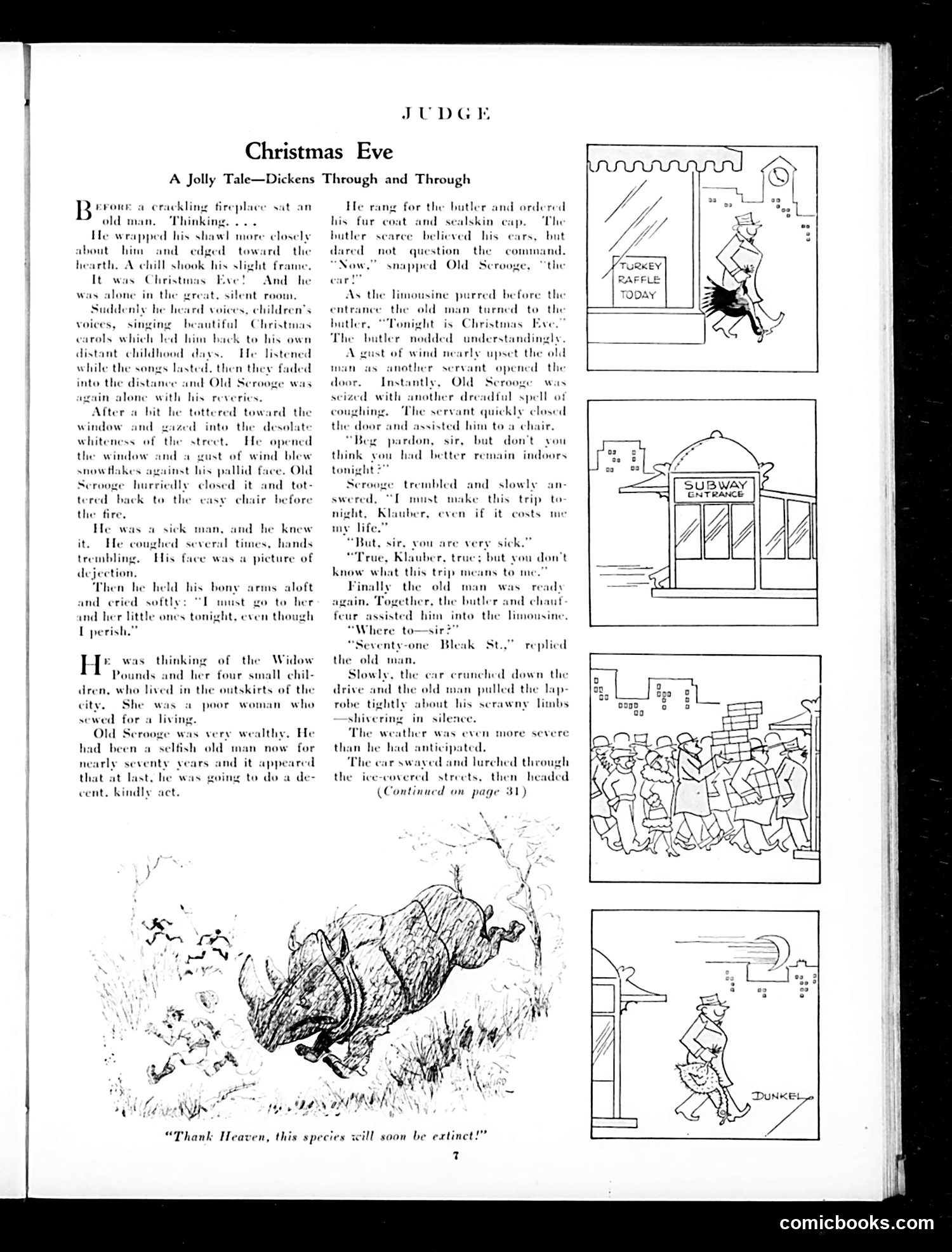
# "Christmas Eve" Analysis This is a Dickensian parody—a deliberate homage to Charles Dickens's *A Christmas Carol*. The story follows "Old Scrooge," a wealthy, selfish elderly man who experiences a change of heart on Christmas Eve and resolves to help the Widow Pounds and her four poor children, despite his severe illness. The satire works by mimicking Dickens's sentimental moral tale structure: the isolated rich man, the impoverished family, the redemptive Christmas spirit, and the protagonist's physical suffering as metaphor for spiritual awakening. The phrase "Dickens Through and Through" signals that Judge magazine is affectionately spoofing both the story's melodramatic earnestness and Dickens's characteristic sentimentality. The various cartoon panels illustrate scenes from the narrative—Scrooge's decision, the limousine journey, street crowds—emphasizing the story's theatrical, serialized quality typical of period fiction. The final image caption ("Thank Heaven, this species will soon be extinct!") likely jokes about Scrooge-like misers becoming obsolete through redemption.
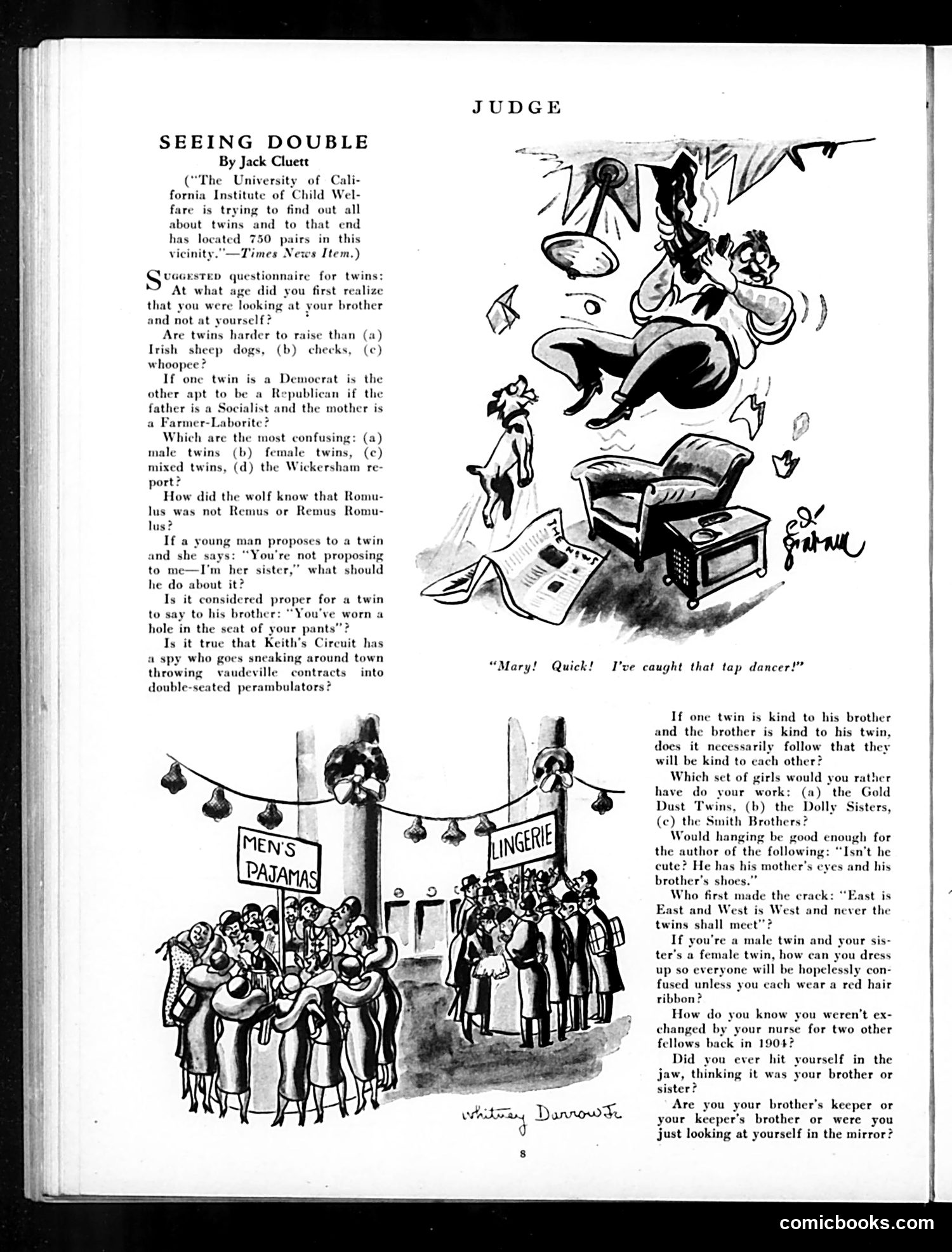
# Judge Magazine: "Seeing Double" by Jack Cluett This page satirizes the University of California's twin-research study (referenced in the Times News Item) by presenting absurd questionnaires twins might face. The humor works on multiple levels: **The cartoons** show chaos—a tap dancer caught mid-performance near a TV, and crowds at "Men's Pajamas" and "Lingerie" shops, implying the confusion and mayhem twins supposedly cause. **The questions** mock both the research itself and broader 1920s concerns: political inheritance ("If one twin is a Democrat..."), commercial brand mascots (Gold Dust Twins, Dolly Sisters, Smith Brothers), and period anxieties about identity confusion ("were you exchanged by your nurse?"). References to "Keith's Circuit" (vaudeville) and the "Wickersham report" (Prohibition enforcement) ground the satire in contemporary 1920s culture. The overall joke: studying twins scientifically is futile—they're fundamentally bewildering.
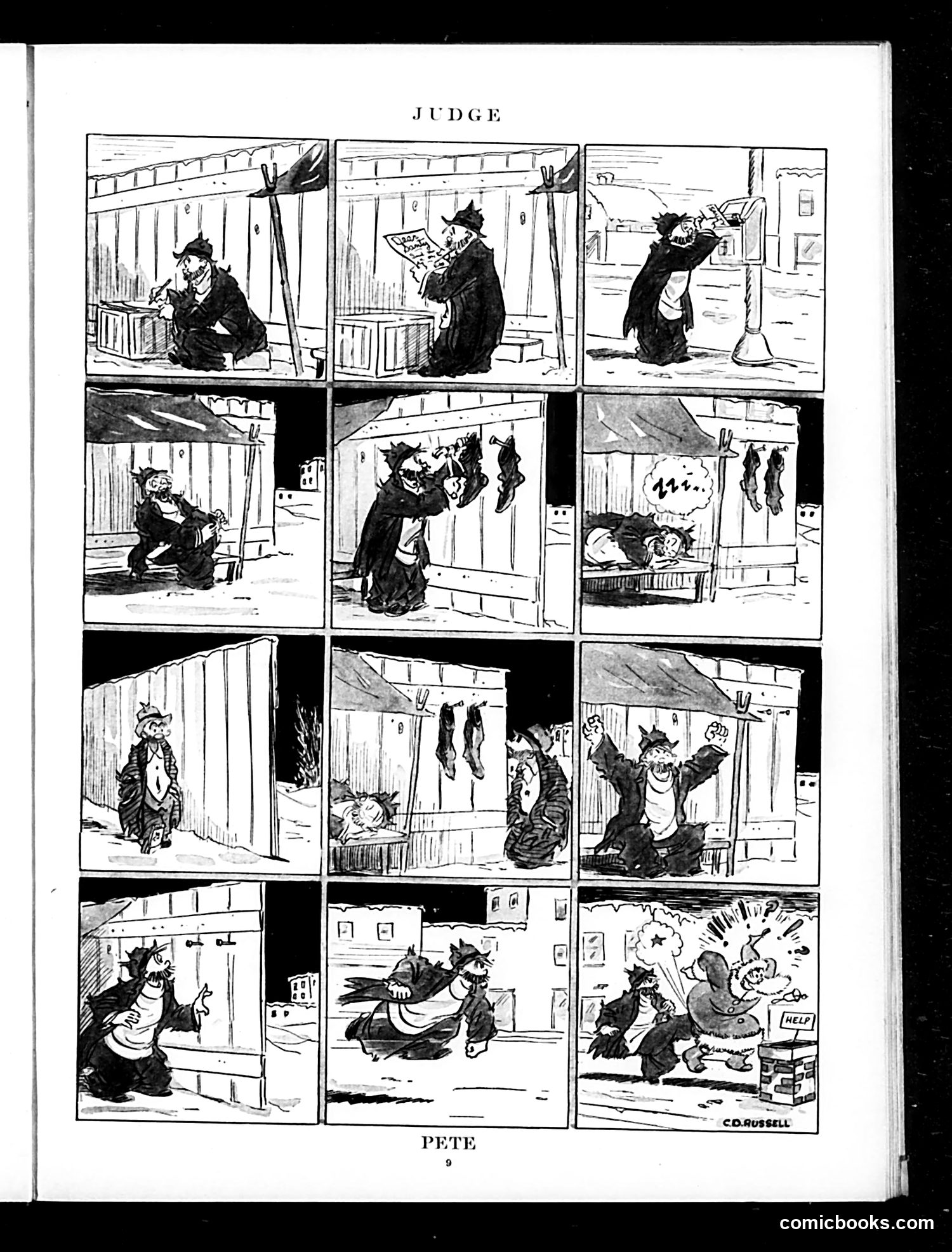
# "Judge" - "Pete" Comic Strip This is a multi-panel comic strip titled "Judge" (credited to C.D. Russell) depicting a character named Pete, appears to be a working-class or vagrant figure in worn clothing and a hat. The narrative follows Pete through various encounters in urban settings—searching through buildings, handling laundry or clothing, sleeping, and eventually encountering what seems to be authority figures or conflict in the final panels, where there's apparent chaos and a "HELP" sign visible. The strip appears to satirize urban poverty, homelessness, or petty crime common to early 20th-century American cities. Pete's shabby appearance and desperate circumstances likely comment on social conditions or serve as darkly comedic observations about urban struggle, typical of Judge magazine's satirical approach.
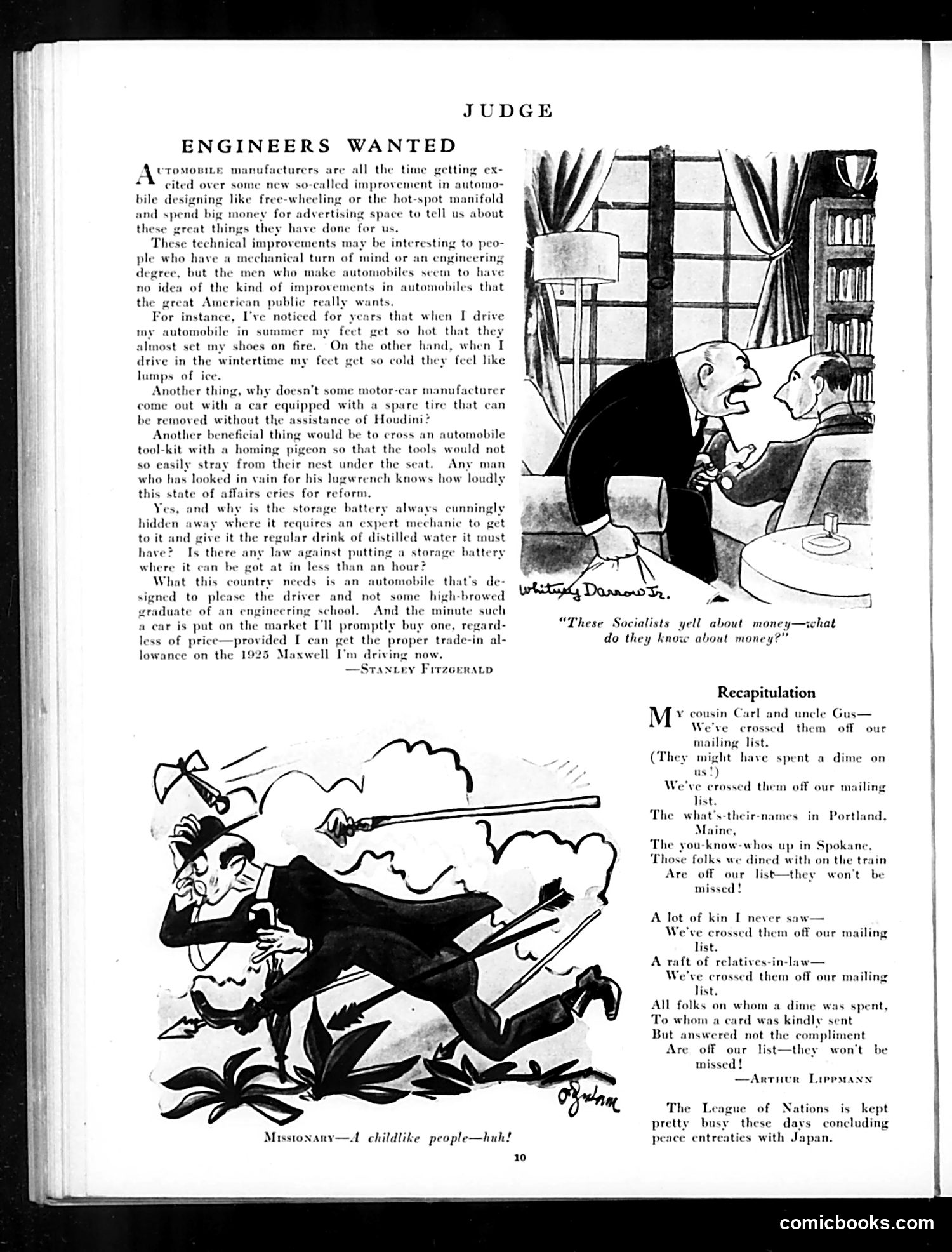
# Explanation for Modern Readers **"Engineers Wanted"** is Stanley Fitzgerald's satirical essay criticizing automobile manufacturers. He argues they obsess over technical innovations (free-wheeling, manifolds) that engineers find impressive but ordinary drivers don't need. Instead, he humorously lists practical problems: feet burning in summer, freezing in winter, spare tires requiring "Houdini" to remove, and storage batteries hidden where mechanics can't service them. The point: car makers design for engineering prestige, not user comfort. **"Missionary"** cartoon depicts a missionary being violently attacked by what's labeled "a childlike people"—appearing to mock Western missionary work and paternalistic attitudes toward non-Western cultures. The irony suggests such missions often ended badly. **"Recapitulation"** by Arthur Lippmann is a humorous poem about pruning one's mailing list of relatives and acquaintances who never reciprocated hospitality or gifts—crossing off those who won't be "missed."