A complete issue · 36 pages · 1931
Judge — June 20, 1931
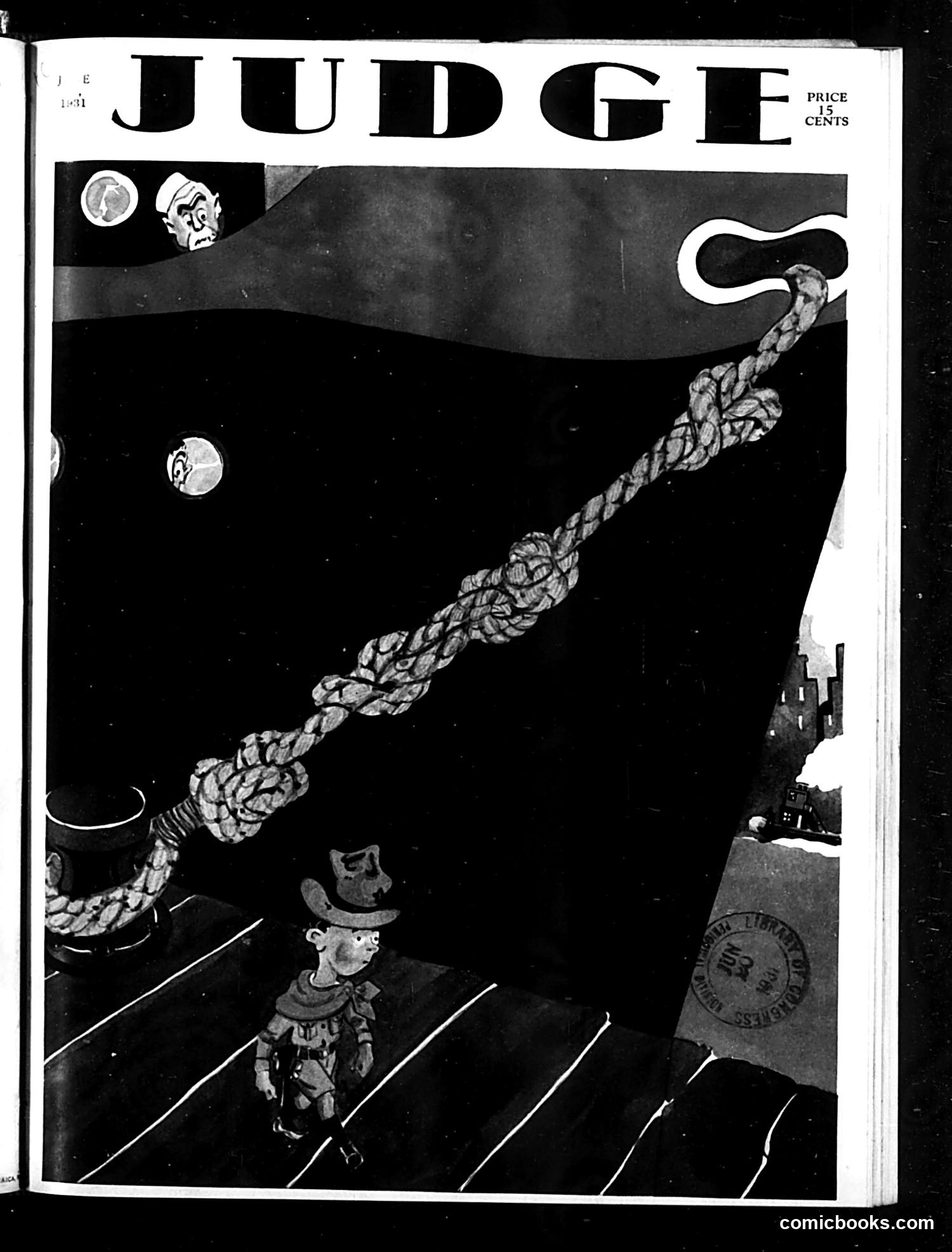
# Analysis of Judge Magazine Cover This appears to be a Judge magazine cover featuring a political cartoon, though the OCR text provided contains only the magazine title and price information, offering no descriptive caption. The illustration shows a caricatured figure in formal dress (top hat and coat) standing below an enormous coiled rope with a noose at its end. The rope dominates the composition. Additional caricatured faces appear in the upper corners. Without the accompanying text or caption, I cannot definitively identify the specific political figure being depicted or the precise historical event being satirized. The noose imagery clearly suggests serious consequences or threat, typical of Judge's often dark political satire from the late 19th or early 20th century. Additional context would be necessary for accurate interpretation.
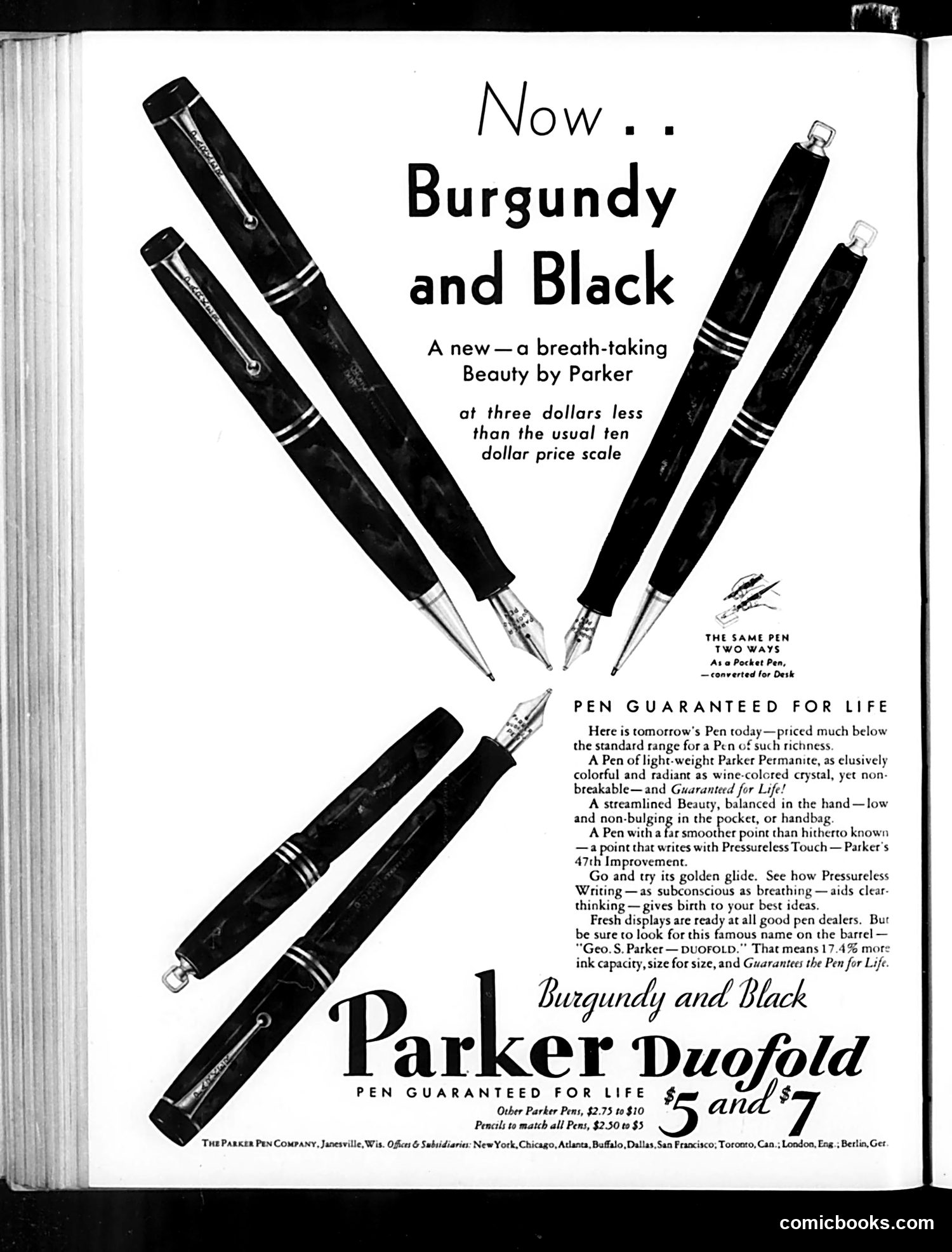
# Analysis This page is **not a cartoon or satirical content**—it's a Parker pen advertisement, likely from the 1920s-1930s based on the design and pricing. The ad promotes the Parker Duofold fountain pen in new "Burgundy and Black" color options, priced at $5 and $7. Key marketing claims include: - "Guaranteed for Life" - "Pressureless Touch" writing technology - A streamlined, pocket-friendly design - Superior quality at lower cost than competitors The "Geo. S. Parker — DUOFOLD" branding appears as the brand's signature mark. Multiple pen angles showcase the product's appearance and dual functionality (as both pocket pen and desk pen). This represents vintage advertising rather than political or social satire.
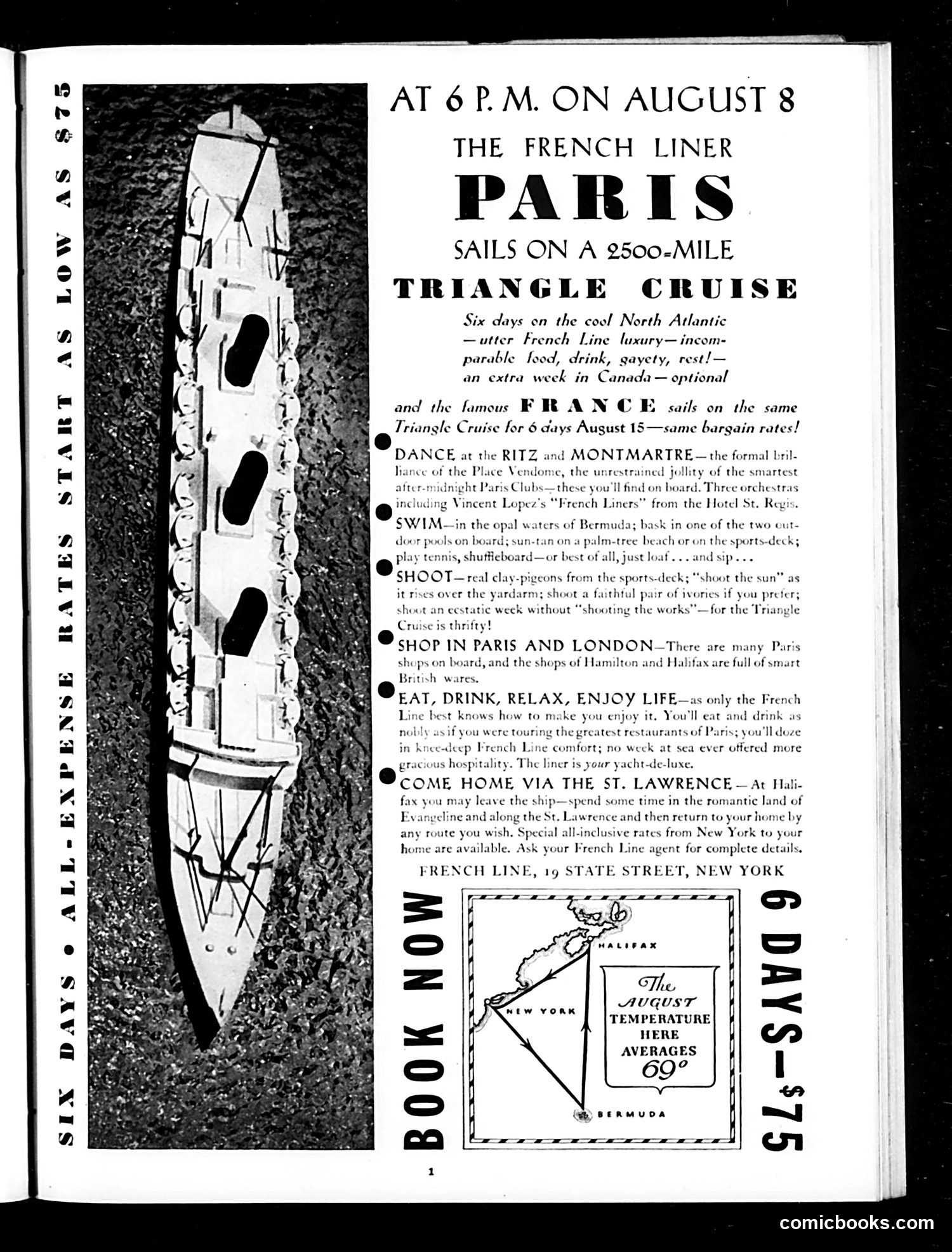
This page is primarily a **travel advertisement**, not a political cartoon. It promotes the French Line's luxury liner *Paris*, advertising a 2,500-mile "Triangle Cruise" departing August 8. The ship's image dominates the left side, shown from above. The ad emphasizes leisure activities aboard—dancing at high-end Paris nightclubs, swimming in pools, shooting clay pigeons, shopping, and fine dining. It promises French hospitality and luxury accommodations. A small map shows the route from New York to Halifax, Bermuda, and back via the St. Lawrence River. The appeal is purely commercial: targeting wealthy Americans seeking European sophistication and leisure during the interwar period. There is **no political satire** visible—this is standard period advertising in *Judge* magazine.
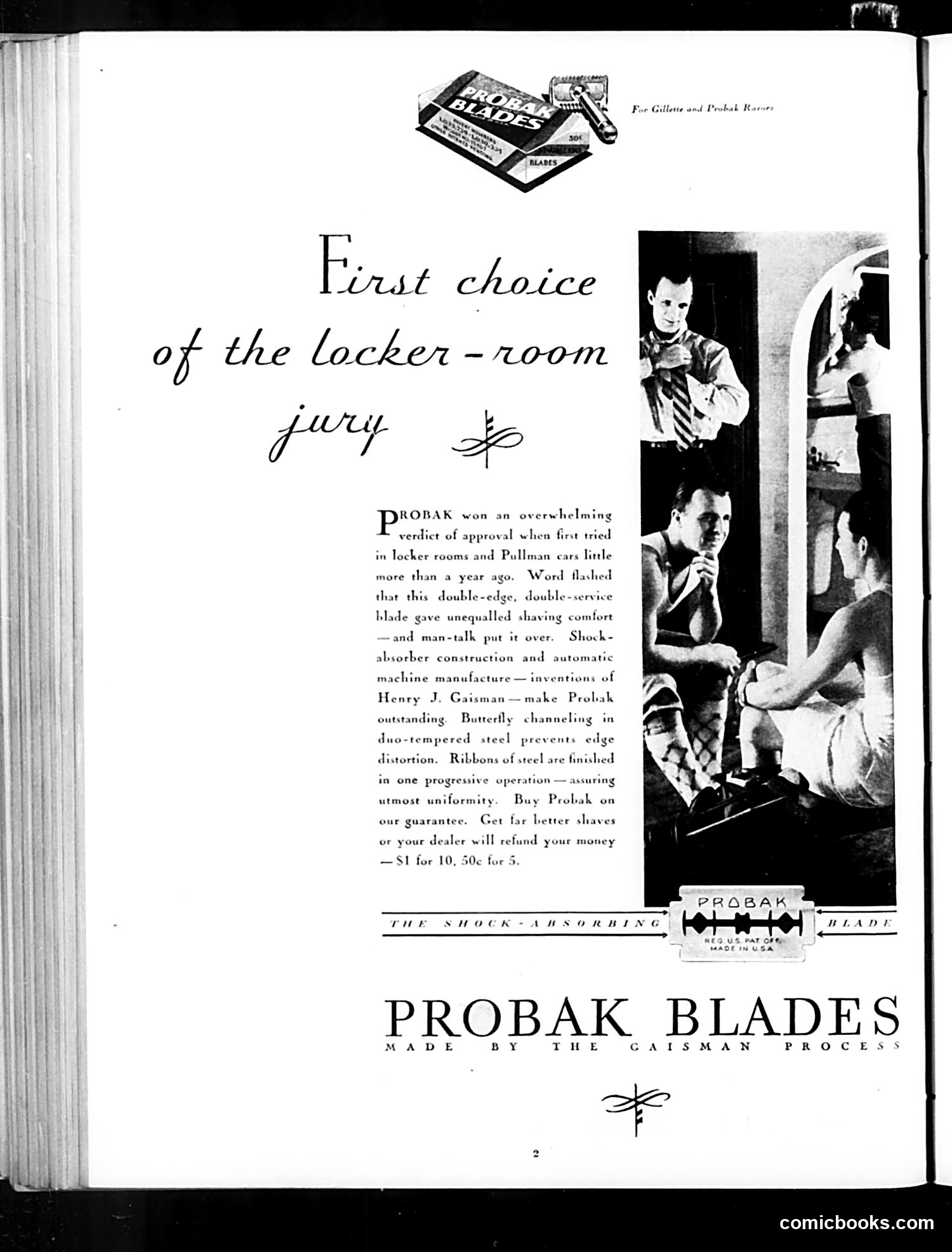
# Probak Blades Advertisement This page is primarily a **commercial advertisement**, not satirical content. It promotes Probak razor blades with the tagline "First choice of the locker-room jury." The ad features photographs of men in what appears to be a locker room setting, presumably depicting athletes or soldiers. The marketing strategy emphasizes product approval through peer endorsement—the "locker-room jury" represents everyday male users vouching for the blade's quality. The copy highlights technical features: "double-edge, double-service blade," shock-absorber construction, and automatic manufacturing by Henry J. Gaisman's inventions. The money-back guarantee ("Get far better shaves or your dealer will refund your money") was a common sales tactic. This reflects early-to-mid 20th century masculine marketing targeting competitive male bonding and practical performance claims rather than luxury appeal.
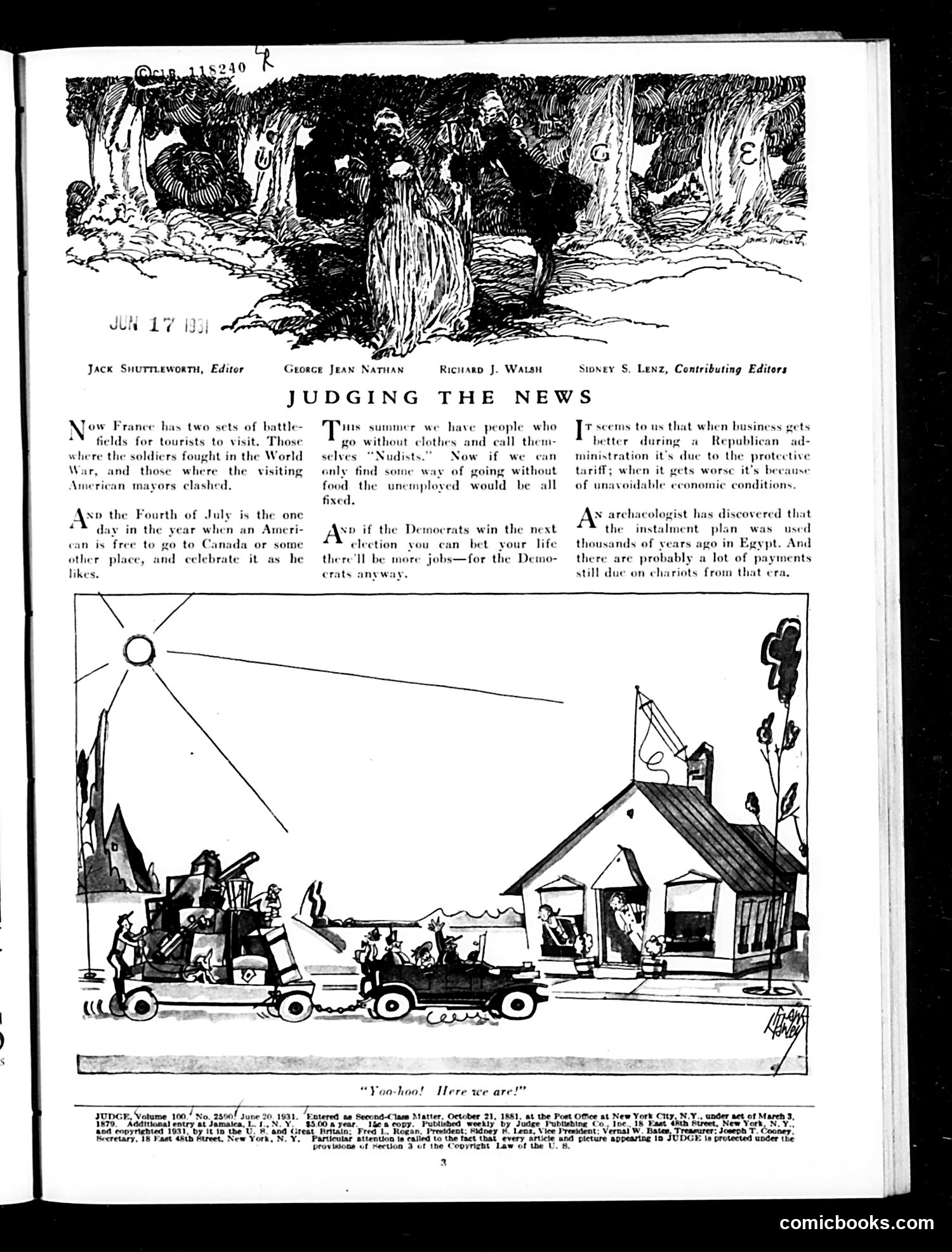
# Analysis of Judge Magazine Page (June 20, 1931) The page features editorial commentary on contemporary issues under the heading "Judging the News." The main cartoon depicts a surreal carnival or fair scene with a train carrying visitors, labeled "You-hoo! Here we are!" The editorial text references: - France's World War battlefields as tourist attractions - Fourth of July celebrations in America - Unemployment and economic hardship (mentioning "nudists" and food for the unemployed) - The 1932 election and Democratic promises of jobs - Ancient Egyptian debts and archaeological discoveries The cartoon appears to satirize American optimism or escapism during the Great Depression era—depicting pleasure-seeking tourism amid economic crisis. The jovial tone of "Here we are!" contrasts sharply with the surrounding text about joblessness and economic suffering, suggesting ironic commentary on misplaced priorities.
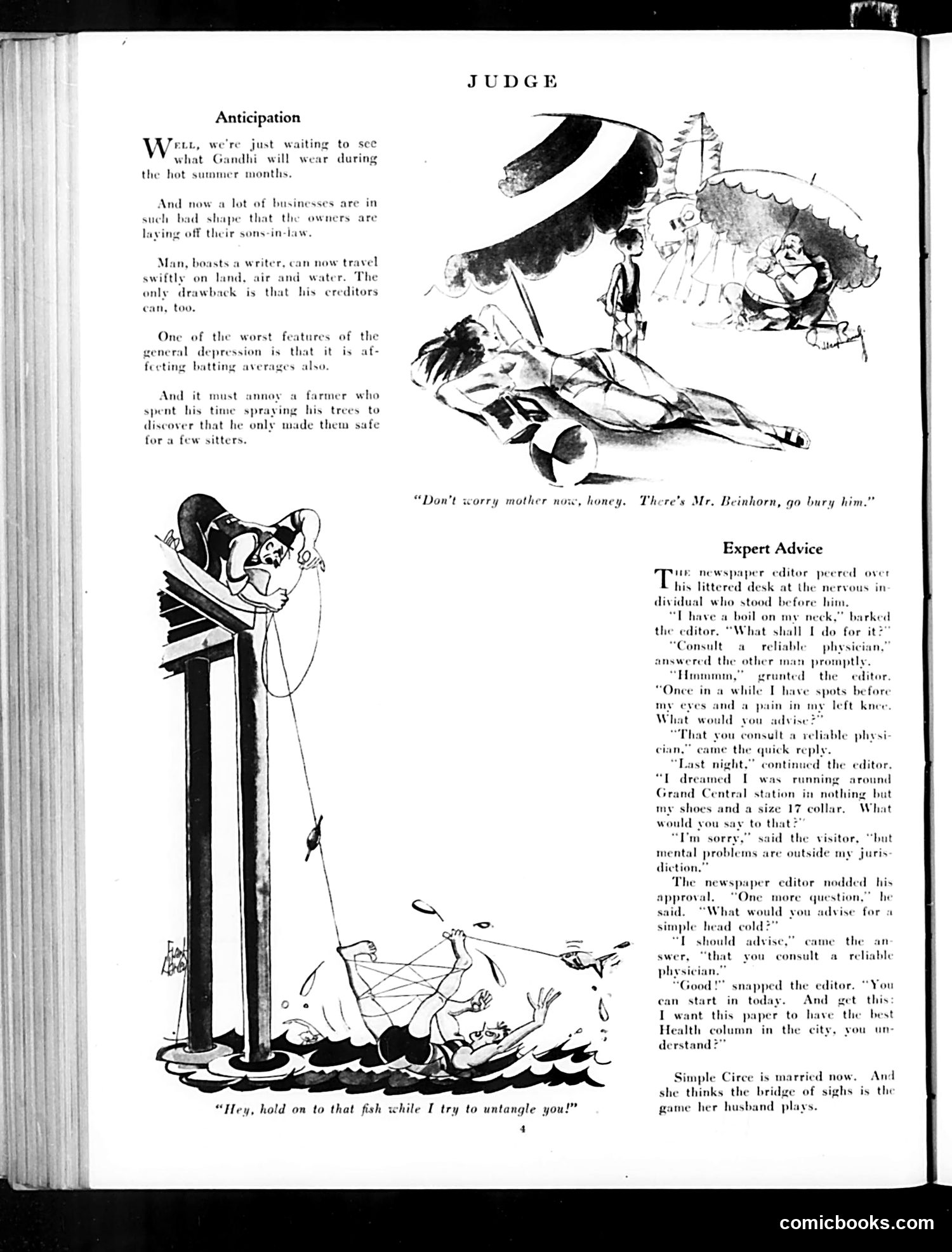
# Analysis of Judge Magazine Page This page contains two separate satirical pieces: **"Anticipation"** (top): Mocks economic hardship during what appears to be the Great Depression. The cartoon depicts someone buried under fallen trees/debris, referenced to Gandhi and business failures. The joke critiques how Depression-era difficulties affect multiple social classes—writers can travel but creditors follow; farmers' tree-spraying efforts backfire. **"Expert Advice"** (bottom): Shows a newspaper editor receiving unwanted medical advice from a visitor. The visitor keeps suggesting he "consult a reliable physician" for various ailments (boil, spots, cold), despite the editor's sarcastic dismissals. The satire mocks both the visitor's repetitive pestering and the era's tendency toward unsolicited advice-giving. Both pieces use humor to comment on contemporary social frustrations and human behavior.
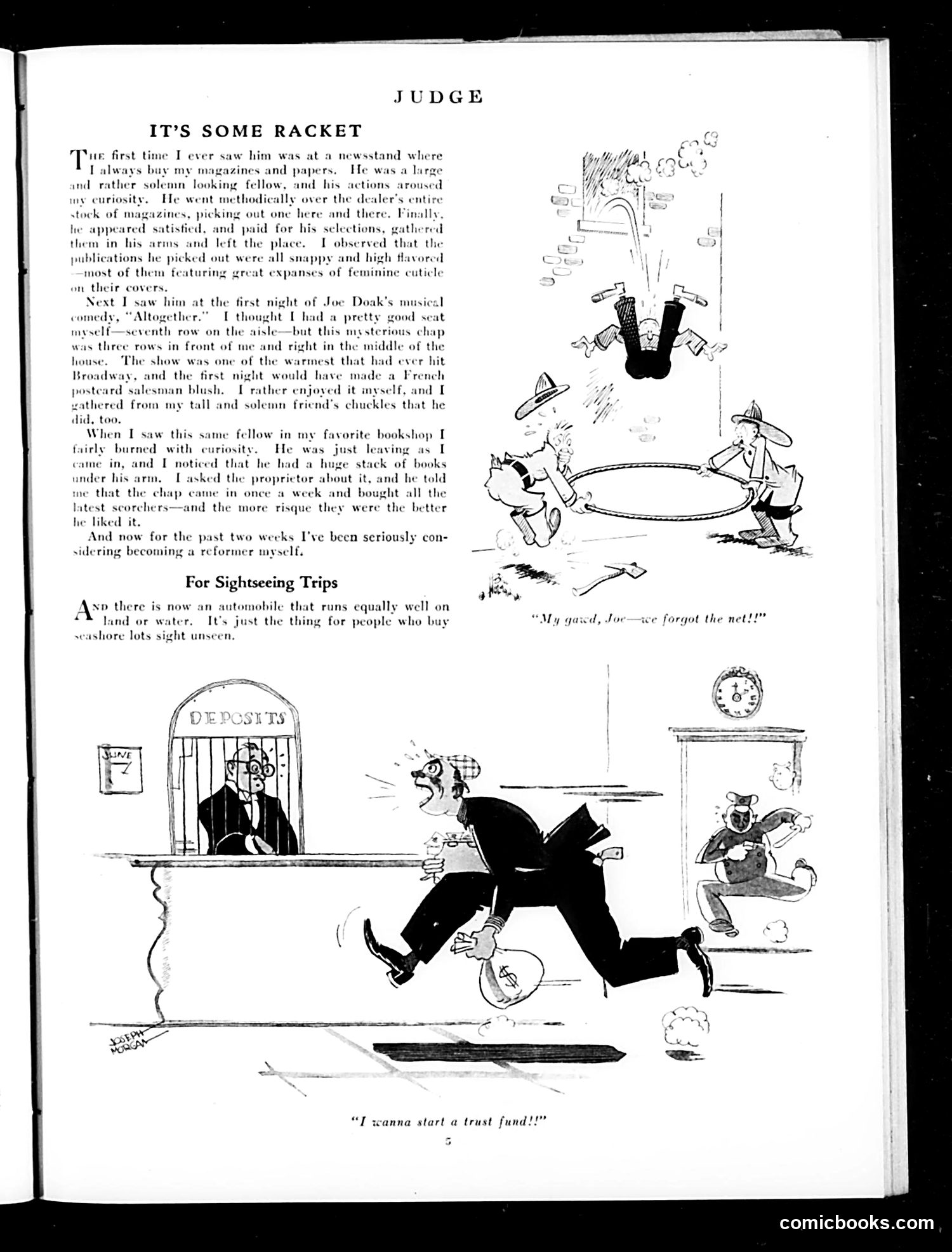
# Analysis of Judge Magazine Page The page contains two distinct cartoons satirizing different topics: **Top cartoon ("My gosh, Joe—we forgot the net!"):** Shows people playing with what appears to be a hula hoop or similar circular object. The humor suggests they've forgotten essential equipment for their activity. **Bottom cartoon ("I wanna start a trust fund!"):** Depicts a man dramatically fleeing from a bank's "DEPOSITS" window, suggesting financial panic or distress. The figure appears to be reacting with exaggerated alarm, likely satirizing either banking anxiety, investment schemes, or financial instability during an unspecified period. The prose section discusses an encounter with a mysterious fellow at newsstands and bookshops who buys "snappy and high flavored" publications, followed by commentary on a newfangled amphibious automobile. The exact historical period remains unclear without additional context.
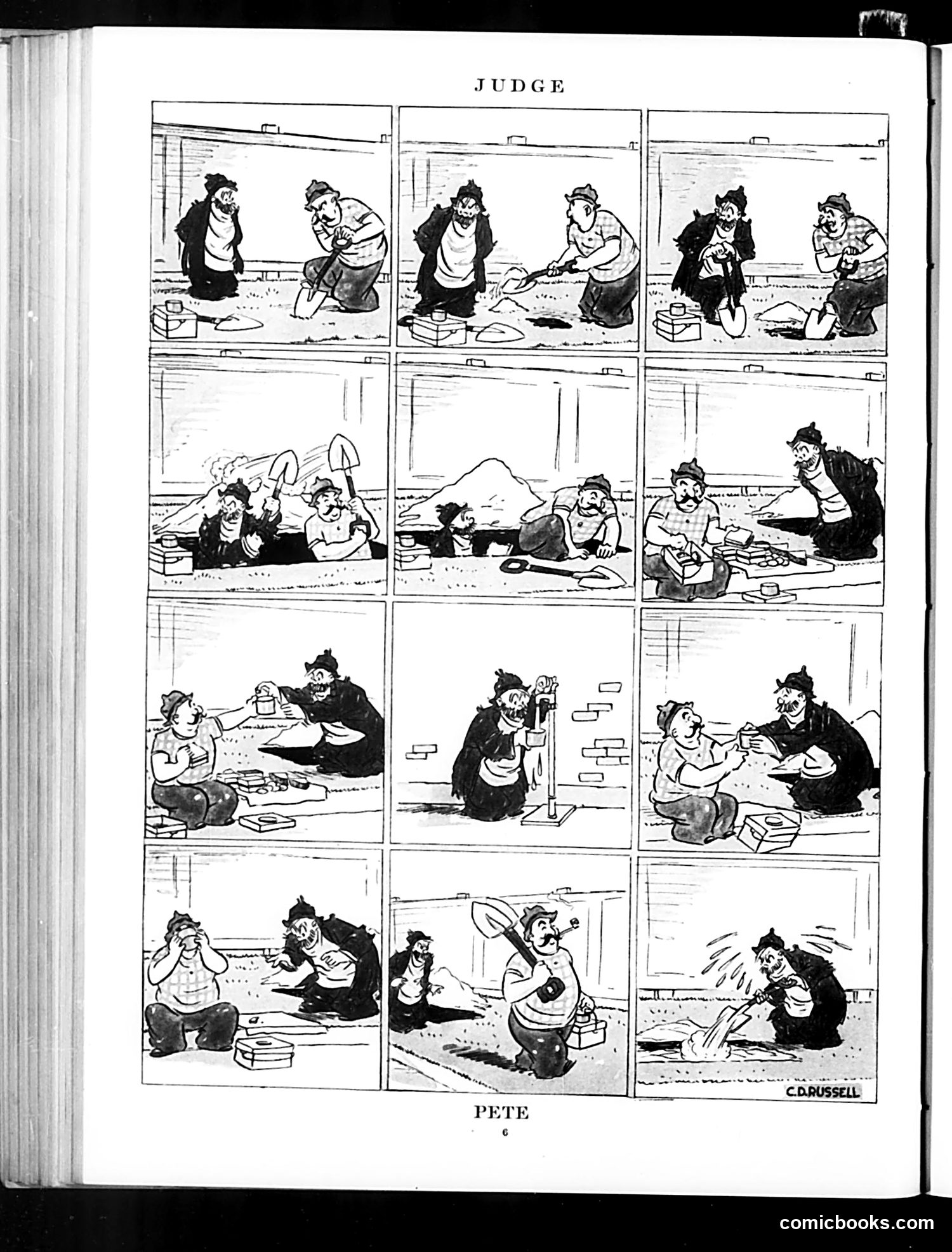
# Judge Magazine Comic: "Judge" and "Pete" This appears to be a sequential comic strip by Carluselli showing a domestic dispute or conflict between two characters. The narrative follows one figure (appearing to be a judge or authority figure in dark clothing) and another character in lighter clothing through a series of escalating confrontations. The strip depicts physical comedy and slapstick humor typical of early 20th-century Judge magazine content. Characters are shown wrestling, struggling over objects, and engaging in roughhousing. The final panels show increasingly chaotic action with motion lines suggesting violence or intense physical struggle. Without clear historical context or captions visible, the specific social commentary or political reference remains unclear, though the domestic conflict theme was common in period humor.
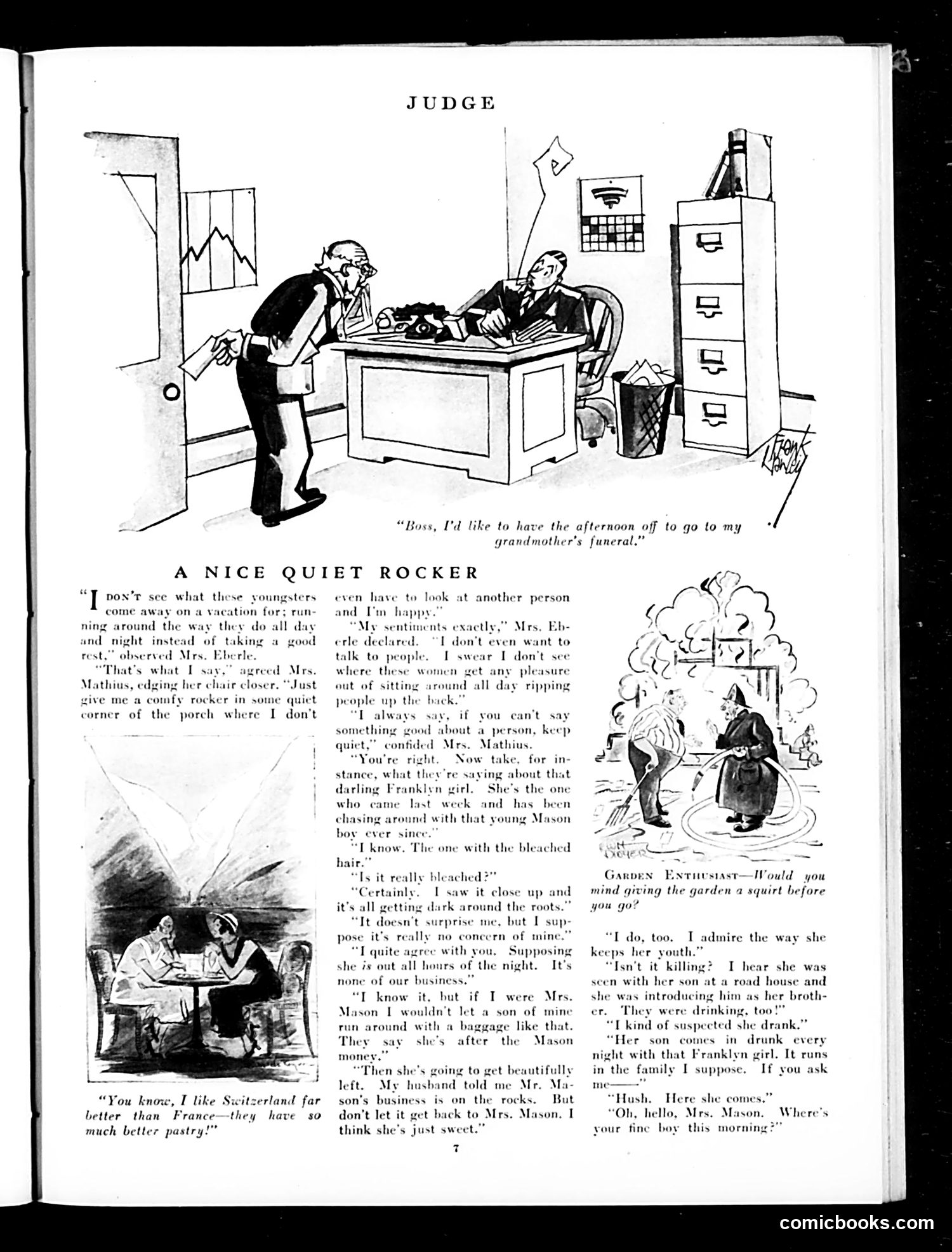
# Satire of Gossip and Hypocrisy This page satirizes the disconnect between what respectable people *claim* to value and what they actually do. The top cartoon shows a boss denying an employee's request for a funeral—suggesting callous indifference to human dignity. The main story, "A Nice Quiet Rocker," depicts two women (Mrs. Eberle and Mrs. Mathius) who proclaim they dislike gossip and don't want to judge others. Yet they immediately proceed to viciously tear apart a young woman named Franklyn—criticizing her bleached hair, her romantic behavior, her family's finances, and her drinking. When Mrs. Mason appears, they instantly shift to false pleasantries. The satire's point: these women are hypocrites who engage in exactly the character assassination they claim to despise. The "nice quiet rocker" they desire masks their active participation in small-town rumor-mongering and social cruelty. It's a critique of how respectability and morality were performative—adopted for public appearance while private behavior told a different story.
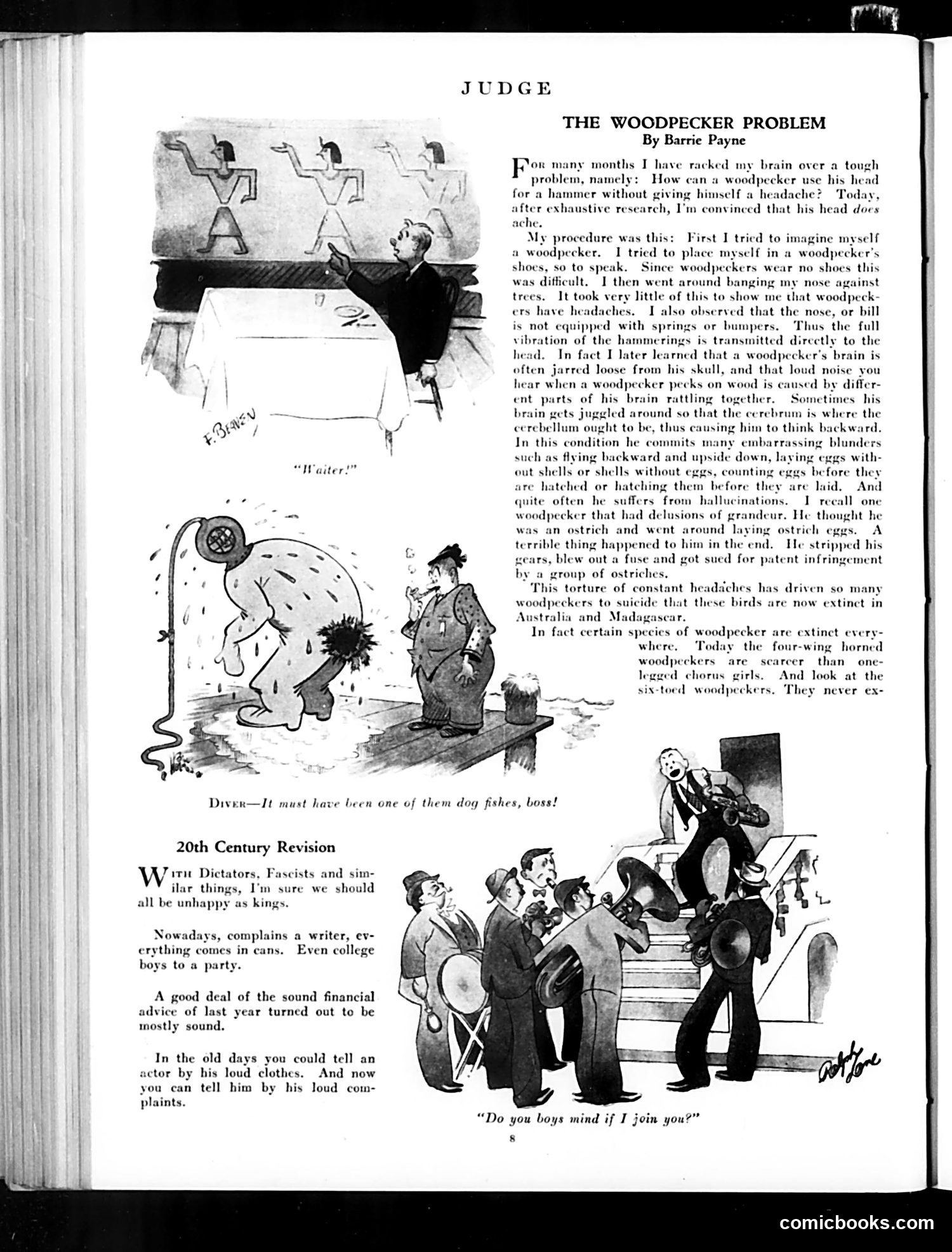
# "The Woodpecker Problem" – Judge Magazine Satire This humorous article by Barrie Payne uses the woodpecker as a vehicle for absurdist comedy. The author facetiously investigates how woodpeckers avoid headaches while pecking, concluding they actually *do* get headaches—and suffer serious neurological damage. His "research" includes banging his own nose against trees. The satire escalates wildly: woodpeckers supposedly go mad from repeated head trauma, experiencing brain displacement, backward flight, and delusional behavior (one thinks it's an ostrich). The punchline claims this has driven entire woodpecker species to extinction. This appears to be pure nonsense humor—a parody of pseudo-scientific investigation popular in early 20th-century writing. The accompanying cartoons show absurd situations (a waiter bewildered by a diner's complaint; a diving accident blamed on "dog fishes"). The "20th Century Revision" section below shifts to brief social commentary on dictators, canned goods, and actors' loud complaints—typical Judge magazine satirical observations on contemporary life and manners.
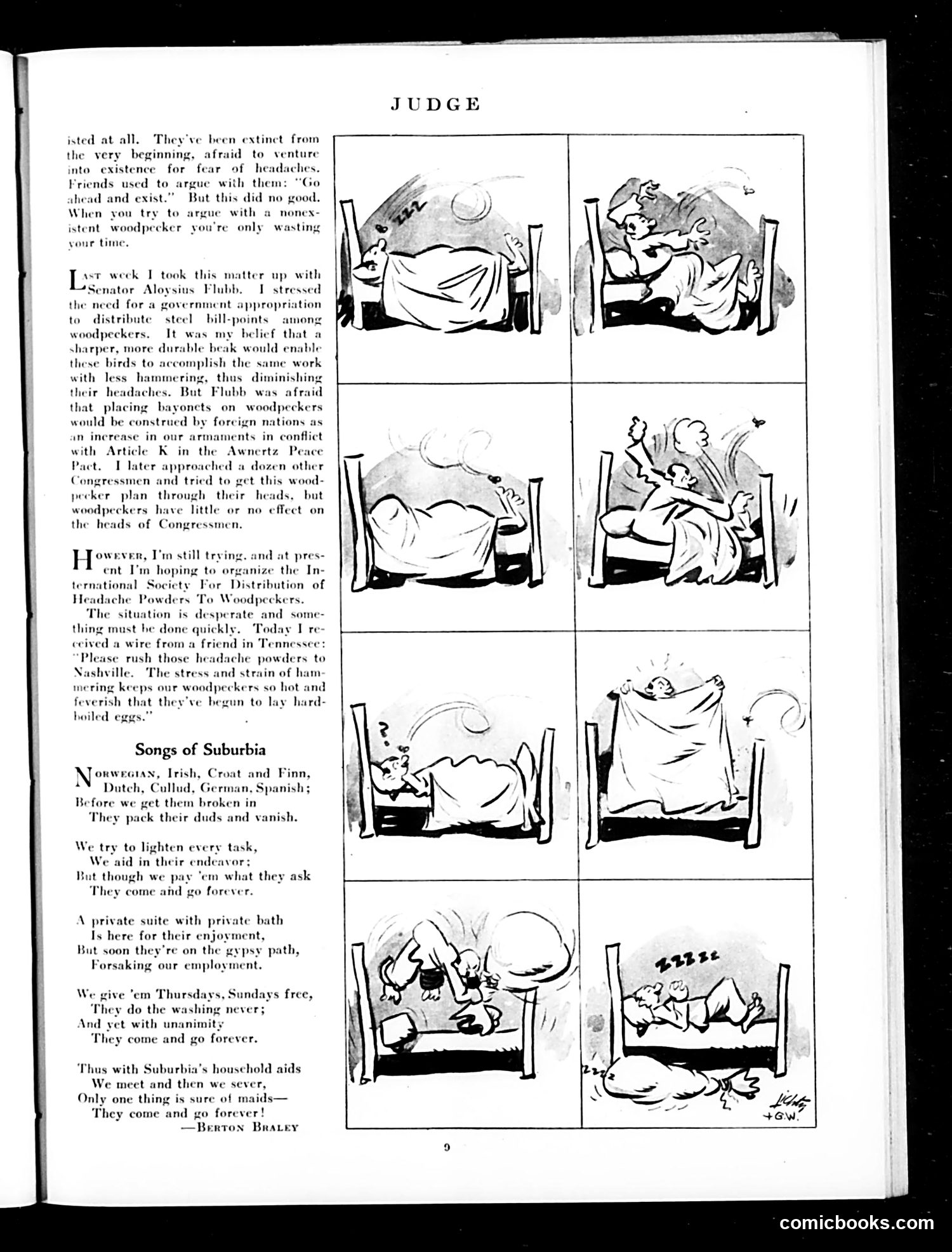
# Judge Magazine Page Analysis This page contains two distinct pieces of satirical content: **The Woodpecker Absurdist Satire:** The main narrative mocks government inefficiency and Cold War anxiety. A narrator proposes distributing steel bill-points to woodpeckers to reduce their headaches from pecking. Senator Aloysius Flubb rejects this, fearing foreign nations might interpret it as an armament increase violating the "Anwertz Peace Pact" (a fictional reference). The satire targets politicians' paralysis over trivial matters due to international relations paranoia—suggesting Congress is so concerned with appearing non-threatening abroad that it cannot address even absurd domestic problems. **"Songs of Suburbia" Poem:** This light verse by Berton Blakey satirizes the servant/domestic help problem in American suburbs. It humorously catalogs immigrant and ethnic workers (Norwegian, Irish, Croatian, Dutch, etc.) who quit domestic positions despite good wages and working conditions. The repetitive refrain "They come and go forever" mocks suburban employers' frustration with high turnover while implicitly acknowledging their inadequate treatment of staff. Both pieces reflect post-war American anxieties: Cold War paranoia and changing labor dynamics.
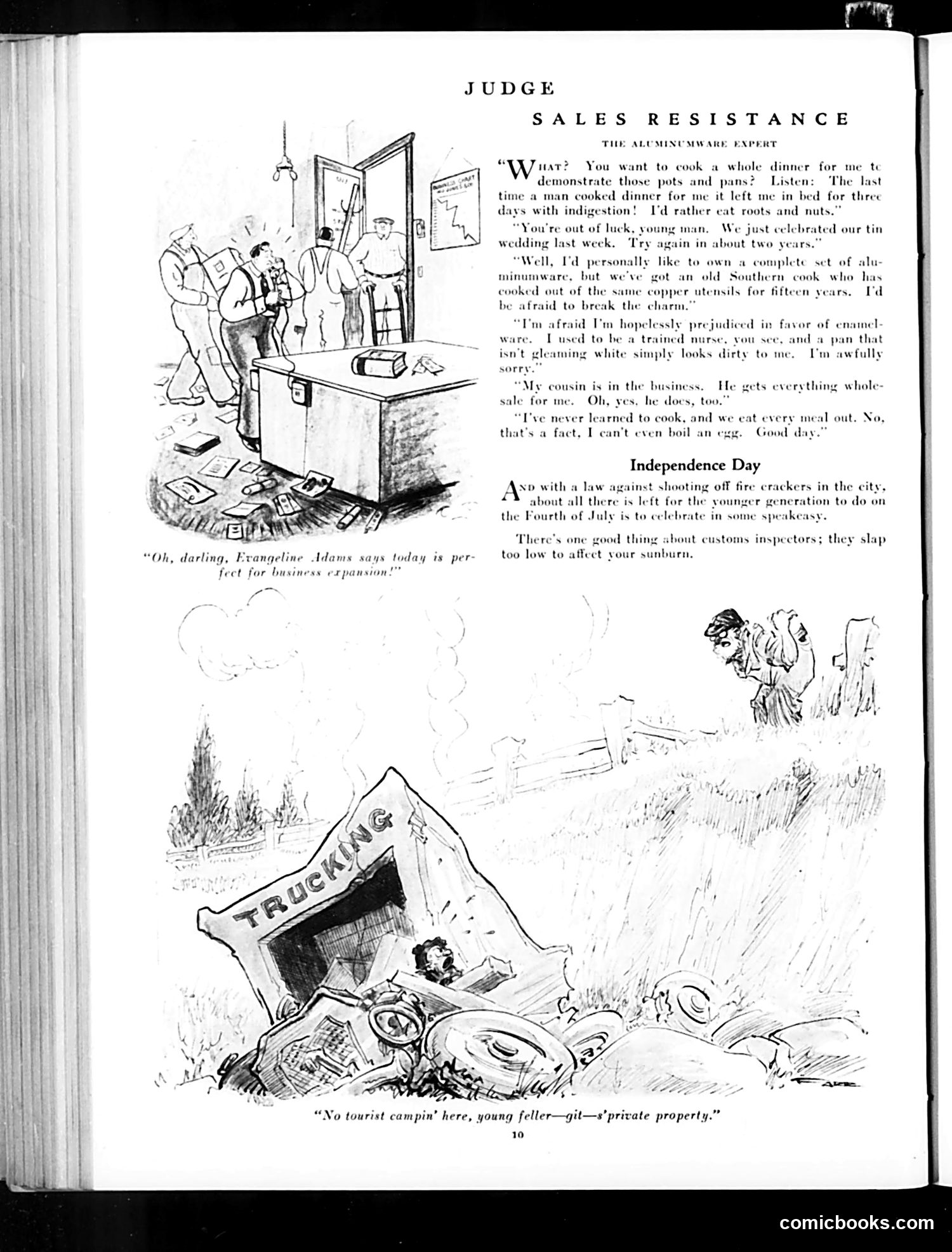
# Analysis of Judge Magazine Page This page contains two satirical pieces about American consumer culture and social customs. **"Sales Resistance"** depicts a salesman's failed pitch for aluminum cookware. The humor lies in the excuses given by resistant housewives: one claims previous cooking gave her indigestion; another just celebrated a tin wedding and won't replace cookware; a third trusts her Southern cook's copper pans; a fourth, a former nurse, insists only gleaming enamel looks sanitary; a fifth never learned to cook. The final woman mentions her cousin in business gets wholesale rates—implying she'll buy through him anyway, undercutting the salesman. The satire mocks both aggressive sales tactics and consumer reluctance to adopt new products. **"Independence Day"** comprises two cartoons: one about fireworks bans leaving youth with "soot-black" sunburns from customs inspectors, and another showing a man in a broken-down truck on private property being told to leave. The humor targets holiday restrictions and property rights enforcement.