A complete issue · 36 pages · 1931
Judge — April 4, 1931
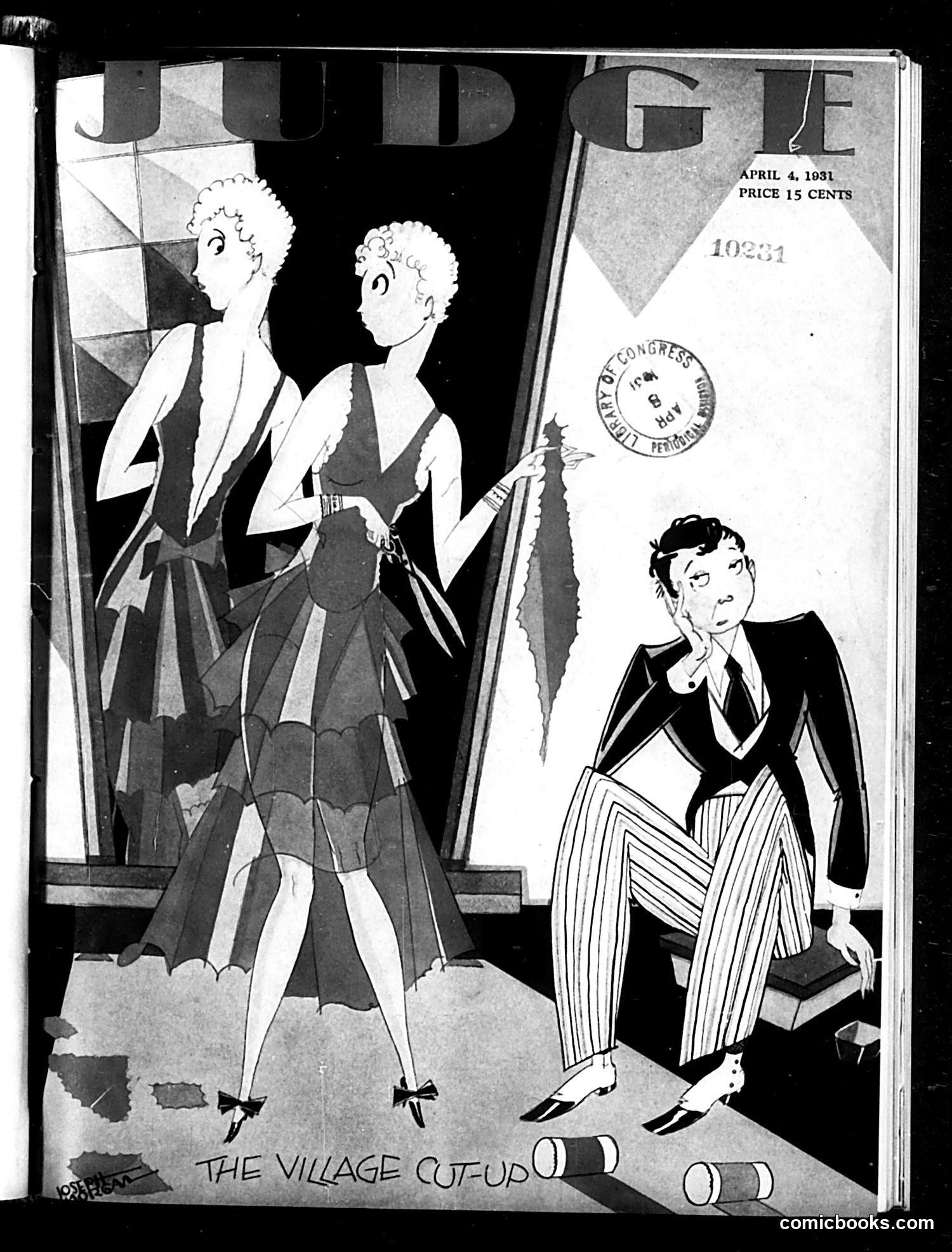
# "The Village Cut-Up" — Judge Magazine, April 4, 1931 This cartoon satirizes the contrast between fashionable women and a disapproving man, likely a conservative figure representing traditional morality or village respectability. The two elegantly dressed women display the modern "flapper" style of the 1920s-30s—short skirts, bobbed hair, and confident bearing—embodying the social freedoms that shocked conservative America during this era. The scowling man on the right, labeled "The Village Cut-Up," appears to represent the hypocrite or killjoy who publicly condemns modern women's fashion and behavior while privately enjoying their company or struggling with his own contradictions. The satire mocks small-town moral gatekeepers who lectured against changing social norms they couldn't prevent.
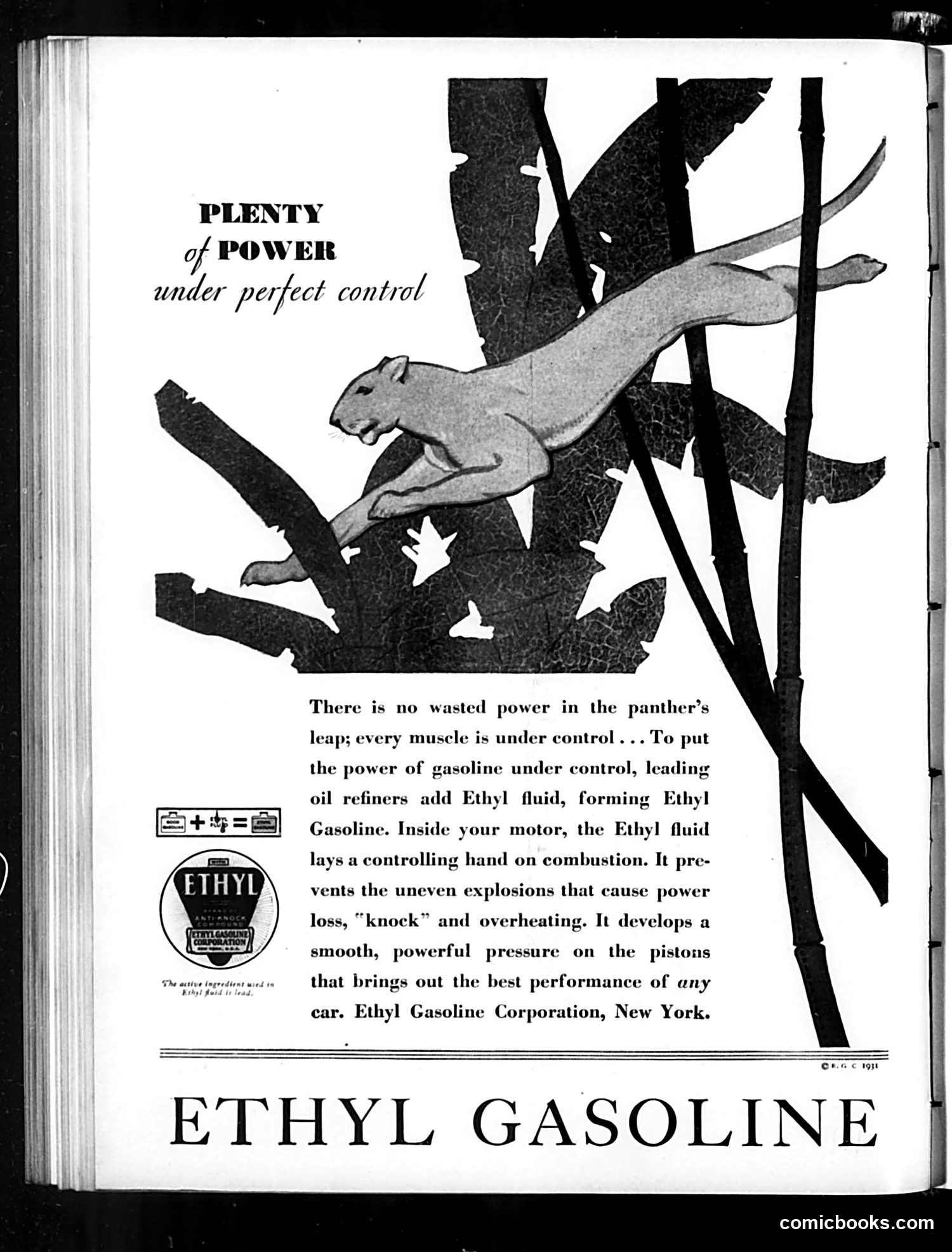
# Analysis of Ethyl Gasoline Advertisement This is **not a satirical cartoon** but rather a **straightforward product advertisement** for Ethyl Gasoline, published in Judge magazine. The page uses a panther climbing a tree as a metaphor for controlled power and efficiency. The accompanying text compares the gasoline's performance to the panther's muscular control—"every muscle is under control." The advertisement explains that Ethyl fluid additive prevents engine "knock" and uneven combustion, delivering smoother, more powerful performance. The chemical formula shown (lead-based additives, though not explicitly stated here) was standard in mid-20th century gasoline marketing. This represents typical vintage advertising that appeared in satirical magazines, though the content itself is purely promotional rather than satirical.
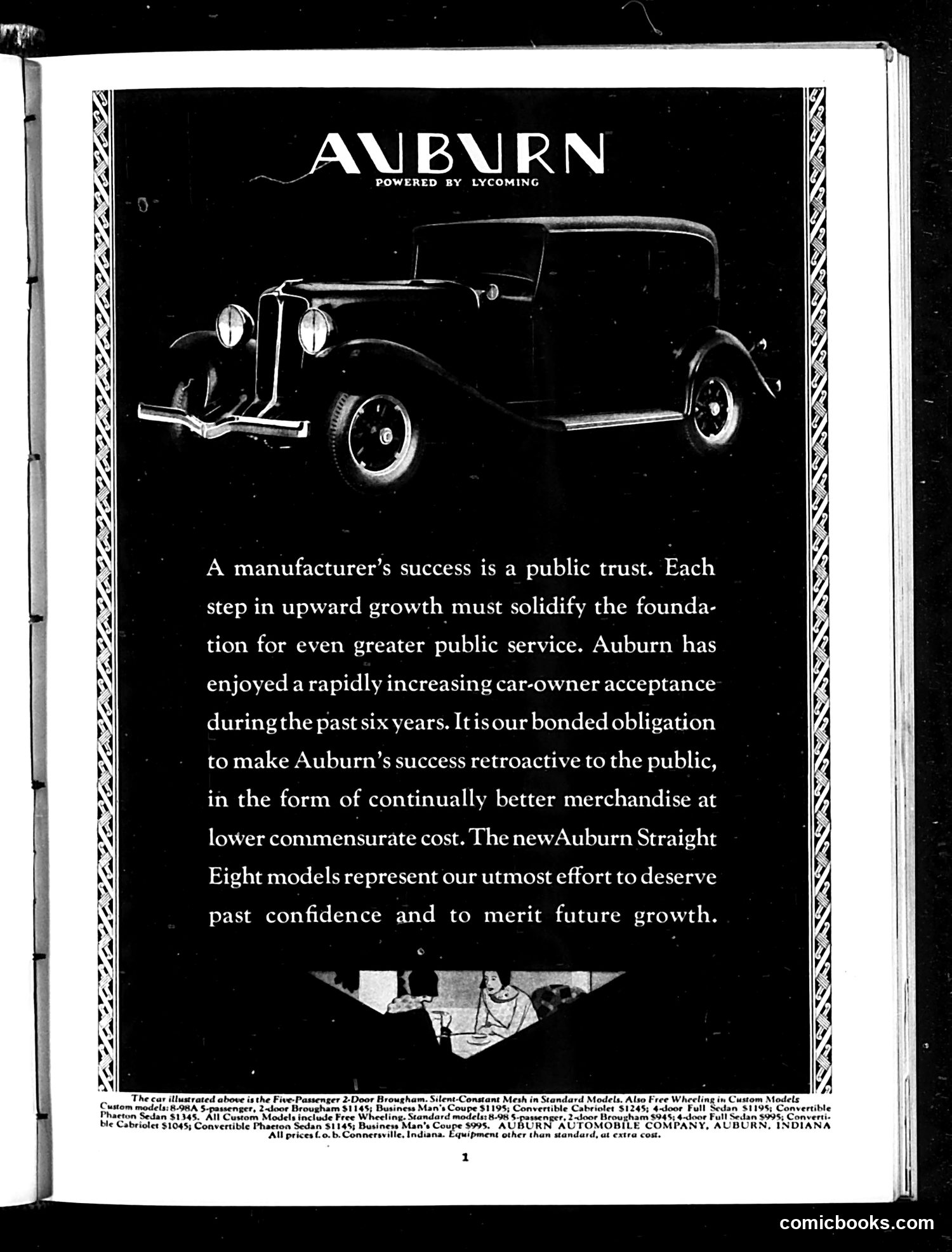
# Auburn Automobile Advertisement This page is **primarily an advertisement**, not a political cartoon. It promotes Auburn automobiles, specifically their new "Straight Eight" models, powered by Lycoming engines. The ad uses rhetorical appeals rather than satire: it frames Auburn's manufacturing success as a "public trust," arguing the company has earned customer loyalty over six years and now owes continued improvement. The messaging suggests Auburn is delivering better cars at lower costs to deserve "past confidence and merit future growth." The image shows a sleek 1920s-era automobile. The small photograph at bottom appears to show factory workers or manufacturing scenes, reinforcing Auburn's commitment to quality production. This represents typical early automotive-era advertising that emphasized reliability, value, and the manufacturer's social responsibility to consumers.
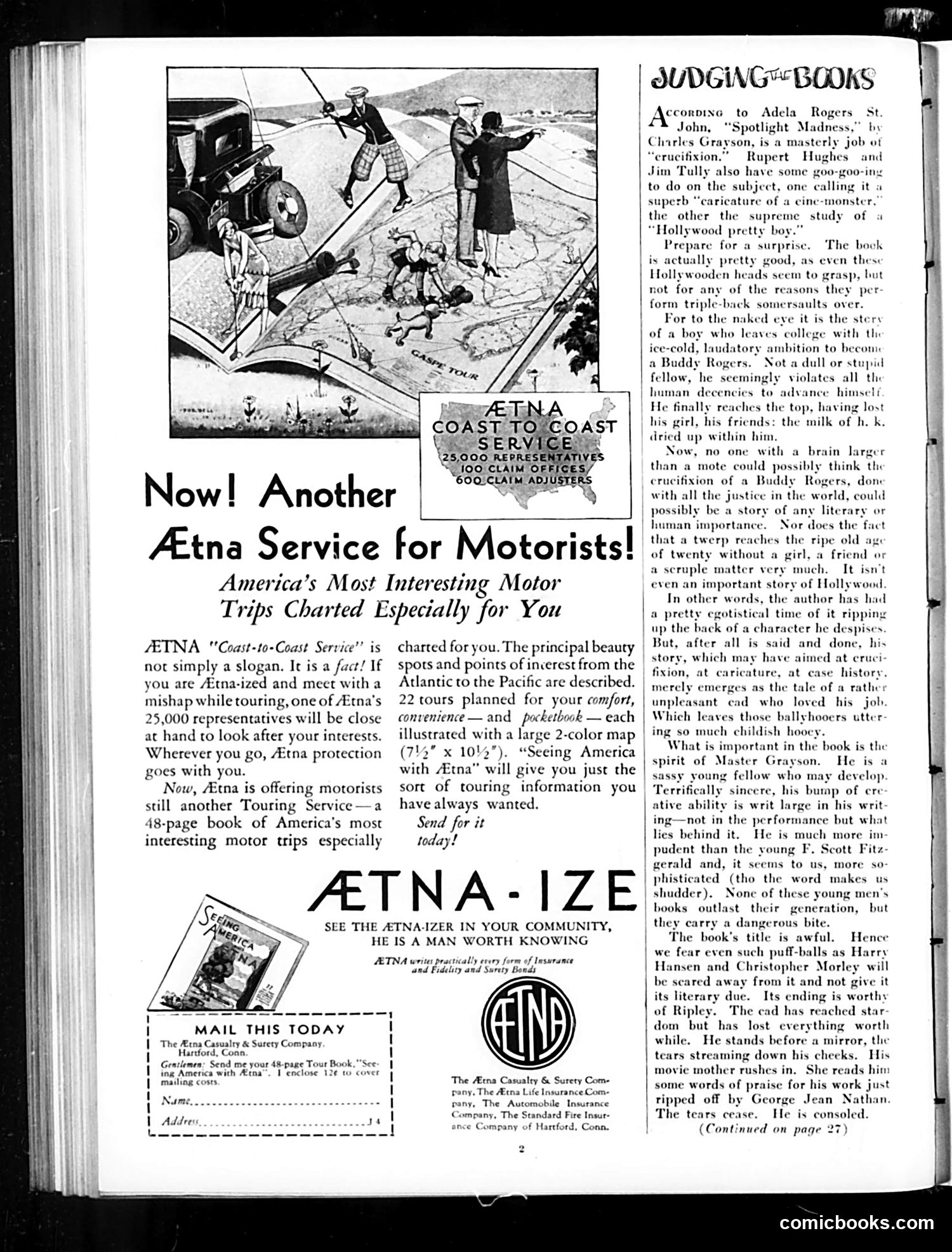
# Analysis of This Judge Magazine Page This page is primarily **advertising content** rather than political satire. The main feature promotes Ætna Insurance's new "Coast-to-Coast Service" for motorists, offering touring guides and roadside assistance across America. The cartoon at top illustrates the service's appeal: a motorist's car has broken down, and Ætna representatives arrive to help while the family waits. The map shows Ætna's 25,000 representatives and claim offices nationwide. The right column contains a book review ("Judging the Books") critiquing what appears to be a Hollywood novel about an ambitious young man. The reviewer notes the story lacks substance despite competent writing. **The page reflects 1920s consumer culture**: automobile travel was becoming popular, and insurance companies were marketing protection and peace-of-mind to middle-class drivers.
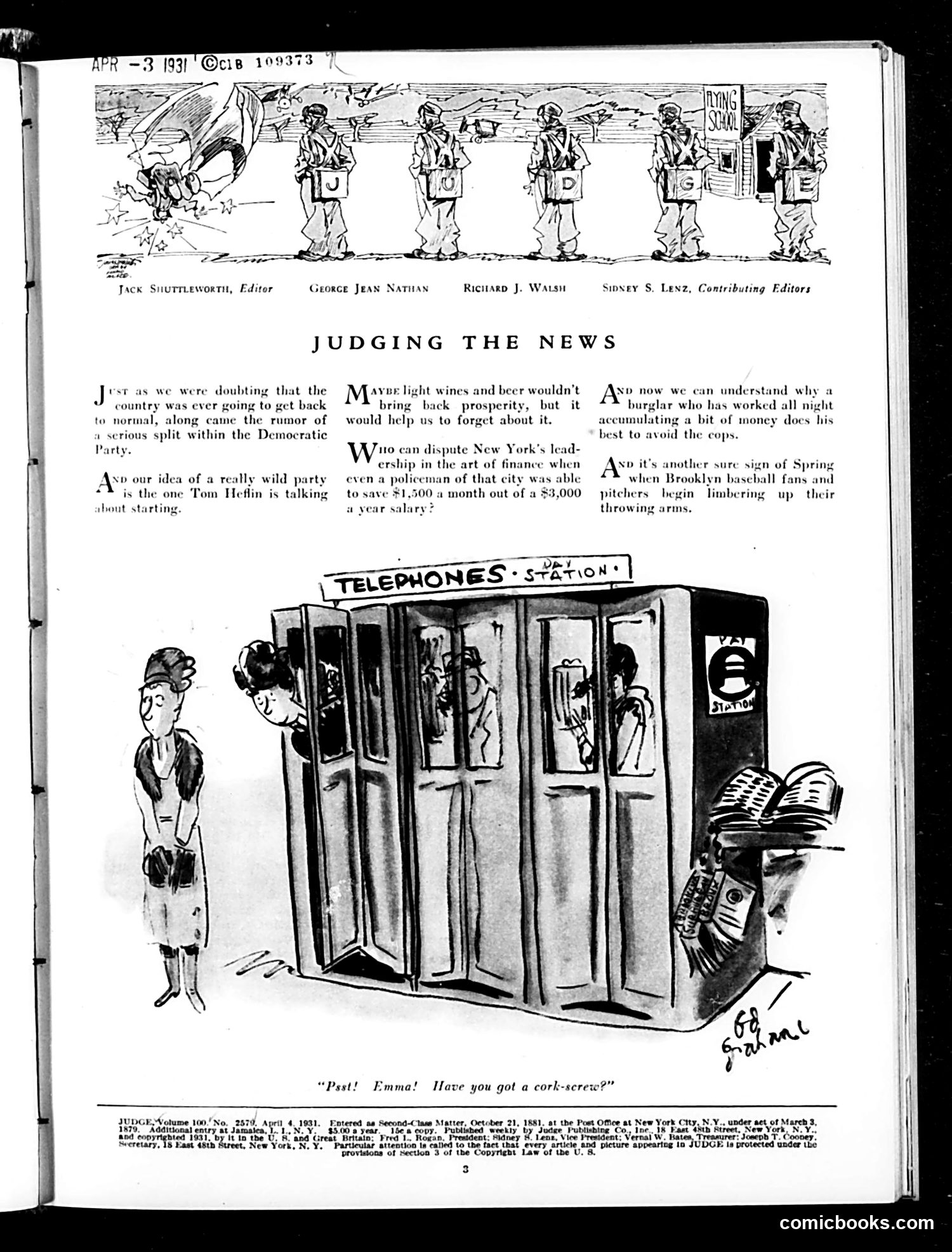
# Explanation for Modern Readers This 1931 *Judge* magazine page contains two elements: **"Judging the News"** (top): A brief editorial section commenting on current events, including remarks about Democratic Party divisions, a "wild party" involving Tom Heflin, light wines/beer, New York's financial leadership, and Brooklyn baseball season. **Main Cartoon** (bottom): Depicts a "Telephone Station" with multiple phone booths. A woman outside asks another, "Pest! Emma! Have you got a cork-screw?" The joke appears to reference Prohibition (which ended in 1933)—the woman is seeking a tool to open bottles, suggesting people were circumventing alcohol restrictions through phone booths or other hidden means. The cartoon satirizes how commonplace illegal drinking had become during the late Prohibition era.
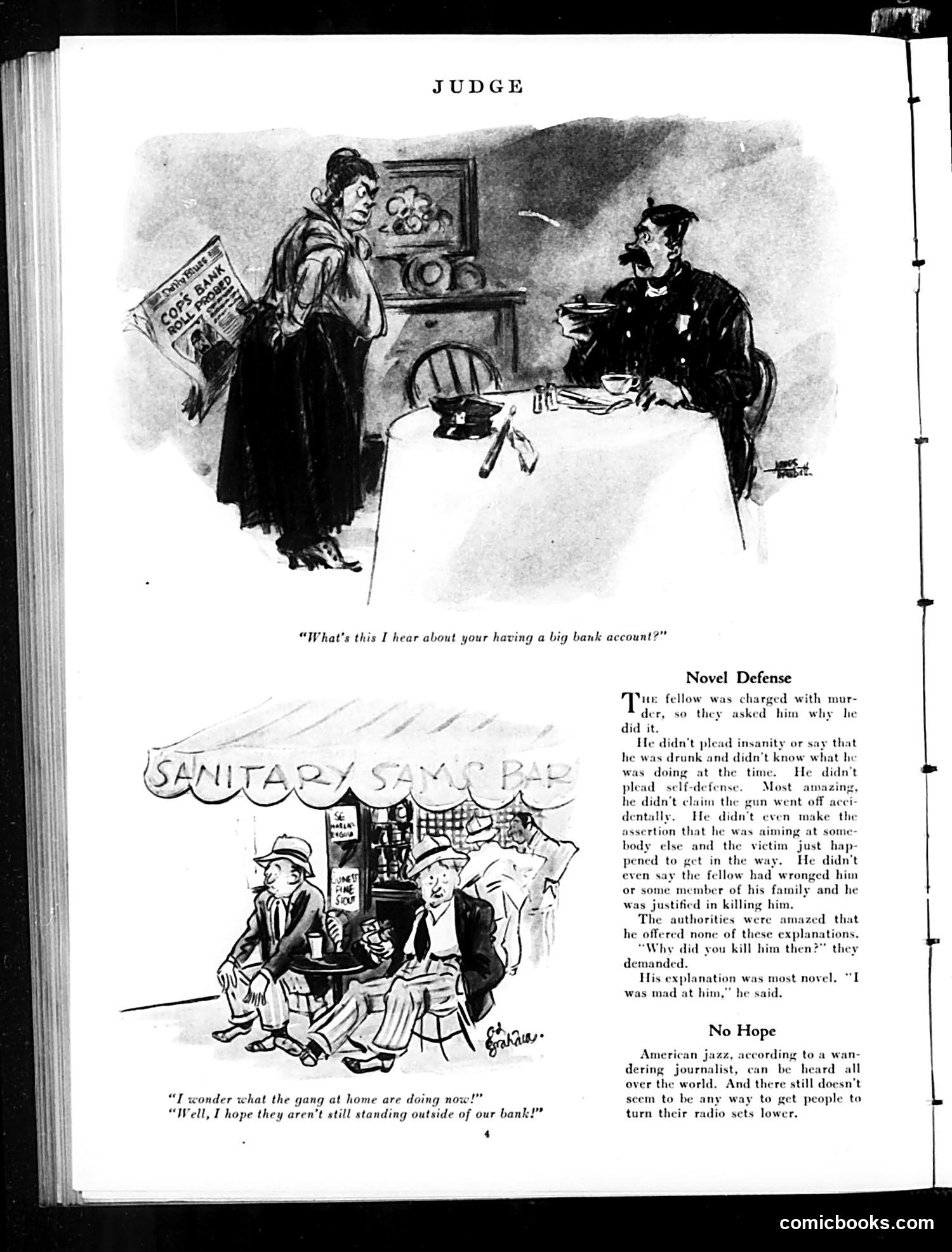
# Analysis of Judge Magazine Page **Top Cartoon ("Judge"):** A man holding a newspaper reading "COTT BANK" stands before a judge's desk. The judge asks about his "big bank account," suggesting he's being questioned about substantial finances—likely during legal proceedings. The satire appears to mock either wealth inequality or the assumption that financial status automatically grants judicial favor. **Bottom Cartoon ("Sanitary Sarcasm"):** Two men in a tenement or poor neighborhood discuss a gang, hoping "they aren't still standing outside of our bank." The humor is bitterly ironic: impoverished residents jokingly reference protecting *their* bank—suggesting they have no real bank account or assets worth protecting. **"No Hope" Section:** Commentary on American jazz's global spread and radio's inability to control public listening habits.
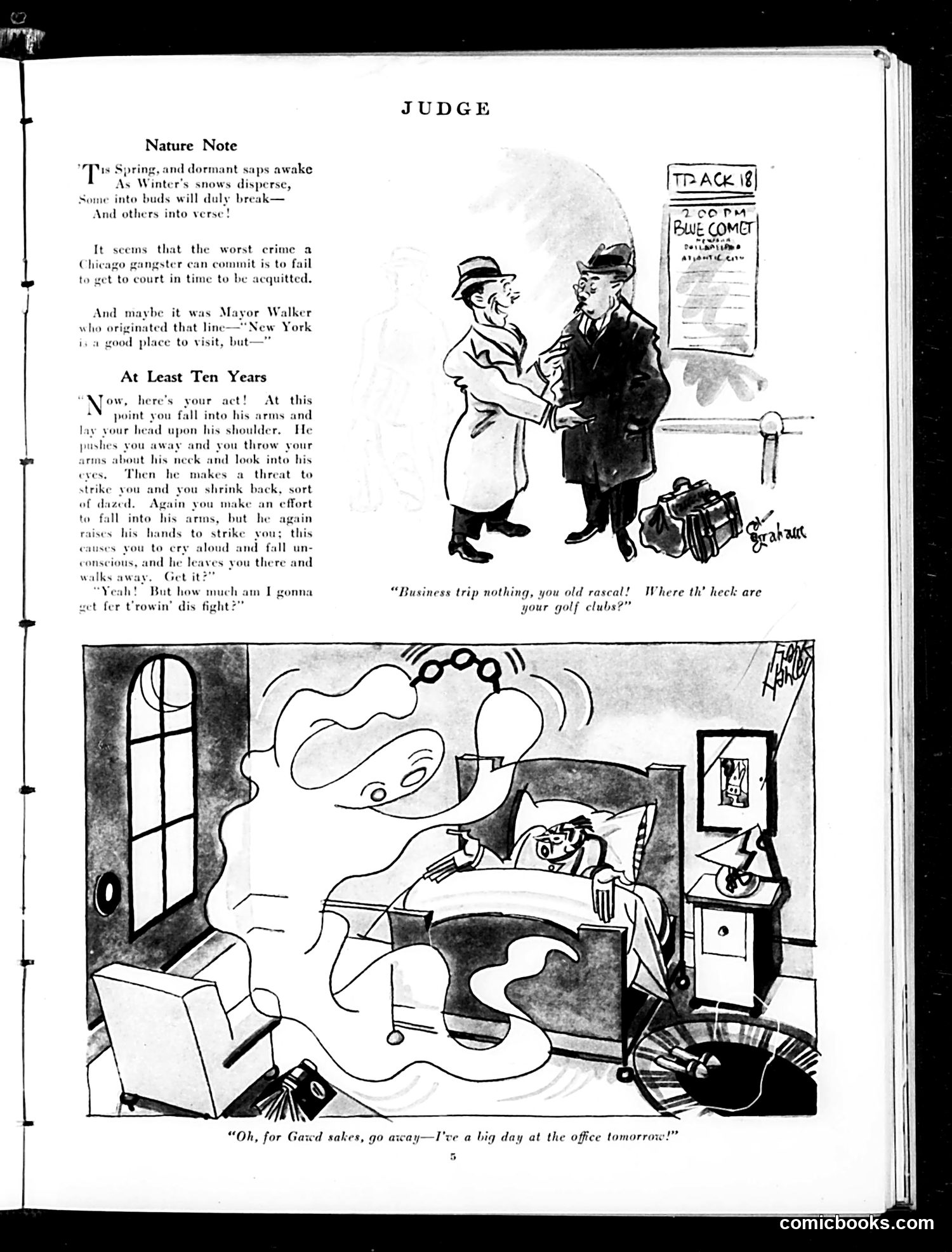
# Analysis of Judge Magazine Page This page contains three distinct pieces: **"Nature Note"** (top): A brief poem about spring and an editorial jab at Chicago's crime problem, sarcastically suggesting Mayor Walker made New York a better tourist destination than Chicago—likely referencing Mayor Jimmy Walker's well-known but corrupt administration in the late 1920s-early 1930s. **"At Least Ten Years"** (middle): A instructional diagram showing how to stage a convincing fight, presented as dark satire about courtroom perjury and staged evidence. **Bottom cartoon**: Shows someone in bed having nightmares about work ("I'm a big day at the office tomorrow"), depicting anxiety about the workplace—a relatable theme about pre-work stress that remains timeless. The overall tone is cynical political and social satire typical of Judge magazine's editorial stance.
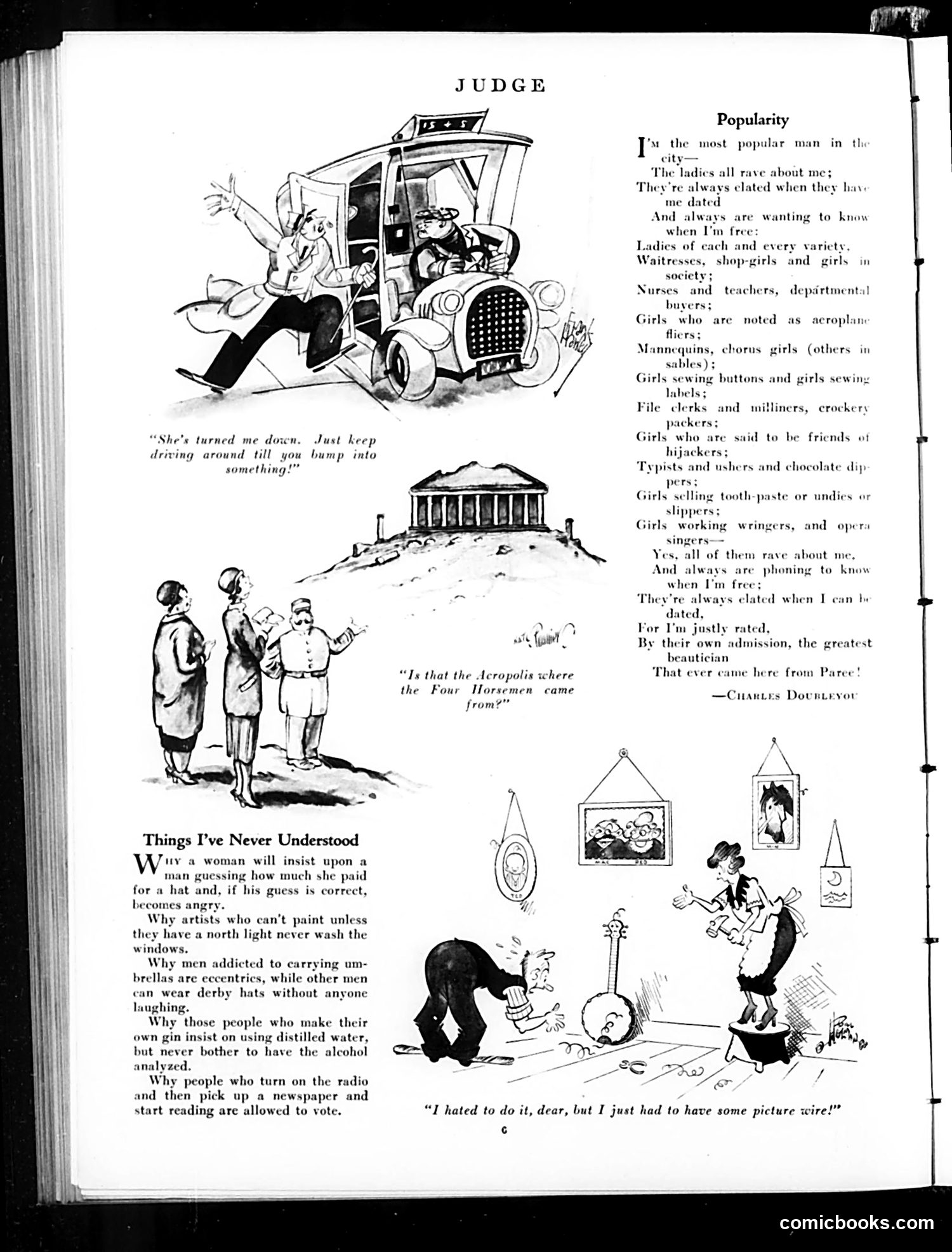
# Analysis of Judge Magazine Page This page contains humorous social commentary typical of early 20th-century Judge magazine. The top section titled "Popularity" satirizes a vain man boasting about his appeal to various women—waitresses, nurses, teachers, shop girls, aeroplanes enthusiasts, and more. The joke mocks male vanity and the exaggerated self-importance of someone who claims widespread romantic attention. "Things I've Never Understood" presents absurdist observations about everyday puzzles: why women get angry over hat prices, why artists don't clean windows, why umbrella-carrying men are considered eccentric. The cartoons show physical comedy—a car accident, a man struggling with framed pictures. The overall tone is lighthearted domestic satire aimed at educated, urban readers familiar with modern conveniences and social pretensions of the era.
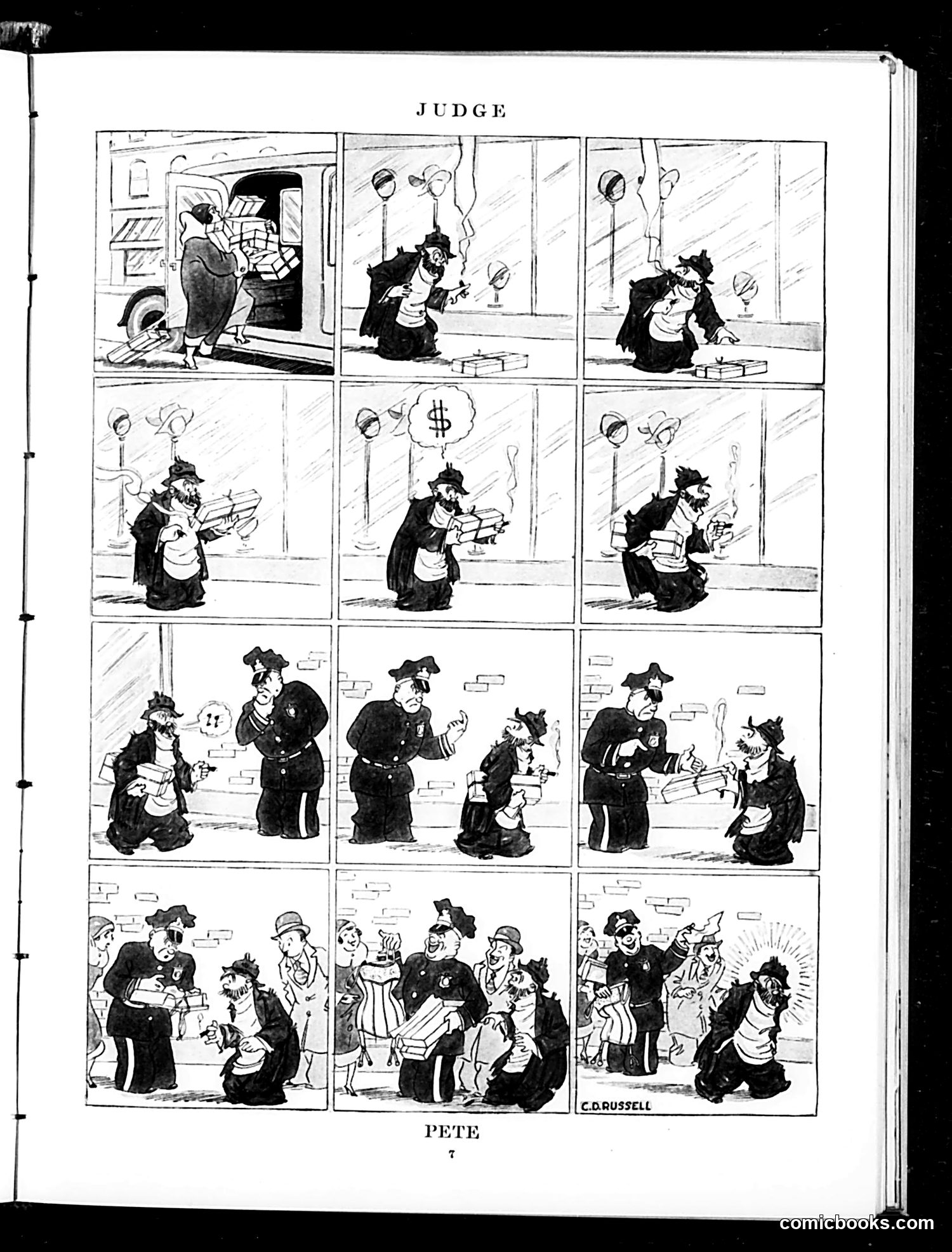
# Judge Comic: "Judge Pete" This is a sequential comic strip titled "Judge Pete" (signed "Corussell"). The narrative follows a judge character through his day: **The story:** A judge accepts bribes (indicated by the "$" symbol), progressively becoming more corrupt. He's shown receiving money, then conducting an increasingly chaotic courtroom where justice is bought. By the final panels, the courtroom descends into complete pandemonium—multiple figures arguing, fighting, and generally causing disorder. **The satire:** The comic mocks judicial corruption and bribery in the American legal system. It suggests that when judges accept money illegally, the entire justice system collapses into chaos. The progression from orderly judge to surrounded by mayhem illustrates how corruption undermines institutional integrity. Without knowing the specific date, this appears to reflect general Progressive Era concerns about municipal corruption and judicial integrity.
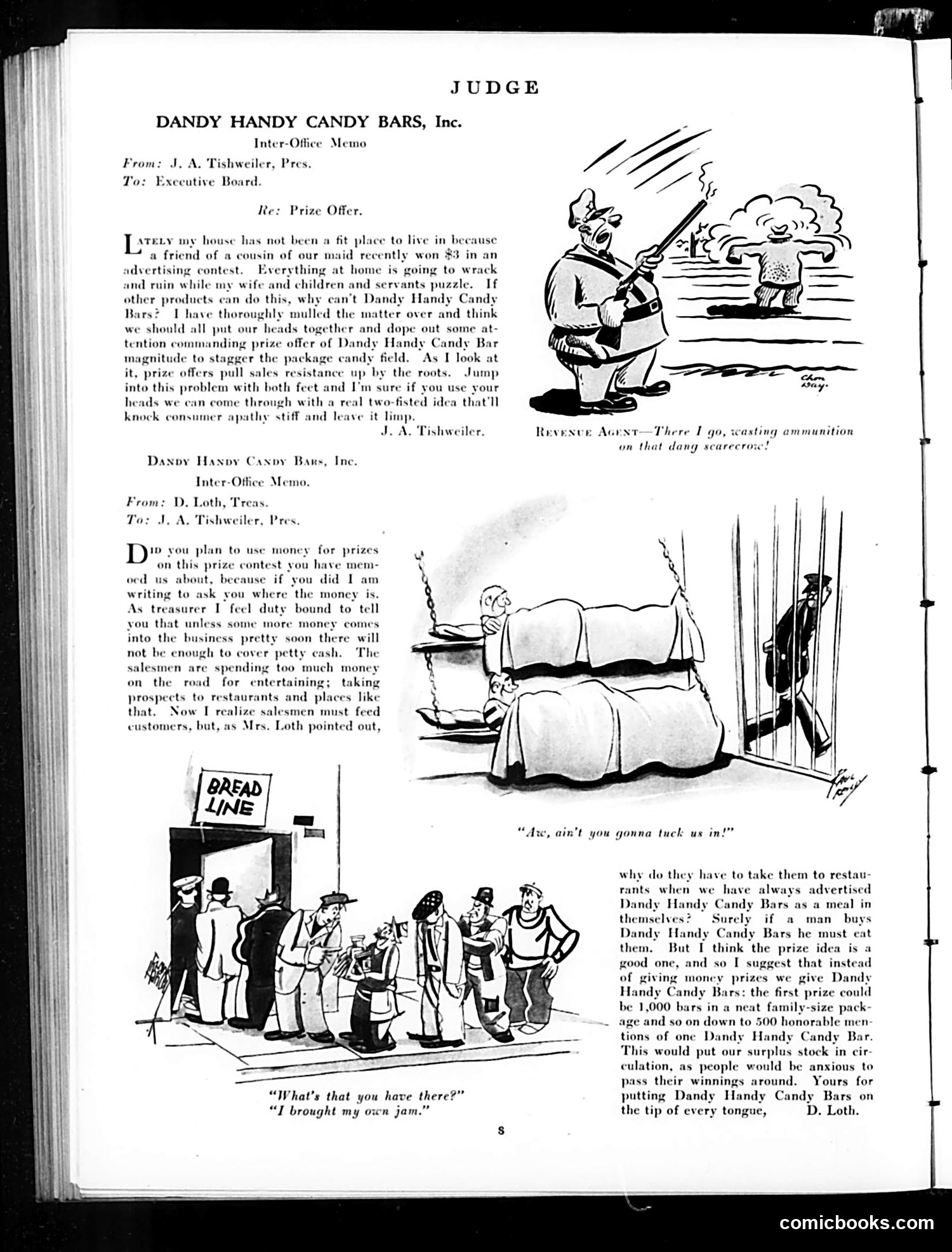
# Summary for Modern Readers This is a satirical corporate memo exchange from *Judge* magazine mocking 1920s-30s business culture and advertising gimmicks. The company president wants to launch an attention-grabbing prize contest to boost candy bar sales, claiming a competitor's $3 prize caused domestic chaos in his household. The treasurer responds with fiscal reality: the company is nearly broke because salesmen are overspending on restaurant meals for clients. He sarcastically proposes replacing cash prizes with free candy bars as rewards, reasoning that customers who buy the product should eat it anyway—solving both the prize problem and the free-meal problem. The cartoons illustrate the absurdity: a revenue agent wasting ammunition on scarecrows (incompetent management), people standing in a bread line, and people sneaking their own food to restaurants. The satire targets corporate delusion, wasteful spending practices, and the desperate gimmickry of Depression-era marketing.
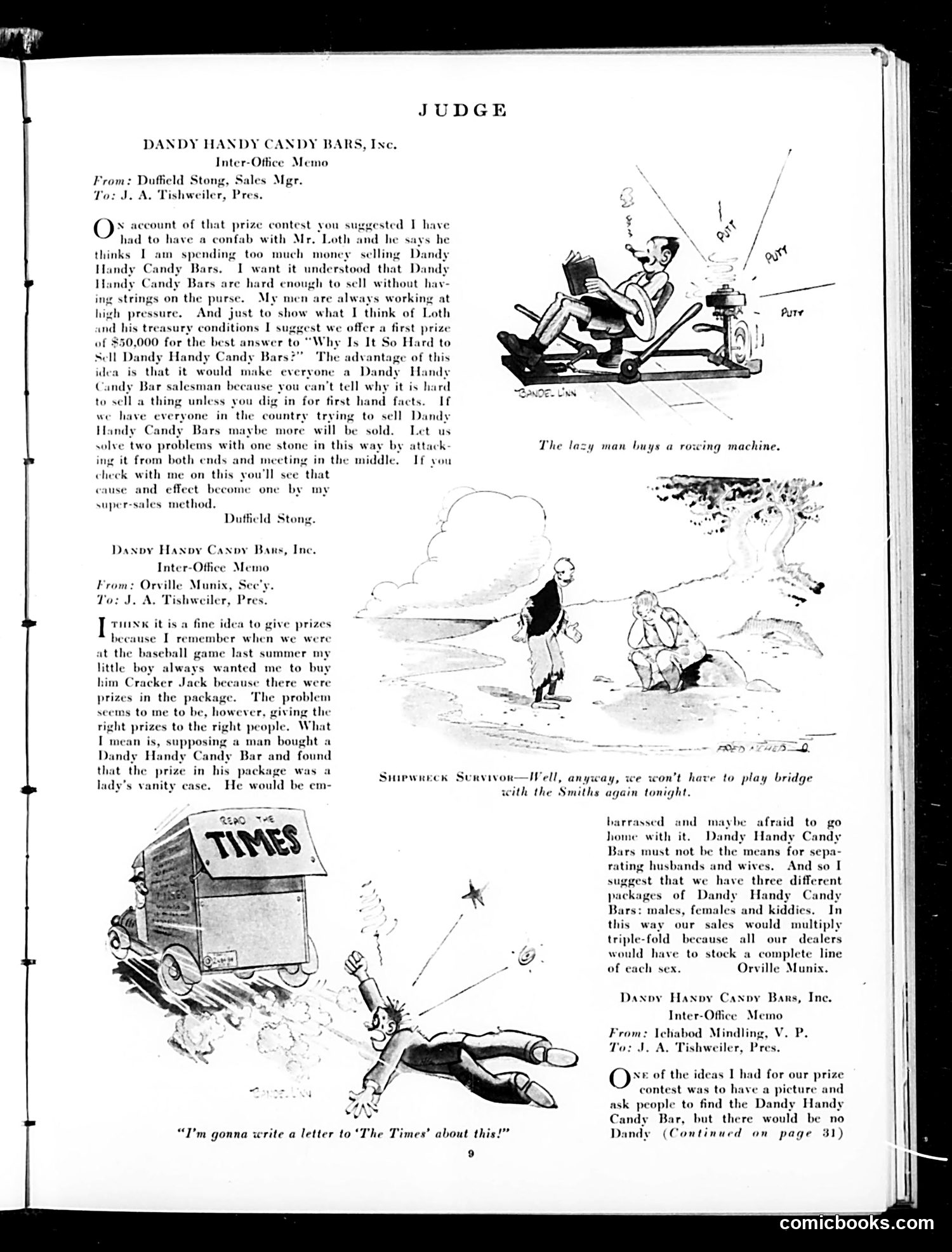
# Judge Magazine Satire: "Dandy Handy Candy Bars" Contest This page satirizes corporate management through fake inter-office memos about a struggling candy company's promotional contest. The humor lies in increasingly absurd business logic: **The Setup:** Sales manager Duffield Stong proposes a $50,000 prize for essays answering "Why Is It So Hard to Sell Dandy Handy Candy Bars?"—ostensibly to get free market research while turning everyone into salesmen. **The Mockery:** Subsequent memos reveal the scheme's ridiculousness. One executive worries prizes might embarrass male buyers (suggesting gender-specific packaging), while another proposes a "find the candy bar" picture contest with no actual candy bar visible. **Social Context:** This reflects 1920s-30s corporate culture—the era of aggressive sales tactics, dubious marketing schemes, and management eager to solve problems through gimmicks rather than actual product improvement. The escalating absurdity satirizes how executives can justify increasingly convoluted ideas as "business innovation." The cartoons supporting the text show everyday frustration (lazy man buying rowing machines, people fleeing social obligations)—life's mundane ironies the candy presumably can't solve.
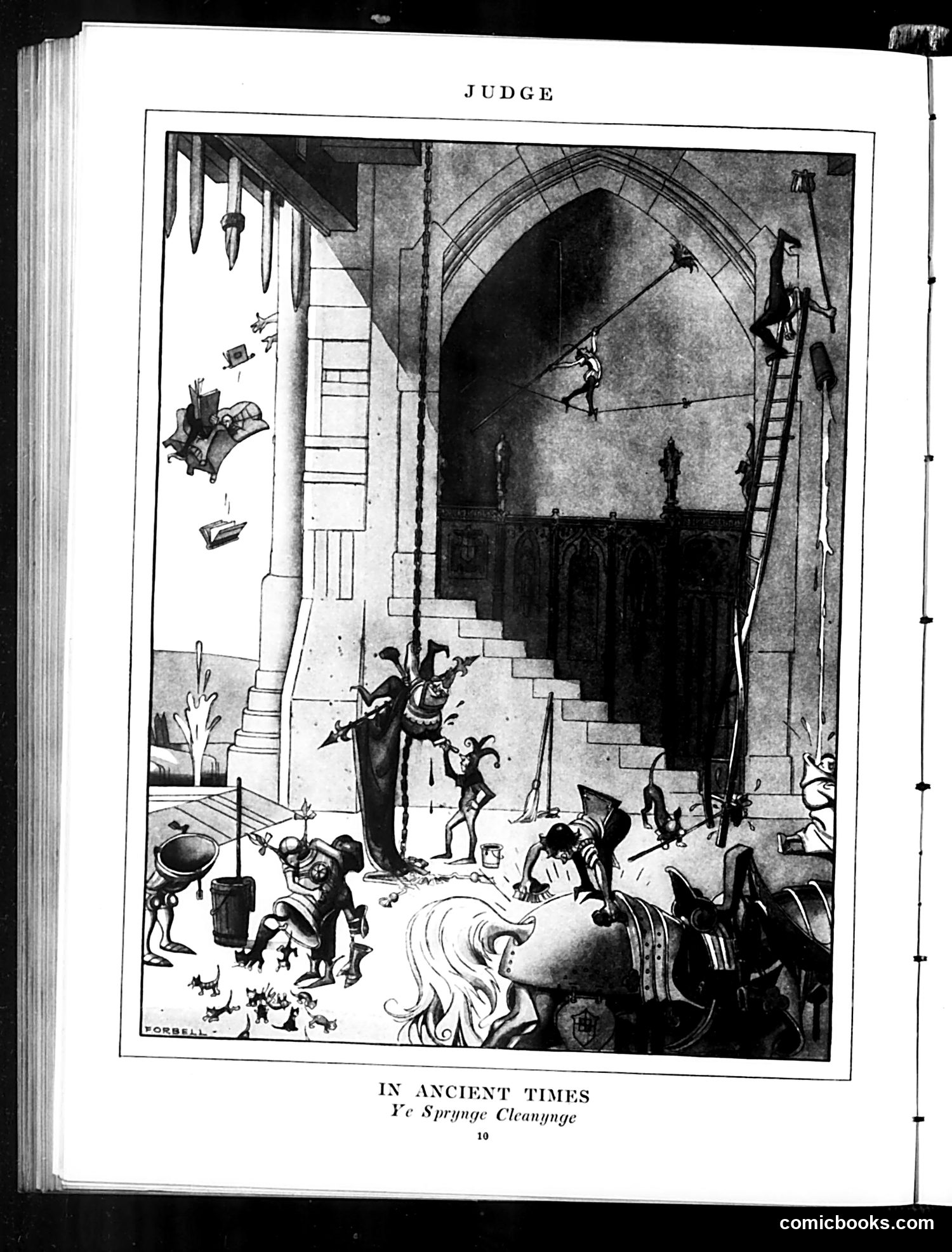
# "In Ancient Times: Ye Sprynge Cleanynge" This Judge cartoon satirizes spring cleaning through a medieval/ancient setting. The elaborate scene depicts workers engaged in vigorous cleaning activities within a castle or cathedral-like structure—scrubbing, climbing ladders, hauling equipment, and disposing of debris. The satire appears to mock the chaotic, labor-intensive nature of spring cleaning as a seasonal ritual. By placing this thoroughly modern domestic chore in "ancient times," the artist suggests that spring cleaning is an age-old, almost primitive obligation that requires armies of workers and creates considerable upheaval. The signed artwork (appears to be by "Forbel" or similar) uses anachronistic humor—treating a contemporary household task as if it were a historical architectural undertaking. The joke likely resonates with readers who experienced spring cleaning's disruptive demands.
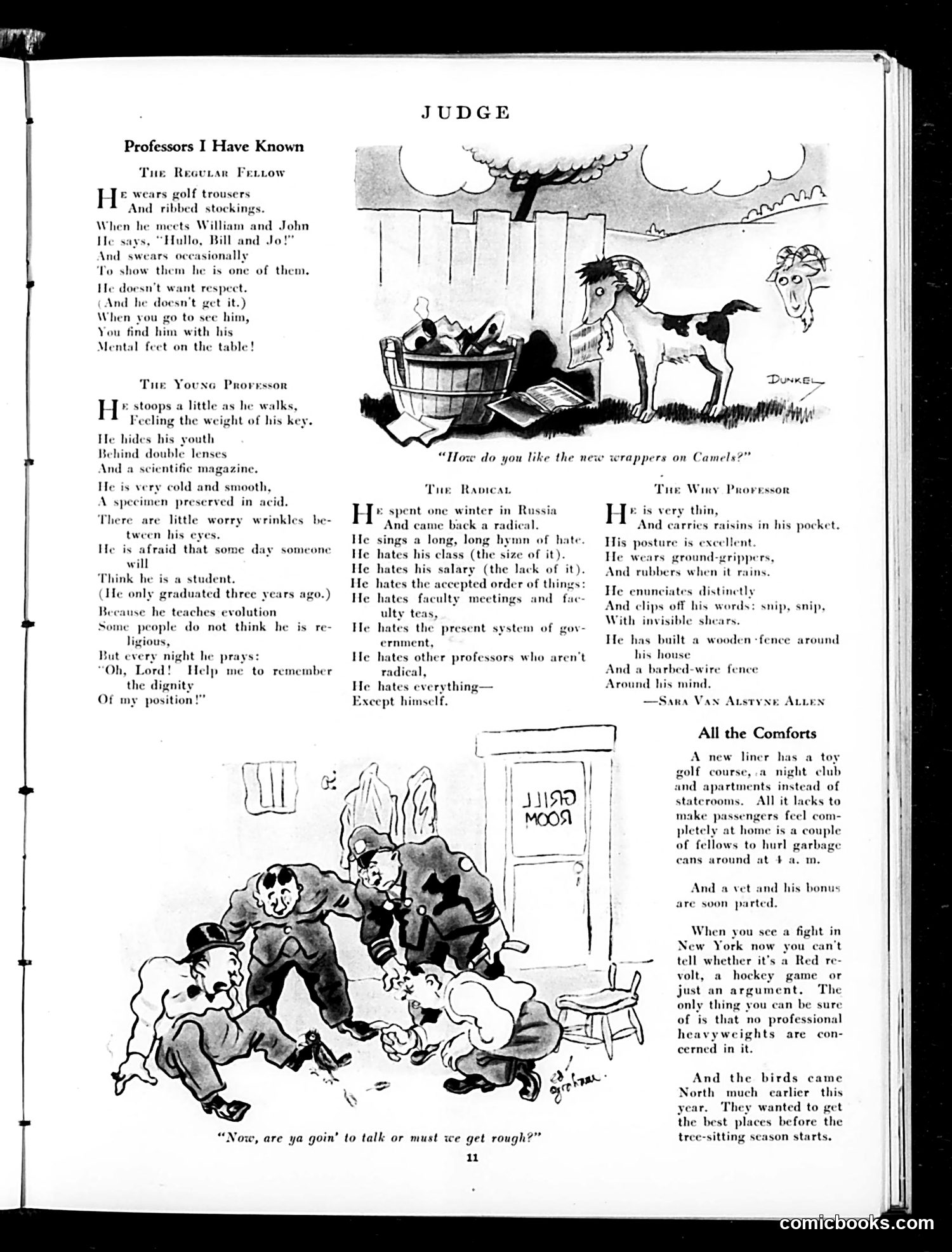
# Explanation for Modern Readers This page satirizes academic professors through character sketches. "The Regular Fellow" affects casualness (golf trousers, swearing) to seem relatable but actually seeks no genuine respect. "The Young Professor" hides youthful insecurity behind academic affectations—double lenses and scientific magazines—while secretly fearing students will discover his inexperience. "The Radical" spent time in Russia and now hates everything systematically except himself, a jab at ideological purists. "The Wiry Professor" is uptight and emotionally guarded. The cartoons mock professorial pretense and affectation. The top illustration plays on cigarette advertising ("How do you like the new wrappers on Camels?"), suggesting professors are commodities. The "All the Comforts" section satirizes modern luxury ships and New York street violence—noting one can't distinguish between communist revolt, hockey brawls, or ordinary arguments. The closing joke about birds arriving early for "tree-sitting season" appears to reference some contemporary fad or practice now unclear.