A complete issue · 36 pages · 1930
Judge — November 1, 1930
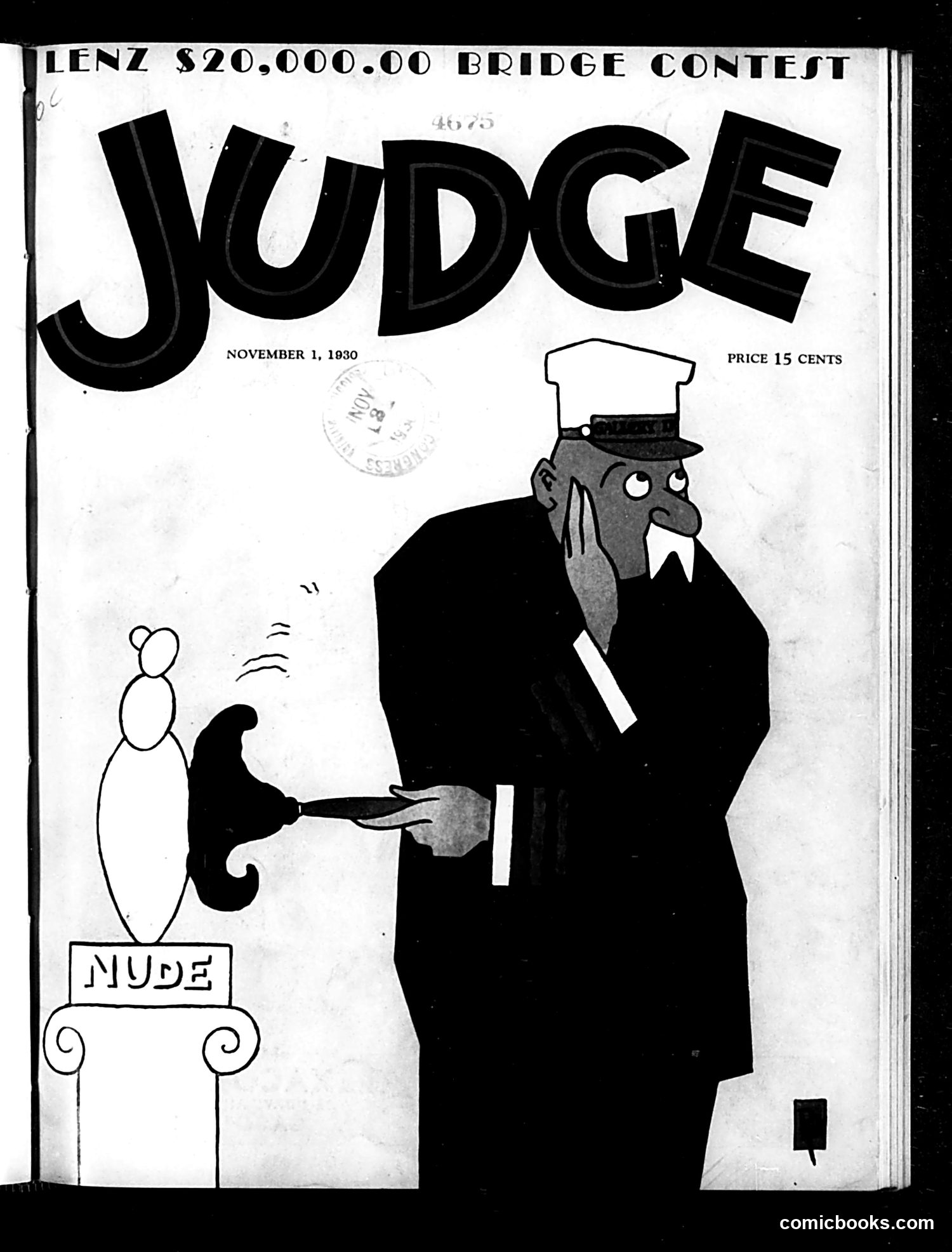
# Judge Magazine Cover Analysis (November 1, 1930) This cover satirizes the "Lenz $20,000 Bridge Contest"—likely referring to a contemporary architectural or engineering competition. The central figure is a portly judge or official wearing a chef's hat, examining a nude classical statue labeled "NUDE" through what appears to be a magnifying glass or monocle. The satire appears to mock the judging process itself: the official seems overly focused on irrelevant details (the nude sculpture) rather than the actual bridge design submissions. The exaggerated facial features and caricature style suggest commentary on either the absurdity of the selection criteria or the character of those making decisions about the contest. The joke likely critiques misplaced priorities or poor judgment in evaluating serious architectural work.
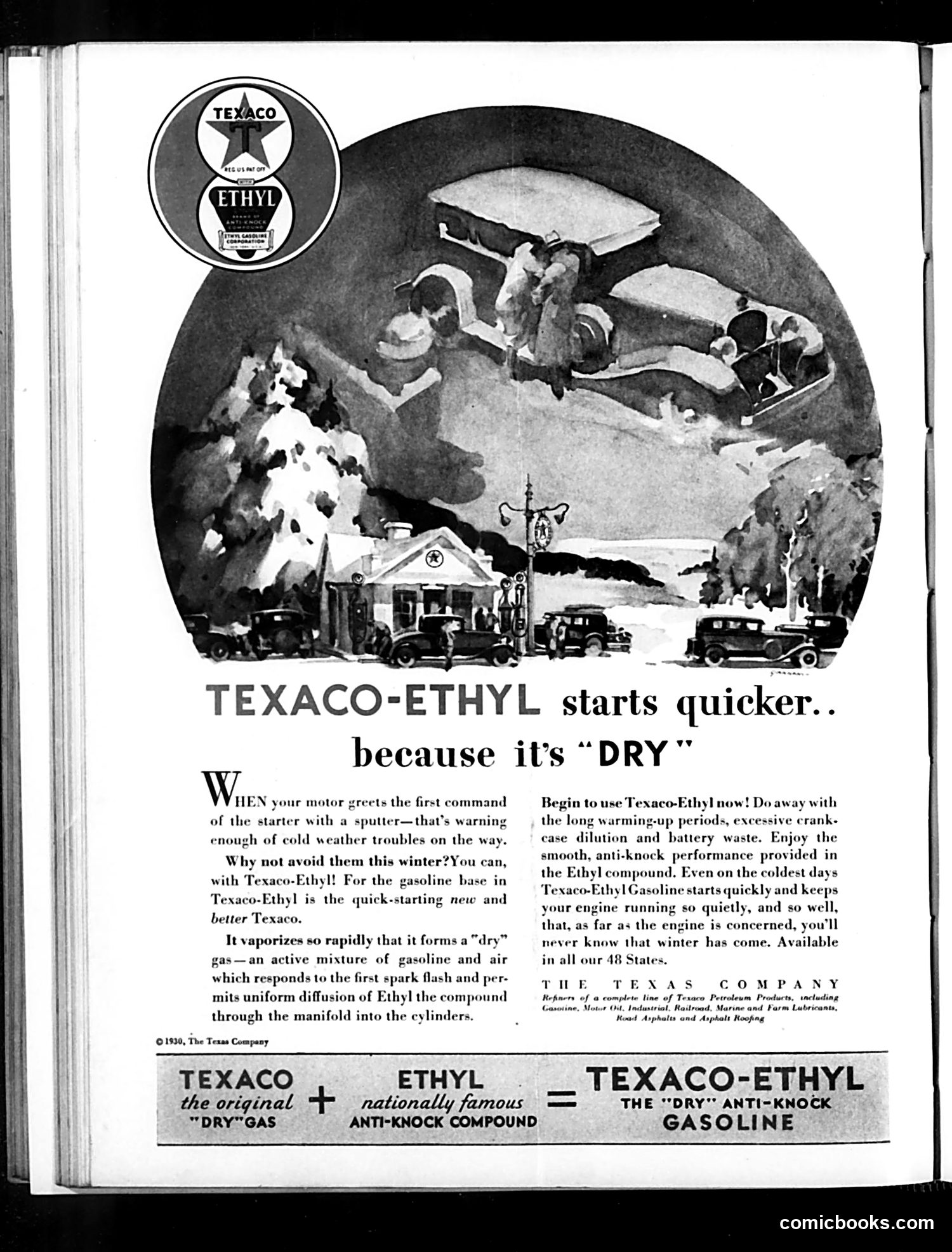
# Analysis This is actually **not a cartoon or satire page**—it's a full-page **advertisement** for Texaco-Ethyl gasoline from 1929 (copyright shown as "© 1929, The Texas Company"). The image shows a surreal, dreamlike scene of cars and a gas station, illustrating the product's main selling point: Texaco-Ethyl gasoline starts quickly in cold weather because it's formulated as a "dry" gas (ethyl compound mixed with gasoline base). The ad emphasizes practical winter driving benefits—no long warm-up periods, reduced engine strain, better performance even in freezing conditions. The ethereal, cloud-like imagery serves to convey the smoothness and efficiency promised by the fuel. This represents early automotive advertising before modern regulations on leaded gasoline.
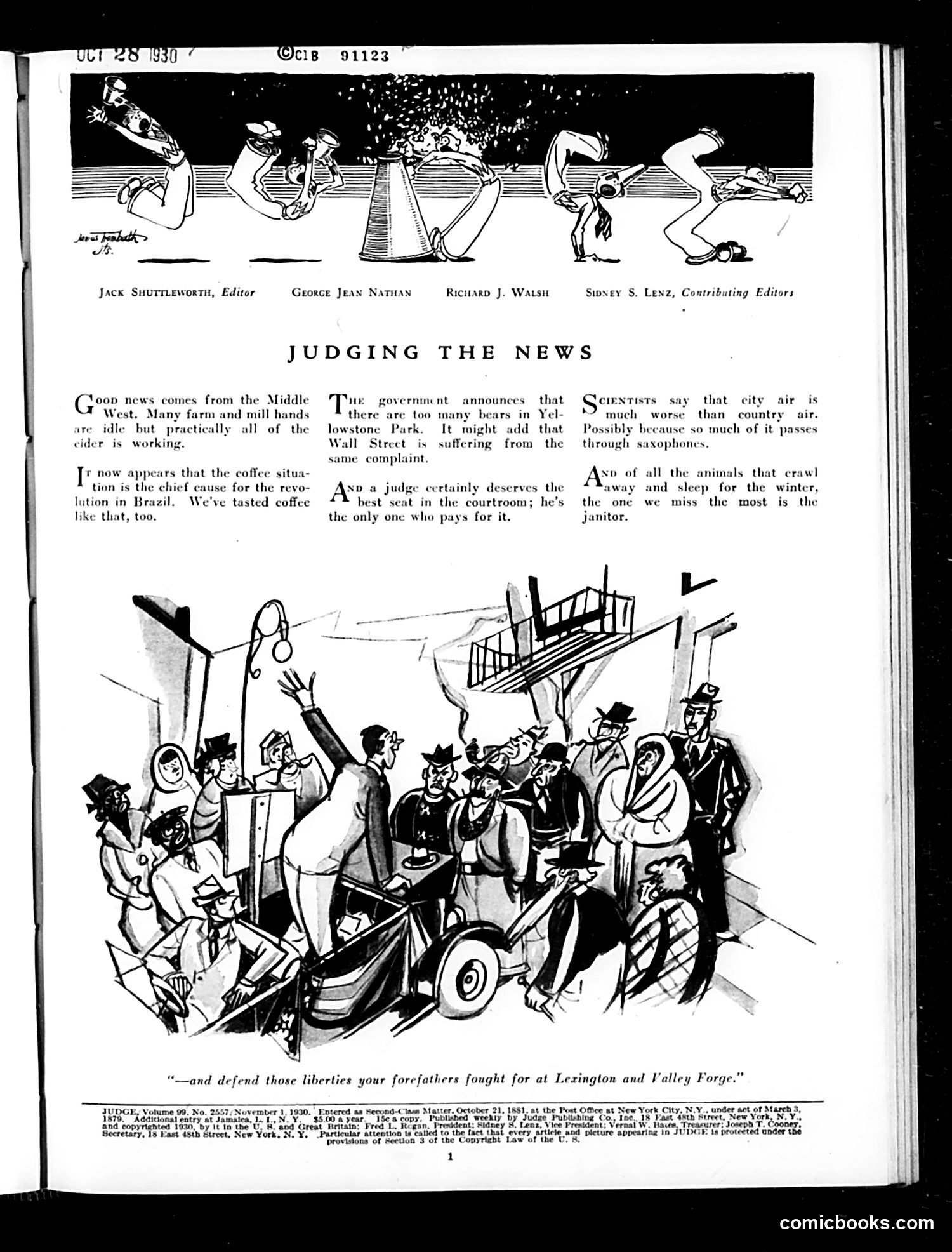
# "Judging the News" - November 1, 1930 This satirical page comments on contemporary news items through brief jokes and a central cartoon. The top strip presents visual puns on current events: good news from the Middle East, the coffee situation in Brazil, and bears in Yellowstone Park. The main cartoon depicts a chaotic scene of figures in formal dress and hats, apparently celebrating or protesting, with an airplane and ship visible above. The caption reads: "—and defend those liberties your forefathers fought for at Lexington and Valley Forge." The satire appears to mock contemporary political activism or public debate—suggesting citizens are defending American freedoms through vigorous civic engagement, though the crowded, tumultuous scene implies the methods are somewhat frenzied or undignified. The specific political context remains unclear without additional historical information about November 1930.
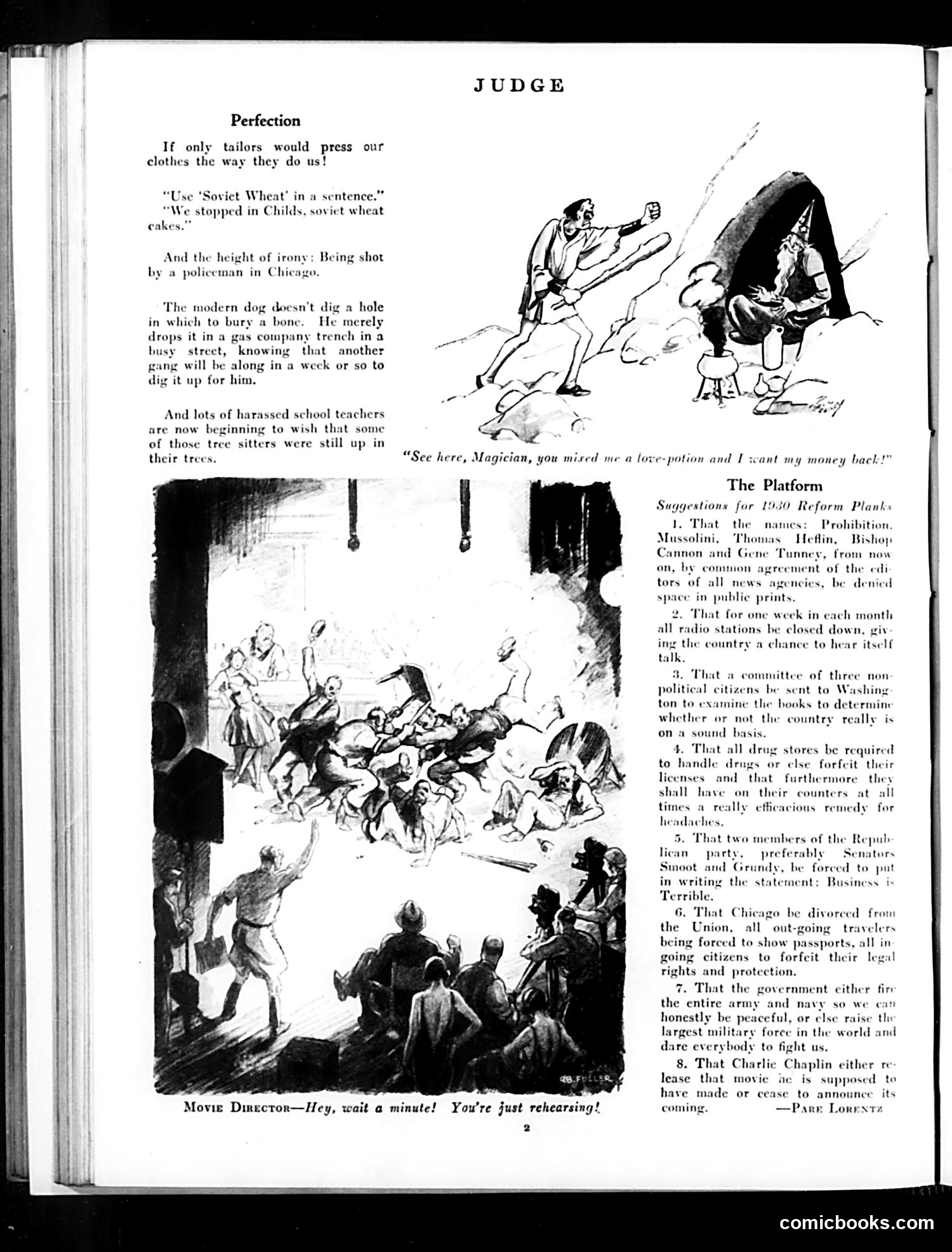
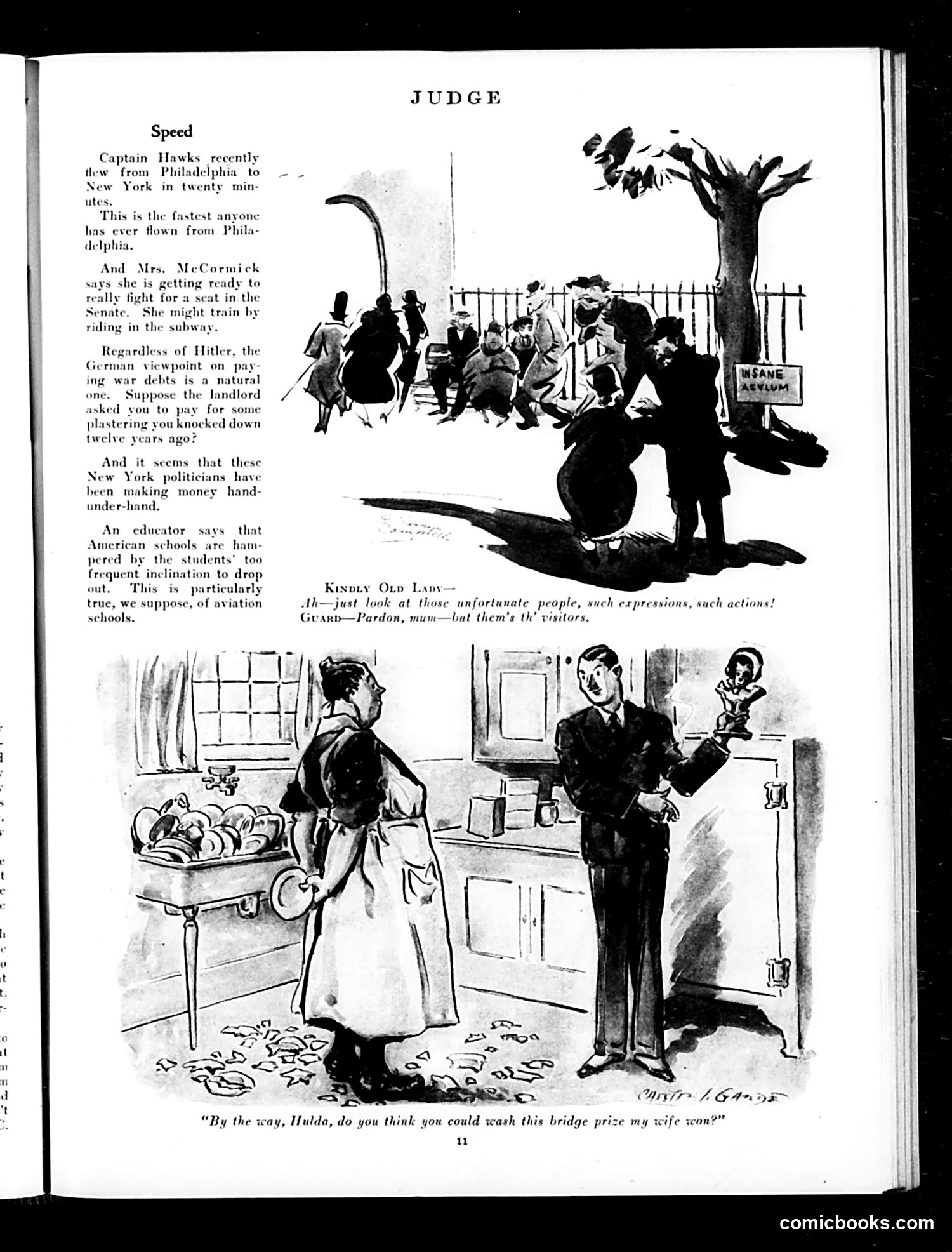
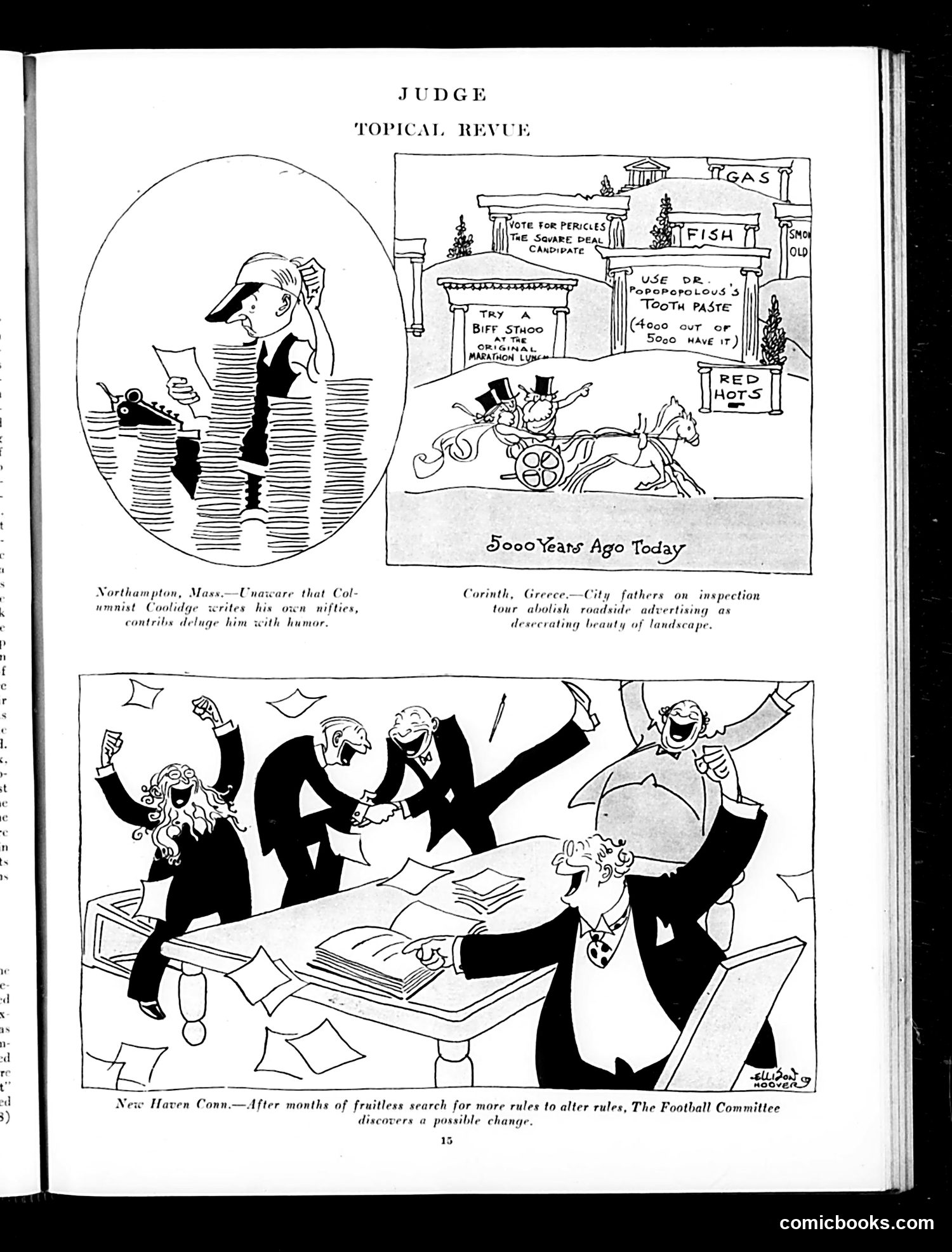
# Analysis of Judge Magazine Page This page contains political satire from an unspecified year (likely 1930s based on references). The top section mocks various contemporary absurdities: tailors' pressing standards, Soviet wheat production, a Chicago police shooting, and tree-sitting protestors (likely Depression-era hobos or protesters). The central cartoon depicts a magician scene with the caption "See here, Magician, you mixed me a love-potion and I want my money back!" — likely satirizing fraudulent con artists or quack remedies. The lower illustration shows a chaotic film production with the caption "Movie Director—Hey, wait a minute! You're just rehearsing!" "The Platform" section lists satirical "reform proposals" targeting figures like Mussolini, Hitler, and others, plus various institutions (radio stations, drug stores, Charlie Chaplin), reflecting contemporary anxieties about fascism, government control, and media influence during the Depression era.
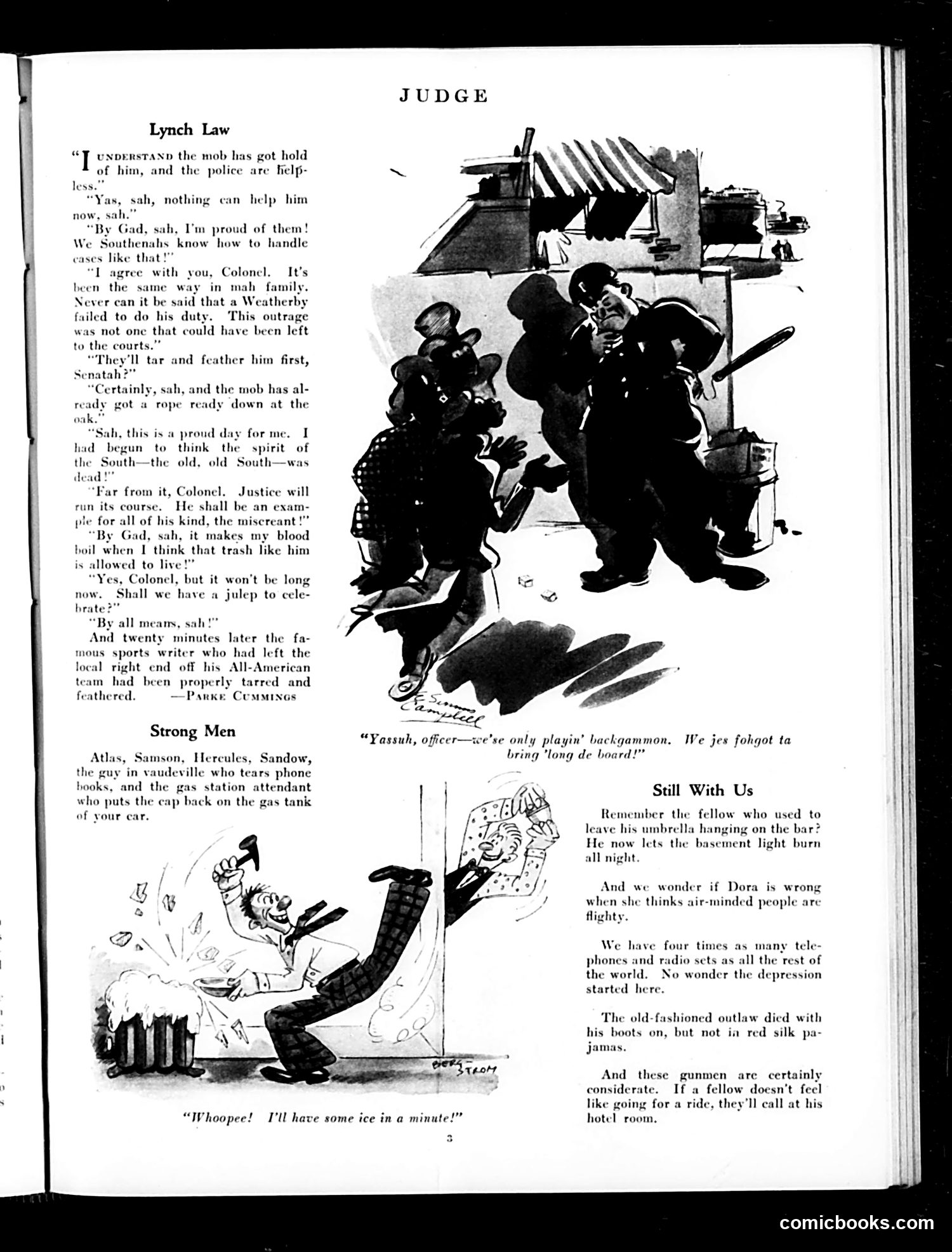
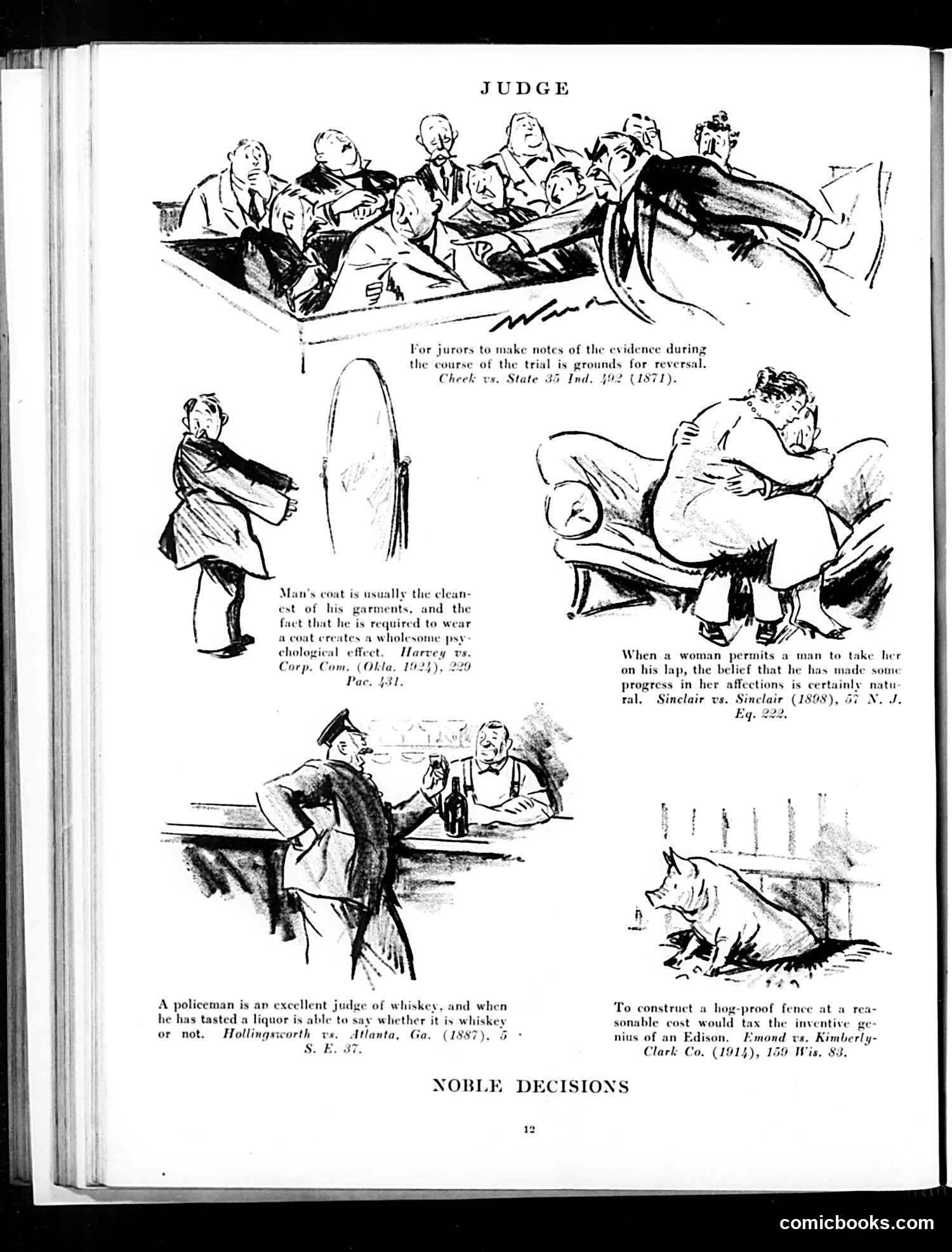
# Judge Magazine Page Analysis The page contains three distinct satirical pieces: **"Lynch Law"** (top): A dialogue criticizing Southern mob justice. Characters defend lynching as tradition, with one speaker opposing it on principle. The accompanying illustration shows armed men near a building, depicting vigilante violence. The satire condemns this extrajudicial practice as barbaric and contrary to justice. **"Strong Men"** (bottom left): Cartoon mocking powerful-sounding names (Atlas, Samson, Hercules) applied to ordinary people like gas station attendants. The falling figure illustrates the joke: such names don't match these mundane workers. **"Still With Us"** (right): Observations about American life—basement lights left burning, abundant telephones and radios, inconsistent behavior. These are gentle observations about contemporary habits rather than pointed satire. The page dates from an era when Judge actively critiqued social injustice alongside lighter humor.
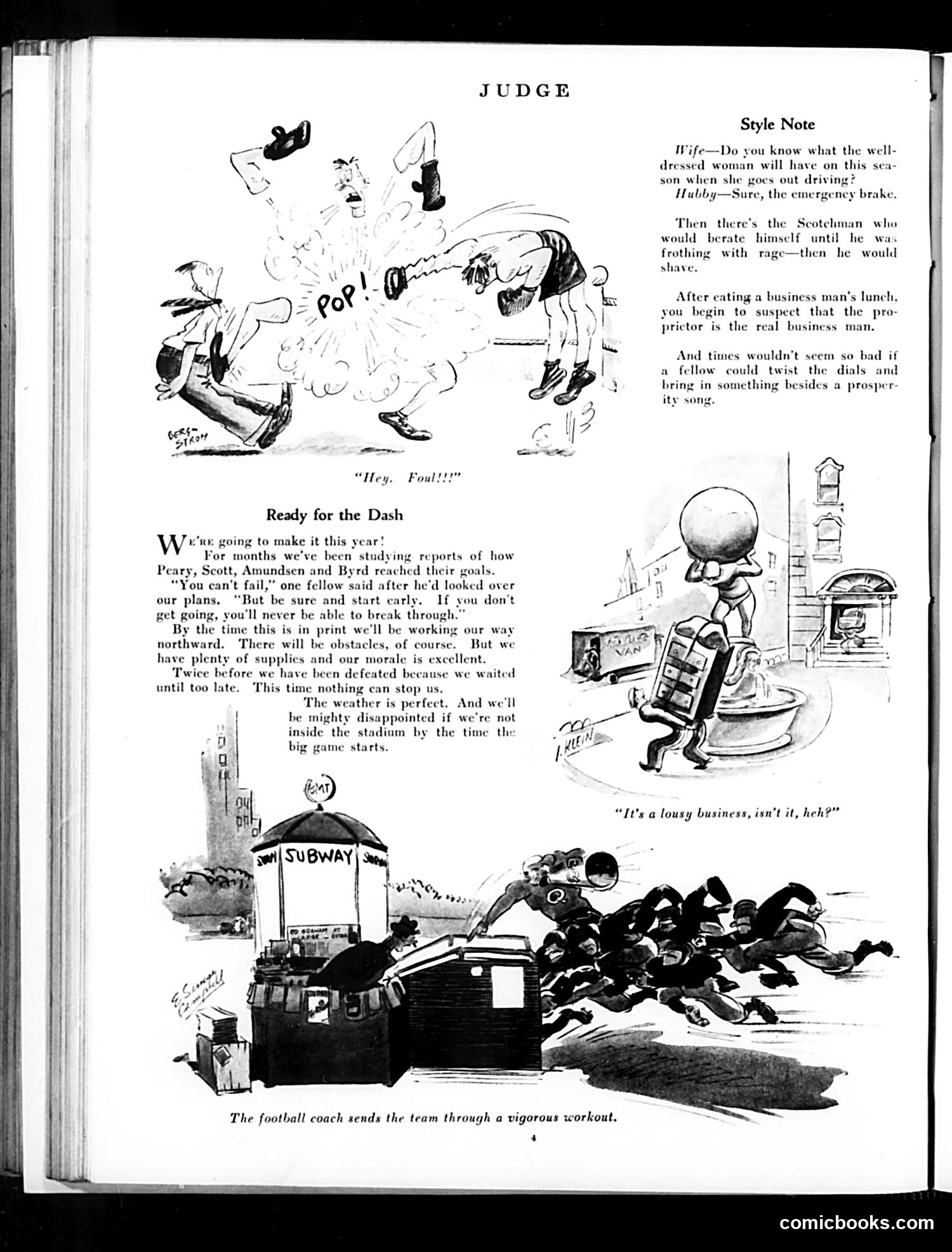
# Analysis of Judge Magazine Page This page contains three cartoons satirizing early 20th-century American life: **Top cartoon** ("Hey, Fool!!!!"): Shows a driver causing a car accident with debris flying. It illustrates anxieties about new automobile technology and reckless driving. **Middle cartoon** ("It's a lousy business, isn't it, huh?"): Depicts a figure struggling with an enormous sphere labeled with business/financial symbols, satirizing the burdens of modern commerce and entrepreneurship. **Bottom cartoon** ("The football coach sends the team through a vigorous workout"): Shows a subway entrance with a coach directing football players through intense drills, likely mocking the obsessive dedication to college sports or the difficulty of athletic training. The "Style Note" at top offers humorous social commentary on fashion, driving etiquette, and business culture—typical Judge magazine fare targeting educated urban readers.
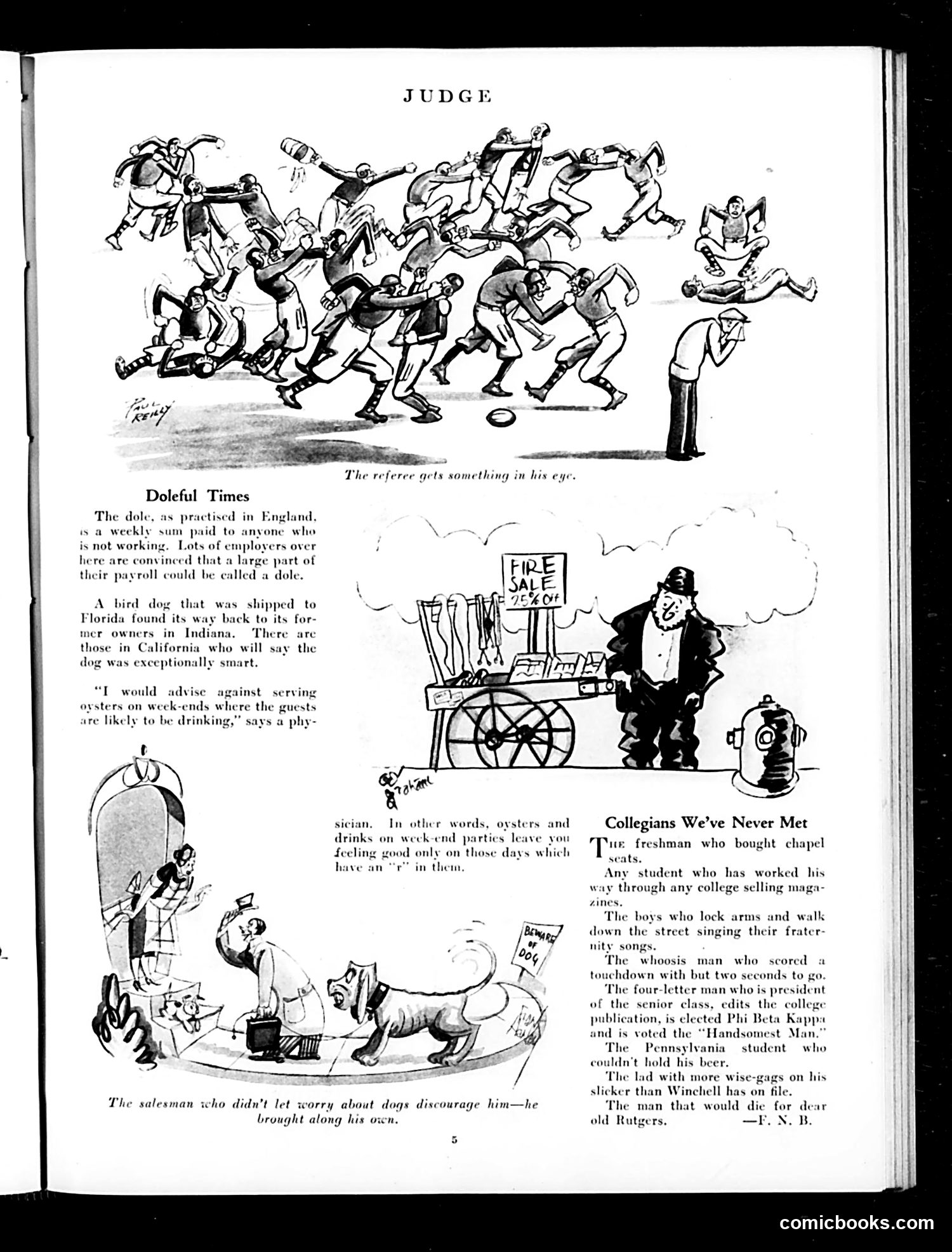
# Judge Magazine Page Analysis **Top Cartoon:** "The referee gets something in his eye" satirizes American labor disputes. A referee (representing neutral authority) stands amid chaotic fighting workers, appearing to ignore the violence—suggesting authority figures deliberately overlooked labor conflicts or worker abuse during industrial disputes. **"Doleful Times" Section:** Mocks the English "dole" (unemployment benefits), arguing American employers misuse it. The anecdotes (dog returning home, oyster/drinking advice) employ absurdist humor to suggest the dole system encourages idleness. **"Collegians We've Never Met":** Light satirical sketches of college stereotypes—chapel-goers, fraternity singers, athletes, magazine sellers—poking fun at typical undergraduate behaviors and campus life. Overall, the page blends labor criticism with gentler collegiate mockery, reflecting early 20th-century American anxieties about work and student culture.
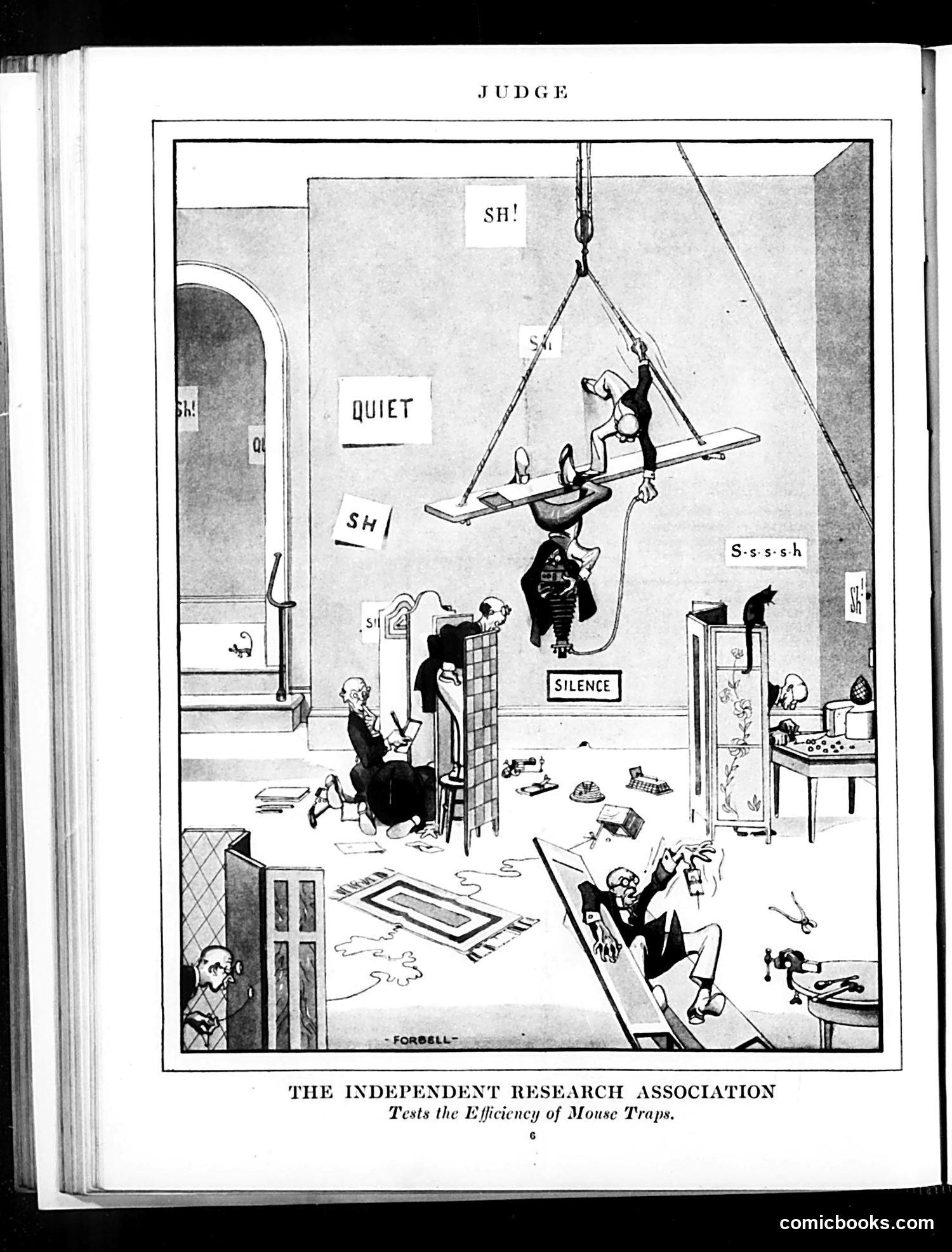
# "The Independent Research Association Tests the Efficiency of Mouse Traps" This is a single-panel satirical cartoon showing a chaotic domestic interior where mousetraps are being tested with human subjects instead of actual mice. Adults and children are depicted suspended in various traps—hanging from ropes, caught in mechanical devices—creating absurd chaos throughout a home. Labels reading "QUIET," "SILENCE," and "SH!" emphasize the irony: the traps are supposed to work silently, yet the scene depicts pandemonium. The satire likely mocks overzealous scientific testing or corporate research that loses sight of practical reality. By literalizing "testing mouse traps" with people, the cartoon ridicules either poorly designed products or the absurdity of bureaucratic testing procedures. The "Independent Research Association" appears fictional, adding to the mockery of institutional authority.
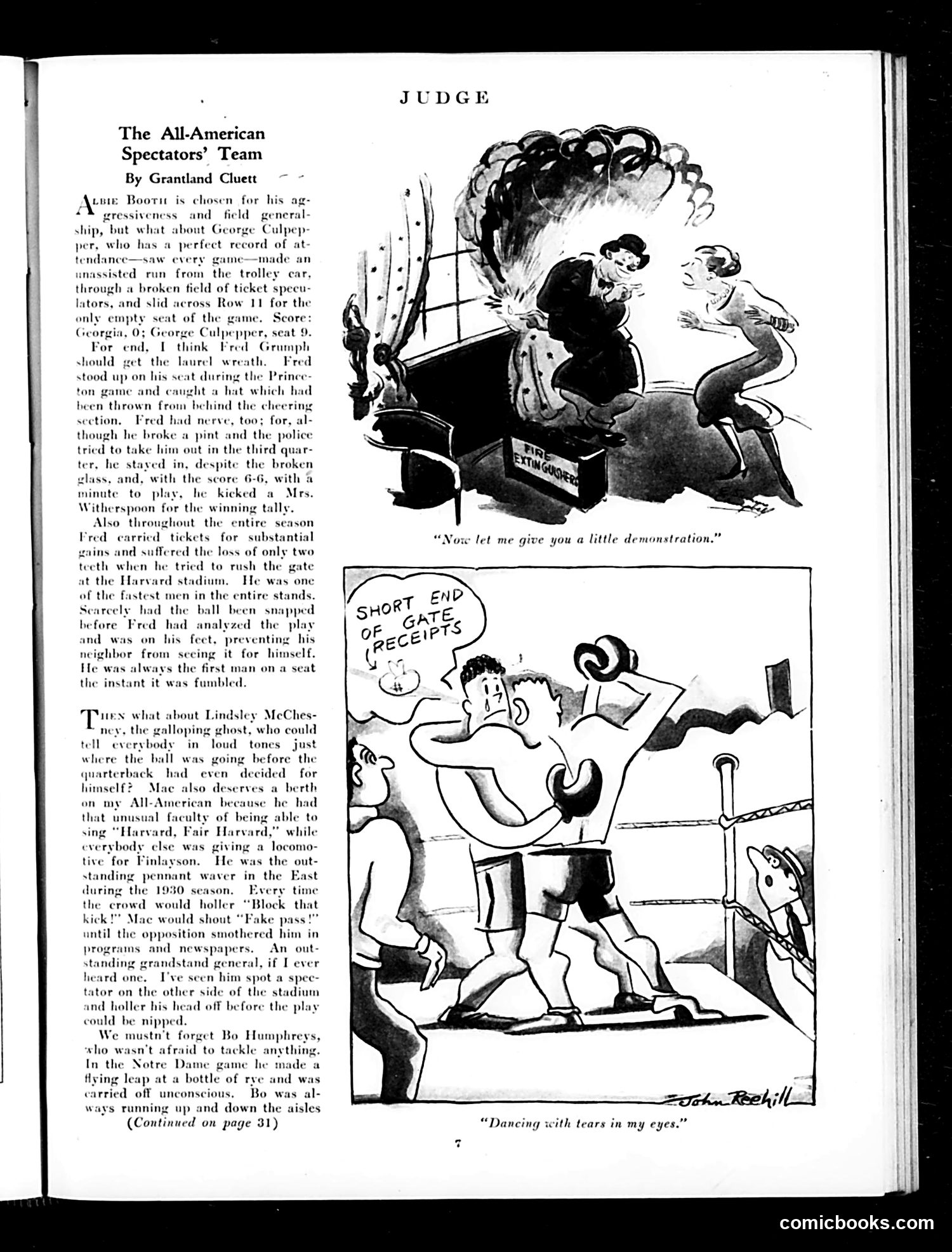
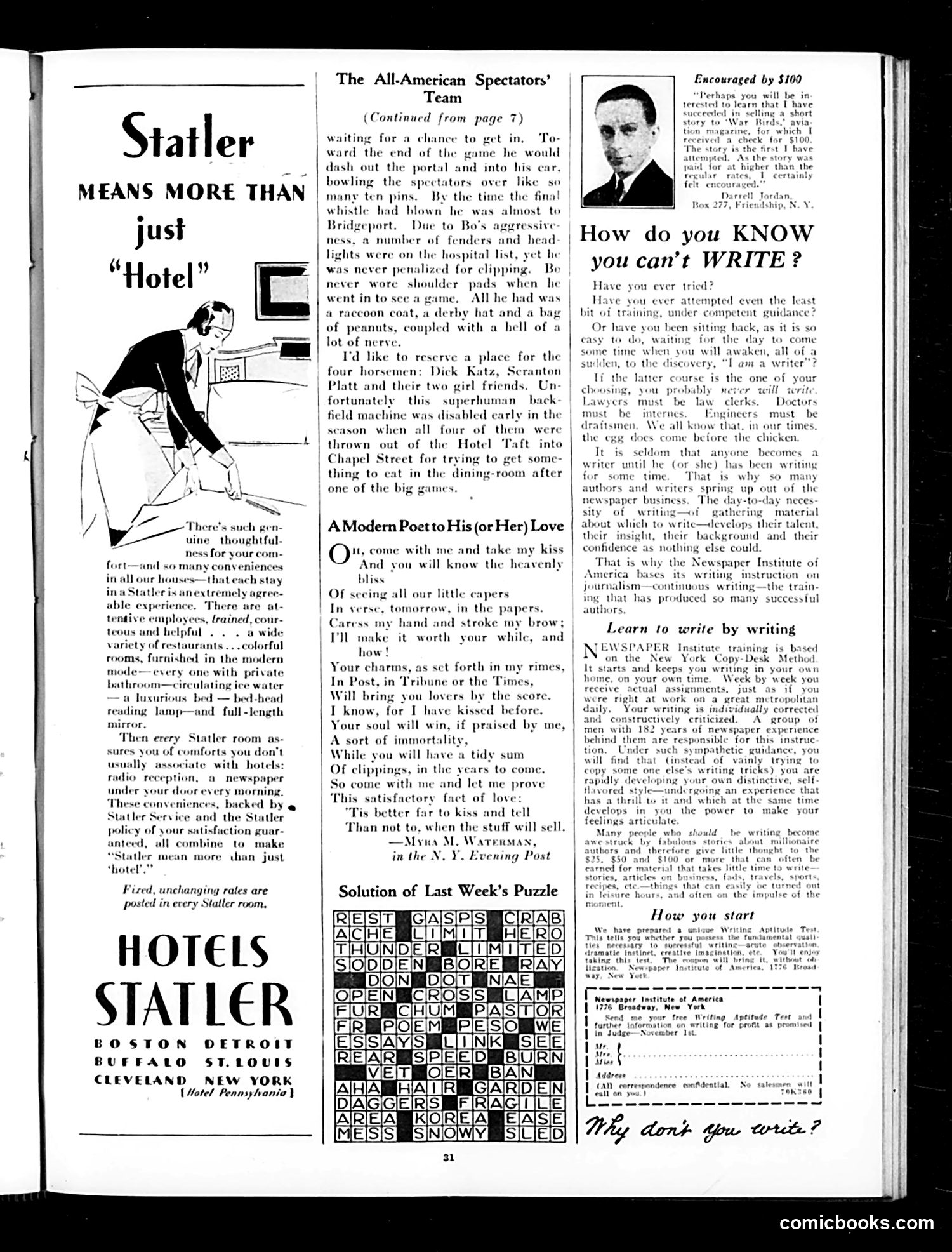
# Judge Magazine: "The All-American Spectators' Team" This article satirizes enthusiastic football fans by treating them as athletes worthy of an "All-American" honors roster. Author Grantland Cluett humorously profiles spectators whose antics at games—not players on the field—merit recognition. The cartoons illustrate absurd fan behavior: one shows a demonstrative spectator gesticulating wildly; the second depicts a fan frantically searching for seating while holding gate receipts, captioned "Dancing with tears in my eyes." The text celebrates fans like George Culpepper (who navigated crowds to find a seat), Fred Grumph (who caught a hat and kicked a woman for a "winning tally"), Lindsley McChesney (who shouted plays before quarterbacks decided them), and Bo Humphreys (who tackled a liquor bottle). The satire mocks both excessive fan enthusiasm and the obsessive coverage college football received—treating stadium behavior as worthy of sports achievement recognition. It's lighthearted social commentary on American sports culture's fan fervor.
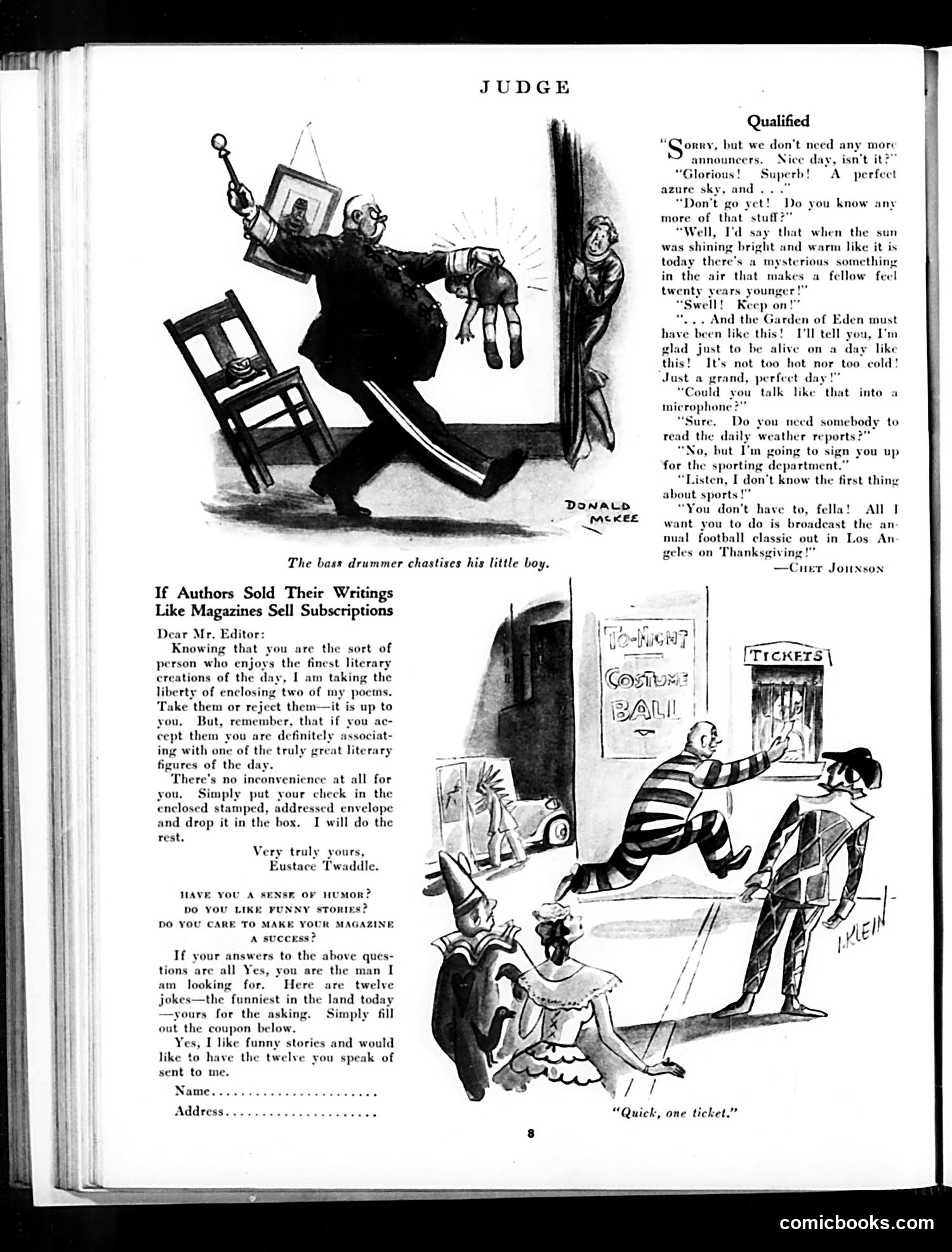
# Judge Magazine Page Analysis This page contains three satirical pieces mocking early 20th-century media and publishing practices: **"Qualified"** (top cartoon by Donald McKee): A radio station hires an enthusiastic but unqualified man as a sports announcer. The joke is that he knows nothing about sports but can deliver flowery, poetic weather commentary into a microphone—exactly what they need to broadcast the Thanksgiving Day football game in Los Angeles. This satirizes radio's desperate need for content and announcers during broadcasting's early era. **"If Authors Sold Their Writings Like Magazines Sell Subscriptions"**: A humorous letter from "Eustace Twaddle" proposing poets submit work like magazine subscription sales—enclosing stamps and asking editors to pay them for accepting poems. This mocks both pretentious poets and aggressive magazine subscription tactics of the era. **"Quick, one ticket"** (bottom cartoon by Ilein): Shows people rushing to buy tickets for a costume ball, satirizing public enthusiasm for social events. The overall theme critiques emerging mass media, amateur broadcasting, and aggressive publishing/sales culture.
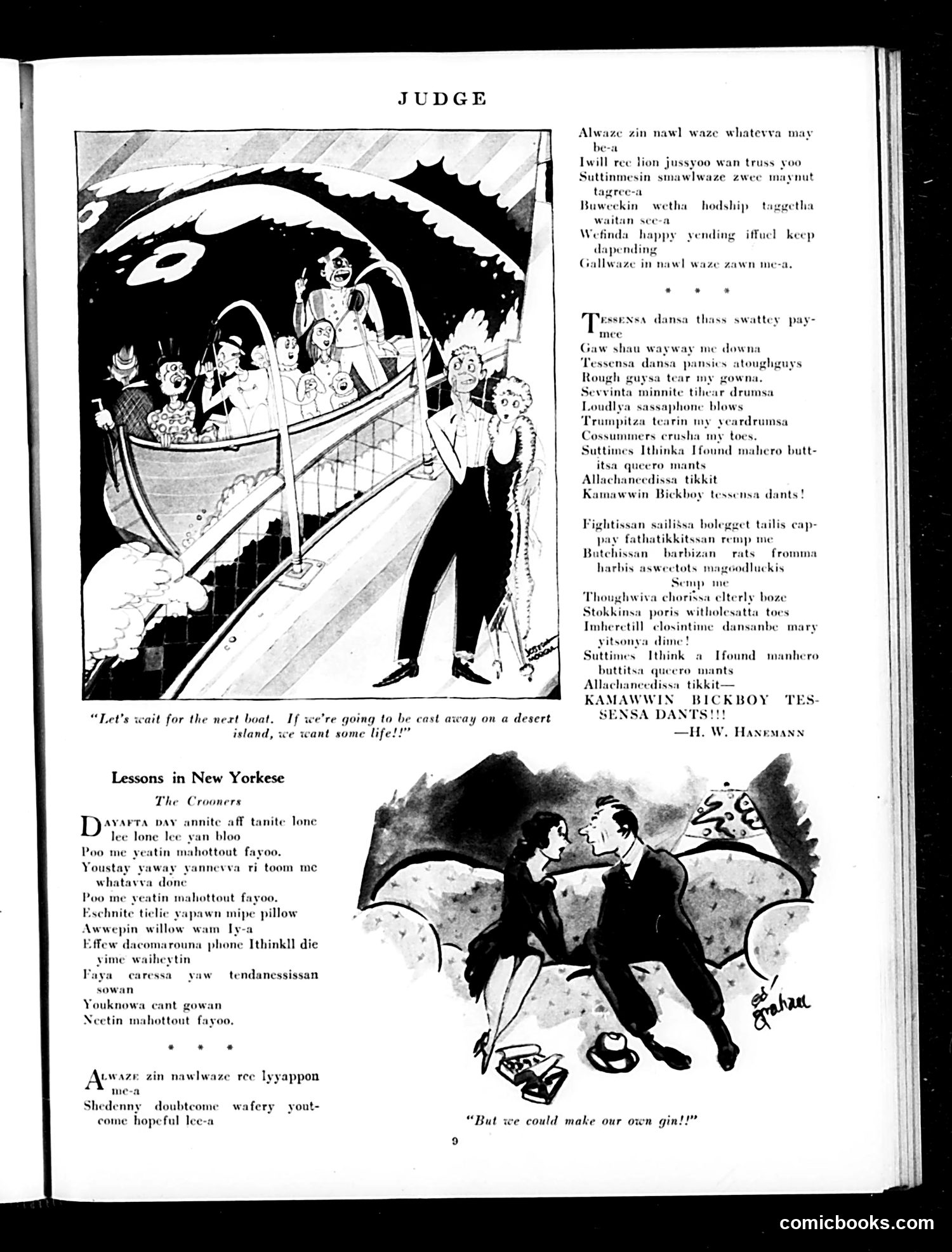
# Analysis of This Judge Magazine Page This page contains satirical humor about **immigrant speech patterns and working-class New York dialect**, a common stereotype subject in early 20th-century American comedy. The top cartoon depicts a **boat full of immigrants or lower-class passengers** being addressed by a well-dressed man, with the caption about wanting "life" on a desert island—poking fun at the perceived carefree attitudes of working-class travelers. The "Lessons in New Yorkese" section mocks how **Italian and immigrant speakers supposedly slaughtered English pronunciation**—rendering phrases like "darling" as "dansa," "sweetheart" as "swattey," and "crooners" as phonetic butchery. The crude dialect spelling (like "fayoo" for "fellow") was meant to be humorous to period readers. The lower cartoon shows a couple with gin, punning on **Prohibition-era bootlegging**—the man suggests making homemade gin rather than buying it illegally. The satire relies entirely on ethnic/class-based mockery of accent and speech patterns that would be considered offensive today, reflecting the casual xenophobia of the era.
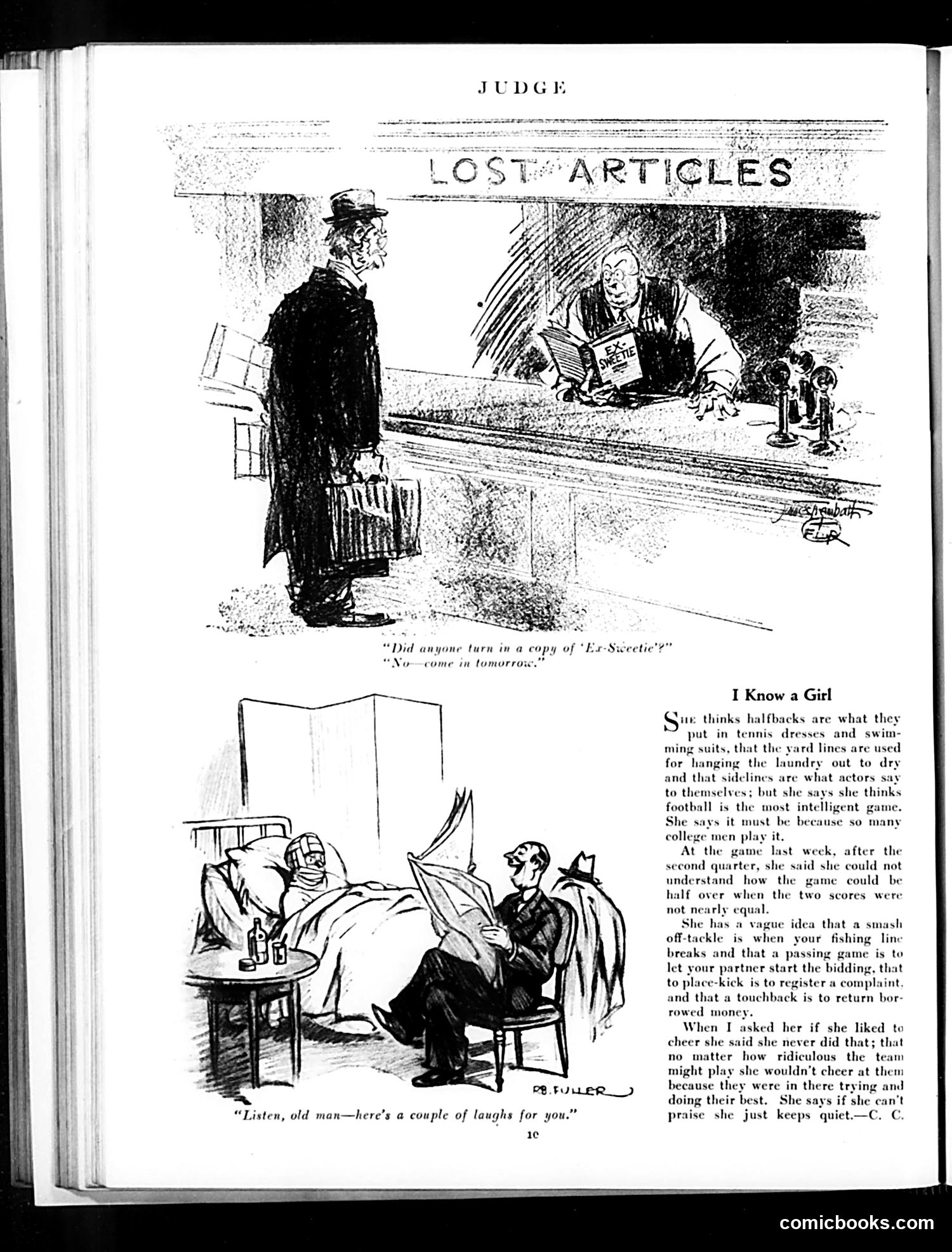
# Analysis of This Judge Page **Top Cartoon:** A man inquires at a "Lost Articles" desk about a missing copy of "Ex-Sweetie," a publication. The joke plays on the notion of romantic relationships as disposable items one might lose and recover—satirizing how casually people treat romantic partners or how quickly romantic interests are forgotten. **Bottom Section ("I Know a Girl"):** This is humorous commentary on a woman's complete ignorance of American football despite claiming to find it "intelligent." The satire mocks her absurd misunderstandings: confusing halfbacks with dress construction, yard lines with laundry-drying, and football terminology with unrelated concepts (off-tackle = broken fishing line; touchback = returning borrowed money). The piece satirizes both the superficiality of young women's sports knowledge and, implicitly, the pretense of intellectual engagement without actual understanding—a common early-20th-century magazine trope ridiculing women's participation in male-dominated spheres like sports fandom.