A complete issue · 36 pages · 1930
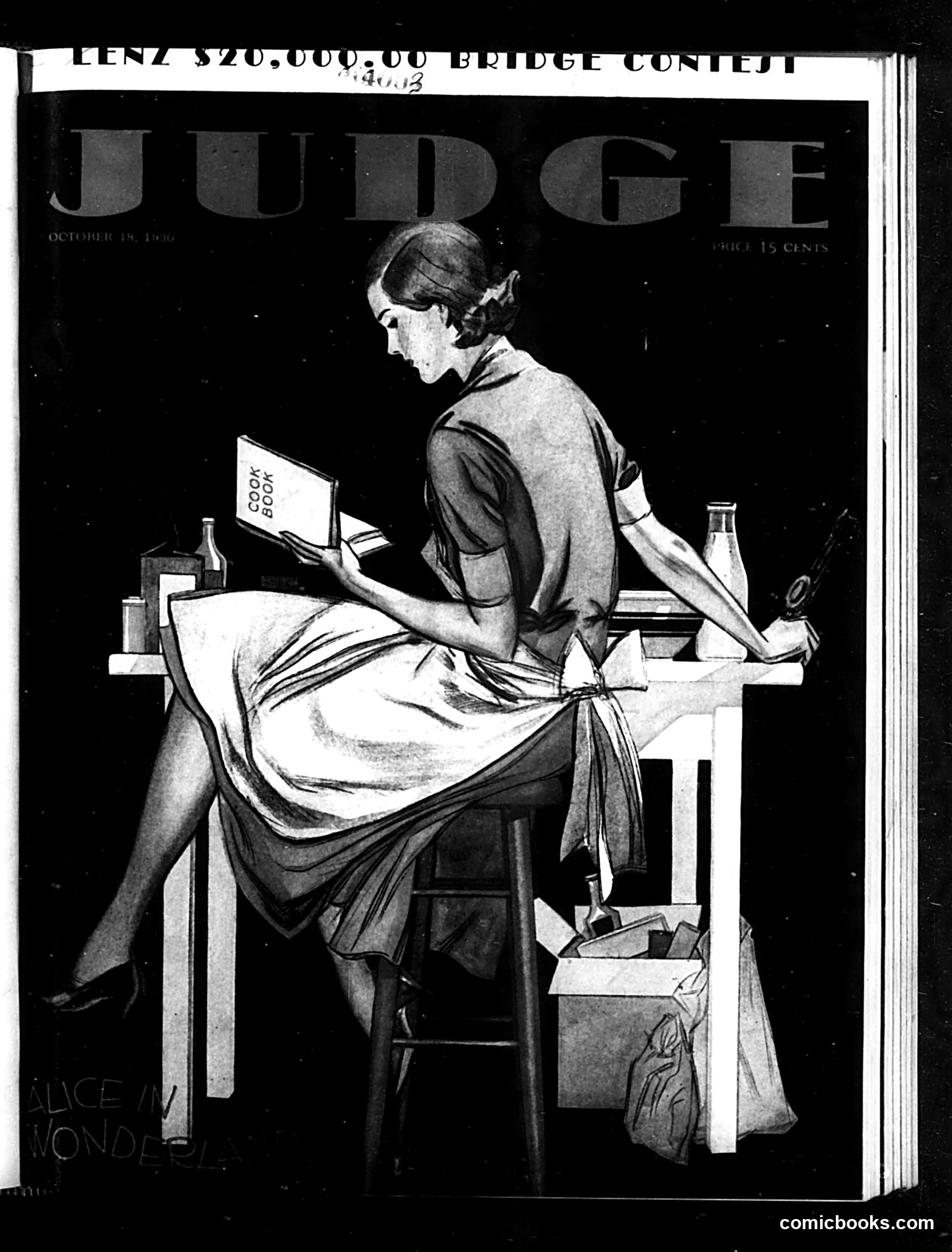
Judge — October 18, 1930
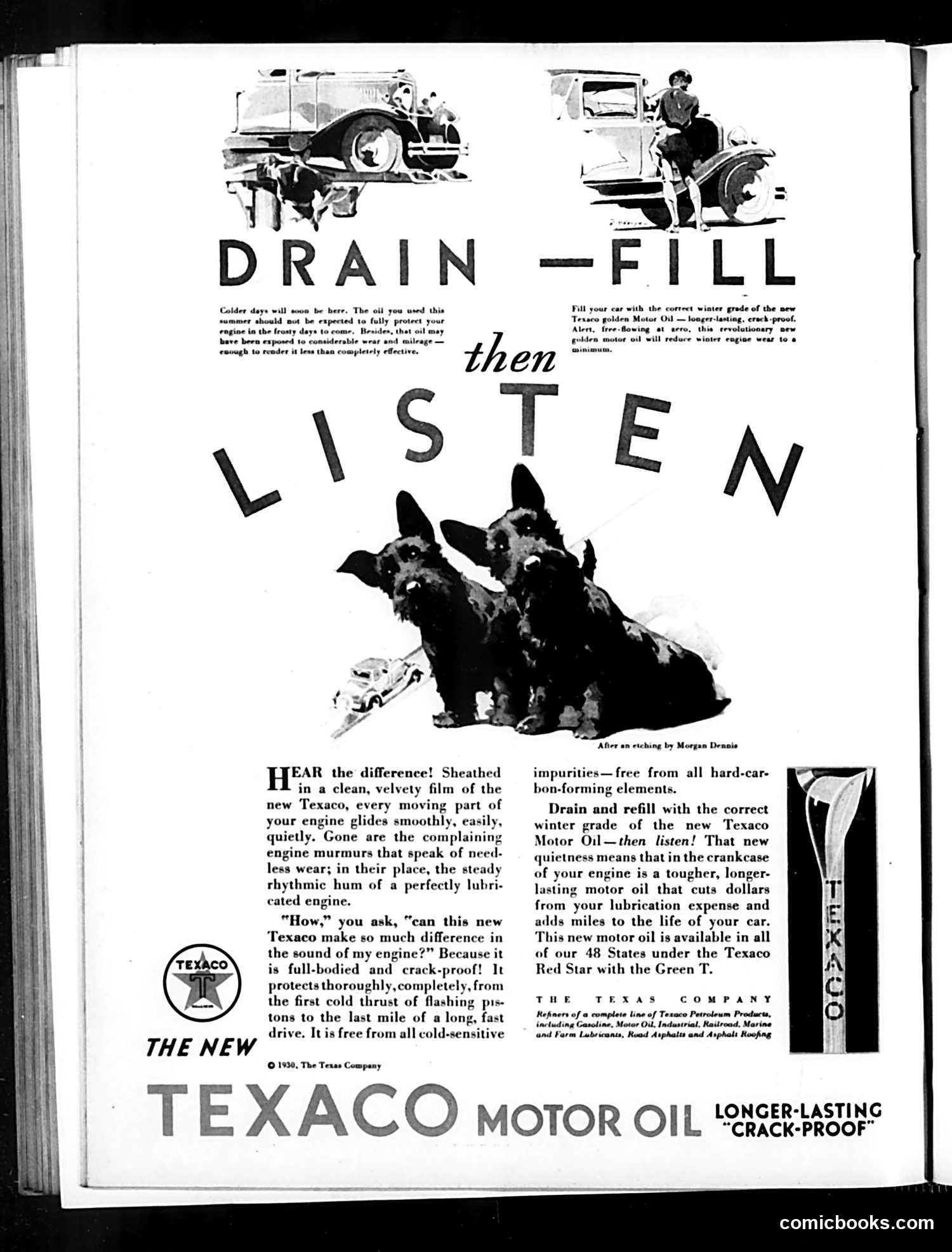
# Analysis This page is **primarily a Texaco Motor Oil advertisement**, not political satire. The main content advertises "The New Texaco Motor Oil" as "longer-lasting" and "crack-proof." The layout uses a three-panel structure: "DRAIN—FILL then LISTEN." The top panels show car maintenance procedures. The bottom center features two Scottish Terriers (drawn by Morgan Dennis) as a visual metaphor—the dogs' smooth coats represent the oil's smooth, protective film on engine parts. The advertisement emphasizes the product's quieting effect on engines and protection from wear. The Scottish Terriers symbolize sleekness and refinement, contrasting with the implied roughness of inferior oils. This is commercial messaging, not editorial commentary or satire.
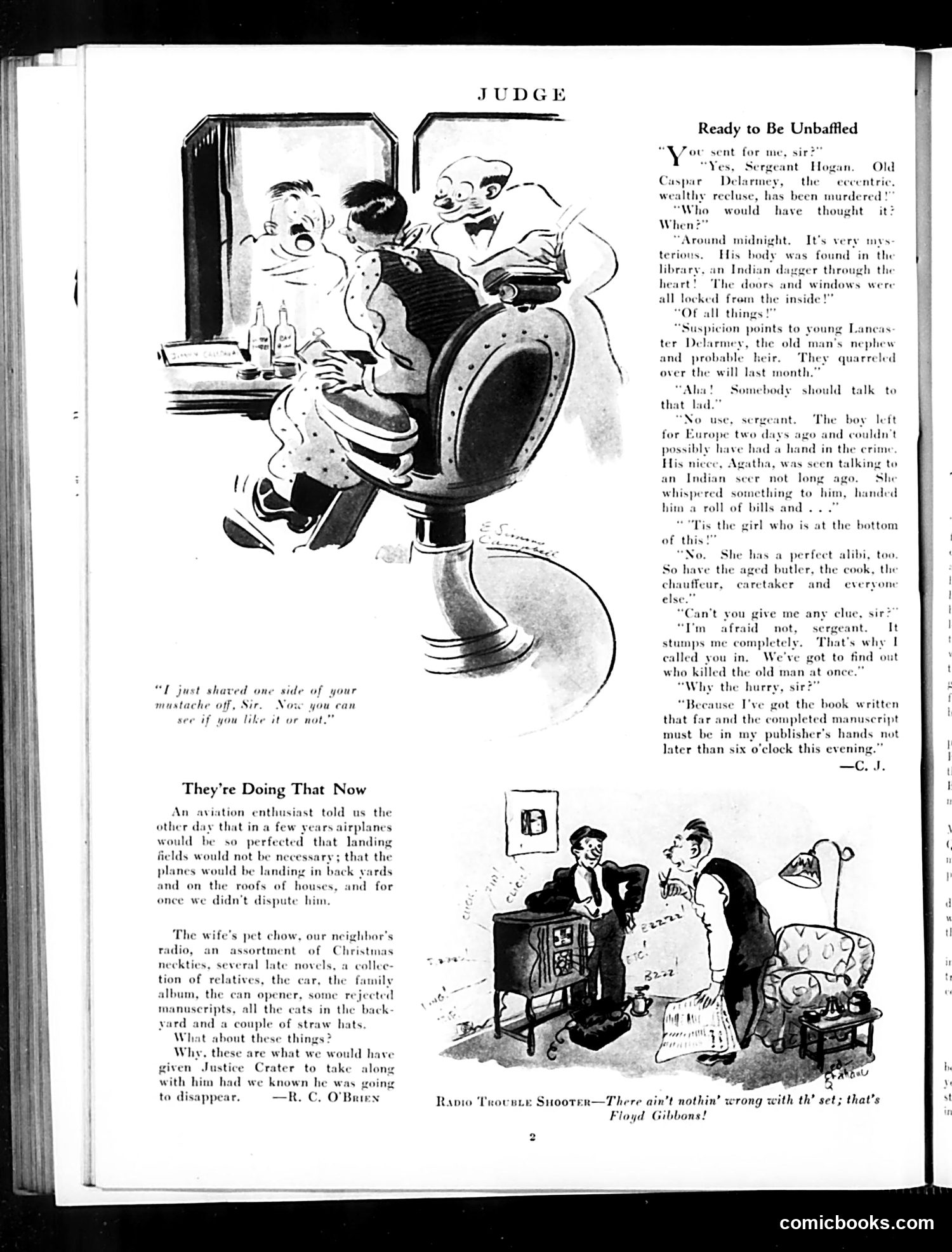
# Analysis of Judge Magazine Page **Top Cartoon ("Judge"):** A barber is shaving a customer while two other men watch. The caption suggests the barber has shaved "one side of your mustache off" and invites the customer to judge the result. This appears to be a visual pun playing on the magazine's title—using "Judge" as a verb (asking the customer to evaluate the barber's work) rather than as a noun. **Bottom Section ("They're Doing That Now"):** A humorous anecdote about aviation predictions, joking that future planes will land in backyards. The accompanying cartoon depicts a domestic scene, likely satirizing overly optimistic technological forecasts common in the era. Both pieces represent typical Judge magazine humor: visual puns and gentle social satire about everyday life.
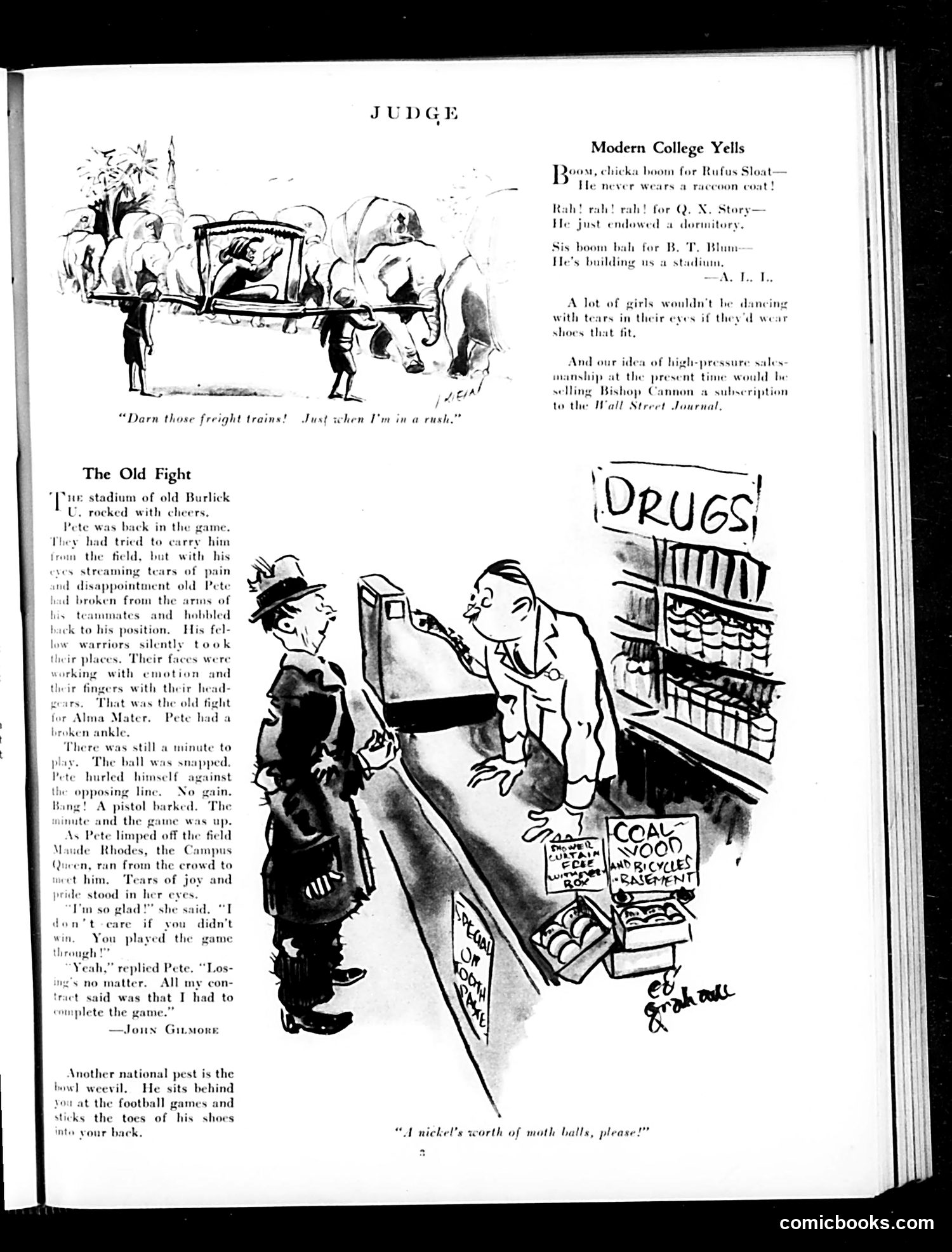
# Analysis of Judge Magazine Page **"Modern College Yells"** (top): Satirizes college spirit through absurd cheers—"Rah! rah! rah! for Q. X. Story" (an unknown embezzler), celebrating a dormitory instead of sports achievements. The humor mocks how colleges prioritize construction projects over athletic accomplishment. **"The Old Fight"** (left): A nostalgic sports narrative about Pete from "old Barlick U." overcoming injury to play football. The story celebrates athletic perseverance and school pride through traditional masculinity. **Right cartoon**: Shows a man at a drugstore counter asking for "a nickel's worth of moth balls, please!" The visual joke—the sign displays "DRUGS"—suggests the drugstore clerk might misinterpret his request as drug-seeking behavior, satirizing public anxiety about drugstore sales of questionable substances during Prohibition era.
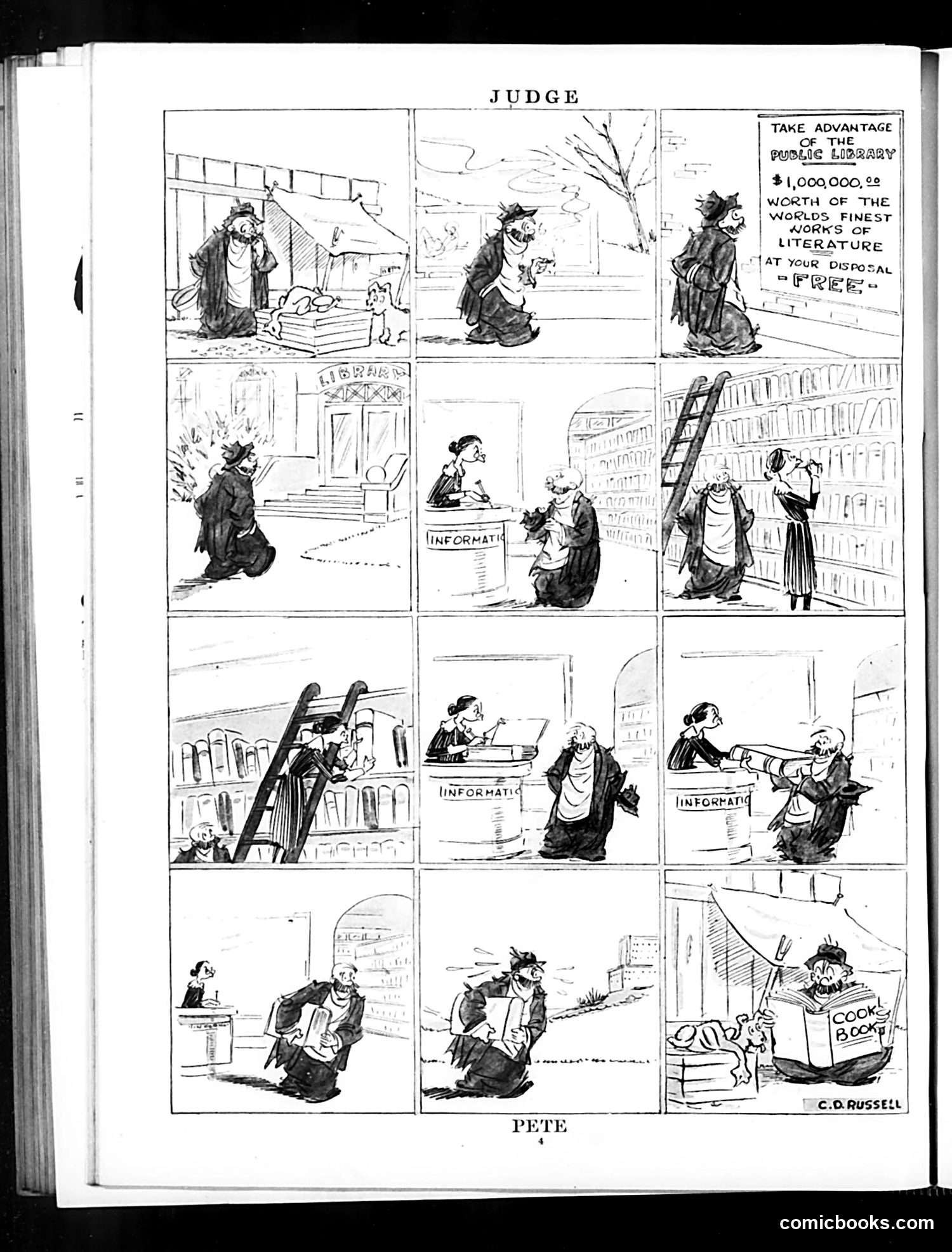
# "Judge" Cartoon Analysis: "Judge" and "Pete" This two-part satirical comic by C.D. Russell mocks a wealthy figure's attempt to appear philanthropic. The top strip ("Judge") shows a well-dressed man repeatedly encountering the public library, which offers "$1,000,000.28 worth of the world's finest works of literature at your disposal FREE." Each panel depicts him browsing or accessing the library's collections. The bottom strip ("Pete") appears to continue this theme, showing the same figure in various domestic scenarios—reading, cooking, and engaging with books—suggesting irony about his actual engagement with literature versus his claimed generosity. The satire likely targets wealthy patrons who gain public credit for library donations while the material remains inaccessible to ordinary citizens, or mock-generosity with strings attached.
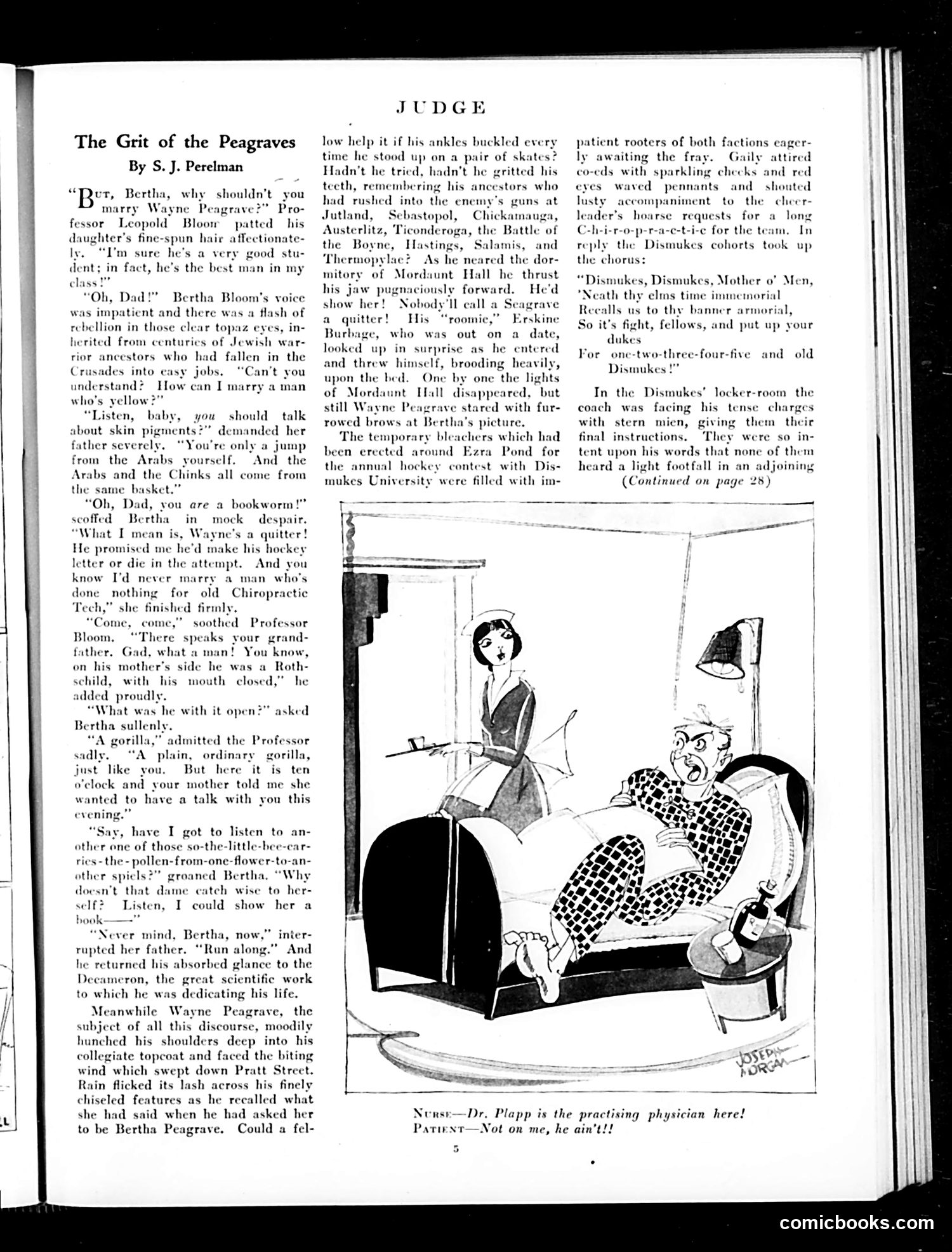
# Analysis This page from *Judge* magazine contains a short story titled "The Grit of the Peagraves" by S.J. Perelman. The narrative concerns a family dispute over Wayne Peagrave's choice to become a "quitter" (appears to mean an athlete or competitor of some kind) rather than pursue a respectable profession. Professor Bloom attempts to mediate the family conflict. The accompanying cartoon depicts a humorous medical scene: a nurse announces "Dr. Plapp is the practising physician here!" while a patient protests "Not on me, he ain't!!" The joke satirizes either an incompetent or overly experimental doctor. Without additional historical context, the specific identity of "Dr. Plapp" remains unclear—he may reference a contemporary public figure or simply represent a stock comedic character type common to early 20th-century humor magazines.
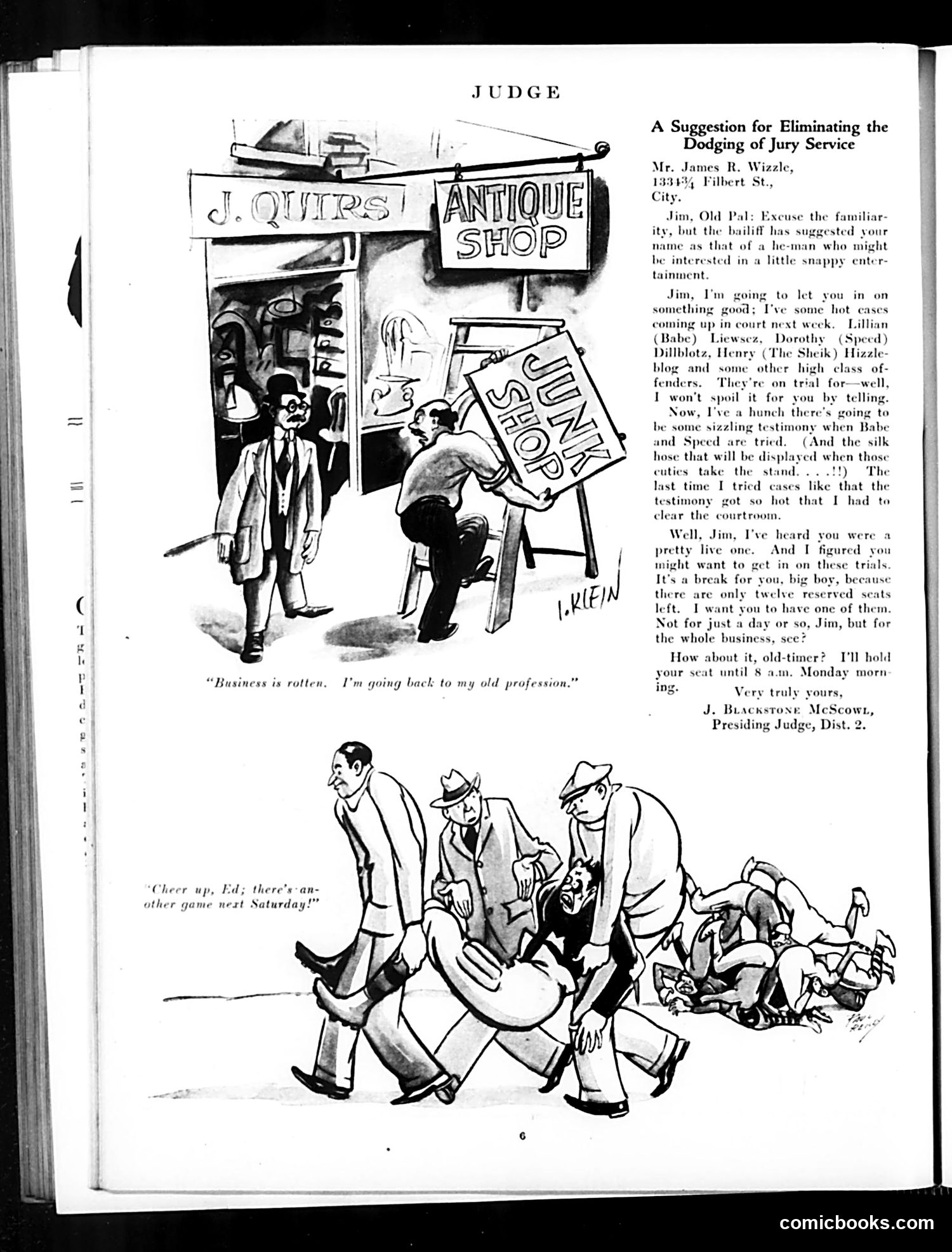
# Analysis This page from *Judge* magazine contains two cartoons and a letter to the editor. The **top cartoon** depicts a man shutting down an antique shop, saying "Business is rotten. I'm going back to my old profession." The sign advertises "SHINBONE" items, likely referencing worthless or fraudulent antiques—a commentary on deceptive business practices. The **letter** from Presiding Judge J. Blackstone McCowl proposes a solution to jury-duty avoidance: reserving courtroom seats for interested observers, allegedly to attract people like "Jim" (a familiar acquaintance). The judge suggests this would expose sensational trials and compensate for low jury attendance. The **bottom cartoon** shows three men carrying a large sack labeled "ED," captioned "Cheer up, Ed; there's another game next Saturday!" The context remains unclear without additional information about who "Ed" represents.
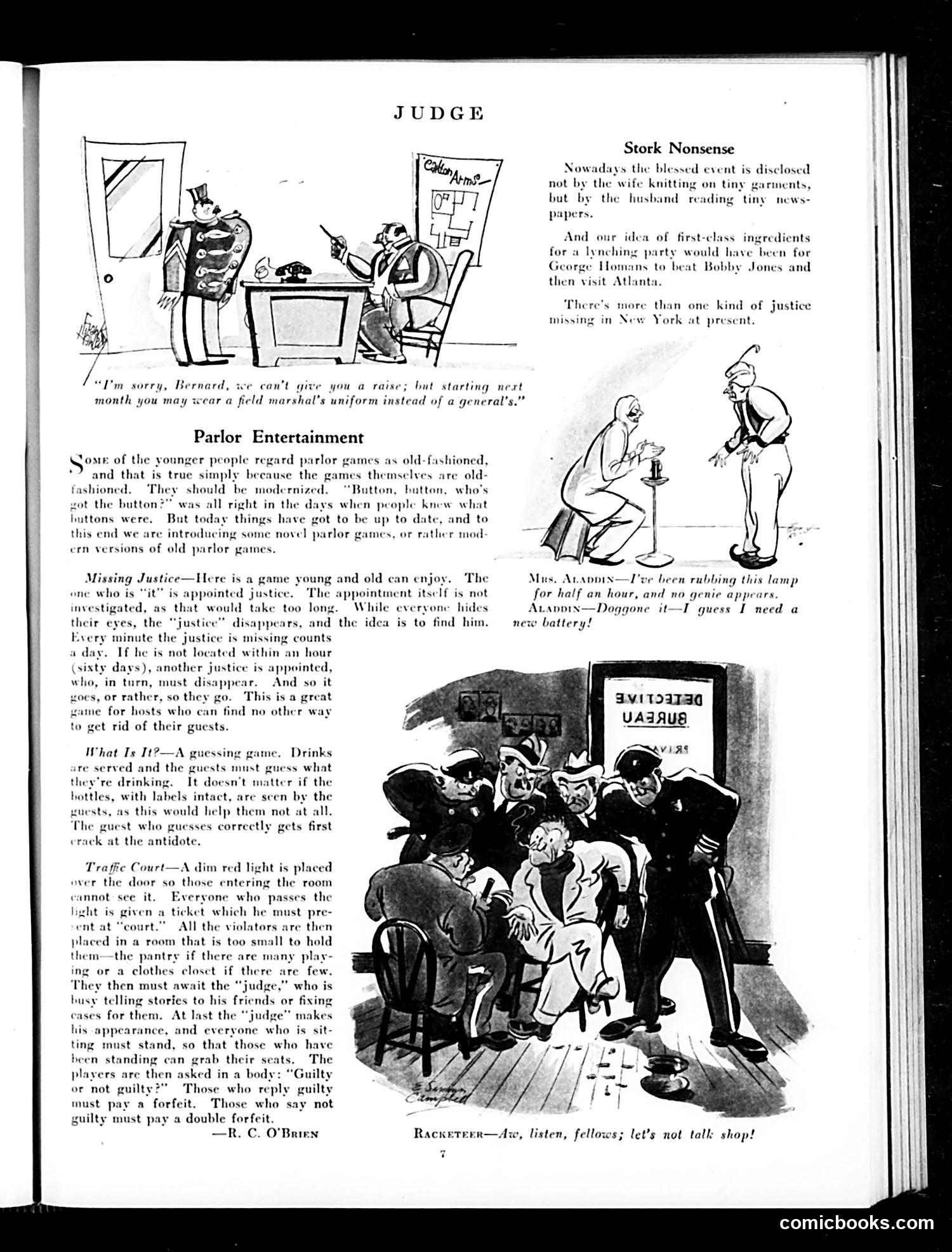
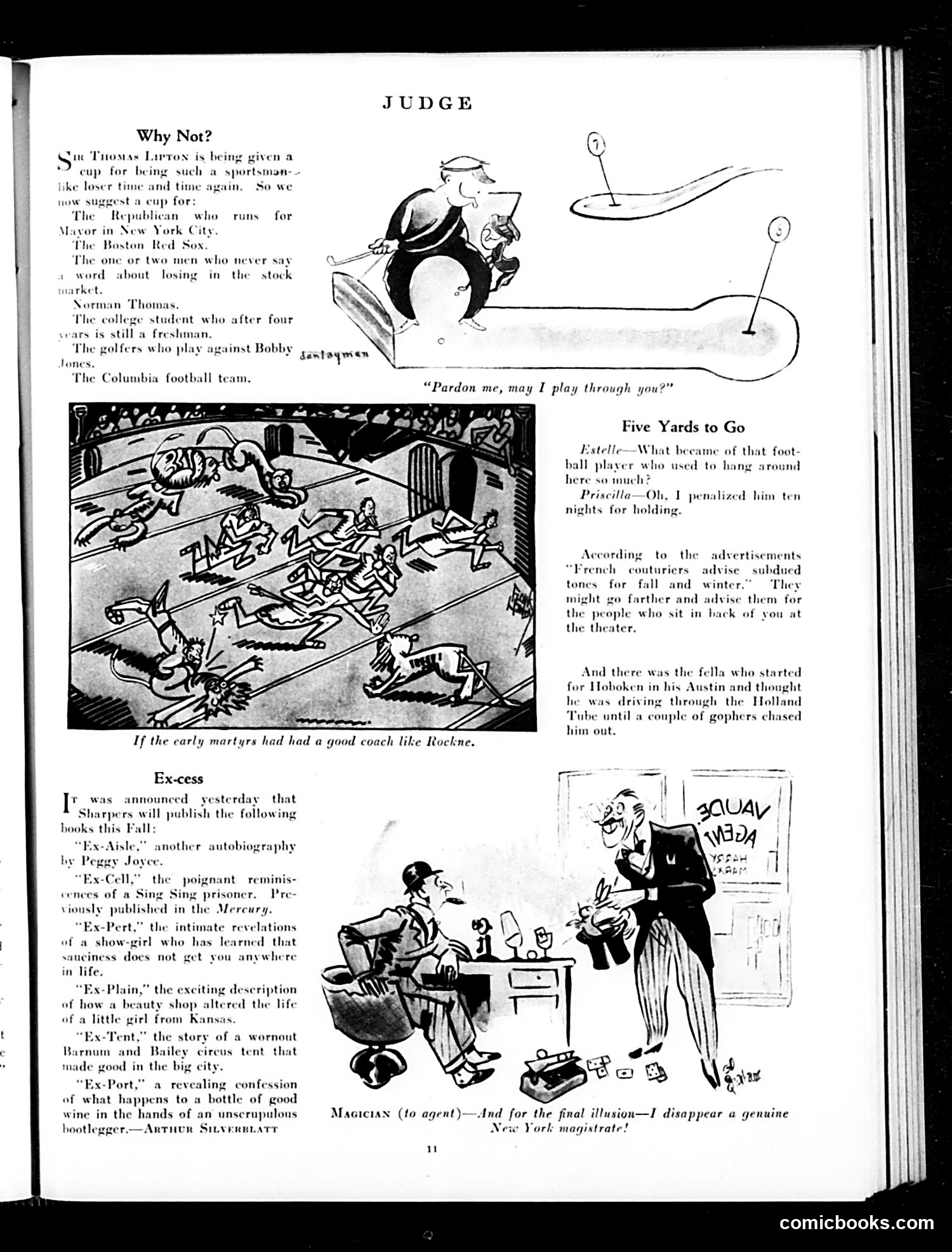
# Explanation for Modern Readers This Judge magazine page combines social commentary with parlor game instructions. The "Stork Nonsense" column satirizes how modern husbands learn of pregnancies from newspaper gossip rather than their wives' domestic preparations—mocking the media's role in spreading personal news. The references to "Bobby Jones" and "Atlanta" appear to reference a contemporary scandal or incident involving a lynching, with the author sarcastically commenting on American "justice." The "Parlor Entertainment" section presents absurdist game variations on old parlor games, mocking both the games themselves and social conventions. "Missing Justice" is a hide-and-seek variant. "Traffic Court" satirizes the legal system by creating a farcical courtroom where people are forced to stand in cramped spaces and fined either way they answer—a dark joke about how the justice system seems rigged regardless of one's response. The cartoons illustrate these games with period-appropriate drawings showing guests participating in foolish entertainment.
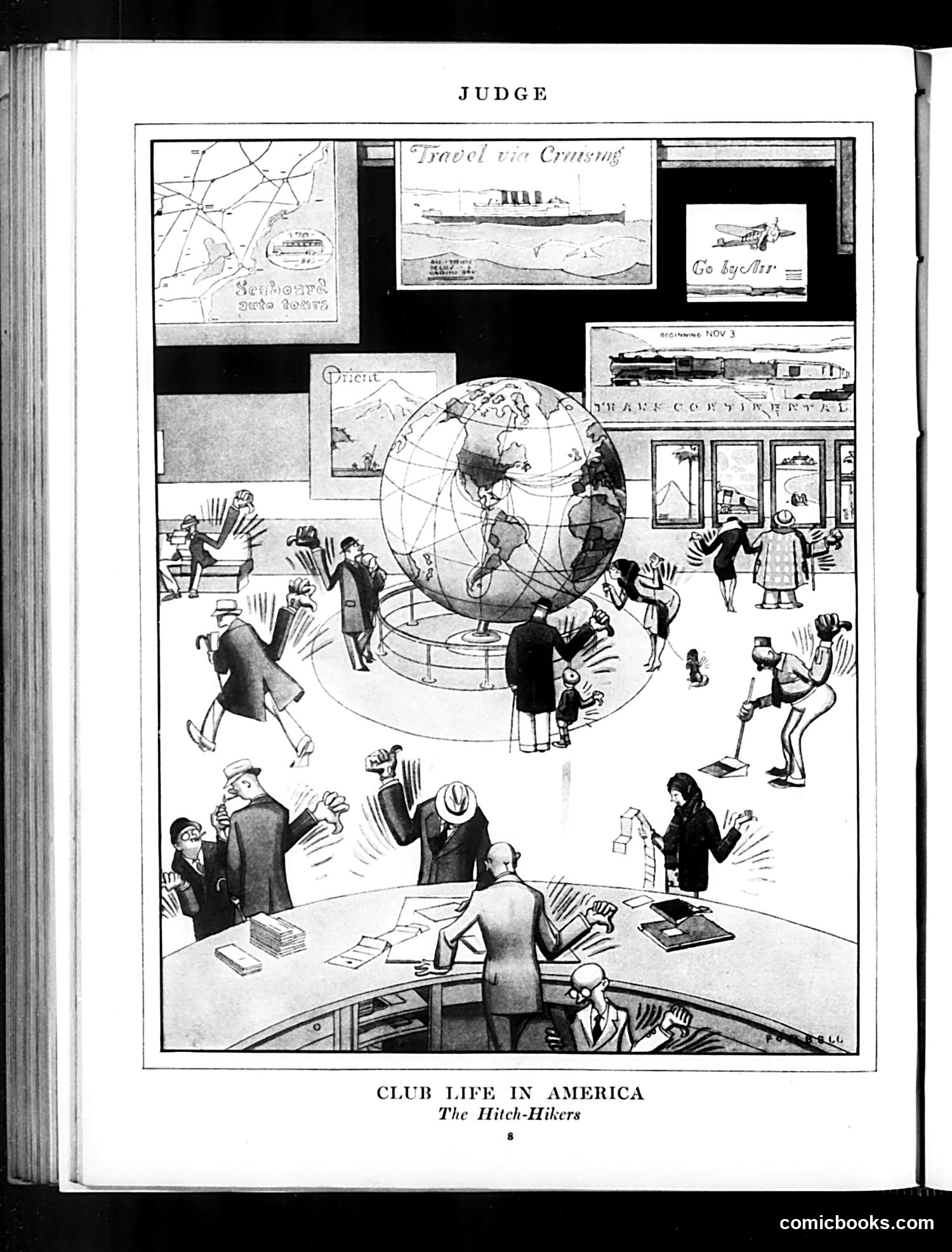
# "The Hitch-Hikers" - Judge Magazine Satire This cartoon satirizes the 1920s-30s phenomenon of hitchhiking. The central image shows a large globe in what appears to be a club or public space, surrounded by people in various states of animated chaos—some gesturing excitedly, others appearing agitated or distressed. The title "The Hitch-Hikers" suggests this mocks a social club devoted to hitchhiking culture. The small inset images at top (ship, train, airplane, automobile) represent different travel methods, reinforcing the travel theme. The satire likely critiques how hitchhiking had become a fashionable leisure activity among Americans, turning practical transportation into a social pastime. The chaotic scene suggests Judge viewed this trend as absurd or symptomatic of frivolous "club life" culture—people gathering merely to celebrate hitchhiking rather than undertaking genuine travel.
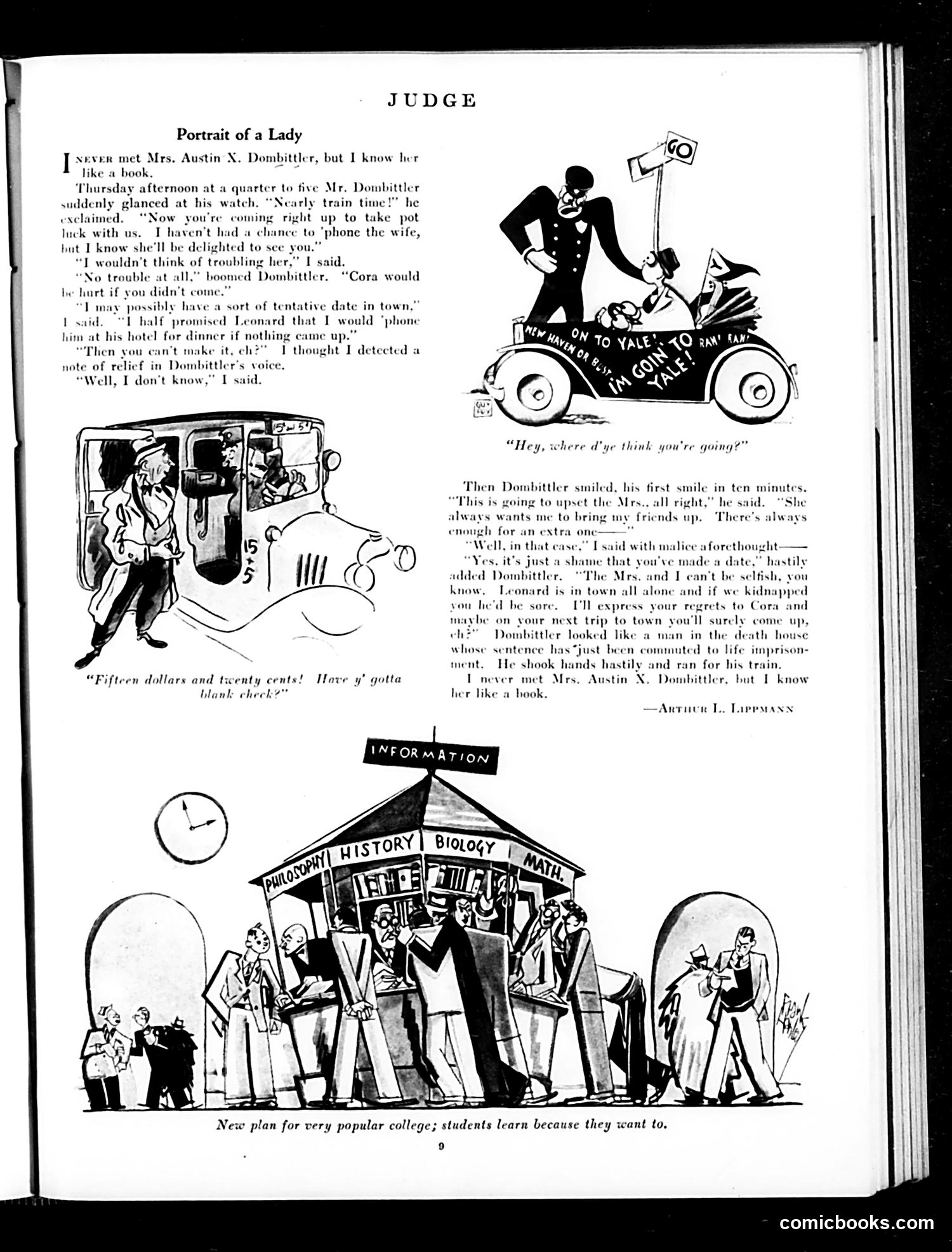
# "Portrait of a Lady" - Judge Magazine Satire This story satirizes social hypocrisy and unspoken domestic tension. Mr. Dombittler extends a dinner invitation to an acquaintance but clearly hopes it will be declined—his forced politeness masks reluctance. When the guest accepts, Dombittler's obvious relief at learning of a prior engagement reveals the truth: his wife "Cora" likely demands he invite guests to appear hospitable, but Dombittler resents the obligation and the disruption to his evening. The satire centers on the gap between what people *say* socially ("my wife would be delighted") and what they actually *feel*. The author "knows" Mrs. Dombittler "like a book" despite never meeting her—she's a recognizable social type: the wife who insists on entertaining to maintain appearances while her husband dreads it. The cartoons above show unrelated Judge humor involving transportation and college education.
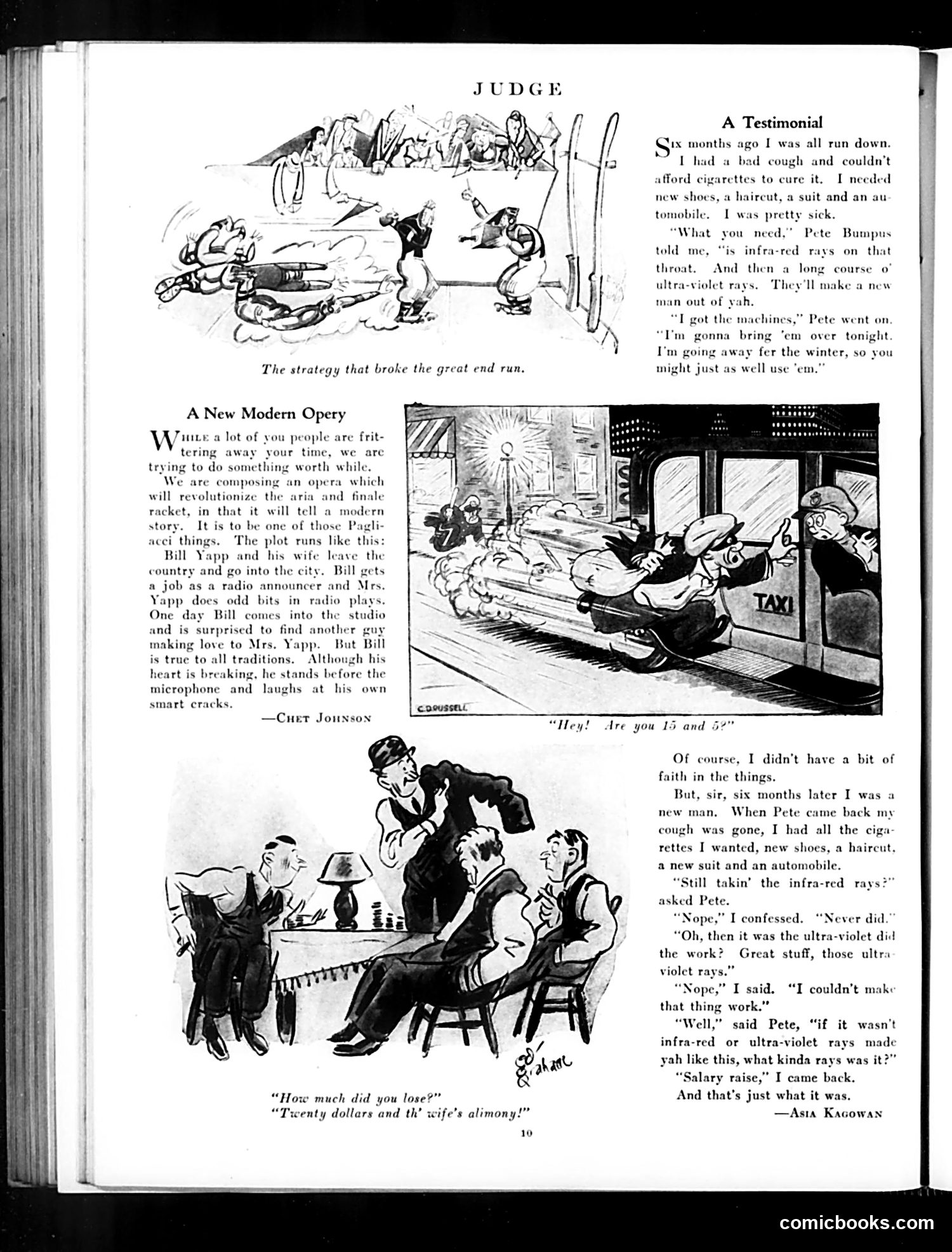
# Judge Magazine Page Analysis This page contains two satirical pieces mocking contemporary trends: **"A New Modern Opera"** (by Chet Johnson): Satirizes both modern radio entertainment and marital infidelity. The plot—a radio announcer discovers his wife with another man but maintains composure on-air—parodies overwrought operatic drama while poking fun at the emerging radio industry and casual attitudes toward adultery in "modern" society. **"A Testimonial"** (by Asia Kagowan): This is sharp satire debunking pseudo-scientific health fads. A man credits miraculous recovery to "infra-red" and "ultra-violet ray" machines Pete Bumpus provided, but eventually admits he never used them—his actual improvement came from a salary raise. The joke mocks both gullible consumers who believe in dubious medical devices and the hucksters peddling them as cure-alls. Both pieces ridicule contemporary American credulity and modern life's absurdities through humor.