A complete issue · 36 pages · 1930
Judge — October 11, 1930
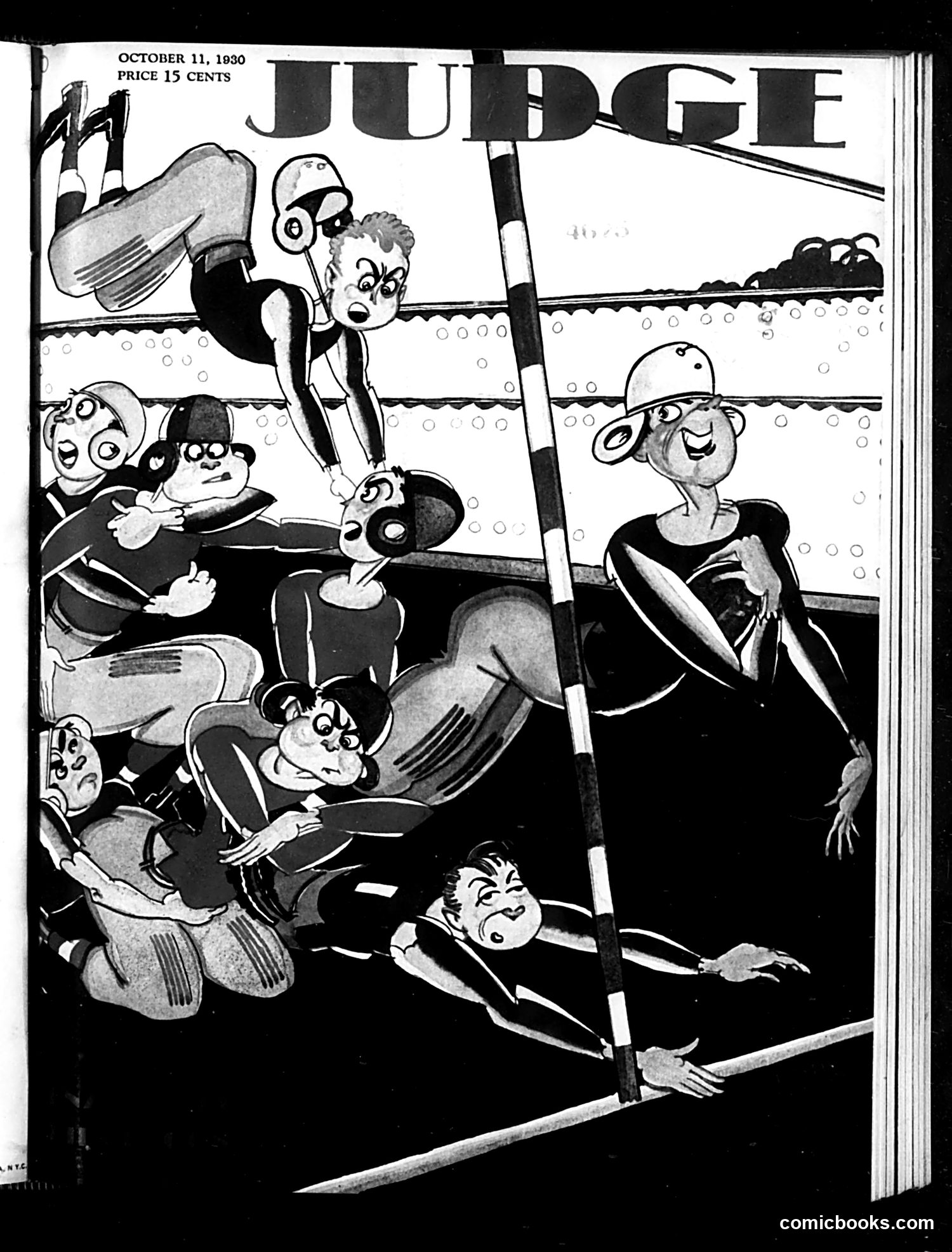
# Judge Magazine, October 11, 1930 This cartoon appears to depict a rowing or boat scene with exaggerated cartoon characters. The setting suggests a competitive rowing event, possibly referencing a contemporary sporting competition or social outing. The caricatured figures display the exaggerated facial features and body types typical of 1930s comic illustration. Without additional text on the page identifying specific political figures or events, I cannot definitively state which individuals or current events are being satirized. The humor likely derives from physical comedy—the characters' awkward postures in the boat and their distressed expressions—rather than specific political commentary. The striped oars and water setting are clearly rendered, but the precise satirical target remains unclear from the image alone.
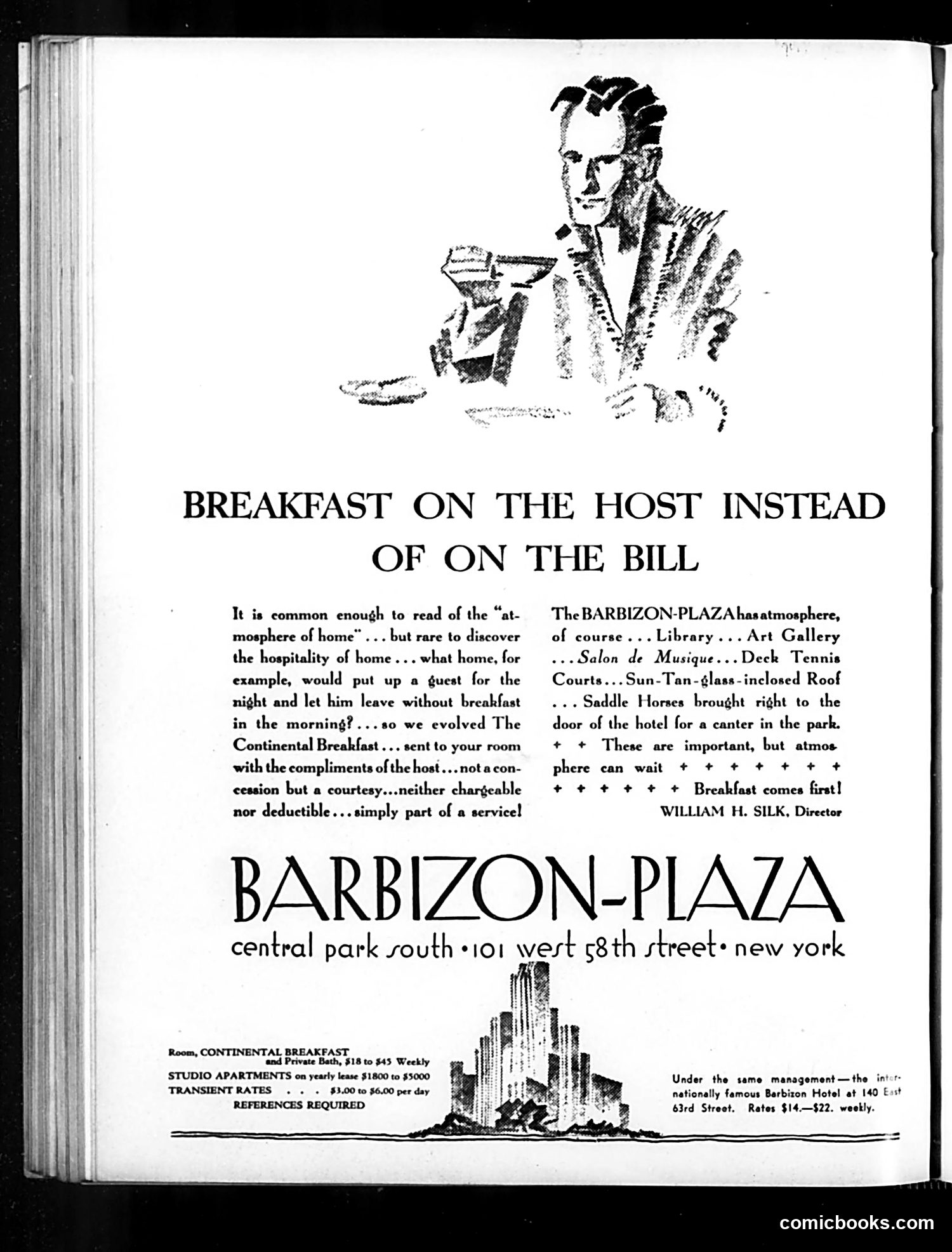
# Analysis This page is **primarily a hotel advertisement**, not political satire. The Barbizon-Plaza Hotel on Central Park South in New York is advertising its "Continental Breakfast" service included with rooms—positioning this as a hospitality feature that distinguishes it from competitors who charge separately. The illustration at top shows a man dining, likely meant to represent a satisfied guest. The ad's text emphasizes that providing complimentary breakfast reflects proper hospitality and courtesy, "not a concession but a courtesy...neither chargeable nor deductible." The page includes room rates, studio apartment leases, and transient rates. While it appears in *Judge* magazine (known for satire), this particular page functions as a commercial advertisement rather than political commentary or humor.
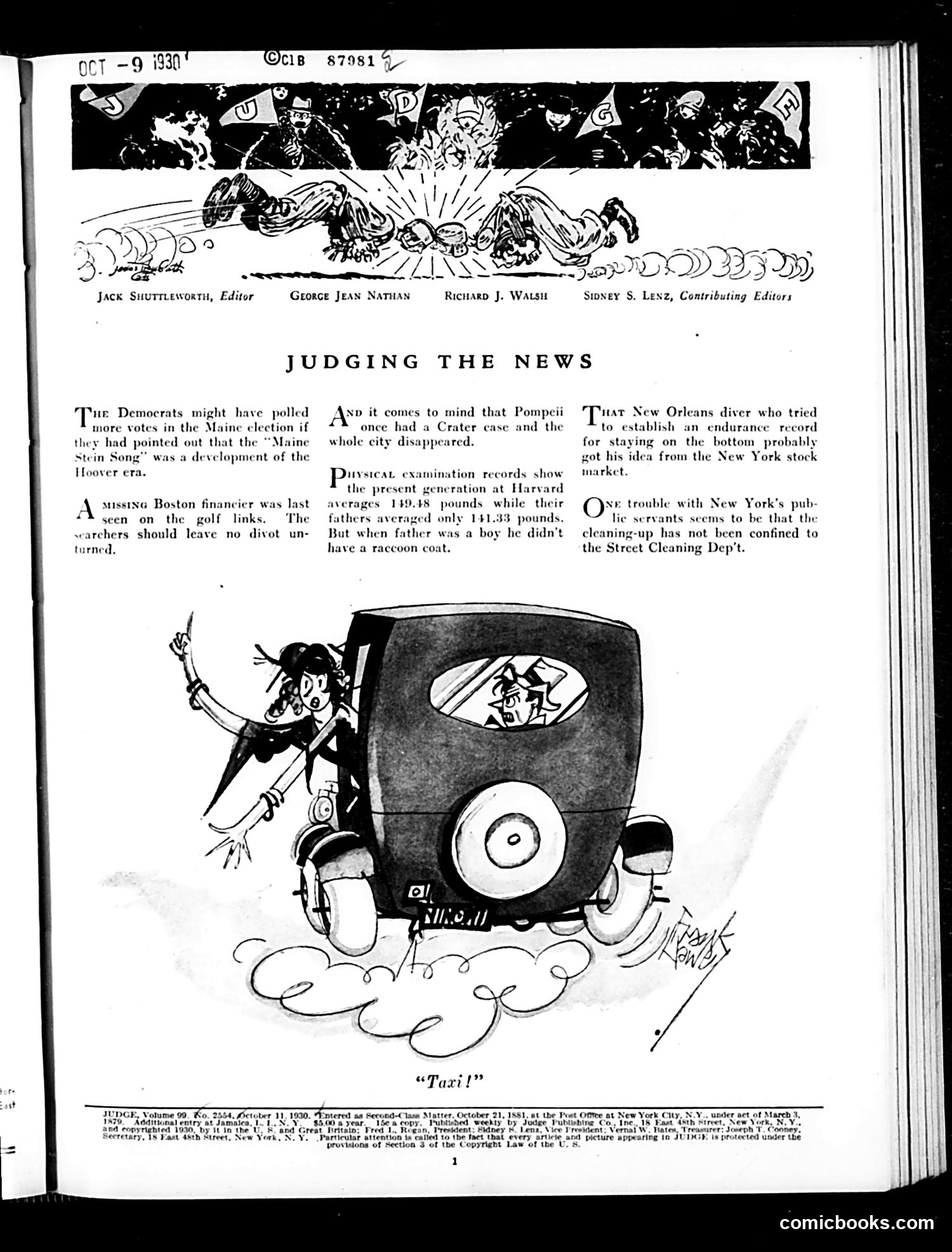
# Analysis of Judge Magazine Page, October 9, 1930 The page features a satirical column titled "Judging the News" with several brief political jabs, alongside a cartoon labeled "Taxi!" The cartoon depicts a taxi-cab appearing to descend from clouds, with an aggressive caricatured figure (possibly a politician or public figure) wielding what looks like a weapon or tool. The overall impression suggests chaos or danger emerging from the taxi. The brief text snippets mock various news items: a Maine election result, a missing Boston financier, Harvard student health statistics, Pompeii's disappearance, and New York City's street cleaning failures. The "Taxi!" cartoon likely satirizes taxi-related crime or corruption—common concerns in 1930s New York. Without clearer identification of the figure, the specific target remains somewhat unclear, though it appears to critique urban disorder or criminal activity associated with the taxi industry.
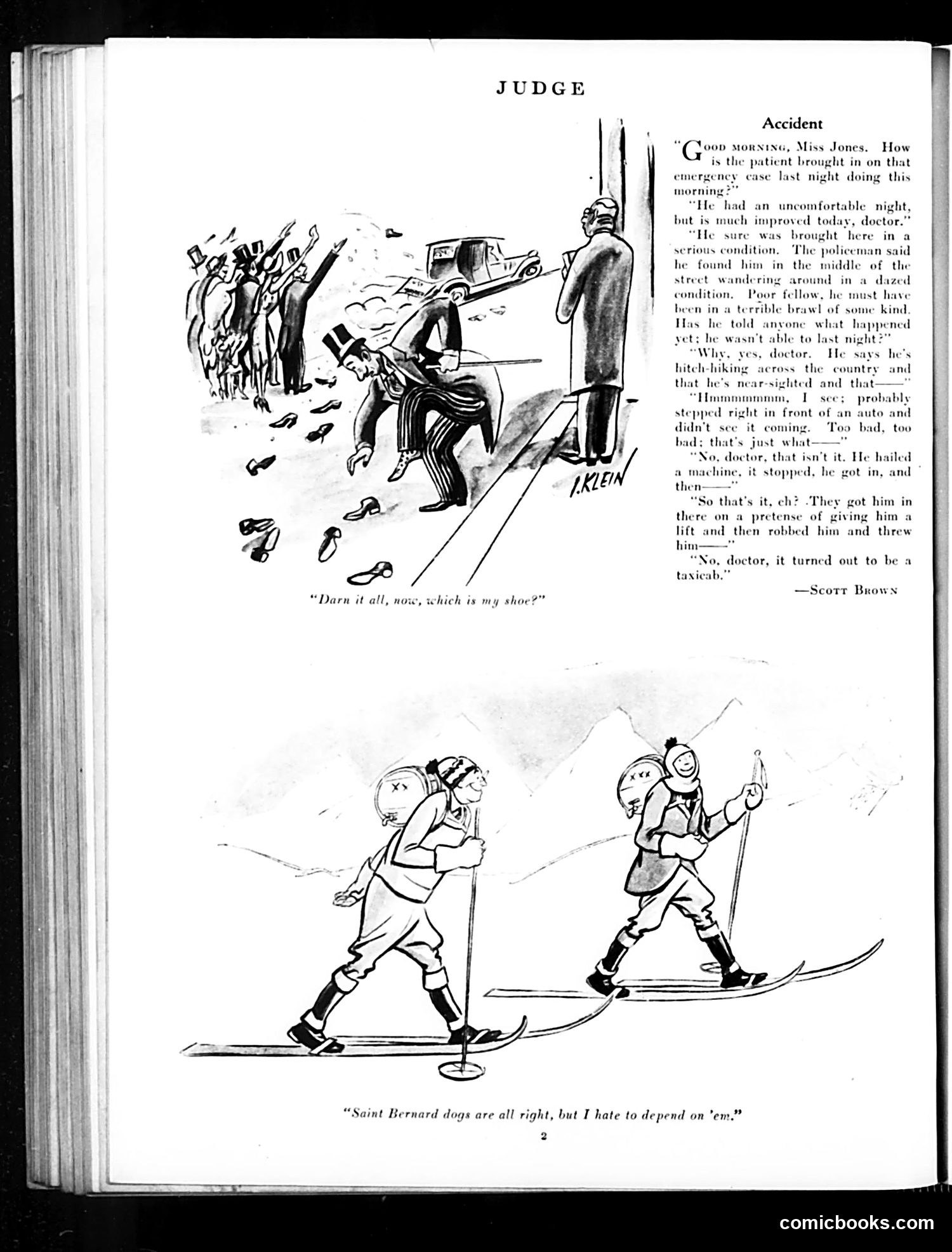
# Analysis of Judge Magazine Page This page contains two distinct cartoons: **Top cartoon ("Darn it all, now, which is my shoe?"):** Depicts a traffic accident involving a pedestrian hit by a car. The accompanying dialogue reveals dark humor—the victim was actually a hitchhiker struck while trying to catch a ride. The "accident" was actually a robbery; criminals posed as Good Samaritans offering assistance, then robbed and threw him from the vehicle. The satire targets the dangers of hitchhiking and the opportunistic criminals who prey on vulnerable travelers during this era. **Bottom cartoon ("Saint Bernard dogs are all right, but I hate to depend on 'em"):** Shows skiers in mountainous terrain, likely the Alps. The humor concerns rescue dogs versus self-reliance—the skier expresses frustration about depending on Saint Bernard dogs for mountain rescue, preferring independence. Both cartoons employ visual comedy to satirize contemporary social anxieties about travel and safety.
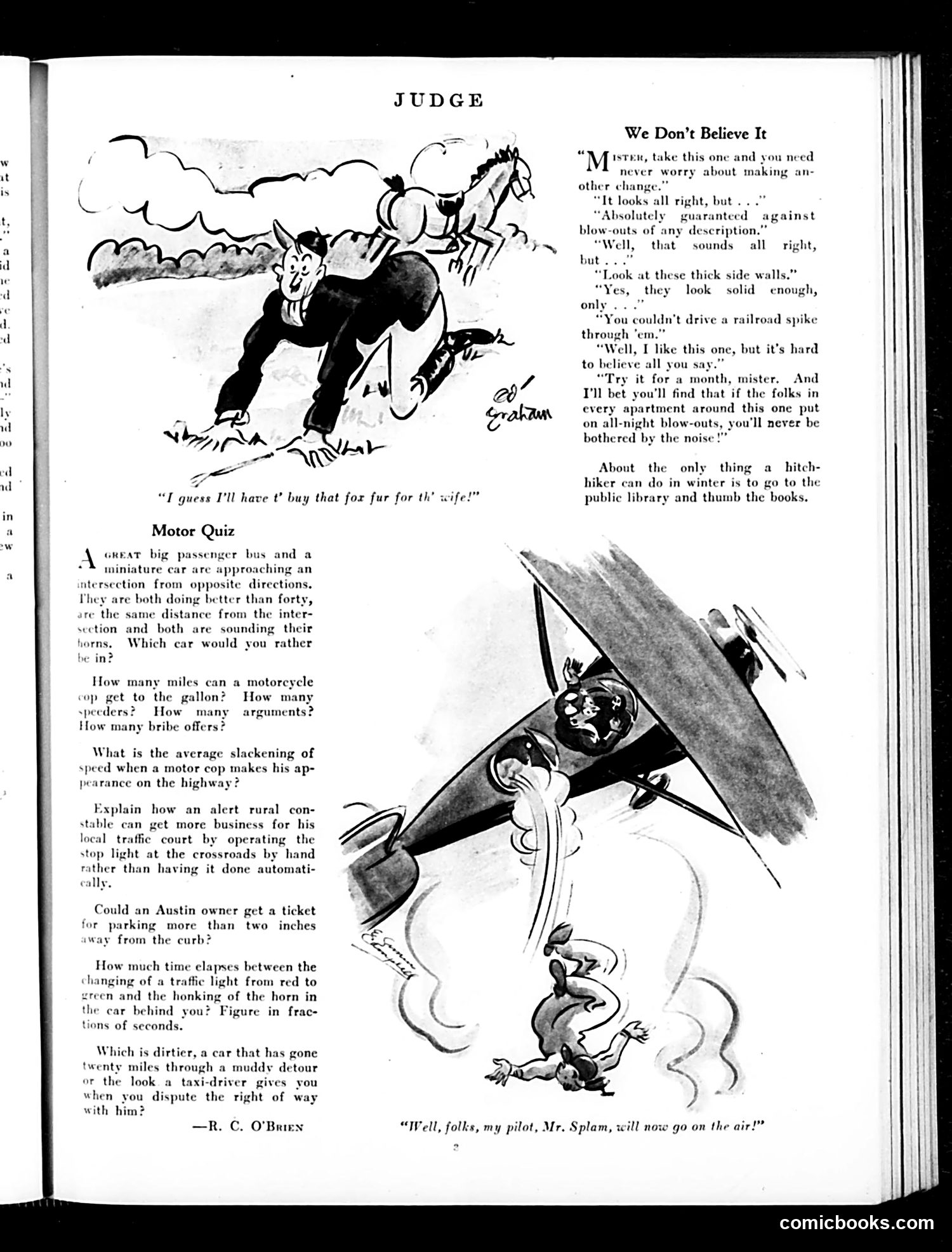
# Analysis of Judge Magazine Page This page contains two distinct sections: **Top cartoon ("We Don't Believe It"):** A man crawls desperately behind a horse-drawn carriage, clutching at the ground. The dialogue suggests he's claiming he can buy something for his wife—possibly a car—but the listener expresses extreme skepticism, comparing the claim to incredible tall tales. The satire targets exaggerated advertising promises of the automotive era, mocking salesmen's outlandish claims about vehicle affordability or performance. **Bottom section ("Motor Quiz"):** A quiz by R.C. O'Brien poses humorous questions about vehicles and traffic regulations—motorcycles' fuel efficiency, parking violations, traffic light timing, and distinguishing between actual collisions and taxi-driver excuses. This section satirizes the confusion and absurdity surrounding early 20th-century traffic laws and motorist behavior. Both sections mock the emerging automobile culture's complications and dubious claims.
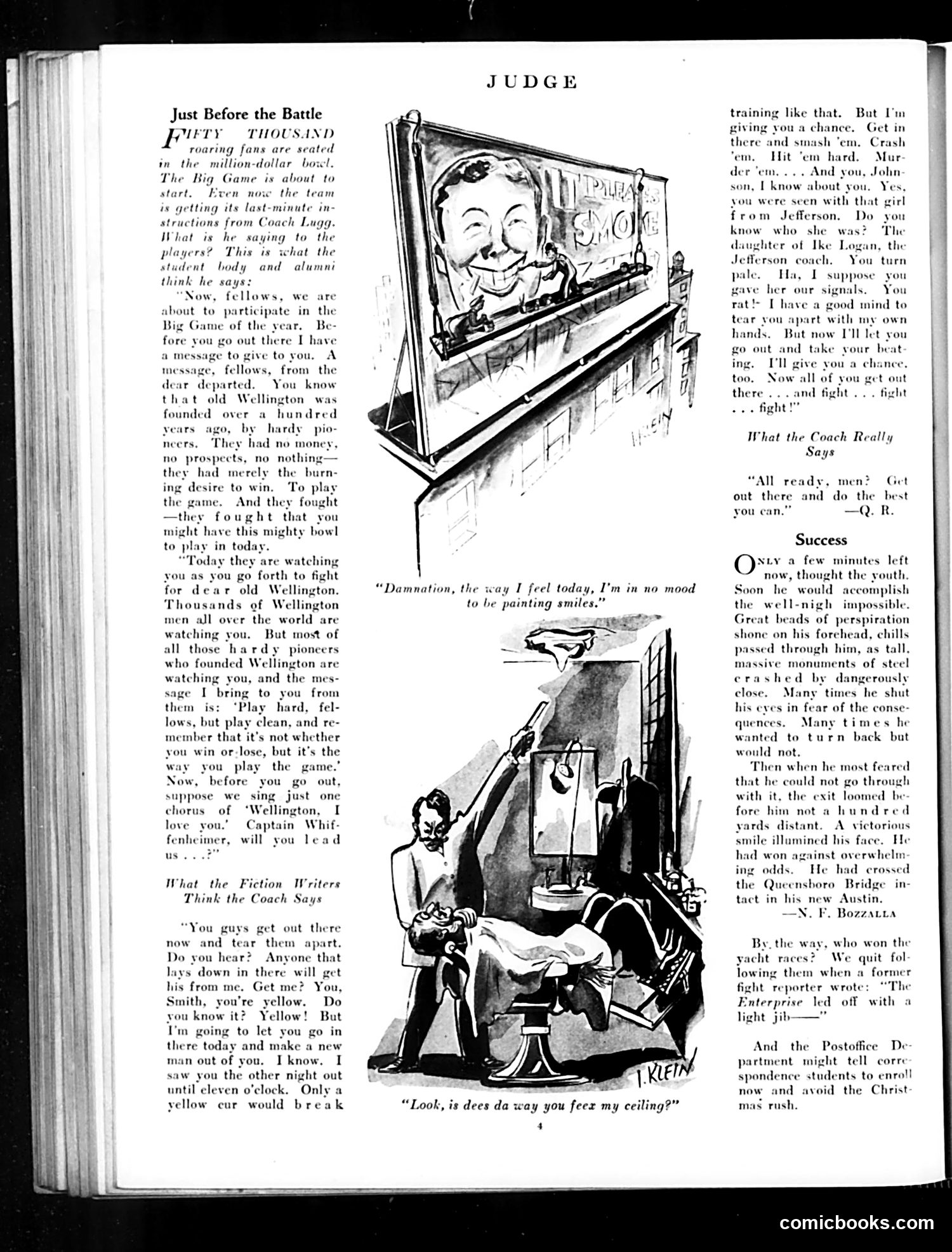
# Analysis of Judge Magazine Page This page contains sports-related humor rather than political satire. The "Just Before the Battle" section references Wellington (likely the university) football team, treating the upcoming "Big Game" with mock-heroic language. The two cartoons depict: 1. **Top cartoon**: A caricatured face on what appears to be a stadium scoreboard or display, captioned about "painting smiles"—likely mocking forced enthusiasm before competition. 2. **Bottom cartoon**: A figure in what appears to be athletic gear, with French-language caption ("Look, is does da way you feez my ceiling?")—appearing to parody accented speech, possibly ethnic humor common to the era. The "Success" section describes overcoming obstacles, likely extending the sports metaphor. This page primarily entertains through sports humor and period-typical ethnic caricature rather than political commentary.
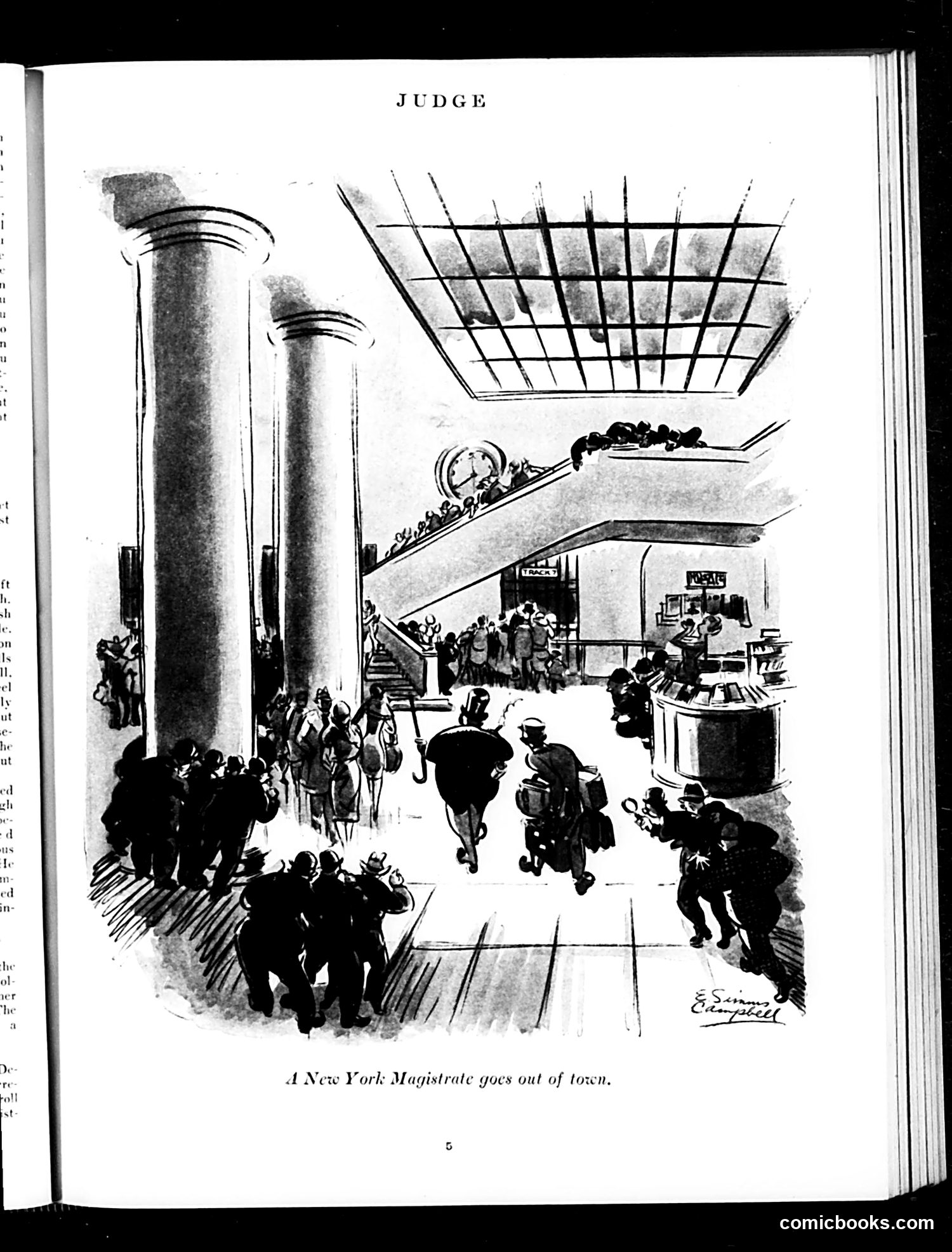
# "A New York Magistrate goes out of town" This cartoon satirizes the departure of a New York magistrate (judge) from the city, depicted as a grand public event. The exaggerated scene—with massive crowds, elaborate architecture, and ceremonial atmosphere—mocks the self-importance of minor judicial officials. The magistrate appears to be treated like a dignitary or celebrity leaving for an important journey, when in reality he's simply a local judge taking time away. The satire likely criticizes either the pomposity of low-ranking city officials or public corruption involving magistrates. The crowded, chaotic scene suggests bureaucratic excess or the spectacle surrounding even mundane governmental activities. The artist's signature appears to be "E. Simmers Campbell" or similar.
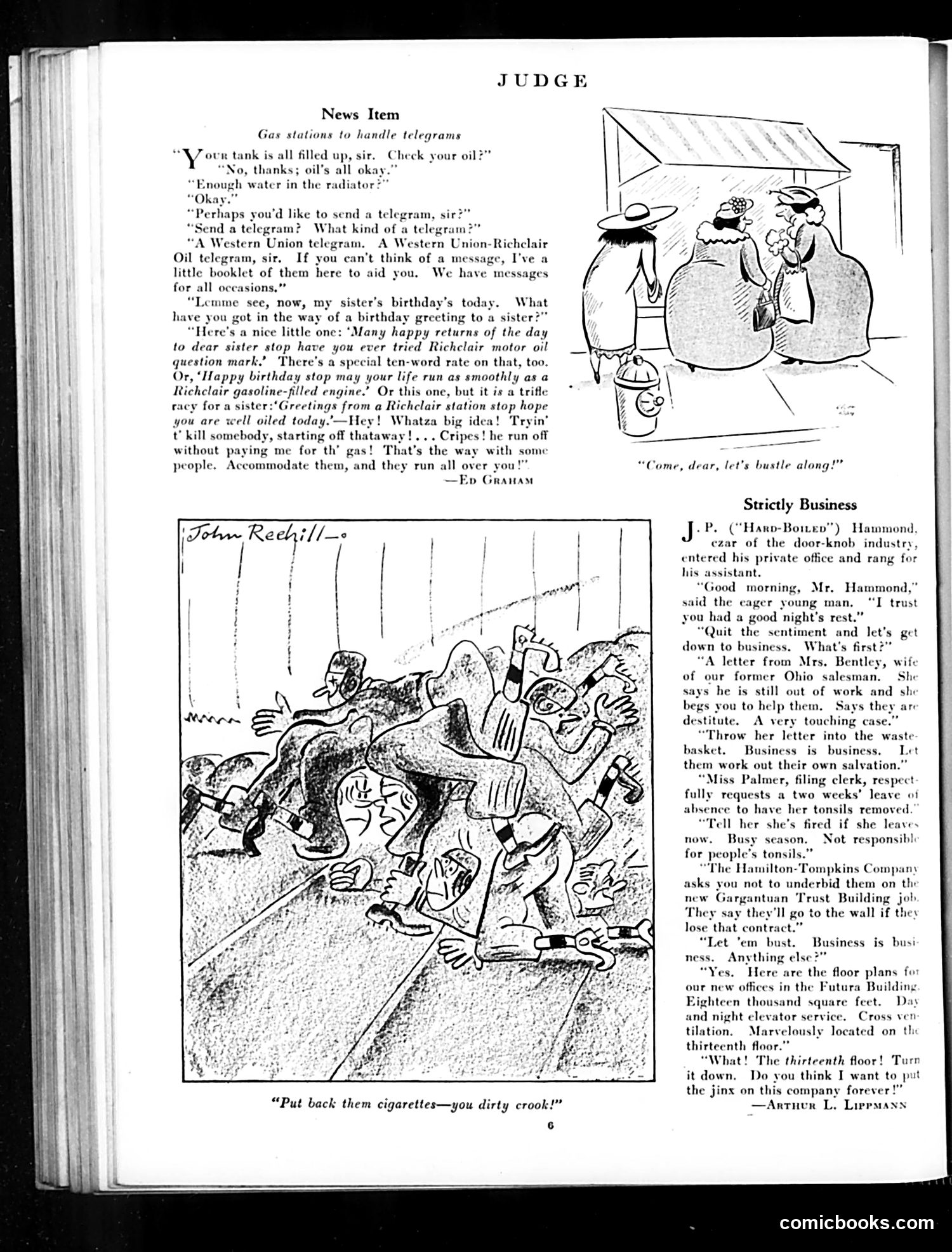
# Analysis of Judge Magazine Page This page contains three pieces of humor commentary on early 20th-century American life. **"News Item" (top left):** A satirical dialogue mocking gas station attendants who upsell customers on unnecessary services like telegrams and oil treatments. The joke critiques aggressive sales tactics at service stations. **"John Redhill's" cartoon (center):** Depicts a chaotic traffic scene with multiple cars piled up, captioned "Put back them cigarettes—you dirty crook!" The cartoon likely satirizes reckless driving or traffic violations, possibly suggesting distracted driving or road rage. **"Strictly Business" (right):** A corporate satire where a boss dismisses an employee's request for help with a destitute friend, insisting "business is business." This critiques workplace callousness and the era's rigid professional attitudes toward charity. All three pieces target perceived social failings through humor.
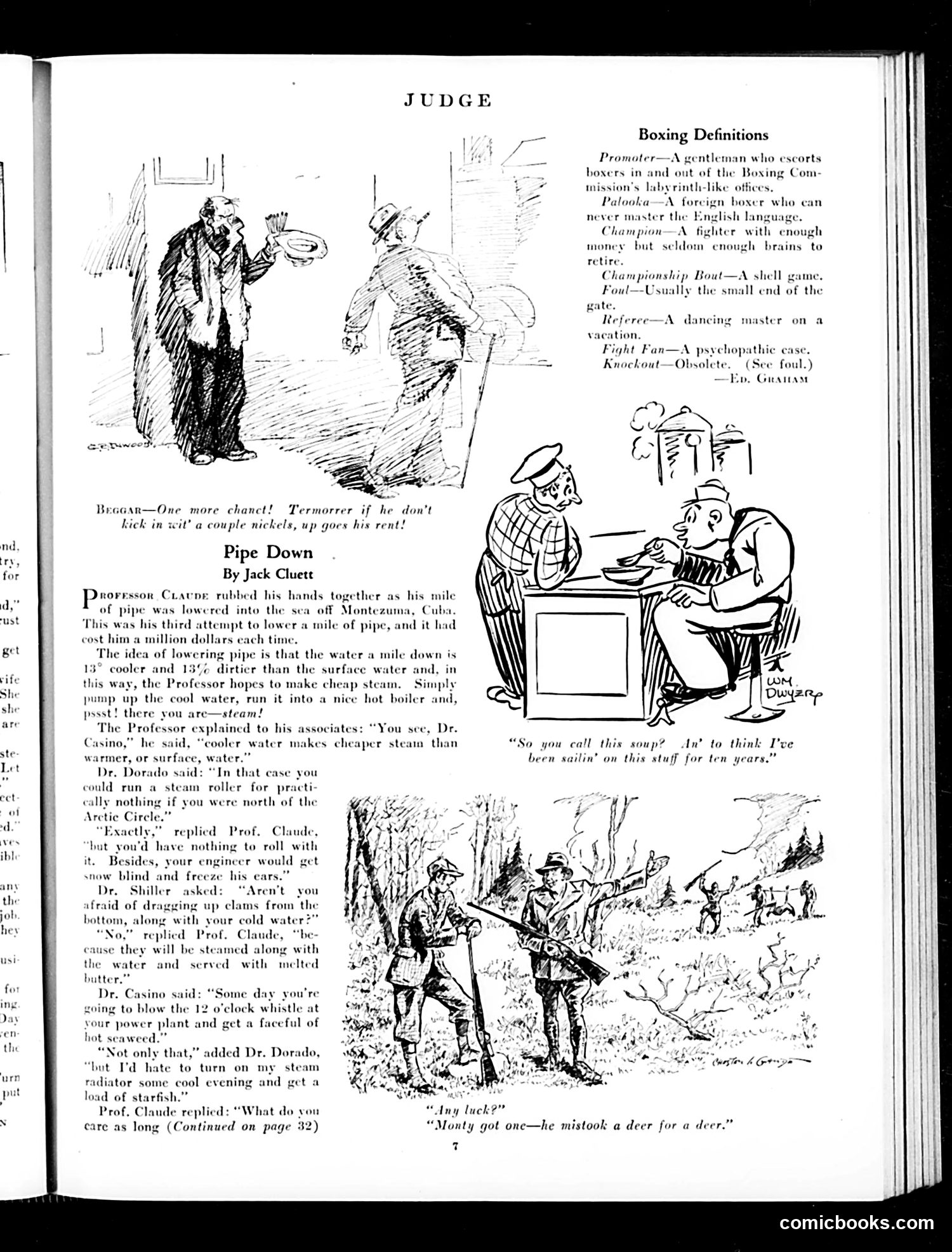
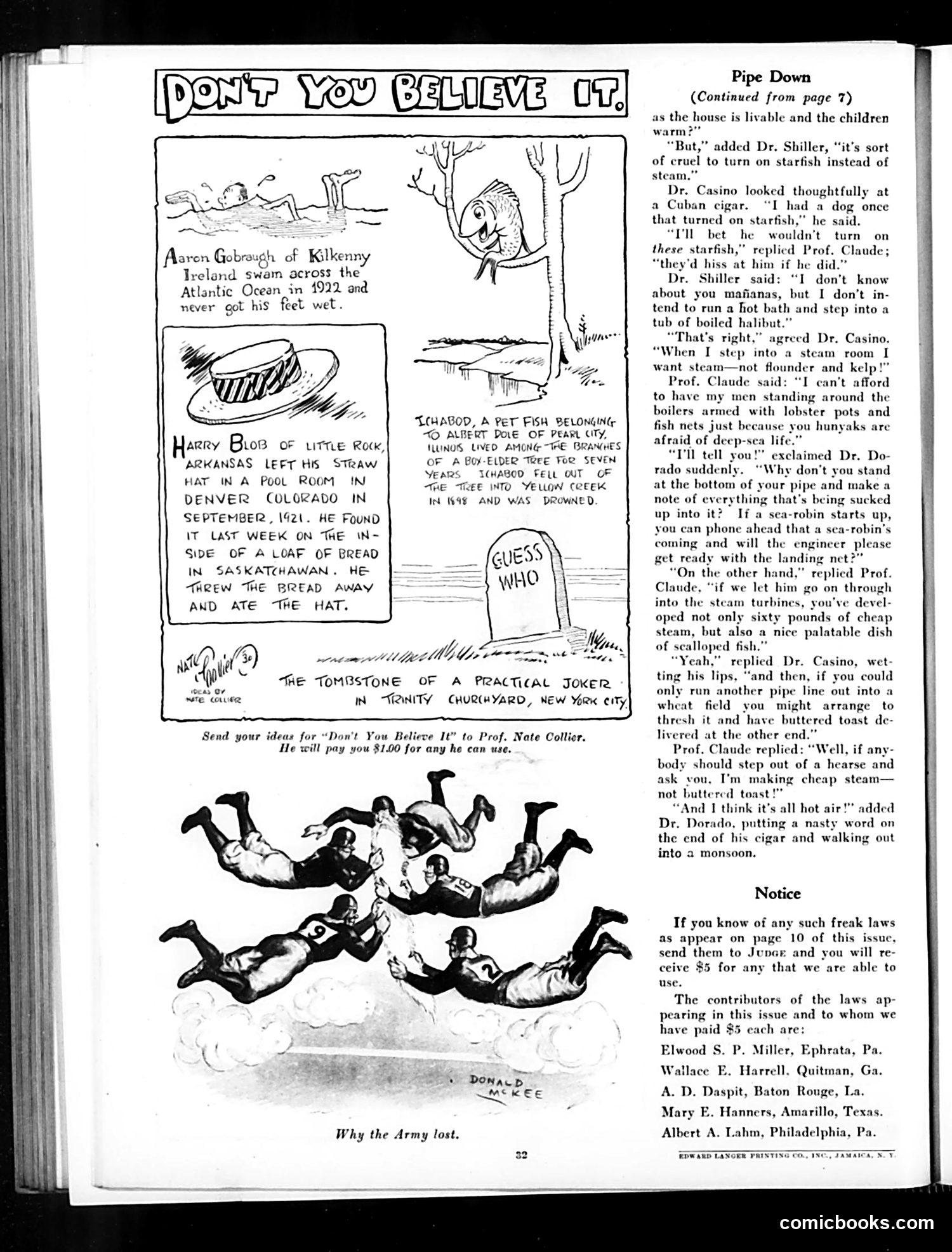
# Judge Magazine: Boxing and "Pipe Down" **Boxing Definitions** (top): This is satirical wordplay mocking boxing's commercialization. A "Palooka" is a foreign boxer; a "Champion" is wealthy but unintelligent; a "Championship Bout" is a "shell game" (rigged); the "Foul" is "usually the small end of the gate" (promoters pocket money); and a "Fight Fan" is a "psychopathic case." The humor targets boxing's corruption and the foolishness of its enthusiasts. **"Pipe Down" by Jack Cluett** (main story): Professor Claude attempts to lower a mile of pipe into the Cuban ocean to exploit cooler deep water for cheaper steam power. His associates raise absurd practical objections (freezing workers, clams clogging pipes, stray starfish). The satire mocks pseudo-scientific schemes and the gap between theoretical engineering and reality—a common early-20th-century target of humor magazines.
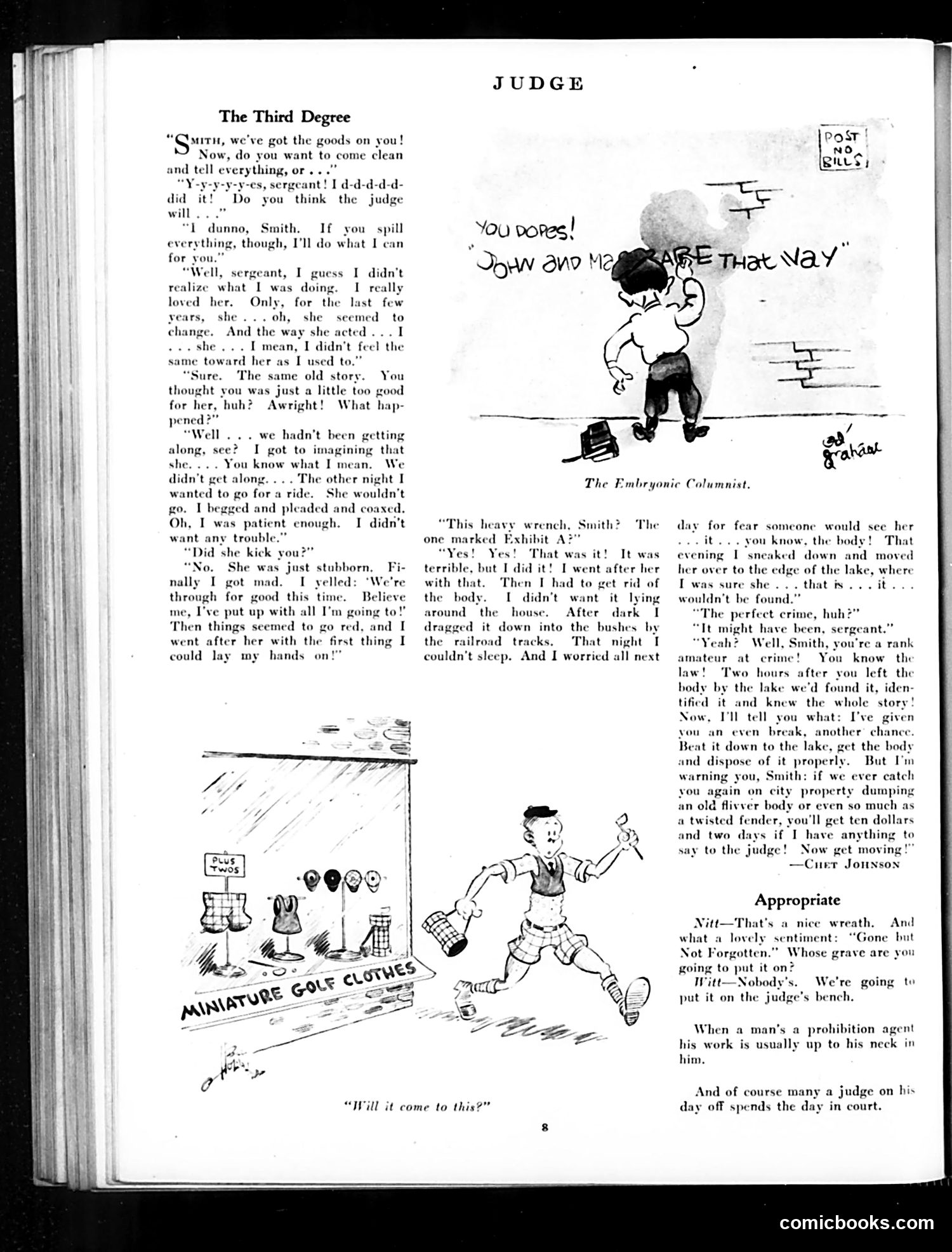
# "The Third Degree" - Judge Magazine Cartoon Analysis This page satirizes corruption in law enforcement and the judicial system. The main cartoon depicts a police interrogation where a sergeant extracts a confession about a murder, then—remarkably—instructs the suspect to dispose of the body properly or face minor penalties for littering ("ten dollars and two days"). The satire targets the apparent indifference of judges and police to serious crimes, suggesting they're more concerned with technicalities (illegal dumping on city property) than actual murder. The accompanying vignette, "The Embryonic Columnist," shows a figure labeled as such, likely mocking sensationalist crime reporting. The bottom section's quips about prohibition agents and judges reinforce the theme: law enforcement is depicted as morally compromised and absurd. The cartoons suggest widespread cynicism about whether the justice system actually prosecutes serious crimes fairly, or merely performs theater while the connected escape real consequences.
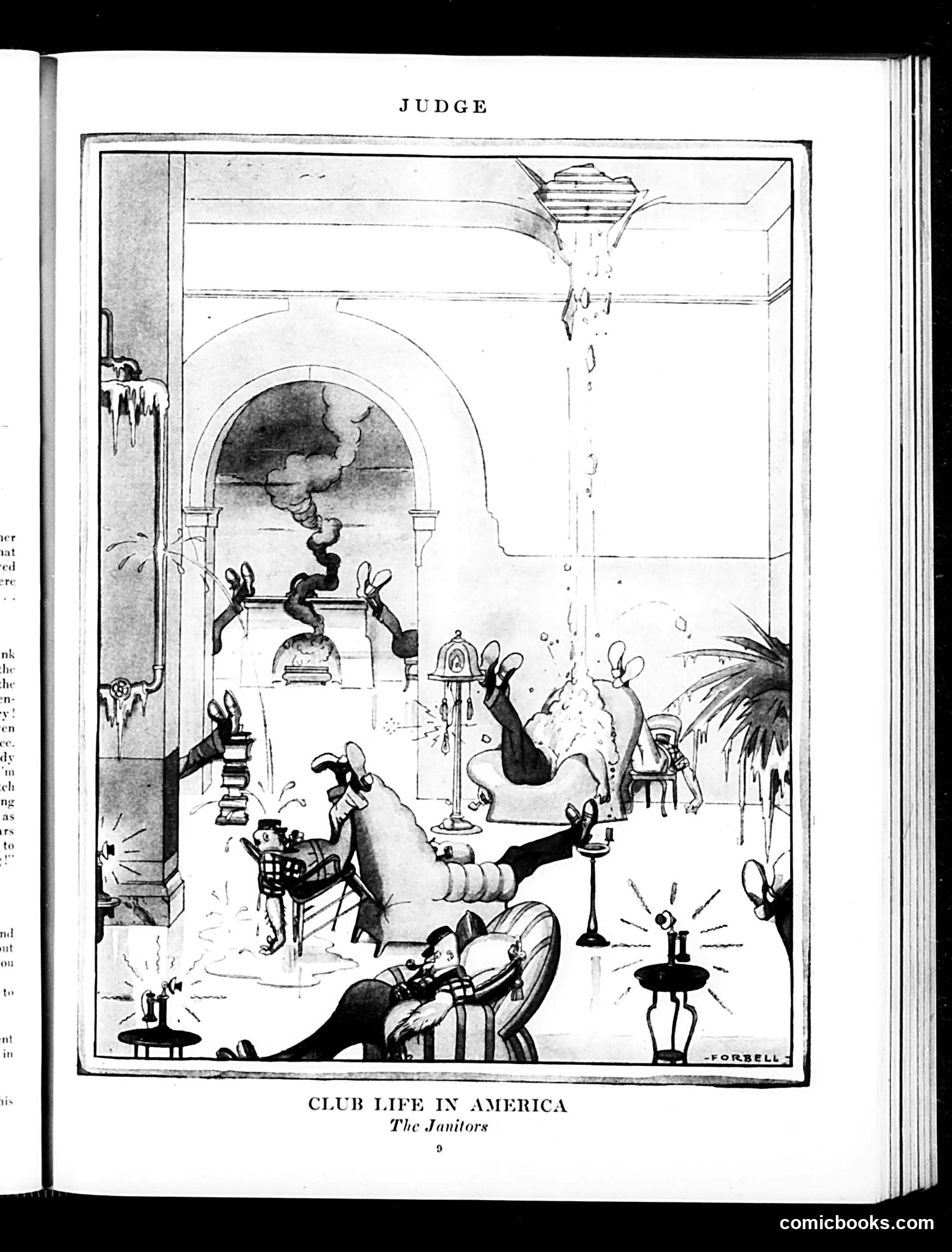
# "Club Life in America: The Janitors" This cartoon satirizes the chaos and disorder within American clubs, depicting janitors struggling to maintain order amid pandemonium. The exaggerated figures—appearing to be club members or patrons—are shown in absurd, contorted positions throughout an ornate interior space, creating destruction and mess. The satire likely mocks the working conditions janitors endured in exclusive clubs, where wealthy members' chaotic behavior forced custodial staff into impossible situations. The cartoon emphasizes the gap between the genteel image of "club life" and its actual reality—one of disorder requiring constant, thankless labor to maintain appearances. The artist (signed "Forbell") uses physical comedy and architectural detail to critique both club excess and the invisible labor sustaining American institutions.
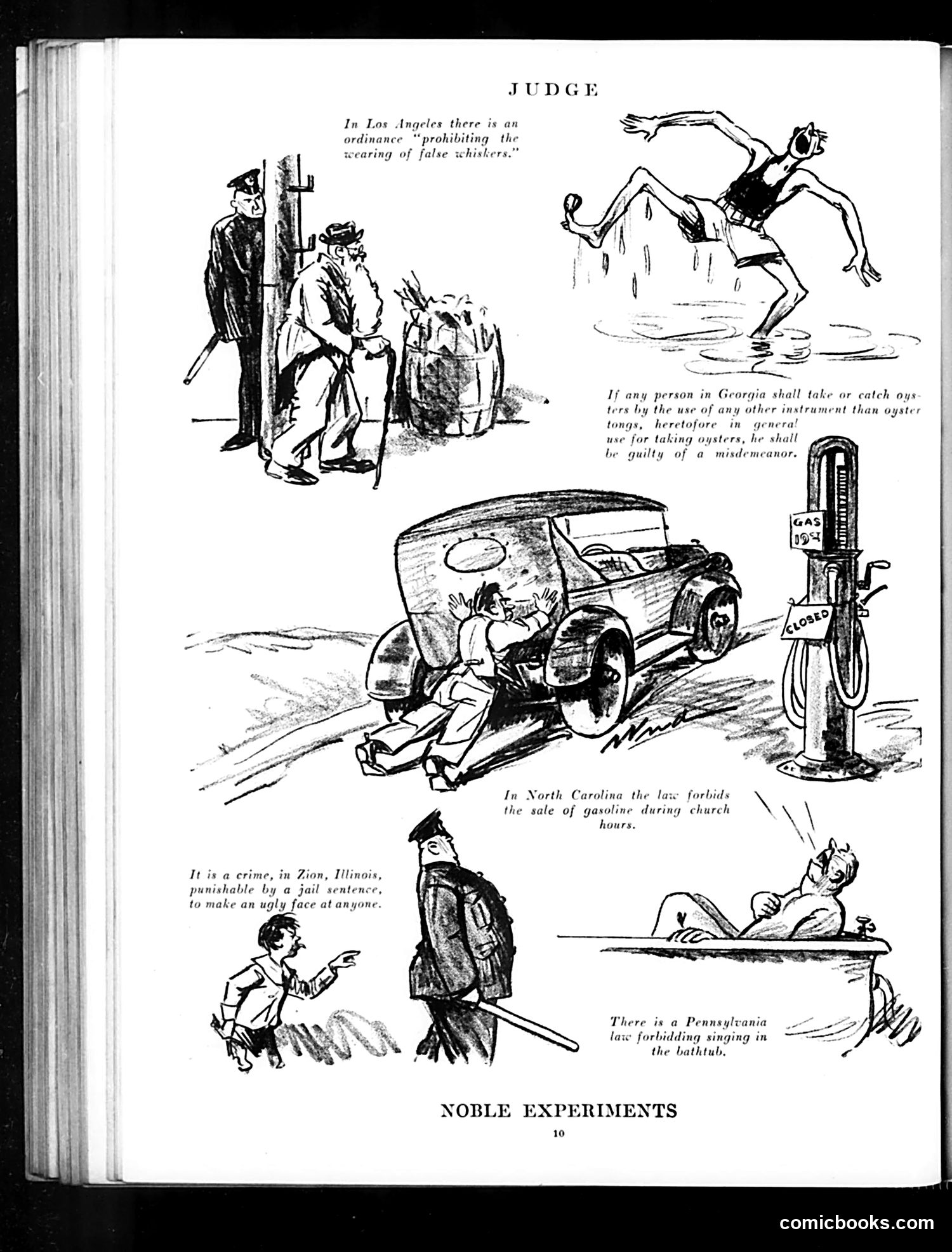
# "Judge" Magazine - "Noble Experiments" This satirical page mocks absurd state and local laws through illustrated vignettes. Each cartoon presents a real (or plausibly real) ridiculous ordinance: - **Los Angeles**: Prohibits false whiskers—illustrated by police confronting a suspicious figure - **Georgia**: Restricts oyster harvesting to traditional tongs only - **North Carolina**: Bans gasoline sales during church hours—shown by a closed gas station - **Zion, Illinois**: Makes "ugly faces" a jailable offense—depicted as a child grimacing at a stern officer - **Pennsylvania**: Forbids singing in bathtubs—shown comically in a bathtub scene The page's title, "Noble Experiments," uses irony to critique government overreach and legislative absurdity. The satire suggests that well-intentioned local laws often become laughably restrictive and unenforceable, poking fun at small-town governance and moral legislation during what appears to be the early-to-mid 20th century.