A complete issue · 36 pages · 1929
Judge — September 28, 1929
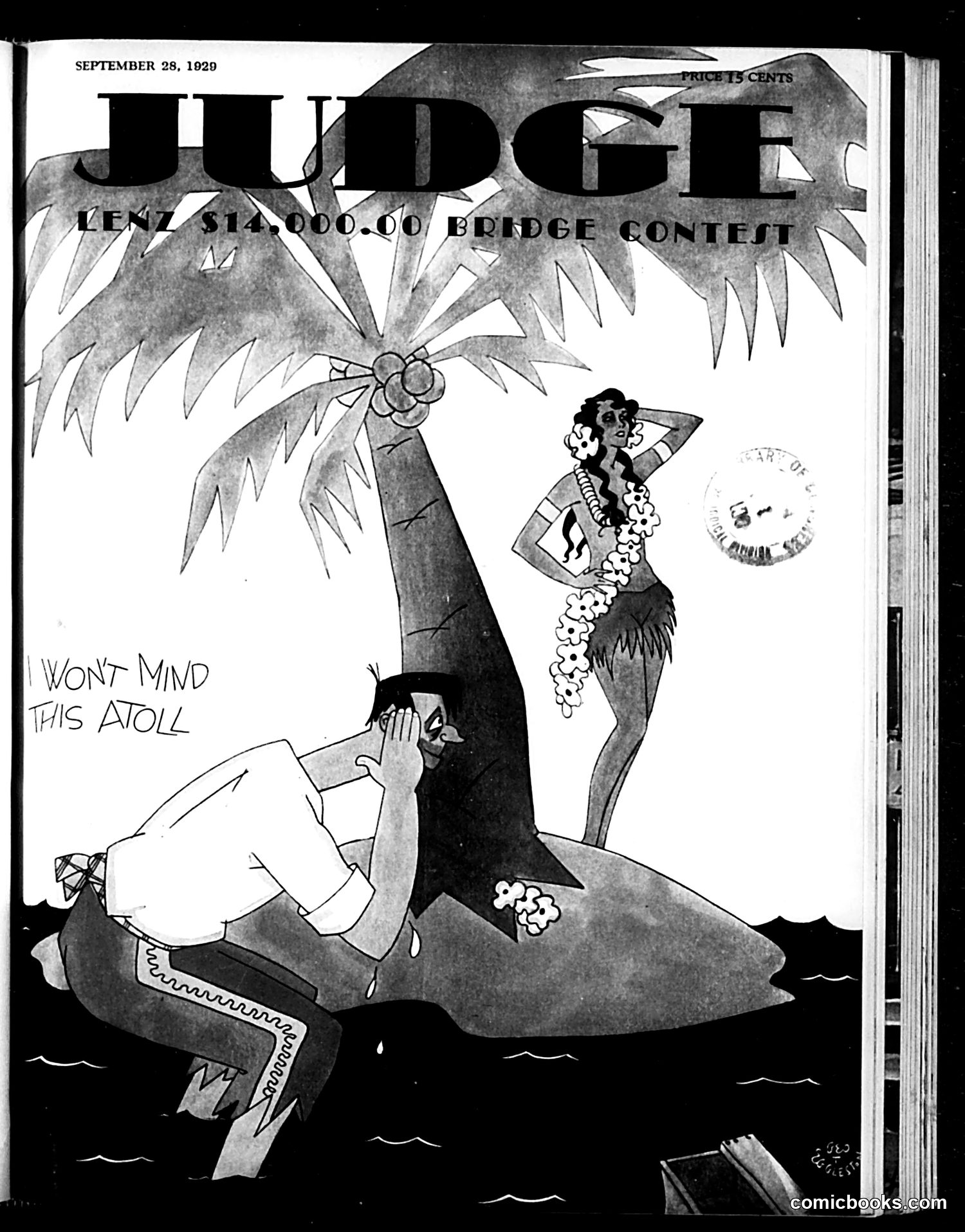
# Judge Magazine, September 28, 1929 This satirical cartoon depicts a man on a tropical island beneath a palm tree, seemingly oblivious to financial catastrophe. The man says "I won't mind this atoll," suggesting contentment despite his circumstances. The cartoon likely references the **stock market crash of October 1929** (imminent at this September publication date). The figure appears to be a wealthy investor or businessman who has lost his fortune and been stranded on a remote island—a humorous commentary on financial ruin. The "bridge contest" and "$14,000" prize mentioned in the header suggest the magazine offered competitions to readers. The joke's dark humor satirizes how some might prefer tropical exile to facing bankruptcy in America during the economic collapse beginning that month.
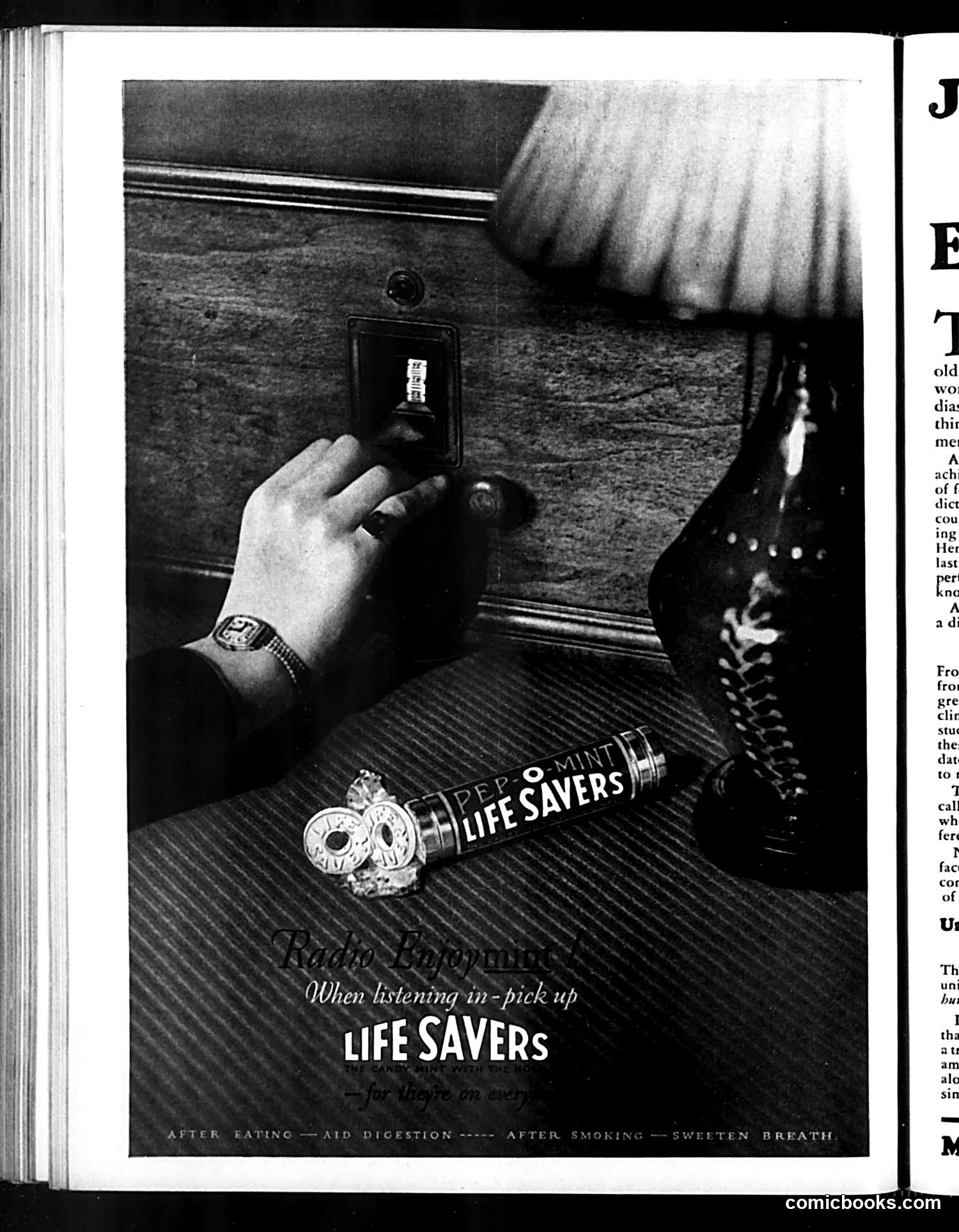
# Life Savers Advertisement This appears to be a **Life Savers candy advertisement** rather than political satire or a cartoon. The image shows a hand operating what looks like a vintage radio dial or similar device, with a Life Savers mint candy prominently displayed. The ad's tagline—"Radio Listening: When listening in—pick up LIFE SAVERS"—suggests the product was marketed as a companion for radio entertainment, a popular activity in the early-to-mid 20th century. The bottom text claims benefits: "After eating—aid digestion. After smoking—sweeten breath," reflecting vintage advertising claims about the product's functional properties. This is commercial messaging, not political commentary, typical of Judge magazine's advertising content.
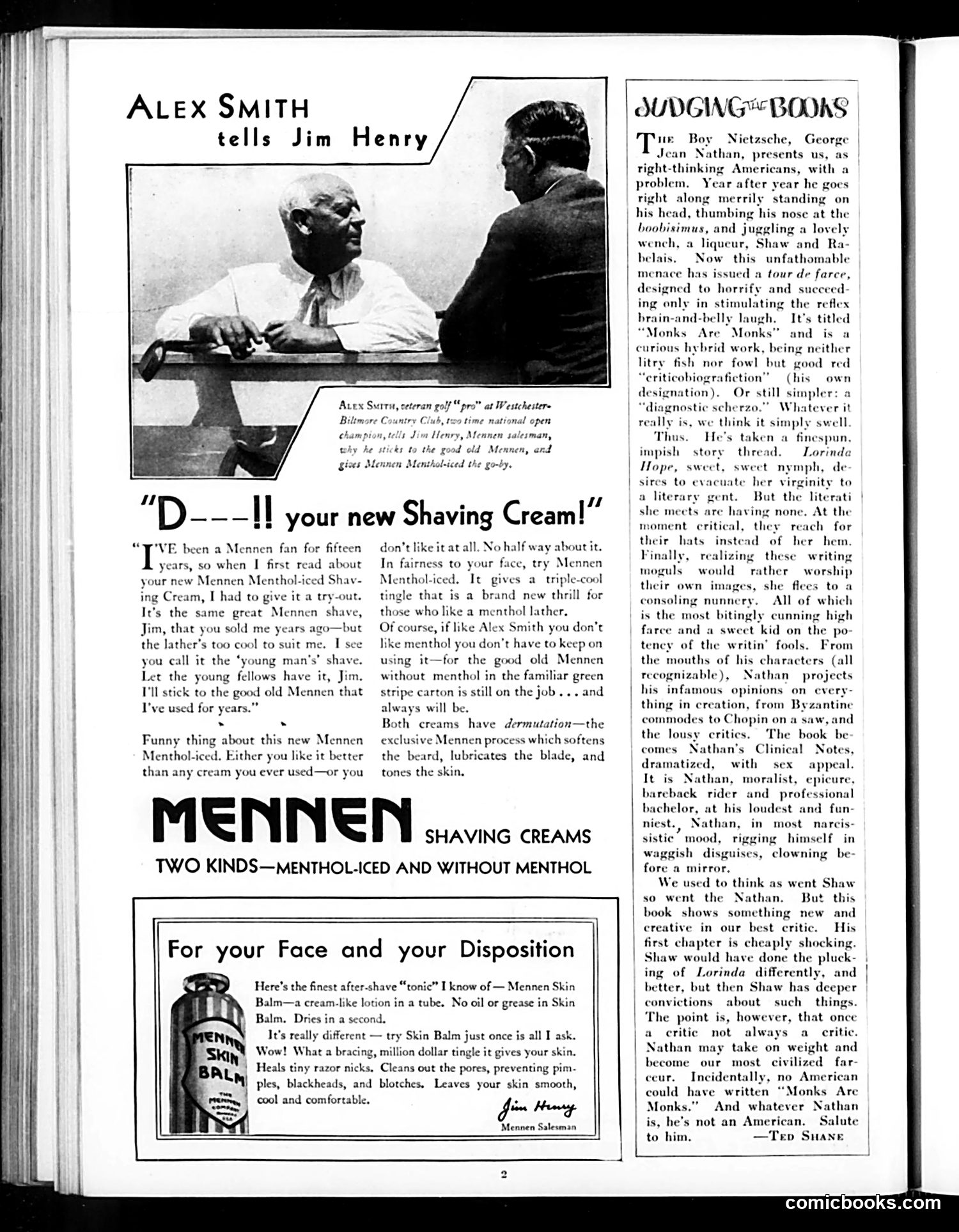
# Analysis of Judge Magazine Page This page is primarily **advertising** for Mennen Shaving Cream, though framed as editorial content. The top section features "Alex Smith tells Jim Henry" — a testimonial format where Smith (identified as a golfer at Wykchester Country Club) endorses Mennen's new mentholated formula to Henry. The satire is gentle: the text jokes that Mennen's products are so good that even someone who "don't like it at all" should try them, and humorously notes that unlike menthol in the familiar green carton, keeping menthol in shaving cream requires the special "dermutation" process. The right column contains a separate book review of dubious sincerity, likely parodying overly effusive literary criticism of the era. The overall effect is **mock-serious advertising** playing with consumer testimonial conventions common in 1920s-30s magazines.
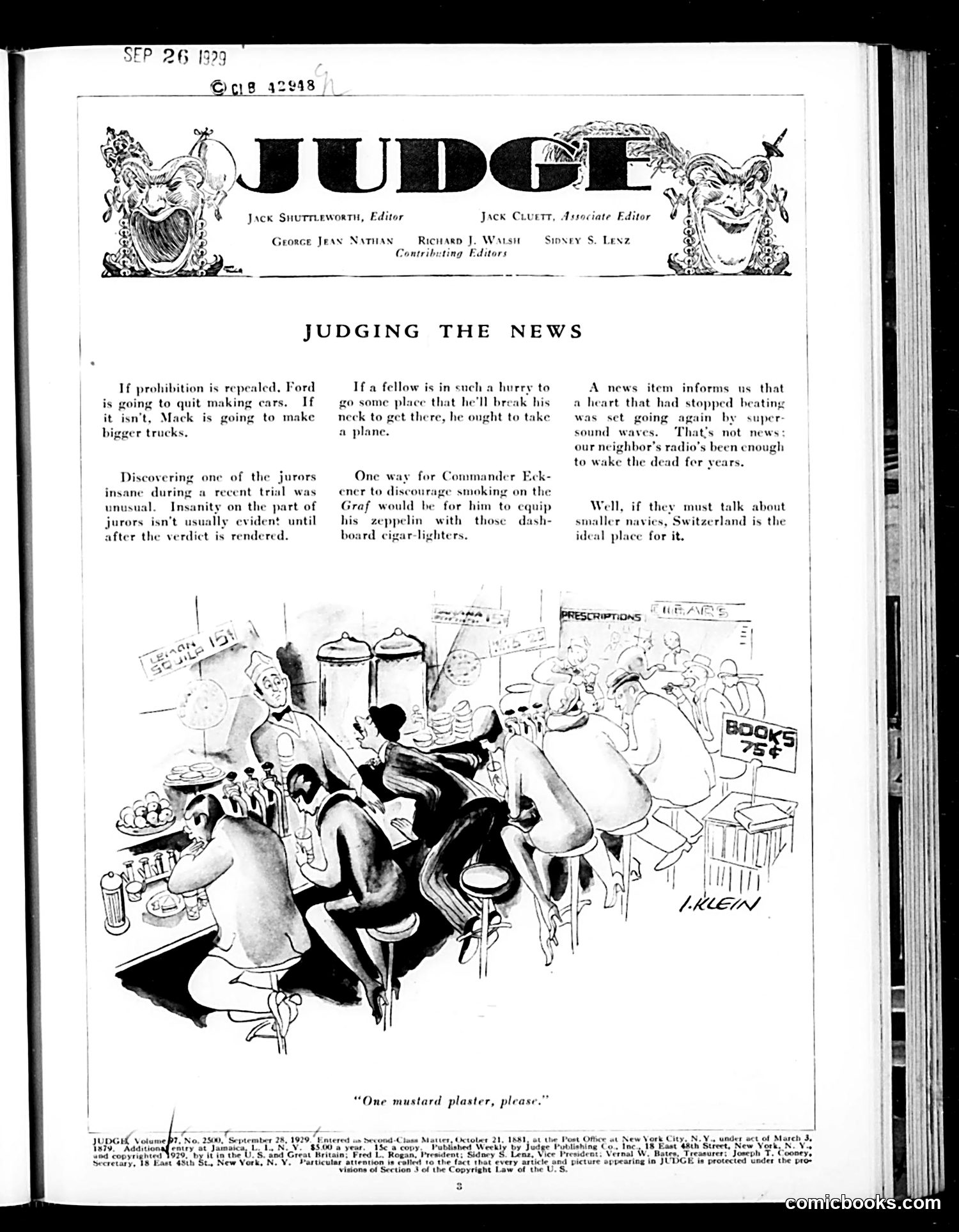
# Analysis of Judge Magazine Page (September 26, 1929) The page features editorial commentary titled "Judging the News" with contemporary references to Prohibition's repeal, Ford automobiles, and Commander Eckener (likely the German airship captain). The main cartoon by I. Klein, captioned "One mustard plaster, please," depicts a crowded pharmacy or drugstore scene. The visual joke appears satirize the era's over-reliance on patent medicines and home remedies—a common target of satire during the 1920s when such treatments were heavily marketed despite limited efficacy. The cartoon's chaos and crowded composition suggest criticism of public gullibility or the pharmacy industry's exploitation of consumer desperation for quick health fixes. The specific reference to "mustard plaster" (a traditional folk remedy) reinforces mockery of outdated medical practices.
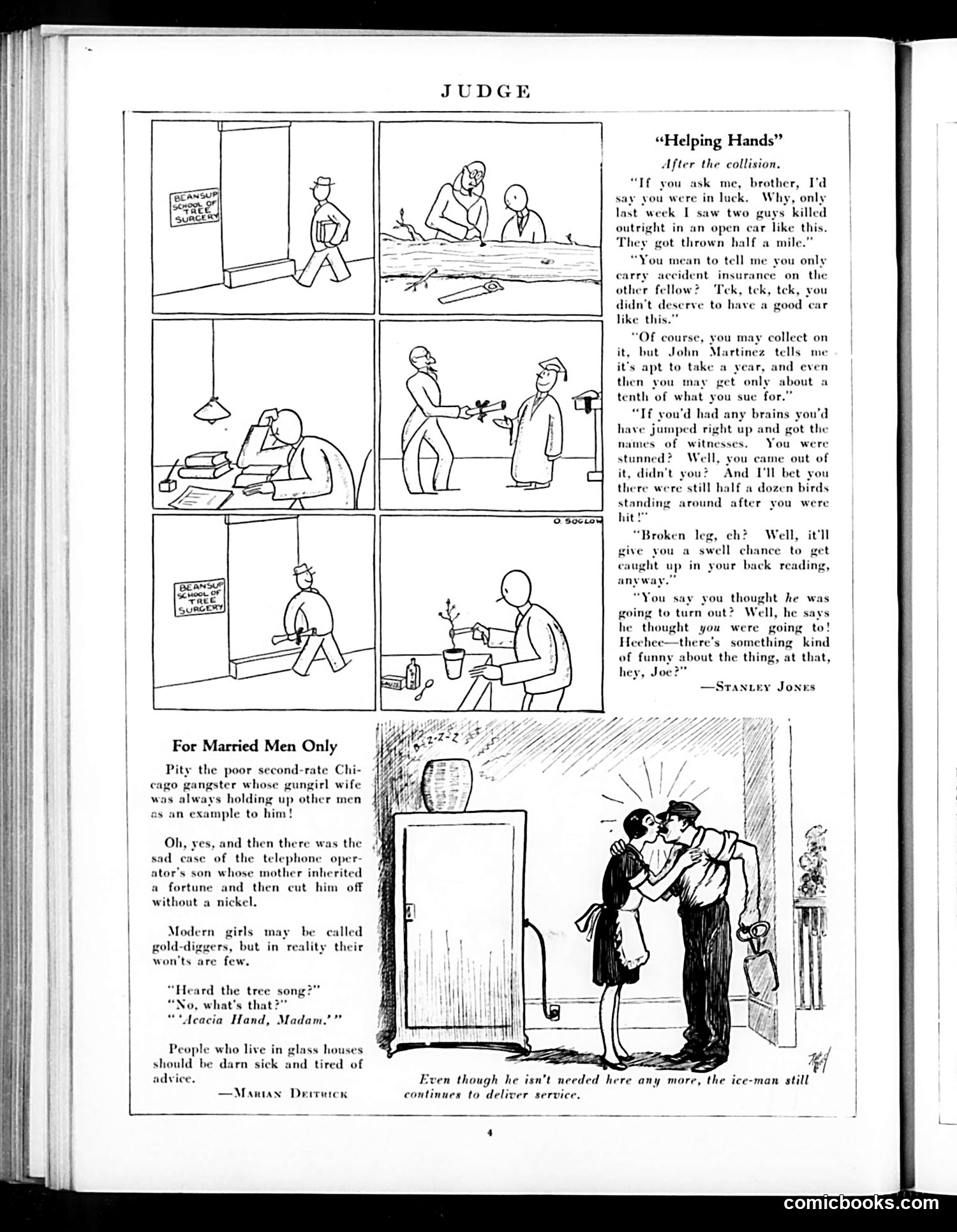
# Analysis of Judge Magazine Page **Top Comic Strip ("Helping Hands"):** A man injured in a car accident seeks legal advice. The lawyer warns him that accident insurance lawsuits are lengthy and typically yield minimal compensation—only a tenth of claims filed. The satire mocks both accident litigation's futility and lawyers' cynical profiteering from such cases. **Bottom Section:** Mixed satirical vignettes critiquing social hypocrisy and gender dynamics. "For Married Men Only" includes observations about unfaithful spouses and inherited wealth mismanagement. The final cartoon shows an ice-man still delivering service despite modern refrigeration making him obsolete—satirizing outdated professions and social inertia. The page overall targets legal corruption, marital infidelity, and technological obsolescence.
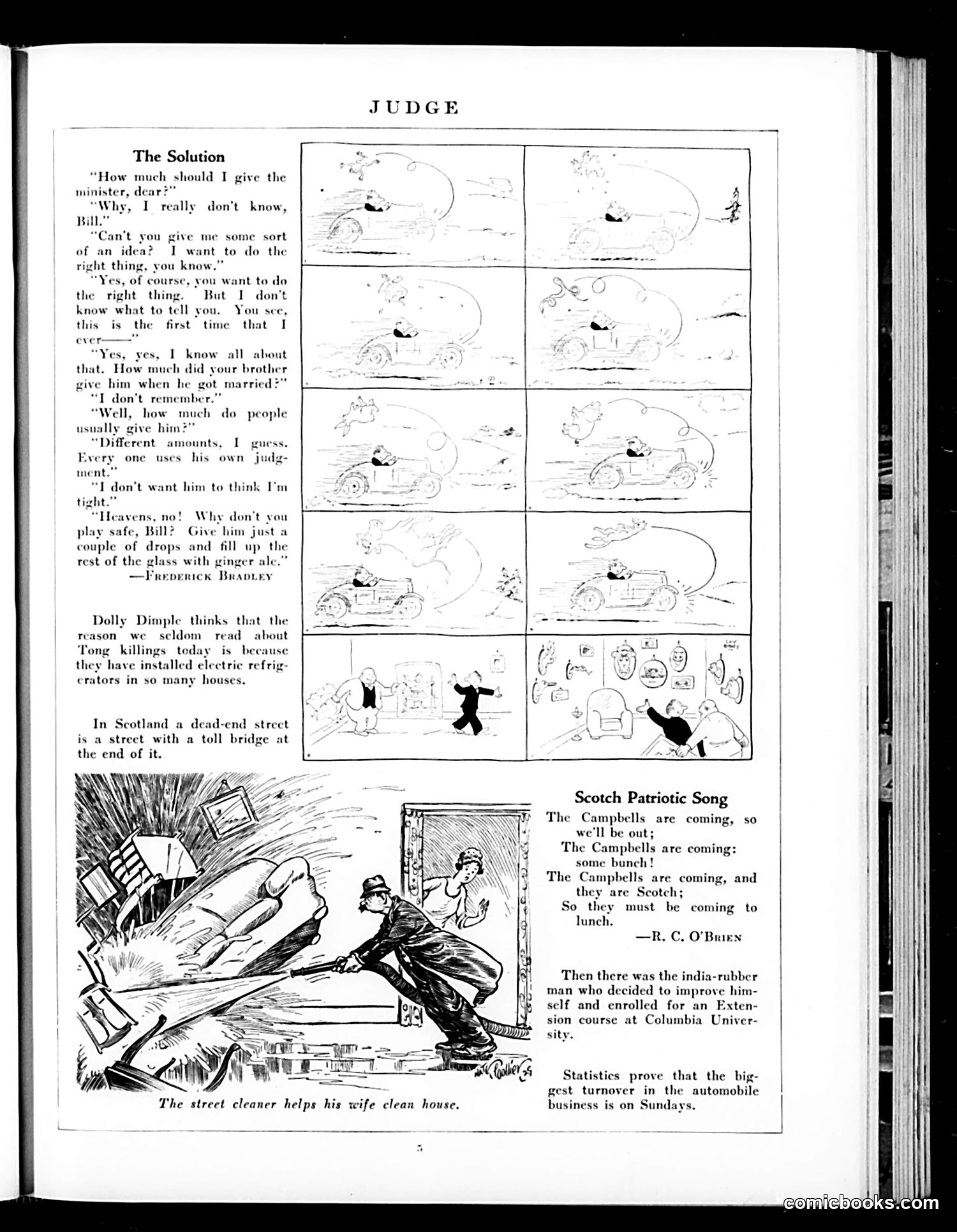
# Analysis of Judge Magazine Page The page contains two main elements: **"The Solution" Comic Strip**: A humorous dialogue about wedding gift amounts. A man asks his friend Bill how much to give at a wedding. The friend suggests giving "a couple of drops" of expensive ale instead of money—a joke playing on stinginess disguised as cleverness. The strip's visual gag shows increasingly absurd attempts to execute this "solution." **"The Street Cleaner" Illustration**: Shows a street cleaner helping his wife clean their house, captioned "The street cleaner helps his wife clean house." This is satirical social commentary on working-class domesticity and labor, likely commenting on the divide between public and private work spheres. The "Scotch Patriotic Song" and other brief items are minor filler content typical of Judge's format.
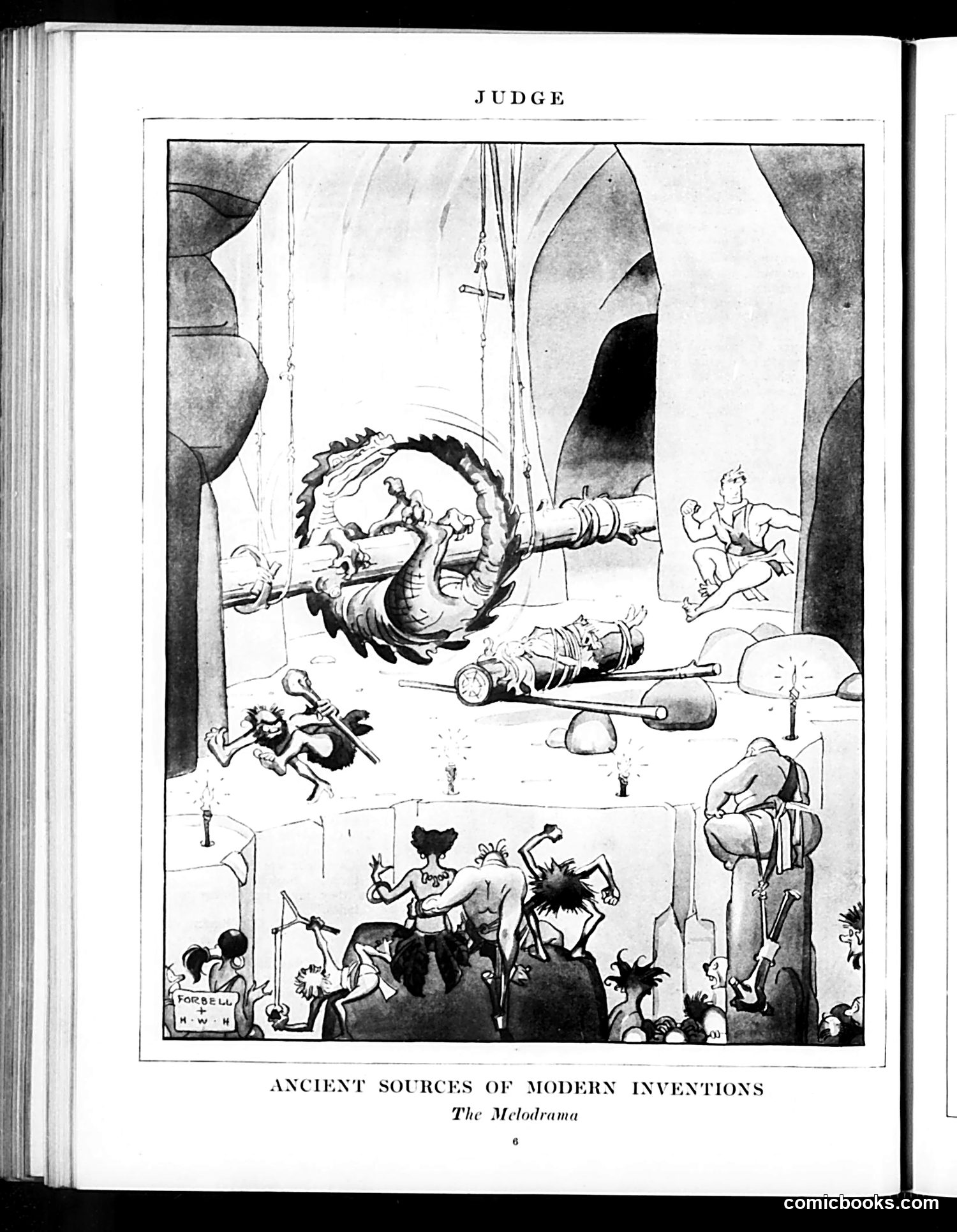
# Analysis of "Judge" Page: Ancient Sources of Modern Inventions—The Melodrama This satirical cartoon depicts a theatrical melodrama staged inside what appears to be a classical Greek or Roman structure. The title suggests the joke: modern inventions supposedly have ancient origins. The scene shows exaggerated action typical of melodramatic theater—figures in distress, dynamic poses, and a central dramatic prop (possibly a mechanical device or contraption). The bottom shows an audience watching this theatrical performance. The satire likely mocks both the tendency to claim ancient precedent for modern innovations AND the overwrought, ridiculous nature of melodramatic theater itself. By presenting invention-history as melodrama, Judge ridicules grandiose claims about where modern technology truly originated, suggesting such narratives are theatrical nonsense rather than legitimate history.
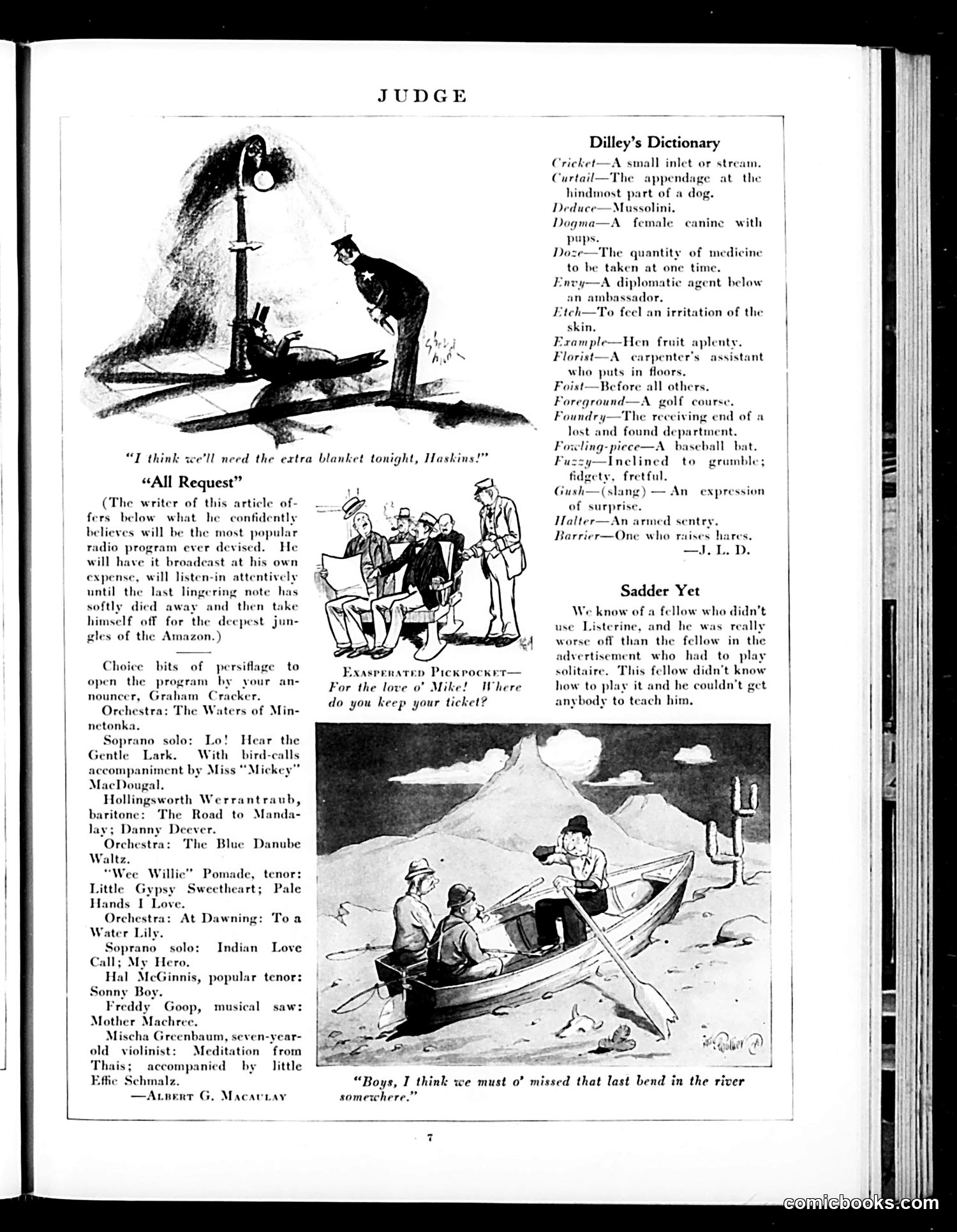
# Analysis of Judge Magazine Page This page contains three distinct satirical pieces: **Top cartoon**: A couple in bed; one says they'll need an extra blanket. The joke plays on double meaning—likely implying either cold weather or marital awkwardness. **"All Request" article**: Satirizes early radio programming by proposing an absurdly pretentious classical music broadcast featuring performers with silly names ("Wee Willie Pomade," "Freddy Goop" on musical saw). The editorial note mocks the author's confidence in this proposal, sarcastically suggesting he'll "listen-in attentively" before fleeing to the Amazon—implying the program would be unbearably tedious. This reflects 1920s-30s anxiety about radio's cultural impact. **"Dilley's Dictionary"**: Absurdist humor presenting deliberately wrong definitions (Cricket = inlet; Deduce = Mussolini; Halter = armed sentry). Pure wordplay comedy. **Bottom cartoon**: Three men in a rowboat miss a river bend, illustrating male incompetence at navigation—a common satirical trope. The Listerine reference parodies contemporary advertising claims about social embarrassment and hygiene products.
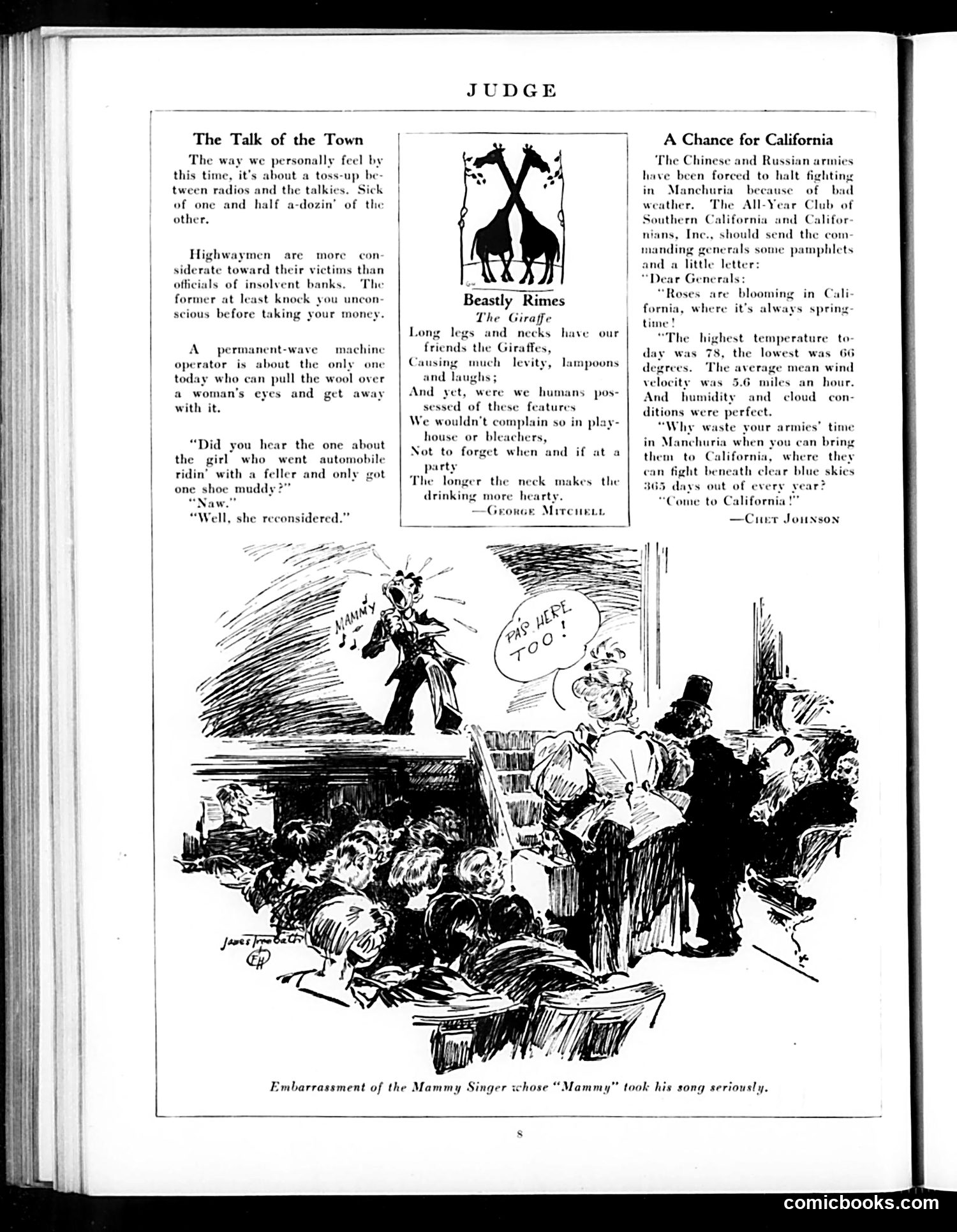
# Judge Magazine Page Analysis This page from *Judge* contains satirical commentary on 1920s-30s American life: **"The Talk of the Town"** offers quick social jabs: complaints about competing entertainment (radios vs. talking pictures), criticism of insolvent banks as predatory, and a joke about a woman reconsidering a risky car ride with a man. **"Beastly Rimes: The Giraffe"** by George Mitchell humorously compares giraffes' long necks to humans, suggesting people would appreciate such features at parties (where longer necks allegedly enable heartier drinking). **"A Chance for California"** attributes to Chet Johnson, sarcastically urges Chinese and Russian armies fighting in Manchuria to relocate to California instead, exploiting the region's perpetual spring weather and clear skies as superior to warfare conditions—social commentary on California boosterism and the absurdity of military conflict. The bottom illustration shows an embarrassed singer whose performance of "Mammy" was taken too seriously by an audience, likely satirizing sentimental popular music culture.
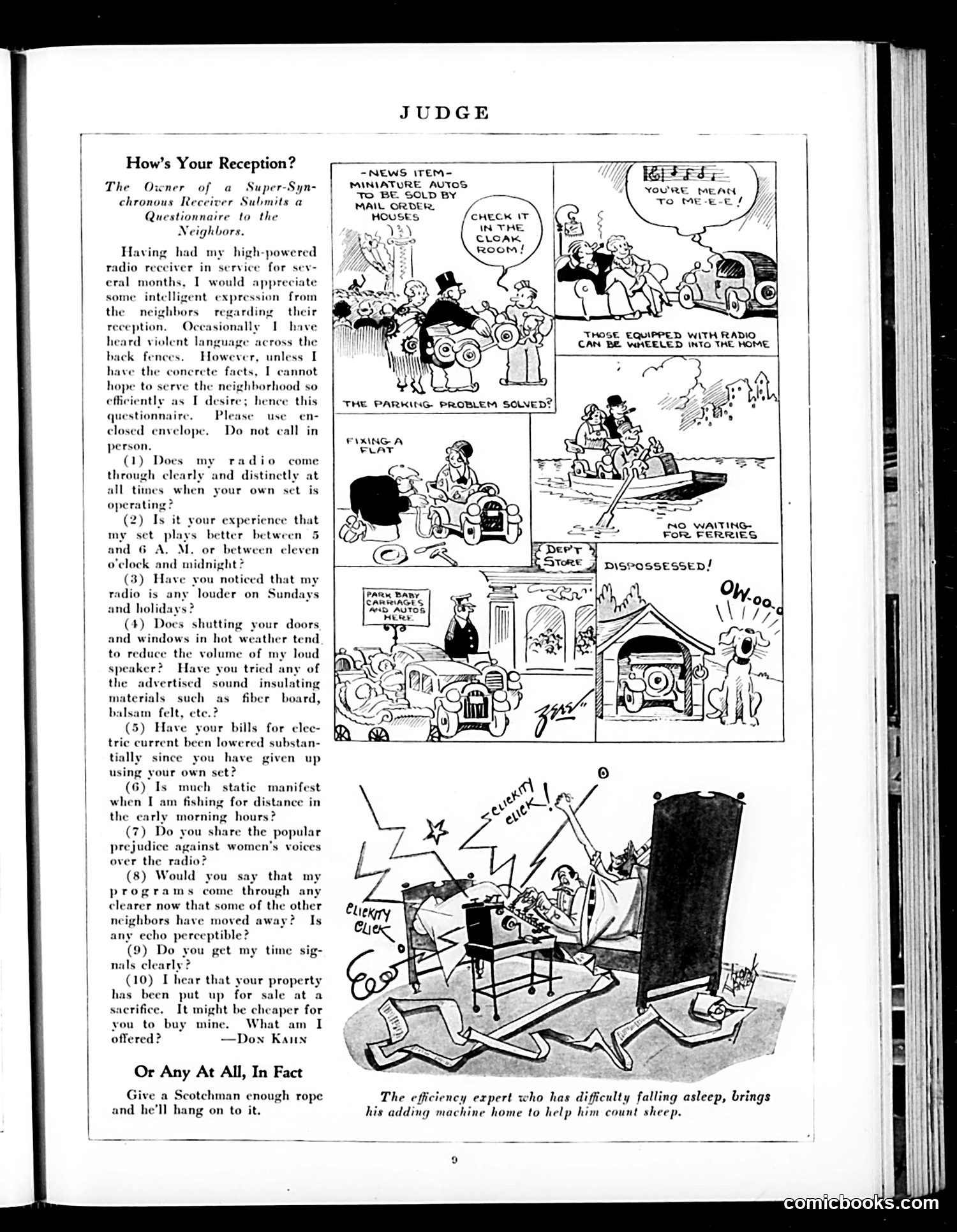
# Page Analysis: "How's Your Reception?" This page satirizes the early radio craze and inconsiderate radio owners of the 1920s-30s. The main text is a humorous questionnaire from a neighbor with an extremely loud radio receiver, sarcastically "asking" neighbors about interference—implying he knows full well he's disrupting them but frames it as seeking their "intelligent expression." The cartoons illustrate the chaos: miniature toy cars equipped with radios (suggesting radio's pervasive intrusion into daily life), a man trying to fish while radio interference disrupts him, and a family being driven from their home by an adding machine that won't stop (bottom cartoon, mocking efficiency experts). The satire targets both radio owners' obliviousness and the era's broader obsession with new technology. The joke: a wealthy owner bothers neighbors with his "high-powered" set while pretending politeness, yet his questions—asking if neighbors have abandoned their own radios, if their electric bills dropped, if they've moved—reveal he's fully aware of his annoying impact.
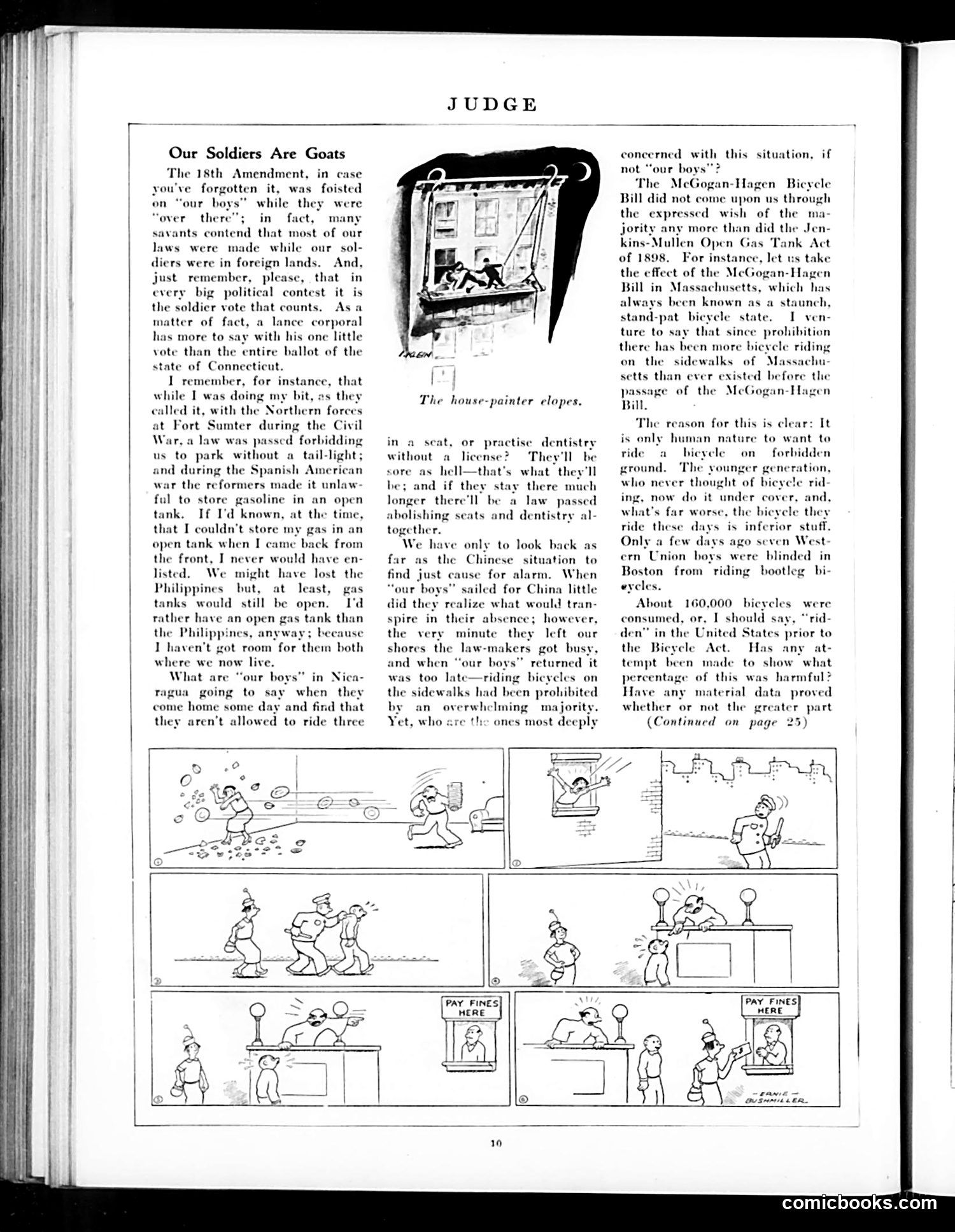
# "Our Soldiers Are Goats" - Judge Magazine Satire This article satirizes the ironic power of the soldier vote in American politics. The author argues that while soldiers sacrifice abroad, lawmakers pass restrictive legislation during their absence—then soldiers, having fought for their country, cannot even vote against these laws when they return. The piece mocks specific examples: the 18th Amendment (Prohibition), bicycle restrictions, and gas tank regulations passed while soldiers were overseas. The author notes soldiers have outsized electoral influence despite this treatment, using absurdist humor (preferring open gas tanks to the Philippines). The cartoon below depicts soldiers cycling through various bureaucratic obstacles and "pay fines" stations, visualizing the comic frustration: young men risk their lives abroad only to face petty legal restrictions at home. This reflects post-WWI American cynicism about government hypocrisy toward veterans—a common satirical target of 1920s publications.