
A complete issue · 16 pages · 1905
Judge — April 8, 1905
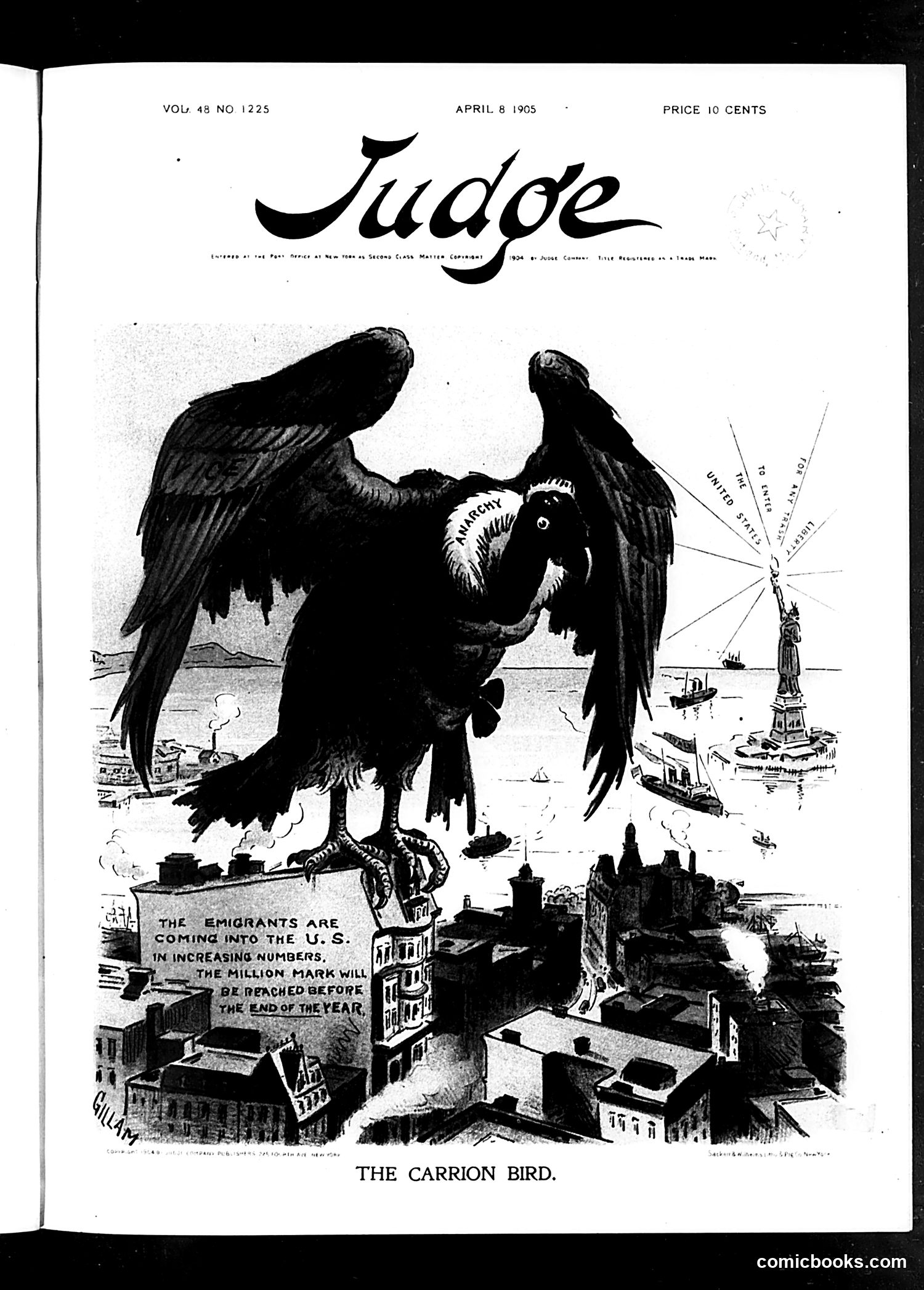
This political cartoon depicts an eagle labeled "ALMIGHTY" perched over an American cityscape, with text reading: "The emigrants are coming into the U.S. in increasing numbers. The million mark will be reached before the end of the year." The "carrion bird" metaphor presents immigration as a predatory threat—the eagle appears to be a scavenger waiting to feed on the nation's resources. The imagery shows anxiety about early-20th-century mass immigration, particularly from Eastern and Southern Europe. The cartoon characterizes immigrants not as people seeking opportunity, but as a plague or infestation the nation must absorb. This reflects period xenophobia and nativist sentiment common in American satirical publications before restrictive immigration laws were enacted in the 1920s.
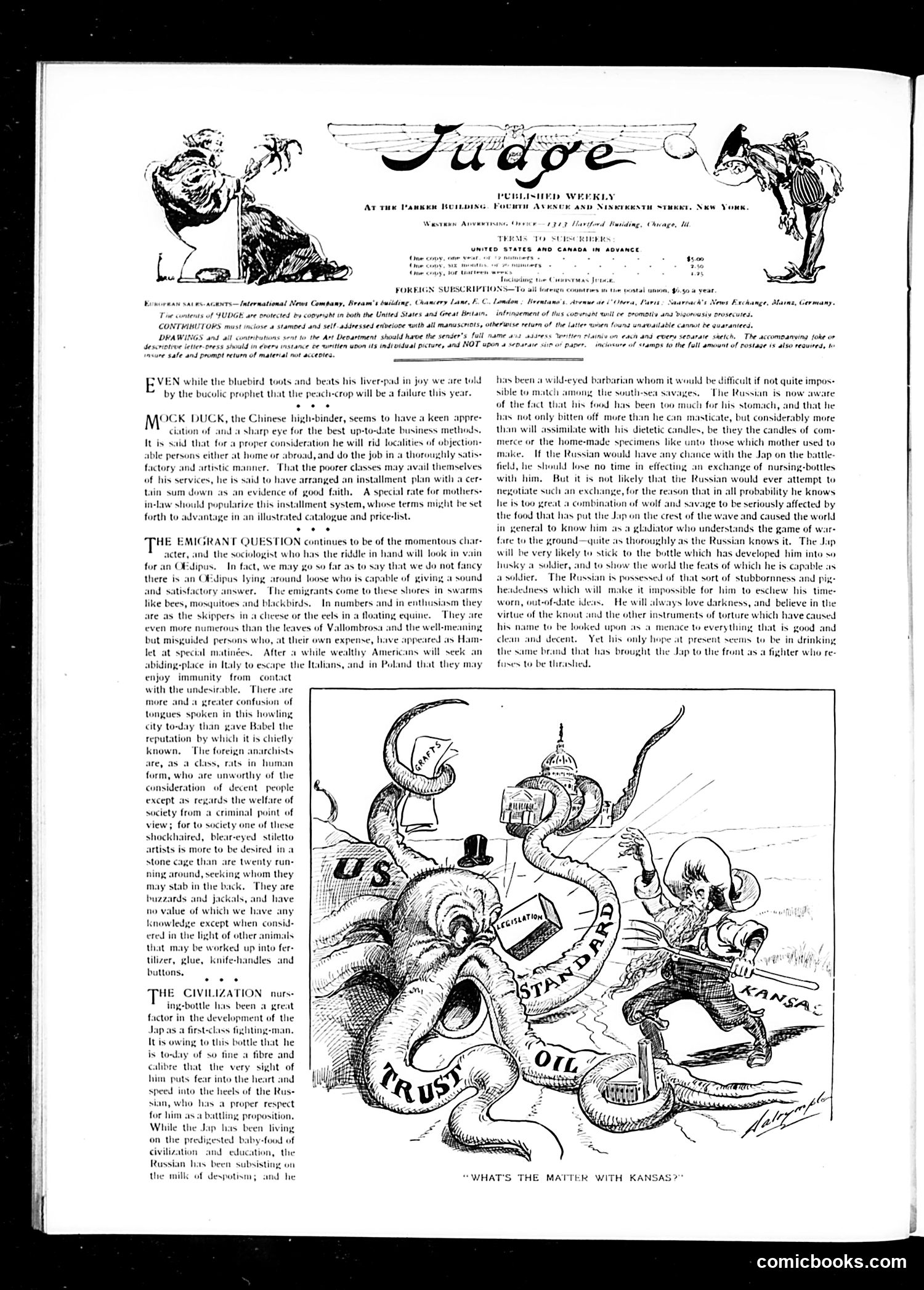
This cartoon satirizes Kansas's political instability during the early 1900s. An octopus labeled "Standard Oil" (John D. Rockefeller's monopoly) and other corporate trusts ("US Trust," "Watered Stock") strangle Kansas while the state flails helplessly. The caption references a famous 1896 essay by William Allen White asking why Kansas—an agricultural state—suffered economically despite natural resources. The satire blames corporate monopolies and financial manipulation (represented by the tentacles) for Kansas's troubles, rather than the state's own failings. It reflects Progressive Era concerns about big business strangling rural America. The cartoon targets both monopolistic corporations and the financial systems exploiting agricultural regions.
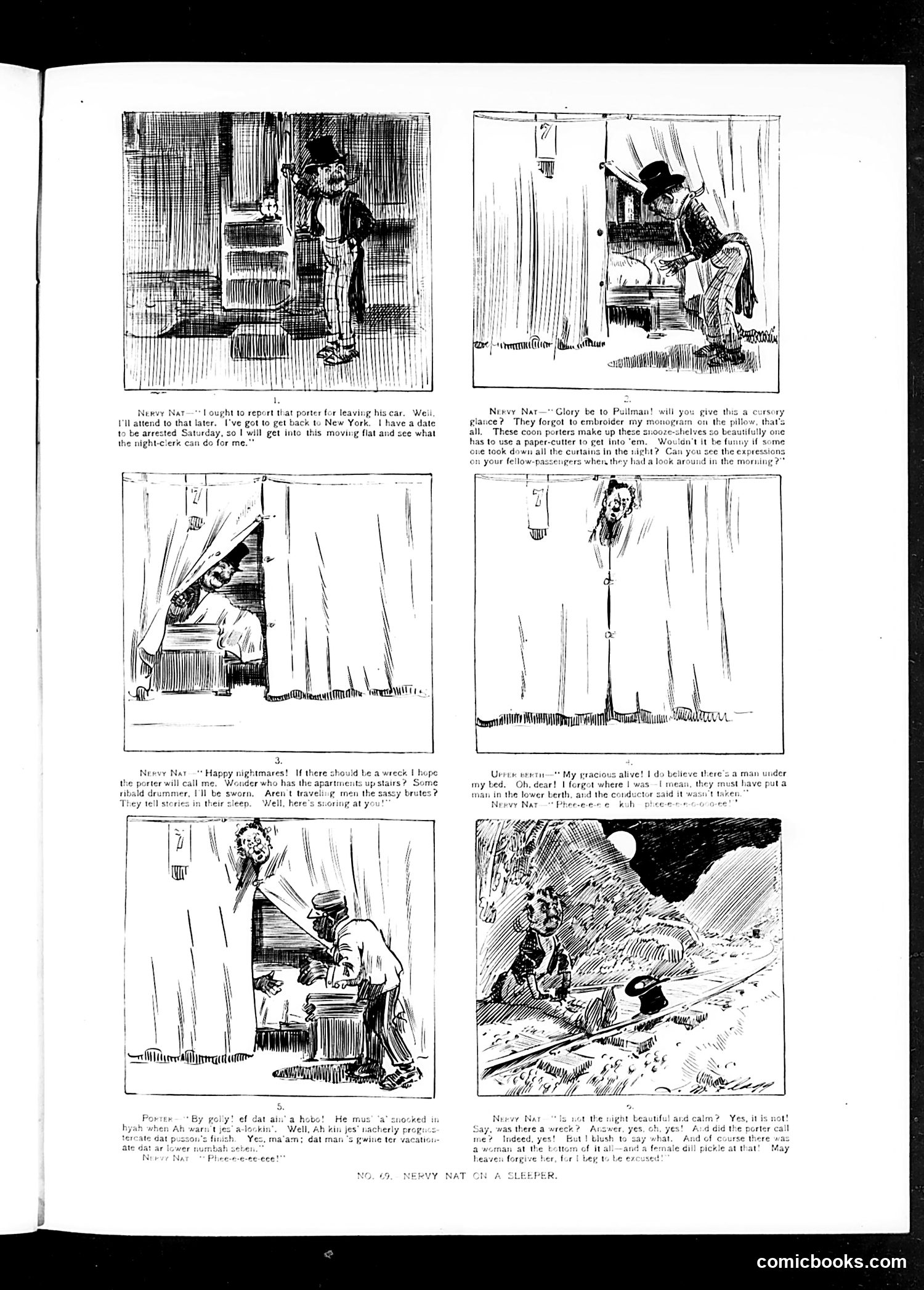
This appears to be a comic strip following a character named "Nevvy Nat" (likely a nephew character) on a railroad sleeping car. The humor involves typical late-19th/early-20th century train travel mishaps: Nat attempts to rent a berth, encounters a porter, and experiences various comedic misadventures in the confined space—including apparently encountering another passenger and dealing with bedding/curtains. The satire targets the indignities and confusion of railroad sleeping accommodations: the porter's demands, cramped quarters, and awkward encounters with fellow travelers. The humor relies on physical comedy and dialogue showing the passenger's frustration with both the porter's attitudes and the car's tight conditions—reflecting contemporary social anxieties about modern transportation and class interactions between passengers and service workers.
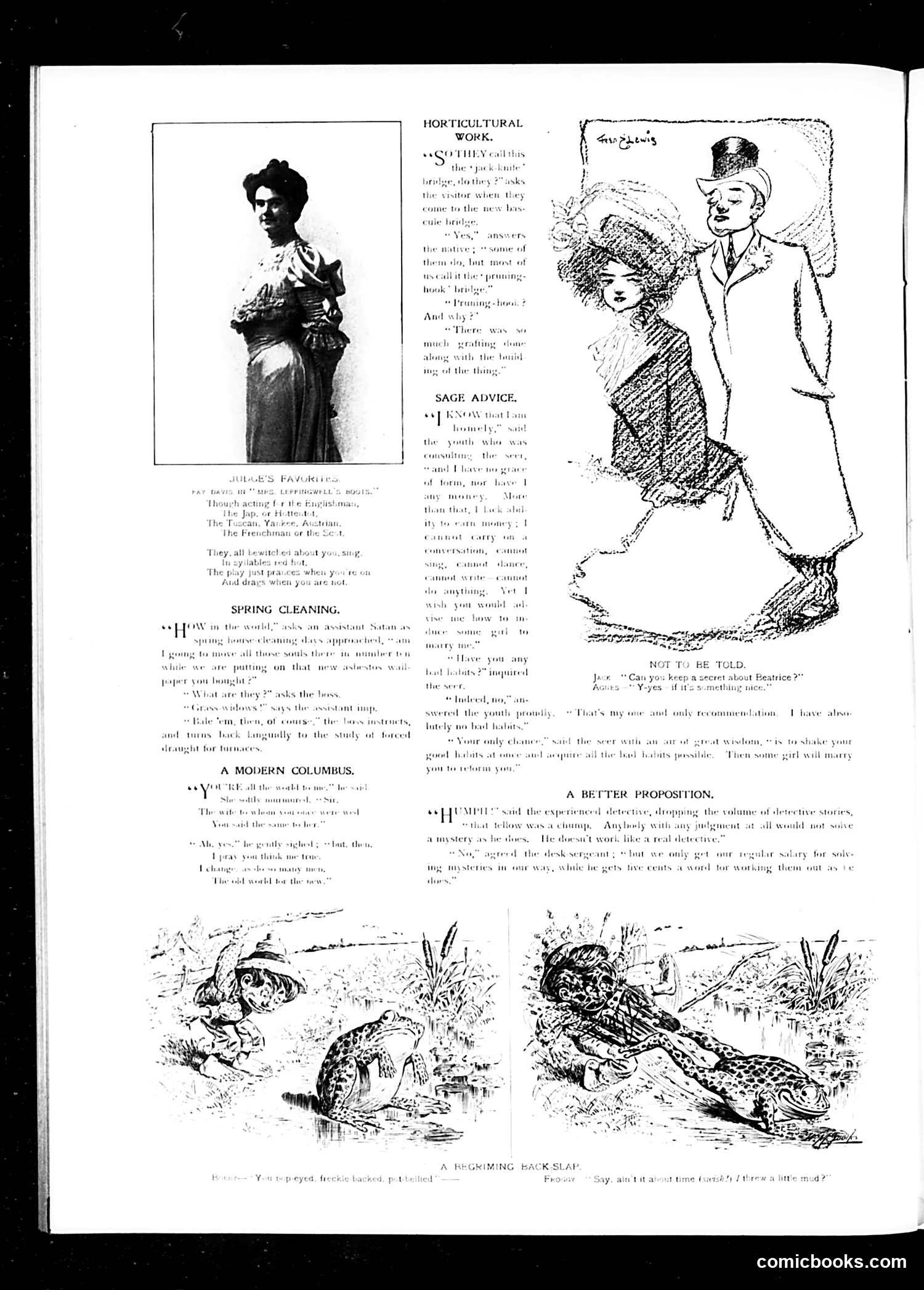
This page contains several distinct satirical pieces: **"Horticultural Work"** mocks a gardener's pretentious language—using fancy terms like "park lane" for simple gardening tasks, satirizing affected speech among working-class people imitating the upper class. **"Sage Advice"** depicts a fortune-teller or seer offering dubious counsel to a naive youth, poking fun at both pseudoscientific fortune-telling and gullible believers. **"A Modern Colombus"** and **"A Better Proportion"** appear to be brief humorous anecdotes, though the text is partially illegible. **Bottom illustrations** labeled "A Beginning Back Slap" show comedic scenes involving frogs or toads, likely illustrating punchlines to accompanying jokes (text unclear). The page exemplifies Judge's typical satirical approach: mocking pretension, gullibility, and social affectation through illustrated vignettes and accompanying text.
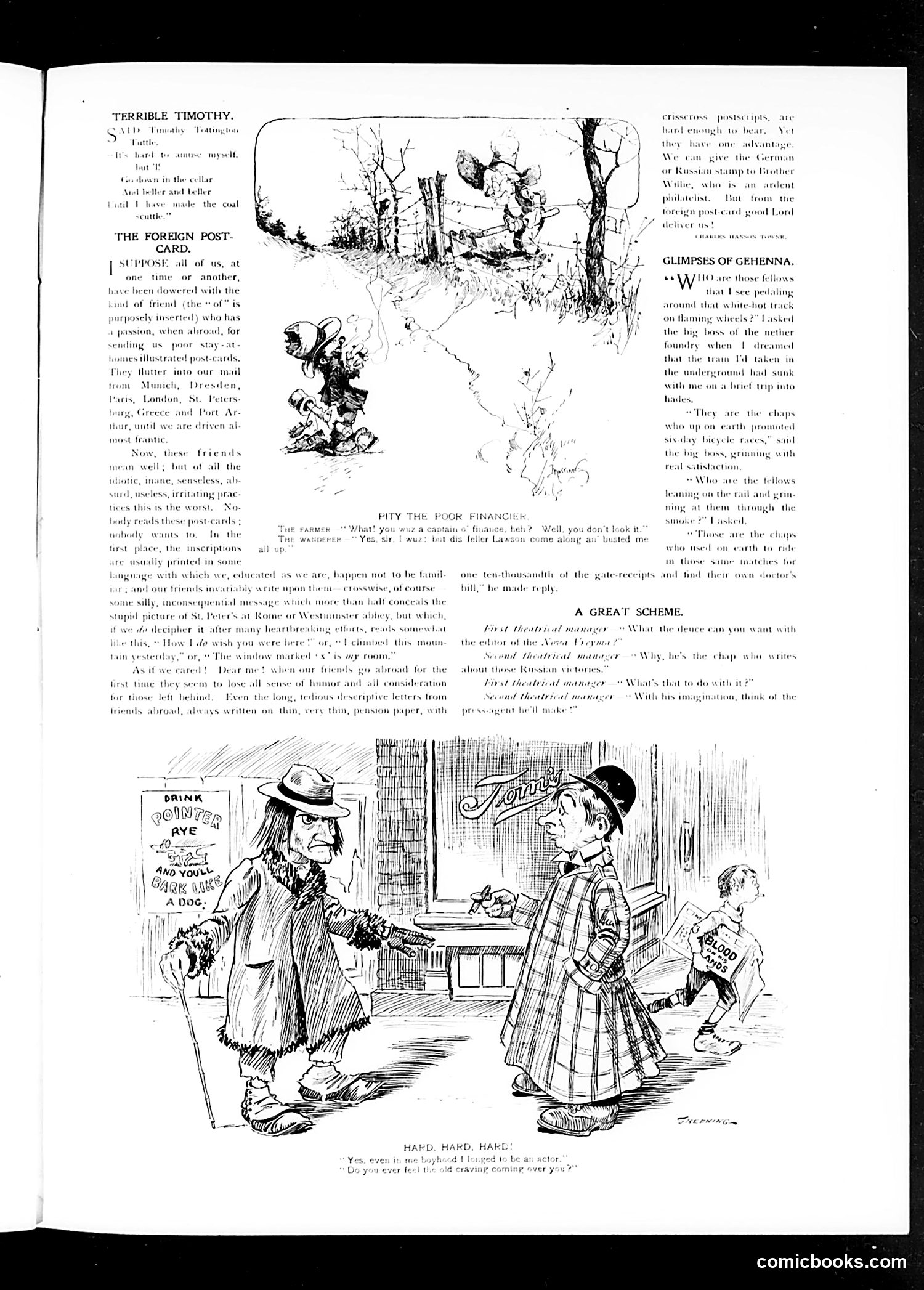
This page contains three separate satirical pieces: **"Terrible Timothy"** (top left): A brief poem mocking a mischievous child who causes household chaos—typical domestic humor of the era. **"The Foreign Postcard"** (main text): Satirizes the annoying habit of tourists abroad sending postcards home with illegible handwriting, poor grammar, and trivial messages on thin paper. The complaint is that these postcards are worse than useless—they're irritating. This reflects period frustration with the then-popular practice of sending picture postcards while traveling. **"Hand Some Hat" cartoon** (bottom): A sketch showing what appears to be street characters—one resembling a vagrant or laborer discussing theatrical employment with another figure. The dialogue suggests someone seeking acting work, with wordplay on "hand some" (attractive) versus actual employment prospects. All three pieces employ gentle, domestic satire typical of Judge magazine's humor—mocking everyday annoyances rather than serious political issues. The cartoons target common social frustrations recognizable to contemporary readers.
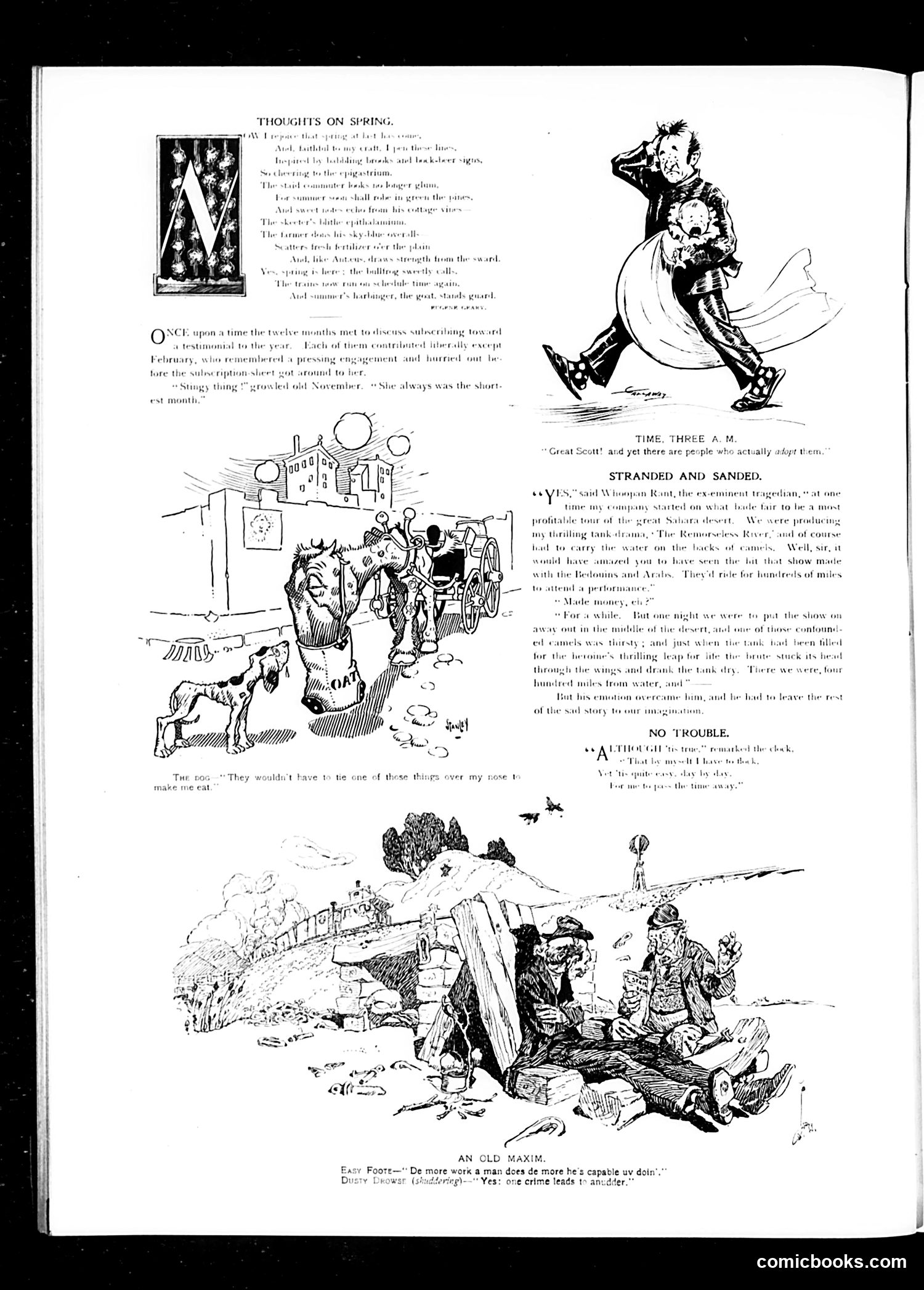
This page contains humorous sketches mocking theatrical life and seasonal inconveniences. The "Stranded and Sanded" section satirizes a theatrical troupe's disastrous desert tour, where actors faced dehydration and abandonment—a commentary on the precarious nature of touring theater companies and their often-exploitative conditions. The "Time, Three A.M." cartoon depicts a frazzled parent managing a fussy child, poking fun at domestic chaos. "An Old Maxim" presents a dialogue about work and crime, suggesting that only criminals can commit one crime after another—a dark joke about morality and consequences. The page's overall tone targets common frustrations: unpredictable spring weather ("Thoughts on Spring"), theatrical hardships, parenting struggles, and workplace ethics. These are gentle social observations rather than pointed political commentary, typical of Judge's satirical approach to everyday American life.
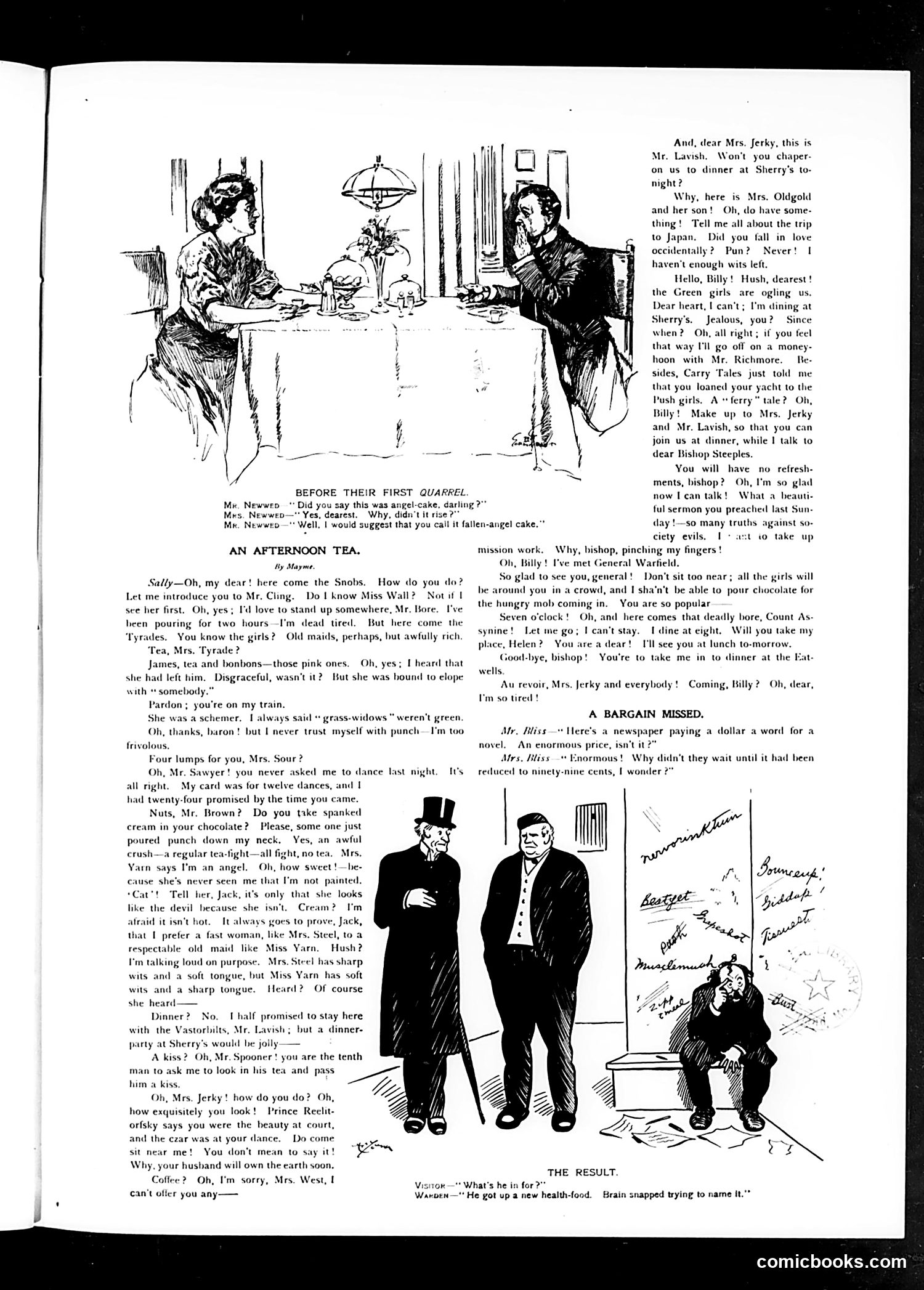
This page from *Judge* magazine contains three satirical sketches mocking high society's superficiality and pretension in the Gilded Age. **"Before Their First Quarrel"** shows newlyweds: the husband's joke about "fallen-angel cake" implies his bride lacks culinary skill despite her pretensions. **"An Afternoon Tea"** depicts society women's vapid conversation—name-dropping (General Warfield, Count Assynie), gossip about affairs and elopements, and obsessive social climbing. The hostess Sally is exhausted from pouring tea for wealthy but tiresome guests, yet performs gratitude for their presence. **"A Bargain Missed"** satirizes newspaper economics: two men discuss a paper paying premium rates ($1/word) for serialized novels, lamenting they didn't sell their story cheaper before rates dropped. The overall satire targets wealthy society's hollow values: status-seeking, materialism, and insincerity masked by etiquette. These sketches reflect Progressive Era critiques of Gilded Age excess and social pretension.
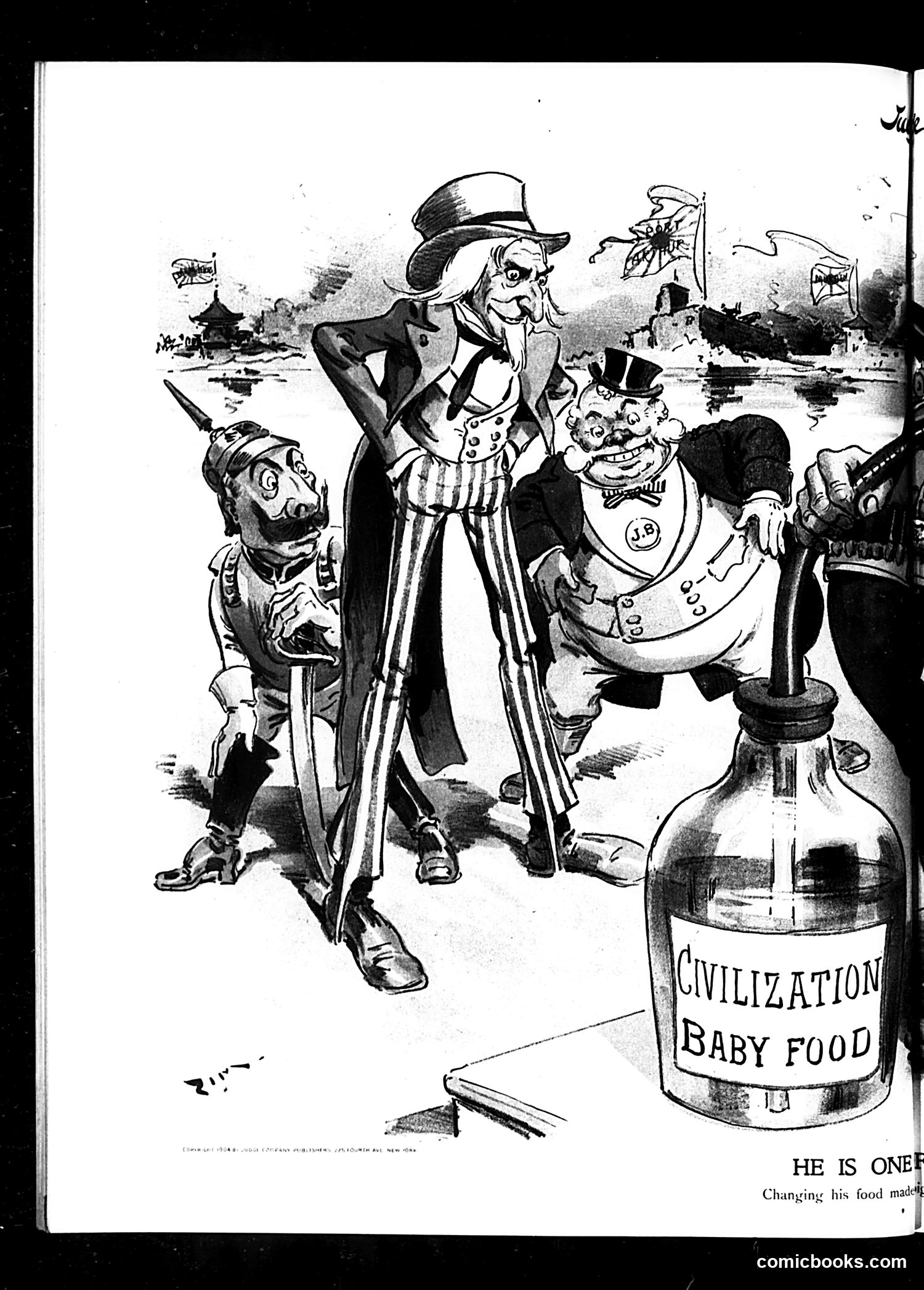
This appears to be an early 20th-century political cartoon from *Judge* magazine using imperialist imagery. The tall figure in the center, dressed as Uncle Sam with a top hat, is labeled as offering "Civilization Baby Food" to smaller caricatured figures representing other nations or peoples. The bottle label and the phrase "He is one" (partially visible) suggest satire about Western powers imposing their values on other cultures under the guise of "civilization." The background shows naval vessels and Eastern architecture, indicating colonial or imperial contexts. The cartoon likely critiques American expansionism and the paternalistic justification for imperial intervention—the notion that Western powers were "civilizing" other peoples by forcing cultural change. The grotesque caricatures of the smaller figures emphasize the satirical mockery of this colonial rhetoric.
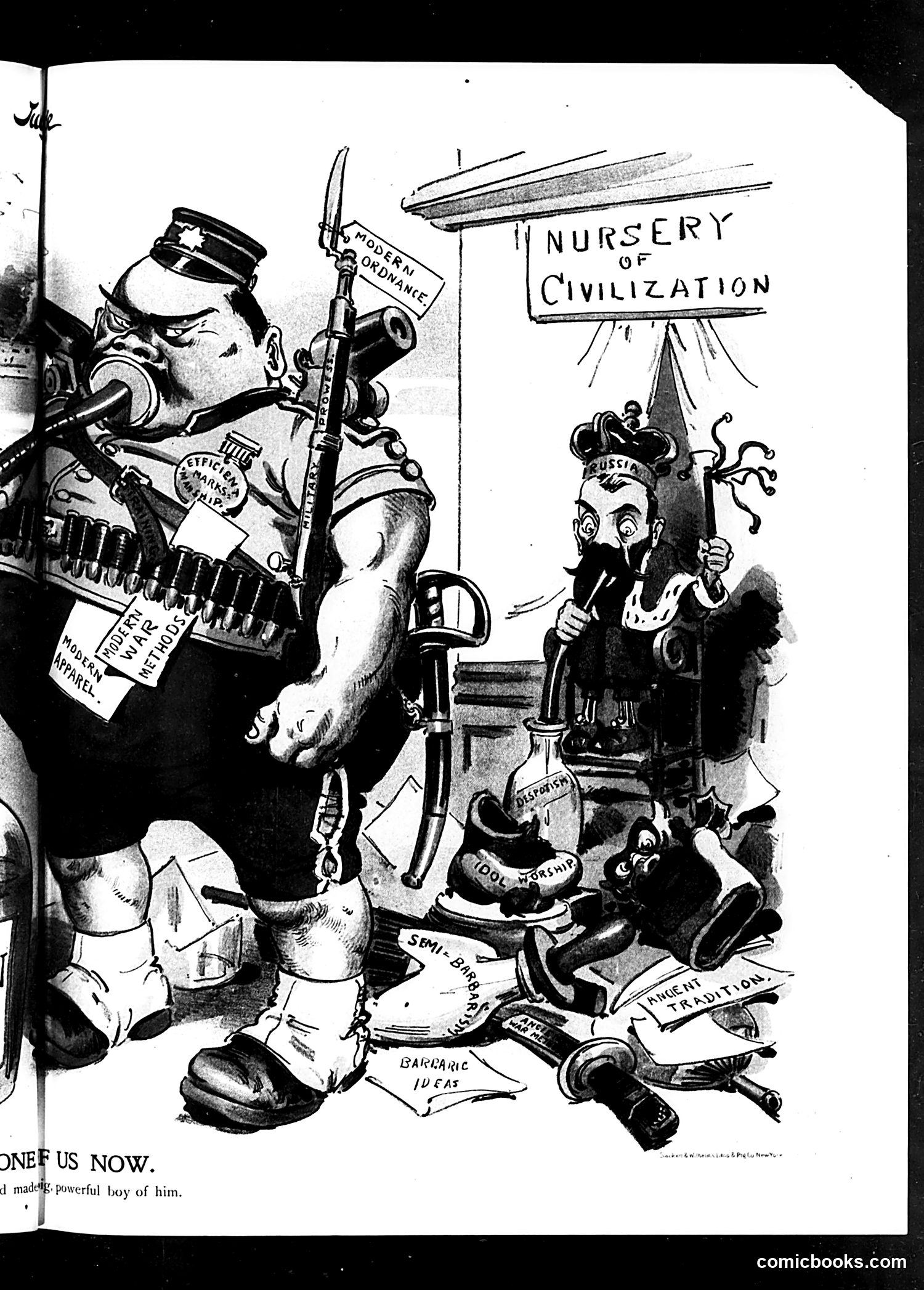
This cartoon depicts a militaristic figure (labeled with various imperialist references) as a stern "nursery" instructor teaching civilization to a smaller, frightened figure representing what appears to be a non-Western nation or colonial territory. The large figure wields weapons and carries labels suggesting military force and imperial authority. The smaller figure cowers beneath a "Nursery of Civilization" sign, surrounded by discarded items labeled with concepts like "barbaric ideas" and "knight tradition." The satire critiques Western imperial powers—particularly likely Germany or another European nation—who justified military conquest and colonization as "civilizing missions." The cartoon mocks this paternalistic rhetoric, showing how "civilization" was actually imposed through military domination rather than benevolent education. This reflects early 20th-century anti-imperialist sentiment common in American satirical magazines.
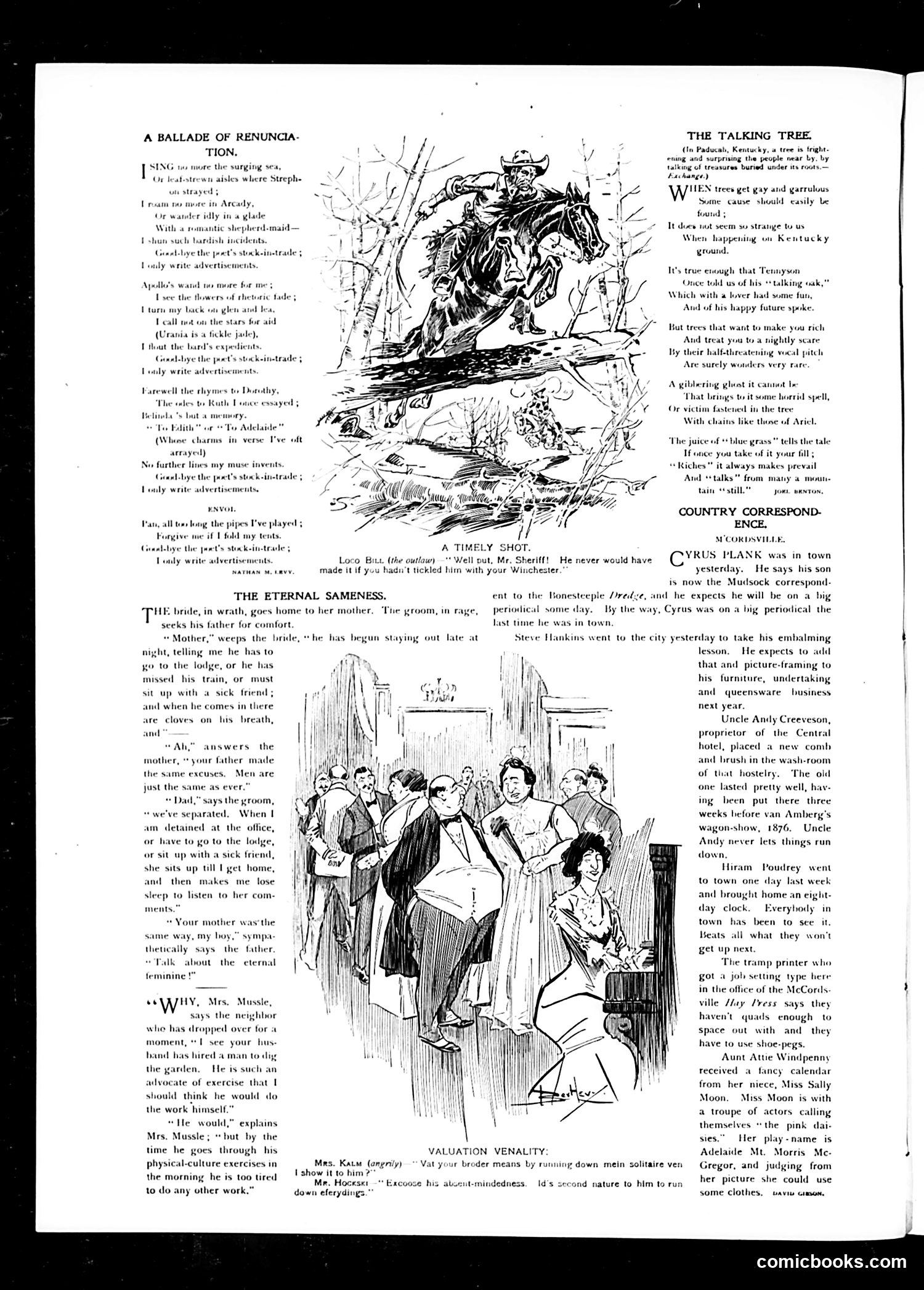
This page contains satirical poetry and humorous country correspondence typical of late 19th-century American humor magazines. **"A Ballad of Renunciation"** is a mock-romantic poem parodying sentimental verse, rejecting flowery poetic conceits about nature and love—typical Judge satire of overwrought literary conventions. **"The Talking Tree"** references an actual news item from Paducah, Kentucky, about a tree supposedly speaking about buried treasure. The accompanying poem mocks this credulous story, suggesting trees claiming to reveal riches and fortunes are pure nonsense. **"The Eternal Sameness"** depicts a couple's marital quarrel where the wife complains her husband stays out late; both parents confirm their spouses made identical excuses. The joke satirizes repetitive, predictable domestic unhappiness across generations. **The country correspondence section** contains brief, deadpan anecdotes about small-town life—a man becoming a newspaper correspondent, hotel improvements, a tramp printer—poking gentle fun at rural pretensions and modest accomplishments.
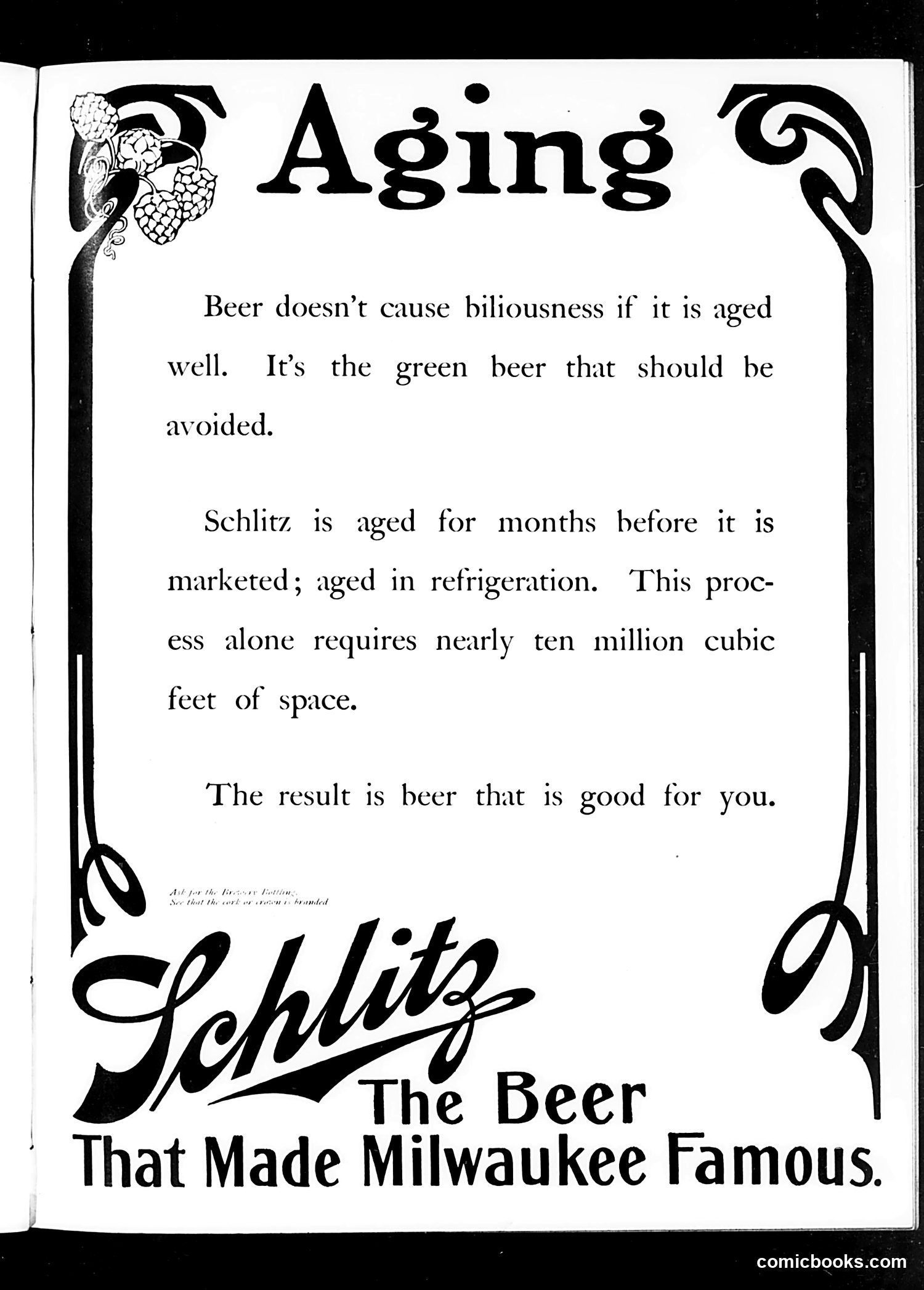
This is a **Schlitz beer advertisement**, not a political cartoon. The page promotes Schlitz brewery's aging process as a health benefit. The ad claims that properly aged beer doesn't cause "biliousness" (digestive upset), blaming "green beer" (insufficiently aged) instead. It boasts that Schlitz ages for months under refrigeration—requiring enormous storage space—resulting in superior quality. The decorative hop vine borders and ornate typography are typical of early 20th-century advertising design. The tagline "The Beer That Made Milwaukee Famous" references Milwaukee's prominence as a beer-brewing center. This reflects an era when breweries marketed beer as healthful, before Prohibition or modern food safety regulations. The ad's health claims would be illegal today.
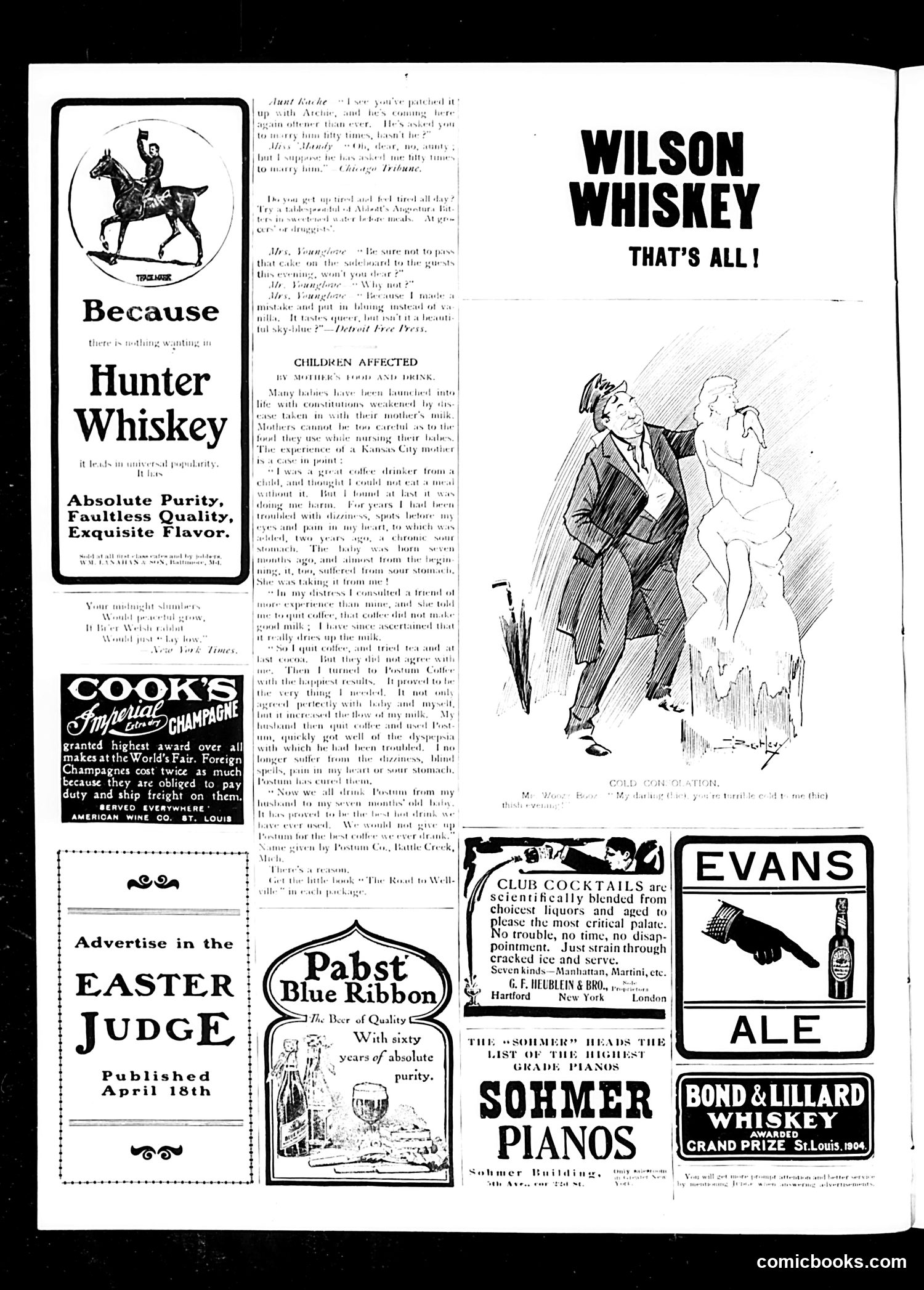
This page is primarily **advertising**, not political satire. It contains multiple liquor and product advertisements typical of early 1900s American magazines. The main illustration shows a cartoon titled "COLD GLANCE" (by the artist's signature), depicting a man in formal dress appearing to rebuff or dismiss a woman—likely commentary on social etiquette or romantic rejection, though the OCR'd text makes the specific joke unclear. The advertisements promote **alcoholic beverages** (Wilson Whiskey, Hunter Whiskey, Pabst Blue Ribbon beer, Evans Ale, Bond & Lillard Whiskey) alongside other luxury goods (Sohmer Pianos, Cook's Champagne). Notably, there's a section titled "CHILDREN AFFECTED BY MOTHER'S DRINK" describing how children were harmed by mothers' alcohol consumption—suggesting the page includes both pro-alcohol marketing AND contemporary social commentary about alcohol's dangers to families. This reflects the period's complex attitudes toward drinking before Prohibition. The page appears to be from April 18th (likely 1900s based on typography and style).
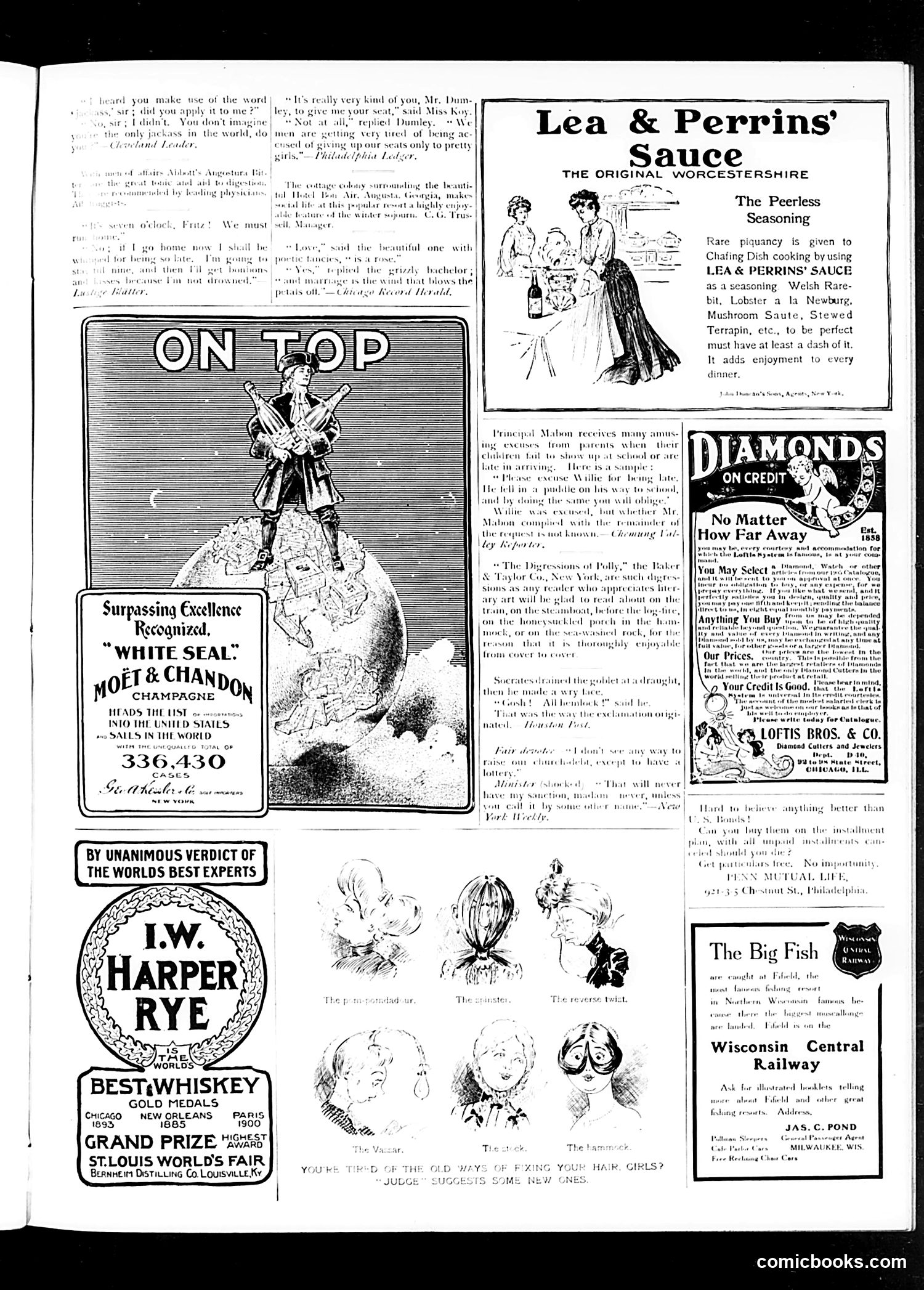
This page is primarily **advertising**, not political satire. It contains commercial advertisements from the late 1800s/early 1900s interspersed with what appears to be fragmented dialogue or story text (likely from a separate article). The main advertisements include: - **Moët & Chandon champagne** ("White Seal")—boasting international gold medals - **I.W. Harper Rye whiskey**—claiming "unanimous verdict of the world's best experts" - **Lea & Perrins' Worcestershire Sauce**—promoting its use in cooking - **Diamonds on Credit**—a jewelry store offering installment plans - **Wisconsin Central Railway** and other service providers The fragmented text snippets appear unrelated to the ads—discussing school absences and domestic situations—suggesting this is a composite page from *Judge* magazine mixing editorial content with paid advertisements. There is no identifiable political cartoon or sustained satirical commentary visible.
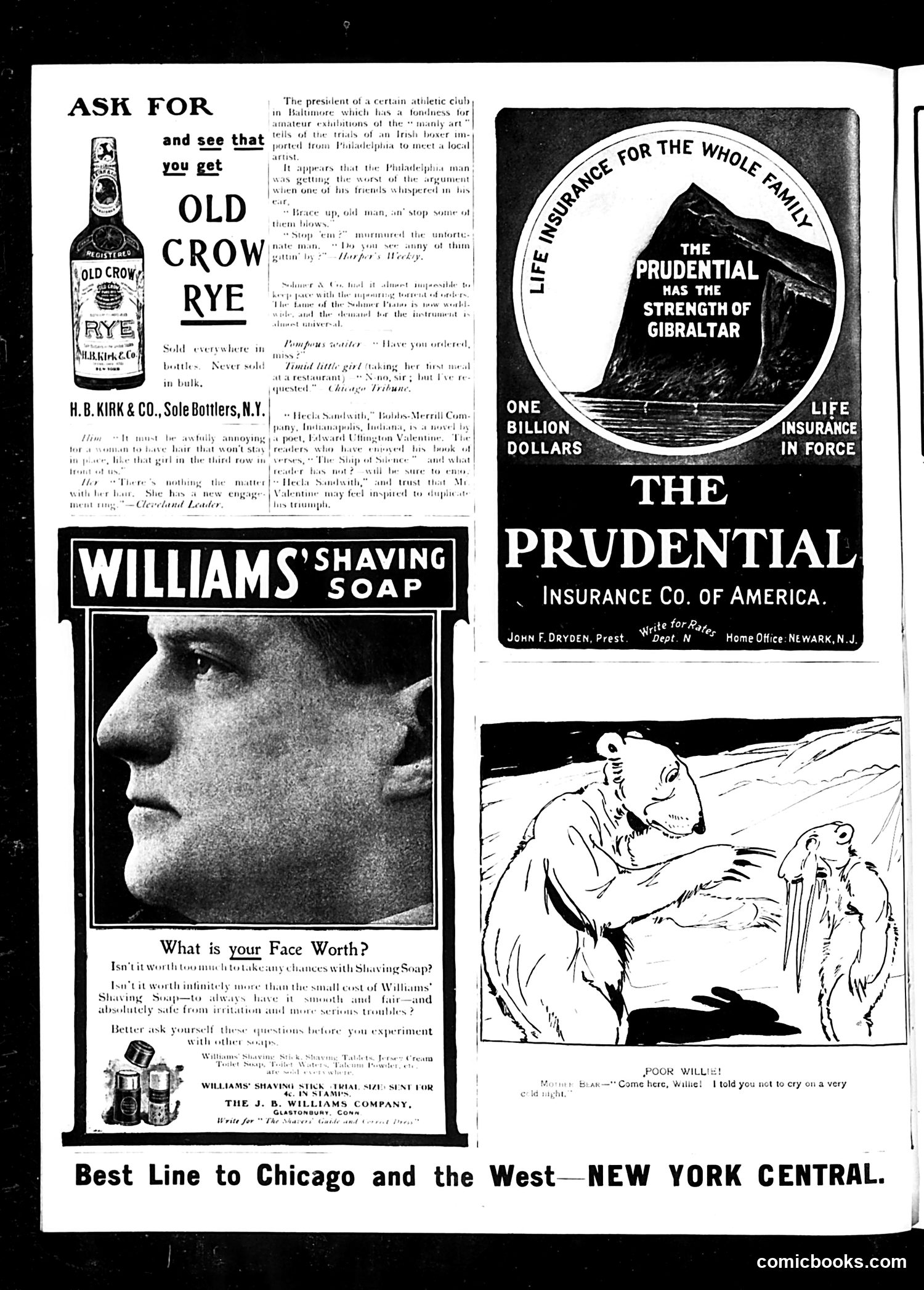
This page contains primarily **advertisements** rather than political satire, typical of Judge's revenue model. The notable content includes: **Old Crow Rye whiskey ad** (top left): A straightforward product advertisement with a humorous anecdote about stopping a fight—standard advertorial humor of the era. **Williams' Shaving Soap ad** (bottom left): Features a man's profile asking "What is your Face Worth?"—a rhetorical sales pitch questioning whether readers' faces deserve quality soap. Unremarkable by period standards. **The Prudential Insurance ad** (right): Shows Gibraltar rock with claims of strength and "one billion dollars in force." This reflects early 20th-century insurance marketing emphasizing stability and massive capital reserves. **"Poor Willie" cartoon** (bottom right): A brief comic about a child crying outdoors; its humor or point is unclear from the visible text. The page demonstrates Judge as a **commercial publication** blending editorial content with paid advertising rather than primarily delivering political commentary.
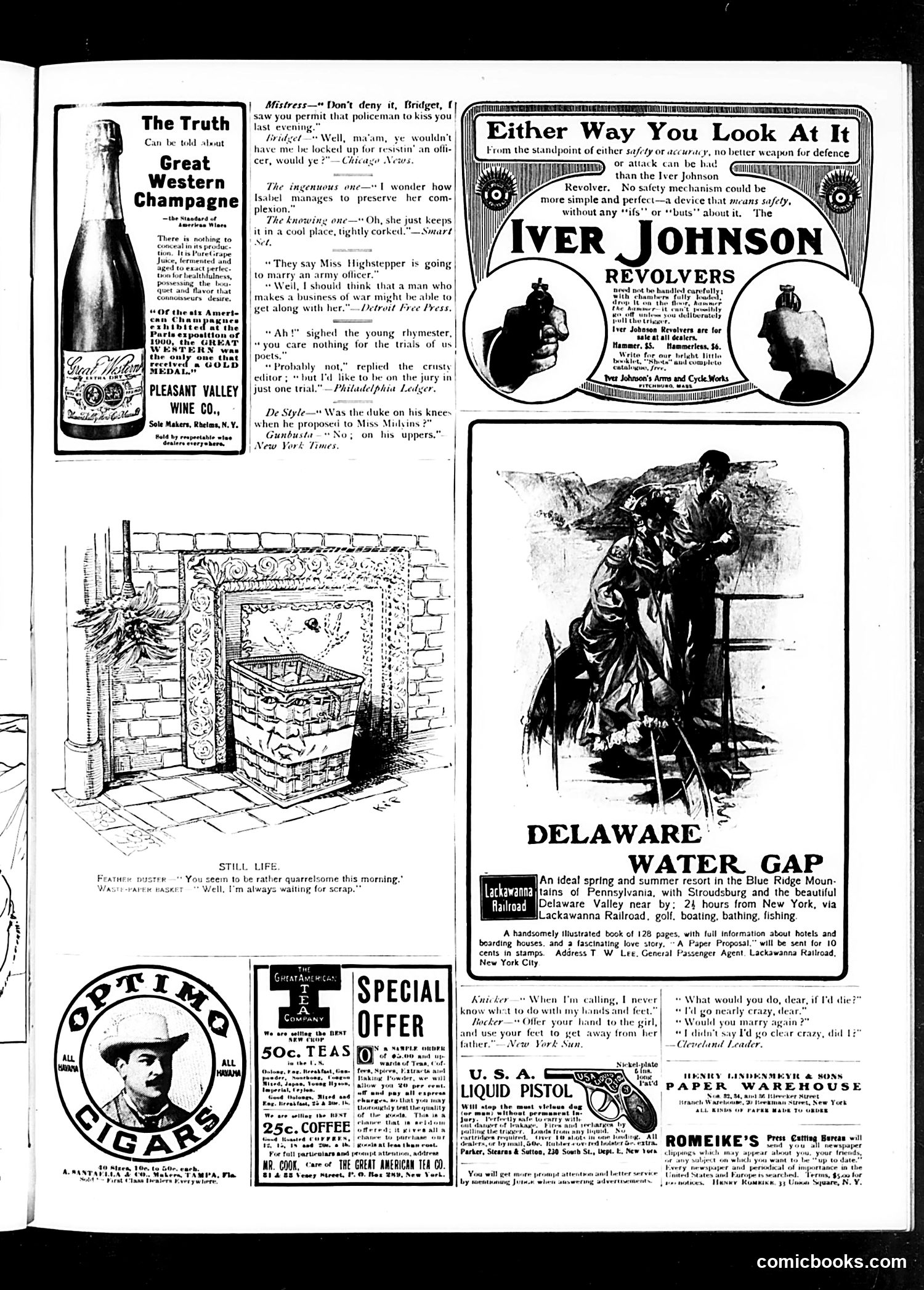
This page is primarily **advertising** with some reprinted jokes and one cartoon. The main content includes: **"The Truth About Great Western Champagne"** — An advertisement for wine that plays on a joke about preserving complexion by keeping it "in a cool place, tightly corked." **The cartoon "Still Life"** depicts a domestic argument between a husband and wife, with the wife complaining he's quarrelsome and the husband responding he's "always waiting for scrap" — a visual pun showing them literally fighting over food scraps. **Multiple short jokes** about courtship and romance (proposals, kissing), typical of period humor. **"Either Way You Look At It"** advertises the Iver Johnson Revolver, claiming safety features. **Delaware Water Gap advertisement** promotes a Pennsylvania resort. The page contains typical early 20th-century magazine content: commercial advertising mixed with light domestic humor and product endorsements. The jokes reflect period attitudes about marriage dynamics and social conventions.
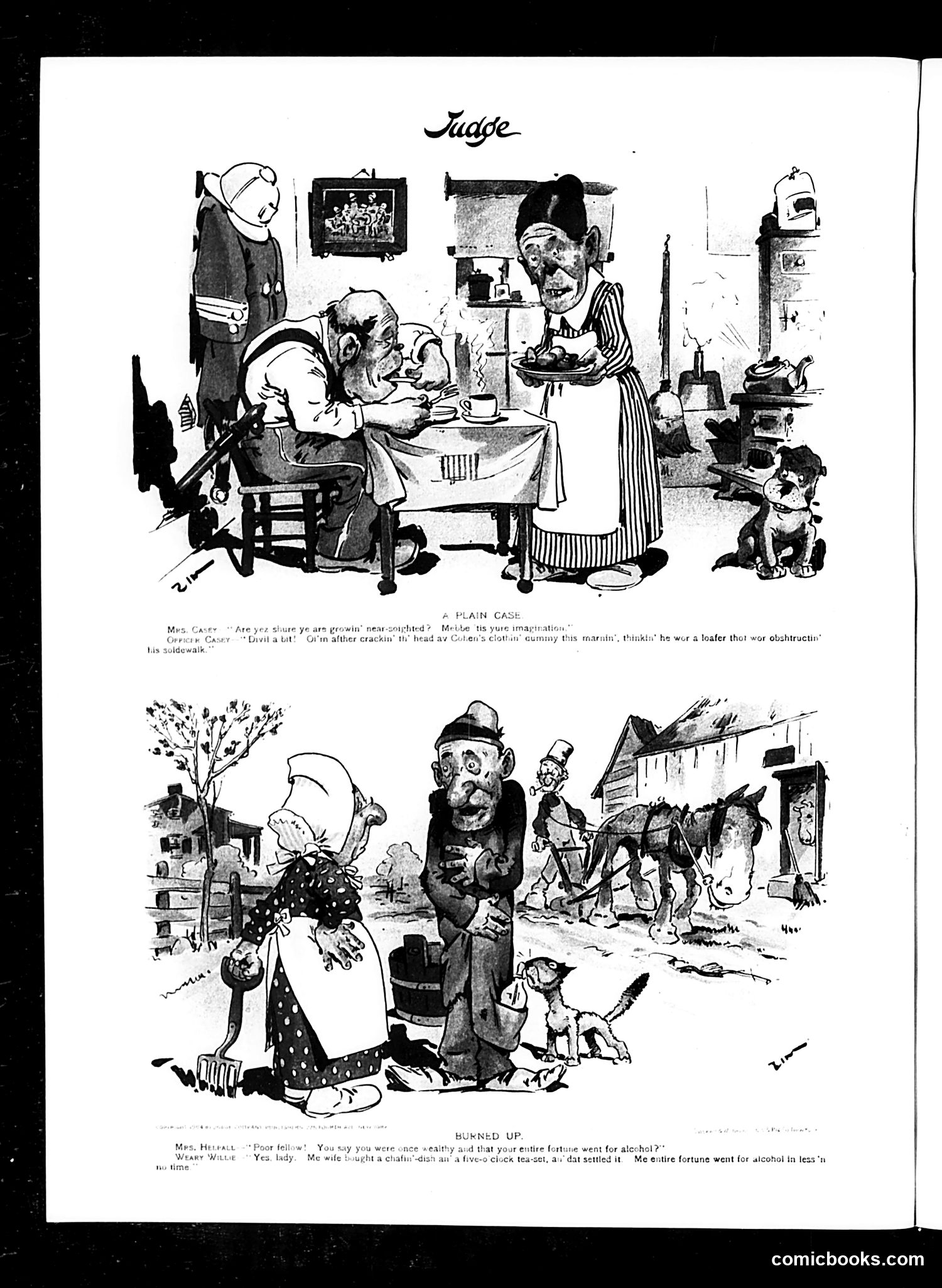
This page contains two satirical cartoons commenting on social issues. The **top cartoon** depicts a domestic scene where a woman serves food to a man at a table. The caption references "new supplied" and mentions someone being a "loafer" who "disinheritin' his sidewalk." The satire appears to target idle men and domestic economics during a period when women managed household resources. The **bottom cartoon**, titled "BURNED UP," shows a woman confronting a man about alcohol consumption. The dialogue references someone spending "entire fortune went for alcohol" and mentions a "five o'clock tea set." This satirizes the consequences of alcoholism on family finances and domestic stability. Both cartoons use exaggerated caricature typical of early 20th-century Judge magazine humor, targeting working-class domestic life and moral failings, particularly male idleness and drinking.