
A complete issue · 20 pages · 1908
Life — July 23, 1908
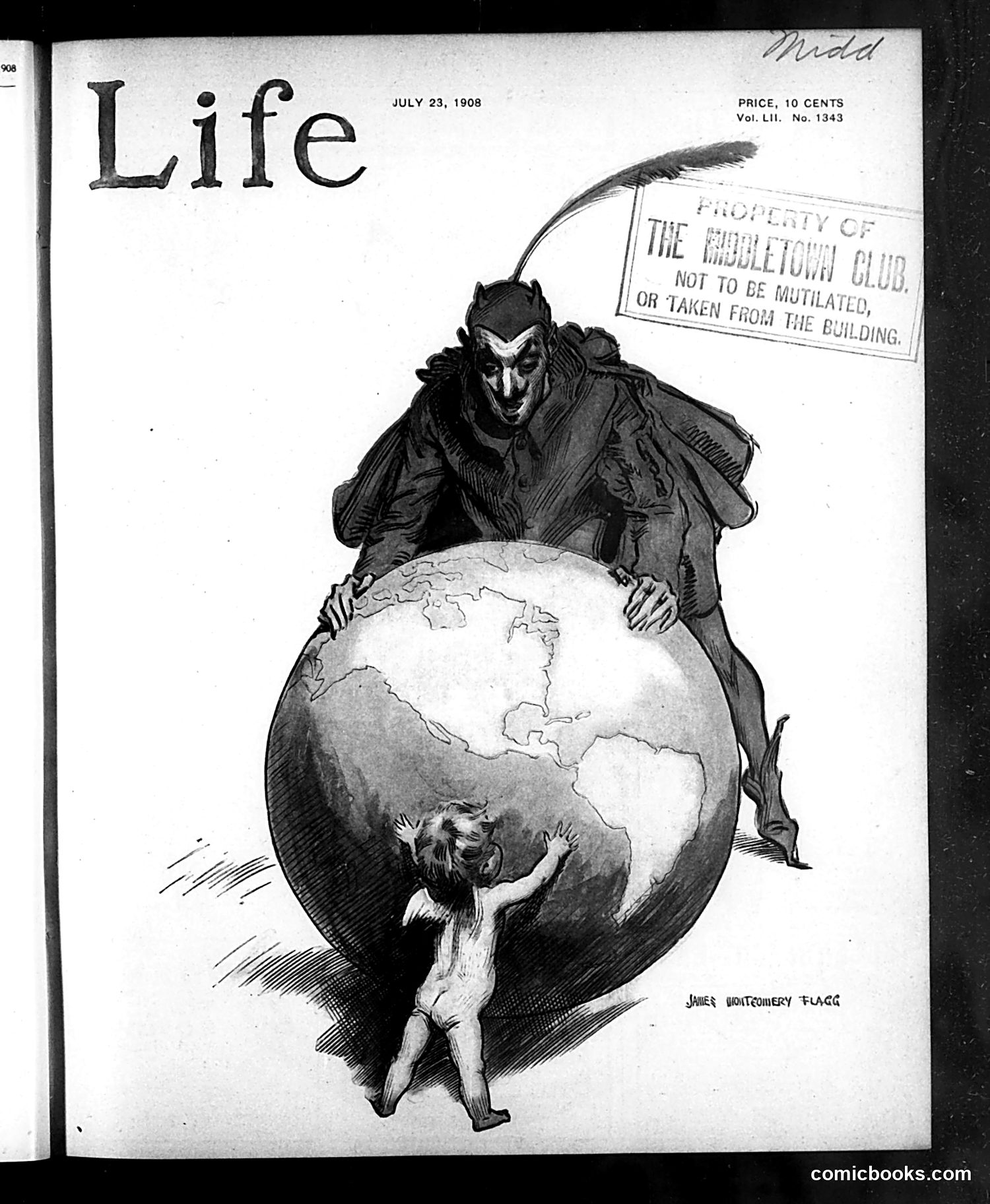
This political cartoon by James Montgomery Flagg depicts a demonic figure perched atop a globe, gripping it possessively while a small human figure below struggles to support the weight. The imagery suggests anxiety about **malevolent global forces or imperialism** — a demon literally controlling the world while humanity bears the burden. The 1908 date places this during Theodore Roosevelt's presidency, a period of American imperial expansion. The cartoon likely critiques **unchecked global power, monopolistic control, or foreign threats** to world stability. The demon's gloating expression and the struggling human convey helplessness against overwhelming, sinister forces — resonating with Progressive Era concerns about **concentrated power, whether corporate or geopolitical**.
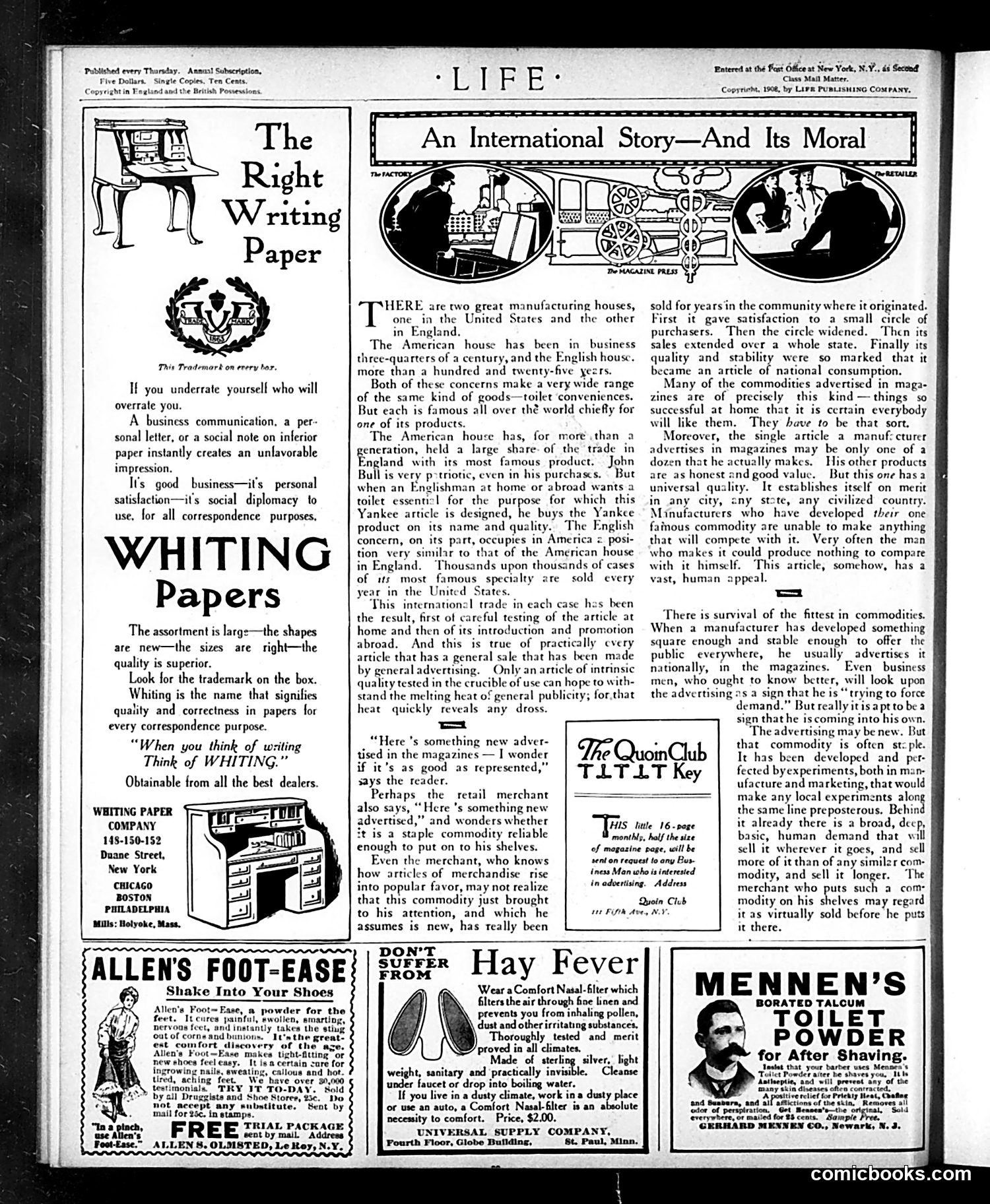
This page is primarily **advertising and commercial content** rather than political satire. The main article, "An International Story—And Its Moral," discusses how American manufactured goods (specifically a commodity that gained national distribution) compete successfully in international markets. It argues that quality and reliability drive commercial success across borders. The accompanying advertisements—for Whiting Papers, Allen's Foot-Ease powder, a Comfort Nasal-Filter for hay fever, and Mennen's Toilet Powder—are typical early 20th-century product promotions emphasizing health, comfort, and social respectability. **No political cartoon or satire is evident** on this page. The content reflects commercial culture and consumer marketing of the period rather than editorial commentary on political events or figures.
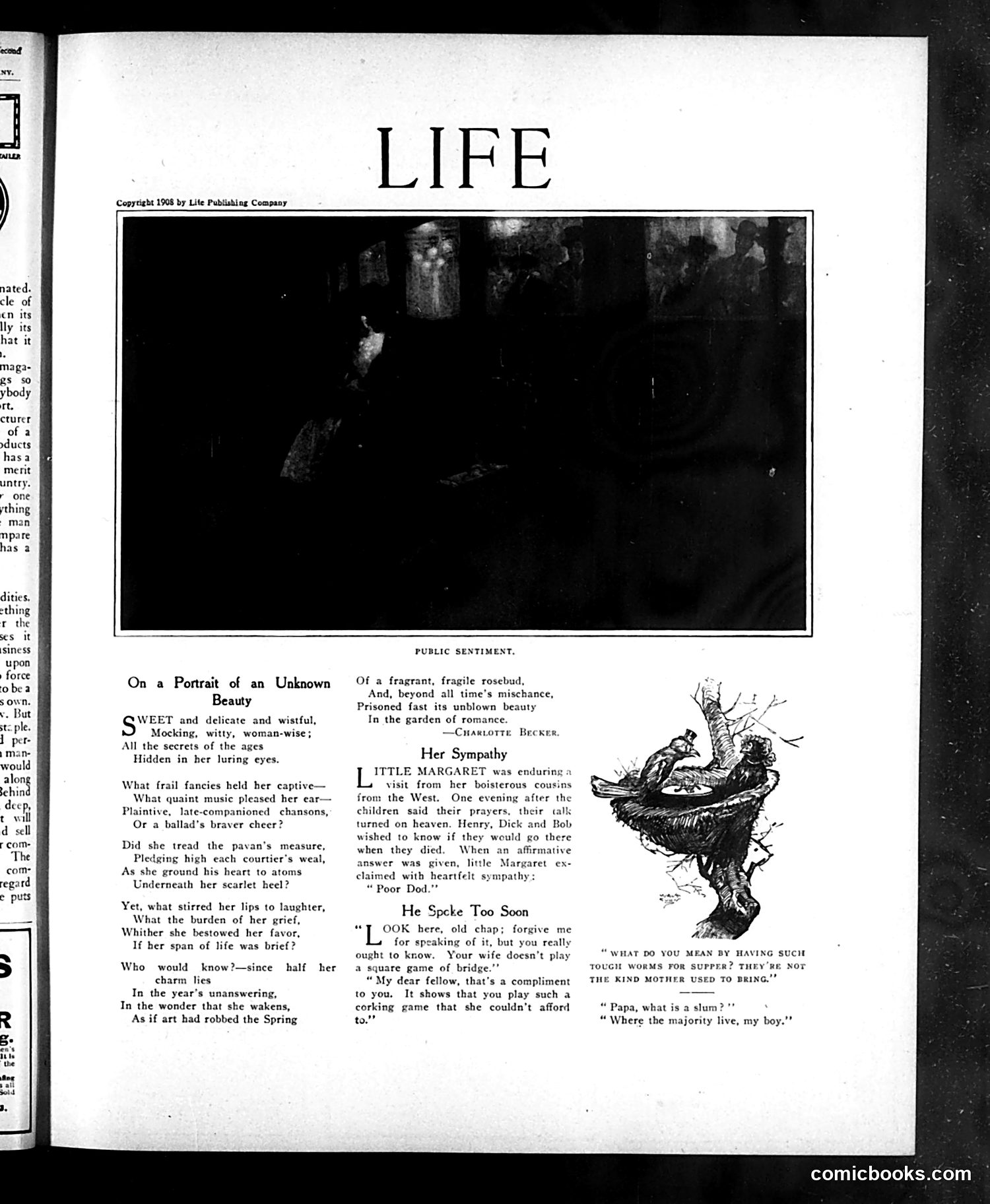
This page contains **poetry and humorous anecdotes** rather than political cartoons. The content includes: 1. **"On a Portrait of an Unknown Beauty"** — a romantic poem about an idealized woman with "secrets of the ages / Hidden in her luring eyes" 2. **"Her Sympathy"** — a sentimental anecdote about Little Margaret comforting cousins grieving their father's death 3. **"He Spoke Too Soon"** — a brief comedic exchange between a husband and wife about bridge-playing, where the husband's compliment backfires The small illustration shows a nest with birds, accompanying the domestic humor. The magazine's satire here is gentle and focuses on **social situations and romantic/marital relationships** rather than political commentary. This reflects Life's role as a weekly humor publication addressing middle-class domestic life and manners.
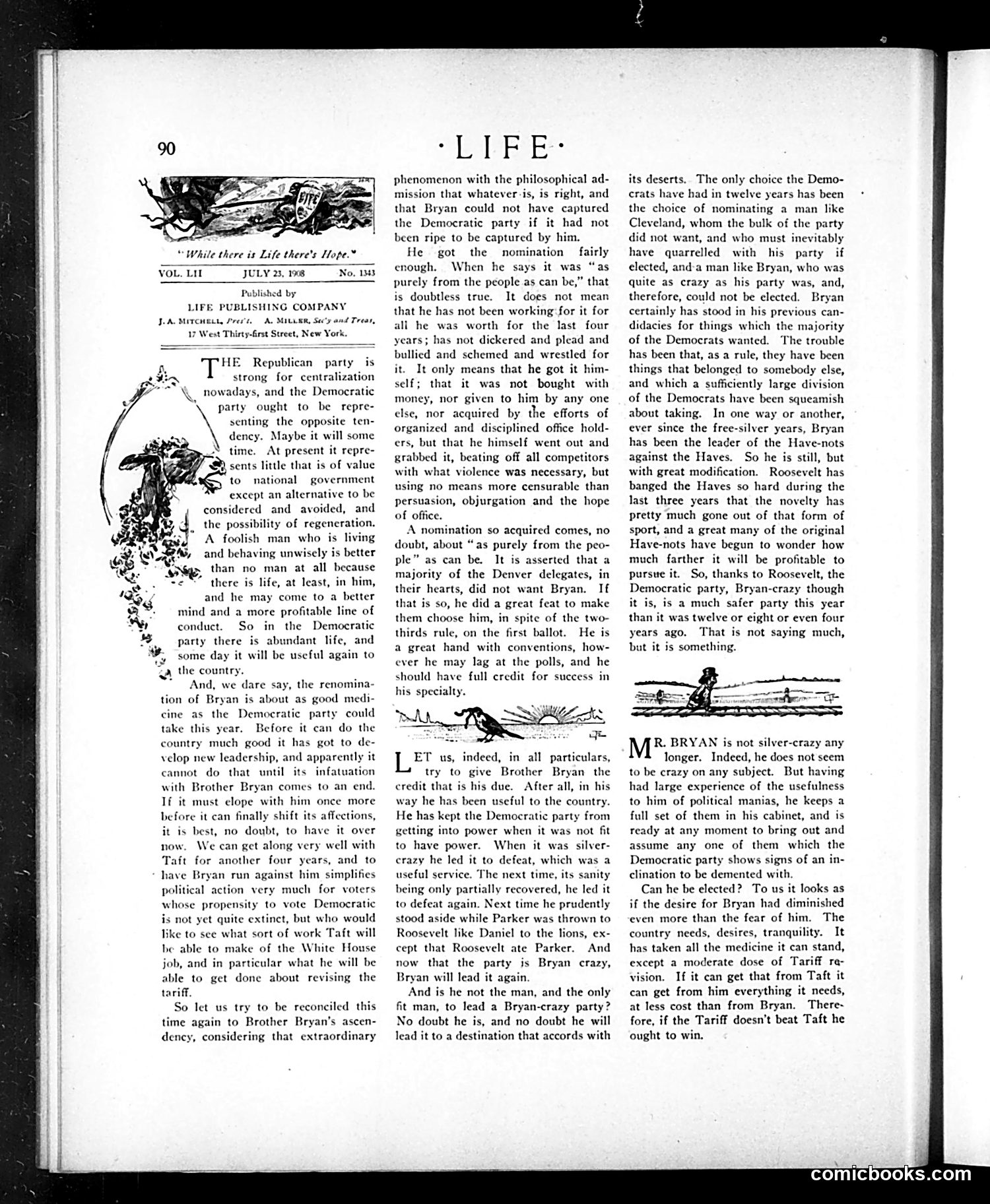
This page presents editorial commentary on William Jennings Bryan's nomination as the Democratic presidential candidate. The text argues that while Bryan earned his nomination fairly "from the people," the Democratic Party remains "Bryan-crazy" and likely to lose again. The author contends Bryan lacks the political temperament to lead effectively, comparing him unfavorably to other Democratic figures. The piece suggests Bryan's continued leadership will damage the party's chances against Republican rivals (likely Taft, mentioned in the tariff discussion). The decorative initial letter and small landscape vignettes are typical Life magazine design elements. This represents the magazine's satirical commentary on contemporary politics, specifically skepticism about Bryan's viability as a national candidate following his previous electoral defeats.
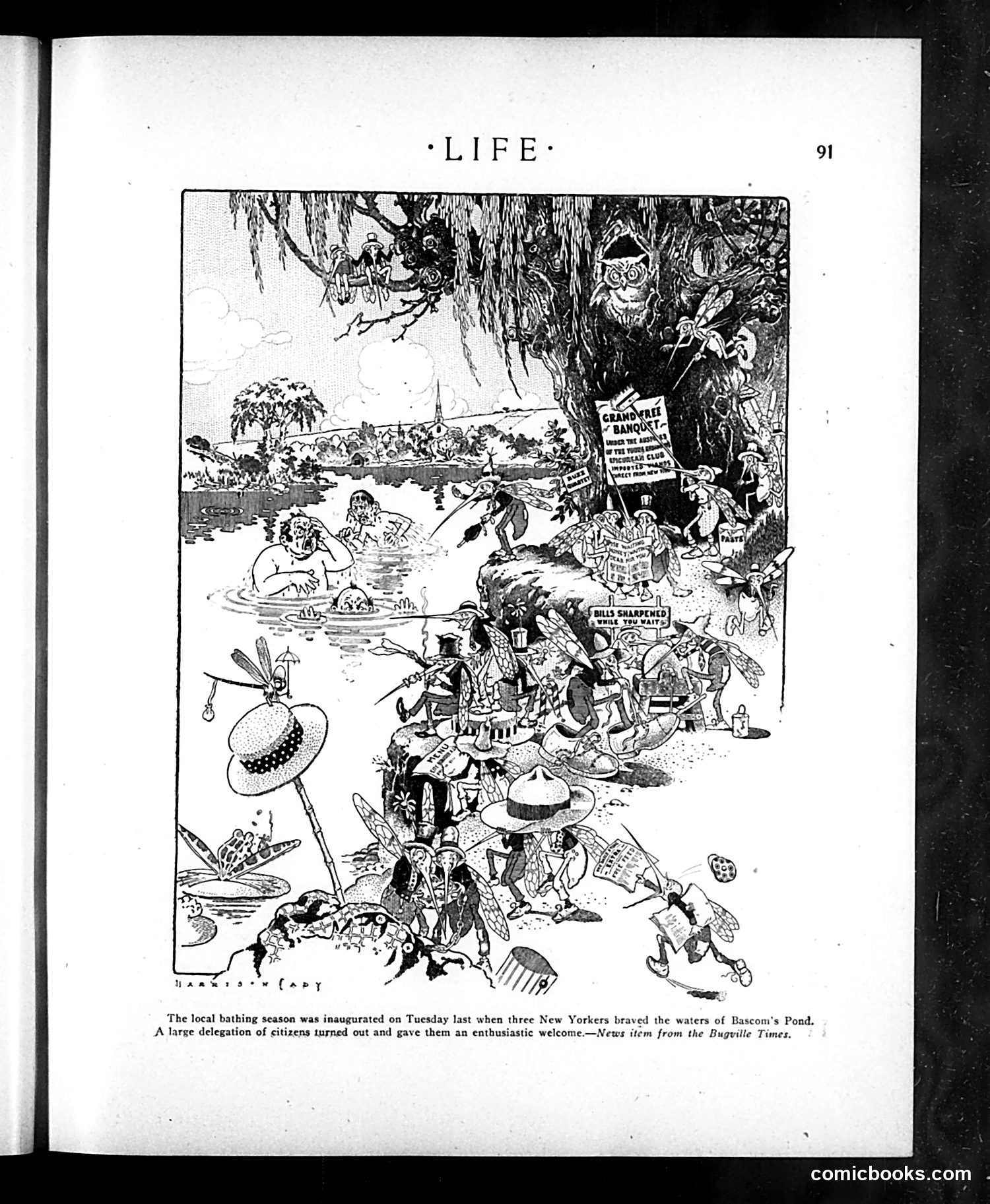
This is a satirical illustration depicting the opening of the local bathing season at Bascom's Pond. The cartoon shows a chaotic scene of New Yorkers eagerly entering the water for the first swim of the season, with crowds gathering to witness the event enthusiastically. The satire appears to target the enthusiasm and somewhat frenzied behavior of city dwellers seeking recreation at local swimming spots. Various whimsical details—including what appear to be insects or fantastical creatures in the foreground and margin—add absurdist humor to the scene. The illustration caricatures the social spectacle of seasonal bathing as a major civic event worthy of public celebration and large attendance. The caption references a "News item from the Bagville Times," suggesting this depicts a small-town or suburban locale rather than Manhattan proper.
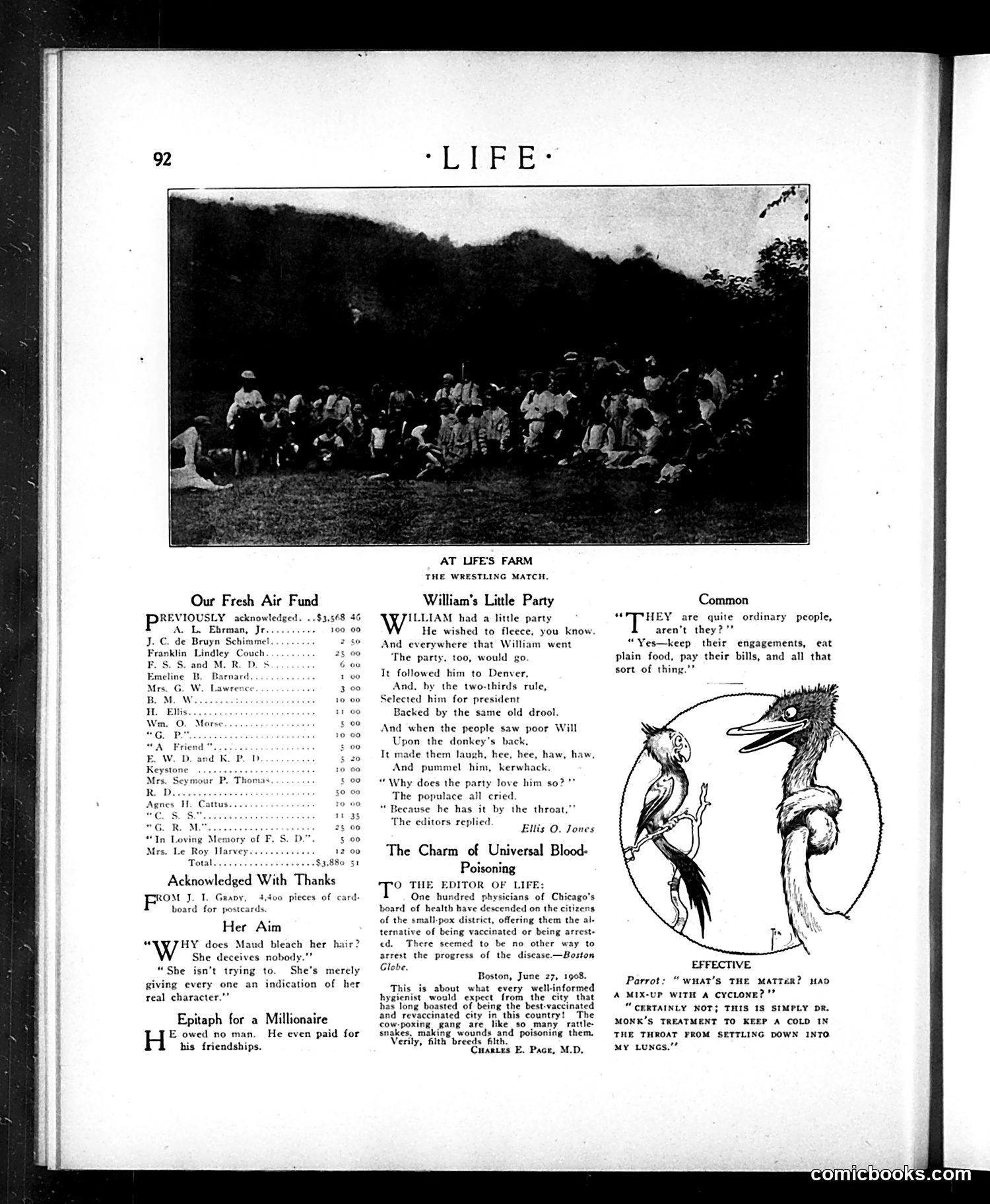
The page contains several distinct items: a photograph of an outdoor wrestling match ("At Life's Farm"), several short humorous pieces, and a political cartoon about disease prevention. The main cartoon depicts two birds (a parrot and crane) discussing blood poisoning. The parrot asks what's wrong with a cyclone, and the crane responds that it's not a demon's treatment but rather keeps colds in the lungs. This appears to be satirizing contemporary medical misconceptions or ineffective cold remedies popular around the early 1900s. The surrounding text includes light verse and humorous anecdotes typical of Life's satirical style, focusing on everyday social observations rather than hard political commentary. The overall tone is gentle mockery of ordinary people and contemporary practices.
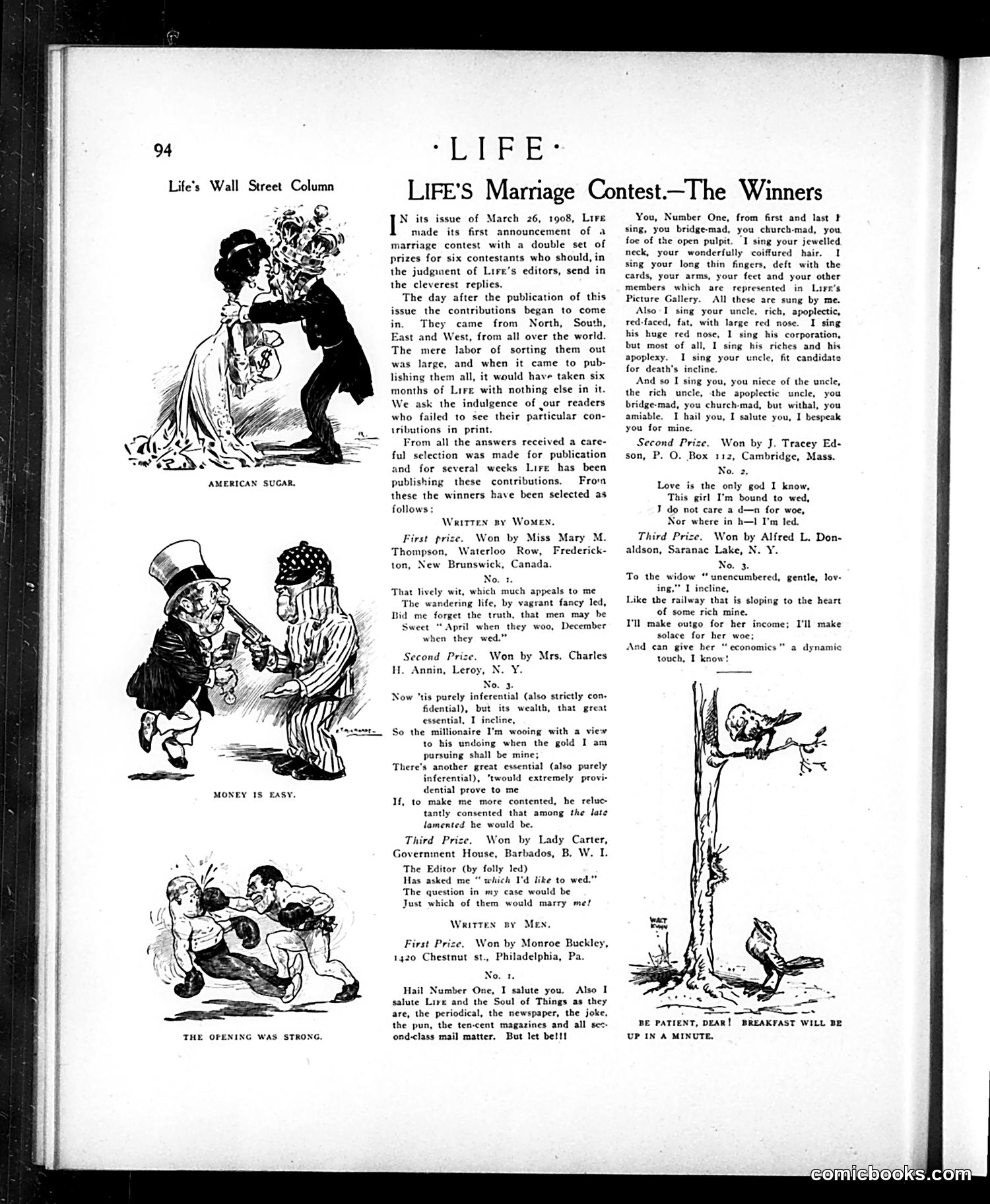
This page presents results of Life's marriage-themed writing contest, featuring humorous submissions from readers about courtship and matrimony. The three cartoons illustrate traditional gender dynamics of the era: 1. **"American Sugar"** (top): A man in formal dress presents flowers to a bride, suggesting romance as transactional. 2. **"Money is Easy"** (middle): A well-dressed couple, likely satirizing wealth's role in marriage prospects. 3. **"The Opening Was Strong"** (bottom): Two figures in a boxing stance, comedically depicting courtship as combat. The contest entries—separated by gender—offer satirical perspectives on marriage expectations. Prizes went to the cleverest, most humorous submissions. The cartoons and text together mock contemporary courtship conventions and the mercenary aspects of matrimonial arrangements.
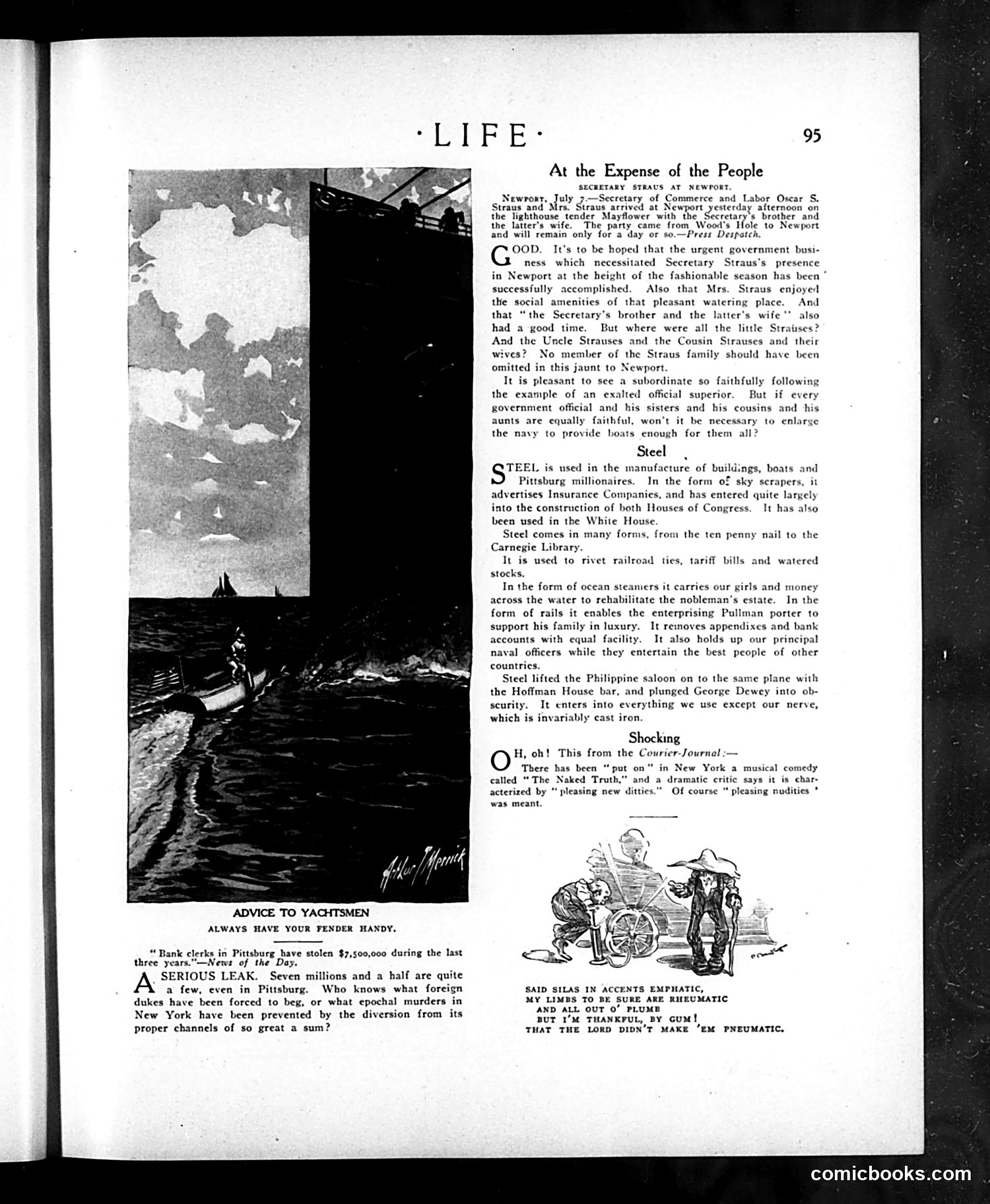
The page contains two distinct sections: **Top Section:** A satirical article titled "At the Expense of the People" criticizes Secretary Straus's Newport social visit, arguing government officials shouldn't burden taxpayers by bringing their entire families on pleasure outings. The piece mocks the expectation that navy vessels accommodate all relatives of government workers. **Bottom Section:** A cartoon titled "Raid Silas in Accents Emphatic" depicts a character (Silas) complaining about rheumatism while another figure responds with sarcasm about divine punishment. The joke plays on Silas's exaggerated dialect and physical ailments. The page also includes sections on "Steel" (industrial uses) and "Shocking" (theater criticism), alongside a maritime illustration labeled "Advice to Yachtsmen: Always Have Your Fender Handy."
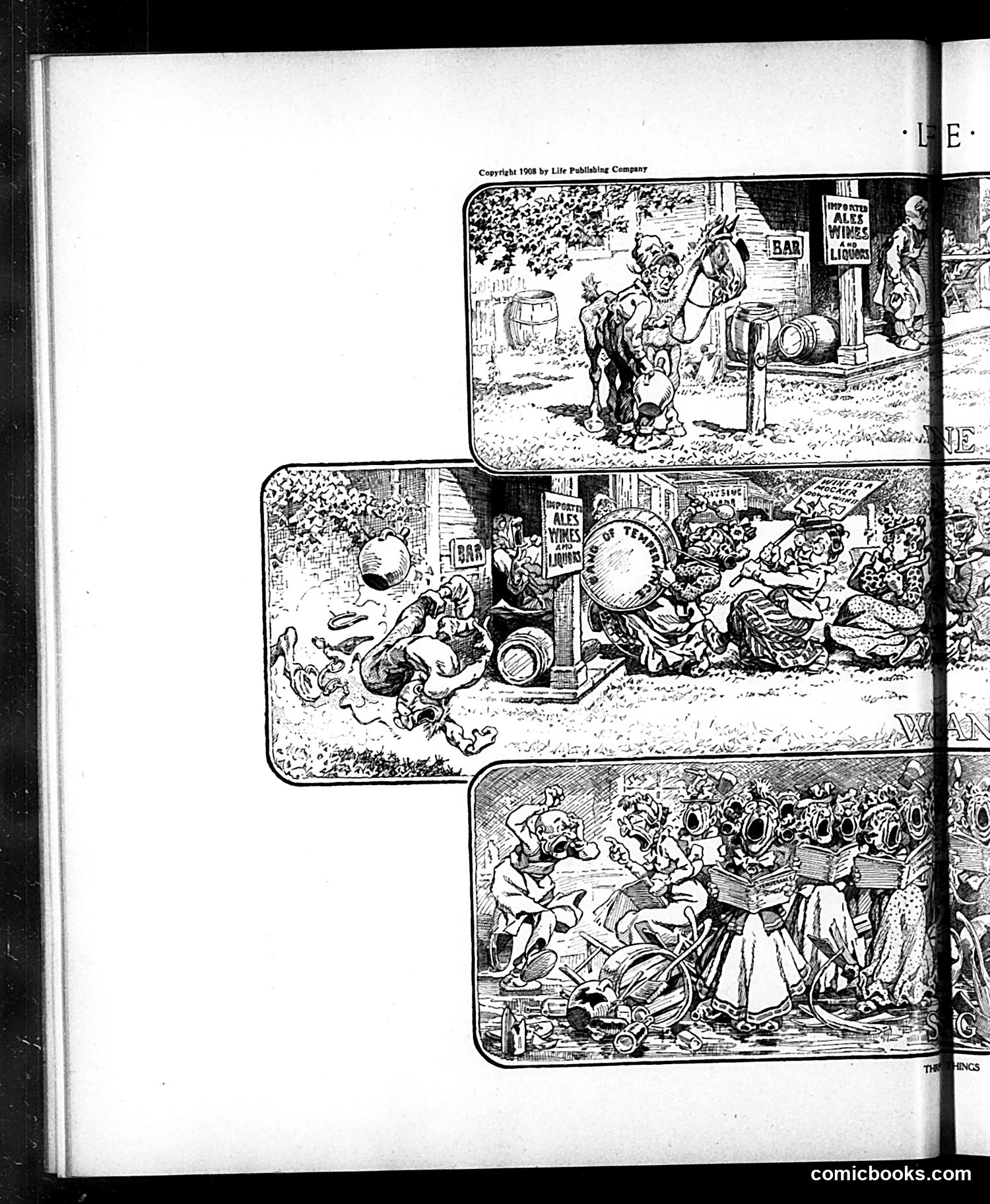
This appears to be a three-panel comic strip from Life magazine (copyright 1908). The panels depict scenes at what appears to be a bar or saloon, with signs reading "Alex Wines and Liquors" visible. The cartoon shows various characters in comedic situations involving alcohol and drinking. Without clear text identifying specific political figures or events, the exact satirical target is difficult to determine with certainty. However, the setting suggests commentary on Prohibition-era debates or drinking culture of early 20th-century America. The exaggerated character drawings and chaotic scenes are typical of Life's humorous social satire from this period, likely poking fun at popular drinking establishments and their patrons.
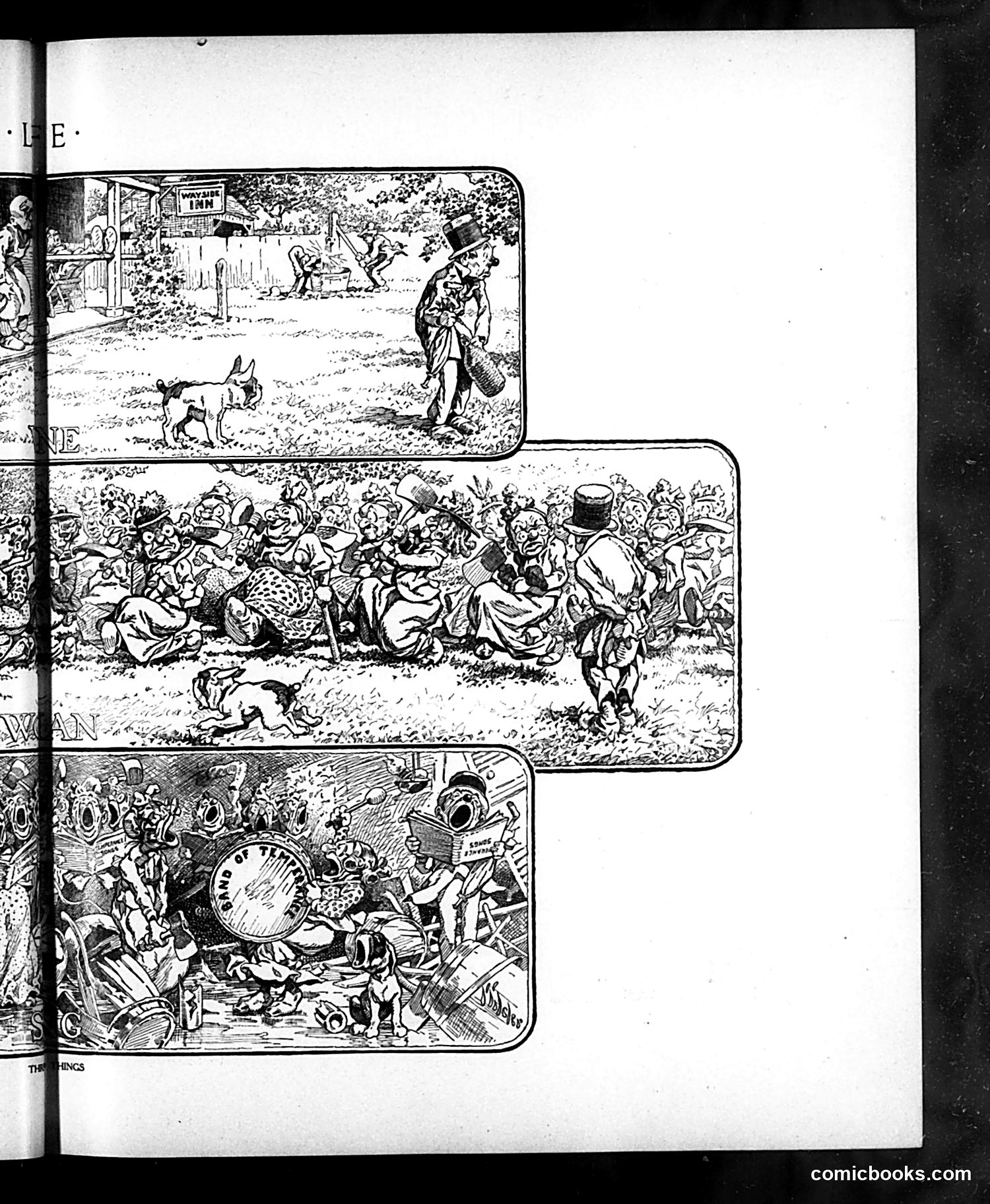
This page from *Life* magazine contains three sequential comic panels depicting what appears to be a satirical narrative about class contrast and social commentary. The top panel shows a gentleman with a top hat greeting a woman at what looks like a country inn or rural establishment, with a dog present. The middle panel depicts a large crowd of common people or working-class figures gathered together in an outdoor setting. The bottom panel shows a chaotic interior scene filled with various figures and objects in apparent disorder. The progression seems to mock the contrast between genteel society (represented by the top-hatted figure) and the masses, or to satirize social pretense and the reality beneath polite society's surface. However, without visible title text or clearer context, the specific political or social target of this satire remains unclear from the image alone.
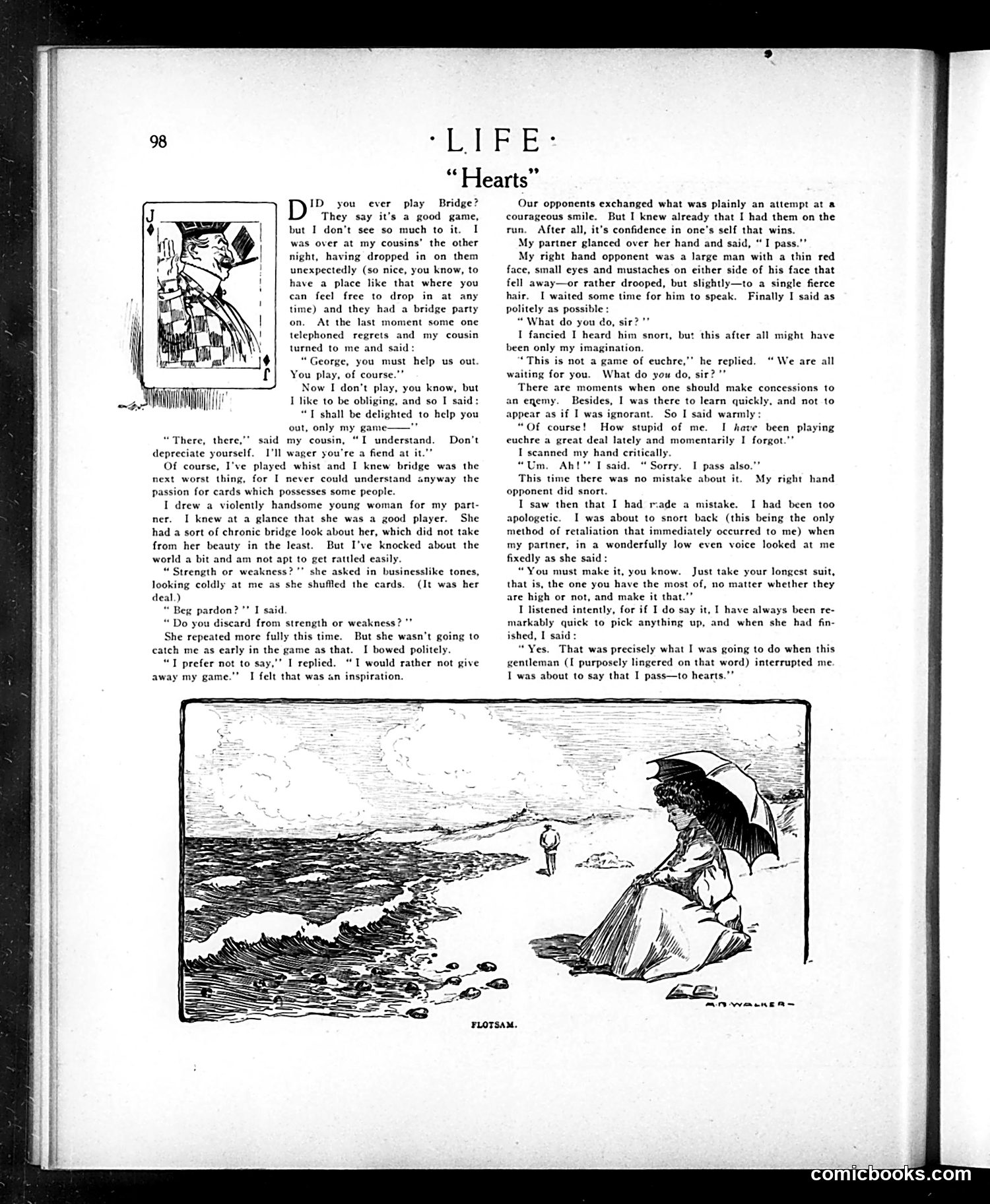
This page from *Life* magazine contains a short story titled "Hearts" about a bridge game that becomes a romantic turning point. The narrative describes how the narrator's cousin invited them to play bridge, where they met a woman partner. During play, the narrator made deliberate mistakes to appear less skilled, hoping to impress her. When the woman pointed out the errors, the narrator admitted they were intentional—a clumsy romantic gesture. The two illustrations show: (top) a playing card (Jack), and (bottom) a beach scene labeled "Flotsam," depicting a woman with an umbrella by the shore. The story uses bridge and card-playing as metaphors for courtship and romantic vulnerability, appealing to early 20th-century *Life* readers interested in both games and romantic humor.
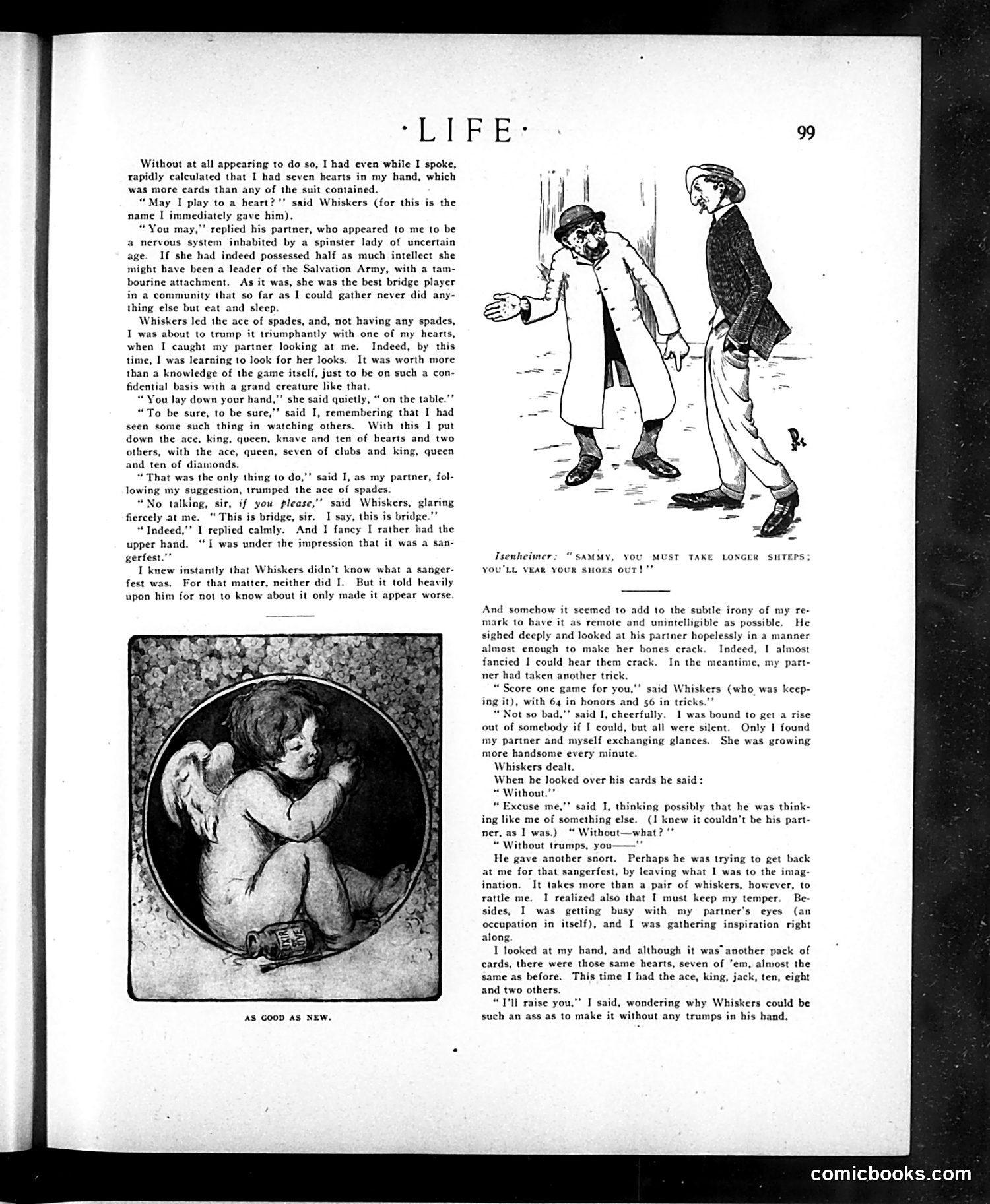
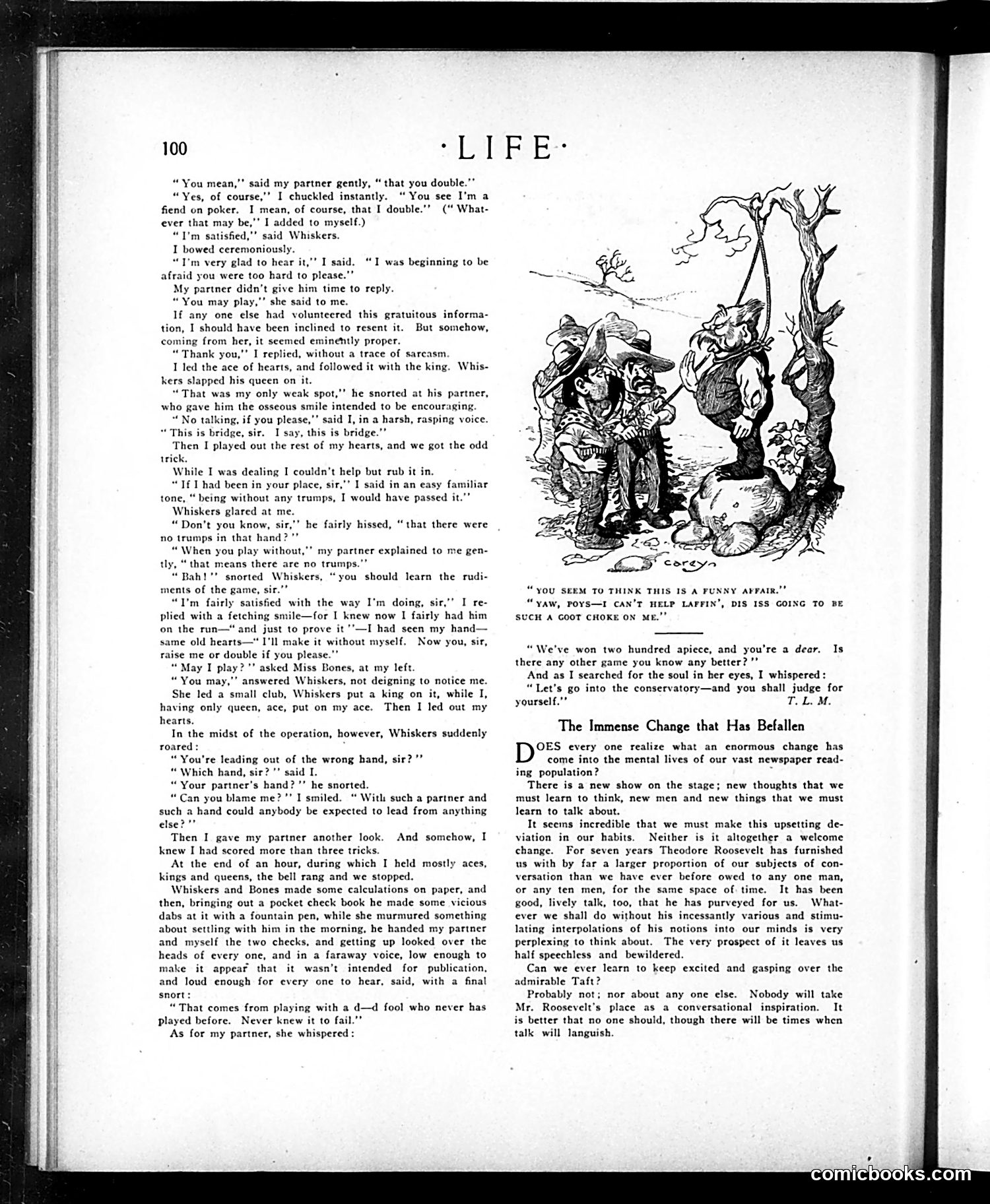
This page contains a narrative about a bridge card game and two illustrations. The top cartoon depicts two figures in period dress (appears to be early 1900s), with the caption about "Sammy" taking longer shifts and wearing out shoes. The lower illustration, labeled "AS GOOD AS NEW," shows a cherub or putto figure. The text describes a card game where the narrator outsmarts their partner "Whiskers" through strategic play. The satire appears to target poor bridge players and marital dynamics—Whiskers' incompetence embarrasses his wife, who is portrayed as intellectually superior. The humor relies on the social embarrassment of being a bad card player among one's peers, a concern specific to early 20th-century upper-class society where bridge was a popular social activity.
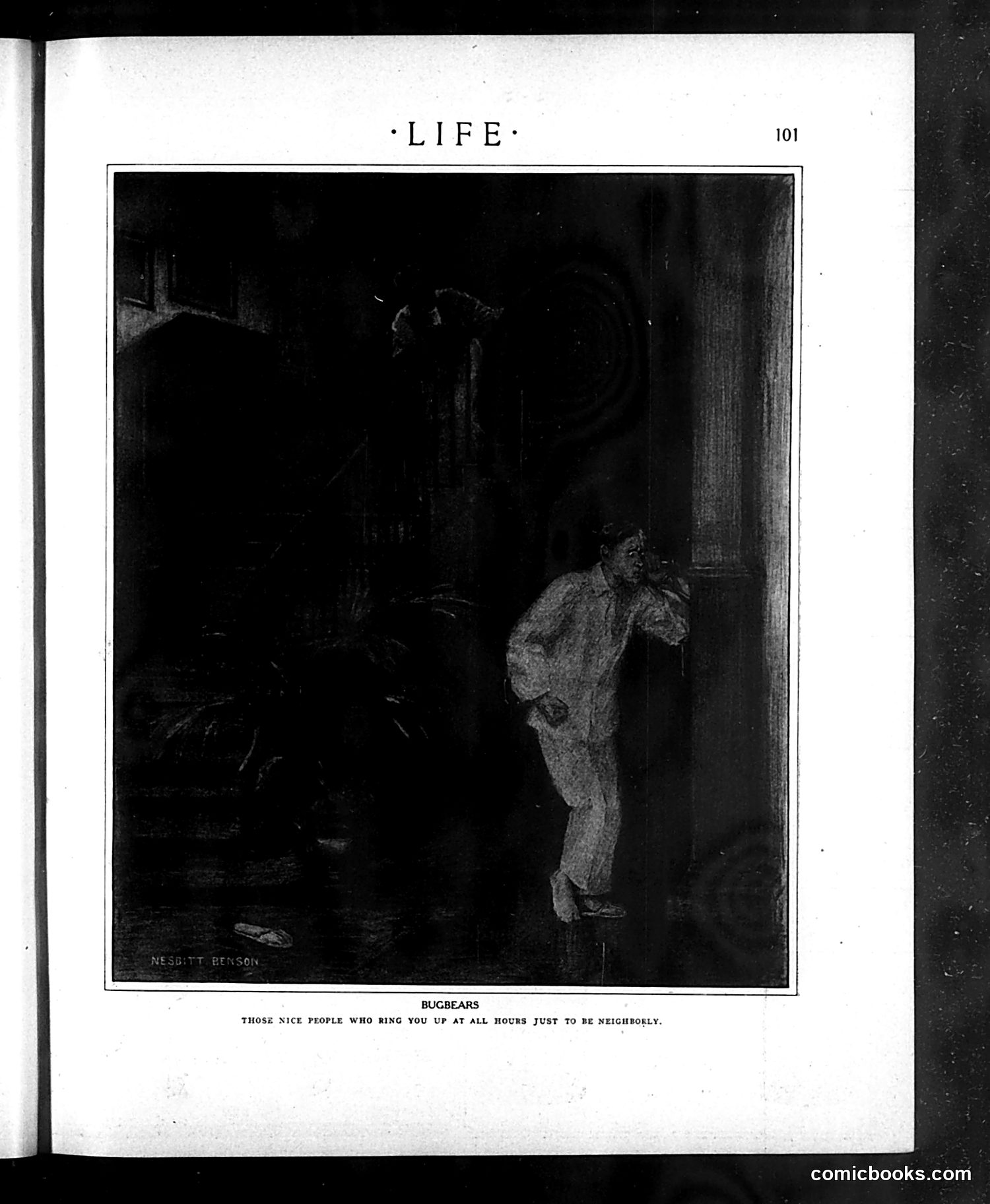
This illustration by Nesbit Benson satirizes intrusive neighbors who make inconsiderate phone calls at inappropriate hours under the guise of friendliness. The cartoon shows a figure in nightclothes disturbed by a ringing telephone in the dark—visually depicting the annoyance of being contacted "at all hours." The title "Bugbears" refers to things that cause worry or annoyance. The satire targets a common social frustration: people who justify their disruptive behavior as mere neighborliness, when in reality they're being thoughtless about the recipient's time and comfort. This reflects early 20th-century irritations with the relatively new technology of the telephone, which could intrude into one's home without warning or consideration for timing.
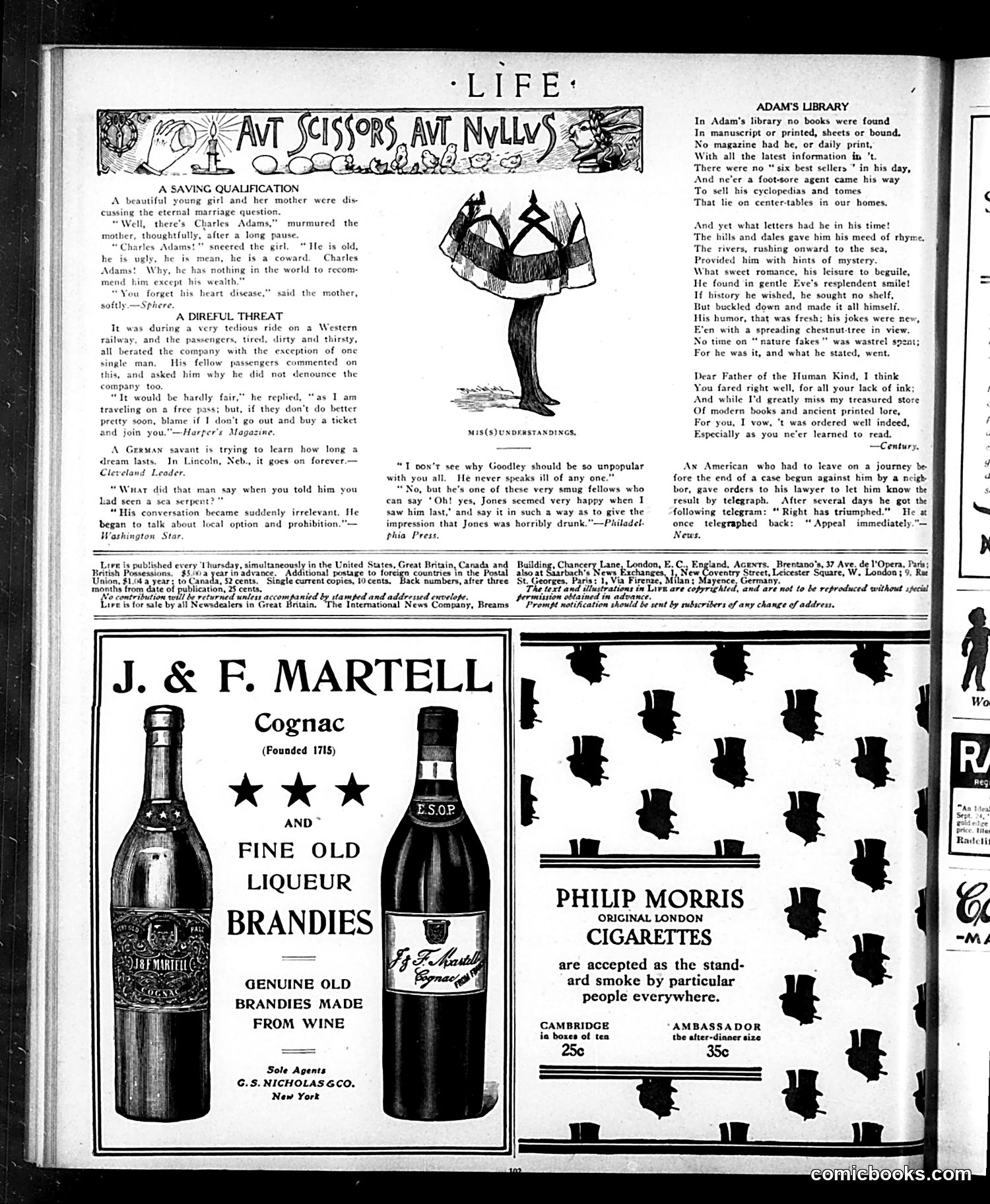
This page from *Life* magazine contains several satirical short pieces typical of the publication's humor: **"Adam's Library"** is a poem celebrating Adam (the biblical first man) for living without books, magazines, or printed media—yet finding knowledge and joy through nature and direct experience. The satire targets modern over-reliance on published information and "six best sellers." **The cartoon "Mis(s)understanding"** depicts a woman holding scissors, illustrating a joke about misinterpretation in conversation—likely about how people miscommunicate or take remarks literally. **Other brief jokes** mock everyday absurdities: a man refusing to complain about poor railway service because he's traveling free; a German scientist studying dream length; and an American who celebrates a legal victory by immediately appealing it (implying distrust of the outcome). The advertisements for J. & F. Martell Cognac and Philip Morris Cigarettes are period-typical luxury goods marketing. The overall tone reflects *Life*'s satirical approach to criticizing modern society's pretensions and follies through light humor rather than sharp political commentary.
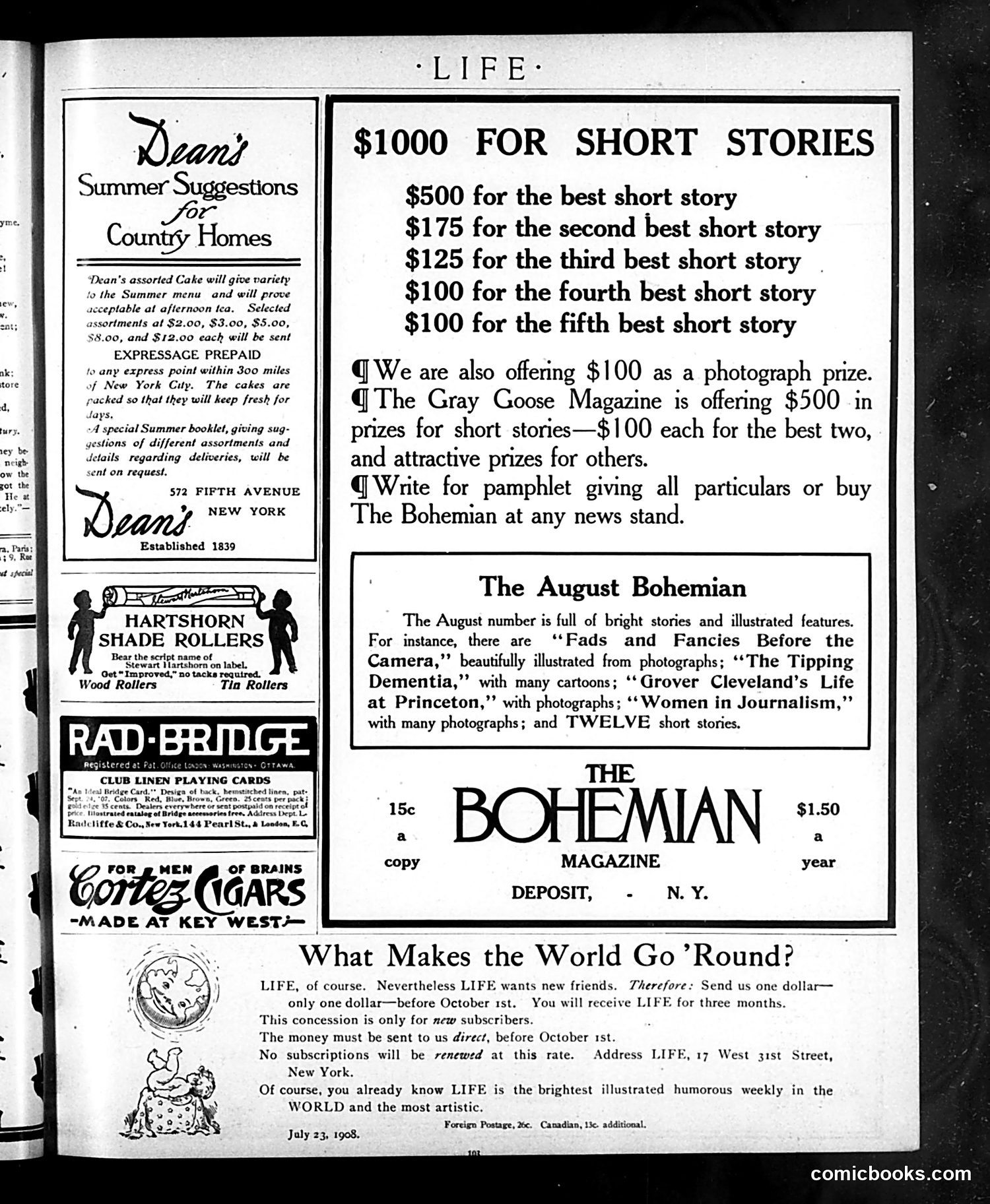
This is primarily an **advertising and promotional page** rather than editorial content with political cartoons. The page announces: **Main Content:** - A $1000 short story contest ($500 for first place) sponsored by *The Bohemian* magazine, with smaller prizes for subsequent entries - Promotional material for the August *Bohemian* issue, featuring articles on photography trends ("Fads and Fancies Before the Camera"), etiquette ("The Tipping Dementia"), and women in journalism - A subscription drive for *Life* magazine itself, offering three months for one dollar to new subscribers only before October 1st **Side Advertisements:** Include Dean's bakery, Hartshorn Shade Rollers, Rad-Bridge playing cards, and Cortez cigars. The page reflects **early 1900s literary culture**—magazines actively competing for readers and writers through contests and subscription drives. The emphasis on photography and women journalists indicates emerging modern interests, though these remain relatively novel topics worthy of special magazine features.
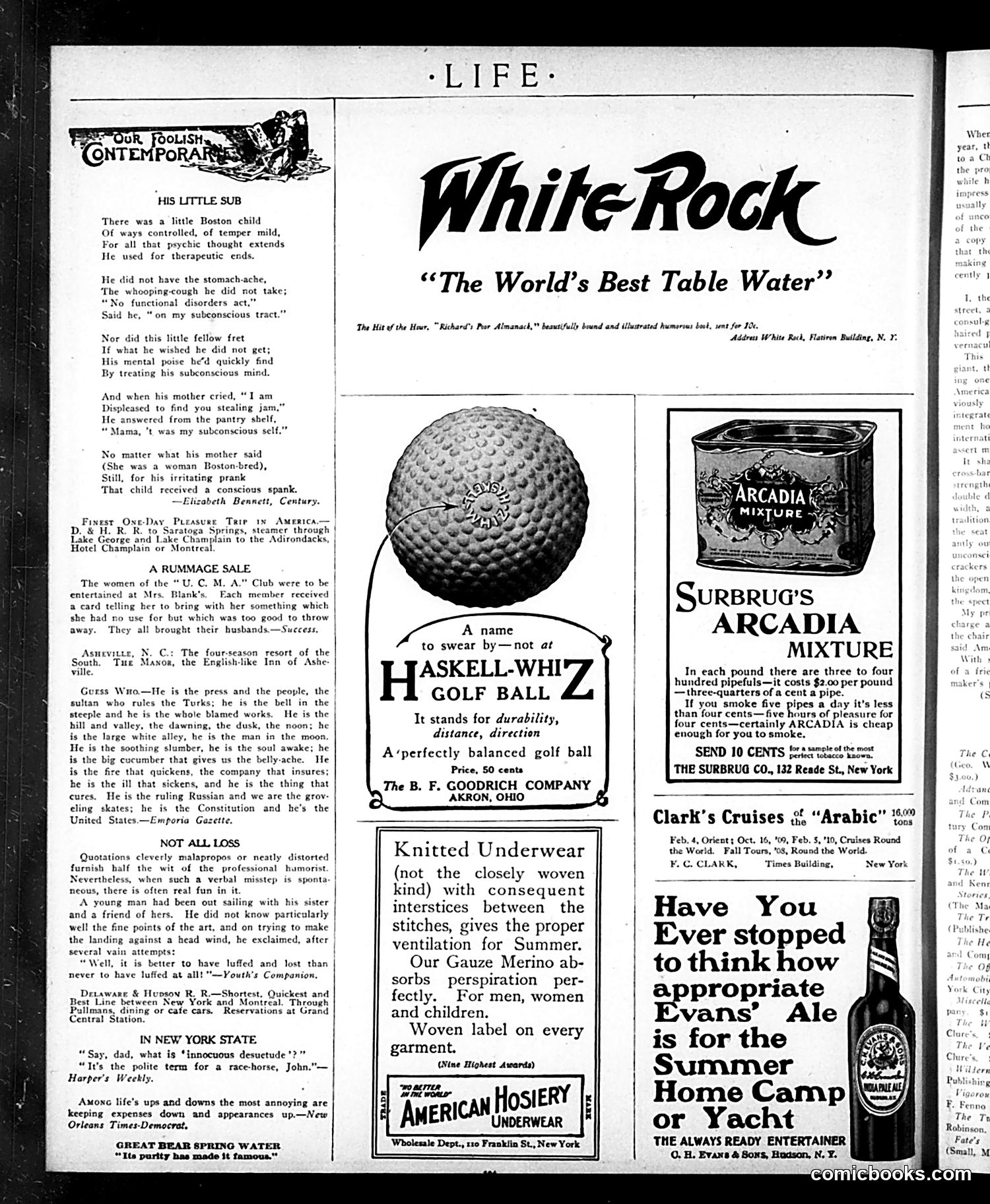
This page is primarily **advertisements and humorous verse** from Life magazine's early 20th century. The main cartoon/poem "His Little Sub" satirizes **Freudian psychology's popularization in Boston society**. A precocious child blames his "subconscious mind" for misbehavior—refusing to acknowledge stomach aches, whooping cough, or theft of jam—claiming these are merely "functional disorders" of his psyche. The joke: his mother remains unimpressed by pseudo-scientific excuses and gives him a "conscious spank" anyway. The satire targets how newly fashionable Freudian concepts were being absurdly misapplied by educated (especially Boston) society to avoid responsibility. The child's pretentious invocation of psychological terminology as an escape from parental discipline exemplifies the era's mockery of armchair psychoanalysis. The remainder comprises **period advertisements** (golf balls, table water, underwear, cruises) and brief humorous anecdotes about sailing mishaps and racing horses—typical Life magazine filler.
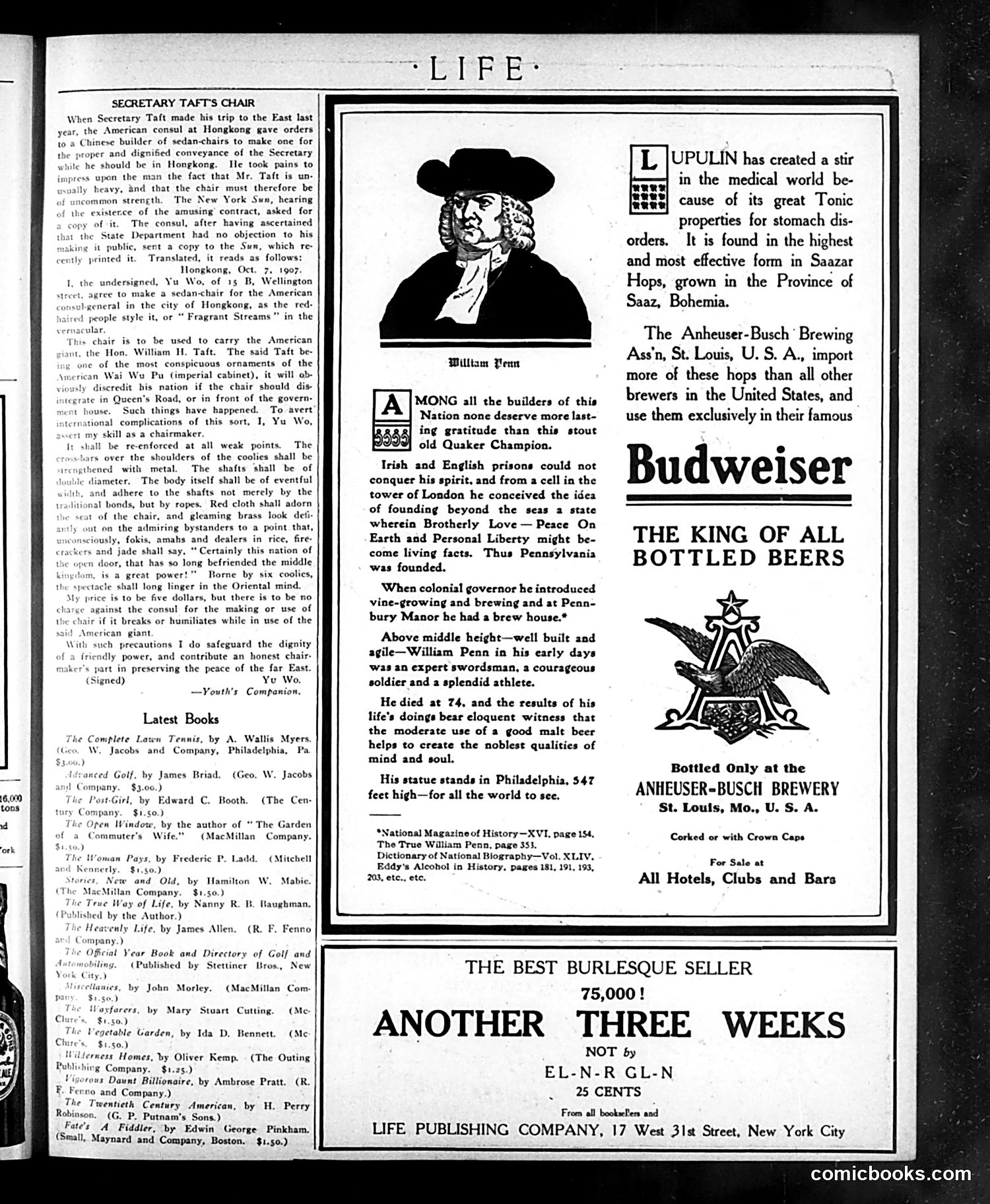
This page satirizes Secretary of War William Howard Taft's 1907 trip to East Asia. The humor centers on a Chinese sedan-chair builder's formal contract to construct an exceptionally sturdy chair for Taft, who was notably overweight. The satire works on multiple levels: it mocks Taft's weight (the builder must reinforce the chair with metal and ropes), American diplomatic sensitivities (the builder worries the chair breaking would embarrass the U.S. in front of the Chinese), and cross-cultural misunderstandings. The formal, flowery language of the translated contract—written as if to prevent an international incident—amplifies the absurdity. The piece gently ridicules American self-importance in foreign relations while poking fun at Taft himself. The source is identified as *Youth's Companion*, suggesting this was considered appropriate family humor in 1907.
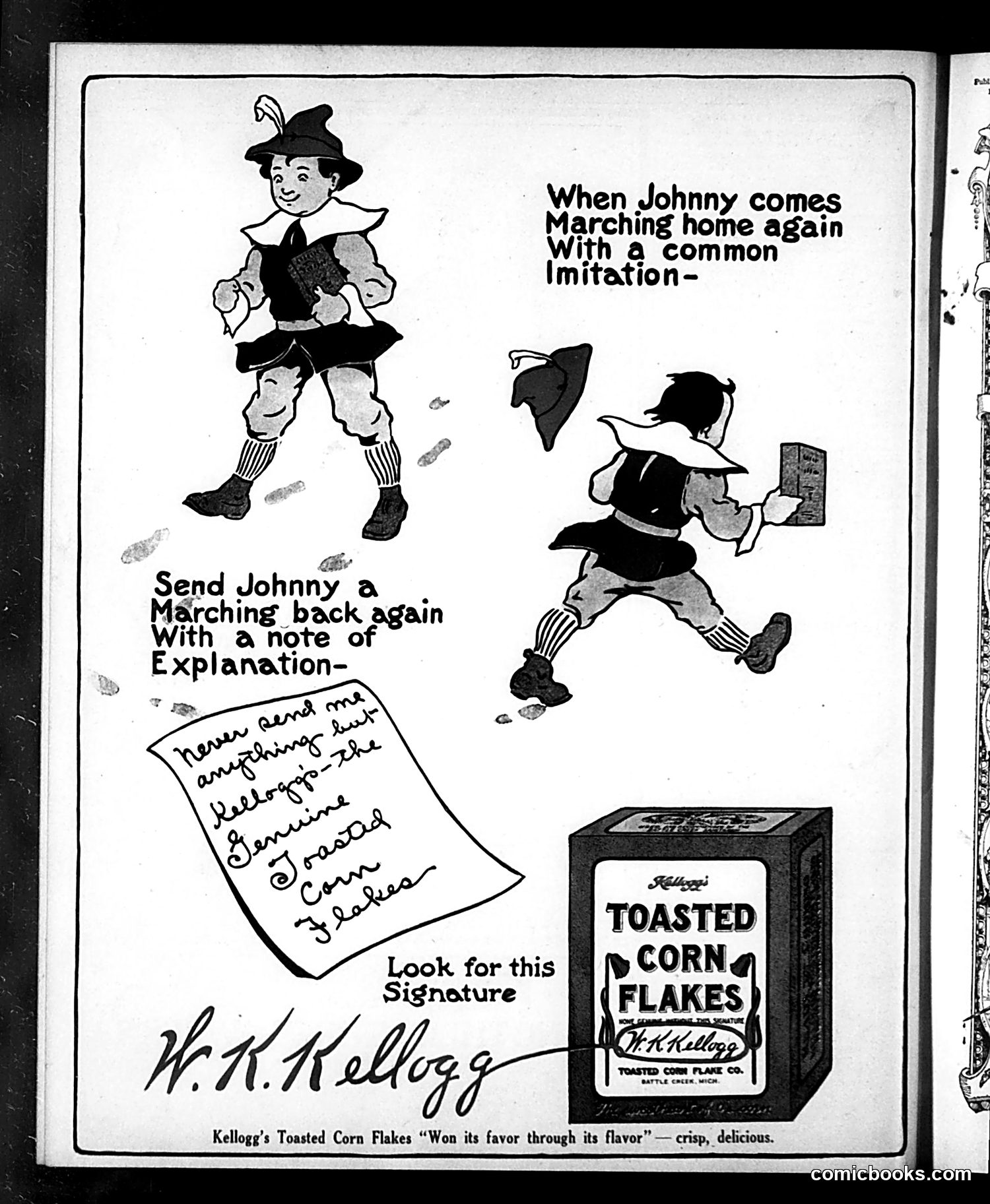
This is a Kellogg's Toasted Corn Flakes advertisement, not political satire. It plays on the popular WWI-era song "When Johnny Comes Marching Home Again." The joke: if a soldier (Johnny) comes home with a *counterfeit* or imitation box of corn flakes, parents should send him back with an explanatory note signed by W.K. Kellogg himself, vouching for the authentic product. The cartoon depicts this absurd scenario with a soldier being sent back by an irate parent (shown on the right). The ad emphasizes brand authenticity and warns against inferior knockoffs—a common concern when popular products spawned cheap imitations. It's a humorous way to encourage consumers to buy only genuine Kellogg's branded cereal.