
A complete issue · 16 pages · 1895
Life — September 5, 1895
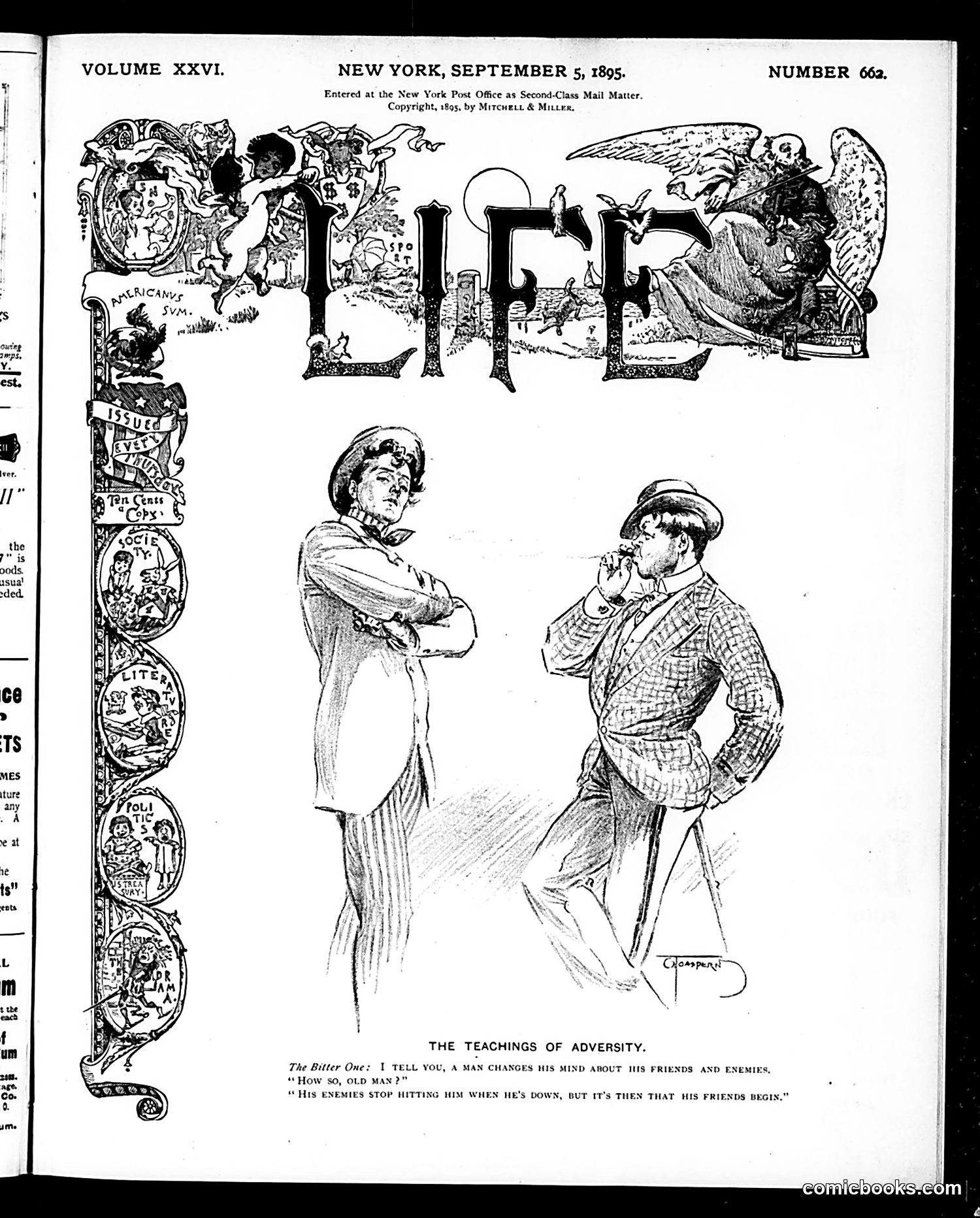
This satirical illustration depicts two men in discussion, captioned "The Teachings of Adversity." The dialogue contrasts how hardship affects different relationships: **The Bitter One** states: "I tell you, a man changes his mind about his friends and enemies. How so, old man?" **The reply**: "His enemies stop hitting him when he's down, but it's then that his friends begins." The cartoon satirizes the harsh reality that fair-weather friends often abandon or exploit someone in misfortune, while enemies may show unexpected mercy. The two figures appear to be working-class men, suggesting this was commentary on social and economic vulnerability in the 1890s—a period of financial instability in America. The cynical observation about human nature during adversity is the cartoon's central joke.
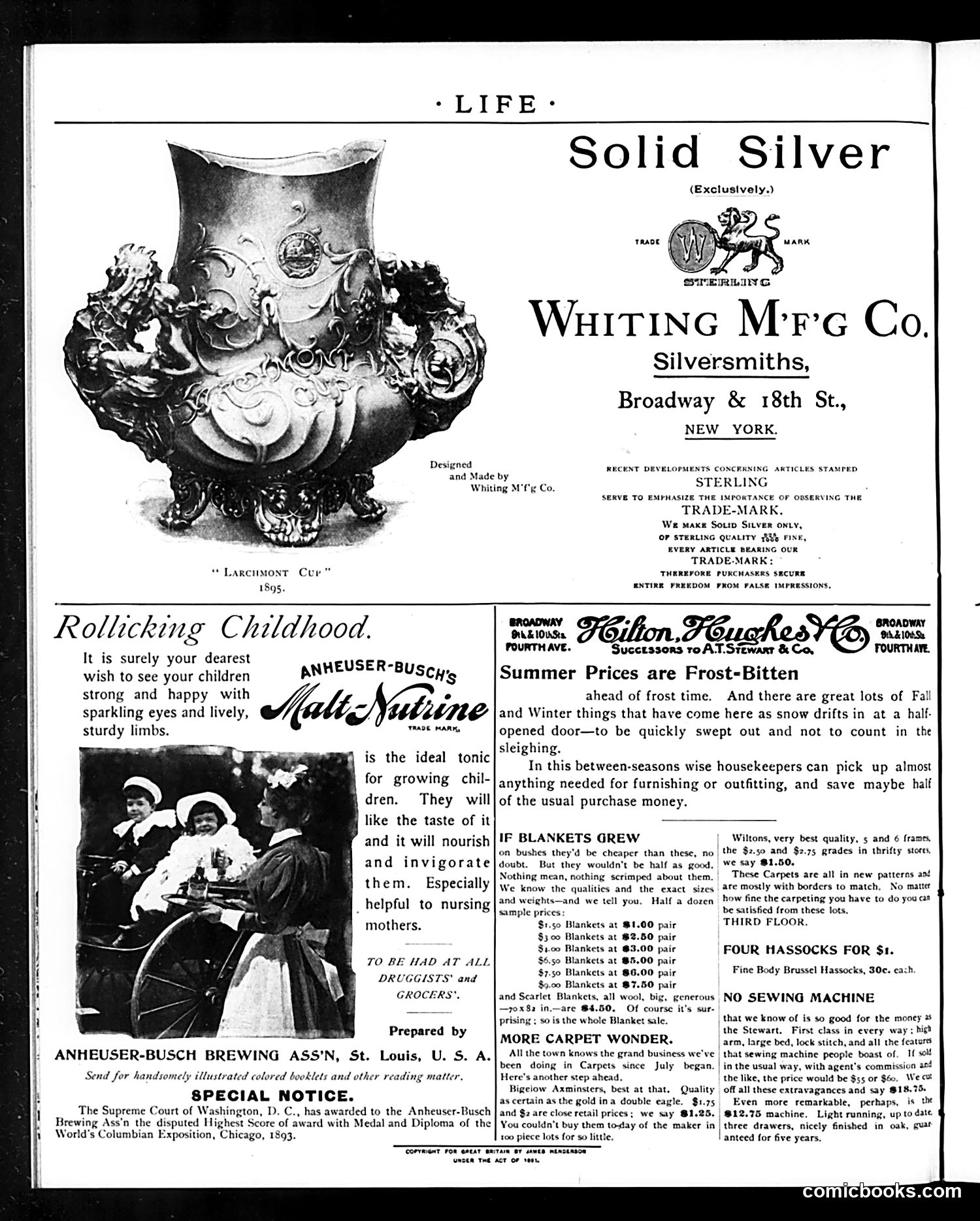
This page is **primarily advertising**, not satirical content. It contains four commercial advertisements: 1. **Whiting Manufacturing Co.** - A silversmith advertising solid silver tableware, featuring an ornate "Larchmont Cup" from 1895. 2. **Anheuser-Busch's Malt Nutrine** - A tonic marketed to parents wanting healthy, strong children. The ad includes a photograph of children and nursing mothers, emphasizing nutritional benefits. 3. **Hilton, Hughes & Co.** - A department store advertising seasonal clearance sales on blankets and carpets at reduced prices. 4. **Various small notices** about sewing machines and household goods. There is no political cartoon or satirical content visible. This represents typical **fin-de-siècle American advertising** in a humor magazine, targeting middle-class consumers with luxury goods and health products.
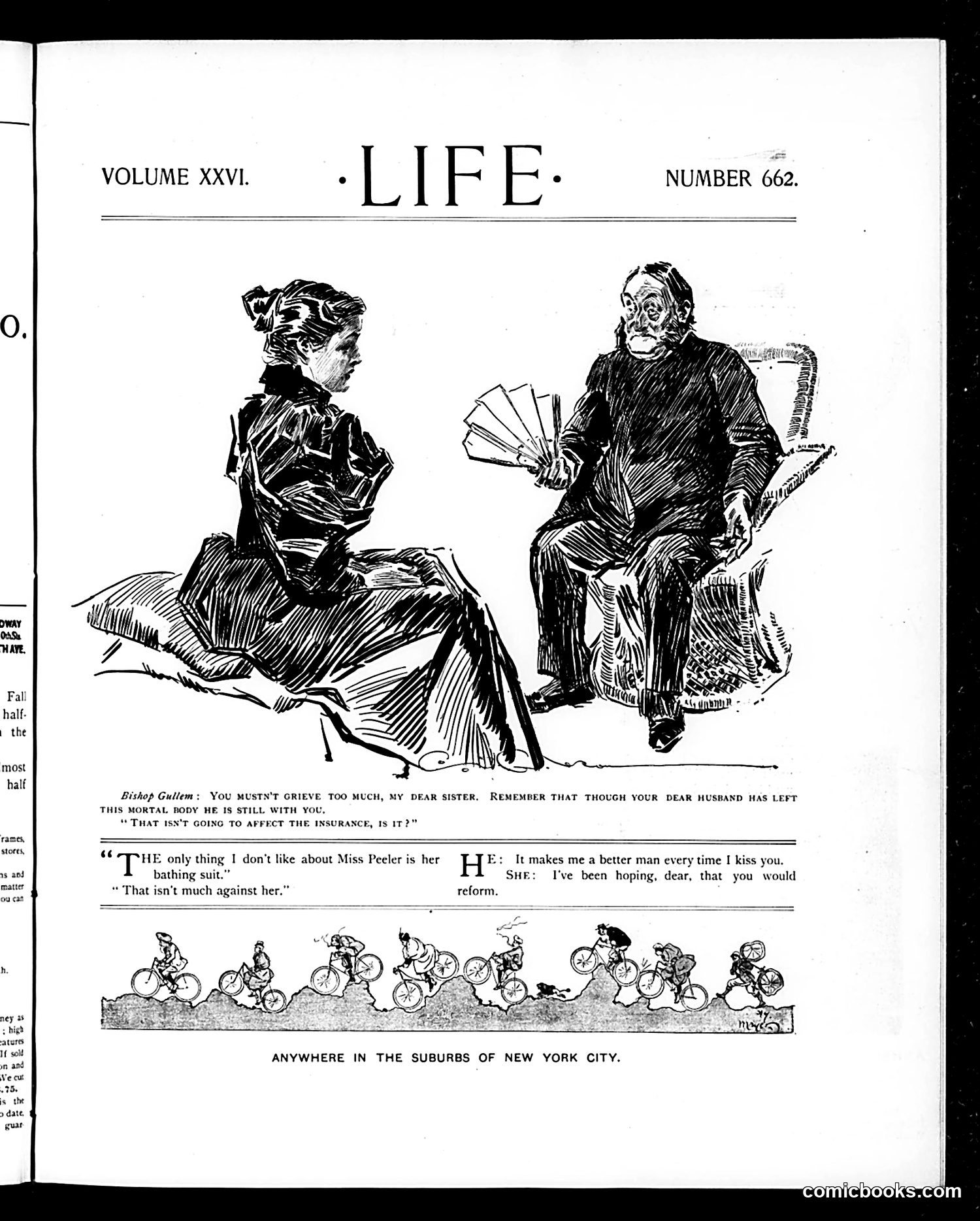
This page contains two distinct satirical pieces from Life magazine (Volume XXVI, Number 662). **Top cartoon:** Shows Bishop Gullem consoling a grieving widow about her deceased husband, with crude humor suggesting the husband's "mortal body" remains present—a dark joke about infidelity or the husband's lingering influence despite death. The cartoon mocks both the bishop's platitudes and marital discord. **Middle dialogue:** A brief comic exchange mocking reformed behavior, where a man claims kissing his wife makes him "a better man," and she hopes he'll reform—suggesting cynicism about male reformation and domestic improvement. **Bottom illustration:** Depicts cyclists in suburban New York, likely satirizing the bicycle craze and leisure activities of the era among middle-class Americans. The overall tone targets domestic relations and social pretensions.
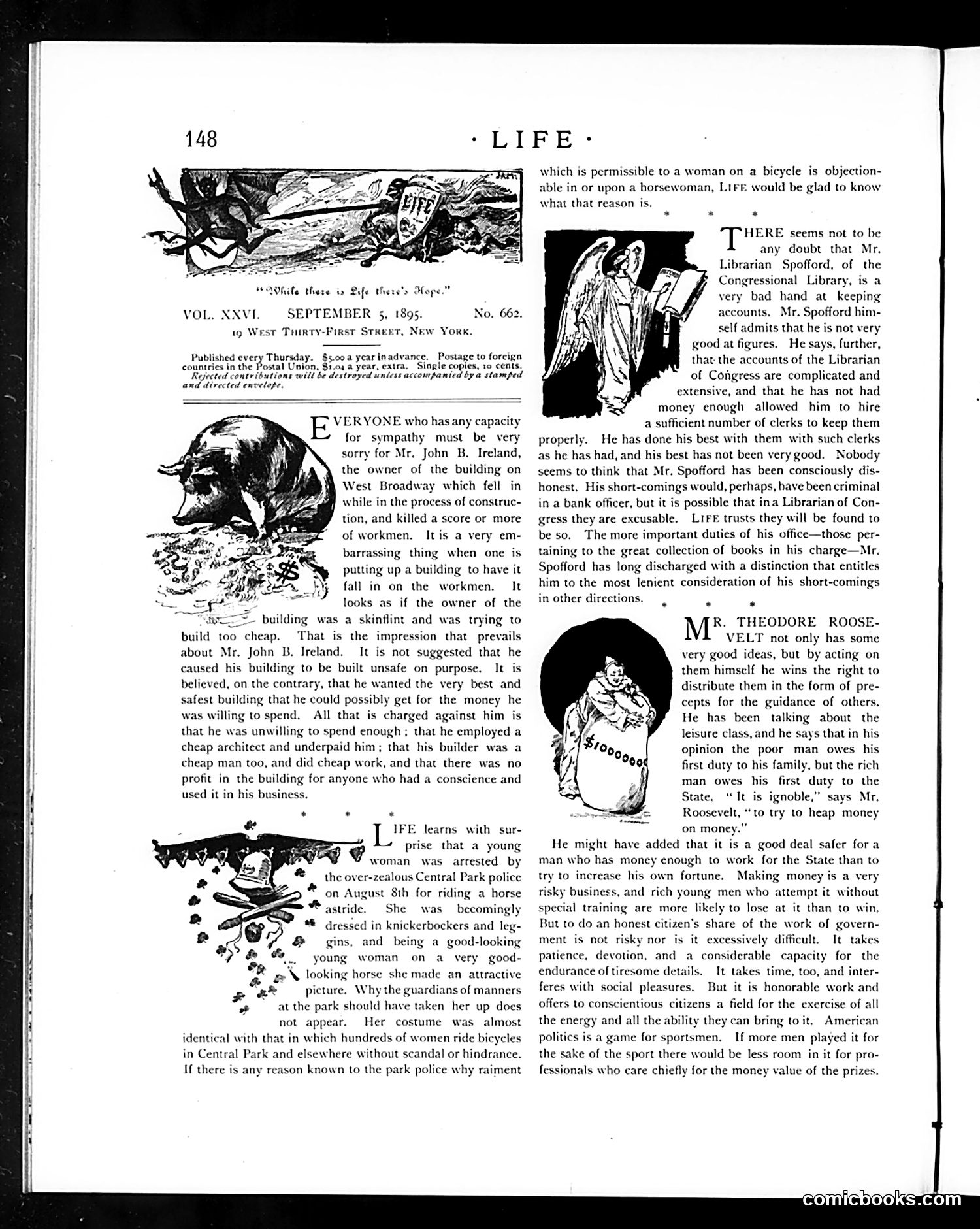
This page contains three separate satirical items: 1. **Building Collapse Commentary**: The text criticizes John B. Ireland, owner of a West Broadway building that collapsed during construction, killing workers. The satire suggests Ireland prioritized cheap construction costs over worker safety—a common industrial-era critique. 2. **Woman Arrested for Horseback Riding**: The cartoon depicts a young woman arrested by Central Park police for riding a horse in a "good-looking" outfit. The satire mocks overly strict park regulations and suggests gender-based policing of women's leisure activities and clothing. 3. **Theodore Roosevelt Commentary**: Text praises Roosevelt's views on wealthy citizens' obligations to public service rather than merely accumulating money—reflecting Progressive Era debates about wealth and civic duty. All three items critique contemporary social/industrial problems through humor.
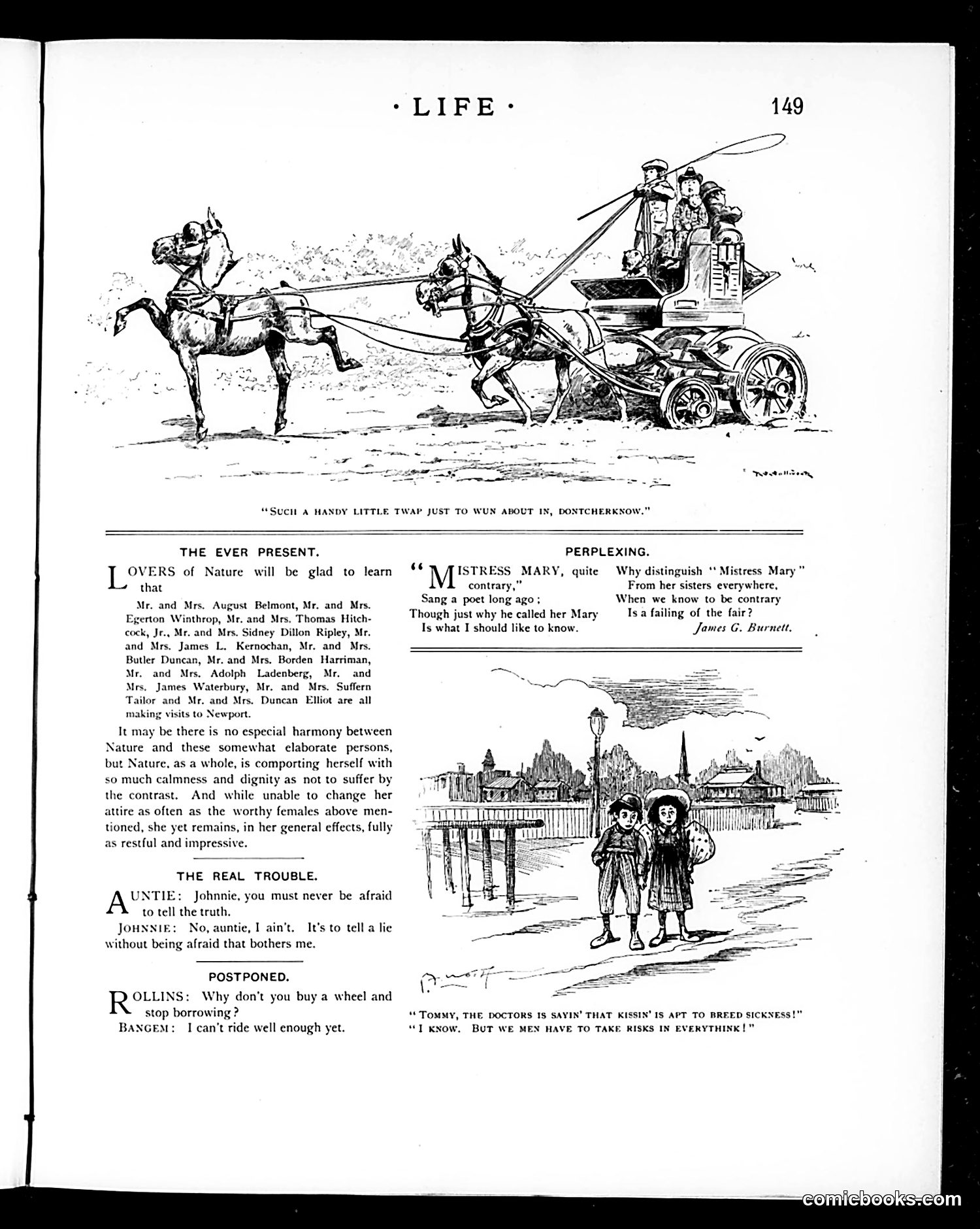
The top cartoon depicts a humorous scene of someone attempting to transport multiple passengers in an overcrowded vehicle pulled by horses, with the caption referencing "Dostcherkesow"—likely a Russian location. The joke appears to mock impractical or dangerous transportation arrangements. Below are several brief comic vignettes: "The Ever Present" lists society visitors; "The Real Trouble" jokes about a child's honesty regarding telling lies; and "Postponed" humorously addresses someone's inability to ride a bicycle well enough to buy one. The lower illustration shows two children by a waterfront with a caption about doctors' warnings regarding kissing causing sickness, with ironic commentary about taking risks. The page is primarily satirical domestic humor reflecting early 20th-century American middle-class concerns rather than political commentary.
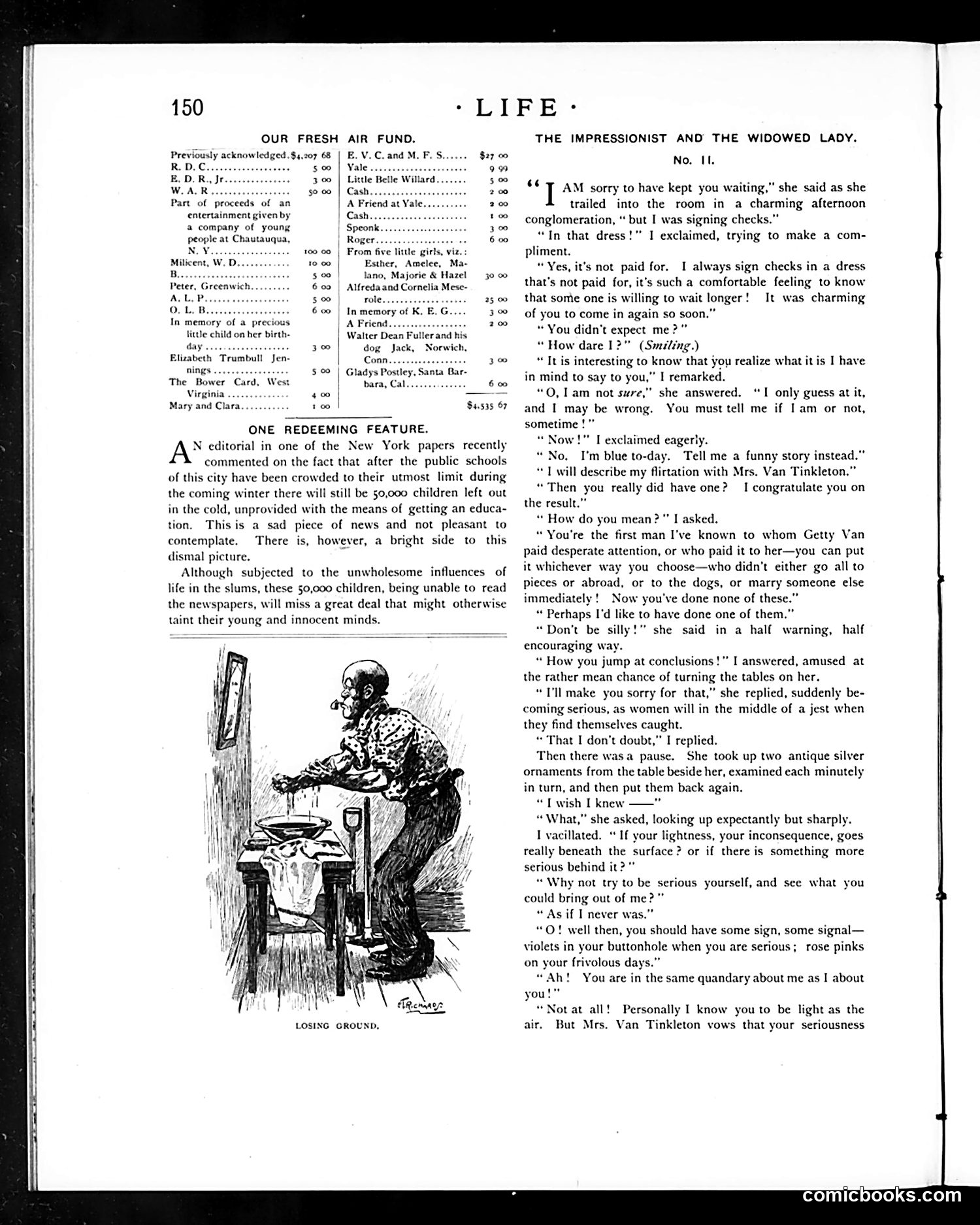
The main illustration titled "LOSING GROUND" depicts a man sitting at a table with a bowl, appearing thin and distressed. This cartoon comments on poverty and hunger, likely referencing urban hardship during an economic downturn (the magazine published during America's economic struggles). The right column contains "THE IMPRESSIONIST AND THE WIDOWED LADY," a short story featuring witty dialogue between two characters—seemingly a flirtatious encounter where the man uses charm and flattery on a woman, who playfully challenges his sincerity. The left column lists donors to "OUR FRESH AIR FUND," a charitable initiative providing relief to poor urban children during harsh winters. The modest donation amounts ($1-$23) suggest middle-class contributors supporting social welfare—a common progressive concern of this era.
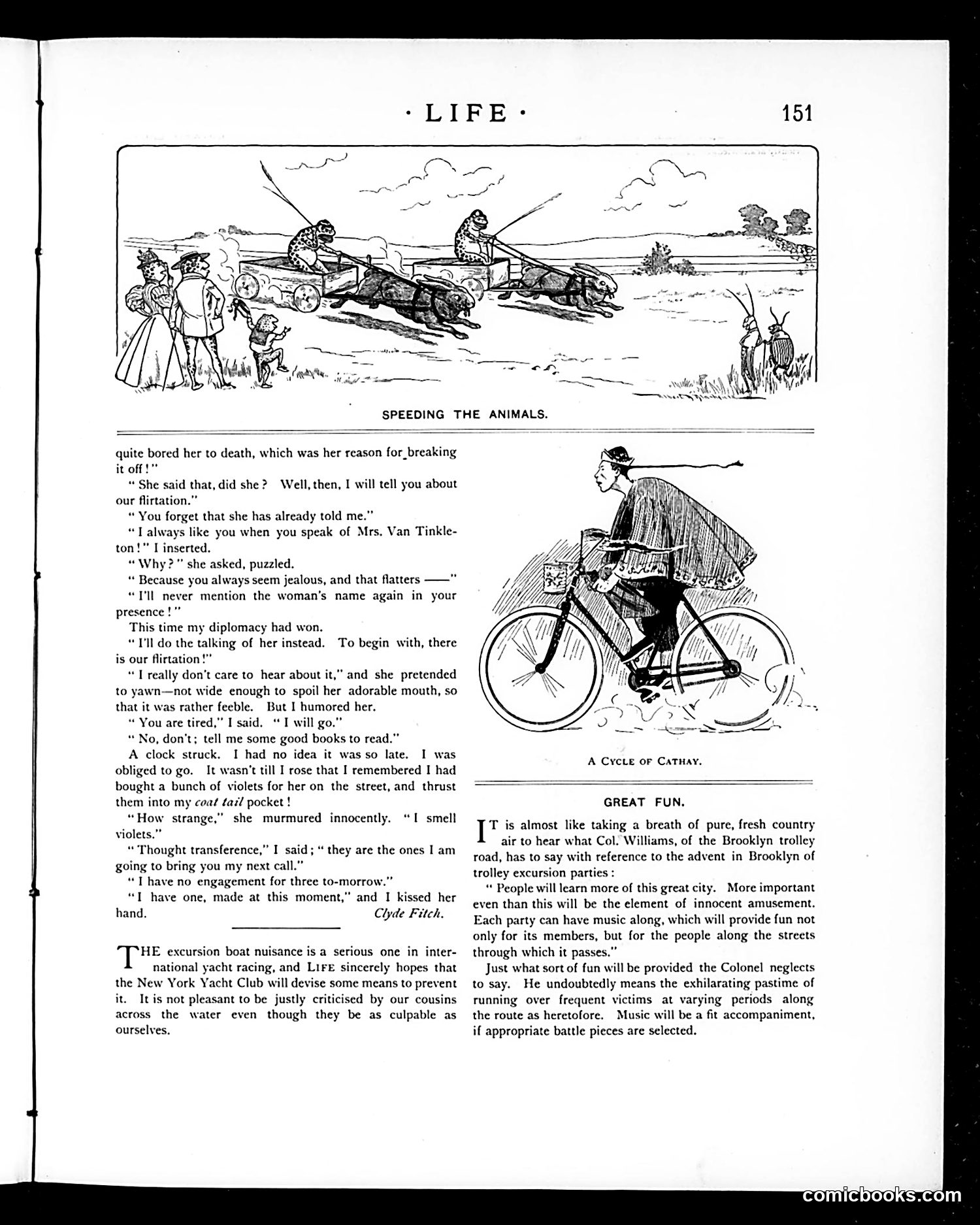
This page contains satirical narrative text about courtship and flirtation, accompanied by two unrelated illustrations. **Top illustration ("Speeding the Animals"):** A humorous scene depicting what appears to be a racing or sporting event with horses and drivers, watched by spectators including women and children. **Bottom illustration ("A Cycle of Cathay"):** A figure riding a bicycle, captioned to suggest ironic comparison to Asian travel or exoticism. **Main text:** A dialogue-driven story mocking social conventions around romantic relationships and jealousy, particularly regarding a woman named Mrs. Van Tinkleton. The narrator uses flattery and flirtation strategically while deflecting his companion's curiosity about rivals. The satire targets Victorian-era courtship rituals, male manipulation tactics, and the tedious social gossip surrounding romantic entanglements among the leisure classes.
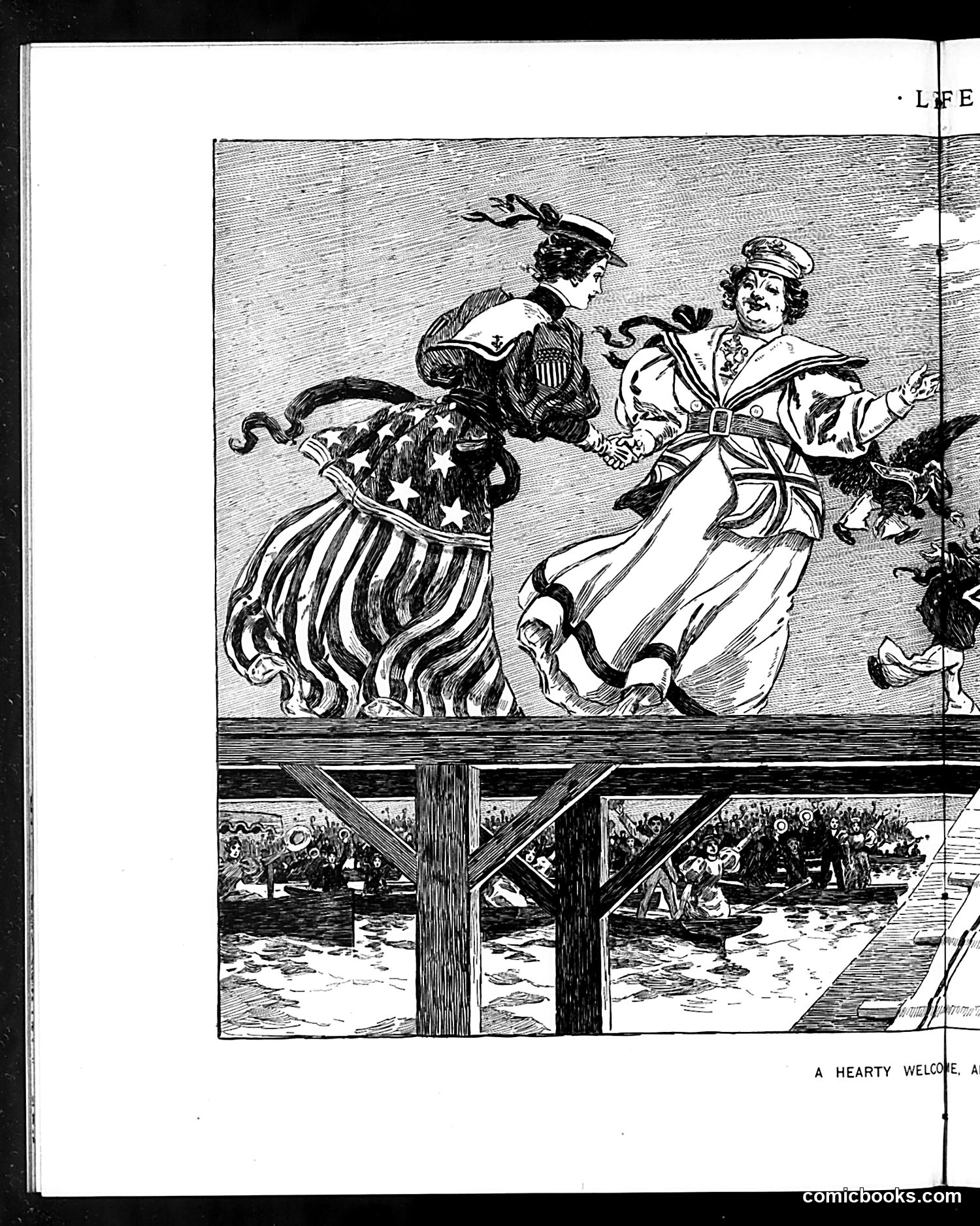
This cartoon depicts two female figures in patriotic dress on a platform before a crowd. The figure on the left wears a dress decorated with stars and stripes (representing America), while the figure on the right wears a similar patriotic gown with a cross design (likely representing a foreign nation, possibly Belgium or another Allied power during WWI era). The title "A Hearty Welcome" suggests this is a welcoming or greeting scene. The composition appears to depict diplomatic or international relations, with the two women personifying their respective nations in a gesture of friendship or alliance. The gathered crowd below suggests public sentiment toward this international relationship, though without additional context or visible date, the specific historical moment remains unclear.
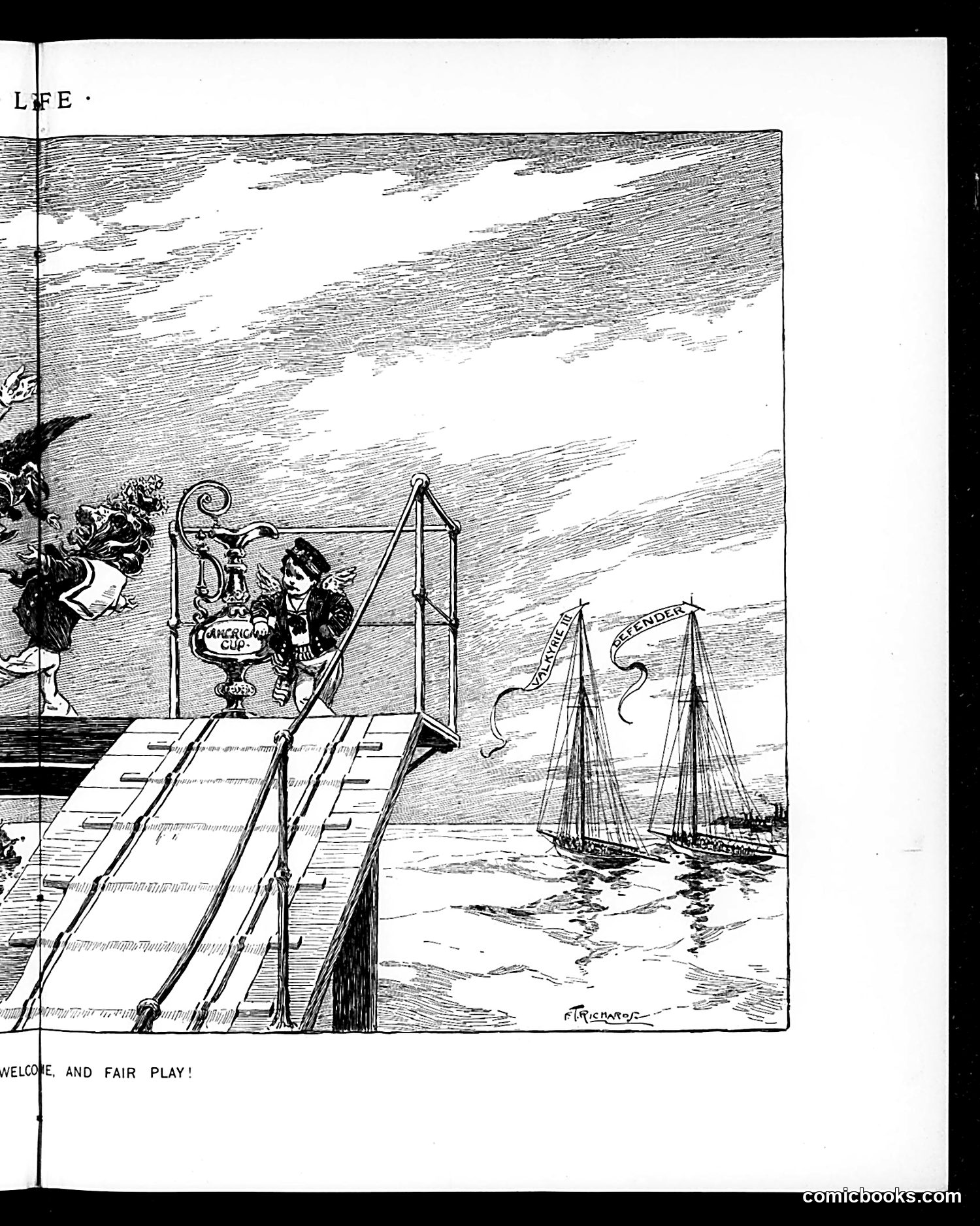
This appears to be a political cartoon from *Life* magazine depicting the America's Cup yacht race. On a dock, two figures examine the trophy (marked "America's Cup"), while two sailing vessels labeled "Defender" approach on the water. The cartoon likely satirizes American confidence in yacht racing dominance. The figures on the dock appear to be officials or representatives welcoming competitors, with text referencing "Welcome and Fair Play!" The "Defender" vessels suggest this comments on American yacht racing supremacy—the "defender" in America's Cup races was traditionally the American boat defending its title. The cartoon probably mocks either American overconfidence or comments on international sporting competition and sportsmanship during an era when such races carried nationalist significance. Without a visible date or clearer identification of the figures, precise historical context remains unclear.
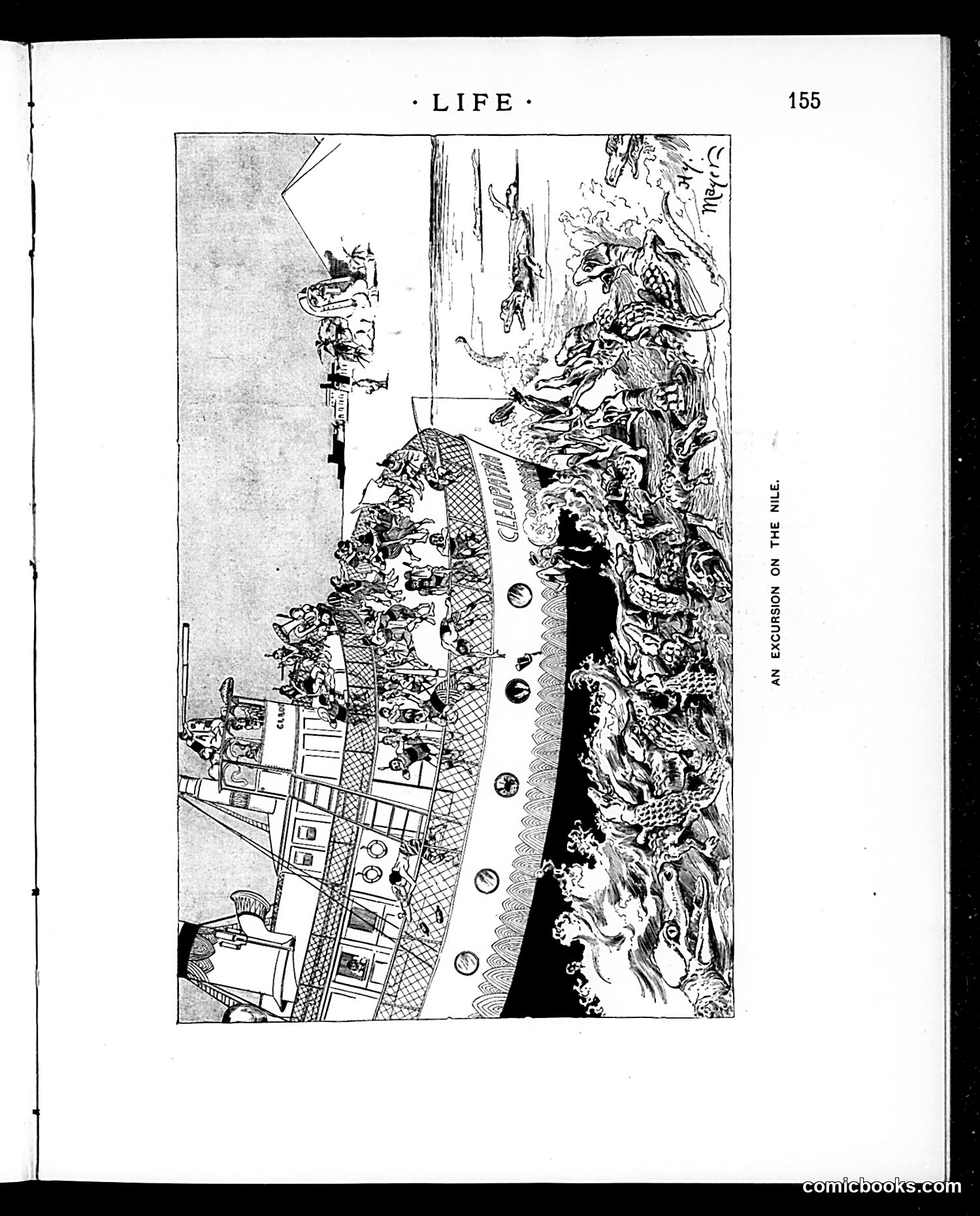
This appears to be a satirical illustration depicting a crowded excursion boat on Egypt's Nile River. The image shows wealthy tourists packed onto a steamboat's deck, with elaborate period dress and luggage visible. The right side depicts the lush, exotic Nile riverbank with native flora and fauna. The satire likely mocks the Victorian-era tourism industry—specifically how Western tourists crowded popular exotic destinations, treating them as spectacles. The contrast between the orderly, cluttered boat interior and the wild, natural landscape suggests commentary on how tourism commodified and controlled encounters with foreign lands and cultures during the colonial period. The title indicates this is a humorous take on leisured travel aspirations.
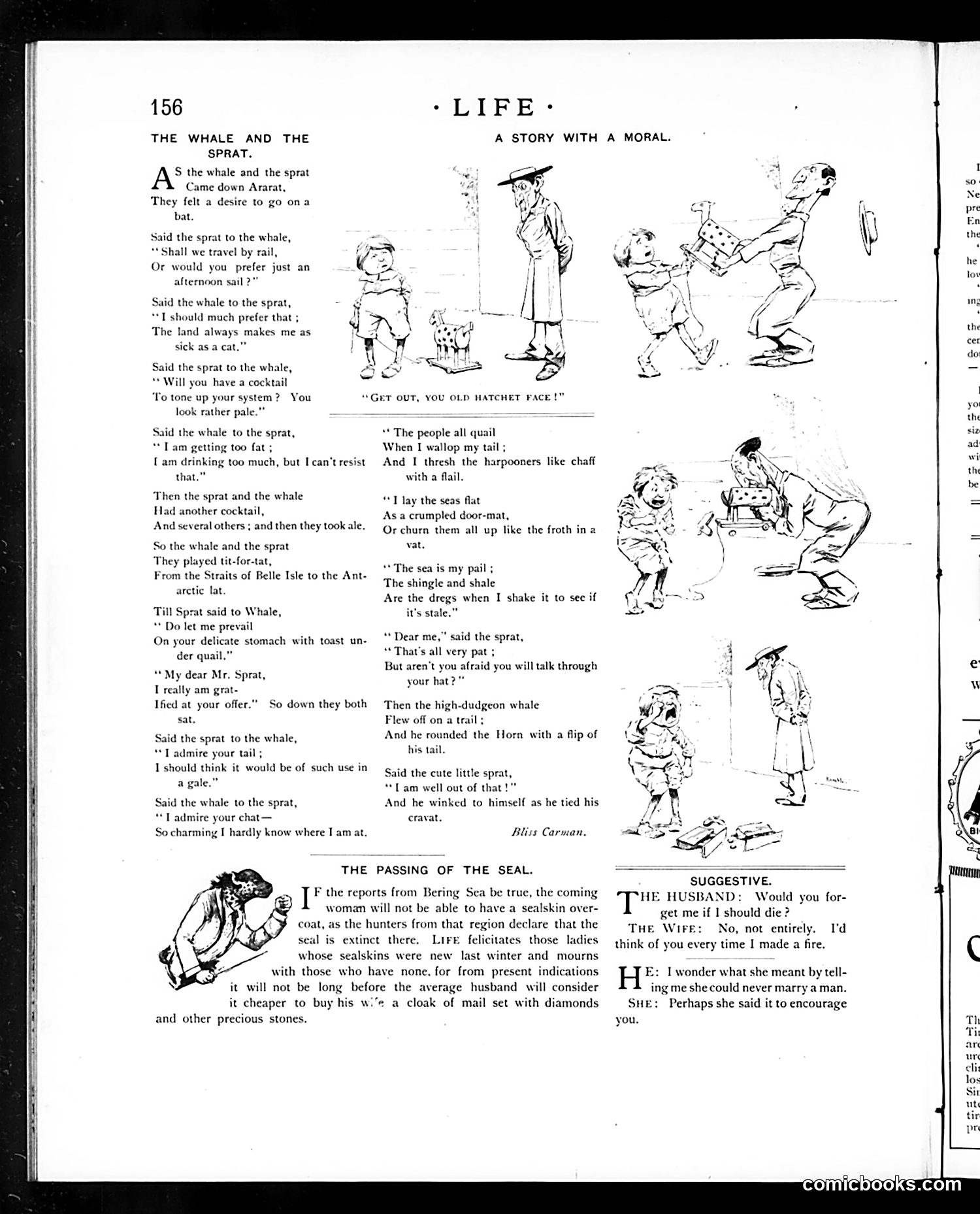
This is a humorous narrative poem by Bliss Carman depicting two animals on a drinking binge. A large whale and tiny sprat travel together, consuming cocktails and ale across vast distances. The whale boasts excessively about his power—flattening seas, thrashing harpooners—while growing increasingly intoxicated and verbose. The sprat, recognizing the whale's drunken bragging ("talk through your hat"), wisely exits the situation. The moral appears satirical: the smaller, smarter creature escapes while the powerful, self-important one destroys himself through excess. The piece likely mocks wealthy or powerful men who drink heavily, boast, and lose perspective, while suggesting that intelligence and restraint (represented by the small sprat) prove more valuable than size and strength. The bottom section, "The Passing of the Seal," jokingly predicts sealskin coats will become extinct, suggesting husbands will soon buy wives cheaper mail armor instead—satirizing both environmental depletion and marriage economics of the era.
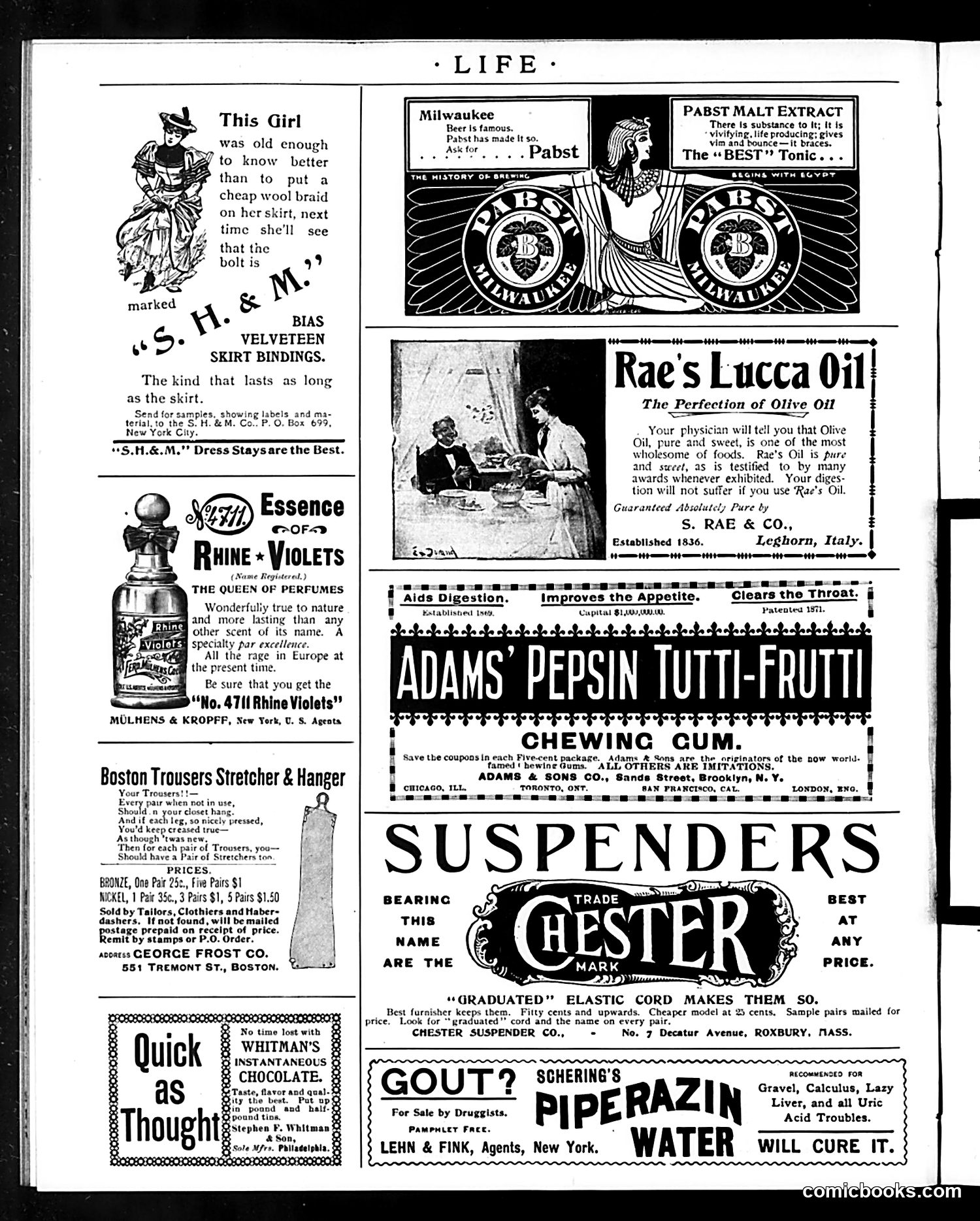
This is primarily an **advertising page**, not political satire. It contains early 1900s product advertisements with one humorous vignette at top-left. The small cartoon shows a girl being criticized for using cheap wool braid on her skirt hem—the joke being she's old enough to know better. It's an advertisement for "S.H.&M." bias velveteen skirt bindings, implying quality materials last longer. The remaining content advertises various patent medicines and consumer goods typical of the era: dress stays, perfume, trouser hangers, malt extract, olive oil, chewing gum, suspenders, and "Piperazin Water" for gout. These ads reflect early 20th-century consumer culture and the prevalence of unregulated medicinal tonics (many containing alcohol or dubious ingredients). The page demonstrates how Life magazine subsidized satirical content through advertising revenue from manufacturers seeking middle-class customers.
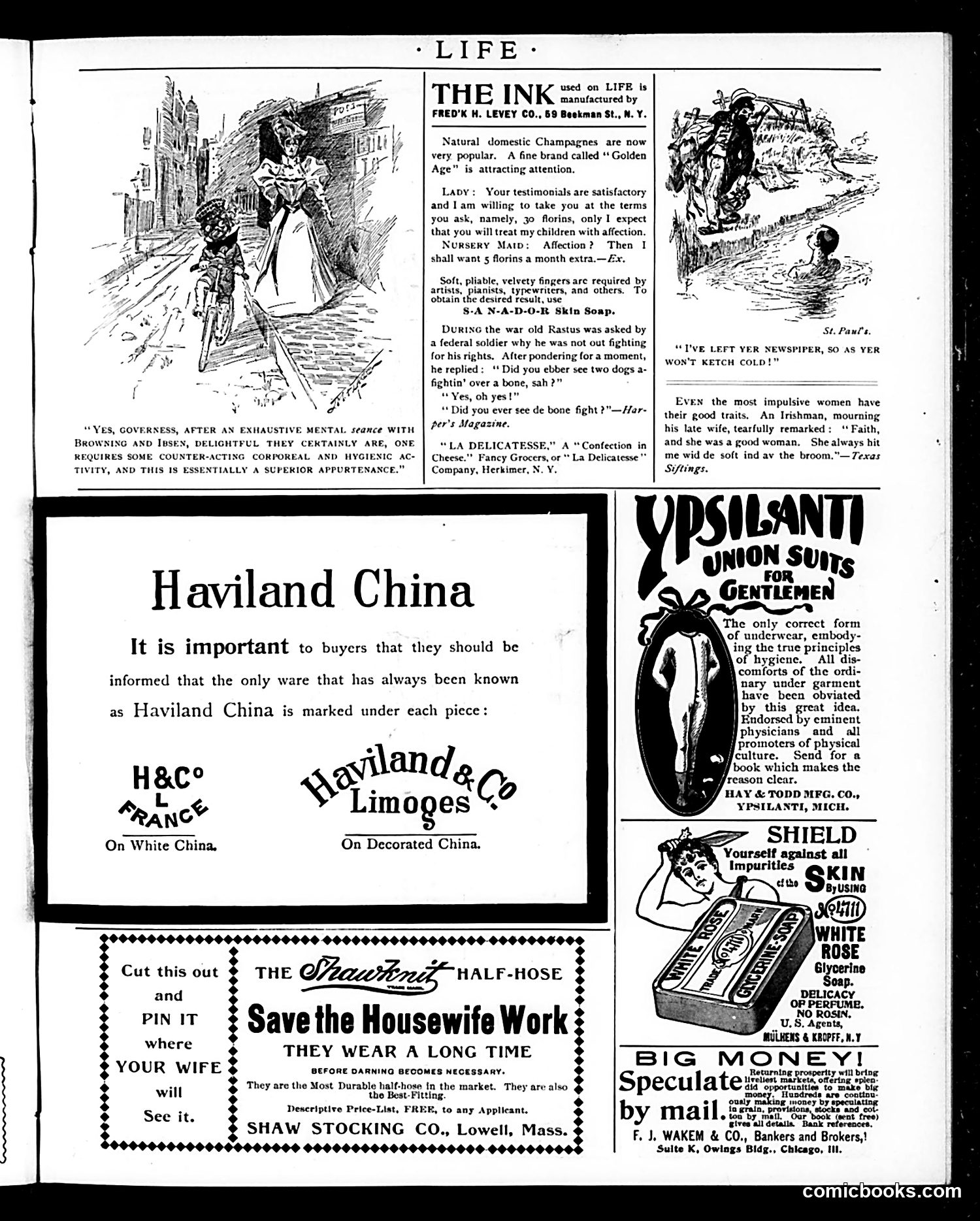
This is primarily an **advertising and humor page** from Life magazine, circa early 1900s. The page contains several unrelated short jokes and product advertisements rather than a coherent political cartoon. The humor pieces include: - A joke about a nursery maid negotiating wages, demanding extra payment for showing affection to children - A dialect joke featuring "old Rastus," using racist stereotypes common to the era, about a freed slave's philosophy on fighting - An Irish joke about a widow praising her deceased wife's gentleness The advertisements promote everyday products: china, half-hose stockings, skin soap, and financial services. **The satire here is social rather than political**—mocking domestic servants, presenting racist caricatures as humor (reflecting deeply problematic period attitudes), and poking fun at Irish stereotypes. The page reflects Life's early function as a humor magazine mixing jokes with advertising, before it evolved into serious journalism.
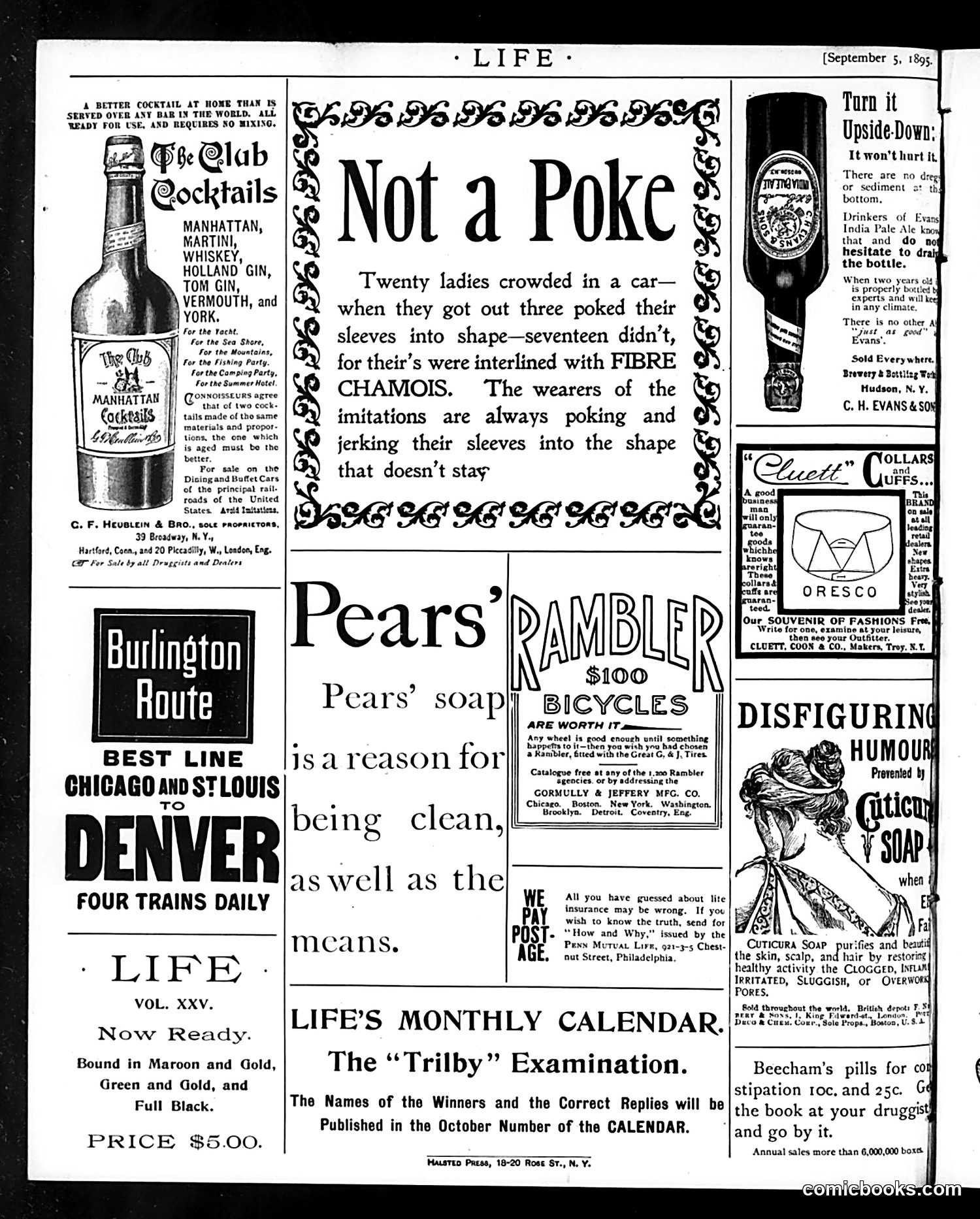
The main cartoon mocks women's fashion trends of the 1890s, specifically the elaborate leg-of-mutton sleeves that were fashionable at the time. The joke: twenty ladies exit a carriage; only three have sleeves that maintain their proper shape, while seventeen must constantly poke and jerk their sleeves back into form. The satirical point is that these women are wearing cheap imitation sleeves interlined with "fibre chamois" (a substitute material) instead of the genuine article. The genuine versions, apparently made with better materials, hold their shape naturally. The wearer of knockoffs must endlessly fuss with her appearance—a humiliating, futile task. The satire targets both fashion excess (impractical sleeves requiring constant adjustment) and consumer fraud (selling inferior imitations as equivalent to quality goods). It's gentle mockery of vanity and the fashion industry's exploitation of women seeking status through clothing.