
A complete issue · 16 pages · 1890
Life — June 5, 1890
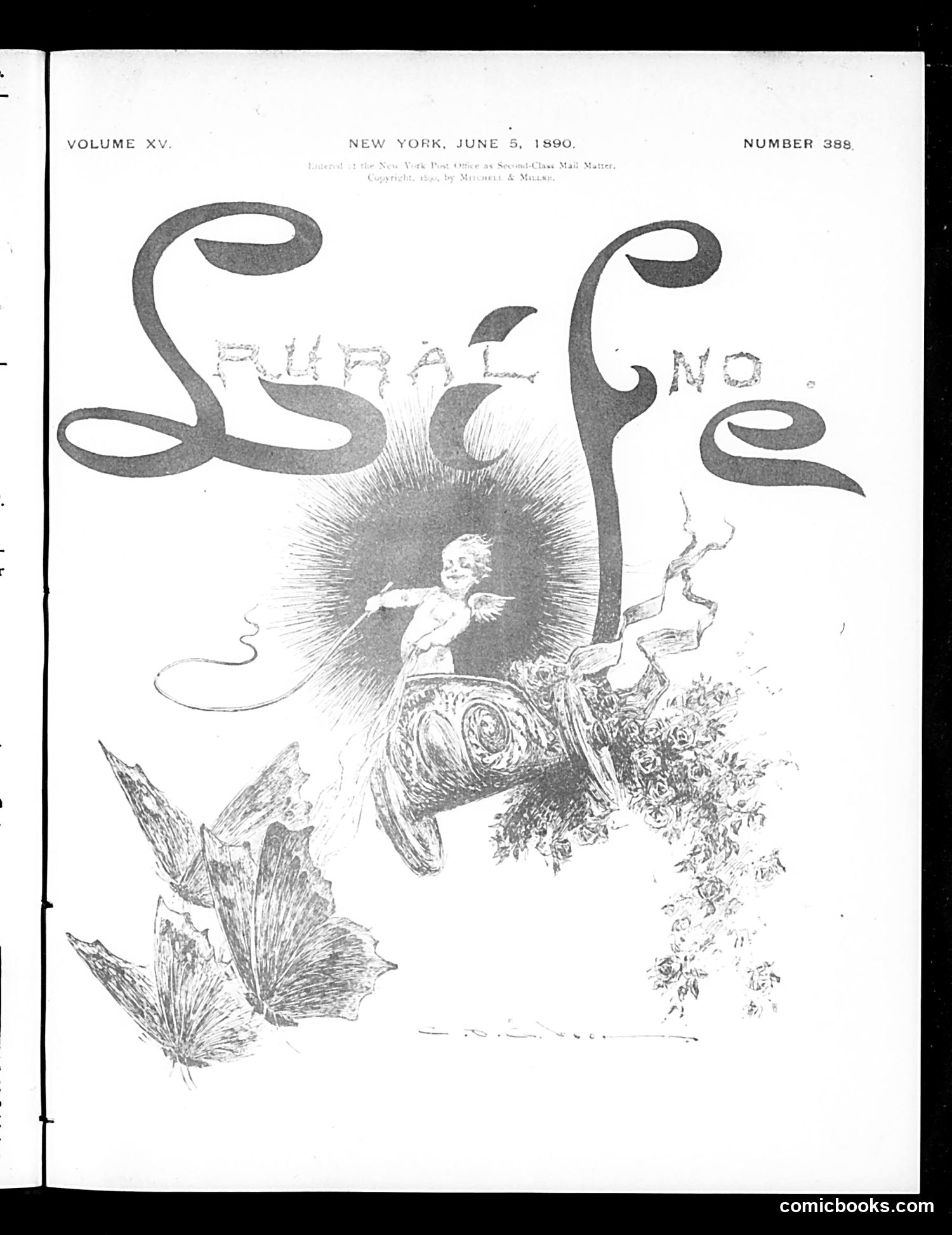
This appears to be a cover design for *Life* magazine's June 5, 1890 issue. The illustration shows a cherub or cupid figure surrounded by decorative floral elements and what appears to be butterflies or moths. Large ornamental "S" letters frame the composition, likely spelling out a word or phrase (possibly "Spring" or similar). The artwork is rendered in detailed engraving style typical of the period. Without clearer text visible on the cover itself, the specific satirical content or political reference isn't entirely evident from the image alone. The design emphasizes aesthetic ornamentation and romantic imagery rather than obvious social commentary, suggesting this may be a seasonal or general-interest cover rather than one focused on particular current events.
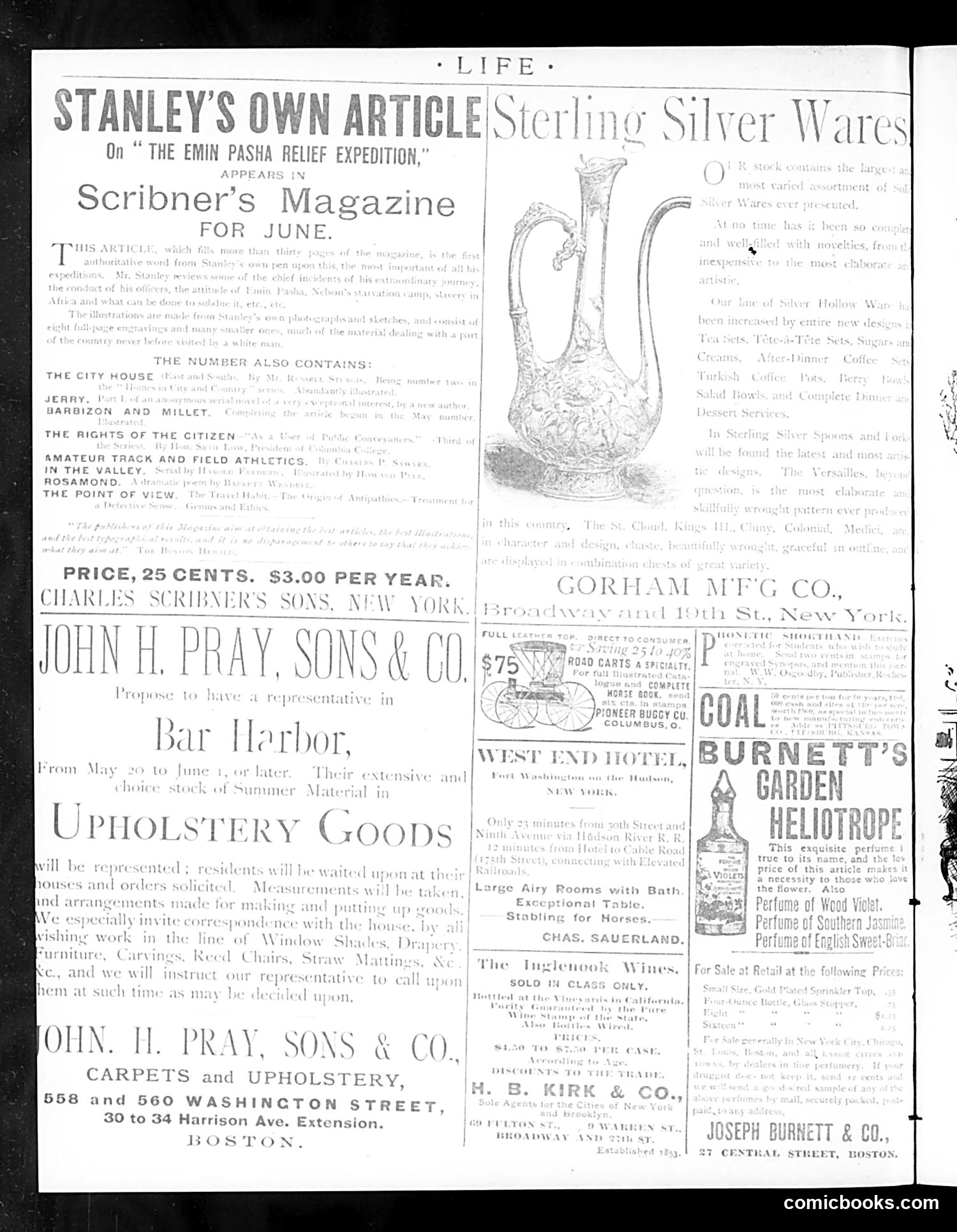
This page is **primarily advertising** with a masthead announcement about Stanley's article on "The Emin Pasha Relief Expedition" appearing in Scribner's Magazine for June. The main content includes ads for: - John H. Pray Sons & Co. (upholstery goods in Bar Harbor) - Gorham Mfg Co. (sterling silver wares) - Burnett's Garden Heliotrope perfume - Various other late 19th-century products There is **no political cartoon visible** on this page. The decorative illustration of an ornate silver pitcher accompanying the Gorham ad is a product advertisement, not satire. The page functions as a typical magazine back matter mixing editorial promotion with commercial advertisements, with no apparent satirical or political content to analyze.
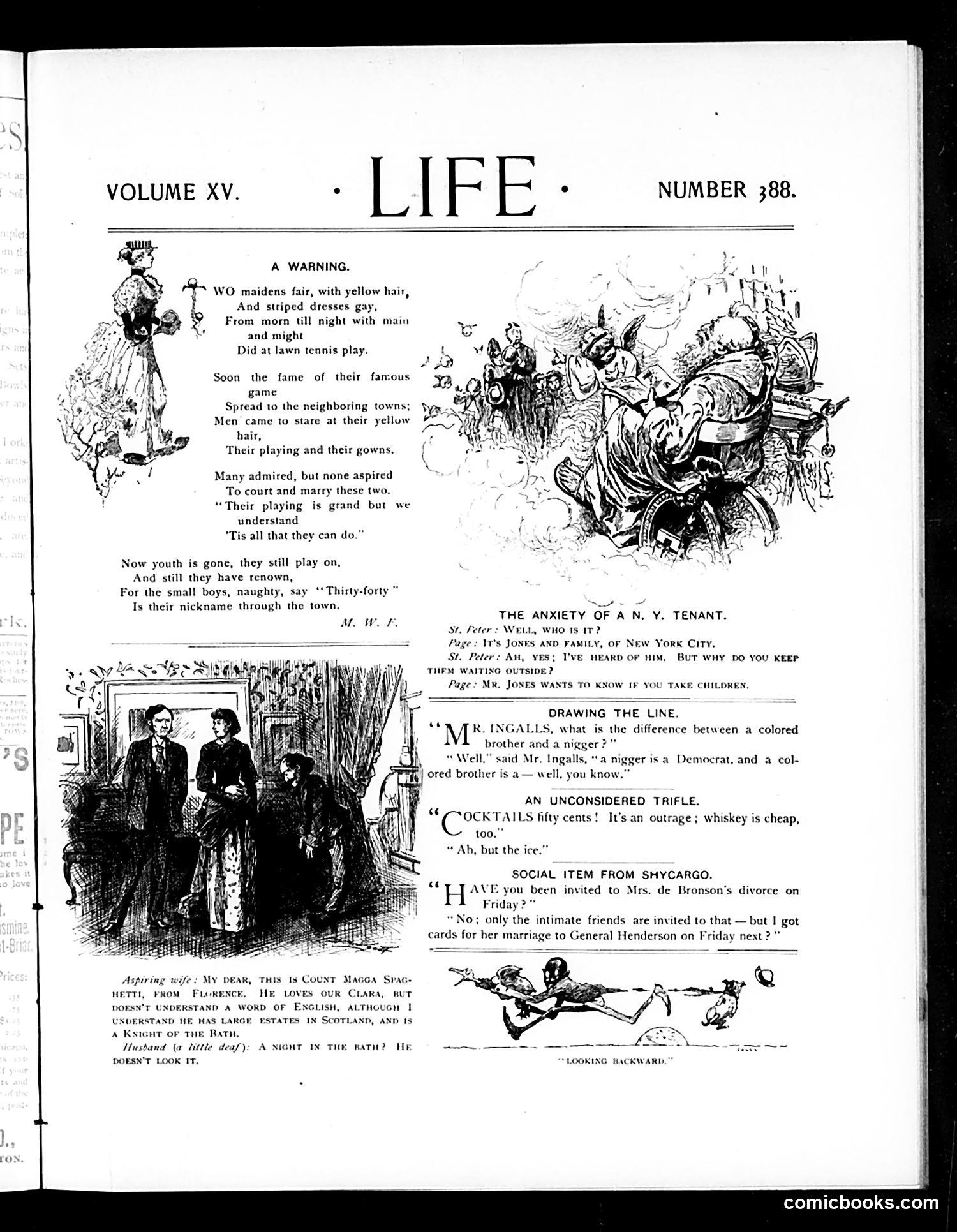
This page contains several brief satirical items typical of Life's humor section: **"A Warning"** - A cautionary poem about two fair-haired women playing tennis, whose fame spreads and attracts male admirers. The joke appears to target the growing visibility of women's athletics and the social disruption this caused—men neglecting proper courtship pursuits to watch women play sports. **"Drawing the Line"** - A racist joke where Mr. Ingalls defines the difference between a "colored brother" and a "nigger" as being a Democrat versus a well-known person. This reflects the crude racial humor common in early 20th-century American publications. The remaining items are brief social gossip and anecdotes typical of Life's miscellaneous humor content. The overall tone reflects period attitudes toward gender roles, race, and social propriety.
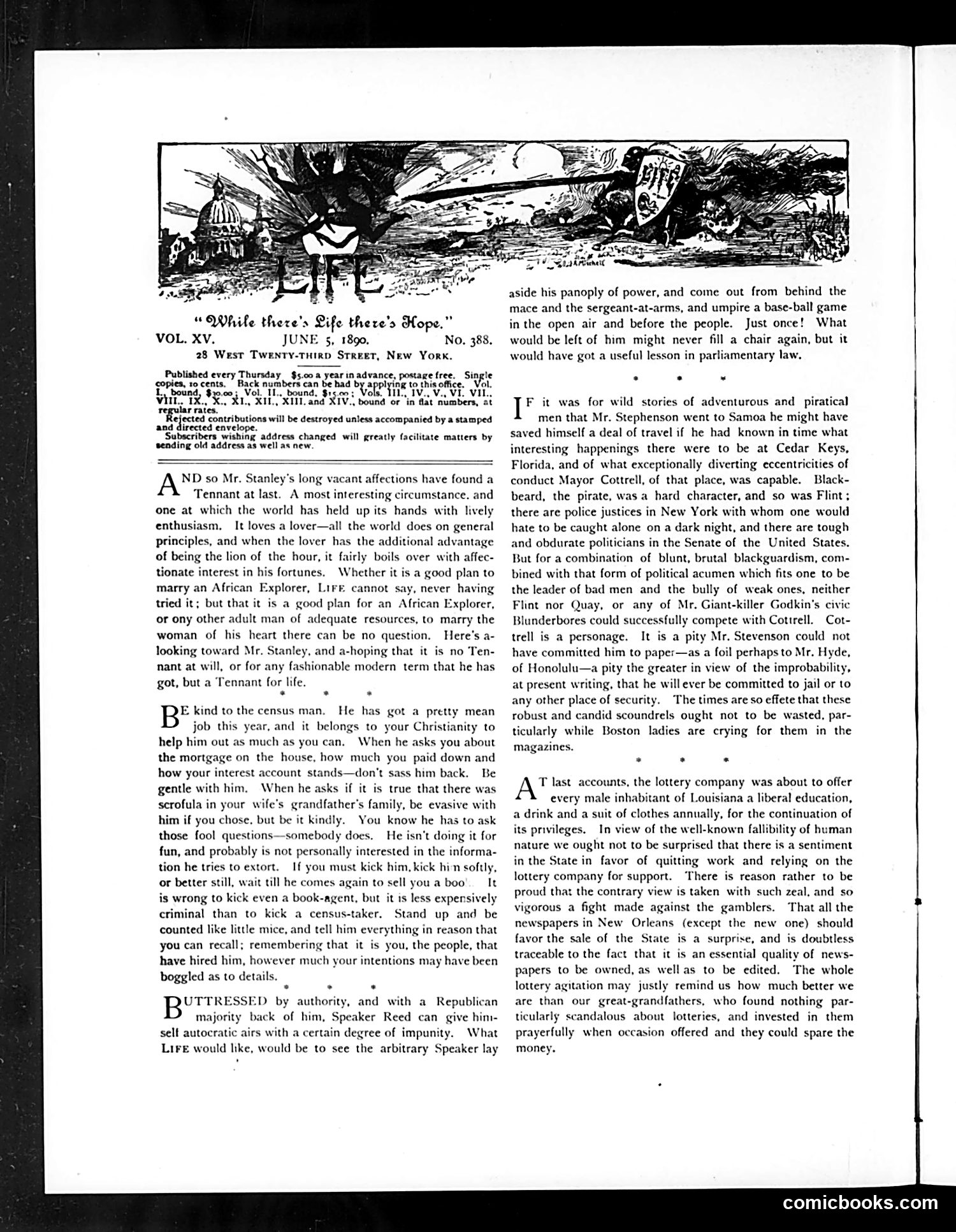
The header cartoon depicts **"Life"** with the motto **"While there's Life there's Hope."** The illustration shows a dramatic landscape with classical and allegorical elements. The text discusses **Speaker Reed** (Republican congressional leader), offering backhanded praise for his "autocratic airs" and "certain degree of impunity." The piece satirizes Reed's arbitrary parliamentary authority, suggesting it's questionable whether such power should exist unchecked. Other content critiques **Mayor Cottrell** (a pirate character), comparing corrupt political figures to actual criminals, and discusses lottery gambling controversies in New Orleans and Louisiana. The satire targets **political corruption, abuse of congressional power, and moral hypocrisy** among late-19th century American political leaders.
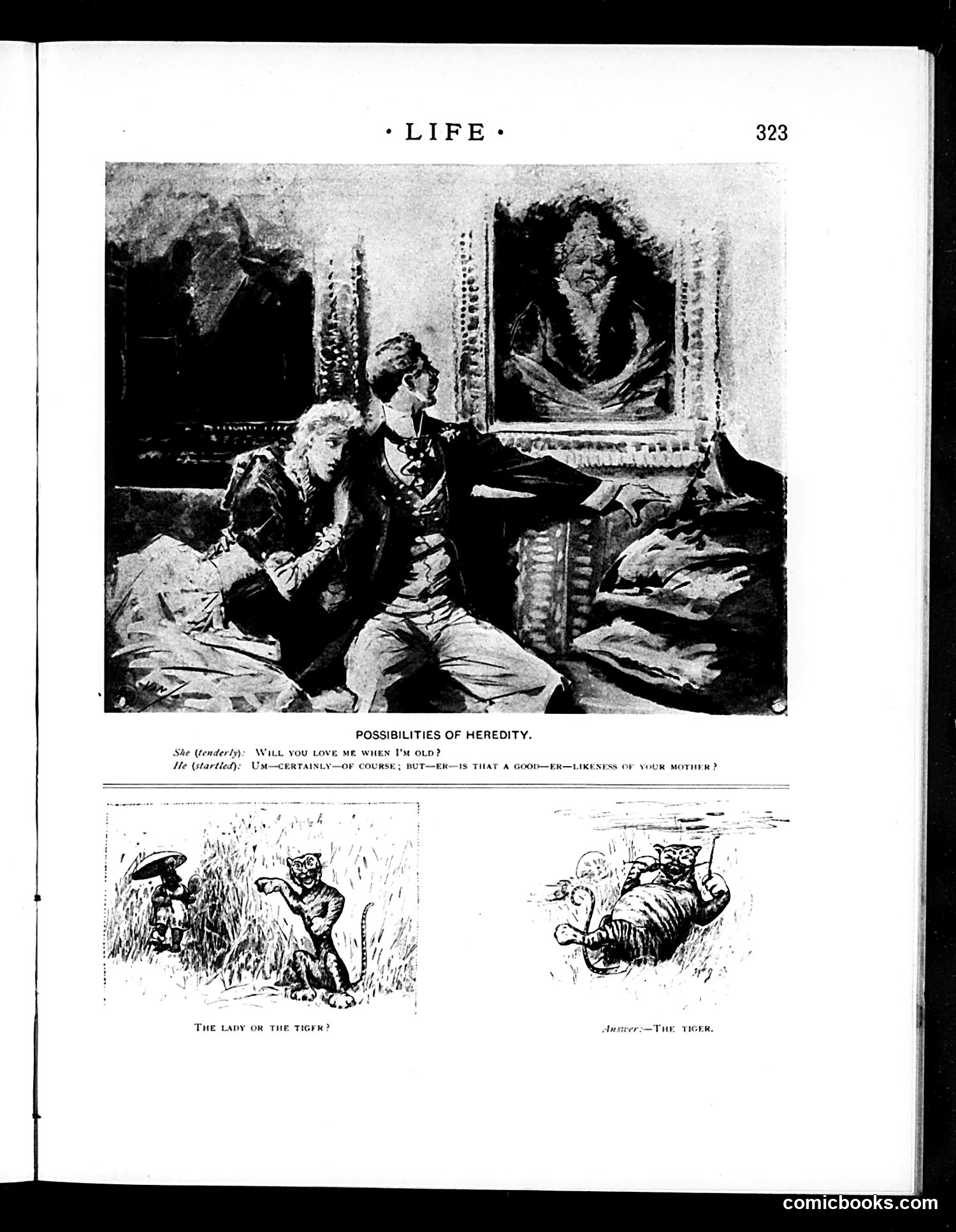
This page satirizes concerns about inherited traits and physical appearance. The top panel shows a couple in an intimate moment, with the man reassuring the woman about their future children's appearance—specifically, whether they'll resemble the mother. The bottom two panels offer humorous "answers" through visual puns: "The Lady or the Tiger?"—a famous literary reference—is answered literally with images of a woman and a tiger, playing on the ambiguity of what offspring might inherit or resemble. The satire mocks Victorian-era anxieties about heredity, appearance, and eugenics pseudoscience that were popular topics in early 20th-century American discourse. The joke relies on taking the woman's worried question about hereditary resemblance and responding with absurdist literal interpretations rather than reassurance.
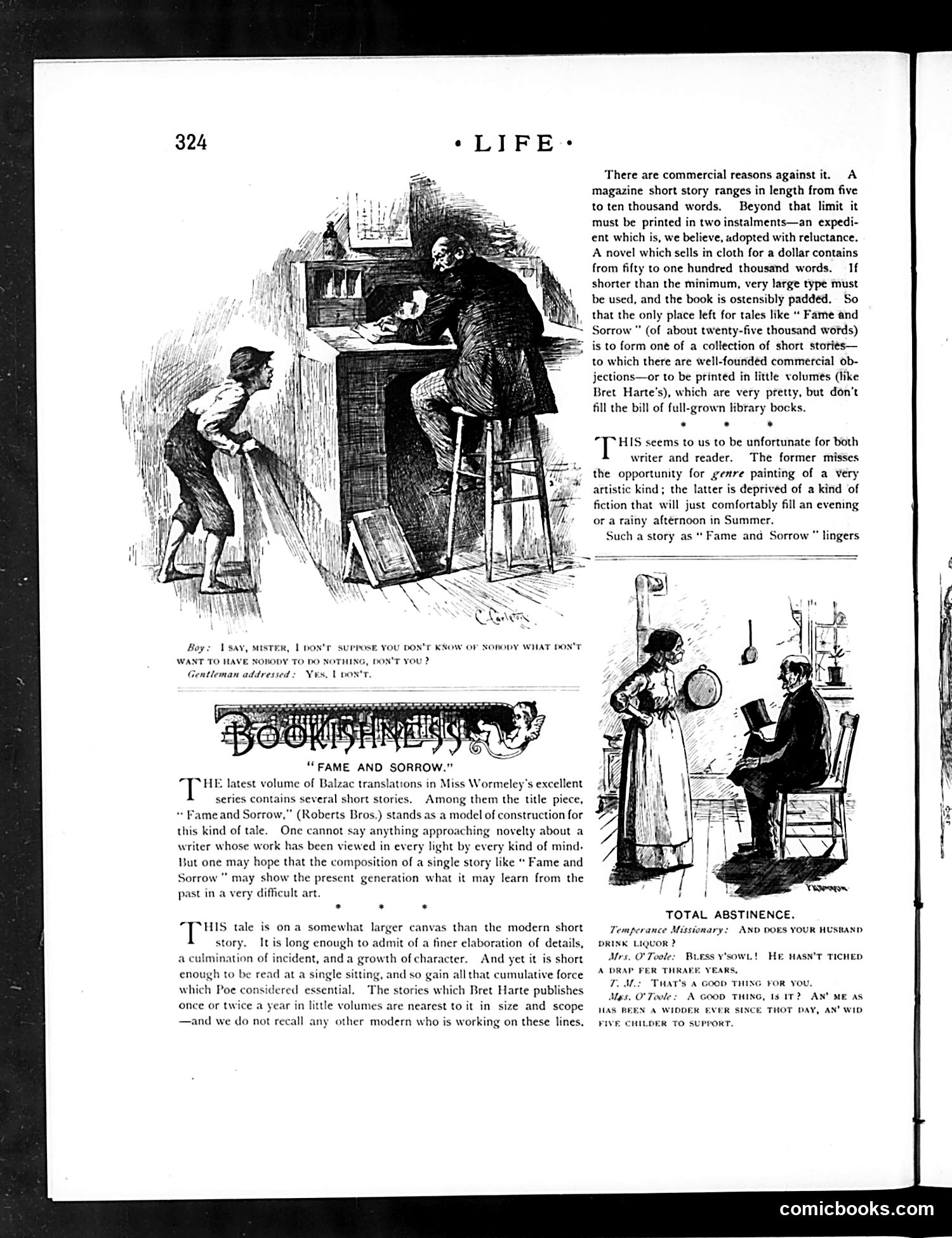
This page discusses the literary form of short stories, specifically reviewing Balzac translations and a work titled "Fame and Sorrow" by Roberts Bros. publishers. The two illustrations are Victorian-era satirical sketches showing domestic scenes. The top cartoon depicts a boy speaking to a gentleman at a desk, with dialogue about not knowing "of sorrow what don't want to have sorrow to do nothing, don't you?" - appearing to mock pretentious or circumlocutory speech. The bottom illustration, labeled "Total Abstinence," shows what appears to be a temperance-related domestic scene between a woman and man, likely satirizing abstinence pledges or prohibition advocacy that was gaining traction in this era. Both sketches use humor to comment on social attitudes and domestic life of the period.
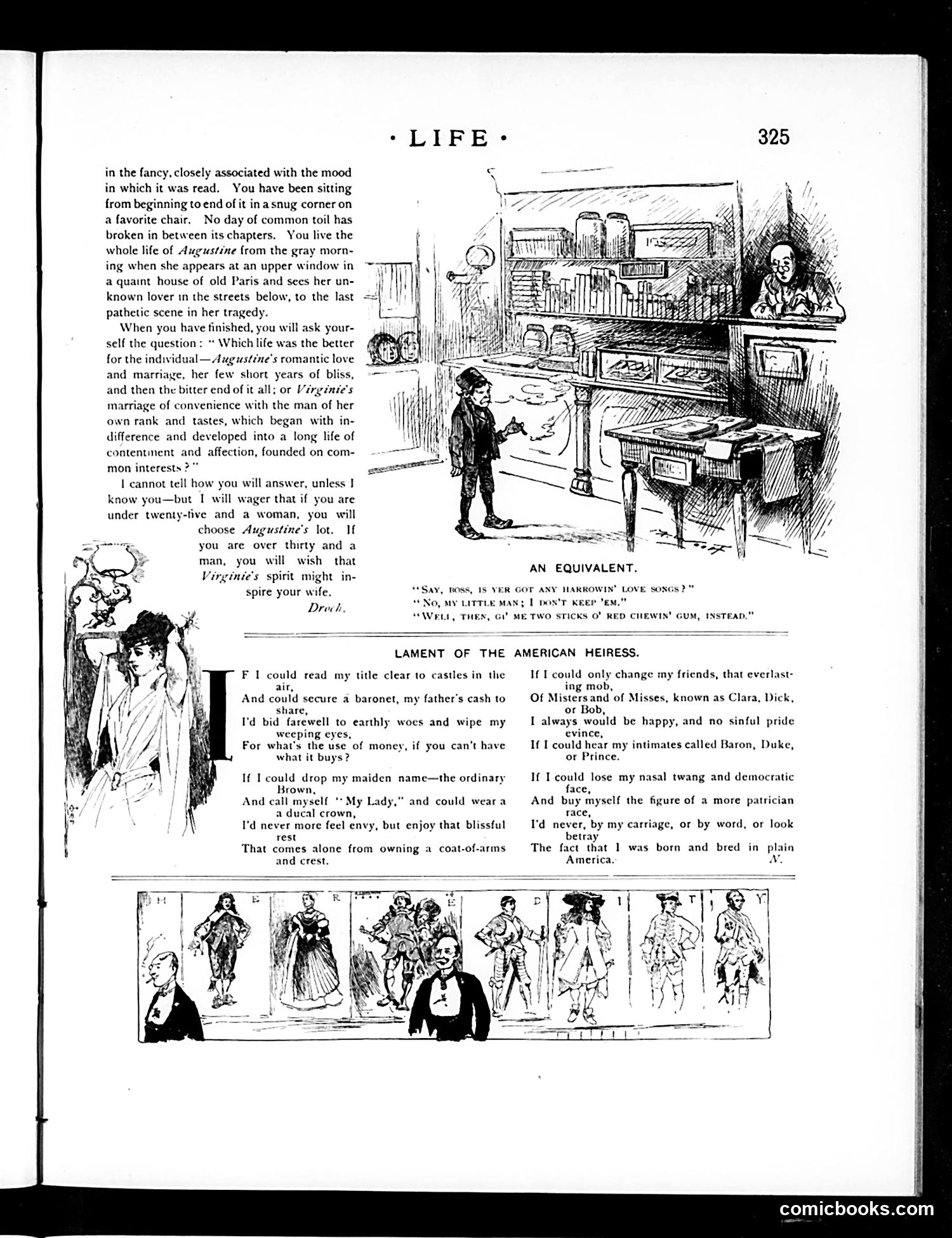
This page satirizes American women's social aspirations through two pieces: **"An Equivalent"** (top cartoon): Shows a woman rejecting romantic gestures. The dialogue mocks courtship rituals—she dismisses "barrow's love songs" in favor of chewing gum, suggesting materialistic preferences over romance. **"Lament of the American Heiress"** (main poem): A wealthy American woman laments her inability to acquire European markers of status—aristocratic titles, coats-of-arms, or advantageous marriages to European nobility. The satire targets the Gilded Age phenomenon where wealthy American heiresses married impoverished European aristocrats for titles. The bottom illustration shows various historical costume figures, likely contrasting European nobility with American plainness. The overall message: American wealth cannot buy genuine aristocratic legitimacy.
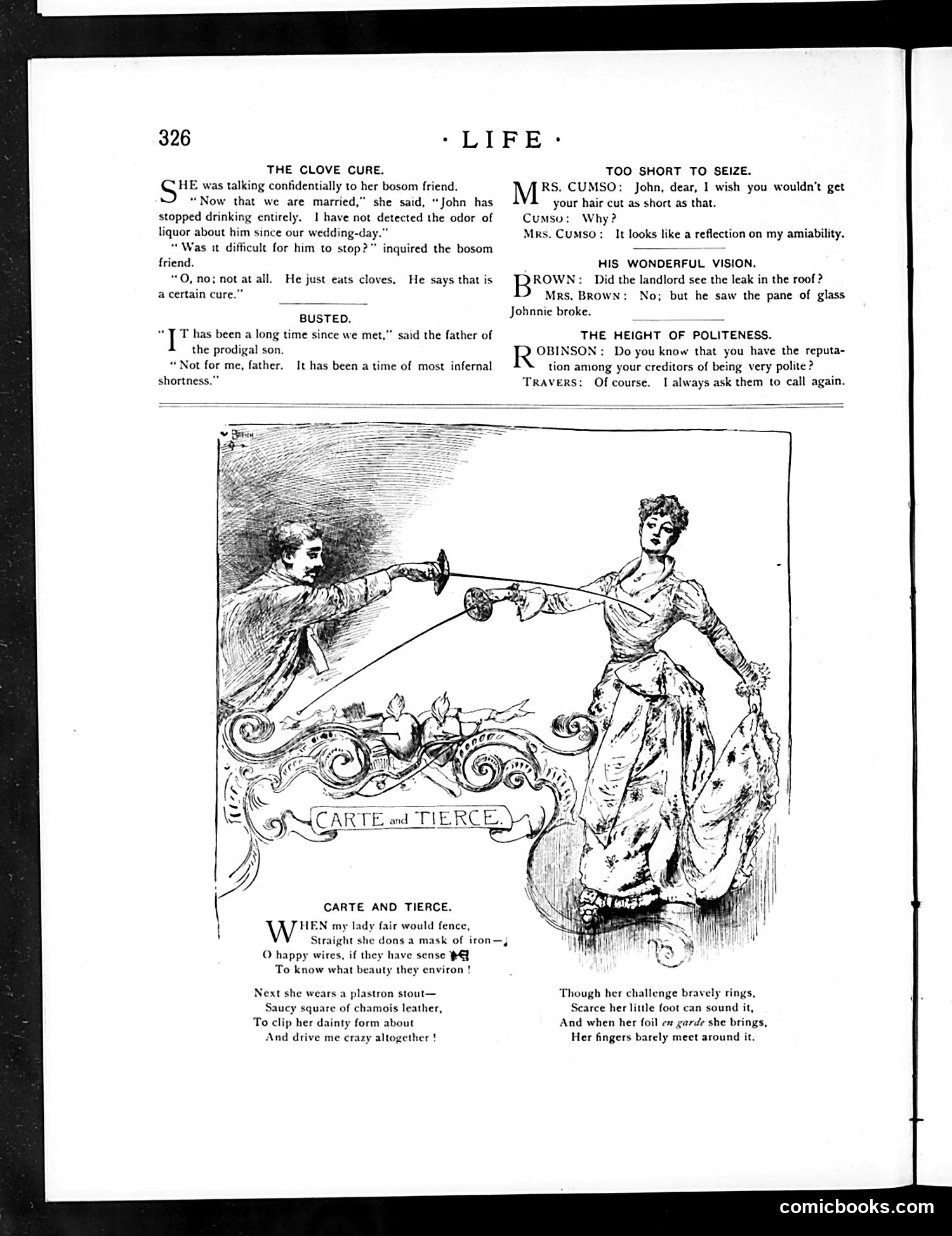
This page contains four brief humorous anecdotes and one illustrated poem titled "Carte and Tierce." The anecdotes mock social conventions: "The Clove Cure" jokes about a husband eating cloves to hide drinking; "Busted" depicts an awkward reunion between estranged acquaintances; "Too Short to Seize" satirizes a woman blaming her short hair on "amiability"; "His Wonderful Vision" plays on miscommunication about a roof leak. The illustrated poem "Carte and Tierce" depicts fencing between a man and woman, using that metaphor to describe romantic combat. The verses describe the woman's clothing and physical power over the male narrator—suggesting wit and fashion as feminine "weapons" in courtship, a common theme in early 20th-century satirical humor about gender relations.
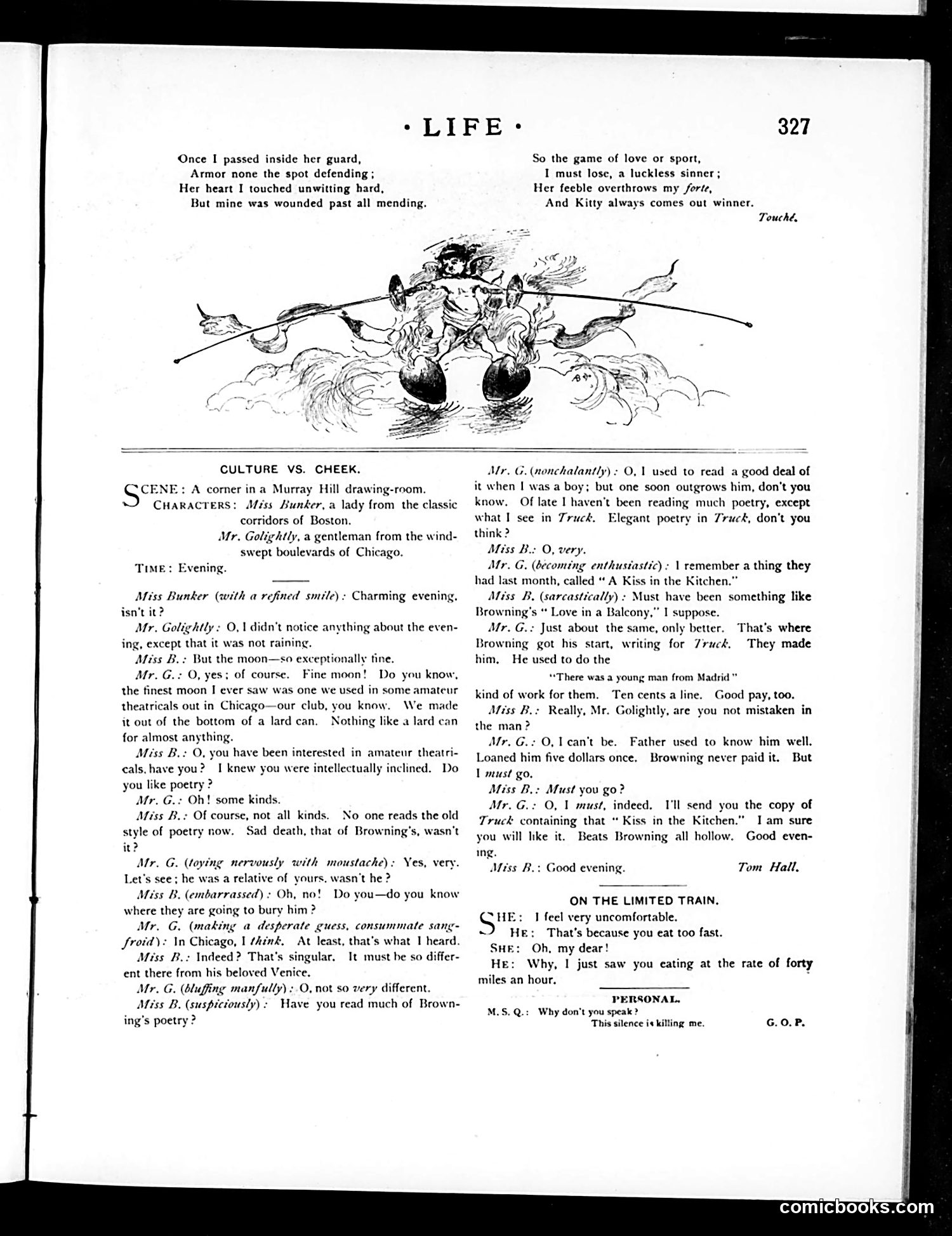
The main illustration depicts two cherubs or cupids fishing in clouds—a classical artistic reference to love and romance. The accompanying verses mock romantic disappointment, with the speaker claiming to be "a luckless sinner" while "Kitty always comes out winner," suggesting a romantic rivalry or unrequited love scenario. Below are three separate comedic sketches: "Culture vs. Cheek" depicts a drawing-room conversation between a Boston lady and a Chicago gentleman debating poetry and literature—likely satirizing regional American cultural pretensions. "On the Limited Train" and "Personal" are brief joke exchanges about eating habits and silence. The page satirizes social manners, literary snobbery, and romantic mishaps typical of early 20th-century American life.
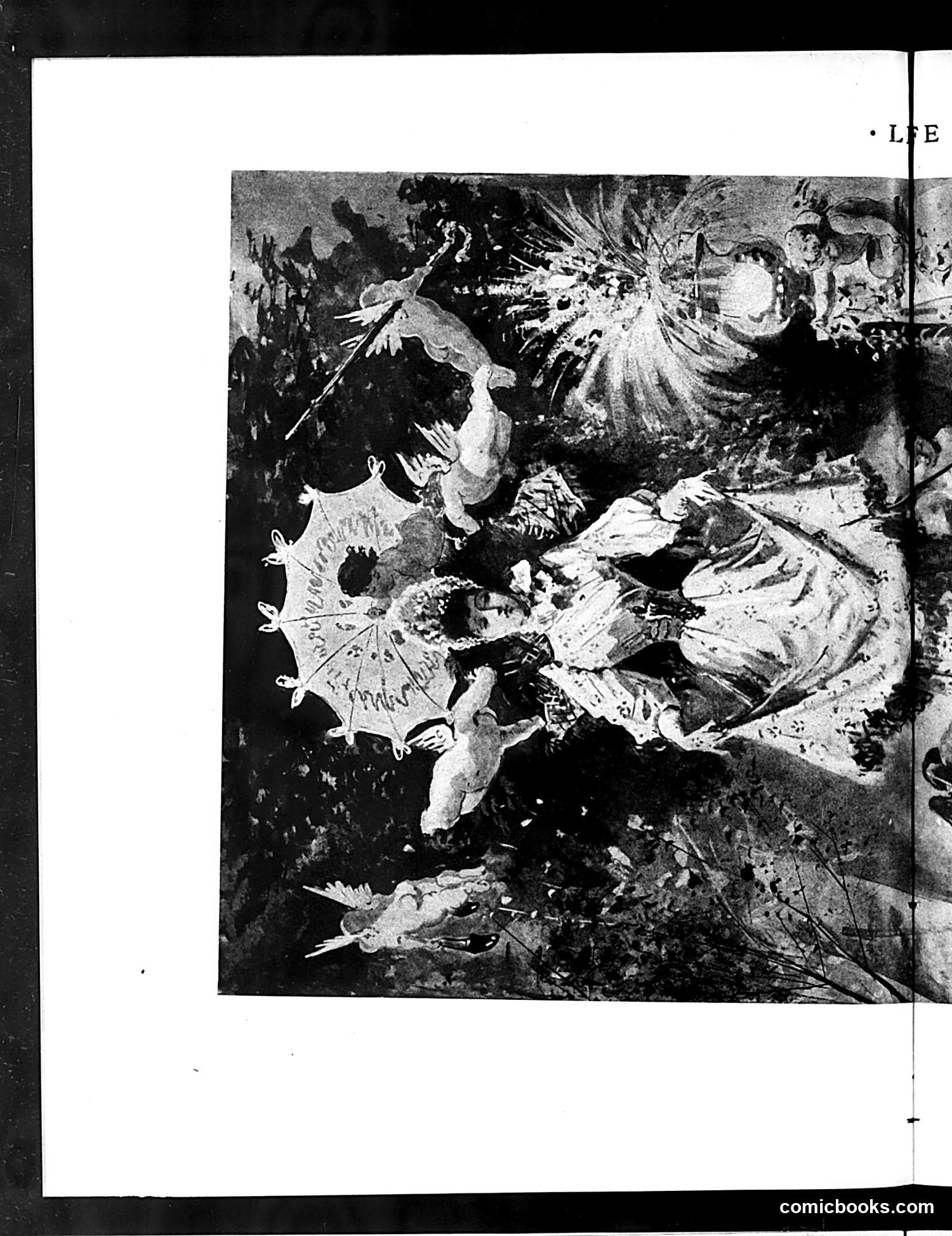
This black and white illustration appears to depict a theatrical or operatic scene with multiple figures in elaborate period costumes, including decorative umbrellas and ornate dress. The figures seem to be engaged in dramatic action or performance. However, without visible text labels, captions, or clearer identifying details in the image, I cannot confidently identify the specific political figures, historical event, or satirical point being referenced. The elaborate staging and costuming suggest this may be satirizing a specific contemporary theatrical production, political event, or public spectacle from Life magazine's era, but determining the precise subject would require additional context or more legible accompanying text than is visible here. I cannot responsibly specify who these figures represent or what they're meant to mock without clearer evidence.
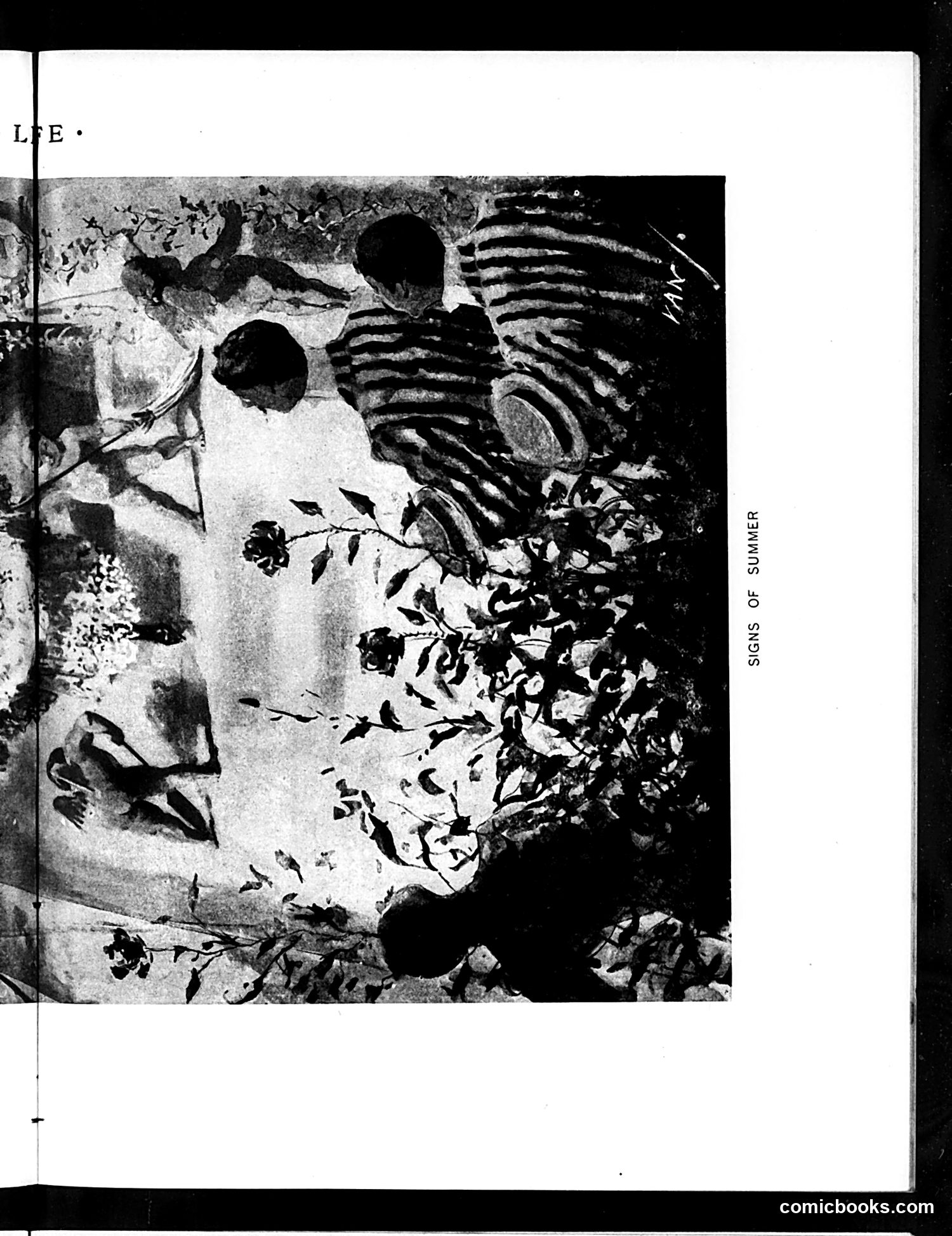
This page from *Life* magazine presents a black-and-white photograph (rotated 90 degrees) captioned "Signs of Summer." The image shows striped fabric or clothing, potted flowers, and wilted or dried plants arranged together. The photograph appears to be a humorous still-life commentary on summer—likely depicting both the appealing and unpleasant aspects of the season. The striped element suggests summer clothing or beach attire, while the dying flowers may represent the heat's toll on gardens. The arrangement creates visual irony by combining cheerful summer symbols (bright clothing, flowers) with their deteriorated or neglected states, satirizing the gap between summer's romantic ideal and its harsh reality—scorching heat that wilts plants and requires constant maintenance.
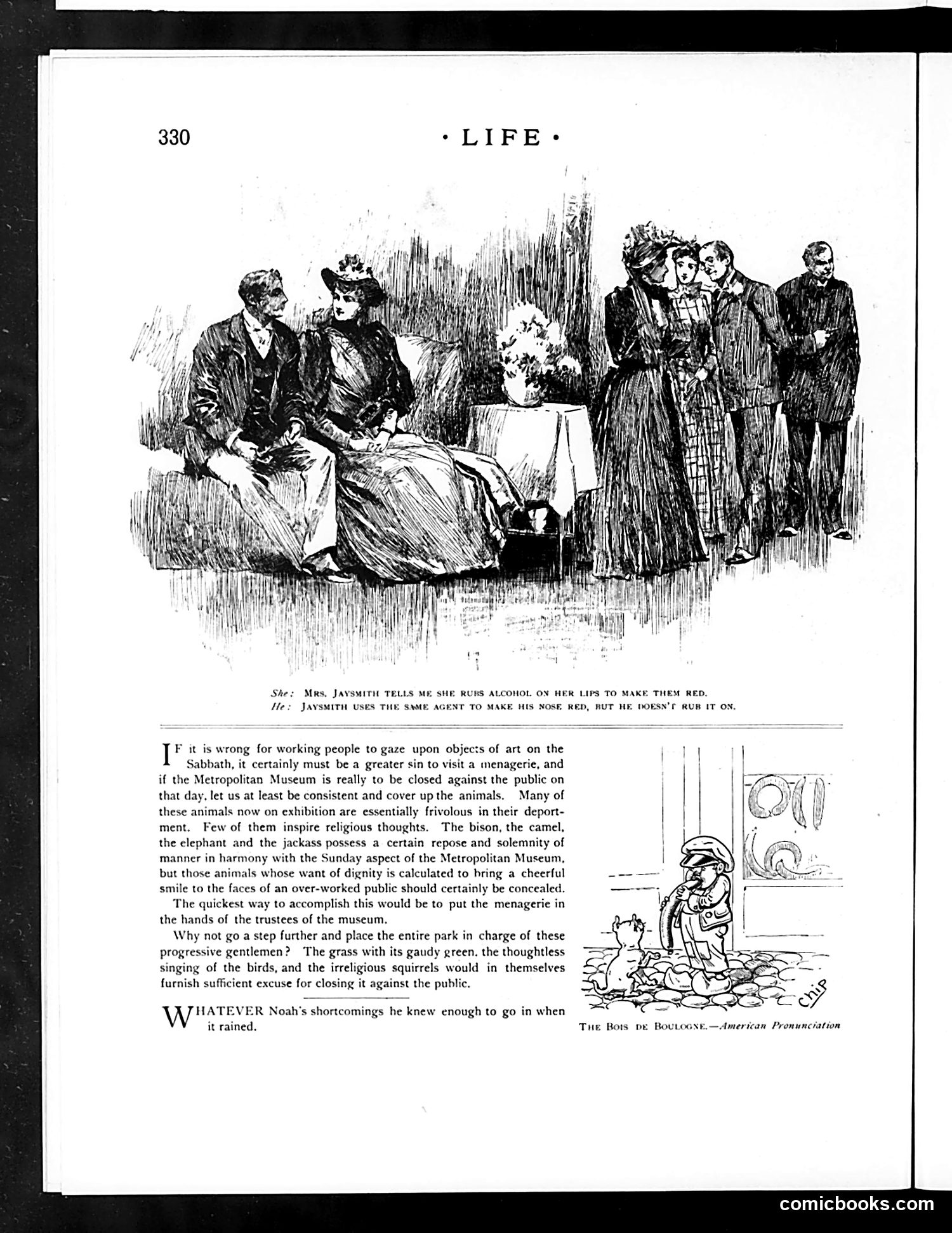
This page contains two separate satirical jokes: **Top cartoon**: A married couple discusses another woman (Mrs. Jaysmith) who uses alcohol on her lips as rouge. The husband quips that Jaysmith himself uses alcohol too—but to make his *nose* red, and he doesn't apply it topically. This is a joke about male drinking/alcoholism: the implication is that Jaysmith drinks so heavily his nose is perpetually reddened from alcohol consumption, a visible sign of habitual drunkenness. **Main article**: The text sarcastically argues that if museums should close on Sundays for religious observance, they should also close parks and cover zoo animals—since grass, birds, and squirrels are equally "irreligious" distractions. It mocks the hypocrisy of strict Sabbath-day restrictions on public institutions. The final quip about Noah knowing to go inside when it rained is unclear in context but appears to be additional sarcasm about arbitrary religious rules. The satire targets both alcoholism and religious zealotry regarding Sunday closures.
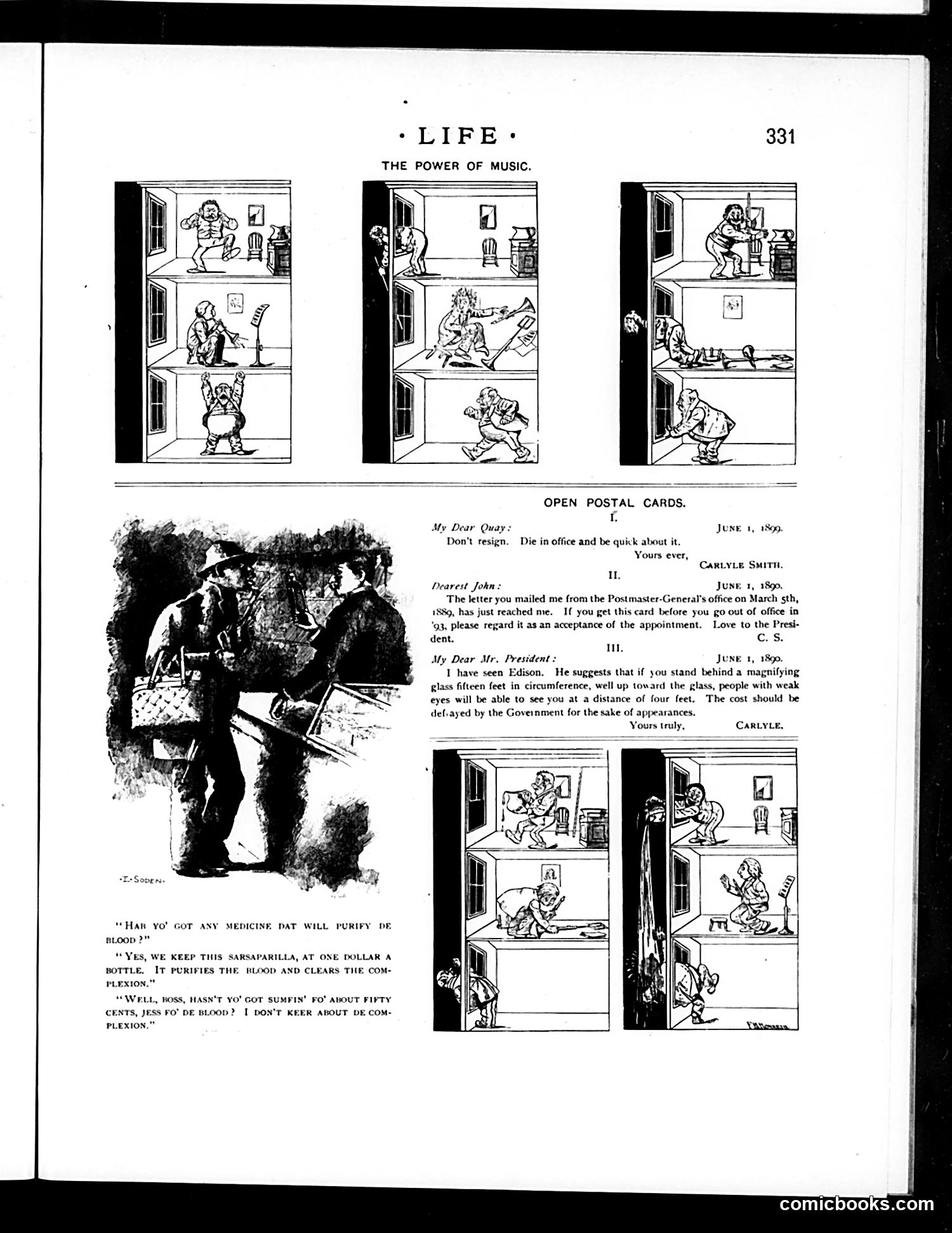
The top three comic strips titled "The Power of Music" show a figure progressively energized by musical sound, culminating in violent action—a visual joke about music's transformative (and chaotic) effect on behavior. The "Open Postal Cards" section contains satirical fake postcards mocking political figures and delays. One card jokes about Senator Quay's reluctance to leave office ("die in office"). Another mocks the slow postal service by referencing a letter from March 1889 arriving in 1899—a decade late. A third satirizes President McKinley's low public visibility, suggesting Edison's magnifying glass could make him visible to citizens. The bottom cartoon uses racist dialect to depict a transaction about sarsaparilla tonic—a patent medicine claiming to purify blood and improve complexion. The humor derives from the customer's distinction between blood purity and complexion improvement, likely reflecting contemporary attitudes about race and medicine marketing.
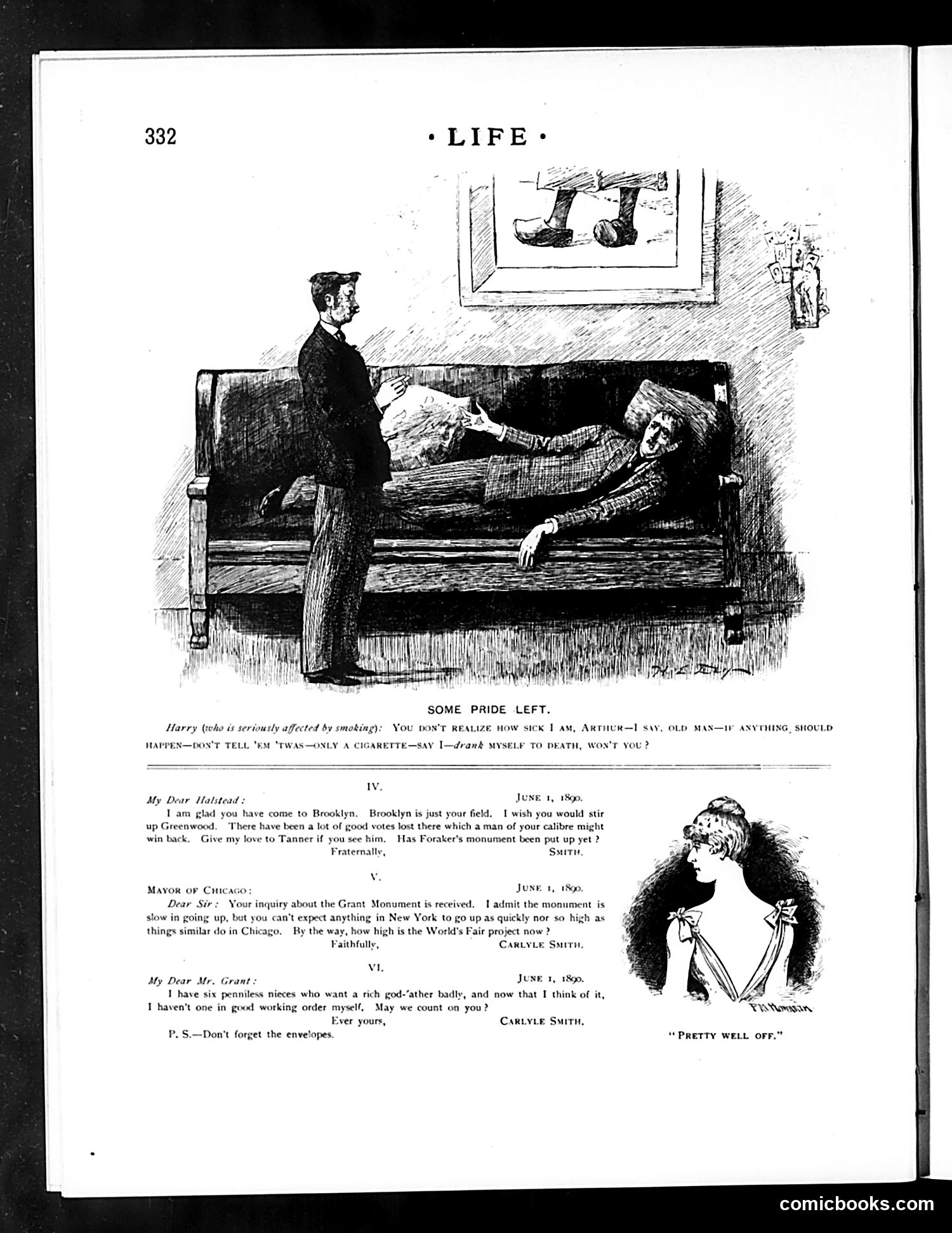
**Main Cartoon (top):** A man named Harry, seriously ill from smoking, lies on a couch while his friend Arthur stands nearby. Harry's dark joke: if he dies, Arthur should tell people it was from something else—not "only a cigarette"—to preserve Harry's dignity. The satire mocks masculine pride: even facing death from smoking, Harry cares more about his reputation than his health. **Letter Section (below):** Four brief satirical letters dated June 1, 1892, poking fun at various figures and situations. They reference Brooklyn politics, the Grant Monument construction delay, Chicago's boasting about its World's Fair height, and a woman seeking a wealthy "godfather" for her poor nieces. The humor relies on dated political references and social commentary about patronage, competition between cities, and financial desperation—context largely lost to modern readers.
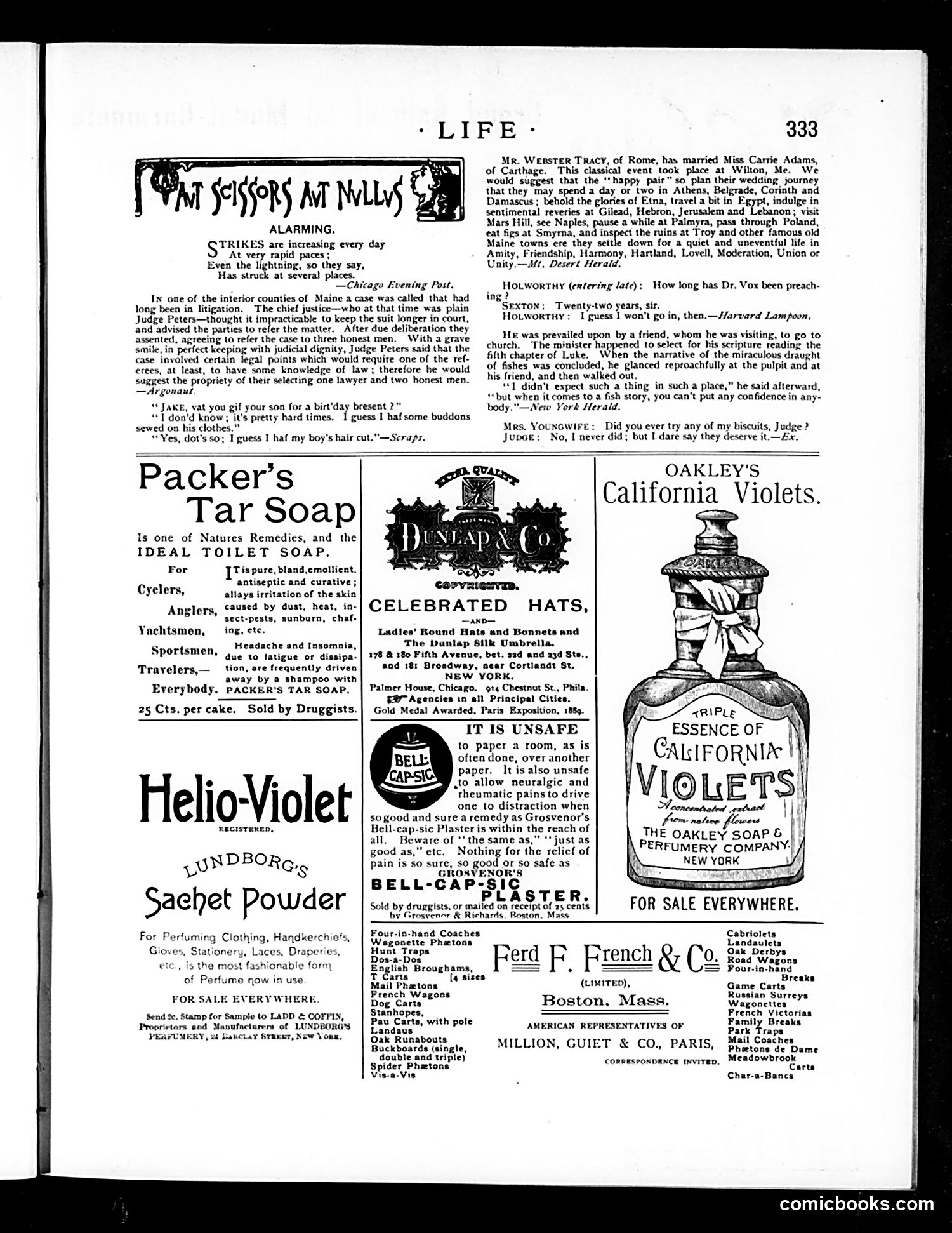
This page is primarily **advertising with brief humorous anecdotes**—not a political cartoon. The title piece, "Tigers at Nulls: Alarming," is a short satirical poem about strikes increasing in frequency, playing on readers' anxieties about labor unrest. The page includes several brief jokes: one about a Maine judge suggesting honest men arbitrate a legal case; ethnic humor about immigrant gift-giving during hard times; and a classical pun noting Maine towns sharing names with famous ancient places (Athens, Damascus, Jerusalem, Troy, etc.). A recurring joke involves a skeptical man who walks out of church when the sermon covers the miracle of the loaves and fishes—he won't trust "fish stories" from anyone. The bulk of the page consists of period advertisements for soap, perfume, hats, and carriages. No specific political figures or major events are referenced—it's simply light social humor typical of *Life* magazine's satirical approach to everyday American life.
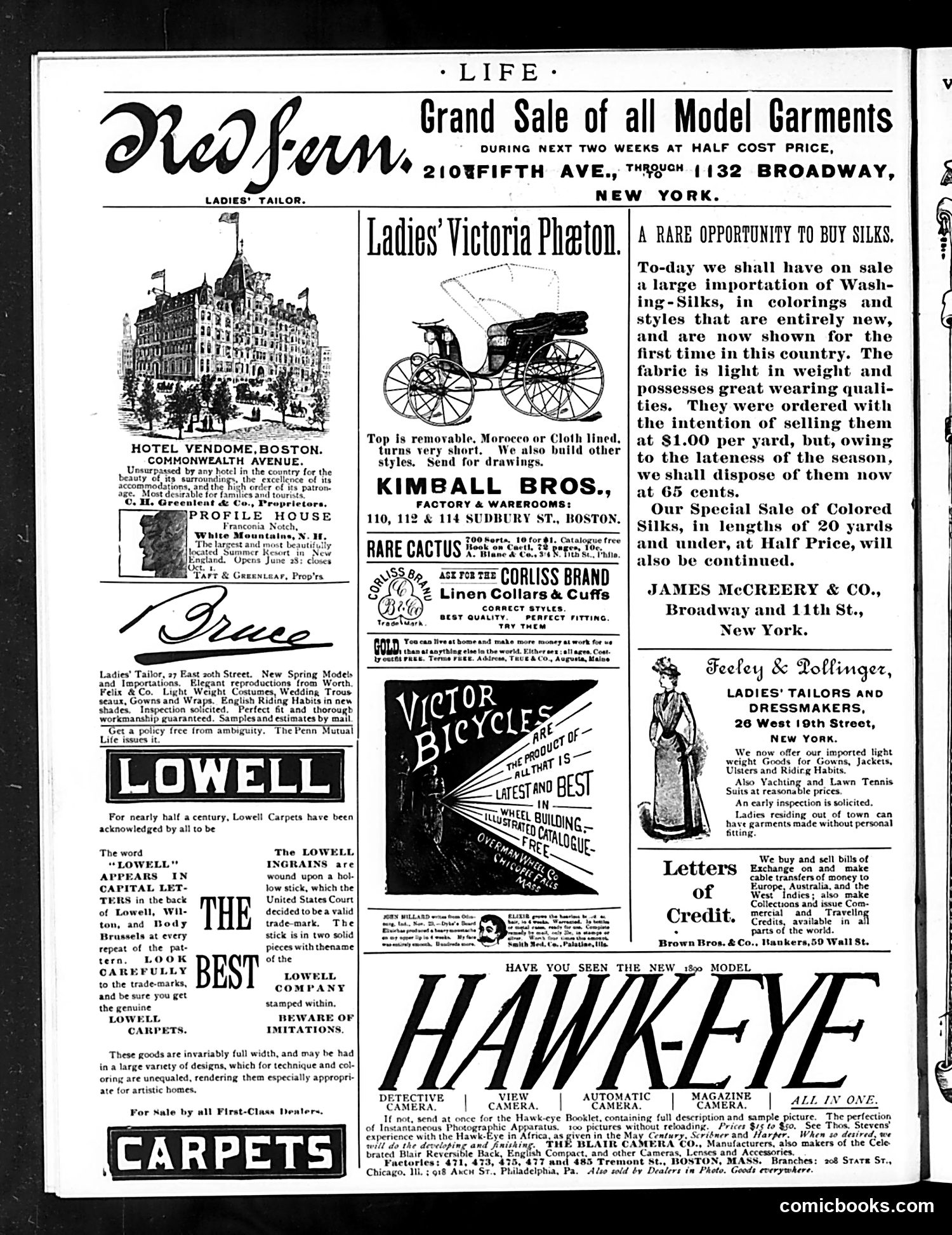
This is primarily a **commercial advertising page**, not political satire. It contains multiple department store and specialty shop advertisements from late 19th-century New York and Boston. Key advertisers include: - **Red Fern** (ladies' tailor) at Fifth Avenue/Broadway - **Lowell Carpets** (emphasis on authentic trademarks to avoid counterfeits) - **Kimball Bros.** (Victoria Phaeton carriages) - **James McCreery & Co.** (silk sales) - **Feeley & Loffinger** (ladies' dressmakers) - **Hawk-Eye Cameras** (early photography equipment) The page reflects **Gilded Age consumer culture**: emphasis on imported European fashions, mechanized transportation (bicycles, carriages), new photographic technology, and competitive branding against counterfeit goods. The "Life" magazine masthead indicates this was a *satirical* publication, but this particular page functions as revenue-generating advertising rather than social commentary. No cartoons or satirical content are visible—it's essentially a classified ads section.