
A complete issue · 16 pages · 1886
Life — September 23, 1886
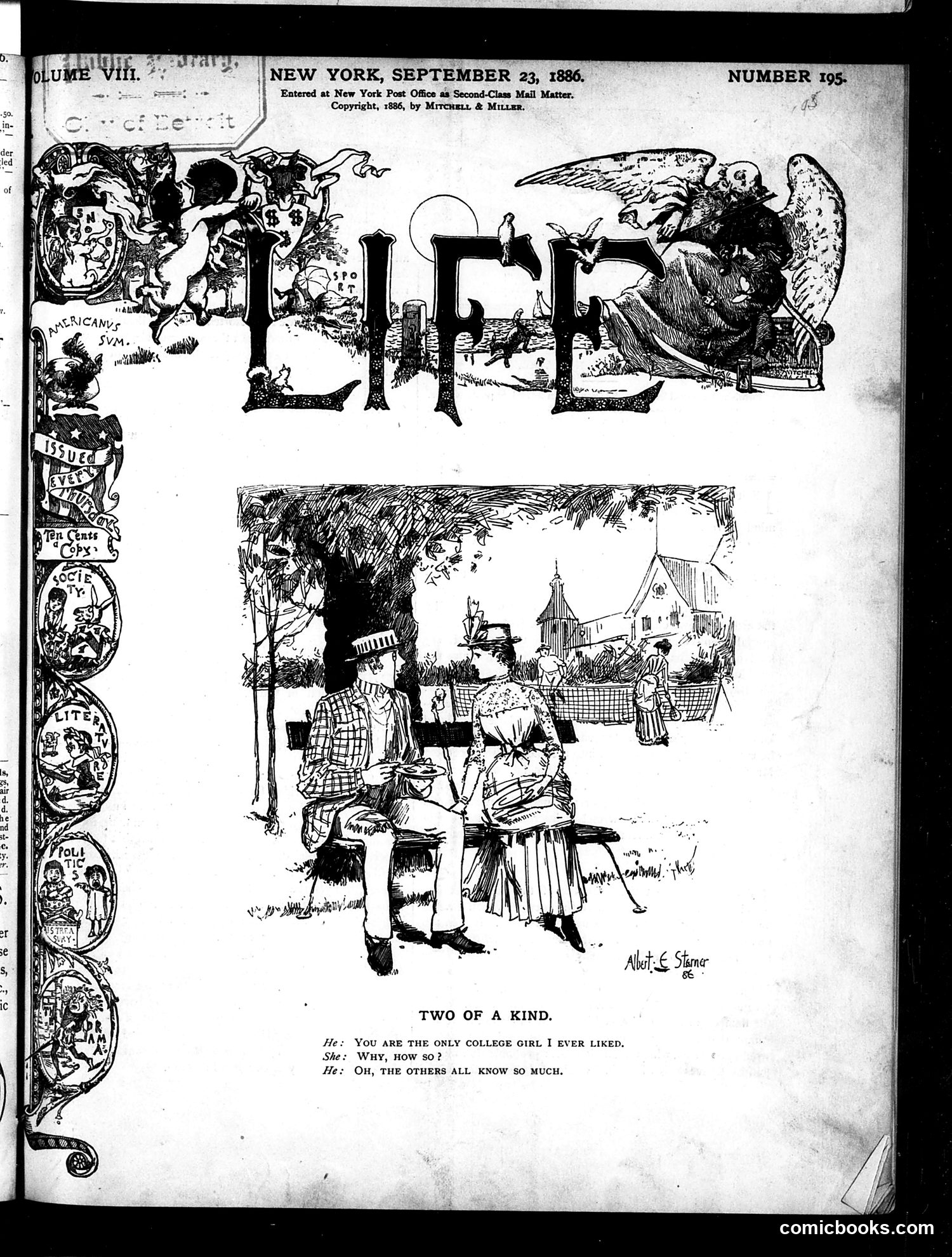
This cartoon by Albert E. Sterner depicts a flirtation between a man and woman at what appears to be a lawn party or social gathering. The dialogue reveals the joke's point: the man claims the woman is "the only college girl I ever liked," and when she asks why, he responds that "the others all know so much." The satire targets educated women of the era. The joke mocks both the man's preference for an ignorant woman and, implicitly, contemporary anxieties about women's education and independence. The "two of a kind" title suggests they're equally foolish or shallow—she for accepting such a backhanded compliment, he for valuing ignorance in a romantic partner. It reflects late-19th-century gender tensions regarding women's intellectual aspirations.
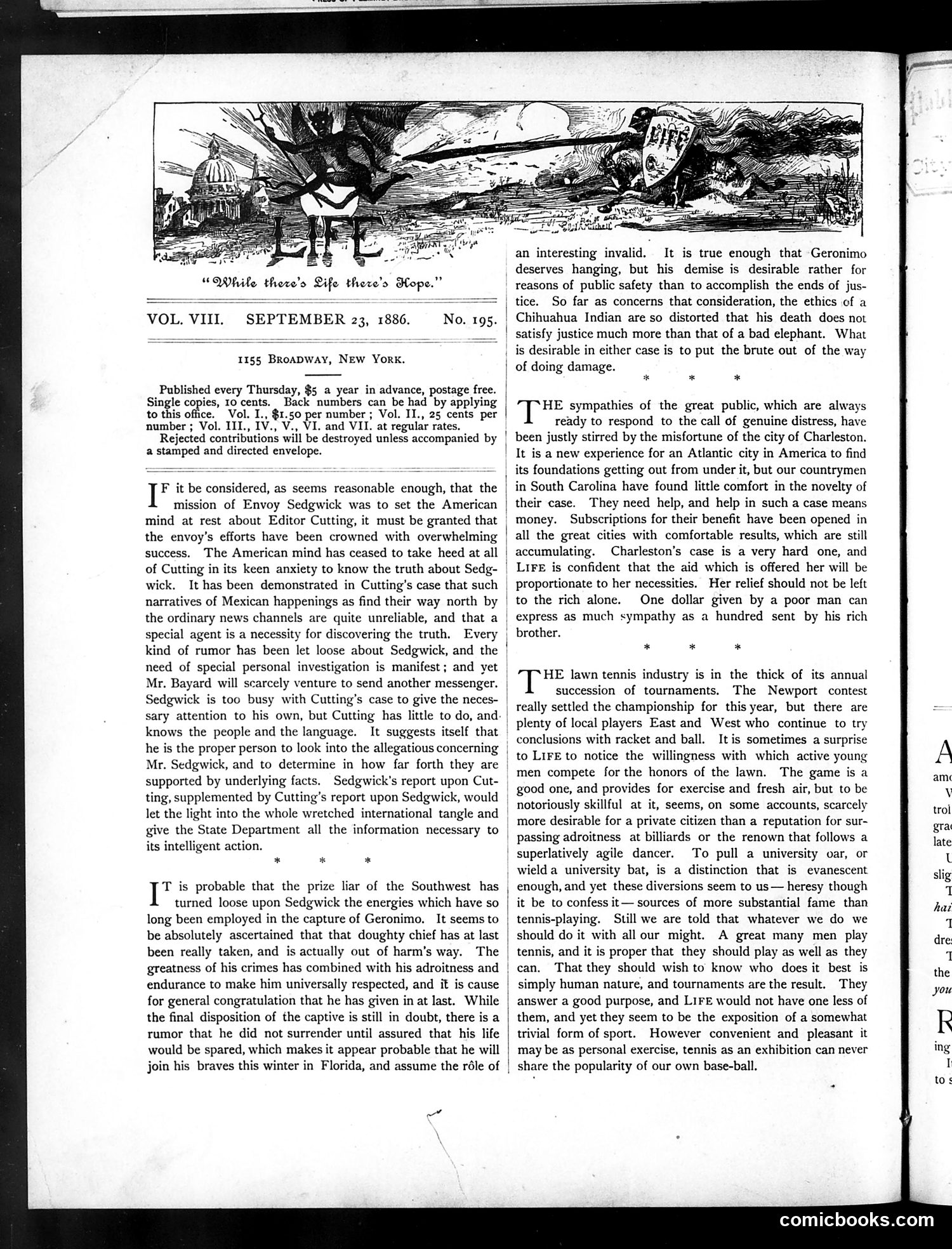
The masthead cartoon shows a skeletal Death figure overlooking a battlefield landscape, captioned "While there's Life there's Hope." This appears to reference the *capture of Geronimo*, the Apache leader, which the text discusses extensively. The editorial argues that while Geronimo deserves execution for public safety reasons, the sensational newspaper coverage of his capture has been unreliable. It criticizes envoy Sedgwick's mission to verify details about the capture, noting that rumors have run wild and special investigation is needed before further action. The text suggests Geronimo has finally been genuinely captured and neutralized as a threat—hence Death presiding over the conflict's landscape—allowing hope for peace to return to the Southwest frontier.
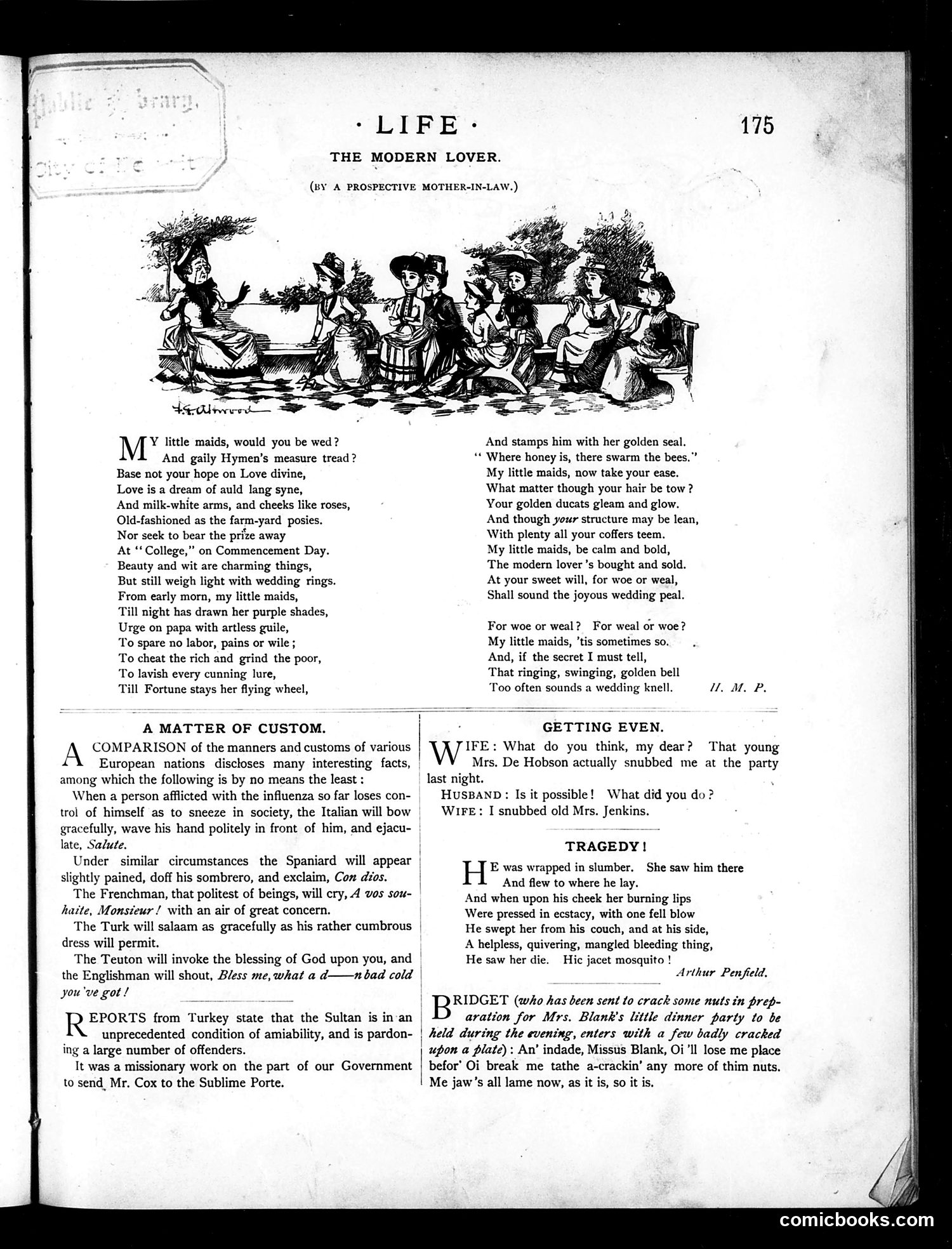
This page from *Life* magazine contains three satirical pieces about courtship and marriage customs: **"The Modern Lover"** (main poem): A prospective mother-in-law addresses young women, warning them that modern suitors are financially motivated rather than romantically genuine. She advises women to remain cautious about marriage prospects, noting that "the modern lover's bought and sold" and marriages often fail ("For woe or weal?"). The satire mocks both mercenary dating practices and the commercialization of romance. **"A Matter of Custom"** and **"Getting Even"**: Brief pieces humorously comparing how different European nationalities respond to sneezing in public, and a domestic joke about a wife snubbing another woman. **"Tragedy"**: A mock-dramatic poem about romantic misfortune. The overall theme satirizes courtship anxieties and gender dynamics of the era.
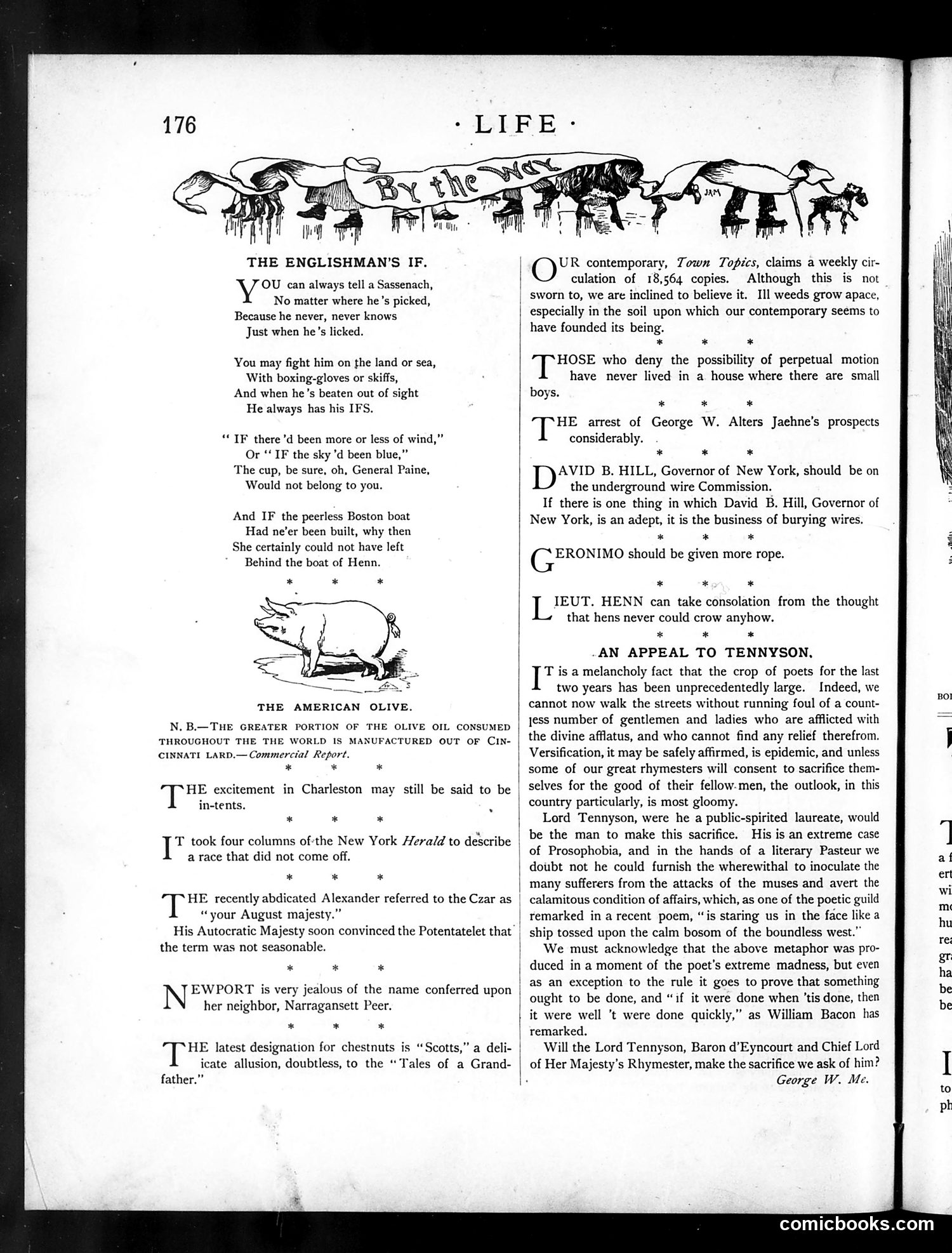
**"The Englishman's If"** is a satirical poem mocking British stoicism and conditional thinking. It playfully suggests an Englishman can be identified by his refusal to explain himself—he "never knows / Just when he's licked" and maintains composure regardless of circumstances (fighting on land or sea, losing boxing matches). The humor lies in stereotyping British emotional restraint and the upper-class tendency to avoid direct confrontation. **"The American Olive"** appears to be a brief note about olive oil consumption, likely satirizing American commercial interests. The right column contains miscellaneous short satirical observations about contemporary figures including Governor David B. Hill of New York and "An Appeal to Tennyson," criticizing poets' apparent detachment from social suffering. The pig illustration accompanies "The American Olive" reference.
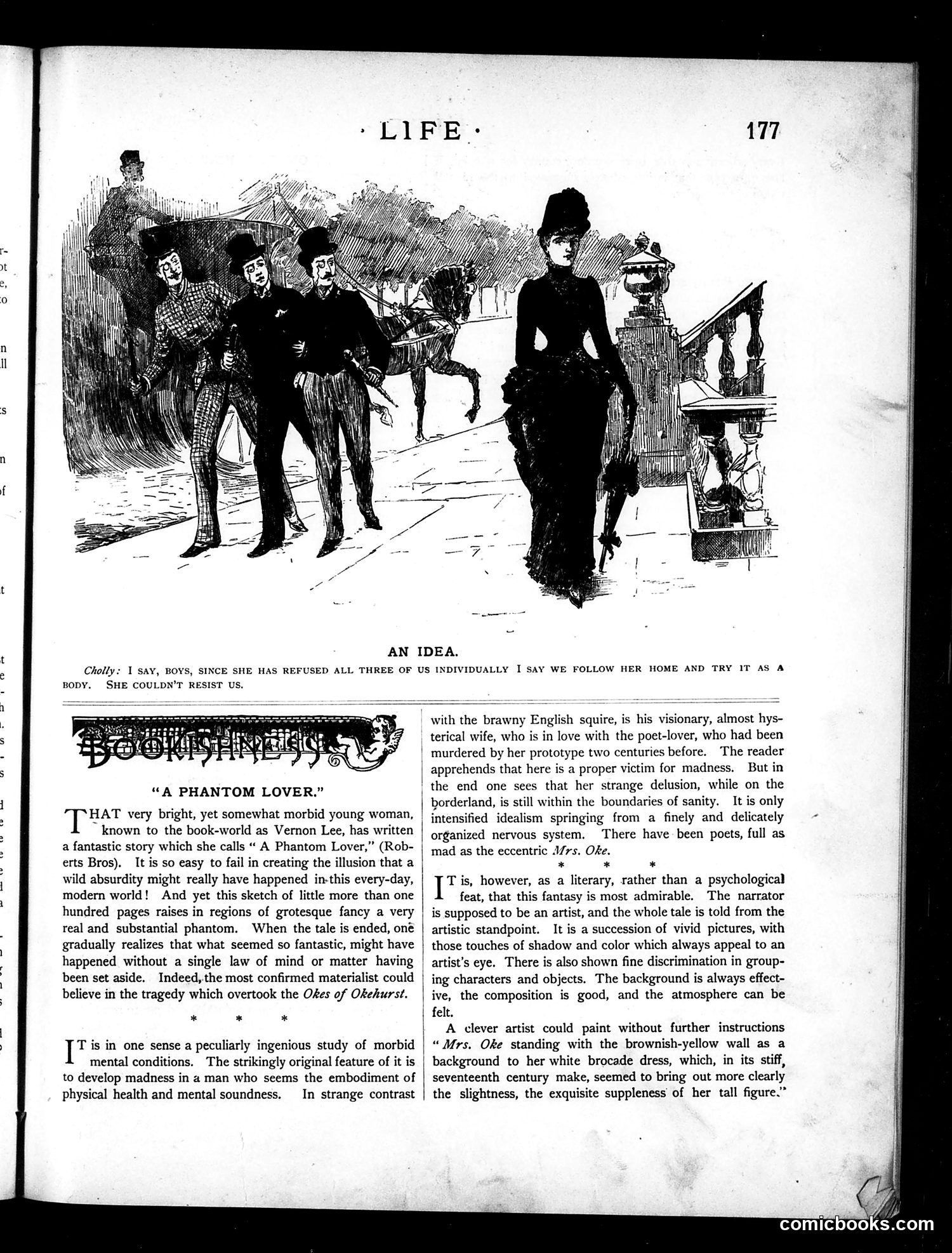
The main cartoon titled "AN IDEA" depicts a woman in black walking past three men who propose following her home "as a body" since "she couldn't resist us." This is satirical commentary on aggressive male pursuit and harassment—presenting the men's presumption as absurd. Below, the text discusses "A Phantom Lover," a literary work by Roberts Bros. The review describes it as a fantastical story about a young woman's mental delusion involving a poet-lover. The critique praises its artistic merit: vivid imagery, skilled character development, and effective composition. The satire appears to mock both male entitlement (top cartoon) and romantic fantasy detached from reality (the book review), suggesting contemporary anxieties about women's judgment and modern courtship.
This page contains **no political cartoons**. Instead, it features literary content and period advertisements typical of Life magazine's satirical format. The left column discusses **descriptive writing techniques**, praising Vernon Lee's use of color-words and adjectives in prose. It critiques writers for forgetting the "picturesque quality" of language. The right side presents **three poems** on romantic themes: "On the Piazza" (engagement), "Wedded" (marriage concerns), and "In Playful Mood" (domestic humor about a poor woman with children). Below are **advertisements** for new books and products (gymnastics glassware, chestnut bell inscriptions), plus a dialogue scene titled "At Richfield Springs" depicting genteel social interaction. The page reflects **turn-of-the-century literary and domestic preoccupations** rather than political satire.
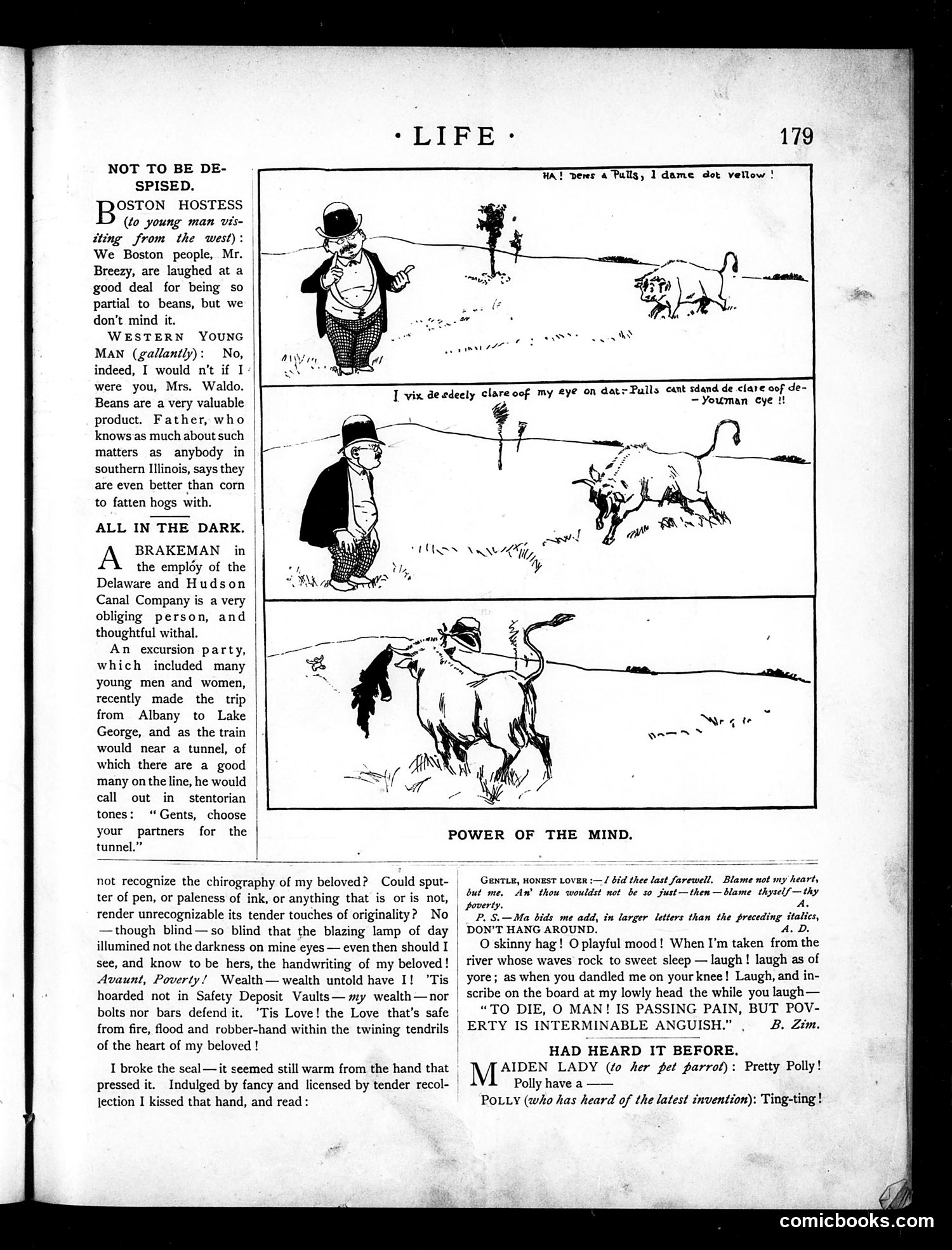
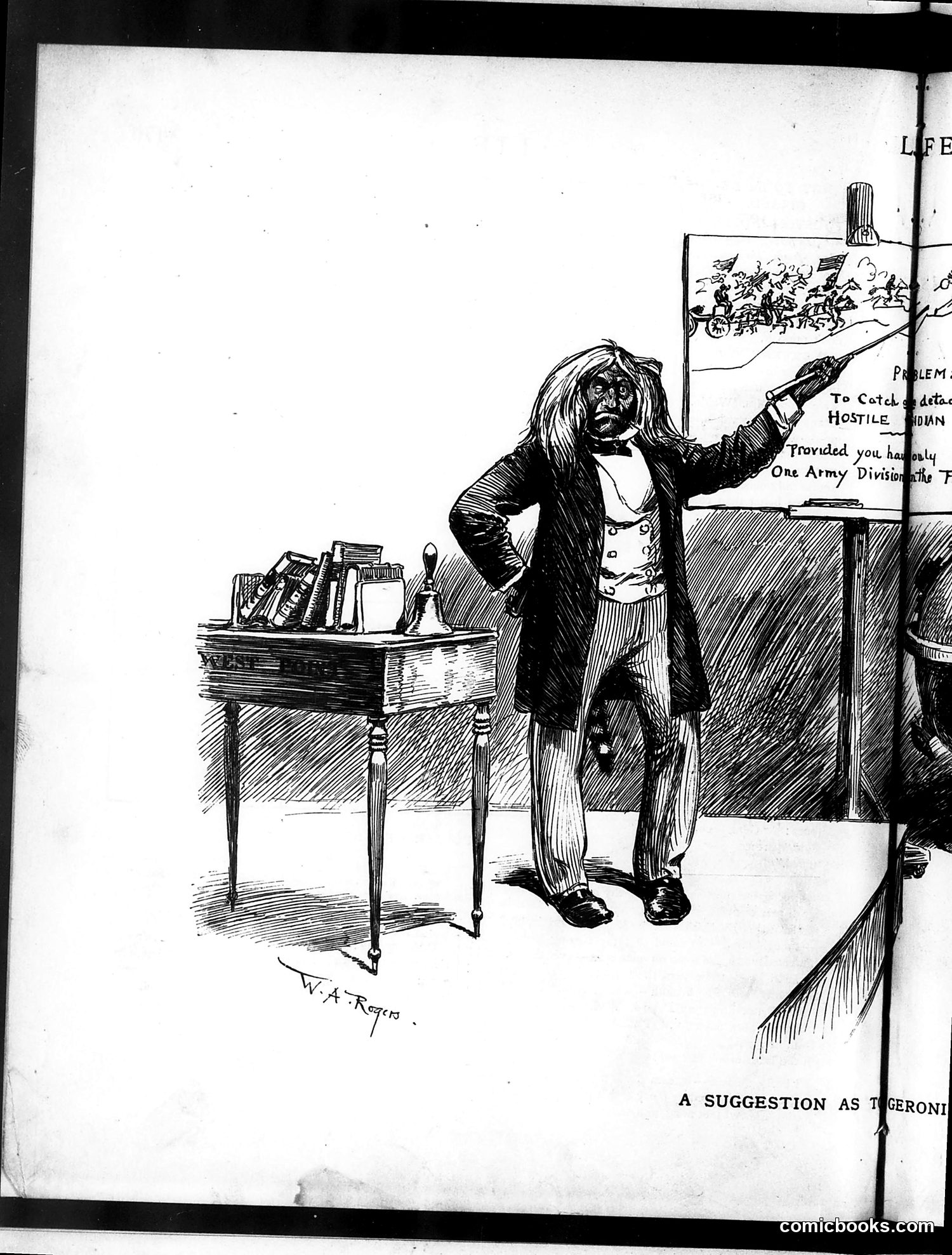
This political cartoon by W.A. Rogers depicts a disheveled man in formal attire pointing at a wall chart titled "Problem: To Catch a Treacherous Hostile Indian." The chart references catching "Hostile Indians" and mentions "One Army Division." The cartoon appears to satirize military incompetence or bureaucratic confusion regarding Native American conflicts. The messy desk with scattered papers and documents suggests disorganization, while the man's gestures toward the chart imply he's presenting a plan or excuse. Without the publication date visible, the specific historical context is unclear, but this likely references late 19th or early 20th-century U.S. military campaigns against Native Americans, mocking either the complexity of such operations or officials' justifications for military action.
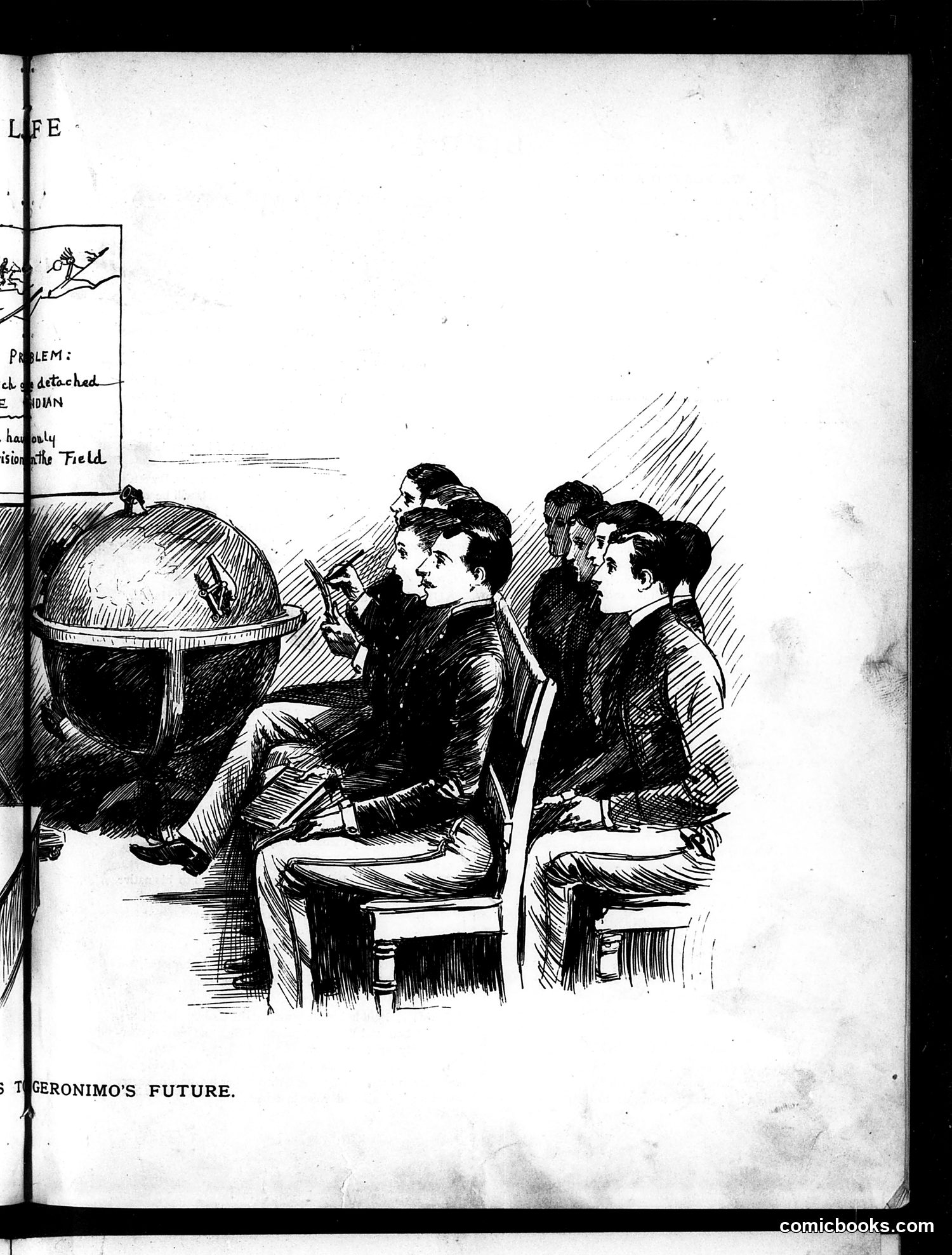
This cartoon depicts several young men gathered around a globe, examining it intently. The caption "GERONIMO'S FUTURE" suggests commentary on what lies ahead for the famous Apache leader Geronimo (who had recently surrendered in 1886). The satire appears to mock either: - Speculation about Geronimo's fate or where he might be exiled/imprisoned - Broader anxieties about Native American leadership and territorial displacement during the era of westward expansion The youths' serious study of the globe suggests they're pondering geographical questions—possibly where colonial powers might send Geronimo or how his capture affects American territorial control. The cartoon likely reflects contemporary debates about Native American policy and imperial geography during the late 19th century. The left margin references a "PROBLEM" involving someone "detached" in "the Field," though details remain unclear.
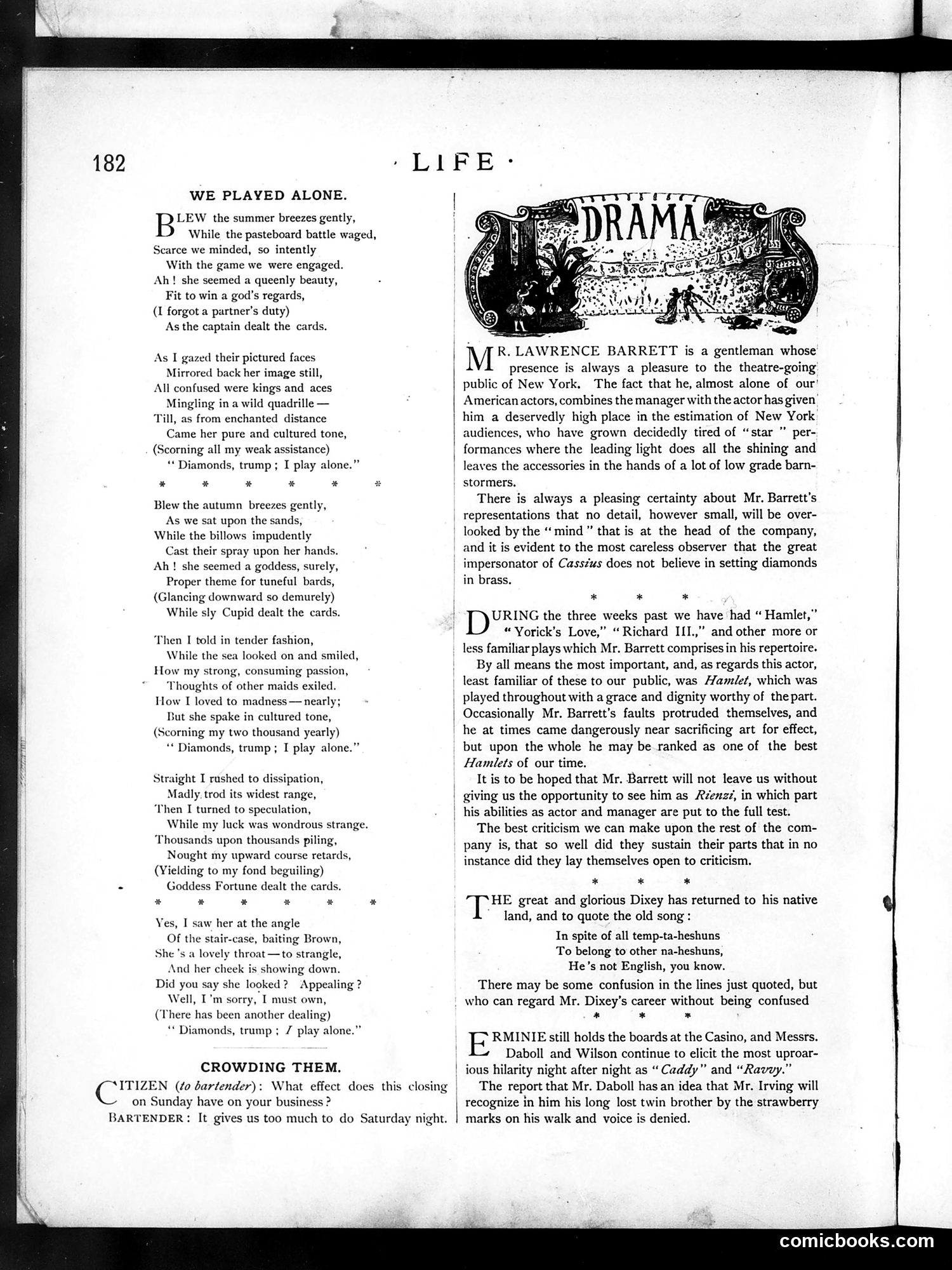
This page consists primarily of **theatrical criticism and drama commentary**, not political cartoons. The ornamental "DRAMA" header indicates this is a regular column reviewing stage performances. The text discusses **Mr. Lawrence Barrett**, a prominent American actor-manager of the era, critiquing his management style and recent performances including *Hamlet*, *Richard III*, and *Rienzi*. The critic notes Barrett sometimes sacrifices artistic integrity for theatrical effect. The page also mentions **David ("Dixey")**, an entertainer who has returned to America, and **Erminie**, a musical comedy playing at the Casino theater with actors Daboll and Wilson. The left side contains **poetry or dramatic dialogue** titled "We Played Alone" and "Crowding Them," likely excerpts from theatrical works or satirical verses. This is **entertainment journalism**, not political satire.
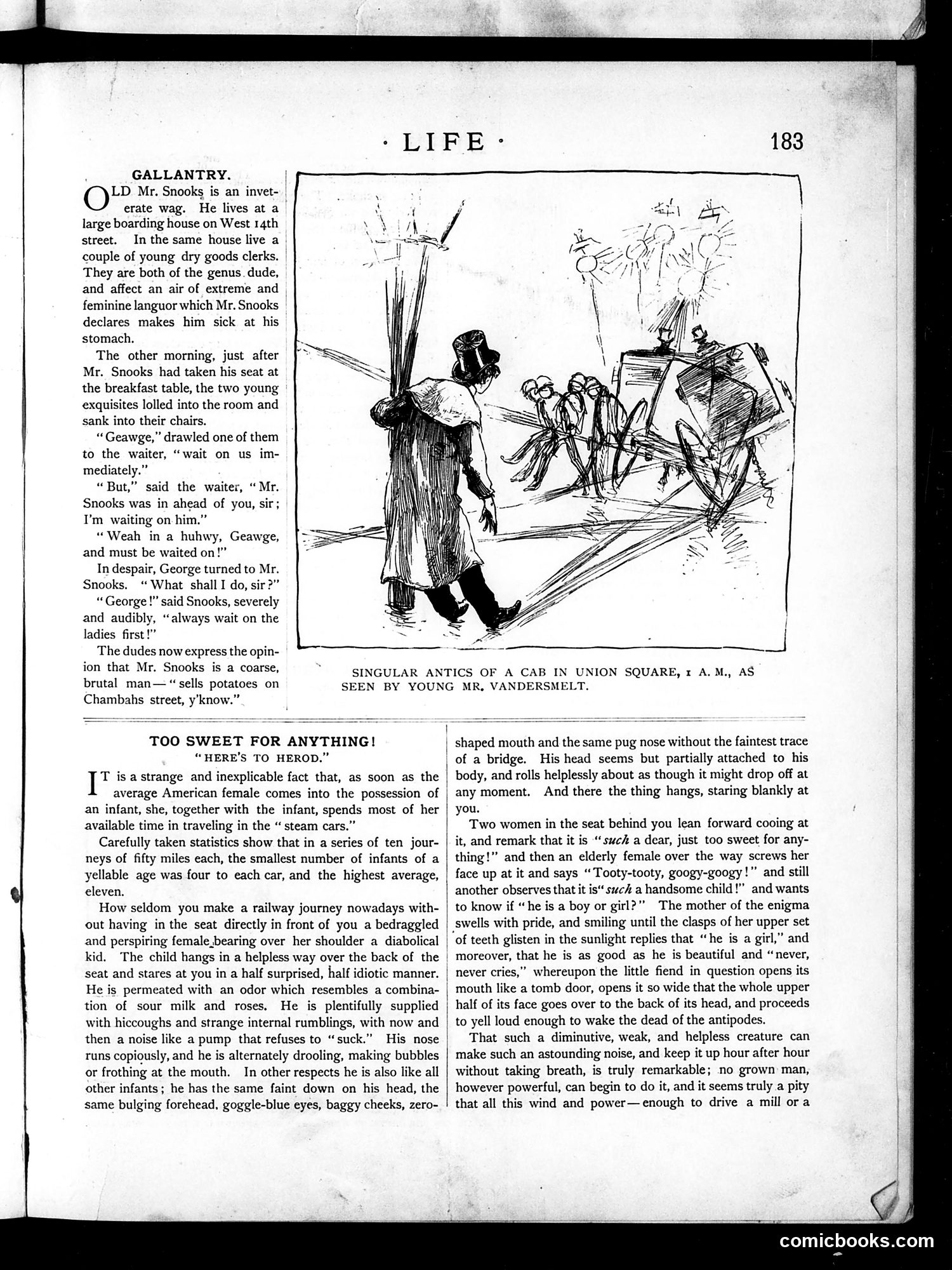
**"Gallantry"** satirizes affectation and false politeness. Two young "dudes" (fashionable but affected men) at a boarding house demand preferential service while affecting exaggerated feminine mannerisms. Mr. Snooks, a blunt, working-class man, exposes their hypocrisy by sarcastically telling the waiter to "wait on the ladies first"—implying the dudes are so effeminate they deserve that treatment. The dudes are insulted, proving they were never truly gentlemanly. **"Too Sweet for Anything"** mocks mothers who travel by train with infants. The author catalogs the baby's repulsive qualities—smelling of sour milk, drooling, helpless, with a bulging forehead and blank stare. Yet strangers coo over it as "too sweet," and the proud mother claims her "girl" "never cries"—immediately proven false when the infant screams loud enough "to wake the dead." The satire targets both the ugly reality of infants and the ridiculous sentimentality society demands toward them.
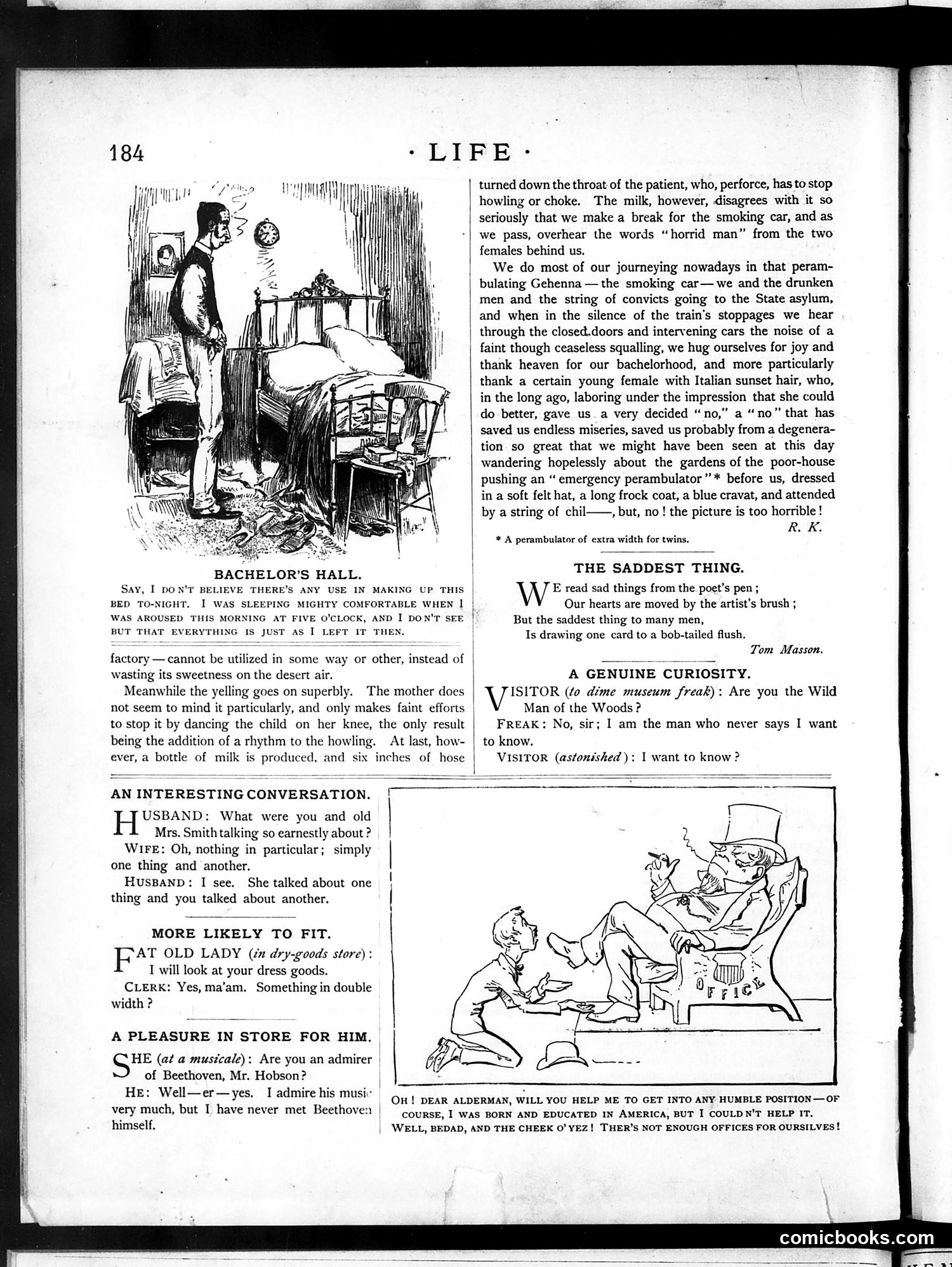
This page from the satirical magazine *Life* contains multiple short humor pieces mocking contemporary American life: **"Bachelor's Hall"** contrasts the carefree bachelor lifestyle with the misery of parenthood—a man refuses to make his bed, while the accompanying narrative describes the chaos of traveling with a crying infant on trains, with women calling him a "horrid man." The joke celebrates remaining unmarried. **"The Saddest Thing"** makes a poker joke about drawing a card to an incomplete flush—a gambling reference. **"A Genuine Curiosity"** features a dime museum freak show performer (popular entertainment venues of the era) whose claimed oddity is being a man who never expresses curiosity. **The cartoon** depicts an office worker seeking a job from an Irish-accented alderman (politician). The immigrant applicant's ironic claim—that being American-born is a disadvantage—mocks both anti-immigrant hiring bias and political patronage systems where officials gave jobs to supporters rather than qualified candidates. These pieces satirize bachelor life, gambling, circus culture, and immigrant/patronage politics.
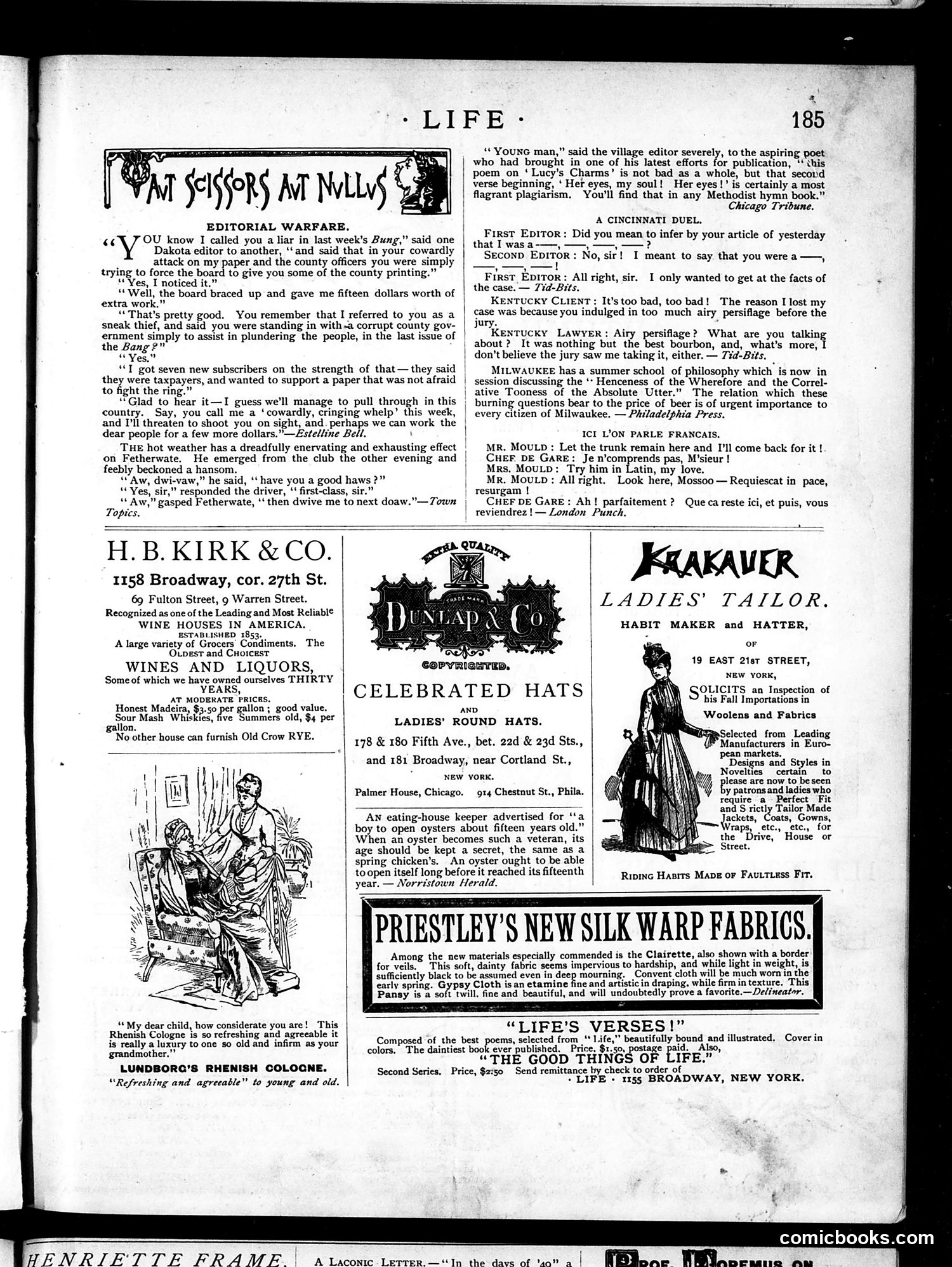
This page collects brief humorous anecdotes mocking American newspaper culture and social pretension. The main satire, "Editorial Warfare," depicts two small-town Dakota editors who've discovered that insulting each other—calling one a "liar" and the other a "sneak thief"—actually *increases* their newspaper subscriptions. They cynically agree to continue trading public insults to profit from outraged readers. The joke targets corrupt local journalism and the public's appetite for sensational feuds. Other brief jokes mock pretentious urban figures (the exhausted "Fetherwate"), aspiring poets plagiarizing Methodist hymns, and verbose Kentucky lawyers who use fancy language instead of genuine legal skill. The page is primarily advertisements for wines, hats, and fabrics interspersed with these satirical editorial snippets—typical of Life's format mixing humor with commercial content.
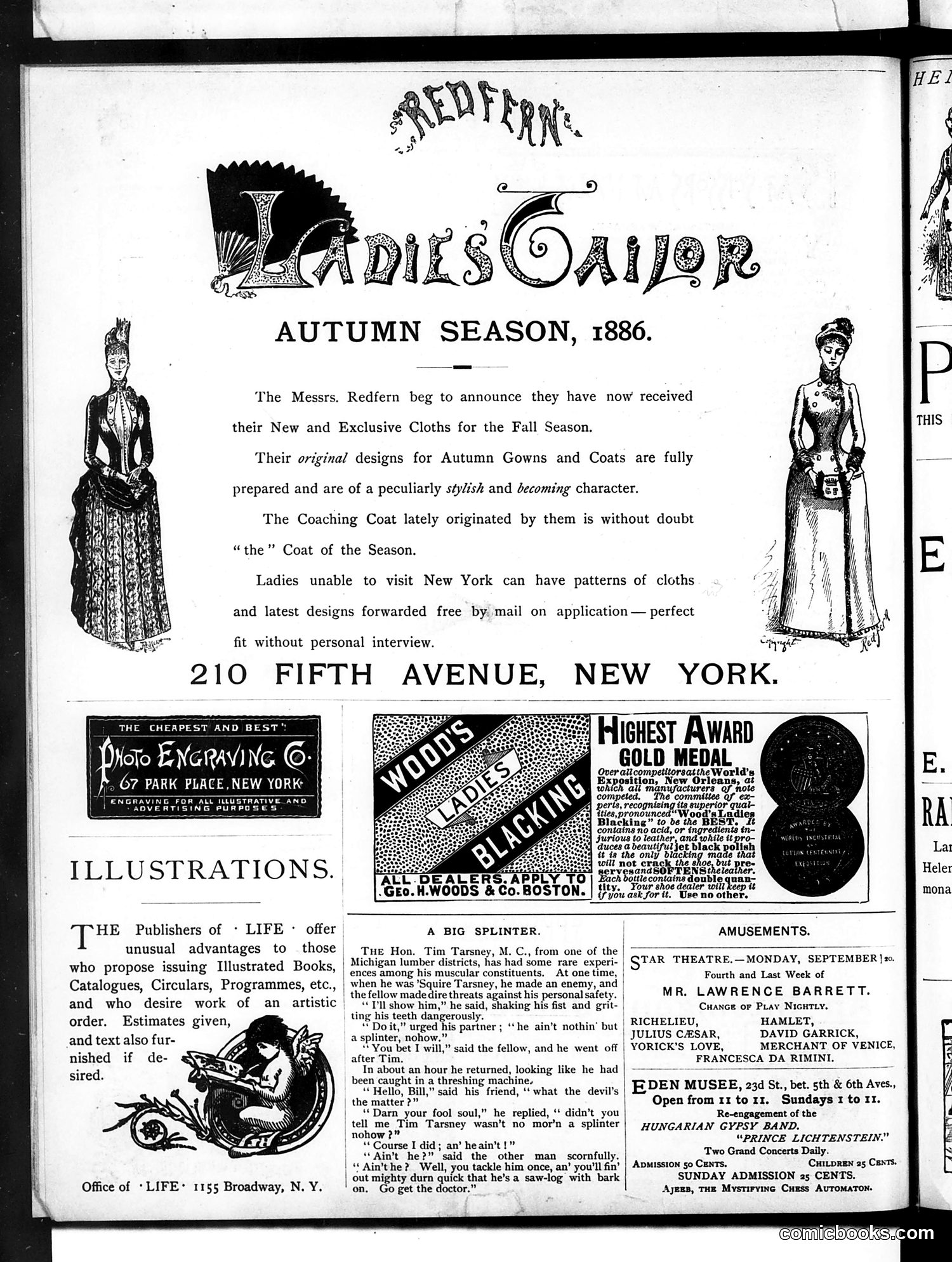
This page is primarily **advertising and filler content** rather than political satire. The top features a Redfern fashion house advertisement for autumn clothing (particularly their new "Coaching Coat"), with illustrations of fashionable women's wear. The main humorous piece is **"A Big Splinter,"** a anecdote about Congressman Tim Tarsney from Michigan. The joke plays on a literal misunderstanding: when told an enemy is "nothing but a splinter," Tarsney interprets this as trivial and beats him severely. The opponent returns injured, angry at the apparent lie—because Tarsney turned out to be a "saw-log with bark," not a splinter. It's rough frontier humor based on wordplay and exaggerated violence. The remainder consists of service advertisements (photo engraving, shoe blacking) and theater notices for the Star Theatre featuring actor Lawrence Barrett.
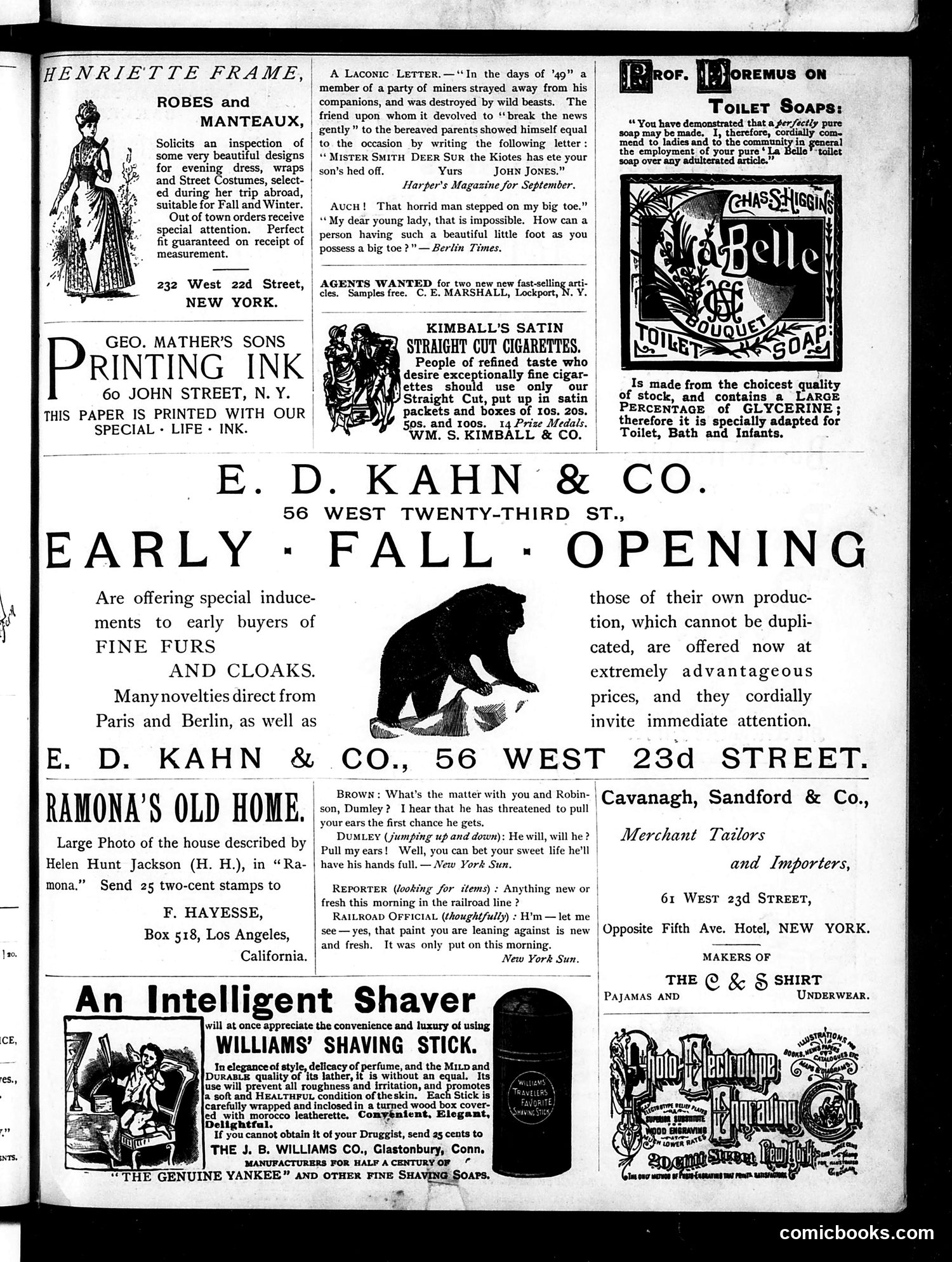
This page is primarily **advertising**, with minimal editorial content. The notable items are: **The "Laconic Letter" anecdote**: A darkly comic story from Harper's Magazine about a miner killed during the 1849 Gold Rush. A friend informs the parents with crude, matter-of-fact brevity: "the Kiotes has ete your son's hed off." The humor relies on the shocking bluntness and misspellings—the joke being that frontier informality clashes violently with the gravity of the news. **Two brief jokes** appear amid ads: one about a woman's "big toe" (playing on period gentility about women's bodies), another about a railroad official's observation about fresh paint. **The remaining content is commercial**: advertisements for women's clothing, printing ink, furs, cigarettes, soaps, tailoring, and shaving products. There are **no political cartoons** on this page. The illustrations are purely commercial—a woman in fashionable dress and a bear (for the fur company).
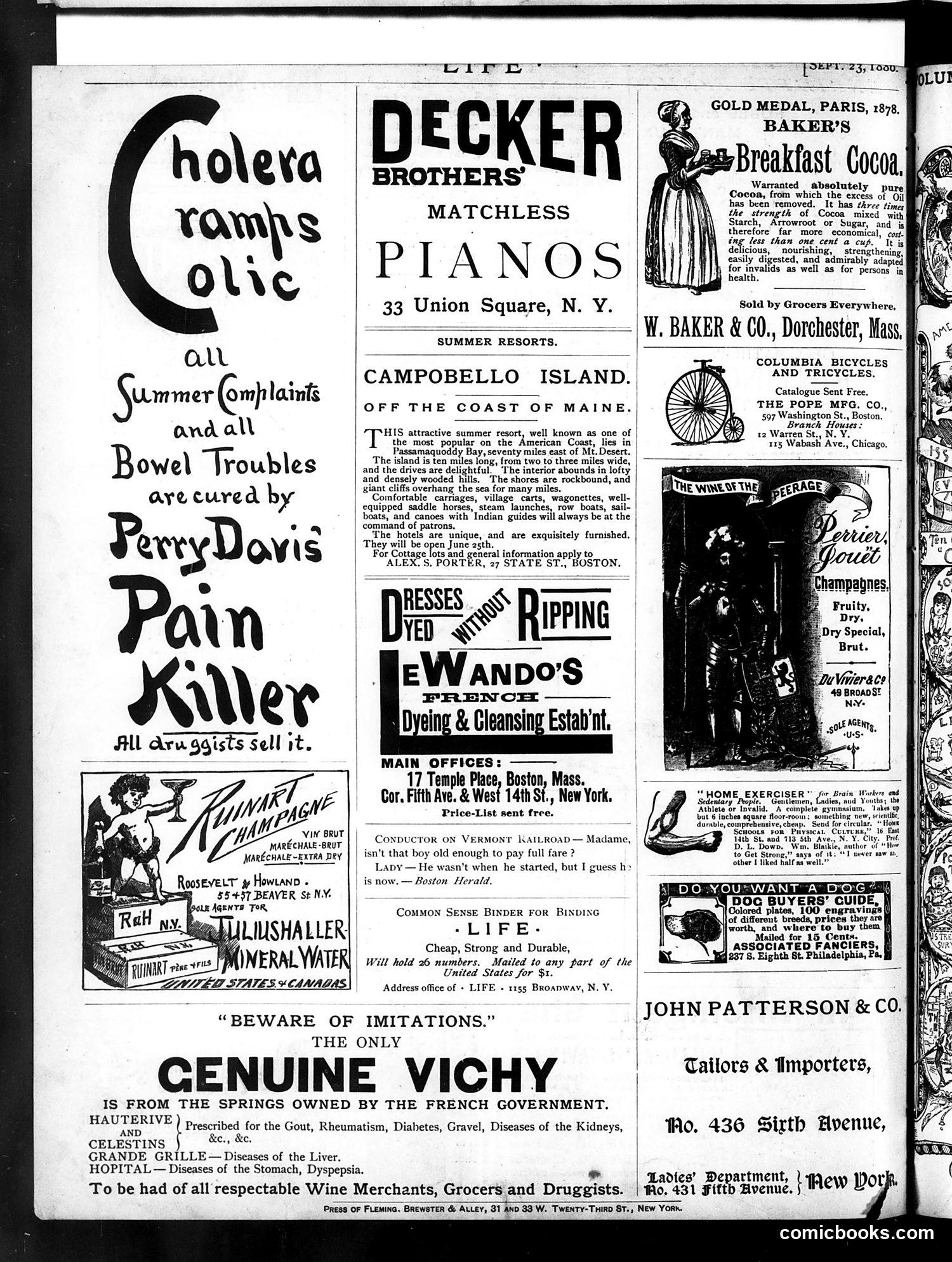
This is primarily an **advertising page** with one brief satirical dialogue at the bottom. ## The Cartoon/Joke: The only humorous content is a short exchange titled "Conductor on Vermont Railroad": **Conductor**: "Isn't that boy old enough to pay full fare?" **Lady**: "He wasn't when he started, but I guess he is now." — *Boston Herald* This is a mild joke about a child aging during a long train journey—playing on the absurdity that a trip could take so long the child grows up. ## The Advertisements: The page is dominated by period product ads (Perry Davis Pain Killer, Decker pianos, Baker's Cocoa, Vichy water, etc.). One notable ad features **"R.H. Mineral Water"** with imagery suggesting Roosevelt & Howland brand. **For modern readers**: This reflects 1900s advertising priorities—patent medicines, imported luxury goods (French Vichy water), and bicycles were major consumer products. The satirical content is minimal; Life magazine's humor here is restricted to one repurposed newspaper joke.