A complete issue · 36 pages · 1935
Judge — November 1935
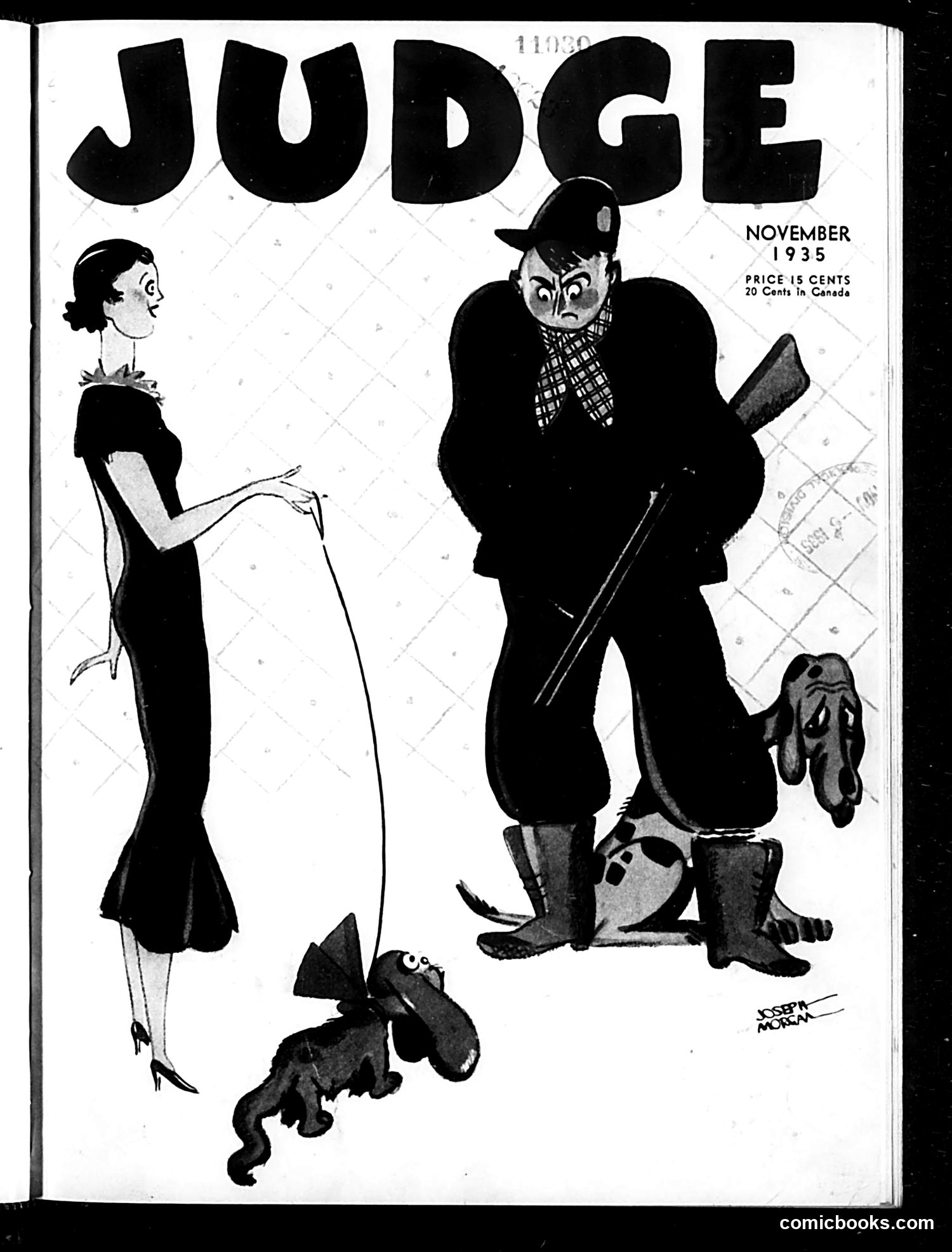
# Judge Magazine Cover - November 1935 This cover depicts a satirical scene about marital conflict and domestic life during the Depression era. A woman in an elegant dress holds a leash attached to a dachshund, while an angry man in a coat and cap swings an axe or club, appearing to chase the dog away. The exaggerated, menacing expression on the man's face and his aggressive posture suggest marital discord—likely satirizing domestic disputes over trivial matters. The humor plays on the contrast between the woman's composed elegance and the man's violent reaction to the pet. This reflects 1930s anxieties about home life and gender dynamics. The dachshund serves as the comedic focal point—whether the joke concerns the dog itself or uses it as a metaphor for broader marital tensions remains the cover's satirical ambiguity.
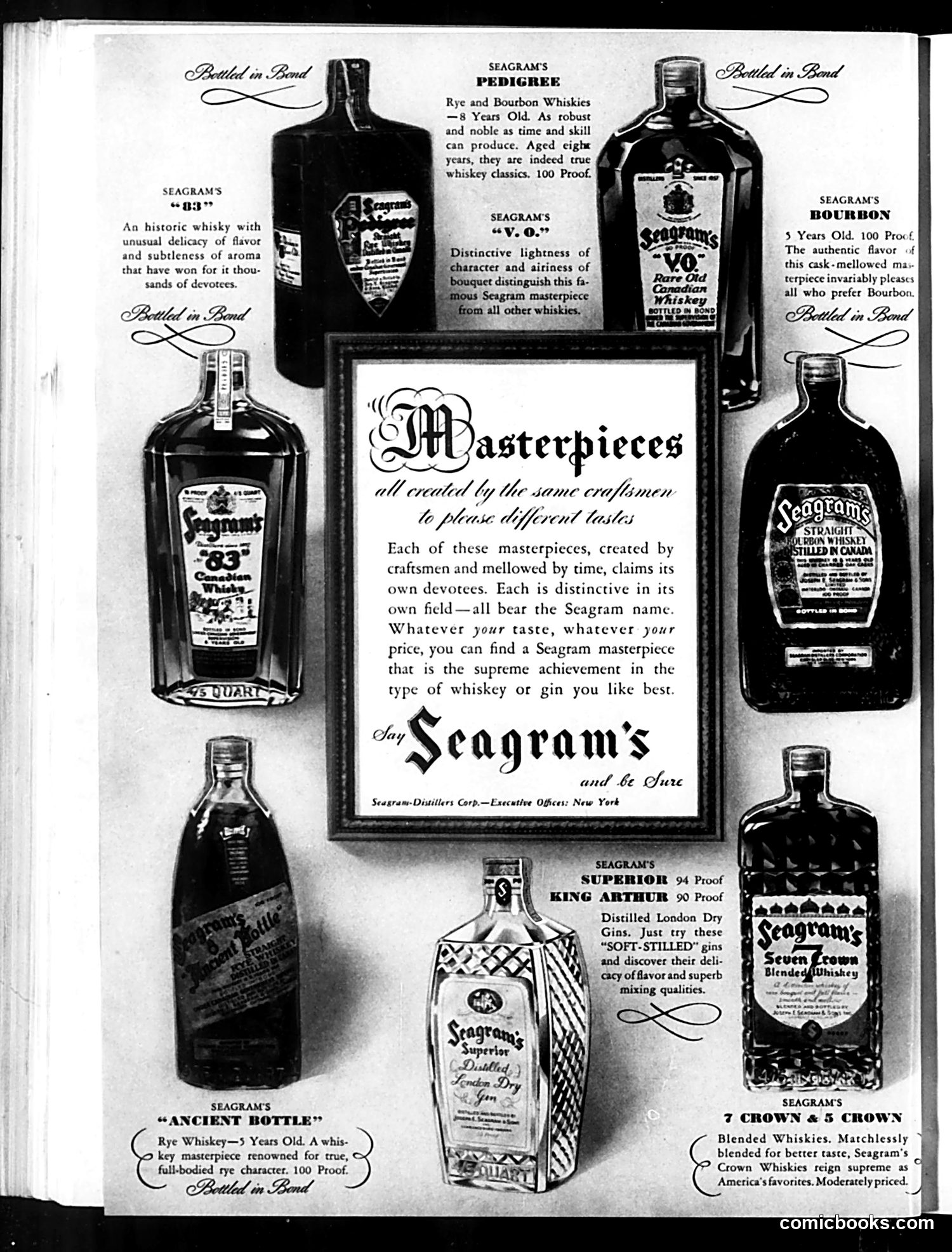
# Analysis This page is **not a cartoon or satirical content**—it's a full-page advertisement for Seagram's whiskeys and gins, circa Prohibition era (based on "Bottled in Bond" labeling language). The ad showcases seven different Seagram's products arranged around a central text block titled "Masterpieces." Each bottle features descriptive copy about its characteristics (proof, age, taste profile). The advertisement emphasizes product variety, claiming Seagram's offers options "to please different tastes" regardless of price point or preference. There is no political satire here. This is purely commercial advertising promoting Seagram's brand dominance in the spirits market, using Victorian-style typography and professional product photography typical of 1920s-1930s magazine advertising.
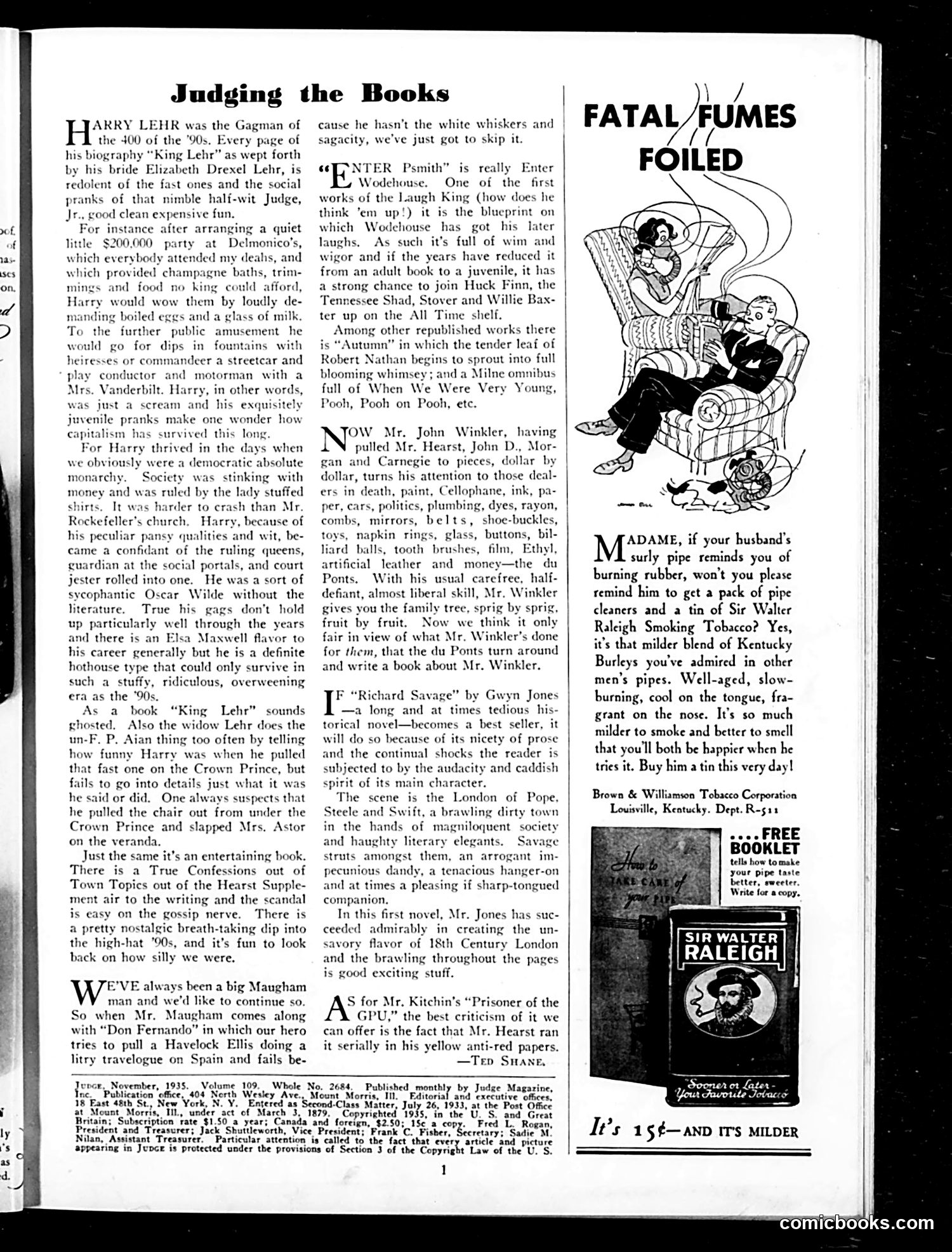
# "Fatal Fumes Foiled" This cartoon satirizes concerns about indoor air quality and smoking. The illustration shows a woman and child nearly overcome by smoke billowing from a pipe, presumably the husband's. The visual pun in the title plays on "fatal fumes" being "foiled"—defeated—by the advertisement below. The page is primarily an advertisement for Sir Walter Raleigh pipe tobacco, positioned to suggest the product prevents the domestic hazard depicted above. The ad's tagline promises the tobacco is "milder" and "cool on the tongue," implying it produces less noxious smoke than other brands. This reflects 1920s-era advertising that acknowledged smoking's unpleasant effects on household members while promoting "milder" alternatives as a solution rather than questioning smoking itself.
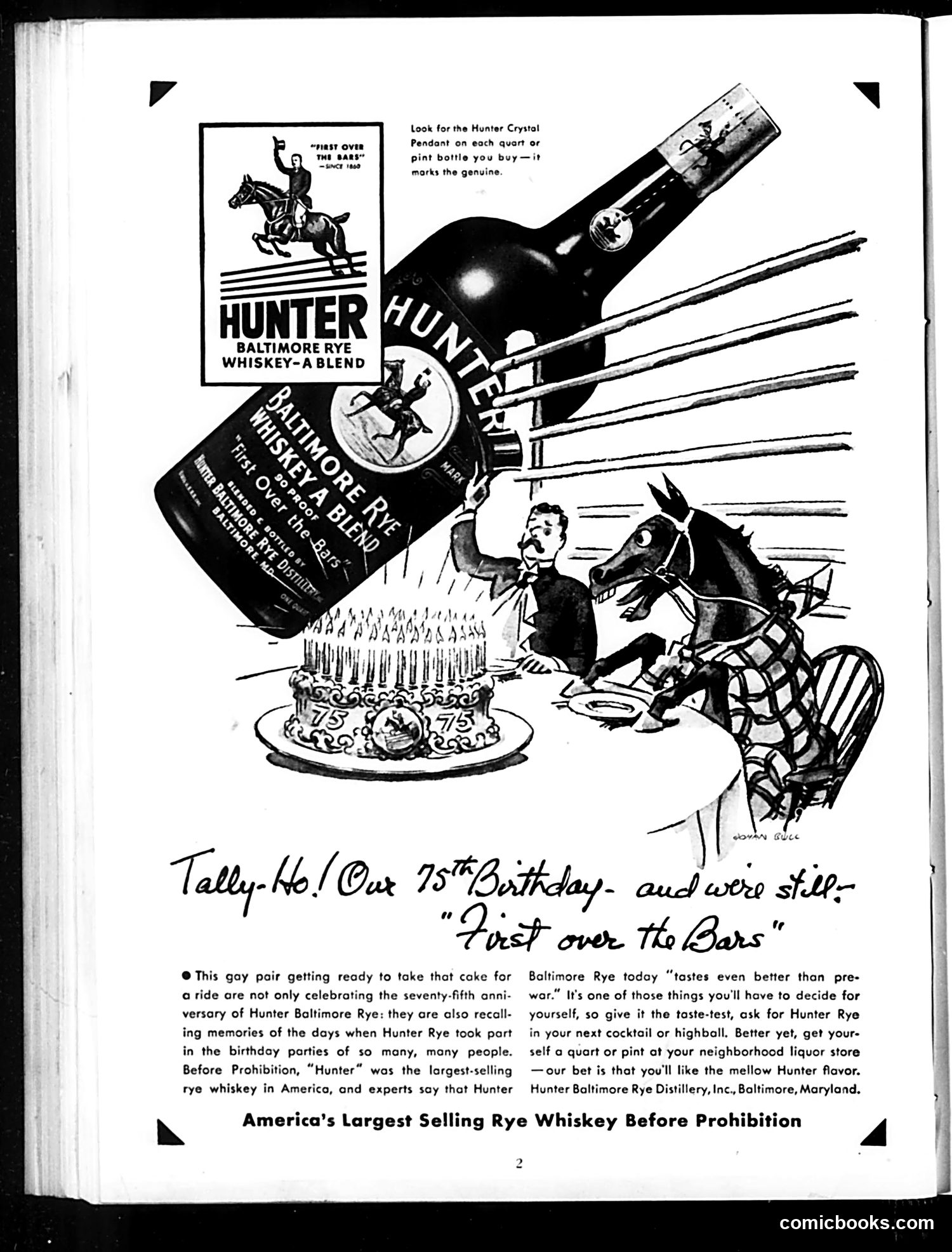
# Analysis This page is primarily a **whiskey advertisement** for Hunter Baltimore Rye, not political satire. The cartoon depicts two men preparing to transport a large cake, with an oversized bottle of Hunter Rye looming above them. The caption reads "Tally-Ho! Our 75th Birthday and we're still 'First over the Bars.'" The humor references Hunter Rye's status as "America's Largest Selling Rye Whiskey Before Prohibition." The "first over the bars" phrase likely plays on equestrian imagery (the brand's logo features a horse and rider) while also alluding to the whiskey's popularity. The authentication note at top about the "Hunter Crystal Pendant" suggests this advertisement emphasized product authenticity during Prohibition's era, when counterfeit spirits were common concerns for consumers.
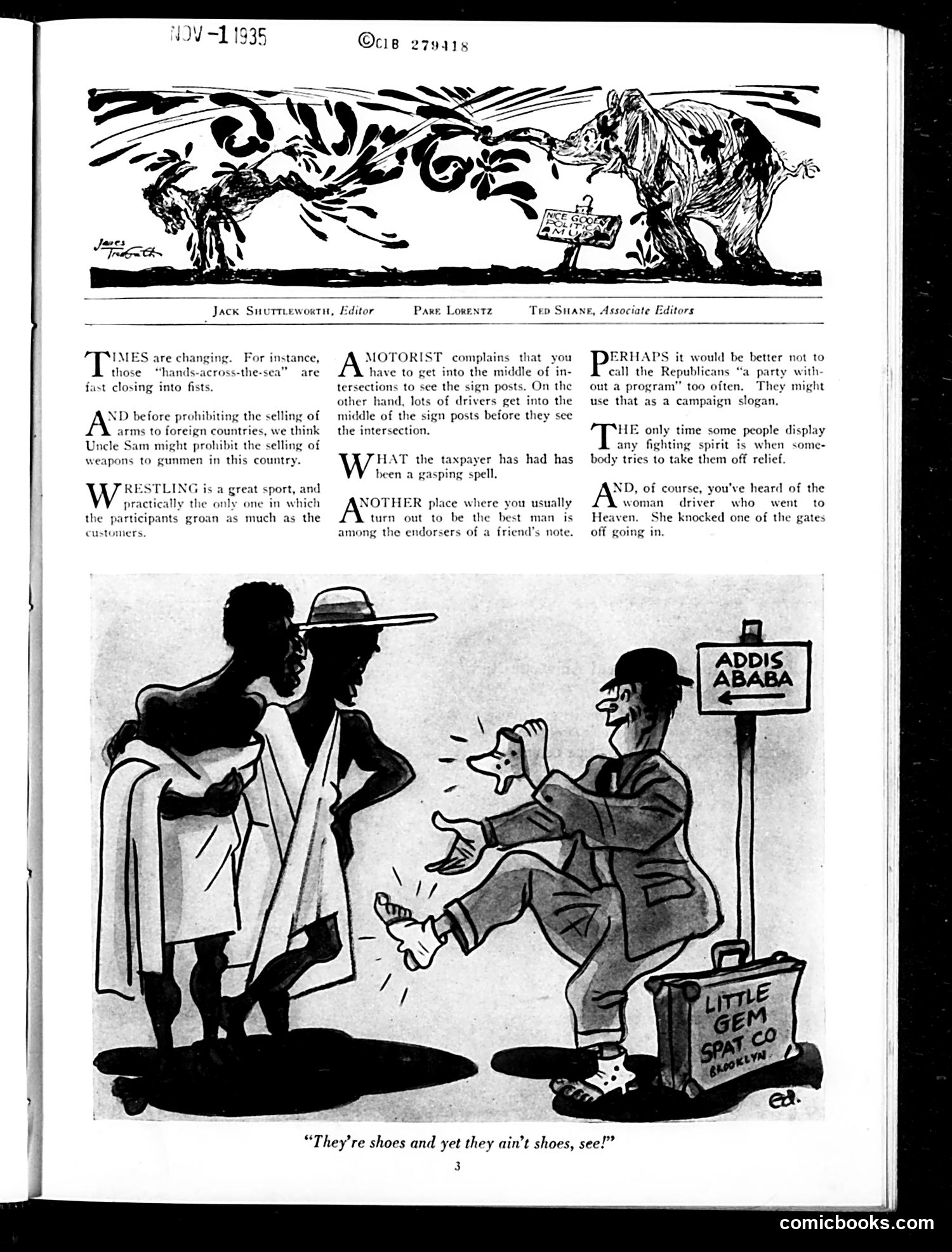
# Political Cartoon Analysis (Judge Magazine, November 1, 1935) The main cartoon depicts a street vendor ("Little Gem Spot Co" from Brooklyn) selling shoes in Addis Ababa, with the caption "They're shoes and yet they ain't shoes, see!" This appears to reference Italy's 1935 invasion of Ethiopia (then called Abyssinia). The vendor's absurd logic—claiming shoes are "not shoes"—likely satirizes diplomatic doublespeak around the invasion: nations condemned Italy while continuing to trade with it, creating contradictory positions. The shoe-seller represents American hypocrisy or equivocation regarding international sanctions against fascist aggression. The surrounding editorial snippets touch on timely issues: highway safety, arms sales to foreign powers, and wrestling as American sport.
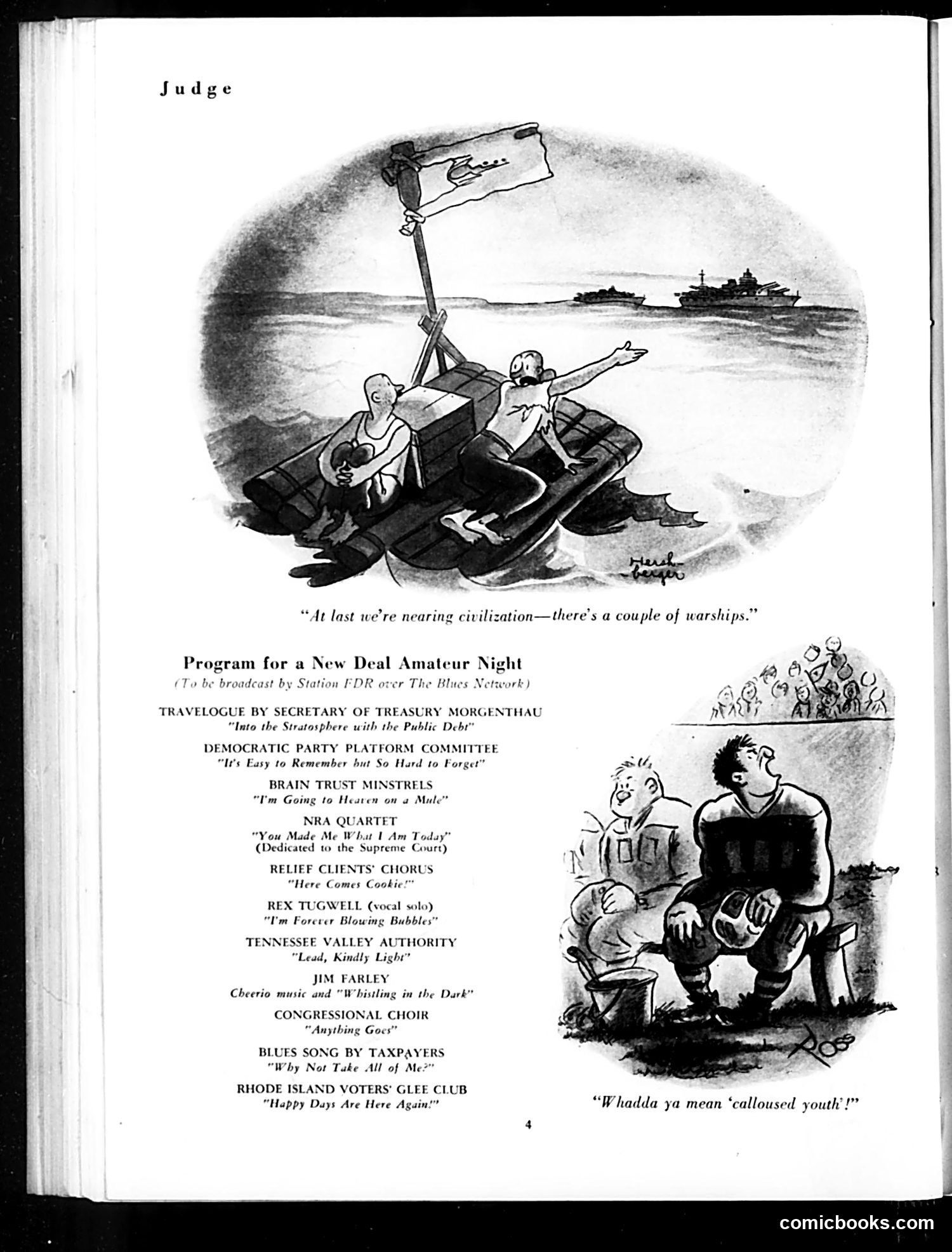
# Analysis of Judge Magazine Page The top cartoon titled "Judge" depicts two figures on a raft displaying a flag, with warships visible in the background. The caption reads: "At last we're nearing civilization—there's a couple of warships." This appears to satirize American militarism and naval power as markers of "civilization," likely commenting on 1930s-40s naval expansion or war preparedness. The lower cartoon shows a man and woman in what appears to be a domestic scene, captioned "If hadda ya mean 'calloused youth'!" This seems to mock working-class speech patterns or social commentary about youth. The page primarily lists a "Program for a New Deal Amateur Night" broadcast, featuring various performers and musical acts with satirical song titles—content clearly mocking New Deal programs and Democratic politics of the Roosevelt era.
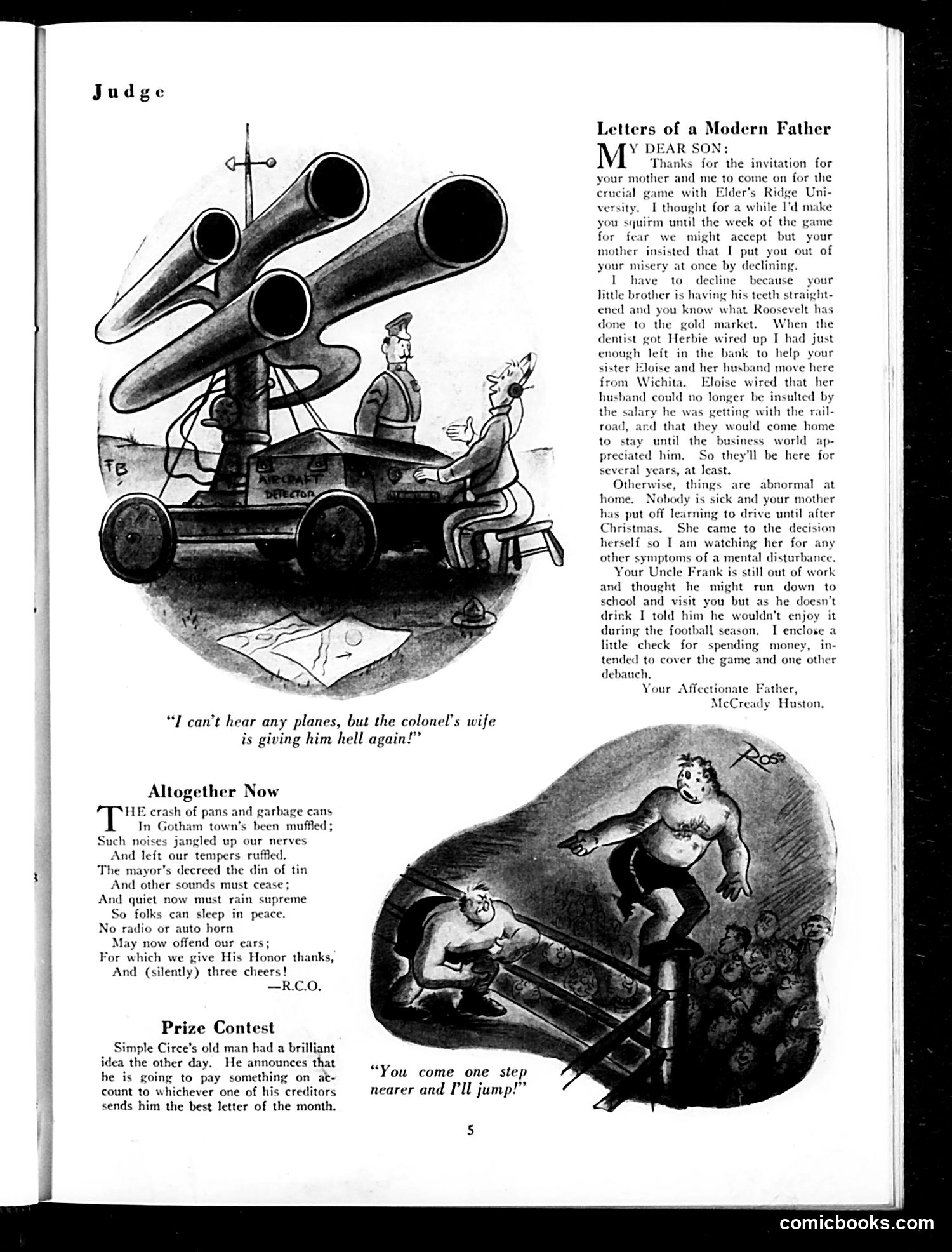
# Analysis of Judge Magazine Page The top cartoon titled "Judge" depicts a military aircraft with oversized guns mounted above a car labeled "INSPECTOR," with a small civilian figure looking alarmed. The caption reads: "I can't hear any planes, but the colonel's wife is giving him hell again!" This satirizes domestic friction during what appears to be a WWI-era military inspection or exercise. The joke contrasts the potential threat of enemy aircraft with the more immediate "threat" of a colonel's nagging wife—suggesting that military men fear spousal complaints more than actual combat dangers. The page also contains "Letters of a Modern Father" and other humorous content typical of Judge magazine's satirical commentary on American domestic and social life. The publication critiqued contemporary social anxieties through domestic scenarios and military humor.
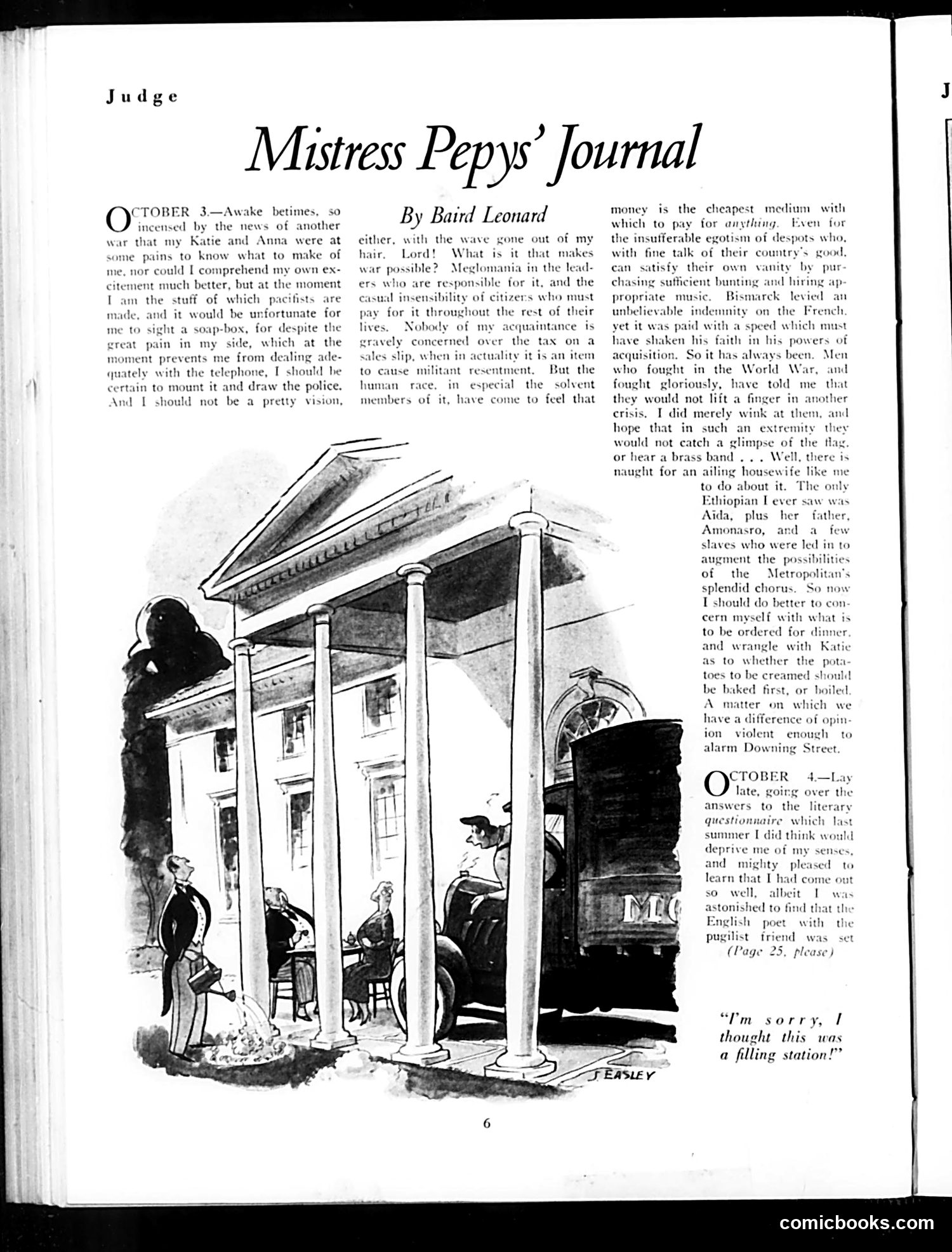
# "Mistress Pepys' Journal" by Baird Leonard This is a fictional satirical column mimicking Samuel Pepys' famous 17th-century diary. The October 3rd entry humorously complains about post-WWI social problems: tax complaints on yachts causing "militant resentment," widespread strikes, and general public discontent. The writer sarcastically hopes such crises won't reach Ethiopia or disrupt the Metropolitan Opera's chorus. The accompanying cartoon depicts a car arriving at what appears to be a gas station, with the caption "I'm sorry, I thought this was a filling station!" The joke plays on 1920s labor unrest—the uniformed figures and formal setting suggest the vehicle has mistakenly pulled up to some official or governmental building instead of a commercial gas pump, satirizing the period's confusion and disruption caused by strikes and social upheaval.
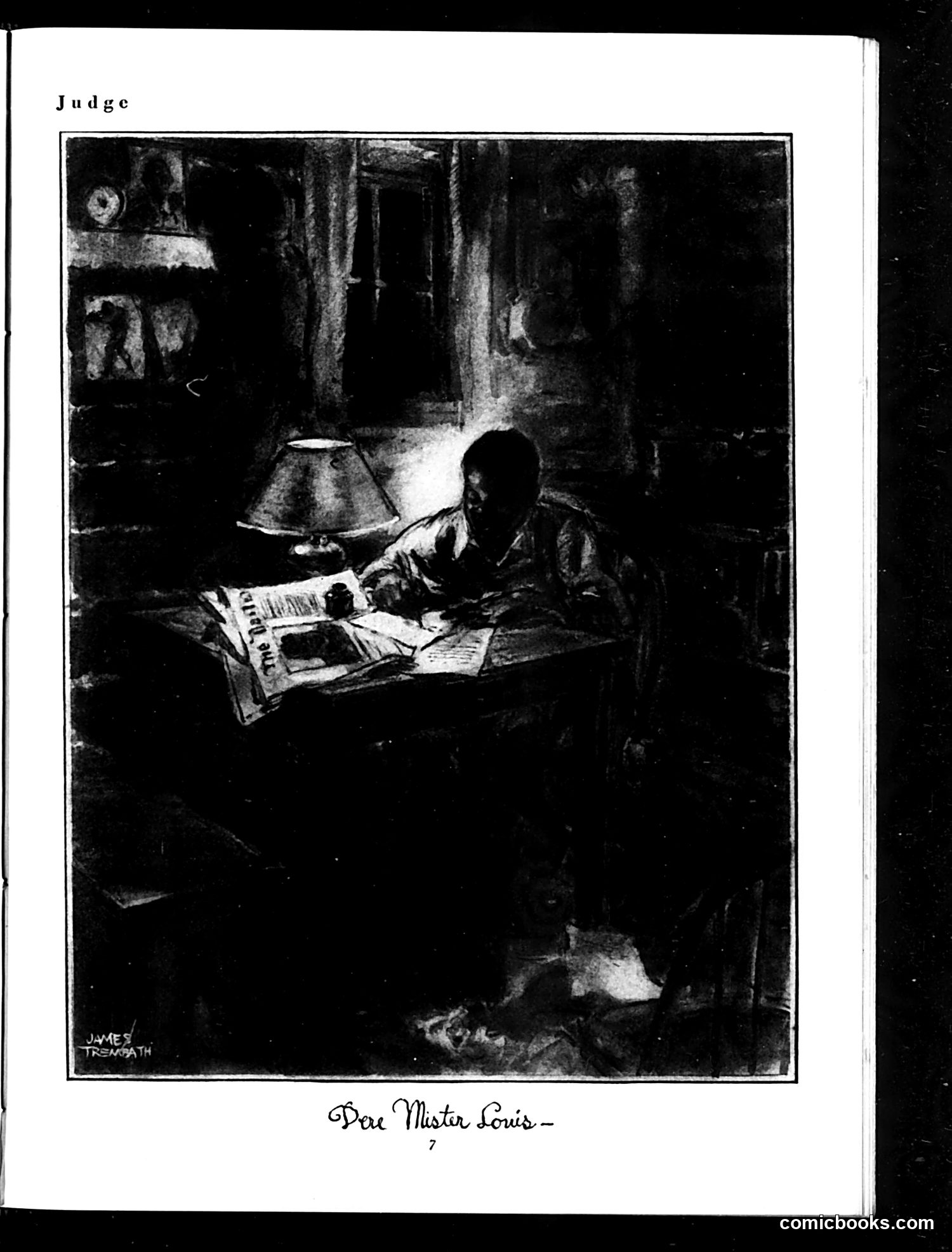
# Analysis of "Judge" Page - "Dear Mister Lewis" This page contains a single illustration titled "Dear Mister Lewis," showing a figure reading newspapers by lamplight in what appears to be a modest, cluttered interior space. The cartoon likely satirizes a contemporary political or public figure named Lewis through correspondence or public commentary. The reader's focused attention on newspapers suggests the satire concerns media coverage, public opinion, or news-driven events involving this Lewis figure. Without additional context about the specific date or Lewis in question, the precise political reference remains unclear. However, the intimate domestic setting combined with newspaper reading suggests commentary on how average citizens were consuming and reacting to news about someone named Lewis—possibly a politician, businessman, or public personality of the era.
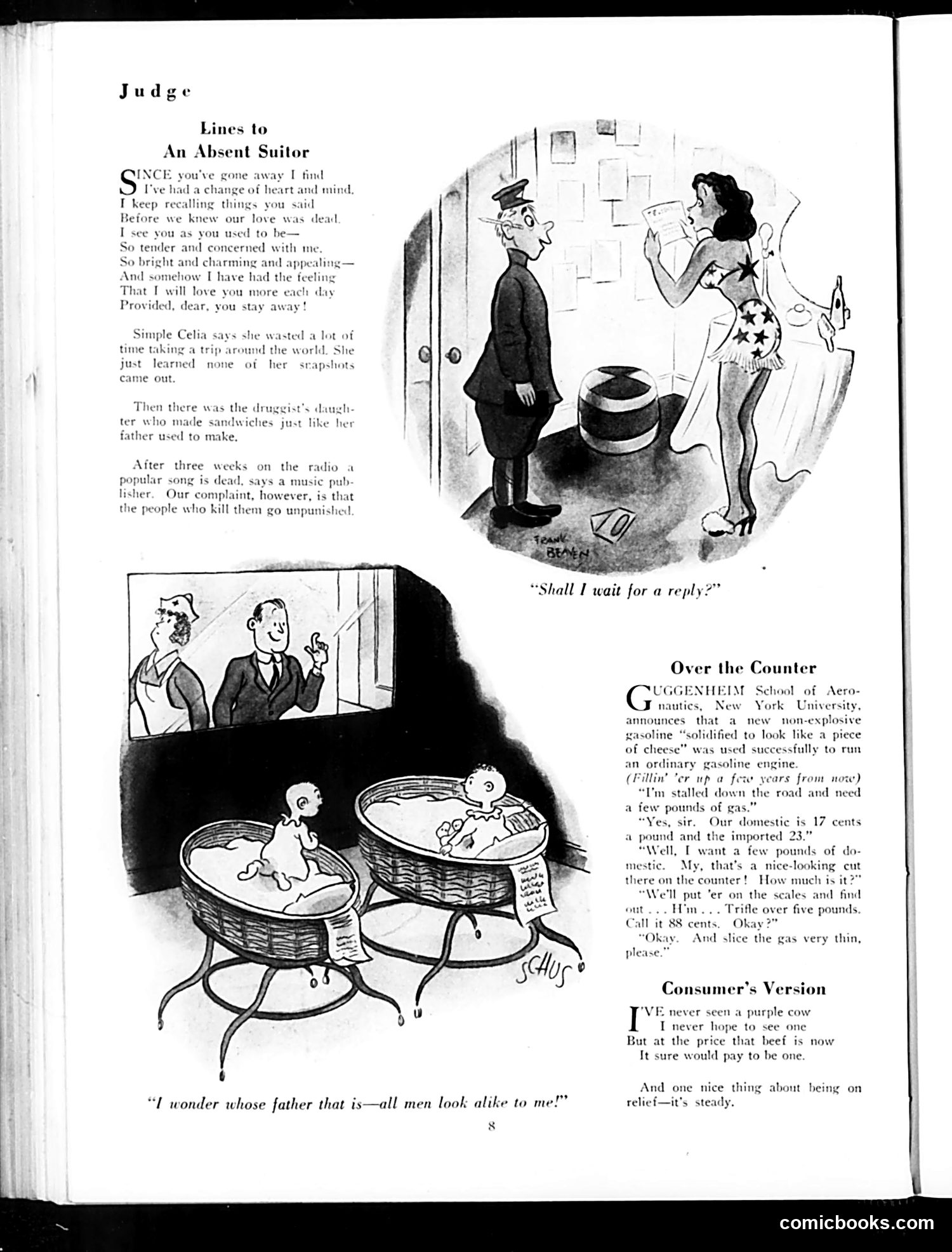
# Judge Magazine Page Analysis This page contains three satirical pieces reflecting post-WWI American concerns: **"Lines to An Absent Suitor"** mocks romantic sentimentality—a woman declares eternal love *provided* her suitor stays away, a joke about absence making the heart grow fonder taken to absurd conclusion. **"Over the Counter"** satirizes wartime/postwar scarcity and rationing. It imagines a future where gasoline is "solidified" to resemble cheese and sold like food at a butcher counter by weight. The humor lies in treating fuel as a commodity one purchases and slices like meat—a commentary on resource shortages and the absurdity of rationing. **"Consumer's Version"** is a dark joke about inflation and beef prices. Playing on the famous nonsense poem "I Never Saw a Purple Cow," it suggests prices have risen so steeply that becoming a cow would be economically advantageous. The final line about relief being "steady" implies economic hardship is chronic. All three pieces reflect post-war economic anxiety: inflation, scarcity, and rationing concerns dominating American life.
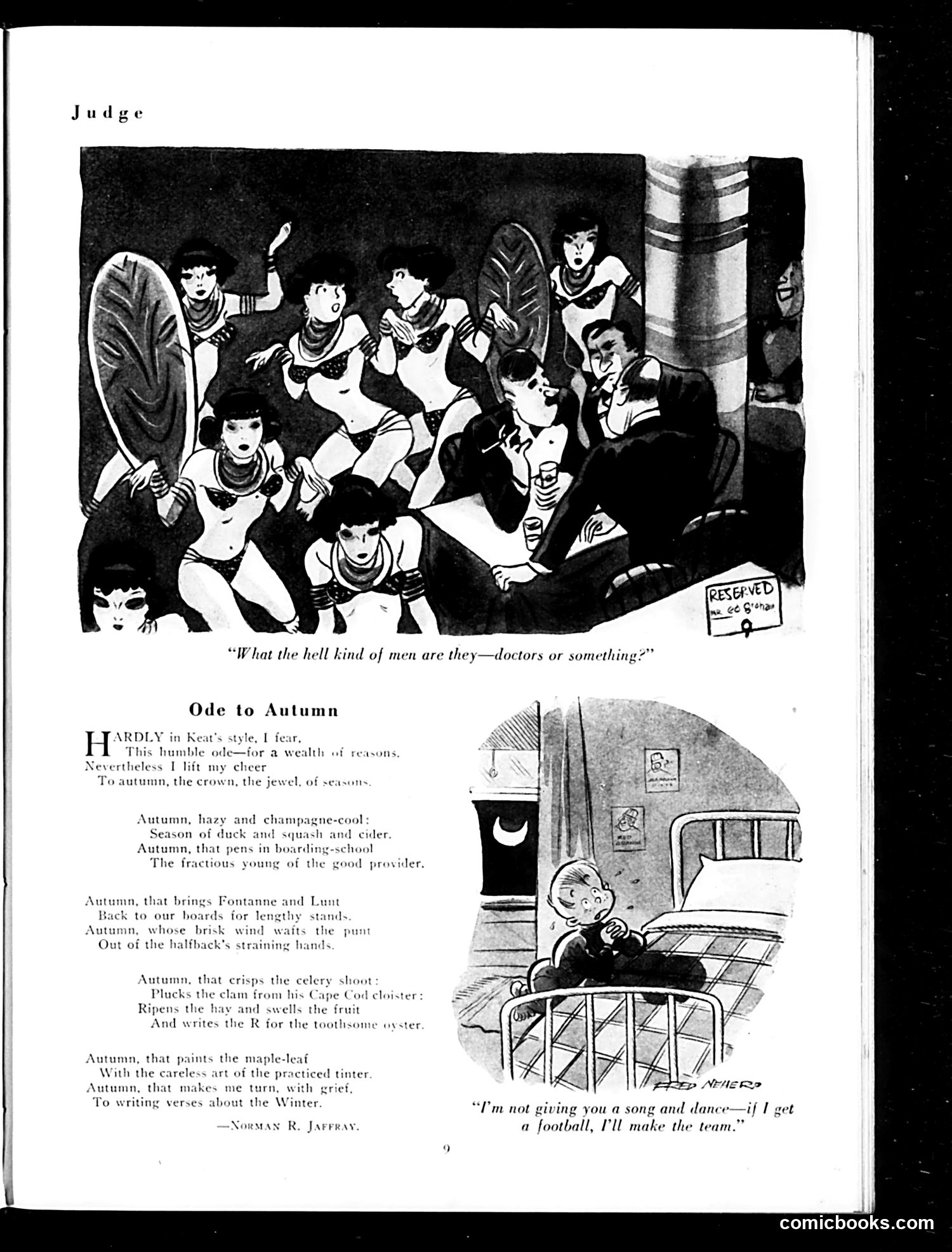
# Analysis of Judge Magazine Page The top cartoon depicts a group of scantily-clad women (appearing to be chorus girls or performers) confronting two men in formal attire. The joke—"What the hell kind of men are they—doctors or something?"—suggests the men are either unusually reserved or perhaps there for medical/professional rather than social reasons, playing on the contrast between the women's obvious attempt at seduction and the men's apparent indifference. This is typical Jazz Age satire about changing social mores and gender dynamics. Below is "Ode to Autumn," a poem by Norman R. Jaffray celebrating the season—referencing football, oysters, and maple leaves. The accompanying cartoon shows a child in bed saying he won't perform songs and dances unless given a football, making the team. This reflects 1920s-30s American priorities: athletics and competitive success over entertainment or obedience. The page satirizes both romantic/social pretense and youthful materialism/ambition.
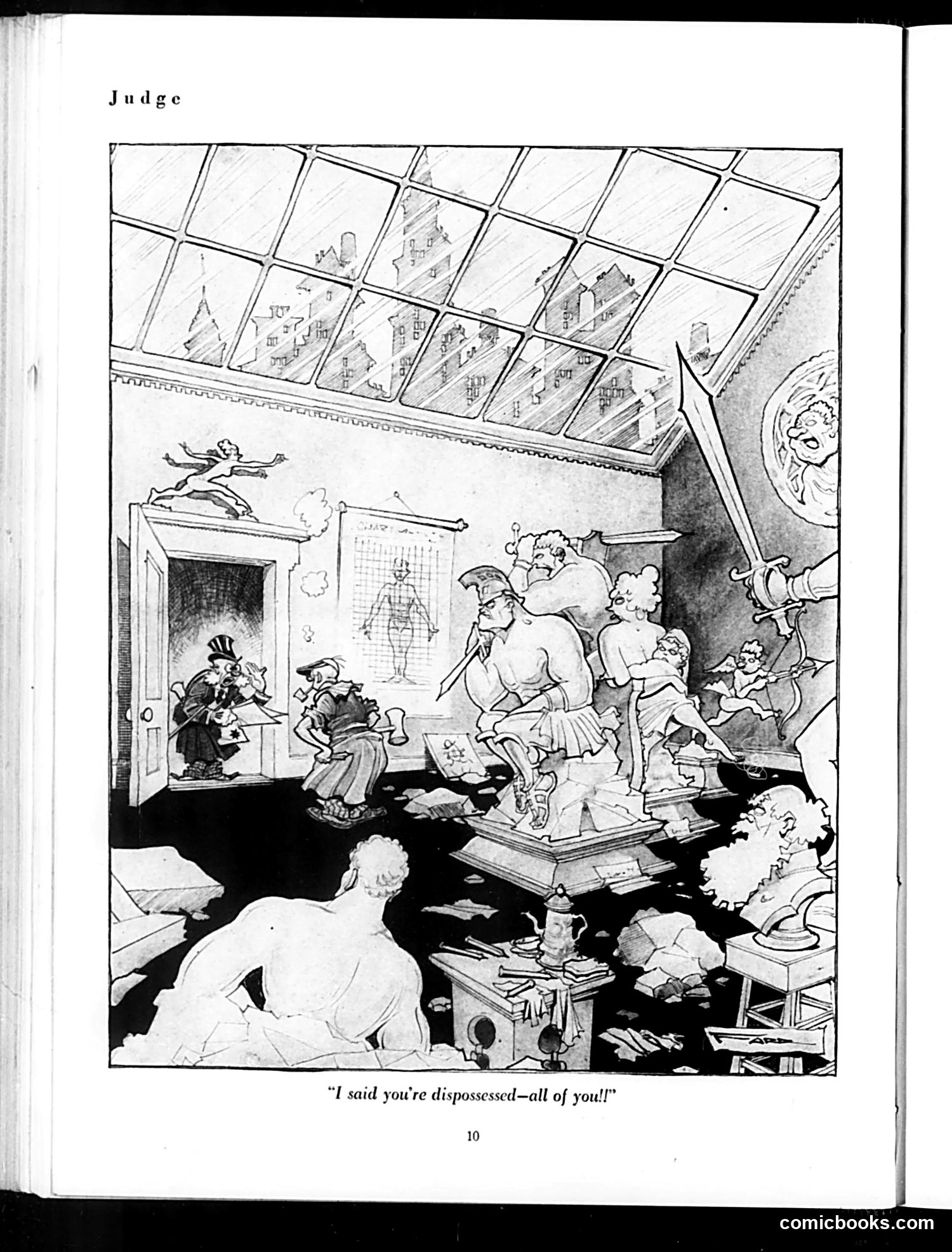
# Analysis This appears to be a single-panel cartoon from *Judge* magazine satirizing a courtroom or legal proceeding. A judge (visible at left in the doorway) declares to a group of figures that they are "dispossessed"—legally evicted or stripped of property ownership. The scene shows what appear to be wealthy or middle-class people reacting with shock and distress to this pronouncement. The ornate setting with its glass ceiling and decorative elements suggests either a courtroom or an aristocratic interior being repurposed as one. Without additional context or visible dates, the specific historical reference is unclear. This likely satirizes either Depression-era evictions, a particular legal case, or commentary on wealth redistribution. The humor derives from the apparent social status of those being dispossessed, suggesting ironic commentary on economic upheaval or legal consequences for the privileged.
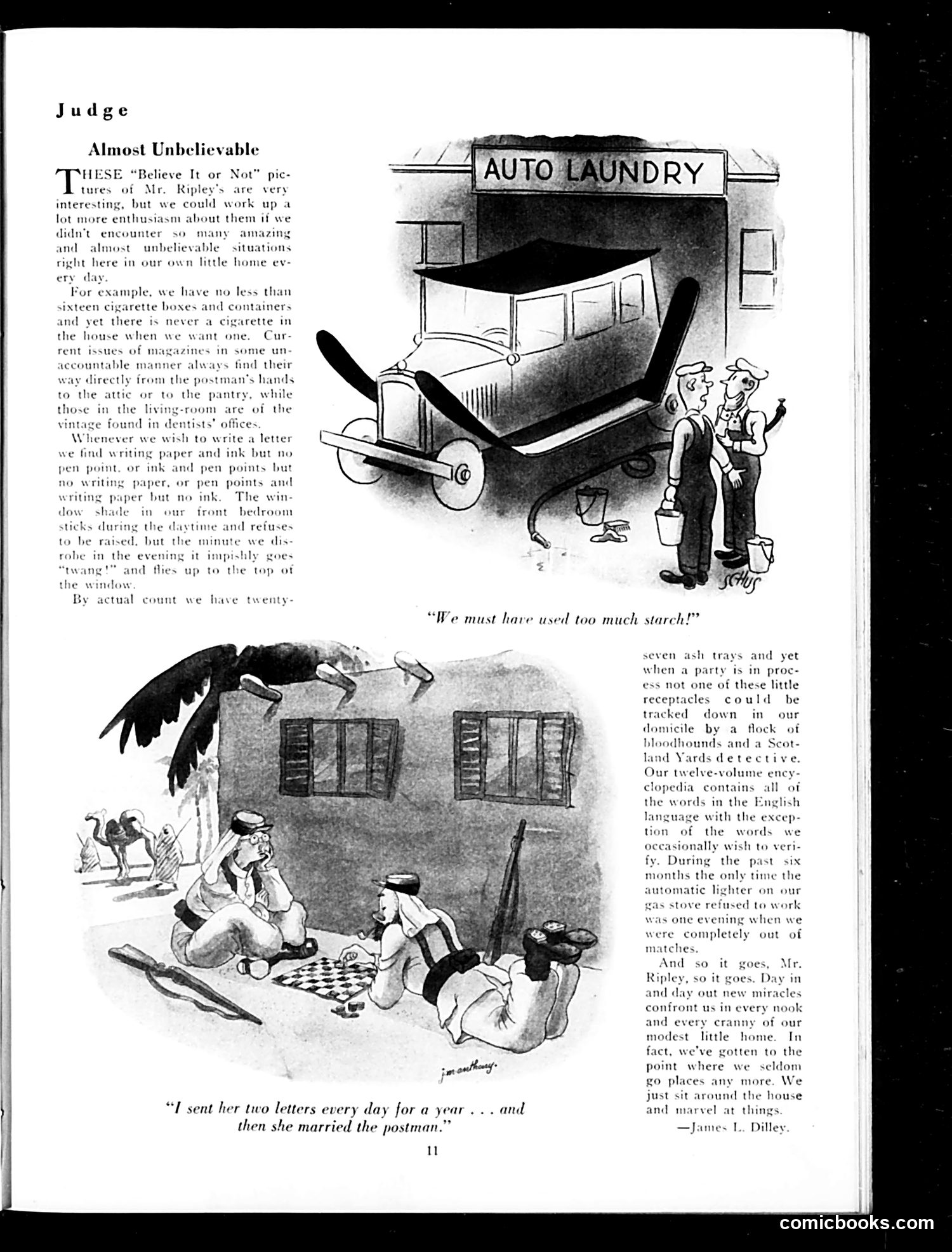
# Analysis This page satirizes the mundane absurdities of domestic life by parodying Robert Ripley's popular "Believe It or Not!" feature (which documented genuine oddities). The article, attributed to James L. Dilley, humorously catalogs everyday household frustrations that are paradoxically "unbelievable": - Sixteen cigarette boxes but never a cigarette available - Magazines mysteriously migrating to attics - Writing supplies that never coexist (paper without ink, pen points without paper) - A stuck window that mysteriously unsticks at night - Seven ash trays that vanish when needed - An encyclopedia missing only the words you want - A lighter that fails only when matches are unavailable The accompanying cartoons illustrate these complaints: one shows an auto laundry mishap, another depicts two men with what appears to be scattered belongings. The closing joke—"I sent her two letters every day for a year... and then she married the postman"—extends the theme: absurd domestic persistence leads to unexpected consequences. The satire targets the gap between remarkable "oddities" and relatable, frustrating daily life—suggesting ordinary homes contain their own inexplicable chaos.