A complete issue · 36 pages · 1935
Judge — October 1935
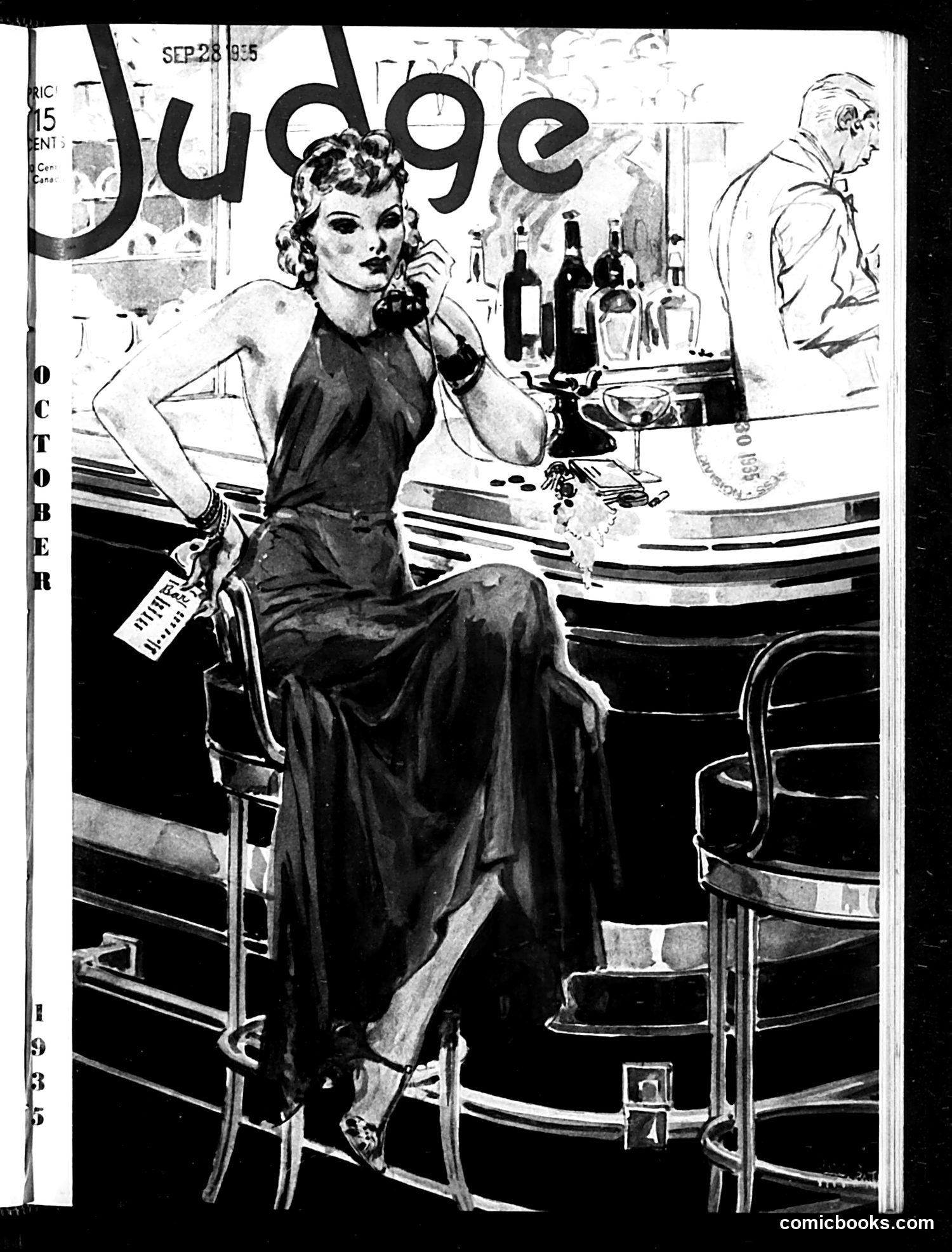
# Judge Magazine Page Analysis This appears to be a cover or advertisement page from Judge magazine (dated SEP 28, 1935). The illustration depicts a glamorous woman in an elegant black evening gown, seated at what appears to be a bar or nightclub setting. She's posed sophisticatedly, holding a telephone handset, with bottles of alcohol visible in the background and a cocktail glass nearby. The large "Judge" masthead dominates the top. The imagery emphasizes luxury, sophistication, and leisure—typical subject matter for Judge's satirical commentary on American high society and consumer culture during the 1930s. However, without additional visible text or context, the specific satirical point or social commentary this illustration makes remains unclear from the image alone.
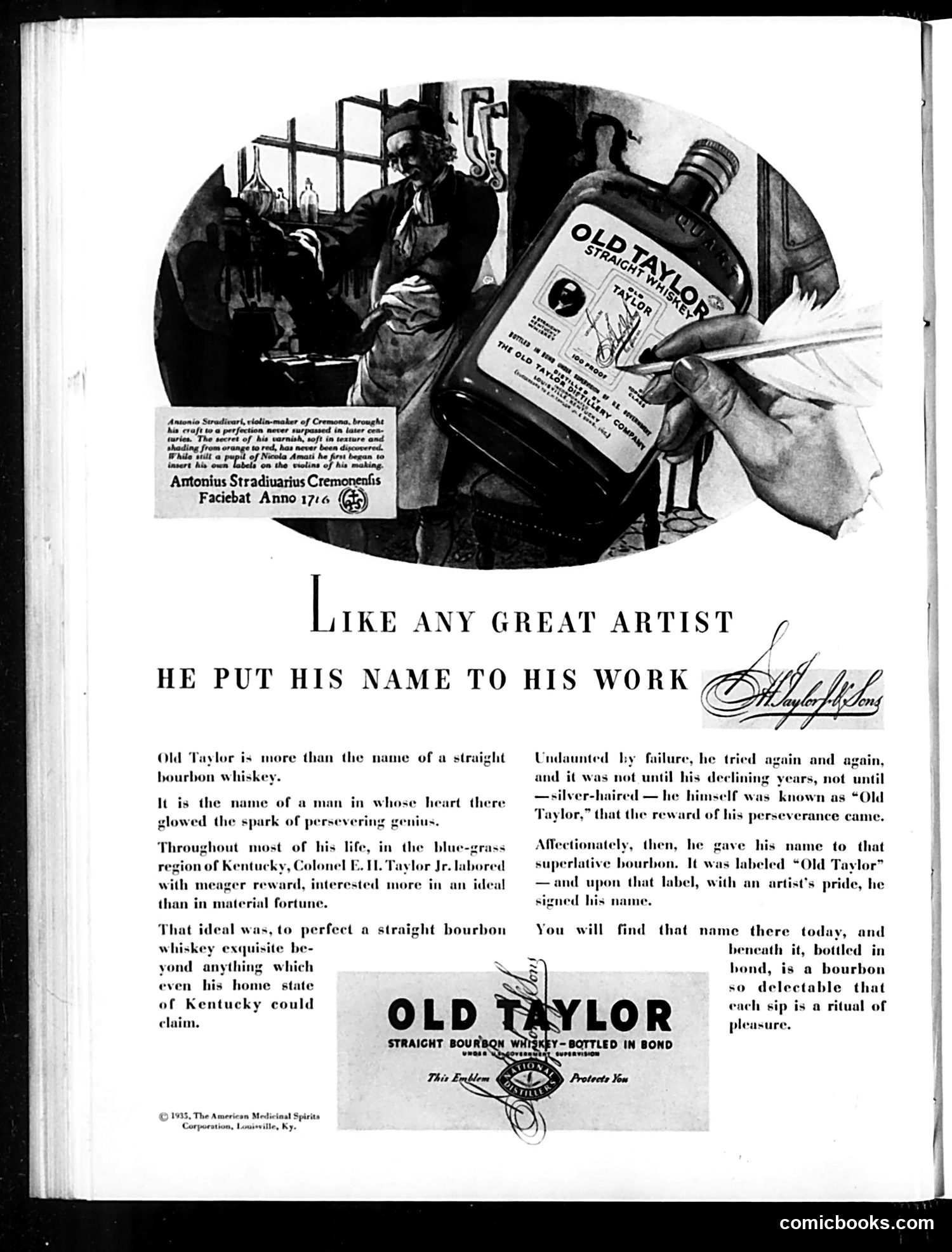
# Analysis This is primarily **advertising disguised as editorial content**—a promotional piece for Old Taylor bourbon whiskey from 1935 (per copyright notice). The top illustration references a historical figure: **Colonel E.H. Taylor Jr.**, a 19th-century Kentucky distiller who perfected bourbon whiskey production. The ad presents him as a dedicated craftsman ("like any great artist") who eventually branded his whiskey with his own name as a mark of pride. The narrative suggests Taylor's persistence through failure ultimately earned him recognition—his signature on the bottle became a guarantee of quality. The romantic framing of the entrepreneur as "artist" was typical 1930s advertising strategy. This is **not satire**: it's hagiographic brand mythology, using historical legitimacy to market the product during Prohibition's aftermath.
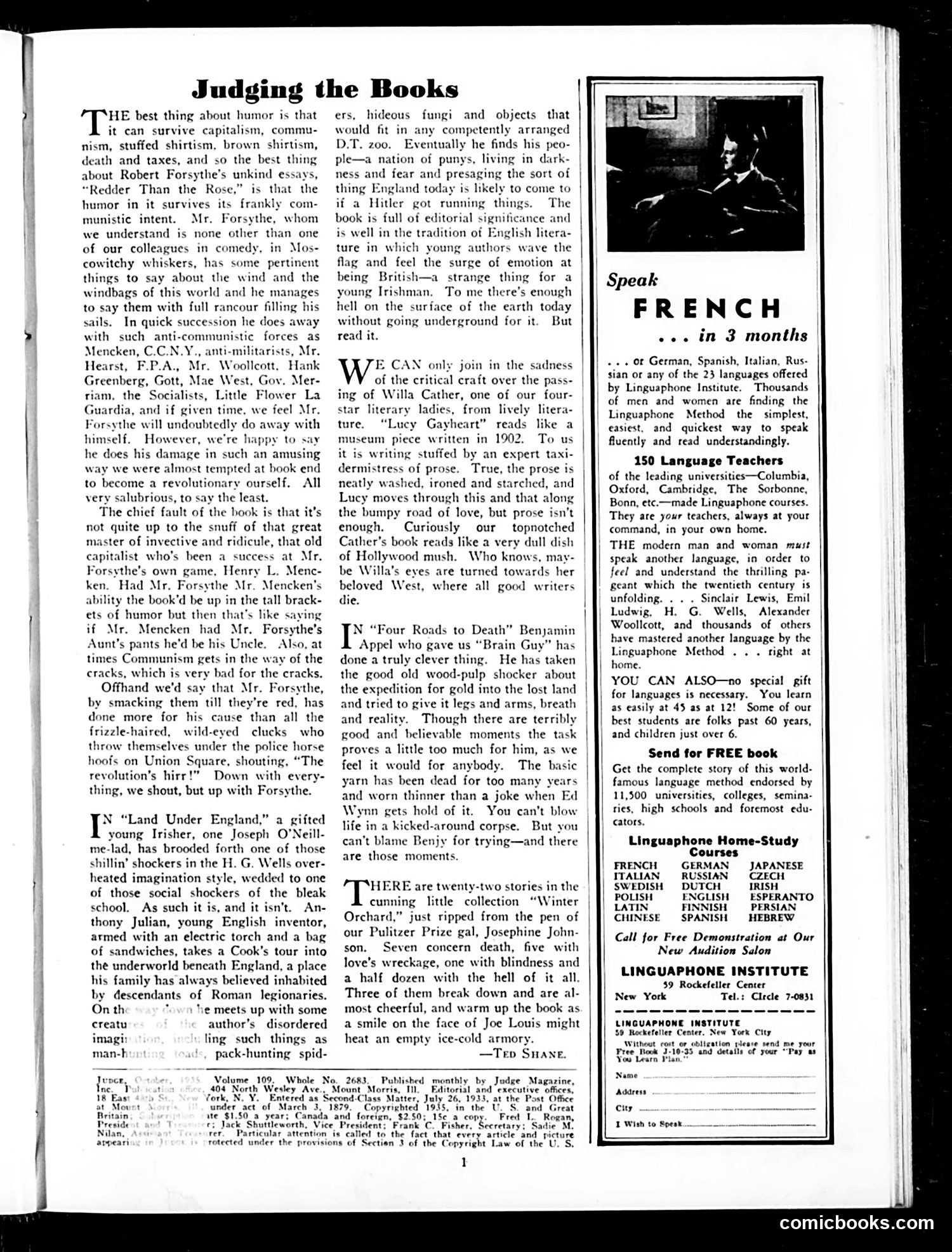
# Analysis of Judge Magazine Page This page is primarily **text-based book reviews** rather than political cartoons. The main content is "Judging the Books," a column reviewing contemporary literature. The reviews critique several works, including Robert Forsythe's essays and Willa Cather's "Lucy Gayheart." The critic praises humor and social commentary in some works while faulting others for being insufficiently satirical or revolutionary. The right side features a **Linguaphone Institute advertisement** for language instruction, unrelated to satire. There is **one photograph** of what appears to be a man in formal dress, but no clear political caricature or cartoon is visible on this page. This issue prioritizes literary criticism and commercial advertising over the satirical illustrations Judge magazine was known for.
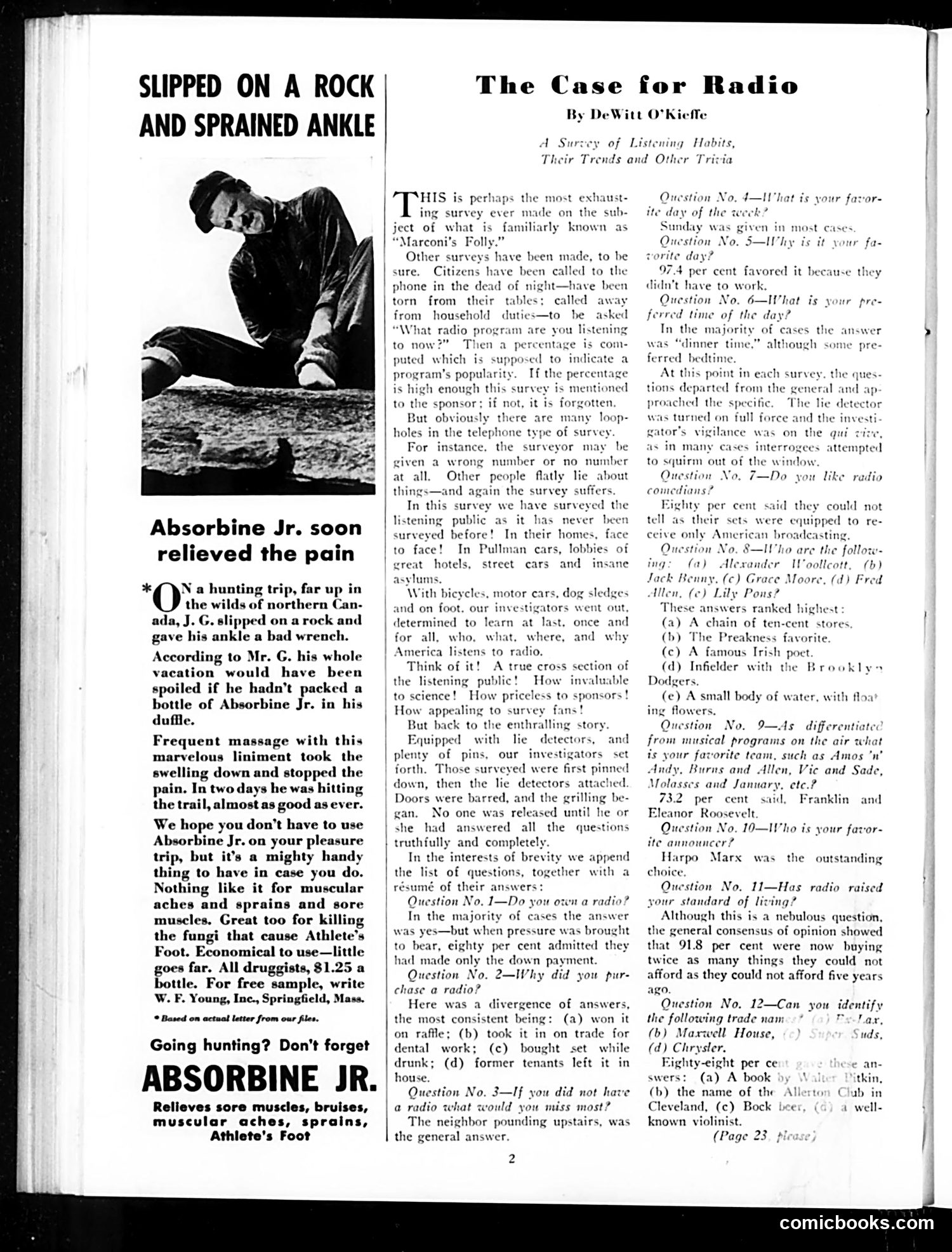
# Page Analysis This page contains primarily **advertising and editorial content**, not political satire or cartoon commentary. The left side features an **Absorbine Jr. liniment advertisement** with a photograph of an injured man on a hunting trip. The ad humorously suggests the product relieved his sprained ankle, making his vacation successful. The right side presents **"The Case for Radio"** by DeWitt O'Kieffe — an editorial survey of American radio listening habits. It reports survey findings about when people listen, their favorite programs, and whether radio has improved their standard of living. Questions reference popular entertainers like Jack Benny and Grace Moore, indicating this is from radio's **golden age** (likely 1930s-1940s). This page reflects early mass media research and product marketing of the era.
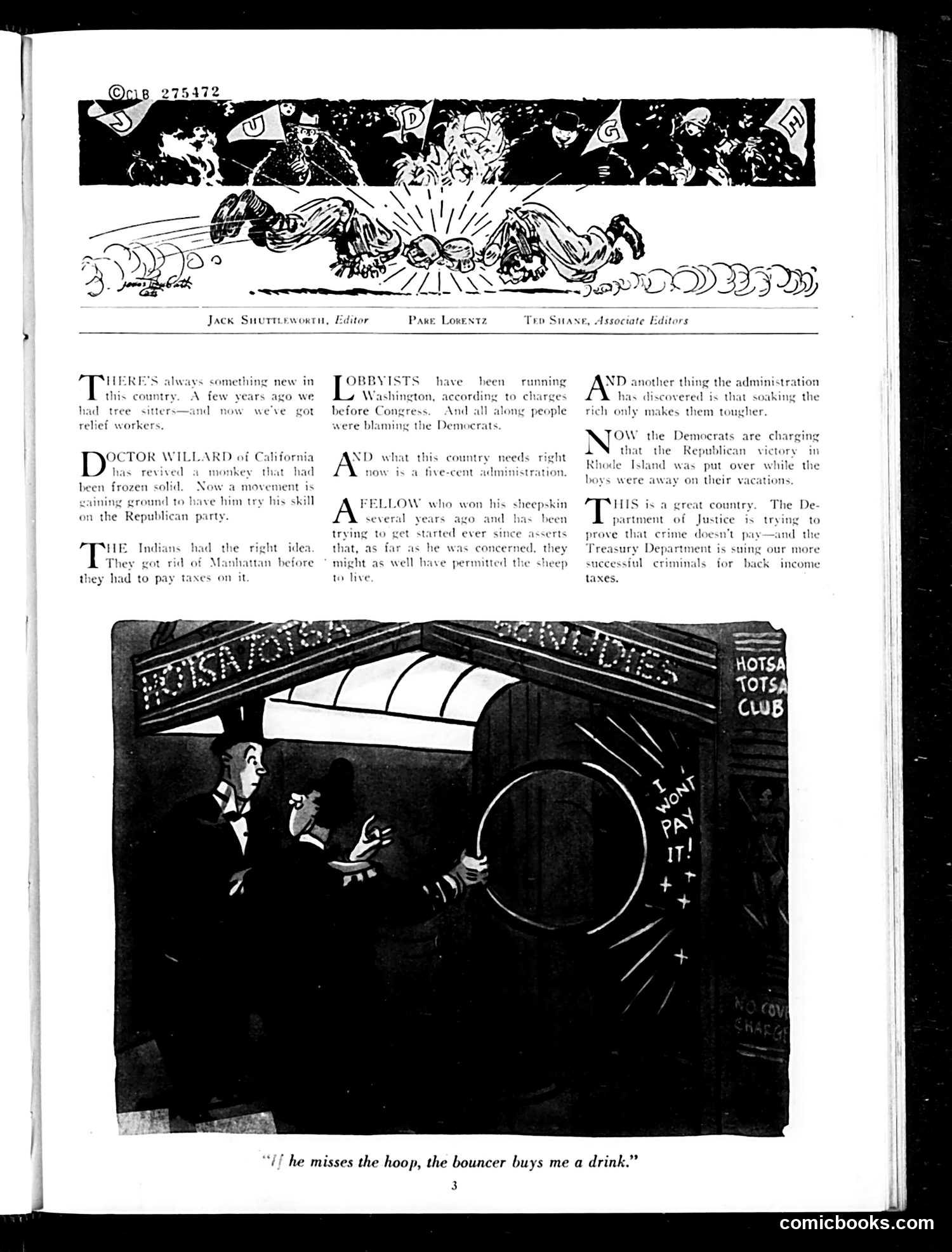
# Political Commentary and Cartoon Analysis This Judge magazine page contains brief political quips and a single cartoon. The text criticizes both parties: Democrats are blamed for past relief spending; Republicans are attacked for a "five-cent administration" (likely referencing low wages or minimal government support). The main cartoon depicts a man at a "Hotsa Totsa Club" playing a ring-toss game where he must pay if he misses ("if he misses the hoop, the bouncer buys me a drink"). This appears to be social satire about working-class entertainment venues and gambling/game schemes—possibly mocking either the absurdity of such "games" or commenting on economic hardship where even simple amusements involve financial risk or tricks. The specific historical context remains unclear without additional dating information.
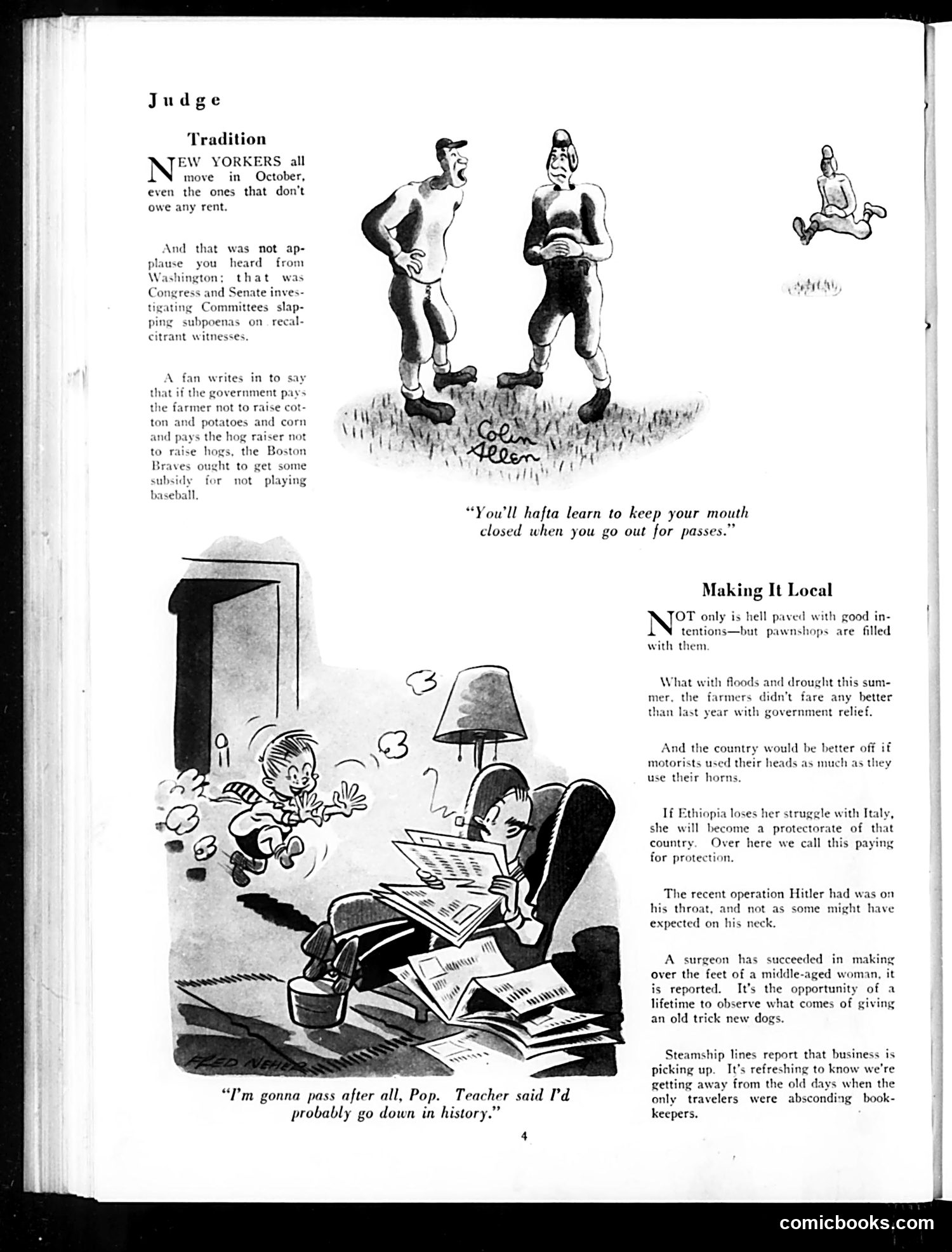
# Analysis of Judge Magazine Page This page contains satirical commentary on 1930s American issues. The "Tradition" section mocks New Yorkers' October moving practices and references Congressional investigations into "recalcitrant witnesses"—likely referencing contemporary political scandals. The top cartoon shows two runners with the caption about keeping one's mouth closed during "passes," apparently satirizing athletes or public figures who speak indiscreetly. The lower cartoon depicts a child reading newspapers while money falls, with the caption about "going down in history." This appears to satirize youth fascination with current events during an era of significant news (possibly referencing Hitler's rise, as mentioned in the text). "Making It Local" section offers general commentary on government relief, farming struggles, motorists, and international affairs like Italian-Ethiopian tensions—typical Judge satirical observations on contemporary problems.
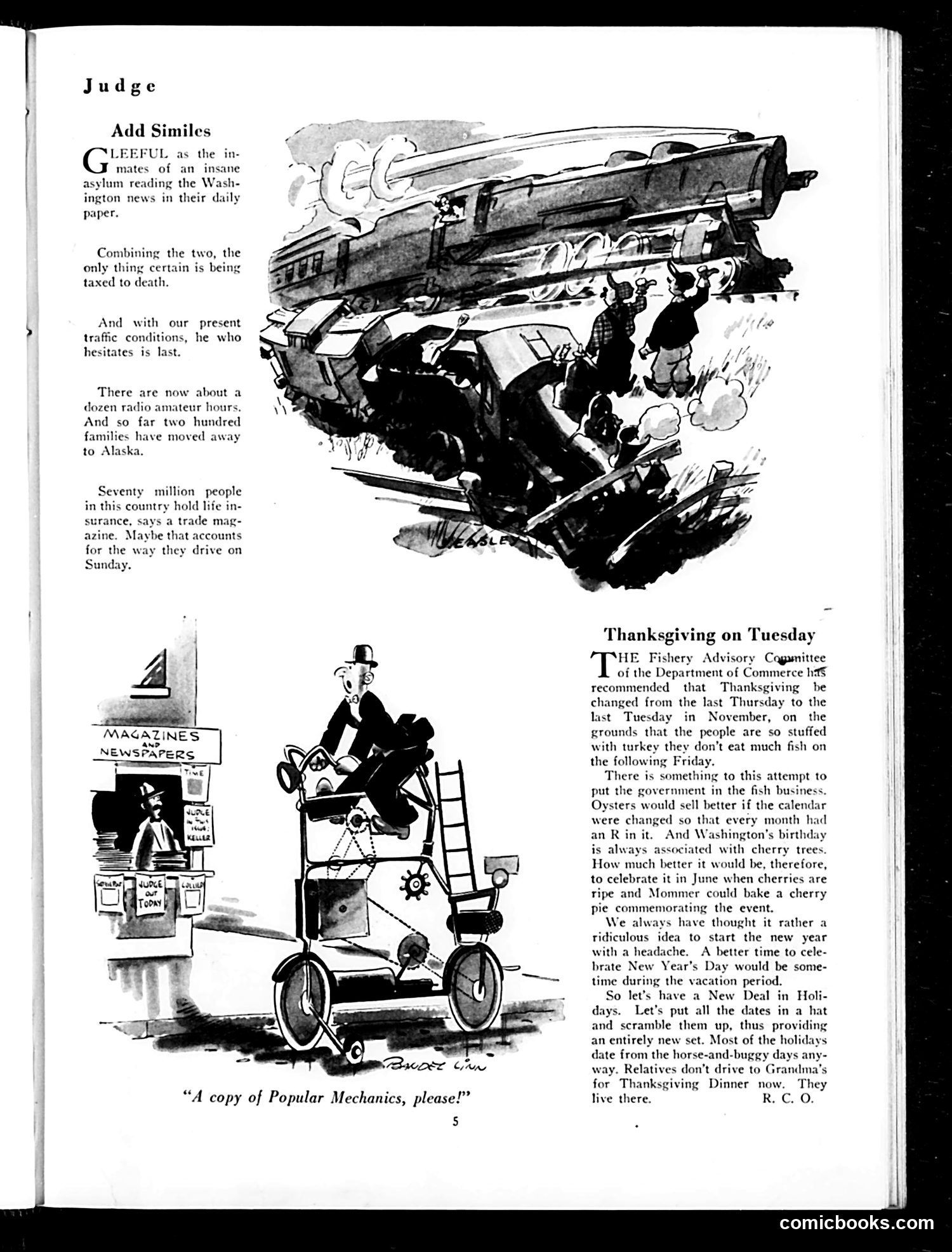
# Page Analysis: Judge Magazine **Top Section ("Add Similes"):** Dark humor about Washington, D.C. traffic fatalities. The judge compares "inmates of an insane asylum" reading Washington news to people dying in traffic accidents—suggesting Washington's politics are as chaotic as deadly streets. References "present traffic conditions" and quips that hesitating drivers are "taxed to death." **Bottom Section ("Thanksgiving on Tuesday"):** Satirizes a Fishery Advisory Committee proposal to move Thanksgiving from Thursday to Tuesday. The author mocks this bureaucratic overreach, suggesting government meddling in traditional holidays is absurd. The accompanying cartoon shows a man precariously balanced on a wheeled contraption, captioned "A copy of Popular Mechanics, please!"—suggesting government schemes are as unstable as DIY contraptions.
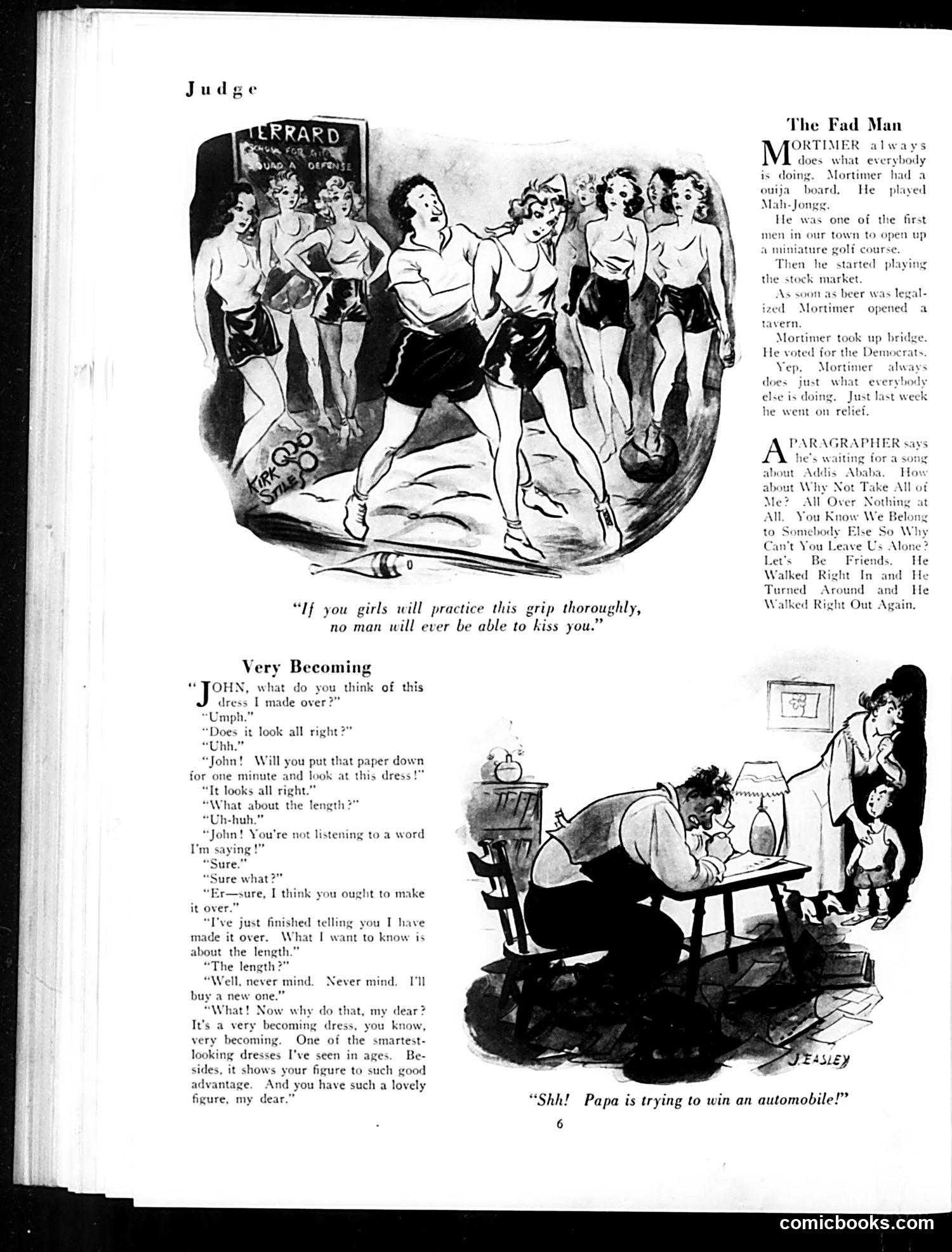
# Analysis of Judge Magazine Page This page contains two separate satirical pieces from Judge magazine: **"The Fad Man"** (top right): Mocks a character named Mortimer who constantly follows trends—opening a miniature golf course, playing stock market, opening a tavern, taking up bridge, and going on relief. The satire targets wealthy people who thoughtlessly chase whatever fad everyone else is doing, regardless of consequences. **"Very Becoming"** (bottom): Shows a husband ignoring his wife's attempts to get his opinion on her new dress. The joke satirizes marital indifference—he's so disinterested he won't even look at it, while she desperately seeks his approval. The bottom cartoon depicts children interrupting, playing on domestic chaos. Both pieces use humor to critique contemporary social behavior and relationships.
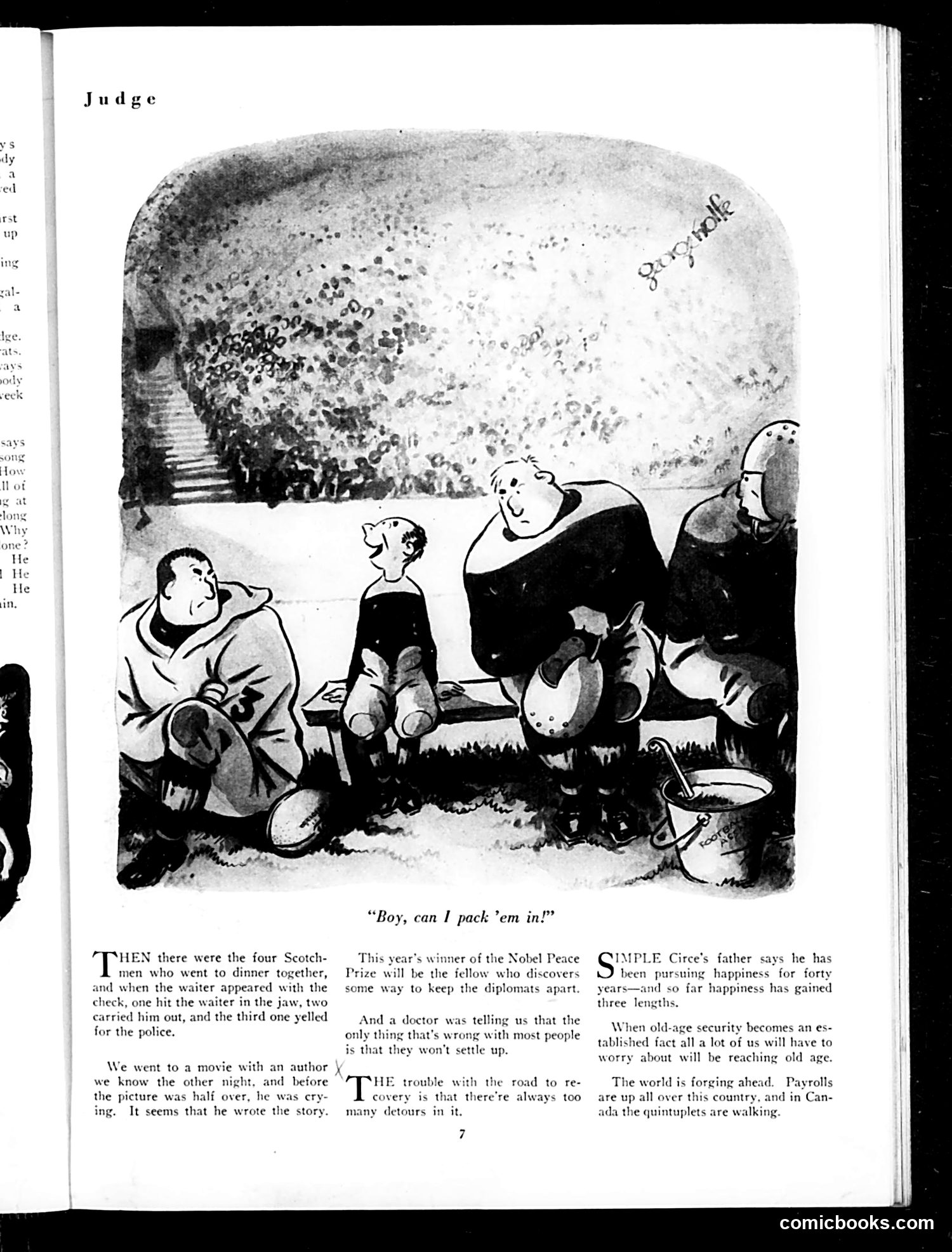
# "Judge" Page Analysis The main cartoon titled "Boy, can I pack 'em in?" depicts what appears to be a massive stadium or arena filled with spectators in the background, with four figures in the foreground appearing to be packing something (possibly people or objects) into a container. The accompanying text references four Scotchmen going to dinner, a Nobel Peace Prize winner, and various social commentary about diplomacy, road recovery detours, security in old age, and payroll issues. The satire appears to target early-20th-century concerns: diplomatic ineffectiveness, infrastructure problems, economic anxieties about aging, and labor/wage issues. However, without knowing the specific publication date or identifying the particular Nobel Prize reference, the precise political figures or events being mocked remain unclear from this page alone.
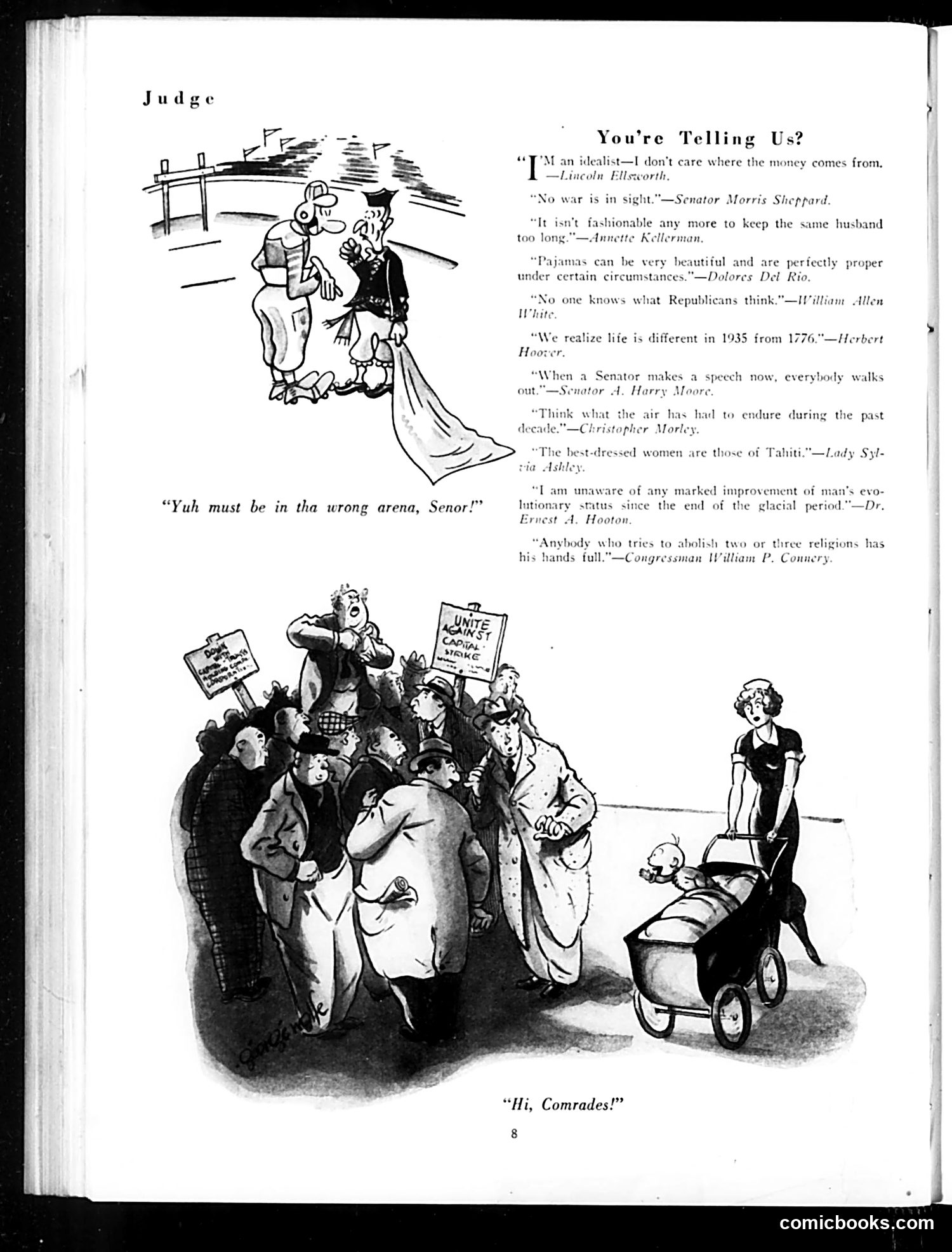
# Political Commentary in Judge Magazine This page satirizes 1930s American society through quotations and two cartoons. **Top cartoon**: A judge confronts a man in what appears to be a courtroom, with the caption "Yuh must be in tha wrong arena, Senor!"—likely mocking legal proceedings or misplaced idealism. **Bottom cartoon**: Titled "Hi, Comrades!" shows a woman with a baby carriage approaching a crowd of agitated men holding protest signs about strikes and unions. The satire appears to target communist or radical labor activism, presenting the organized protesters as threats to ordinary citizens. **The quotations** mock contemporary political figures and social trends—Senator Sheppard's optimism about peace, Hoover's historical revisionism, senators being ignored, and critiques of religious and evolutionary debates. The collection suggests Judge viewed 1930s progressivism, labor organizing, and political rhetoric with skepticism and humor, framing radical movements as dangerous to everyday American life.
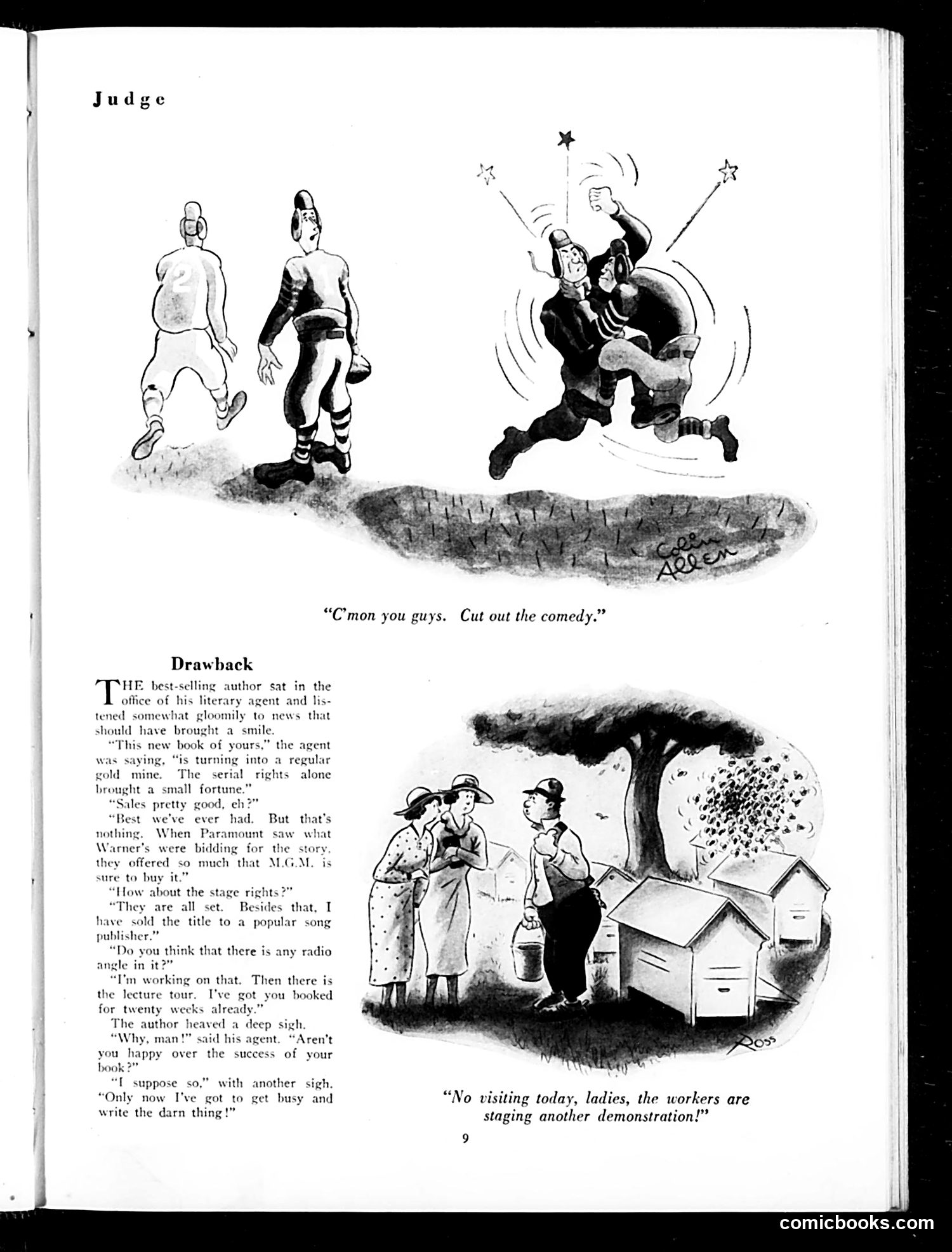
# "Drawback" - Judge Magazine Cartoon **The Setup:** A best-selling author's literary agent excitedly reports massive financial success—serial rights, film deals from Paramount and Warner Bros., MGM bidding, stage rights, song publishing rights, and a twenty-week lecture tour. **The Joke:** The author responds with sighs of despair. When asked if he's happy about his book's success, he replies: "Only now I've got to get busy and write the darn thing!" **The Satire:** This mocks the commercialization of literature and Hollywood's appetite for stories. The author has profited enormously from *the idea* of a book—through adaptations and ancillary rights—before actually writing it. The irony is that commercial success has created an obligation to produce the actual work, which he clearly finds tedious. It's a commentary on how publishing and entertainment industries monetize intellectual property while the creative labor itself becomes an unwelcome burden. The top cartoon appears unrelated—a sports scene with the caption "C'mon you guys. Cut out the comedy."
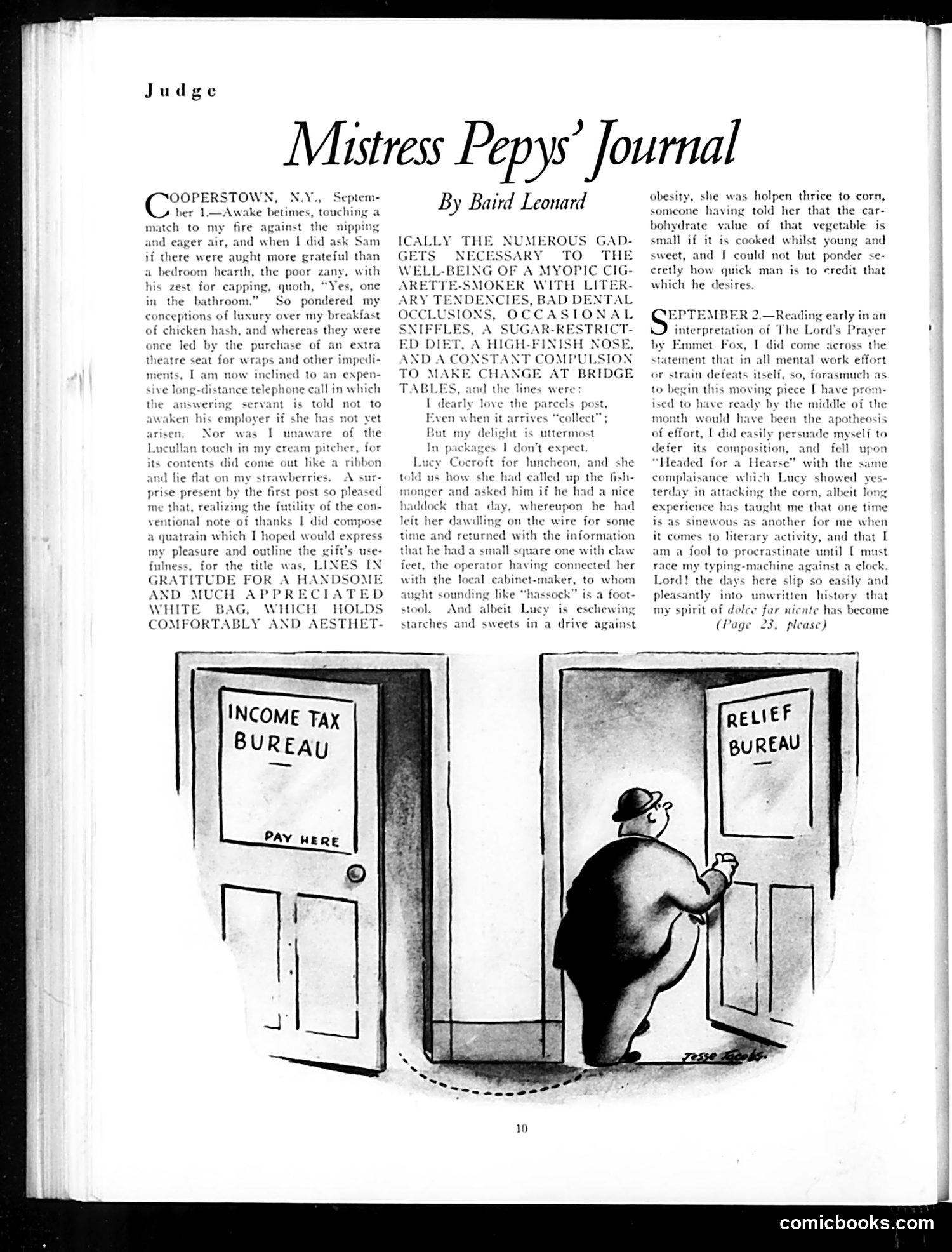
# Explanation for Modern Readers This page contains two elements: a literary column called "Mistress Pepys' Journal" (a parody of Samuel Pepys' famous 17th-century diary, written in faux-archaic style) and a political cartoon below. **The Cartoon:** A heavyset man, appearing distressed or indecisive, stands between two doors labeled "Income Tax Bureau" (marked "Pay Here") and "Relief Bureau." The figure seems caught between paying taxes and seeking government assistance—likely representing the economic anxiety of ordinary citizens during the Great Depression era. The satire mocks the impossible position of struggling Americans: being simultaneously squeezed for taxes while needing government relief aid. **The Journal:** This gossipy, chatty column uses mock-Pepysian language to humorously chronicle domestic life and social observations, including references to modern conveniences (telephones, typing machines) juxtaposed against archaic phrasing—creating comedy through anachronism. The page satirizes both economic hardship and the pretensions of literary sophistication.