A complete issue · 36 pages · 1935
Judge — September 1935
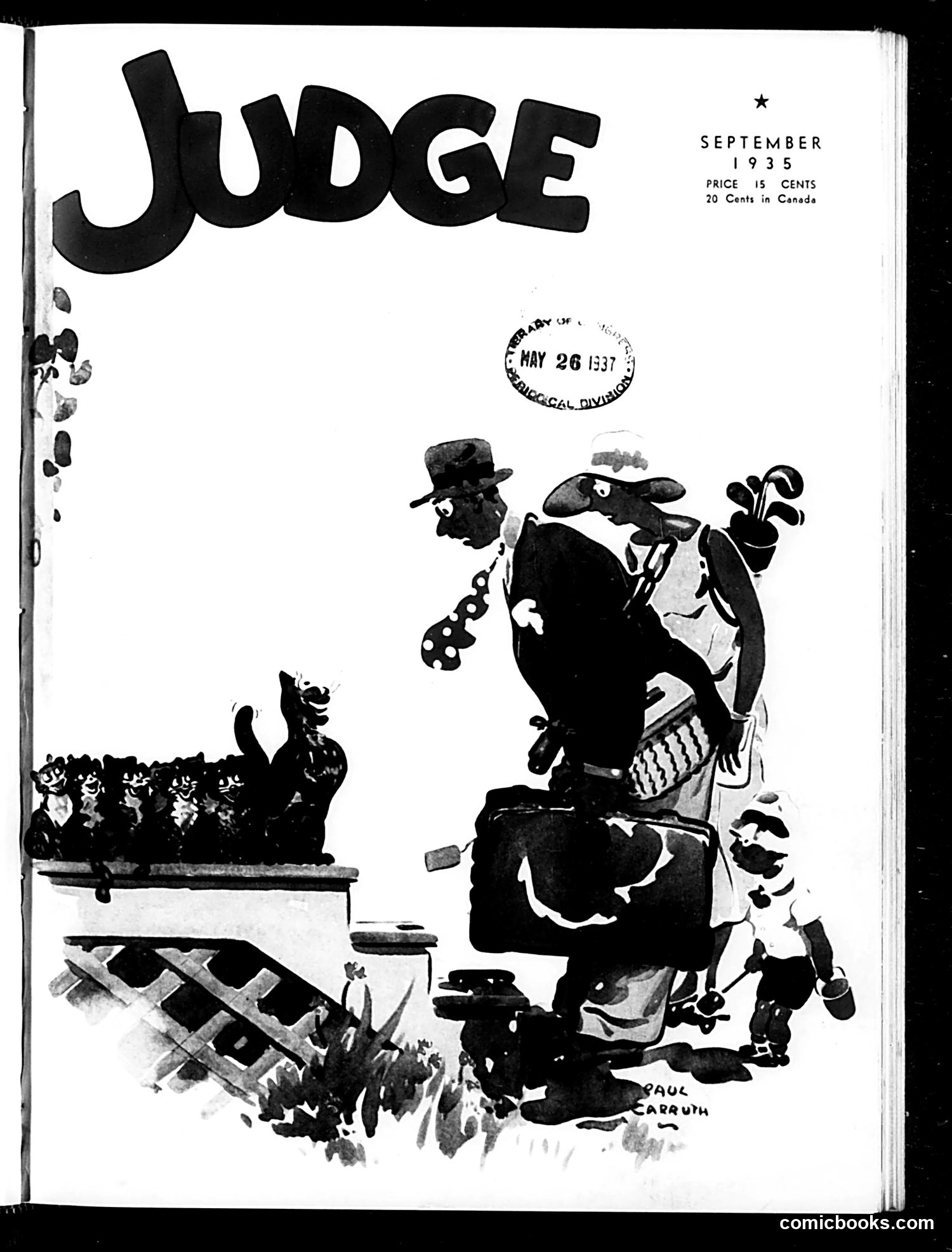
# Judge Magazine, September 1935 This cover illustration by Paul Barruh depicts a well-dressed man (appearing to be a wealthy businessman or politician) struggling under an enormous burden of luggage, golf clubs, and other possessions while traveling. A group of figures—possibly representing the public or working class—watches from a lower level, with one appearing to offer assistance or commentary. The satire likely addresses economic disparity or criticism of the wealthy during the Great Depression era. The excessive baggage may symbolize wealth, privilege, or accumulated possessions that burden even the affluent, or conversely, critique how the wealthy travel with luxuries while others suffer. The composition suggests social commentary on class divisions and economic inequality prevalent in 1935 America.
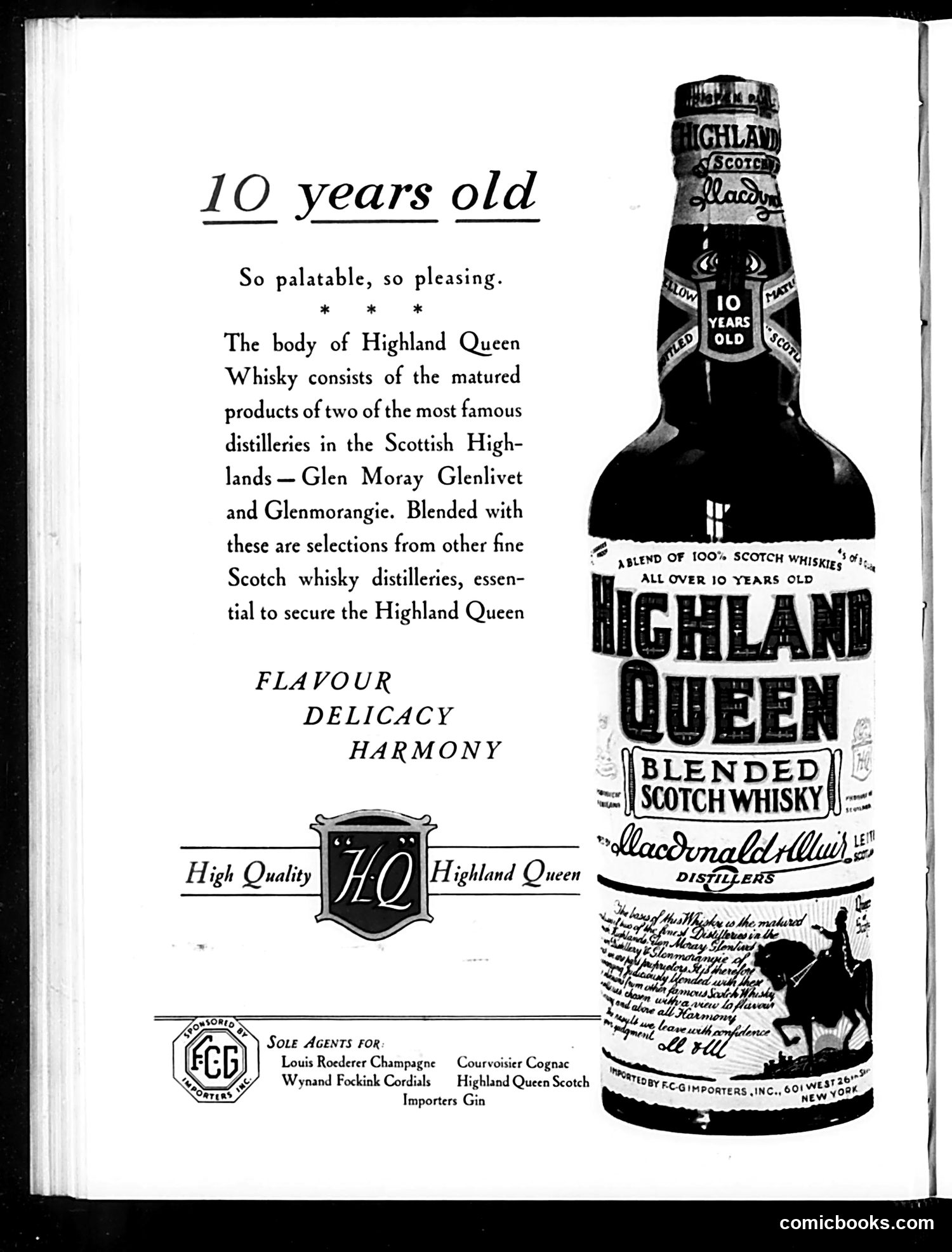
# Highland Queen Whisky Advertisement This is primarily a **commercial advertisement**, not political satire or cartoon content. It promotes Highland Queen, a 10-year-old blended Scotch whisky, emphasizing its quality through: - Claims of palatability and refined taste ("Flavour Delicacy Harmony") - Blend composition from famous Scottish distilleries (Glen Moray Glenlivet and Glenmorangie) - The "HQ" (High Quality) branding The page includes a product bottle image and distributor information for FC Ginportters, Inc. in New York. There is **no political cartoon or satire present**—this is straightforward vintage advertising from Judge magazine, likely from the mid-20th century when Scotch whisky marketing was prominent in American publications. The aesthetic reflects period advertising conventions rather than commentary.
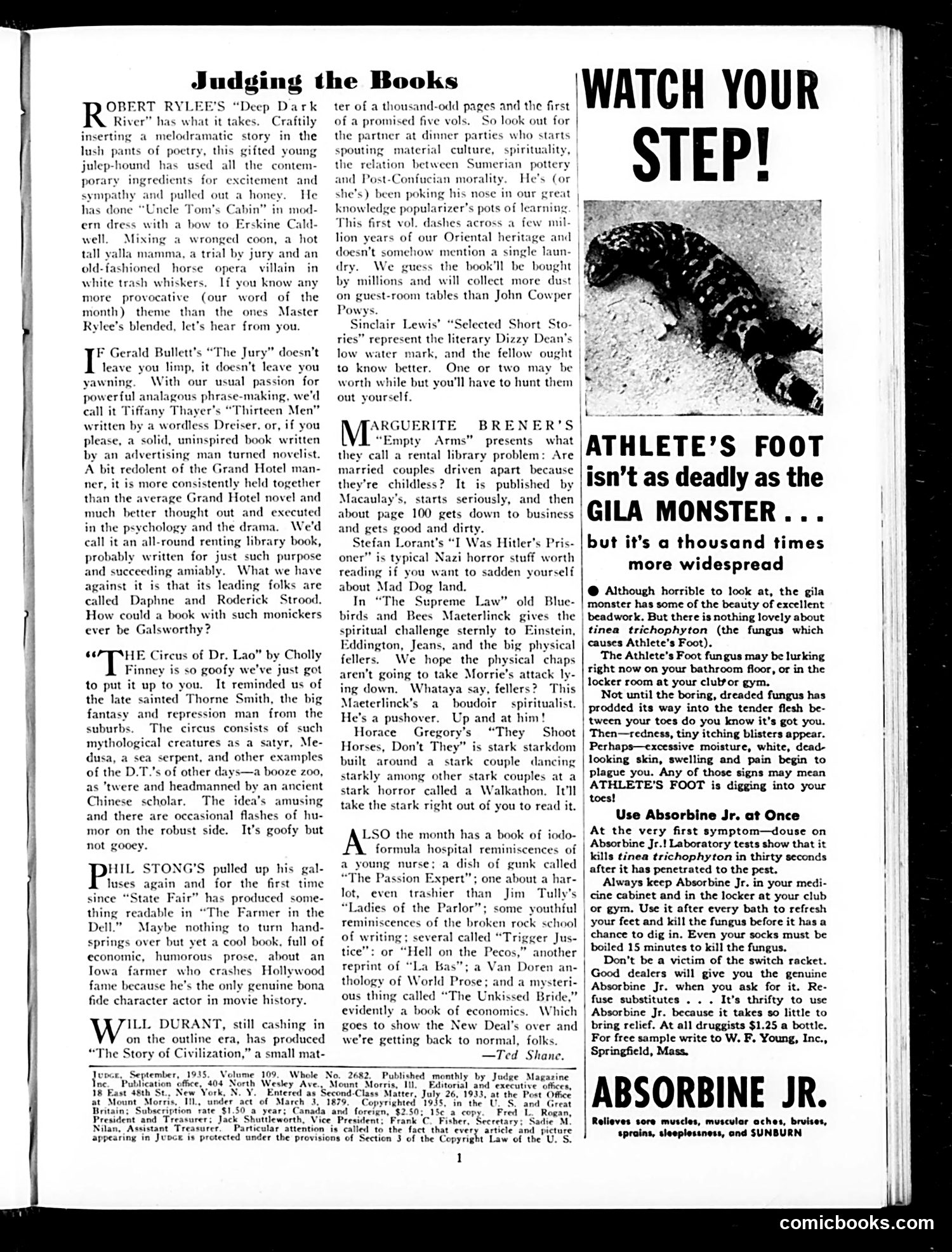
# Page Analysis: Judge Magazine Book Reviews (September 1935) This page comprises mostly **book reviews** with one substantial **advertisement** for Absorbine Jr., a liniment product. The reviews satirize contemporary literature with typical Judge humor—mocking pretentious or poorly-written works. References include Sinclair Lewis's "Selected Short Stories," Marguerite Brener's "Empty Arms" (criticized as a rental library problem), and Stefan Lorant's "I Was Hitler's Prisoner." The prominent advertisement features a "GILA MONSTER" warning, using the dangerous reptile as hyperbole to explain that while athlete's foot appears minor, it spreads rapidly and requires immediate treatment with Absorbine Jr. The page reflects **1930s consumer anxiety** about health conditions and satirical dismissal of middlebrow literature typical of Judge's editorial voice.
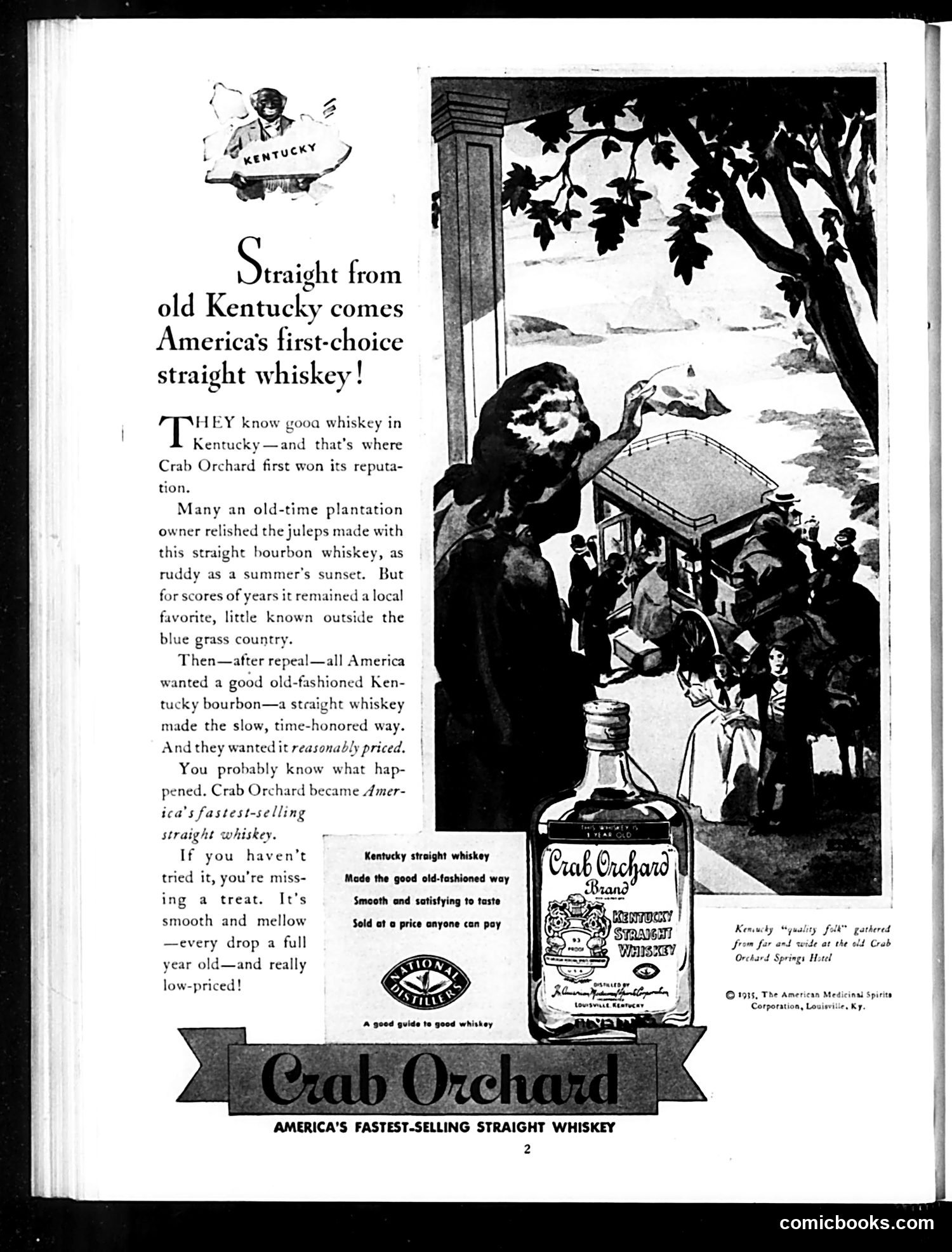
# Content Analysis This page is **primarily an advertisement**, not satire or editorial content. It promotes Crab Orchard, a Kentucky straight bourbon whiskey claimed to be "America's fastest-selling straight whiskey." The ad includes a narrative explaining Crab Orchard's origin: it was allegedly a local Kentucky favorite for years, then became nationally popular after Prohibition ended ("after repeal"). The advertisement emphasizes the product's quality, affordability, and traditional production methods ("slow, time-honored way"). The imagery shows what appears to be a historical scene at a plantation or springs, likely referencing the whiskey's Kentucky heritage and establishing brand legitimacy through nostalgic Americana. The bottle label and branding are prominently displayed. This is commercial content rather than political satire.
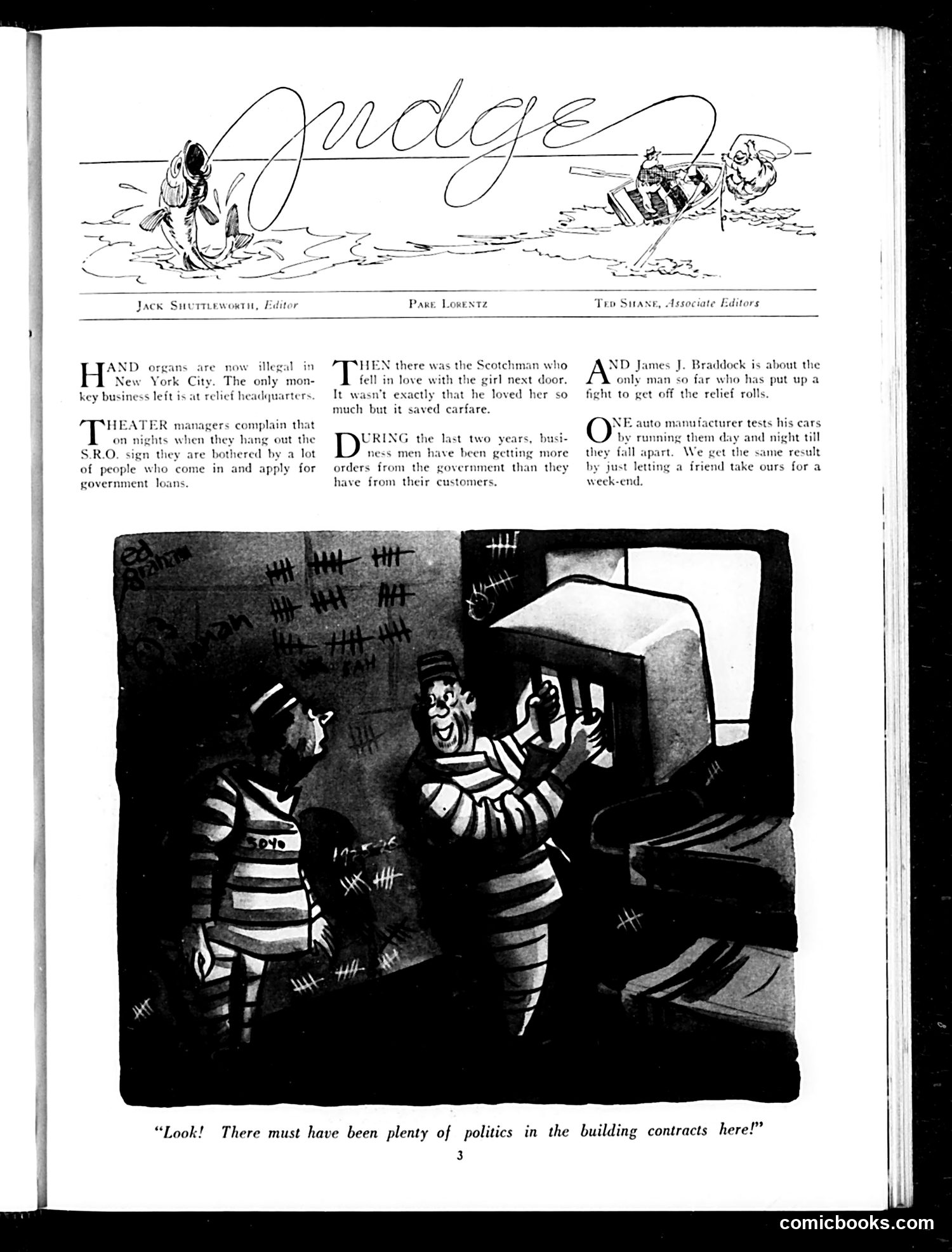
# Judge Magazine Page Analysis This page contains four separate humorous items: **Top text items** satirize contemporary issues: hand organs being illegal in New York (affecting street musicians' livelihoods), theater managers seeking S.R.O. relief during wartime, and business men receiving more government orders than customers during the preceding two years. **Main cartoon** depicts two prisoners in a cell (marked with tally marks indicating long incarceration). One exclaims about "politics in the building contracts," suggesting corruption in construction projects—likely referencing wartime contract scandals. The cartoon satirizes how political favoritism and bribery influenced government spending, particularly during WWI-era military and infrastructure projects, allowing corrupt officials to profit while honest businesses suffered. The humor targets systemic governmental corruption rather than specific named individuals.
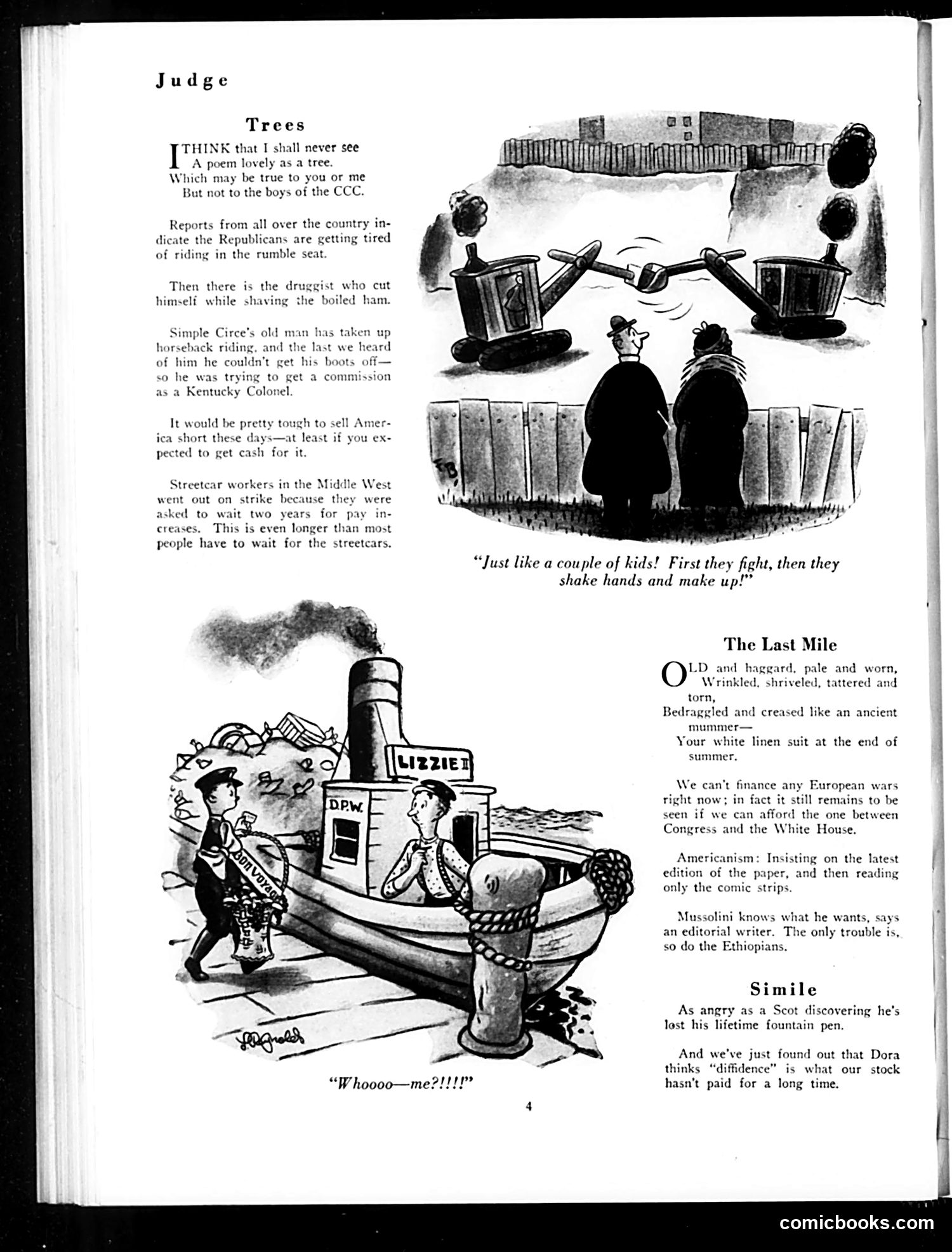
# Analysis of Judge Magazine Page This page contains political and social satire from an unspecified era (likely early-to-mid 20th century based on style). **"Trees"** mocks Republican Party leadership as out-of-touch, referencing the "rumble seat" (a car's rear seat) and mentions of the CCC (Civilian Conservation Corps), suggesting criticism of their handling of labor and economic issues. **"The Last Mile"** cartoon shows a ship labeled "LIZZIE" (unclear reference, possibly a ship name) with figures appearing distressed. The caption "Whoooo-me?!!!!" suggests panic or evasion of responsibility. **"The Last Mile"** text critiques American politics and international affairs, mentioning European wars, Congress, the White House, Mussolini, and Ethiopians—suggesting commentary on 1930s fascism and isolationism. Other brief satirical items mock American cultural habits and financial matters.
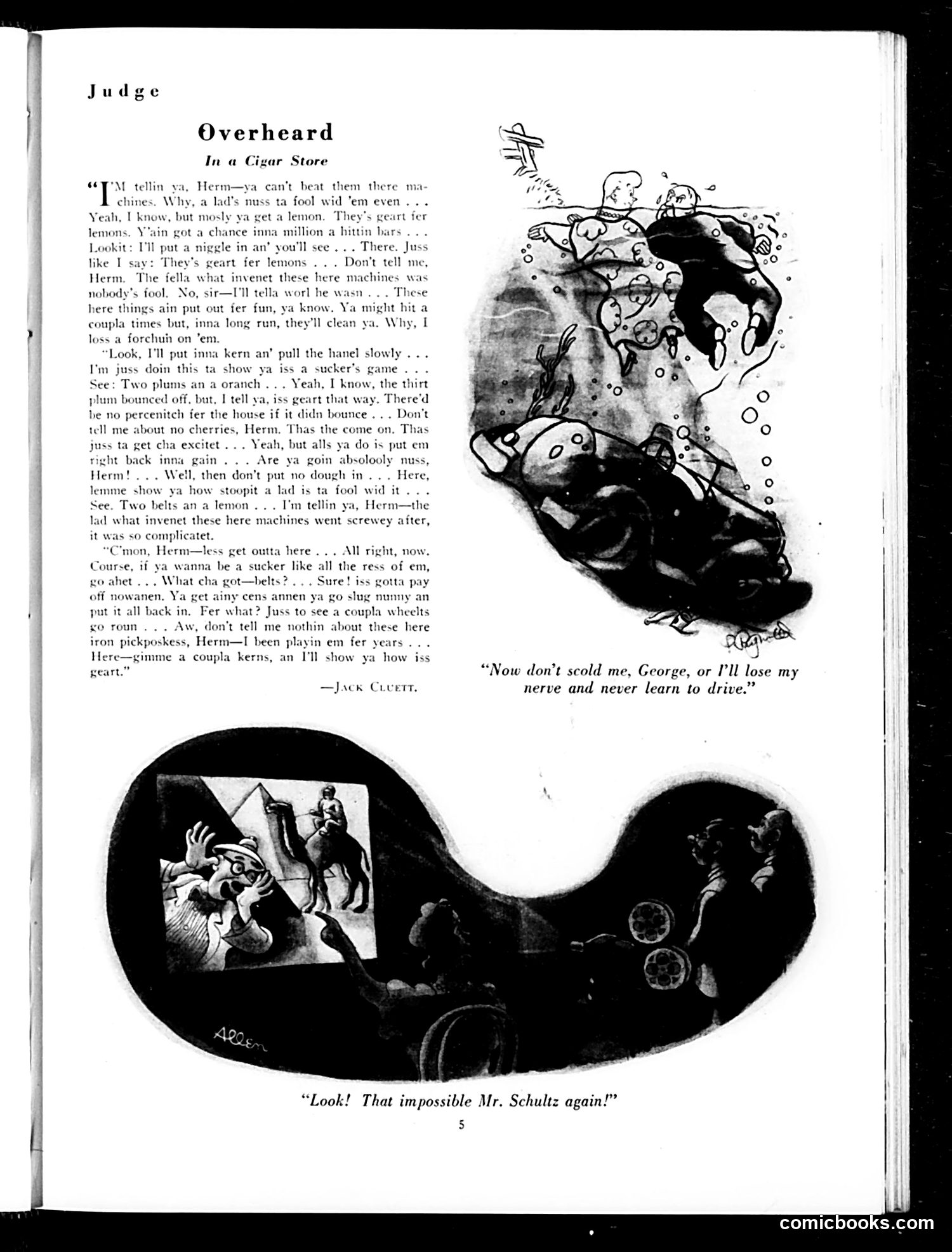
# Analysis of Judge Magazine Page This page contains two distinct cartoons satirizing early automotive culture. **Top cartoon**: A cigar store conversation where one man boasts about newfangled automobiles to "Herm," claiming they're superior to horses. The speaker appears to be a know-it-all salesman type, while Herm expresses skepticism about these unreliable machines. The satire targets early car enthusiasts' overconfidence in primitive automobile technology. **Bottom cartoon** ("Look! That impossible Mr. Schultz again!"): Shows a car's interior view where Mr. Schultz apparently performs an dangerous or reckless stunt while driving. The joke mocks a specific person known for driving foolishly—likely a local figure or recurring character in Judge's readership. Both cartoons mock automobile culture's dangers and the overconfidence of early motorists, reflecting widespread public skepticism about cars' reliability and safety in the automobile's infancy.
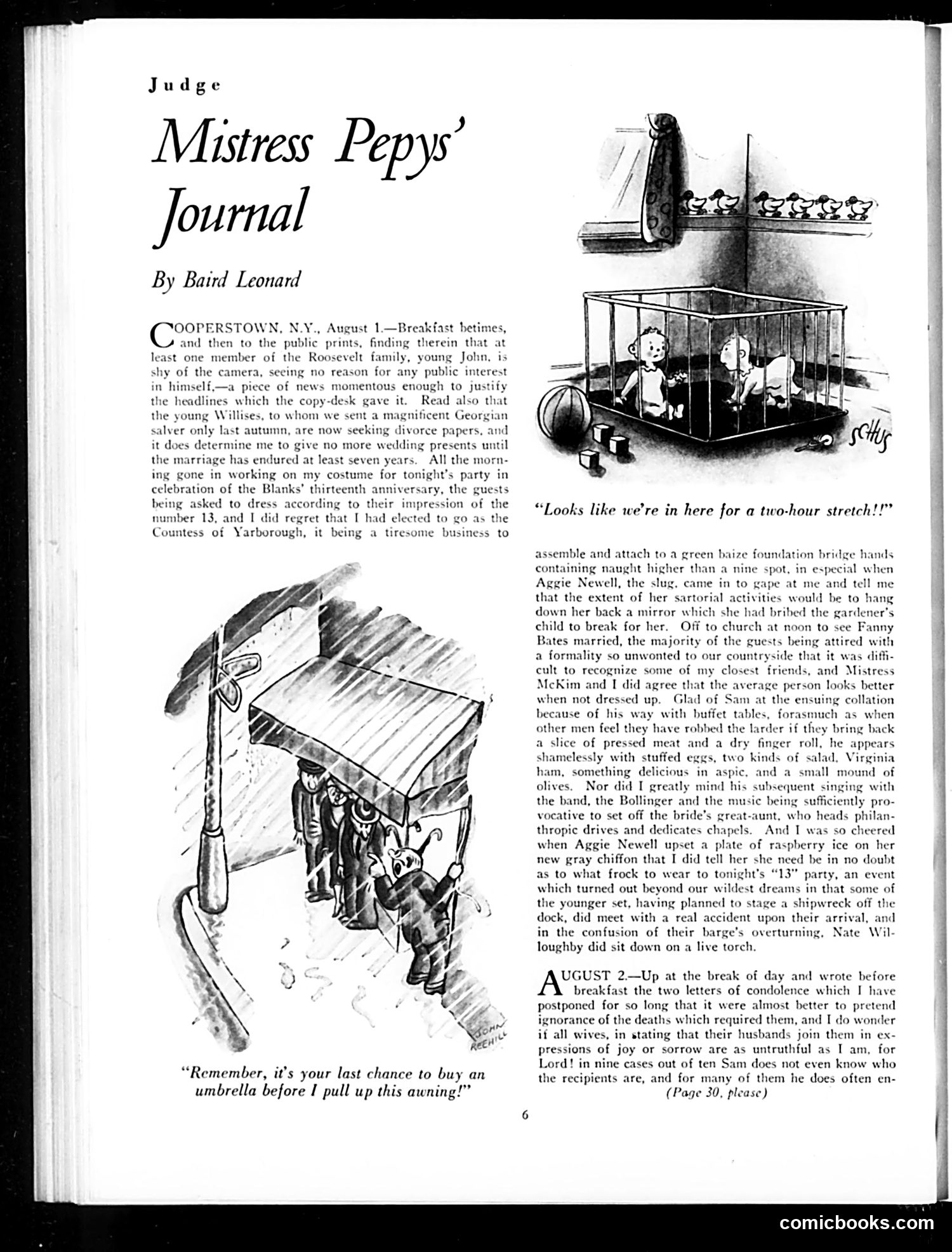
# Analysis of "Mistress Pepys' Journal" by Baird Leonard This is a humorous society column satirizing the social activities of wealthy New York families in August. The text mocks: **Social pretensions**: The author describes attending various upper-class events (weddings, parties, church outings) with elaborate detail and commentary on guests' behavior. **The cartoons** illustrate everyday social awkwardness: one shows someone selling umbrellas at what appears to be a boat dock (likely satirizing opportunistic vendors), and another depicts children in a playpen with the caption about a "two-hour stretch"—mocking the confining nature of proper child-rearing. The column's title alludes to Samuel Pepys' famous 17th-century diary, suggesting this is mock-historical documentation of trivial society moments. The satire targets the pretentiousness and mundane concerns of Manhattan's wealthy elite.
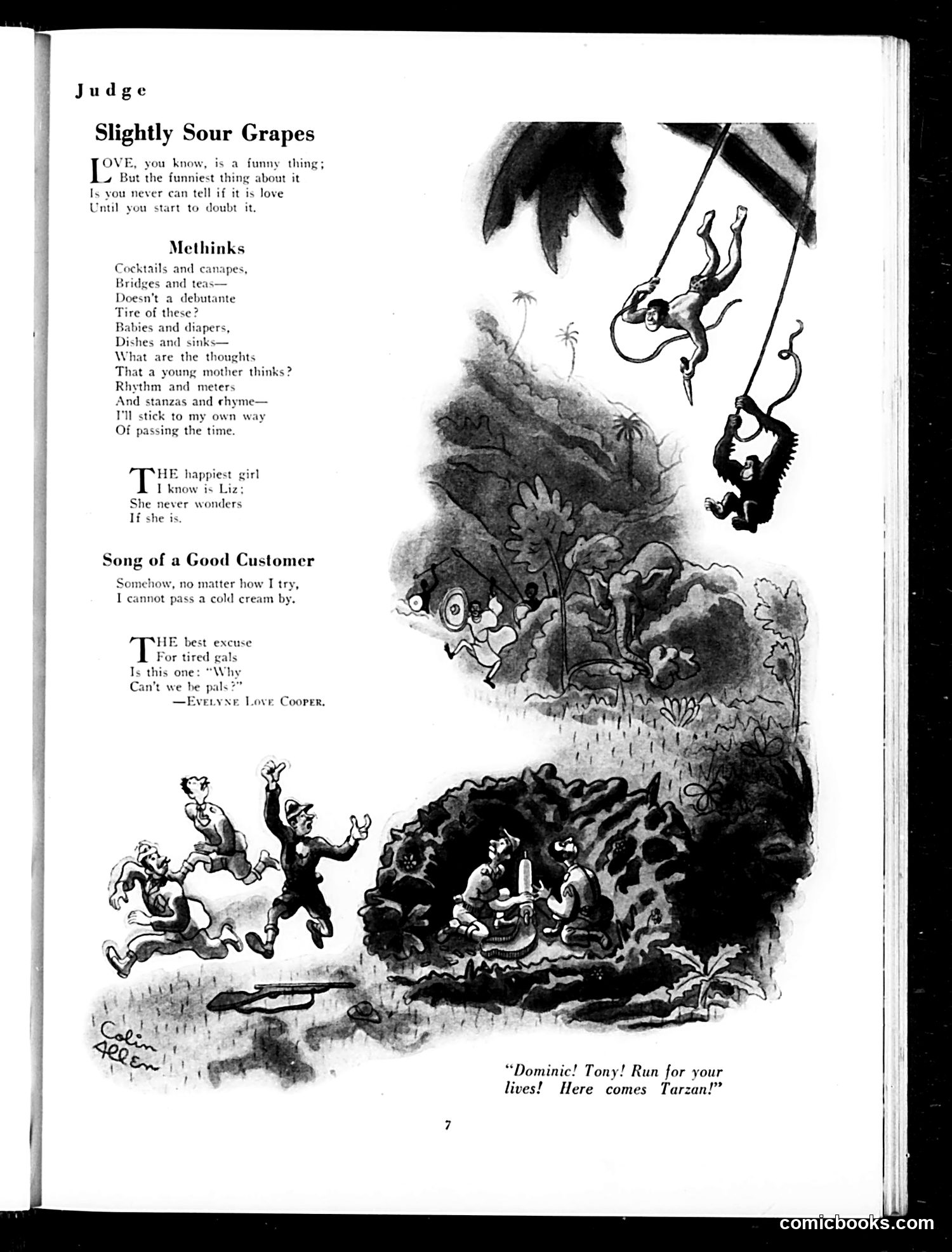
# Analysis of Judge Magazine Page This page from Judge contains several humorous verses and illustrations satirizing domestic and social life. **"Slightly Sour Grapes"** jokes about love's deceptiveness—appearing funny until doubt creeps in. **"Methinks"** catalogs a young mother's exhausting mental preoccupations (cocktails, household chores, poetry) to satirize the scattered thoughts of modern housewives juggling social obligations and domestic duties. **"Song of a Good Customer"** humorously complains about passing up cold cream—likely mocking consumer culture and women's beauty product purchases. The **lower cartoon** depicts men fleeing in panic from what appears to be a cave or gathering, with the caption referencing "Tarzan"—likely a comedic allusion to contemporary popular culture, though the specific satire is unclear without additional context. Overall, the page targets domestic life, consumer behavior, and entertainment trends.
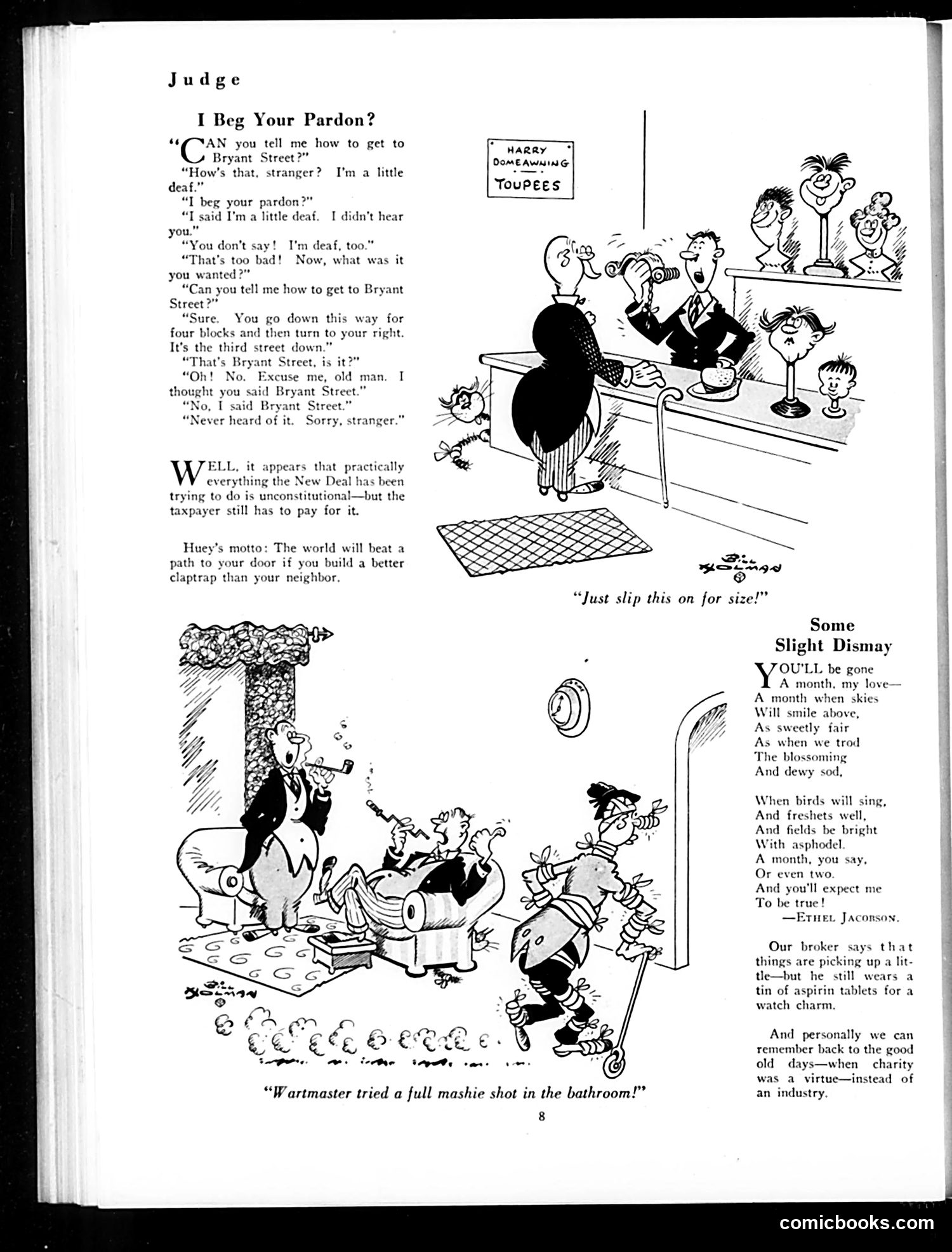
# Analysis for Modern Readers This page from *Judge* contains multiple satirical pieces from the New Deal era (likely 1930s): **"I Beg Your Pardon?"** is a straightforward comedy dialogue where two deaf men repeatedly misunderstand each other about Bryant Street directions—a simple absurdist humor piece with no political content. **The editorial commentary** critiques Franklin D. Roosevelt's New Deal programs, sarcastically asserting they're "unconstitutional" while taxpayers must still fund them. This reflects conservative opposition to New Deal expansion of federal government power. **"Huey's motto"** mocks Louisiana Senator Huey Long, a populist politician who challenged FDR. The jab suggests his political appeals were merely "claptrap"—empty, dishonest rhetoric. **"Some Slight Dismay"** is a romantic poem about a woman's infidelity concerns during her lover's month-long absence. The remaining items are brief economic observations about stock market recovery and nostalgia for pre-Depression charity culture, presenting conservative, skeptical views of contemporary economic conditions.
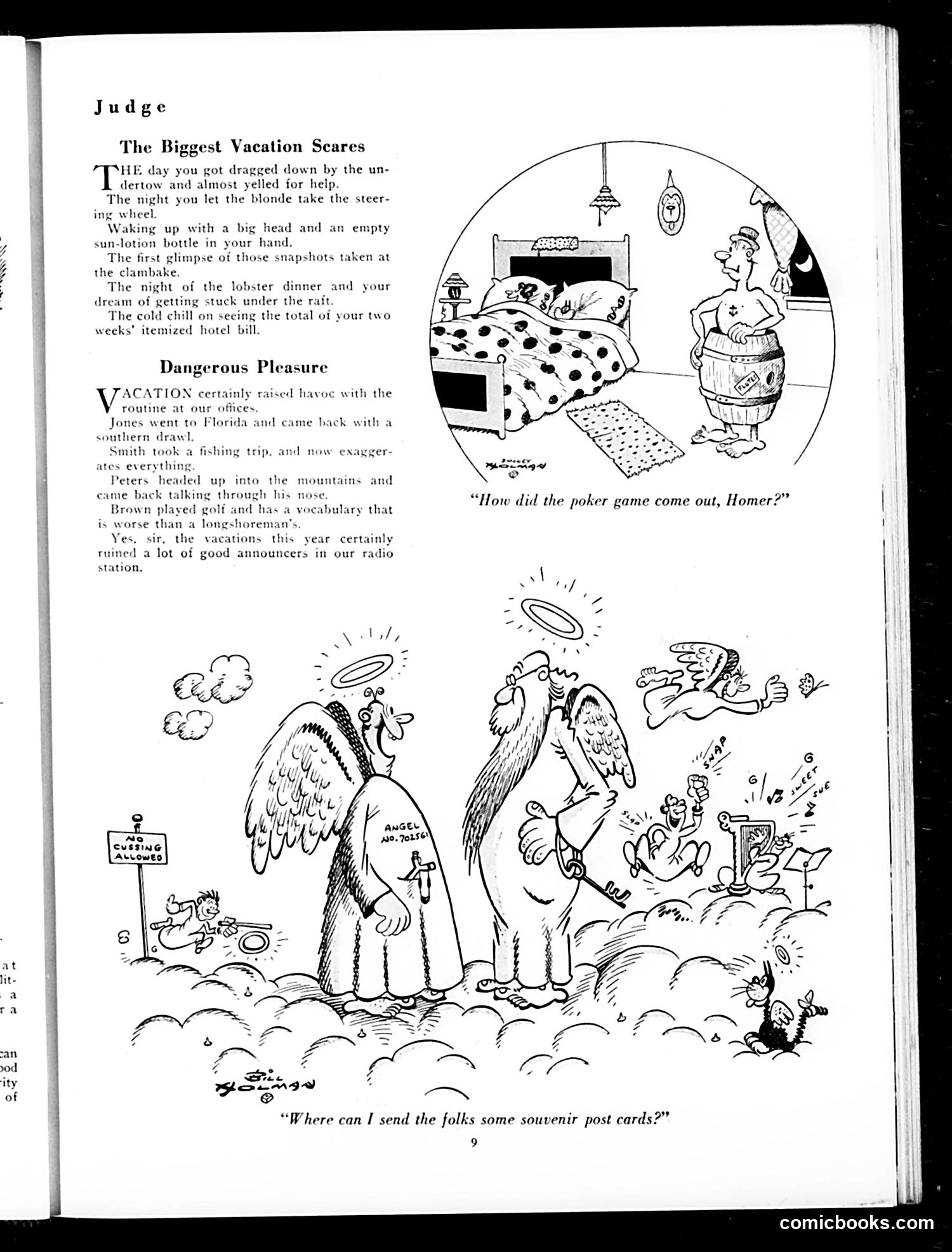
# Judge Magazine Satire Analysis This page presents two humorous pieces about vacation mishaps aimed at 1920s-30s readers. **"The Biggest Vacation Scares"** lists common vacation anxieties: undertow dangers, letting a date drive, hangovers, unflattering photographs, food poisoning fears, and—most pointedly—the shock of itemized hotel bills. The humor targets the emerging middle-class vacation culture and its hidden costs. **"Dangerous Pleasure"** satirizes how vacations change office workers' personalities: Jones returns with an affected Southern accent, Smith exaggerates fishing tales, Peters adopts mountain dialect, and Brown's golf trip has corrupted his language worse than a "longshoreman's." The joke mocks how people adopt affectations from brief trips and bore colleagues with exaggerated vacation stories. The bottom cartoon shows angels struggling to send postcards from heaven—a gentle afterlife joke about vacation obligation (the tedium of sending souvenirs). The satire targets vanity, pretension, and the emerging consumer culture around leisure travel.