
Judge, 1935-09 · page 20 of 36
Judge — September 1935 — page 20: what you’re looking at
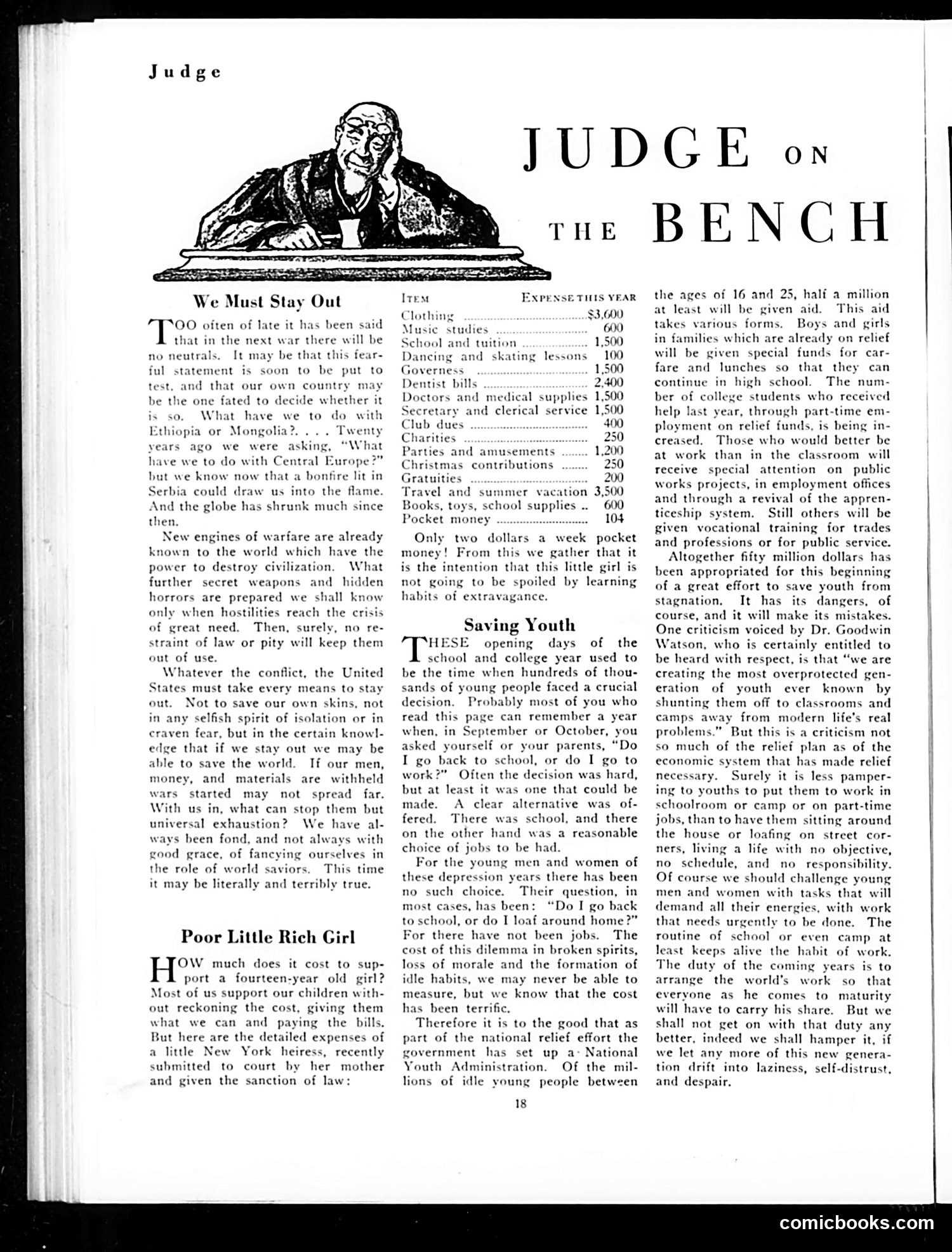
A restored page from Judge, 1935-09. Page through the whole issue in the reader above.
📄 Transcribed text from this page (OCR, searchable)
Machine-transcribed from the original scan — historical spelling and the odd misread are preserved.
We Must Stay Out Toe often of late it has been s: that in the next war there will be r- It may be that this fe: put to no neutrals, ful s . and that be the one fated to decide whether it atement is soon to be our own country is so. What have we to do with riopia or Mongoliad .. . 1 years ago we were asking, have we to do with Central Europe bonfire lit in us into the flame. And the globe has shrunk much since then. New engines of warfare are already known to the world which have the power to destroy civilization. What further secret w and hidden horrors are prepared we shall know only when hostilities reach the crisis of great need. Then, surely, no re- straint of law or pity will keep them out of use. Whatever the conflict, the United States must take every means to stay out. Not to save our own skins, not in any selfish spirit of isolation or in craven fear, but in the certain knowl- e that if we stay out we may be able to save the world. If our men, and materials withheld started may not. spread far. With us in, what can stop them but universal exhaustion? We have al- ways been fond, and not always with good grace, of fancying ourselves in the role of world saviors. This time it may be literally and terribly true. but we know now that a Serbia could draw pons money, are wars Poor Little Rich Girl OW much does it cost to sup- port a fourteen-year old girl? Most of us support our children with- out reckoning the cost, giving them what we can and paying the bills. But here are the detailed expenses of a little New York heiress, recently submitted to court by her mother and given the sanction of law: Item EXPENSE THIS YEAR Clothing $3,600 Music studies 600 School and tuition 1,500 100 Dancing and skating lessons Governess Dentist bills Doctors and medical supplies Secretary and clerical service Club dues Charities = Parties and amusements Christmas contributions ‘atuities . ravel and summer vacation Books, toys, school supplies Pocket money . Only two dollars a week pocket money! From this we gather that it is the intention that this little girl is not going to be spoiled by learning habits of extravagance. Saving Youth HESE opening days of the school and college year used to be the time when hundreds of thou- sands of young people faced a crucial decision. Probably most of you who read this page can remember a year when, in September or October, you asked yourself or your parents, “Do I go back to school, or do I go to work Often the decision was hard, but at least it was one that could be made. A clear alternative was of- fered. There was school, and there on the other hand was a reasonable choice of jobs to be had. For the young men and women of these depression years there has been no such choice. Their question, in most es, has been: “Do I go back to school, or do I loaf around home?” For there have not been jobs. The cost of this dilemma in broken spirits, loss of morale and the formation of idle habits, we may never be able to measure, but we know that the cost has been terrific. Therefore it is to the good that as part of the national relief effort the government has set up a> National Youth Administration. Of the mil- lions of idle young people between 18 the ages of 16 and 25, half a million at least will be given aid. This aid takes various forms. Boys and girls in families which are already on relief v be given special funds for car- fare and lunches so that they can continue in high school. The num- ber of college students who receive help last year, through part-time em- ployment on relief funds, is being in- creased. Those who would better be at work than in the classroom will receive special attention on public works projects, in employment offices and through a revival of the appren- ticeship system. Still others will be given vocational training for trades and professions or for public service. Altogether fifty million dollars has been appropriated for this beginning of a great effort to save youth from stagnation, It has its dangers, of course, and it will make its mistak: One criticism voiced by Dr. Goodwin Watson, who is certainly entitled to be heard with respect, is that “we are creating the most overprotected gen- eration of youth ever known by shunting them off to classrooms and camps away from modern life's real problems.” But this is a criticism not so much of the relief plan as of the economic system that has made relief necessary. Surely it is less pamper- ing to youths to put them to work in schoolroom or camp or on part-time jobs, than to have them sitting around the house or loafing on street cor- ners, living a life with no objective, no schedule, and no responsibility. Of course we should challenge young men and women with tasks that will demand all their energies, with work that needs urgently to be done. The routine of school or even camp at least keeps alive the habit of work. The duty of the coming years is to arrange the world’s work so that everyone as he comes to maturity will have to carry his share. But we shall not get on with that duty any better, indeed we shall hamper it, if we let any more of this new genera- tion drift into laziness, self-distrust, and despair. comicbooks.com