A complete issue · 36 pages · 1933
Judge — April 1933
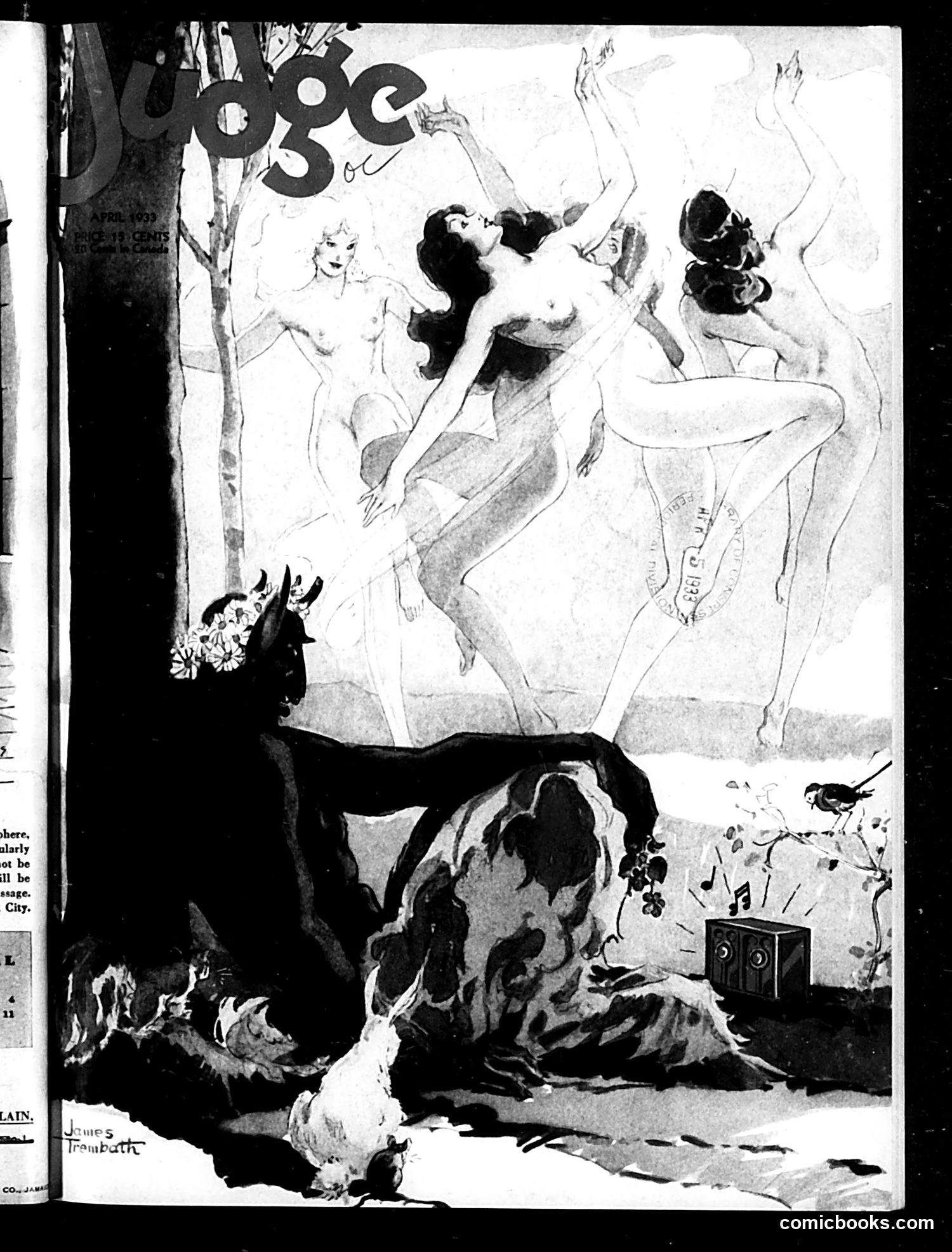
# Judge Magazine Cartoon Analysis This appears to be a **Jude magazine cover from April 1905** (based on visible text), featuring an Art Nouveau-style illustration by artist James S. Trombarth. The image depicts **mythological or allegorical female figures** in a dreamlike, sensual scene with classical references—including what appears to be a satyr or demon figure in the lower left. The satire likely **mocks contemporary artistic pretension** or the fashion for elaborate, mythologically-themed illustration popular in early 1900s aesthetics. The theatrical, exaggerated poses and classical references suggest **mockery of decadent or overly romantic artistic movements** of the period. Without clearer text, the specific political or social commentary remains unclear, though Judge typically targeted artistic trends, social affectations, and cultural excess.
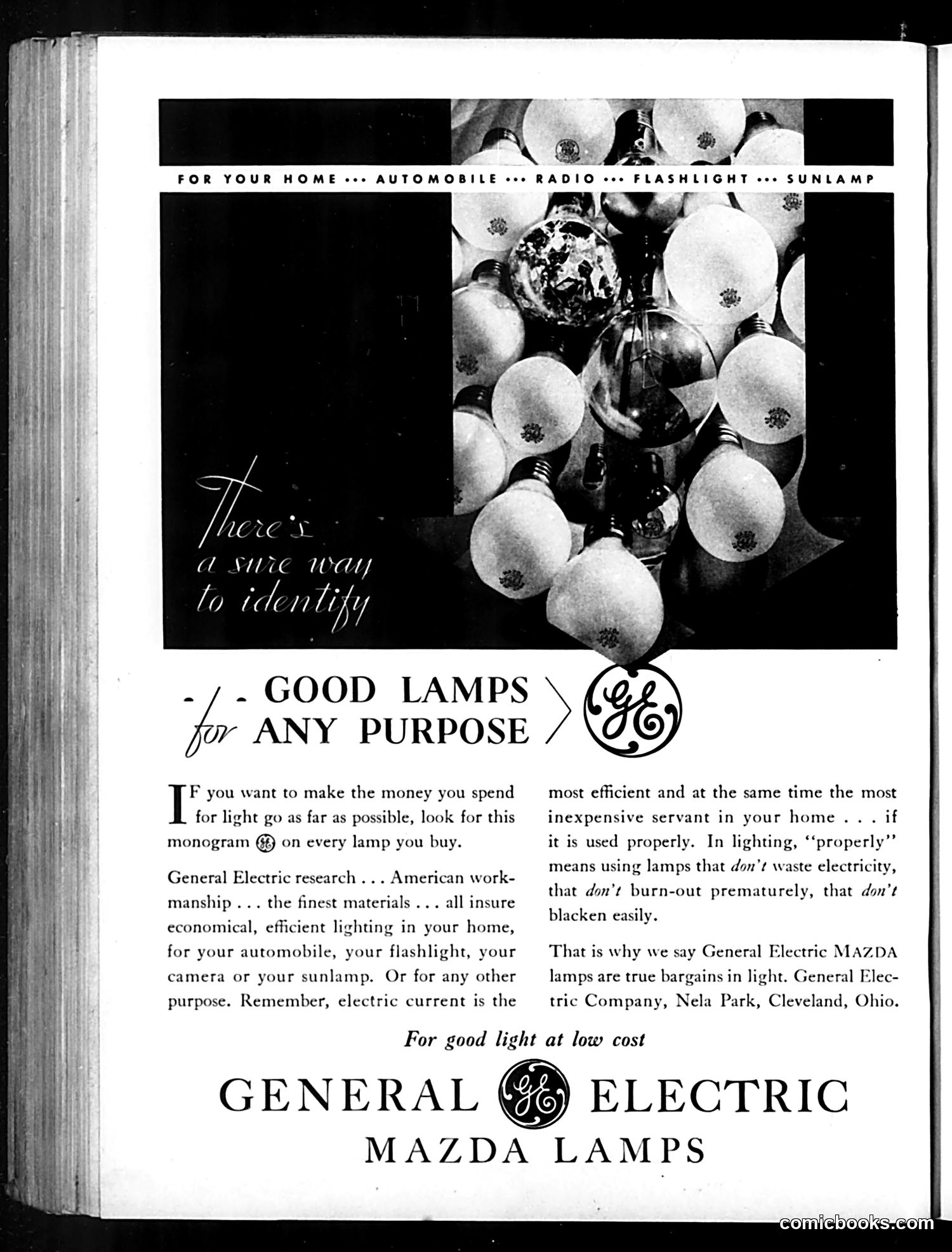
# Analysis This page is **primarily a General Electric advertisement**, not satirical content. It advertises GE Mazda lamps for household, automotive, and other uses. The ad emphasizes GE's quality through their monogram (®) trademark, positioning their lamps as economical and efficient. The headline "There's a sure way to identify" and the image of various bulbs suggests consumers should recognize the GE mark to ensure they're buying reliable products rather than inferior alternatives. The text appeals to value-conscious buyers: GE lamps supposedly waste less electricity and don't burn out prematurely. The company location (Nela Park, Cleveland, Ohio) establishes corporate credibility. **This is straightforward advertising, not political satire.** Judge magazine clearly accepted commercial advertisements alongside editorial content.
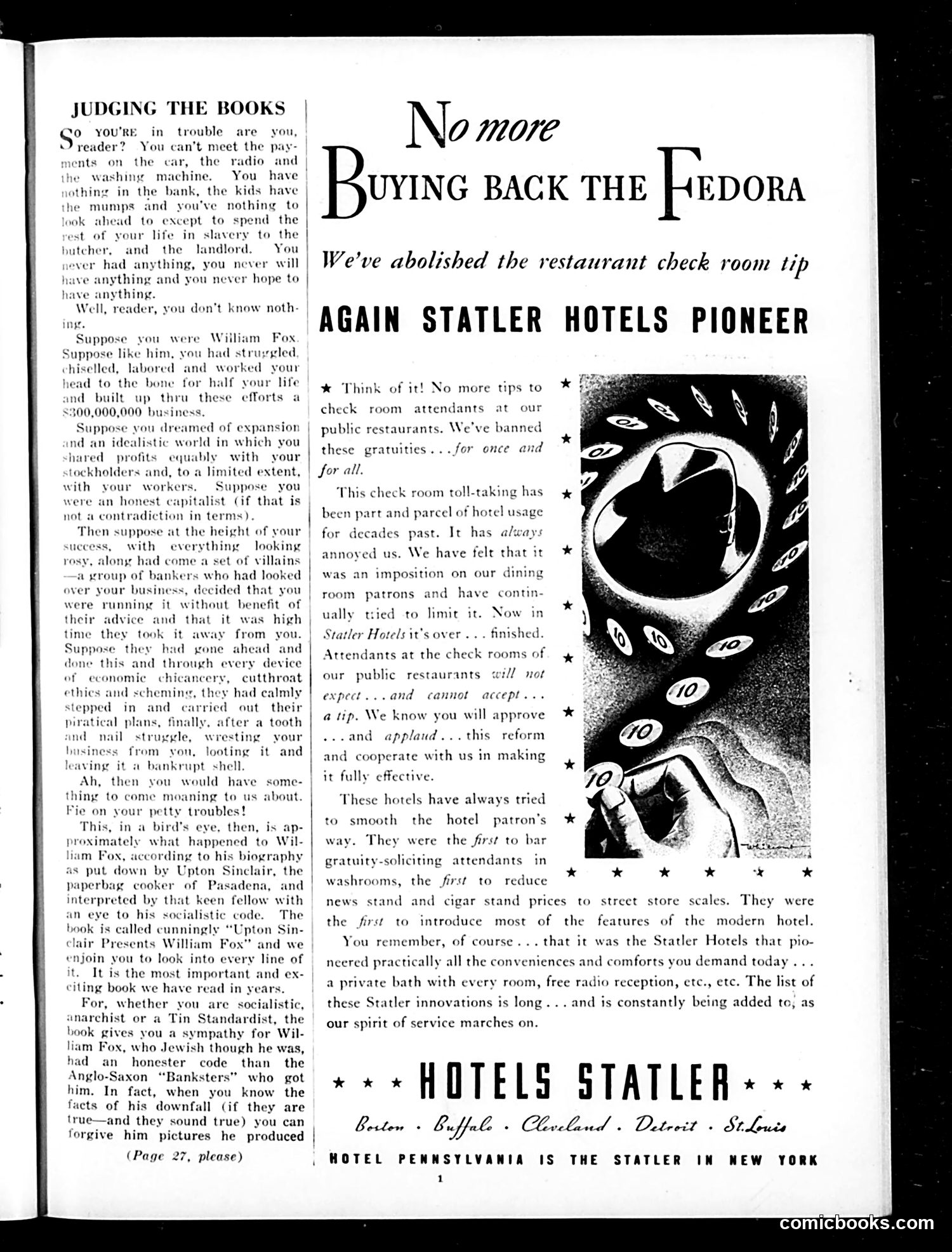
# Analysis This page is primarily a **Statler Hotels advertisement**, not political satire. The ad announces that Statler Hotels has abolished tipping in their restaurant check rooms—a progressive labor reform for the era. The left column contains unrelated editorial content titled "Judging the Books," discussing William Fox (a film producer) and his biography by Upton Sinclair. The satirical point appears to be mocking Fox's rags-to-riches story while suggesting he faced opposition from corrupt business rivals. The main advertisement uses the illustration of a fedora hat to visually reinforce the headline "No more buying back the fedora"—a play on the phrase about tipping. The ad emphasizes Statler Hotels' pioneering stance on eliminating gratuities, positioning the chain as a modern, patron-friendly establishment that pioneered hotel conveniences.
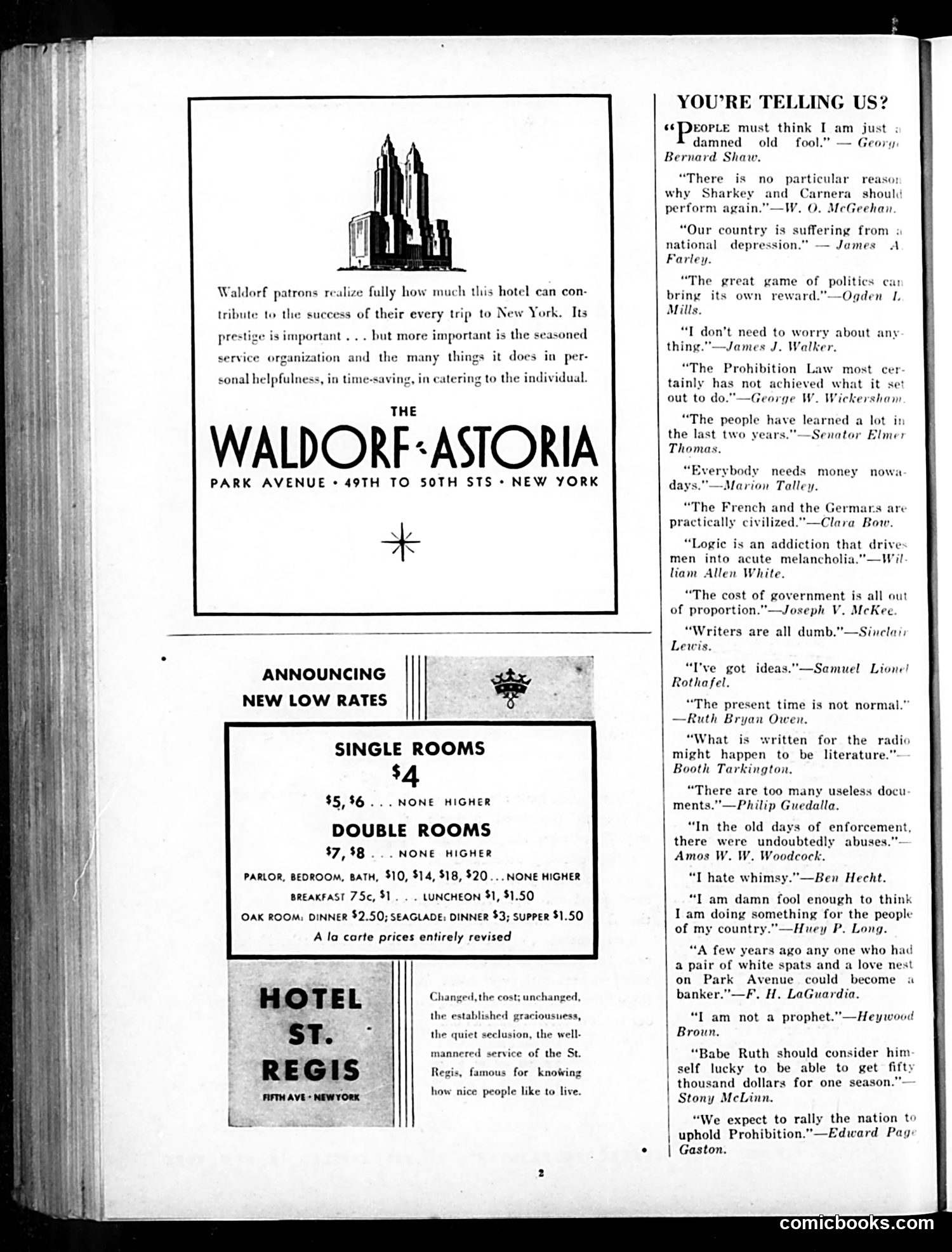
# Page Analysis This page is primarily **advertising**, not political satire. It features two hotel advertisements: 1. **The Waldorf-Astoria** (top) - promoting luxury accommodations on Park Avenue with new reduced rates during what appears to be an economic downturn (single rooms from $4, double rooms from $7). 2. **Hotel St. Regis** (bottom) - emphasizing its established reputation for serving "nice people." The right column contains **"You're Telling Us?"** — a humor feature showcasing brief satirical quotes attributed to public figures like George Bernard Shaw and Sinclair Lewis, commenting on contemporary issues: Prohibition, economic depression, government costs, and politics. The quotes mock prevailing attitudes and policies of the era rather than targeting specific individuals. This appears to be from the 1920s-early 1930s based on references to Prohibition and economic concerns.
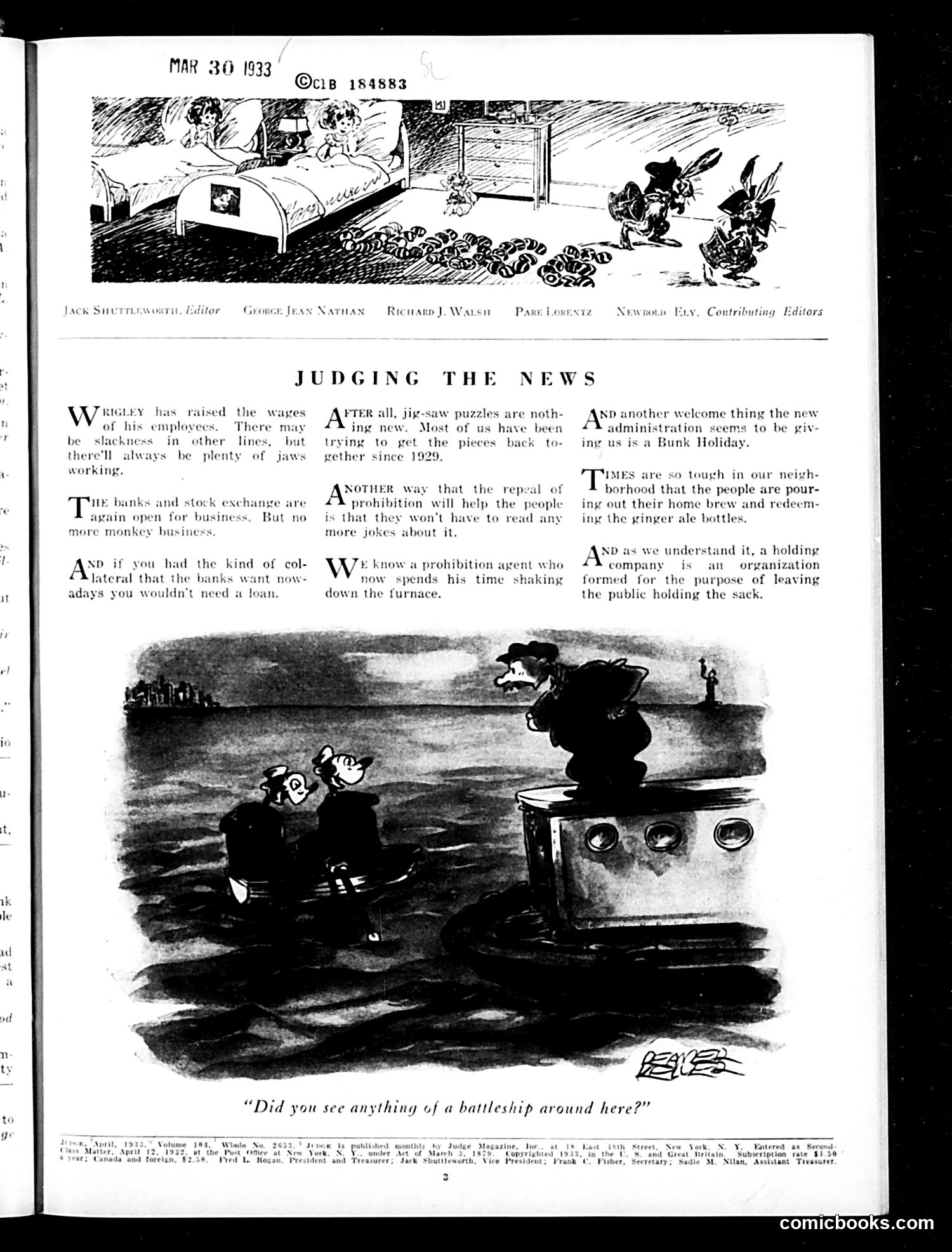
# "Judging the News" - March 30, 1933 This editorial page satirizes current events through brief commentary and a cartoon. The text references Wrigley raising employee wages, banks reopening for business, Prohibition's repeal, and a "holding company" organization for "leaving the public holding the sack" — a common phrase meaning being left responsible for problems. The main cartoon depicts two figures in a small boat asking a third figure on what appears to be a submarine or ship: "Did you see anything of a battleship around here?" The joke likely references uncertainty about naval power or military readiness during the early New Deal era (March 1933), though the specific historical context isn't entirely clear from the image alone. It may comment on American military preparedness or international tensions of the period.
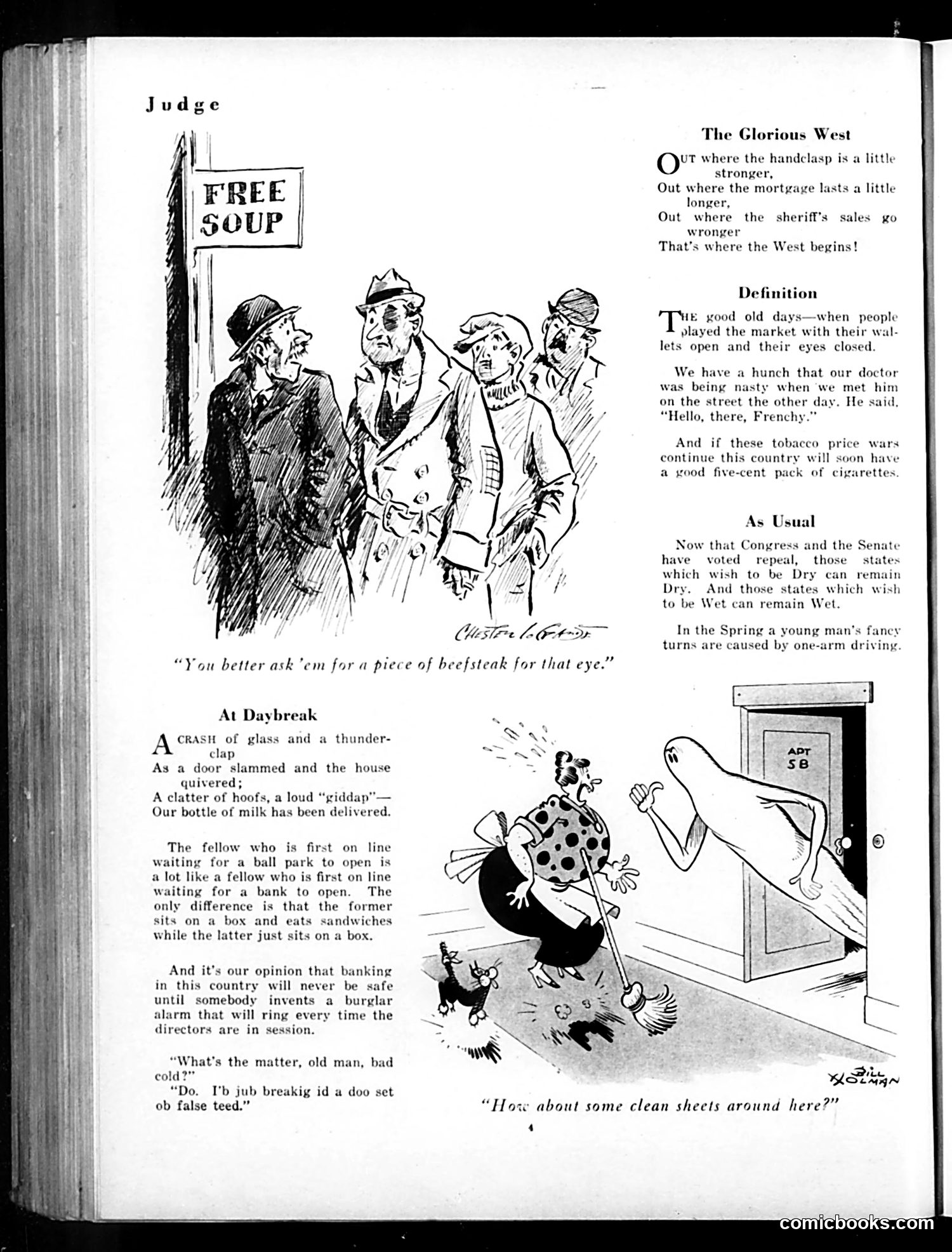
# Analysis of Judge Magazine Page **"Judge" (Free Soup cartoon):** This depicts Depression-era poverty. Men in worn clothes queue at a "Free Soup" line—likely referencing breadlines during economic hardship. The caption "'You better ask 'em for a piece of beefsteak for that eye'" suggests these men are destitute and battered, possibly from unemployment or street life. The cartoon critiques economic conditions forcing citizens into charity lines. **"At Daybreak" section:** Humorous verse about domestic chaos—broken glass, a loud "giddap," milk delivery. It satirizes everyday household mishaps. **Right-side cartoons:** Include commentary on Prohibition repeal (Congress voting on states going "Dry" or "Wet") and a slapstick scene of someone evicting a woman from an apartment, mocking housing instability. These reflect 1920s-30s American social anxieties.
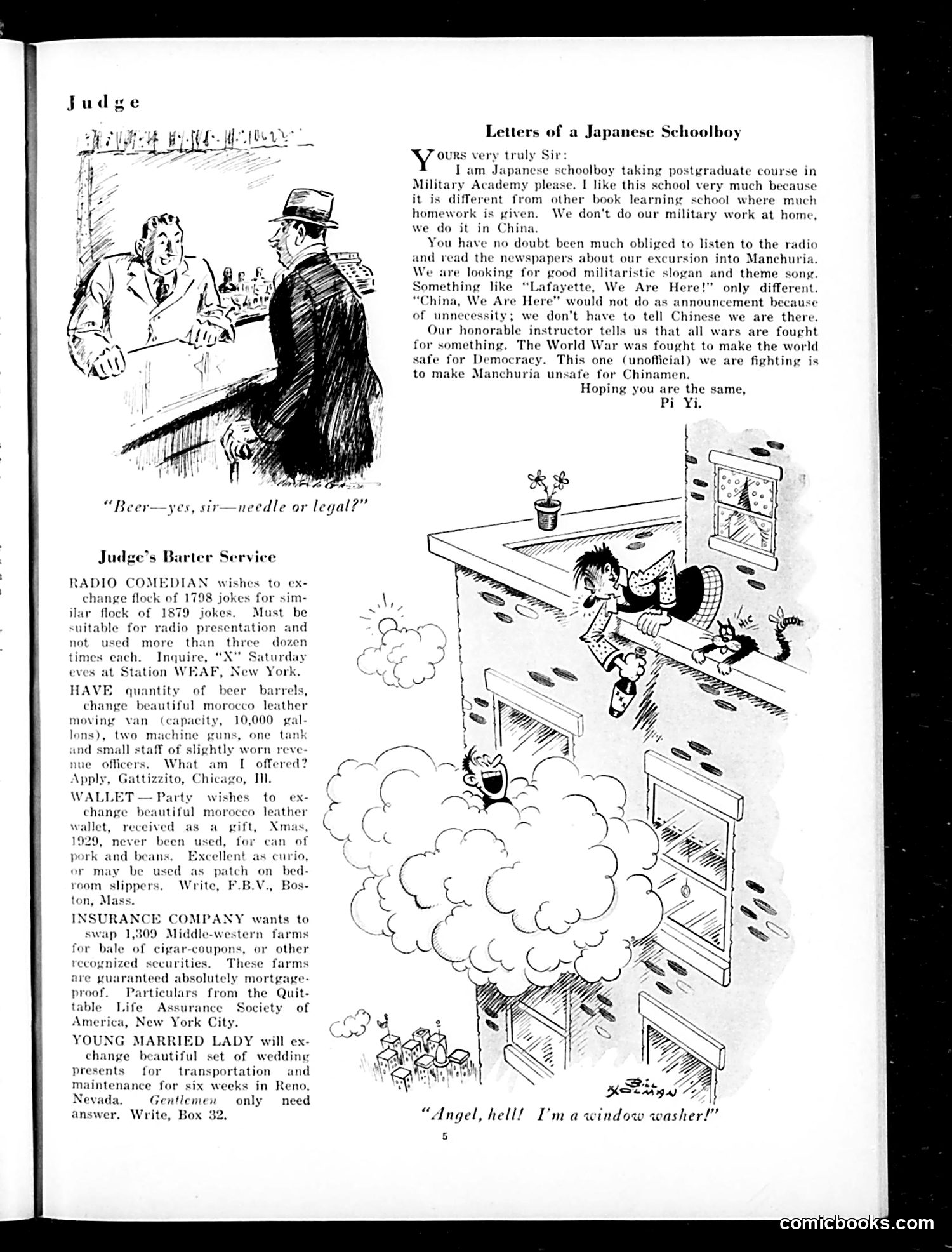
# Analysis of This Judge Magazine Page **Top Section - "Letters of a Japanese Schoolboy":** This letter from a Japanese military academy student justifies Japan's invasion of Manchuria as fighting for "Democracy" and making "Manchuria un-safe for Chinamen." The satire mocks Japan's propaganda claims—presenting aggressive imperialism as noble defense of democracy. This likely dates to Japan's 1931-32 Manchurian invasion, which Judge sarcastically critiques as transparent military aggression disguised in ideological language. **Bottom Section - "Angel, hell! I'm a window washer!":** A cartoon showing a child covered in soot falling through a window into clouds, exclaiming he's "a window washer." The joke plays on the child's misinterpretation or humorous reframing of his accident as labor rather than mishap—visual slapstick humor common to the era. The page primarily satirizes Japanese militarism's deceptive rhetoric.
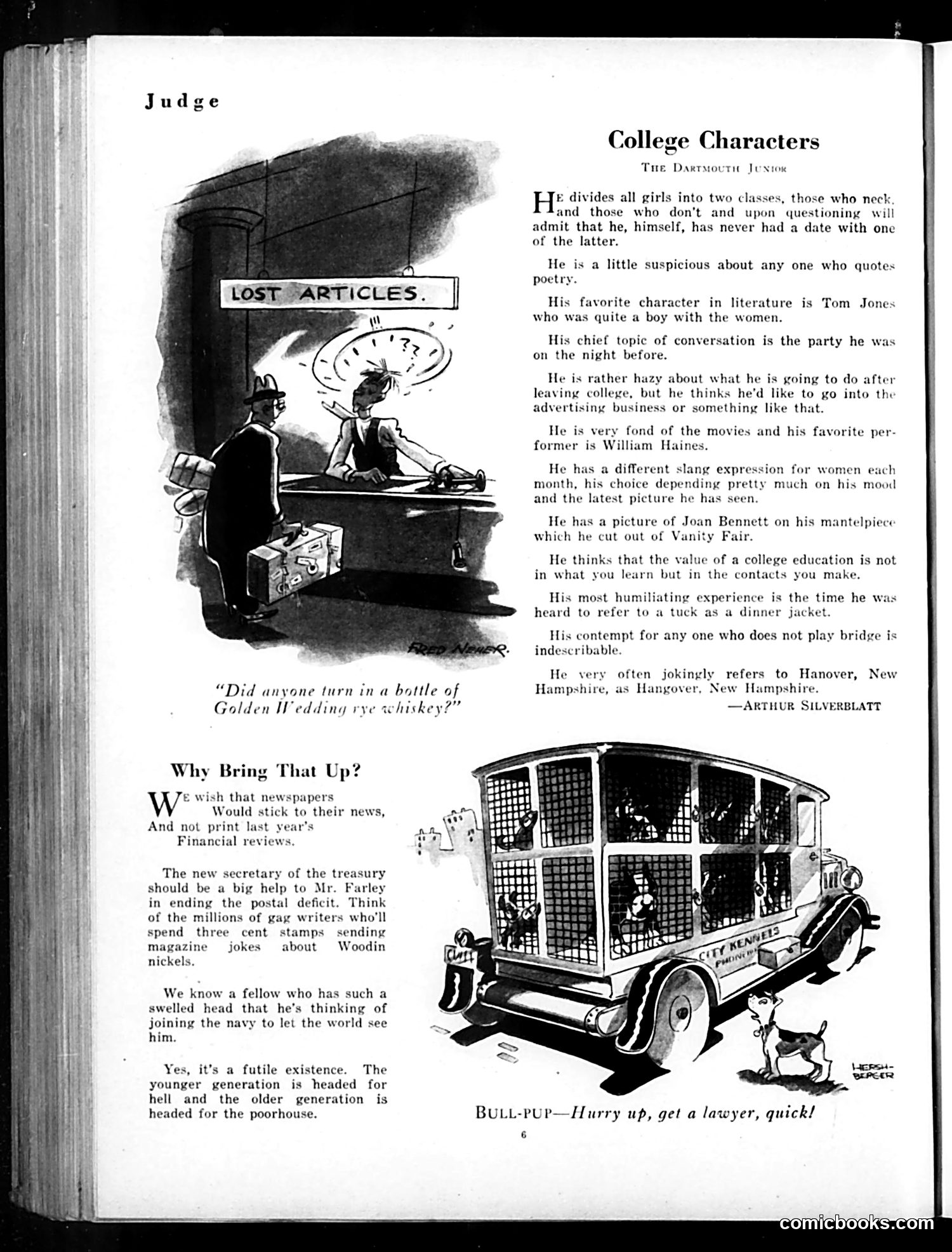
# Analysis of Judge Magazine Page This page from Judge magazine contains three distinct pieces of satire: 1. **"Lost Articles" cartoon**: Shows a man at a lost-and-found desk, with the caption asking if anyone turned in a bottle of "Golden Wedding rye whiskey." This satirizes Prohibition-era alcohol smuggling and the absurdity of claiming lost contraband. 2. **"College Characters" profile**: Describes a Dartmouth Junior who classifies girls, loves Tom Jones and William Haines (a silent film star), and jokingly values college for "contacts you make" rather than education. This mocks shallow college culture and materialism. 3. **"Why Bring That Up?"**: Political satire suggesting the Treasury Secretary should reduce postal deficits by having postage stamps feature jokes about Woodin (likely Secretary William Woodin). The bull-pup cartoon below appears unrelated social humor about lawyers.
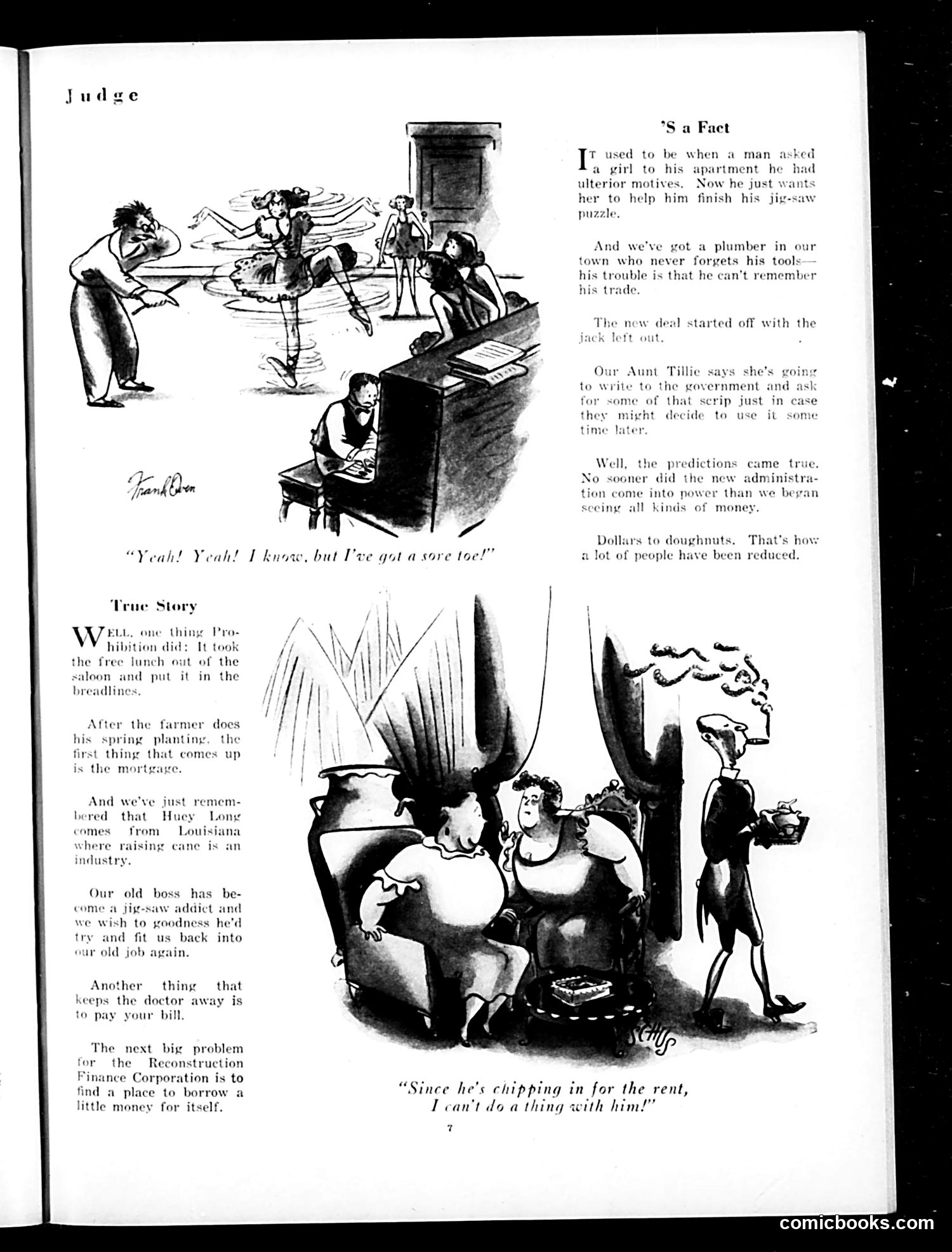
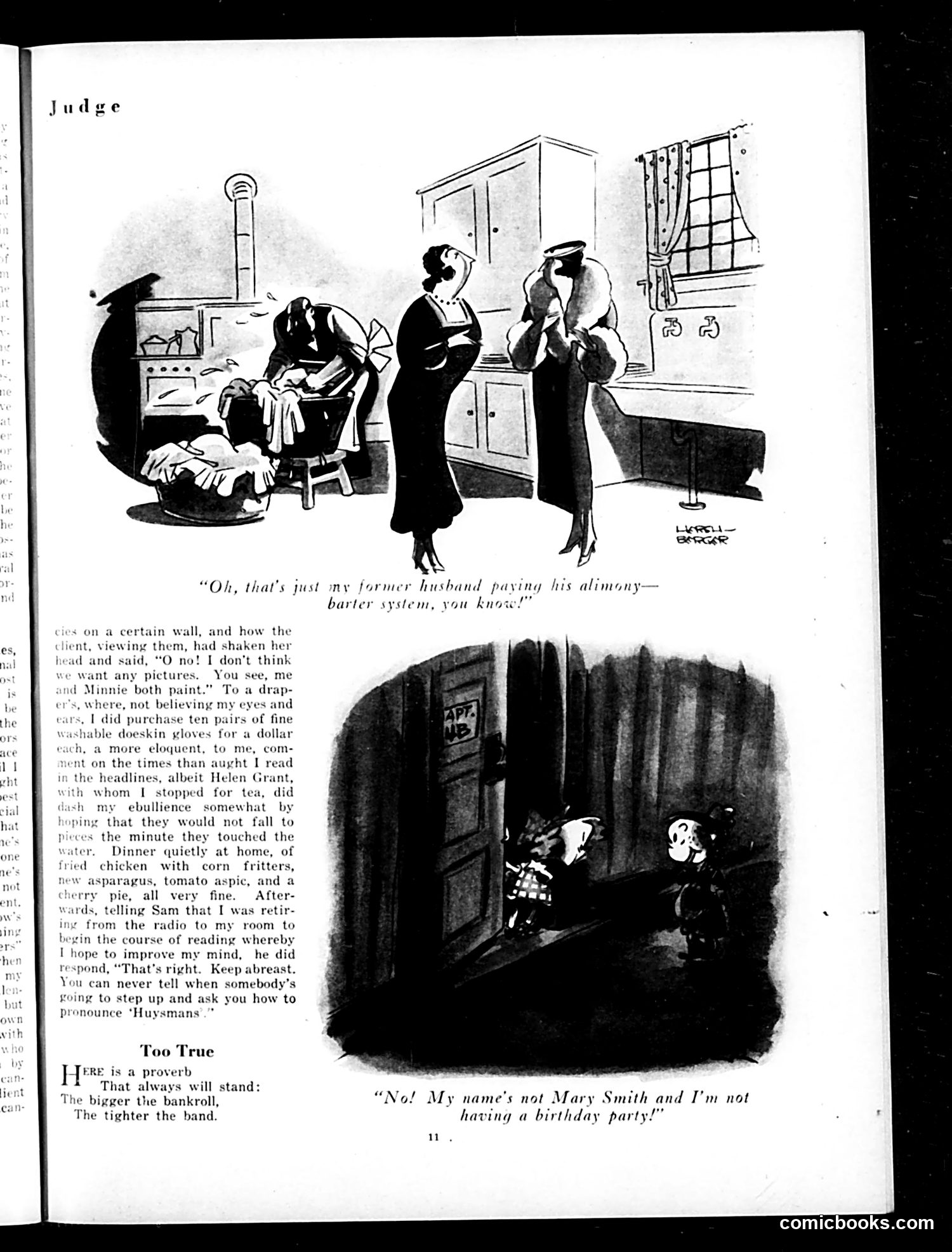
# Judge Magazine Satire Analysis This page contains Depression-era humor (likely early 1930s) satirizing New Deal policies and economic hardship. **Top cartoon**: Shows a man inviting a woman to his apartment—once implying seduction, now just asking help with a jigsaw puzzle. It's a joke about changed courtship in hard times; romance is replaced by innocent domestic activities. **"True Story" section**: A collection of one-liners mocking: - **Prohibition's end**: Breadlines replaced free lunches once offered in saloons—sardonically commenting on ongoing poverty despite alcohol's legalization - **Farmer debt**: Spring planting immediately followed by mortgage foreclosure - **Huey Long reference**: "Huey" (Louisiana politician) associated with populist movements - **Government scrip**: Aunt Tillie plans requesting emergency currency from the government - **RFC lending problem**: The Reconstruction Finance Corporation (New Deal agency) struggles to find funds to lend itself The satire targets government relief programs' inadequacy and the persistence of economic misery despite New Deal interventions.
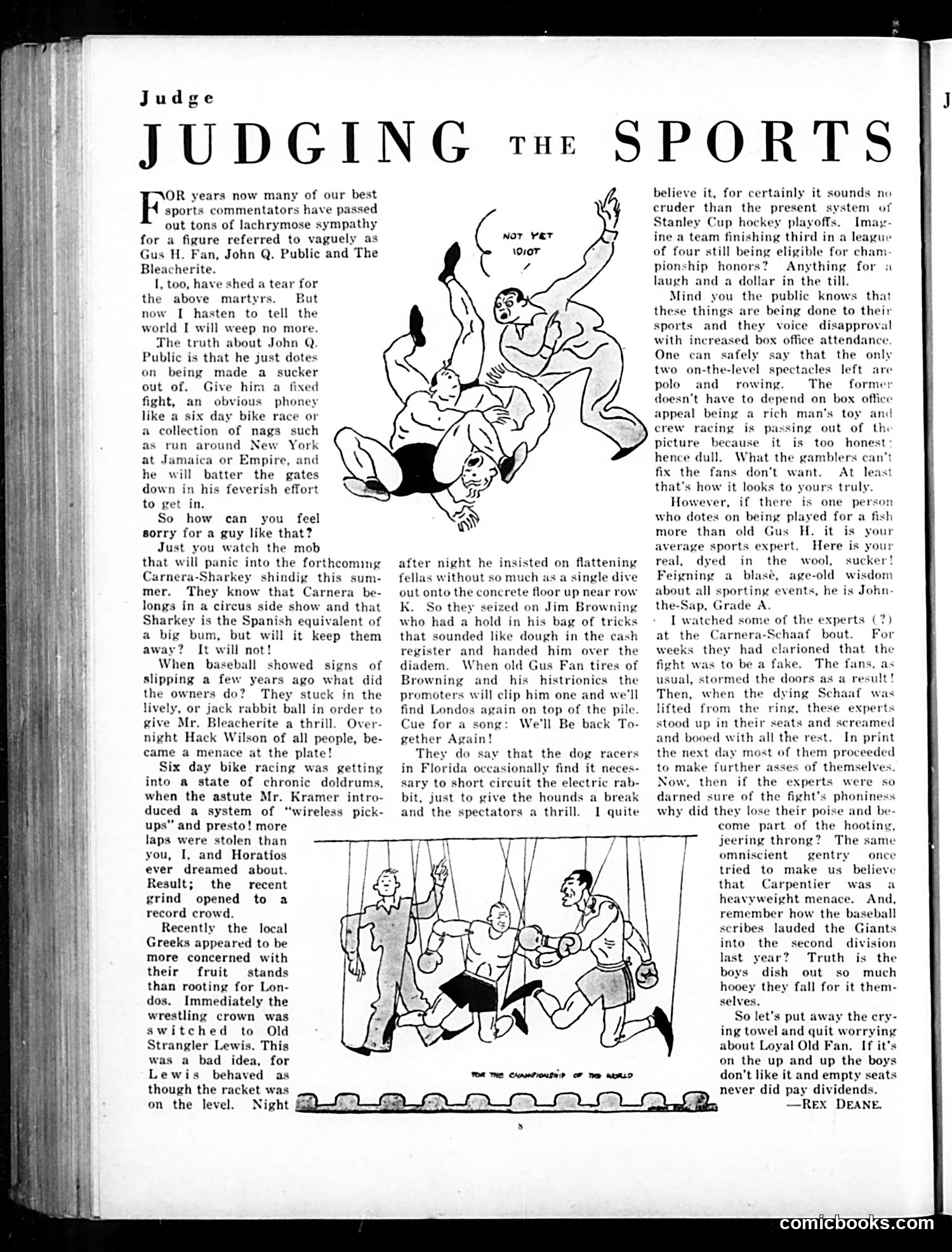
# "Judging the Sports" – Rex Deane's Critique of Sports Spectacle (Judge Magazine) This satirical column attacks the American sports public for willingly embracing obvious frauds and rigged events. The author argues that fans—called "Gus H. Fan," "John Q. Public," and "The Bleacherite"—*enjoy* being duped by fixed fights, phoney races, and manufactured drama. Deane cites specific examples: the lively "jack rabbit" baseball used to revive sagging interest; six-day bike races with stolen laps; wrestling matches (Old Strangler Lewis, Jim Browning) where outcomes are predetermined; greyhound racing allegedly involving electrical sabotage; and hockey playoffs allowing third-place teams into championships. The cartoon shows spectators in frenzy, labeled "NOT YET IDIOT." Deane's point: fans claim to disapprove yet pack venues anyway, proving they prefer entertaining fakery to honest competition. Only polo and rowing remain genuinely "on the level"—and tellingly, they're dull and unpopular. Even sports experts are "suckers," pretending wisdom while knowingly watching fraud. The satire targets both sports corruption and public complicity.
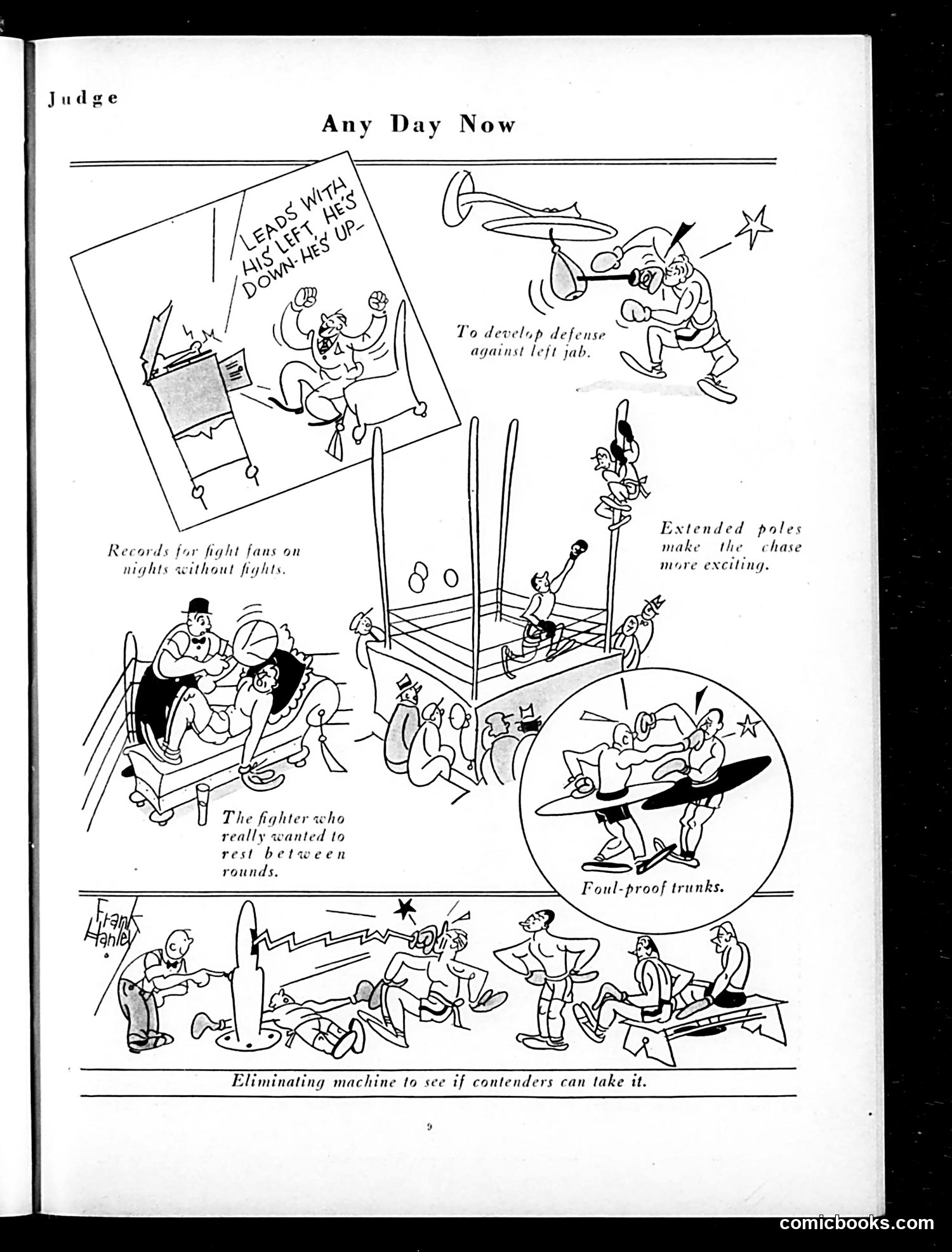
# "Any Day Now" - Judge Magazine Satire This page satirizes boxing entertainment and its increasingly theatrical innovations. The cartoons mock efforts to make fights more exciting for fans through absurd contraptions and rule changes: - A helicopter attacking a fighter to develop defensive skills - Extended poles making "the chase more exciting" - Night fights under artificial lights for non-paying fans - A boxing ring with elevated poles for spectacle - "Fool-proof trunks" as protective equipment - An "eliminating machine" to test fighter endurance The satire critiques boxing promoters' desperation to innovate and sensationalize the sport, suggesting they're adding ridiculous obstacles and technological gimmicks rather than relying on genuine athletic competition. The title "Any Day Now" implies these absurd changes are imminent. The cartoons reflect early-20th-century anxieties about commercialized sports losing authenticity.
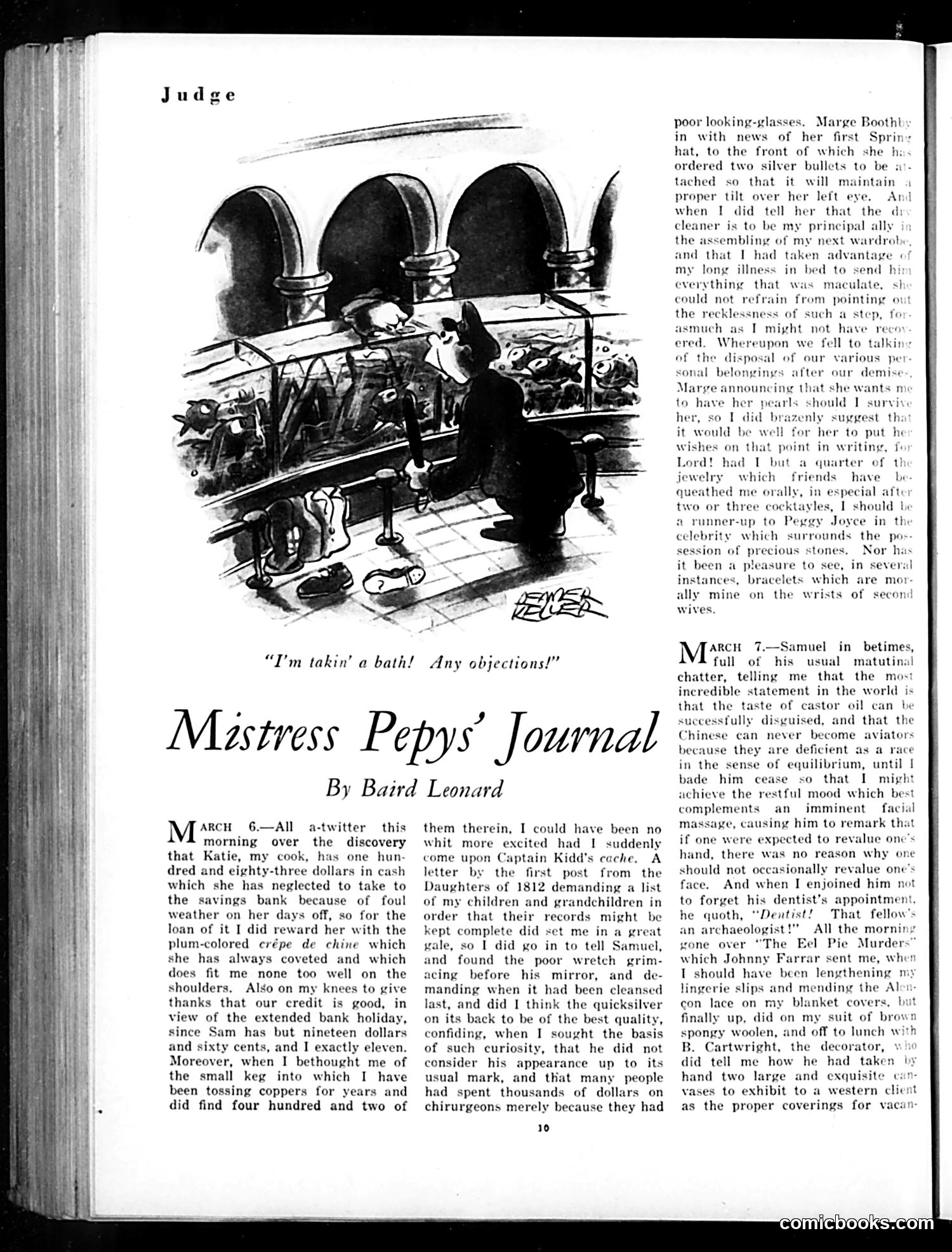
# Explanation of This Judge Page This page contains a cartoon and the opening installment of "Mistress Pepys' Journal," a humor column by Baird Leonard that parodies Samuel Pepys's famous 17th-century diary. **The Cartoon:** Shows a woman taking a bath in an ornate tub while a servant stands nearby. The caption "I'm takin' a bath! Any objections!" is a joke about the speaker's entitled attitude—she's announcing her activity as if daring anyone to object, suggesting social pretension or selfishness. **The Column:** Adopts Pepys's style to humorously chronicle the domestic life of a wealthy woman managing servants, household finances, and social obligations. Notable details include: discovering her cook has saved $183, worrying about bank holidays, finding $402 in copper coins, discussing an inheritance of jewelry, and social gossip about friends' spring hats and possessions. The satire gently mocks upper-class concerns—financial anxiety despite privilege, obsession with material goods and appearances, and the leisure activities of the wealthy during what appears to be the 1920s.