A complete issue · 36 pages · 1932
Judge — June 18, 1932
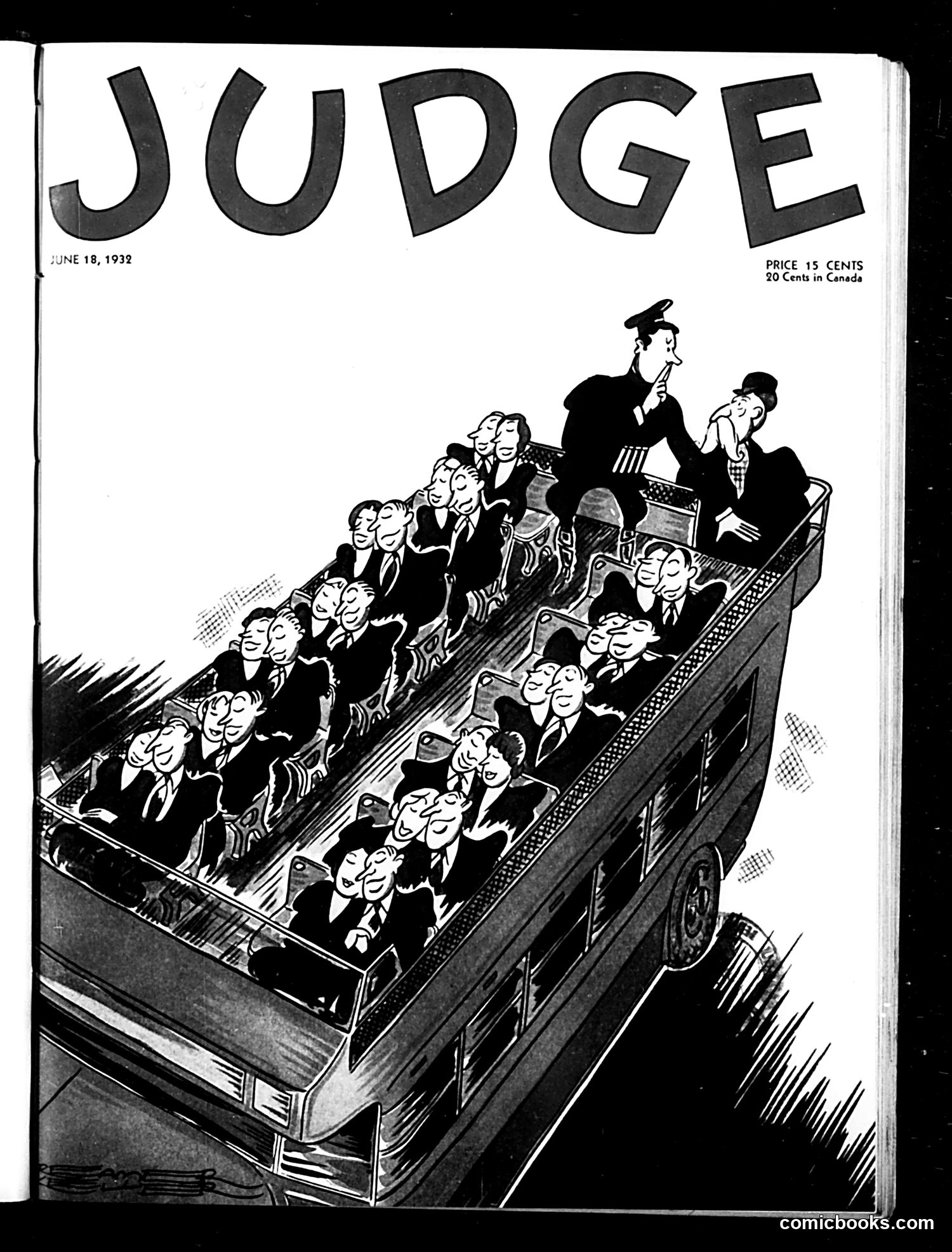
# Judge Magazine Cover Analysis — June 18, 1932 This cover satirizes judicial proceedings during the Great Depression era. The cartoon depicts a crowded courtroom or legal proceeding crammed into what appears to be a roller coaster car, suggesting that the legal system is a chaotic, thrilling (and dangerous) ride rather than a dignified institution. The packed vehicle with multiple figures in formal attire—likely lawyers, judges, and defendants—all with exaggerated expressions conveys that the courts are overwhelmed with cases, possibly related to Depression-era bankruptcies, foreclosures, or criminal activity. The title "JUDGE" puns on the magazine's name and the legal profession itself. The satire critiques how rapidly and recklessly the judicial system processes cases during economic crisis.
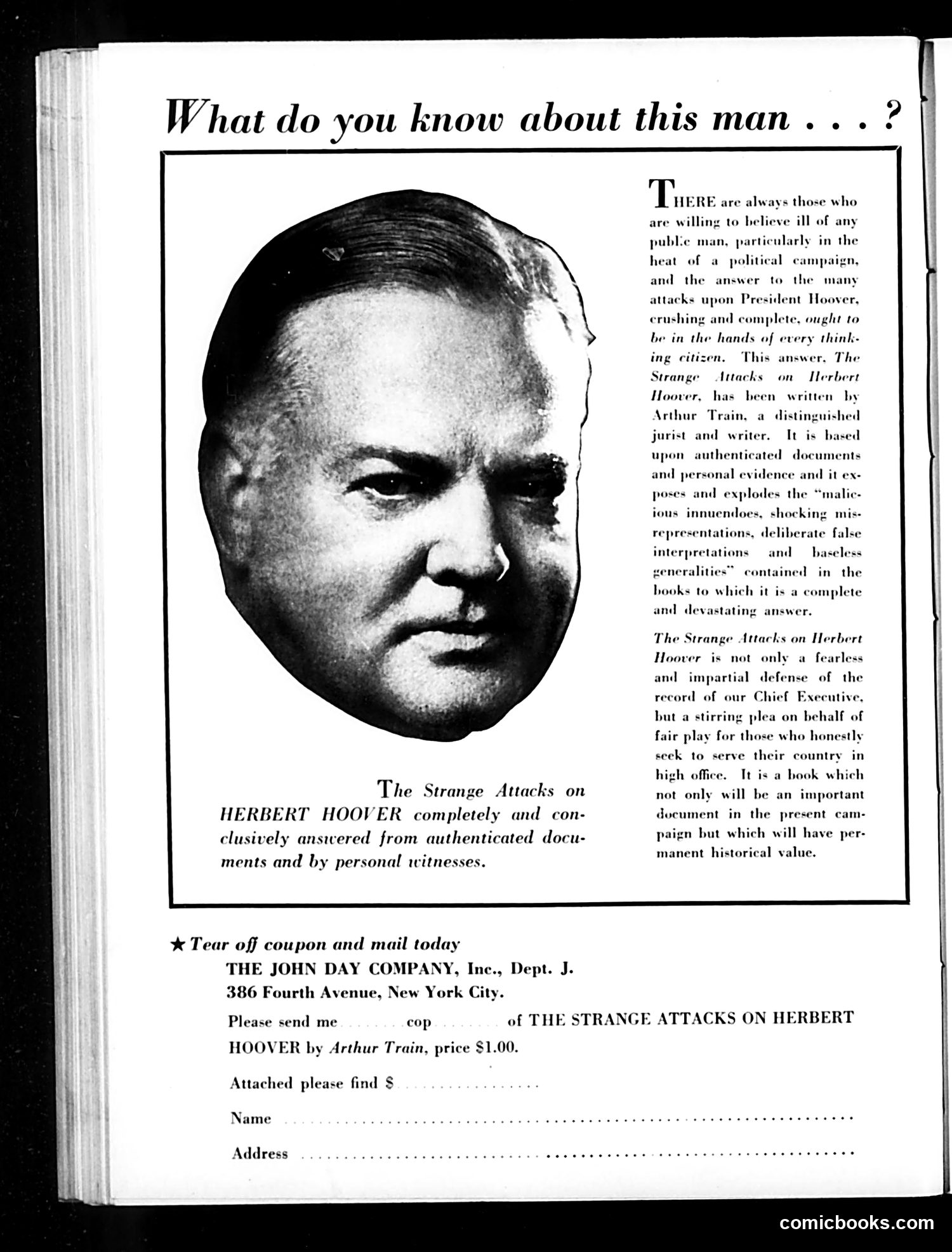
# Analysis This page is primarily a **political advertisement** rather than satire. It promotes Arthur Train's book "The Strange Attacks on Herbert Hoover," published by The John Day Company for $1.00. The image shows a stern portrait of **Herbert Hoover**, who appears to be the subject of political criticism during his presidency. The text defends Hoover against attacks, claiming the book will expose "malicious innuendoes, shocking misrepresentations, deliberate false interpretations and baseless generalities" made against him using "authenticated documents and personal evidence." This appears designed to counter negative political attacks circulating during Hoover's administration, presenting the book as a factual defense of his record. The advertisement invites readers to order copies via coupon, functioning as both political advocacy and commercial promotion.
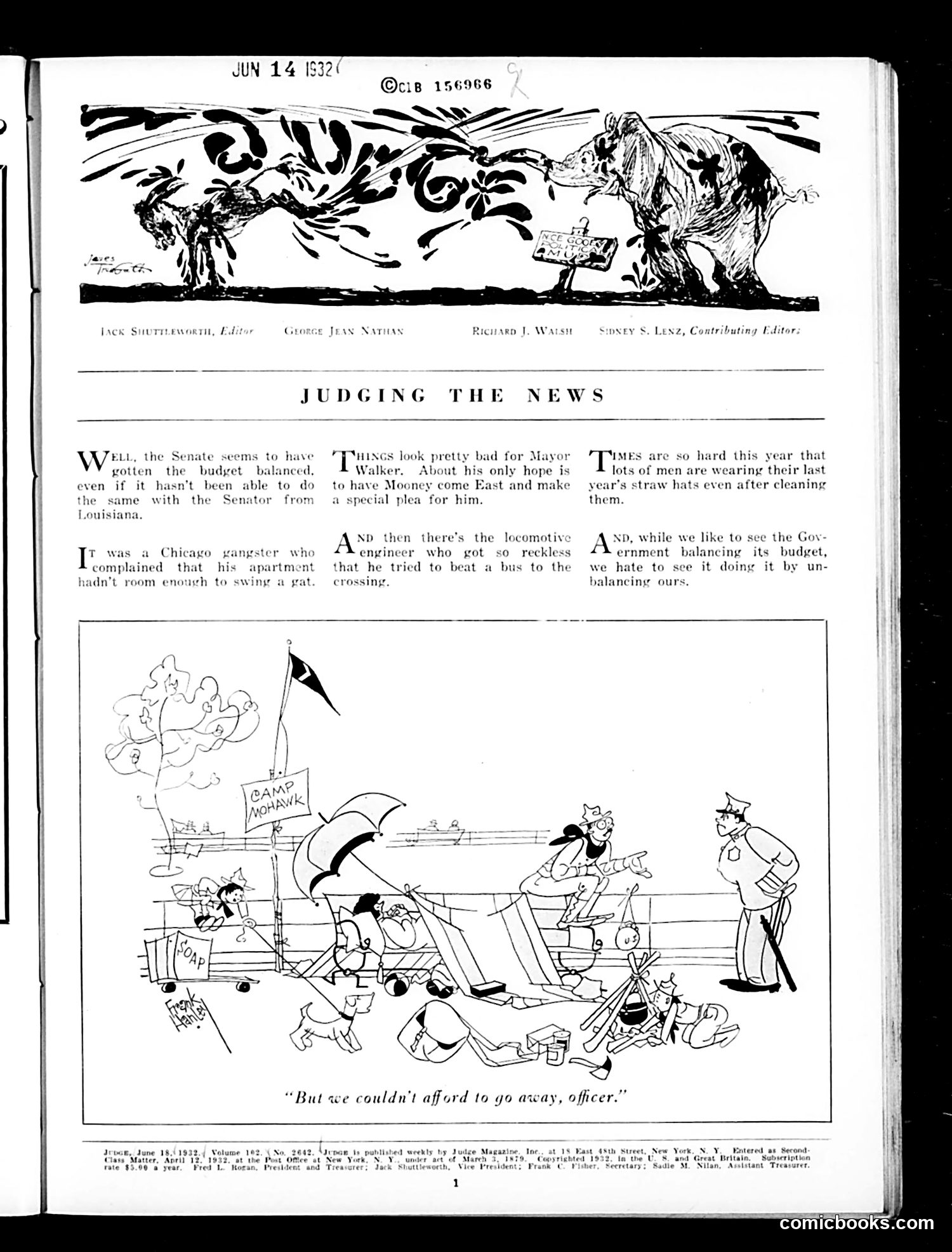
# "Judging the News" - June 14, 1932 This page satirizes early 1930s Depression-era politics and urban life. The editorial snippets mock Senate budget debates and Mayor Walker's financial troubles (likely referring to New York's Jimmy Walker, who faced corruption charges in the early 1930s). The main cartoon depicts a chaotic "hobo camp" scene labeled "Camp Mohawk," showing homeless encampments that became common during the Great Depression. The officer's caption—"But we couldn't afford to go away, officer"—sarcastically comments on economic hardship forcing people into vagrancy. The illustration critiques both poverty conditions and law enforcement's role in managing homelessness, while the surrounding text ridicules government officials' failure to address these crises effectively. The cartoon reflects Depression-era anxieties about unemployment and urban disorder.
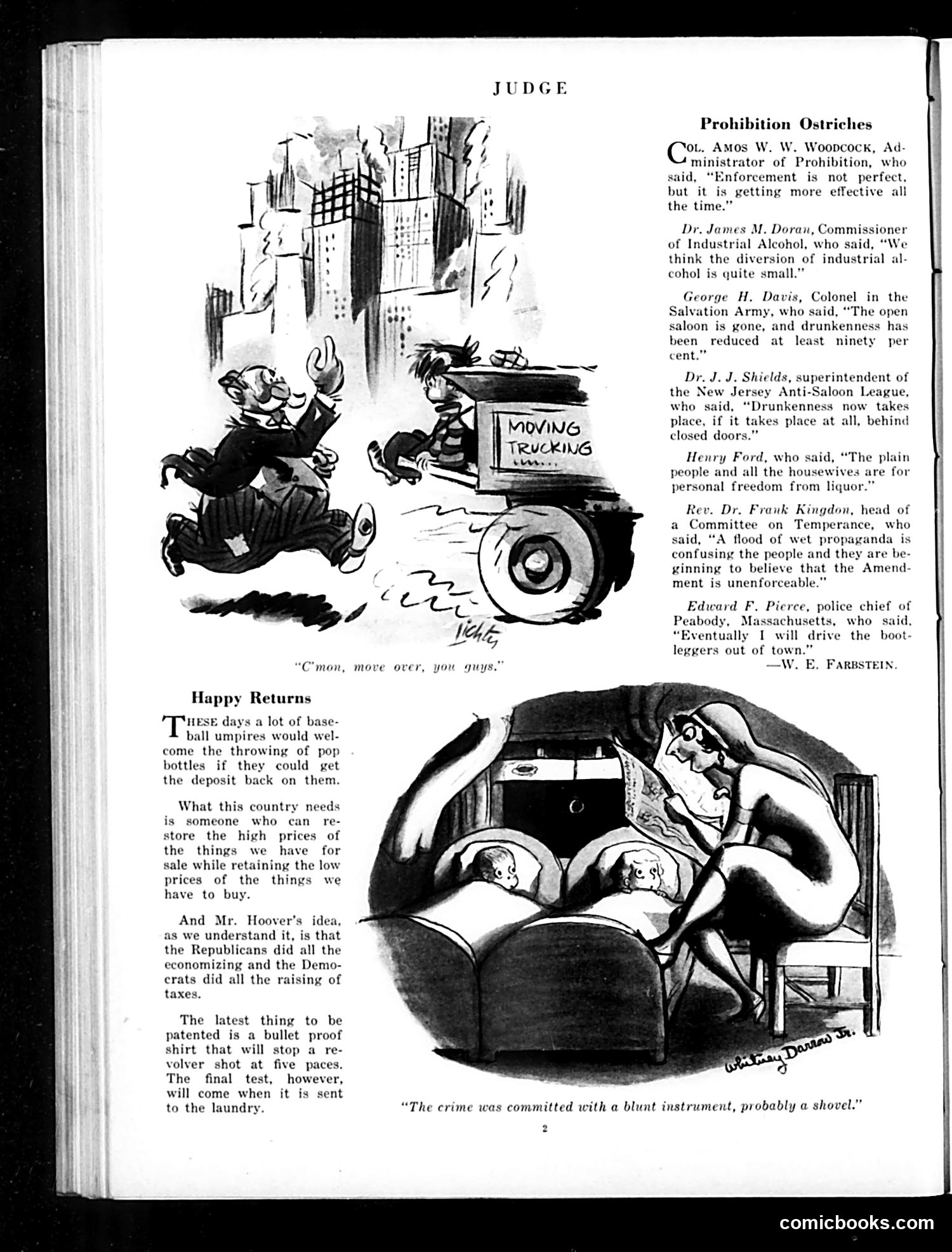
# Analysis of Judge Magazine Page **Top Cartoon ("C'mon, move over, you guys"):** This depicts Prohibition enforcement, showing an ostrich-like figure hiding its head (symbolizing denial) while a "Moving Trucking" vehicle—likely representing illegal alcohol distribution—operates nearby. The satire mocks how Prohibition enforcement was ineffective; bootleggers continued operating despite the law. **Testimonials Section ("Prohibition Ostriches"):** Various officials and religious leaders claim Prohibition's success (reduced drunkenness, closed saloons). The "ostriches" metaphor suggests they're burying their heads in sand, refusing to acknowledge widespread violation and bootlegging. **Bottom Cartoon ("The crime was committed with a blunt instrument"):** A detective examines what appears to be a domestic crime scene involving infants, likely satirizing absurd detective work or sensationalist crime reporting. The page overall critiques Prohibition's failure and hypocrisy.
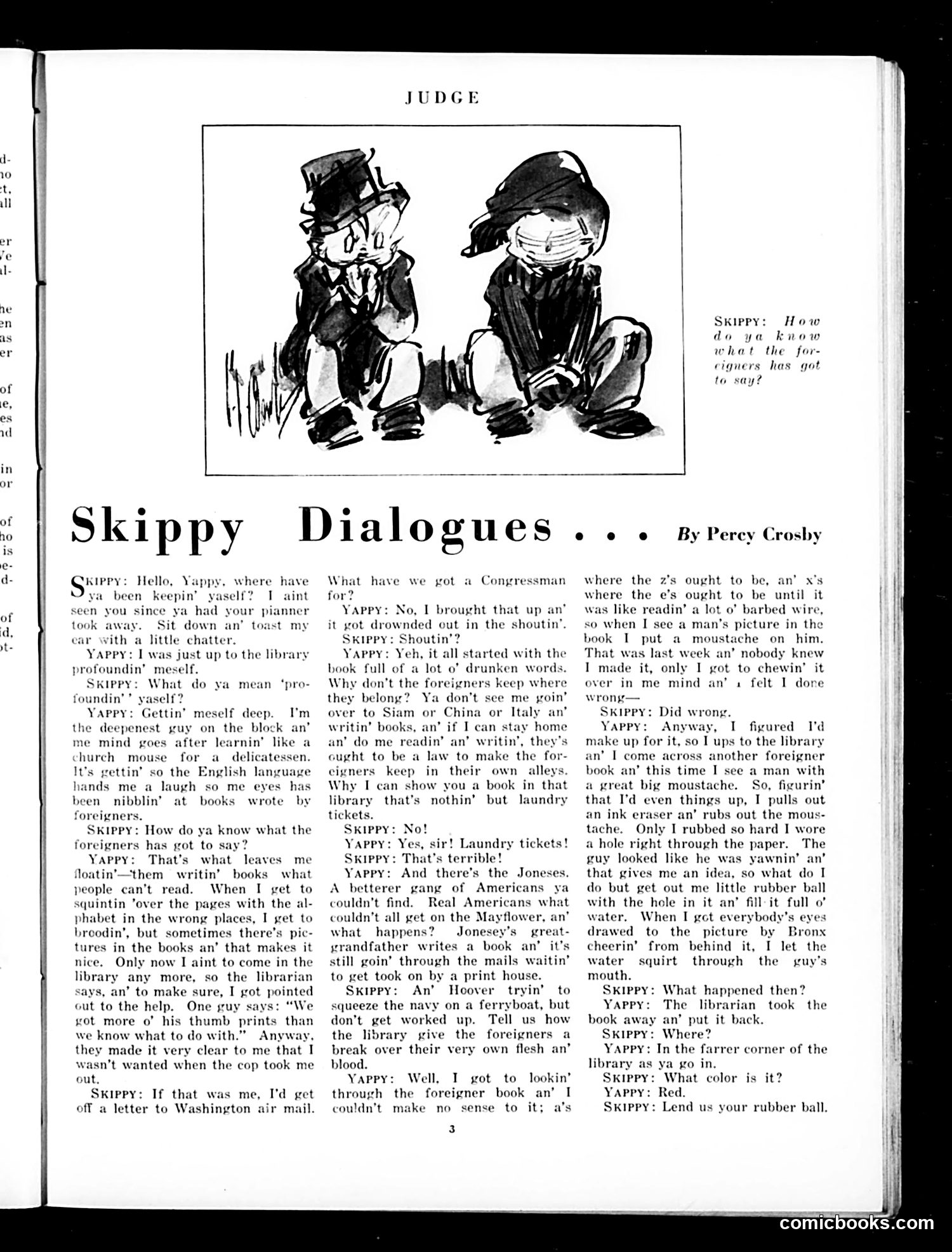
# "Skippy Dialogues" by Percy Crosby This comic dialogue features two working-class characters discussing foreigners and American identity—likely reflecting 1920s-30s anxieties about immigration and assimilation. The humor centers on Skippy's malapropisms and misunderstandings about library books involving foreigners. He confuses concepts like "foreigners" and "laundry tickets," and makes absurd claims (a man with a mustache appearing in a library book; an ink eraser creating a hole in a page). The underlying satire appears to mock nativist prejudices against immigrants while simultaneously portraying the working-class characters as ignorant and suspicious of foreign literature. The dialogue suggests both anti-immigrant sentiment and ridicule of those holding such views—typical of Judge's satirical approach to social tensions of the era. The crude character design reinforces period stereotypes about working-class identity.
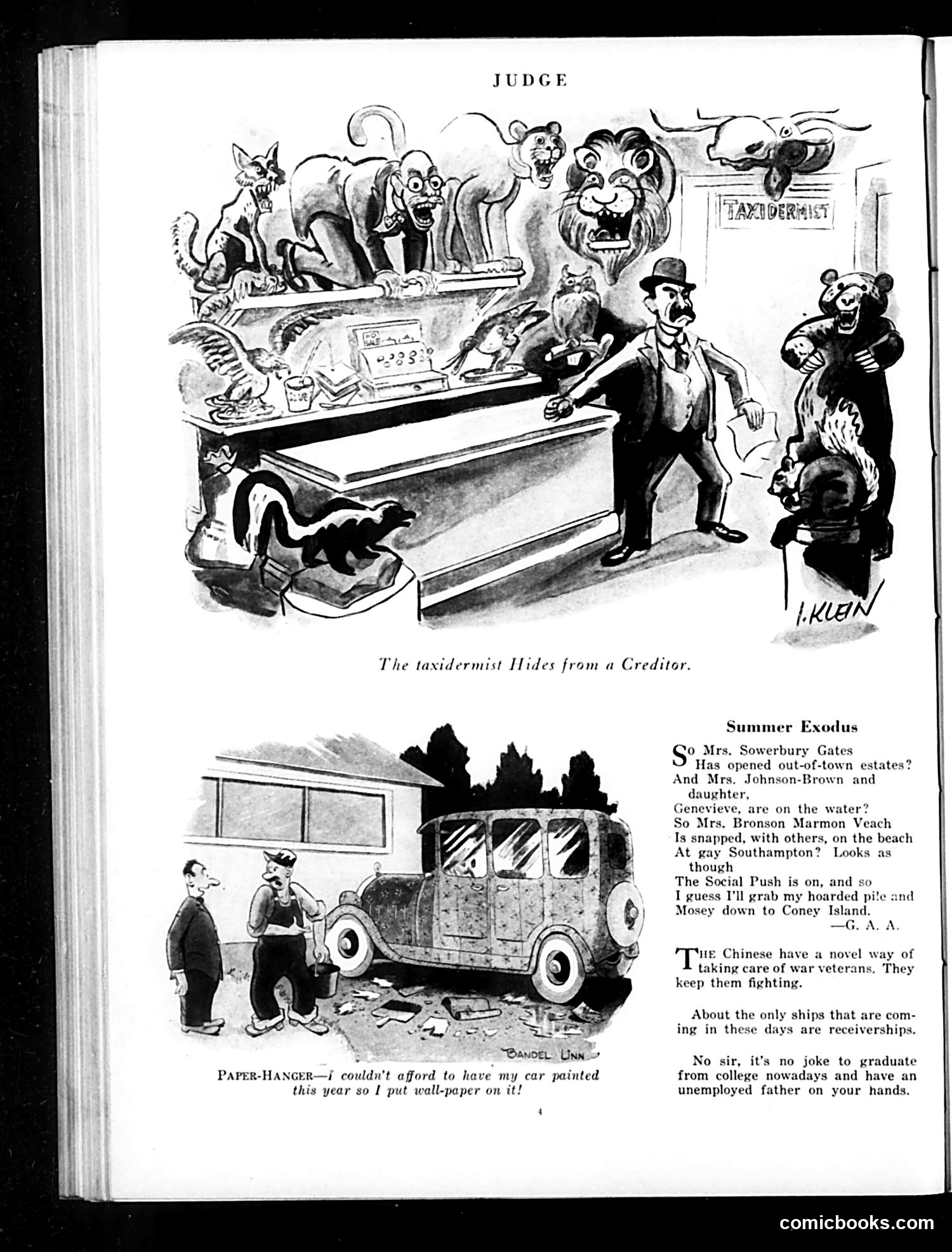
# Explanation for Modern Readers **Top Cartoon ("Judge"):** A courtroom scene titled "The taxidermist Hides from a Creditor." A man hides behind a large book while various animal-headed figures (appearing to represent creditors or legal authorities) sit in judgment above. The joke uses the literal profession of taxidermy—stuffing and mounting dead animals—as metaphor: the taxidermist is "stuffed" or trapped by his debts, surrounded by bestial creditors. **Bottom Cartoon ("Paper-Hanger"):** Two men examine a car covered in wallpaper. The caption explains: unable to afford paint, the owner applied wallpaper instead. This satirizes Depression-era economic desperation and makeshift solutions to maintaining appearances during financial hardship. Both cartoons reflect 1930s economic anxiety—debt, creditors, and poverty forcing people into absurd, undignified compromises.
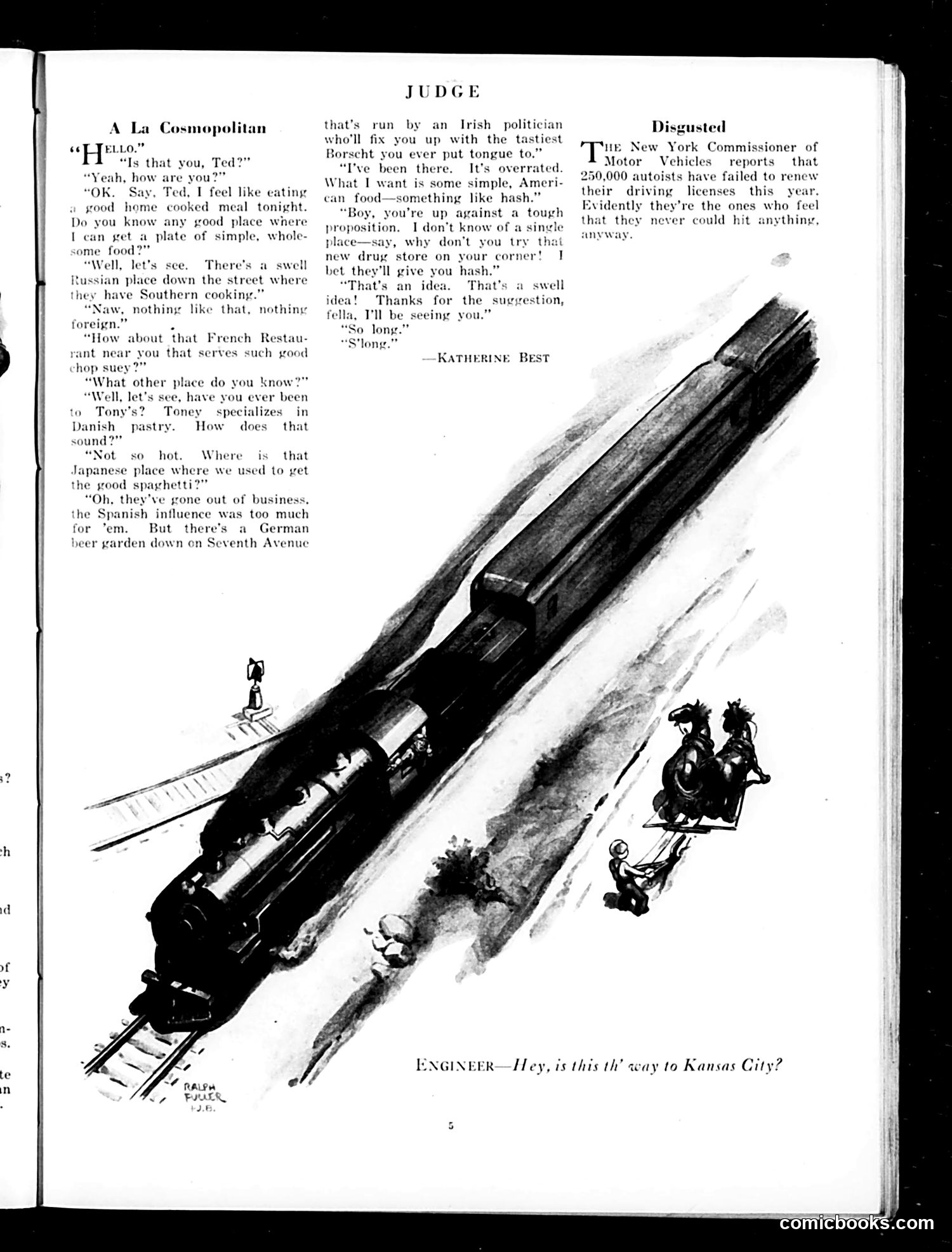
# Analysis This page contains two sections: a comedic dialogue ("A La Cosmopolitan") and a cartoon. **The Dialogue:** Two men (Ted and another) discuss New York restaurants. Ted recommends a Russian place for "good home cooked meal," then suggests various ethnic establishments—French, Danish pastry, Japanese spaghetti, and a German beer garden. The joke appears to mock New York's diverse immigrant restaurant scene and perhaps satirizes Americans' casual consumption of foreign cuisines without deep cultural understanding. **The Cartoon:** An engineer asks lost travelers "Hey, is this th' way to Kansas City?" while a train passes nearby. The humor likely derives from the travelers' confusion or the absurdity of their predicament—they appear stranded or disoriented near railroad tracks. Both items appear to target urban American life and immigration-related social commentary typical of Judge magazine's satirical approach.
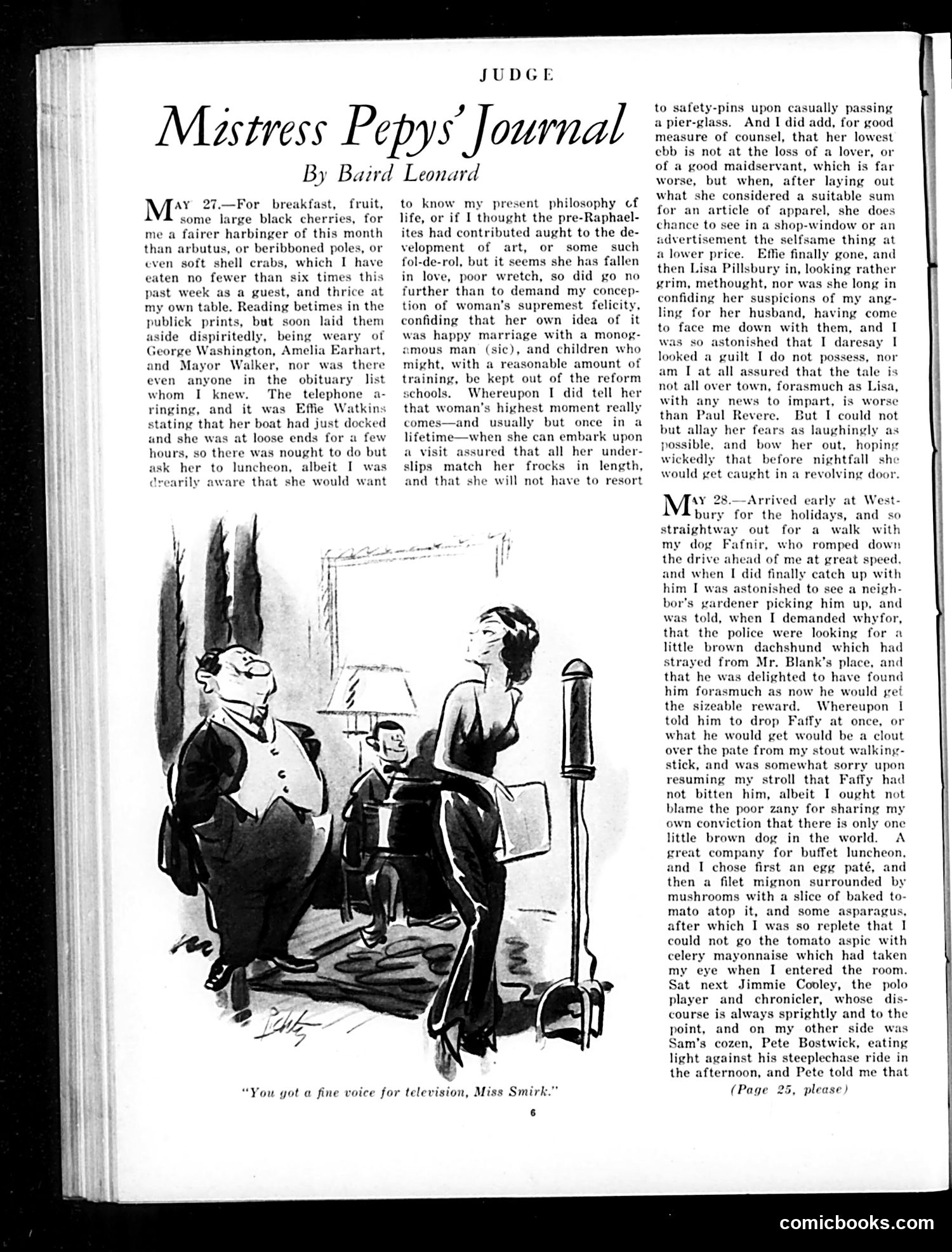
# "Mistress Pepys' Journal" by Baird Leonard This satirical column mimics Samuel Pepys's famous 17th-century diary in a modern (early 20th-century) voice. The cartoon caption reads: "You got a fine voice for television, Miss Smirk." The joke references **television as an emerging novelty**—the technology barely existed when this was published, making the anachronistic compliment absurd. The cartoon shows a woman at a social gathering being flattered about a medium that doesn't yet exist, satirizing either: 1. People making foolish predictions about new technology, or 2. The pretentiousness of complimenting someone about capabilities no one can yet evaluate The broader column discusses mundane society gossip (dogs, lunches, neighbors), parodying Pepys's detailed documentation of trivial aristocratic life.
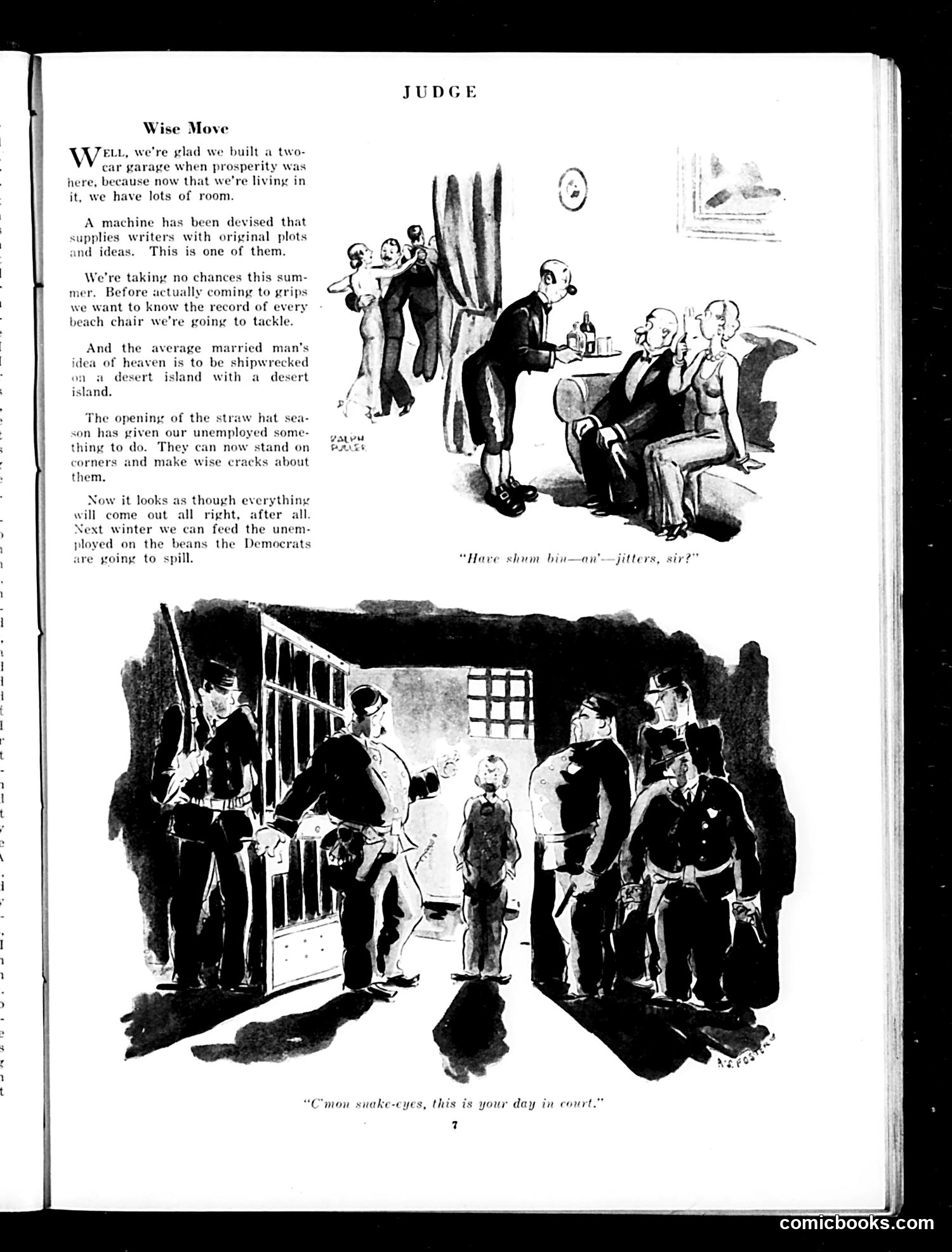
# Analysis of Judge Magazine Page This page from the satirical magazine *Judge* contains two cartoon scenarios satirizing American social anxieties during what appears to be an economic downturn (likely 1930s Depression era). The upper cartoon depicts well-dressed men nervously watching a woman enter a room, with the caption "Have shum bin—an'—jitters, sir?" This appears to mock social anxiety and marital infidelity concerns among the wealthy. The lower cartoon shows a disheveled man being escorted into court by military guards, captioned "C'mon snake-eyes, this is your day in court." This likely satirizes unemployment and vagrancy arrests during economic hardship. The accompanying text uses dark humor about unemployment, straw hats, and Democrats "spilling beans" to comment on economic misery. The opening anecdote about building a two-car garage during prosperity mocks conspicuous consumption and false confidence before economic collapse. Overall, the page uses satire to critique both upper-class anxieties and the plight of the unemployed poor.
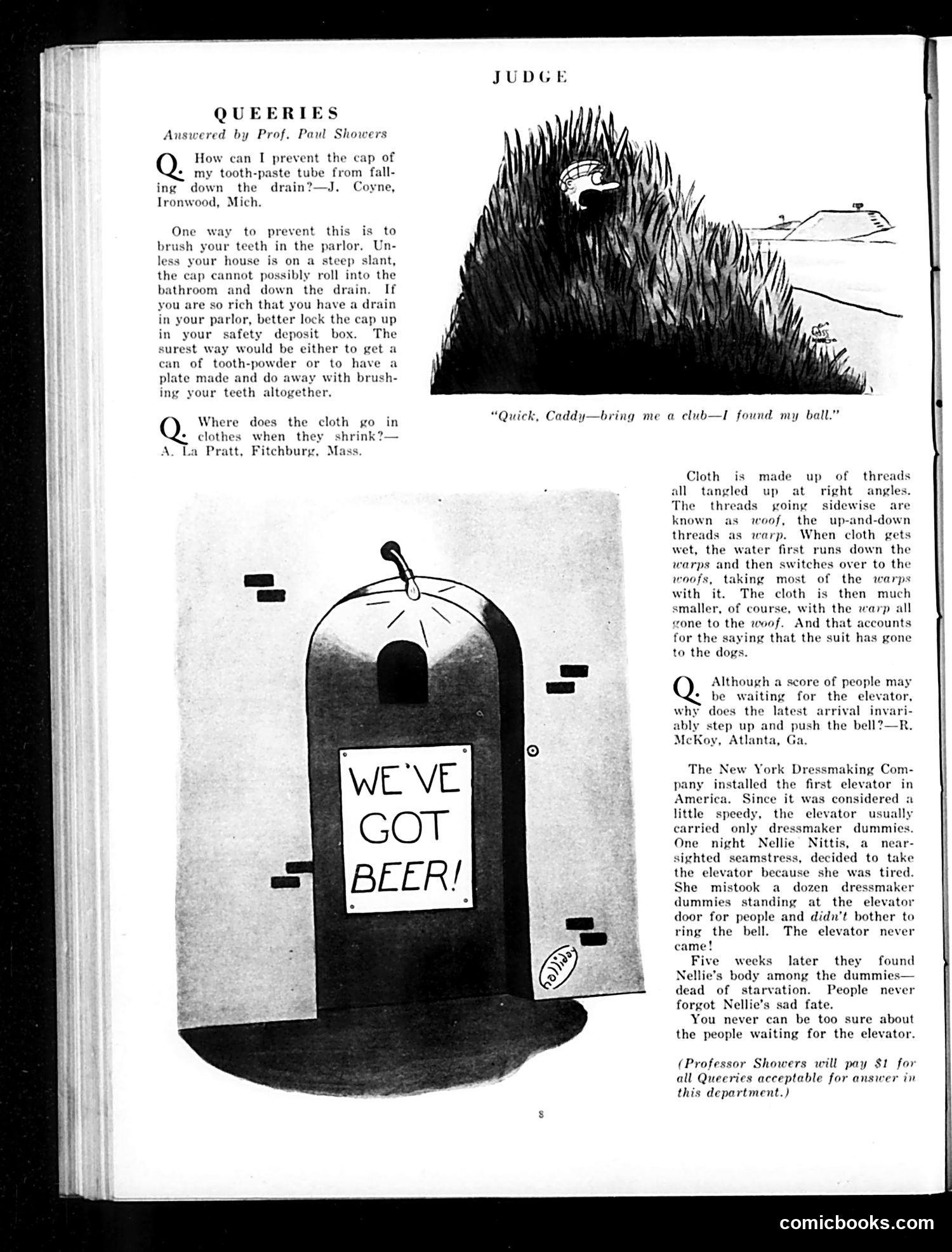
# Judge Magazine Satire Analysis This page contains humorous "advice column" responses to reader questions, featuring two main cartoons: 1. **The Golf Cartoon** (top right): A golfer in rough grass calls for his caddy to bring a club, having found his ball. The joke plays on the double meaning—the golfer has literally located his golf ball in the weeds. 2. **The Prohibition-Era Cartoon** (center): A large beer keg displays a sign reading "WE'VE GOT BEER!" This appears to reference Prohibition (likely early 1920s based on Judge's era), satirizing speakeasy operations or illegal alcohol distribution during the alcohol ban. The "Queeries" answers use deadpan, absurdist humor—treating mundane problems with ridiculous solutions (keeping toothpaste caps in a safety deposit box; the elevator story about mistaking dummies for people resulting in starvation). The overall tone is typical of Judge magazine's satirical approach to everyday American life and contemporary issues like Prohibition.
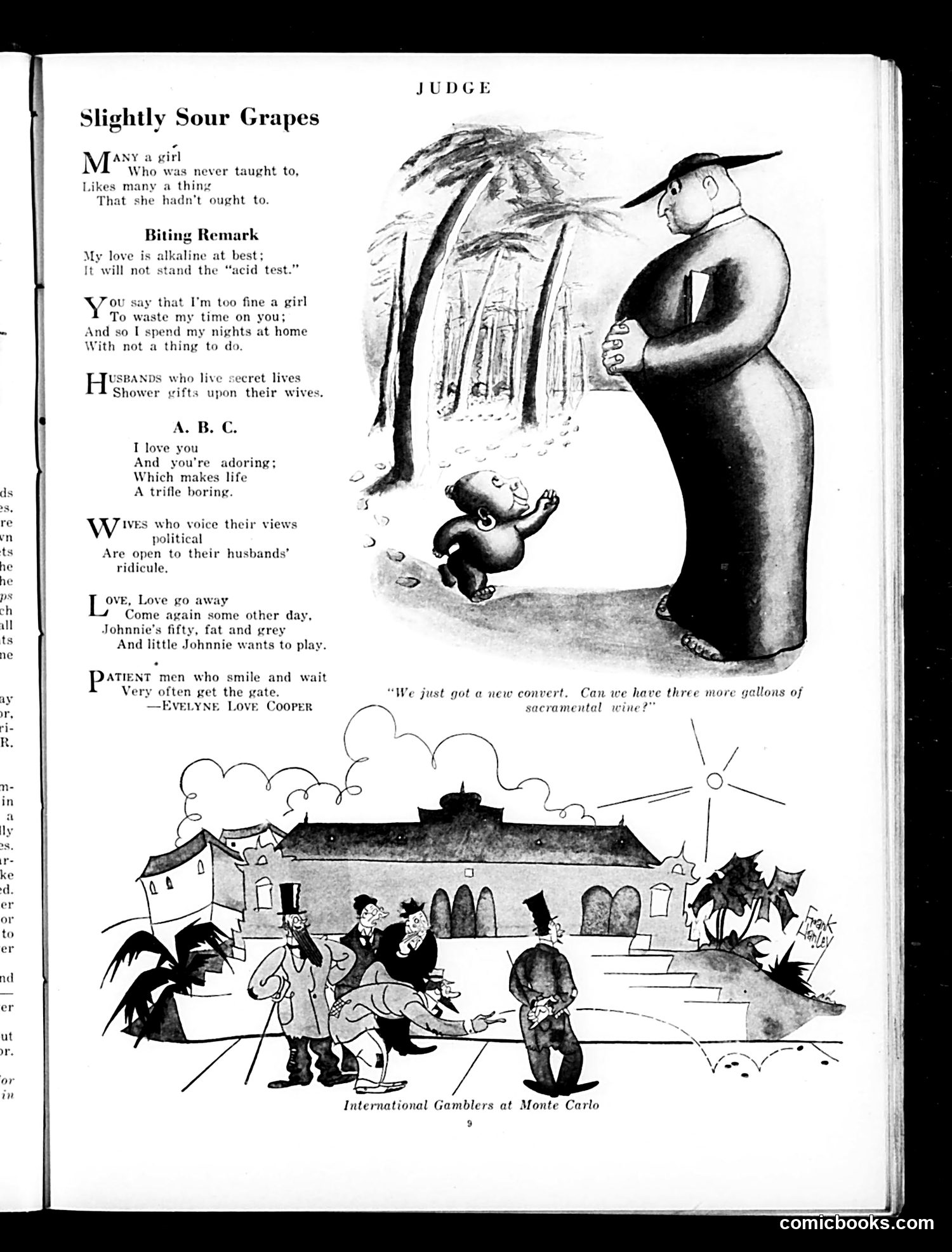
# Judge Magazine Satirical Page Analysis This page contains two distinct pieces of social satire: **Upper Section - "Slightly Sour Grapes":** A collection of short, cynical poems about romantic relationships and gender dynamics. The verses mock women who pursue unsuitable interests, romantic disappointment ("acid test"), women complaining about boredom in relationships, wives who express political opinions facing ridicule, and aging husbands wanting to continue youthful behavior. The tone is misogynistic by modern standards, typical of early 20th-century American humor targeting women's education and independence. **Lower Cartoon - "International Gamblers at Monte Carlo":** Depicts well-dressed gamblers at the famous Monaco casino. The caption's joke references a "new convert" requesting sacramental wine—likely satirizing Prohibition era hypocrisy, where religious exemptions allowed wine consumption. The cartoon mocks wealthy international gamblers as morally dubious characters seeking loopholes. Both pieces reflect period attitudes: skepticism toward women's autonomy and critique of wealthy leisure-class behavior.
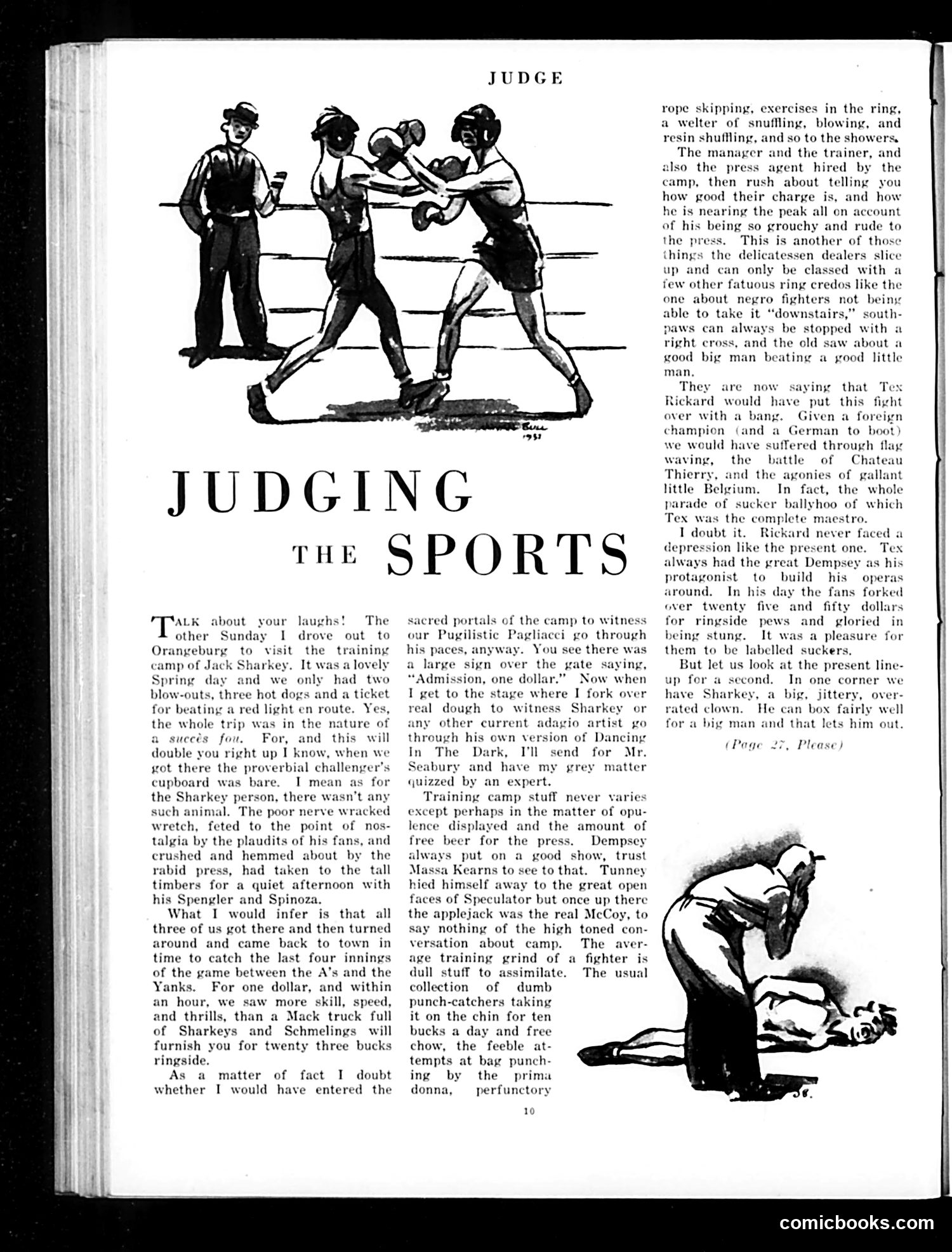
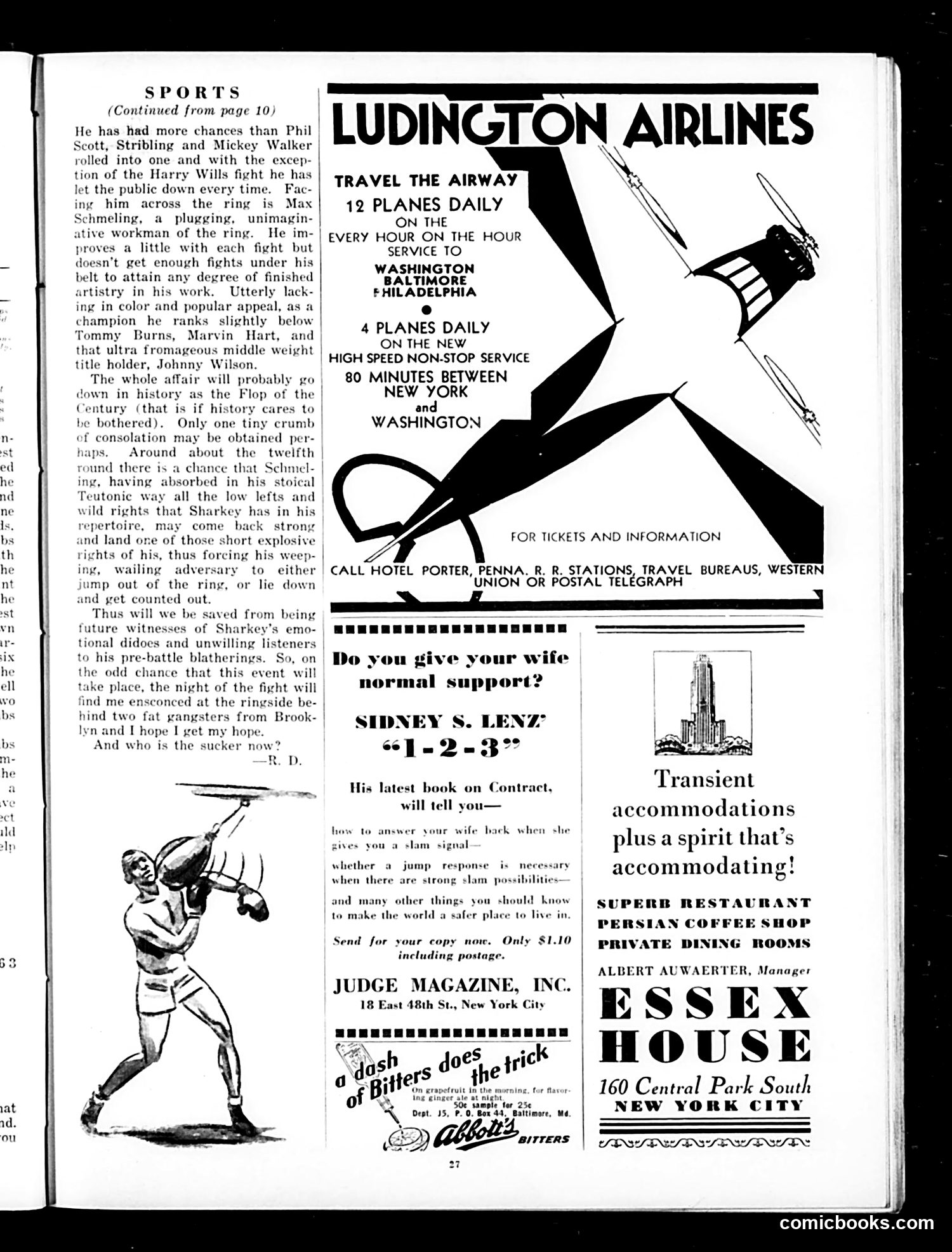
# Analysis for Modern Readers This page from Judge magazine satirizes professional boxing and fight promotion in 1920s America. The author critiques boxer Jack Sharkey's training camp visit, contrasting boxing's theatrical hype with baseball's genuine entertainment value. The piece mocks boxing's manufactured drama: trainers and press agents fabricate stories about fighters' "peak" condition while they're actually rude to journalists. It references **Tex Rickard**, the famous boxing promoter known for spectacular but exploitative promotion, suggesting he used patriotic imagery (WWI references to Château Thierry, "little Belgium") to sell fights to gullible "sucker" fans willing to overpay for ringside seats. The author observes that modern fighters lack the charisma of champions like **Jack Dempsey** (depicted with manager Gould Kearns), who could draw crowds despite obvious training-camp boredom and mediocre sparring partners. **Sharkey** appears as a pretentious intellectual (reading Spengler and Spinoza) hiding from publicity—hardly the compelling champion figure needed for Rickard-style promotion. The illustrations show boxing scenes; the sketch emphasizes the sport's theatrical, often ridiculous nature.