A complete issue · 36 pages · 1932
Judge — April 30, 1932
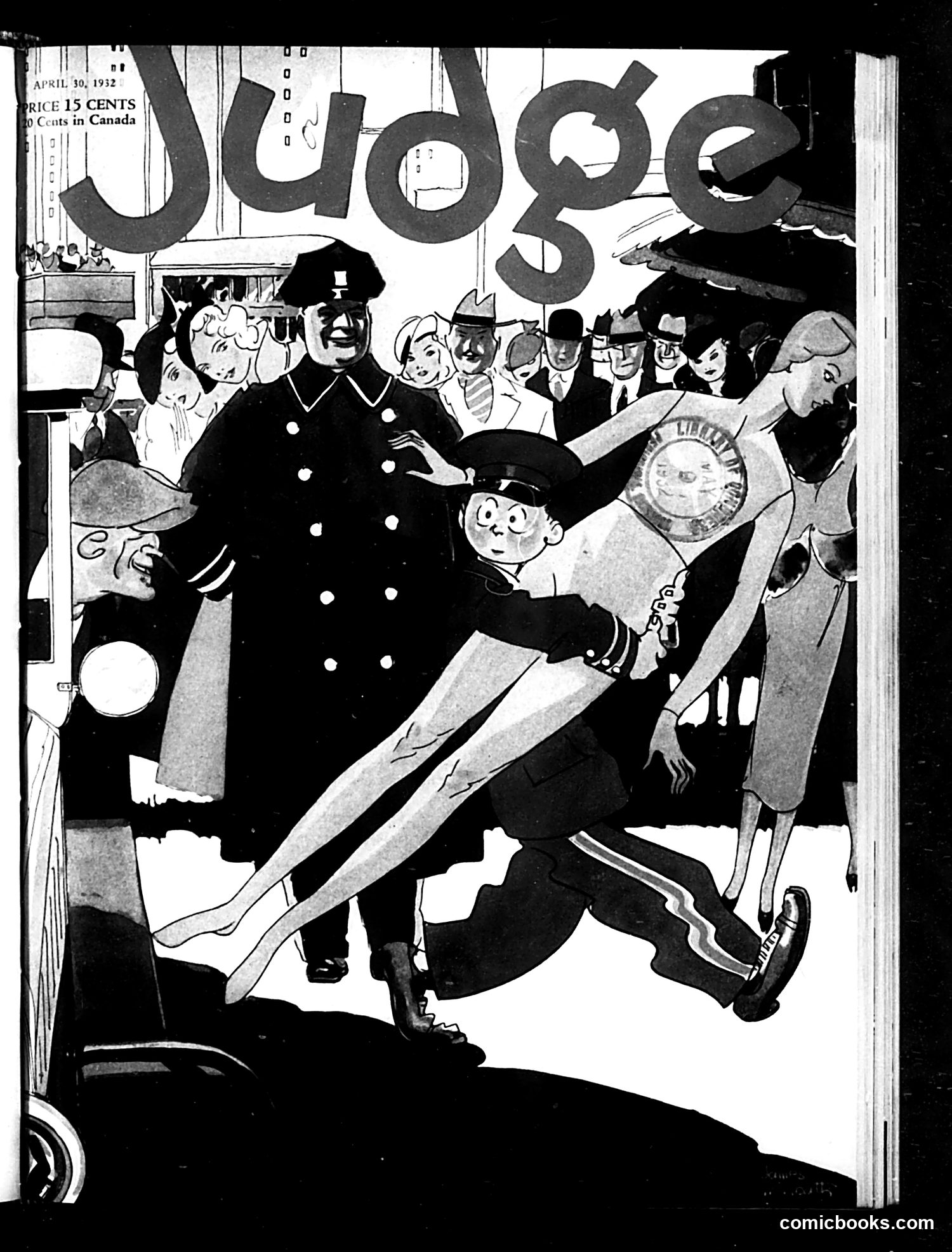
# Judge Magazine Cover Analysis (April 30, 1932) This cover satirizes the economic desperation of the Great Depression era. A woman with exaggerated legs displays herself to a crowd of well-dressed men in formal attire, while a small character (possibly representing a child or dependent) clings to her side. The scene appears to depict street solicitation or sex work driven by poverty. The satire targets both the desperation of Depression victims forced into degrading survival strategies and society's hypocrisy—the formally-dressed men represent respectable society that tacitly enables such exploitation while maintaining appearances. The large "Judge" masthead dominates, indicating this is the magazine's cover commentary on contemporary social conditions and moral degradation accompanying economic collapse.
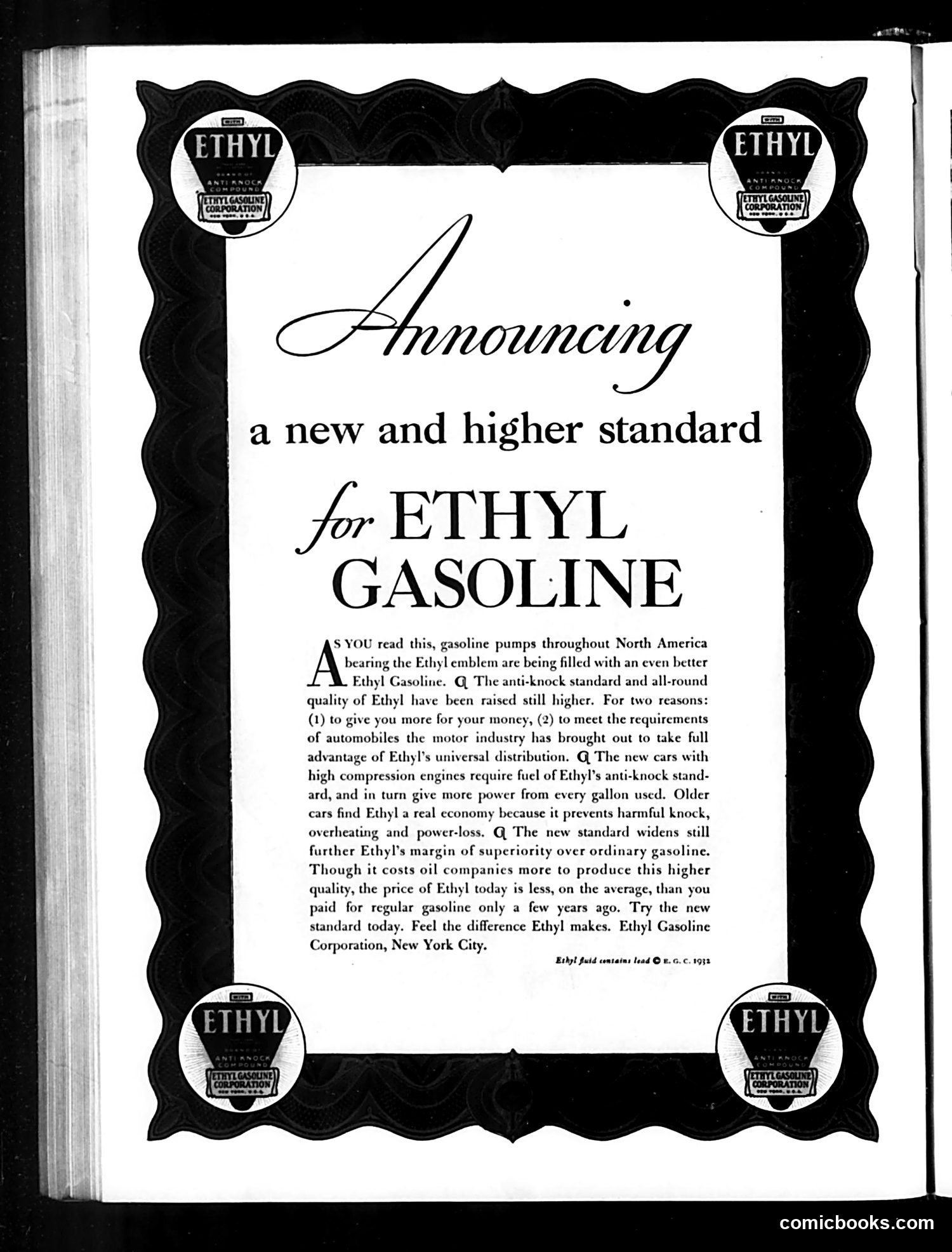
# Analysis This is **not a cartoon or satire page** — it's a straightforward **advertisement for Ethyl Gasoline**, placed in Judge magazine. The ad announces a new, higher-quality standard for Ethyl brand gasoline. Key selling points include: - **Anti-knock properties** for new high-compression engines - **Cost savings** compared to regular gasoline - **Improved performance** (more power, prevents engine damage) - **Better value** despite production costs The decorative border and Ethyl emblems in four corners are standard advertising design. No political commentary, caricatures, or satire are present. This represents early automotive fuel marketing, circa 1920s, when ethyl gasoline (leaded fuel) was a commercial innovation competing for market adoption.
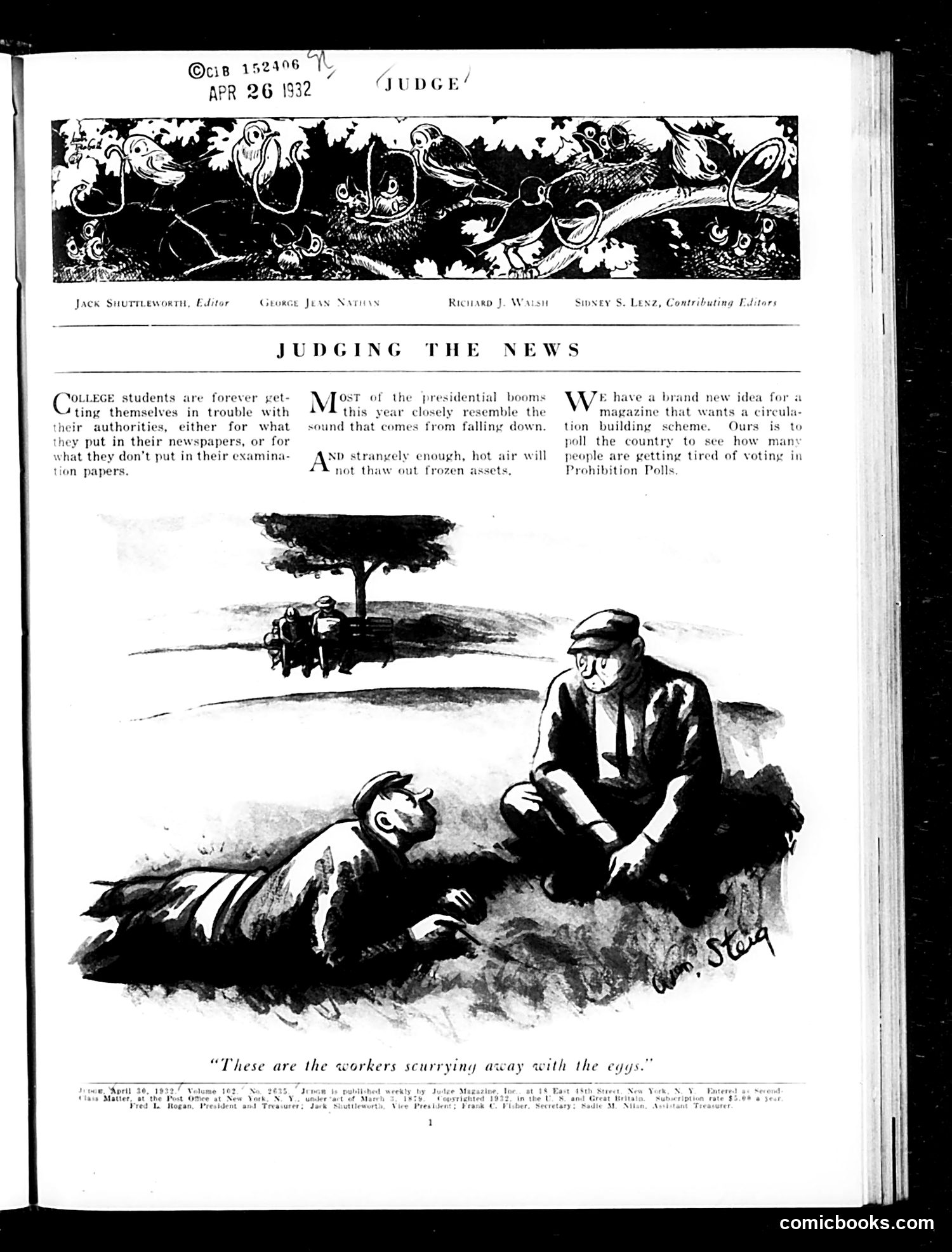
# "Judging the News" - April 26, 1932 This page satirizes early 1930s political and social concerns. The main cartoon shows a man examining another figure lying on the ground, with the caption "These are the workers scurrying away with the eggs." The context appears to reference Depression-era economic anxieties. The editorial text above mentions "presidential booms" (likely about 1932 election candidates), frozen assets in banks, and a magazine proposal to poll Americans on Prohibition—a major divisive issue of that era. The cartoon's meaning is somewhat cryptic without additional context, but likely satirizes either labor disputes, economic desperation, or perhaps political corruption—common Judge magazine targets during the Great Depression period when worker unrest and bank failures dominated headlines.
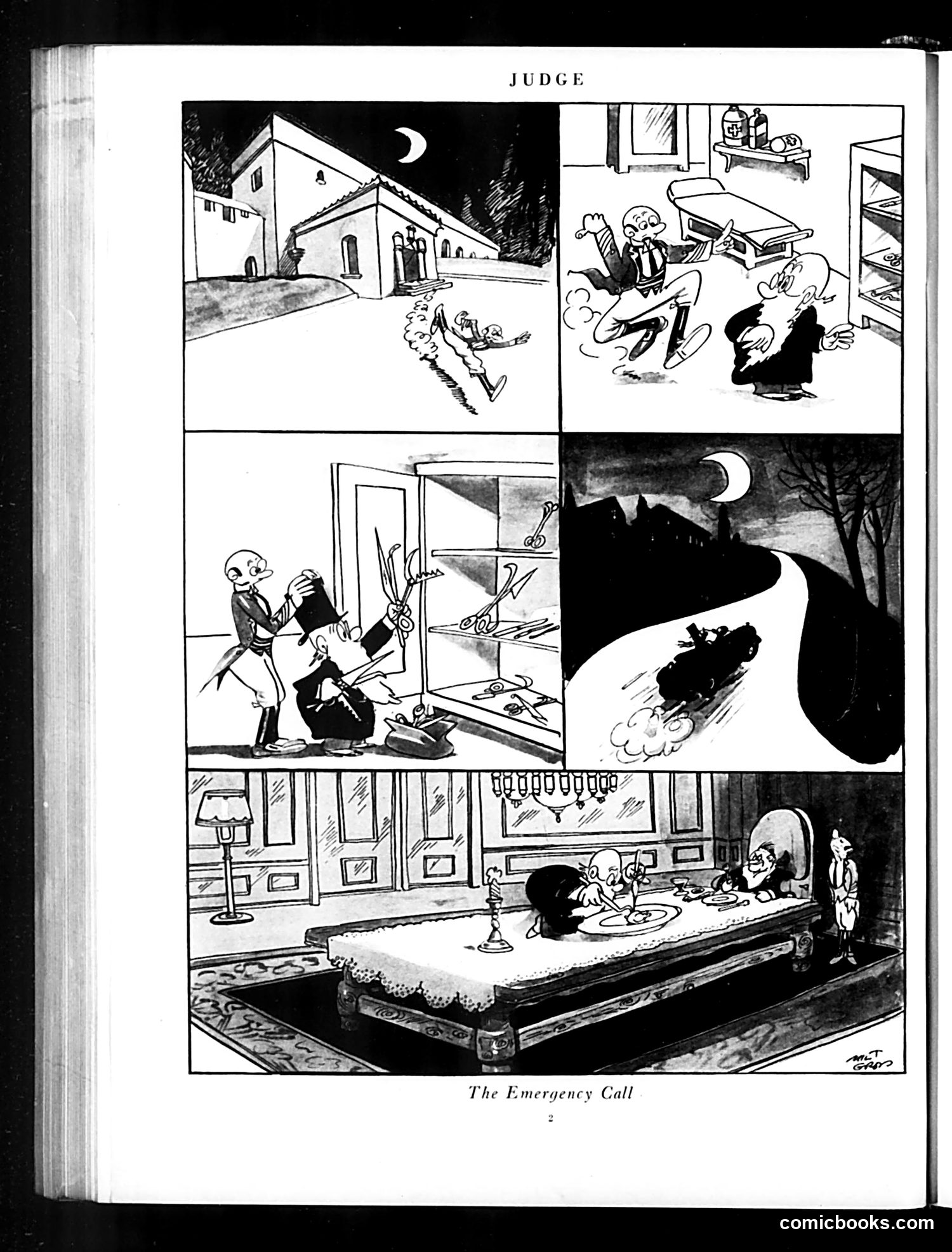
# "The Emergency Call" – Judge Magazine Cartoon This comic strip titled "The Emergency Call" depicts a nighttime domestic crisis escalating through five panels. The narrative appears to show: 1. **Opening**: A figure flees a house in distress 2. **Middle scenes**: Chaos erupts indoors—figures struggle, furniture overturns, suggesting violence or disorder 3. **Final panel**: A judge or authority figure arrives at an ornate bedroom where a couple sits in bed, apparently summoned by the emergency The satire likely mocks the absurdity of calling legal authorities for petty domestic disputes. The contrast between the dramatic nighttime chaos and the formal, composed judge appearing in an elegant bedroom setting suggests ironic commentary on judicial intervention in private domestic matters—a social critique about when (or whether) courts should involve themselves in family affairs. The specific historical context remains unclear without additional dating information.
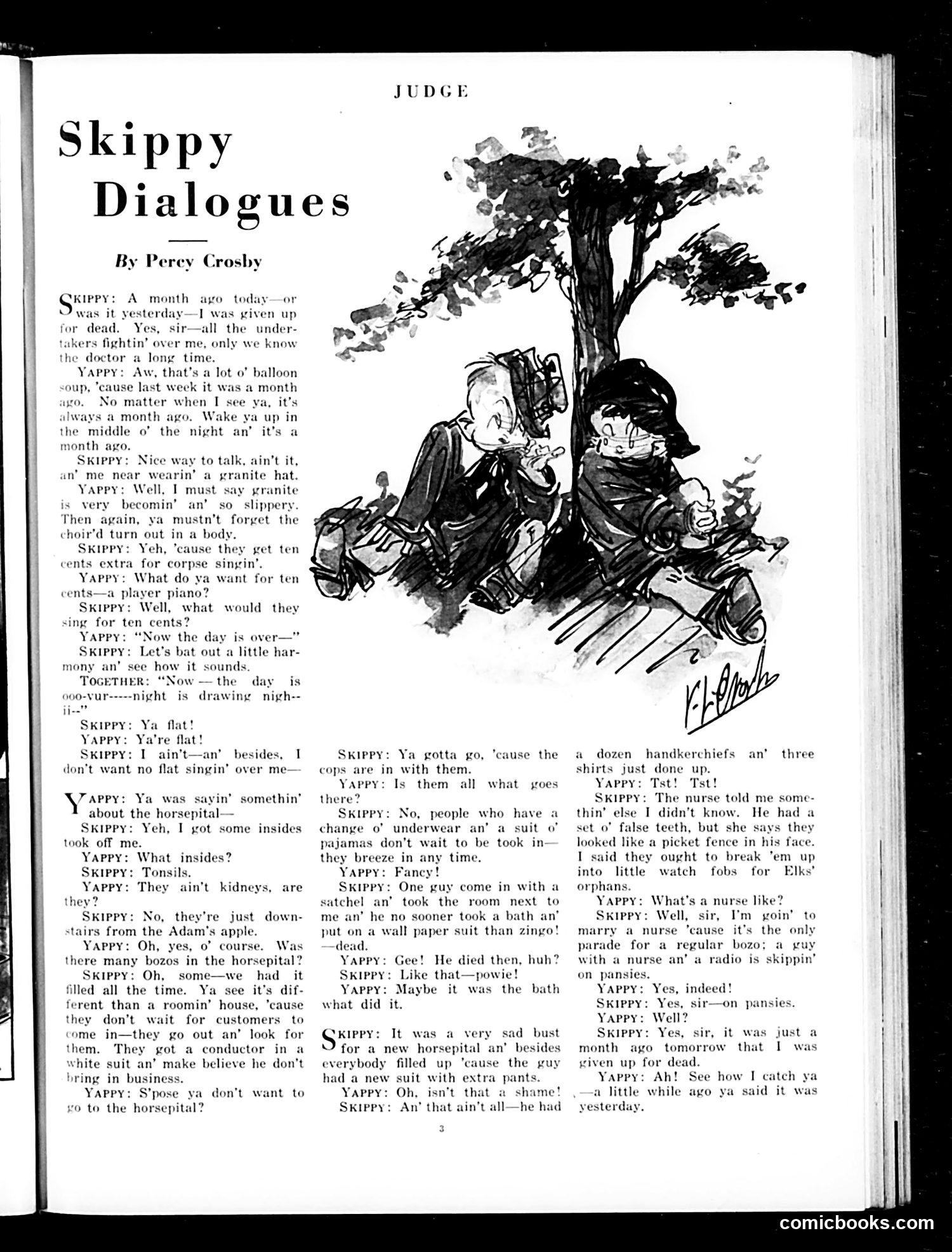
# Skippy Dialogues by Percy Crosby This is a humorous comic dialogue featuring two young characters—Skippy and Yappy—engaging in typical early 20th-century children's banter. The conversation covers everyday childhood topics: a child pronounced "given up for dead" from illness, granite monuments, choir performances, and hospital visits. The satire appears gentle rather than political. It mocks adult pretensions through children's innocent misunderstandings—such as discussing what corpses should "sing for" or confusing medical terminology. The dialogue also gently satirizes hospital practices and funeral customs of the era. The illustration shows two boys in period clothing beneath a windswept tree, consistent with the comic's lighthearted tone. This appears to be character-driven humor rather than commentary on specific contemporary events or political figures.
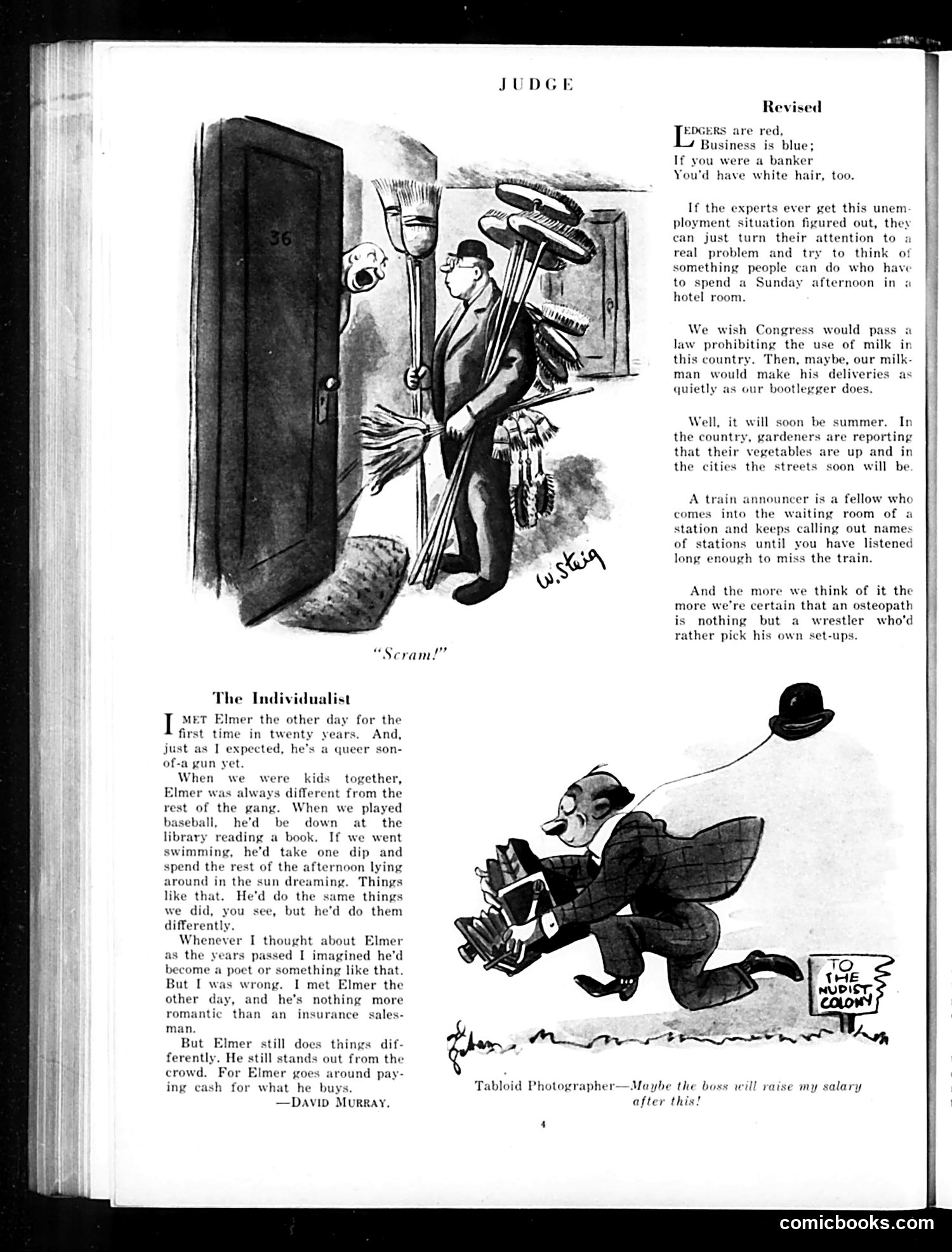
# Analysis of Judge Magazine Page The "Scram!" cartoon satirizes judicial corruption. A judge (marked "36") opens his office door to reveal a man wielding various tools of bribery—money, jewelry, and other valuables. The judge recoils in exaggerated horror, though the satire suggests judges routinely accepted such bribes. The accompanying "Revised" poem mocks this hypocrisy: "Ledgers are red, / Business is blue; / If you were a banker / You'd have white hair, too"—implying that financial and political corruption has aged officials prematurely. The second cartoon, "Tabloid Photographer," depicts a sensationalist journalist pursuing stories for tabloid newspapers, a growing media phenomenon of the era. The satirist criticizes both judicial corruption and yellow journalism as interconnected social problems eroding public trust.
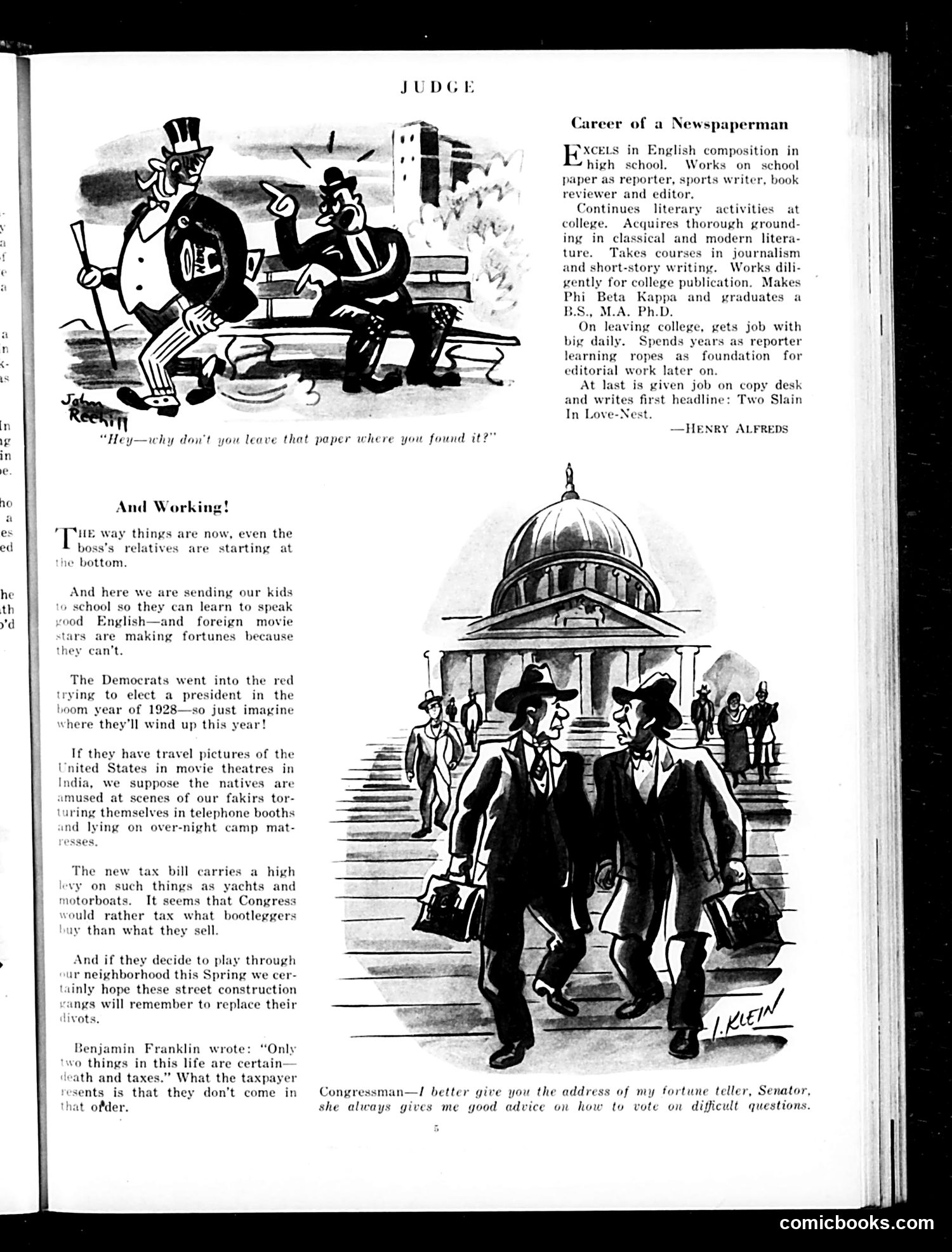
# Judge Magazine Satire Analysis This page contains two cartoons satirizing American politics and society, likely from the 1928 election period (mentioned in the text). **Top cartoon**: Shows newspaper editors/journalists at a desk with the caption "Hey—why don't you leave that paper where you found it?" This jokes about sensationalism and the competitive nature of newspaper reporting. **Bottom cartoon**: Depicts men on Capitol steps with the caption about a congressman seeking fortune-teller advice on "difficult questions." This satirizes Congress's perceived incompetence or reliance on dubious guidance rather than sound judgment—particularly relevant during the 1928 election cycle and pre-Depression political turbulence. The accompanying text mocks various targets: poor education, foreign policy confusion, Democratic political efforts, movie industry influence, and new tax legislation. The overall tone suggests frustration with government ineffectiveness and societal superficiality.
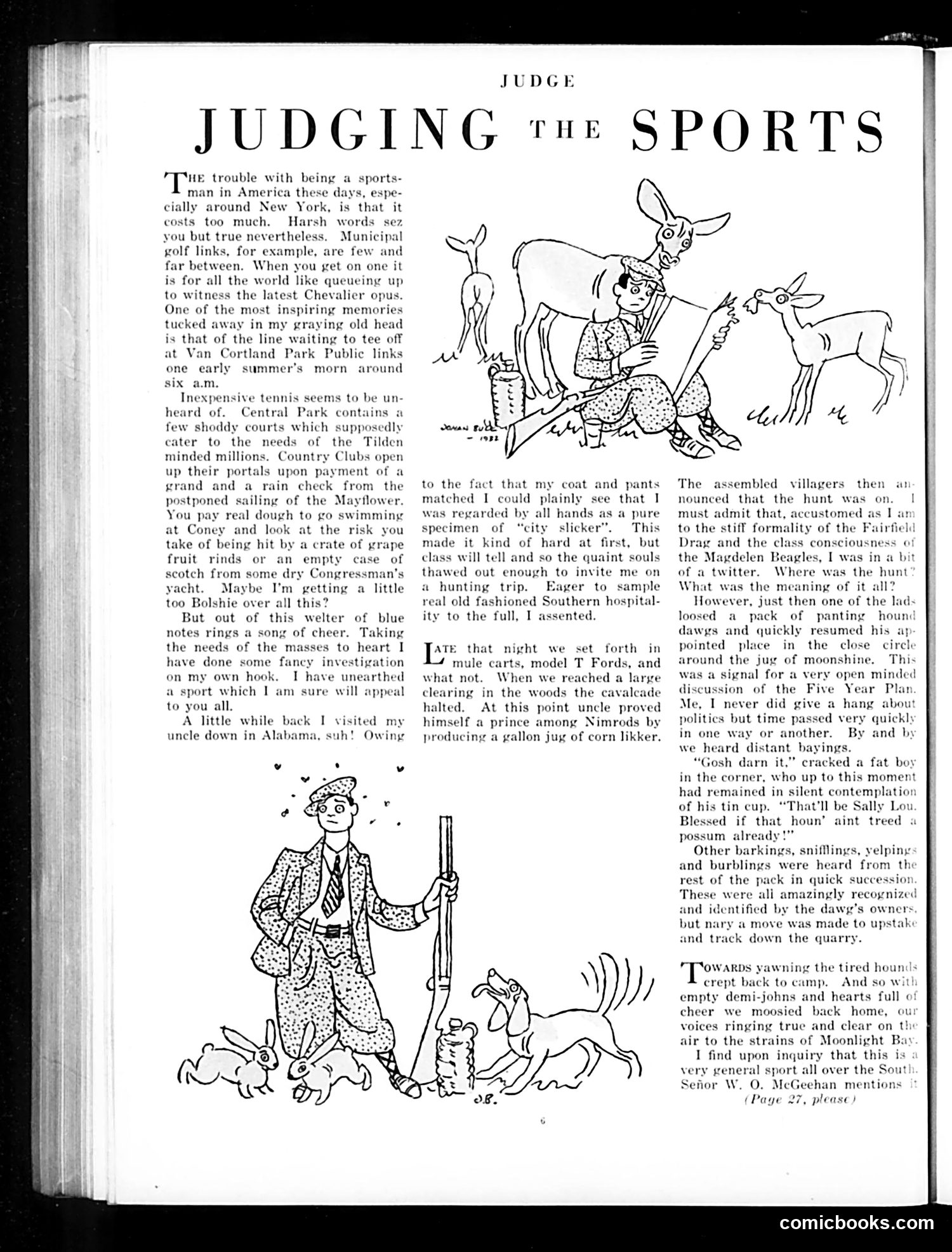
# "Judging the Sports" This satirical article criticizes the expense of sports in America, particularly around New York. The author complains that public golf links require long waits (compared to the "Chevalier ops"), tennis clubs are exclusive, and swimming at Coney Island is crowded and risky. The main illustration shows a well-dressed sportsman with hunting rifle surrounded by hound dogs, satirizing the pretense and expense of recreational hunting. A secondary illustration depicts someone in patterned clothing holding a gun with small animals at his feet—likely mocking amateur hunters trying to adopt aristocratic sporting traditions they can't afford. The narrative describes an actual hunting trip involving mule carts and corn liquor in the woods, suggesting the gap between genteel sporting aspirations and rougher rural reality. The piece is fundamentally about class anxiety and conspicuous consumption in American leisure activities.
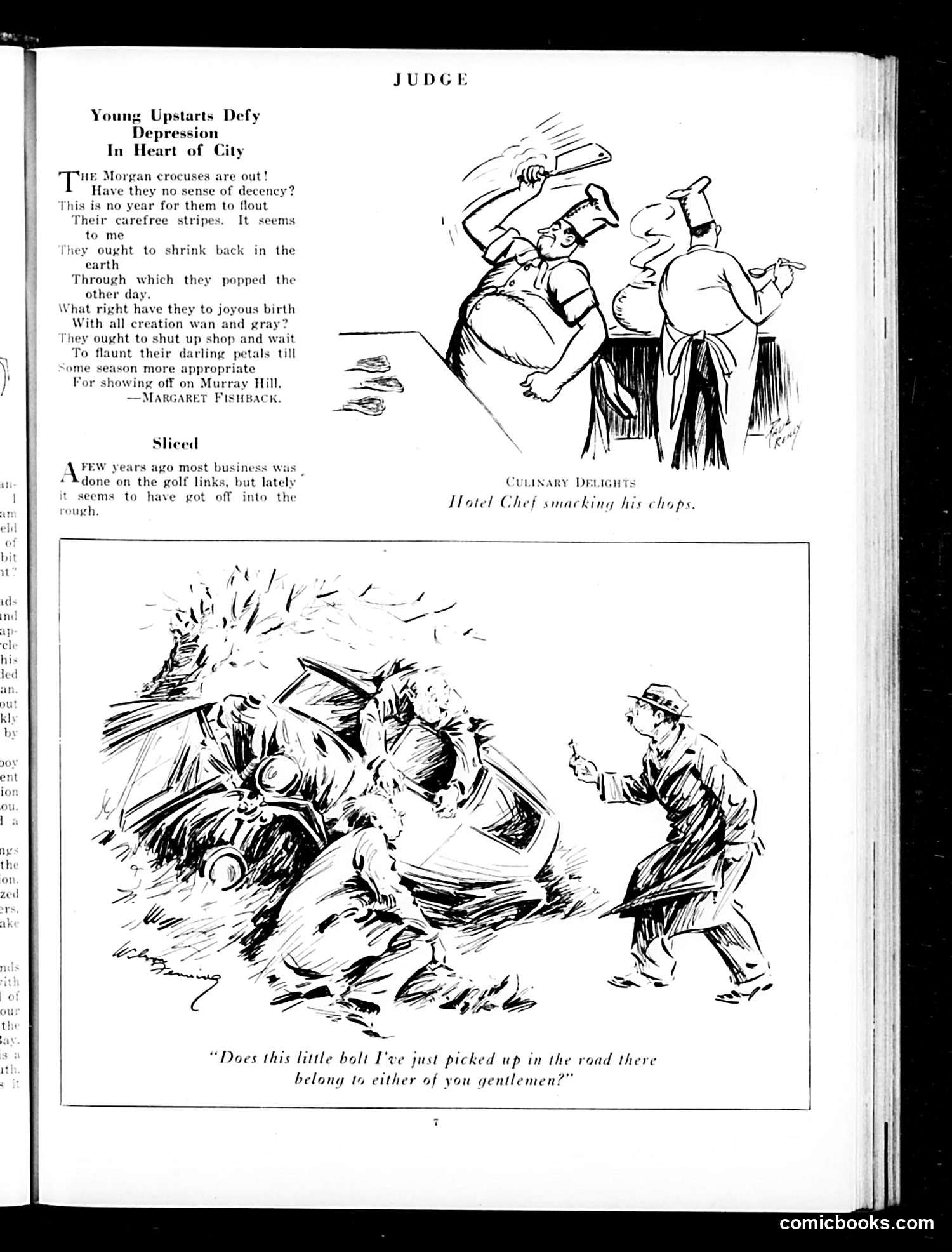
# Explanation for Modern Readers This Judge magazine page contains Depression-era satire. The top cartoon mocks wealthy New Yorkers ("Morgan crocuses" references the wealthy Morgan family on Murray Hill) for flaunting spring flowers during economic hardship—the joke being flowers are inappropriately cheerful when people are suffering. The middle section "Sliced" comments on how wealthy businessmen who once conducted deals on golf courses have now lost their fortunes ("got off into the rough"—a golf reference). The bottom cartoon shows two men who've apparently collided on a road, with one asking if a bolt belongs to either of them—likely satirizing careless wealthy drivers or slapstick humor about accidents during hard times. All three pieces mock the wealthy's obliviousness or misfortune during the Great Depression, using wordplay and visual humor typical of 1930s satirical magazines.
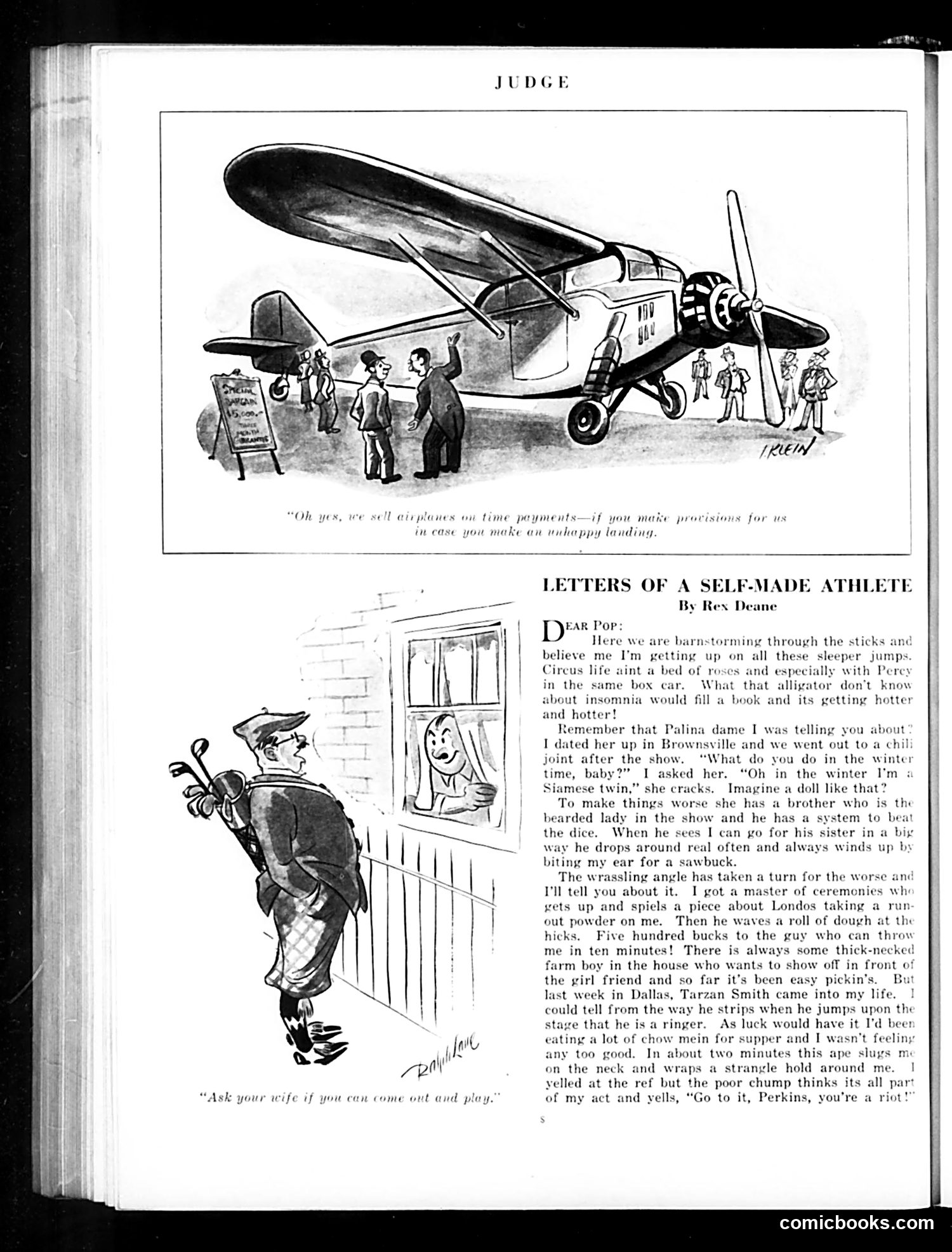
# Judge Magazine Page Analysis **Top Cartoon**: A salesman pitches airplane financing to customers near a commercial aircraft. The joke satirizes post-WWI aviation sales tactics—the salesman offers "time payments" while reassuring buyers about "unhappy landings," darkly joking about aircraft crashes as if they're routine customer service issues. This reflects the era's dangerous early aviation and aggressive consumer credit marketing. **"Letters of a Self-Made Athlete"**: A circus performer writes home about barnstorming (touring shows) through rural America. The letter humorously catalogs circus life hardships: insomnia from traveling, romantic entanglements, wrestling matches rigged for gambling, and encounters with con artists. The tone satirizes working-class hustlers and carnival culture while poking fun at crude rural audiences easily deceived by staged spectacles and promised payouts. The satire targets both traveling entertainment exploitation and rural gullibility during the interwar period.
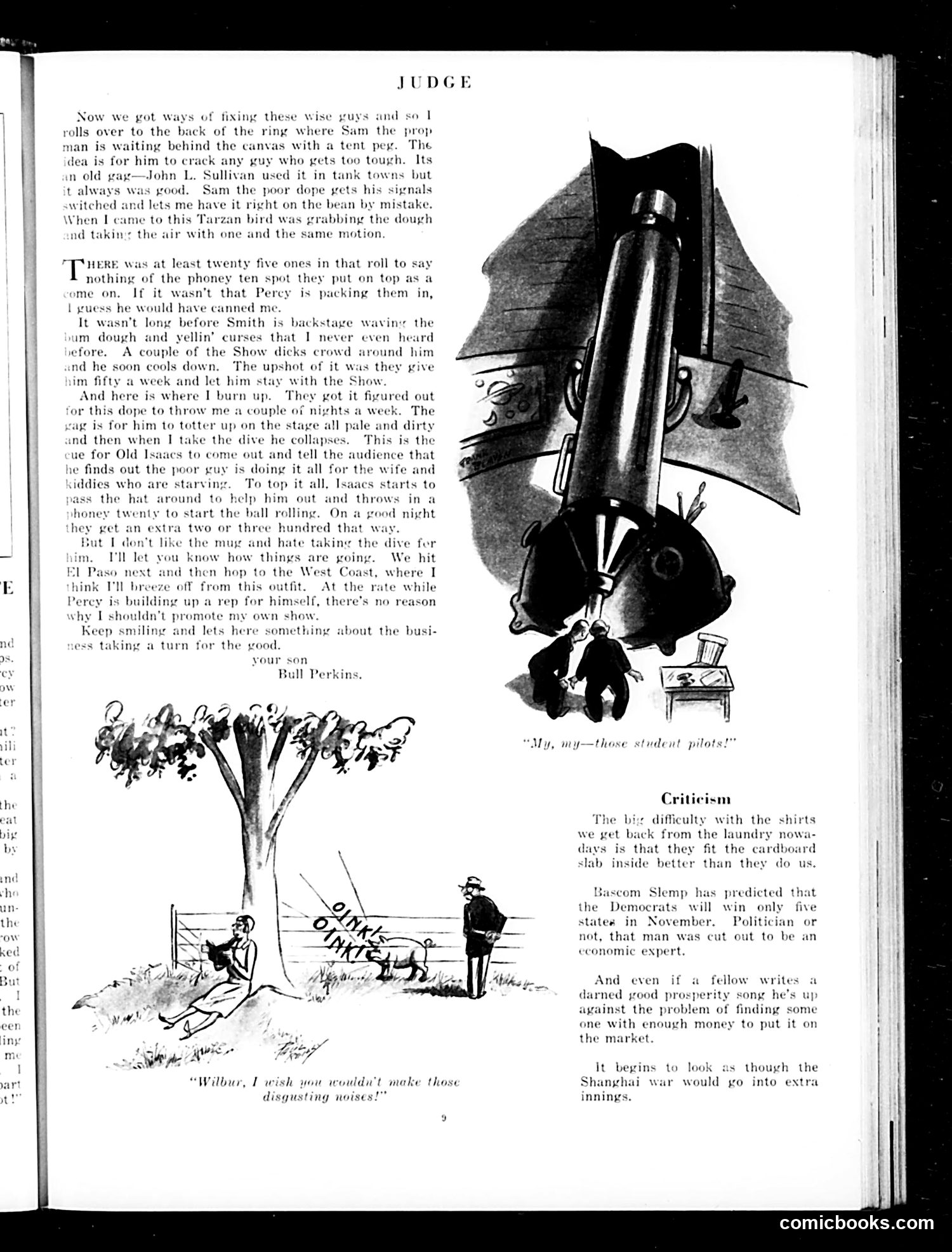
# Analysis for Modern Readers This page contains two distinct satirical pieces from Judge magazine: **"Judge" Column (Bull Perkins):** A lengthy first-person account describing theatrical fraud in professional wrestling. The narrator details how promoters fake matches—using a backstage man with a tent peg to strike opponents who get "too tough," paying wrestlers to take predetermined dives, and collecting donations from audiences by claiming the injured wrestler needs money for his starving family. The satire targets the dishonesty of professional wrestling as entertainment masquerading as sport. **Political Cartoons:** - Top right: A judge or authority figure threatening "student pilots," suggesting criticism of reckless or inexperienced leadership - Bottom: A couple at a dining table, with the caption about "disgusting noises"—likely domestic humor **"Criticism" Section:** Brief satirical jabs at contemporary issues: laundry quality, politician Bascom Slemp's election predictions, and difficulty funding theatrical productions. The overall tone mocks institutional dishonesty, poor service, and political incompetence common to 1920s-era America.
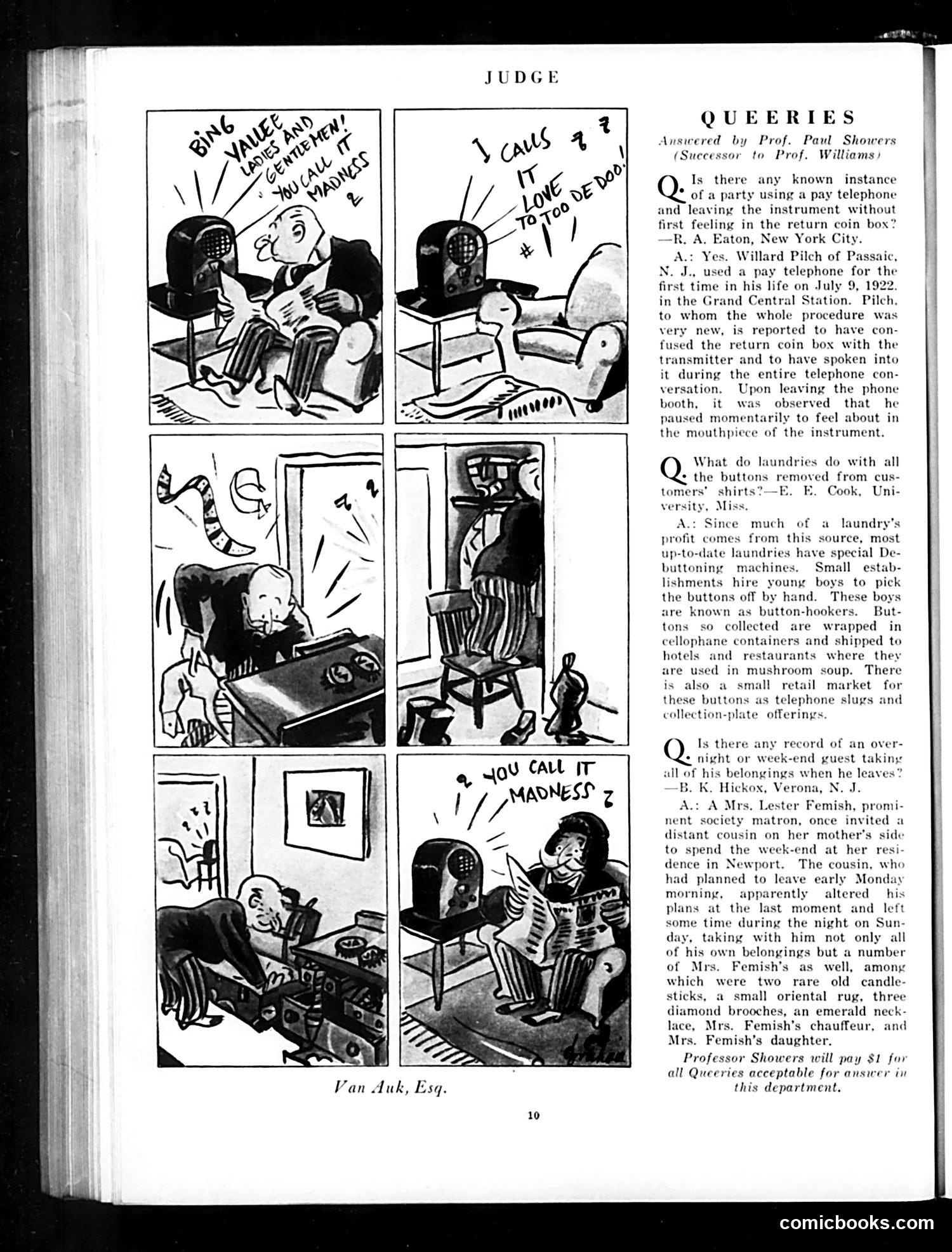
# Judge Magazine: "Queeries" Column Analysis This page features a humorous advice column called "Queeries," answered by "Prof. Paul Showers." The content satirizes modern conveniences and social etiquette of the 1920s through absurdist fake answers. The comic strip illustrates the first query about pay telephones—a relatively new technology. It shows someone confused by the phone booth mechanism, speaking into the coin return box instead of the receiver, capturing anxiety about unfamiliar modern gadgetry. The subsequent written answers employ deadpan humor: buttons from laundry are claimed to be recycled into mushroom soup and used as "telephone slugs" (fake coins); a houseguest is described stealing the host's valuables—presented as an actual documented case. The satire targets both technological bewilderment among Americans adapting to 1920s innovations and upper-class social pretensions. The column mocks both the gullibility of readers seeking advice and contemporary society itself through deliberately absurd "facts."