
Judge, 1932-04-30 · page 26 of 36
Judge — April 30, 1932 — page 26: what you’re looking at
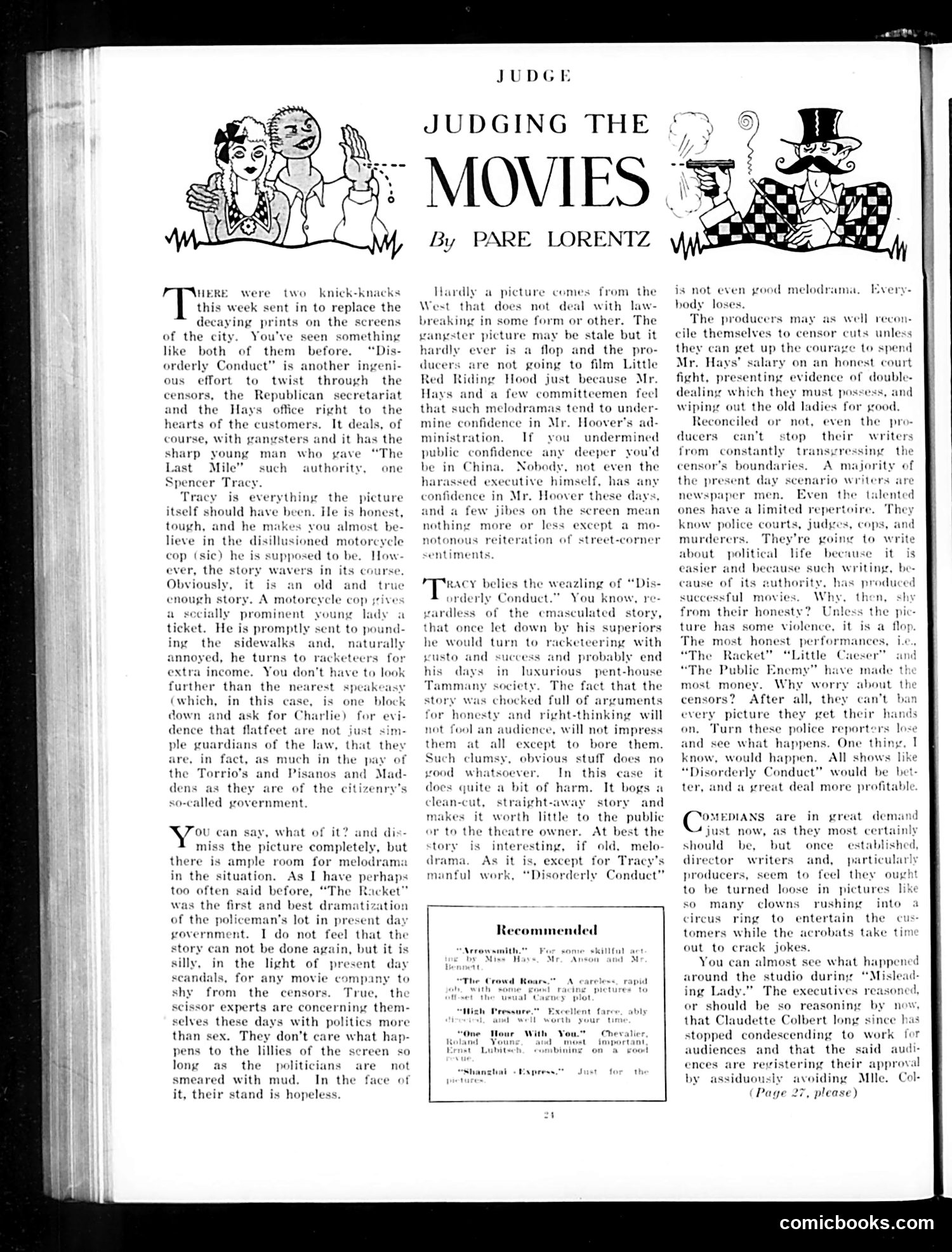
A restored page from Judge, 1932-04-30. Page through the whole issue in the reader above.
📄 Transcribed text from this page (OCR, searchable)
Machine-transcribed from the original scan — historical spelling and the odd misread are preserved.
HERE were knick-knacks this week sent in to replace the decaying prints on the screens of the city. You've seen something like both of them befc “Dis- orderly Conduct” is another ingeni- effort to twist through the censors, the Republican secretariat and the Hays office right to the hearts of the customers. It deals, of course, with ters and it has the sharp young man who The Last Mile” such one Spencer Trac Tracy is two ous save authority, everything the picture itself should have been. He is hon tough, and he makes you almost t lieve in the disillusioned motorcycle cop (sic) he is supposed to be. How- ever, the story wavers in its course, Obviously, it is an old and true enough story. A motorcycle cop yrives a secially prominent lady a ticket. He is promptly sent to pound- ing the sidewalks and, naturally annoyed, he turns to racketeers for extra income. You don't hive to look further than the (which, in this dow nd ask for Charlie) for evi- dence that flatfeet are not just sim- ple guardians of the law, that thes are, in fact, much in the pay of the Torrio’s and Pisanos and Mad- dens as they are of the citizenry’s alled government. young 7 ov can say, what of it? and dis- miss the picture complete there ample room for melodrama in the situation. As I have perhay too often said before, “The Racket” was the first and best dramatizat of the policeman’s lot in present day yovernme I do not feel that the story can not be done nin, but it is silly, in the light of present day scandals, for any movie company to shy from the censors. True, the scissor experts are concerning them- selves these days with politics more than sex. They don’t care what hap- pens to the lillies of the screen long as the politicians are — nc smeared with mud. In the face of it, their stand is hopeless. JUD JUDGING THE MOVIES By PARE LORENTZ Hardly a picture comes from the West that does not deal with law- breaking in some form or other. The vanyster picture may be stale but it hardly ever is a flop and the pre ducers are not going to film Little Red Riding Hood just because M Hays and a few committeemen feel that such melodramas tend to unde mine confidence in Mr. Hoover's ad- ministration. If undermined public confidence any deeper you'd be in China, Nobody, not even the harassed executive himself, has any confidence in Mr. Hoover these days, and a few jibes on the screen mean nothing more or less except a mo- notonous reiteration of street-corner you ntiments. RACY belies the weazling of “Dis- orderly Conduct.” yardle of You know, re- emasculated story, that once let down by his superiors he would turn to racketeering with susto and ind probably end luxurious pent-house society. ne fact that the chocked full of arguments for honesty and right-thinking will not fool an audience, will not impress them at all except to bore them. Such clumsy, obvious stuff does no yood whatsoever. In_ this does quite a bit of harm. It bogs a clean-cut, straight-away story and makes it worth little to the public or to the theatre owner. At best the tory is interesting, if old. melo drama. As it is, except for Tracy manful “Disorderly Conduct” the success his days in Tammany story case it work, Pressure. weil ¢ “y \ is not even good melodrama. hody The producers may cile themselves to censor cuts unless they can get up the courage to spend Mr. Hays’ salary on an honest court fight, presenting evidence of double- dealing which they must px . and wiping out the old ladies for scood. Reconciled or not, even the pro- ducers can’t. stop. their writ from constantly transyressing the censor’s boundaries. A majorit the present day scenario writers newspaper men. Even the ented ones have a limited repertoire. y know police courts, murderers. They're going about political life easier and be cause of i 1 successful movies . then, shy from their honesty? s some violence st honest performances, Racket” “Little The Public Enemy” have made th most money. Why worry about the censors? After all, they can’t ban every picture they ¢ their hands on, Turn these police reporters I and see what happens. One thing. T know, would happen. All shows 1i “Disorderly Conduct” would be bet- ter, and a great deal more profitable Every- loses. s well re to write because it s the pic- it is a flop C MEDIANS are in great demand 4 just now, as they most certain should be, but once — establish director writers and, particularly producers, seem to feel they ou to be turned loose in pictures li so many clowns rushing circus ring to entertain tomers while the ac out to crack joke You can almost see what happened around the studio duriny ‘Mislead: ing Lady.” The executives 1 y or should be so reasoning by now, that Claudette Colbert lony since bas stopped condescending to work for audiences and that the said audi- ences are revistering their approval ding Mile, Col- please) into the ¢ bats take tim by assiduously ave Page 27, comicbooks.com