A complete issue · 36 pages · 1931
Judge — October 24, 1931
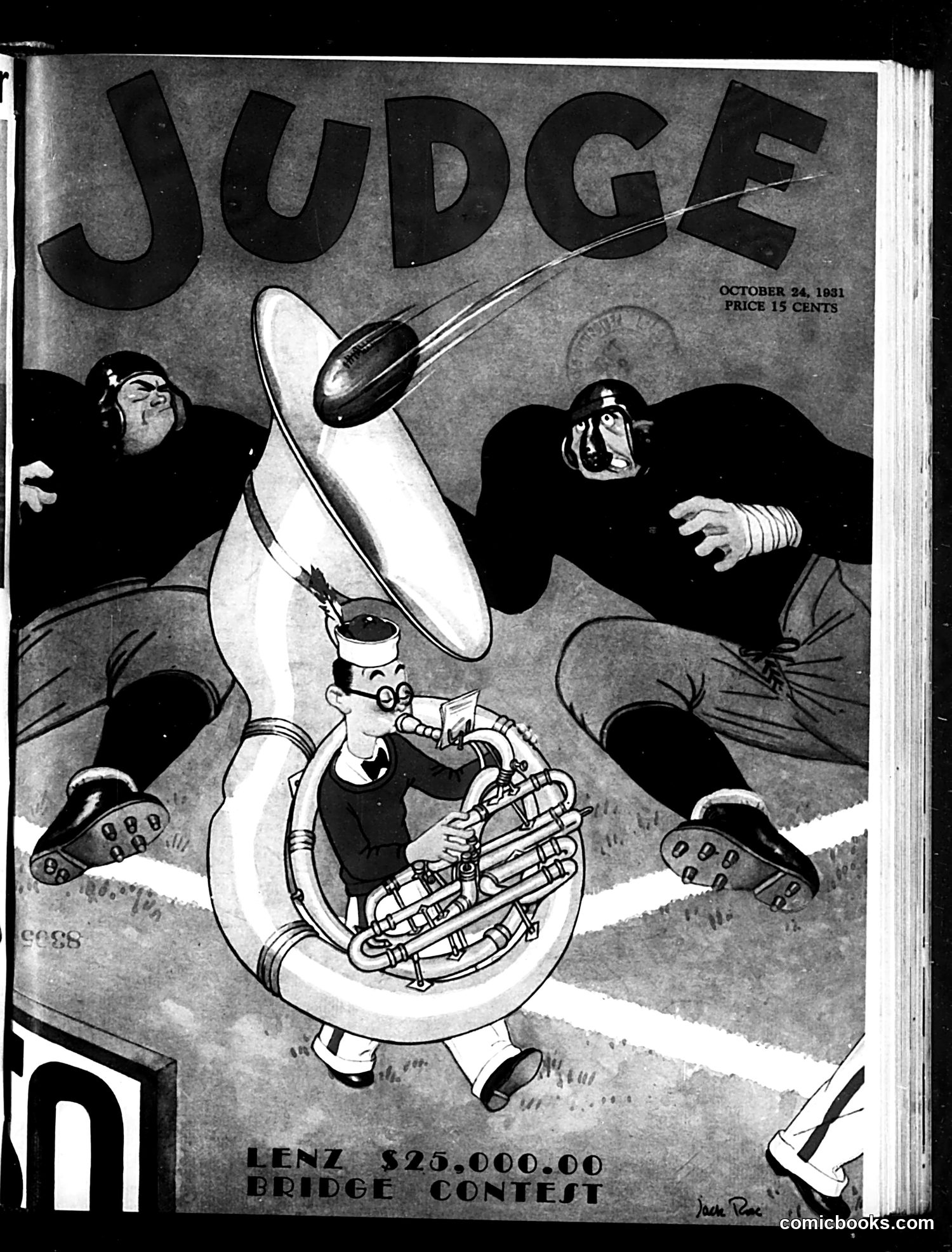
# Judge Magazine Cover Analysis - October 24, 1931 This satirical cover depicts a character (appearing to be a conductor or musician) trapped inside a large tuba, being held aloft by two menacing figures. The imagery suggests entrapment or manipulation by powerful forces. The reference is to the "Lenz $25,000 Bridge Contest"—a real 1931 event where businessman Lenz sponsored a high-stakes bridge competition. The cartoon satirizes this spectacle as frivolous excess during the Great Depression. The tuba may symbolize the "noise" or distraction of such entertainment, while the threatening figures flanking the musician suggest darker forces (possibly financial interests or hucksterism) profiting from public fascination with the contest. The overall message criticizes wealthy indulgence amid widespread economic suffering.
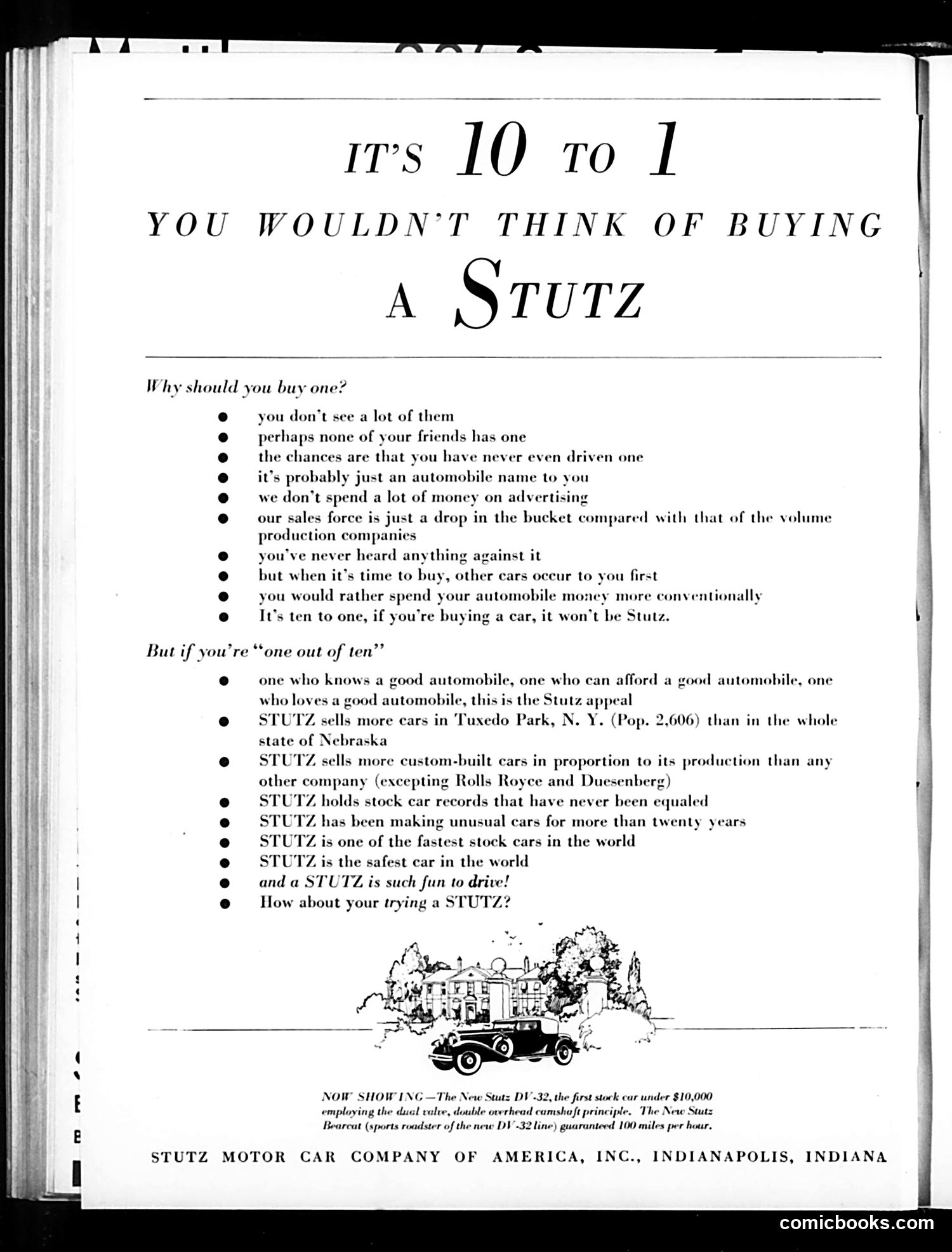
# Stutz Motor Car Advertisement This page is primarily a **advertisement for Stutz automobiles**, not political satire. It uses humor to market the brand to an elite audience. The ad employs reverse psychology: it lists ten reasons *not* to buy a Stutz (obscurity, expense, unfamiliarity), then pivots to argue that if you're "one out of ten"—someone wealthy, discerning, and adventurous—a Stutz is perfect for you. The copy emphasizes exclusivity and performance: Stutz cars are rare, custom-built, fast, safe, and fun. It boasts about Stutz's heritage (twenty years making "unusual cars") and claims superiority in stock car records and production-to-sales ratios. The small illustration shows a vintage roadster near a mansion, reinforcing the luxury positioning. This targets Judge's affluent readers as aspirational buyers.
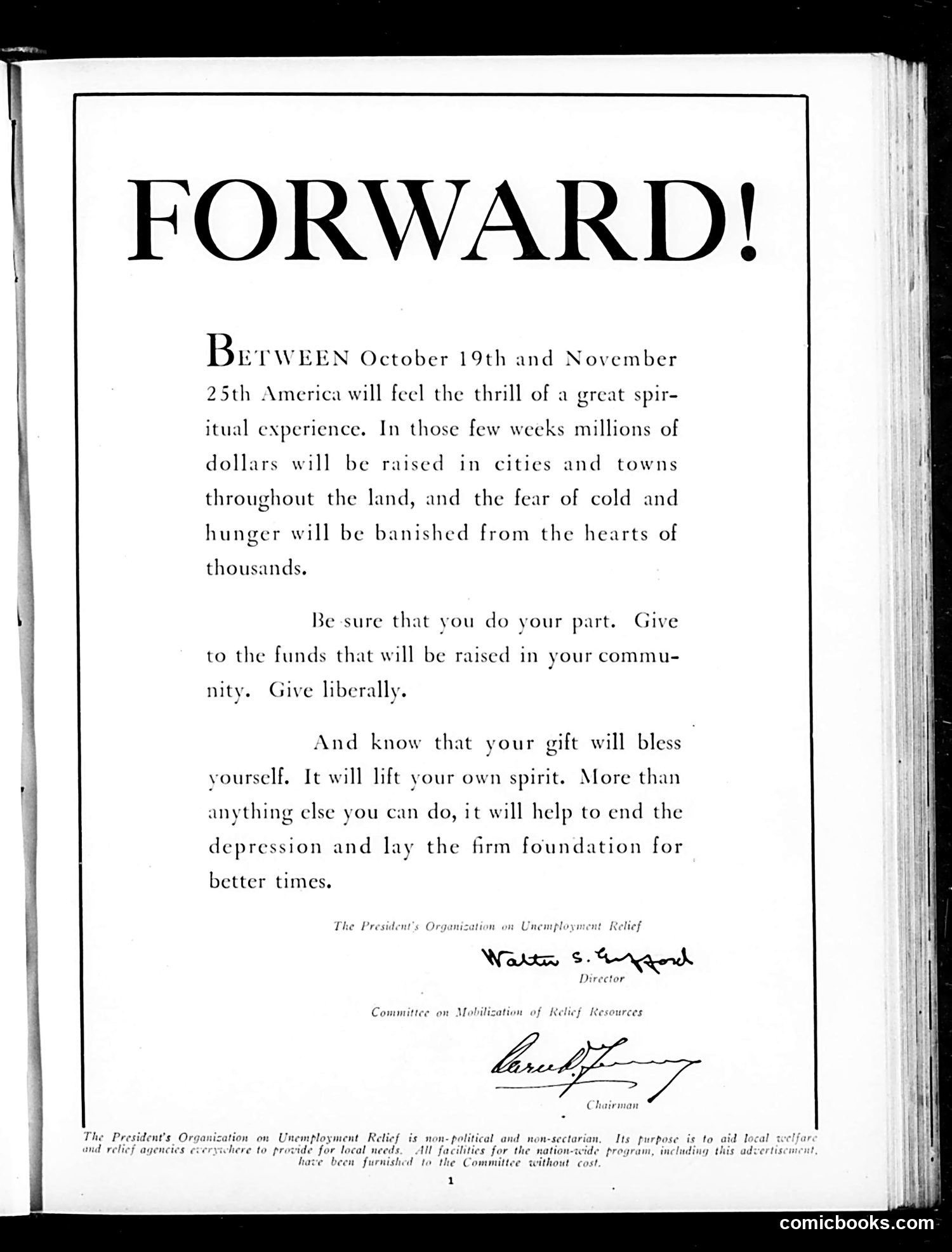
# Analysis This is not a satirical cartoon page, but rather a **public service announcement** from the President's Organization on Unemployment Relief. The page urges Americans to donate to relief funds between October 19th and November 25th to combat poverty and hunger during the Great Depression. The document appears to reference Depression-era relief efforts, likely from the early 1930s. Two officials have signed it—Walter S. Gifford (Director) and an unnamed Chairman of the Committee on Mobilization of Relief Resources. The "FORWARD!" headline is a motivational call to action, not satire. The message emphasizes that charitable giving will "help to end the depression" and "lay the firm foundation for better times," appealing to Americans' civic duty and self-interest during economic crisis.
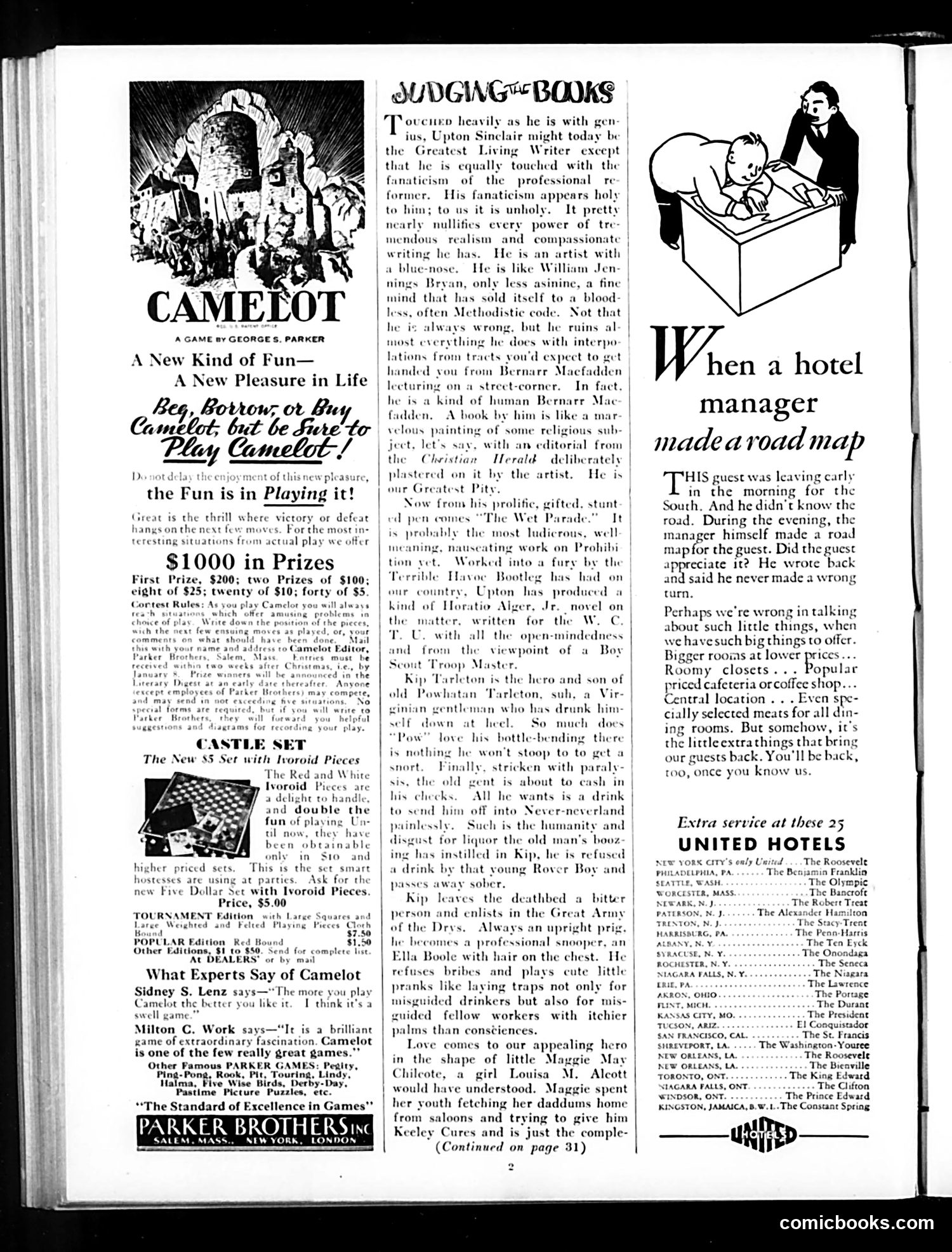
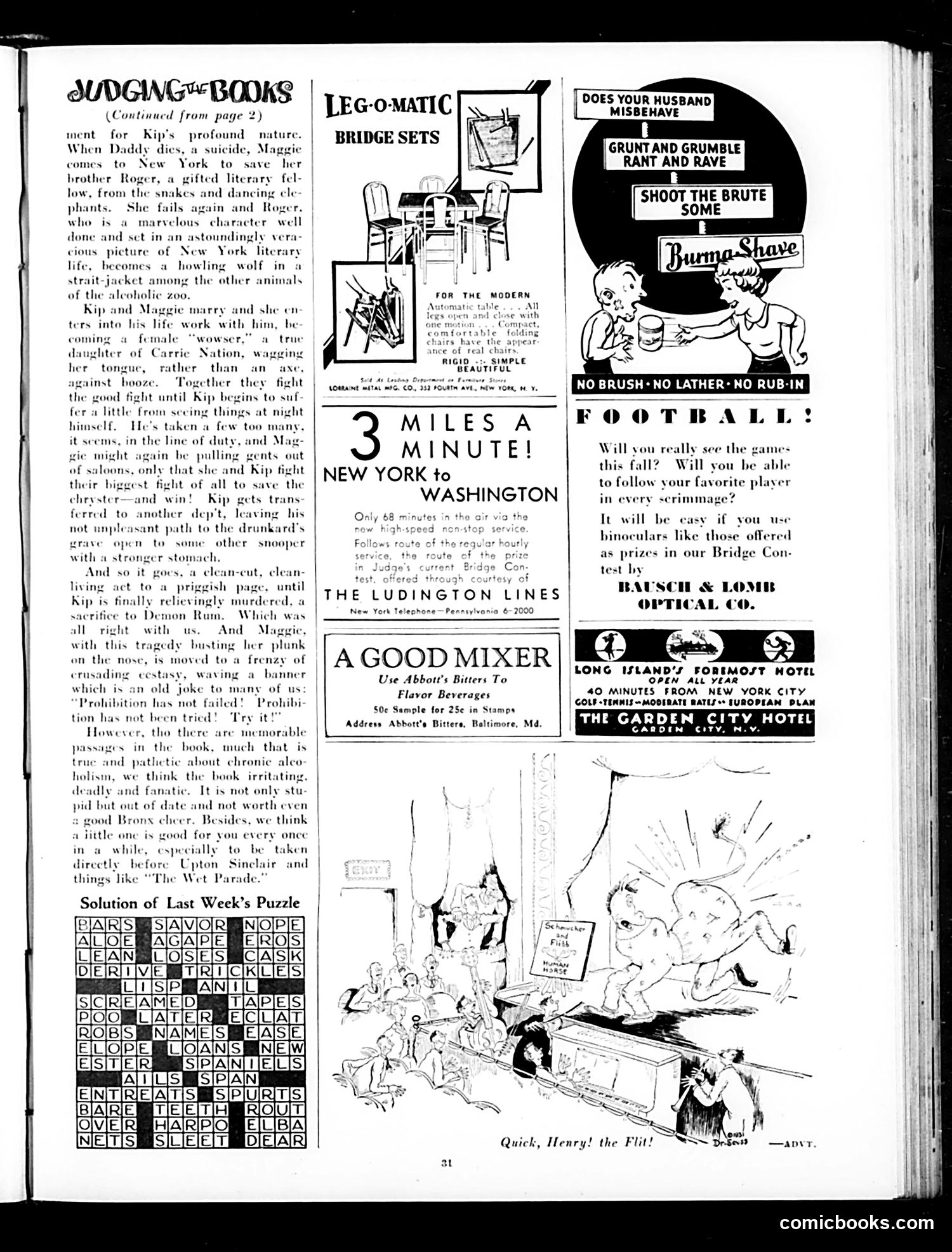
# Analysis of Judge Magazine Page This page is primarily **advertising and book reviews** rather than political satire. The main content includes: **"Judging the Books"** section reviews Upton Sinclair's novel *Camelot*, praising his writing while critiquing his fanaticism and tendency toward overwrought interpretations. The reviewer compares him to William Jennings Bryan—a reference to the populist politician known for passionate but sometimes extreme rhetoric. **"When a Hotel Manager Made a Road Map"** is a humorous anecdote about a guest's complaint regarding poor directions. The page also advertises **Parker Brothers games** (including *Camelot*) and **United Hotels**, listing various establishments across America. There is no significant political cartoon or satire present on this page.
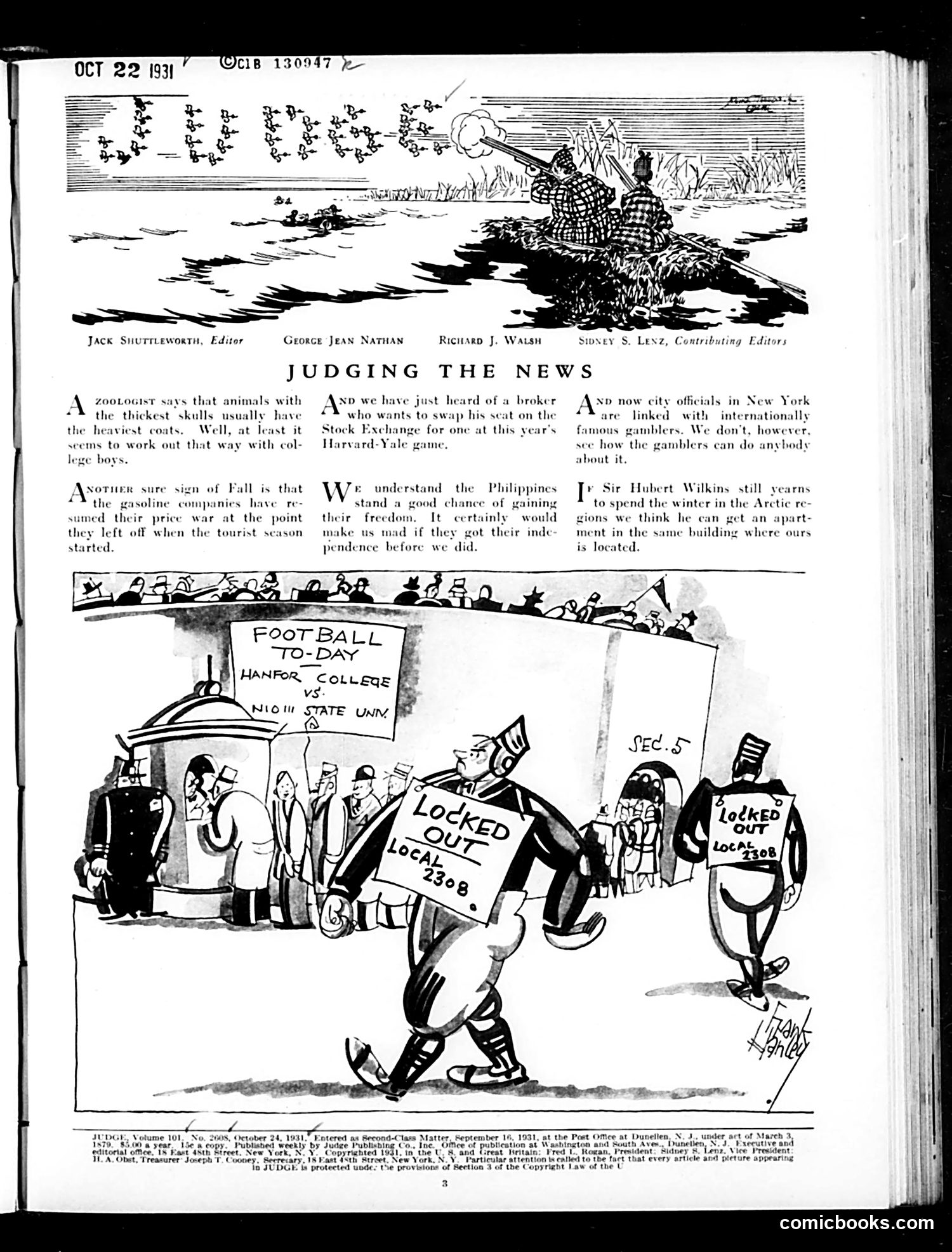
# Analysis of Judge Magazine Page (October 22, 1931) The main cartoon satirizes labor unrest at a college football game. A stadium lockout is depicted, with union workers (marked "Local 2308" and "Locked Out") blocking entrance while officials and spectators gather. The sign advertises "Hanford College vs. N.I.O. State Univ." The cartoon critiques how labor disputes were disrupting American public events during the Great Depression. The workers appear as obstacles to entertainment, while crowds remain oblivious or impatient—suggesting tension between labor rights and public convenience. The smaller "Judging the News" section above offers editorial commentary on current events, including references to Wall Street gambling and Arctic exploration. Overall, the page reflects 1931's economic crisis and growing labor activism.
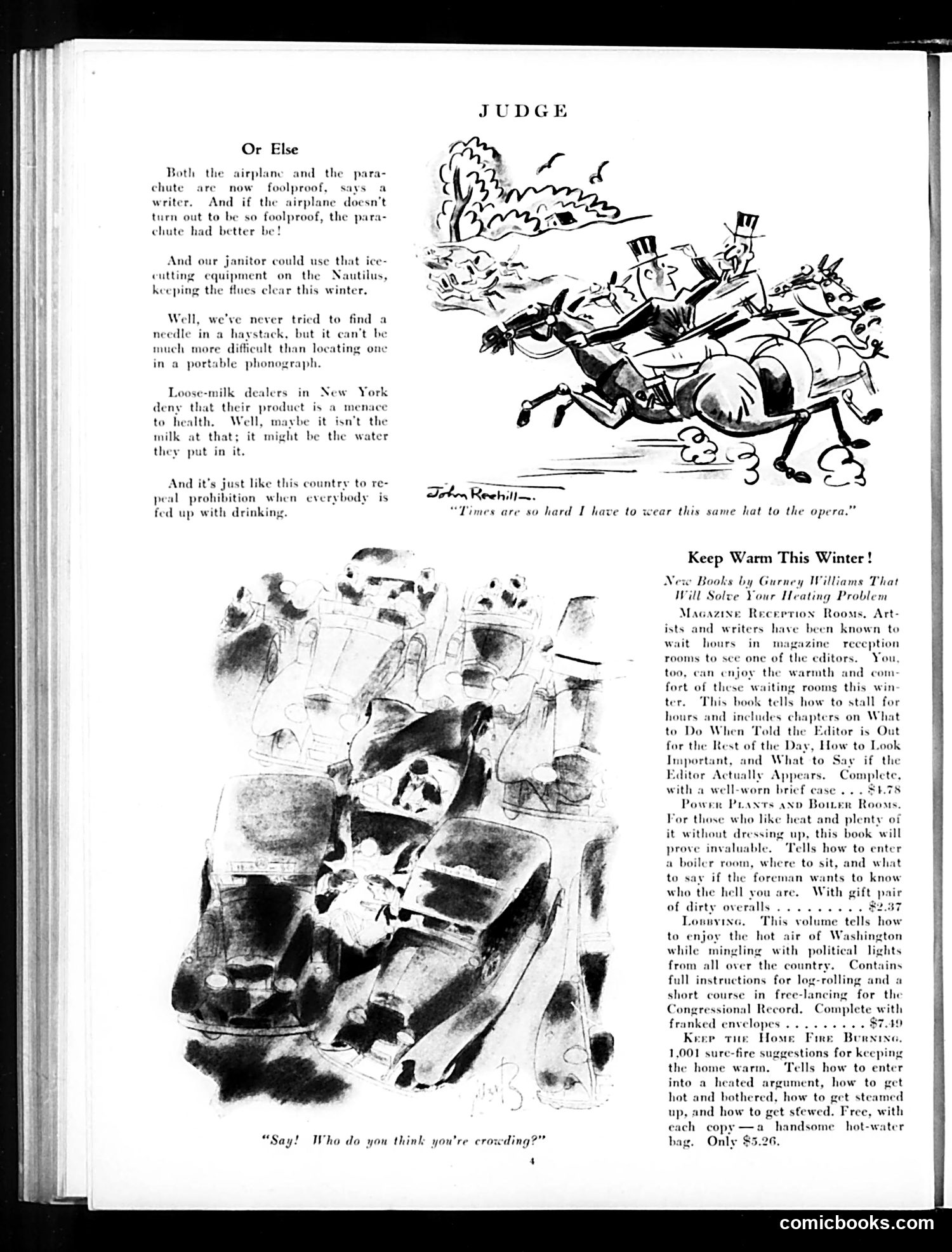
# Analysis of Judge Magazine Page This page contains two satirical cartoons: **Top cartoon ("Judge"):** depicts a chaotic accident involving a car, horses, and what appears to be a judge or formal figure being thrown about. The caption "Times are so hard I have to wear this same hat to the opera" suggests the cartoon satirizes economic hardship—even the wealthy must economize during difficult financial times. **Bottom cartoon:** shows someone crowded among many others in what appears to be a packed room or vehicle. The caption "Sag! Who do you think you're crossing?" mocks overcrowding and rudeness in public spaces. The page is primarily **advertising** for books about keeping warm in winter and maintaining home comfort—practical concerns reflecting the era's heating challenges.
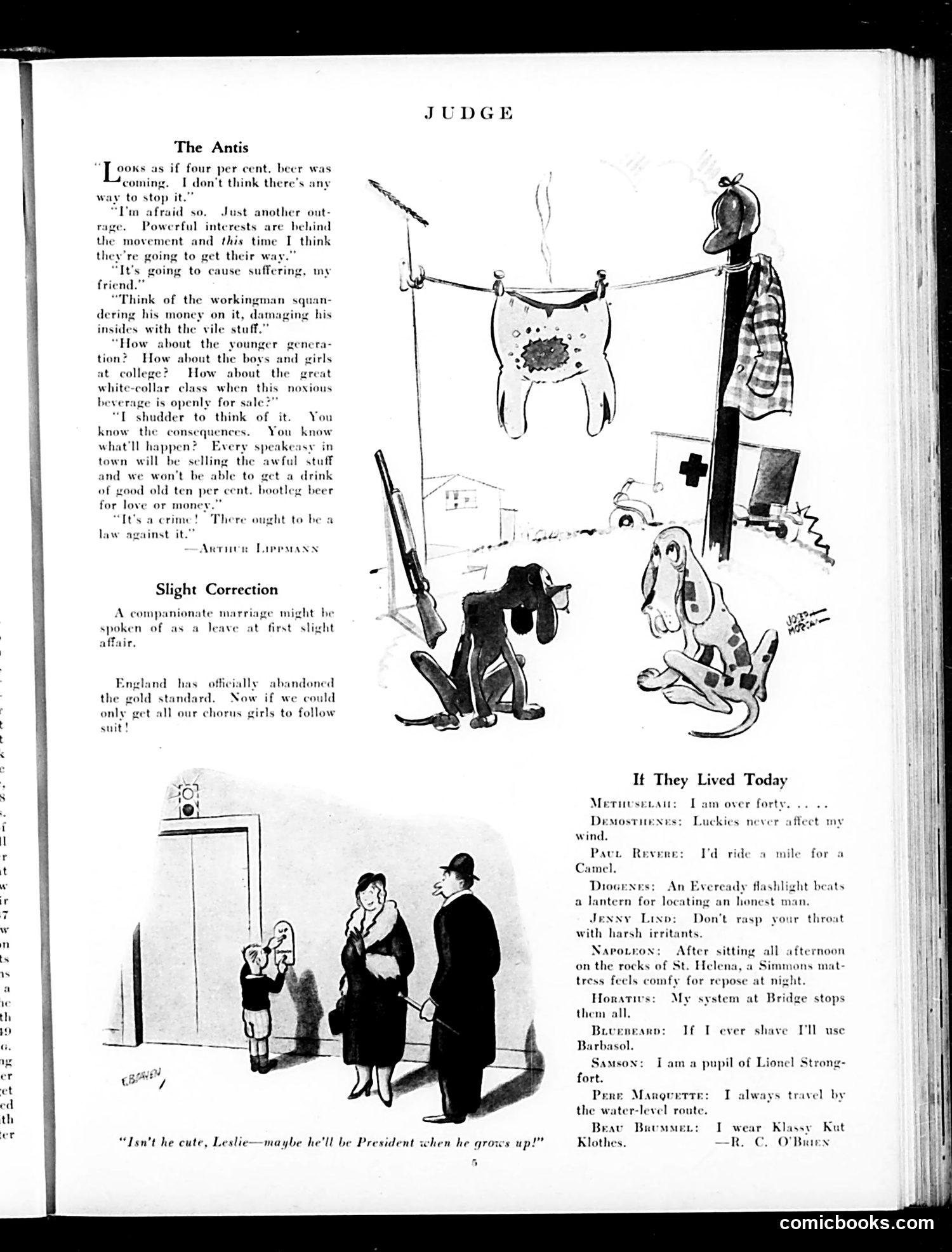
# Analysis of Judge Magazine Page This page contains three distinct satirical pieces: **"The Antis"** discusses beer prohibition, with Arthur Lippmann arguing against anti-alcohol legislation. He warns that powerful interests backing Prohibition will succeed despite public opposition, and jokes about abandoning the "gold standard" so "chorus girls" might follow suit. **"Slight Correction"** is a brief quip about marriage and affairs. **"If They Lived Today"** pairs historical figures (Methuselah, Paul Revere, Napoleon, etc.) with modern witticisms—a humor format contrasting past and present. The main cartoon depicts figures on a clothesline or gallows-like structure, likely commenting on social issues, though its exact meaning is unclear without additional context. **Context**: This appears to be from the Prohibition era (1920s-1930s), when debate over alcohol legislation dominated American politics and satirical magazines.
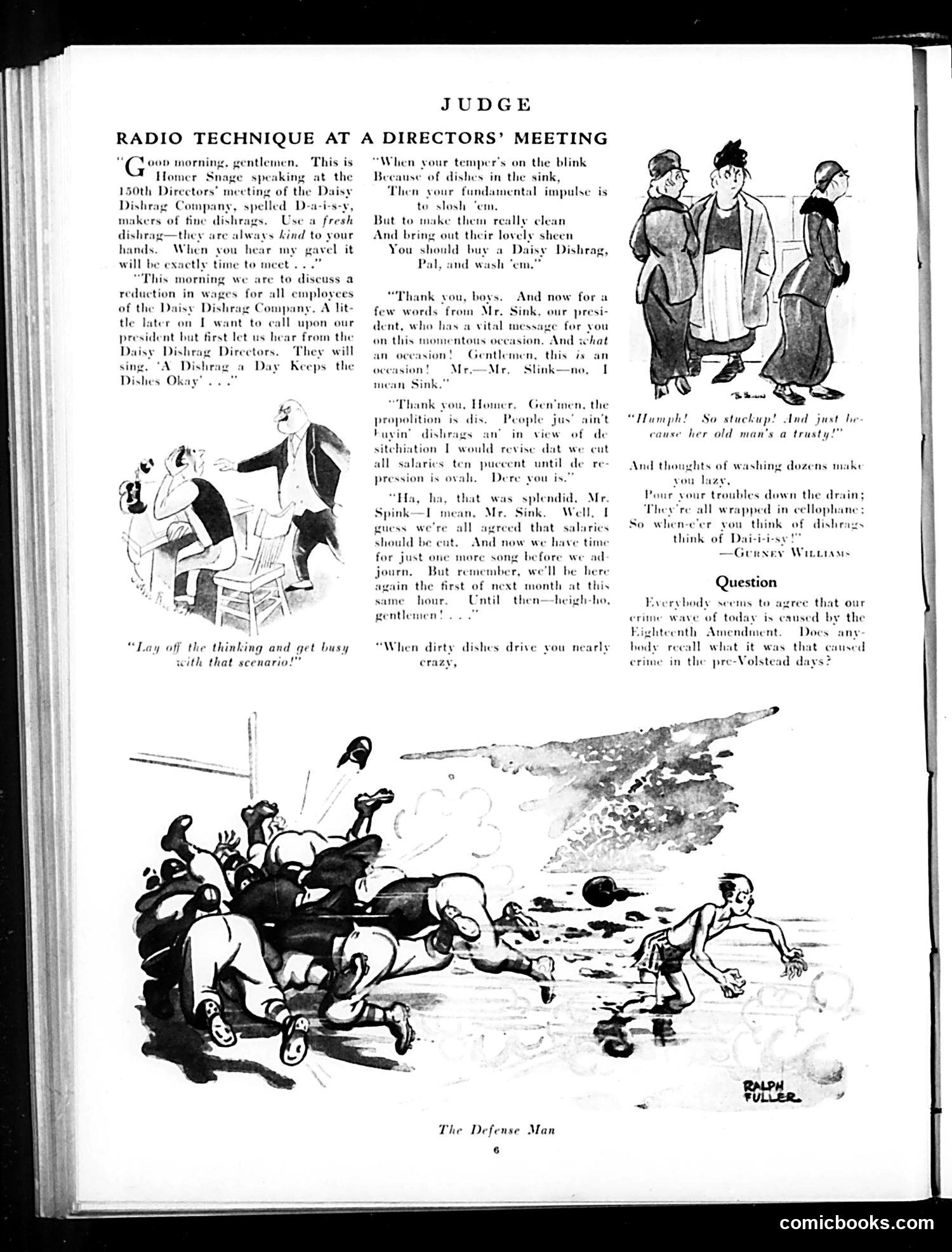
# Analysis of Judge Page This page satirizes corporate cost-cutting during a directors' meeting at the Daisy Dishrag Company. The dialogue mocks the absurdity of management obsessing over minor expenses (dishrag sales) while ignoring larger problems. Homer Snage, a company director, suggests cutting salaries—a common Depression-era executive tactic that prioritized shareholder interests over workers' welfare. The cartoon "The Defense Man" at bottom (by Ralph Fuller) depicts a man overwhelmed by piles of dirty dishes on a beach, satirizing the advertising slogan about Daisy Dishrags keeping dishes clean. The contrast between the company's optimistic promises and the actual domestic burden illustrates the gap between corporate marketing and consumer reality—a frequent Judge target.
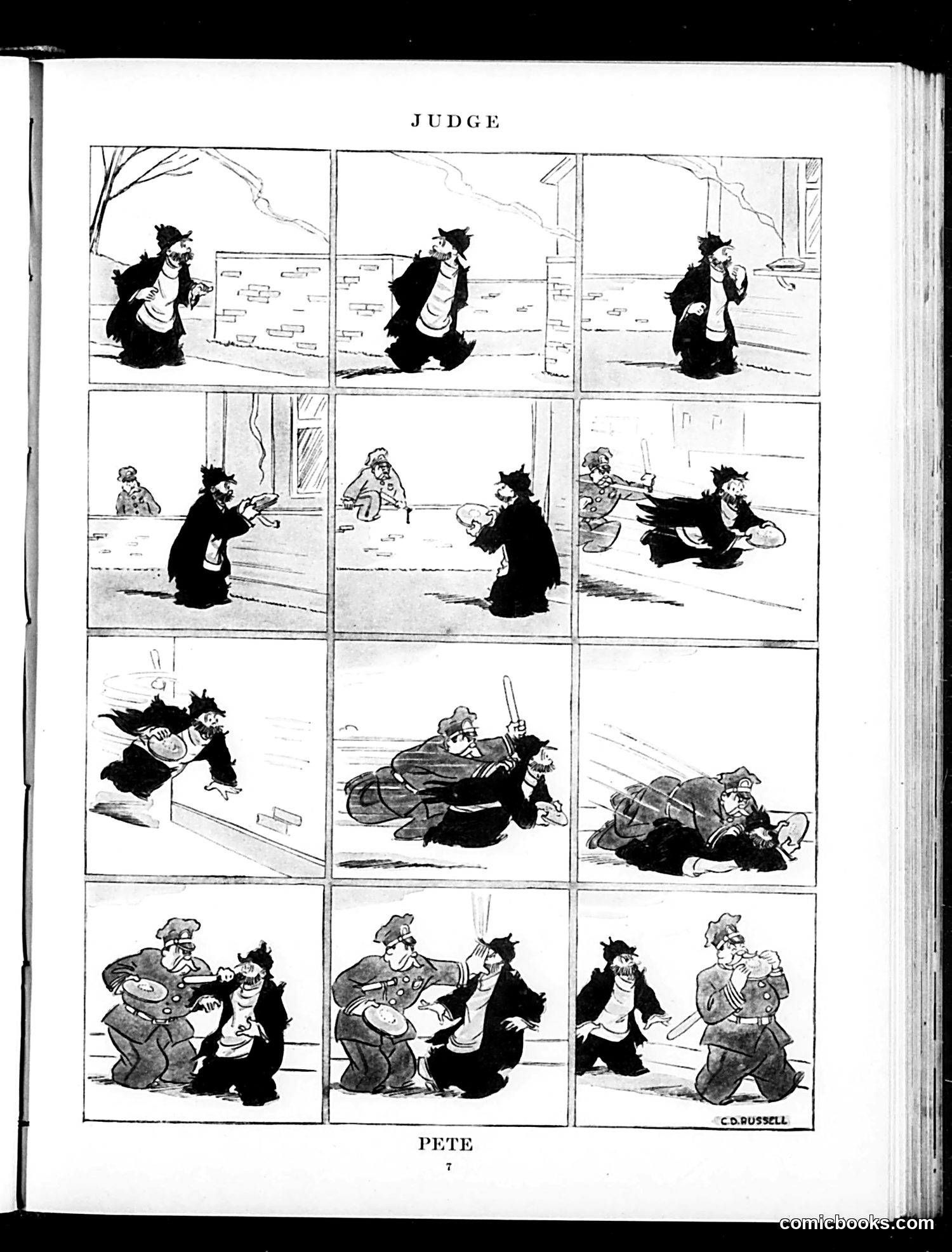
# "Judge" - "Judge" and "Pete" Comic Strip Analysis This appears to be a sequential comic strip titled "Judge" (top) and "Pete" (bottom) by C.D. Russell (signed, lower right). The narrative follows a figure in black formal wear through various scenes of physical comedy and mishaps. The "Judge" strip shows a character repeatedly encountering trouble outdoors—appearing to slip, fall, and struggle through multiple panels. The "Pete" strip depicts similar slapstick comedy where the character interacts with what appears to be a rotund gentleman, involving falling, struggling, and comedic violence with objects. Without additional context about the specific publication date or political figures of the era, the exact satirical targets remain unclear, though the slapstick humor appears typical of early 20th-century comic magazine content.
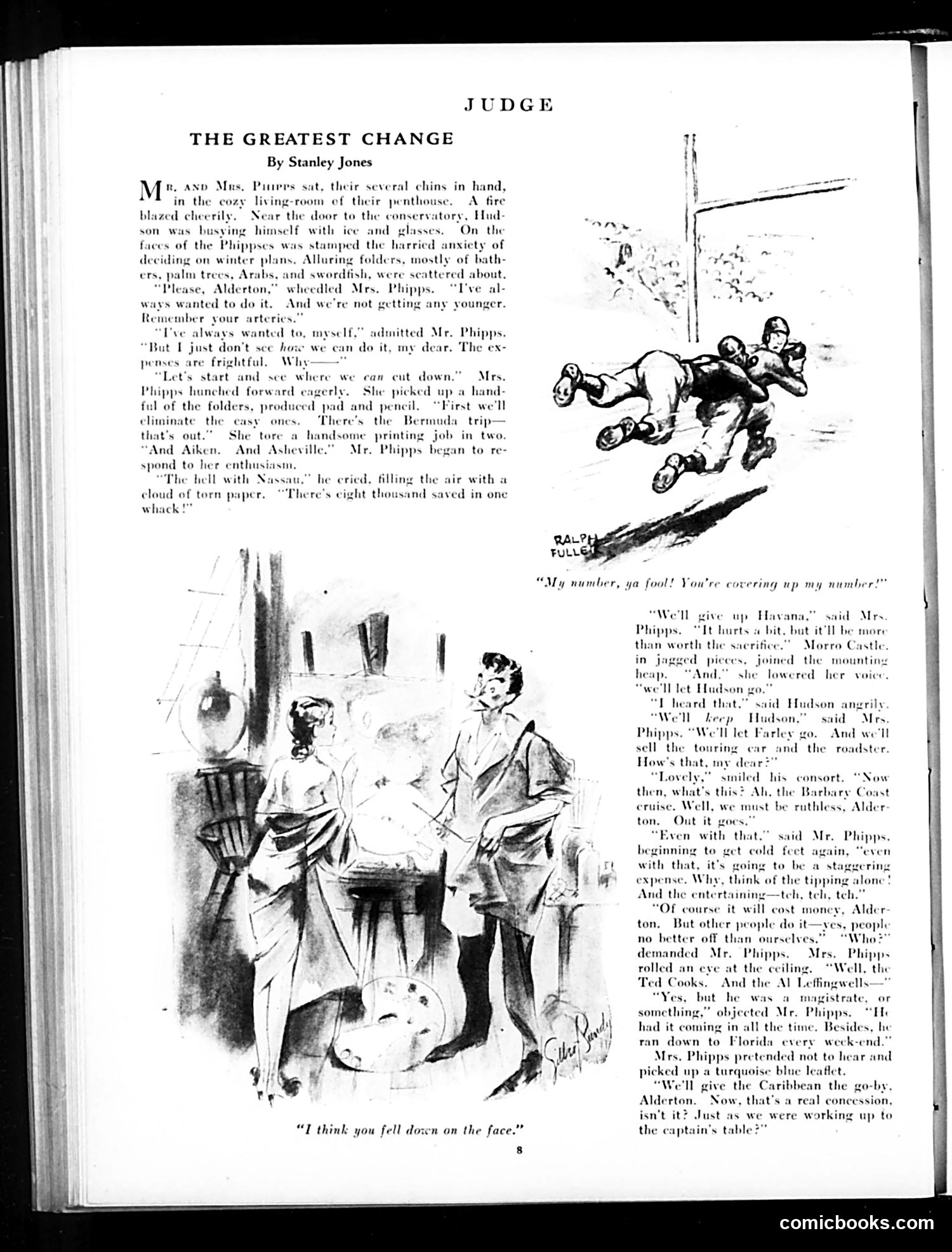
# "The Greatest Change" - Judge Magazine Analysis This is a domestic satire about wealthy upper-class couples wrestling with budget cuts during what appears to be the post-WWI or 1920s era. Mr. and Mrs. Phipps sit in their penthouse, planning winter vacations while trying to economize. The joke targets the absurdity of their "sacrifice": they're dramatically cutting travel plans to exotic locations (Bermuda, Nassau, Havana, Caribbean cruises, the Barbary Coast) while still contemplating expensive trips. Their proposed "economies" include eliminating servants (Hudson) and selling cars—yet they're agonizing over "tipping" costs and still eyeing Caribbean voyages. The satire mocks how the wealthy define financial hardship. Mrs. Phipps cites neighbors like "the Ted Cooks" and "Al Leffingwells" as precedent, suggesting even they manage such trips. The couple's hand-wringing over genuine luxury expenses reveals their disconnection from actual economic constraints ordinary people face. The cartoons illustrate their dramatic gestures while planning these supposedly painful cutbacks.
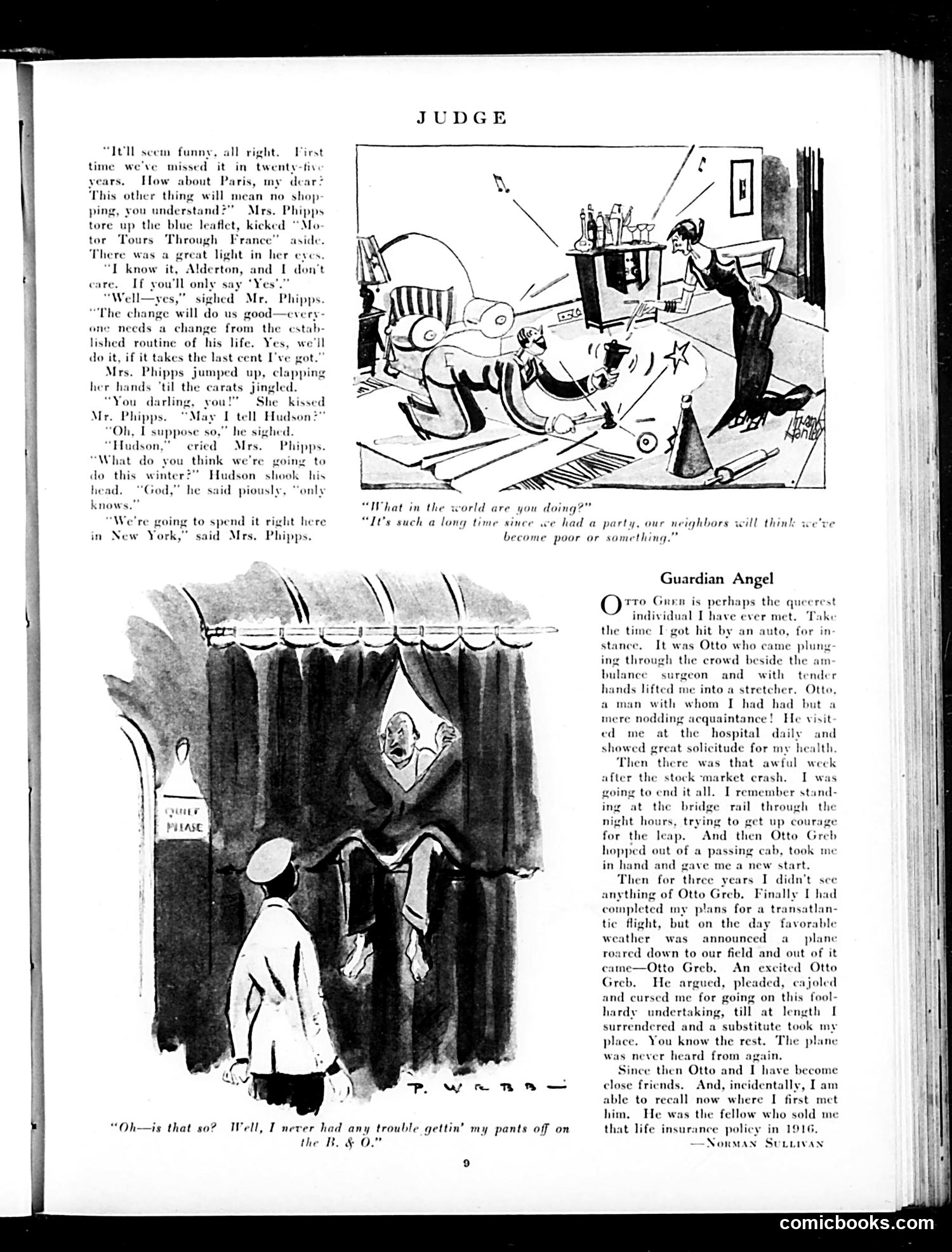
# Judge Magazine Page Analysis This page contains two distinct stories satirizing wealthy American leisure during the prosperous 1920s. **"Judge" (top cartoon):** Mr. and Mrs. Phipps cancel their planned European tour ("Motor Tours Through France") to instead spend lavishly *in New York*. The satire targets nouveau riche anxieties about appearing poor—the couple throws an extravagant home party to signal they haven't lost wealth, reasoning that neighbors might otherwise suspect financial decline. The servant Hudson's sardonic comment about the railroad closing mocks their performative consumption. **"Guardian Angel" (bottom story):** Otto Greb repeatedly appears providentially in the narrator's life—rescuing him from an auto accident, preventing suicide after the stock market crash, and ultimately stopping him from a doomed transatlantic flight. The twist ending reveals Otto sold him life insurance in 1916, suggesting his interventions were self-interested. The story gently satirizes coincidence and providence while poking fun at insurance salesmanship disguised as friendship. Both pieces reflect Jazz Age concerns about wealth, social status, and luck.
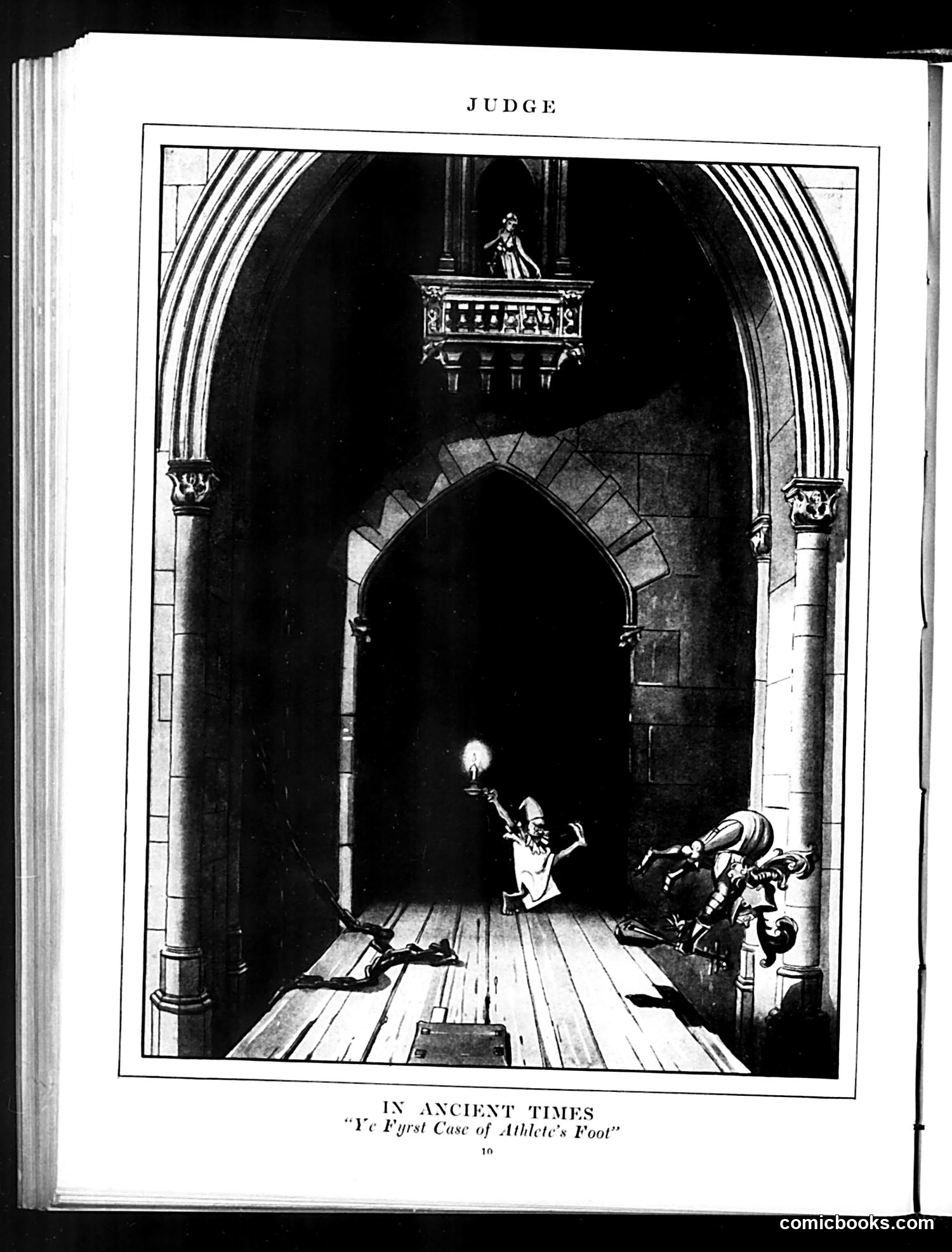
# Judge Magazine Cartoon Analysis This is a satirical cartoon titled "In Ancient Times: Ye First Case of Athlete's Foot." The image depicts a medieval cathedral courtroom scene where a judge presides from an elevated bench. In the center, a figure appears to be presenting or defending themselves before the court, while other medieval-dressed figures observe. The satire jokes that "athlete's foot" (a fungal infection) is being treated as if it's an ancient legal matter, complete with formal court proceedings. The humor relies on anachronism—applying modern medical terminology and legal formality to medieval times, suggesting the condition was so common or serious it warranted judicial attention. The cartoon likely mocks either contemporary medical anxiety about minor ailments or the tendency to formalize trivial matters through bureaucratic processes. Without additional context, the specific topical reference remains unclear.
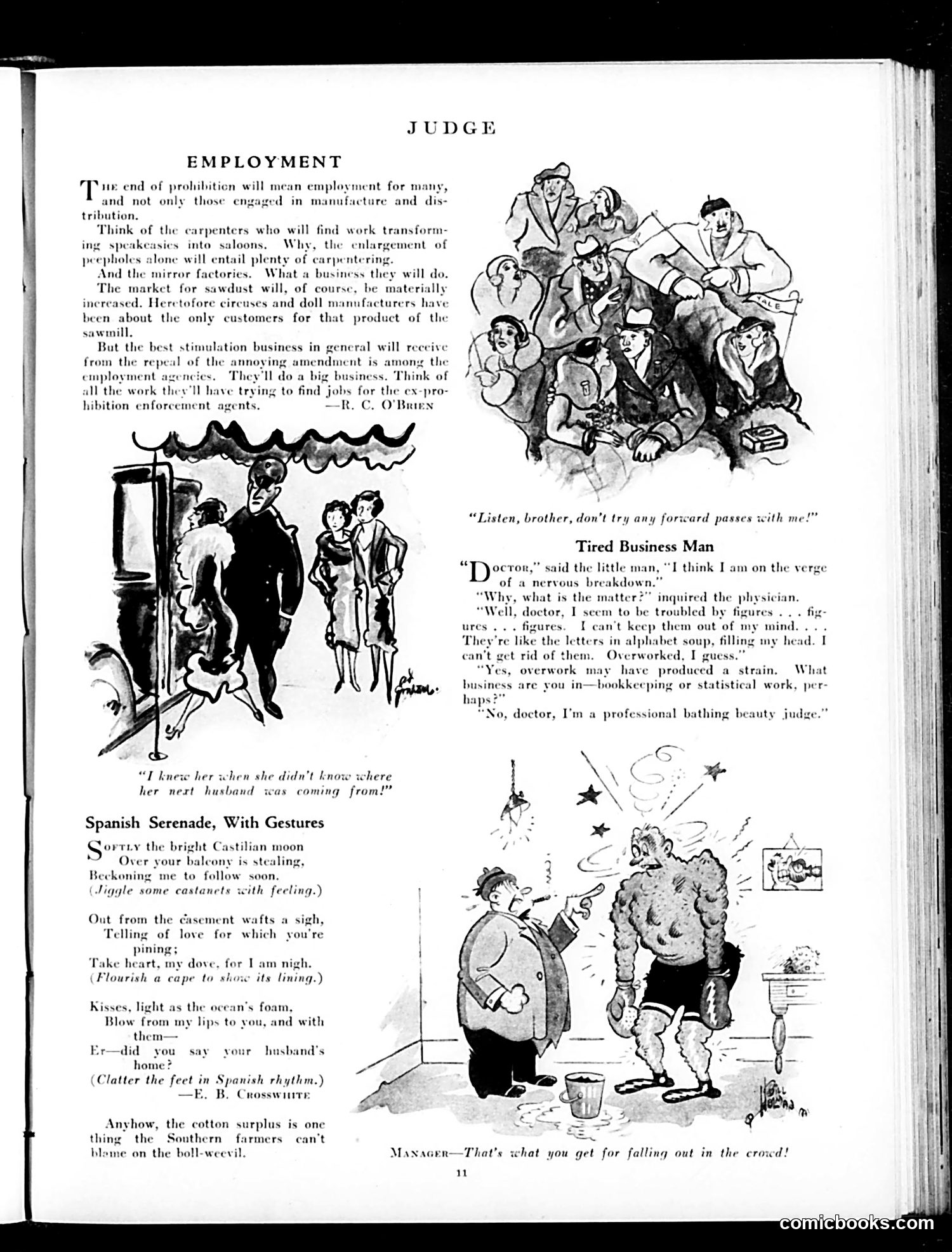
# Judge Magazine Page Analysis This page satirizes **Prohibition's impending repeal** through multiple pieces: **"Employment"** (top): The editorial by R.C. O'Brien ironically celebrates job creation from ending Prohibition—converting speakeasies back to legitimate businesses, manufacturing sawdust for saloons, and crucially, employing former Prohibition enforcement agents. The joke: these agents will need jobs since their enforcement work disappears, making the repeal itself solve an employment problem. **"Tired Business Man"** (center): A physician treats an overworked accountant/bookkeeper overwhelmed by numbers and figures. The satirical point critiques how capitalist work culture—particularly in accounting and statistics—causes nervous breakdowns through relentless mental labor. **"Spanish Serenade, With Gestures"** (bottom): A comedic poem mocking romantic Spanish stereotypes with stage directions for exaggerated gestures and dancing. The cartoons collectively mock both labor exploitation under capitalism and the complex social/economic shifts surrounding Prohibition's end.