A complete issue · 36 pages · 1931
Judge — April 11, 1931
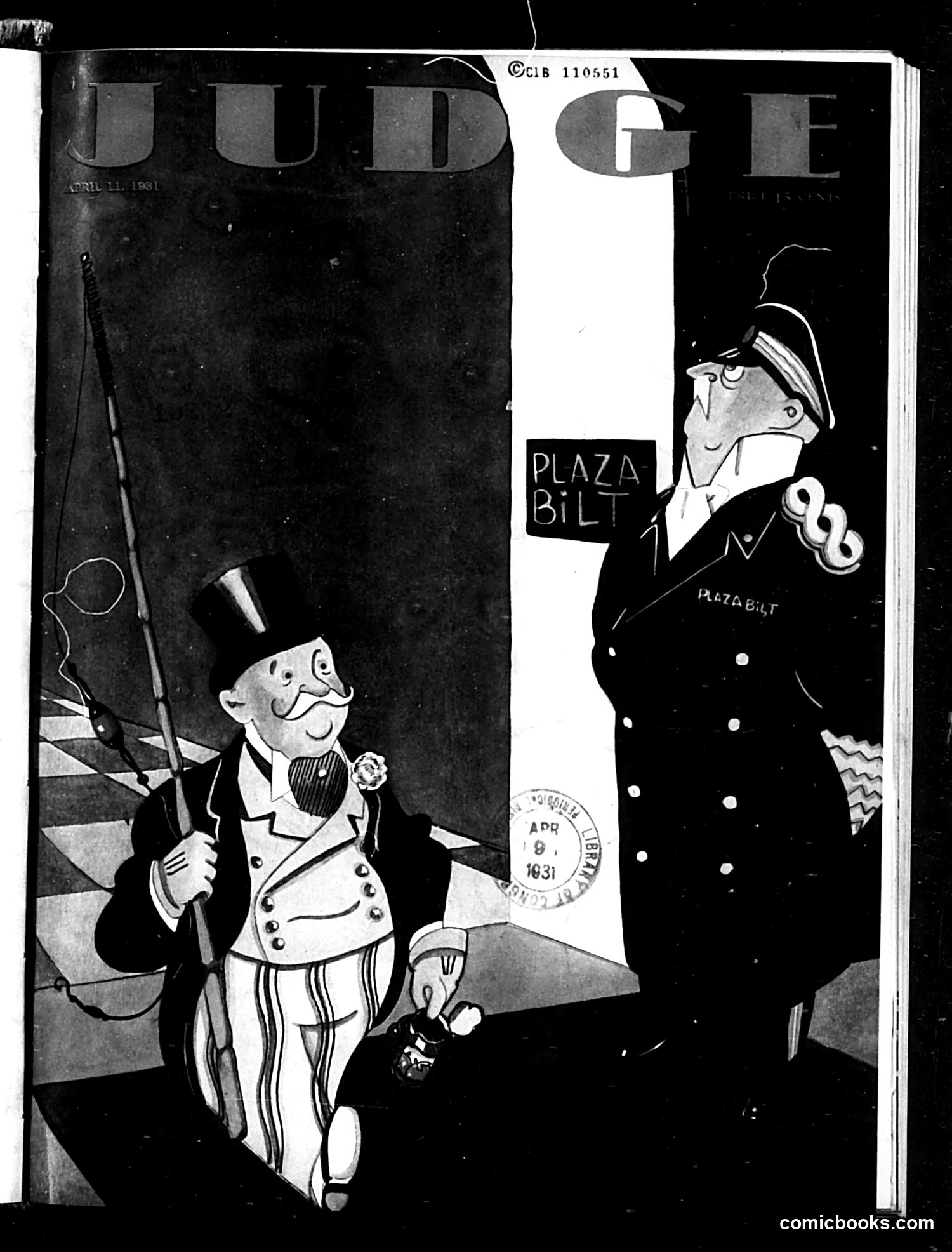
# Judge Magazine Analysis - April 11, 1931 This is a satirical cartoon from *Judge* magazine's April 1931 issue, featuring two caricatured gentlemen in formal attire labeled "PLAZA BILT" (likely referencing the Plaza Hotel). The cartoon appears to satirize wealthy Manhattan socialites or hotel patrons during the Great Depression. Both figures display exaggerated facial features typical of 1930s caricature style. One holds a fishing rod, suggesting leisure and idle wealth while ordinary Americans struggled economically. The "PLAZA BILT" label repeated twice suggests mockery of the hotel's exclusivity or the pretensions of its wealthy clientele who remained insulated from Depression hardships. The juxtaposition of frivolous leisure activities with the economic crisis context makes this pointed social satire about class inequality during the nation's financial emergency.
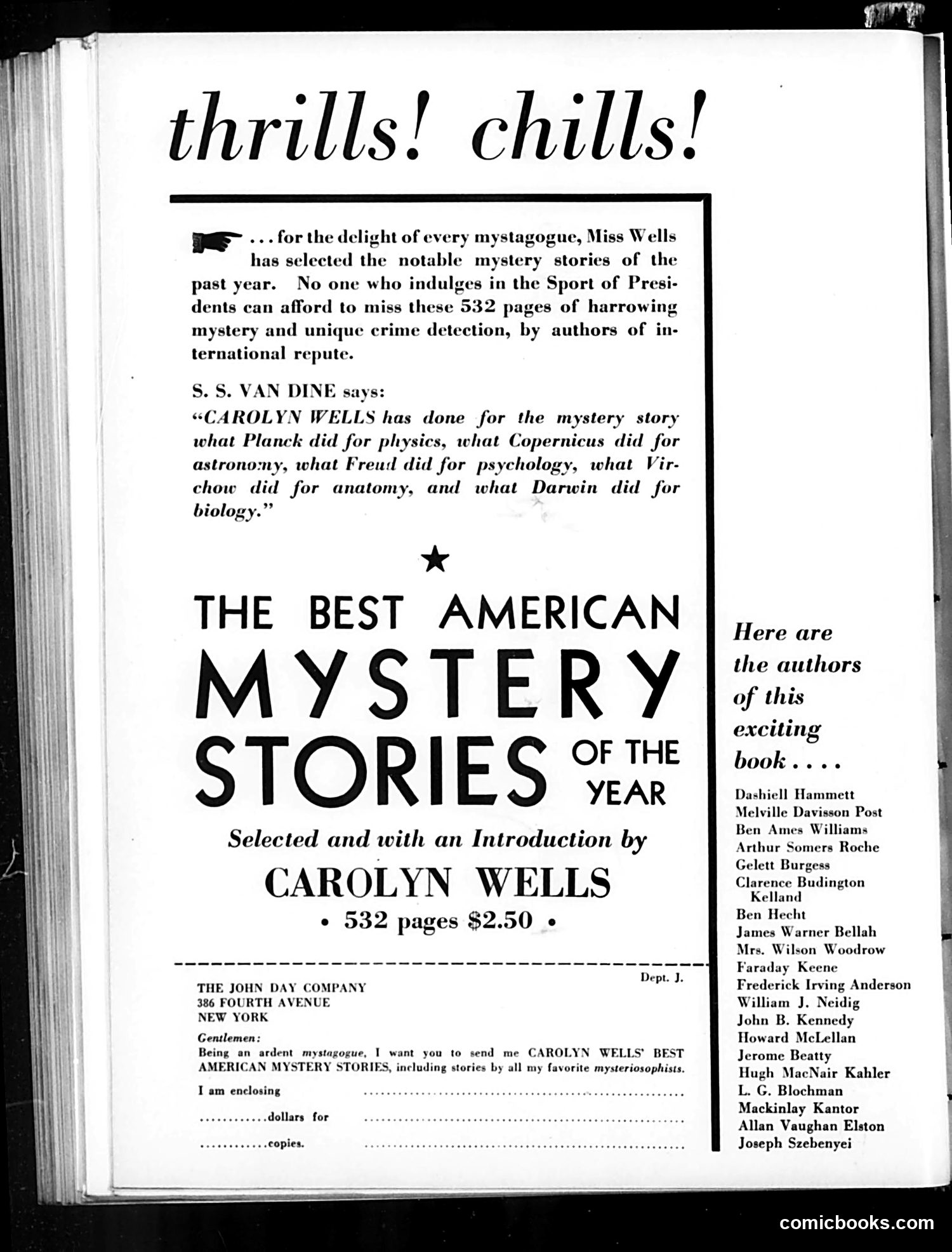
# Analysis This page is **primarily an advertisement**, not satirical content. It promotes "The Best American Mystery Stories of the Year," a 532-page anthology selected by Carolyn Wells, priced at $2.50 and published by The John Day Company. The ad emphasizes the book's prestige through a quote from S.S. Van Dine comparing Wells's contribution to the mystery genre with major scientific figures (Planck, Copernicus, Freud, Darwin, Virol, etc.). A list of contributing authors—including Dashiell Hammett, Ben Hecht, and others—establishes literary credibility. The only potentially satirical element is the opening phrase "thrills! chills!"—typical hyperbolic advertising language that Judge readers might find mockingly overwrought. Otherwise, this is straightforward commercial promotion in a satirical magazine.
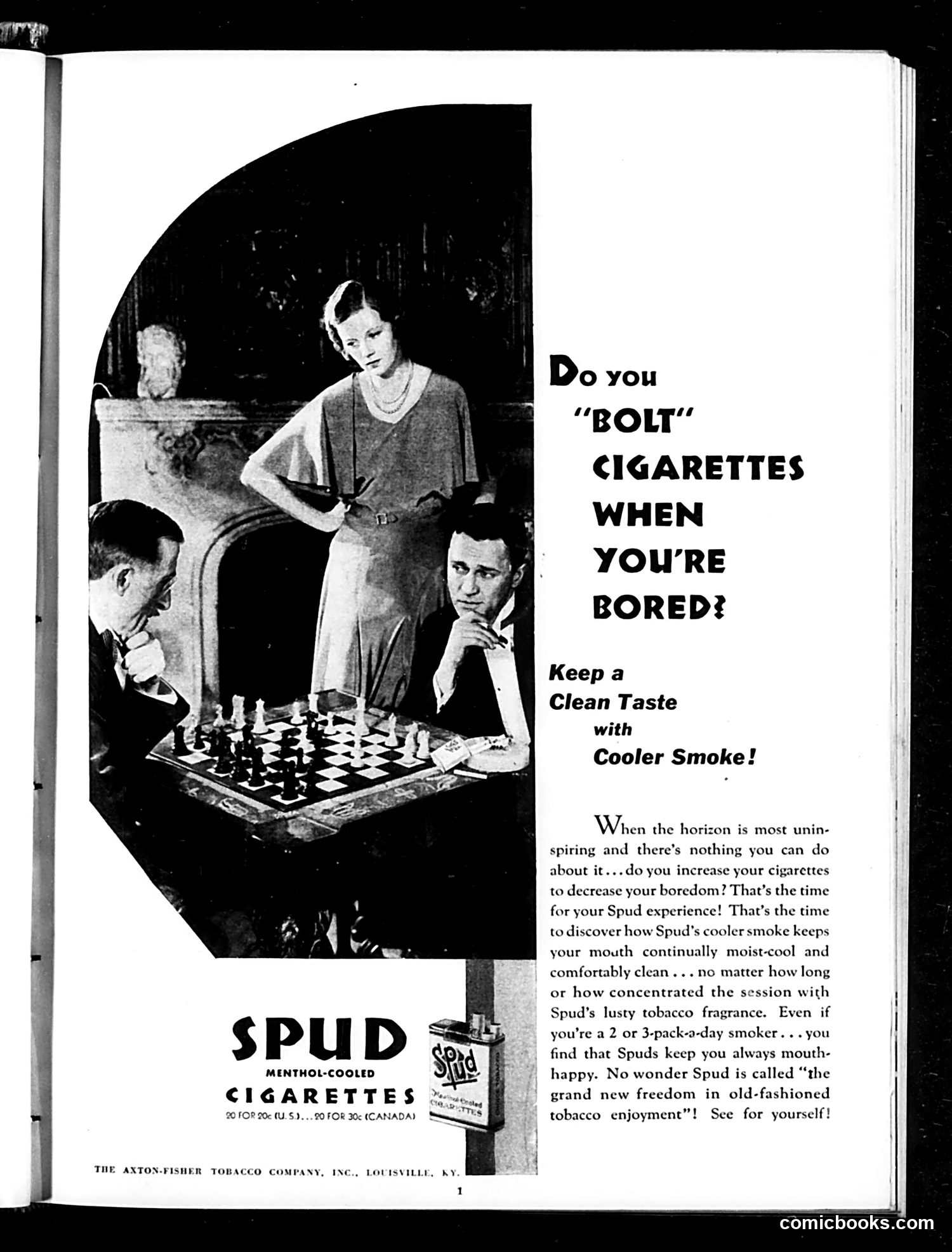
# Analysis This page is **not a political cartoon or satirical content**—it's a **cigarette advertisement** for Spud brand menthol cigarettes from The Axton-Fisher Tobacco Company (Louisville, Kentucky). The ad uses a social scene showing four people playing chess to suggest that Spud cigarettes provide relief from boredom. The copy promises "cooler smoke" and a "clean taste" while smoking heavily. It explicitly encourages increased cigarette consumption during tedious moments. By modern standards, this advertisement is striking for its casual promotion of heavy smoking as a cure for monotony, with no health warnings. The gendered social setting and lifestyle marketing were typical mid-20th-century cigarette advertising tactics, now recognized as manipulative and harmful.
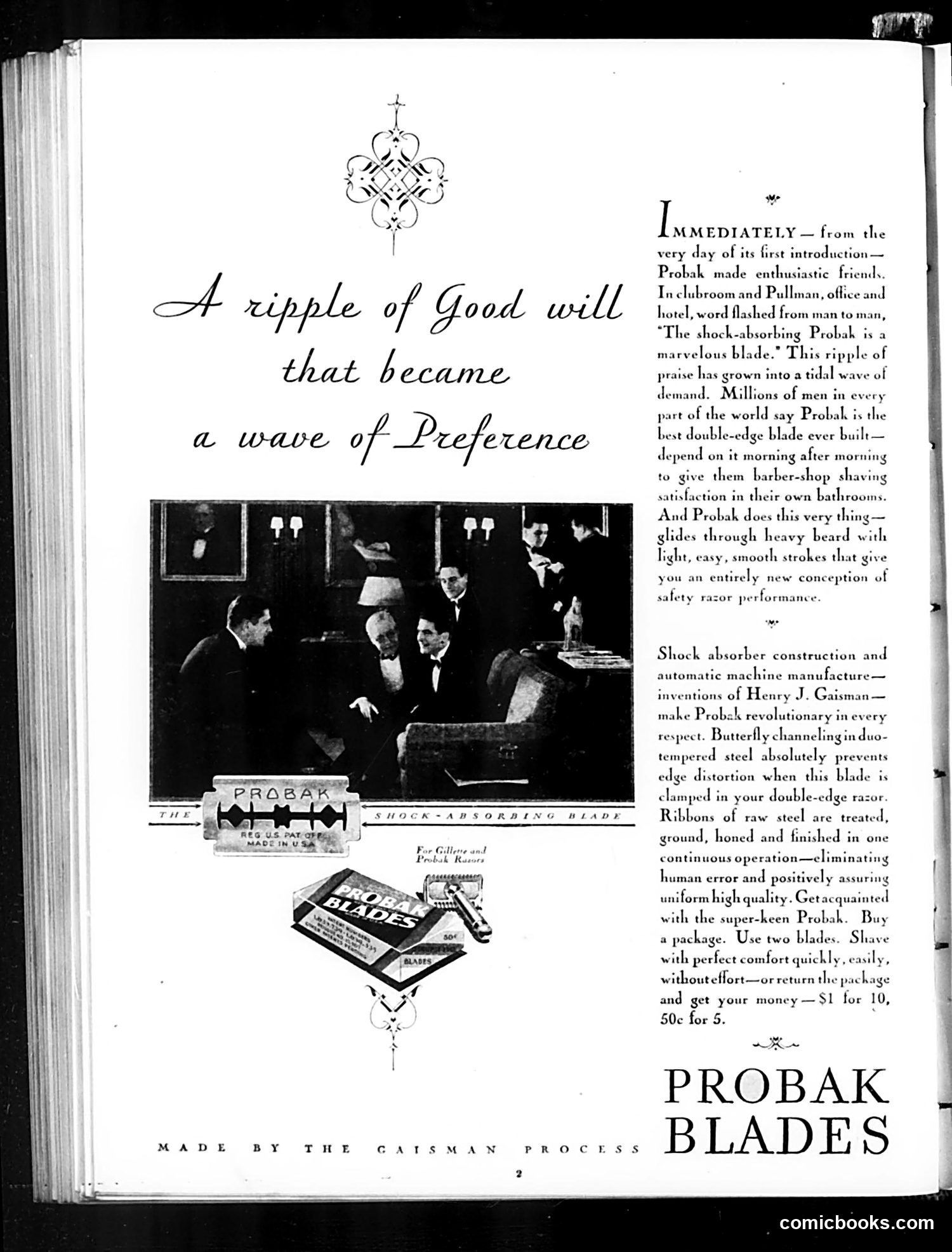
# Probak Blades Advertisement This page is primarily a **commercial advertisement**, not political satire. It promotes Probak razor blades, a real product manufactured using the Gaisman Process. The advertisement uses a scene depicting businessmen in what appears to be a clubroom or office setting to establish credibility and aspirational appeal. The text emphasizes the blade's revolutionary "shock-absorbing" design and claims it became widely preferred among men for daily shaving. The ad promises ease, comfort, and safety while shaving, and offers a money-back guarantee ("return the package and get your money — $1 for 10, 50c for 5"). This reflects early 20th-century advertising strategy: using professional, respectable male figures to market personal grooming products to middle-class consumers.
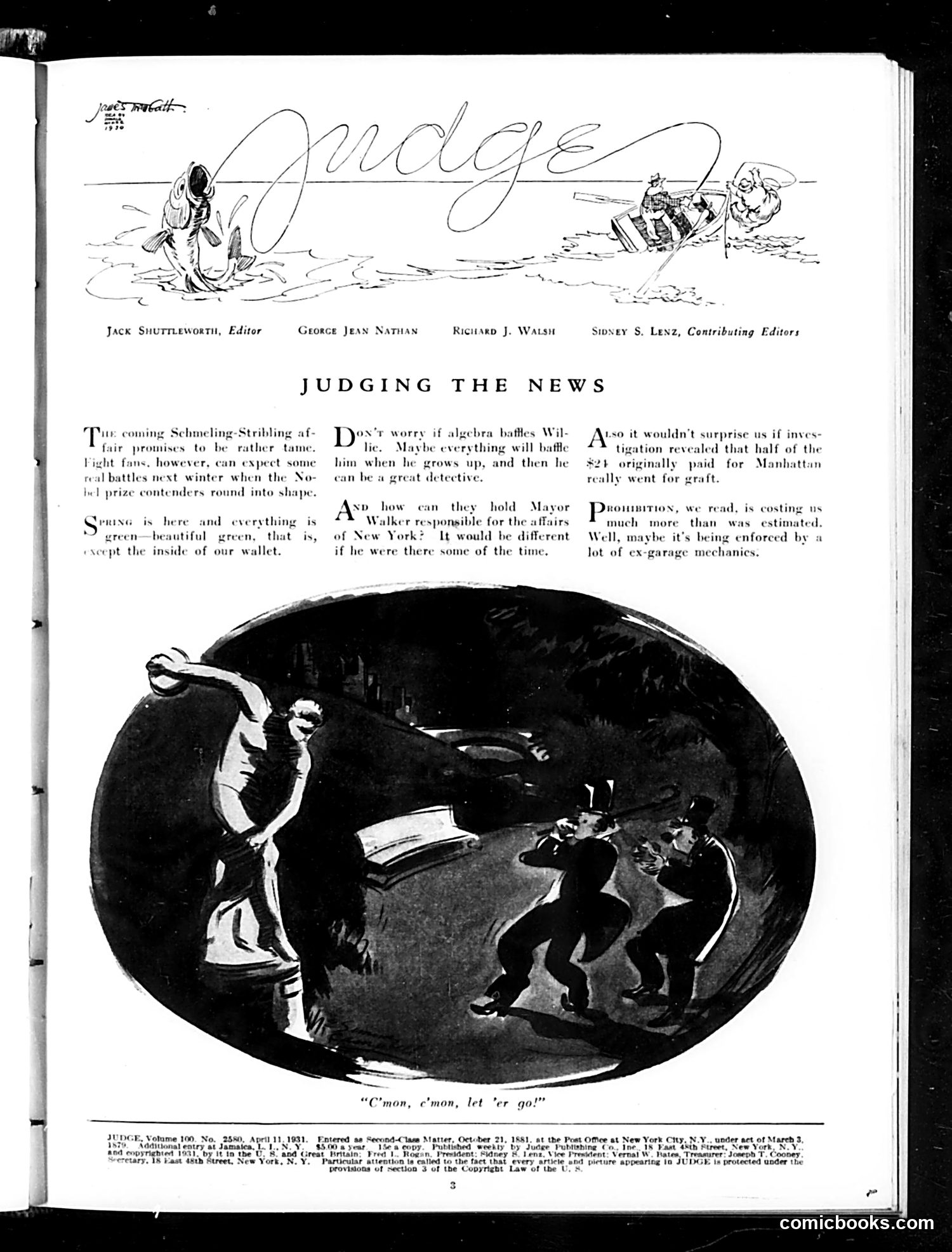
# "Judge" Magazine Commentary Page - April 13, 1931 This page features editorial commentary titled "Judging the News." The brief text snippets offer satirical takes on contemporary issues: - A comment about the Schmeling-Stribling boxing match being "tame" - Observations on spring weather and its effect on wallets - Skepticism about Detective Willie (likely a public figure) solving New York's affairs - A jab at Prohibition's costs, suggesting it's being enforced by "ex-garage mechanics" The main cartoon below depicts a scene in darkness with figures and the caption "'C'mon, c'mon, let 'er go!'" The specific reference is unclear without additional context, but likely satirizes a contemporary news event or political situation from early 1931. The page represents *Judge*'s typical format: mixing short editorial quips with illustration.
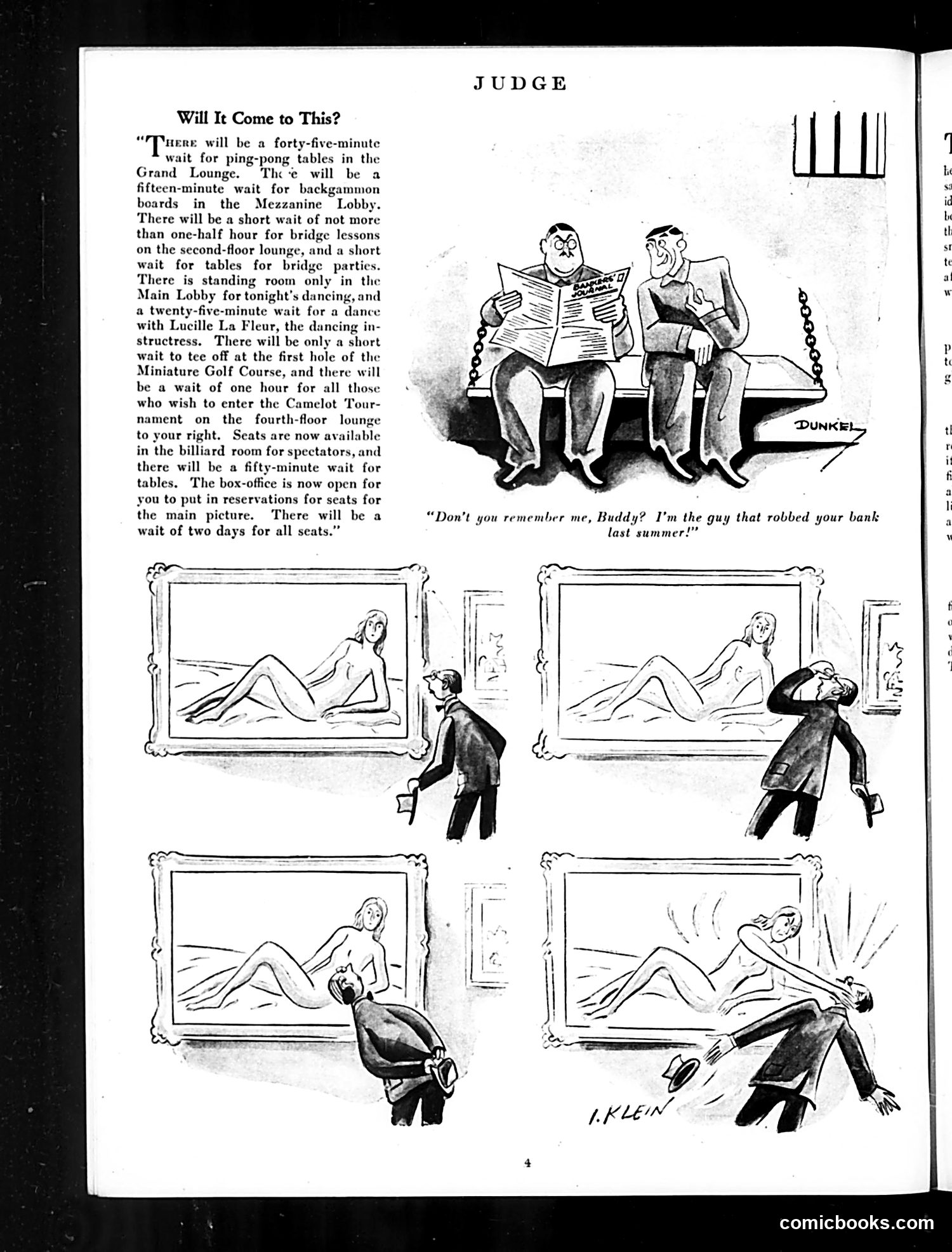
# Analysis of "Will It Come to This?" The top cartoon shows two men on a swing reading a newspaper, with one asking, "Don't you remember me, Buddy? I'm the guy that robbed your bank last summer?" This references the prevalence of bank robberies during this era, satirizing how criminals might casually encounter their victims in public spaces. The four-panel comic strip below depicts men viewing nude paintings in what appears to be a gallery or art exhibition. Each panel shows a man's increasingly dramatic reaction to the artwork—from casual viewing to apparent shock or distress. The satire mocks prudish reactions to artistic nudity, suggesting hypocrisy in public attitudes toward art depicting the human form. The overall page satirizes social anxieties and behavioral contradictions of the era.
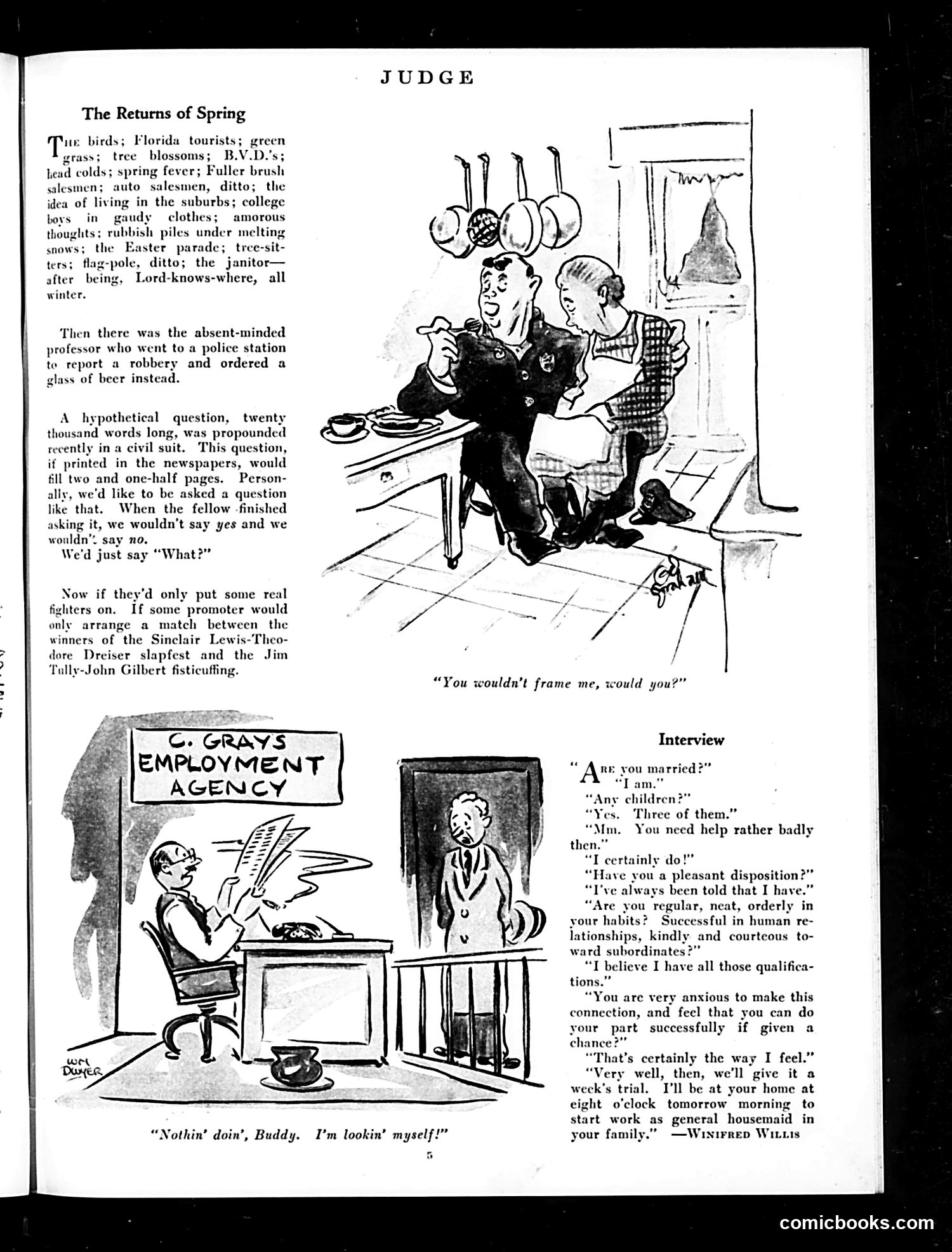
# Analysis of Judge Magazine Page **"The Returns of Spring"** (top cartoon): A satirical piece listing spring's return signs—birds, tourists, grass—ending with absurdist items like "rubbish piles under melting snows" and "the janitor after being, Lord-knows-where, all winter." The accompanying cartoon shows two men at a restaurant table with hanging pans; one asks "You wouldn't frame me, would you?" The joke appears to reference either a robbery or romantic entanglement, playing on period slang where "frame" means to falsely incriminate someone. **"C. Gray's Employment Agency"** (bottom): Shows a clerk interviewing a prospective housekeeper. The dialogue reveals she's married with three children, has poor disposition, and is being offered work as "general housekeeper." The humor lies in the absurdity—she appears completely unqualified, yet the agency proceeds anyway. Both cartoons satirize everyday incompetence and poor judgment.
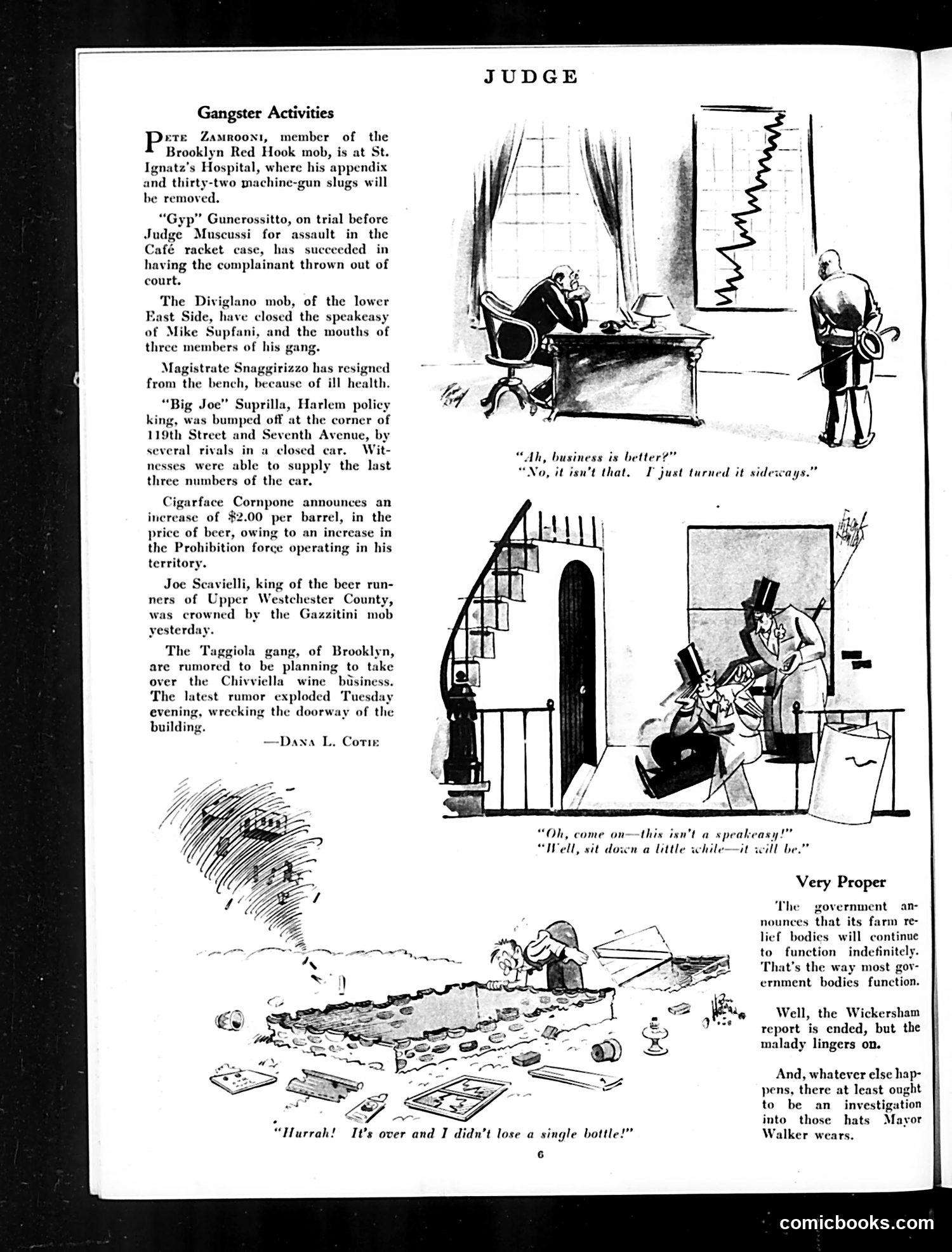
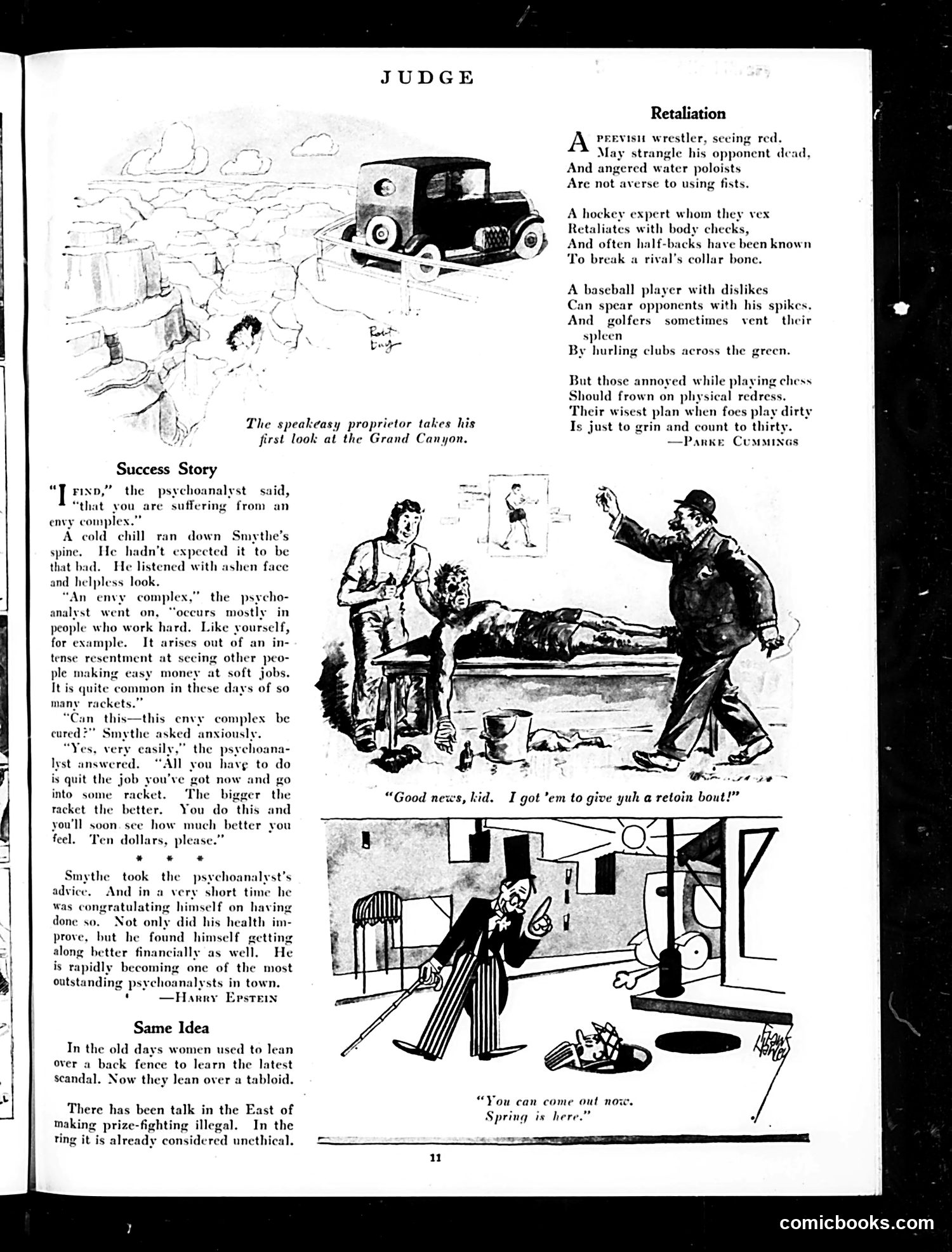
# Analysis of Judge Page This page contains **satirical commentary on Prohibition-era organized crime** and government ineffectiveness. The top section ("Gangster Activities") reports on mob violence—assault cases, speakeasy closures, and murders—with dark humor. The cartoons illustrate the absurdity: judges conducting business while gangsters operate openly; a speakeasy disguised as legitimate premises; and a bootlegger proudly displaying undamaged bottles after a raid ("Hurrah! It's over and I didn't lose a single bottle!"). The "Very Proper" section mocks government farm relief bodies that "function indefinitely"—bureaucratic waste. The final jab questions Mayor Walker's hat spending while crime flourishes. **The satire's point**: Prohibition created profitable crime while authorities proved impotent. Government agencies persist uselessly while actual problems (gangsterism, corruption) go unaddressed.
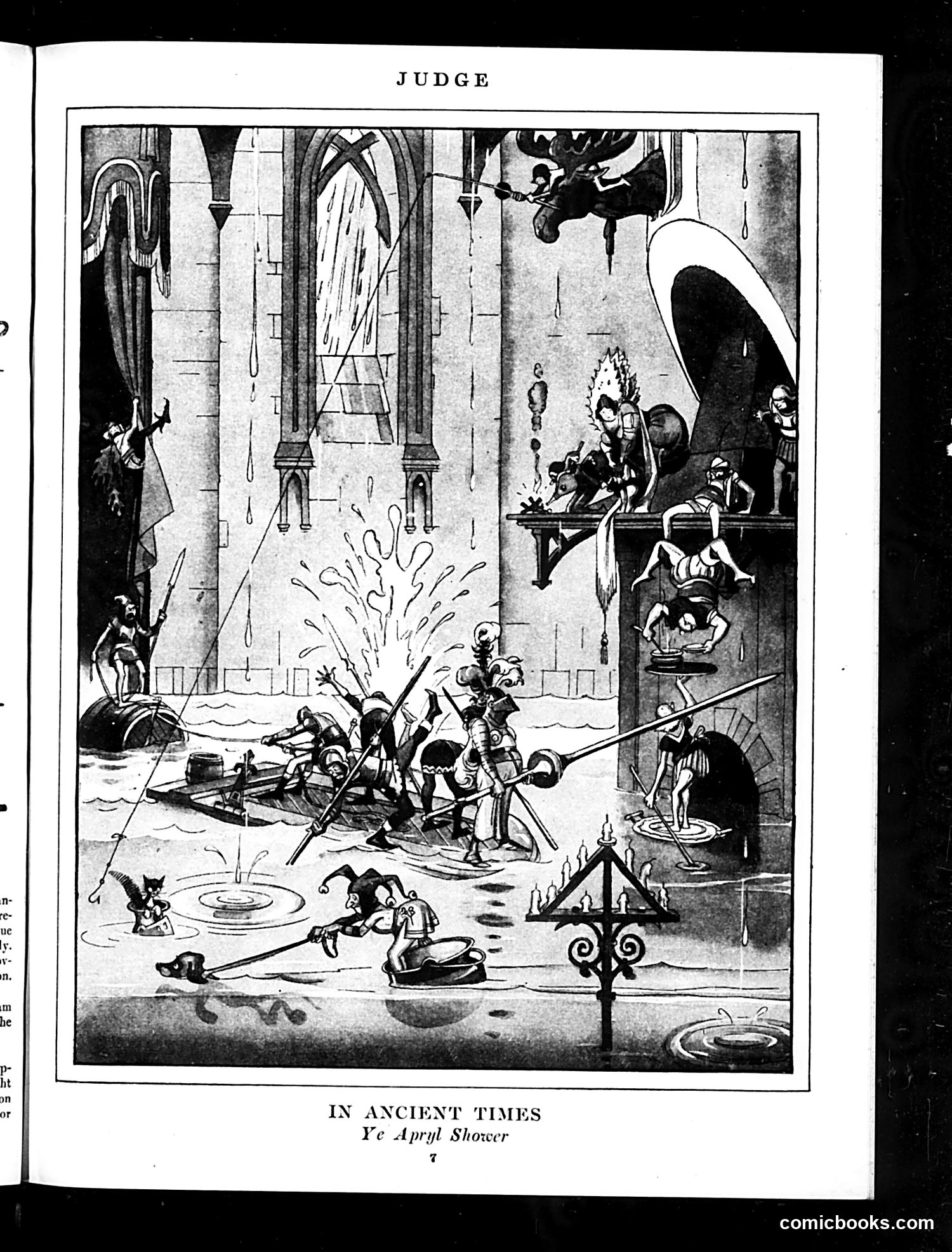
# "In Ancient Times: Ye Apryl Shower" This Judge magazine cartoon depicts a medieval cathedral scene during an April rainstorm, playing on the phrase "April showers." The illustration shows tiny armored figures engaged in battle or chaos within and around a grand Gothic church, with rain falling heavily and water pooling on the ground. The satire appears to be a visual pun: rather than the gentle "April showers" of spring that "bring May flowers," this literally depicts violent chaos and destruction during rainfall in "ancient times." The medieval setting and warfare suggest mock-historical humor, treating the proverbial spring weather phenomenon as if it were an actual calamity worthy of historical record. The joke relies on taking the common saying literally and absurdly.
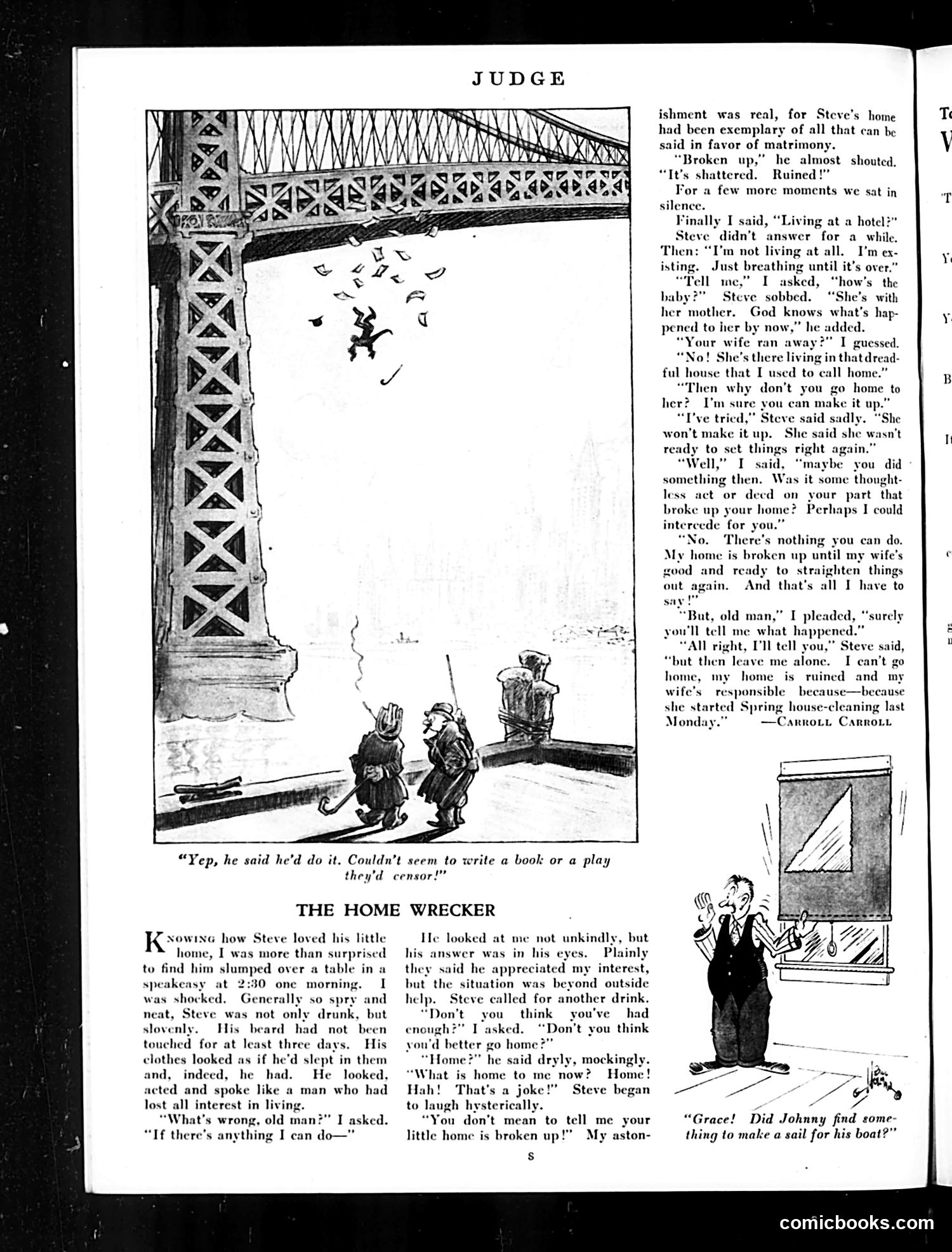
# "The Home Wrecker" - Judge Magazine This satirical story mocks a common domestic complaint: a man's home is destroyed not by infidelity or serious marital conflict, but by his wife's spring house-cleaning. The narrative presents Steve, a once-respectable man now drunk and disheveled, whose entire life has collapsed because his wife started her weekly cleaning routine. The satire lies in the absurd disproportion—the narrator expects catastrophic betrayal or scandal, but discovers the "wrecker" is merely domestic tidiness. The joke reflects early 20th-century anxieties about women's domestic authority and the chaos of housekeeping. It satirizes both overly dramatic men and the invasive, disruptive nature of spring cleaning that was a major household event. The final panel provides comic relief, suggesting domestic chaos affects everyone—even children's boat projects get disrupted. The humor targets masculine self-pity and the clash between orderly housekeeping and men's desire for an undisturbed home.
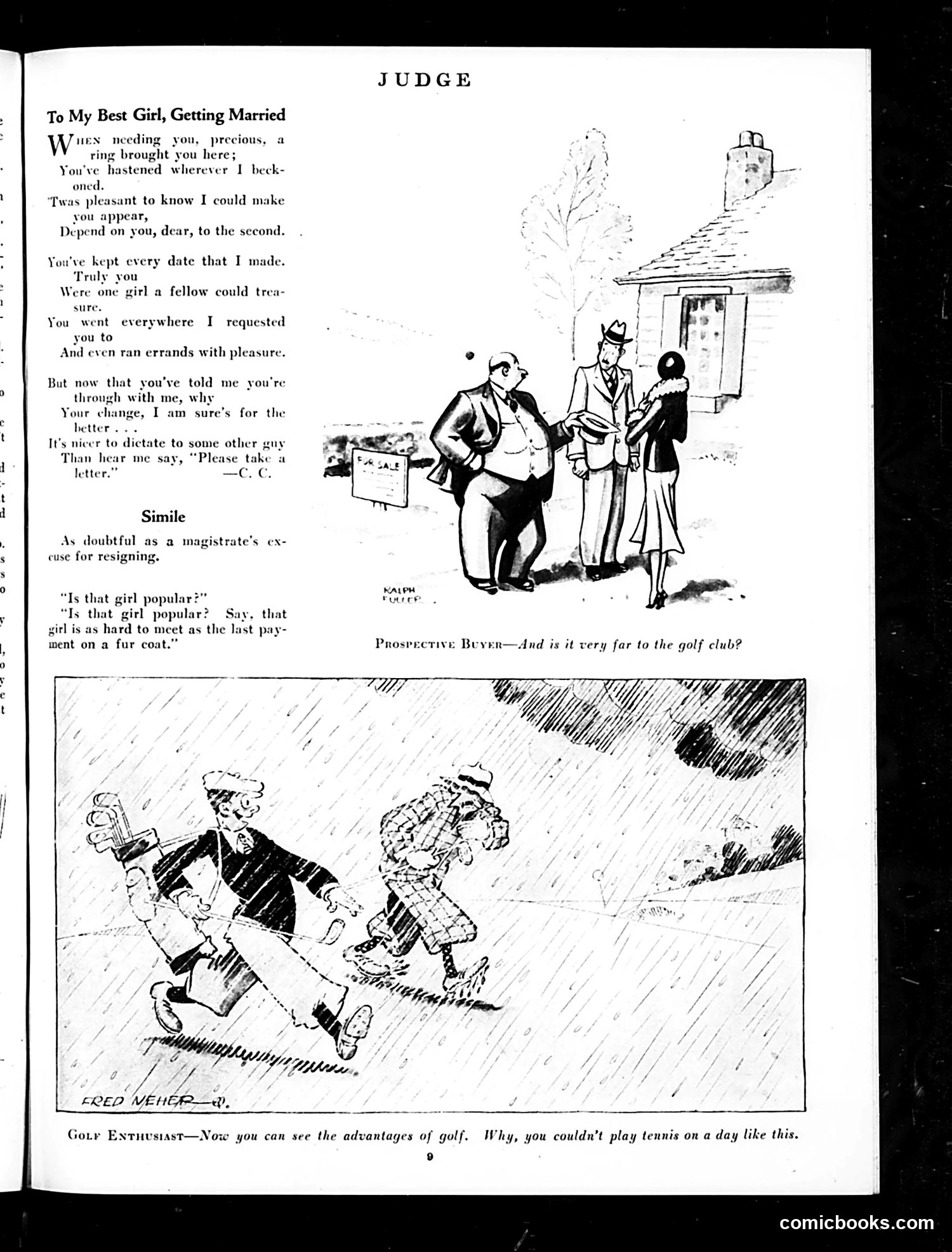
# Analysis of Judge Magazine Page This page contains three separate satirical pieces typical of early 20th-century Judge magazine humor: **"To My Best Girl, Getting Married"** (poem): A man laments his fiancée breaking their engagement. The satire mocks male entitlement—he's upset she'll no longer obey his every whim, viewing her independence as her "gain" rather than acknowledging his loss of control. **"Simile" section**: Brief jokes comparing abstract concepts. The "girl is as hard to meet as the last payment on a fur coat" mocks both women's elusiveness and consumer debt culture. **"Prospective Buyer" cartoon**: A woman asks a real estate agent if a house is far from the golf club. The "Golf Enthusiast" below jokes that rain proves golf's superiority to tennis—implying obsessive golfers will play in any weather. The cartoons satirize early 20th-century attitudes: male dominance in relationships, women's emerging independence, conspicuous consumption, and the leisure pursuits of the affluent. The humor relies on period-specific social anxieties about changing gender roles.
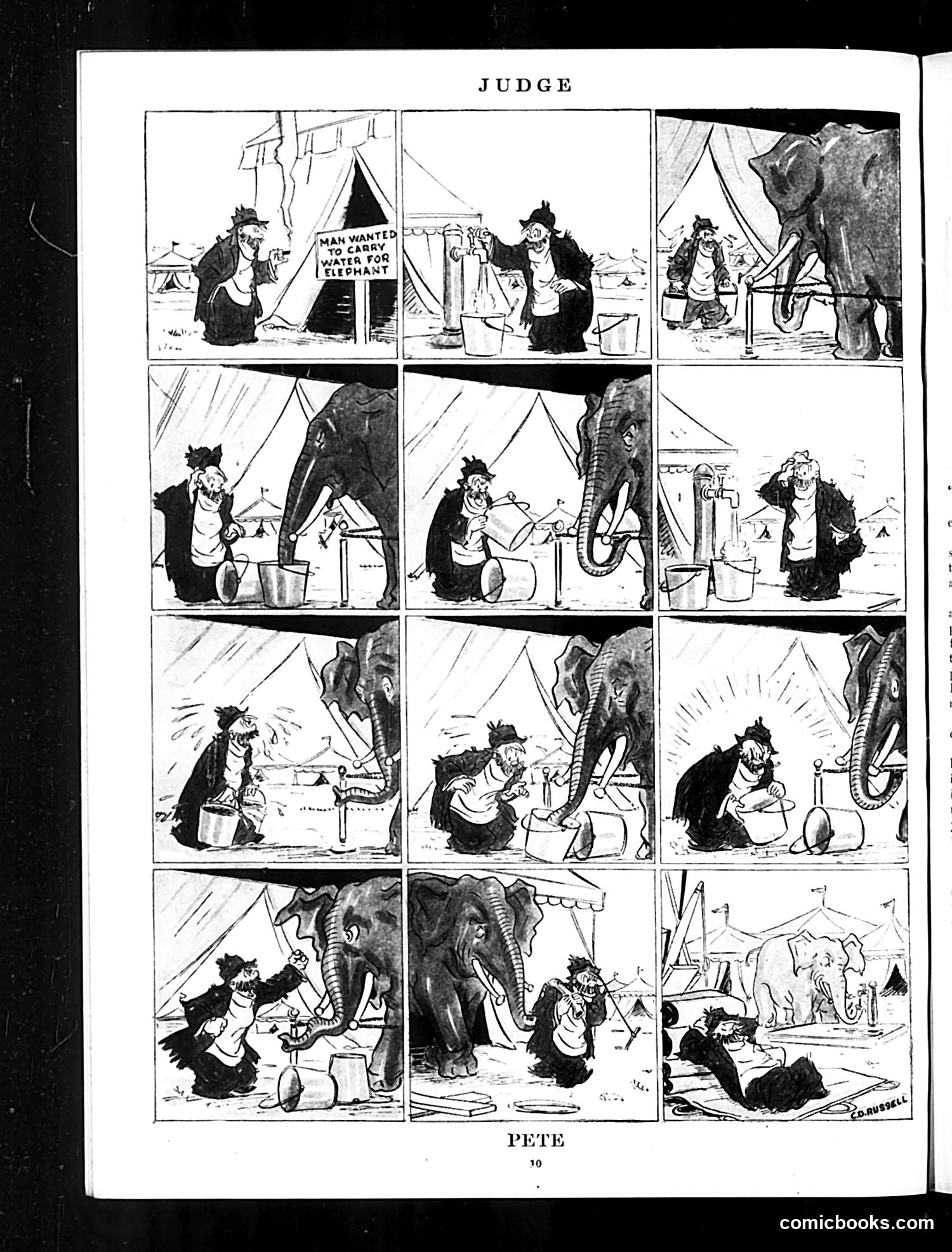
# "Judge" Comic: "Judge" and "Pete" This appears to be a multi-panel comic strip satirizing circus life, specifically the challenges of obtaining water for an elephant in a traveling circus tent. The narrative follows a man (labeled "Pete") attempting to fill buckets with water while managing an increasingly agitated elephant. The elephant's trunk becomes a central comedic device—first cooperative, then destructive. The satire likely mocks either circus management incompetence or the inherent difficulties of maintaining exotic animals in portable encampments. The sign reading "MAN WANTED TO CARRY WATER FOR ELEPHANT" suggests labor shortage humor. The escalating chaos culminating in what appears to be the elephant's rampage reflects period concerns about animal handling and circus safety, presented for comedic effect.