
Judge, 1931-04-11 · page 10 of 36
Judge — April 11, 1931 — page 10: what you’re looking at
What you’re looking at
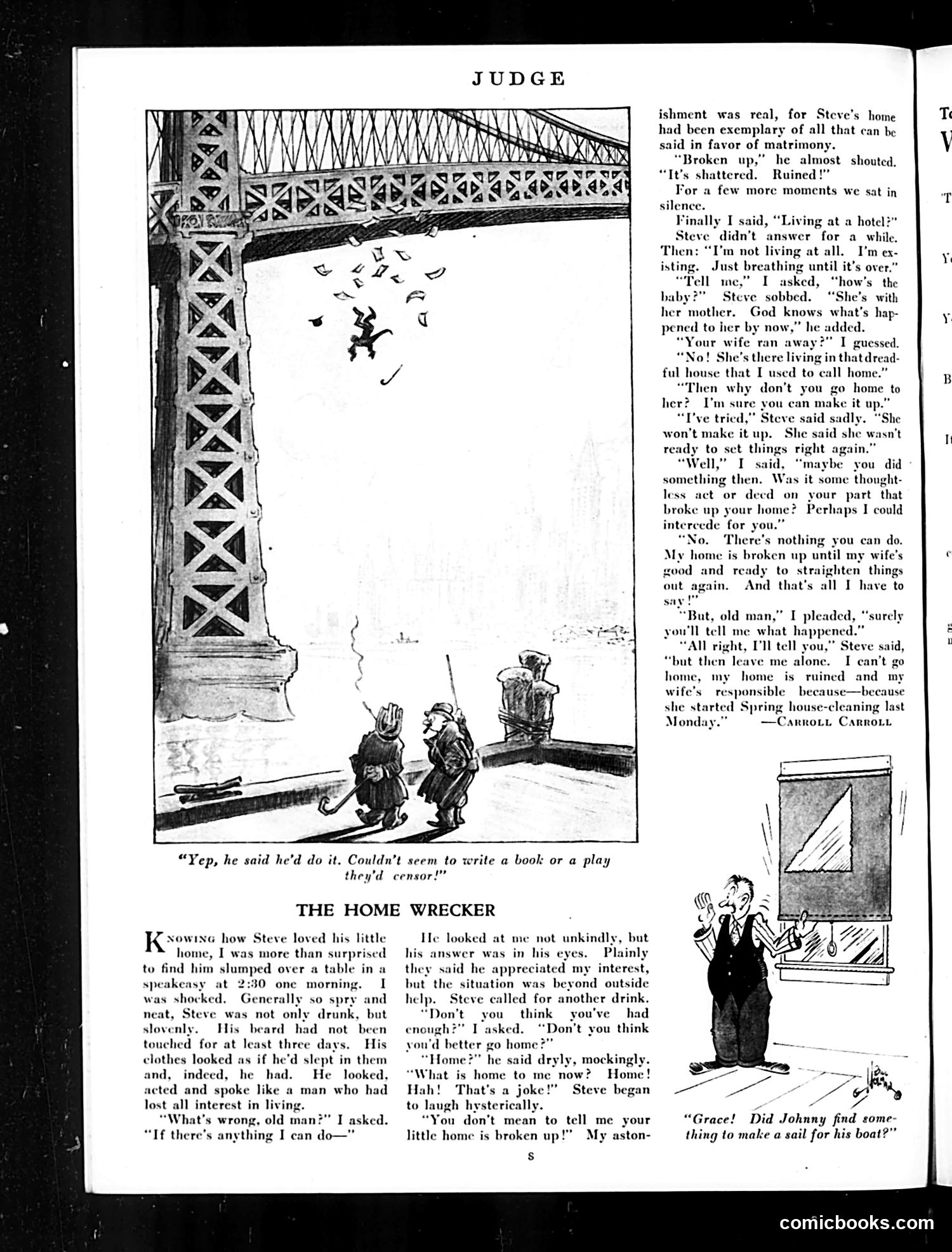
# "The Home Wrecker" - Judge Magazine This satirical story mocks a common domestic complaint: a man's home is destroyed not by infidelity or serious marital conflict, but by his wife's spring house-cleaning. The narrative presents Steve, a once-respectable man now drunk and disheveled, whose entire life has collapsed because his wife started her weekly cleaning routine. The satire lies in the absurd disproportion—the narrator expects catastrophic betrayal or scandal, but discovers the "wrecker" is merely domestic tidiness. The joke reflects early 20th-century anxieties about women's domestic authority and the chaos of housekeeping. It satirizes both overly dramatic men and the invasive, disruptive nature of spring cleaning that was a major household event. The final panel provides comic relief, suggesting domestic chaos affects everyone—even children's boat projects get disrupted. The humor targets masculine self-pity and the clash between orderly housekeeping and men's desire for an undisturbed home.
📄 Transcribed text from this page (OCR, searchable)
Machine-transcribed from the original scan — historical spelling and the odd misread are preserved.
Krewe how Steve loved his little home, I was more than surprised to find him slumped over a table in a . Generally so spry and neat, Steve was not only drunk, but slovenly. His beard had not been touched for at least three days. His clothes looked as if he'd slept in them and, indeed, he had. He looked, acted and spoke like a man who had lost all interest in living. “What's wrong, old man?” I asked. “If there's anything I can do—" “Yep, he said he'd do it. Couldn’t seem to write a bool: or a play they'd censor!” THE HOME WRECKER Ie looked at me not unkindly, but his answer was in his eyes. Plainly they said he appreciated my interest, but the situation was beyond outside 3 led for another drink, you think you've had I asked. ‘Don’t you think Home Steve began home to me now? Hah! That's a joke!” to laugh hysterically. “You don’t mean to tell me your little home is broken up!" My aston- 8 ishment was real, for Steve's home had been exemplary of all that can be said in favor of matrimony. “Broken up,” he almost shouted. “It’s shattered. Ruined!” For a few more moments we sat in silen ly I said, “Living at a hotel?" Steve didn’t answer for a while. Then: “I’m not living at all. I’m ex- isting. Just breathing until it’s over.” “Tell me,” I asked, “how's the baby?” Steve sobbed. ‘‘She’s with her mother. vs what's hap- © added. iy?” T guessed. ing in that dread- “No! She’s there li use that I used to call home.” hen why don’t you go home to I’m sure you can make it up.” “She said sadly > you did something then. Was it some thought- less act or decd on your part that broke up your home? Perhaps I could intercede for you. “No. There's nothing you can do. My home is broken up until my wife's good y to straighten things out all I have to But, old man,” I pleaded, “surely you'll tell me what happene: “AML right, I'll tell you,” said, “but then leave me alone. I can’t go home, my home is ruined and my wife’s responsible because she started Spring house: Monday.” because aning last —Carroti Carroie | “Grace! Did Johnny find some- thing to make a sail for his boat?” comicbooks.com