A complete issue · 36 pages · 1931
Judge — February 28, 1931
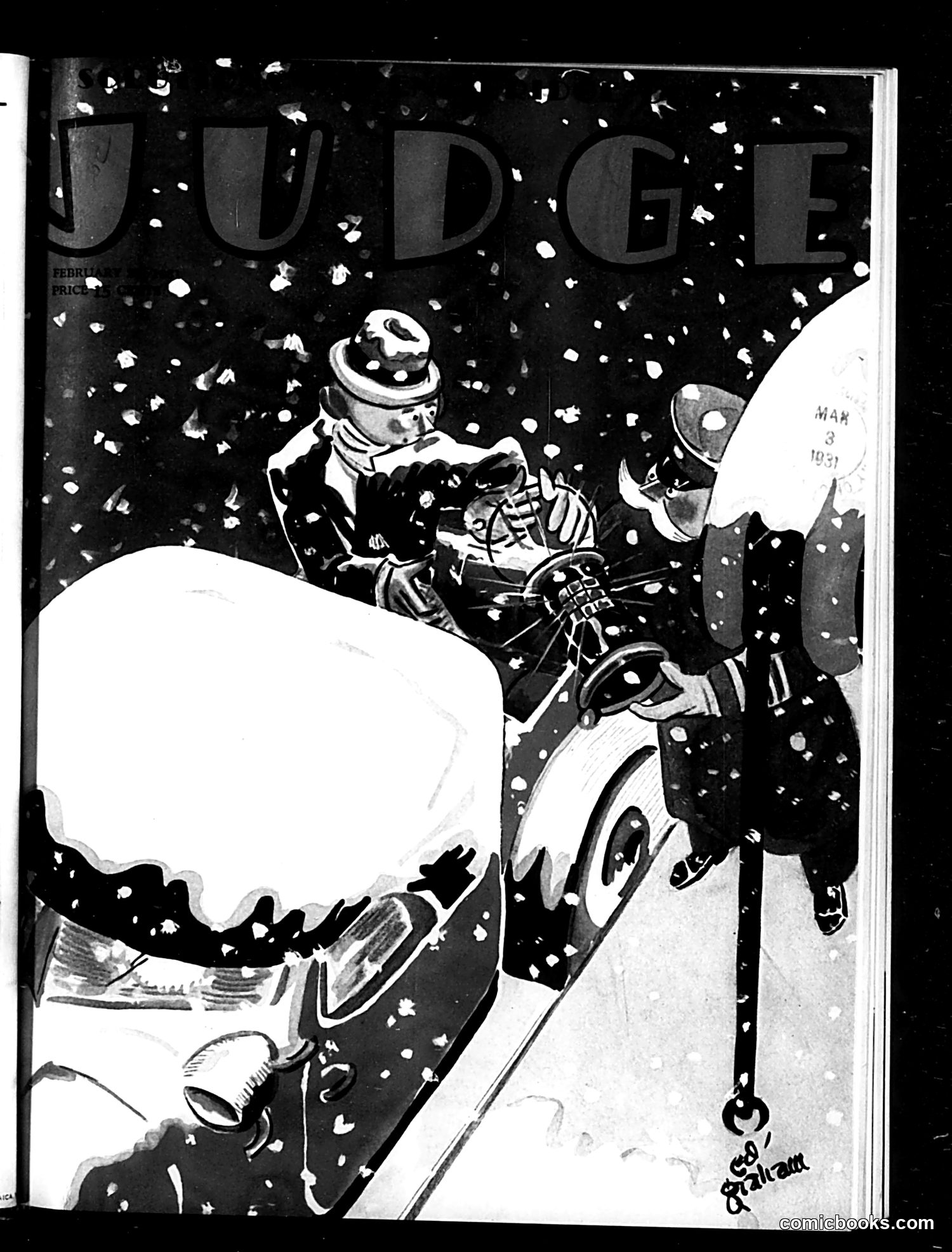
# Judge Magazine Cartoon Analysis This appears to be a winter sports illustration from Judge magazine's cover (visible "JUDGE" masthead at top). The cartoon depicts a figure in winter clothing riding a bobsled down a snowy slope, with snow swirling around them against a dark background. Without clearer text or additional context visible on this page, I cannot definitively identify the specific political figure being caricatured or the precise satirical message. The style and composition suggest this is likely commentary on a contemporary political or social figure engaging in winter recreation, possibly meant as social satire about leisure activities or someone's public persona. The illustration's quality and placement suggest this was a significant cover piece, but the specific target of the satire remains unclear from this image alone.

# Analysis This is **not a political cartoon or satire**—it's a straightforward **advertisement for Dentyne chewing gum** from an early 20th-century magazine. The page features a smiling woman's portrait with the tagline "Chew DENTYNE...and smile!" and "keeps teeth white." The ad copy promotes Dentyne's benefits: whitening teeth, keeping gums firm, and being superior to other chewing gums available at the time. The "gum especially made to keep teeth white" claim reflects period marketing, when chewing gum was often promoted for dental health—a common advertising strategy before modern skepticism about such claims. This is product marketing, not editorial satire or political commentary.
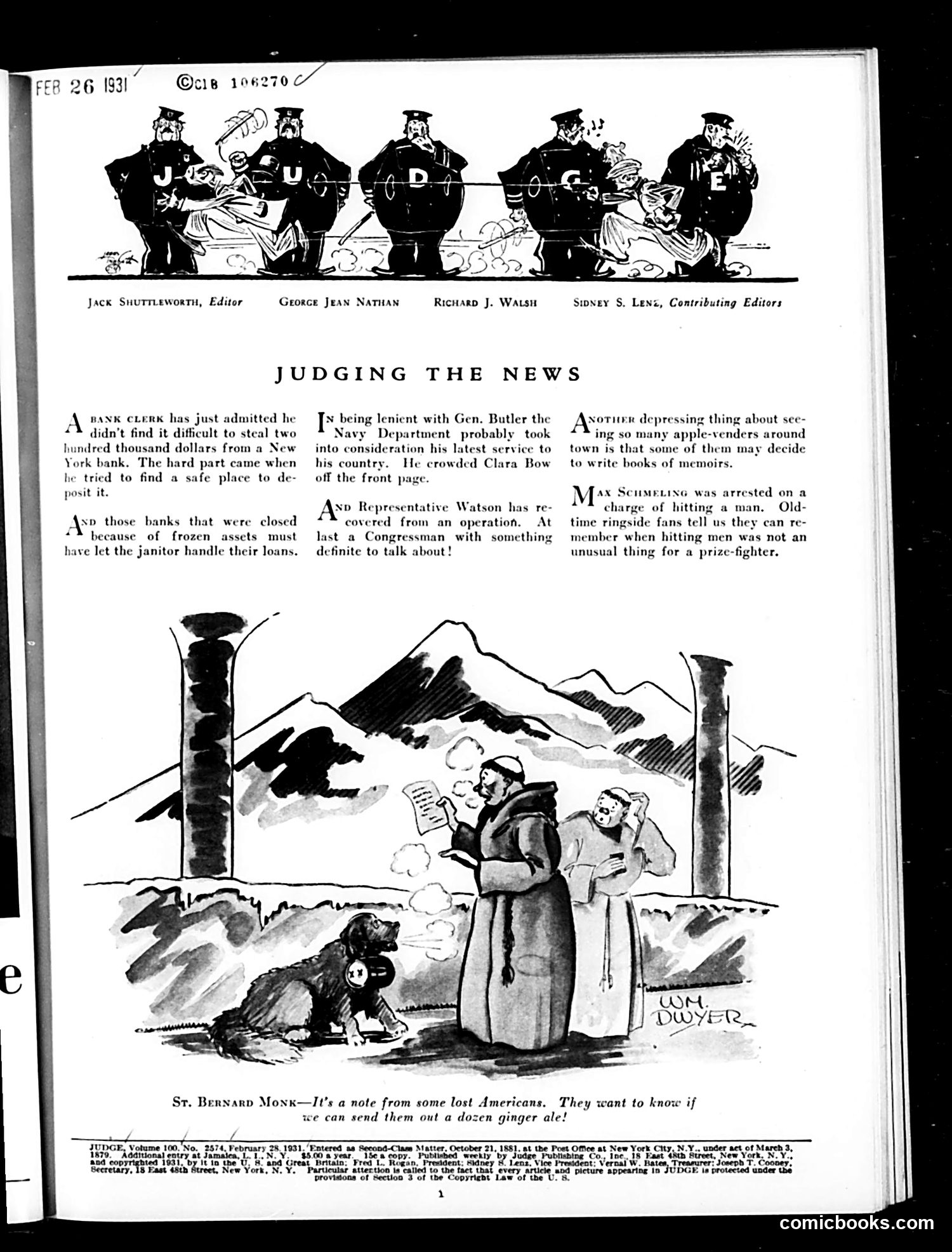
# "Judging the News" – Judge Magazine, February 26, 1931 This page satirizes early 1930s economic crisis topics. The header cartoon shows five judicial figures spelling "JUDGE," commenting on news judgment. The text snippets mock: - **Bank failures**: A clerk admitting difficulty stealing from a New York bank during the Depression, with the joke that banks themselves were already failing - **Frozen assets**: Closed banks forcing janitors to handle loan paperwork - **Representative Watson**: Unclear what operation is referenced, but the satire suggests vague political talk - **Swindlers**: A boxing-related arrest joke about hitting The main cartoon depicts St. Bernard monks in snowy mountains receiving a message from "lost Americans" requesting ginger ale—satirizing Prohibition (alcohol ban) and Depression-era hardship, suggesting Americans were so desperate they'd ask monks for contraband liquor.
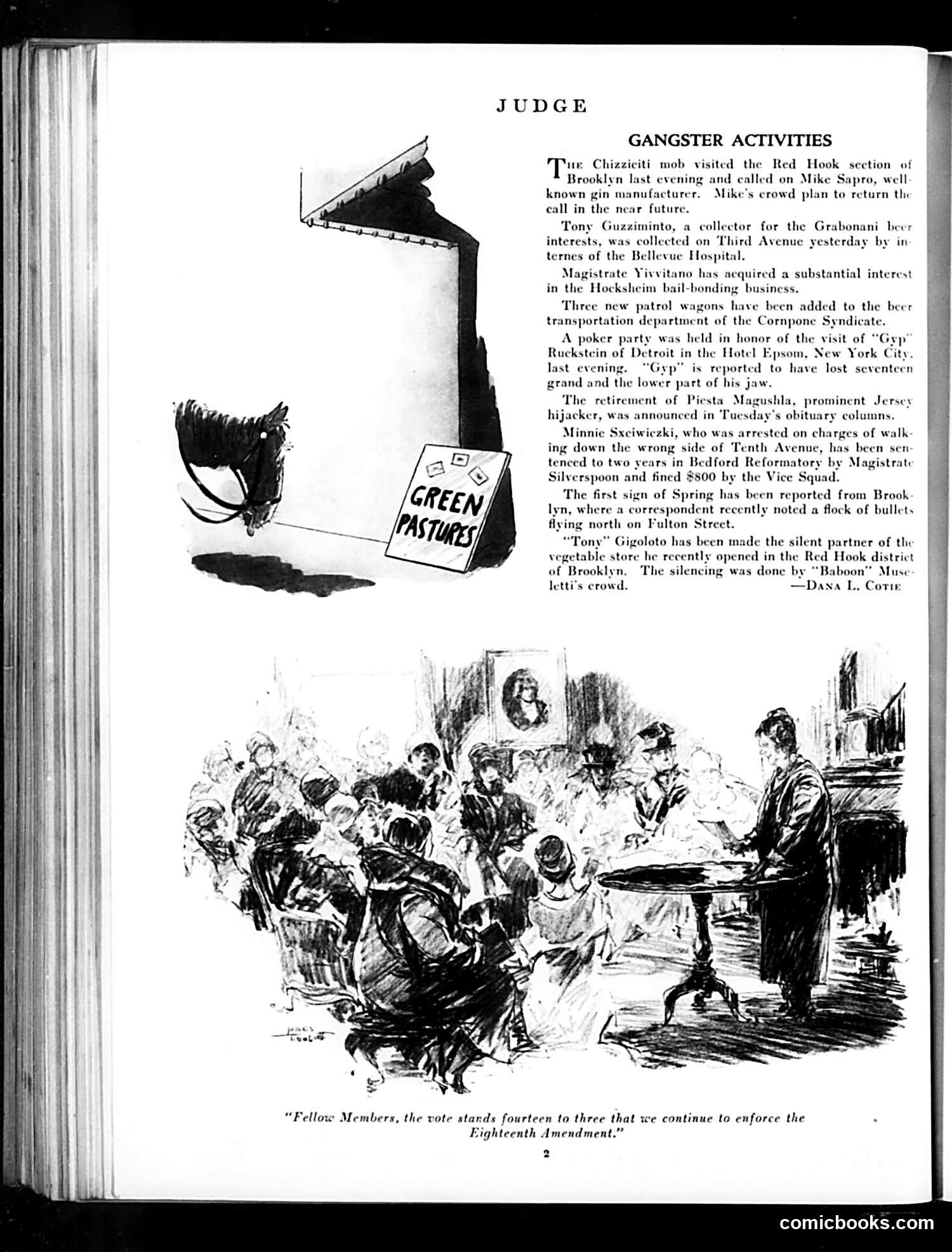
# Analysis of Judge Page The page combines satirical news briefs with two editorial cartoons. The top cartoon shows a horse hung from a gallows labeled "GREEN PASTURES"—likely satirizing the play *Green Pastures* (1930), suggesting mob violence or criminal activity connected to its success. The bottom cartoon depicts a formal meeting with the caption about voting to "enforce the Eighteenth Amendment." This references Prohibition (1920-1933), showing well-dressed figures debating alcohol enforcement—likely mocking either politicians' hypocrisy or the futility of Prohibition enforcement amid widespread gangster activity mentioned in the adjacent "Gangster Activities" column. The "Gangster Activities" section itself—recounting arrests, bail-bonding, and mob violence—provides context: organized crime thrived during Prohibition, making enforcement discussions appear absurdly disconnected from reality.
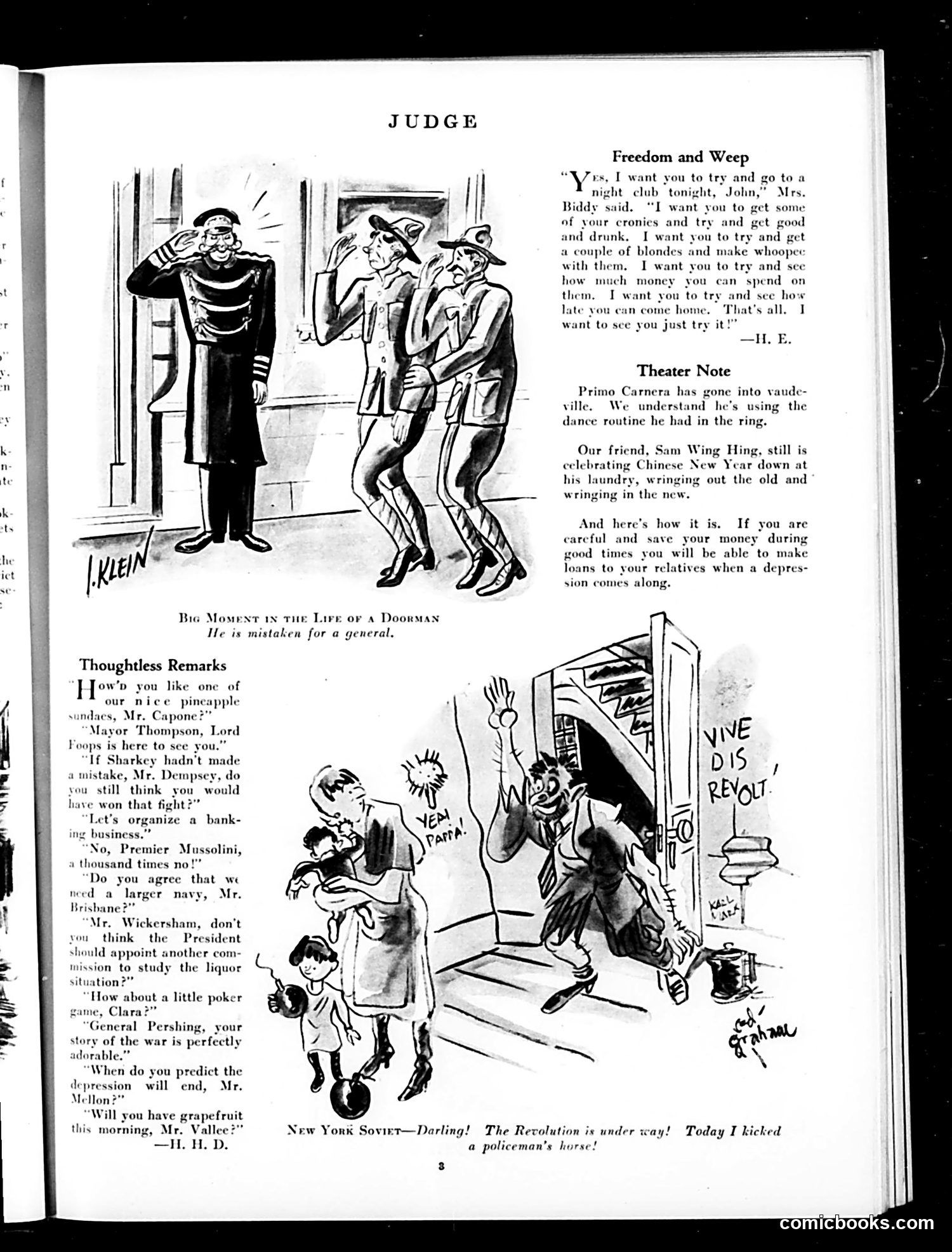
# Analysis of Judge Magazine Page This page contains three distinct sections: **"Big Moment in the Life of a Doorman"** (top): Shows a doorman being mistaken for a general—a joke about military uniform confusion during WWI era. **"Thoughtless Remarks"** (left): Satirizes politicians and public figures through absurd dialogue. References include Mayor Thompson, Premier Mussolini, and General Pershing. The humor targets politicians' inconsistent or foolish statements about naval expansion, banking, liquor policy, and war predictions. **"New York Soviet"** (bottom right): Political cartoon depicting communist revolution fears. Shows a figure labeled "Vive Dis Revolt" (mimicking French revolutionary language) storming what appears to be government or official premises. This reflects 1920s American anxieties about Bolshevism spreading after the Russian Revolution. The page overall mocks political incompetence and contemporary communist threats.
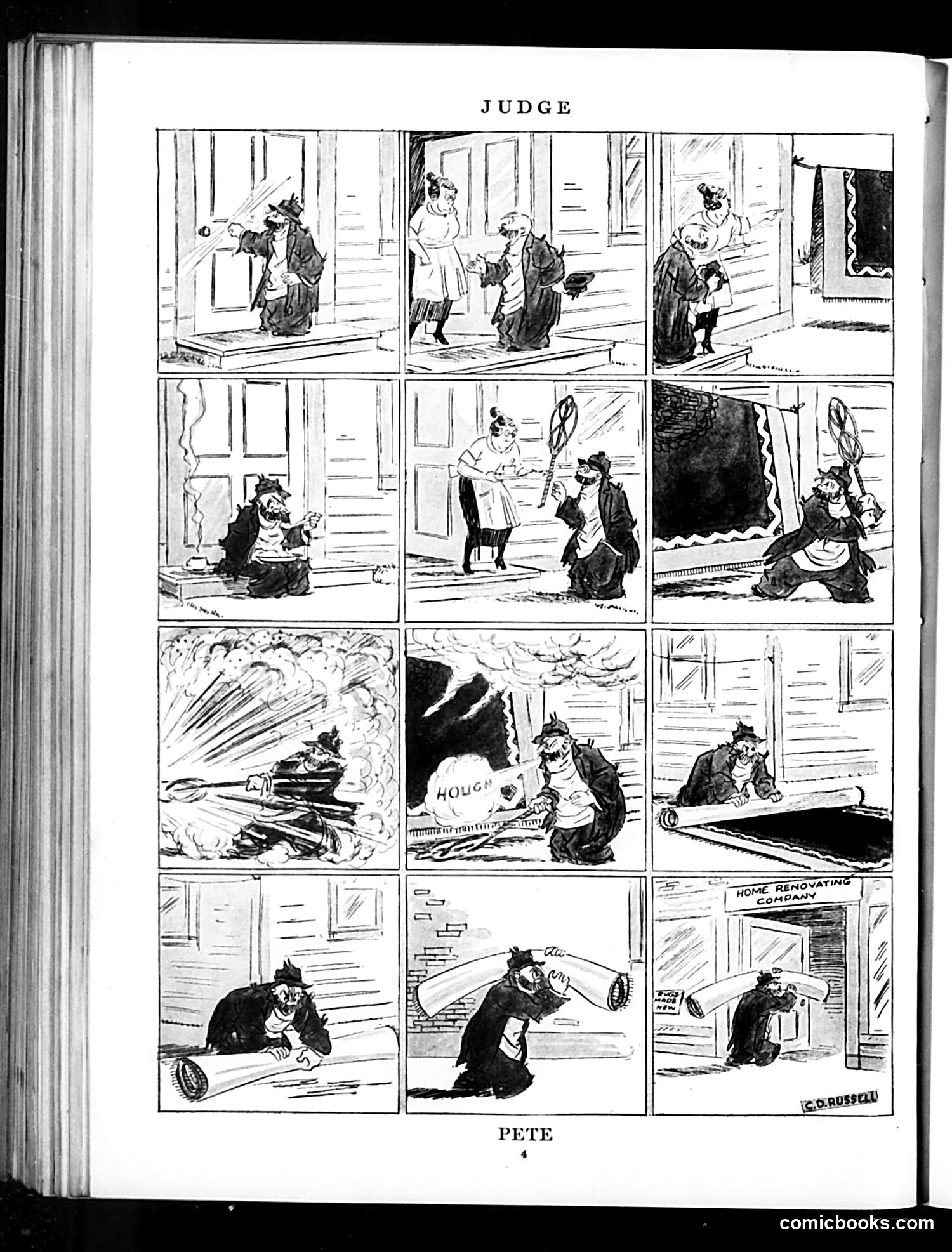
# Analysis of "Judge Pete" Comic Strip This appears to be a satirical comic strip following a character named Pete through various misadventures involving home renovation. The narrative shows Pete encountering increasingly catastrophic problems with his house—from initial inspections to fires, structural collapse, and eventually hiring a "Home Renovating Company." The satire targets incompetent home repair and the frustrations of property maintenance. Pete's mounting disasters (explosions, cave-ins, falling debris) humorously exaggerate the typical homeowner's experience with renovation gone wrong. The final panel's reference to hiring a professional company suggests the strip's punchline: sometimes incompetent DIY efforts necessitate professional intervention. The style and subject matter reflect early-to-mid 20th-century American anxieties about home ownership and the emerging home repair industry.
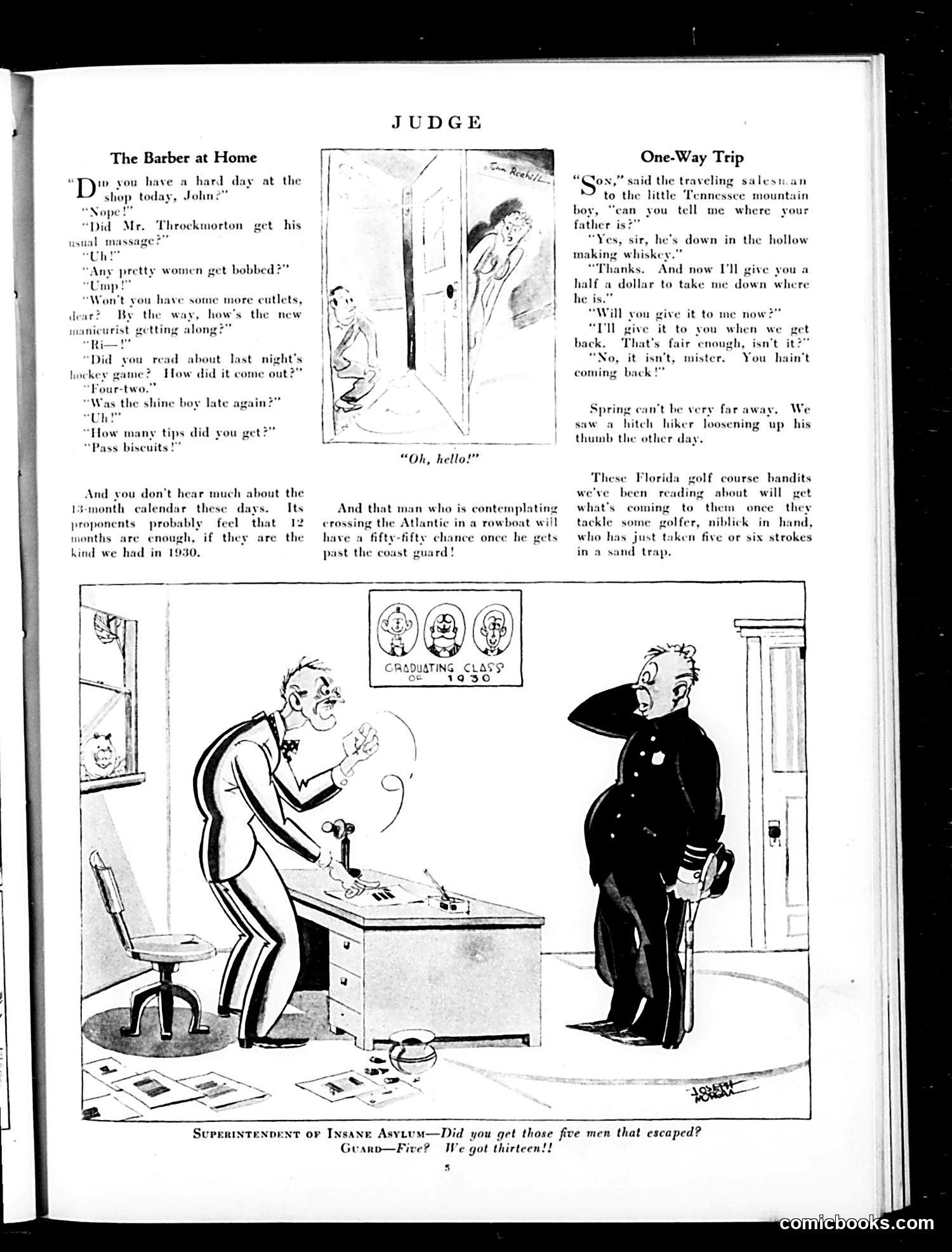
# Judge Magazine Page Analysis This page contains three humor pieces typical of 1930s Judge magazine: 1. **"The Barber at Home"**: A domestic conversation where a barber discusses his day—Mr. Throckmorton's massage, bobbed women, tips, and a hockey game. The humor relies on period-specific details (women's bobbed hair was still somewhat scandalous; tipping customs differed). 2. **"One-Way Trip"**: A traveling salesman's exchange with a Tennessee mountain boy about locating his whiskey-making father. The satire plays on Prohibition-era bootlegging and Appalachian stereotypes. 3. **"Superintendent of Insane Asylum"**: An official questions a guard about escaped inmates. The joke's punchline—thirteen men escaped but only thirteen were caught—appears to be absurdist humor about bureaucratic incompetence. All reflect 1930s social commentary and conventions now largely historical.
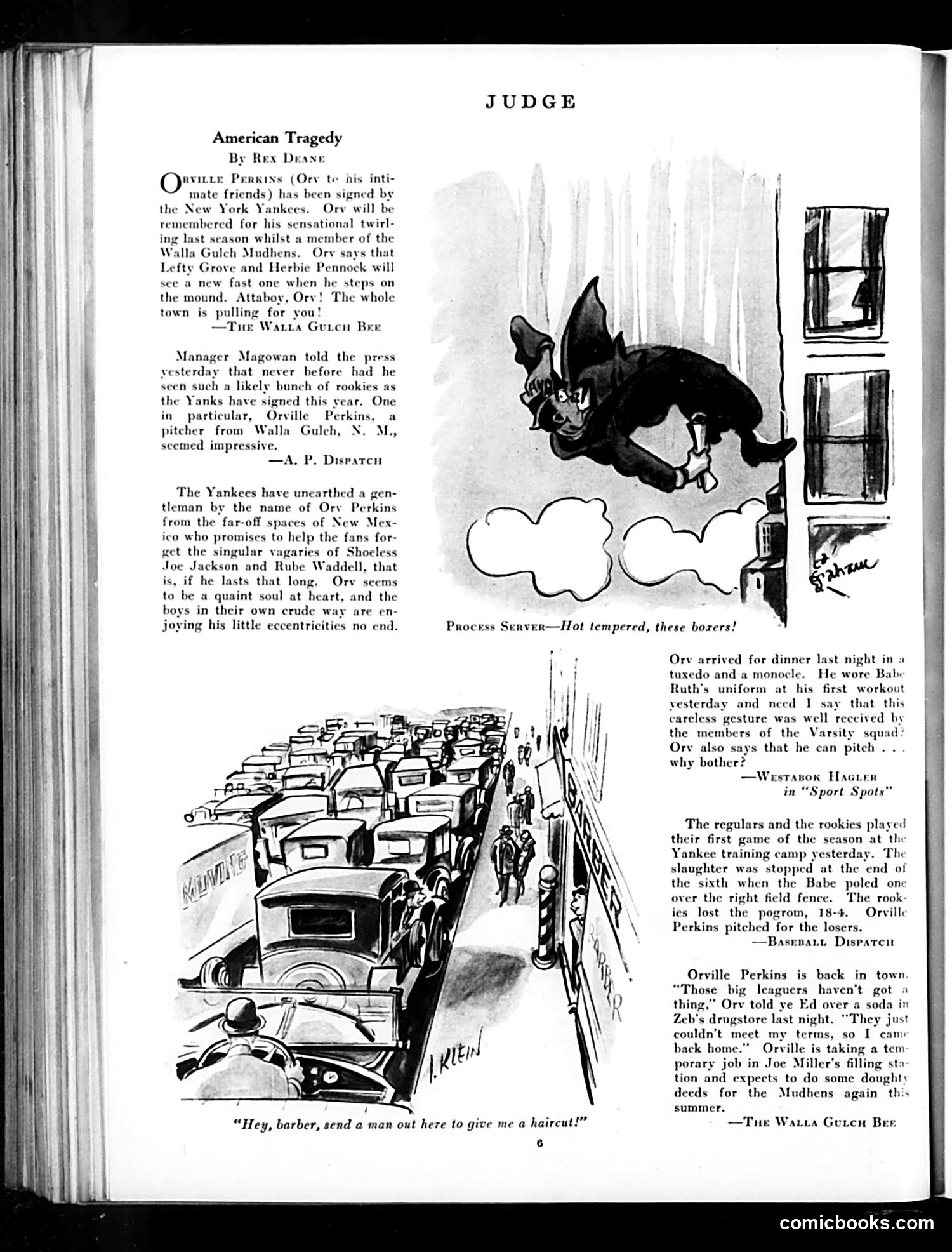
# Judge Magazine Page Analysis This page features sports commentary about baseball player **Orville Perkins**, a pitcher signed by the New York Yankees from Walla Gulch, New Mexico. The text celebrates him as a promising talent who might help fans forget stars like Joe Jackson and Rube Waddell. The top cartoon depicts a **demon or mischievous spirit** labeled "Process Server—Hot tempered, these boxers!" emerging from clouds near a building, satirizing legal troubles in boxing. The bottom cartoon shows a crowded **traffic jam or parking situation** with the caption "Heg, barber, send a man out here to give me a haircut!"—a humorous complaint about congestion. The page mixes sports news with lighthearted social commentary typical of Judge's satirical approach.
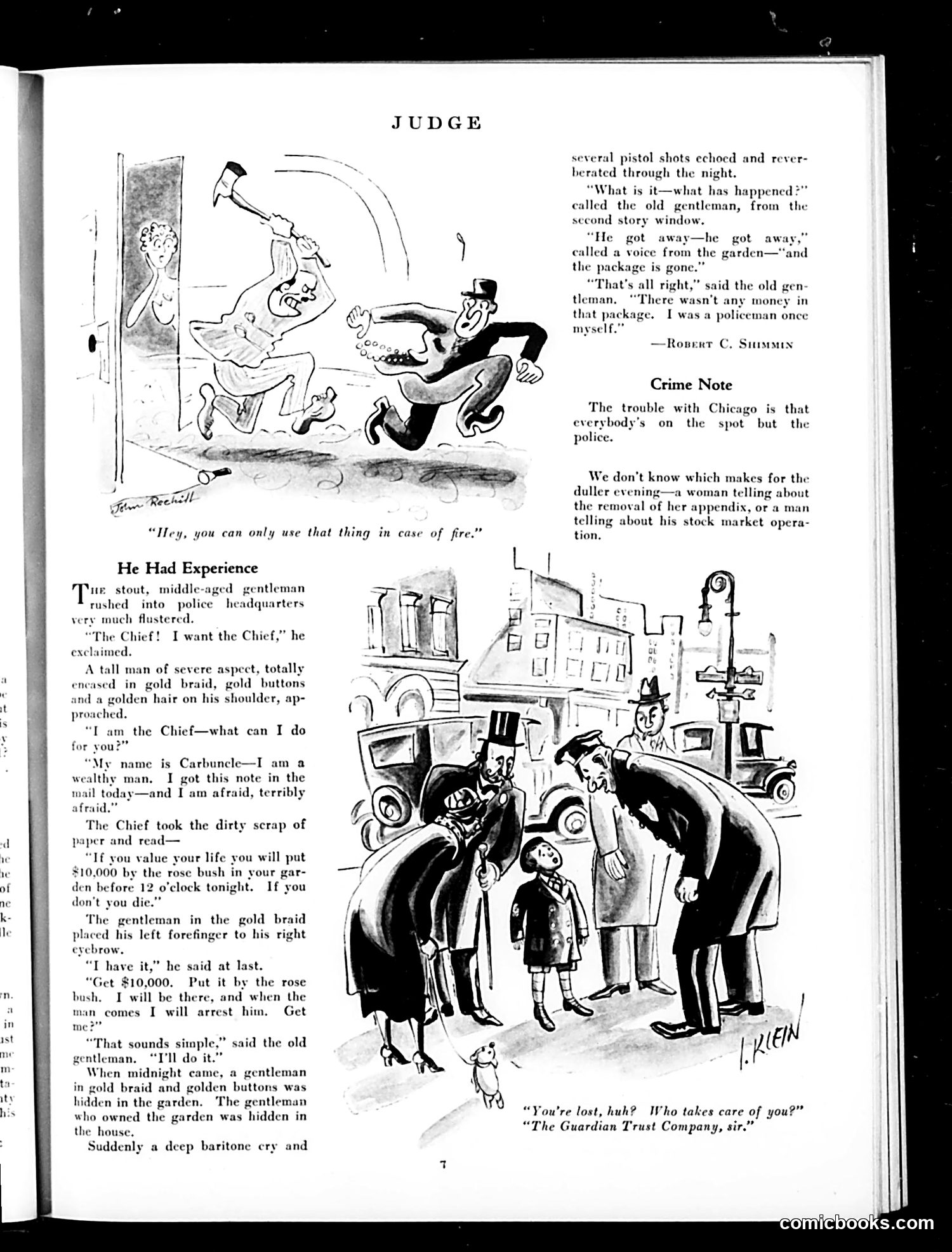
# Analysis of Judge Magazine Page This page contains two satirical pieces mocking Chicago police incompetence during the era of organized crime and extortion. **"He Had Experience"** (main story with top cartoon): A wealthy man named Carbuncle receives an extortion note demanding $10,000. He reports it to the Police Chief, who agrees to catch the criminal. The story implies the plan fails—the criminal escapes with the money. The first cartoon shows a burglar using a fire axe, with caption "Hey, you can only use that thing in case of fire," mocking misuse of equipment. **"Crime Note"** (sidebar): A brief commentary stating Chicago's problem is that "everybody's on the spot but the police"—meaning citizens are vulnerable to criminals while police are ineffective. **Lower cartoon**: Shows concerned adults asking a lost child who cares for her; she replies "The Guardian Trust Company, sir," satirizing how corporations have become substitute guardians, implying parental/societal roles have been replaced. The satire targets police corruption and ineffectiveness during Prohibition-era Chicago.
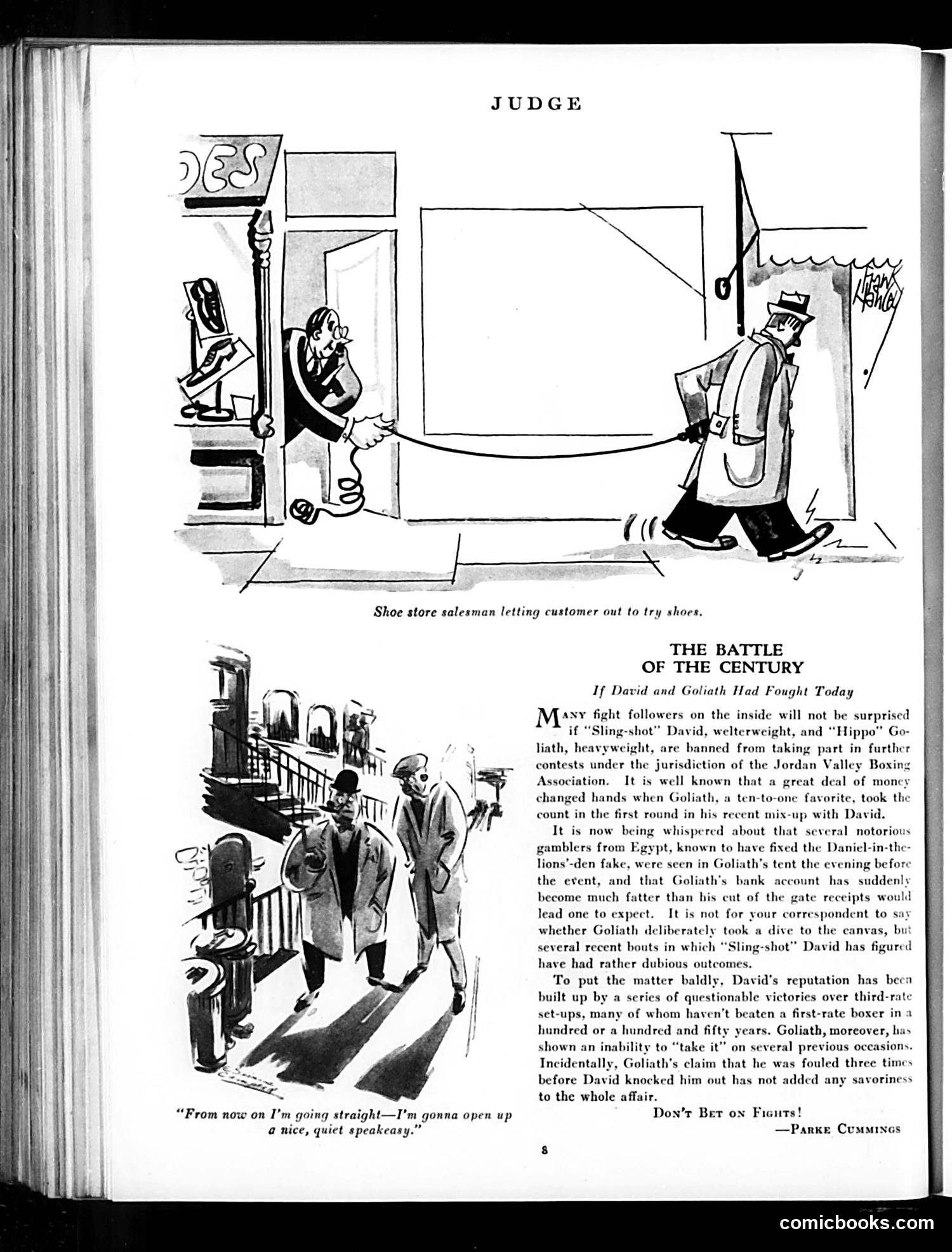
# "The Battle of the Century" - Judge Magazine Satire This page satirizes contemporary boxing through a biblical lens. The top cartoon shows a shoe salesman—a visual pun on "trying shoes" that relates to the boxing content below. The main article reimagines David vs. Goliath as a modern boxing match, mocking the sport's corruption. "Sling-shot" David (welterweight) and "Hippo" Goliath (heavyweight) are banned fighters after David's suspicious first-round knockout victory. The satire exposes: - **Fixed fights**: Egyptian gamblers allegedly rigged the match; Goliath's bank account suspiciously fattened - **Padded records**: David's reputation built on victories against weak opponents ("third-rate set-ups") - **Dubious outcomes**: Several of David's recent bouts had questionable results - **Corruption**: Money changed hands; Goliath may have intentionally "took a dive" The bottom cartoon shows gangsters discussing opening a "speakeasy"—referencing Prohibition-era organized crime's connection to boxing corruption. Judge uses biblical irony to critique 1920s boxing as a criminal enterprise.
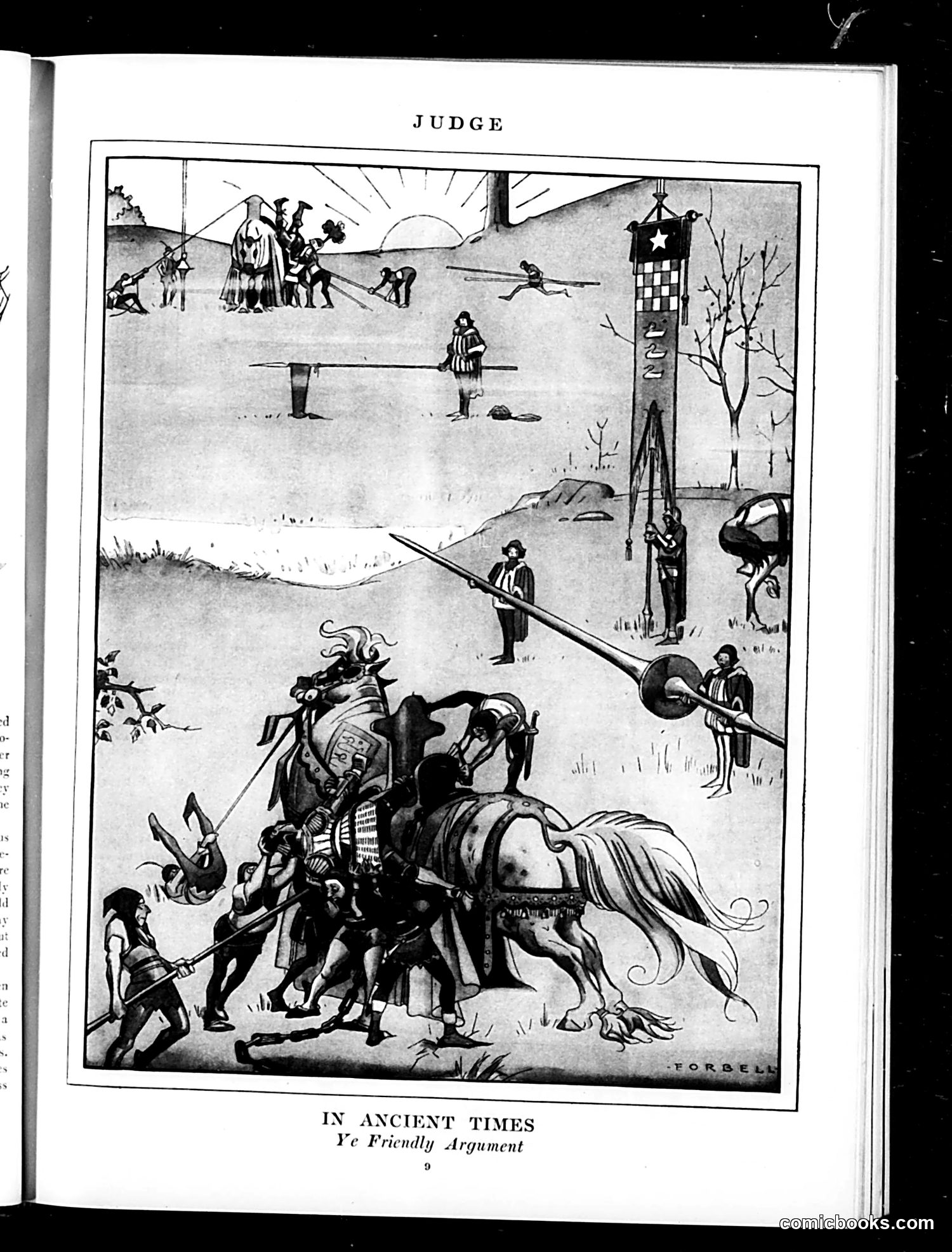
# Judge Magazine: "Judge in Ancient Times—Ye Friendly Argument" This satirical cartoon depicts a mounted nobleman or judge being physically attacked and overwhelmed by multiple armed commoners with swords and pikes. The title "Ye Friendly Argument" is ironic—what appears to be a "friendly" debate has devolved into violent conflict. The satire likely comments on contemporary political disputes, suggesting that disagreements between authority figures (represented by the mounted, ornate judge) and ordinary citizens (the armed mob) inevitably escalate to violence rather than reasoned discussion. The "ancient times" framing allows the artist to critique modern politics through historical costume. The tower with a star in the background may reference governmental authority. The cartoon's message: civil discourse between classes and power is illusory.
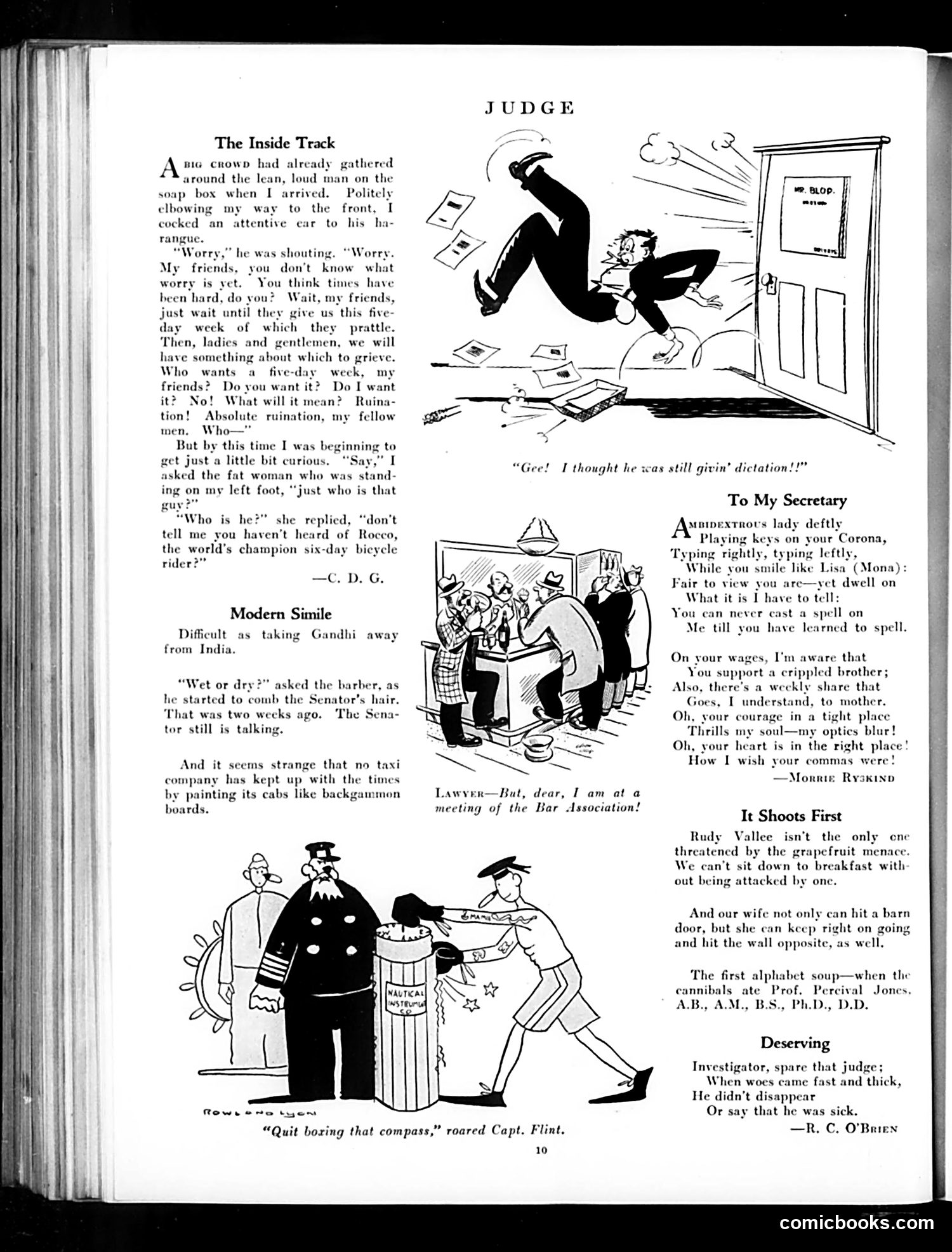
# Judge Magazine Page Analysis This page contains several satirical pieces typical of 1920s-30s humor: **"The Inside Track"** mocks a soapbox orator ranting against a five-day work week as ruinous, revealed to be Rocco, a famous six-day bicycle racer. The joke: his opposition stems from self-interest (his sport depends on six-day races), not principle. **"Modern Simile"** compares Gandhi's difficulty leaving India to removing a persistent barber—likely referencing Gandhi's actual independence efforts, treating his political importance with flippant humor. The cartoon showing three figures with a "Mustard" jar appears to reference an ongoing joke about aggressive condiments or food hazards ("It Shoots First" below mentions grapefruit attacks). **"To My Secretary"** is affectionate office verse about a typist, comparing her to the Mona Lisa while gently mocking her spelling. Other pieces—"Deserving," "Lawyer" joke—are brief gags about professional types. The humor assumes readers recognize contemporary references like Rudy Vallee and understand workplace dynamics of that era.